Matthew C. Mitchell's Blog, page 50
December 28, 2018
My Top Books of 2018
I had a wonderful year of reading in 2018, full of strong books with great big ideas and sharp writing. I'm excited to share some of the best titles with you today.
I read just a few more books than last year (72), and at least for the first third of the year, I also found the time write more book reviews about them.
What I Mean By "Top Books"
As in past years [2013, 2014, 2015, 2016, 2017], my "Top Books" list is not necessarily the best books that were published that particular year or the most enjoyable either. I intend it to be a list of the fairly new Christian nonfiction books I read:
- that had the most personal impact on me, my thinking, my heart.
- that I was the most consistently enthusiastic about.
- that I kept coming back to again and again.
- that I couldn't help recommending to others (and recommend without reservations and significant caveats).
Like last year, I've narrowed it down to seven of those for 2018, and tomorrow I'll give you a list of others that were really really good for me, too.
My Top Books Read in 2018
1. The Sermon on the Mount and Human Flourishing by Jonathan Pennington.
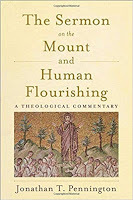
I never got to write a proper review of Pennington's theological commentary on the sermon on the mount, but it rocked my world, transforming my understanding of Jesus' most famous message and shaping every sermon on the Gospel of Matthew I delivered from February through July on 2018!
Pennington showed me how the logic of the SOTM works. Intellectually, I knew that there was an internal logical flow to Jesus' message, but I've never been able to unlock it until now. Jesus, presented by Matthew, is so unlike Paul in style, and I've tended to treat his kingdom manifesto like a string of pearls. But Pennington showed me (with careful, fresh, and well-chosen words) the grain that runs through the wood connecting the message together and providing the whole with its life-giving and life-changing sap.
If I could write a commentary, this is exactly how I would want it to be. Pennington (who I was at TEDS with back in the day and who has recently launched a YouTube channel of him talking with interesting guests about cars, coffee, and theology) taught me so much, I don't know how to summarize it. I highly recommend reading the book, listening to him teach on its themes, and most of all, reading Jesus' sermon over and over again, especially the beatitudes, with an ear cocked to what Pennington is teaching.
Studying the Sermon on the Mount was the most richly rewarding experience of 2018 for me. I'm so thankful I get to be a pastor. If I didn't have to preach Matthew, I would never have the opportunity to study it on this level! By the way, if you are preaching Matthew, I also recommend buying and carefully reading Charles Quarles' commentary on the Sermon on the Mount, as well. Quarles brought out many exegetical items that I needed to see and provided an almost exhaustive list of interpretive options for difficult sections. I found it invaluable.
2. Rejoicing in Lament by J. Todd Billings
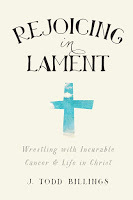 Rejoicing in Lament is a profound theological reflection on biblical lament by a man who, sadly and gladly, has had to practice what he preaches.
Billings is top-shelf theologian who has had to go through deep suffering as a cancer patient, and he seamlessly weaves his personal experience and well-read theology together into a beautiful and helpful read. In my review, I resonate with both his experience and his insights:
3. A Theology of Matthew by Charles Quarles
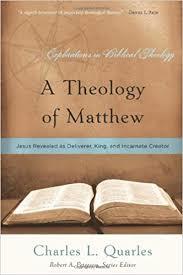 Another book on Matthew! And the second mention of Charles Quarles in this list!
Quarles' book is a carefully compiled biblical theology of the Gospel of Matthew looking at particular ways that Matthew brings out particular themes, especially about the identity of Jesus as deliverer (new Moses), king (new David), founder (new Abraham), and creator (God incarnate).
In my review earlier this year, I said, "Quarles has a knack for bringing out the subtleties that lie on top of the text--things that are demonstrable (not made up or merely speculative) yet not obvious to the casual reader. He turns Matthew from SD to HD for a careful reader."
Here's how helpful this book is: I've looked at it every single week this year as I preach through the Gospel of Matthew. I open the Scripture index in the back and turn to every reference he makes to the passage I am preaching this week so I don't miss any of his insights!
4. The Gospel Comes with a House Key by Rosaria Butterfield
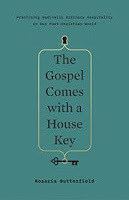 In The Gospel Comes With a House Key, Rosaria Butterfield beckons the Church to practice what she calls, “radically ordinary hospitality,” and she and her husband Kent lead the way.
In my review I said, "The potency of Butterfield’s book comes from her storytelling. She obviously subscribes to the maxim, “Show, don’t tell,” and does a masterful job at it. Her true life stories of biblical hospitality brim with the raw grace and beautiful mess that is the gospel at work in up-close-and-personal ministry. This is hospitality as generosity, not entertainment. Giving yourself, your resources, your time, your home. "
Heather and I both read this one and were both encouraged and challenged at the same time. We were encouraged in the hospitality we already practice and challenged to do more.
This book is salty in more ways than one. Don't read it if you don't want to change.
5. Reset by David Murray
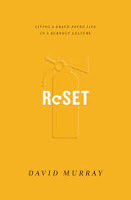 I didn't want to read this book, because I had a sneaking suspicion David Murray was talking about me. In describing an over-extended person who was resistant to changing personal habits to learn the art of rest, I felt like he was reading my mail (and maybe my mind!).
But I needed to read Reset, and I'm glad I did. I've changed a number of my habits, and feel like I'm a better path to a balanced life. I still have a good ways to go (change is hard!), but think I'm making progress.
The greatest evidence? In 2018, I took a nap nearly every single Sunday afternoon! (That may not seem like much of an accomplishment to some, but it was a breakthrough for me in terms of receiving the Lord's gift of rest.)
By the way, I was also influenced in this vein by a secular book, Deep Work by Cal Newport. While he wasn't advising more naps, Newport was advising a re-set of my time and attention to develop and deepen my concentration. Whenever I put these two guys' principles at work, it moves the needle on both my happiness and productivity.
6. Under Our Skin by Benjamin Watson
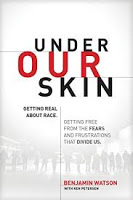 Watson's gracious yet pointed approach to race relations was just what I needed to read at the beginning of 2018. He gets right to the heart of the problem which is the problem of the human heart. But in tackling the underlying spiritual problems, he doesn't get simplistic or let anyone off of the hook of working toward practical solutions.
In my review I said, "Watson also has a knack for seeing solutions that are “both/and.” He knows that the answers to our ongoing racial strife will not be singletary or simplistic. He is not only able to see how the problems come from multiple competing directions but also to envision how the solutions might require holding two or more seemingly exclusive things in faithful tension. For me, this was a perfect read for this 2018 Martin Luther King Day because in many ways Benjamin Watson is articulating “the dream” for a new generation. May we be both convicted by our failures and encouraged and empowered to press on to see the dream come fully true."
For me, reading Under Our Skin kicked off a year-long study of race, racism, and racial reconciliation which was very profitable.
7. Superheroes Can’t Save You by Todd Miles
 This is the book I've been raving about the most in the last few months of 2018.
Todd Miles has taken our current cultural obsession with superheroes and channeled it into a fruitful multi-pronged illustration of historical heresies about the person of Christ.
You read that right. Even though it's chock-full of superhero lore, it's really about and magnifies Jesus, but not in a "Jesus-juke" kind of way. In fact, Miles is a super-fan of super-heroes, which as a sometime comic-book fan myself (Make Mine Marvel!), I really appreciated. Yet at the same time he puts them in their place and cleverly appropriates features of the characters to illustrate bad ideas about who Jesus is that have popped up throughout church history. For example, Superman can illustrate docetism (the heresy that Jesus only seemed to be human) or Ant-Man can illustrate modalism (the heresy Jesus is just one"costume" of God that the one person of God puts on when He isn't being the Father or the Spirit).
If you don't like superheroes, this book probably isn't for you, though you still could learn a lot. Miles knows his stuff (and even adroitly navigates some current theological controversies with panache). I've been using it weekly with our youth boys' class on Wednesday nights. Miles holds your attention. He's really fun and funny and concise, and yet is teaching you deep theology and church history and making application to your spiritual life all at the same time. I'm really glad this book exists. Excelsior!
I read just a few more books than last year (72), and at least for the first third of the year, I also found the time write more book reviews about them.
What I Mean By "Top Books"
As in past years [2013, 2014, 2015, 2016, 2017], my "Top Books" list is not necessarily the best books that were published that particular year or the most enjoyable either. I intend it to be a list of the fairly new Christian nonfiction books I read:
- that had the most personal impact on me, my thinking, my heart.
- that I was the most consistently enthusiastic about.
- that I kept coming back to again and again.
- that I couldn't help recommending to others (and recommend without reservations and significant caveats).
Like last year, I've narrowed it down to seven of those for 2018, and tomorrow I'll give you a list of others that were really really good for me, too.
My Top Books Read in 2018
1. The Sermon on the Mount and Human Flourishing by Jonathan Pennington.
I never got to write a proper review of Pennington's theological commentary on the sermon on the mount, but it rocked my world, transforming my understanding of Jesus' most famous message and shaping every sermon on the Gospel of Matthew I delivered from February through July on 2018!
Pennington showed me how the logic of the SOTM works. Intellectually, I knew that there was an internal logical flow to Jesus' message, but I've never been able to unlock it until now. Jesus, presented by Matthew, is so unlike Paul in style, and I've tended to treat his kingdom manifesto like a string of pearls. But Pennington showed me (with careful, fresh, and well-chosen words) the grain that runs through the wood connecting the message together and providing the whole with its life-giving and life-changing sap.
If I could write a commentary, this is exactly how I would want it to be. Pennington (who I was at TEDS with back in the day and who has recently launched a YouTube channel of him talking with interesting guests about cars, coffee, and theology) taught me so much, I don't know how to summarize it. I highly recommend reading the book, listening to him teach on its themes, and most of all, reading Jesus' sermon over and over again, especially the beatitudes, with an ear cocked to what Pennington is teaching.
Studying the Sermon on the Mount was the most richly rewarding experience of 2018 for me. I'm so thankful I get to be a pastor. If I didn't have to preach Matthew, I would never have the opportunity to study it on this level! By the way, if you are preaching Matthew, I also recommend buying and carefully reading Charles Quarles' commentary on the Sermon on the Mount, as well. Quarles brought out many exegetical items that I needed to see and provided an almost exhaustive list of interpretive options for difficult sections. I found it invaluable.
2. Rejoicing in Lament by J. Todd Billings
Rejoicing in Lament is a profound theological reflection on biblical lament by a man who, sadly and gladly, has had to practice what he preaches.Billings is top-shelf theologian who has had to go through deep suffering as a cancer patient, and he seamlessly weaves his personal experience and well-read theology together into a beautiful and helpful read. In my review, I resonate with both his experience and his insights:
Billings never pretends that there are any easy answers, but he also never gives in to despair or unbelief. In fact, pulsing through (not over or around) all of the lamentation in this book is a true joy. Billings doesn’t offer any syrupy or saccharine sweetness, but he does offer a trustworthy God who is redeeming sinners remaking the whole world new. He presents Jesus who went before us in suffering–a man of sorrows and acquainted with grief. He reminds us that God is unchanging and perfect yet perfectly approachable with all of our fickleness, feebleness, and anguish. He holds out a God whose grace is sufficient even when we don’t have healing or answers. He prods us by both good theology and living example to say, “I am not my own, but belong–body and soul, in life and in death–to my faithful Savior Jesus Christ.” What could be better than that?I believe the American church, especially needs to rediscover what Michael Card calls "lost language of lament." Billings is a faithful guide. Card's book on this was, by the way, a rich read for me this year, as well, and I'm looking forward to reading and reviewing Dark Clouds, Deep Mercy by Mark Vroegop on this same topic when it comes out this Spring. We need all of the help on this that we can get.
3. A Theology of Matthew by Charles Quarles
Another book on Matthew! And the second mention of Charles Quarles in this list!Quarles' book is a carefully compiled biblical theology of the Gospel of Matthew looking at particular ways that Matthew brings out particular themes, especially about the identity of Jesus as deliverer (new Moses), king (new David), founder (new Abraham), and creator (God incarnate).
In my review earlier this year, I said, "Quarles has a knack for bringing out the subtleties that lie on top of the text--things that are demonstrable (not made up or merely speculative) yet not obvious to the casual reader. He turns Matthew from SD to HD for a careful reader."
Here's how helpful this book is: I've looked at it every single week this year as I preach through the Gospel of Matthew. I open the Scripture index in the back and turn to every reference he makes to the passage I am preaching this week so I don't miss any of his insights!
4. The Gospel Comes with a House Key by Rosaria Butterfield
In The Gospel Comes With a House Key, Rosaria Butterfield beckons the Church to practice what she calls, “radically ordinary hospitality,” and she and her husband Kent lead the way.In my review I said, "The potency of Butterfield’s book comes from her storytelling. She obviously subscribes to the maxim, “Show, don’t tell,” and does a masterful job at it. Her true life stories of biblical hospitality brim with the raw grace and beautiful mess that is the gospel at work in up-close-and-personal ministry. This is hospitality as generosity, not entertainment. Giving yourself, your resources, your time, your home. "
Heather and I both read this one and were both encouraged and challenged at the same time. We were encouraged in the hospitality we already practice and challenged to do more.
This book is salty in more ways than one. Don't read it if you don't want to change.
5. Reset by David Murray
I didn't want to read this book, because I had a sneaking suspicion David Murray was talking about me. In describing an over-extended person who was resistant to changing personal habits to learn the art of rest, I felt like he was reading my mail (and maybe my mind!).But I needed to read Reset, and I'm glad I did. I've changed a number of my habits, and feel like I'm a better path to a balanced life. I still have a good ways to go (change is hard!), but think I'm making progress.
The greatest evidence? In 2018, I took a nap nearly every single Sunday afternoon! (That may not seem like much of an accomplishment to some, but it was a breakthrough for me in terms of receiving the Lord's gift of rest.)
By the way, I was also influenced in this vein by a secular book, Deep Work by Cal Newport. While he wasn't advising more naps, Newport was advising a re-set of my time and attention to develop and deepen my concentration. Whenever I put these two guys' principles at work, it moves the needle on both my happiness and productivity.
6. Under Our Skin by Benjamin Watson
Watson's gracious yet pointed approach to race relations was just what I needed to read at the beginning of 2018. He gets right to the heart of the problem which is the problem of the human heart. But in tackling the underlying spiritual problems, he doesn't get simplistic or let anyone off of the hook of working toward practical solutions.In my review I said, "Watson also has a knack for seeing solutions that are “both/and.” He knows that the answers to our ongoing racial strife will not be singletary or simplistic. He is not only able to see how the problems come from multiple competing directions but also to envision how the solutions might require holding two or more seemingly exclusive things in faithful tension. For me, this was a perfect read for this 2018 Martin Luther King Day because in many ways Benjamin Watson is articulating “the dream” for a new generation. May we be both convicted by our failures and encouraged and empowered to press on to see the dream come fully true."
For me, reading Under Our Skin kicked off a year-long study of race, racism, and racial reconciliation which was very profitable.
7. Superheroes Can’t Save You by Todd Miles
This is the book I've been raving about the most in the last few months of 2018.Todd Miles has taken our current cultural obsession with superheroes and channeled it into a fruitful multi-pronged illustration of historical heresies about the person of Christ.
You read that right. Even though it's chock-full of superhero lore, it's really about and magnifies Jesus, but not in a "Jesus-juke" kind of way. In fact, Miles is a super-fan of super-heroes, which as a sometime comic-book fan myself (Make Mine Marvel!), I really appreciated. Yet at the same time he puts them in their place and cleverly appropriates features of the characters to illustrate bad ideas about who Jesus is that have popped up throughout church history. For example, Superman can illustrate docetism (the heresy that Jesus only seemed to be human) or Ant-Man can illustrate modalism (the heresy Jesus is just one"costume" of God that the one person of God puts on when He isn't being the Father or the Spirit).
If you don't like superheroes, this book probably isn't for you, though you still could learn a lot. Miles knows his stuff (and even adroitly navigates some current theological controversies with panache). I've been using it weekly with our youth boys' class on Wednesday nights. Miles holds your attention. He's really fun and funny and concise, and yet is teaching you deep theology and church history and making application to your spiritual life all at the same time. I'm really glad this book exists. Excelsior!


December 24, 2018
Merry Christmas 2018 from the Mitchells!
 My Father's Day gift this year was a family photo shoot with the talented Ben Schiefer.
I'm a blessed man!
 "But as for me and my household, we will serve the LORD" (Joshua 24:15).
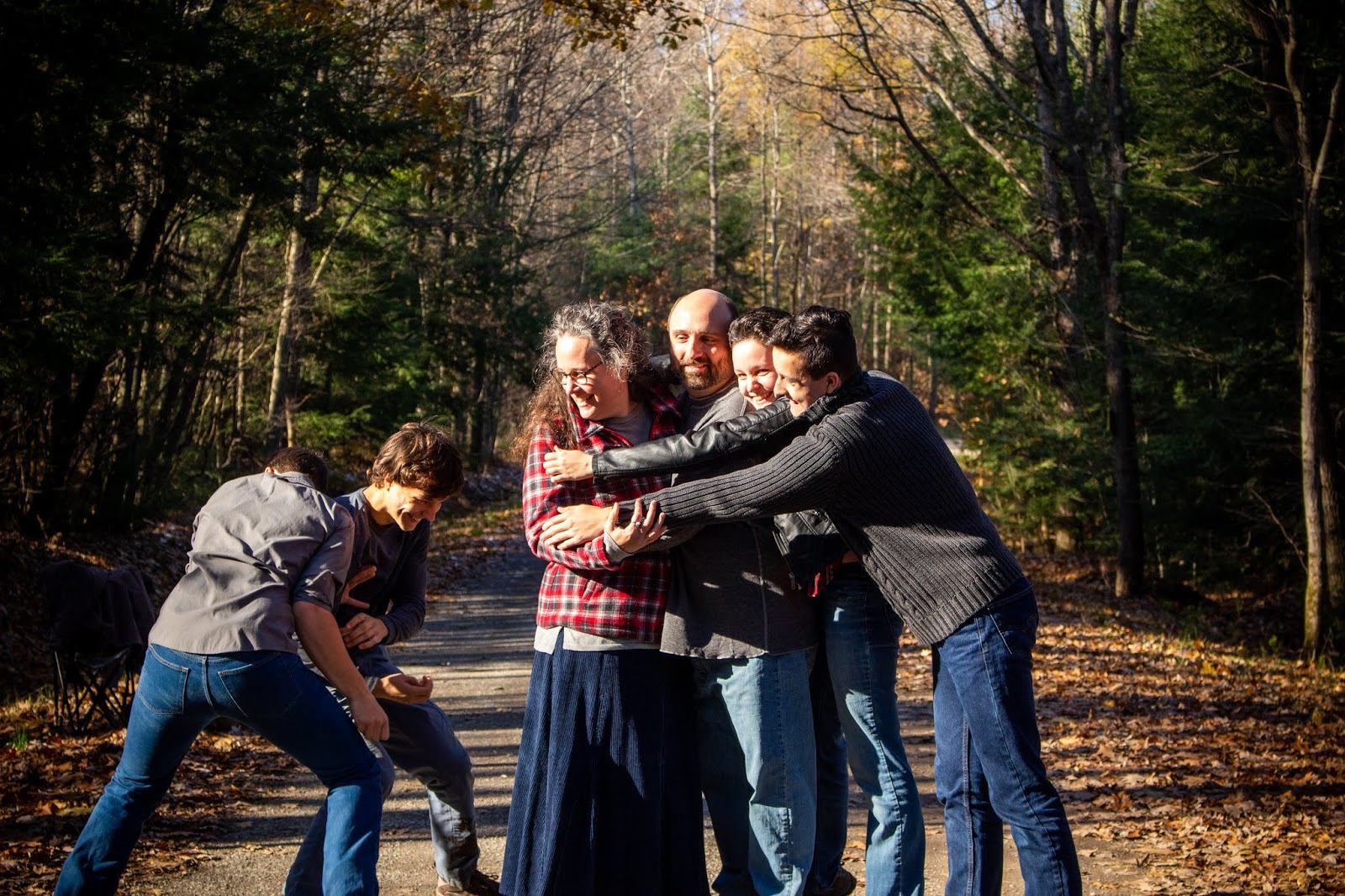 "Act normal."
"Okay!"
 "The boundary lines have fallen for me in pleasant places; surely I have a delightful inheritance" (Psalm 16:6).
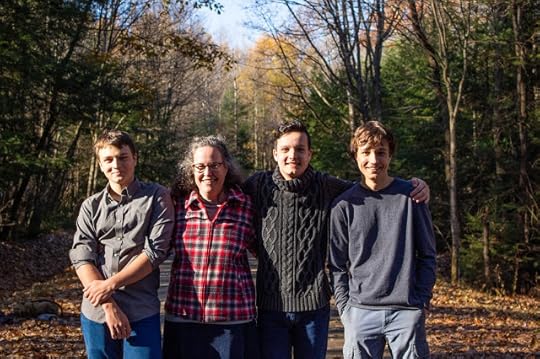 "Blessed are all who fear the LORD, who walk in his ways. You will eat the fruit of your labor; blessings and prosperity will be yours. Your wife will be like a fruitful vine within your house; your sons will be like olive shoots around your table. Thus is the man blessed who fears the LORD" (Psalm 128:1-4).
 "Sons are a heritage from the LORD, children a reward from him. Like arrows in the hands of a warrior are sons born in one's youth. Blessed is the man whose quiver is full of them. They will not be put to shame when they contend with their enemies in the gate" (Psalm 127:3-5).
 Cover for an album you don't really want to listen to.
 "Praise the LORD, all you nations; extol him, all you peoples. For great is his love toward us, and the faithfulness of the LORD endures forever. Praise the LORD" (Psalm 117:1-2).
 "Say 'Cheesy!'"
 "[Your beauty] should be that of your inner self, the unfading beauty of a gentle and quiet spirit, which is of great worth in God's sight" (1 Peter 3:4).
 "...and the ransomed of the LORD will return. They will enter Zion with singing; everlasting joy will crown their heads. Gladness and joy will overtake them, and sorrow and sighing will flee away" (Isaiah 3510).
 Teens and Screens 2018.
I love these people with all of my heart.
December 23, 2018
Fourth Sunday of Advent 2018: What Child Is This?
LEFC Family Advent Readings: “What Child Is This?”
Matthew 4:13-17 :: December 23, 2018
Week #4: The Light of the World
“Advent” means “coming.” Christmas is coming. Jesus has come and is coming again.
During this year’s Advent season, we have been answering the title question from the beloved Christmas carol “What Child Is This?” from the first few chapters of the Gospel of Matthew.
[LIGHT FIRST CANDLE AGAIN.]
Our first candle reminded us that this child who was laid to rest on Mary’s lap was “Immanuel.” The prophet Isaiah had foretold that the virgin would give birth to a child Who would be “God-with-us.”
[LIGHT SECOND CANDLE AGAIN.]
Our second candle proclaimed that this child“whom angels greet with anthems sweet” is “The King of the Jews.” The Magi knew that the baby born in Bethlehem was worthy of their homage. They worshiped Him and brought Him incense, gold, and myrrh–gifts fit for the King of Kings.
[LIGHT THIRD CANDLE AGAIN.]
Our third candle shines to say that this Babe was not just the son of Mary but the beloved Son of God. At His baptism, the Father’s voice from heaven said that with Jesus He was “well pleased.”
[LIGHT FOURTH CANDLE.]
The Bible also tells us that this Child is the Light of the World. In the fourth chapter of his gospel, Matthew tells the story of the start of Jesus’ public ministry. After His baptism and His temptation in the wilderness, Jesus returned to Galilee and began His preaching ministry. Matthew tells us that this move was a fulfillment of another great prophecy from Isaiah.
[READ MATTHEW 4:15-17.]
The darkness will not win. Jesus is the Light of the World.
Haste, haste to bring Him loud praise!
Matthew 4:13-17 :: December 23, 2018
Week #4: The Light of the World
“Advent” means “coming.” Christmas is coming. Jesus has come and is coming again.
During this year’s Advent season, we have been answering the title question from the beloved Christmas carol “What Child Is This?” from the first few chapters of the Gospel of Matthew.
[LIGHT FIRST CANDLE AGAIN.]
Our first candle reminded us that this child who was laid to rest on Mary’s lap was “Immanuel.” The prophet Isaiah had foretold that the virgin would give birth to a child Who would be “God-with-us.”
[LIGHT SECOND CANDLE AGAIN.]
Our second candle proclaimed that this child“whom angels greet with anthems sweet” is “The King of the Jews.” The Magi knew that the baby born in Bethlehem was worthy of their homage. They worshiped Him and brought Him incense, gold, and myrrh–gifts fit for the King of Kings.
[LIGHT THIRD CANDLE AGAIN.]
Our third candle shines to say that this Babe was not just the son of Mary but the beloved Son of God. At His baptism, the Father’s voice from heaven said that with Jesus He was “well pleased.”
[LIGHT FOURTH CANDLE.]
The Bible also tells us that this Child is the Light of the World. In the fourth chapter of his gospel, Matthew tells the story of the start of Jesus’ public ministry. After His baptism and His temptation in the wilderness, Jesus returned to Galilee and began His preaching ministry. Matthew tells us that this move was a fulfillment of another great prophecy from Isaiah.
[READ MATTHEW 4:15-17.]
The darkness will not win. Jesus is the Light of the World.
Haste, haste to bring Him loud praise!
[Matt's Messages] "Great Joy"
 “Great Joy”
December 23, 2018
Luke 2:10
I have two favorite Christmas carols. Do you know what they are?
This is my 21st Christmas as your pastor, so by now you might be able to guess.
I have two favorites and they are both because of the rich theology embedded in them.
One of them is “Hark! The Herald Angels Sing.”
“Veiled in flesh the Godhead see; Hail the incarnate Deity.
Pleased as man with men to dwell, Jesus our Emmanuel.”
That’s some good stuff there on the meaning of Christmas!
What do you think is the other one?
I’m sure you’ve looked at the end of the order of service and already figured it out.
“Joy to the World!”
And that’s what I want to talk about today.
Joy. Great joy.
The angel said to the shepherds (v.10), “Do not be afraid. I bring you good news of great joy that will be for all the people.”
Good news of great joy for all the people.
In other words, “Joy to the World!”
What is joy?
I mean, we all know what it is, but it’s kind of hard to define.
And the world has so many counterfeits.
What is joy?
At my house, I have Heather Joy, and I have Robin Joy.
They are two of my greatest joys.
But what is joy itself?
Joy is satisfaction.
Joy is a thirst quenched.
Joy is a delight in something that refreshes you.
True joy is delightful satisfaction in God and what He has done.
The theme of joy is all over the Bible.
From cover to cover, you could say that the Bible is a story of joy.
Joy in creation. Joy lost in the Fall. Joy regained piece by piece as the story of redemption unfolds.
Joy in the psalms, especially. Rejoice! My cup overflows!
And then joy restored as the Savior comes.
The angel said, “Do not be afraid. I bring you good news of great joy.”
The Greek of verse 10 is literally, “mega chara.” Mega Joy!
Joy to the World. The Lord is come.
Because of Christmas, because of the Incarnation, because Jesus has come, Christians have every reason to rejoice.
That’s why Joe led us in “Good Christian Men, Rejoice!”
And Good Christian Women and Boys and Girls, too, rejoice!
With heart and soul and voice!
Jesus Christ is born today.
#1. GREAT JOY RIGHT NOW.
The Bible says that joy is part of the fruit of the Spirit.
It’s number 2 in the list.
“The fruit of the Spirit is love, joy...” and so forth.
Joy is part of the normal experience of every Christian.
The Apostle Peter says, “In this you greatly rejoice...[You believe in Jesus and you] are [currently] filled with an inexpressible and glorious joy, for you are receiving the goal of your faith, the salvation of your souls.”
Joy has come with Jesus, and it’s better than regular old happiness.
Now, “happiness” is not bad. And it’s not a bad word.
But joy is a better thing and a better word.
It’s deeper and fuller and richer and more meaningful.
Joy! Joy! Joy!
Great Joy Right Now.
Because Jesus has been born, we have every reason to rejoice.
It was joy that led Jesus to the Cross.
Hebrews says, “For the joy set before Him, Jesus endured the Cross.”
Jesus’ joy in God, Jesus’ delightful satisfaction in His Father and what His Father would do for us in saving us eternally was enough to motivate Jesus to die on the Cross for our sins, taking our place.
Joy! We have every reason to rejoice right now.
I think that “joy” is my favorite word when it comes to Christmas.
The close runners up are Love, Hope, Gift, and Peace. I think some years they win over joy.
But joy is right there up at the top.
Joy because Jesus came.
Great joy right now.
That was what Bryanna’s prayer was for Anna Leigh, wasn’t it?
That she would abound in “joy” from Romans 15:13, right?
“May the God of hope fill you with all joy and peace as you trust in him, so that you may overflow with hope by the power of the Holy Spirit.” Amen.
Notice in our verse that the great joy comes from the good news.
“The angel said to them, ‘Do not be afraid. I bring you good news of great joy that will be for all the people.”
It’s that good news (the gospel) about Jesus that brings us true and lasting joy.
Even in the middle of great trials and suffering.
Especially in the middle of great trials and suffering!
Earthly happiness comes and goes, it burns off under the sun of suffering.
But joy can exist in the hardest of times, warm in the heart of those who have Jesus.
In fact, the Bible says that we are to have joy at those times when are suffering.
James says in chapter 1 of his letter, “Consider it pure [....what?] joy, my brothers, whenever you face trials of many kinds.”
Not that we love the trials!
But that we know that the trials will be used for God’s purposes in our lives, perfecting us. And James says that that’s worth rejoicing in.
Everything is worth rejoicing in because Jesus came that first Christmas.
Now, you might be hurting real bad right now.
A lot of people have great grief at Christmastime.
You’ve lost someone.
The Dobos lost Carolyn this month.
It’s been 8 years since we lost Heather’s mom Linda in December. Robin was just 10.
This can be a really hard time of the year.
And when the grief comes, it’s right to cry. It’s right to mourn.
But Christians mourn differently, too. We grieve in hope.
And a hope that doesn’t disappoint. We can both grieve and rejoice at the same time.
Because we know Jesus.
We miss Carolyn. But at the same time, we rejoice for her.
And we know that because Jesus came, we will see her again.
Because of Jesus, we have every reason to rejoice.
Good news of Great Joy Right Now.
But this is not all that there is. Remember what we learned last week?
#2. GREAT JOY SOMEDAY SOON!
This angel in verse 10 was talking about Jesus’ first coming. His first advent.
But Jesus didn’t bring all of the blessings of His kingdom right away.
The King came that first Christmas, but the Kingdom has not yet full arrived!
There is a second advent, a second coming of the King that we are still looking forward to, a second time for Jesus to bring GREAT JOY to the World in all of its fullness.
I don’t know about you, but the more Christmases I experience, the more I think, not about Jesus’ first coming, but about Jesus’ second coming.
You know, that’s what Isaac Watts was thinking about when he wrote the hymn, “Joy to the World?”
If you turn to it in your hymnal (#125), you’ll see what I mean.
We often sing it at Christmas. I remember singing it as a little boy in church. I loved the echo part of the chorus: “And heaven and nature sing...And heaven and nature sing.”
But even though we sing it at Christmastime, it’s not really about Luke 2.
It’s about the return of Jesus and the great joy that will come to the world when that great event happens.
Joy to the World! The Lord is come;
Let earth receive her King!
Let every heart prepare Him room,
And heaven and nature sing!
Can you imagine what that will be like?
Joy to the earth! The Savior reigns.
Yes, there is a sense in which He reigns now. All authority has been given to Jesus.
But His reign is contested now. Remember last week? The weeds are sown in the wheat. An enemy has done this.
But someday soon, Jesus’ reign will be universal and uncontested.
Joy to the earth! The Savior reigns.
Let Men Their Songs Employ!
While fields and floods, rock, hills, and plains repeat
The sounding joy!
Repeat the sounding joy!
All of nature is going to be happy and delighted and full of joy.
Isaac Watts got this idea from Psalm 98. He was making a hymn out of the thoughts of Psalm 98 transposed into a Christian key.
This is what Psalm 98 says:
“Sing to the LORD a new song, for he has done marvelous things;his right hand and his holy arm have worked salvation for him.The LORD has made his salvation known and revealed his righteousness to the nations.He has remembered his love and his faithfulness to the house of Israel;all the ends of the earth have seen the salvation of our God.
Shout for joy to the LORD, all the earth, burst into jubilant song with music;make music to the LORD with the harp, with the harp and the sound of singing,with trumpets and the blast of the ram's horn–shout for joy before the LORD, the King.
Let the sea resound, and everything in it, the world, and all who live in it. Let the rivers clap their hands, let the mountains sing together for joy;let them sing before the LORD, for he comes to judge the earth. He will judge the world in righteousness and the peoples with equity.”
The world is personified as feeling the pains of the curse.
Romans 8 says that the creation groans and waits in eager expectation for the return of Christ.
But when Jesus returns, the whole world (not just His people!) will have great joy!
No more let sins and sorrows grow
Nor thorns infest the ground (The curse from Genesis 3)
He comes to make His blessings flow
Far as the curse is found, Far as the curse is found
That’s my favorite line in that song.
How far does the curse extend right now?
It gets down into our very DNA, doesn’t it?
There is nowhere that is untouched by the curse.
Life is not as it should be.
Cancer, for example, is not the way it should be.
War is not the way it should be.
Death is not the way it should be!
But Jesus is going to reverse the curse someday soon.
Reverse the curse!
He will make His blessings known as far as the curse is currently found.
He’s going to roll back the curse and make everything new.
Revelation 21
“Then I saw a new heaven and a new earth, for the first heaven and the first earth had passed away, and there was no longer any sea. I saw the Holy City, the new Jerusalem, coming down out of heaven from God, prepared as a bride beautifully dressed for her husband.
And I heard a loud voice from the throne saying, ‘Now the dwelling of God is with men, and he will live with them. They will be his people, and God himself will be with them and be their God.
He will wipe every tear from their eyes. [Are you crying this Christmas?]
There will be no more death or mourning or crying or pain, for the old order of things has passed away.’
He who was seated on the throne said, ‘I am making everything new!’
Then he said, ‘Write this down, for these words are trustworthy and true.’
He said to me: ‘It is done. I am the Alpha and the Omega, the Beginning and the End. To him who is thirsty I will give to drink without cost from the spring of the water of life.’”
That’s is great joy!
Joy to the World, to the whole entire world[!], someday soon.
Remember last week? The birds of the air will nest in the branches of the mustard tree. And “the righteous will shine like the sun in the kingdom of their Father.”
He rules the world with truth and grace
and makes the nations prove
the glories of his righteousness
and the wonders of His love.
The wonders of His love.
Brothers and sisters, we have every reason to rejoice.
And every reason to spread that joy.
Joy to the world in missions.
Let the nations be glad!
Let the nations rejoice!
Because there is good news of great joy that will be for all the people.
We need to live in expectation, in anticipation of that joy.
And to share it with others.
I don’t have more to say than this.
Let this Christmas be a Christmas of GREAT JOY for those of us who know Jesus.
Great Joy to the World, the Lord Has Come!
***
Astute readers will recognize a good bit of this from a previous sermon, Christmas 2010.
It's just as true today!
December 22, 2018
Reading on Race in 2018
At the beginning of the year, I made two personal commitments concerning the subject of race and racism: (1) to read more deeply about race, racism, and racial reconciliation and (2) to not "look away" when I see something offensive and odious in history or the current situation. It is much too easy to skip over problems that seem intractable, convicting, or painful, but our Lord says that the truth will set us free.
This is a summary of the highlights of my reading (which also branched out to listening to good resources, as well) with some bits and pieces copied from my reviews.
Under Our Skin by Ben Watson
I started out on a high point with this professional football player's excellent both/and treatment of the current unsatisfactory situation and also the heart of the problem which is the problem of the human heart. Watson writes, “What is under our skin, and under the skin problem in America, is a spiritual problem. Every time we point at someone else or at an entire race–reducing them to a single story, diminishing them by stereotypes and assumptions–we overlook our own failure. When we point outside ourselves and say, ‘You should have done this...’ or ‘You were wrong to...’ we miss the point. When we focus on another person’s skin, we miss the reality of our own sin” (pg. 188-189).And he does an excellent job of pointing us toward the answer to our sin problem, too–the grace of our Lord Jesus Christ. At the same time, he doesn't give any simplistic answers or let anyone off of the hook for working towards solutions.
Why We Can't Wait by Martin Luther King, Jr.
I wanted to focus on some primary sources this year, and who better to read than Dr. King himself? This book tells the story of the Civil Rights Movement, especially the events of the year 1963. It centers on the events in Birmingham and includes King’s “Letter from a Birmingham Jail.” King explains what their aims were, what philosophy guided them, what tactics of direct action through nonviolence they employed, and what the results were. He does a masterful job of carrying the reader along, reasonably dealing with the objections that naturally arise, and persuading, always persuading.
I struggled as I read it to know what I would have done if I had lived in those days and in those places. My best guess (and maybe I still give myself too much credit) is that I would have been a passive bystander, sympathetic but too hesitant to be of much good. King speaks directly to folks like that, and I found myself looking at my shoes, shuffling around, trying not to be ashamed.
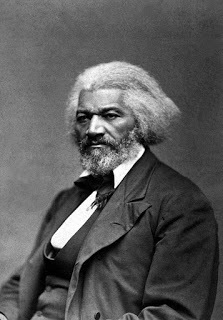 Douglass was, amazingly, the most photographed man of his time.
The Narrative of the Life of Frederick Douglass Written by Himself
Douglass’s autobiography is hard to read and hard to put down. His commitment to minceless truth-telling of the disturbing realities of American chattel slavery makes reading it painful. It would be far easier to look away. But the writing is straightforward, clear, open-eyed. I was drawn into his story and was surprised when it was over so soon.
The Gospel, Compassion and Justice, and the EFCA
In February, our association of churches held an entire theology conference around the theme of the gospel, compassion, and justice. Racism was a major theme, and we were even treated with two talks by John Perkins. I was privileged to attend and listen to all of the lectures which are now available for free online. The whole thing is worthwhile, but if you only have time for one, make sure you listen to Jarvis Williams on "The Cross and Racial Reconciliation" which goes deeply into the biblical and theological truths that are at stake.
After the conference, the primary conveners Greg Strand and Alejandro Mandes talked about what was discussed and what kind of next steps are needed.
I’m ashamed that I didn’t know hardly anything about the shameful forced labor of African Americans from the Civil War to the second World War. I knew that Reconstruction was incredibly hard and that sharecropping was backbreaking work for very little if any profit. I knew that prejudice continued unabated, that blacks were hated, lynched, disenfranchised , segregated, and mistreated. But I did not know they were Justice: What Is the Right Thing to Do? by Michael Sandel
I never wrote a review of this one. I'm still trying to understand what justice actually is, and this short introduction to the topic by a Harvard professor explains how different schools of philosophical thought have understood it. I made some progress, but I didn't emerge with a solid definition.
Thabiti Anyabwile Adams Lectures at Southeastern Theological Seminary
More helpful for me in getting at biblical understanding of justice were these 3 lectures by Thabiti Anyabwile at SEBTS which I listened to while stacking wood for the our outdoor furnace. Anyabwile is a prolific author and writes in a pointed straightforward way on these issues. He was recently interviewed at Christianity Today on the subject of the controversial Statement on Social Justice and the Gospel which was released this Fall [highlights summarized here]. I don't always agree with (or understand) Anyabwile, but I'm always helped by his gracious yet relentless gospel-centered approach to getting at the truth.
MLK500: Gospel Reflections from the Mountaintop
This Summer, I also listened to nearly all of the talks from this special MLK event convened by the ERLC and TGC (so many initials!) in Memphis in April. I was struck by the earnestness and hope that was present but also by the underlying dissatisfaction with the current relationship between evangelicalism and people of color. (To learn more about that, I recommend listening to this Cultivated interview with Lecrae and Mike Cosper. And also to catch what John Piper was saying about this stuff, too. Piper's thinking about racism and systematic racism has been very formative for me. If you are wondering if social justice is a gospel issue, I think Kevin DeYoung is helpful here.)
The Civil War and Reconstruction Era, 1845-1877 lectures by David W. Blight
This Summer, I downloaded this open course from Yale of lectures delivered by historian David Blight back in 2008. I had listened to these a decade ago while traveling to and from my classes at CCEF. It's riveting stuff. Blight is an excellent teacher on top of being a Civil War expert.
It seems to me that we are still coming to terms with the American Civil War. I know that I am rediscovering how awful it truly was and how awful its true cause was. Blight explores the many facets of its origins, key persons, turning points, and fallout. I'm almost done listening to the 27 hours again, and things are much clearer now for me.
Blight doesn't do a lot with the theology at conflict in the Civil War, so the next book I hope to read is The Civil War as a Theological Crisis by evangelical historian Mark Noll. I hope to get it for Christmas (hint, hint for any family out there reading this).
The Killer Angels by Michael Shaara
To get a sense of the horror of the war, I read the historical fiction The Killer Angels by Michael Shaara. It recounts the events of Gettysburg from the perspectives of the commanders on both sides. I couldn't put it down.
Report on Slavery and Racism in the History of the Southern Baptist Theological Seminary
Serendipitously, at the same time I reached the part in the lectures by Blight at Yale on Reconstruction, The Southern Baptist Seminary released a report on slavery and racism in the history of SBTS. The report is a model of truth-telling and not looking away from hard realities. I'm thankful for Albert Mohler and his leadership in commissioning this report and leading in the lament that appropriately accompanies it. For me, it was fascinating to read about SBTS's missteps in parallel with learning about the broader historical events.
Uncle Tom's Cabin by Harriet Beecher Stowe
I'm finishing up 2018 by reading the classic abolitionist novel Uncle Tom's Cabin. I don't think I've ever read it before, yet everything in it is familiar. (Perhaps it was read to me when I was young?) Stowe's sweetly subversive storytelling grabs the reader and forces them to make eyes-wide-open moral choices. I shouldn't be surprised at how good it is, seeing as it was the bestselling novel of the 19th century, but it's a real page-turner.
What amazes me most as I read it is that it was written before the Civil War. Stowe doesn't know what is going to happen in American history after she writes this. The closest thing I can ever remember reading is Twain's Huckleberry Finn. When you read Huck Finn, the story takes place twenty years before the war, but it was written twenty years afterwards. So there is some luxury of historical perspective. But this was written before the war, and is, in fact, one of its human prompters. Stowe isn't just sitting on a tinderbox. She is helping to write the tinderbox into existence.
2019 and Beyond
Of course, while I've been focused on this subject quite a bit in 2018, I've only begun to scratch the surface, and I'm not done learning and hopefully growing. I want to learn to be a man of God who is not afraid of the truth and committed to living in love and pursuing justice.
"He has showed you, O man, what is good. And what does the LORD require of you? To act justly and to love mercy and to walk humbly with your God" (Micah 6:8).
This is a summary of the highlights of my reading (which also branched out to listening to good resources, as well) with some bits and pieces copied from my reviews.
Under Our Skin by Ben Watson
I started out on a high point with this professional football player's excellent both/and treatment of the current unsatisfactory situation and also the heart of the problem which is the problem of the human heart. Watson writes, “What is under our skin, and under the skin problem in America, is a spiritual problem. Every time we point at someone else or at an entire race–reducing them to a single story, diminishing them by stereotypes and assumptions–we overlook our own failure. When we point outside ourselves and say, ‘You should have done this...’ or ‘You were wrong to...’ we miss the point. When we focus on another person’s skin, we miss the reality of our own sin” (pg. 188-189).And he does an excellent job of pointing us toward the answer to our sin problem, too–the grace of our Lord Jesus Christ. At the same time, he doesn't give any simplistic answers or let anyone off of the hook for working towards solutions.
Why We Can't Wait by Martin Luther King, Jr.
I wanted to focus on some primary sources this year, and who better to read than Dr. King himself? This book tells the story of the Civil Rights Movement, especially the events of the year 1963. It centers on the events in Birmingham and includes King’s “Letter from a Birmingham Jail.” King explains what their aims were, what philosophy guided them, what tactics of direct action through nonviolence they employed, and what the results were. He does a masterful job of carrying the reader along, reasonably dealing with the objections that naturally arise, and persuading, always persuading.
I struggled as I read it to know what I would have done if I had lived in those days and in those places. My best guess (and maybe I still give myself too much credit) is that I would have been a passive bystander, sympathetic but too hesitant to be of much good. King speaks directly to folks like that, and I found myself looking at my shoes, shuffling around, trying not to be ashamed.
Douglass was, amazingly, the most photographed man of his time.The Narrative of the Life of Frederick Douglass Written by Himself
Douglass’s autobiography is hard to read and hard to put down. His commitment to minceless truth-telling of the disturbing realities of American chattel slavery makes reading it painful. It would be far easier to look away. But the writing is straightforward, clear, open-eyed. I was drawn into his story and was surprised when it was over so soon.
The Gospel, Compassion and Justice, and the EFCA
In February, our association of churches held an entire theology conference around the theme of the gospel, compassion, and justice. Racism was a major theme, and we were even treated with two talks by John Perkins. I was privileged to attend and listen to all of the lectures which are now available for free online. The whole thing is worthwhile, but if you only have time for one, make sure you listen to Jarvis Williams on "The Cross and Racial Reconciliation" which goes deeply into the biblical and theological truths that are at stake.
After the conference, the primary conveners Greg Strand and Alejandro Mandes talked about what was discussed and what kind of next steps are needed.
I’m ashamed that I didn’t know hardly anything about the shameful forced labor of African Americans from the Civil War to the second World War. I knew that Reconstruction was incredibly hard and that sharecropping was backbreaking work for very little if any profit. I knew that prejudice continued unabated, that blacks were hated, lynched, disenfranchised , segregated, and mistreated. But I did not know they were Justice: What Is the Right Thing to Do? by Michael Sandel
I never wrote a review of this one. I'm still trying to understand what justice actually is, and this short introduction to the topic by a Harvard professor explains how different schools of philosophical thought have understood it. I made some progress, but I didn't emerge with a solid definition.
Thabiti Anyabwile Adams Lectures at Southeastern Theological Seminary
More helpful for me in getting at biblical understanding of justice were these 3 lectures by Thabiti Anyabwile at SEBTS which I listened to while stacking wood for the our outdoor furnace. Anyabwile is a prolific author and writes in a pointed straightforward way on these issues. He was recently interviewed at Christianity Today on the subject of the controversial Statement on Social Justice and the Gospel which was released this Fall [highlights summarized here]. I don't always agree with (or understand) Anyabwile, but I'm always helped by his gracious yet relentless gospel-centered approach to getting at the truth.
MLK500: Gospel Reflections from the Mountaintop
This Summer, I also listened to nearly all of the talks from this special MLK event convened by the ERLC and TGC (so many initials!) in Memphis in April. I was struck by the earnestness and hope that was present but also by the underlying dissatisfaction with the current relationship between evangelicalism and people of color. (To learn more about that, I recommend listening to this Cultivated interview with Lecrae and Mike Cosper. And also to catch what John Piper was saying about this stuff, too. Piper's thinking about racism and systematic racism has been very formative for me. If you are wondering if social justice is a gospel issue, I think Kevin DeYoung is helpful here.)
The Civil War and Reconstruction Era, 1845-1877 lectures by David W. Blight
This Summer, I downloaded this open course from Yale of lectures delivered by historian David Blight back in 2008. I had listened to these a decade ago while traveling to and from my classes at CCEF. It's riveting stuff. Blight is an excellent teacher on top of being a Civil War expert.
It seems to me that we are still coming to terms with the American Civil War. I know that I am rediscovering how awful it truly was and how awful its true cause was. Blight explores the many facets of its origins, key persons, turning points, and fallout. I'm almost done listening to the 27 hours again, and things are much clearer now for me.
Blight doesn't do a lot with the theology at conflict in the Civil War, so the next book I hope to read is The Civil War as a Theological Crisis by evangelical historian Mark Noll. I hope to get it for Christmas (hint, hint for any family out there reading this).
The Killer Angels by Michael Shaara
To get a sense of the horror of the war, I read the historical fiction The Killer Angels by Michael Shaara. It recounts the events of Gettysburg from the perspectives of the commanders on both sides. I couldn't put it down.
Report on Slavery and Racism in the History of the Southern Baptist Theological Seminary
Serendipitously, at the same time I reached the part in the lectures by Blight at Yale on Reconstruction, The Southern Baptist Seminary released a report on slavery and racism in the history of SBTS. The report is a model of truth-telling and not looking away from hard realities. I'm thankful for Albert Mohler and his leadership in commissioning this report and leading in the lament that appropriately accompanies it. For me, it was fascinating to read about SBTS's missteps in parallel with learning about the broader historical events.
Uncle Tom's Cabin by Harriet Beecher Stowe
I'm finishing up 2018 by reading the classic abolitionist novel Uncle Tom's Cabin. I don't think I've ever read it before, yet everything in it is familiar. (Perhaps it was read to me when I was young?) Stowe's sweetly subversive storytelling grabs the reader and forces them to make eyes-wide-open moral choices. I shouldn't be surprised at how good it is, seeing as it was the bestselling novel of the 19th century, but it's a real page-turner.
What amazes me most as I read it is that it was written before the Civil War. Stowe doesn't know what is going to happen in American history after she writes this. The closest thing I can ever remember reading is Twain's Huckleberry Finn. When you read Huck Finn, the story takes place twenty years before the war, but it was written twenty years afterwards. So there is some luxury of historical perspective. But this was written before the war, and is, in fact, one of its human prompters. Stowe isn't just sitting on a tinderbox. She is helping to write the tinderbox into existence.
2019 and Beyond
Of course, while I've been focused on this subject quite a bit in 2018, I've only begun to scratch the surface, and I'm not done learning and hopefully growing. I want to learn to be a man of God who is not afraid of the truth and committed to living in love and pursuing justice.
"He has showed you, O man, what is good. And what does the LORD require of you? To act justly and to love mercy and to walk humbly with your God" (Micah 6:8).
December 17, 2018
Gossip Potato Heads
(I never thought I'd title a post like that!)
Check this out! This pastor from down-under has created a set of potato heads to represent the 5 gossips from chapter 3 of Resisting Gossip .
This one takes the cake as the most creative use of my book so far!
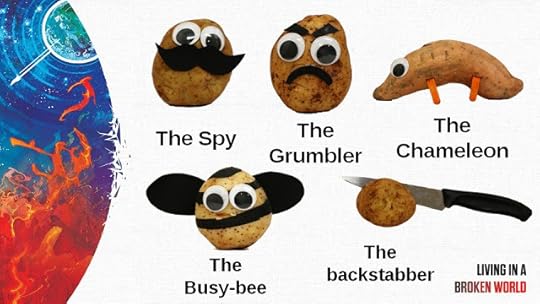
Check this out! This pastor from down-under has created a set of potato heads to represent the 5 gossips from chapter 3 of Resisting Gossip .
This one takes the cake as the most creative use of my book so far!
December 16, 2018
Third Sunday of Advent 2018: What Child Is This?
LEFC Family Advent Readings: “What Child Is This?”
Matthew 3:16-17 :: December 16, 2018
Week #3: God’s Beloved Son
“Advent” means “coming.” Christmas is coming. Jesus has come and is coming again.
During this year’s Advent season, we are using the Gospel of Matthew to answer the main question in the title of the treasured Christmas carol “What Child Is This?”
[LIGHT FIRST CANDLE AGAIN.]
Our first candle proclaimed that this child who was sleeping on Mary’s lap was “Immanuel.” As Isaiah predicted long before, the virgin gave birth to a child Who is “God-with-us.”
[LIGHT SECOND CANDLE AGAIN.]
Our second candle reminded us that this child for “whom shepherds guard and angels sing” is “The King of the Jews.” The Magi knew that the baby born in Bethlehem was true royalty. So they bowed down before Him and brought Him incense, gold, and myrrh–gifts fit for the King of Kings who brings salvation to His people.
[LIGHT THIRD CANDLE.]
The Bible also tells us that this child who lay “in such mean estate, where ox and ass were feeding” is “God’s Beloved Son.”
In the third chapter of his gospel, Matthew tells the story of Jesus’ baptism. Many years after His birth, Jesus came to Galilee to His relative, John, to be baptized. John tried to stop Him because he knew that Jesus was greater than he was, but Jesus in insisted.
Then when Jesus was baptized, the most extraordinary thing happened.
[READ MATTHEW 3:16-17.]
The voice from heaven answered the question once and for all. What Child is this? God the Father says, “This is my Son, whom I love; with him I am well pleased.”
Haste, haste to bring Him laud and praise!
Matthew 3:16-17 :: December 16, 2018
Week #3: God’s Beloved Son
“Advent” means “coming.” Christmas is coming. Jesus has come and is coming again.
During this year’s Advent season, we are using the Gospel of Matthew to answer the main question in the title of the treasured Christmas carol “What Child Is This?”
[LIGHT FIRST CANDLE AGAIN.]
Our first candle proclaimed that this child who was sleeping on Mary’s lap was “Immanuel.” As Isaiah predicted long before, the virgin gave birth to a child Who is “God-with-us.”
[LIGHT SECOND CANDLE AGAIN.]
Our second candle reminded us that this child for “whom shepherds guard and angels sing” is “The King of the Jews.” The Magi knew that the baby born in Bethlehem was true royalty. So they bowed down before Him and brought Him incense, gold, and myrrh–gifts fit for the King of Kings who brings salvation to His people.
[LIGHT THIRD CANDLE.]
The Bible also tells us that this child who lay “in such mean estate, where ox and ass were feeding” is “God’s Beloved Son.”
In the third chapter of his gospel, Matthew tells the story of Jesus’ baptism. Many years after His birth, Jesus came to Galilee to His relative, John, to be baptized. John tried to stop Him because he knew that Jesus was greater than he was, but Jesus in insisted.
Then when Jesus was baptized, the most extraordinary thing happened.
[READ MATTHEW 3:16-17.]
The voice from heaven answered the question once and for all. What Child is this? God the Father says, “This is my Son, whom I love; with him I am well pleased.”
Haste, haste to bring Him laud and praise!
[Matt's Messages] “What Is Really Going On?”
 “What Is Really Going On?”
Following Jesus - The Gospel of Matthew
December 16, 2018 :: Matthew 13:24-43
In this section of Matthew, we’re learning about Jesus’ parables of the kingdom.
Jesus has begun utilizing parables, riddles, colorful and enigmatic stories in his teaching, and this chapter is chock full of them.
Jesus told His disciples that He was using parables so much because they were the perfect kind of stories to both reveal His kingdom to those who trust and follow Him and to conceal His kingdom from those who do not want it.
For those who want the kingdom, they “get” the parables, and they get the kingdom.
For those who reject the kingdom, they don’t “get” the parables, and they certainly don’t get the kingdom.
In fact, Jesus told a parable to teach that very thing:
The parable of the sower, the seed, and soils.
Which teaches that there are basically two kinds of people:
Those who DON’T “get it,” who don’t receive the kingdom for various reasons. Jesus gave three.
And those who DO “get it,” who do receive the kingdom by receiving the King.
They produce an abundant harvest, so much more than what you might expect.
Well, in verse 24, Jesus tells another parable that involves sowing seed.
But this one is a little different. Because it doesn’t have just one kind of seed. It has two. In fact, there is just one kind of soil, but there are two kinds of seed in this story.
And then in verses 31-32, Jesus tells another parable, also involving a seed.
And then in verse 33, He tells another one.
And then verses 34 and 35 say just how much He taught in parables at this point in His ministry and how that was a fulfillment of Psalm 78, verse 2.
And then later, in verses 36 through 43, Jesus gives the interpretation of the first parable, the one with two different kinds of plants in it.
So that’s what we’re going to look at this morning. Verses 24 through 43.
And we’re going see how these parables relate to Christmas.
And how they relate to our lives today.
So let’s read the first parable and then pray together and then talk about what we see presented here in these stories. Matthew 13, verse 24.
Now, again, pretend that you have never heard this parable before in your life.
You are hearing this for the first time. And you haven’t heard the interpretation of verses 36 through 43.
What might you make of this parable?
Well, you notice that Jesus begins by saying (v.24), “The kingdom of heaven is like [this...]”
He doesn’t mean that the kingdom of heaven is like a man. He means that the kingdom of heaven is like this story. It is like this situation. It is like what is taught by this parable.
And you notice the story itself. V.24 again.
“‘The kingdom of heaven is like a man who sowed good seed in his field [That’s what every farmer tries to do.] But while everyone was sleeping, his enemy came and sowed weeds among the wheat, and went away.”
Now, who does that?
Matt, have you ever had that one done to you?
Apparently this is a rival farmer.
And it is an act of bio-terrorism (ZNIVSB). If I can ruin your field, the value of my crops will go up.
There was a Roman law against this very thing.
The weeds were probably what is called “darnel” which is actually a poisonous plant. It looks like wheat when it is young, but it’s more obvious when it’s grown to maturity.
The Old English word for this was “tares.” You might have heard of this as the parable of the “wheat and the tares.” Or you could call it the parable of the “Wheat and the Weeds.”
This is what the kingdom of heaven is like.
Here’s what happens next. Verse 26
“When the wheat sprouted and formed heads, then the weeds also appeared. [It became obvious that they were there.] The owner's servants came to him and said, 'Sir, didn't you sow good seed in your field? Where then did the weeds come from?' [That’s a very important part of this story. I think it’s the key, those questions.] 'An enemy did this,' he replied. ‘The servants asked him, 'Do you want us to go and pull them up?' [That makes sense. You might lose everything if you let those weeds take root. You might lose your whole crop! We should wipe them out now!] 'No,' he answered, 'because while you are pulling the weeds, you may root up the wheat with them. [I’ve got another plan.] Let both grow together until the harvest. At that time I will tell the harvesters: First collect the weeds and tie them in bundles to be burned; then gather the wheat and bring it into my barn.'”
Do you “get it?”
Let’s look at this next one. I think it has a similar point to the story. V.31
“He told them another parable: ‘The kingdom of heaven is like a mustard seed, which a man took and planted in his field. Though it is the smallest of all your seeds, yet when it grows, it is the largest of garden plants and becomes a tree, so that the birds of the air come and perch in its branches.’”
Do you “get it?”
One more story. V.33
“He told them still another parable: ‘The kingdom of heaven is like yeast that a woman took and mixed into a large amount of flour until it worked all through the dough.’”
“Jesus spoke all these things to the crowd in parables; he did not say anything to them without using a parable. So was fulfilled what was spoken through the prophet: ‘I will open my mouth in parables, I will utter things hidden since the creation of the world.’”
Jesus was in a parabolic mode.
At this point in His ministry, it was all parables all the time.
And Matthew recognizes the prophetic pattern of that. Just like Asaph writing Psalm 78 as a kind of riddle. Jesus is teaching using these many parables that both conceal and reveal the kingdom of heaven.
Do you get it it?
What does this parable reveal about the kingdom of heaven?
What question is it answering?
Here’s my title for today’s message, “What Is Really Going On?”
I think that’s what Jesus is teaching with these 3 parables.
What is really happening here?
Because things must not be what they seem.
I was reading a really good book by Klyne Snodgrass on the parables this week, and it said that in the parable of the wheat and the weeds, the key question that Jesus is answering is, “How can this be the kingdom?”
Have you ever asked that question when you look out at our world today?
I mean, Christmas happened, right? About 2000 years ago?
The Prince of Peace was born, right?
Well, how come there are so many wars then?
The King of Kings salvation brings, right?
So why isn’t everyone saved?
There’s these unsaved people, too.
How come there’s so many of them?
I think the questions asked by the servants in verse 27 hit it on the head:
“Sir, didn’t you sow good seed in your field? Where then did the weeds come from?”
“I want to be respectful here, but are you sure you’re doing it right?”
I mean, I’m not sure yet exactly what the wheat is and what the weeds are symbolically.
But one is obviously good and the other is obviously bad, and an enemy has brought the bad into the good.
So why not fix it NOW?
I mean if the kingdom of heaven is here, why not weed out the bad stuff now?
What is really going on?
Is there something going on I can’t see?
Yes. I think that’s what Jesus is teaching.
That there is more going on than meets the eye with the kingdom of heaven.
Things are not always as they seem.
And these parables tell us what is really going on.
Let’s let Jesus explain the parable to us, and then I’ll try to give three points of new perspective. V.36
“Then he left the crowd and went into the house. His disciples came to him and said, ‘Explain to us the parable of the weeds in the field.’ [What is really going on?] He answered, ‘The one who sowed the good seed is the Son of Man. The field is the world, and the good seed stands for the sons of the kingdom [true disciples!]. The weeds are the sons of the evil one [kingdom-rejecters], and the enemy who sows them is the devil. The harvest is the end of the age, and the harvesters are angels. As the weeds are pulled up and burned in the fire, so it will be at the end of the age. The Son of Man will send out his angels, and they will weed out of his kingdom everything that causes sin and all who do evil. They will throw them into the fiery furnace, where there will be weeping and gnashing of teeth. Then the righteous will shine like the sun in the kingdom of their Father. He who has ears, let him hear.”
What is really going on?
#1. THE KINGDOM HAS COME.
In all three of these parables, the kingdom of heaven has truly begun.
It might not seem like it for various reasons.
For example, there might be so many weeds.
Do you see all of these weeds on the nightly news?
Do you feel all of the weeds on social media?
Do you look out and wonder why are there so many “sons of the evil one?”
And how come the Lord doesn’t just wipe them out?
Does He really know what He’s doing?
“Sir, didn’t you sow good seed in your field? Where then did the weeds come from?”
It might seem like His field is out of His control.
But it’s not.
Yes, He has an enemy who is at work. “An enemy did this.”
There is an evil force at work in the world, sowing evil seed, trying to ruin the Lord’s good work.
And it might, at times, even seem like the enemy is winning.
But don’t you believe it!
Believe instead that the kingdom has come.
The good seed has been sown.
And don’t miss it because it’s small.
That’s the point, I think about the mustard seed in verse 31.
They new about the mustard seed. It was tiny. Some are just one millimeter in diameter.
You can’t hardly see it!
But it’s there.
Same with the leaven. Can you see the leaven?
Can you see the yeast in the dough?
In verse 33, Jesus literally says that the woman “hid” the yeast into like 50 pounds of dough.
Can you see that?
No. But make no mistake. It is in there.
The kingdom of heaven has come.
It may seem unimpressive. It may seem small and inconsequential. It may seem inauspicious as it begins.
It may seem invisible and insignificant.
But don’t underestimate it. The kingdom of heaven has come.
I mean, just think about Christmas, right?
How small did the King of Heaven come?
He came as an embryo miraculously conceived in the womb of a peasant girl in a backwoods nation under the oppressive thumb of Rome!
He came in the form of a servant.
He came as a nobody among nobodies.
But things are not always as they seem.
What is really going?
The kingdom of heaven has come.
The baby born in Bethlehem is the King of Kings.
#2. THE KINGDOM IS COMING.
The kingdom of heaven is arriving, quietly, piece by piece.
The kingdom is growing.
All three of these parables are parables of growth, aren’t they?
V.30, “Let them grow together until harvest.”
V.32, “...yet when it grows...”
V.33, the yeast worked “all through the dough.”
The kingdom is coming.
There is an interval between the arrival of the king and the fullness of the kingdom.
And during that time, the kingdom grows.
More people come under its sway.
More “sons of the kingdom” are sown (v.38).
More good things happen that show that God’s kingdom is arriving.
It may not be obvious.
In fact, it will not be obvious.
But it is inevitable.
And ongoing.
I think a key application of this is to not become impatient.
The harvesters wanted to pull up the weeds right away.
But the Lord of the harvest said, “Wait.”
I think that too often we say (to ourselves if not aloud), “If the Lord knew what He was doing, He would judge those evil people right now.”
“If the Lord knew what He was doing, He would take care of that problem right now.”
But think about it. What if the Lord weeded out all of the weeds while you and I were still weeds?
These parables call for us to be patient.
To believe. To trust that God knows what He is doing.
To see that growth of the kingdom with the eyes of faith.
The Lord is growing His kingdom. He really is.
And He’s doing all around us and in ways that we can’t always see or measure.
And there is great opposition to it.
The weeds are growing, too!
Both are happening at the same time.
The wheat is growing and the weeds are growing.
That’s how I interpret Jesus’ parable.
The good grows and so does the bad at the same time.
The church is growing. And so is the anti-church. They “co-exist.”
And that’s how it’s going to be until Jesus returns.
So we need to be patient and wait for it. This could go on a while.
We need to keep trusting that the kingdom is coming. Bit by bit. Day by day. Person by person. Disciple by disciple. Family by family. Church by church.
It’s coming!
As a pastor of a local church, I take great stock in this truth.
Because it doesn’t always seem like it.
It doesn’t always seem like it.
But this is what’s really going on behind the scenes, in the soil, in the field, in the dough.
The kingdom is coming.
You look at 3 new members. And you say, “Well, that seems small. Just three.”
And we just lost one.
But don’t underestimate what the Lord is doing with those 3!
The Bible says to not despise the day of small beginnings (Zech 4:10).
This is what is really going on!
The kingdom of heaven is coming.
Irresistibly, inexorably, unstoppably.
It’s here. It’s growing. It’s coming.
#3. THE KINGDOM WILL COME.
In all of its fullness.
It may not seem like it now, but that is what is really happening.
The kingdom of heaven will most certainly come in all of its fullness.
And it will be glorious!
Think about these 3 parables.
The mustard seed. So tiny. So small.
But what about when it’s fully grown? V.32
“...it is the largest of garden plants and becomes a tree, so that the birds of the air come and perch in its branches!”
If you could see it now!
How about the yeast?
It was hidden.
But what do you have now?
You have enough bread for a feast.
It just grew and grew and now, everybody gets fed.
That’s what’s going to happen.
And the wheat field?
There will be a harvest.
Which is scary thing if you are a weed. V.39 again.
“The harvest is the end of the age, and the harvesters are angels. As the weeds are pulled up and burned in the fire, so it will be at the end of the age. [The end is most coming.] The Son of Man will send out his angels, and they will weed out of his kingdom everything that causes sin and all who do evil. They will throw them into the fiery furnace, where there will be weeping and gnashing of teeth.
Make no mistake, the end is coming.
Sometimes we get to thinking that this world is all that there is.
But there is coming a day, a judgment day, a sorting day, when everything will be made right.
Justice will be done and will be seen to be done.
And all of those who have rejected the Lord will enter into eternal judgment.
Weeping and gnashing of teeth.
That’s Jesus saying that.
Some people think that Jesus is just meek and mild.
But nobody in the Bible talked about judgment more than Jesus.
It’s coming.
Not on our time table.
Not when we want it.
But don’t fool yourself into thinking that it’s never coming.
If you are not yet a believer and follower of Jesus, then this parable is a warning to you to repent while you still can.
“Repent, for the kingdom of heaven is near!”
The Apostle Peter said it this way.
That some people will scoff at the notion that the judgment will come like this one day.
But Peter says, “The Lord is not slow in keeping his promise, as some understand slowness. He is patient with you, not wanting anyone to perish, but everyone to come to repentance...Bear in mind that our Lord's patience means salvation” to those who turn to Him.
He is coming.
The judgment is coming.
The sorting is coming.
The great weeding of the field is coming.
You don’t want to get tossed into that furnace.
Repent now before it’s too late.
This same Jesus died on the Cross for the sins of the world so that sinners like you and me don’t have to spend eternity weeping and gnashing our teeth.
Repent.
And put your faith in Jesus Christ.
Because He is going to return some day soon.
And when He does, His kingdom will come in all of its fullness.
And for those who have trusted in Him and have followed Him and have waited for Him and have believed in Him and haven’t stopped working for Him, it will be glorious!
Look at verse 43.
“Then the righteous will shine like the sun in the kingdom of their Father.”
That’s where John Newton got the idea for the last verse of Amazing Grace!
“When we’ve been there ten thousand years...”
What?
“Bright shining as the sun.”
We cannot imagine!
It’s everything we’ve ever wanted and ever longed for.
The kingdom.
It’s God King ruling and reigning in His majesty over His people over all the world forever.
His blessings will flow as far as the curse is found.
The glory of the Lord will fill the earth like the waters cover the sea!
That’s what really going on.
Don’t believe your five senses or the nightly news if they tell you something different.
Don’t believe your friends or your enemies if they have a different narrative to sell.
Don’t be snookered by the devil or by appearances.
Things are not always as they seem.
No, this is what’s going on.
The kingdom of heaven has come.
Quietly with little fanfare. But as surely as you know anything.
And the kingdom of heaven is coming.
Slowly perhaps. Bit by bit. Piece by piece.
And not without opposition.
There is an enemy at work.
But He is losing and will lose.
The kingdom is growing right under our noses.
And one day the kingdom will come in all of its fullness.
Let’s live now as we truly believed that.
What changes do you need to make to be ready for the kingdom?
Remember what Jesus said about how to live in and for this kingdom in the sermon on the mount?
Upside-down and inside-out.
Flourishing where you least expect it and from the heart.
That’s what it means to be righteous.
And “the righteous will shine like the sun in the kingdom of their Father. He who has ears, let him hear....” ...what is really going on.
Previous Messages in This Series:
01. The Genealogy of Jesus
02. The Birth of Jesus Christ
03. The Search for Jesus Christ
04. The Baptism of Jesus
05. The Temptation of Jesus
06. Following Jesus
07. Jesus' Sermon on the Mount
08. The Good Life (Part One)
09. The Good Life (Part Two)
10. You Are The...
11. Jesus and the First 2/3 of the Bible
12. But I Tell You
13. But I Tell You (2)
14. But I Tell You (3)
15. In Secret
16. Choose Wisely
17. Seek First His Kingdom
18. Generous
19. These Words of Mine
20. When He Saw the Crowds
21. When He Came Down from the Mountainside
22. Follow Me
23. Our Greatest Problem
24. Who Does He Think He Is?
25. Special Agents
26. Sheep Among Wolves
27. What To Expect On Your Mission
28. Are You the One?
29. Come to Me
30. The King of Rest
31. So Thankful!
32. Overflow
33. This Wicked Generation34. Get It?
December 9, 2018
Second Sunday of Advent 2018: What Child Is This?
LEFC Family Advent Readings: “What Child Is This?”
Matthew 2:1-12 :: December 9, 2018
Week #2: King of the Jews
“Advent” means “coming.” Christmas is coming. Jesus has come and is coming again.
During this year’s Advent season, we are answering, from the Gospel of Matthew, the title question of the classic Christmas carol “What Child Is This?”
[LIGHT FIRST CANDLE AGAIN.]
Our first candle proclaimed that the child sleeping on Mary’s lap was “Immanuel.” As prophesied by Isaiah, the virgin gave birth to a child who is “God-with-us.”
[LIGHT SECOND CANDLE.]
The Bible also says that this child whom angels greet with anthems sweet is “The King of the Jews.”
Matthew tells the story in the second chapter of his gospel of a mysterious group of people called the “Magi” who came to Jerusalem from the east looking for the King of the Jews. They had seen His star and had come to worship Him.
The Magi learned from wicked King Herod and the Jewish chief priests and teachers of the law that the Messiah was to be born in Bethlehem in Judea. They knew this because of the prophecy of Micah in the Old Testament.
[READ MATTHEW 2:6]
So they went to Bethlehem, still following that star, and that’s exactly what the Magi found–a newborn king. They were overjoyed and worshiped Jesus. They knew that He was royalty, and before they left by a different route to outwit evil Herod, they gave Jesus gifts fit for a king.
Jesus is the King of the Jews, and He is our King, as well.
So bring Him incense, gold, and myrrh,
Come, peasant, king to own Him.
The King of kings salvation brings;
Let loving hearts enthrone Him.
Matthew 2:1-12 :: December 9, 2018
Week #2: King of the Jews
“Advent” means “coming.” Christmas is coming. Jesus has come and is coming again.
During this year’s Advent season, we are answering, from the Gospel of Matthew, the title question of the classic Christmas carol “What Child Is This?”
[LIGHT FIRST CANDLE AGAIN.]
Our first candle proclaimed that the child sleeping on Mary’s lap was “Immanuel.” As prophesied by Isaiah, the virgin gave birth to a child who is “God-with-us.”
[LIGHT SECOND CANDLE.]
The Bible also says that this child whom angels greet with anthems sweet is “The King of the Jews.”
Matthew tells the story in the second chapter of his gospel of a mysterious group of people called the “Magi” who came to Jerusalem from the east looking for the King of the Jews. They had seen His star and had come to worship Him.
The Magi learned from wicked King Herod and the Jewish chief priests and teachers of the law that the Messiah was to be born in Bethlehem in Judea. They knew this because of the prophecy of Micah in the Old Testament.
[READ MATTHEW 2:6]
So they went to Bethlehem, still following that star, and that’s exactly what the Magi found–a newborn king. They were overjoyed and worshiped Jesus. They knew that He was royalty, and before they left by a different route to outwit evil Herod, they gave Jesus gifts fit for a king.
Jesus is the King of the Jews, and He is our King, as well.
So bring Him incense, gold, and myrrh,
Come, peasant, king to own Him.
The King of kings salvation brings;
Let loving hearts enthrone Him.
[Matt's Messages] “Get It?”
 “Get It?”
Following Jesus - The Gospel of Matthew
December 9, 2018 :: Matthew 13:1-23
We’ve made it all the way to Matthew chapter 13!
We started this trek of “Following Jesus” through the Gospel of Matthew 365 days ago on December 10, 2017. But we’ve taken it kind of slow and taken a lot of breaks along the way, so that we’ve only had 33 messages so far in this series, and we’ve only made it up to the first verse of chapter 13, not quite half way. We’re picking up some steam, so I expect that sometime in 2019 we may finish the whole thing.
Chapter 13 marks a new section in the Gospel of Matthew.
Remember I said that there are 5 major blocks of teaching from Jesus in the Gospel of Matthew? We’ve gone through two of them so far.
The first and arguably greatest is the Sermon on the Mount, chapter 5, 6, and 7 which we spent a lot of time on this Spring and Summer. Jesus taught about His upside-down, inside-out Kingdom.
The second major block of Jesus’ teaching was in Matthew chapter 10, often called the “Missions Discourse” or the major teaching on missions and the mission of making disciples for King Jesus through the gospel of the kingdom.
Chapter 13 contains the third major block of Jesus’ teaching in the Gospel of Matthew. It is also about the kingdom.
But this teaching in chapter 13 is delivered primarily through parables. We could call this whole section the “Parabolic Discourse” or Jesus’ Parables of the Kingdom. That’s chapter 13.
Jesus used parables elsewhere (we saw one just last week), but here a whole bunch of them are concentrated all in one place: Parables of the Kingdom. And particularly parables about how the kingdom is coming now.
Which is in some ways secretly. Quietly. Hiddenly. Stealthily. Undercover. Progressively.
Has the Kingdom come?
Yes and No.
Yes, it has. The King has come. “Repent! For the kingdom of heaven is near!”
But the Kingdom has not yet come in its fullness.
In fact, it’s still coming. It’s coming right now.
This chapter is all about how that kingdom is sneaking in, showing up, taking root, growing.
How the kingdom is arriving even as we speak.
And what we can expect as it comes.
One thing you might not have expected about the Kingdom of Heaven is that many people would reject it.
You might think that everybody would love to welcome the Kingdom of God!
But that’s not what happened, is it?
The last several weeks we’ve seen how the Pharisees and the teachers of the law and many others of the Jewish people were rejecting Jesus and rejecting the Kingdom that He claimed to bring.
It started out as fairly minor opposition and then it just grew and grew and grew.
It’s reached the boiling point now where they are looking for a way to kill Him.
And they are publicly saying that Jesus is either the Prince of Demons or at least in league with him!
So last week, Jesus called them, “This Wicked Generation.”
He claimed that they had snake-hearts, that they were a part of a snake-family, and that they were going to end up in a worse condition than they had started because they would not receive King Jesus.
They were rejecting the kingdom of heaven!
And there many people who joined them.
And there were some people who were fairly undecided.
Jesus says that you are either in or out. Either with Him or against Him. But there are plenty of people who are on the outside looking in and trying to make up their minds.
In the very last few verses of chapter 12, even His mother Mary and Jesus’ brothers were briefly on the “outside.”
I think that one of the reasons the Lord gave us Matthew chapter 13 is to explain this phenomenon. How do you process this wide scale rejection of the Kingdom of Heaven and its King?
It’s in this context–Matthew says on the very same day–that Jesus begins teaching many things in parables.
“That same day Jesus went out of the house and sat by the lake. Such large crowds gathered around him that he got into a boat and sat in it, while all the people stood on the shore. Then he told them many things in parables, saying: ‘A farmer went out to sow his seed.”
Do you know what a parable is?
We learned about parables back in 2017 during Family Bible Week.
The adult class learned to say that parables are “stories with a shove.”
Parables are comparison narratives often told with familiar objects and aiming for application.
Stories with a shove.
Often Jesus’ parables end with a twist. An unexpected ending that catches the hearer off guard.
Things don’t turn out the way you expected, and the story ends up pointing the finger back at you.
I think this reflects the upside-down nature of Jesus’ kingdom. It’s not what you might expect.
Stories with a twist and stories with a shove.
Jesus was a master story-teller! And He loved using parables.
Another word for parable could be a “riddle.”
Parables often take some figuring out to understand, especially to understand how it relates to our lives.
There’s a puzzle-nature to many of the parables.
You have to chew on them for a while. Thinking about it until the riddle unlocks.
And then you–“Get It.”
I want to use those words (as a question) for the title of today’s message on verses 1 through 23.
Do you “Get it?”
A couple of days ago I told Heather what I thought was a very very funny joke.
And she just gave me this blank look.
I’m like, “Let me repeat the punch line!”
And she’s like “Oh, that was a joke? I don’t get it.”
And I’m like trying to explain the joke, and you know when you have to explain it, it probably wasn’t that funny in the first place?
And she’s like, “Yeah, let’s just drop it.”
Okay.
I think this passage is all about answering the question “Do you get it?” And that’s why it’s full of parables.
Jesus, teaching before a great crowd on from an aquatic amphitheater begins with a parable. It’s very familiar. You probably all know it.
What I want you to do right now is wipe your mind clean. And pretend that you’ve never heard this story before. Can you do that?
Pretend that you don’t know what anything in this story is or means. Can you do that?
Let me read it to you. Verses 3 through 9.
“Then he told them many things in parables, saying: ‘A farmer went out to sow his seed.’ As he was scattering the seed, some fell along the path, and the birds came and ate it up. Some fell on rocky places, where it did not have much soil. It sprang up quickly, because the soil was shallow. But when the sun came up, the plants were scorched, and they withered because they had no root. Other seed fell among thorns, which grew up and choked the plants. Still other seed fell on good soil, where it produced a crop–a hundred, sixty or thirty times what was sown. He who has ears, let him hear.”
In other words, “Do you get it?”
“He who has ears, let him hear.”
“Get it?”
Now, you’re pretending that you’ve never heard this one before.
You never went to Family Bible Week, where they had little cups of soil with rocks and weeds and good stuff in there, and they checked the plants every day to see what came up.
All you know is that Jesus just told this story.
There is a farmer who is broadcast spreading his seed, as farmers in these days did.
And the seed landed on 4 different kinds of soil.
3 kinds that performed badly.
And 1 kind that performed way beyond expectation. A bumper crop in Israel would be 1 plant produced 10 or 15 more. Making 30, 60, or 100 is phenomenal!
So do you get it?
There’s kind of a riddle or puzzle kind of feel to it, isn’t there?
We don’t know what the point is yet.
We need more help.
And even if we did understand, we may not like it.
We may not receive it.
This is a parable about parables.
And the disciples pick up on that. Verse 10.
“The disciples came to him and asked, ‘Why do you speak to the people in parables?’”
What do you think the answer to that is?
I might guess to make things easy for people to understand.
They are like sermon illustrations.
Like my story about that “great joke” that Heather did get.
Everybody knows that kind of experience, and Jesus used things that everybody knew.
Well, that’s part of it.
But there’s another part that you might not expect. V.11
“He replied, ‘The knowledge of the secrets of the kingdom of heaven has been given to you, but not to them.”
That’s quite a sentence!
The disciples have something that some other people do not have.
They have the “knowledge of the secrets of the kingdom of heaven.”
They “get it.”
They are on the inside track.
They have entered into the mysteries and possess them.
They know the secret. The riddle is plain to them.
And specifically the secrets of the kingdom of heaven.
They “get it.”
Now, stay with me. Remember what question is answering. “Why do you speak to the people in parables?” Verse 12.
“Whoever has will be given more, and he will have an abundance. Whoever does not have, even what he has will be taken from him. This is why I speak to them in parables: ‘Though seeing, they do not see; though hearing, they do not hear or understand. In them is fulfilled the prophecy of Isaiah: ‘'You will be ever hearing but never understanding; you will be ever seeing but never perceiving. For this people's heart has become calloused; they hardly hear with their ears, and they have closed their eyes. Otherwise they might see with their eyes, hear with their ears, understand with their hearts and turn, and I would heal them.’”
Now that confuses me just about every time I read it.
But the idea is actually pretty simple.
Jesus says that He uses parables because they are the perfect genre to both reveal and conceal the kingdom.
Jesus says that He uses parables because they are the perfect kind of story to both reveal and conceal the kingdom.
I don’t think it’s actually because they are so hard to understand for some people that Jesus is hiding things that some people just can’t “get.”
I think it’s because they are like that that it’s appropriate or fitting to use them because that’s what the spiritual content of Jesus’ teaching is like for people.
Some people “get it” and some people don’t “get it.”
And that’s what it’s like with Jesus’ teaching about the kingdom, too.
Some people “get it,” and other people don’t “get it.”
Now, this is what Isaiah brings into it. Jesus quotes Isaiah chapter 6 here.
And the point he’s making by quoting Isaiah 6 is that some people don’t get the kingdom because THEY DON’T WANT TO GET THE KINGDOM.
They have rejected the kingdom.
They have rejected the King.
They would never say that. But that’s what they have done.
And here is the punishment for rejecting the kingdom: you don’t get the kingdom.
You don’t get it.
So it’s really perfect to use stories where someone might say, “I don’t get it.” to illustrate that very fact.
You with me?
What were the Pharisees saying when Jesus was saying that He was the King of Rest?
What were they saying when Jesus offered rest for their souls?
“Come to me, all you who are weary and burdened, and I will give you rest?”
What were they saying–“La la la la la la la la. I can’t hear you! I can’t understand you! I don’t get it!”
And Jesus said, “Okay. Let me tell you a story.”
These parables were judgments for those who were rejecting King Jesus.
And yet, they were blessings for those who were receiving Him! Look at verse 16. Don’t miss verse 16.
“But blessed are your eyes because they see, and your ears because they hear. For I tell you the truth, many prophets and righteous men longed to see what you see but did not see it, and to hear what you hear but did not hear it.”
How blessed you are!
Do you realize how blessed you are?
I have three points of application this morning, and here’s number one.
#1. REJOICE IF YOU ‘GET IT.’
I mean spiritually.
Rejoice if your eyes spiritually see the kingdom.
Rejoice if your spiritual ears have heard the kingdom.
Rejoice if you know and understand the kingdom of heaven in Jesus!
How blessed you are!
“But blessed are your eyes because they see, and your ears because they hear. For I tell you the truth, many prophets and righteous men longed to see what you see but did not see it, and to hear what you hear but did not hear it.”
He’s talking about the Old Testament.
He’s talking about the prophets.
He’s talking about how the Old Testament predicted the kingdom, predicted the king, predicted the Messiah, predicted the Advent of Christ.
But they never saw it.
Isaiah never saw.
Jeremiah never saw.
Hosea never saw.
Malachi never saw it.
But you guys! You have seen it.
You know that His name is Jesus.
Rejoice that you “get” the kingdom because you have gotten the King.
Remember the words of “O Little Town of Bethlehem?”
“The hopes and fears of all of the years are met in thee tonight.”
And the disciples have eyes to see and ears to hear.
They get it.
But the Pharisees looked at the same facts, the same Jesus, and they rejected it all.
They listened to the same parable, and they came up with a different interpretation.
Application point number two:
#2. REPENT IF YOU DON’T ‘GET IT.’
The Pharisees needed to get their fingers out of their ears.
They were in danger of the unforgivable sin–of completely rejecting the witness of the Spirit in the Person of Son–of completely rejecting Jesus.
They didn’t “get it,” because they didn’t want to.
And the punishment would be more not getting it.
And that is a warning to us today to repent you still can.
And that’s the application of Jesus’ parable of the sower.
In verse 18, He begins to explain it:
“‘Listen then to what the parable of the sower means: When anyone hears the message about the kingdom and does not understand it, the evil one comes and snatches away what was sown in his heart. This is the seed sown along the path.”
Now stop there for a second.
Jesus tells us the meaning of the parable.
He doesn’t tell us who the sower is.
It could be Jesus Himself. I think that’s likely in this context.
It could be any gospel preacher. Anybody who shares the gospel of the kingdom with someone else.
It could even be applied to you and me as spreaders of the seed of the gospel.
It doesn’t say, so that’s probably not the point.
It does say what the seed is.
What is the seed?
Is it is the “message about (or the word of) the kingdom.”
That’s the seed.
Is the seed good or bad or mixed?
It’s all good.
Unlike my bad jokes, if you don’t get this seed, the problem is not with the seed.
The problem is with the soil.
And the soil is four different kinds of people.
Or two different major kinds of people:
Those who don’t “get it” (and there are at least three kinds of them).
And those who do “get it” (and they are the kinds people Jesus wants us to be).
The first kind of soil is the kind on the path. Where the birds ate it right up.
Jesus says that they “hear the message of the kingdom and ‘don’t get it’ and the evil one comes and snatches away what was sown in” their hearts.
Don’t blame Satan for this one. He’s involved, but he’s not the main problem.
These folks are the folks from Isaiah 6. They don’t get it because they don’t want to get it. And that makes Satan so happy!
They are not just dumb, they are foolish in the Proverbial sense of the word.
A fool says in His heart, “There is no God.”
“There is no kingdom.”
“Jesus is not the Christ.”
“Jesus is not the Son of God.”
“I don’t believe. I don’t get it.”
If that’s you, I’m scared for you.
Jesus calls you to repent while you still can.
If you still can.
The second and third kind of person SEEMS like they get it, but then they show that they didn’t really get it. V.20
“The one who received the seed that fell on rocky places is the man who hears the word and at once receives it with joy. But since he has no root [remember the thin soil], he lasts only a short time. When trouble or persecution comes because of the word, he quickly falls away.”
Don’t let this be you either.
I’ve seen people like this.
They say, “I like the sound of that!” when they hear the gospel.
Maybe they raise their hand or go forward at evangelistic meeting.
Maybe they begin to attend church regularly.
But then it becomes a little hard to follow Jesus, to live as a citizen in His kingdom?
And then they aren’t so sure.
When people begin to laugh at you.
When you start to get persecuted.
When your paycheck doesn’t come.
When they are trolling you on social media.
When your friends give up on you because you are getting serious about the kingdom.
Then you’re not so sure.
And before you know it, you’re no different than you were before.
This is a warning!
Jesus is asking us to check out the state of our hearts.
And make sure that we are real.
The third one is the one that we see the most in our affluent, comfortable American culture. V.22
“The one who received the seed that fell among the thorns is the man who hears the word, but the worries of this life and the deceitfulness of wealth choke it, making it unfruitful.”
Again, at first, they seem like they are disciples of the kingdom.
But then life happens.
And stuff happens.
The weeds of worry and wealth choke the message of the kingdom.
Just making ends meet.
Just getting by.
Just making a buck.
Just making a living.
Just trying to get ahead.
And money becomes the replacement for Jesus.
Remember what Jesus said about worry and money in the Sermon on the Mount?
Go back this afternoon and read chapter 6.
Worry and greed can keep you out of kingdom of heaven.
Because in time you show that you don’t “get it.”
You can only have one master.
How do you know if you “get it?” How can you show it and prove it? V.23
“But the one who received the seed that fell on good soil is the man who hears the word and understands it. He produces a crop, yielding a hundred, sixty or thirty times what was sown.’”
#3. BEAR FRUIT TO SHOW YOU ‘GET IT.’
I almost made it “replicate.”
Rejoice, repent, replicate!
Because Jesus says that those who “get it” bear fruit and produce an abundant crop. A hundred, sixty, or thirty times what was sown.
If you “get it,” it will show in your life.
You can’t make it happen on your own.
And you can’t earn it!
But if you get it, it changes you.
From the inside out.
What does this fruit look like?
It looks like “love, joy, peace, patience, kindness, goodness, faithfulness, gentleness and self-control.”
It looks like living out what we learned in the Sermon on the Mount. Upside-down and inside-out. The good life. The flourishing life of a disciple.
It looks like going on mission for Jesus. Taking the gospel of the kingdom to those who need it most.
It looks like resting and trusting in the King of Rest.
It looks like you “get it.”
Because your life has changed.
I’m excited that at our meeting today, we not only get to affirm a new set of officers and an operating budget for 2019. But we also get to affirm three new members whose lives have been changed by following Jesus.
They “get it,” and it shows.
And we all get to rejoice.
***
Previous Messages in This Series:
01. The Genealogy of Jesus
02. The Birth of Jesus Christ
03. The Search for Jesus Christ
04. The Baptism of Jesus
05. The Temptation of Jesus
06. Following Jesus
07. Jesus' Sermon on the Mount
08. The Good Life (Part One)
09. The Good Life (Part Two)
10. You Are The...
11. Jesus and the First 2/3 of the Bible
12. But I Tell You
13. But I Tell You (2)
14. But I Tell You (3)
15. In Secret
16. Choose Wisely
17. Seek First His Kingdom
18. Generous
19. These Words of Mine
20. When He Saw the Crowds
21. When He Came Down from the Mountainside
22. Follow Me
23. Our Greatest Problem
24. Who Does He Think He Is?
25. Special Agents
26. Sheep Among Wolves
27. What To Expect On Your Mission
28. Are You the One?
29. Come to Me
30. The King of Rest
31. So Thankful!
32. Overflow
33. This Wicked Generation