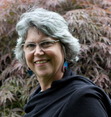
Nancy M. Thurston's Blog, page 5
June 23, 2015
Double Helix Transformation
Science has affirmed what I know intuitively—genetic changes happen throughout our lifetime, can affect our behavior and are passed from one generation to another.
In the last few decades, epigenetic research showed that epigenetic changes (molecular methyl groups attaching to our DNA) occurred during one’s lifetime. In the middle of writing Big Topics at Midnight, I discovered the work of Barbara McClintock exploring changes in a gene in response to environmental stress. In my book I noted, “Dr. McClintock had won the 1983 Nobel Prize for her discovery that stress to a corn plant caused genes to change their position on the chromosomes. She proved that genes, the genetic building blocks passed through the generations, were mutable and could be changed. If this change could happen due to stress, I presumed it could also happen due to a positive stimulus. It appeared to me that generational healing through changes in our DNA was scientifically possible.” *

When my ancestors began to share their stories with me, and then wanted them woven into my social change memoir, I knew experientially that transformation was possible not only in my own life but also genetically in my family line.
Often we trace physical characteristics back to our families: creative like Mother; stubborn like Grandfather; walk like Dad. But the similarity can also flow into emotional states: fear, anxiety, optimism. There are also behaviors to consider: control, integrity, obsessive tendencies.
In addition to family patterns, we also carry the imprint of the culture’s influence on our ancestors over the generations. For me that has included guilt around playing when there is work that needs to be done or dissatisfaction with my body. Culturally we also have the stain of sexism/patriarchy and racism/white supremacy woven into our DNA (both conscious and unconscious).
Trauma, nurture and emotional patterns of all sorts can be passed to us through our genetic make up at birth. However, genetic and epigenetic research both point to the fact that change is possible within our DNA itself and/or molecular attachments to our DNA.
Some of the characteristics I’ve inherited, I want to keep. Others I’d like to shift, such as generalized fear, feeling inadequate and unconscious use of excessive power and control sourced merely on society’s inaccurate and unjust bias toward those of us with white skin.
Every choice I make can have genetic/epigenetic consequences. When these choices and changes are sustained over a period of time, I believe they will support healthy genetic evolution.
I want that change to improve the integrity of my life, to be sure. But I also want to make changes in my life that will support generations that follow me.
Here is where my understanding boldly steps beyond scientific proof. I believe that these genetic changes move both directions in our family lines, affecting our ancestors and those descendants who are already born and those yet unborn. In addition, I believe that this shift can change the culture as well as individuals
Maybe one day science will catch up. Maybe not. Either way, I chose to believe this intuitive knowing that my efforts to shift entrenched, generational patterns—familial and societal—are part of my love and service to the world.
* Thurston, Nancy. Big Topics at Midnight (Portland, OR: Rosegate Press, 2012) pages 205 and 206.



June 12, 2015
Grandmother Ann Takes the Lead
“I loved the idea of grandmother and granddaughter dancing together, plaiting beauty across the tears in the fabric of the world. Together we twirled, hoping beyond hope that our dance across the generations would serve those yet to come.”1
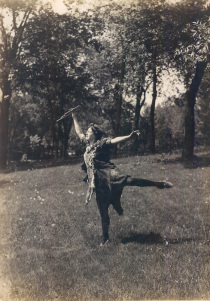
Ann Cahoon (Mathys)
Ann Cahoon Mathys take the lead:
Unlike some of my ancestors, I avoided epidemics, early widowhood, shipwrecks, Texas and prisoner of war camps.2 Nevertheless, I shared my family’s determination to better life for myself and others.
After High School graduation, I bucked tradition and headed off to college. I graduated from Milwaukee Downer in 1913 with my Bachelor’s degree, and from University of Wisconsin in June of 1915.
I knew I was born for such a time as the opening years of the 20th century. From my family’s experience as Welch immigrants to my volunteer work at Milwaukee’s Settlement House, I understood that “my people/our people” included far more than my family or nation. Many families, like mine, came to this country in the midst of tragedy and poverty, needing a compassionate helping hand. I was glad to offer mine.
Personally, and through my teachers and fellow students, I also knew that the boundaries of intellect didn’t end at the edges of a man’s mind. Despite the belief that higher education was a waste of time for a woman, I couldn’t wait to become a scholar of both the intellect and the body.
The intellectual narrow-mindedness of the world around me also needed to expand politically. I joined other Wisconsin women to fight for our right to vote. I wanted to bring my wisdom and knowledge to the legislature and make a difference in the world.
Nancy, as a child and teenager, you thought I was a boring old woman, but now you know better. I am delighted that when you came to your senses, you too caught sight of the possibility of a just world. That is good, as you are living in the early years of the 21st century—a moment of history that is even more in need of awakening than mine.
Nancy follows Ann’s lead and steps into the dance:
Grandma, I have gladly stepped into your dance, plaiting justice and faith, compassion and equity. I know my approach and beliefs are different than yours, but we both loved to stretch the boundaries of our day and wanted to serve the larger community around us.
I knew so little about you when you were alive. Even when I walked across the stage to get my master’s degree—wearing the same gown you’d worn seventy years earlier—I knew little about the world outside my neighborhood.
I now see a bigger picture than I did during my university days. For example, I understand that doors opened for our educations because of our intelligence, to be sure, but also because of the color of our skin and the financial support from our family. Though today gender and race don’t usually affect admission, going to college too often results in substantial debt as well as a degree, strapping graduates financially for years.
The vote you helped secure wasn’t available to everyone for decades. Even today we battle voting irregularities and gerrymandering. The candidates on our ballots are just beginning to cross gender and color lines but have been much slower to cross class lines.
We as a nation seem to have forgotten that most of us came here as immigrants. Over the years our national racism controlled who was welcome—usually those with white skin—and who was not. We Americans enjoy the fruits of immigrants’ labor eating the food they grew, traveling the roads and railroad tracks they constructed, enjoying motel rooms and houses they cleaned—then turn around and threaten deportation, pay unjust wages or speak as if these newer immigrants are lazy.
In the midst of these two centuries, we’ve both listened for the song of justice playing beneath the inequities. This month it has been 125 years since your birth and 100 years since you graduated with your master’s degree. I am delighted to reach for your hand once more, and join you in the dance of Life.
1Thurston, Nancy, Big Topics at Midnight, page xviii
2Ann would love to share the details about these events at another time…


May 27, 2015
Anointing Ancestral Land
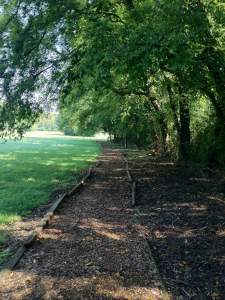 This was the first time I’d felt called to go on a spiritual pilgrimage. I needed to meet God on the land of my ancestors, trusting that this would help me step outside of my collapse with shame over the fact that they’d owned slaves.
Within the week, I’d confirmed that my friend Alease Bess, whose ancestors had been slaves in North Carolina, was excited joining me on this journey.
I wanted to take something we could offer to the land. My friend and earthmother, Candice Covington, recommended I take rosemary, cajeput and black pepper essential oils for anointing the soil.
“Oil from evergreen cajeput trees,” she explained, “purifies and purges old rot and decay of emotion, pain, loss and fear and creates a fertile place to plant new seeds. As you step onto your ancestral land, you need some of this heavy-duty purification of the old. Rosemary will help strengthen and center you with its healing of memories, and black pepper will strengthen and fortify your cleansing.”
Knowing that I wanted all of the spiritual and energetic support I could muster for this pilgrimage, I packed pocket-sized bottles of each of these oils, trusting I would know when and how to use them.
I gathered maps of North Carolina. I wrote down the few details I knew about the location of the home of the original Tipps immigrant, Lorenz, in Salisbury, and the Dogwood Plantation of his son Jacob near Morganton. Union General Sherman had torched the courthouses that had held the titles to the land, so I had to rely on the description of the general location Mom had found during her genealogical research.
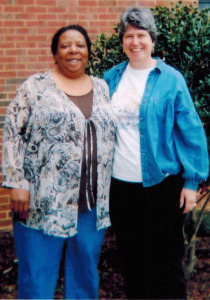 A few weeks later, Alease and I headed west from her home in Durham toward Salisbury. First, we were looking for the homestead of immigrant Lorenz Tipps, Jacob’s father. Lack of exact locations on the map demanded a different sort of navigation, so we listened to the breezes and trusted that the Spirit would guide us.
Driving up and down country roads, Alease and I explored the area described in Mom’s account of Lorenz’s homesteading documents as “on Hagan Fork off Lyle Creek, tributary of the Catawba River.” In that general vicinity, something faint but clear in both Alease’s and my spirits indicated it was time to pull over, park the car and step out onto the land.
A few fences marked off the field, but no homes lined this stretch of the road. Wandering in silence, we honored the beauty of the land and vastness of the sky. This had been Cherokee land for thousands of years. A few hundred years ago, white settlers named it Rowan County, then Lincoln County and now Catawba County. Political lines drawn in the dirt may have changed, yet the land remained whole.
Alease and I brought what felt to me like meager gifts to atone for such a horrifying history—a few oils and prayer. I picked up a stick and scraped a cross in the hard, dry soil. Opening up the small bottles, I poured fragrant essential oils of tree, herb and flowering vine back into the earth. Their spicy scents rose like incense.
Over the anointed dirt, Alease and I extended our hands in blessing—hers pecan tan and mine a peachy tan. She sang of blood. I spoke of water.
Alease prayed, “Blood has saturated this land. History tried to shove these bloodstains under the grass. We know they are still here.”
She leaned her head back and began to sing, “Nothing can for sin atone; nothing but the blood of Jesus.”
As the last notes of the hymn faded away, she was silent for a few minutes. “Today a new blood is offered, poured freely into this blood-soaked land. This is birthing blood, cleansing blood flowing from Immanuel’s veins.”
I added my prayer: “Come living waters, come to this country soaked with generations of tears. Wash the land and satisfy our deepest thirst.”
When the anointing was complete and a rock left to mark the spot, we returned to the car and drove away. The reality of both of our ancestors’ experiences remained unchanged, yet we felt lighter.
We stopped in town to break bread together and share stories sparked by the morning. Then, we headed west to track down the land that once was Jacob and Margaret Tipps’s Dogwood Plantation.
After the Revolutionary War, Lorenz’s son Jacob moved westward a few miles to Burke and Caldwell Counties to make his fortune. He staked his claim, worked the land and received the title to six hundred and forty acres. Jacob and Margaret had fourteen children and “owned” thirteen African slaves.
“Near the Morganton-Lenoir airport” was as much as we knew. Alease and I drove up and down the roads near the airport. Old Amherst Road wound its way to a new subdivision. We turned around and drove halfway back down the road. Once again, we both agreed when it felt like we had arrived at the right place, and we stopped the car.
Stepping out, we walked through a break in the trees onto to the edge of a pasture. Ancient mountains had eons ago eroded into the blue hills that lined the far side of the field, while Jacob’s plantation home and slave shacks had long since disintegrated.
Sitting on the ground, I picked up a rock. Once again I scored the hard earth and poured out the 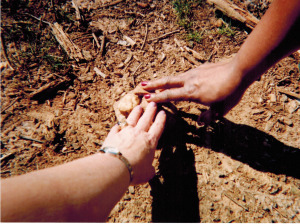 anointing oils while Alease and I prayed.
As our prayers grew silent, I stood and walked over to lean on a white pine that might have shaded my family members when they lived here. Through her prickly bark, a warm tingling soothed my back, just behind my heart allowing my shame and anger at Jacob to lessen. The sins of racism and slave-owning remained, but compassion flowed freely in me and out into the tree.
Gazing at the Smoky Mountains, Alease stood at my side praying softly. A white pick-up truck whizzing down the road startled me. Through the dust I saw a white-skinned man at the wheel, gun on a rack behind his head. When he caught sight of us, he did a double take. I assumed he wondered what we were up to.
Actually, it wasn’t a bad question. What in the world were we up to?
We were there on a sacred pilgrimage, not to our spiritual holy land in Israel but to our ancestral land. Standing together, Alease and I felt the hallowed ground under our feet and prayed that healing would move forward and back through the generations.
The next day we headed for our respective homes. Through this shared pilgrimage, I had been given a way to honor my ancestors without forgetting that they also owned slaves. The land and our prayers wove the stories of Alease’s and my families, their joys and woes, into a single fabric.
Excerpted with a few adjustments for this shortened format from Big Topics At Midnight: A Texas Girl Wakes Up to Race, Class, Gender and Herself, my book published by Rosegate Press in 20012, pages 274-286.


May 8, 2015
Cosmic Cowgirl
 It���s a cowgirl���s dream���mine anyway. Sitting high in the saddle, one hand holding on for dear life while the other is waving about in glee.
This is no ordinary horse I am riding. It is the planet Uranus. The far-out planet in our galaxy with a name that sounds like potty-humor but energetically represents cosmic revolutionary energy.
No wonder I have to work so hard to stay in the saddle.
The stars and meteors might scare some cowgirls, but I feel like I���m in paradise. Speeding through the Milky Way in the midst of a universe wider than my imagination, I can see the whole shebang: The shimmering possibilities. The horrifying consequences of human greed for the last few hundred years. I can see it all written on the surface of that fragile island, our earthly home.
I ride through outer space and inner space at the same moment. Bucking over bright Sirius heading toward Orion, then walking down Halsey Street admiring the outrageous pink and purple of the blooming azaleas.
It���s not easy to live galloping through the universe and walking on earth in the same instant���caring passionately about cosmic revolution and personal transformation with each step.
The thought of sitting in a ���real��� saddle makes my hips ache. Roller coasters or speeding cars terrify me. While I may be a scaredy-cat who likes physical comfort, this time I ride through the cosmos with ease.
How about you?
Are you a wilder explorer than folks around you would ever imagine? Do you ride high in the saddle? What are you discovering? Do you like to traipse around in two different places at the same time?
Life is too short not to take our own personal adventures. Yippee-ti-yie-yay.
I like to play and work my way around the big topics. That’s why I had to include myself in my book–Big Topics at Midnight: A Texas Girl Wakes Up to Race, Class, Gender and Herself.


May 4, 2015
Inside and Outside
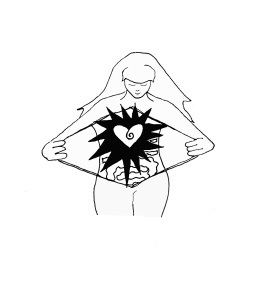
Illustration by Khara Scott Bey
Working for justice in the world begins on the inside.
We live in a culture addicted to power, growth and control. While these elements affect each of us differently, depending on our race, class or gender (among other things), they ultimately influence us all. In order to step outside of injustice and into the Kingdom of God, we need to wake up to the full spectrum of reality around and within us.
For instance, it was easy for me to assume that my life experience and knowledge, alongside good intentions and spirit-led values, were enough to build a strong inner foundation for my work in the world. This was not true. I had to learn to recognize systemic abuses of money and power. Likewise, I needed to look deeply inside to notice my own assumptions and to clearly see when my behaviors (subtle or obvious) were not in alignment with my values.
Diverse, in-depth community was the context in which I was able to do this kind of waking up to and unhooking from the distress of our culture���s oppression.�� In that community, I discovered the truth that we are all part of a much greater fabric, one that includes the voices of our ancestors, the hopes of our descendants and the messy and miraculous humanity of our contemporaries around the globe.
Honestly sharing stories of our experiences, perspectives and assumptions across our differences has the power to break down the walls that divide us.
These are words I’d like to shout from the mountain tops, announcing the message I’d like to share and the path I’d like to walk. What would your message to the world sound like?


April 24, 2015
White Supremacist
 A viewer answered my YouTube video���s title���What it Means to be White��� with a direct answer: ���It means to be a white supremacist (racist)!���
In the past, his words would have cut me to the core. As it was, I merely gasped for a moment. Well aware of individual and systemic racism, my emotions would once have boiled at the assumption that I, one who has worked so hard for justice, was a ���white supremacist.��� Back then, in my offended state, fruitful exploration of his analysis would have been impossible.
I am grateful that I���ve done enough work with racism, mine and the culture���s, to be able to step back and carefully read what he had to say.
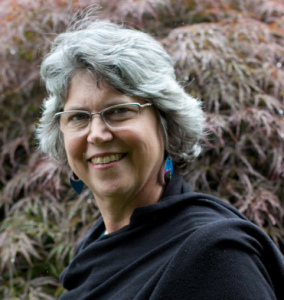
Nancy Ann Mathys Thurston
There is some truth in his accusation. As a Euro-American, I was born, raised and now live in a culture where white skin is considered normative. The vast majority of those with historical and current power in our culture are white skinned. Therefore, collective societal experience and perception is inevitably biased toward whiteness.
In short, ours is a culture where white is considered supreme, even though few would articulate it so bluntly. This bias has been part of the American and European fabric of life for so long that the belief in the superiority of the white race, especially in matters of intelligence and culture, is woven into the unconsciousness of individuals and institutions.
I���ve had my own journey waking up to racism. Sitting in a diverse group of participants in a Be Present, Inc. Training on the Issues of Race, Gender Power & Class, I listened intently as Cynthia told the story of her mother, Pat.* In 1965, shortly after moving from the west coast to Dallas, Texas, Pat was confused by a ���Whites Only��� sign in the laundromat window. Not sure why they wanted her to wash only white clothes, she���d entered and proceeded to finish all of her laundry, whites and colors. Later, at home, she���d realized that ���white��� had referred to her skin color, not her laundry. Listening to Pat���s story forty years later, I realized that I���d never seen signs such as these in any Texas business of my childhood. Blinded by a racism I didn���t even know existed at nine years of age, I���d not seen what was all around me. Waking up to racism happened in stages beginning in my teen years. Since then, every new insight has propelled me to wake up and change.
I am a white supremacist by default, because the culture���s shards of racism are lodged within me deeply as they are within any child of this society. Likewise, I work and live in the midst of diversity where collaboratively we seek justice and equity. We humans are paradoxical by nature. Denial merely pushes the parts deemed shameful into our shadow where they can do the most harm.
I am, however, uninterested in keeping silent about race nor about constraining racial conversations within the dualities of oppressor and oppressed, white supremacist and victim.
Instead, I want radical, root-level transformation. To do that we must build partnerships across our differences: Black and white. Red and yellow. Young and old. Rich and poor. Women and men. We must be able to listen to each other outside of our own personal experiences and our cherished social analysis.
Waking up to the presence of the culture���s injustice within and around us is a demanding process. Our deeply divided world cries out for justice, and the spirit of our response matters in spite of our differences.
How do we best support each other to see and shift behaviors that are out of alignment with our longing for justice and equity? We can no longer ignore disrespectful and unjust behavior. We must take the risk and step into the middle of difficult conversations.
Labels such as ���white supremacist��� may be short hand and direct, but I prefer the longer road of initiating conversations that open the possibility for long-term personal and social change.
*Story told in my social change memoir Big Topics at Midnight: A Texas Girl Wakes Up to Race, Class, Gender and Herself


March 8, 2015
Deep Diving
I come alive when diving right into the middle of topics my father told me to avoid���money, race, religion, gender and politics.
 Not interested in locking horns or intellectual analysis, I want partners who seek root-level transformation���from personal to global. I am captivated by sharing and listening to a wide variety of personal stories and experiences within diverse groups as these conversations can shift assumptions and misinformation���the things that keep us separated���in order for us to move forward equitably, together.
Since I was a girl, I���ve turned to the written word as my favorite way to explore both the edges of life and my own experiences. During the seven years I wrote and rewrote Big Topics at Midnight: A Texas Girl Wakes Up to Race, Class, Gender and Herself I simultaneously honed my writing skills and dove into my own stories of sleep and waking up. It was a magical process.
I revel in the dance of writing and deep diving. The best way for me to begin a writing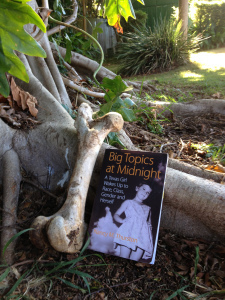 day is to wake before the sun rises with a brilliant first sentence, followed by a flood of ideas for a new writing. While noticing all that I hadn���t noticed growing up isn���t always fun, I savor the sight of expanded vistas that emerge as I begin to see my life as one part of a multigenerational, global human family in the midst of our diverse, earthly home. And then return to my desk to write about what I see.
In addition to writing and poking into the nooks and corners of my life, I also delight in hosting ���big conversations��� where groups of people share longings and experiences of living in ways that bring our faith and values right into the middle of our deeply divided world. One particularly juicy topic I enjoy exploring is how money flows in our lives, in the community and in the world and how to continue to bring our engagement with that financial flow into deeper alignment with our values.
Waking up to the paradoxes within and in the world around me is sometimes uncomfortable and often requires me to change my behavior. Yet this is the holy work of spiritual transformation, both personally and in our world. It is pure grace to bring my deep diving faith-in-action to this moment in history.
This is what makes me feel alive from my head to my toes. What makes you tingle with excitement for yourself and the world?


February 10, 2015
Weaving in the Dark
 I love the moon and the stars, but I am afraid to be out alone in the dark. My natural tendency is to be on alert for potential dangers, but that���s hard to manage when I can���t see anything.
I love my gift of clarity���catching a glimpse of the potential of how things might unfold in the days or years ahead. Sight, both internal and external, is my most trusted sense. But the sight I���ve been using is hindered in dark.
I am walking in spiritual darkness. I don���t feel lost or abandoned as happens in the dark night of the soul but I can���t see anything I recognize. I have a strong sense of the divine presence and a luscious dose of gratitude, but I can���t see where I am going. Even the next step feels overwhelming.
I���m very busy. Traveling often. Some say that my to-do list is too long and wide, and that I���d see more clearly if I dropped some things in order to open up more spaciousness. That doesn���t ring true to me.
Here is what I see���an image. That is all I have now.
I am sitting on the ground in front of a vertical loom. I���m weaving a rug that is two-thirds of the way complete. I can���t see the pattern on the rug. I don���t know what colors or types of skeins are being used in the weaving.
Behind the rug, hidden from my view, Spirit is very active with an unseen ritual. While I don���t know what is happening on the other side of my weaving, I am nonetheless personally involved in the prayer dance.
One of the skeins of thread in the weaving comes from this unseen dance between Spirit and me.
I am to keep weaving, trusting that what is emerging won���t be an ugly, tangled mess.
My mind is very unsatisfied with this image and this process. And yet here I stay, adding one row and then another.


January 4, 2015
Who Am I? Two Versions
It all depends on how you want to tell the story. There are always multiple perspectives, multiple doorways into the tale.
I often play with my bio. With a website, Linkedin, Facebook, blog (to name a few) there are so many opportunities for tweaking it. But I also have the bio that plays in my mind in the worst of times when all of life seems dreary and its counter point that plays in the best of times when I feel like I’m on the top of the world.
Here are two versions:
Dramatic Bleakest Bio
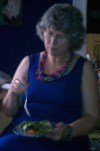 Nancy M. Thurston stands on the battlefield being pummeled from all sides—her own self-critical inner voice, a culture gone awry and steeped in injustice, and judgment from many in the social change movement who continue to see her (white skinned and wealthy) as merely the “oppressor.” She wants to be understanding and responsible, always moving forward. In her zest for niceness, she doesn’t take notice and stop those moments when she or others are being disrespectful and caught in injustice and status quo inequities. She means well.
Exuberant Brightest Bio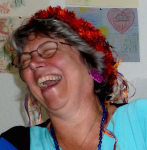 Nancy M. Thurston walks right into the middle of the paradox of herself and the world and comes out the other side still standing—joyful and holding hands with a diverse community of people, trees, animals, stars and rocks. She is committed to noticing disrespect in her actions and in her interactions, knowing that it takes justice in EVERY moment to create a just world.
I know I am a mixed bag, just like all of you. But as I step into 2015 I want to soften the inner critical commentary about myself and play a bit more with the wild and bright parts.
How about you?
What “bios” are written on the walls of your brain? Which ones do you want to wash away in the new year?
Thank you so much for reading. You might notice that I don’t have a space for comments, but I’d love to have conversation about what’s written here. If you’re so inspired, feel free to email me via the email address on the bottom of each page of my website.


December 17, 2014
White Like Me in Times Like These
Illustration by Khara Scott-Bey
The news reports are always lurking at the edges of my mind; another white policeman kills an unarmed black man and no charges are filed.
What does that have to do with me? I am a good person. Kind. Big hearted. My intent, even as a child, was to treat everyone equally. I don’t know anything about the white policemen who have killed unarmed black men. Some, no doubt, are openly racist. But many, I presume, may be just like me—filled with good intent and thoughts of equanimity.
Unfortunately, none of us was born in a vacuum. The racial values and assumptions of centuries of U.S. and European culture were fed to us with our mother’s milk and our ABCs: White-skinned people are better/smarter/less dangerous/more deserving than black-skinned people.
Growing up in my moderate Texas household in the 1950s and 1960s, the black/white divide was never stated that bluntly nor articulated with such obvious prejudice. Yet my world was filled with upstanding white people—professionals, teachers, authors, neighbors and church members—and unknown black people—often either working in our homes or yards, reportedly breaking the law on the nightly news or rioting somewhere far away in civil rights protests. My limited experience led me to feel safer around my people, white people.
Until I identify and extricate these shards of racism buried deep in my bones, they will emerge in times of stress. Even when my sight is focused on justice and my vision is bold, these deep-seated, cultural biases don’t magically evaporate. I, and we, must wake up to the big and small ways that prejudice is infecting our actions and beliefs.
When racism shows up in me, it can break relationships, put black friends in jeopardy or cause deep hurt. When it shows up in white policemen armed with guns, these internalized racial fears too often turn deadly. When it shows up in grand juries and court trials, justice can’t be served.
We can no longer pretend that racism, conscious or unconscious, is an occasional or individual problem as too many more black men than white men are either killed by police or incarcerated. The underbelly of systemic racism has once again been exposed.
People ask me, often softly, “Do you have any hope?”
Yes, I do.
I’ve spent decades diving into the intersection of my life and the “Big Topics,” as I call them, as they cut through our world. My family and upbringing was rather ordinary, even for a white girl. No alcoholism, drugs or violence. No words of racial hatred. No overt sexism; my grandmothers and mother were all strong, independent women. Nevertheless, I finally noticed that I was asleep to the ways that race, class and gender—the big “isms”—were present and active in the corners of my mind or in a reactive moment.
I knew I had to share these discoveries as small steps toward having our society come to grips with the kind of internal racism that’s hard to acknowledge, which is what I did in Big Topics at Midnight: A Texas Girl Wakes Up to Race, Class, Gender and Herself. I wanted my story to expand reader’s awareness of a bigger and more diverse reality of themselves and the world around them. When we awaken, I believe that we can see more clearly the ways that our actions—especially under stress—can be brought into alignment with our hearts and values.
Asleep and denying their presence, our unconsciously held beliefs are extremely dangerous in times of stress. Likewise, wallowing for too long in shame or guilt will derail change.
The shards of generations and millennia of racism, classism and sexism do not have to remain in our psyches. We can open them up, look at them with clear eyes, and change.
I have hope, but not because the changes required are quick or easy.
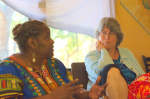
Lillie Allen and Nancy
For the last twelve years, I have been part of an organization, Be Present, Inc.,* that gathers diverse groups across race, class, age and gender identity. There I learned to build strong partnerships due to my commitment to notice, examine then shift subtle or overt shards of racism (or any “ism”) that emerge in the middle of our work together. As a result, I am beginning to know myself and others separate from, and outside of, the wounds—historical and present—that have infected and divided us all.
My hope lies in the fact that more and more of us are waking up to our nation’s horrible generational legacy of racism and taking the necessary steps to remove these shards from our bones and institutions.
It is possible to make these profound changes. I’ve seen the impact of this transformation many times. Even while the heartbreaking violence grows in our streets and in the courts, something new and better is emerging. We must, as a country, wake up because it’s too near midnight to stay asleep.
As American cultural anthropologist Margaret Mead said, “Never doubt that a small group of thoughtful, committed citizens can change the world; indeed, it’s the only thing that ever has.”
*Check here for the more information about the Be Present Empowerment Model, my primary practice that has taught me how to bring my full, white-skinned self into our multi-colored world.
This blog was originally published by The Broad Side.