Nancy M. Thurston's Blog, page 4
March 24, 2017
Knowing What is True About Myself
I have been stumped about how to write what I want to say. As soon as I complete one paragraph, I know that the opposite has to be addressed. Therefore, I am writing “in conversation” across my paradoxes.
I am a better partner in diverse collaborative ventures when I know for myself if I am acting in integrity or if I am caught in racism.
Who but me can know what is at work within my words or behavior?
To even suggest that I have to take responsibility for myself and personally know what is true about my racism feels risky. Like many other white skinned people, it took a long time for me to notice the profound bias towards whiteness in my nation and, thus, in myself. How will I know that I am not just blind to my racism?
I have a responsibility to know for myself. When I am buffeted around with every accusation and assumption, abdicating my responsibility to know what is true about my actions, I have nothing on which to build a partnership.
But what if I am unaware that my action is a result of donning my white-colored glasses and my words or actions are actually racist and out of alignment with my values?
I am responsible for seeking out a broader picture of history, one that includes the silenced voices. I am responsible for knowing myself, outside of the distress of oppression. And for holding what I believe is true about me lightly, with openness to the possibility that I might be wrong.
It is true that white people for centuries have been oblivious to their racism. Why should my self-knowing hold any weight against such an overwhelming history?
When accusations come that something I said or did is racist, completely in line with the behavior of generations of other white folks like me, who am I to disagree? Maybe something is still lurking in the shadows, and the accusation just might be true.
I am not just one of a group of folks acting just like so many have acted before. I am a unique individual, in a world of unique individuals. It is disrespectful to lump everyone into a group, wiping out an individual’s unique humanity.
I’ve walked it both ways. In a nine-year cross race and class collaborative process, I have spent far too much time reacting to and wobbling whenever something I said or did was assumed by someone to be racist (or classist). I’ve reacted. I’ve become afraid and stepped back. I’ve looked at all of the reasons the accusation was or wasn’t true. In the midst of that swirl, I’ve stepped out of partnership with the collective and slowed down our process.
Slowly, ever so slowly, I learned to listen, really listen, to the assumptions about my actions. I’ve honestly asked myself what was true about me and what wasn’t. Sometimes it was an opportunity for self-correction. Sometimes, however, it was a time to claim what was true about me.
Always open for new revelations, when I stand clear in what was true about me I participate in relationships in a way that allows me to stay fully engaged in the process, bringing my own thinking and intuition to the conversation as one part of the whole.
Waking up and stepping outside of my personal and the cultural distress of oppression isn’t easy, but it isn’t impossible either. It does require me to take a huge amount of personal responsibility. I will stumble from time to time. But walking this paradox keeps my feet on the path of truth.



February 21, 2017
Fearless in a Time of Fear: Loving in a Time of Hate
[image error]Fall fearlessly into love.* That may sound like a very weak way to stand steady in our world today, but it is the only way that makes sense to me.
Our divisions are too deep and old for lashing out with hatred and disrespect. Something much bolder, more impossible, is required. For me, response starts with a roar from my heart as I seek to fall fearlessly into love.
For decades I’ve been waking up to the hidden and not so hidden destruction that lies within the heart of our beautiful nation. Too much of our unacknowledged history is in direct opposition to our nation’s bold assertion of freedom and justice for all:
…We hold these truths to be self-evident, that all men [sic] are created equal, that they are endowed by their Creator with certain unalienable Rights, that among these are Life, Liberty and the pursuit of Happiness.
…in Order to form a more perfect Union, establish Justice, insure domestic Tranquility, provide for the common defense, promote the general Welfare, and secure the Blessings of Liberty to ourselves and our Posterity…
(Constitution of the United States)
A great vision pulses through the founding documents of our nation. Unable to embody that vision, our legacy has included dangerous irregularities within the heart of our nation. We need to become, in Rev. William Barber words, “moral defibrillators of our time” and restart our nation’s heart back to the just and steady rhythm of her founding values.
Reflecting in Loving Your Enemies, Dr. Martin Luther King, Jr. wrote “… within the best of us, there is some evil, and within the worst of us, there is some good … And when you come to the point that you look in the face of every [person] and see deep down within them what religion calls ‘the image of God,’ you begin to love [them] in spite of. … When you rise to the level of love, of its great beauty and power, you seek only to defeat evil systems.”
Fierce Love holds the possibility of systemic and individual transformation. Hatred, on the other hand, holds the seeds of destruction.
Fall fearlessly into love. That is the only way I know powerful enough to ensure that I land solidly on my feet, heart open and mind clear. From there I seek the courage to take seriously my partnership with Spirit, my global family and my nation and work for justice, general welfare and liberty for all.
Even when my knees shake or my heart wobbles.
*inspired by a story of Cynthia Bourgeault’s, found in “The Wisdom Way of Knowing,” pp. 70-71


January 27, 2017
Led by Women, The March Goes On
[image error]Almost three million women, children and men took to the streets around the globe on January 21, 2017. But they weren’t the only ones involved. Millions of others were intimately connected—marching in their hearts while working at their jobs, caring for themselves or others who weren’t able to participate, praying or otherwise participating at a distance.
Like mother bears roaring to protect their cubs, voices rose from the streets in a fierce love to protect and nurture all of creation from Mother Earth under our feet to all of our global family.
We the people, we the women, have too long been in a strange mix of hibernation and fighting. The problems loomed so large, while our perspectives shrank too small. But millions of us have awakened, ready to follow in the footsteps of our grandmothers who broke rank from the powers that be and sought justice, respect and equity for all.
In our years of hibernation or activism (or whatever it looked like for you), many of us practiced listening for inner guidance—that inner voice of guidance nudging us toward the unique role we were to play at this moment in history. Since that voice is often at odds with cultural expectations, we’ve been strengthening our courage. Knowing how much harder it is to work in isolation, we women have joined together to support each other.
Nowhere is mutual support more needed than in our compassionate support of each other as the shards of our cultural training of racism, sexism, classism—and all of the other ways we’ve been taught to divide and separate—work their way out of our bones to be transformed. Unfortunately, these shards often show up in unconscious beliefs, words or actions that are profoundly in conflict with our conscious values. Horrified, it is easy to act defensively or with anger. My prayer is that we can act like compassionate mothers or midwives, supporting each other as we honestly examine and then remove these shards. Freed from outmoded and unjust shard after shard, together we can become the just people we were created and long to be.
In the mean time, emotions are high. Anger boils at words tweeted and political nominations put forth. Rage explodes as dreams collapse. Frustration burns at the slow movement toward justice.
These are real and understandable feelings. But they can also destroy our forward movement.
In the midst of the tension and chaotic energy swirling now, it is easy to let our differences explode into conflicts that shatter friendships and partnerships. Butting heads without listening to each other is precisely what has brought our world to this dangerous point. In order for something different and more beautiful to emerge, we women must lead by responding to clashes in relationships by hanging in there with honesty and remembering the bigger picture of our human connection.
Hanging in there doesn’t guarantee that the relationships/partnerships can always be repaired in the moment. Everyone has free choice in how they get to participate, and some differences make active partnership impossible for now. Nevertheless, when each of us personally acts compassionately and with integrity, it opens the door to something new emerging. When we enter the fray and then walk away, we close the door to the possibility for transformation.
The Women’s March organizers struggled with this. My hope is that the millions of marchers that were brought together on January 21 will take the next steps of collectively working together as we all continue to awaken to the impact of an unjust history and to the possibilities of a just future.
The march isn’t over. Every day our feet touch the floor (or our wheelchair footplates or the bed or…) and we can choose to listen to our mother bear hearts and our wise belly’s intuition and begin to weave a more equitable and just world.
I have deep gratitude to all of the women who marched in the streets or in their hearts to “stand together in solidarity with our partners and children for the protection of our rights, our safety, our health, and our families—recognizing that our vibrant and diverse communities are the strength of our country”*…and our world.
*Mission of the Women’s March on Washington


January 16, 2017
Steam Powered New Year’s Resolutions
[image error]Tis the season for New Year’s resolutions. However, this January demands more creativity than losing weight or exercising more. In a playful yet pointedly serious way, I penned my resolutions for 2017:
· Find a balance between honoring my own personality and being respectful. The deep longing of my heart often crashes onto the scene with the power of a steam locomotive. I wasn’t born with a gentle, slowly emerging gift. I don’t always show up in a way that this self-respecting, well-mannered girl was taught to believe was acceptable. Nevertheless, it is who I am…and I must find a way to be respectful even when I am all steamed up.
• Seek a diversity of ways to access knowledge. Over the years I’ve sharpened my thinking in the service of my steam-girl gift. Figuring things out, problem-solving, seeing down the road to what needs to happen next have been skills that are indeed of great benefit. But stuck there, the best I can do is guide the steam locomotive where I think it ought to go – knocking down things I believe are obstacles. My brilliant thinking and my not so brilliant thinking are both leading me astray more often than they used to. And yet, I can’t leave my mind at the station. Instead, thinking must keep company with intuition, listening to my body and prayer.
• Keep my feet planted in hope no matter what is happening around me. I hate roller coasters, and steam locomotives barreling down the hill run a close second. I don’t like physical speed, period. Given that I am by nature afraid of potential disasters down the road (or tracks) and I’m not sure that I can trust the locomotive mechanics or those who care for the rails, I’ve had to find courage from the bigger picture and things unseen. Life is unpredictable and uncontrollable, so I want to strengthen my ability to hold out for shimmering possibilities. I want to believe transformation is possible in every moment.
• Do the work that is mine to do, and let the rest go. Like the locomotive, my innards hold both the power of water—connection to the emotions, washing things clean, the power to erode rock slowly drip-by-drip—and the power of fire—sacred fire, blasting away all that brings us no joy, thus allowing real treasures to emerge and illuminate dark, confusing corners. I seek unity right in the middle of division and darkness. Uninterested in baby steps of minor tweaking of our current society’s injustice, I want to step right into the middle of collaboration and partnership: not merely flipping oppressed and oppressor roles, but stepping outside of that dichotomy altogether—now—through writing, conversations and collaborating with big topic organizations like Be Present, Inc. and Wisdom & Money.
It is time for each of us to step into the fullness of our leadership—in all of our quirks and diversity—and to work together to build strong and effective partnerships.
While it may sound tempting to return to a “simple” resolution like losing 20 pounds, more is demanded of me this year. And of you. Resolutions come in all shapes and sizes—what do yours look like?


December 13, 2016
Pandora, Mother and Hope
To be hopeful means to be uncertain about the future, to be tender toward possibilities, to be dedicated to change all the way down to the bottom of your heart.
Rebecca Solnit
[image error]
Mary Sue Tipps Mathys
My mother died thirty years ago on the night of the winter solstice. Many of those years I’ve stayed awake ’round midnight because that’s when the veil between us feels thinnest.
Starting with the year she married Dad in 1952, Mom made an annual Christmas card that she mailed to 200+ friends and family. In 1971, she focused on Pandora’s Box and the hope that was left inside when all of the troubles escaped. In the card that year, Mom noted that I was to graduate from high school in May, and the only way she had the courage to let me leave home* (followed by my brother two years later) was that she had hope that “we would find our niche in the world” and that “some of the world’s problems concerning war and inequality and injustice will soon be solved.” The latter is far from happening, but I find it fascinating that my “niche in the world” has included working with others for spiritual and social transformation of “war and inequality and injustice.”
On one had, we live in dark times: midnight times. After this fall’s presidential election, many of my friends are still in grief, some crying most times we visit. It looks to many of us as if the troubles released from Pandora’s Box have won the day. And others around the country feel hopeful—underscoring the deep divides that cut through our nation today.
[image error]
Silk Screened Pandora’s Box by Sue
I believe that Hope is a powerful force. Not a flighty Pollyanna kind of hope, longing for utopia, but a force in the darkness, facing the unknown, knowing that anything is possible in the next moment, and the next, always letting your heart take the lead.
I follow the One who reassures us that the light shines in the darkness, a light that no darkness can overcome—even when I can’t see the light. When walking in the dark, I must remember it is critical that I take each step with integrity and respect so I can add to the light and not the darkness.
I have found my niche in the world. Mom worried that I would be too timid, as that was strongly at play in my growing up years. But my passion for justice and equality danced with the flame of my spirit, and I’ve been on a revolutionary path all my life, no matter how timid it looked at any one point. The world calls for each one of us to step even more fully into leadership, into the work that is uniquely ours to do.
Mom was a force to behold. Opinionated. Headstrong. Steady. She was also open-hearted, creative and had sight far beyond her years. I couldn’t have asked for a better mother, a better role model for the life that is mine to live. And yet my work steps away from her path, off onto my own. Shortly before her death, she blessed me as I shared the ways I was stepping away from the path she traveled. That was what she was hoping for all along.
Are there hopes and dreams and visions that your mother or father, grandmother or grandfather or trusted elder friend have held for you to step into? What are you waiting for?
*I smile at these words she wrote because I know that Mom was also thrilled to have my brother and me move out of the house…


November 26, 2016
3:00 a.m.
I am no stranger to middle of the night risings. Too often I am wide awake at 3 or 4 a.m., filled with a mix of fear—of real possibilities or something wild from my imagination—and creativity. For much of the fall, however, I cozily slept past my usual time of night risings.
That shifted after the election. Real fears, imagined fears and creativity all swirled together, leaving me unable to return to sleep.
Real fears threaten my dreams of justice for our world. I must continue to wake up to both historical and current realities in the world around me, laying aside well-worn sound bites of misinformation. Starting with myself, I must notice when the cultural shards of fear and hate show up inside me, and take quick action to align my heart and behavior. Then, I must speak what is mine to say and take the action that is mine to take.
Imagined fears roil one after another. Here I easily teeter at the edge of a nightmare, too paralyzed or horrified to move.
Creativity dances in the middle of it all. For decades I’ve been practicing creative ways to communicate across differences, to embrace diversity and to act in alignment with my values and heart. This moment in our nation’s history demands profound creativity. Playful innovation, even in a time of crisis, has the power to break through our divisions to let something unexpected emerge.
I have spent my entire life honing the skills and practices I will need for this very moment. Nevertheless, part of me doesn’t feel ready. But epic adventures usually start without completed preparation—Hobbit Balbo Baggins left without his pocket-handkerchief and Queen Elise was taken, kicking and screaming, wearing a silk nightgown. Their fictional adventures support my in-the-flesh adventure of living my own life.
This is a moment that requires me to stand steady in the paradoxes of this scary midnight hour. I have to hold onto my critical thinking and seek facts rather comfortable, well-worn arguments. I have to hold onto attentive, conscious listening, especially in conversations with those with whom I disagree. I have to be creative in seeking partnerships across what feels like an abyss of difference.

Abyss Walker Nancy
Years ago, in the middle of a Harvest Time sacred play ritual, I sat at a table with a group of characters. We were invited to don any of the costumes strewn around the room and come to the table dressed as the part of us that always felt excluded from the party. I don’t remember my outfit, but I clearly remember the name I gave that hidden part of myself—Abyss Walker.
Today, I honor the abyss walker part of myself. As much as I may go kicking and screaming, complaining that I am not up to the task, I know how to walk open heartedly across an abyss, the deep fissures that cut deeply across our nation and world.
First, I keep my heart open and grateful. Next, I listen—really listen—to others. This is the sort of listening I’ve been practicing in the Be Present Empowerment Model—listening to the other while simultaneously listening to myself. I need to know when the voices in my own head have grown louder than the person I am trying to listen to. Those inner thoughts are legion: My rebuttal; my fears; my corrections; my facts; and my horror. Pretending to listen when all I can hear is my own inner voice is disrespectful and leaves me with no ability to hear what is actually being said. The partnership across difference that I seek requires that I am consciously hearing the person I am listening to, and that I do whatever I need to do to keep my attention on her/him.
This sort of listening requires a level of personal responsibility that often pisses me off. It isn’t fair. Why do I have to listen so respectfully when I don’t feel respectfully listened to?
Why indeed? The only person I am responsible for is me. I have a clear choice. I can feel virtuous in my beliefs and only listen to people with whom I agree, but that choice will allow the divisions to grow and deepen. Or I can honor my values, my spirit and my faith and act in ways—in this case to listen—that flow from my deepest desire.
And yet, I can’t abdicate responsibility for showing up in the world in the fullness of my personal leadership. We need every one of us fully present, each stepping into our full leadership. I have been given a perspective and longing that must be spoken, and acted on. This is no place for silence, for playing nice.* It is a time for respectful conversations across our differences—seeking places of common ground that may be hidden by the passion of our beliefs, and refraining from demonizing the other person—all the while, sharing the perspective that is mine to share.
I have spent most of my adult life working for root level change—of our hearts, spirits and of the society. I do believe that our democracy has long been broken and filled with historical and current injustice. Profound change is needed. This election showed that millions of Americans agree that root level change is needed.
I believe that trying to change our nation from the top down, as we have done in this election, is the hardest way. But here we are. Abyss Walker will take me where the more timid parts of myself fear to tread. Who is the brave adventurer inside you, ready to lead you on the sacred path that is yours to walk for the good of our world?
*Nice is a word that has too long been held as a virtue for women, despite the fact that the origins of the word “nice” includes stupid, ignorant, incapable, silly and coy.
Novels mentioned are J.R.R Tolkien’s The Hobbit and Rae Carson’s Girl of Fire and Thorns


October 25, 2016
Giving our Allegiance
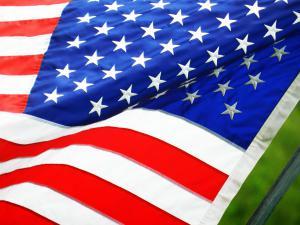 It was a quiet statement, probably unnoticed by the people standing next to me. One hand holding the Sunday hymnal, one hand holding onto the church pew in front of me, knees shaking slightly at what felt like disobedience, I scanned the creeds and hymns to see which parts I could honestly say or sing. I’d decided not to speak the parts I no longer believed. It was the best way I knew to stay inside of my spiritual integrity. I knew these were ancient words, loved and honored by Christians, but I had too much respect to utter ones that no longer felt true.
Forty years later, I don’t remember exactly which phrases I refused to repeat. But I do remember the conviction that I could no longer go along with the crowd and speak what was out of alignment with my beliefs.
I’ve thought of my quiet protest, one that was heartfelt but required little public notice, in these months as people are taking similar—but very public—actions regarding our national anthem.
I know it is easy for white skinned people like me to feel included in the words of the national anthem. Francis Scott Key, the author of this anthem, believed blacks to be “a distinct and inferior race of people, which all experience proves to be the greatest evil that afflicts a community.” Most EuroAmericans at the time agreed with him.
That sort of blatant racism is rare today but it is far from gone. The black community and other communities of color have felt its brunt continuously since Key wrote the anthem. Far too slowly, racism in America is coming out of the shadows, finally forcing white skinned people to examine the generational impact of decades of redlining and limited access to education and jobs, mass incarceration disproportionately of blacks, and police shootings of unarmed black men.
Even today this nation’s laws, and how those laws are carried out, is set up to make sure that light skinned people are freer than those with darker skin. Unfortunately, our US culture still keeps us divided, thus hindering white skinned people from knowing the reality of the lives of black and brown people–and so many people who look like me deny that this injustice still exists.
Colin Kaepernick could no longer in integrity stand during the national anthem, an anthem that never included him. Neither could the Beaumont Bulls. These, and others like them, are standing in good company of those across the generations along side others who have loved the soul of America enough to call her to truly become the land of the free for everyone.
Protesting the national anthem to stand against racism and violence against black youth and adults is a brave and patriotic act. An act of the brave among us.
I am grateful. Thank you, those who kneel during the national anthem, for calling our country to finally live into the beautiful values of freedom and justice for all.


October 3, 2016
All Lives Matter/Black Lives Matter
Do black lives matter?
Yes.
Do all lives matter?
Yes.
Since black lives are obviously part of all lives, why is it important to highlight that black lives matter?
In America today, blacks are far too often treated as if their lives don’t matter as much as white lives. It’s been that way for a long time, but lately it is becoming more obvious to whites like me.
It is popular for liberal white people to claim to be “colorblind,” affirming that all lives matter, regardless of color of skin, simply because we are all humans together. Unfortunately, the horrible cost of a white person being “colorblind” is that this point-of-view can effectively blind white people to injustice within housing, medicine, schools, courts, law enforcement and employment (to name a few places).
A very sophisticated system has been in place since America’s beginning to try to ensure that whites don’t notice this bias based on skin color. Whites were trained to believe that race, and “the race problem,” was a black (or non-white) thing. Consequently, as a child, it never occurred to me that I had a “race” or that the color of my skin had any affect on my life. Many of us white-skinned people paid scant attention to reports of racial injustice or saw each event as an isolated and explainable case.
Effectively woven into the structure of the United States of America from our inception is our national “race problem”—the centering of power, control and access within those with white-skinned while, in later years, trying to maintain the appearance of inclusion.
When police killed unarmed black men, one after another, Black Lives Matter rose up as a powerful corrective for democracy-loving America. The problem was clearly not just individual policemen but also bias throughout the law enforcement and court institutions. The string of killings was horrifying enough, but that wasn’t the whole story. Fellow officers didn’t stop their partner from using an illegal and deadly chokehold (Eric Garner), disrespectfully leaving the dead victim’s body on the sidewalk for overly long times (Michael Brown) and were unnecessarily harsh and heartless in their treatment of grieving families of the victims (Tamir Rice). For generations, police violence has been disproportionately used against blacks without legal consequences. America needs to start acting like black lives matter as much as white lives.
In truth, none of us is free until all of us are free. American roots were wrapped tightly around racism, sexism and classism. In that system, it was critical for one group of people—white men—to have power over everyone else. That strict hierarchy is inherent in patriarchy and structural racism, and part of the reason that we need to be reminded that black lives matter, women’s lives matter, brown lives matter, poor people’s lives matter…
It doesn’t have to be that way. As a woman, I am affected by the fact that in our culture women’s lives don’t matter as much as men’s lives. But when I assert that women’s lives matter, I am not saying that men’s lives don’t matter. Men are part of my life—my son, my husband, friends and relatives. When I stand up for women, I am standing up for justice for all.
For black Americans, the separation between black lives and white lives is often complicated. Many blacks are mixed race and have a white parent or grandparent. For a black person to say that black lives matter doesn’t mean that they believe that non-black lives don’t matter. Rather, it is a much needed corrective, a reminder that the individual and structural behaviors and beliefs need to change now, and we need to act like America knows that black lives matter.
This injustice affects the soul of America, and that includes me. My freedom, your freedom, is intimately connected to everyone being free. Working together in diverse partnerships, we must unearth, then eradicate, at its roots, the racism built into our institutions and laws.
I look forward to the day when our nation embodies the truths claimed at the founding of America—Liberty and Justice for all. For all lives to matter, we need to first heed the reminder that black lives matter.
This is one of several blogs that got its start listening to The Seattle Times Under Our Skin: What do we mean when we talk about Race? video. I wanted to explore how I would respond to their inquiry.


April 30, 2016
Stepping into What I Hated
I hated economics in college, yet most of my adult life has been diving deeply into money, class and economic justice.
I hate fundraising, yet I have been part of Be Present, Inc.’s fundraising team for twelve years.
Though I entered this field kicking and screaming, I’ve discovered that working with money offers an exquisite doorway to spiritual transformation and that addressing all aspects of fundraising can take the lead in social justice. While “economics” and “fundraising” sounded dull, spiritual transformation and social justice made my heart sing. The draw has been strong enough that I’ve continued this exploration of the intersection of money and faith for over thirty years.
Below is a distillation of Be Present’s Vision-Based, Social Change Fund Development philosophy, where we work to expand the boundaries of philanthropy while building a social justice movement sustained by trust, mutual respect and equality.
Even if you are disinterested in philanthropy as a subject, I hope that this perspective gives you hope in these times when money is at the heart of so much darkness.
Vision-based
Be Present, Inc. believes that philanthropy can take the lead in the journey for social change. 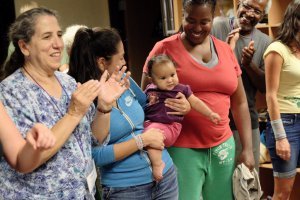 Our fundraising is vision based; we begin and end with our vision in mind. This vision is guided by four core values: Grassroots democracy; Diversity; Equality and Inclusion; Personal and Global Responsibility.
We develop our fundraising strategy to be in alignment with these values, and then bring together the resources – people, time and money – to make the vision a reality. We believe that collaborative learning, transformative leadership and building effective relationships is what leads to sustainable fundraising. Therefore, everyone who participates in the network financially invests in our work together, supported by the Board’s Vision-Based Social Change Fund Development Team.
Social Change
Access to resources shapes social movements in the U.S. These resources – time, labor, and particularly money – are vital to organizational survival and political success. Exploring who gives, how they give, and the effects of the giving have an impact on effecting sustainable justice and therefore are important political questions to address. The Be Present Vision-Based Social Change Fund Development Model is based on the core principles that raising money is political and that all people from all backgrounds are contributors to and benefit from the work of social justice.
Be Present’s guiding principle is that philanthropy’s success is measured not only by where money is given, but also the process by which it is given. We commit to raising while using the Be Present Empowerment Model® to examine the dynamics of race, class, gender and power that influence fundraising and giving practices.
Be Present has a commitment to work with diverse individuals and organizations. Not willing to allow the ability to pay the full price be the deciding factor of who can access our services, we offer a sliding payment scale. To simultaneously thrive so we can continue to support the social change movement, Be Present has developed both a detailed budged for the actual costs of offering the trainings/consultancies and a multi-pronged, collaborative funding stream.
First, we ask individuals/organizations to pay at the highest rate they comfortably can. Second, we offer support to people/organizations to envision a fundraising plan to help raise funds to cover the costs. Third, the giving and fundraising by those in the Be Present network and our financial supporters are focused on ensuring that the diversity and inclusivity that weave through our mission and vision are reflected in all aspects of our work.
The Vision-Based Social Change Fund Development Team has compelling monthly dialogues to develop skills in building long-lasting, thriving relationships; bringing more of one’s whole self into their giving; addressing money and privilege dynamics in relationships; understanding giving practices of diverse communities; and promoting innovative, sensitive and respectful philanthropic practices.
Fund development
Fund development is the process by which Be Present uses fundraising (and other revenue-generating vehicles) to build capacity and sustainability. The focus is on expanding and further diversifying Be Present, Inc.’s funding sources—from fundraising efforts, fee-for-services (consulting contracts and training registration fees) and merchandise sales.
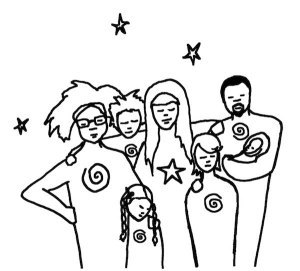 While fundraising itself still isn’t my favorite activity, I love the doors it opens to a transformation of our spirit and our relationship with our global human family.
While completing this blog, Be Present launched its first Crowd funding campaign—a 7-day campaign. Check here for more information, and participate in providing access to the Black & Female Leadership Institute to all of the interested Black women and girls—and to all people for the concluding Conference in 2018.


August 26, 2015
Go Set a Watchman: Critical Warning for Whites Like Me
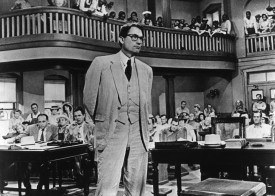 Atticus, To Kill a Mockingbird’s small town attorney, was one of my childhood heroes.
My girlfriends and I—white girls who rarely thought about race but considered prejudice ghastly—were deeply moved by Atticus. He was clear, inspiring and willing to stand against the racism of his Alabama neighbors.
We hadn’t noticed signs of racism around us in our white schools, churches and neighborhoods. I was glad that my family was respectful to our black maid, Mary, the only black person I knew.
We might have been polite, but none of us girls ever wondered why we carefully called all white adults by the formal Mr. or Mrs. followed by their last name yet referred to Mary by only her first name.
Oblivious to our contradictions, we distanced ourselves from the handful of openly racist students we noticed in our schools and believed that racism was on its way out.
In her recently published novel, Go Set a Watchman, Harper Lee paints a more complex—and more believable—picture of Atticus. And of us all. It is time to make room for a bigger, truer picture.
Atticus was a man of values who lived by the letter of the law. He had an unusual level of respect for all his neighbors, regardless of their behavior or skin color. In To Kill a Mockingbird, Atticus honorably defended Tom Robinson, an innocent black man. Unlike many of his neighbors, who believed that any black person accused by a white person was automatically guilty, Atticus stood on the side of truth.
Go Set a Watchman takes place in the mid-1950s, two decades after To Kill a Mockingbird. In the midst of a tense disagreement with his adult daughter Scout, Atticus asks, “Do you want your children going to a school that’s been dragged down to accommodate Negro children?” (page 246)
Scout snapped back about the low quality of her white school, but I focused on Atticus’s words and cringed at his racist assumption.
Unfortunately, some white people are still asking Atticus’ question today—people who would deny that they were tainted with racism.
My friend Sarah recently bought a home in Portland. The neighborhood school where her daughters will attend is 77% non-white (45% Latino, 17% Asian, 13% Black, 23% White and 2% Native American). Many of Sarah’s acquaintances and friends have responded with surprise that she would consider sending her children to school there. Unspoken, but implied, is that this is “a school dragged down to accommodate Latino, Asian and Black children.”
Schools were more integrated 40 years ago than they are today. Sarah’s children’s school is one of the few Portland schools with marked racial diversity. As a racially diverse elementary school, their classrooms will mirror the growing racial diversity of our nation. Children can learn their A, B C’s and also be exposed to a diversity of ethnicities, perspectives and cultures.
The issues, of course, are complex. The US has a long history of some public schools—more often in whiter and wealthier neighborhoods—getting better funding, staffing and parental time and financial support than schools in less white or affluent neighborhoods. Less affluent parents often work multiple jobs, have positions with limited job flexibility and have less money to invest in programs at their schools. Though the intelligence of the students may be equivalent, the opportunities diverge widely.
I remember being a mother of young children, and I worked hard to support their education. But any time my fight focused solely on what was academically best for my children and ignored the bigger picture, I actively perpetuated inequality and segregation.
The question for Atticus and for us today is not how to make sure our white, upper middle class children  get the best possible education but how, together, all children get the best possible education.
Go Set a Watchman sounds a critical warning for whites like me. We need to begin to notice racism and its impact on people of all races, including ourselves, and learn to distinguish when our racial bias is active and when it is not.
The race problem isn’t “over there across the tracks,” as I naively thought as a child. The problem is in the middle of society (including our public schools) and in the midst of our own minds. Moral outrage or a good personal conscience isn’t enough. All of our children, black and white and brown and…, are harmed by racial inequality.
Sarah’s daughters will grow up with a diversity of people I couldn’t have imagined as a young girl. In order to support her children’s thriving, Sarah was wise enough to know that she needed support and training* to hone her own skills for living values values that empower all people in the middle of a world, and a school system, that has been divided by race, gender, power and class.
Now is the moment for clear sight and honorable action as together we turn the tide toward justice and equity in our own hearts and in our nation. What does that look like for you?
*In college, Sarah used skills gleaned from the National Coalition Building Institute to present prejudice-reduction workshops for her peers. As she prepares for her oldest child to go to kindergarten, she is joining a Be Present Peer Led Support Group.