
Robert Sheppard's Blog: Robert Sheppard's Literary Blog & World Literature Forum , page 237
May 29, 2013
NEW BOOK RELEASE: SPIRITUS MUNDI BY ROBERT SHEPPARD NOW AVAILABLE ON AMAZON! -----INVITATION TO LISTEN TO MAY 17 BLOGTALKRADIO INTERVIEW WITH AUTHOR 10:00 AM PST
 Reblogged from Robert Sheppard Literary Blog:

NEW BOOK RELEASE: SPIRITUS MUNDI BY ROBERT SHEPPARD NOW AVAILABLE ON AMAZON! -----INVITATION TO LISTEN TO MAY 17 BLOGTALKRADIO INTERVIEW WITH AUTHOR 10:00 AM PST _______________________________________________________________________
We are pleased to announce the launch of SPIRITUS MUNDI on AMAZON , including both Spiritus Mundi, Book I: The Novel (5.0-Star Amazon Rating Average), and Spiritus Mundi, Book II:The Romance (5.0-Star Amazon Rating Average).
ListenListento弹劾Listen


May 28, 2013
ECKERMANN’S CONVERSATIONS WITH GOETHE—-FROM THE WORLD LITERATURE FORUM RECOMMENDED CLASSICS AND MASTERPIECES SERIES VIA GOODREADS—-ROBERT SHEPPARD, EDITOR-IN-CHIEF
 Conversations Of Goethe by Johann Peter Eckermann
My rating: 5 of 5 stars
ECKERMANN’S CONVERSATIONS WITH GOETHE—-FROM THE WORLD LITERATURE FORUM RECOMMENDED CLASSICS AND MASTERPIECES SERIES VIA GOODREADS—-ROBERT SHEPPARD, EDITOR-IN-CHIEF
For those of us who come from the English-speaking world the best initial path of approach to Eckermann’s Conversations with Goethe is to think of it as the German equivilant to James Boswell’s epic biography, The Life of Life of Samuel Johnson. Both works are hailed as not only invaluable accounts of their respective great men of letters, but have come to be valued as great masterpieces of literary biography and independent literary works in their own right. In addition, for those of us with a special interest in World Literature, Eckermann’s Conversations also records Goethe’s definitive delineation of his concept of the emergence of World Literature, using the German term he coined to define his concept “Weltliteratur.”
Johann Peter Eckermann, like James Boswell came to his calling as a witness and literary biographer of Goethe as a young unknown man encountering a long-renown literary titan towards the end of his life and career. Boswell met Johnson in a London bookshop owned by a mutual friend in 1763, when Boswell was just twenty-four years old and Johnson was internationally famous at the age of fifty-four. Eckermann met Goethe at Weimar in 1823 when he was just dropping his studies in law at the University of Gottingen at the age of thirty-one in hopes of finding a literary career, and Goethe was at seventy-four the acknowledged universal genius of European letters for half a century. Both men became intimate friends and scrupulous recorders of the conversations of their principals, in Boswell’s case for the next 22 years until Johnson’s death, and in Eckermann’s case for an ensuing 9 years until Goethe’s death in 1832 of which he gives a moving account.
Both are sometimes chided for looking on their respective great men with the idolizing eyes of comparative youth, rather than the more seasoned eyes of a true contemporary of similar age and equal experience. While undoubtedly true in some respect, even this supposed fault may be seen as a strength rather than a weakness as their sense of awe fixated and concentrated their energies over many years and imbued each with a weighty mission charged with a sense of responsibility to history and the world, inspiring them to keep meticulous verbatim notes of conversations, records of life events and intimate recordings of their own impressions and observations of their subjects and their respective milieus.
Eckermann’s first meeting with Goethe was both dramatic and the most fateful event of his life. He came from a poor family and served as a soldier in the Napoleonic wars. After mustering out of the army with little education he obtained a scholarship that allowed him to complete the Gymnasium and enter the University of Goettingen to study law at his father’s urging. Like Goethe, however, he discovered that literature and not law was his personal calling and he abandoned that career when his scholarship moneys came to an end. Having written his first unpublished book on poetry, including Goethe’s contributions to German poetics, he send the manuscript to Goethe seeking assistance in its publication. After waiting long months and having no response and his money coming to a final end he sold his possessions and abandoned his flat and set out on foot to seek a personal interview with the sage in Weimar, sending a letter in advance but receiving no appointment. It was for Eckermann a reckless last chance.
Upon arrival he gained entry to Goethe’s home and was told to wait in the common room. After two hours, the seventy-three year old European icon entered the room in an elegant blue frock coat and sat opposite him, saying: “I have just come from you!”—–meaning that he had just come from reading Eckermann’s manuscript which he had not had time to look at before. Eckermann began to try to explain his work, but Goethe stopped him, saying “There is no need to explain—-I have been reading your work all morning and it needs no recommendation—it recommends itself and I accept both it and you.”
Forthwith, without having made any request of him Goethe informed Eckermann that he was not only arranging for his book’s immediate publication but offering him a position as his private secretary and putting him in charge of his library and managing his literary papers and records. He informed Eckermann that he had already sent to the town to arrange housing and effects for him, effectively taking charge of his life! For the next nine years until Goethe’s death he would be in daily contact and conversation with the great Sage of Weimar and record not only their own conversations, but the long literary conversations Goethe undertook with his endless visitors, many them the greatest minds and writers of the age, producing an invaluable near verbatim record of innumberable historic dialogues with the faithfulness and fervor that Plato recorded the words of his revered Socrates.
I deeply recommend reading this seminal work, hailed by even a mind as profound as Nietzsche as the finest work he had read. Here are Goethe’s thoughts on Byron, Carlyle, Delacroix, Hegel, Shakespeare, and Voltaire, as well as his views on art, architecture, astronomy, the Bible, Chinese literature, criticism, dreams, ethics, freedom, genius, imagination, immortality, love, mind over body, sculpture, and much, much more. Eckermann’s Conversations allows Goethe to engage the reader in a voice as distinct and authentic as it is entrancing, along with the not inconsiderable insights, observations and reflections of the biographer himself.
World Literature Forum also recommends the Conversations from its special perspective, as one of the most seminal and influential works in our canon introducing and delineating the very concept of World Literature, or “Weltliteratur,” as Goethe termed it.
Speaking to his young disciple in January 1827, the seventy-seven-year-old Goethe first used his newly minted term “Weltliteratur,” which upon publication of the Conversations passed into common international currency:
“I am more and more convinced,” Goethe remarked,”that poetry is the universal possession of mankind, revealing itself everywhere and at all times in hundreds and hundreds of men . . . I therefore like to look about me in foreign nations, and advise everyone to do the same. National literature is now a rather unmeaning term; the epoch of world literature is at hand, and everyone must strive to hasten its approach.”
Indeed, for Eckermann Goethe becomes the living embodiment of world literature, even of world culture as a whole. In the same passage he records Goethe’s remark that “the daemons, to tease and make sport with men, have placed among them single figures so alluring that everyone strives after them, and so great that nobody reaches them”; Goethe names Raphael, Mozart, Shakespeare, and Napoleon as examples.”I thought in silence,”Eckermann adds, “that the daemons had intended something of the kind with Goethe–he is a form too alluring not to be striven after, and too great to be reached”
Notwithstanding all his pride in his own achievements and those of his countrymen like Schiller, Goethe had an uneasy sense that German culture was in fact provincial, lacking a great history, and as he lived before German unification after 1870,lacking political unity. He can’t afford to grant “national literature” too much meaning, since he didn’t even live in a proper nation at all, and he saw all of Europe and the world globalizing rapidly beyond even that anticipated acheivement.
He urged his fellow German writers to be more international and global in their perspectives: “there is being formed a universal world literature, in which an honorable role is reserved for us Germans. All the nations review our work; they praise, censure, accept, and reject, imitate and misrepresent us, open or close their hearts to us. All this we must accept with equanimity, since this attitude, taken as a whole, is of great value to us.”
Going even further, Goethe was one of the first great Western minds to take a truly global perspective. Eckerman records one episode:
“Dined with Goethe. ‘Within the last few days, since I saw you,’ said he, ‘I have read many things; especially a Chinese novel, which occupies me still and seems to me very remarkable.’”
“Chinese novel!” said I; “that must look strange enough.” “Not so much as you might think,” said Goethe; “the Chinese think, act, and feel almost exactly like us; and we soon find that we are perfectly like them, except that all they do is more clear, pure, and decorous, than with us.”
“With them all is orderly, citizen-like, without great passion or poetic flight; and there is a strong resemblance to my Hermann and Dorothea, as well as to the English novels of Richardson.”
“‘But then,’ I said, ‘is this Chinese novel perhaps one of their most superior ones?’”
It was then in reply to this reservation that Goethe shared with him the concept of Weltliteratur quoted above:
“By no means,” said Goethe; “the Chinese have thousands of them, and had when our forefathers were still living in the woods……………I am more and more convinced,” he continued, “that poetry is the universal possession of mankind . . . the epoch of world literature is at hand, and everyone must strive to hasten its approach.”
Eckermann’s final entry in the Conversations centers on discussion of the Bible. He had just bought a copy but was annoyed to find that it lacks the Apocrypha. Goethe commented that the Church erred in closing the canon of scripture, as God’s creative work still continues, notably in the activity of great spirits like Mozart, Raphael, and Shakespeare, “who can draw their lesser contemporaries higher,” an observation perhaps applicable to other self-enclosed fundamentalist sources such as the Koran, Torah and Sutras. Following these words–the last words of Goethe’s that Eckermann records–a one-line paragraph appears: “Goethe fell silent. I, however, preserved his great and good words in my heart.”
What then does Goethe, speaking through Eckermann’s Conversations have to teach us in the English-speaking world of the 21st Century?
Just as he tried to teach the German-speaking world of the 19th Century, he urges us to outgrow our national provincialisms, join in forging a global perspective, an openness to the traditions and genius of all the world’s cultures and literatures while preserving the unique roots and inherent genius of each and our own, and to take intellectual leadership in forging a common World Literature as the common heritage of mankind and a central contribution in our era of Globalization, to the forging and participation in the Universal Civilization and common culture of our planet.
For a fuller discussion of the concept of World Literature you are invited to look into the extended discussion in the new book Spiritus Mundi, by Robert Sheppard, one of the principal themes of which is the emergence of World Literature:
For Discussions on World Literature and Literary Criticism in Spiritus Mundi: http://worldliteratureandliterarycrit…
http://www.goodreads.com/book/show/17…
Robert Sheppard
Editor-in-Chief
World Literature Forum
http://robertalexandersheppard.wordpr…
Author, Spiritus Mundi Novel
http://www.goodreads.com/book/show/17…
Copyright Robert Sheppard 2013 All Rights Reserved


May 26, 2013
THE THREE MUSKETEERS ROMANCES—-FROM THE WORLD LITERATURE FORUM RECOMMENDED CLASSICS AND MASTERPIECES SERIES VIA GOODREADS—-ROBERT SHEPPARD, EDITOR-IN-CHIEF
 The Three Musketeers by Alexandre Dumas
My rating: 4 of 5 stars
THE THREE MUSKETEERS ROMANCES—-FROM THE WORLD LITERATURE FORUM RECOMMENDED CLASSICS AND MASTERPIECES SERIES VIA GOODREADS—-ROBERT SHEPPARD, EDITOR-IN-CHIEF
Alexandre Dumas is one of the great mythmakers of modern Western Literature. The Three Musketeers saga is of course a thrilling tale of adventure known to almost everyone through film if not by firsthand reading, and its over one-hundred film adaptations testify to its grip on the popular imagination. Having read the entire Musketeer saga of D’Artagnan Romances, from the “Three Musketeers” onward to include “Twenty Years After,”The Vicomte de Bragalone,” “Louise de la Valliere” and “The Man in the Iron Mask” I have revised my evaluation of Dumas’ work upward repeatedly.
There is far more to the Musketeers saga than presents itself on first impression. The Three Musketeers is a stirring tale of adventure and of the bonds of “One for All and All for One” brotherhood, but is also a historical epic saga, a macabre chiller, a thriller, a romance, an allegorical quest and even a detective novel. It has all the strengths of classic story-telling. Yet it is more even than that. It is a vast historical canvas not only of French history in the time of Louis XIII and XIV, but also a revisiting of the intertwined links to English history from the Puritan Revolution to the Restoration, similar in its dual focus to Dickens’ “Tale of Two Cities” and additionally via Dumas’ personal and family history read between the lines, a repersptectiving of later French history through the French Revolution, Napoleon, the Bourbon Restoration and the First and Second Empires. But even beyond its force as an action adventure and a popular history lesson, the saga is bouyed even further in its instinctive feel for the hopes and fears that lie hidden in the collective unconscious of its public.
For many years I balked at reading the Musketeers saga, put off by both the bulk of the works and the stigma of its “lightweight” escapist-melodramatic action orientation derived from the cinema versions I had seen, and passed it by on the storeshelves, contented with having seen the movie. Finally, out of a “professional interest” in wanting to have authentically read “The World Classics” I decided to give it a try. First of all I experienced what most Dumas readers do, the thrill of being caught up in the hands of a great popular storyteller. To my own surprise I was carried along in the narrative current and eager to go on to the next books of the saga. Later, as I accumulated the historical sweep, vision and perspective of the multi-book epic I was drawn more and more into the historical links with eras of English and American history that still perplexed me, such as the Puritan Revolution and Restoration, Cromwell, the French Revolution, First Empire, Bourbon Restoration, Second Republic and Empire, and even the French contribution to the American Revolution, the history of Haiti, its contradictory participation in the French Revolution and Empire and its later independence under Toussaint L’Ouverture, the forgotten “Second Revolution of the Americas,” all implicated either in the Musketeers saga or by the personal and family history of Dumas himself as the son of a mulatto Haitian-born General under Napoleon, one-fourth black, and his personal participant in the events of the French Second Republic and Second Empire. In the end I found Dumas an invaluable introduction to these historical periods and dimensions, and for those of you who find the tomes of straight history too soporific a pill to swallow, Dumas has the great advantage of sugar-coating the lesson with action, intrigue and heroic enthusiasm.
Perhaps it would be a useful orientation for potential readers to quickly summarize some of the links of the D’Artagnan saga’s books with some of the prinicpal events of the above history. The D”Artagnan saga begins in the first book, “The Three Musketeers” under the reign of Louis XIII and his queen, Anne of Austria, who comes from the Habsburg dynasty ruling also Spain. The book begins with the youthful D’Artagnan journeying to Paris seeking to enter service of the King as a royal Musketeer. The entanglement in English history and politics become immediately apparant with D’Artagnan’s humiliation en route by “Milady” and Rochfort, both renegade English expatriates in league with the sinister Cardinal Richelieu, and enemies to the beautiful and good Queen Anne. Next, the British prime minister Buckingham is found to be desperately in love with Queen Anne, despite looming war between the two nations rooted in the Protestant/Catholic divisions that have plagues all of Europe in addition to the British and French. The most dramatic heroism of the Musketeers in the first book lies in their mission to England in the “Affair of the Diamond Studs” which threatens to bring down Anne, but is happily resolved in through their heroic rescue of her. Later the Musketeers are caught up in Richelieu’s seige of La Rochelle, the Protestant French stronghold allied with the Protestant English. Bickingham, however, is asassinated by a Puritan zealot recruited by the evil “Milady” to prevent his aiding the French Protestant cause.
The intertwining of the histories of the two nations is again emphasized in the second book of the saga, “Twenty Years After” history fastforwards to the time of the Puritan Revolution in England, and the Musketeers attempt, loyal to all royal causes, but ultimately fail to rescue Charles I from beheading by the Puritan Parliament. Meanwhile, France undergoes its own semi-revolution, the Fronde rebellion, weaker than its English counterpart allying the feudal nobles and the popular masses in resistance to the growing autocratic state evolving under Cardinal Richilieu and later Cardinal Mazerin. Once again the heroes melodramatically struggle against the Machiavellian power of the Cardinals and new agents of evil. Ultimately the autocratic state prevails in France, culminating with the ultimate autocrat Louis XIV, while in England after the failed republican experiment of Cromwell’s Commonwealth a much weaker sovereign king is restored under Parliamentary supremacy. Again, Dumas does Dickens one better in telling a deeper and more complex “Tale of Two Cities” with dramatic action, political and religious intrigue and influences moving back and forth across the English English channel.
In the third installment, “The Vicomte de Bragalone” time again fastforwards ten more years to 1660, the time of the English Restoration. Here D’Artagnan once again undertakes a critical mission to England, this time to successfully assist the restoration of Charles II, son of the beheaded Charles I. We are now thirty years on from the opening of the saga in the first book, and we see the corrosion and deterioration of the “brotherhood” of the four heroes, in which divergent interests and fates are pulling them apart. The gentle giant Porthos has left the Musketeers, married a rich widow and retired to his new estates, dreaming only of acquiring a title of nobility. D’Artagnan has alone continued in the Musketeers, rising to command, but without the promotions and rewards he has aspired to, leaving him despondent enough to quit, though later to be reinstated by a resurgent Louis XIV resolved to draw all power into his personal control after so many years as the pawn of the Cardinals. Athos has retired to his estate and composes his memoires while sponsoring his son, Raoul, the Vicomte de Bragalone to carry on the family fame to higher levels in Louis XIV’s service. Aramis, however has retired from the Musketeers to take a religious calling, yet is even more ambitious, seeking to become Cardinal himself and even Pope by aiding the king’s adversaries, which draws him into conflict with his old friend D’Artagnan. “All for One” is slowly warped into “One for One, and the Devil take the Hindmost.” Nonetheless, the brotherhood still persists in the deeper recesses of each heart.
In “Louise de la Valliere” the love of Raoul’s life, Louise, is taken from him by the despotic hand of Louis XIV himself, who sends him on a mission to—where else?—England!—involving arrangement of the marriage of Charles II’s sister to Messieur, the King’s homosexual brother, all to get him out of the way of Louis’s courting Ra Once again the destinies of the two lands are entwined. Buckingham’s son comes to Paris and causes havoc with his wild love for the intended bride until persuaded back to sanity and home by Queen Anne. Louise becomes the long-term mistress of the king and mother of his illegitimate children, forever breaking Raoul’s heart.
In the final installment of the saga, “The Man in the Iron Mask” Aramis plots the overthrow of Louis XIV and must duel wits with D’Artagnan who remains loyal. I shall not spoil the ending by revealing the mystery of the plot, but suffice it to say the iron brotherhood of the four Musketeers corrodes and is sundered, each meeting his own end without the others.
Yet our concerns with history do not end with the tale, as they continue on with our infatuation with the teller and his life. A century after the saga ends Dumas appears on the scene as the son of a mulatto Napoleonic General fallen into disfavor. His sympathies are republican, but he has an affection for the trappings and privileges of royalty. His life is caught in the same contradictions as the history of Europe. The French Revolution comes and goes, succeeded by the dictatorship of Napoleon’s First Empire and then the Bourbon restoration. Dumas supports the republican cause, sometimes standing candidate, but the Second Republic is overthrown by the Second Empire. Haiti, the place of his father’s birth to a French father and black mother, defeats Napoleon’s attempt to reimpose French rule and slavery after the French Revolution had abolishe it, becomes independent under Toissant L’Overture, the second nation after the USA to acheive independence, but sinks into corruption, superstition and despotism, declining from perhaps the richest French colony producing 40% of Europe’s sugar and 60% of its coffee before the revolution to abject poverty, while the Spanish ratake the eastern half of the island, leaving its revolutionary hopes annihilated and reducing it to chronic poverty and hopelessness. Dumas becomes immensely rich and perhaps the most famous Frenchman in the world, but squanders it all in high living, dying indebted on the eve of the Third Republic, having forewarned France of the German threat. A tale indeed of more than two cities!
Stylistically, for those who have looked down on Dumas as a melodramatic action and adventure writer, it is helpful to note that his writing deepens in the psychological complexity and mature realityof its characters with each new book of the saga, along with his observations of the world and the human condition. While not a great mind in terms of intellectual depth, he reveals himself to have a deep and firm grip on human motivations in the conventional sphere of social ambitions, often with a worldliness and solidity of judgment that leaves more inward writers behind in their relative social unsophistication. His books are carefully researched and grounded in mostly accurate history, and he possesses a quite respectable store of scholarship and learning which he weaves into the action of his books. He sustains continuous power in a more extroverted and dramatic sense, reflecting his early origins a a playright, and he never fails to power forward with endless characters, turns of plot, dramatic cum melodramatic energy and narrative momentum.
All in all, I highly recommend reading through the several books of the D’Artagnan Romances, both for their enjoyment and for the invaluable history lesson en passant which leaves the reader with a much greater feel for European history and dynamics of the last three centuries. Dumas’s characters have also acheived the status of popular icons of World Literature and cinema, and in so doing have proven the depth of their appeal and rootedness in the popular collective unconscious not only of France and the West, but of the world as a whole.
For a fuller discussion of the concept of World Literature you are invited to look into the extended discussion in Spiritus Mundi:
For Discussions on World Literature and Literary Criticism in Spiritus Mundi: http://worldliteratureandliterarycrit…
http://www.goodreads.com/book/show/17…
Robert Sheppard
Editor-in-Chief
World Literature Forum
http://robertalexandersheppard.wordpr…
Author, Spiritus Mundi Novel
http://www.goodreads.com/book/show/17…
Copyright Robert Sheppard 2013 All Rights Reserved


May 25, 2013
THE CHINESE THREE MUSKETEERS—-FROM THE WORLD LITERATURE FORUM RECOMMENDED CLASSICS AND MASTERPIECES SERIES VIA GOODREADS—-ROBERT SHEPPARD, EDITOR-IN-CHIEF
 Romance of the Three Kingdoms – Book 1 by Luo Guanzhong
My rating: 5 of 5 stars
THE CHINESE THREE MUSKETEERS—-FROM THE WORLD LITERATURE FORUM RECOMMENDED CLASSICS AND MASTERPIECES SERIES VIA GOODREADS—-ROBERT SHEPPARD, EDITOR-IN-CHIEF
“The Romance of the Three Kingdoms” by Luo Guanzhong is one of the timeless Classics of World Literature and may be approached initially by thinking of it as a Chinese equivilant of the “Three Musketeers” saga of Alexandre Dumas. When we think of Dumas’ classic we immediately call to mind from the book or film the immortal oath of brotherhood of D’Artagnan, Porthos, Athos and Aramis: “All for One, and One for All!” This becomes an archetype and ideal of Universal Brotherhood in Dumas’ work and this universal archetype is echoed in Luo’s famous “Oath of the Peach Garden,” sworn to by the three great protagonists of the Romance, Liu Bei, Guan Yu and Zhang Fei:
“When saying the names Liu Bei, Guan Yu and Zhang Fei, although the surnames are different, yet we have come together as brothers. From this day forward, we shall join forces for a common purpose: to save the troubled and to aid the endangered. We shall avenge the nation above, and pacify the citizenry below. We seek not to be born on the same day, in the same month and in the same year. We merely hope to die on the same day, in the same month and in the same year. May the Gods of Heaven and Earth attest to what is in our hearts. If we should ever do anything to betray our friendship, may heaven and the people of the earth both strike us dead.”
This oath of fraternity and fidelity remains at the core of both sagas, alongside exciting adventure and thrilling action, as they respecitvely unfold across the panoramas of their disparate historical settings. The setting of the “Romance of the Three Kingdoms” is the disintegration of the classic Han Dynasty in China (206 BC – 220 AD), a close equivilant of the unified West under the Roman Empire of the same time, following the Yellow Turban Rebellion and the corruption and intrigues of the Eunuch faction, leading to the warring period of the Three Kingdoms, Wei, Shu and Wu which spelled the breakup of a unified China. Just as Dumas’ heroes remain faithful to the French King and seek to strengthen the King and nation against internal and external threats, so Liu Bei, Guan Yu and Zhang Fei strive not only to be true to one another as brothers, but also to restore the unity and authority of a united nation and Emperor, retrieving one golden age with another, while in passing succoring the oppressed and endangered in noble fashion.
The events of The Romance, as do those of the extended saga of the Three Musketeers including its sequels “Twenty Years After,” “The Vicomte d’Bragelone,” “Louise de la Valliere,” and “The Man in the Iron Mask” stretch across the lifetime of an entire generation and encompass several eras of history. In both cases the story is closely based on true history, with the embellishment and fictionalizing of a number of the main characters to add depth and melodrama.
The Romance commences with the corruption of the fabric of the Imperial Court and society accompanying the fall of the Han Dynasty, unfolding with the suppression of the Yellow Turban Rebellion by General He Jin, Jin’s murder by the Eunuch Faction jealous of his accumulating power, the reprisal of his troops by their invasion of the Imperial Palace and the slaughter of the Eunuchs, and the abduction of the child Emperor Xian with its ensuing chaos and anarchy, accompanied by the rise of various Warlords.
Thereafter we see the rise of the arch-villan of the melodrama, Cao Cao, who plays a role parallel to that of Cardinal Richelieu, Mazarin and Colbert in the Musketeers saga, always the consummate Machiavellian political manipulator at odds with the sworn brother heroes loyal to king and country. As in the case of Dumas’ tale, Cao Cao uses the child emperor as a captive pawn to consolidate his own dictatorial power behind the throne as did Richelieu and Mazarin, who made the child-King Louis XIV his pawn on the heels of the Fronde Rebellion in France which almost toppled the French monarchy around the same time as the Puritan Revolution and Cromwell in England resulted in the toppling of Charles I.
From thence a long struggle for power ensues, with Cao Cao declaring himself Chancellor, seizing power over the north of China, then attempting to finish the job with an invasion of the south. Liu Bei, one of the “Chinese Three Musketeers,” however, with the help of his sworn brothers and the recruitment of the archetypal military genius General Zhuge Liang, stops his plan by defeating him at the famous Battle of Red Cliff, featuring such episodes as “Borrowing the Arrows.” From there an endless struggle follows, pitting Liu Bei, Guan Yu and Zhang Fei, aided by Zhuge Liang against the ever wily Cao Cao, and leading to dramatic episodes such as the Stone Sentinel Maze and the Empty Fortress in which Zhuge Liang’s military cunning and genius is consummately demonstrated. In the course of the struggle Liu Bei emerges as the type of the ideal Lord and Zhuge Liang as the ideal general and military genius, just as Cao Cao proves himself the consummate evil political genius. Eventually, China is reunited, ending the Three Kingdoms under the new Jin Dynasty, but, Moses-like, the three sworn brothers do not live to join the triumph, nor do they succeed in the aim of their oath to die together on the same day fighting for one another, just as Dumas’ heroes meet their separate deaths and their “eternal brotherhood” corrodes in disparate directions while still enduring in spirit.
In both cases, the author and the narrative imaginatively reconstructs and fictionally embellishes the true history of a long-bygone era from a remote historical vantage point. Dumas’ wrote in the 1840′s after the time of the French Revolution and the rise and fall of Napoleon about the period of the consolidation of the French autocratic state from the time of Louis XIII, the Fronde Rebellion and the rise of Louis XIV in the 1600′s, before and afterthe rise and fall of the Puritan Revolution and Cromwell in England. Luo Guanzhong wrote from an even remoter vantage point, composing The Romance of the Three Kingdoms around 1400 or so, making him a contemporary of Chaucer in England, and during the time of transition from the Yuan Mongol Dynasty back to the resurgent Han Chinese Ming Dynasty. At that time a resurgence of native Han Chinese national feeling revived the classic tales of Chinese history after suppression under the Mongol dynasty, just as French nationalism and interest in French national history revived following the decline of the foreign-imposed Bourbon restoration and the rise of the Second Empire. Luo Guanzhong stated that The Romance was 70% fact amd 30% fictional enhancement. Dumas’ tale of the Three Musketeers, inspired by Sir Walter Scott’s historical novels, was based also on the factual hisorical record derived from Gatien de Courtilz’s history of the Musketeers, though the fictional embellishment and dramatization might be found in similar proportions.
Both the Three Musketeers saga and the saga of The Romance of the Three Kingdoms are well worth reading for their literary and enjoyment value, beyond their historical educational function. Both have acheived the status of “Classics” in the sense not only of being masterpieces, but also having become part of the canon and, indeed, become works themselves constituative of the culture of their nations and cultures.
A mature canon and institution of World Literature must be much more than a simple buffet of recent international titles or airport-lobby bestsellers from around the world. As T.S. Eliot observed, each new work of literature takes its place and meaning within a Tradition, and such tradition evolves organically and historically and must be understood as such. It is the task of World Literature not only to call attention to good books from around the world, but to forge a canon of “world tradition” that includes the major “Classics,” led by the world-recognized Western Classics no doubt, but expanded in Goethe’s ideal of “Weltliteratur” to include the “Classics” of other non-Western traditions, such as The Romance of the Three Kingdoms and Journey to the West from China, the Ramayana of India and the Arabian Nights, Attar and Rumi, amoung many others from the Islamic heritage and beyond. Every educated person in the world should have some familiarity with the Chinese classics, Indian classics, Islamic classics as well as the great Western Classics, amoung others to even begin to understand the world they live in and its peoples and living cultures. In this spirit we recommend to every member of the “Global Republic of Letters” to look into the Romance of the Three Kingdoms, as well as other Chinese classics such as the Water Margin, the Journey to the West and the Dream of the Red Chamber (Hong Lou Meng).
For a fuller discussion of the concept of World Literature you are invited to look into the extended discussion in Spiritus Mundi:
For Discussions on World Literature and Literary Criticism in Spiritus Mundi: http://worldliteratureandliterarycrit…
http://www.goodreads.com/book/show/17…
Robert Sheppard
Editor-in-Chief
World Literature Forum
http://robertalexandersheppard.wordpr…
Author, Spiritus Mundi Novel
http://www.goodreads.com/book/show/17…
Copyright Robert Sheppard 2013 All Rights Reserved


May 24, 2013
FROM THE WORLD LITERATURE FORUM RECOMMENDED CLASSICS AND MASTERPIECES SERIES VIA GOODREADS—-ROBERT SHEPPARD, EDITOR-IN-CHIEF
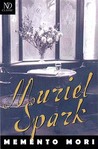 Memento Mori by Muriel Spark
My rating: 4 of 5 stars
FROM THE WORLD LITERATURE FORUM RECOMMENDED CLASSICS AND MASTERPIECES SERIES—-ROBERT SHEPPARD, EDITOR-IN-CHIEF
For those of us who grew up in what subsequently came to be classified as “The Baby Boom Generation,” (and I suspect a large contingent of Goodreads regulars did so) the primary contact and introduction to the work of Scottish writer Muriel Spark came from her most famous novel, which was popularized as a play and movie “The Prime of Miss Jean Brodie,’ the tale of an unconventional teacher at girl’s school in Edinburgh in the 1930′s who “in her prime” seeks through her strong personality to mould the lives of a select and chosen group of her students in unexpected directions, including love affairs. For the Children of the 60′s, especially young women, the book was something of a coming of age rite of passage into that more liberated time.
Memento Mori, another of her works, may again serve as a form of rite of passage to this same “Boomer” generation fifty years on in an additional respect: their entry into old age and the looming proximity of the inevitability of death. The title, for those who share with Shakespeare but “little Latin,” means a reminder of death. Our generation has been blessed with something unique in human history, namely our marvellously long and continuous lives unmarred by mass deaths in world wars, depressions, plagues and revolutions, and extended further and further by the miracles of modern medical science. Yet for all that, as Muriel Spark would remind us, death is as inexorably present and inevitable as ever, and even its very extended deferrment reveals a second inevitable alteration of condition, old age.
Thus, for those of you who came of age in the presence of “The Prime of Miss Jean Brodie,” I further recommend and invite you to take a second helping of Muriel Spark in the “second half” of your lives by looking into her Memento Mori. It is a rich resource for understanding and coming to grips with the dilemmas, contradictions, frailties and unexpectedly discovered resources of old age amoung highly intelligent yet declining people—–people like us, shall we say?
Memento Mori is characteristically set and takes place as in many of Spark’s books, within a a self-enclosed community (of writers, schoolgirls, nuns, rich people, etc.) that is full of incestuous liaisons and fraternal intrigue; into this close setting is thrown a bombshell (like murder, suicide or betrayal) that will ricochet dangerously around this little world; into the mix is added some allusions to the supernatural to ground these melodramatics in an old-fashioned context of good and evil, then it is stylistically served-up with crisp, ironic verging on comic prose and a wry sense of the arbitrary twists of a destiny guided by a hand higher beyond our comprehension, often disposing of its creatures with a light and heartless hand. Unlike the self-enclosed world of “The Prime of Miss Jean Brodie,” the coming of age passage of a generation of teens through a girl’s school, the unique community described by Memento Mori is a caste of septuagenarian writers, artists, wealthy families and attached servants who have lived often self-indulgent or unconventional lives of which the end is soon approaching.
The novel opens in the manner of a “whodunnit” mystery as Dame Lettie Colston, a sometimes woman writer and patroness of the arts in London begins to receive a series of a species of “obscene phonecalls,” not sexual in nature, but rather announcing to her in an ominous mysterious voice, “Remember you must die.” The harassing calls later extend to her brother Godfrey and his wife, a lifetime intimate friend of Lettie’s and internationally famous woman novelist Charmian who has suffered from a mild recent stroke. From that point we are taken on a tour of Dame Lettie’s and Charmian’s relationships, past history, family and writer-artist friends stretching over fifty-years in an attempt to discover who the “harasser” might be, revealing hidden sexual relationships and affairs, family and conjugul feuds, parent-child hatreds, lovers histories, blackmail, testamentary bullying, professional writers’ animosities and other possible keys to the mystery.
One of Dame Lettie’s intimates we are drawn into contact with is a well-known writer, ex-lover and social scientist, Alec Warner, who in compiling an exhaustive study of the lives of his own septuagenarian generation for his final scholarly opus magnus, keeps a meticulous record of their personal lives, physical and psychological conditions as they approach the “endgame” of their lives. It is partially this focus which makes the book Memento Mori particularly valuable for the “Boomer Generation” as it courses through its sixties and into its seventies as the novel becomes a veritable handbook of old age amoung an unconventional and privileged set determined to live life fully, meticulously compiled,and intelligently communicated as they face the daily toll recorded in the obituary columns, the strokes, senility and diseases of dementia and gradual decline towards death of their acquaintances, and the dilemmas of committal to nursing homes or struggling to remain independent outside. It follows also the lives of their former servants and companions whose financial resources come to an end and find themselves institutionalized in state facilities.
One of the keys to the understanding of Muriel Sparks, as with other prominent writers of her generation such as Evelyn Waugh and Graham Green, was her conversion to Catholicism. Whether one shares her sectarian orientation or not, Memento Mori presents us with a valuable object lesson in our final decades, that in whatever way we find or choose, the looming presence of death must force us to look to our souls and reperspective all we have undertaken in our lives in the context of the reality and unavoidability of death. For those of you who have not read this book I will not spoil its ending by relating the shocking and unexpected manner of Dame Lettie’s death, but suffice it to say, it does come, but not without her achievement of some element of grace. Hemingway famously defined “grace under pressure” as a measure of manhood, though he chose to end his life with a shot to the head. Old age in the face of death is a pressure all of us must face, and some of us will find some measure of grace, forgiveness and spiritual equanimity in doing so, others failing.
Spark’s work is a valuable invocation to us all to search for the roots of such grace, even in its warning each of us: “Remember that you must die,” yet also reminding us that we must equally remember also to live, and to fully live in the realization of that fact.
Robert Sheppard
Editor-in-Chief
World Literature Forum
http://robertalexandersheppard.wordpr…
Author, Spiritus Mundi Novel
http://www.goodreads.com/book/show/17…
Copyright Robert Sheppard 2013 All Rights Reserved


May 23, 2013
FROM THE WORLD LITERATURE FORUM RECOMMENDED CLASSICS AND MASTERPIECES SERIES ON GOODREADS —-ROBERT SHEPPARD, EDITOR-IN-CHIEF
 The Spanish Tragedy by Thomas Kyd
My rating: 4 of 5 stars
FROM THE WORLD LITERATURE FORUM RECOMMENDED CLASSICS AND MASTERPIECES SERIES—-ROBERT SHEPPARD, EDITOR-IN-CHIEF
The Spanish Tragedy of Thomas Kyd (1587) is one of the touchstones of the Drama of the English Renaissance and well worth reading for anyone with an interest in Shakespeare, the evolution of English Drama and Literature and in the history and culture of the Renaissance and Elizabethan Age. The play is notable in the history of English drama in being the first innovative model of the genre of the “Revenge Tragedy,” and as such a precursor of better known works, most particularly Shakespeare’s Hamlet.
But why is such a Renaissance Revenge Tragedy of continuing interest to us today?
I would answer and positively recommend your reading of this compelling work by first observing that such revenge tragedy is about much more than revenge. It is laced with the acid and very modern existential consciousness of an underlying world in which the cant of both human and divine law, order and justice is found wanting at best, and which presents persons injured and abused with the dilemma of turning alternatively to either vengance, protest, faith in a continuously deferred questionable karmic or divine retribution, or quietest acceptance of a violently absurd and meaningless world.
The “Revenge Hero” is also a precursor and brother to our own modern and post-modern “anti-heroes” in books and cinema from Batman to film noir to Django, The Girl With the Dragon Tattoo and Oblivion, who finding that corrupt institutions and the absent or impotent hand of a divine or natural order, feel called upon to rebel and take justice into their own hands. Even the modern Jihadist paints himself as a “revenge hero” against a perceived unjust social order of militarist repression from the West and Israel or a soulless and corruptive materialist modernity.
The Revenge Tragedy thus is of continuing interest, not only as a moving drama of crime and punishment, but also in its ability to call into question the wider functioning of social order and its relation to the individual as well as presenting to our mind the question of the existence or non-existence of any divine, natural or human order or justice in the universe and the consequence of such for our lives.
In Kyd’s tragedy, the revenge hero is Heironimo, a humanistic, educated judicial officer of the Spanish court and a loving husband and father who would be the last person one could imagine as possessed with the violent passion of blood vengeance. He, and the generic revenge hero of latter works such as Hamlet, contrary to expectation is not any kind of “blood” out for violent pay-back, but is the most reluctant of seekers of retribution. He is only driven to take action by the perfidious murder of his beloved son Horatio, a returned war-hero in the battles against the Portugese, a crime perpetrated by the corrupt royal princes of both warring nations out of lover’s jealousy and corrupt political expediency, resulting in his society’s betrayal and corrupt failure, particularly of its ruling class, to grant him and his dead son any form of justice. Like Hamlet he hesitates, questions and doubts himself, doubts the evidence, and pushes himself to the brink of madness arising from his dispair before in the end turning to reluctant action. As in Shakespeare’s Hamlet, he also uses the convoluted device of a “play within a play,” a court masque performed by noble personages, to bring about the undoing of the villians through his participation as writer, director and actor, leading in the end to their death by his hand.
The Spanish Tragedy ends bathed in an orgy of blood, and on such a note of pessimism as to human or divine order and justice, that it may have contributed to the historical Kyd himself at a later time being arrested and charged with “atheism and heresy,” along with his friend and colleague Christopher Marlowe, author of Faustus. Who in our modern time can view the savage and bloody videos of the mass slaughters, beheadings and mutilations of the Zetas and drug cartels in Mexico, the genocide in Rwanda, the ceaseless sectarian bombings and retributions from Boston to Chechnya to Syria, Palestine and Bombay without some visceral questioning of their faith in any human or divine justice on earth? It is a commonplace of Rennaissance scholarship to invoke the terminology of “Early Modern” in discribing Kyd’s age, and Kyd’s tragic vision and pessimism in retrospect do look increasingly “Modern” far before its time.
For most of us, we come to Kyd through Shakespeare, and my initial attention in reading Kyd’s drama was focused on the many similarities and influences of the play on Hamlet. Though we romanticize Shakespeare as one of, or perhaps the ultimate original genius of English and World Literature, by reading Kyd’s play we can also recognize how Shakespeare was a shameless borrower of stories, content and treatment in producing his own works. Indeed, not only was the Spanish Tragedy a powerful model from which The Bard drew, but Kyd had also produced his own version of Hamlet years before, of which the text was unfortunately lost to modern scholars, lending him the very subject matter itself. But any modern reader of Kyd’s play will be forcefully struck by such similarities as Heironimo’s “Hamletian” hesitation and madness, the “play within a Play,” the corruption in the fabric of society, especially in the ruling class and the catharsis and purgation of sin by blood which are common with Shakespeare’s work. One is forced to rethink what was original to Shakespeare and what derived from the conventions of the genre itself. T.S. Eliot also wrote on Kyd’s work, and it is well to call to mind his invocation of “The Tradition” from his essay “Tradition and the Indivudual Talent” even with regard to so great a talent as Shakespeare himself. Shakespeare visibly borrowed from and added force to his work from prior models including Kyd as well a classical precursors such as Seneca.
I and World Literature Forum thus positively recommend looking into Kyd’s cathartic tragedy of blood and anomie as a moving read, a re-perspectiving of Shakespeare, and as a revisiting of the early roots of Modernity.
Robert Sheppard
Editor-in-Chief
World Literature Forum
http://robertalexandersheppard.wordpr…
Author, Spiritus Mundi Novel
http://www.goodreads.com/book/show/17…
Copyright Robert Sheppard 2013 All Rights Reserved


May 10, 2013
NEW BOOK RELEASE: SPIRITUS MUNDI BY ROBERT SHEPPARD NOW AVAILABLE ON AMAZON! —–INVITATION TO LISTEN TO MAY 17 BLOGTALKRADIO INTERVIEW WITH AUTHOR 10:00 AM PST

NEW BOOK RELEASE: SPIRITUS MUNDI BY ROBERT SHEPPARD NOW AVAILABLE ON AMAZON! —–INVITATION TO LISTEN TO MAY 17 BLOGTALKRADIO INTERVIEW WITH AUTHOR 10:00 AM PST _______________________________________________________________________
We are pleased to announce the launch of SPIRITUS MUNDI on AMAZON , including both Spiritus Mundi, Book I: The Novel (5.0-Star Amazon Rating Average), and Spiritus Mundi, Book II:The Romance (5.0-Star Amazon Rating Average). You can browse and sample both onlline for free now, then purchase immediaetly by clicking on the following Amazon sites:
Spiritus Mundi, Book I: The Novel: http://www.amazon.com/dp/B00CIGJFGO
Spiritus Mundi, Book II: The Romance http://www.amazon.com/dp/B00CGM8BZG
CHECK OUT SPIRITUS MUNDI’S 5.O-STAR GOODREADS RATING AVERAGE & REVIEWS ON GOODREADS:
Book I (5.0-Stars on Goodreads) http://www.goodreads.com/book/show/17857619-spiritus-mundi-book-i
Book II (5.0-Stars on Goodreads) http://www.goodreads.com/book/show/17857704-spiritus-mundi-book-ii-the-romance
CHECK OUT A FULL SUMMARY OF SPIRITUS MUNDI ON SHELFARI before purchasing at:
http://www.shelfari.com/books/36123188/Spiritus-Mundi—Book-I-The-Novel http://www.shelfari.com/books/36123187/Spiritus-Mundi—Book-II-The-Romance
Spiritus Mundi is also available on SMASHWORDS in ALL FORMATS:
Book I (5.0 Stars on Smashwords) https://www.smashwords.com/books/view/303856 Book II (5.0 Stars on Smashwords) https://www.smashwords.com/books/view/303798
Spiritus Mundi is also now available at the following sites:
Spiritus Mundi: Book I: The Novel
https://www.smashwords.com/books/view/303856
http://www.barnesandnoble.com/w/spiritus-mundi-robert-sheppard/1115113181?ean=2940044432598&itm=1&usri=2940044432598
http://www.kobobooks.com/ebook/Spiritus-Mundi-Book-The-Novel/book-vYffC7MUUEyN0wJTQSpgFQ/page1.html
https://itunes.apple.com/us/book/spiritus-mundi/id634577546?mt=11
http://www.diesel-ebooks.com/item/SW00000303856/Sheppard-Robert-Spiritus-Mundi-Book-I-The-Novel/1.html
Spiritus
Mundi – Book II: The Romance
https://www.smashwords.com/books/view/303798
http://www.barnesandnoble.com/w/spiritus-mundi-robert-sheppard/1115113152?ean=2940044433182&itm=1&usri=2940044433182
http://www.kobobooks.com/ebook/Spiritus-Mundi-Book-II-The/book-PlMhvFBI5USTGkLFnO1TQA/page1.html
https://itunes.apple.com/us/book/spiritus-mundi-book-ii-romance/id634586781?mt=11
http://www.diesel-ebooks.com/item/SW00000303798/Sheppard-Robert-Spiritus-Mundi-Book-II-The-Romance/1.html
CELEBRATING SPIRITUS MUNDI’S AMAZON RELEASE DAY WITH MAY 17 BLOGTALKRADIO AUTHOR INTERVIEW WITH DR. ROBERT ROSE 10:00 AM PST __________________________________________________________________________
We also invite you to listen in to the upcoming new BlogTalkRadio Interview with Dr. Robert Rose interviewing Robert Sheppard on the topic of “World Consciousness and the Emergencer of World Literature” scheduled May 17, 10:00 AM, PST:
How to Tune In: ============ You can tune in for the live Interview by clicking on the following BlogTalkRadio link:
http://www.blogtalkradio.com/icdrrose/2013/05/17/robert-sheppard-global-consciousness
or you can listen in anytime to the recorded Podcasts of the May 17 Interview, or past Interviews:
http://www.blogtalkradio.com/icdrrose http://www.blogtalkradio.com/icdrrose/2012/08/01/robert-sheppard–spiritus-mundi-a-novel
On Spiritus Mundi: ==============
“Robert Sheppard’s new novel “Spiritus Mundi” is a new twist on a well-loved genre. Robert leaves no stone unturned in this compelling page turner you’ll experience mystery, suspense, thrills, and excitement. Robert touches on sexuality and spirituality in such a way that the reader is compelled to ask themselves “what would you do if faced with these trials?” Robert is a master at taking the reader out of their own lives and into the world he created. If you’re looking for a “can’t put down” read pick up Spiritus Mundi!” May 20, 2012
Nicole Breanne, Content Coordinator, Ranker.com ______
“Read Robert Sheppard’s sprawling, supple novel, Spiritus Mundi, an epic story of global intrigue and sexual and spiritual revelation. Compelling characters, wisdom insight, and beautiful depictions of locations all over the world will power you through the book. You’ll exit wishing the story lines would go on and on.” May 13, 2012
Robert McDowell, Editor, Writer, Marketer, Editorial Cra, The Nature of Words
______________________________________________________
“Robert Sheppard’s exciting new novel, Spiritus Mundi, is an unforgettable read and epic journey of high adventure and self-discovery across the scarred landscape of the modern world and into the mysteries beyond. Its compelling saga reveals the sexual and spiritual lives of struggling global protesters and idealists overcoming despair, nuclear terrorism, espionage and a threatened World War III to bring the world together from the brink of destruction with a revolutionary United Nations Parliamentary Assembly and spiritual rebirth. This modern epic is a must read and compelling vision of the future for all Citizens of the Modern World and a beacon of hope pointing us all towards a better world struggling against all odds to be born.” May 19, 2012
Lara Biyuts, Reviewer and Blogger at Goodreads.com and Revue Blanche _____________
Related Links and Websites: Spiritus Mundi, Novel by Robert Sheppard For Introduction and Overview of the Novel: https://spiritusmundinovel.wordpress.com/ For Updates on the Upcoming Movie Version of the Novel, Spiritus Mundi & Casting of Actors and Actresses for Leading Roles See:http://robertalexandersheppard.wordpress.com/ For Author’s Blog: https://robertalexandersheppard.wordpress.com//
All the Best.
Robert Sheppard Author, Spritus Mundi, Novel


May 7, 2013
Spiritus Mundi – Book I: The Novel
See on Scoop.it – World Literature Forum
I write to introduce to your attention the double novel Spiritus Mundi, consisting of Spiritus Mundi, the Novel—Book I, and Spiritus Mundi, the Romance—Book II.
Robert Sheppard‘s insight:
CHECK OUT SPIRITUS MUNDI ON SHELFARI: NEW THEMES AND MOTIFS, PRINCIPAL CHARACTERS, BOOKS LIKE SPIRITUS MUNDI, BOOKS THAT INFLUENCED SPIRITUS MUNDI, BOOKS CITED IN SPIRITUS MUNDI AND MUCH, MUCH MORE!—-CHECK IT OUT NOW!—Robert Sheppard, World Literature Forum Editor-in-Chief
See on www.shelfari.com


May 6, 2013
Siege 13 by Tamas Dobozy | World Literature Today
See on Scoop.it – World Literature Forum
Robert Sheppard‘s insight:
World Literature Forum invites you to Check Out "Seige 13" by Hungarian writer Tamas Dobozy—–These tales of the horrors of the Russian seige of Budapest in 1944-5, including "The Animals at the Budapest Zoo," a saga of the futile attempts of the zookeepers to keep themselves and the animals alive in the desperate conditions of war, are so shocking the question is forced to be raised as to whether any of the survivors deserve to have a future.—-Check it Out!—Robert Sheppard, Editor-in-Chief
See on www.worldliteraturetoday.org


We, the Children of Cats by Tomoyuki Hoshino | World Literature Today
See on Scoop.it – World Literature Forum
Robert Sheppard‘s insight:
World Literature Forum invites you to Check Out "We, The Children of Cats" by Japanese winner of the the 2011 Ōe Kenzaburō Literary Award Tomoyuki Hoshino. This collection of related short stories explores climate change, authoritarianism and the culture of fear, Japanese majoritarian pressures to conform and the cult of suicide amoung young Japanese. The story "Chino" tells a tale of globalization and crisis in national identity as the protagonist flees to a small Latin American nation to "eradicate all Japaneseness" from his being. Hoshino focuses on the pre-doomed nature of such quests for modern transformation, including sex-changes and body modificaitons, linked to the flawed role of literature and of the reader: "writing fiction is an art that wavers, like a heat shimmer, between joy at the prospect of becoming something else and despair at knowing that such a transformation is ultimately impossible……….." Check it Out!—–Robert Sheppard, Editor-in-Chief
See on www.worldliteraturetoday.org


Robert Sheppard's Literary Blog & World Literature Forum

The Blog also containss posts from the World Literature Forum, of which Ro ...more
- Robert Sheppard's profile
- 98 followers

