
Robert Sheppard's Blog: Robert Sheppard's Literary Blog & World Literature Forum , page 236
June 3, 2013
Vote for Your Choice of Actor to Play Etienne Dearlove, Superspy in the Movie Version of the New Thriller Novel Spiritus Mundi!-----------Daniel Craig, Pierce Brosnan, Colin Firth, Jeremy Irons, Daniel Day Lewis, Russel Crowe !!!
 Reblogged from Robert Sheppard Literary Blog & World Literature Forum:
Related Links and Websites: Spiritus Mundi, Novel by Robert Sheppard
For Introduction and Overview of the Novel and Movie: https://spiritusmundinovel.wordpress.com/
For Author’s Blog: https://robertalexandersheppard.wordpress.com/
To Read a Sample Chapter from Spiritus Mundi: https://spiritusmundisamplechapters.wordpress.com/
To Read Fantasy, Myth and Magical Realism Excerpts from Spiritus Mundi: https://spiritusmundifantasymythandmagicalrealism.wordpress.com/
To Read Sexual Excerpts from Spiritus Mundi: The Varieties of Sexul Experience: …


Vote for Your Choice of Actor to Play the Role of Jack Sartorius in the New Futurist Adventure Movie Version of the New Novel Spiritus Mundi!---------------------- Matt Damon, Keanu Reeves, Orlando Bloom !!!
Reblogged from Robert Sheppard Literary Blog & World Literature Forum:
Related Links and Websites: Spiritus Mundi, Novel by Robert Sheppard
For Introduction and Overview of the Novel: https://spiritusmundinovel.wordpress.com/
For Author’s Blog: https://robertalexandersheppard.wordpress.com/
To Read a Sample Chapter from Spiritus Mundi: https://spiritusmundisamplechapters.wordpress.com/
To Read Fantasy, Myth and Magical Realism Excerpts from Spiritus Mundi: https://spiritusmundifantasymythandmagicalrealism.wordpress.com/
To Read Sexual Excerpts from Spiritus Mundi: The Varieties of Sexul Experience: https://spiritusmundivarietiesofsexualexperience.wordpress.com/
To Read Spy, Espionage and Counter-terrorism Thriller Excerpts from…
May 30, 2013
TOLSTOY ON ART AND RELIGION—”WHAT IS ART?” & “A CONFESSION”—FROM THE WORLD LITERATURE FORUM RECOMMENDED CLASSICS AND MASTERPIECES SERIES VIA GOODREADS—-ROBERT SHEPPARD, EDITOR-IN-CHIEF
 What Is Art? by Leo Tolstoy
My rating: 5 of 5 stars
TOLSTOY ON ART AND RELIGION—”WHAT IS ART?” & “A CONFESSION”—FROM THE WORLD LITERATURE FORUM RECOMMENDED CLASSICS AND MASTERPIECES SERIES VIA GOODREADS—-ROBERT SHEPPARD, EDITOR-IN-CHIEF
Leo Tolstoy was one of the most radical thinkers of our modern age and one of the greatest creative geniuses of World Literature. Most of us first come into contact with Tolstoy through his great novels and stories such as “Anna Karenina,” “War and Peace,” and “The Death of Ivan Ilych” in which he shows himself to be a consummate creative artist and “Worldsmith,” bringing his world and characters to life with incredible veracity and vitality, rivaling life itself. In his later years Tolstoy went through a crisis of despair and renewal of faith, having contemplated suicide at the meaninglessness and fruitlessness of all he had done in life, including his writing.
Towards the end of his life two notable works, amoung many others, emerged from this period of crisis yielding his maturer reflections on both the nature of art and literature in “What is Art?” and on the search for meaning in life and ‘true religion” in “A Confession.” The results in both cases were startling, radical and profoundly upsetting to conventional society. Before his death his newer radical spirituality made him world reknown, alternatively in the eyes of the beholders, as either a modern saint and prophet or a dangerously subversive senile lunatic.
Thus his radical interpretation of the ethical teachings of Jesus as an exemplar of a universal non-sectarian spirituality centering on the Sermon on the Mount, caused him in later life to become a fervent Neo-Christian anarchist and anarcho-pacifist. His ideas on nonviolent resistance, expressed in such works as “The Kingdom of God Is Within You,” were to have a profound impact on such pivotal twentieth-century figures as Mohandas Gandhi in India and Martin Luther King in the United States.
In the realm of Literature and Art, particularly in “What is Art?” he radically redefined the function of art as not in the production of aesthetic pleasure, saleable cultural or aesthetic commodities, shibboleths of acquired culture and status or even beauty, but rather in the greater calling of art and literature, in his view, as an aid to authentic spirituality in effectively uniting all people in a universal brotherhood or sisterhood of the soul, and in ever deeper connectedness with the cosmos, humanity, limitless life and the infinite. That is, art and literature must above all be a form of spiritual communion which brings all human souls together in heart, soul and mind and which brings them through such communion into an ever deeper relationship with the ultimate source and infinite powers of life and the cosmos. If they fail in bringing about this universal communion, common brotherhood and spiritual linking and bonding to life and the world, no matter what their technical or aesthetic merit, they have failed as art, effectively negating the claims of “l’art pour l’art” or “art for art’s sake” of the Aestheticists such as Wilde. Instead he introduced an artistic ethic of “art for life’s sake” and “art for the soul’s sake.”
In the realm of religion and spirituality Tolstoy was a radical iconoclast, rejecting almost all forms of traditional and institutional religion as poisionous perversions and betrayals of true spirituality, much as he felt Jesus found himself opposed to the corruptions of the Temple in his time. In “A Confession” Tolstoy set forth his vision of “true religion” or authentic spirituality:
“The principles of this true religion are so appropriate to man that as soon as people discover them they accept them as something they have known for a long time and which stand to reason.
The principles are very simple, comprehensible and uncomplicated. They are as follows:
That there is a God who is the origin of everything;
That there is an element of this divine origin in every person, which he can diminish or increase through his way of living;
That in order for someone to increase this source he must overcome his passions and increase the love within himself;
That the practical means of achieving this consist in doing to others as you would wish them to do to you.
All these principles are common to Brahmanism, Hebraism, Confucianism, Taoism, Buddhism, Christianity and Mohammedanism. (If Buddhism does not provide a definition of God, it nevertheless recognises that with which man unites and merges as he reaches Nirvana. And that something is the same origin which the other religions recognise as God.)
‘But that is not a religion,’ say the men of today, accustomed as they are to regarding the supernatural, i.e. the absurd, as the main sign of religion. ‘It is anything else you like, philosophy, ethics, rationalisation, but not religion.’ According to their way of seeing things, religion must be ridiculous and incomprehensible (credo quia absurdum). Yet it was from just these very religious principles, or rather as a consequence of their being propagated as religious doctrines, that through a long process of distortion, all the religious miracles and supernatural events were drawn up, which are now considered basic characteristics of any faith. To claim that the supernatural and irrational form the basic characteristics of religion is much the same as noticing only the rotten apples and then claiming that the basic features of the fruit named apple are a flaccid bitterness and a harmful effect produced in the stomach.
Religion is the definition of man’s relationship to the origin of everything, and of the purpose acquired as a result of this relationship, and of the rules of conduct that follow from this purpose. And the religion common to all, the basic principles of which are alike in all practices, fully satisfies these demands. It defines man’s relationship to God as of a part to a whole. From this relationship follows man’s purpose, which lies in increasing his spiritual qualities, and man’s purpose leads to the practical rules of the law: do to others as you would have them do unto you.”
Thus Tolstoy was a “fundamentalist” in a radically inverted sense. He called humanity back to the simple “fundamentals” of a living and authentic spirituality, not to the “dead fundamentalsm” of adherence to institutional dogmas, literal and inflexible so-called interpretations of a dead scripture perverted by clerics, submission to falsely appropriated authority of priests and mullahs, or an institutional heirarchy geared more towards preservation of unjust relations of power, property ownership, sexual ownership and institutionalized violence in class relationships and the state than to any form of spirituality.
“True religion is that relationship, in accordance with reason and knowledge, which man establishes with the infinite world around him, and which binds his life to that infinity and guides his actions.” he stated. “Reason is the power man possesses to define his relationship to the universe. Since the relationship is the same for everyone, thus religion unites men.Union among men gives them the highest attainable well-being, on both the physical and the spiritual level.”
“Humanity can only be saved from disaster when it frees itself from the hypnotic influence the priests hold over it, and from that into which the learned are leading it. In order to pour something into a full vessel one must first empty it of its contents. Likewise, it is essential to free people from the deception they are held in, in order for them to adopt the true religion: a relationship with God, the source of all things, which is correct and in accord with the development of humanity, together with the guidance for conduct that results from this relationship.”
Thus, Tolstoy, in our modern world would on his principles condemn almost all forms of institutional and traditional religion as perversions of true spirituality. He would condemn, most probably, the authority of the Pope and of the mullahs alike as false idolatry of human institutions necessarily corrupt and corrupting. He would condemn the worship even of a single scripture, be it Bible, Koran or Sutra as a false idol falsely appropriated in interpretation by a clergy more interested in social power than any authentic experience and vital connection with the living spirit of God or the infinite, and falsely closed to further evolution of its canon from the ongoing living spirit of God in the living universe. He would condemn as false and corrupt Jews in Israel who worship a Jewish state, or Jewishness as a “Golden Calf” idol improperly substituted for the true God encountered in the living spirit by Moses, as he would condemn the imposition of the dogmas of “Hindutva: in India.
Needless to say, such radical spiritual convictions won Tolstoy no “friends in higher circles” except perhaps the Highest Friend. But the same might be said of Jesus, who, like Rushdie suffered a “fatwah” from the Sanhedrim and Rome for his social disruptions and outspokenness.
Tolstoy’s views on art and literature are thus seen to harmonize and elaborate on his views of spirituality. Tolstoy defines art and literature as an expression of a feeling or experience in such a way that the audience to whom the art is directed can share that feeling or experience and which consequently brings them together in spiritual brotherhood or sisterhood, a form of spiritual communion. True art for Tolstoy, is communication and sharing of feelings between human souls. Its characteristics are: 1) the individuality of the feeling; 2) clarity, and 3)(and foremost) sincerity.
Art and literature do not belong to any particular class or elite of society. To limit the subject matter of art to the experiences of a particular class of society is to deny that art can be important for all of society. Tolstoy criticizes the belief that art is only relevant to a particular class of society, saying that this is a misconception which can lead to obscurity and decadence in art.
According to Tolstoy, good art and literature are intelligible and comprehensible. Bad art is unintelligible and incomprehensible. The more that art restricts itself to a particular audience or subculture, the more obscure and incomprehensible it becomes to people outside that particular audience. Good art is not confusing and incomprehensible to most people. To the contrary, good art can communicate its meaning to most people readily, because it expresses its meaning in a way which can be understood by everyone.
Tolstoy claimed that professionalism, esotericism and elitism causes a lack of sincerity in the artist, and argues that if an artist must earn a living by producing art, then the art which is produced is more likely to be false and insincere. Tolstoy also claimed that interpretation or criticism of art is irrelevant and unnecessary, because any good work of art is able to express thoughts and feelings which can be clearly understood by most people. Tolstoy argues that any explanation of such thoughts and feelings is superfluous, because art ultimately communicates feelings and experiences in a way that issues from the aesthetic or literary experiece itself, which cannot be expressed by any words or superimposed extrinsic analysis.
Tolstoy described the process by which this spiritual communion or spontaneous spiritual brotherhood is brought about using a metaphor, ironically, of “infectiousness.” “There is one indubitable sign distinguishing real art from its counterfeit—namely the infectiousness of art. If a man without exercising effort and without altering his standpoint, on reading, hearing or seeing another man’s work experiences a mental condition which unites him with that man and others who are also affected by that work, then the object evoking that condition is a real work of art. And however poetic, realistic, striking or interesting a work may be, it is not a work of art if it does not evoke that feeling (quite distinct from other feelings) of joy and of spiritual union with another (the author)and with others who similarly experience and are infected by it.”
Thus, Tolstoy excludes many forms of art from what he considers to be “good” art, because he believes that “good” art must communicate some form of religious experience. For example, he refers to the music of Bach and Mozart, the comedies of Molière, the poetry of Goethe and Hugo, and the novels of Dickens and Dostoyevsky as examples of “good” art. However, he refers to the poetry of Baudelaire and Mallarmé, the plays of Ibsen, and the music of Wagner and Liszt as examples of “bad” art, and most surprisingly even includes, in a fit of contrarianism, Beethoven’s 9th Symphony, even with its “Ode to Joy” from Schiller, in the category of “bad art.”
Was Tolstoy then a prophet and saint of spirituality and of art, or was he a dangerous senile anti-social madman? I invit you to judge for yourself after reading “What is Art?” and “A Confession.” Like all good literature, his works present us with a plateful of abiding and vital questions, and we must test our digestion of them in the eating. Like all good World Literature, Tolstoy provides nourishment even in his questions, whether we accept his answers or no. And the questions are universal and of profound interest and significance to the peoples of all nationalities, religions, cultures, genders and social classes.
Tolstoy’s works were also of relevance and influence in the composition of the novel Spiritus Mundi, by the present author Robert Sheppard, as its protagonist Sartorius faces a similar crisis to Tolstoy’s mid-life crisis in the “Confession” when he like Tolstoy contemplates despair, failure and meaninglessness at mid-life, contemplating suicide on his fiftieth birthday. You are invited to find out the outcome of his crisis by reading “Spiritus Mundi,” available at the links below.
For a fuller discussion of the concept of World Literature you are invited to look into the extended discussion in the new book Spiritus Mundi, by Robert Sheppard, one of the principal themes of which is the emergence of World Literature:
For Discussions on World Literature and Literary Criticism in Spiritus Mundi: http://worldliteratureandliterarycrit…
http://www.goodreads.com/book/show/17…
Robert Sheppard
Editor-in-Chief
World Literature Forum
http://robertalexandersheppard.wordpr…
Author, Spiritus Mundi Novel
http://www.goodreads.com/book/show/17…
Spiritus Mundi, Book I: The Novel: http://www.amazon.com/dp/B00CIGJFGO
Spiritus Mundi, Book II: The Romance http://www.amazon.com/dp/B00CGM8BZG
Copyright Robert Sheppard 2013 All Rights Reserved


Vote for Your Favorite Actor to Play the Role of The Magister Ludi, Mythic Master in the New Movie Spiritus Mundi!------------------------Ian McKellan, Michael Gambon, Sean Connery !!!
Reblogged from Robert Sheppard Literary Blog:
Related Links and Websites: Spiritus Mundi, Novel by Robert Sheppard
For Introduction and Overview of the Novel and Film, Spiritus Mundi: https://spiritusmundinovel.wordpress.com/
For Author’s Blog: https://robertalexandersheppard.wordpress.com/
To Read a Sample Chapter from Spiritus Mundi: https://spiritusmundisamplechapters.wordpress.com/
To Read Fantasy, Myth and Magical Realism Excerpts from Spiritus Mundi: https://spiritusmundifantasymythandmagicalrealism.wordpress.com/
To Read Sexual Excerpts from Spiritus Mundi: The Varieties of Sexul Experience: …
Vote for Your Choice for Actor to play Rock Superstar Osiris in the Movie Version of Spiritus Mundi!-------------- Bono, Johnny Depp, Sean Penn, Eminem !!!
Reblogged from Robert Sheppard Literary Blog:
http://worldliteratureandliterarycriticism.wordpress.com/
For Discussions of World History and World Civilization in Spiritus Mundi: https://worldhistoryandcivilizationspiritusmundi.wordpress.com/
To Read the Blog of Eva Strong from Spiritus Mundi: https://evasblogfromspiritusmundi.wordpress.com/
To Read the Blog of Andreas Sarkozy from Spiritus Mundi: http://andreasblogfromspiritusmundi.wordpress.com/
To Read the Blog of Robert Sartorius from Spiritus Mundi: http://sartoriusblogfromspiritusmundi.wordpress.com/
About the Character:
Osiris, is the erratic sex, drug & fame-crazed globally reknown Rock Singer Superstar who heads up the celebrities supporting the Band Aid and Live 8-style “People Power” Global Appeal campaign and telethon for the establishment of a…
Vote for your favorite Rock Singer to Play the Role of Rockstar Super-Diva Isis in the Movie Version of Spiritus Mundi!-----------------------Madonna, Angelina Jolie, Cher, Julia Roberts, Shakira, Christina Aquilera, Mariah Carey, Lady Gaga !!!
Reblogged from Robert Sheppard Literary Blog:
About the Character:
Isis, Cult Rock Singer Superstar and estranged wife of Osiris and member of their rock group, The Angels of Thoth, ---she is famous for mixing the symbols and powers of sex and religion. While estranged from Osiris because of his infidelities she strikes up a sultry and impassioned sexual love affair with Jack Sartorius, Robert Sartorius’ son, and undercover CIA operative.
GEORGE ORWELL: THE DIARIES, 1984 & ANIMAL FARM—–FROM THE WORLD LITERATURE FORUM RECOMMENDED CLASSICS AND MASTERPIECES SERIES VIA GOODREADS—-ROBERT SHEPPARD, EDITOR-IN-CHIEF
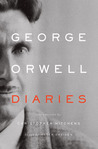 Diaries by George Orwell
My rating: 5 of 5 stars
GEORGE ORWELL: THE DIARIES, 1984 & ANIMAL FARM—–FROM THE WORLD LITERATURE FORUM RECOMMENDED CLASSICS AND MASTERPIECES SERIES VIA GOODREADS—-ROBERT SHEPPARD, EDITOR-IN-CHIEF
George Orwell was an inveterate and compulsive writer of diaries, lists, news summaries and notebooks. He daily, even hourly jotted down his ideas, notes on friends and fellow writers, excerpts and clippings from newspapers, recipes, farming and gardening hints and records, biographical materials on leaders and activists in revolutionary and activist causes and running accounts of the march of events leading to the Spanish Civil War and World War II. Many of these materials found their way into his books, such as “1984,” “Animal Farm,” “Homage to Catalonia,” “The Road to Wiggan Pier,” “Burmese Days” and “Down and Out in Paris and London,” or provide a record of the genesis and creation of those works.
Most readers come to know George Orwell from his two most famous dystopian novels written at the end of his life at and after the conclusion of WWII. “1984″ and “Animal Farm.” “1984,” of course is the classic account of a threatened totalitarian future dominated by the three major “superpowers,” Eurasia, East Asia and Oceania, each dominated by a sinister totalitarian party headed by an idolized “Big Brother,” and constantly scrutinizing both party and people for any signs of traitorous thoughts or deeds. “Animal Farm” is a classic allegory of the revolt of the animals on a farm against their human master’s exploitation, but which revolution degenerates into a brutal competition amoungst the revolutionary animals to determine which animals will succeed to the empty position of master exploiter, of which the pigs, constituting the inner party of the revolution, become “more equal than others” and thus become as bad or worse than the human farmer they had displaced.
Orwell’s Diaries reveal many of the personal experiences which led to his Love-Hate Relationship with socialist revolutionary party politics, action and reform and which came to inform his later writing and works such as “1984″ and “Animal Farm.” I highly recommend The Diaries not only to those who have a particular interest in Orwell studies, his life and those famous works, but also as an extraordinary record and cross-sectioning of human history in the time of global crisis leading from WWI and the Russian Revolution, through the Great Depression and Spanish Civil War, and thence to global cataclysm with the rise of Hitler, Mussolini, Franco and Fascism, Stalinist Communism, Japanese Imperialism and the near extinction of Western Civilization and democracy, averted by the narrowest of margins, all recorded through the eyes of one of the keenest observers of our times.
I personally had several points of contact with the events recorded in Orwell’s diaries. Of course before and during my university studies I had occasion to read both “1984″ and “Animal Farm,” and was deeply influenced by my reading of the dismal saga of Winston Smith’s ultimately unsucessful struggle to preserve some remnant of his humanity and capacity for human love in that “Orwellian” nightmare world of “Big Brother,” thought police, doublespeak, surveillance and repression. The Diaries, of which many were lost or seized by KGB agents during the Spanish Civil War in which Orwell participated in the International Brigade, begin in their published form in the Depression year of 1931, with the “Hop Picking Diary,” an account of Orwell’s experience “On the Road” in the impoverished working-class ritual of removing from London for the Hop Picking season in the English and Welsh countryside. My grandmother, from a poor Welsh family relocated to London nee Morgan, told stories to my father and myself of going out of London for Hop Picking, which was grinding hard piece-work subject to a level of exploitation hardly making it worth while, but which was enjoyed by the working or non-working classes of the Depression as an outing and return to nature, an escape from the dirty and unnatural slums of East London. The “Hop Season” would bring a “Cockney Invasion” of the near countryside, unemployed workers alongside Gypsies, derilects and people “on the bum” which yet also yielded many happy memories such as country singing and dancing around campfires in the fields after exhausting days. Some went hop picking out of shear necessity, and for others it was a kind of working-class family tradition in the way of a working country holiday.
Orwell himself was of deeply ambiguous class origens in the heydey of the British Empire. His remote ancestors had been members of a privileged upper class, but his branch of the family had been downwardly mobile and at odd ends in more recent times. His father had been a minor officer in the Opium Department of the Imperial Police in India, where Orwell, like Kipling, was born. Being brought back to England as a child, Orwell (whose real name was Eric Blair, Orwell being a pseudonym adopted for his writings) found himself betwixt and between social classes, with educated middle-class origins but without the money to afford a public school and Oxbridge upper-class career, he had to settle for scholarship positions at lesser schools until finally gaining a scholarship to Eton, but being unable to finance university study. Thus he rubbed shoulders with the upper-class while being unable join them. After Eton he then followed his father’s footsteps and returning to India entered the Imperial Police in British Burma, which led to some of his famous early writing such as “Burmese Days” and “Shooting an Elephant.” Distaste for his role in the Imperial Police and a growing socialist consciousness and sense of solidarity with the working classes, plus a felt calling for writing and literature led him to throw up the colonial career and return to England, though on a precarious financial footing. Some of his forays into the “underworld” of poverty were driven by temporary necessity, and some by a quest to do social and literary research and exploration in the tradition of Jack London’s writing such as “The People of the Abyss,” which he admired greatly. The first diaries thus record his experiences “on the bummel” in city and country flophouses, Salvation Army shelters, busboy jobs, jails and workhouses, details of which would work themselves into many stories such as “Down and Out in Paris and London.”
During the Depression Orwell became a committed socialist, though independent of the mainstream Soviet-oriented Commmunist Party and engaged in extensive writing for radical journals. Thus succeeding parts of his Diaries give accounts of his research trips to investigate labor and living conditions in Depression England, such as the trip which led to his writing of “The Road to Wigan Pier,” an account of industrial and human blight and the struggle of British workers for survival. In the Diaries you will find thus meticulous notes of how much each person, including himself, spends each day for food, heat, clothing, rent and other necessities, set off against income. This may seem a bit quotidian at times, but we are always brought back in the tradition of Naturalism and Marxism to how such economic conditions shape and delimit people’s lives and shape wider history.
The bulk of the Diaries concern events from the time from the Spanish Civil War, in which Orwell was a volunteer soldier in the International Brigade fighting on the Republican side against Franco’s Facism, to Orwell’s recovery from war wounds and tuberculosis by sojourning in the warm climate of Morocco, to the season of the fatalistic drift into the World War, upon which he returned to England but was kept out of military service by his deteriorating health. Here again I had a point of personal contact with his story, as in Beijing, China I worked as a Professor at the Beijing Foreign Studies University where I became friends with another older teacher, David Crook, who I saw daily in the offices or Foreign Expert Building or in swimming together at the Friendship Hotel pool. Crook told me of his encounters with Orwell in the Spanish Civil War. David had also in the Depression become a Communist Party member in Britain, but unlike Orwell part of the orthodox pro-Soviet wing. He like Orwell served in the International Brigade in Spain and was wounded in action. While there he was recruited by the KGB to spy on “deviant” ideological groups such as Trotskyites and Anarcho-Syndicalists and had Orwell under observation, which he many decades later came partially to regret. In Shanghai he was assigned to keep tabs on Trotskyist “deviationists” but as he learned more of them he found himself more and more in sympathy with the persons and ideas he was charged with placing under surveillance. Later David worked for British Intelligence during WWII in the time of the alliance with the USSR and was sent by the KGB to China where he met his wife Isabelle, a progressive activist from a Canadian missionary family, and worked with Mao before and after the revolution. He came from Yanan to Beijing after the Communist victory to help form the Beijing Foreign Studies University, for which we both worked, and where I knew his wife and children. He also suffered a partially “Orwellian” fate, spending five years in a Chinese Prison for being on the “wrong side” during the Cultural Revolution. But by the time I knew him he had acquired much of the equanimity of old age and had come to sympathize with some of Orwell’s critique of the excesses of the Stalinist version of communism, regretting some of his former activities,though remaining faithful to an ideal of democratic socialism, just as Orwell himself was to the very end.
Of the contents of the Diaries, many sections are divided into categories for notes and observations, such as Foreign & General, Social, Party Politics, Domestic & Personal, in which he kept a meticulous running account of both public affairs and personal afairs on a daily basis, which in toto give a stunning panorama of the world leading up to and beyond WWII, including activities of radical parties, mainstream politics and military affairs and persons and events in the literary world. Doris Lessing, the Nobel Prize winner in her epic “The Golden Notebooks,” also features a series of notebooks divided into such categories, including the protagonist’s psychological and sexual life, and given her involvement in similar left-wing politics it would not be surprising if she were aware of Orwell’s practices.
One initially disconcerting aspect of the Diaries is the great bulk devoted to “Domestic Diaries.”
In these we discover that Orwell in addition to writing, very often spent a good deal of his day in farming and gardening on a small scale to supplement his sporadic income. Thus the Moroccan Diaries include detailed accounts of how many eggs his chickens laid each day, how his vegetable and fruit crop progressed and management of goats and milk records. The same is true of the Wartime Diaries, in which he kept a small farm north of London during the Blitz, and during the time he was writing “1984″ on the Scottish island of Jura, where he records how many rabbits he shot or
how many fish or lobster caught. I was initially a bit put off by the volume of entries dedicated to such things until I had the insight that Orwell’s rootedness in the farm and the rural natural cycles and order, the weather and domestic economy was an underlying source of his sanity in the face of an otherwise insane world, and a key to the preservation of his essential humanity. Like Thoreau in Walden, his rootedness in the natural world and the day-to-day chores of hands-on farming helps him critique the unnatural and sometimes monstrous and horrificly inhuman “human world.” His practical farming experience also leant credibility to his invocation of the farming milieu in “Animal Farm,” written during the war and published shortly thereafter after sensitivity to the demands of preserving the Soviet alliance abated.
The Wartime Diaries also reveal parts of his personal life that contributed to the making of the world of “1984.” His wife, ironically, worked in the Censorship Department during the British war years, giving him a model for Winston Smith’s experience in the “Ministry of Truth” of “1984.” Orwell himself, medically unfit for military service due to his tuberculosis despite have fought and been wounded in the Spanish Civil War, spent much of the war years in the BBC, especially in broadcasts to India and Asia directed at countering Axis and Japanese propaganda efforts to stir up rebellion there. Thus in the Diaries we have the extraordinary cross-section of his interaction with Britain’s leading intellectuals and writers such as Malcom Muggeridge, Stephen Spender, Cyril Connoly, T.S. Eliot and many others, his contacts with the BBC and official government circles in London, his contacts with radical and socialist leaders, parties and affairs and his work with the common people of London during the Blitz as a member of the Home Guard and air raid warden force. His upper-class contacts from his Eton days gave him tentative access to the highest orders of British society while his socialist contacts put him into continual contact with and sympathy with its lowest classes. All while he is charting the progress in meticulous notes of global events reshaping the world on a daily basis.
The final sections of his Diaries focus on the post-war years up to his death from tuberculosis in 1950. During this time he had become internationally famous for “Animal Farm” and was working on “1984,” which would make him a literary superstar, but only shortly to be enjoyed before his death. The final diaries record also his minute relation of his observations of his own mind and body as his medical condition worsened towards death. Orwell was a meticulous observer of his own self in all its dimensions, though the diary entries are seldom confessional in nature. They also relate the death of his first wife, his adoption of a war orphan as a son, and his final remarriage shortly before his death. They also relate his struggles with his publishers, who sometimes took financial advantage of him or his wife and estate upon his death, and sometimes distorted the presentation of his works for financial or publicity reasons.
Orwell’s literary legacy has sometimes been distorted and misunderstood, sometimes for financial or political reasons by his publishers or would-be interpreters. Right-wing promoters are often inclined to invoke Orwell’s name as a leading critic of communism, while conveniently overlooking the fact that he was a lifelong socialist and opponent of the right. An “Orwellian” case in point occured at the end of his life with the publication of the American edition of “Animal Farm” which sold over twenty million copies. In the flyleaf and promotional materials during the MdCarthy era he was made to suffer an ‘Orwellian” dose of “Doublespeak.” In his famous essay, “Why I Write” Orwell refers to the Spanish Civil War as being his “watershed political experience”, saying “The Spanish War and other events in 1936–37, turned the scale. Thereafter I knew where I stood. Every line of serious work that I have written since 1936 has been written directly or indirectly against Totalitarianism and for Democratic Socialism as I understand it.”
The mischaracterizing of Orwell’s thought by the American publisher, probably to enhance sales and make him palatable to more conservative circles included the following eposde of deletion and revisionism, with the publisher’s promotional materials stating: “If the book itself, Animal Farm, had left any doubt of the matter, Orwell dispelled it in his essay Why I Write: ‘Every line of serious work that I’ve written since 1936 has been written directly or indirectly against Totalitarianism … dot, dot, dot, dot.’(emphasis added). Orwell’s true words, “For Democratic Socialism” were vaporised, just like Winston Smith did such at the Ministry of Truth, and that’s very much what happened at the beginning of the McCarthy era and as the “pressures of the marketplace” just continued, Orwell being selectively quoted, “rebranded” and falsely appropriated by the right-wing conservative cause against which he had spent most of his life struggling.
Finally, I mention a further line of personal connection with Orwell’s works. “1984″ and other of his works had a significant influence on my writing “Spiritus Mundi.” The Geopolitical and WWIII dimension of “Spiritus Mundi,” involving a fictive future crisis in which a rising China allies with a resurgent Russia and Iran to form a “New Axis” making a Pearl Harbor-like sneak attack on the Middle-East oil reserves to cut the West’s “Oil Jugular” drawing implicitly from the Geopolitical anti-vision of Orwell in his partitioning of the world between the three Machiavellian superpowers, Eurasia, East-Asia and Oceania. It also draws on Clancy’s “The Dragon and the Bear” in the sneak attack in that book of China on a weakened Russia, extending the action to the Middle-East in accord with other of his thrillers. In “Spiritus Mundi” the head of the CIA and National Security Director is also named “Admiral Orwell.”
All in all, I highly recommend “The Diaries” of Orwell as a powerful recreation of a world in crisis in multiple dimensions, bringing together under an extraordinary power of observation multiple dimensions of human experience and access to an extended variety of social classes through revolution, depression civil and world war and recounting the rise and fall of totalitarian excess and the survival of humanity by the barest of margins. “The Diaries” will inform your reading of the already familiar classics, “1984″ and “Animal Farm” and draw you farther into the worldview of Orwell and an appreciation of his lasting place in World Literature.
For a fuller discussion of the concept of World Literature you are invited to look into the extended discussion in the new book Spiritus Mundi, by Robert Sheppard, one of the principal themes of which is the emergence of World Literature:
For Discussions on World Literature and Literary Criticism in Spiritus Mundi: http://worldliteratureandliterarycrit…
http://www.goodreads.com/book/show/17…
Robert Sheppard
Editor-in-Chief
World Literature Forum
http://robertalexandersheppard.wordpr…
Author, Spiritus Mundi Novel
http://www.goodreads.com/book/show/17…
Spiritus Mundi, Book I: The Novel: http://www.amazon.com/dp/B00CIGJFGO
Spiritus Mundi, Book II: The Romance http://www.amazon.com/dp/B00CGM8BZG
Copyright Robert Sheppard 2013 All Rights Reserved


Vote for Your Choice of Actor to Play the Role of Andreas Sarkozy in the Movie Version of Spiritus Mundi!---------------------Leonardo di Caprio, Sean Penn, Daniel Day Lewis !!!
Reblogged from Robert Sheppard Literary Blog:
About the Character:
Andreas Sarkozy, the Executive Director of the Committee for a United Nations Parliamentary Assembly, a worldwide UN version of the European Parliament, and the Band Aid-Band 8-style "People Power " Global Appeal campaign leader and organizer, is a freedom loving and sexually adventurous ex-South African soldier turned idealistic international lawyer who has a temporary sexual affair with Eva Strong while hard at work for the Parliamentary Assembly campaign.
Vote for Your Choice of Actress to Play Eva Strong in the Movie Version of Spiritus Mundi!--------------------Emma Thompson, Kate Winslet, Angelina Jolie !!!
Reblogged from Robert Sheppard Literary Blog:
About the Character:
Eva Strong, divorced single mother, writer and part-time employee of the Committee for a United Nations Parliamentary Assembly in London, first has an unsuccessful sexual affair with Andreas Sarkozy marked with mixed love, conflict and jealous recrimination and then falls in love with and marries Robert Sartorius, later accompanying him in his worldwide campaign efforts and later on his neo-mythic questing adventures to Middle Earth, the Crystal Bead Game and to the cosmic wormhole on the way to the Council of the Immortals.
Vote for Your Favorite Star For the Leading Role of Robert Sartorius in the Movie Version of Spiritus Mundi!---------------------------------Harrison Ford, Brad Pitt, Nicolas Cage, Jeremy Irons, Russel Crowe, George Clooney !!!
Reblogged from Robert Sheppard Literary Blog:
About the Character:
Robert Sartorius, Professor andprincipal leader and theorist for the Campaign for a United Nations Parliamentary Assembly, a globalized UN version of the European Parliament, divorced father of Jack Sartorius who overcomes a life crisis of faith and attempted suicide to marry Eva Strong and push the Parliamentary Assembly campaign towards a successful conclusion, though Moses-like dying before its final implementation.
Robert Sheppard's Literary Blog & World Literature Forum

The Blog also containss posts from the World Literature Forum, of which Ro ...more
- Robert Sheppard's profile
- 98 followers

