Raima Larter's Blog, page 15
February 9, 2014
Science Sunday - Seeing Heat
 Image Credit: NASA/ESA/Hubble Heritage TeamOur eyes can detect light (electromagnetic radiation) only in a certain range of energies, and any electromagnetic radiation outside this range is, to us, essentially invisible. Using the instruments of science, though, it is possible to see invisible things--such as heat.
Hot objects give off light, or electromagnetic radiation, in an energy range beyond that of red light, a region known as the infrared. We can't see this with our eyes, of course, but we can "see" it using instruments known as spectrometers that rely on detectors that can pick up radiation our own eyes cannot detect.
A camera utilizing detectors that are sensitive to light outside the visible spectrum was installed on the Hubble Space Telescope about five years ago. It has produced spectacular images, including this one, which is an image of the Horsehead Nebula as it would look to us if we could see infrared light. The detector in this case is a solid-state device made of an exotic material composed of mercury, cadmium and tellurium. When we look at this image we are, essentially, seeing the heat the horsehead nebula emits into space.


February 3, 2014
Yoga Monday: The Journey Continues
 Three and a half years ago I started a new blog, Yoga Emergence*. I had just begun a 200 hour yoga teacher training program at Sun & Moon Yoga Studio in northern Virginia, and wanted a log to record and reflect on my journey towards becoming a teacher. Now, over three years later, I have taken another major step in this journey by enrolling in a second teacher training program, also at Sun & Moon, that will (hopefully) one day lead to a 500-hour certification.
In some ways, I find it hard to believe that I have already been teaching for almost three years, but it's true: my first class was offered in late March of 2011, and I have been teaching more or less continuously since then. It was only yesterday, when I attended my first teacher training session of this new program, that I began to see how much I've grown and learned in these three years of teaching -- and how much I still have to learn.
Some of my instructors in the teacher training program joke that even though they finished the 500-hour or 700-hour certification some time ago, they are currently embarked on the 5000-hour or 7000-hour training program. It's a good point, since there always seems to be more one can learn, and you're never really "done" with your training. No matter how much we teach, we will always be yoga students.
In other news, I am now offering an "All-Levels" yoga class at the Sun & Moon Arlington studio at 11am on Friday mornings. Drop-ins are welcome! You can find more info about the class here.
Namaste!
*Note: Yoga Monday is a regular column on Complexity Simplified. Posts are published on the first Monday of each month. This post is cross-posted on my other blog, Yoga Emergence, where you can find even more about yoga.


January 31, 2014
The Writing Report for January
I realized the other day that the fourth Friday of the month, the day I was intending to publish a Writing Report each month, was last week! Better late than never, I suppose. I blame it on the fact that this month has five Fridays, so I got a little confused with my own posting schedule.
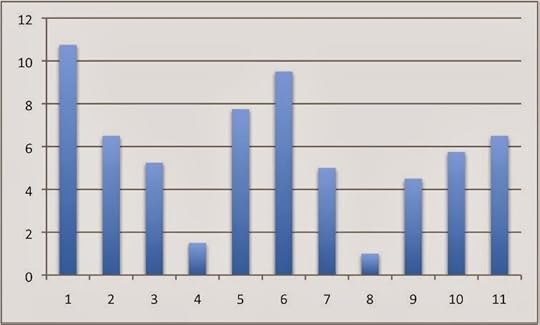 My writing had, like most people's, slowed down quite a bit over the holidays, but has begun to pick up speed again this month, as can be seen in this graph of "Hours Spent Writing Each Week," vs. the weeks in November, December and January. Those two low spots, in weeks 4 and 8, are (you guessed it) Thanksgiving and Christmas.
I still have a target in mind of 10 hours per week, so I'm glad that my time-on-task has started to go up, at least, even though I've missed my target every week since I started keeping track. But this is okay, and I know what I'm aiming for, so I'm glad to see the way the line is trending the past three weeks. Onward and upward!
It really IS important to spend time actually writing, but I've also learned how important it is to think about my writing before I actually sit down and work. In that vein, I've made some good progress on the novel I've been working on for some time, thanks to the advice I've recently received from my new writing consultant, Kathryn Johnson. I found Kathryn through her association with The Writer's Center in Bethesda, MD, where I have taken a number of workshops over the years. She is an instructor there, but also a published author of more than forty novels--in other words, she knows what she's talking about, and I got a lot of great ideas and advice from her after she read my current novel draft. I now have a list of things to work on for this book, which is going to keep me busy for quite some time.
The last bit of news for this month is that last week I started my first class at Johns Hopkins University as a student in the MA in Fiction program. It's the first course in the program, Fiction Techniques, and I'm pleased to say I did all the reading for the first week as well as the assignment, so things are off to a good start.
One of the readings from last week was by John Gardner, "Basic Skills, Genre, and Fiction as Dream." I was struck, especially, by one passage in this classic and wanted to leave you with it, since it describes, better than anything I've ever read, just why it is that I am a writer.
Good description does far more: It is one of the writer's means of reaching down into his unconscious mind, finding clues to what questions his fiction must ask, and, with luck, hints about the answers. Good description is symbolic not because the writer plants symbols in it but because, by working in the proper way, he forces symbols still largely mysterious to him up into his conscious mind where, little by little as his fiction progresses, he can work with them and finally understand them.
And this, in fact, is why I write: to put down that image that has stuck with me forever, even though I don't know why, and to work with it, writing around it and over it and through it, until one day I realize that the story I've been telling has explained to me just why I had been so struck by that initial image, and why it would never let me go.


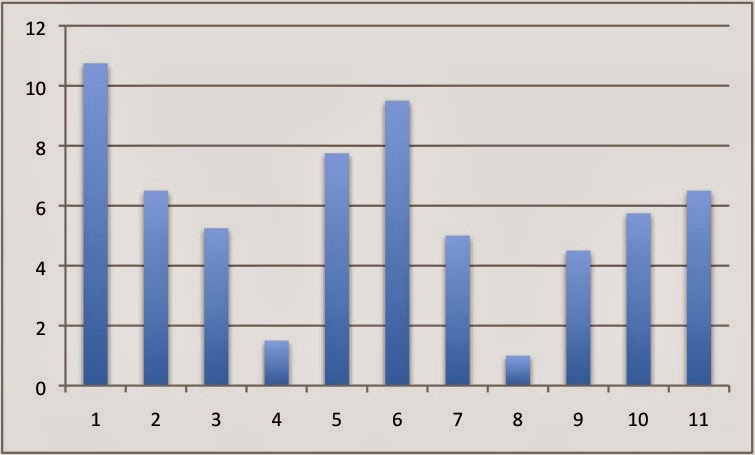 My writing had, like most people's, slowed down quite a bit over the holidays, but has begun to pick up speed again this month, as can be seen in this graph of "Hours Spent Writing Each Week," vs. the weeks in November, December and January. Those two low spots, in weeks 4 and 8, are (you guessed it) Thanksgiving and Christmas.
I still have a target in mind of 10 hours per week, so I'm glad that my time-on-task has started to go up, at least, even though I've missed my target every week since I started keeping track. But this is okay, and I know what I'm aiming for, so I'm glad to see the way the line is trending the past three weeks. Onward and upward!
It really IS important to spend time actually writing, but I've also learned how important it is to think about my writing before I actually sit down and work. In that vein, I've made some good progress on the novel I've been working on for some time, thanks to the advice I've recently received from my new writing consultant, Kathryn Johnson. I found Kathryn through her association with The Writer's Center in Bethesda, MD, where I have taken a number of workshops over the years. She is an instructor there, but also a published author of more than forty novels--in other words, she knows what she's talking about, and I got a lot of great ideas and advice from her after she read my current novel draft. I now have a list of things to work on for this book, which is going to keep me busy for quite some time.
The last bit of news for this month is that last week I started my first class at Johns Hopkins University as a student in the MA in Fiction program. It's the first course in the program, Fiction Techniques, and I'm pleased to say I did all the reading for the first week as well as the assignment, so things are off to a good start.
One of the readings from last week was by John Gardner, "Basic Skills, Genre, and Fiction as Dream." I was struck, especially, by one passage in this classic and wanted to leave you with it, since it describes, better than anything I've ever read, just why it is that I am a writer.
Good description does far more: It is one of the writer's means of reaching down into his unconscious mind, finding clues to what questions his fiction must ask, and, with luck, hints about the answers. Good description is symbolic not because the writer plants symbols in it but because, by working in the proper way, he forces symbols still largely mysterious to him up into his conscious mind where, little by little as his fiction progresses, he can work with them and finally understand them.
And this, in fact, is why I write: to put down that image that has stuck with me forever, even though I don't know why, and to work with it, writing around it and over it and through it, until one day I realize that the story I've been telling has explained to me just why I had been so struck by that initial image, and why it would never let me go.
January 22, 2014
Nearly Wordless Wednesday



January 12, 2014
Science Sunday: Yoga and Medicine
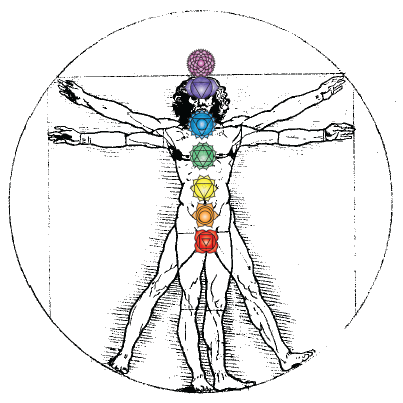 Medical Yoga Symposium Jan 11-12, 2014This weekend I have been attending a Medical Yoga Symposium in Washington, DC, which is co-sponsored by Therapeutic Yoga of Greater Washington and the Center for Integrative Medicine at the George Washington University Medical Center.
As a long-time practitioner of yoga, a yoga teacher and a scientist, I am very interested in scientific studies of the effects of yoga and its use in addressing disease and medical issues. I have personally benefited from my yoga practice in ways that have clearly improved my health, but as a scientist I want to understand more about why this is, and am always hungry for information on this topic that is not tainted by the hype and pseudo-science that is so rampant in this field.
I signed up for this conference because the presenters have deep backgrounds in both yoga practice and in medicine and science, with most of the speakers holding MDs or PhDs or, in several cases, both degrees. Speakers on Saturday included Dean Ornish, MD (Preventive Medicine Research Institute), Timothy McCall, MD (author of the book Yoga as Medicine), Richard Miller, PhD (of the Integrative Restoration Institute) and several others. I hope to post a longer article after the conference concludes with more details about the contents of the talks, which cover both yoga as a therapeutic intervention, as well as research reports about the influence of yoga on disease and health.
For some years now, the National Institutes of Health (NIH) has funded research on the effects of yoga on a variety of health issues, including back pain, arthritis, diabetes, HIV, menopausal symptoms, multiple sclerosis and as a therapeutic tool for cessation of smoking. The NIH has posted a list of references where you can read more about the results of these and other studies.
Watch for an update when the conference concludes!


January 6, 2014
Yoga Monday
 Welcome to the first in my new series, Yoga Monday. This post also appears on my other blog, Yoga Emergence, along with a number of other articles about yoga and teaching yoga.
A couple of days ago, I offered a free Introduction to Yoga class in order to provide an opportunity for all those folks whose new year's resolution list includes "Take up yoga!" As expected for the first week of January, there was a great turnout, so many people, in fact, that we ran out of props for the first time ever. I'm offering this class again on January 18 (more info here) so if you are in the area, please consider attending!
The folks who attended this special class had a wide range of experiences with yoga, including several who had never tried it, but also more than a few who had years of experience. Some were looking for a new teacher or, in a couple of cases, were just in town for the holidays and away from their regular class, so dropping in for a visit. It was an interesting mix of people and I enjoyed talking to the new folks about what brought them to the study of yoga.
It is often the case that the issue that brings us to yoga is not the one that keeps us there. In my own case, I was gradually introduced to the practice through the efforts of a couple of fitness instructors who were, themselves, taking yoga lessons and trying the moves out during the stretching sessions at the end of class. I liked those parts of their classes a lot and tried out an actual yoga class, a free "Intro to Yoga" session offered by the local hospital. I liked it a lot, too, but didn't think I had time to add another "work-out routine" to my already busy schedule.
Even though I was not yet 40, I had a lot of aches and pains, particularly in my low back, and I finally consulted a chiropractor who advised doing what I recognized as a move that we had practiced in that intro class--a simple reclining twist. A light bulb went off. I realized that yoga was more than just another form of exercise. Here was a method that might actually make me feel better.
And, so, I sought out a teacher, which wasn't easy in those days and in that place (the late 1980s in Indianapolis) but I found her and commenced upon the more organized portion of my yoga journey. It was to be many years before my study and practice helped me to fully deal with my lower back pain, but I quickly learned that yoga made me feel better in many ways--not just physically, but emotionally and, even, spiritually.
If you practice yoga, what brought you to the practice? If you've practiced for awhile, have your reasons changed? I would be interested in hearing your story!
Namaste.


December 31, 2013
New Post Schedule
Happy New Year! I hope you are as excited about the coming year as I am. There is much fun and good work to look forward to this year, including yoga classes to teach, writing classes to delve into and science to learn and write about.
Since so many interesting things are beckoning to me this year, I might worry about being overwhelmed. But what do I do? Why, add another activity, of course!
One way I have found that helps tremendously to tame the swirl of activities and interests in my life is to write about it. So, one of my new year's resolutions is to develop a more regular posting schedule, dividing the posts evenly among my three many activities: yoga, science and writing. I will post once per month on each topic according to the following schedule:
Yoga Monday - The first Monday of the month will be a post about yoga. This post will be cross-listed to my other blog, Yoga Emergence.
Science Sunday - The second Sunday of each month will be a post about one of the multitude of interesting science stories that cross my desk every week. There is so much fascinating stuff going on in the world of science these days and I'm always eager to share what I've learned.
The Writing Report - The third Friday will feature a monthly report on my writing activities for that month. I spend a lot of my time on this part of my life and, as I begin my studies toward an MA in Writing at Johns Hopkins University, I'm especially excited about this new feature for my blog.
Nearly Wordless Wednesday - The last Wednesday of the month will feature a photo or other graphic image, with very few, if any, words. This is not a new feature of my blog, as I love photography and have always had lots of photos to share. Since putting up these posts has always been one of my favorite blogging activities, I'm keeping this feature in the posting schedule.
Watch for the first offering in my new posting cycle...next Monday, when the first Yoga Monday selection is scheduled to appear. And, in the meantime, best wishes for a fabulous 2014!!


Since so many interesting things are beckoning to me this year, I might worry about being overwhelmed. But what do I do? Why, add another activity, of course!
One way I have found that helps tremendously to tame the swirl of activities and interests in my life is to write about it. So, one of my new year's resolutions is to develop a more regular posting schedule, dividing the posts evenly among my three many activities: yoga, science and writing. I will post once per month on each topic according to the following schedule:
Yoga Monday - The first Monday of the month will be a post about yoga. This post will be cross-listed to my other blog, Yoga Emergence.
Science Sunday - The second Sunday of each month will be a post about one of the multitude of interesting science stories that cross my desk every week. There is so much fascinating stuff going on in the world of science these days and I'm always eager to share what I've learned.
The Writing Report - The third Friday will feature a monthly report on my writing activities for that month. I spend a lot of my time on this part of my life and, as I begin my studies toward an MA in Writing at Johns Hopkins University, I'm especially excited about this new feature for my blog.
Nearly Wordless Wednesday - The last Wednesday of the month will feature a photo or other graphic image, with very few, if any, words. This is not a new feature of my blog, as I love photography and have always had lots of photos to share. Since putting up these posts has always been one of my favorite blogging activities, I'm keeping this feature in the posting schedule.
Watch for the first offering in my new posting cycle...next Monday, when the first Yoga Monday selection is scheduled to appear. And, in the meantime, best wishes for a fabulous 2014!!
December 27, 2013
The Writing Report: First Annual Edition
 Books about Writing and Writers<!-- /* Font Definitions */ @font-face {font-family:Times; panose-1:2 0 5 0 0 0 0 0 0 0; mso-font-charset:0; mso-generic-font-family:auto; mso-font-pitch:variable; mso-font-signature:3 0 0 0 1 0;} @font-face {font-family:Cambria; panose-1:2 4 5 3 5 4 6 3 2 4; mso-font-charset:0; mso-generic-font-family:auto; mso-font-pitch:variable; mso-font-signature:3 0 0 0 1 0;} /* Style Definitions */ p.MsoNormal, li.MsoNormal, div.MsoNormal {mso-style-parent:""; margin:0in; margin-bottom:.0001pt; mso-pagination:widow-orphan; font-size:12.0pt; font-family:"Times New Roman"; mso-ascii-font-family:Cambria; mso-fareast-font-family:Cambria; mso-hansi-font-family:Cambria; mso-bidi-font-family:"Times New Roman";} a:link, span.MsoHyperlink {color:blue; text-decoration:underline; text-underline:single;} a:visited, span.MsoHyperlinkFollowed {mso-style-noshow:yes; color:purple; text-decoration:underline; text-underline:single;} p {margin:0in; margin-bottom:.0001pt; mso-pagination:widow-orphan; font-size:10.0pt; font-family:"Times New Roman"; mso-ascii-font-family:Times; mso-fareast-font-family:Cambria; mso-hansi-font-family:Times; mso-bidi-font-family:"Times New Roman";} @page Section1 {size:8.5in 11.0in; margin:1.0in 1.25in 1.0in 1.25in; mso-header-margin:.5in; mso-footer-margin:.5in; mso-paper-source:0;} div.Section1 {page:Section1;} </style> <span style="font-size: large;"><span style="font-family: inherit;">This, The Writing Report, is the first of what I hope will be a regular series of posts in which I will report, on a fairly regular schedule, about my writing activities. I'd like this to be a monthly report, but since this is the first in a series and I have many months’ worth of things to cover, this first post will be a summary for the entire year, 2013.</span></span><br /><div style="margin: 0.1pt 0in;"><br /></div><div style="margin: 0.1pt 0in;"><span style="font-size: large;"><span style="font-family: inherit;">First, I need to make note of the fact that I have not written many blog posts for Complexity Simplified this year. This isn't due to having nothing to say (I always have something to say) but, rather, to having a lot of other writing activities taking up my time and energy. One of my blogging venues for a time was the <a href="http://amwritingblog.com/wordpress/ar... blog</a>, which was a great place to share tips about craft and the writing process with other writers. That blog has now been permanently archived, but the posts are all still available, including one I wrote about my <a href="http://amwritingblog.com/wordpress/ar... books for writers</a>. In another, I shared a few simple <a href="http://amwritingblog.com/wordpress/ar... poses for writers</a>that can help writers manage the physical challenges that often impede our writing.</span></span></div><br /><br /><span style="font-size: large;"><span style="font-family: inherit;">In addition to this little bit of blogging, I have been writing - a lot. Over the summer I participated in my own personal a Story-A-Week project in which I either wrote a first draft of a new story or completed a revised draft of an existing short story every week. My project ran from the second week of May to the end of August and was inspired by the <a href="http://storyaday.org/">Story-.... I attempted this challenge before realizing that the daily pace was too fast for me and I needed to spend a bit more time with each story to feel like I'd actually "written a story." So, instead of abandoning the idea, I adapted it to my own needs and I’m thrilled with how it worked out.</span></span><br /><div style="margin: 0.1pt 0in;"><br /></div><div style="margin: 0.1pt 0in;"><span style="font-size: large;"><span style="font-family: inherit;">Although there were 17 weeks in my summer, I actually completed only 15 stories, since two of those weeks were spent in Iowa working on another exciting writing venture (more on that below!) Still, I am very pleased with the results of my Story-A-Week project, as it resulted in 15 story drafts, 6 of which were brand new pieces. I took several of these to my critique group for feedback and got three of them into decent-enough shape that I sent them out to literary magazines. One story was sent to two places. Of these four submissions, one piece, my very first attempt at flash fiction, was accepted for publication (yes!) and is due to appear in 2014 in <a href="http://www.gargoylemagazine.com/gargo... Magazine</a>. </span></span></div><div style="margin: 0.1pt 0in;"><br /></div><div style="margin: 0.1pt 0in;"><span style="font-size: large;"><span style="font-family: inherit;">The Story-A-Week project went onto the back burner in July when I traveled to the University of Iowa for a ten-day writing intensive at the <a href="http://www.continuetolearn.uiowa.edu/... Summer Writing Festival</a>. While there, I took three short courses: (1) Advanced Novel; (2) Yoga and Writing; and (3) The Seven Basic Plots. The latter two were short weekend seminars, but the first was a weeklong writers’ workshop led by a fantastic instructor, <a href="http://condor.depaul.edu/rjohnstr/&qu... Johns</a>. Twelve of us, all aspiring novelists, submitted the first 30 pages of our novels-in-progress along with a plot synopsis for the rest of the book and we spent the week reading, critiquing and learning from Rebecca about plot structure, characterization, the best way to enter a story, point of view, and on and on. </span></span></div><div style="margin: 0.1pt 0in;"><br /></div><div style="margin: 0.1pt 0in;"><span style="font-size: large;"><span style="font-family: inherit;">One result of the Iowa workshop was a realization that the novel I’d been working on for a couple of years needed to be restructured. I recently finished a revision based on what I learned in Iowa and have shipped it off to a writing consultant to get additional feedback about whether it’s ready now to be sent out.</span></span></div><br /><span style="font-size: large;"><span style="font-family: inherit;">Another result of the Iowa workshop was a clear understanding that what I needed more than anything to improve my writing was more education and instruction. The experience in Iowa was exciting, challenging and life changing and I came home from it knowing I needed more like it. I spent the fall researching graduate writing programs and finally decided to take the plunge and apply for an MA program. I’m thrilled to report that I’ve just been accepted to <a href="http://advanced.jhu.edu/academics/gra... Hopkins for the MA in Writing</a> program, with a concentration in Fiction. I start classes in just a few weeks and even though I’m certain my life is going to get a lot busier with class assignments being juggled along with all my other activities, I am very much looking forward to tackling the chaos.</span></span> <br /><br /><div class="feedflare">
<a href="http://feeds.feedburner.com/~ff/Compl... src="http://feeds.feedburner.com/~ff/Compl..." border="0"></img></a> <a href="http://feeds.feedburner.com/~ff/Compl... src="http://feeds.feedburner.com/~ff/Compl..." border="0"></img></a> <a href="http://feeds.feedburner.com/~ff/Compl... src="http://feeds.feedburner.com/~ff/Compl..." border="0"></img></a> <a href="http://feeds.feedburner.com/~ff/Compl... src="http://feeds.feedburner.com/~ff/Compl..." border="0"></img></a> <a href="http://feeds.feedburner.com/~ff/Compl... src="http://feeds.feedburner.com/~ff/Compl..." border="0"></img></a>
</div><img src="http://feeds.feedburner.com/~r/Comple..." height="1" width="1"/>
December 25, 2013


December 11, 2013
Five Years and Counting
5 Complexity Simplified was born five years ago today, on Dec. 11, 2008. In that time, 233 posts have appeared, on topics ranging from disasters to dark matter, and e-publishing to emergence. I love photography, which probably explains the 87 Nearly Wordless Wednesday posts, by far the most numerous type of post on this blog. After photos, the most numerous posts have been on complexity science (37 of these), religion and science (27) and writing (25).
My posting frequency has fallen off this year, especially in the last several months, but this doesn't mean I haven't been writing. In fact, I HAVE been writing, and, therefore, not getting to the blog except to post a photo now and then. I, of course, hope to do better in the future (and may need to make some new years resolutions about that!)
In the meantime: here's to another five years!