Victoria Noe's Blog, page 20
June 2, 2015
Tracy Morgan’s Friend Grief
 “Bones heal, but the loss of my friend will never heal.”
You probably know Tracy Morgan as the talented comedian on 30 Rock. But his life changed forever almost a year ago, June 7, 2014, when his limo was rear-ended by a Walmart truck. The accident killed his friend, comic James McNair, and left Morgan with debilitating injuries.
Last week he appeared on the Today Show, for an emotional interview with Matt Lauer. I’m not going to repeat much of it. It’s much more powerful watching Morgan speak of his amazement at surviving, as well as his gratitude to the medical staff, his family and friends. How he struggled to understand what happened is very touching.
I know when something bad has happened to me I’ve tried to find the answer to “Why?”. Sometimes I’m successful, sometimes not. But I think it’s a question that everyone who survives a trauma wants to answer. It’s more than “Why did this happen to me?” It’s “Why did I survive?”
It will take Morgan a long time to heal, both physically and emotionally. He’s got a damn good start and I wish him continued improved health.
And peace.
You can watch Tracy Morgan’s full interview here.
#short_code_si_icon img
{width:25px;
}
.scid-2 img
{
width:25px !important;
}
Share this post


May 26, 2015
Grieving Friends Lost in Two Different Wars
 When I was writing Friend Grief and the Military: Band of Friends, I was struck by the stories of grief and survivor guilt. Though many of the stories came from those doing the actual fighting, there were also those that came from non-combatants: war correspondents, medics, chaplains, nurses, even a little drummer boy.
As I read them, I couldn’t help feeling a sense of déjà vu. It wasn’t that I’d necessarily heard these stories before, but rather stories that were very similar. Only after several weeks did it become obvious to me: not all those who experience war faced an enemy armed with guns and bombs. Some faced off against a virus.
Activist/author Larry Kramer referred to AIDS as a plague. It was never, as I’ve written many times, just a virus. There were social and political complications that those faced with other medical crises never had to consider.
So it seems to me that it’s entirely reasonable to consider those who fight the AIDS epidemic to be warriors.
Yeah, I know, they don’t seem to be two groups with very much in common. Soldiers are mostly straight, mostly volunteers. Those fighting AIDS are mostly gay, mostly drafted to the cause. But here are some things to consider:
Both groups fight an enemy that is largely unseen.
Both groups are in a life-of-death situation, for themselves and their friends.
Both groups form life-long bonds.
Both groups tend to keep their experiences to themselves, not sharing with anyone outside the group for years, if ever.
Both groups use the memories of fallen comrades as inspiration to keep moving forward
Both groups are haunted by what they’ve done and failed to do to keep their friends alive.
 Imagine if we’d been at war in Iraq or Vietnam or Afghanistan for over 30 years without a cease-fire. Think of the fallout, not just in terms of human life, but mental and emotional health. That’s what the AIDS epidemic is like.
There are even those who belong to both groups. Some came home from one war to a hero’s welcome, only to suffer from neglect or indifference in the other war.
Two very different groups of (mostly) men who, on the surface, have nothing in common. But who are more alike than anyone could ever imagine.
I wonder what it would take to get them together?
#short_code_si_icon img
{width:25px;
}
.scid-2 img
{
width:25px !important;
}
Share this post
May 19, 2015
Dying Matters for Friends, Too
 The Dying Matters Coalition is a British organization that raises awareness about death, dying and bereavement. This week (May 18-24) is designated as Dying Matters Awareness Week. Their recently released survey proves that human beings are a fascinating, infuriating species:
Although 32% of British adults think about dying and death at least once a week, 72% believe that people in Britain are uncomfortable discussing it.
Only 35% say they have written a will; only 28% of those with a child under 18 have done so.
40% of parents with children under 18 have ever taken out life insurance.
7% have written down their preferences for future care, should they be unable to make decisions for themselves, despite the fact that 79% believe qualify of life is more important than how long they live.
Like I said: fascinating and infuriating. What exactly are they waiting for? How do they expect their wishes to be known if they don’t write them down?
If you’re like me, you’ve heard the horror stories of expensive, drawn-out court battles over assets, of families left in dire financial need because there was no life insurance.
But human beings – British or not – are all too capable of denial, which explains the numbers above.
It’s hard to talk to our families about these things. They might even suspect that the reason you’re bringing it up is because you just found out you’re going to die soon. There are finances and medical decisions to think of, maybe custody issues, too. It’s not simple and rarely easy to initiate these conversations.
So try this: start with your friends.
Those of us of a certain age have been dealing with the failing health and deaths of our parents for quite some time. My friends and I have shared our experiences, shared our information and contacts, to help each other as we face the complicated issues surrounding dying, death and bereavement.
That sharing has also allowed us to consider what we want, too, in our final days. Somehow, discussing it with friends is easier than discussing it with family. Give it a try.
The next time you find yourself with friends, sharing what’s going on with your parents or older relatives, mention what you’d do if you were the person who was dying. “I would never want that, would you?”
Granted, it’s not the most uplifting topic for a conversation. But you’d be surprised how empowering it can be. Watching someone you love waste away, unable to communicate their wishes, while those around them try to guess what they’d want…if that doesn’t inspire you to make plans, I don’t know what will.
And here’s a tip that worked for me: start with the funeral. Believe it or not, your friends have probably already considered what music they want at their funeral. I picked out a couple songs years ago. They may not be on your play list, but I guarantee, my friends know exactly why I chose them. Here’s one:
#short_code_si_icon img
{width:25px;
}
.scid-4 img
{
width:25px !important;
}
Share this post
May 12, 2015
Friend Grief Partners with Military Outreach USA
 It gives me great pleasure to announce during Military Appreciation Month that I am partnering with a terrific organization, Military Outreach USA.
Military Outreach USA is a 501 (c) 3 not for profit which exists to encourage, engage, educate and equip individuals, houses of worship and organizations throughout the nation to provide a supporting role to our military community. This community is comprised of our military (active duty, guard, and reserves), veterans, and their families who are impacted by the visible and invisible wounds of military service. The support is provided through our national Military Caring Network. Our services are provided at no charge to any Military Caring House of Worship or Organization regardless of spiritual orientation, religious preference, race, or gender. (from their website)
Major General (RET) James H. Mukoyama, Jr., co-founder of the organization, had this to say about our partnership: “Military Outreach USA as a faith-based non-profit is solely dependent on the generosity of donors and therefore is extremely grateful to Victoria Noe for her generous gesture, but more importantly, for the comfort and encouragement provided to the public about providing healing to our military, veterans, and their families.”
When I started writing the Friend Grief series, I had no specific intention to partner with nonprofit organizations. Part of my hesitation was due to my background in fundraising.
How many times have you seen a product advertised with “a portion of the sales benefit XYZ”? I’ve always been suspicious of “portion”, and with good reason. Time and again we’ve seen stories about corporations that touted their largesse, only to find that pennies on the dollar were actually donated. As with any organization I’ve listed on my website as a resource, you can be assured that I’ve vetted them carefully.
That’s why this permanent partnership will be run the same way as the one I have between my second book, Friend Grief and AIDS: Thirty Years of Burying Our Friends and Broadway Cares/Equity Fights AIDS: donating 25% of the retail price of paperbacks and e-books.
While you may hear a lot more about PTSD, writing my book convinced me that moral injury is the real silent killer of our military. Gen. Mukoyama’s organization is on the front lines of education and support for our servicemembers who need our help.
So now when you read my book you’ll also be supporting a terrific organization doing important work. Here are some of the places where you can find Friend Grief in the Military: Band of Friends. Don’t just post a photo of a flag on your Facebook page. Back it up with real support.
#short_code_si_icon img
{width:25px;
}
.scid-6 img
{
width:25px !important;
}
Share this post
May 6, 2015
Writing Obituaries for Friends
 Chris Jones (Chicago Tribune)
There are people who are paid to write obituaries. I don’t mean the death notices that families write and funeral homes place in newspapers. I mean the obituaries that are considered news stories: about celebrities, politicians, etc.
One of the stories in my next book, Friend Grief in the Workplace: More Than an Empty Cubicle, looks at the Chicago theatre community. I moved to Chicago a year out of graduate school, to work in theater. It was the heyday of the Off-Loop Theatre movement. John Malkovich, Gary Sinise, Dennis Farina, Bill Peterson and others were not yet famous. Steppenwolf Theatre did not send shows to Broadway, because they were operating out of church basement in the suburbs. It was an unbelievably creative period of time in the history of Chicago, and my life as well.
We were young, most of us, so death seemed too far away to consider. Old people died: not young ones, or even middle aged.
The past year has been difficult, to put it mildly, here in Chicago. The theatre community has lost about a dozen people now: some of them teachers and mentors to a generation of professionals, others working actors, directors and playwrights.
Yesterday, Chris Jones, who normally reviews plays produced in Chicago and elsewhere for the Chicago Tribune, wrote two obituaries instead: one for a beloved actress, Erin Myers, one for a pillar of the community, Russ Tutterow, nurturer of playwrights since 1986.
The people in the community he’s written about over the past few months were young and old, male and female, various ethnic groups, and held different positions at theatres. But all of them were familiar names and faces, people who worked in a demanding, sometimes thankless, ultimately rewarding profession.
The cast and crew of a theatre production become like a family: supportive, argumentative, generous, annoying. When a show closes, you know you can never duplicate that exact group, that exact feeling again. But if it’s a good one, you try your damnedest. That’s why you jump at the chance to work with certain people. They not only give their all, but they inspire you to do the same thing. That pretty much describes the people we’ve lost.
Jones didn’t become a theatre critic to write obituaries of his friends and colleagues. But the past year has sadly changed his job description. I was about to reach out, to tell him about my book, when I read the two latest obituaries. I decided to wait a bit until there’s a break in the notices, memorial services and tributes.
Yes, theatre people can be self-centered, ruthless and shallow; so can lawyers, politicians and hedge fund operators. But what they share on stage bonds them together like few things outside the profession.
I hope that Chris Jones can go back to just reviewing plays and musicals (even though I don’t always agree with his criticism). I’m pretty sure he’d be relieved to not write any more obituaries for a long time.
#short_code_si_icon img
{width:25px;
}
.scid-8 img
{
width:25px !important;
}
Share this post
April 28, 2015
Moving Day for Friend Grief
 I hate to move to a new place. So much cleaning and packing and unpacking and organizing...it's exhausting. It's almost always an improvement, but still...
Today is moving day for the Friend Grief blog. I've been here on Blogger since my first post in February, 2011. It's grown by leaps and bounds, expanded, become a trusted resource and won awards. I hope all that continues, but it will not continue on Blogger.
This is the last post here before moving the blog over to my new website. It's a big jump, because now it's not just a blog, it's a full-service website. You'll find book links, reviews, resources and discussion questions. There's a page with links to my interviews and freelance articles, as well as upcoming events and speaking opportunities.
But no matter how fancy the packaging, this blog will continue. You'll still find articles of interest to those who grieve the death of a friend, guest posts and book/movie reviews. It will, I hope, continue to be a safe place for those experiencing a grief that often earns little respect.
So just hop on over to the new blog page on Victoria Noe. The first new post there will be next Tuesday, May 5, with an exciting announcement you won't want to miss.
To those of you who have found me and followed me here, my thanks. I hope you'll follow me over to the new site and continue to inspire me to keep writing.
April 15, 2015
Lots of Friend Grief News
 It's spring. After a long, tough winter that tried everyone's patience, it's spring. The snow has melted, the brown grass is turning green. Depending on where you live, flowers have forced their way above ground. Some of you have spring fever, or maybe just hay fever. I feel like I have my own little spring going on right now.
Today is a day that’s been a long time coming. The Friend Grief blog is four years old, and it’s been in need of upgrading for quite some time.
So as of today, I (also) have a new website: VictoriaNoe.com.
This is a big step in a lot of ways. First of all, it’s my name, not the subject of my books. It was important to take this step because my writing has already begun to expand into other areas. That doesn’t mean it was easy. Putting my name out front – rather than the books – has intimidated me for a long time.
This fall will see the publication of the sixth and final book in the Friend Griefseries: Friend Grief and Men: Defying Stereotypes. Next year they will be bundled into one book and released on audio. And then…well, that announcement is coming soon, too.
I wanted to expand what I offer online to my readers. So the new website includes a lot of new content:
Reviews and book group discussion questions for each book
Resource links specific to each book
A complete list of my freelance articles and interviews
Sales links to the Friend Grief books as well as My Gutsy Story™ Anthology 2, which includes a story of my own ("I'm Not Gutsy, But You Are")
I’m not one of those authors who’s intimidated by speaking in public. So you’ll find a page devoted to public speaking, with presentations I can bring to your event or class.
On April 29, I’ll send out my first weekly email newsletter. I don’t want to fill up your in-box unnecessarily, so each one will be short, sweet and timely. The first 100 people who sign up for it will receive a free pdf of the first chapter of Friend Grief in the Workplace: More Than an Empty Cubicle, coming out in May.
I have the talented and patient folks at 1106 Design to thank for their hard work on my new website. I hope you’ll check it out and find a lot to like.
And have no fear: the Friend Grief blog will continue, with posts of my own, guests, book and film reviews and more. So feel free to keep checking us out right here.
My thanks to you all who have followed me this far. I’m not done yet.
April 8, 2015
Grieving For and With Your Friends.
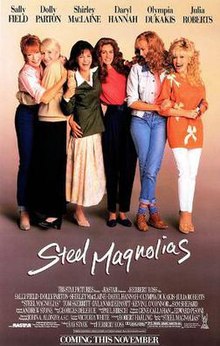 It’s considered a classic now, Steel Magnolias. The play by Robert Haring made a wildly successful transfer to the screen with an all-star cast: Julia Roberts, Sally Field, Olympia Dukakis, Shirley MacLaine, Daryl Hannah.
On the surface, it’s a story of the love between a mother and daughter. But as you watch the film, you can’t help but be struck by the emphasis on friendship.
The women in this film are friends, long-time friends who celebrate and tolerate each other’s imperfections. They aren’t shy about expressing their support or criticism, but it’s always, always, done with love. Maybe you have friends like them. I know I do.
So when Julia Roberts’ character dies, the older women rally around their friend, Sally Field. I’ve included the clip from the cemetery, a scene you’ll no doubt remember because of your inability to watch it without crying yourself.
Her grief and rage are familiar to those of us who have lost someone we love, whether friend or family. But what I’m always struck by are her friends.
They watch her standing alone near her daughter’s grave, and approach her. They try, mostly unsuccessfully, to make her feel better, to lessen her loss. But they know they can’t. You can see it on their faces. They can’t make the grief go away. They can’t justify her loss. They can’t change anything, though they’d move heaven and earth to do so.
They are helpless. Watch the scene: they are helpless in the face of so much pain. So they do what friends always do: they wait. They let her scream and cry and pace and curse. And they wait. And then, improbably, they make her laugh.
What did they accomplish, other than – temporarily – relieving the tension? Her daughter was still dead, her grandson growing up now without a mother. Nothing changed. Except for one thing.She was reminded that she wasn’t alone. For me, the most devastating part of grief is feeling you’re alone, that no one else understands – or cares about – what you’re going through.
That’s where friends make all the difference, even when they themselves are grieving. They can help their friend by understanding, not judging; by listening, not lecturing; by crying and on occasion, laughing.
“I didn’t know what to say” is a common excuse for doing nothing to help a grieving person. Well, guess what? You don’t have to say a damn thing. Just show up. Just listen. Because like Sally Field’s friends, you’ll make all the difference in the world.
Steel Magnolias
March 28, 2015
News about Friend Grief and AIDS
 It’s that time of year again!
 I’m pleased to announce the 2015 update of Friend Grief and AIDS: Thirty Years of Burying Our Friends.
Each year about this time I update the resources and statistics in my book. That's one of the advantages of publishing today - nothing ever has to be out-of-date.
You can find the updated ebook on Kindle, Nookand Kobo. The updated paperback will be available in about a week.
If you have a previous version, just go to the AIDS UPDATE page here for new information on the epidemic.
And as always, 25% of the retail price is donated to one of my favorite organizations in the fight against the epidemic: Broadway Cares/Equity Fights AIDS.
March 25, 2015
Laurel: A Guest Post by Fred Eberle
 Lauren Cronin & Fred EberleI’ve known Fred Eberle since 1989, when I was on staff at Chicago House and he was one of my most dedicated volunteers. He is, without a doubt, one of the most talented, generous, thoughtful men I’ve ever known (he's blushing right now, trust me). I’m so pleased that he agreed to share this story of one of the most important friendships of his life.
My friend, Laurel was…a force of nature. When she entered a room her energy and charisma filled the space. Laurel Cronin was a brilliant actress and director, and when she was onstage it was hard to watch anyone else. It wasn’t that she intentionally pulled focus; she drew it to her. From the first moment we met, it was as though we could finish each other’s sentences. I don’t know if I believe in past lives but, if they exist, I know Laurel played a significant part in mine.
Laurel directed the first play I did in Chicago after returning from college. It was a community theatre production, and her creativity and ability to motivate her actors made it a memorable experience. We both went on to work professionally in Chicago, and our multi-level relationship lasted for nearly 20 years.
We had one falling out that resulted in a loss of contact for 2 years. I know neither of us thought it would be the end of our friendship, but pride or stubbornness kept either of us from making the first move. One day I heard that she had walked off stage and passed out in the wings. Without thinking I picked up the phone and asked what she needed. The ice was broken and we were finally able to reconnect and move forward.
 Immortalized by Al HirschfeldHer illness was diagnosed as a kidney issue and, with some time, medication and a change in diet she was able to resume her career. A casting director invited her to come out to L.A. and within a month she was cast in the supporting role of Liza (Wendy’s housekeeper) in Spielberg’s film, Hook. That opened every door and you couldn’t turn on the television without seeing Laurel in shows such as Murphy Brown, Brooklyn Bridge and a supporting role in Julie Andrew’s short lived sitcom, Julie. She also had roles in films including A League of Their Own, Beethoven and House Sitter (which got her a feature story on Entertainment Tonight as a “scene stealer”).
 In May of 1992, Laurel was in town and we met for lunch just before I left for a season of summer stock at the Peninsula Players in Door County, Wisconsin. The season would run through early October and, when it was over I was invited to come and stay with her in L.A. She offered to show me around and introduce me to her agent and managers. I thought my future was set.
One morning, as I was heading to rehearsal, I got a phone call. It was Laurel telling me that her illness had returned and she was coming back to Chicago to have a kidney removed. Her spirits were good and she was determined to get back to work as soon as possible. Things seemed to be going well until the pathology reports came back and it was discovered that she had been incorrectly diagnosed. The problem was a malignant tumor hidden behind the kidney.
The day after I got home from Wisconsin I called and her mother told me Laurel had been moved to the hospice at Northwestern Memorial Hospital. I visited several times but was still in denial about what was coming. One afternoon, on the way to a theatre fundraiser, I decided to stop in for a quick visit. When I got on the elevator I heard footsteps and held the door and Laurel’s friend, Bridget got on. She said “I’m so glad you’re here. She’s dying.”
The reality finally hit me. I stood at the foot of her bed with two of her best friends and watched as Laurel’s mother held her hand and tearfully told her it was okay for her to let go. We were so amazed by her instincts that it took a moment for us to realize that the tortured breathing had stopped. Laurel was gone.
In the years since, not a day goes by that Laurel is not in my thoughts. I was a product of the era when we were taught that “men don’t cry.” Even during sense memory exercises in acting class I was never able to produce a tear. Since that day at Northwestern, I cry at the drop of a hat. I think that's a good thing. I guess that is just one of many things for which I owe Laurel my thanks.
Fred Eberle is a former professional actor and director. He spent nearly 2 years in the original production of Do Black Patent Leather Shoes Really Reflect Up? Fred currently works as a Concierge and Event Planner, and. sits on the Advisory Council for Concierge Preferred Magazine. He also co-hosts the magazine's quarterly web cast, ¨Unlocking Chicago¨.