Jane Dougherty's Blog, page 20
February 28, 2023
4. (eight lines)
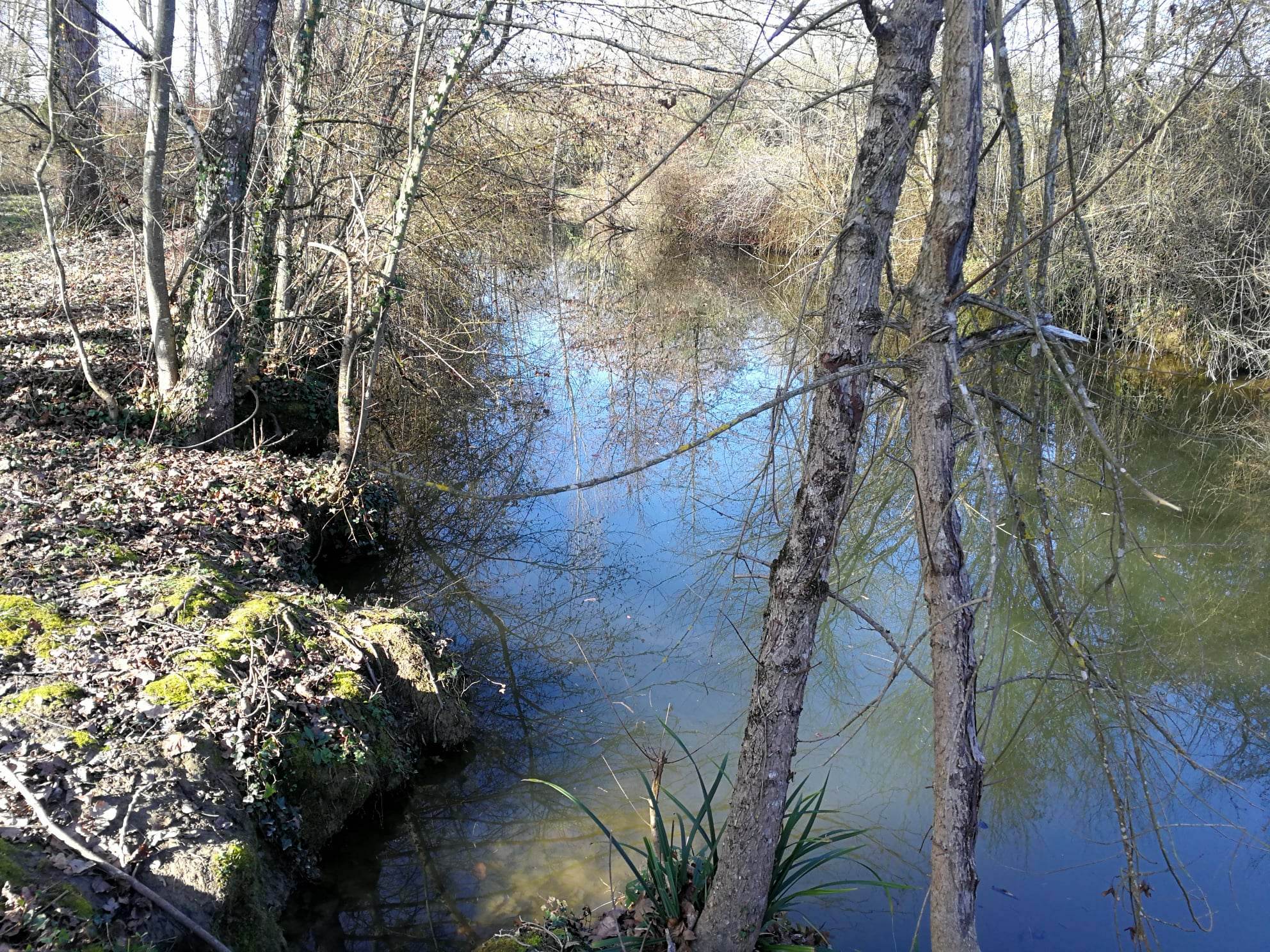
4.
Last day of the open season
on all the wing-fluttering,
heart-racing things,
the ears-pricked, nose-sniffing things.
Tomorrow dawn will rise
frozen and gun-free,
for a while the woods will rustle
only with wind in the leaves.


The black sow beneath the oak tree
This poem was inspired by Kerfe’s random words. The clock woman is Philomena Cunk. If you don’t know her, you should. I was watching some of her clips dubbed for Italian TV, where she is (understandably) not entirely understood.

The black sow beneath the oak tree
What is clocks? she asks anyone who’ll listen.
If clocks keep time where do they put it,
and if they stopped, would time stop too?
The black sow continues her foraging,
indifferent to such questions that only affect
those with long lives to fill up with futilities.
Some have only one desire, to dance on quicksand
while their wealth flashes golden in perpetual sunshine.
Time filled, time wasted, the sow grunts.
We say nothing is ever black or white, but the black sow
grunts into her acorns, Pigs are, she says, except when
they’re black and white. Then they’re piebald.
Clocks, the woman asks again. Black sow sniffs the leaves,
answers, Water clocks. Stars and moon in the night water,
sun in the day water. What else matters?
Above our heads, the cranes fly, scraping the clouds,
necks and legs stretched, throats wide.
Time for spring, the black sow says.
They say pigs can’t see the stars because they have no neck,
can’t raise their heads, but they have puddles and ponds
and still forest pools, where the stars gaze back, just for pigs.
February 27, 2023
Haibun for a mezza luna
For the dverse prompt.
There’s a satisfaction in the wave-swell back and forth of the mezzaluna, the way the carrot and onion and celery become a soffritto, then parsley and garlic, the foundation of so many meals, releasing smells that set the mouth watering before the vegetables even hit the hot oil. Curved blade, rocking, a kitchen cradle, steel that glints in the light, half moon held in my hands, back and forth, like waves of the primal sea.
Half here half there
this piebald moon embraces
light and dark conjoined.
Quatern
Paul Brookes chose the quatern for last week’s chosen form. The quatern is a French, possibly Medieval, form, four quatrains of 8 syllables with the first line acting as refrain, sliding down one line in each stanza. For modern purposes, there is no set rhyme scheme, but most examples seem to use one, and most use iambic tetrameter to give their 8 syllables a rhythm. It seems counter-intuitive to drop rhyme and rhythm, keeping only the number of lines and the number of syllables per line, but just as an experiment, I wrote a second version of my original quatern, keeping lines of 8 syllables but with no rhyme and no meter. My ear tells me that when all the lines are the same syllabic length, not to let the words fit a rhythm sounds like discord in a classical style of music.
A last rose
This is the dying of the light,
the sluggish slipstream’s muddy blight,
this sliding from the river’s flow,
a fish-mouthed sucking afterglow,
but city sky’s glare-strung, despite
this is the dying of the light,
in ooze that rises frothed with scum,
the boozing, garish, deadbeat drum.
Jerusalem, boots trample on
the faces crying, Babylon!
this is the dying of the light,
beyond lies only endless night.
A rose is dreaming on a stem,
in sun’s last rays a thorny gem,
as petals, crucibled, ignite—
this is the dying of the light.
A last rose
This is the dying of the light,
this sliding from the water’s flow,
slipstream drowning whatever shines,
fish-mouthed, sucking the sun’s goodness.
City sky’s still strung with glare, though
this is the dying of the light,
sinking into yellow-frothed ooze,
the discordant rattle of trams.
They scream, Jerusalem! Their boots
stamp faces crying, Babylon—
this is the dying of the light,
nothing waits for us but the end.
A rose dreams on a thorny stem,
in the sun’s last rays, its petals
cupped, catch the shrinking brilliance.
This is the dying of the light.
February 26, 2023
For a senseless death

We walked up where the pine trees grow, and the north wind blows, and the path runs down to a hidden house among poplar trees.
Among the pines was a cage, a trap not sprung. And in the long grass, like an empty beer can, a dead badger was slung, beauty in monochromes.
Humankind is cruel without measure, I know, and reason plays little part, but still I wondered what threat to pine trees a badger posed.
Sky blown blue
wind-fingers clenched squeeze the sun
from this landscape.
30. (seven lines)

30.
Bise sings its cold monotone,
veiled threats of wolves from the north,
sea spray in their mouths,
steel-clawed.
No ships come here, no dragons,
but the wind bites the same,
spring driven upon the shoals of perhaps.
February 25, 2023
29. (seven lines)

29.
Cold is beautiful,
a misted Corot touched with russet
of last year’s leaves,
and the frost’s white grip
loosens in the sun,
in the warm wing-flutter of songbirds
and the stirrings of spring.
Distant worlds
The Oracle gave me this cadralor from a selection of 35 words, including a few articles and conjunctions. That’s enough AI for me.

Distant worlds
1.
The wild language of the sea,
one we will never learn,
not the oil-smooth swell or the raging storm waves.
We see a temperamental pool,
unheated, full of intruders.
2.
A cry in the purple dusk,
a red cry-whimper echoes among the trees.
The dogs listen, curious, their gentle eyes hard.
They love selectively,
know nothing of compassion.
3.
Blood on the road, fresh,
and decorated with bright feathers.
The body lies in the ditch,
wings in a last crumpled beat, legs rigid.
Motorist, one with her machine, never stopped.
4.
At breakfast, you spread honey
on your toast, parsimoniously.
One teaspoon is the life’s work of a bee, you say,
and eat, tasting the theft
with gratitude and reverence.
5.
Motionless, the audience listens
in mystic silence, eyes fixed on a vision
in the middle distance, absorbing the musical beauty.
In the trees outside the concert hall,
birds sing unnoticed.
February 24, 2023
Questioning
Today the weather changed again, and the first cranes flew over going north.

Questioning
Days of questioning
between sun-spills and cloud-shadow,
the sharp sting of cold
when the wind snaps,
the plaintive sound
of a kitten crying
somewhere among the trees,
and high, higher than we clay-footed can dream,
the wild, unreasoning crank-cronk
of returning cranes,
that turns all questions to answers,
the same, ever-repeating circular answer—
home.
28. (seven lines)

28.
The birds are singing now,
bringing colour to the mornings,
acrobats among honeysuckle flowers,
careless of coming cold,
ignorant of the world’s grey,
the concrete and cars,
the steel casings of munitions.