
Tonya R. Moore's Blog: Tonya R. Moore, page 29
June 12, 2017
Skill vs. Talent – Which Do You Have?
by Ryan Lanz
tal·ent [tal-uhnt] noun: a special natural ability or aptitude.
skill [skil] noun: the ability, coming from one’s knowledge, practice, aptitude, etc., to do something well.
What if you don’t have natural talent? Does that mean you may as well give up?
It’s not quite the chicken or the egg debate, but it’s up there. I’ve heard people go in circles about which comes first and which is necessary. At what combination of both does one continue the grind and attempt at success? I’d be surprised if you haven’t asked yourself that question. It’s a part of being human.
What does each really mean?
This comes from the university of my opinion, but I would describe talent as the natural ability that needs little to no refinement, and skill is the unnatural ability that you have to develop. For those of us who’ve played sports (myself excluded), I’m sure you’ve all encountered someone who strides onto the field and makes it all look so darn effortless.
This person hardly shows up to practice, and you have a fairly good idea that it took hardly any effort to accomplish. Same with the person who aced every test in college with little preparation, leaving you in study hall time after time with a bucket of coffee. You must have missed at least three parties because you had to cram for the Calculus exam, right?
Which is better?
Good question. And one not so easily answered. Sure, we would all like natural talent that we don’t have to pour so much effort into, but sometimes that doesn’t quite pan out. Often, we are born with enough talent to have an affinity for a profession, but the rest has to be made up with skill. In writing, there are dozens of abilities that need to be present to make a good novel, such as foreshadowing, prose, description, natural dialogue, pacing, etc.
Let’s say that you have a knack for writing dialogue, but your setting description rambles on and on. The squeaky wheel gets the oil, and you’ll have to practice at writing setting description over time to develop it into a skill, even if it’s not a natural talent. To be fair, natural talent does get you to the goal quicker.
Related: Finishing a Book is a Skill
The combination of the two
If Tiger Woods is not the best golf player of all time, then he comes very close. He started golfing on professional courses at the age of two years old and was featured in a golf magazine at the age of five. Tiger spent 545 weeks combined total as the world number one. In my opinion, that is some superb natural talent. Although Tiger has mounds of it, he still had a golfing coach (and probably still does) through most of his career. That’s combining the natural with the refined skill that creates that sweet spot. Think about how you can make a similar combination.
Is it so bad if you don’t have natural talent? Should you give up?
The one downside to having natural talent is that you don’t have as much appreciation for the effort. Let’s look at two writers: one who writes his/her first book and quickly becomes published, and the other is a writer who labors for ten years to even become noticed. Both eventually become published and successful, let’s say. I think it’s fair to say that the latter writer has more appreciation for the effort of the craft. There are small nuances of writing that I feel are best represented when someone has to massage and mold their skill over the long-term.
I believe that about anyone can accomplish about anything if they were to dedicate their entire life to it, even if that person doesn’t have a drop of natural talent. Ask yourself what craft you can accomplish if you were to invest 20 years to its perfection. So, no, don’t simply give up on it. You may have been born with talent in a profession you’re not interested in. That’s okay, just work to catch up in a profession that you are.
Conclusion
If you sharpen your skill enough, people will believe that you’ve had talent from the very beginning, regardless of how much you actually had to start with.
Guest post contributed by Ryan Lanz. Ryan is an avid blogger and author of The Idea Factory: 1,000 Story Ideas and Writing Prompts to Find Your Next Bestseller. You can also find him on Twitter, Facebook, and Tumblr.
The post Skill vs. Talent – Which Do You Have? appeared first on Tonya R. Moore.


June 4, 2017
One Argument for Writing Every Day
Recently, writers all over the Internet got outraged over an article declaring that unless you write every day, you’re not a real writer. I don’t share this article’s sentiment however, I do believe that if you can carve out the time and summon the wherewithal to write every day, you should.
Writing is worthwhile enough to warrant the time and effort it takes to write every day.
Write Every day for Love
Most of us who write, write out of love, not some twisted sense of obligation. Those of us who write out of a genuine love for writing need to write. Writing is how we stay sane. Writing is how we exorcise the madness brewing within us. We need it like water. Like a junkie needs a hit.
We must be careful not to let this need go unfulfilled.
In his book Zen in the Art of Writing, Ray Bradbury wrote:
If you did not write every day, the poisons would accumulate and you would begin to die or act crazy, or both.
You must stay drunk on writing so reality cannot destroy you. For writing allows just the proper recipes of truth, life, reality as you can eat, drink, and digest without hyperventilating and flopping like a dead fish in your bed. I have learned on my journeys that if I let a day go by without writing, I grow uneasy. Two days and I am in tremor. Three and I suspect lunacy.
And I’ll tell you something. Sometimes. I go days without writing, weeks even but you know what? The whole time, I feel as if something is terribly amiss and the world doesn’t quite make sense. You may say, of course, there’s little about the world that makes sense these days but you know what? When I write it down, whatever I write helps me to put things into perspective. I can take a step back and release that tense breath I didn’t realize I’ve been holding. The world is no longer askew. Do you know that feeling?
So, why not give it a try? Write the world down. Breathe. Everyday.
Making Writing Daily a Habit
Writing is a habit that flourishes when nurtured. As with any skill, the more you write, the better you get at it. It’s that simple. I’m not saying make it your obligation to write X number of words every day. It’s fine to have a goal like that. Admirable even. But that’s not what I’m trying to encourage you to do.
What I have in mind is more like this:
Say you get up every day and you sit in front of your computer or stare at your notebook or phone and you write one word. On some days that one word turns into a sentence and then another and then another. It becomes an idea that morphs into a deluge of words. Some days though, it doesn’t turn into anything but that one word.
I’m saying that’s okay because with that one word, you’ve already lit a fire somewhere deep inside in your mind and the wheels are starting to turn. It might not turn into a substantial idea that same day but it might by the next day, or the next week, or so forth. It’s sort of like planting a seed and patiently watering it every day until it becomes a sapling which becomes an awesome tree that eventually blossoms.
To Each Their Own
The next time some upstart comes around and suggests that it’s their way or the highway, don’t get your panties all in a twist. Think about what they have to say. Sure, there are going to be some major flaws in their argument but I suspect the real reason it’s a bitter pill to swallow is that there is some truth in what they have to say.
Every writer is entitled to their own process. If you want to get up every morning and tackle writing like it’s some cumbersome chore, well, the thought of that breaks my heart and I suspect you’ve perhaps adopted the wrong vocation but guess what? That’s entirely up to you. If you get out of bed in the mornings and go all gung ho like a mountain climber tackling K2, I say yay! Go for it! Conquer that mountain! If you go at it all happy go lucky like a two-legged centaur learning to prancercize, I say hurray… you damn weirdo. Do your thing!
Struggle. Triumph. Mess around. Do it every day if you, if you can. Don’t hold it in inside like a pressure cooker about to explode unless that happens to be your process and you make it your prerogative to let those typing fingers dance amid that awesome explosion. Whatever you do, don’t let it destroy you and do yourself a favor. Don’t just turn the heat off and let it fizzle out to nothing.
For a writer, writing is how we live. Writing is the only mechanism we have at our disposal to prove to ourselves that we exist. So live! But live on your terms.
I’ve said it before and I’ll say it again:
Writers are always working and growing, whether we’re scribbling or not. Whether we’re aware of it, or not.
Like Ray Bradbury wrote:
Every morning I jump out of bed and step on a landmine. Th landmine is me. After the explosion, I spend the rest of the day putting the pieces together.
Now, it’s your turn. Jump!
The post One Argument for Writing Every Day appeared first on Tonya R. Moore.
May 22, 2017
Interviewed by Julie Reeser @ Persephone Knits
Today, I was interviewed by the ever so awesome Julie Reeser over at her blog, Persephone Knits!
I got to talk about SPEC FICS, my reasons for creating the social network, and my plans and hopes for the community.
The post Interviewed by Julie Reeser @ Persephone Knits appeared first on Tonya R. Moore.
May 19, 2017
Why I Write Speculative Fiction
I was a story lover long before I developed any notion that I might want to write.
Writers like Ray Bradbury, Isaac Asimov, Anne Mccaffrey, Larry Niven, Gene Roddenberry, and Frank Herbert were the first storytellers to really stir my imagination when I was a child.
Once I started writing, it was only natural for me to gravitate toward the genres I loved to read so much.
As a kid, I would watch re-runs of The Twilight Zone, The Outer Limits and Star Trek with my eyes practically glued to the television screen.
In an old post titled The Quiet One, I wrote about sitting on my uncle’s verandah as a kid, watching Star Trek through the living room’s glass paned window.
“I was somewhere between eight and ten years old, that day I first fell truly, madly, and deeply in love with sci-fi.”
Several years ago, I decided that I wanted to do more than just write stories and store them on a disk or stuff notebooks full of them into a box somewhere. I joined a number of online writing communities, and even created my own–all in the interest of sharing stories and ideas with other people who like to write and those who love to read great stories as much as I do.
Now I’m committed to pursuing my dream of writing for a living. I want to accomplish that by writing what I’ve always loved.
Ray Bradbury is my favorite author of all time and I’ve taken these words of his to heart:
“Love. Fall in love and stay in love. Write only what you love, and love what you write. The word is love. You have to get up in the morning and write something you love, something to live for.”
The post Why I Write Speculative Fiction appeared first on Tonya R. Moore.
May 18, 2017
Download “Kingdom of Lethe” Free
(for the next 5 days only)
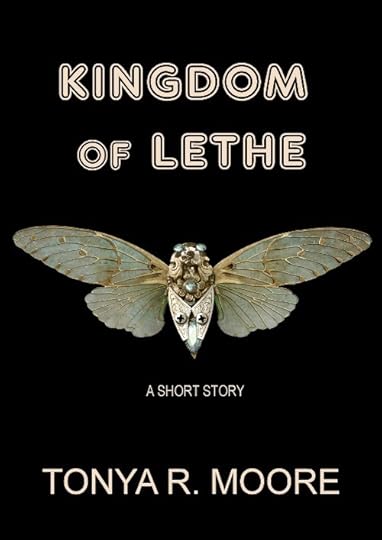
Kingdom of Lethe
eBook: $2.99
Author: Tonya R. Moore
Genre: Science Fiction
A new case drags a detective into the strange world of a woman who claims her beautiful memories have been stolen. More info →

“In Greek mythology, Lethe was one of the five rivers of the underworld of Hades. Also known as the Ameles potamos, the Lethe flowed around the cave of Hypnos and through the Underworld, where all those who drank from it experienced complete forgetfulness. Lethe was also the name of the Greek spirit of forgetfulness and oblivion, with whom the river was often identified.” (Wikipedia)
The post Download “Kingdom of Lethe” Free appeared first on Tonya R. Moore.
May 17, 2017
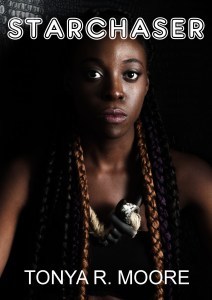
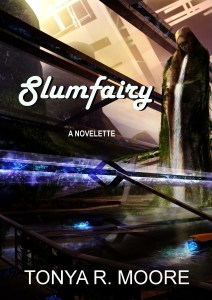
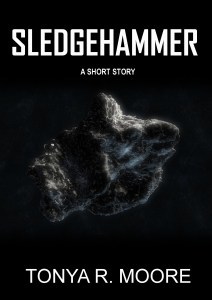
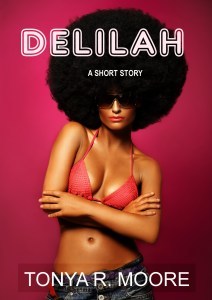
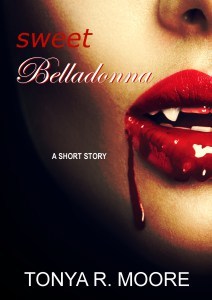
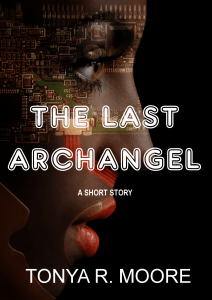
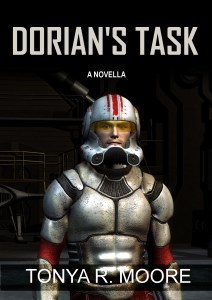
Kingdom of Lethe: Now Available
EXCERPT
“I don’t have any beautiful memories.” Nedra’s latest client leaned slightly forward with a chagrined half-smile. “It occurred to me,” the lovely woman drawled, “that shouldn’t be the case.”
She was perched on the cracked edge of Nedra’s worn out leather chair with all the grace of a Queen of Sheba. Her skin wasn’t quite as dark as Nedra’s. It was more like the milky coffee that Nedra had drunk that morning to take the edge off what had apparently been a very rough night.
The woman’s eyes were over-large, bright and watchful. Predatory. Small jewels traced the curves of her eyebrows. Her eyeshadow was a reddish blue, bruised-seeming hue. Her swollen lips were painted black. A cascade of crystal teardrops dangled from her pierced ears. Her long dress was made of thin, shiny fiber that gently caressed her delicate bones. The shawl thrown carelessly over her shoulder was made of expensive, meticulously woven material.
This woman was a jewel of the night. She didn’t belong in the raw glare of daylight in the shabby outskirts of town. She certainly didn’t belong in this dingy office with the leaky roof and rats crawling underneath the floorboards. Here she was though, looking at Nedra as if the small-time detective were her lifeline. Looking as if there was no other place she could have possibly gone.
When she spoke again, her voice was sweet and smoky, possessing a strangely powerful timbre that sent a small tremor running down Nedra’s spine and straight down to her toes.
Nedra cleared her throat and croaked, “come again?”
The woman smiled slightly. She leaned further forward and Nedra caught a glimpse of the two perfect, soft mounds enveloped in the delicate fabric of her bosom.
“My beautiful memories,” the femme fatale answered lowly and slowly as if speaking to a child, “they’ve gone away. In fact, I seem to keep losing more and more each day.” The woman eased back, settling more deeply into the chair, “you’ll help me find them, won’t you?”
Kingdom of Lethe
eBook: $2.99
Author: Tonya R. Moore
Genre: Science Fiction
A new case drags a detective into the strange world of a woman who claims her beautiful memories have been stolen. More info →
The post Kingdom of Lethe: Now Available appeared first on Tonya R. Moore.
May 5, 2017
A New Look and a New Mission
My website has a brand-new look and I am on a mission to make my dream of writing full-time come true.
For years, I’ve clung to every reason you can think of to not chase my dream:
I can’t afford it.
I’m not good enough.
I don’t deserve it.
For the past six months or so though, there’s been a revolution of sorts going on inside me.
First came a certain sense of disillusionment with my current job, a job that offers some degree of security and one I happen to like very much. I just couldn’t picture myself doing that job for the rest of my working years. I just couldn’t.
There was something else that I really wanted to do and it was high time I sat down and figured out how to go about doing this thing I really wanted to do.
After spending some time thinking it over, I finally realized that nothing was going to change unless I changed. I had to be the one to make some major changes to set myself on the path to accomplishing my goal.
I changed university majors from Communication to Creative Writing and English with a concentration in Fiction. I went so far as to change universities.
The next couple of years will undoubtedly be quite tough. Writing will have to be a part-time job, while I build up some cred and start selling stories. I figure, I’ll need to write at least 1700 words daily just to stay on task. That’s not as easy as it sounds. It’ll take a hell of a lot of determination and persistence but I’m confident that I have that in spades.
This is one heck of a serious and epic undertaking. I’m excited and scared to take this plunge but there is a part of me that’s incredibly calm and confident about it all. For the first time in my life, I feel like I’m on exactly the path I’m meant to be on.
The post A New Look and a New Mission appeared first on Tonya R. Moore.
April 9, 2017
The Dos and Don’ts of Dialogue Tags
by Ryan Lanz
Writers use dialogue tags constantly. In fact, we use them so often that readers all but gloss over them. They should be invisible. However, there are ways to misuse them and make them stand out.
In an effort to avoid that, let’s take a closer look at dialogue tags. Toward the end of “Tag travesties” is something I sorely wish someone had told me before I started writing.
Why do we use dialogue tags?
The simple answer is that we use them to indicate who’s speaking. In visual media, such as movies or television, the viewer can easily tell who’s talking by lip movement and camera angles. When reading a book, obviously that’s not an option.
Tag travesties
There are certainly ways to misuse dialogue tags. When I was a new writer, I felt compelled to overwrite. I ‘m sure every new writer goes through a version of this. I observed how successful writers used simple tags like “said/asked” and thought to myself, that’s boring. I’m going to be an awesome writer by making them more interesting. You don’t have to admit it aloud, writers, but we all know that most of us have. Let’s look at an example of this:
“We can’t cross this river,” Alanna exclaimed repugnantly.
John crossed the room and shouted disgustedly, “I’ll never take you with me.”
“This has been the worst day ever,” Susie cried angrily.
For those of you who still aren’t convinced, let’s up the dosage with a paragraph:
Hank crossed the room and sat down. “We should have never waited this long for a table,” he seethed, leaning over to glare at her.
“If you wanted a better spot, you should have called ahead for a reservation,” Trudy returned pointedly.
“Well, perhaps if you didn’t take so long to get ready, I could have,” he countered dryly.
Can you imagine reading an entire book like that? *shiver*
So why do new writers feel the urge to be that . . . creative with their dialogue tags? Back in the beginning, I thought the typical tags of “said/asked” were too boring and dull. It didn’t take me long to realize that dull (in this context) is the point.
Image your words as a window pane of glass, and the story is behind it. Your words are merely the lens that your story is seen through. The thicker the words, the cloudier the glass gets. If you use huge words, purple prose, or crazy dialogue tags, then all you’re doing is fogging up the glass through which your reader is trying to view your story. The goal is to draw as little attention to your actual words as possible; therefore, you keep the glass as clear as possible, so that the reader focuses on the story. Using tags like “said/asked” are so clear, they’re virtually invisible.
Now, does that mean that you can’t use anything else? Of course not. Let’s look further.
Alternate dialogue tags
Some authors say to never use anything other than “said/asked,” while others say to heck with the rules and use whatever you want. Some genres (such as romance) are more forgiving about using alternate dialogue tags. I take a more pragmatic approach to it. I sometimes use lines like:
“I’m glad we got out of there,” she breathed.
The very important question is how often. I compare adverbs and alternate dialogue tags to a strong spice. Some is nice, but too much will spoil the batch. Imagine a cake mix with a liter of vanilla flavoring, rather than the normal tablespoon. The more often you use anything other than “said/asked,” the stronger the flavor. If it’s too powerful, it’ll tug the reader away from the story and spotlights those words. In a full length book of around 85,000 words, I personally use alternate dialogue tags only around a few dozen times total.
By saving them, the pleasant side effect is that when I do use them, they pack more of an emotional punch.
Related: How to Write Natural Dialogue
Action beats
I have a love affair with action beats. Used effectively, they can be another great way to announce who’s talking, yet at the same time add some movement or blocking to a scene. For example:
Looking down, Katie ran a finger around the edge of the mug. “We need to talk.”
That added some nice flavor to the scene, and you know who spoke. The only caveat is to be careful of not using too many action beats, as it does slow down the pacing a tiny bit. If you’re writing a bantering sequence, for example, you wouldn’t want to use a lot of action beats so as to keep the pacing quick.
Dos and don’ts
Sometimes, action beats and dialogue tags have misused punctuation. I’ll give some examples.
“Please don’t touch that.” She said, blocking the display. (Incorrect)
“Let’s head to the beach,” he said as he grabbed a towel. (Correct)
Sam motioned for everyone to come closer, “Take a look at this.” (Incorrect)
Debbie handed over the magnifying glass. “Do you see the mossy film on the top?” (Correct)
Conclusion
Like many things in a story/novel, it’s all about balance. Try alternating actions beats, dialogue tags, and even no tags at all when it’s clear who’s speaking. By changing it up, it’ll make it so that no one method is obvious.
Ryan Lanz is an avid blogger and author of The Idea Factory: 1,000 Story Ideas and Writing Prompts to Find Your Next Bestseller . You can also find him on Twitter , Facebook , and Tumblr .
Image courtesy of Onnola via Flickr, Creative Commons.
April 1, 2017
I’m Building a Community
It’s funny how things tend to evolve.
I created specfics.com because I wanted to create a place for people to go and read my stories online. I wanted to have a website dedicated for that purpose.
As I worked on building the website, I realized that I wanted to do more than simply create a repository for my fiction. I wanted to encourage engagement and collaboration among readers and fellow fans and creators of speculative fiction stories, art, and other projects.
So, I started to build a community.
It’s up and running and now I just need to watch and wait for it to grow. I hope it will over time because I really think that a hub for hub for creators & fans of speculative fiction in all its forms to get together and collaborate and promote their works is a great concept.
There’s nothing new there. It’s been done before but so what?
Maybe Spec Fics will offer readers, fans, and creators something of intrinsic value that they haven’t found anywhere else before. This is my hope… hopefully not hubris.
Guest Authors
I welcome stories from guest authors at specfics.com.
I am now accepting short works of fiction to be made available for free online reading. Submissions should be speculative flash fiction or short stories. All sub-genres that fit under the umbrella of speculative fiction are welcome: scifi, horror, dark fantasy, steampunk—you name it.
See Guest Authors Welcome! for details and submission guidelines.
Self-Promotion
The Spec Fics community was designed around the idea that creators and fans need to interact and collaborate. I’ve made it very easy to promote yourself and your work or interests in several ways.
Authors, artists, community admins, and bloggers can create pages with links to their homepages or blogs. Authors can create pages for their books. Bloggers can create pages for their blogs or podcasts. Members can create groups. The community is basically a social network that gives each page and group a wall that owners and audiences can posts to and deliver updates or carry on a conversation.
For more information, see How to Use SpecFics.com For Self-Promo.
So, what do you think of specfics.com so far? Would you be interested in joining? If so, come on over and check out the community sometime.
If you have any questions, feel free to ask them here too.
Tonya R. Moore

- Tonya R. Moore's profile
- 36 followers

