Felix Abt's Blog, page 6
October 20, 2014
DEAD BODIES ARE PILING UP ROTTING ON NORTH KOREA’S STREETS AND...
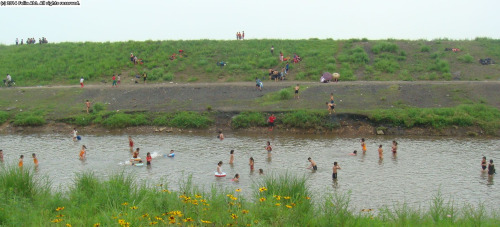
DEAD BODIES ARE PILING UP ROTTING ON NORTH KOREA’S STREETS AND FLOATING IN ITS RIVERS
claimed prominent defector Yeon-mi Park in October 2014: http://www.independent.ie/irish-news/one-young-world/why-is-the-world-allowing-a-holocaust-to-happen-again-brave-north-korean-shares-harrowing-story-of-escape-30673558.html
21 year old Yeon-mi left North Korea at the age of 13. She grew up with her sister in an elite family in Hyesan and Pyongyang. Initially, she spoke fondly about her up-bringing, watching foreign movies and : “I had so much fun playing with my friends like go riverside and hiking and swimming or sometimes I could even play Super Mario game at our friends houses. You guys know what is Super Mario Game, right?”
Later, after Yeon-mi had joined a political activists’ group in South Korea, she told the BBC a rather different story of her childhood: one filled with fear and how eating grass was the only way she managed to survive.
Her statement about dead bodies in the rivers that she had previously claimed she had played happily next to with her friends, came as something as a surprise to Felix Abt, the author of the “Capitalist in North Korea”. He travelled extensively throughout the country in his 7 seven years there, and while he admits that perhaps he didn’t spend as much time riverside as Yeon-mi and her friends, it would have been very difficult not to notice “people’s bodies pile up rotting on the streets”. He never came across or heard from his many North Korean friends and acquaintances about dead bodies either in rivers or in the streets. (North Korea’s catastrophic famine, when the U.N. estimate around 600 000 people starved to death, was in the nineties when Yeon-mi was a very small child and not in the period she is referring to, immediately prior to her defection).
Abt’s experience of North Korea’s rivers was much like Yeon-mi’s original description: full of rather happy, playing children like the ones in his photo (with not a single corpse to spoil the fun).
More on real, living North Koreans, both adults and kids, can be found in his book “A Capitalist in North Korea: My Seven Years in the Hermit Kingdom”
☆☆☆☆☆


DEAD BODIES ARE ROTTING IN NORTH KOREA’S STREETS AND...
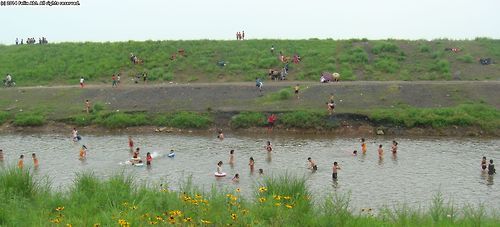
DEAD BODIES ARE ROTTING IN NORTH KOREA’S STREETS AND FLOATING IN ITS RIVERS
claimed defector and media darling Yeon-mi Park in October 2014: http://www.independent.ie/irish-news/one-young-world/why-is-the-world-allowing-a-holocaust-to-happen-again-30673558.html .
Yeon-mi, now 21, left North Korea at the age of 13 where she grew up as a privileged kid of an elite family who lived in Hyesan and in Pyongyang. She said about her youth: “That was not anything special for me because I had so much fun playing with my friends like go riverside and hiking and swimming or sometimes I could even play Super Mario game at our friends houses. You guys know what is Super Mario Game, right?”
In the meantime, Yeon-mi joined a political activists’ group. Nevertheless, her statement surprised Felix Abt, the author of the “Capitalist in North Korea” who thought he must have been totally blind and/or misguided as he never came across dead bodies, but then he didn’t go to the riverside with his friends as often as Yeon-mi Park when traveling through the country. (The big famine when about 600.000 people starved to death was in the nineties when Yeon-mi was a small child).
He was glad to have seen happy kids (as shown here) instead of corpses in North Korean rivers. More on living kids and adults can be found in his book “A Capitalist in North Korea: My Seven Years in the Hermit Kingdom”
October 3, 2014
‘A Capitalist in North Korea’ sending a message into...
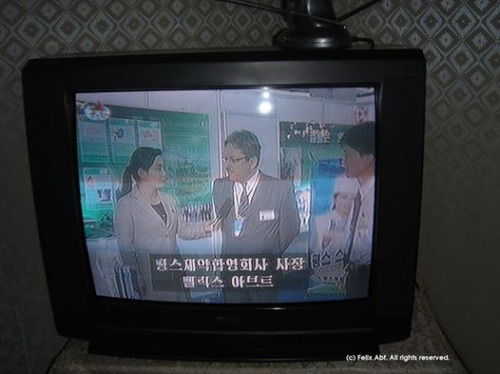
‘A Capitalist in North Korea’ sending a message into North Korean homes: BUSINESS is good!
GALO Magazine: Obviously, foreigners can be viewed suspiciously by some DPRK citizens. Were there times when you felt lonely being one of a very, very small number of foreigners in the country? How did you cope?
A Capitalist in North Korea: Since I was involved in a host of different business activities which opened many doors and led to numerous contacts, I was soon known to many people. And after I was interviewed by the national TV, people in the street, elevators and restaurants smiled at me, nodded and greeted me amicably. I was perceived not only as a useful foreigner, but also as a friendly, trustworthy one, and bonding with Koreans was therefore not so difficult. So I never really felt lonely.
- Read the full interview here: www.galomagazine.com/books/the-capitalist-in-north-korea-felix-abt-reflects-on-seven-years-in-the-hermit-kingdom
'A Capitalist in North Korea' sending a message into North...
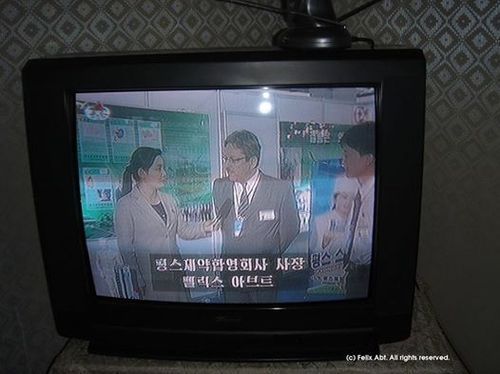
'A Capitalist in North Korea' sending a message into North Korean homes: BUSINESS is good!
GALO Magazine: Obviously, foreigners can be viewed suspiciously by some DPRK citizens. Were there times when you felt lonely being one of a very, very small number of foreigners in the country? How did you cope?
A Capitalist in North Korea: Since I was involved in a host of different business activities which opened many doors and led to numerous contacts, I was soon known to many people. And after I was interviewed by the national TV, people in the street, elevators and restaurants smiled at me, nodded and greeted me amicably. I was perceived not only as a useful foreigner, but also as a friendly, trustworthy one, and bonding with Koreans was therefore not so difficult. So I never really felt lonely.
- Read the full interview here: www.galomagazine.com/books/the-capitalist-in-north-korea-felix-abt-reflects-on-seven-years-in-the-hermit-kingdom
August 22, 2014
NORTH KOREANS OUTSIDE THE CONCENTRATION CAMPS – AT THE BEACH!...
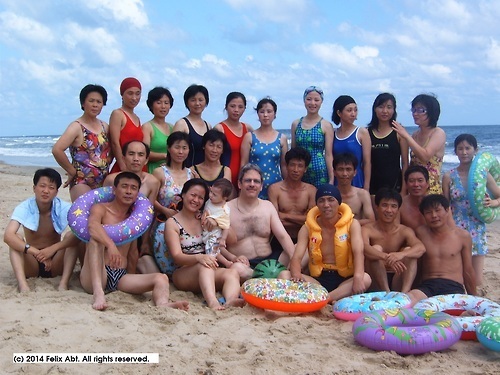
NORTH KOREANS OUTSIDE THE CONCENTRATION CAMPS – AT THE BEACH!
Western media has relentlessly vilified North Korea over the last few decades, preferring to focus on the mass starvation that followed the series of natural disasters in the 1990s, exaggerating the scale of concentration camp incarcerations and portraying the regime as totally inflexible, intolerant, aggressive and oppressive. No coverage has been given to the efforts to recover from the natural ravages of the ‘90s (and with the added burden of crippling sanctions), the changing ideological and economic conditions within the country or in the everyday lives of the people, who are generally perceived to endure a monochrome, joyless, downtrodden neo-Orwellian existence.
It was surprising then, that in August 2014 The Wall Street Journal ran a piece under the headline "A rare look inside North Korea: a photojournalist snaps unusual glimpses of an isolated nation" about a new photo book by a photo journalist. Less surprising, perhaps, was the reaction of the readership, which generally belittled the article and the photos as being more akin to tourist holiday snaps, and of the paper itself, which changed the headline from the initial fairly neutral one, to the much more highly charged: A Lens Peers Inside North Korea. Posing as a tourist, a photojournalist snaps images of life under a repressive and isolated regime. The change speaks volumes for the editorial leanings of the publication and does little to reassure readers of a balanced and objective account of affairs in North Korea! It surely puts into question the integrity of previous reporting, which included over-stating the number of deaths in the 1990s famine by a factor of 4 or 5 from the generally accepted figures of impartial sources. In common with many other Western publications, at least where North Korea is concerned, The Wall Street Journal is far more faithful to its own ideological perspective than it is to representative, informed and unbiased reporting.
At about the same time The Guardian tweeted Hanging out at the beach in #NorthKorea – pictures like you’ve never seen them related to a piece in which it showed a series of photos of ordinary North Koreans having fun at the beach. Many years before this newspaper ‘scooped’ the revelation that there was life in North Korea outside the gulags and that everyone’s lives weren’t uncompromisingly drab and fearful, Felix Abt had taken snaps of North Koreans on the beach, swimming, playing with balls and kites and sharing refreshments with him.
Had these publications been more open to the realities of life in North Korea and not so entangled with the popular myths of drudgery and subjection, had they, perhaps, read Mr Abt’s A Capitalist in North Korea: My Seven Years in the Hermit Kingdom they might have been able to take a more phlegmatic approach and realize that such images represent more the norm than the remarkable. However, it is perhaps understandable that Mr Abt’s book is of less appeal to them than the many tales of repression, fear and abuse from other authors that are reviewed and re-gurgitated : these books substantiate their own pre-conceived views rather than under-mining their prejudices with acutely observed, first-hand accounts of what everyday life is really like in this grossly misunderstood Asian nation.
Nevertheless, Felix Abt dedicates this photo to The Wall Street Journal and The Guardian. It shows himself, his wife and daughter and his North Korean staff at the beach of Wonsan, where, ‘hold the front page’, they are having a fun day out. For those among their readers who want to know more about the unspectacular, normal (for lack of a better word) North Korea, read his book A Capitalist in North Korea: My Seven Years in the Hermit Kingdom
☆☆☆☆☆
PICS MEAN PRIZES: Capture ‘A Capitalist’ and Win a Bundle! Here’s how: https://www.facebook.com/ACapitalistInNorthKorea/posts/824093810948921
August 7, 2014
DARK PLACES IN NORTH KOREA
Abuse of human rights and in...
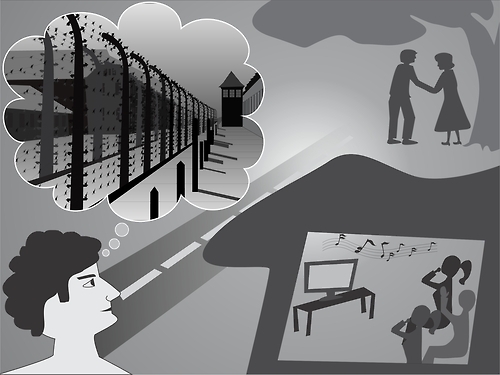
DARK PLACES IN NORTH KOREA
Abuse of human rights and in particular incarceration without trial and for political expediency is universally condemned and rightly so, whether it is taking place in super powers like China and the USA or in easier targets such as North Korea. North Korea is habitually portrayed in the West as a country of nightmares, where every citizen lives in an Orwellian terror of the door being kicked down in the middle of the night and the residents disappearing never to be heard or spoken of again. ‘Gulags’ do exist in North Korea: it was estimated by the UN in 2014 that they contain between 80.000 and 120.000 prisoners, or between 0.33 and 0.5% of the population. An unforgivable fact, but from the disproportionate way human rights infractions in North Korea are reported and dramatized by Western media, many people may be surprised that the figure is not a lot higher. It also raises the question, ‘what of the 99% of the population that are not behind wired barbs and able to pursue their daily lives in much the same way as any other individuals in other developing countries’? These people don’t make international headlines and receive hardly any coverage in the West.
However, the truth about these lives can now be found in Felix Abt’s book A Capitalist in North Korea: My Seven Years in the Hermit Kingdom. He reveals that many of the citizens of North Korea do, indeed, spend their time in dark and murky places, but by choice: in quiet unlit streets at night where, like young couples the world over, they can find a little privacy to hold hands, whisper endearments and get discreetly closer. Or in the dimly lit, but hugely popular karaoke ‘bars’: however unlike many other countries in Asia, where karaoke is similarly popular, the songs in North Korean often praise the pure country and its peerless leaders, and rarely have Celine Dion or Frank Sinatra in their repertoire. Critics of North Korea call this brain washing and mind torturing. Take a look at this video clip of Felix’s North Korean staff in a dark karaoke room and decide for yourself how tortured they are.
Check out more such “horrific” tales about the remaining 99% exclusively in Felix Abt’s book A Capitalist in North Korea: My Seven Years in the Hermit Kingdom
August 6, 2014
INTERVIEW FROM HELL
'THIS IS HELL', the US radio show based in Chicago, is famous, or possibly...
August 2, 2014
DO YOU HULA HOOP ? AND AS PERFECTLY AS FELIX ABT’S NORTH...

DO YOU HULA HOOP ? AND AS PERFECTLY AS FELIX ABT’S NORTH KOREAN EMPLOYEES DID ?
Hoola-hooping has had its up and downs (as well as its round and rounds) since it made its appearance 3000 years ago in Egypt, when children first swung hoops of dried grapevines round their hips
Its later popularity in 14th century England is documented by reports from the medical profession. Not, unfortunately, for the cardio-vascular benefits and ameliorating effects on overly-padded hips and waists that were claimed by 20th century marketing, but for the numerous dislocated backs and heart attacks!
Hoola-hooping became one of the iconic images of 1950s America where the craze made two Californian businessmen immensely rich when they sold 14 million plastic hoola-hoops in just 4 months.
And in North Korea in the early 2000s ?
In that country where the Western media would have us believe that the populace is too oppressed, fearful and hungry to do anything that seems like fun, we can see Felix Abt’s staff in Pyongyang swinging their hips like the best of them and, yes, having a fun time.
Watch them here: https://www.youtube.com/watch?v=Vx6r9ZPynas
Read more about how North Koreans relax and have fun in Felix Abt’s book A Capitalist in North Korea: My Seven Years in the Hermit Kingdom
DO YOU HULA HOOP ? AND AS PERFECTLY AS FELIX ABT’S...


DO YOU HULA HOOP ? AND AS PERFECTLY AS FELIX ABT’S NORTH KOREAN EMPLOYEES DID ?
Hoola-hooping has had its up and downs (as well as its round and rounds) since it made its appearance 3000 years ago in Egypt, when children first swung hoops of dried grapevines round their hips
Its later popularity in 14th century England is documented by reports from the medical profession. Not, unfortunately, for the cardio-vascular benefits and ameliorating effects on overly-padded hips and waists that were claimed by 20th century marketing, but for the numerous dislocated backs and heart attacks!
Hoola-hooping became one of the iconic images of 1950s America where the craze made two Californian businessmen immensely rich when they sold 14 million plastic hoola-hoops in just 4 months.
And in North Korea in the early 2000s ?
In that country where the Western media would have us believe that the populace is too oppressed, fearful and hungry to do anything that seems like fun, we can see Felix Abt’s staff in Pyongyang swinging their hips like the best of them and, yes, having a fun time. Watch them here: https://www.youtube.com/watch?v=XO59LplkfFA
Read more about how North Koreans relax and have fun in Felix Abt’s book A Capitalist in North Korea: My Seven Years in the Hermit Kingdom
August 1, 2014
THE PITFALLS OF DOING BUSINESS IN NORTH KOREA…...

THE PITFALLS OF DOING BUSINESS IN NORTH KOREA…
…that academics, journalists and other non-business people are so fond of emphasizing, is a mere déjà vu experience for business people with experience in other new market economies…
Find out how Felix Abt coped with the many challenges in his book A Capitalist in North Korea: My Seven Years in the Hermit Kingdom