Becky Robinson's Blog, page 34
October 2, 2018
Why Having a Platform Matters

In the early-mid 2000’s, I decided I needed a blog. It seemed like everyone around me was starting a blog and, as a writer, it seemed like the thing to do. So I started one. I wrote about my life. Random thoughts. My job. Etc.
Here’s the problem . . . I never really figured out what my blog should be about. I wrote about things in my life, but didn’t have a particular focus. So, like millions of other blogs out there, my blog never really gained a following beyond a few friends and family members.
According to Statista, in July 2018 there were over 426 million blogs on Tumblr alone. That doesn’t include WordPress, other hosting sites, or company blogs. It’s no wonder my random musings never gained momentum with all the other options out there!
Social media has made it easier than ever to gain a following, but it has also exponentially increased the number of competing messages and noise! That’s why it’s important to know your platform.
But what is a platform?
Simply put, a platform is your message.
In the old days, you would spread your message and insights by standing on a platform on the corner in your town and yelling at people who passed by. In today’s online world, social media, blogs, earned media, and owned media all allow you to share your message, principles, and values with your fans, contacts, customers, and potential customers.
However, the 24/7 news cycle and social media have made clarifying your platform even more important. You want your platform to be crystal clear in order to make the most impact.
What do you stand for?
What do you believe?
What value do you bring?
If you want your message to be heard, you need to be clear on your message and on the channels you are using to spread that message.
You need to be clear about your platform.
According to Michael Hyatt, “A platform enables you to cut through the noise and deliver your message or product right to the heart of your prospects.” It is comprised of your contacts, prospects, followers, and fans.
Over the coming weeks, we will be discussing ways to clarify and expand on your platform on the Weaving Influence blog. I’d encourage you to follow along! If you are interested in learning more about how to build your influence, we’d love to help! Send us an email and one of our team members will be in touch!
Tell me something! What’s one way you need to improve on your own platform?


September 28, 2018
Dare to Serve: How to Drive Superior Results by Serving Others
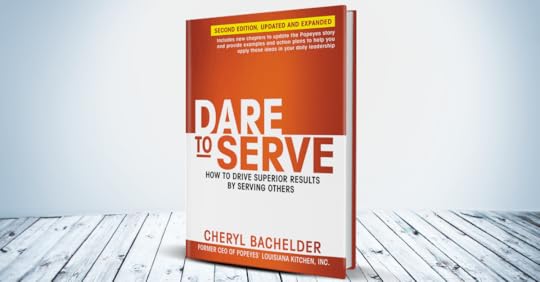
Back in March 2015, we had the privilege of launching the first edition of Dare to Serve, and watched eagerly as it quickly rose to bestseller status. The author’s timeless principles and heart for serving others proved effective not only for her own business, but also in the lives of thousands of others who chose to adopt a ‘servant leadership’ mindset.
This week, we’re excited to launch the expanded and revised 2nd edition of Dare to Serve, where the Cheryl Bachelder shares some of what she’s learned since the first edition, and offers some new insights on the transformative power of having a servant mindset.
Dare to Serve
How do you transform an ailing company into an industry darling? Adopt servant leadership!
In this updated edition of Dare to Serve, former Popeyes CEO Cheryl Bachelder shows that leading by serving is a rigorous and tough-minded approach that yields the best results.
When she was named CEO of Popeyes in 2007, the stock price had slipped from $34 in 2002 to $13. The brand was stagnant, the team was discouraged, and the franchisees were just plain angry. Nine years later, restaurant sales were up 45 percent, restaurant profits had doubled, and the stock price was over $61. Servant leadership is sometimes derided as soft or ineffective, but this book confirms that challenging people to reach a daring destination, while treating them with dignity, creates the conditions for superior performance.
The second edition of this bestselling book includes Bachelder’s post-Popeyes observations, and new examples of how you can switch your leadership from self to serve. Ever engaging and inspirational, Bachelder takes you firsthand through the transformation of Popeyes and shows how anyone, at any level, can become a Dare-to-Serve leader.
Meet the Author
 Cheryl Bachelder is the former CEO of Popeyes Louisiana Kitchen, Inc., a multi-billion-dollar chain of more than 2,600 restaurants around the world. Over ten years, she led a remarkable turnaround of the company’s financial results with a compelling strategic roadmap for growth and an inspiring purpose and set of principles. The results – industry leading performance for the franchise owners and the shareholders.
With more than 35 years of experience in brand building, operations and public-company management, Cheryl has worked at companies like Yum Brands, Domino’s Pizza, RJR Nabisco, The Gillette Company and The Procter & Gamble Company. She has been profiled in the Wall Street Journal and featured on Mad Money; recognized as “Leader of the Year” by the Women’s Foodservice Forum; and received the highest industry award, the Silver Plate, for the quick service restaurant sector, presented by the International Food Manufacturer’s Association. She was also recognized as a 2012 Nation’s Restaurant News’ Golden Chain Award recipient. Today, Cheryl serves on boards, mentors CEOs, and invests in philanthropy.
Cheryl holds a Bachelor of Science degree in Business Administration and a Masters of Business Administration in Finance and Marketing from the Kelley School of Business at Indiana University. She is married to Chris Bachelder and they have three grown daughters.
Praise from Readers Like You
“Cheryl Bachelder pens a powerful manifesto on true servant leadership — one that comes from the heart, forged by discipline, and displayed with grace, depth and humility. Her story is timely, her lessons wise, and her personal example inspirational. ‘Dare to Serve’ should be the playbook for every leader regardless of the size or mission of the enterprise.”
— Chip Bell, 5-star Amazon review
“‘Dare to Serve’ brings optimism to leadership—that coaching and developing your team, stepping out of the spotlight, and leading with integrity and humility can drive results. . . . Full of exercises and powerful reflection, this book is a must read for leaders in all industries.
“
— Sharon Bergquist, 5-star Amazon review
“I have read more leadership books than I care to admit. ‘Dare to Serve’ is one of the most distinctive and refreshing leadership books out there! Not only does [it] offer up a contrarian approach to leadership, but Cheryl Bachelder backs it up with real examples and a true to life transformation story . . . Anyone in or outside business, young or more seasoned in any profession can benefit greatly from her words of wisdom and practical experience.“
— Phil H, 5-star Amazon review
“‘Dare to Serve’ is both a record of delivering outstanding business results and a ‘how to’ in providing leadership to a far-flung organization — with inspiring and profitable results. A ‘quick read’ that will leave you wanting even more!”
— John Cranor, 5-star Amazon review
Learn More
Visit the website to learn more about the book and download a free chapter.
Buy a copy of the book, or leave a short review of it, on Amazon.
Watch the recent webinar to hear more of what Cheryl’s been up to lately.
September 25, 2018
How to Overcome Your Aversion to Self-Promotion

When we recommend clients begin promoting their books and other work on social media, we overwhelmingly get the same response: “Do I have to?” Unless you are a salesperson, odds are, the idea of promoting yourself feels very uncomfortable. You’re not alone. Some people never reach the levels of success they could — because self-promotion feels so onerous.
We want you to be successful, so we offer a few ideas to help you overcome your fear of promoting your work.
What’s the worst that can happen?
This is one of those questions psychologists often pose to help us fight fears. So what is the worst that can happen when you promote your work? You might annoy a few people . . . you might also sell your books, elevate your profile, and land some media or influencer interest. The benefits are worth the risks.
Change your mindset.
Selling books isn’t the same as selling used cars. Focusing less on selling and more on promoting ideas and thought leadership can make the process easier. Your work will make a difference for your readers. Put your promotion behind those transformative ideas and your book will sell itself.
Ignore the spotlight.
We all think everyone is focused on us, but the truth is, they are not. Psychologists call this the spotlight effect. Ignore those ideas, and post and share as frequently as makes sense to reach a larger audience. Same goes for repeating content. Social algorithms and the speed of social will mean very few, if any people, will see your repeated content.
Follow the leaders.
There are so many people who are excellent at self-promotion. Follow their lead. What you’ll notice is that they promote their work on their websites, social media, email marketing, and more. They repeat content. They focus on ideas. They also make no apologies. Check out these excellent self-promoters: Michael Hyatt, Brendon Bruchard, and Marie Forleo.
Will you sell books without self-promotion? Yes, you will. But you’ll sell many more books and get your ideas in front of more people with a little effort. Most people want to support you, they just need to be asked. Conquer your fears, ask for help, promote your work. You’ll be surprised at the results.
What’s your biggest fear about promoting yourself?
September 21, 2018
Transform Your Company: Align Your Business & Get Your Life Back

Why is running a business so difficult? From putting out fires to dealing with miscommunications, email overload, and too many unproductive meetings, it’s a good way to feel like you’re running around in circles. The good news is, change is possible — and the author of this week’s featured book can help you get there.
Transform Your Company
Bring your business into focus. Whether you own this company, lead it, or work in it—it’s YOUR COMPANY! Your financial and emotional health are linked to how functional, or dysfunctional, your company is.
Discover the hidden force pulling companies into dysfunction, and creating frustration. Learn how to implement straightforward tools to identify and remove the real source of your pain. Eliminate the most common behavior that keeps a company from becoming an unstoppable force. Your company starts with you and your immediate team. You can replace the daily grind of fighting frustration with achieving desired outcomes that provide a source of energy.
Transform Your Company reveals critical steps and business alignment tools that will show you what to do when your company is sucking the life out of you. Finally, you can have the company you’ve always envisioned—one that works for you!
Meet the Author
 Alex Vorobieff is the founder and CEO of The Vorobieff Company, a premier business-consulting organization. A highly sought-after speaker, business alignment coach, and the author of Transform Your Company, Alex has helped scores of business owners and successful companies replace chaos with clarity and finally attain the success they’ve always imagined. His methods eliminate the real source of their frustration using business alignment tools (a term he coined after years of working with and investigating different business systems).
After years working with companies, Alex realized the financial and accounting issues he would clean up were always a symptom of a bigger issue: people within the companies were not on the same page to the answers to essential questions and would inevitably end up working against each other. It took time to articulate the root cause, where to start and what could prevent a transformation, but removing the frustration changes a company for sucking the energy from its people and into a source of energy and satisfaction.
In addition to solving thorny business problems, Alex Vorobieff enjoys pursuing his hobby of photography.
Praise from Readers Like You
“Written with humor, personal insights and clarity, this book would be a valuable tool for business and organization leaders. Fantastic book!”
— David Lee, 5-star Amazon review
“Vorobieff shows us a simple model to help business leaders on this journey to alignment by helping readers define their organization’s unique place to begin, the best alignment tools for different situations, and how to choose the best tool for each. This is an enjoyable read that gets to the point and makes things very practical.”
— Neal Woodson, 5-star Amazon review
“This book is insightful — clear and concise — allows an entrepreneur to get clarity on a subject ‘that there is no book for’ (except this one).”
— Amit Kothari, 5-star Amazon review
“Fast growing entrepreneurial companies often face challenges that can slow, hinder or stop growth. This book offers numerous strategies and tactics to help you face those challenges head on. I’m listening to the Audible version for the 2nd time because it contains so much information. A great read.”
— Edward, 5-star Amazon review
Learn More
Visit the website to learn more about the book and download a free excerpt.
Buy a copy of the book, or leave a short review of it, on Amazon.
Watch the recent webinar to learn more about transforming your company.
Listen to the podcast to discover even more tools to advance your company.
September 18, 2018
Why Asking for Reviews is Hard – and How to Make It Easier

One hard thing for many authors is asking people for book reviews. It sounds easy enough, but often it’s deceptively difficult to request. You don’t want to feel intrusive, or sound desperate. And you definitely don’t want to bribe people into leaving dishonest reviews.
But the primary driver of sales today is word-of-mouth. That means honest reviews are what sells about 90% of the time! A variety of reviews also tend to highlight other aspects of the book that the marketing blurb might not have. And often, the more reviews you get — the more you’ll continue to get.
So how do you get more of them?
Don’t Confine Yourself to Launch Week
One of the challenges with asking for book reviews is knowing when to do it. The good news is, there’s multiple right options! You don’t have to wait until launch day — or stop hard when launch week ends.
Start planning for those requests ahead of launch week. How will you be building buzz for your book? If you’re running a giveaway, sharing advance copies with select individuals, or even offering guest posts or interviews about the book’s topic — those are prime opportunities to request reviews on bookseller sites like Amazon! But it doesn’t stop there. Plan to send out a short reminder on the day your book actually launches, and then again (only to those who haven’t yet left a review) a week or two later.
We recommend continued, diligent work in capturing names of those who can help. Make connections with and outline specific asks for each, along with individualized timelines and plans for outreach.
Make Your Ask Compelling
When you do send out your requests, don’t just copy and paste or send out a mass-email to everyone on your list! Nothing will end up in the spam folder faster than an long, impersonal email full of boring details that they didn’t ask for in the first place.
Be personal. Use a mail-merge tool to add people’s first names, or consider sending out individual messages personalized with people’s names and a particular point of connection (shared interest, fellow author, etc.).
Be concise. Keep it 5 sentences or less — just the facts, ma’am! No need to include all the publication details — just the book title, a 1-2 sentence synopsis, the launch date, and a link to where they should share a review.
Be polite. Don’t beg, push, or manipulate. Simply ask nicely and politely, and assume your readers will respond in kind. Most people will, if you give them a chance.
For example, here are few sample requests you could customize to fit your book and audience:
Pre-launch request: “I noticed you share frequent reviews of [your genre/topic], and [your book title] is the newest title in that category. It’s for [your audience] who want to [your intended goal] in [your optimal timeframe]. If that sounds helpful or interesting, I’d love to send you a free copy. All I ask in return is that you share an honest review on Amazon [link here]. If that sounds good, hit reply and let me know!”
Launch day request: “Launch week for [your book title] is finally here, and I could really use your help in making this a great week! A short review on Amazon would mean so much — here’s the link. Could you also take a moment to share a quick tweet or Facebook post with your networks? Here are a few suggested posts.”
Follow-up request: “Have you had a chance to start reading [your book title]? I’d love to know what you found helpful or encouraging. Could you take a few minutes to share some thoughts on Amazon? Here’s the link.”
Think Outside the Box
Get creative. Don’t just ask the same old connections you always reach out to — look at their connections and networks, and relevant groups in your community, top leaders in your field and their organizations, and even ‘professional’ book reviewers via bookseller sites and publishers. The more people you ask — the more responses you’re likely to get in return.
Also, don’t limit yourself to asking for book reviews. As important as they are for increasing exposure, helping with marketing, and showing public support for your book — they aren’t the only thing you should (or could) be requesting. Consider using these same guidelines to ask for endorsements, media introductions, event invitations, and social shares.
The sky’s the limit!
Want more tips like this? Download our new free ebook, Making the Ask, or check out our online resource center for DIY book marketing tips.
September 14, 2018
How To Get People To Endorse Your Book

When we’re talking about doing hard things, seeking endorsements probably one of the top things on the list. We all know they’re important, but who actually likes asking for them?
Getting the right people to throw their name and influence behind your book (or speaking platform) is key to finding success and achieving credibility as an author or thought leader. Praise from reputable leaders in your field lends credibility to your work and provides a credible recommendation for others. Plus, endorsements are a versatile marketing tool — you can use them in your book, on your website, on Amazon or other bookseller pages, and even on social media via share graphics or quotes.
It’s hard to find a piece of the marketing toolkit that carries more weight then book endorsements . . . but how do you go about getting them?
Making the Ask
Making the ask starts with brainstorming your dream team of endorsers. The sky’s the limit here — you can include everyone from colleagues and fellow authors you already know personally, to high-profile leaders in your field who wouldn’t know you from Adam (or Eve).
But where do you go from there?
Don’t worry — we’ve got you covered! Learn how to seek endorsements for your book with our free step-by-step guide, Making the Ask. Seeking endorsements can be an overwhelming process, especially if you’re not comfortable making the ask. We give you a clear-cut plan to get there, suggest words to use in your emails, and provide other tips to make this process easier.
Request your free copy here!
Getting the right endorsements from the right people takes time and patience, but with follow-up and utilizing every connection you can think of, it is possible to land that one person who will give your book the boost you’re looking for.
Want more book marketing tips like this one? Check out our Book Marketing Action Guide for authors at any stage!
September 7, 2018
Why Doing ‘Hard Things’ Makes You Stronger

It doesn’t get easier, you get stronger.
I’m not sure to whom this quote should be attributed; it popped up on my Instagram feed today and I instantly resonated with it.
One good reason to do hard things is that by doing them, they begin to feel easier — not because they are actually easier, but because by doing them, we become more adapted to and more adept at conquering them. Choosing to do what’s difficult makes us stronger to face difficult things.
In my seventh year of business, compared to my first, I am far more prepared to answer tough questions, have uncomfortable conversations, take a stand for what I need, and say no to clients who aren’t a fit. Did these hard things become easier? No, they’re still hard. But because I have faced difficult situations before, I am stronger and more willing to address them now.
Running, by far, is the place where I’ve most clearly seen the way that experience with difficult challenges feels easier because I’m stronger.
I ran a half marathon last Saturday in hot, humid temperatures. The heat didn’t feel as oppressive as I expected, not because it was cooler (if it was, it was only slightly so) but because I’ve run several hot weather races this summer, including a half marathon in June. As I ran into the sun, I had the memory of having tackled, and conquered, those other races. I used my past successful hot weather runs to fuel my confidence.
When I face something difficult, whether a physical, emotional, or business challenge, I draw on past experiences to give perspective.
I identify a similar difficult situation I’ve faced.
I talk to myself about whatever event I faced before, reminding myself that though the present situation feels hard, I am equipped to handle it. I bring specific examples to mind. Whenever possible, I focus on the end positive result I expect and the short-term nature of whatever pain I’m presently facing.
I repeat positive self-talk and phrases as often as necessary.
One favorite phrase for me is “all you have to do is finish.” This one works well for running and work challenges. Any difficult thing I’m facing is nearly always temporary. If I keep running, I’ll get to the finish line. If I keep breathing, the hard conversation will soon be over.
When a situation is really hard, I count to ten.
It’s always possible to get through the next ten seconds, so when a situation feels impossible, I take deep breaths and count to ten and repeat that as often as I need to until the pain subsides. With running, I focus on completing the next mile.
Every time I do something hard, I get stronger to face challenges in the future. My growth and progress are not always outwardly apparent, but I find hope knowing that, as I face struggles, I am getting stronger inwardly, in the ways that matter most.
“We do not lose heart. Though outwardly we are wasting away, yet inwardly we are being renewed day by day. For our light and momentary troubles are achieving for us an eternal glory that far outweighs them all. So we fix our eyes not on what is seen but what is unseen for what is seen is temporary but what is unseen is eternal.” 2 Corinthians 4:16-18
Tell me something! How do you stay motivated to do ‘hard things’ in life or business?
September 4, 2018
Asking for Help Is Hard, But Necessary

You’ve completed your manuscript and found a way to publish, maybe you’ve even created a Facebook page and Instagram account — that’s great! Now it’s time for the part that everyone seems to hate: asking for help from those you know.
In the 17th century, John Donne famously penned, “No man is an Island,” and four centuries later that still holds true. We’ve talked before about the power of asking for help, and like it or not, you will get further with the aid of others than if you try to go it alone. Over the years, we’ve heard every excuse for why people don’t want to reach out to their circle of acquaintances.
“I’m just not a pushy person, it seems so unprofessional.”
Sure, sometimes people can come across as pushy — but not if it’s done right.
“I don’t want to ask people to buy books, that feels like I’m begging.”
It might feel like begging if you’re not used to sales — but if you don’t let people know what you need, they won’t know what action to take.
“Oh, the people on my list wouldn’t be interested anyway.”
Some of the people on your list might not be interested, and you may even see a couple of them unsubscribe — but you never know who will be interested, and you need to let them make that decision.
“My friends will buy it if they see me talking about it on my social channels, right?”
Social media is a great outlet for promotion — but as friend numbers rise and social algorithms change, there’s no guarantee that all of your connections will see your post — don’t leave it to chance.
Experience has taught us that whether you’re looking to build buzz for a new book or create connections as a speaker, the best opportunities often come from those who know you personally, or have observed you in a professional capacity. This means that you need to set aside your reservations and ask for help from the people who really know what you’re capable of doing. Their recommendations could lead to landing the best-seller flag on Amazon or the TEDx talk you’ve been hoping to get. Who you know matters . . . but not if you don’t ask!
Whether you choose to hire a marketing company or you decide to go it alone, the requirement to reach out and ask for their help is a necessary part of any promotional plan. If you’re not sure how to get started, we’ve got three ideas to get you going:
Share this post with 5 friends — you can email, text, or private message it to them – and tell them that you have something you’d like to ask for their help with.
Commit to contacting one person a day with a specific ask –– buy a copy of your book, write a review, recommend you to a friend who’s looking for an event speaker, etc. You may get a lot of “no thanks” responses, but it only takes one “yes” to make a difference.
Sign up for the Book Marketing Action Guide (BMAG) — not only will you receive step-by-step help in sharing your book with the world, but you’ll also have the opportunity to join a group of like-minded authors in the exclusive Facebook BMAG group and receive additional tips and encouragement from the Weaving Influence team.
John Donne’s quote is often cut off before the entire thought is expressed, “No man is an Island, entire of itself; every man is a piece of the Continent, a part of the main;” — take the first step off the island and reach out to your Continent of people. Help is just an ask away.
Tell Me Something! What do you need to ask for help with in your book marketing journey?
August 28, 2018
Metrics are the Secret Sauce of Social Media Success

Peter Drucker said it best, “If you can’t measure something, you can’t improve it.” That’s true in business and in social media. Success in social media depends on monitoring the numbers to identify the content and tactics that deliver results.
It may seem overwhelming at first, but taking a regular look at your social numbers will help you reach your marketing goals much faster.
We’re going to begin a Facebook live series in September to show you where to find your metrics and what they mean.
Until then, here are the 5 numbers we recommend you keep track of. Saving this information in a spreadsheet will help you sport long-term trends and make important pivots.
Fan/Follower Growth
This is the easiest metric to track. Nearly every platform puts the number of connections front and center. By monitoring growth, you can see if your content is connecting with people or not.
Reach/Impressions
Reach and impressions are not exactly the same, but both are worth watching. Reach is the number of people who definitely saw your content. Impressions is a softer number that measures how many people could have seen your social content. We recommend keeping an eye on both, if possible. Not all platforms share both numbers with you.
Engagement
This is the metric we think is the most valuable. Engagement numbers let you know how many people are interacting with your content—liking, sharing, reacting, retweeting. Engagement is the ultimate goal of social media—you’re building a community. You can have tons of fans, but if they don’t interact with your content, they really aren’t very connected to your work and your marketing efforts will struggle.
Top-Performing Content
To take a deeper dive into engagement, it helps to identify your top-performing content. By examining the content that creates the most interaction, you find out things like: when your audience is most engaged, which days of the week are best to post, what type of content your audience likes, what subjects they are most interested in, and more.
Lowest-Performing Content
For the same reason you want to know what works best with your audience, you want to know what isn’t working. If you have content that’s not delivering engagement or significant reach, it’s time to find out why. By regularly identifying the poor performing posts you can determine if it’s topic or timing that’s the factor and you can take corrective action. One example that came from monitoring poor performing content—we determined that posts with hashtags on Facebook have diminished reach. We wouldn’t have discovered that without diving into content performance. Facebook wasn’t putting out a press announcement.
There are hundreds of metrics you can monitor and deep wells you can dive into when it comes to analytics, but we believe these numbers will get you started and help you guide your social media content to ever greater success.
What metrics have you found most important in boosting your social interactions?
August 24, 2018
The Growing Edge with Carrie Newcomer & Parker Palmer
The Weaving Influence team is excited to be a part of a unique new project by Carrie Newcomer and Parker Palmer. This spring, we had the opportunity to partner with them in developing a website that showcases their work and online community with The Growing Edge.
Carrie and Parker invite you to explore an ever-evolving time in the life of an adult, and join the conversation. Whatever your growing edge may be, you’re invited to join this online and in-person gathering of people who seek to grow toward the light, especially in times of darkness.
Carrie Newcomer & Parker Palmer

Carrie Newcomer is a Grammy-winning songwriter, recording artist, performer, educator, and activist. She has been described as a “prairie mystic” by the Boston Globe, and one who “asks all the right questions” by Rolling Stone. Carrie has 16 nationally released albums and two companion books of poetry & essays, A Permeable Life: Poems and Essays and The Beautiful Not Yet: Poems, Essays & Lyrics. Newcomer’s first theatrical production, Betty’s Diner: The Musical, recently produced by Purdue University, is now available to interested theaters, universities, and spiritual communities. Her 2017 PBS special, “An Evening with Carrie Newcomer,” with commentary by Parker J. Palmer, is currently playing across the USA.
Newcomer was a cultural ambassador to India and has traveled to Kenya and the Middle East, performing in concert halls, hospitals, schools, and spiritual communities. She has lent her support to organizations focused on social justice, health and hunger services, progressive spirituality, and environmental preservation. She lives in the woods with her husband and two shaggy dogs.
 Parker J. Palmer is a writer, teacher, and activist. Founder and Senior Partner Emeritus of the Center for Courage & Renewal, he has written ten books, including the bestselling Let Your Life Speak, The Courage to Teach, A Hidden Wholeness, and Healing the Heart of Democracy. Palmer holds a Ph.D. in sociology from the University of California, Berkeley, and thirteen honorary doctorates. In 1998, The Leadership Project, a national survey of ten thousand educators, named him as one of the thirty “most influential senior leaders” in higher education and one of the ten key “agenda-setters” of the past decade.
In 2005, Living the Questions: Essays Inspired by the Work and Life of Parker J. Palmer was published. In 2010, he received the William Rainey Harper Award, whose previous recipients included Margaret Mead, Elie Wiesel, and Paolo Freire. In 2017, the Shalem Institute in Washington, D.C., gave him its annual Contemplative Voices Award. Palmer lives with his wife in Madison, Wisconsin, the Berkeley of the Midwest. His most recent book is On the Brink of Everything: Grace, Gravity and Getting Old.
The Growing Edge
“All around us life is dying and life is being born. The fruit ripens on the tree, the roots are silently at work in the darkness of the earth against a time when there shall be new leaves, fresh blossoms, green fruit.
Such is the growing edge!
This is the basis of hope in moments of despair, the incentive to carry on when times are out of joint and dreams whiten into ash. The birth of the child—life’s most dramatic answer to death—this is the growing edge incarnate.
Look well to the growing edge!”
— Howard Thurman (author, educator, and civil rights leader)
Growth and change is an ongoing pursuit, no matter what point we are at in our lives. It is only by standing still that we will fall behind, as the world grows and changes around us. There is a growing edge at many different points in our lives; maybe it is finding new meaning or purpose, new careers, or new ways to change the world. Each of us has our own path for growth, where the old falls away and the new blossoms. This is our growing edge!
Through online conversations, podcasts, and face-to-face retreats—supported by prose, poetry, and music—together we’ll explore where life is calling us next.
Explore the Website
Join the Conversation and become part of their online community. Readers are invited to reflect on questions and engage in an ongoing conversation.
The Growing Edge is more than an online community. They offer three Retreats each year to explore the deeper questions of our lives.
The Growing Edge podcasts are monthly conversations from Carrie and Parker around the lastest question of the month.
Find out the most information about Carrie and Parker on their news. They share Facebook feeds and their newest press and blog posts.
Carrie and Parker’s collaboration have produced two 90-minute song and spoken word events weaving together words and music to engage audiences to explore questions surrounding their growing edge.
Interested in a new website for your own book or business? Contact the WI web team web@weavinginfluence.com.