Steven Becker's Blog: Steven Becker's Storylines, page 5
March 24, 2023
Wood's Reward
The link to download the entire book to date is:


Wood's Reward
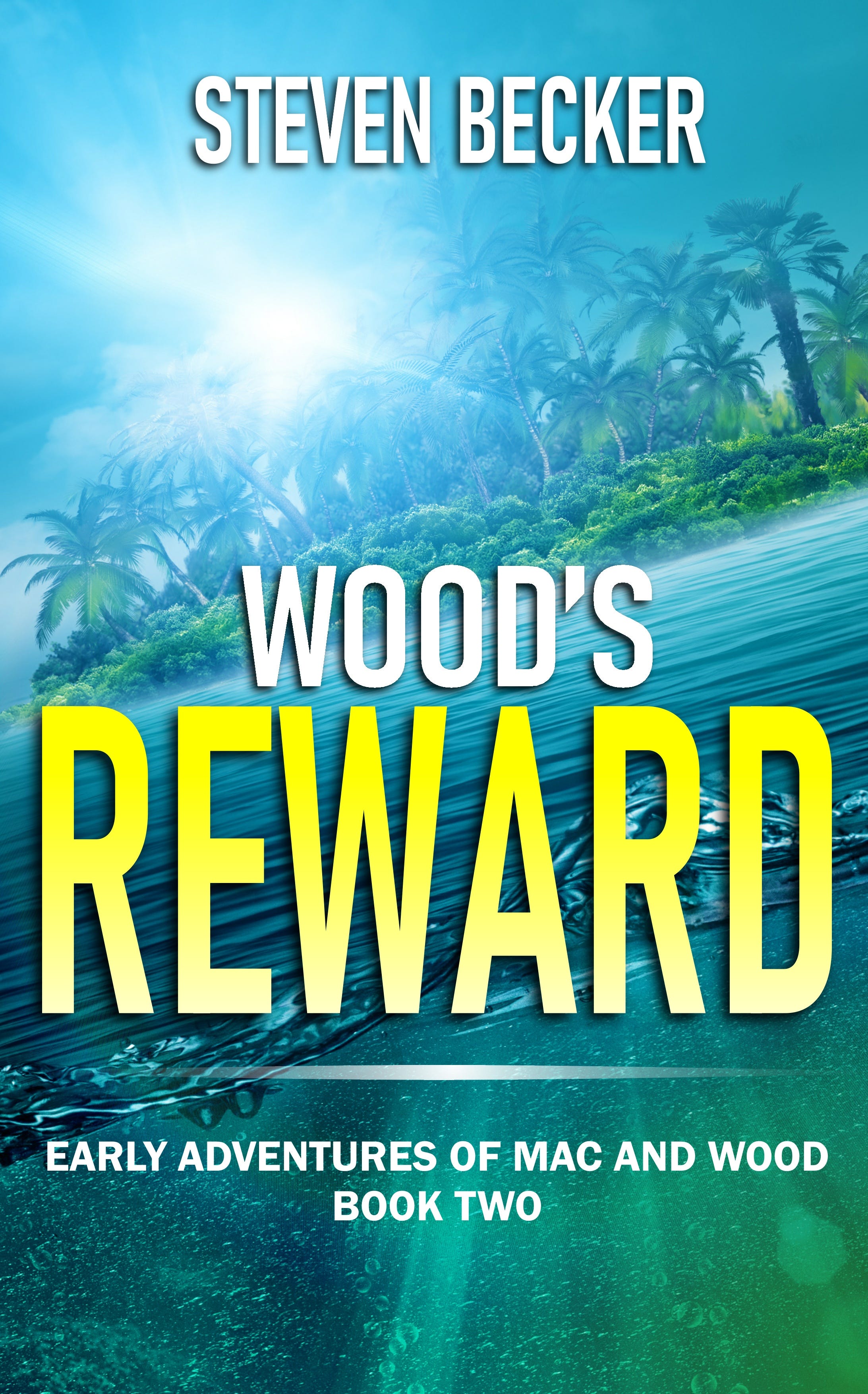
If you need to catch up, here is a compilation of the book to date: https://read.bookfunnel.com/read/arg7vlfwtp
Thanks for reading Steven Becker’s StoryLines! Subscribe for free to receive new posts and support my work.
Chapter 4
“What about the inspection?” Mac asked.
“We’ve got bigger fish to fry.” Wood looked around suspiciously. Clusters of fishermen were on the bridge above and several boats were on the ocean side of the span. None of this was out of the ordinary. People spent hundreds of dollars to get offshore though the most consistent fishing was often around the forty-odd bridges connecting the island chain.
Offshore offered dolphin, which the restaurants had started calling mahi-mahi, a more exotic name for the same fish. Sailfish, wahoo, tuna, and infrequently marlin could be caught in and around the Gulf Stream waters. Every other species common to the Keys could be found around the bridges. Attracted by the structure, depth, tides, and even shade from the spans above, they are essentially reef systems.
Wood eyed a group nearby. People were always interested in the work they did. He only hoped it was the construction work and not the exposed sea floor that held their attention. Finally, he dismissed them as just curious.
“A little paranoid?” Mac asked.
“Got something in the truck to show you.” Wood was superstitious enough to not even say the word “silver” so close to where they found it.
“Whatever. I’ve gone about as far as I can until you call the inspector.”
Wood moved from the gunwale, where he had been watching the activity around them, to the two half-circles Mac had assembled. He checked a few welds and nodded, the best praise he usually gave. “I’ll make the call. See if we can get him out here tomorrow.”
“You want me in the morning, then?”
They would be lucky if the inspector gave them a window of time. Wood would have to be on hand to shuttle him back and forth to the ramp, but Mac would be superfluous.
“Got another little project. Might want to be here at first light.”
“This have something to do with what you have in the truck?”
Wood nodded again, checking around as he did so.
“Alright.” Mac started to clean up the tools and materials. “Give me a minute and we’ll see what this secret of yours is.”
Wood snorted and grabbed a beer from the cooler. He glanced over at Mac, who shook his head. “You need to relax more. Maybe get a girlfriend or something.” Wood sat on the cooler and opened the can.
“I could say the same for you.”
Wood held up the can. “This is all the company I need.” He took a long sip and watched Mac put the tools in the ten-foot container secured to the deck. He closed and locked the door, then stacked the steel cutoffs. “You want to take these back now?”
Rebar was mostly made from recycled metal. Wood would accumulate a load and take it to the transfer station along with his empty beer cans. “It’ll keep.”
“Good to go, then.” Mac wiped his hands on his coveralls.
Wood gave the barge a once-over to make sure everything was locked and secured then pulled the painter to bring the skiff closer. The two men boarded the skiff and were soon at the ramp, where Wood tied off the boat and grabbed the keys.
They stood at the truck a minute later. Wood glanced around as he opened the passenger door. “Come over here. Don’t want the world to see.”
Mac shuffled forward and watched over Wood’s shoulder as he unwrapped the bar. “See that?” He pointed to the exposed silver.
“You me to go down and have a look?” Mac asked.
“Gotta do it during the day. Sunrise suit you?” Night diving was also a possibility. Technically the conditions were better for finding things. With only a beam of light to focus the diver’s attention, it was often less distracting than during the day. The problem was that with the clear water, they could be easily observed by a curious fisherman or even a passerby.
“Okay. Bring the hookah rig.”
“Good idea.” Comprised of a long air hose fed by a gas-powered engine that sat in an inner tube, the rig allowed divers to work shallow waters without the burden or limitations of a tank.
Mac closed the door and Wood watched as he walked back to his truck. Travis left the lot, turning left to head to Marathon. Wood turned right. His trip was considerably shorter, and he reached his house about ten minutes later.
The house was quiet and had been since Mel had left for college about five years ago. That didn’t bother Wood. He had been done with his fellow man for years. Travis and Ned were the only people he could tolerate for any kind of time and even then, they could get on his nerves. He liked to joke that he only had one, but it was pretty much the truth.
Wood made himself a sandwich and grabbed a glass of water. Though some thought so, drinking beer wasn’t an all-day affair for him. A couple during the day helped take the edge off. He’d learned a long time ago that there was no future in getting drunk, especially drinking at night.
After eating, he loaded the hookah rig and several boxes of supplies they would need for tomorrow and headed to bed.
Mornings usually hurt. Even without drinking, the first few hours of the day were often painful. Between what the doctors said was arthritis and some kind of stomach ailment, it was usually a solid hour before he settled and that was on a good day.
His mood wasn’t any better. Optimism wasn’t his thing. Wood had learned a long time ago that disappointment was the norm. Despite the feeling, he was enthused when he pulled up to the boat ramp. Travis arrived less than a minute later. Wood hauled the hookah to the edge of the ramp and went back for the supplies. Mac met him at the truck and together they loaded the skiff.
They brought the supplies out to the barge and Mac grabbed his diving gear. He took his wet suit, mask, fins, booties, and a weight belt, leaving the cumbersome BC and tanks behind.
“You have a plan?”
“Start at the beginning. We’ve got no idea if the bar you found is the only one or if there’s a wreck down there.”
“We would have seen anything when we checked out the pilings.”
“Only one way to find out.” Wood started the engine on the hookah and set it over the side, attaching the inflated inner tube with a line. He set the required dive flags mounted to a stick of PVC in the rod holder.
Mac geared up and slipped over the side. Wood glanced around. A few fishermen were wrapping up their night trips. They didn’t appear to be interested in the activity on the water. Otherwise, there was little traffic on the roads or water. He sat back and watched the dive light, which showed Mac’s location. As the sun climbed in the sky the beam became less visible, leaving the hookah rig as the only indicator of where Mac was working. With the bridge blocking the sun, this was the perfect time for a clandestine search.
The bubbles told Wood whether Mac was working or looking. He’d taken a steel flat-bar down with him. After a hundred years on the bottom, the silver bars—or anything else—would have become embedded in the sea floor. A good eye and a prying device were required to yield results.
A flurry of bubbles broke the surface, telling Wood that Mac had found something. He peered over the side, but with the angle of the sun was unable to see anything. The bubbles continued for a long minute. A few seconds after that, Mac’s head broke the surface. He tossed a large lobster onto the deck. Wood was about to call out that it wasn’t worth getting up that early in the morning for a lobster—when Mac’s other hand emerged with another rectangular block.
There was no celebration as Wood took the bar and placed it on the deck under a seat. He glanced around to see if anyone had seen, then at the water. A stream of bubbles greeted him, telling him Travis had gone down to look for more.
Gold fever is defined as the contagious excitement at a gold rush. Wood often thought it was more the irrational way that men acted when enticed by a mix of excitement and greed. Even though he knew the causes and symptoms, there was no stopping the feeling coursing through him. He would have sat here all day staring at the bubble trail and hoping for more.
The sound of his phone ringing brought him back to the present. The device was still new to him, and he fumbled as he removed it from the clip on his belt.
“Woodson.”
“This is Richard Wigner, your engineer. I was told to call you when I got to the ramp.”
Wood glanced over at the mainland, squinting into the rising sun. He saw a lone figure on the seawall adjacent to the ramp.
“Give me a minute and I’ll be over.” He disconnected and yanked on the line connected to the hookah rig. The air line pulled tight as Wood gently brought the air supply to the side of the boat. A minute later Mac surfaced.
He pulled off his mask with a surprised look, showing that he had treasure fever as well. “I’m pretty sure there’s more. What’s up?”
“Damned inspector’s here. We’ll have to do some real work.”
The definition of work was different for miners. When they were successful, it was more like play. When they weren’t, there was still a strange optimism that drove them.
Mac ditched the air hose, allowing Wood to retrieve it. Launching himself with his fins, he slithered over the side of the skiff.
“Gotta move. Clock’s ticking.” He accelerated quickly, almost unseating Mac, who was struggling to remove his wetsuit. He steered a beeline for the boat ramp counting the minutes and how much each one was costing him in his head.
Wood had a grudging respect for some engineers. Most he dismissed, and that included the man standing at the ramp. There are standards in any building trade that experienced contractors don’t need plans or engineers to determine. In residential construction, for example, footer sizes, steel placement, and header dimensions are well known. Underwater construction was more of a specialty, but that was in execution, not knowledge. Wood had replaced enough piers that he knew exactly what size and spacing of the steel reinforcements were needed. It burned him that he had to pay someone to tell him what he already knew.
There were guys who worked outside of the box, exploring new and better ways to get a job done or handle an unusual circumstances. Those engineers Wood respected. The guys like Dick Wigner, as Wood called him, took money for regurgitating work that their betters had done for them.
Wigner went a step beyond and required that his firm do periodic inspections, not in lieu of the county or state inspectors, but in addition to them. Wood added money for the additional inspections, but since the engineer billed by the hour, he never recouped the total expense, or for the lack of work while the inspector was there.
Wood pulled up to the ramp, bringing the bow of the boat as far forward as it would go. Wigner looked at the small gap. They both knew he would have to get his feet wet, and Wood was angry at the delay while he removed his dress shoes and socks—inappropriate attire in the best of circumstances. When the engineer was finally aboard, Wood accelerated hard, more to unsettle the man than to save time.
The thrill of finding another silver bar had already worn off.
Chapter 5
5
Wood was thinking mostly about silver bars and little about ignoring Wigner, probably a mistake considering the inspector’s attitude toward him.
“You know better than to have welded the cages without someone from my firm present.”
The “my firm” part rattled Wood and brought him his attention back to the job at hand. From drawing the plans, through the bid submittal process, Wigner’s firm regularly milked the Florida Department of Transportation. Once a bid was accepted, they turned their attention from the state to the contractor and continued to funnel money from the project. Wigner and his company profited at every step.
“You can see them now. Travis is one of the better welders down here.”
“All the same, I’ll send someone out to observe the rest of the work. Don’t go racing ahead on the concrete, either. We’ll need to perform slump tests and take core samples before you pour.”
Wood shook his head. None of this was new to him, —it just made his job more difficult. Working on land was hard enough. On the water, at the mercy of the seas, it was extremely difficult to coordinate with an inspector on top of everything else.
When his wife had been alive and he had been more social, being around people had mellowed him. Their unfounded opinions and his weariness to fight them had worn him out. He had been better at following the rules of society then. Now, he didn’t care.
Losing his wife at an early age had been a blow that had turned him inward. In the process, he had become more rebellious.
He knew the inspections and bureaucratic nonsense were all part of the job. The problem was, Wood had been around the Keys since the early 1960s. He knew how it construction had once been done and seen witnessed how the bureaucratic creep turned even simple jobs into complex ones. Time and money were both sacrificed for some kind of elusive public safety goals that had never been quantified.
His job was to repair a bridge, not satisfy stupid and often redundant requirements. Most of the original bridges built in the early 1900s still stood, and they hadn’t had to deal with any of these burdens.
In response, he nodded. “You ready for me to run you back?”
“Yeah.” He Wigner moved toward the skiff. “I’m not giving you a pass on the welding. You’ll have to deal with the state on that.”
The state subcontracted the inspection process to qualified private firms like Wigner’s. That meant they had the money to become certified, not that they were good at what they did. Wood was free to choose a certified inspector. The problem was that Wigner had a monopoly on the Keys. Wood would be forced to bring someone down from Miami if he fired the local firm.
“We’ll work something out.” Wood climbed into the skiff.
The sound of the engine , roaring louder than usual, as Wood sped back to the ramp made conversation impossible. Wood amused himself by swerving back and forth several times to avoid a few trap buoys, oversteering to unseat Wigner. He watched the man’s white-knuckle grip on the low gunwales and smiled.
Another string of five buoys lay between the skiff and the boat ramp. Wood steered straight toward the first, as if he hadn’t seen it, and cut hard to port to avoid the propeller slicing through the line. Wigner was ready this time and braced himself, using his feet as well as his hands.
When the boat settled Wood noticed the silver bar had become dislodged from its hiding place under the seat.
The building tradesFollowing the rules weren’t wasn’t the only adversarial part of Wood and Wigner’s relationship. The engineer was a known treasure hunter. He knew what he was looking at.
Wood watched as Wigner reached out his leg and eased the block out of view. The passive- aggressive move meant that Wood had more to worry about than if he Wigner had asked him about it. With that knowledge, a delay in the building process might be to Wood’s advantage.
The only card that Wood held over the engineer was that he Wigner wouldn’t be on the job site unless he was called. That meant if he was there, he was up to no good.
Wood was sure he could get another engineer to approve the welding, which would allow them to install the cages and pour concrete. That would still take a couple of days to arrange. As far as a business move, it was questionable and would cost more money. The chance it gave him to recover more treasure might be worth it.
The bottom of the aluminum hull ground against the rough concrete of the ramp. Wood and Wigner exchanged a look that would have revealed nothing to an outsider. The two men had always been at war. The look confirmed it had escalated.
A large part of the conflict between the two men was personal. They didn’t like each other. Never had, never would. Engineers and contractors fought all the time. In most cases, the spats were professional and not personal. The situation between these two men went far beyond that. A smaller factor, but one which had an overriding effect on the current situation, was the nature of the treasure- hunting business.
Money was at the root of the problem, but larger than -than-life personalities , and their egos played a part as well. Wood considered himself a salvor, not a treasure hunter. The former was practical, the latter speculative. He put up his own money and used his own equipment and knowledge, —although Ned was a part of that, —to locate and recover things of value lost to the seas. His scope wasn’t limited to the 1733 fleet or particular Spanish wrecks—or taking investors’ money.
Wigner operated as a treasure hunter. His setup was legitimate, but his modus operandi, was geared toward bilking investors. In the dozen or so years Wood had known him, he had failed to recover anything of value.
The time wasn’t that unusual. Mel Fisher had taken fifteen years to discover the Nuestra Senora de Atocha. He’d gone broke in the process but persevered. That He was a man with a dream and the determination to see it through. His money, hard work, and a little luck eventually yielded millions in gold and silver. Fisher and his operation were outliers, but his success had defined the business.
The Atocha had been discovered ten years ago , and still yielded treasure. That publicity had propagated a host of copycats and their followers.
Wigner had set up a legitimate company to raise funds for his projects. On the surface, it looked fine, with regular newsletters being mailed to investors giving them hope, when Wood knew there was almost zero chance of them making a profit, let alone recovering their investments.
Wigner had no boats or equipment. His deal was to subcontract local captains to perform sonar scans of the ocean floor. For modern modern-day wrecks, which were defined as steel rather than wooden ships, that method worked. To find a four- hundred year -year-old wooden ship, it was impossible. Wood had dove dived on several old sites and seen first hand what little remained. A ballast pile was usually the biggest clue. A diver would be able to tell, mostly if the stones were harvested from a river and smooth, that it was a gravestone for a lost ship. A surface scan would show a rock pile, with no detail. Cannons and anchors were the other identifiable features, but neither would show up on the scans.
The scans could then be sold to third parties. It was a scam that yielded nothing to the investors, who were paid a share of the recovery. The word on the street was that Wigner badly needed something to show investors. Even if it only ate into the expenses, proof of a find would go a long ways in a world where Mel Fisher’s optimistic “today is the day” phrase is spoken too often.
The moment Wigner’s feet were on solid ground, Wood backed away from the ramp. He turned and accelerated, hoping the rooster tail shot up by the engine would land on Wigner. A few minutes later he was back alongside the barge.
“That didn’t go well,” Mac said as he secured the lines.
“I’ll deal with the inspection problems. We’ve got bigger issues, though. I think he saw the bar.”
“So, he’ll be back.”
“We’ve probably got a few days before I can get an inspector down from Miami that’ll sign off on the welding. My vote is that we try and figure out what’s down there before Wigner can get organized.”
While the Wood’s construction business was a benevolent dictatorship, the two men were partners in the salvage operations.
“We’ll need to wait out the tide before we can dive.”
Wood followed his gaze to the large wake behind the closest piling. “Current’s smoking. Reckon you’re right.”
Piers and channel markers were good gauges for the current. The velocity of the water flowing by them would form an eddy on the backside, evident by the wake of the moving water. Wood judged it to be two knots. At that speed, even a good swimmer would be unable to make headway. One knot was the limit they would dive.
Wood reached into his pocket and removed a folded index-sized card. The tide tables showed the highs and lows for each date at the Bahia Honda Bridge, the closest tide station to their location.
Tides in the backcountry of the Lower Keys were anything but straightforward. Along the reef line and close to the bridges they were more consistent. Because of the channels, banks, shoals, and islands scattered throughout the Gulf side, it could be high tide at the mainland and low tide just a few miles away.
“Slack tide looks to be around noon. How do you want to play it?” Wood asked. He had no where near the experience Mac had underwater. Travis had the training necessary to become a certified underwater welder and had worked the oil rigs off Galveston before heading to the Keys. There were few things he Wood would defer judgment on. This was one.
“I’d prefer to use tanks instead of the Hookah. Might want to change the filters. Got a bad taste. Also don’t like that hose dragging behind me when I’m working around the pilings. That modified scooter might be some help as well.”
“Okay. We’ll head to the house. Tide looks like we can get back on it in about two hours.”
The phase and state of the moon dictated the longevity and height of a tide. During the full moon, the highs are higher, and during a new moon was the opposite. The tides during the quarter moon, which was now overhead, meant that the fluctuations would be in the middle.
They left the skiff at the ramp and used the truck to shuttle the tanks back to Wood’s place. Big Pine Key, where he lived, was just across the Big Spanish Channel, but navigation on the water wasn’t as simple as the two roads he would needed to reach his house. A boat ride to the other side of Big Pine would take the better part of an hour.
Wood owned two neighboring properties, one for the house, and the other for his stuff. Even though it was in a neighborhood, the yard yard—as he called it it—wasn’t out of place with the heavy equipment and blocked- up boats in his neighbor’s’ driveways.
Mac hopped out and opened the gate. The three-foot- high fence surrounding the property was built to keep out the Key deer rather than for security. Wood pulled in and backed up to a small shed adjacent to the detached garage. Mac walked up and pulled the tanks out and set them by the door, where he hooked them up to the tangle of lines and turned on the compressor.
“Is the scooter in here?” Mac asked, heading toward the garage door.
“Yeah, might want to check that it’s charged.”
Mac stepped into the garage, squeezing through the maze of equipment and parts until he reached the bench. The hand-held scooter was manufactured as a means to propel a diver through the water. Wood had redesigned this one to act as a blower to dislodge the sand around pilings. Mac grabbed the three cables which anchored it to the bottom. He loaded the equipment and topped off tanks into the truck and waited.
Wood was in the kitchen, staring at the bridge contract. Most of the legalese was boilerplate, which he had skimmed before signing it. That wasn’t the problem, though. The two paragraphs at the end dealing with the required inspections were.
There was no misinterpreting them and it appeared he had to make peace with Wigner. He’d entered the house guardedly optimistic that the delay would allow them to bring up more silver. He was on the other end of the spectrum when he walked out.
Thanks for reading Steven Becker’s StoryLines! Subscribe for free to receive new posts and support my work.
March 21, 2023
Lobsters and Crabs - Oh My!
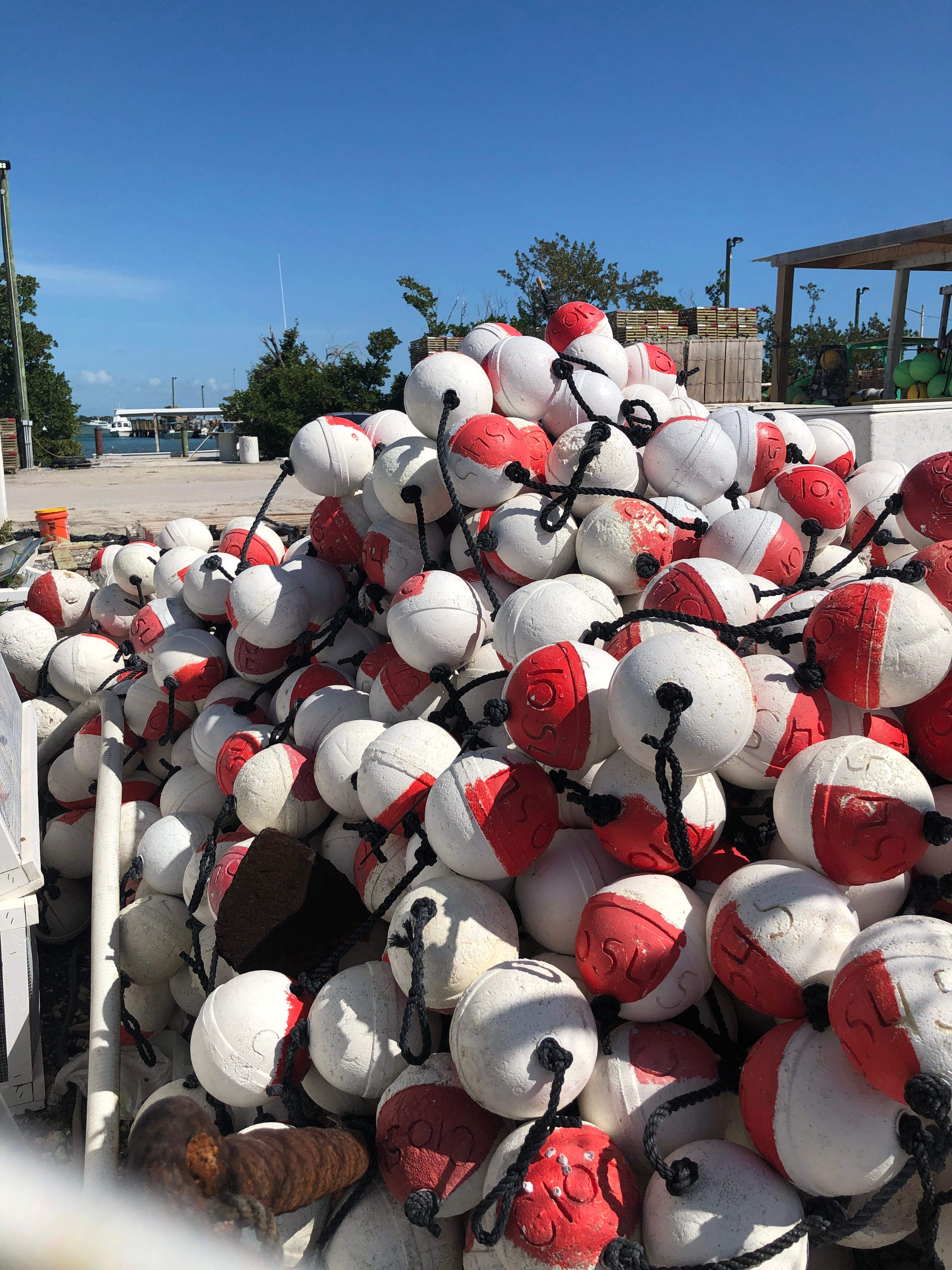 Trap Buoys at Stock Island
The plot and a lot of the action in Wood’s Bones surrounds the commercial fishing of stone crab and spiny lobster.
Sportsman’s Season, a two-day free-for-all a week before the lobster season opens in August and the first few days of opening are well known in the Keys. The relatively shallow and protected water that lobster inhabit make it a fun family activity.
Thanks for reading Steven Becker’s StoryLines! Subscribe for free to receive new posts and support my work.
Keys residents also eagerly await the October 15th opening for Stone Crab. Recreational anglers are able to fish five traps each.
I’ve done both with some success.
Although there is plenty of fodder for stories about the opening of lobster season, Wood’s Bones features the commercial side of things.
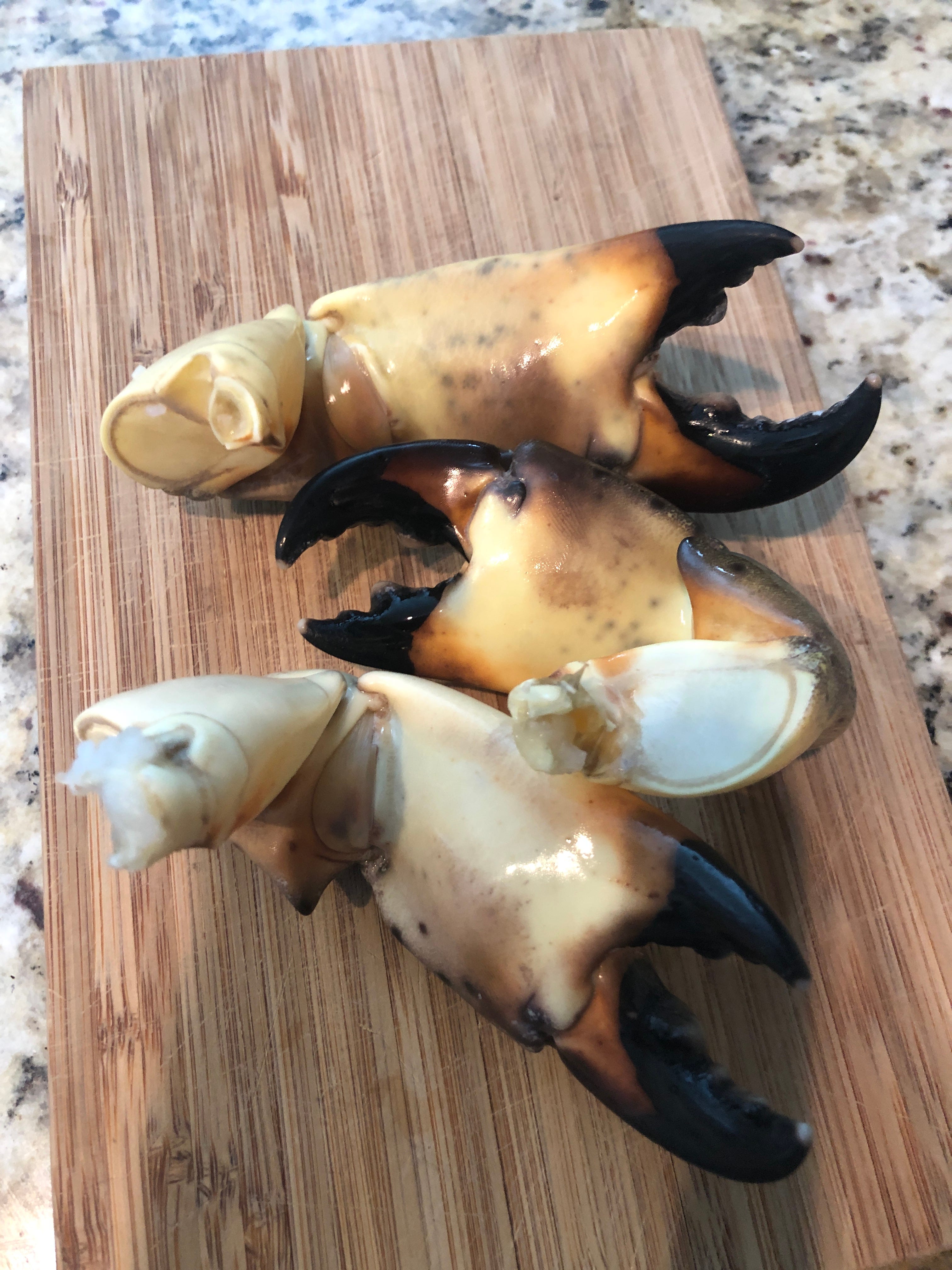 Stone Crab from our traps
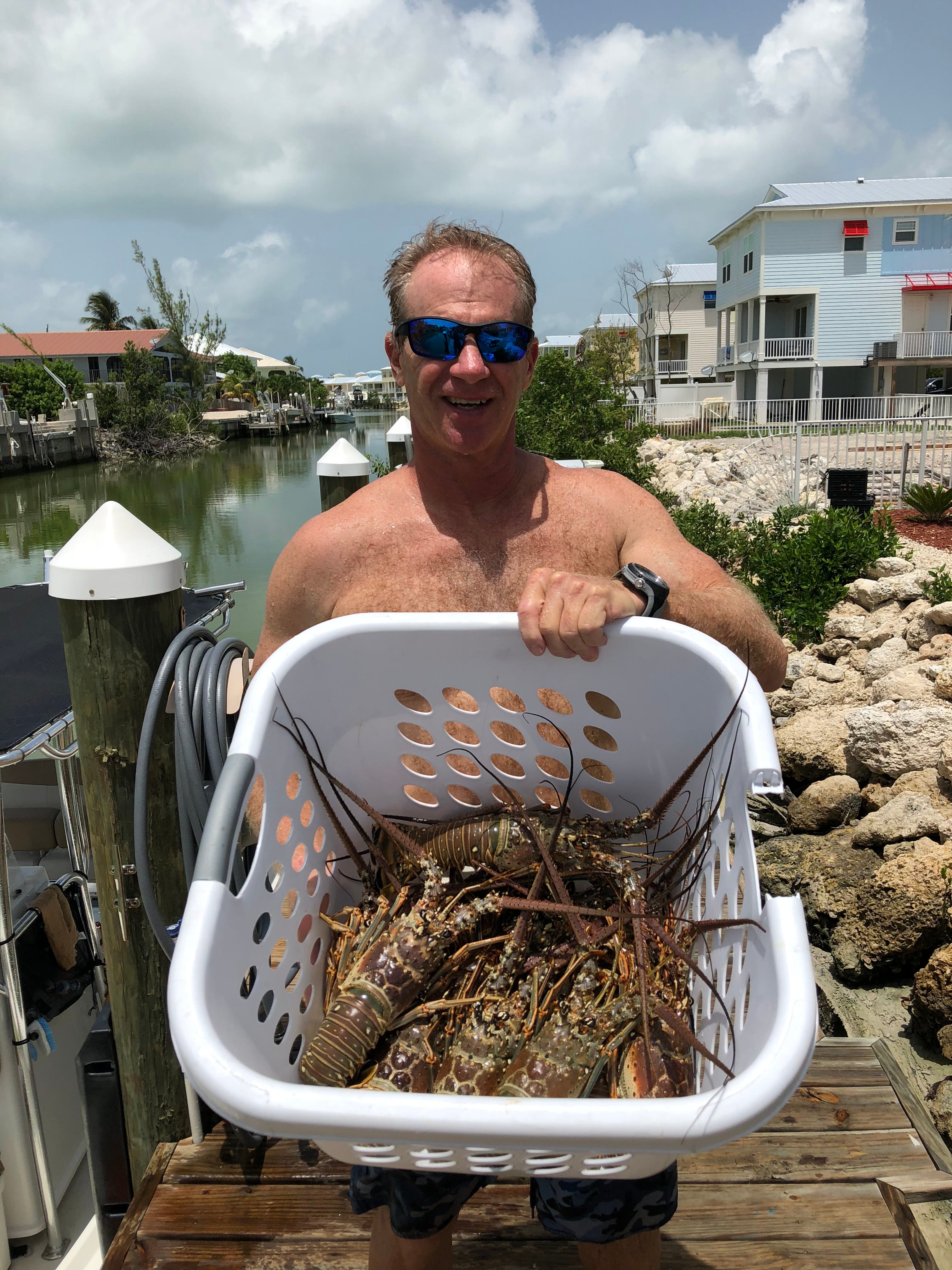 A two-person limit
The waters of both the Atlantic and Gulf sides of the keys are cluttered with colorful buoys from August through May. Many people think they are a nuisance, which they are, but they also tell a story.
Though heavily restricted, commercial fishermen with the proper tags and licenses do well with both lobster and crab. With overlapping seasons many fish for both, though the techniques and bait differ.
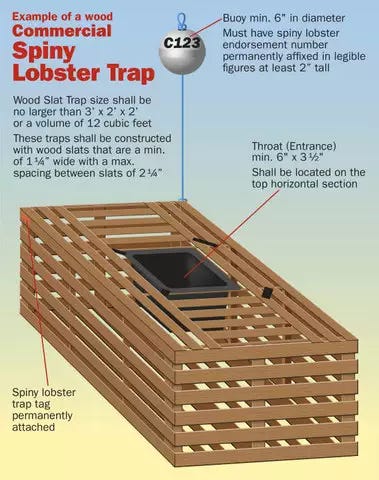
Lobster traps are larger, 3’ x 3’ x 2’ and are baited with short (juvenile) lobster. The spiny lobster is a communal animal and the smaller lobster and the structure and apparent shelter of the trap are both attractants. Once the trap is pulled, the lobster are kept alive in large live wells aboard the commercial boats.
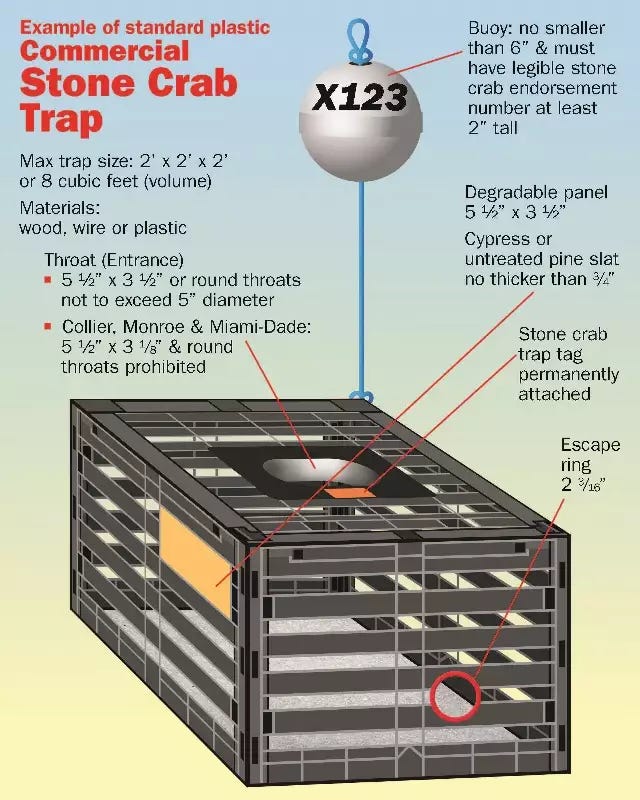
Stone crab traps are 2’ x 2’ x 2’ and are baited with almost anything. Hogs feet are a go-to as they last. I’ve personally had the best success by jamming the trap with fish carcasses. Mackerel and bonito seem to be favorites. The stone crab will eat everything from standard baits to table scraps to - you’ll have to read the book.
Wood’s Bones gets into both methods as well as the identification of the traps and vessels. Each commercial operation has a designated color and pattern for their buoys. These are required to be submitted to the state and displayed in an 8” circle on the boats wheelhouse and a 20” circle on the roof. Also displayed are the saltwater products license, vessel registration, and endorsement number.
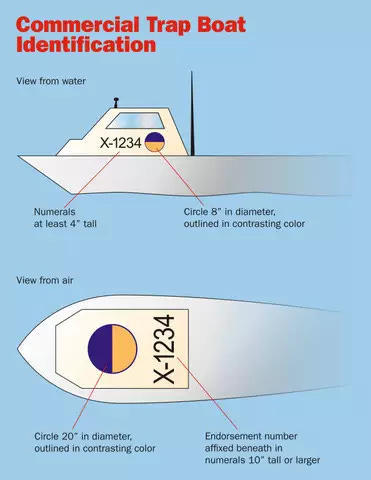
The markings make it clear from a distance it the license holder is working their own traps or as in the case of the story, poaching.
Thanks for reading Steven Becker’s StoryLines! Subscribe for free to receive new posts and support my work.
March 1, 2023
Shameless is Live
My friend Nick Sullivan started Tropical Authors a
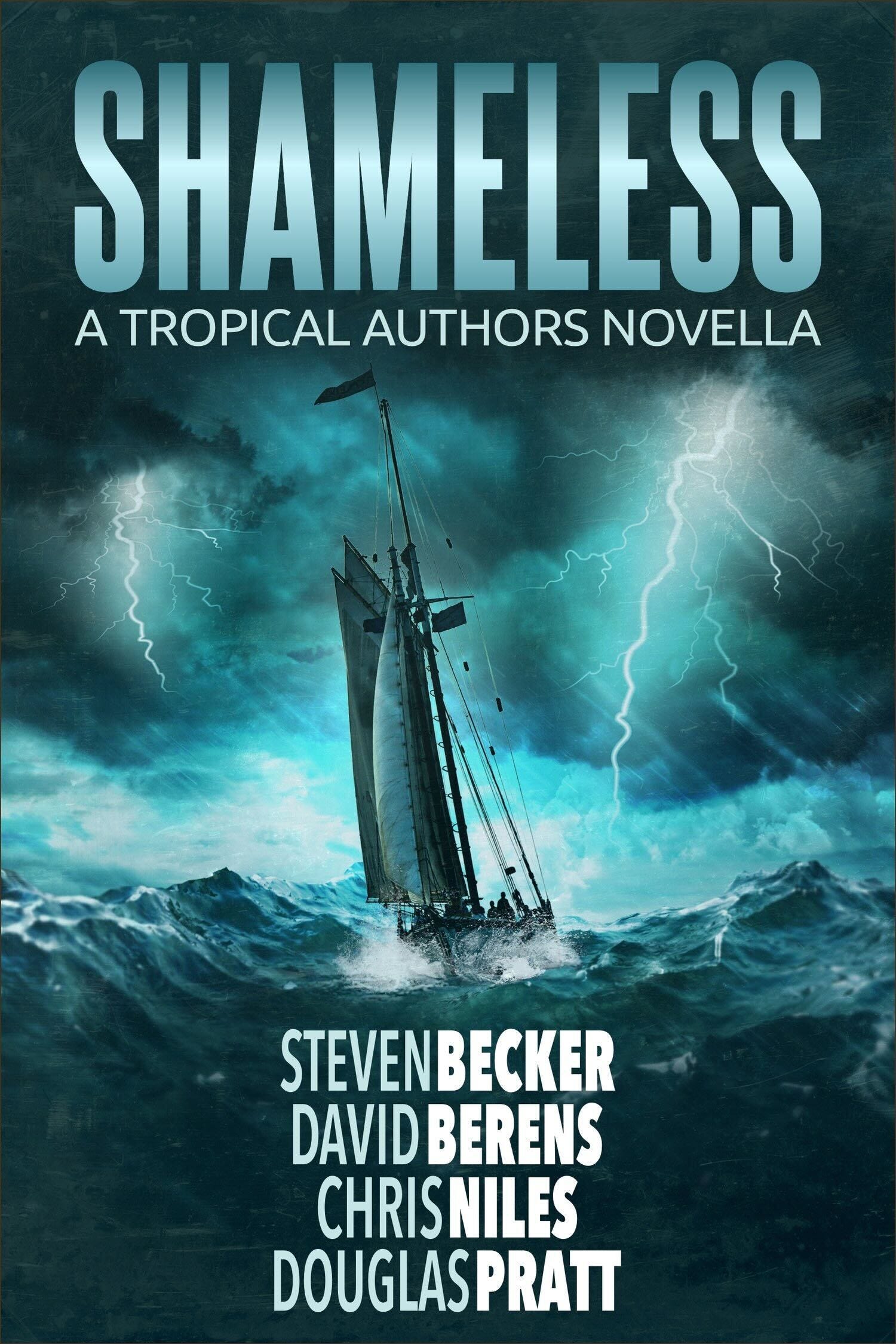
couple of years ago. The genre which the group generally falls under Amazon’s category of “Sea Adventures” was pretty desolate ten years ago when I published Wood’s Reef. What was then only a handful of authors has grown to almost fifty. Nick saw something there and started a website to promote our works. We also have a private Facebook group to communicate. It has turned out to be a great and supportive community.
Thanks for reading Steven Becker’s StoryLines! Subscribe for free to receive new posts and support my work.
In order to pay for and promote Tropical Authors, Nick along with John Cunningham, Wayne Stinnett, and Nicholas Harvey published two collaborations, Graceless and Timeless.
Shameless is the third in a series we call “Less is More” books.
David Berens, Douglass Pratt, and Chris Niles got together almost a year ago and started Shameless.
Mine is the last part where I take over from Pratt’s character Chase Gordon. We chose Stiltsville as the hand off location. The derelict collection of stilt houses, all that remains of the offshore community of the early 1900s is the perfect place for a clandestine meeting or nefarious activity.
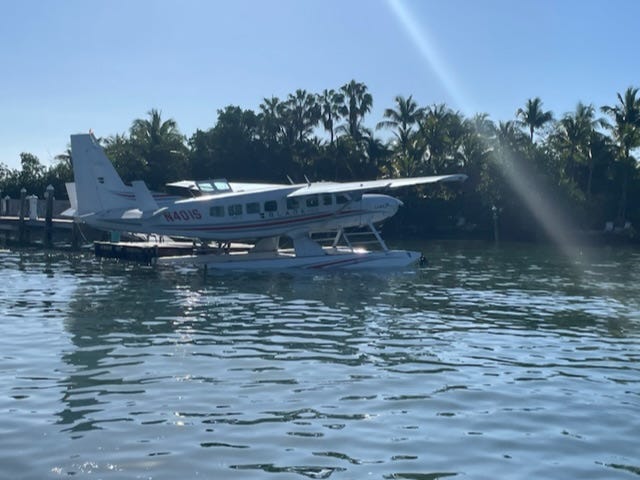
From there Kurt Hunter takes our protagonists Harvey Nickerson to Key Largo where Alicia and Mako help pass him off to Mac Travis for the finale.
The setting for the final scenes are Newfound Harbor and Marathon. The Little Palm Island Resort and the seaplanes and shuttles that service the exclusive clientele play heavily in the ending.
Overall it was a unique and enjoyable experience.
Thanks for reading Steven Becker’s StoryLines! Subscribe for free to receive new posts and support my work.
February 21, 2023
Wood’s Reward
Hey Guys,
Here are the next two chapters in this early adventures of Mac and Wood. I’d originally thought to release a chapter a month. Several of you, pointed out that the story would be too hard to follow in that format. I’ve decided to accelerate things and try and get you at least two chapters a month. I’m also going to compile the book as I go, so it will be easy to catch up. For now you can read chapter one here.
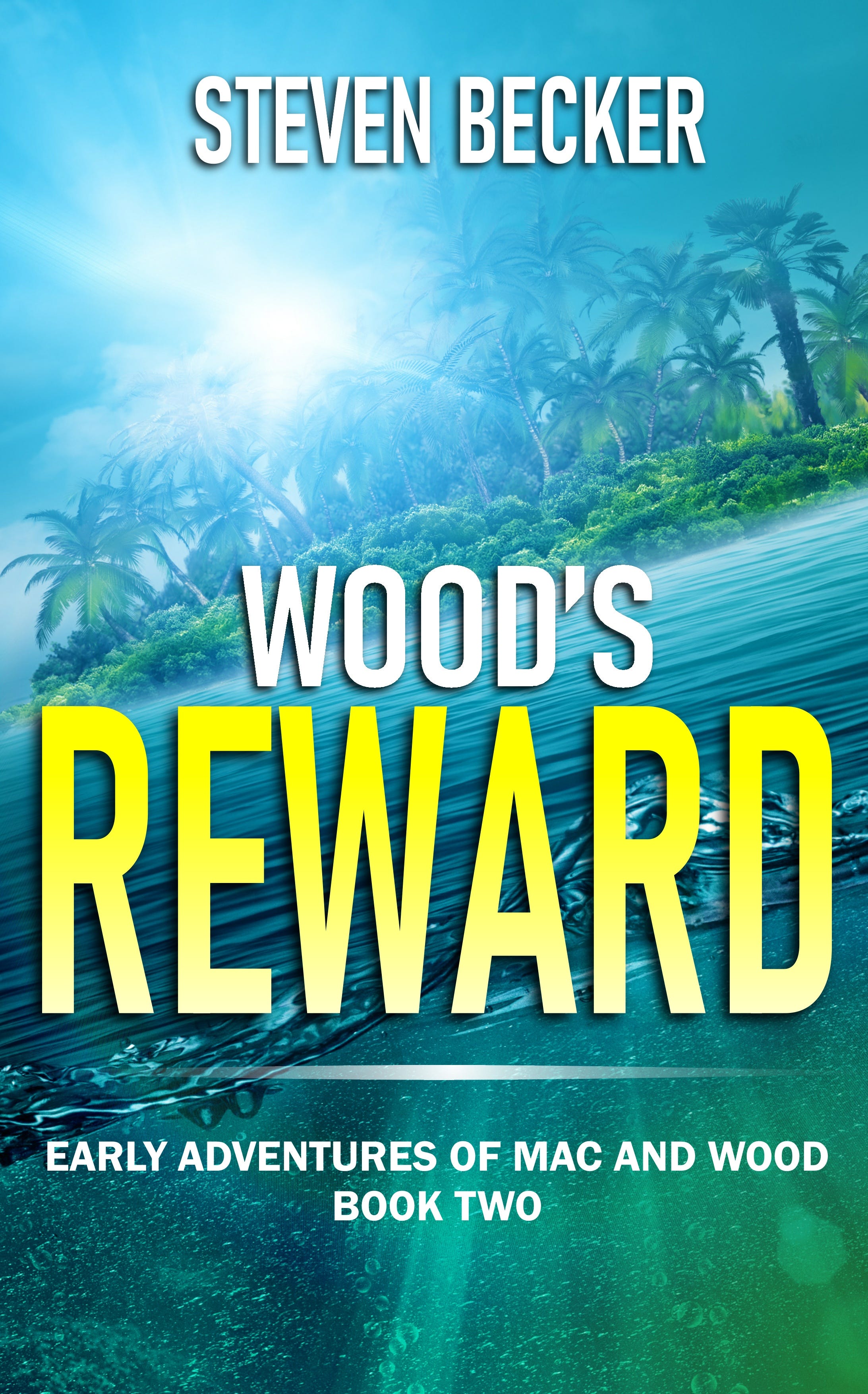
This is an organic project, so I am open for your ideas and suggestion. Let me know if you see a plot twist, have an idea, or spot and inconsistency.
Chapter 2
Wood stalked the aisles of the lumber supplier, shaking his head as he checked the prices. Nothing was cheap in the Keys, especially not when it had marine as part of its name.
He grabbed the stainless-steel hardware and took it to the lumber desk.
“Wood,” The mans said.
“Peacock.” He could have said “Shithead,” but the man’s name made him smile as it was. “What else?”
“That special order rebar come in?”
“Yeah. Should I get some wine and cheese or you gonna be a big boy when you see the
bill.”
“Just put it on my account. That way it’ll blend in with the rest of it.” He pushed the
hardware toward the man behind the counter. The price of the materials was factored into his bids and contracts, but it still irked him that it cost so much.
Peacock handed him a receipt, called one of the yard workers on a walkie-talkie, and directed him to drive around back.
“Yeah, I know. Been here once or twice.” He glanced back at the salesman, noticing the relief on his face. This would easily be his worst encounter of his day, and Wood wouldn’t have it any other way.
“Don’t look so damned happy to get rid of me. Might have to come back.” Wood marched out the door with a smile on his face. He got in the truck and drove around to the loading area behind the building, where he was considerably nicer to the two guys who helped load the epoxy-coated rebar onto the bed of his truck—at least they worked for a living.
Wood followed the access road out of the lot and turned left onto US 1. Traffic was fairly light this early in the morning. It was just a little after seven, early for the island community. Careful to follow the 45 MPH speed limit through Big Pine so he wouldn’t kill any of the precious Key deer, he accelerated once he was on the bridge across Big Spanish Channel. Mac was already waiting at the boat ramp on the other side and helped him transfer the rebar onto the barge.
By 7:30 they were on the water, and a few minutes later Wood dropped the spuds to anchor the barge by the cofferdam. He peered over the steel walls. “See that Travis. Told you she’d hold.”
“I wasn’t worried,” Mac said.
“Might as well get to work, then.” Wood stepped over to the cooler and cracked a beer. His theory was that it was the first and last beers of the day that mattered. Anything in between didn’t count. He tipped the can toward Mac as he tossed him a Gatorade. “Better stay hydrated.”
Mac set the bottle aside and started to assemble the equipment he would need to start to repair the piling. When he was ready, they set it in the bucket of the excavator and moved back to the side of the boat and looked at the work to be done.
“Thing spalled out pretty bad,” Wood said.
“Looks like what we saw when we dove on it. No surprises.”
They had dived on the pilings in question before preparing their bid. Most people think
the concrete does all the heavy lifting in construction, but it is actually the rebar, in this case 3/4-inch-thick steel rods that were welded into a cage. The concrete filled around them and made the structure. Spalling occurred when the concrete shell deteriorated and allowed saltwater to reach the steel, which then rusted. The reinforcement lost its strength, and also expanded which in turn cracked the concrete allowing more water in. Once the process
started there was no easy fix. The new epoxy-coated rebar would prevent that, but it was expensive and hard to work with.
Mac donned his overalls, to protect him from the concrete and ragged steel, and his hip- high waders, then climbed onto the bundle of tools. Wood got into the cab of the excavator. The machine started with a belch of black smoke. He waited a minute while it warmed up, then glanced over at Mac, who gave him a thumbs-up and lifted the bucket from the deck. He swung the boom outboard and lowered the bucket with Mac and the tools into the cofferdam.
He would have preferred that Mac had some help—for both their sakes. But after six years, Travis was the only steady worker he’d ever hired. Boy was smart, worked hard, and knew how to fish. The majority of his workforce was temporary—picked up and discarded, usually by mutual agreement, after the job was done. A few were still around and willing, but he’d have to go on a bar crawl to find them.
The sound of the jackhammer meant that Mac was at work. “Dangerous” was an understatement for this kind of work, and this was a tricky part. They’d shored up the adjacent sections of the bridge to take the weight from the piling, but those supports were in the water. The real concern was the effect of the vibration of the jackhammer as Mac chipped the concrete away from the corroded rebar. The action of the jackhammer transferred to the bridge through harmonic waves, which caused the structure to resonate in the water. The sound worked on the rebar as well, creating waves of its own, but at a different frequency. The disparity was enough to create leaks in the temporary steel walls. Small leaks were fairly common and wouldn’t be a big deal, but a breech would be disastrous.
Wood sat on the edge of the barge watching Mac working below. He was there for safety, as well as if Travis needed anything. Until the rebar was exposed and cut away there was nothing he could do. That gave him time to think, and when he had that luxury lately his thoughts drifted to the island.
He had plans. Dredging the channel being first. Second was a pair of concrete runners and a winch in the brush to pull his boat out. A house was next. It would be a simple affair. Solar powered and on stilts. The plans in his mind were refined enough that he wouldn’t even need to put them on paper.
The problem was ownership. They, whoever they were, didn’t list those islands in the newspaper. The island fell outside of the Great White Heron National Wildlife Refuge, but he was pretty sure the federal government owned it. He’d thought about hiring a lawyer to figure out how to deal with the bureaucracy, but there weren’t any lawyers he trusted. His best bet was Ned, a friend and professor of antiquities at the University of Florida who lived in Key West.
Ned had helped identify some of the artifacts that he and Mac had found in the waters under the bridges. The channels had been there for years, and the deep-water ones had carried boats from the Atlantic to the Gulf of Mexico ever since the Tequesta Indians had been here. They’d even uncovered an almost intact pre-Colombian Mayan canoe. The guy was trustworthy. One of the few that Wood allowed that monicker.
“You with me or what?” Travis called up from the hole.
Wood snorted and brought his attention back to the work. “What?”
“Who’s going to inspect this?”
“You think I got an engineer in my pocket?” Structural welding needed to be observed as
part of the inspection process. That meant for every hour Mac would be welding, an inspector at two or three times Mac’s hourly rate would be looking over his shoulder. “We’ll get everything ready and weld the cage on the barge. We can do it in two halves and use couplers to put it together down there.” It would be bad enough having an inspector around, let alone inside the cofferdam.
“I’ve gone as far as I can then. Haul me out of here.”
Wood climbed back into the excavator and waited for Mac to load the bucket. A thumbs- up signaled he was ready, and Wood gently eased the bucket out of the hole. He swung it around and set it on the deck of the barge.
“Here’s the deal. I’m going down to Key West to see Ned. You start on the cage. I’ll be back to pick you up in a couple of hours.”
“What about the inspector?”
“Yeah, that’s my problem. I’ll get someone out.” Wood figured that as long as they observed part of the process and could clearly see the rest of the work, they would approve it. He hopped out of the excavator and headed to the skiff.
Glancing back, he saw the spark and flash as Mac began to weld. He pulled alongside the boat ramp thinking he was lucky to have a guy like Travis, someone who cared not only about his trade, but about the business. Once he got the island squared away, he’d decided to consider a partnership. They already split the profits for their occasional salvage work, but this was Wood’s business.
Wood left the boat in the water and took the keys with him. He hopped into the truck and pulled out of the parking lot that led directly to US 1, or the Overseas Highway, depending on who you were talking to.
The ride to Key West passed through Big Pine Key, then Little Torch, Ramrod, Summerland, Cudjoe, and finally Sugarloaf Key. This area, known as the Lower Keys, was mostly residents with some small RV parks and lodges mixed in. Past Sugarloaf the small stores, boatyards, bait shops, and mom-and-pop restaurants yielded to an area that had remained largely unchanged from the early days of pirates and sail. Birds were the predominant population, covering the mangrove-lined shoreline and islands dotting the backwaters on both sides of the highway. It wasn’t until Boca Chita Key, where the Key West Naval Air Station was located, that man held a foothold.
Wood drove through Stock Island and passed over the Cow Key Channel Bridge connecting the Lower Keys to Key West. Wood had been stationed here during the Cuban Missile Crisis. He’d seen the island attempt to transform itself from a navy base to a tourist haven.
The changes didn’t sit well with him. Cruise ships had become increasingly frequent, and Duval Street, once Hemingway’s playground, had turned into Margaritaville with the opening of Jimmy Buffett’s restaurant. The island had gone through enough iterations over the centuries that Wood expected this one to pass as well.
He took a left at the light at the end of the bridge and a right on Flagler Street. Just before the Casa Marina Resort, he took a right and entered a quiet neighborhood comprised of mostly two- or three-story narrow Victorian homes. Bright pastel paint and gingerbread trim hung from every corner and crevice gave the street a tropical feel. From a contractor’s perspective, Wood never cared for the look. Even well-painted wood rotted here. He knew several painters and carpenters who worked house to house keeping them up.
Wood pulled into the narrow driveway, parking behind a bicycle, or actually a tricycle, with a large basket hung behind the seat. He got out and walked to the door.
Just as he was about to swing the knocker, the door opened.
“Son of a bitch, you trying to scare me?”
“Seen you comin’, old man.”
“Don’t old man me, last I counted you were a year or two older.”
“Come on in, then. You could have used that fancy phone of yours to call.”
Wood brought his hand to the holster, hanging next to a pager on his hip. “Damned thing
costs more to use than the gas to drive down here.” Mel, his daughter, had talked him into the cell phone, but he rarely used it. He stepped into the doorway.
Ned led him to the office, a small room facing the street. Floor to ceiling bookcases covered the walls and a desk, overloaded with books and papers, sat in the center of the room.
Wood removed a pile of paperwork from what looked like one of the dining room chairs and sat.
“You find out anything about that property?” Wood asked. “It’s complicated.”
Chapter 3
“The feds are trying to incorporate the island and the Content Keys into the Great White Heron National Wildlife Refuge. That’ll shut you down in a heartbeat.”
Wood looked straight at Ned, as if he was the cause of his problems. “They’ve already got thousands of acres in that thing. Got to be something we can do.”
“You know the pendulum is swinging toward preservation. I’m not sure why that area wasn’t included in 1938 when they set the refuge up.”
“There’s got to be a way to stop them. My place is miles from there.”
“You should stop calling it your place and really stop working on it. Did you get a permit for dredging that channel?”
“Did it on the weekends. No one knows, beside Travis.”
“You’d be surprised. You know what it’s like trying to keep a secret here. Half the commercial guys out of Marathon go by there.” Ned paused. “And you aren’t exactly friendly with that group.”
“I’ve got all the friends I need.”
Ned sighed. He’d know Wood for long enough to see through the posturing. He waited for a long minute. “It’s not lost yet. They’ve got to open this up for public comments before they can do it.”
“Find out the when and where. I’ll be there.”
“Are you sure that’s in your best interest? I think we need more of a plan than you going in and ranting about this or that.”
“You got one?” Wood asked.
“Thinking on something. What if we did let them have the Contents. Like you said, your place is miles from there, while the Content Keys are adjacent to the existing refuge.”
Wood shook his head. “Slippery slope. They’ll come for me after that. Just as soon put a stop to this business now.”
“I hear you, but you’ve got to be patient.” Ned held up his hand. “And don’t tell me you’re playing some kind of long game here, shoot-from-the-hip Woodson.”
Wood shook his head in resignation. “You think it’ll work?”
“I know some people.”
“Maybe you give me some names and I can ... what do you call it, lobby them.”
“We need to do this my way, and by the way, we only have a week to the public hearing.” Wood shifted forward in the chair. “When were you planning on springing that little
tidbit?”
Ned held out his hands in surrender. “How about we just make a plan? I’ve done some
research on these things.”
“I have, too. Who do we have to pay off?”
“Come on, Wood. You want my help, settle down and take it.”
Wood shifted in the chair. “Okay, let’s have it.”
“This is something Mel might be able to help with, actually. She still at UVA?”
“Law school. Don’t know where she got that gene from.”
“Does she have an internship lined up for the summer?”
Wood pursed his lips. “To be honest, we don’t talk about that kind of stuff much.”
“Ask her. If we can get her on the staff of the chairman of the Senate Environment and
Public Works Committee, it would be helpful.”
“I’m not sure I want to lay this on her. She seems to want her own life.”
“She also likes to get her teeth into things and if she agrees, there is no one better. That
work she did with me for her senior project was impressive.”
“Apples and oranges. She likes to preserve things—like my island. I don’t think she’d be on my side.”
“Try. She’s also against government overreach. This could be seen that way.”
“Can’t hurt to ask. What can I do?”
“Nothing stupid. Stop working out there.”
Wood sat still for a long minute. “Alright. We’ll play it your way—for now.”
“Good. This is the right way to handle this. Now, about that artifact you brought down
last week.”
“Worth anything?”
Ned cocked an eye at his old friend. “It’s not always about the money.”
“Just mostly. Come on. What did you find?”
Ned stood and moved to a bookcase, where he took down a small, rectangular-sized
object wrapped in a cloth. Holding it in one hand, he moved a pile of papers out of the way and placed it on his desk.
“You found this in the Big Spanish Channel?”
“Right. Where me and Travis is working. Pier we just finished up. Third from the center span.” Mac had found the object when they set up the cofferdam.
“Please don’t tell me it’s historically significant or human remains.” Either would involve the state, which would shut down the project.
“It’s not remains, if that makes you feel better, and historically significant is open for interpretation.”
“You gonna tell me or not?” Wood asked.
Ned removed the cloth that was covering the item, revealing the glint of silver from a spot that had been cleaned. “I’d guess there were too many of these for this one to be significant. Might pay some bills, though.”
“After I split it with the state.”
In the scope of the nearly five centuries of European occupation of the Keys, the bridges were relatively new. Built in the early part of the century originally for the railroad, most were going on eighty years old. Finding human remains or antiquities was far from a rarity when working underneath the structures. Pirates and smugglers had used the channels separating the Keys for centuries. Passing through one in the wrong conditions, which usually meant a hard tide against a strong wind, could create standing waves tall enough to capsize the typical-size vessel capable of escaping into the backcountry.
“If it had markings, we’d have to turn it in, but this appears to be plain silver.”
“The whole thing?” The shape of the rectangular bar had attracted Mac’s attention. Even with barnacles covering it, the lines were too straight for nature. “Can you date it?”
“Civil War, from the barnacle growth. That’s good for you.”
“Why’s that?”
“Under the radar. Just hope it’s pirates and not from a wreck. Clean that bar up and no
one will know where it came from, whereas Spanish reales are easily identifiable.”
“People melt them down all the time.”
Ned lowered his glasses on his nose and gave Wood a look that clearly said that was
sacrilegious. “I’m just guessing Civil War era from the growth. Note the use of era. That’s important. Could be years before or after.”
“What’s it doing in the middle of nowhere?”
The glasses remained in place. “In case you forgot your history ...”
Wood sat back, knowing a lecture was coming.
“Florida seceded and joined the Confederacy, but Key West was a Union stronghold,
mainly because Captain James A. Brannon, who might have won the war for the Union, took control of Fort Zachary Taylor. Reinforcements were provided, and the city, though the mood was thoroughly southern, stayed in Union hands.” Ned had slipped into lecture mode.
“Key West was the most strategic point within the confederacy. The federal government holding it during the entire war and its ability it use the island as a naval base was one of the determining factors in the outcome of the war.”
“What’s that got to do with this?”
“Just thirty years prior to the war, Key West was the wealthiest per capita city in the country. That means there was probably a whole lot of gold and silver here. To avoid it falling into Union hands, some of the wealthier people either tried to hide it or ship it to the Bahamas. In either case, with the Union blockade, the Lower Keys would have been a likely place to move things.”
“I guess that makes sense. Pirates and smugglers have been using that area for centuries.”
“Exactly. The Confederacy utilized Florida for cattle and materials. Only 15,000 soldiers were sent by the state. Because of that, they focused their efforts on the interior.”
“Okay, so you’re saying that some rich southern guy from Key West wanted to protect his silver, and we found part of it?”
Ned sighed. “Yes. All you have is an old silver bar. Maybe there’s more, maybe there’s not. I did you a favor and weighed it.”
Wood shifted forward in the seat. After working with building materials and tape measures for years, he eyeballed the bar as about seven inches by three inches, and a little under an inch thick. It was heavy for that size. Ned had scraped most of the growth off and it still felt like it weighed more than five pounds.
“Just over a hundred ounces. Maybe worth five hundred dollars.”
Wood smiled, then stood and covered the barnacle-clad block. “I appreciate this.” “How are you going to handle it?”
“No idea.” He pointed a finger at his eye. “But you can be sure I’ll keep an eye out.” “Let me know if you need anything.”
“Sure thing,” Wood paused. He picked up the bar. “And thank you. Best news I’ve had in a while.”
Wood left the room and waited in the hallway for Ned. They said their goodbyes at the door. He carried the package and placed it on the passenger seat, then walked around the truck and climbed in on the driver’s side. He headed out of Key West.
As he started to cruise back to the boat ramp, he thought about the area where the bar had been found. It was always possible that it was a one-off that could have been tossed overboard from a boat or even a train. The only thing he could do was to take another look and hope there was more—without finding a wreck.
Everyone in the Keys knew of Mel Fisher’s discovery of the galleon Señora Nuestra de Attocha a few years ago. The find had made the treasure hunter rich beyond his wildest dreams. That had, of course, led to other speculators. Wood had avoided the latest gold rush. The problem now was the wrecks themselves.
When a wreck was located, it needed to be reported. That stopped everything until the government sent someone to take a look. Wood’s relationship with Ned and his stature as a marine archaeologist had fast-tracked some of the artifacts that Wood and Mac had found. It was one thing finding a wreck, and another to recover anything. Even before the wreckers prowled the reefs here, the Spanish often hired or forced the natives to dive on the shallow wrecks. Many of the wrecks had been almost entirely salvaged shortly after they had sunk.
Wood knew better than to conceal any findings. Divers, either spear fishing or lobstering, often dove on the bridges. A construction site, shut down for the day or weekend, acted like a magnet. Beside the curiosity factor, the disturbed seabed attracted the lobster, crabs, and fish the divers sought. Concealing a wreck of any size would be impossible.
Wood reached the boat ramp at Scout Key, set the bar on the floorboard of the truck, and locked the doors. Leaving the truck, he hopped aboard the skiff and started the engine. With the barge situated just a quarter of a mile away, he could see the bright flash from the welder.
Usually this would have made him happy, but with the information he now had, he wanted Travis back in the water.
February 6, 2023
Jimmy Buffett is dead to me - Again
Jimmy Buffett is one of my favorite people to hate. I wrote this post a year ago if you are interested in some background. In short, Jimmy Buffett personally, and the business enterprise he has become are at odds with each other. I’m not sure where his moral compass is, but I don’t think it is calibrated.
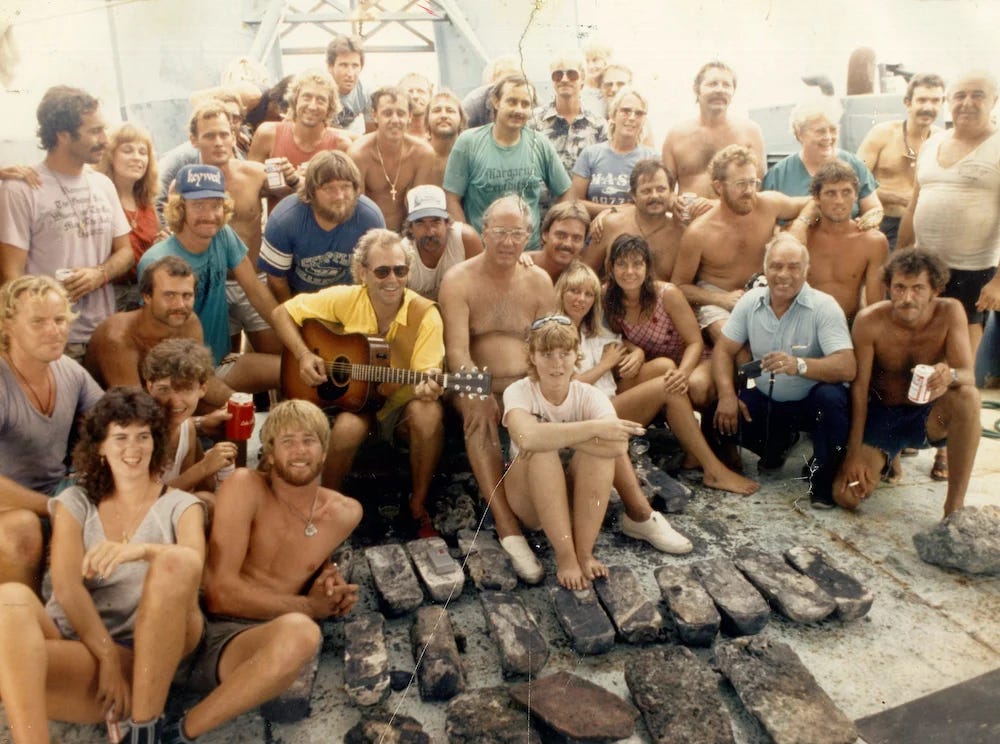 A younger, and cooler, Jimmy Buffett with Mel Fisher
 Jimmy fits into what I call “Old man rock.” I’ve got nothing against guys going out on tour in their 70s and 80s. Fans seem to enjoy seeing the old stars. My personal experience with Elton John and Donald Fagan didn’t impress, but that’s not what this is about.
Thanks for reading Steven Becker’s StoryLines! Subscribe for free to receive new posts and support my work.
This is about Key West, and the contribution one of the city’s favorite sons has made to the conundrum the city has become. Many locations and characters from my Mac Travis Adventure series are in or from Key West. The characters seem to represent the city's current flavor, which seems to be equally divided between going all in on tourism or killing it completely. The chasm was pointed out in a presentation I saw at the Key West theater, a 278-seat venue on Eaton Street. Ironically this is the same place where Jimmy is playing two shows for “residents” to kick off his 2023 Second Wind Tour.
Dr. Robert Kerstein, author of Key West On The Edge: Inventing the Conch Republic spoke for an hour on the history and economic drivers for the city. From wreckers, to a naval base, to a cigar manufacturing hub, to a tourist hub, to a naval base again, to a commercial fishery, to a tourist hub again the Southernmost city in the continental US has evolved to meet the times.
What has remained constant is the unique atmosphere of the city which has had more than its share of artists and writers call it home. The eccentric community gave the city a flavor that became a taste that became a cuisine.
And then came Jimmy Buffett and the cruise ships, which could be the name of his band. In 1985 Buffett opened the first Margaritaville restaurant on Duval Street. The now billion-dollar franchise of restaurants, resorts, and cruise ships has taken a song, which was based on a drink he had in Austin, TX, not Key West, and turned it into a business with annual sales in the hundreds of millions.
With Margaritaville came a new breed of tourists. The cruise ships and SUVs heading south (or actually west) on US 1 were after a tropical feeling. Nothing wrong with that, but the retiree and family visitors are more or less opposite to the old Conch flavor of the island.
Jimmy Buffett’s latest tour will open at the Key West Theatre with tickets being available only in person with a two-seat and one-show limit per person. A local ID is required to purchase and enter. A few days later he has two shows for the rest of us with average ticket prices about $400- per seat (plus Ticketmaster fees of course.) I’m not sure, and can’t find the ticket prices for the shows at the theatre, but let’s assume they are inexpensive.
That he would sell out the 556 seats in a matter of hours is a foregone conclusion. That 278 “locals” had to wait in line for hours to get them is part of the problem. I get what I think he is trying to do by selling exclusively to locals at the box office, and it’s not to avoid Ticketmaster’s fees or why the other shows. I’m wondering how many people who waited in line had already paid for the “public” shows and will now sell their tickets through one of the resale sites, which I think is what Jimmy is trying to prevent.
In trying to be the cool Key West guy that he used to be, Jimmy has lost touch.If he wanted to play Key West, and be honest to his roots, he should do some free shows there, not separate the locals from the tourists, which in the process is excluding locals due to the small number of seats available. I see this as a publicity stunt that Buffett thinks is a cool thing to do. For the 556 people who will see him in the small venue after waiting on line for hours, it might be. For the rest of us, not so much.
Thanks for reading Steven Becker’s StoryLines! Subscribe for free to receive new posts and support my work.
January 17, 2023
Wood's Reward
Hey Guys,
I’m going to be releasing Wood’s Reward, An Early Adventure of Mac and Wood one chapter at a time over the next year. Here’s the first installment:
Thanks for reading Steven Becker’s StoryLines! Subscribe for free to receive new posts and support my work.
 Chapter One
“You know, Travis, the problem with you is that you overthink everything.”
Bill Woodson, known to most as Wood, had to almost yell to be heard over the sound of the pump clearing out the water in the cofferdam they had just erected.
Mac wasn’t about to fight him. He was probably right anyway. The problem was that Wood didn’t think enough, sometimes. Stubbornness, or was Wood called it, persistence, counted for a lot, though. Besides that well-known trait, he was also famous for his brusqueness which he called being brutally honest.
“All’s I’m saying is to let it sit overnight. It’s already near three, we’re only going to lose a few hours of work.” Mac eyed the cofferdam surrounding the old bridge piling. Of the forty-two bridges connecting the 113-mile stretch between Florida City and Key West, along with another couple of dozen neighborhood bridges, he and Wood had either built or repaired half of them.
Mac had been a trained commercial diver certified in underwater welding and with experience working on some of the oil rigs off Galveston when he decided to make a break for the Florida Keys. Six years ago he left his crazy girlfriend and started his journey to the end of the road—Key West, where, as Wood said, the loose marbles ended up. Others who didn’t qualify for Key Weird ran out of speed and settled along the way.
Mac hadn’t reached the southernmost point. He’d landed in Marathon, and though he’d had some misadventures, he didn’t regret any of it.
He glanced at the ragged edges of the metal sheets driven into the sea bottom. “One tide change is all I’m asking. I don’t want to be in that thing the first time the current hits it.” Tides in the southern latitudes were generally small. That didn’t mean there wasn’t current, though. With the Atlantic Ocean on one side and the Gulf of Mexico on the other, the bridges experienced several knots of current.
Wood barely nodded. Mac knew him well enough to see the concession and not push further. The preliminary work of driving the steel bulkheads into the muck and limestone bottom was usually done at slack tide. Any current would push the steel around, making it hard to get install properly. Patience was key, but once the enclosure was completed, they pumped it out and the real work could begin. But Mac didn’t want to be the canary in the coal mine if the construction failed, which often occurred during the first tide change.
“About out of beer, anyway. Ought to be a decent snapper bite if you want.”
“That’d be good.” Mac stood and leaned over the steel projecting from the sea floor. There was only about a foot of water left. “Have one more, then she’ll be ready.”
Wood crushed the can in his hand, grunted and opened the cooler, where he deposited the empty and picked up two fresh ones. He held a dripping can out to Mac.
“Thanks.” Mac took the can, bringing the ice-cold condensation to his forehead before opening it. He wasn’t a big drinker. One at the end of the workday and another later on was about it for him. Wood could drink all day without any visible effect. Beer, anyway. Everyone knew to steer clear when he started on hard liquor.
The two men sat in silence—something they were very good at—drank their beers, and listened to the pump until it started to spatter. Mac checked the cofferdam again and, satisfied, shut off the pump.
The quiet was immediate, though once the ringing in his ears from the pump ceased, Mac could hear the road noise. “We’re going to need fuel for tomorrow.” Fuel was always an issue. When they were working the Middle Keys, Boot Key Harbor was an easy answer. With three gas docks and Mac living off one of the canals, it was convenient. Here at the Spanish Harbor Channel Bridge, which lay right before Big Pine Key, it required some coordination to meet a fuel truck at the boat ramp at Scout Key.
“We’ll dock her over at the ramp and I’ll call Gary. Got enough to take the skiff to the reef—if you’re game.”
“What about the beer?” Bait wasn’t often an issue. With a handful of pinfish traps close by or a couple throws of his castanet, they would have plenty.
Wood rubbed the stubble on his face. He never actually grew a beard, but Mac couldn’t remember every seeing him clean-shaven, either. He removed his ball cap and smoothed down what was left of his hair. To an onlooker it might have looked like the hardest decision he had to make all day.
“Got a pint of something around here somewhere.” He started rummaging through the large toolbox that held their rigging gear.
Mac prayed he didn’t find it.
“How about we head to the fish camp? We can hit one of the close-in patch reefs on the ocean side.” He knew Wood would rather fish out by Upper Harbor Island, deep into the backcountry on the Gulf side, which he considered his personal retreat, but the thought of him being on a boat with Wood liquored up was not appealing.
“Suit yourself, Travis.”
Mac figured he just hadn’t found the bottle. His outward appearance and consistent drinking might give Wood the appearance of an alcoholic to some, but Mac knew differently. Sure, he probably drank too much, but the Keys were known to have booze on tap. The combination of the heat, humidity, and a mañana attitude contributed to the constant state of inebriation.
“Shoot.” Wood glanced at his watch. “We can cruise by the marina at No Name.”
Mac considered Wood settling for anything besides hard liquor a win and started to stow the pump and coil up the two-inch hose. Wood started the twin engines on the barge and headed toward the boat ramp. They left the barge tied off the same piling where the skiff sat. Mac set the two spuds into the muck and freed the skiff. Commuting here was often a choice between a truck or a boat or some combination of both. They usually left the barge on site and used the skiff to go back and forth to Wood’s house on Big Pine, but the need for fuel changed that.
Wood steered the aluminum skiff north, staying in the Big Spanish Channel to avoid the many shoals and flats in the area. He skirted the east end of No Name Key and rounded the tip before cutting back into Bogie Channel. Just under the bridge on the Big Pine side was the marina. They stopped and grabbed a twelve pack, some ice, and a box of squid so they wouldn’t have to catch bait.
The navigation was anything but straightforward running through the channel. The backcountry, or backside of the Keys in this area, was riddled with small mangrove islands, many only humps that barely broke the water at low tide. Numerous small cuts and channels were marked by sticks of PVC and even mangrove branches. The locals knew what they meant, but a stranger in these waters needed to be careful.
Woods steered by memory, with a beer in one hand and the wheel in the other. He squinted into the sun, now low in the sky as he made a turn to the west where Big Spanish Channel merged with Upper Harbor Channel. Deep water lay about a mile or so ahead, but before they reached the two green markers indicating the end of the channel, he cut into an unmarked, snake-like pass.
Mac readied the rods as Wood navigated the channel. Easily visible by the deep green water color, in the low light of late afternoon it was almost indistinguishable from the surrounding flats. The only indication was the motion of the water on the surface.
“Tide’s about right. Might as well try the mouth here,” Wood said as he brought the boat off plane and waited for the wake to pass. He circled the area for a minute before calling to Mac to drop the anchor. Protected by a string of small islands on the south along with the flats on the east and west, the only wind that unsettled the area was from the north, which usually only came with the winter cold fronts, making anchoring an easy task.
Mac dropped the anchor and let out about twenty feet of line. In the ten feet of water it wasn’t a lot of scope, but not much was needed. He watched the water as the boat settled back on the hook. “Incoming tide ought to be good.”
The channel acted as a funnel bringing baitfish toward either end, depending on whether the tide was rising or falling. Within a few minutes Wood had cracked open his second beer and they had bait in the water.
The hits, mostly smaller mangrove snapper, came fast and furious, forcing Mac to switch to a larger hook and cast further away from the boat. Wood did the same and the bite slowed down, but the size of the fish increased. There were soon a half-dozen keeper-sized mangrove snapper in the boat.
As Wood got deeper into his six pack, which was probably his second of the day, Mac noticed him staring off at one of the nearby islands.
Upper Harbor Key had saved Wood’s life back when Mac had first met him, and after being marooned there for twelve hours Wood always kept an interest in the island. About an acre at low tide and half of that at high, the island was densely covered with mangrove and a few larger palms showing overhead. From the right angle it had the profile of a turtle. Flats surrounded the island, except for a small channel on the northeast side.
“That’ll be mine one day,” Wood said,
Mac nodded, more interested in feeling the next bite than having the same conversation again. With his daughter, Mel, away at college, Wood was looking toward the next phase of his life. Between increasing regulations on construction above or below the water in the Keys, and the knowledge that he knew more than the engineers whose designs he was forced to follow, had made him bitter. When Mac met him six years ago, Wood had rarely said no to a job; now he rarely said yes.
That was fine with Mac. The less work Wood took on, the fewer employees he needed, and in the Keys where labor was a crapshoot that was a good thing.
“You listening, Travis? I’m gonna build me a house on that island. Already got a design in my head.”
“Right,” Mac said. He’d let Wood talk if he wanted. There was no stopping him, anyway.
The tide slowed as the sun was about to set and the bite slowed, too. They’d done fairly well and had about ten keepers, all about twelve inches. Nothing great, but the small snappers made for good eating. “Wanna call it?” Mac asked.
“Might as well. Gonna have to do some real work tomorrow.”
“Yeah.” Mac pulled the anchor and shook off the mud and grass before bringing it aboard. Once he’d stowed it, Wood reversed his course from earlier and brought them out of the winding passage.
Instead of heading into Big Spanish Channel, he stayed to the right and followed Upper Harbor Channel. Wood turned out of the channel by one of the unnamed Keys and headed across the flats toward Big Torch Key. The water between Big Torch and Big Pine Key was shallow, an area he wouldn’t have taken a larger boat. The propeller scars were testament to the several times a tourist in a bigger boat tried to follow him out and inevitably grounded.
Once into Pine Channel, he found the entrance to the canal system that led to his house and slowed the boat before turning in. By the time they reached the dock behind his house it was dark. Mac helped stow the gear and hosed down the boat, but passed on dinner. Wood’s mood generally followed the sun, and when it set, Mac was out. Tomorrow he knew they would do it all over again.
Thanks for reading Steven Becker’s StoryLines! Subscribe for free to receive new posts and support my work.
January 13, 2023
Enforcement or Harassment
Two incidents in as many weeks have both aggravated me and given me some ideas for new books. I guess for my readers that’s not a bad thing because I tend to write better when I’m angry. It’s not so good for me personally though—or for our resources.
The plot lines, locations, and characters for my books are often a mix of current events and my personal experience. I spend a lot of time in the Keys which gives me endless fodder for Mac Travis and Kurt Hunter. The Storm series is based on my travels, and the Tides of Fortune stories are a mix of places I’ve been or sound interesting.
We have a place in Big Pine Key. The area is considerably quieter than other areas of the Keys and therefore seldom patrolled by the FWC. The only time in the two years we’ve been there that I have seen enforcement was the opening of lobster season last year. That makes sense because the nearby Content Keys are overrun with divers that week. The other time was the week before Christmas.
We were coming back into Pine Channel after a day of fishing on the reef. There were six of us aboard and the rod holders were full of fishing rods (you can’t have too many rods). The three neighborhoods on the west side of Big Pine Key require passing underneath US 1 at the Pine Channel Bridge. That becomes a natural choke point where an FWC boat was pulling people over. Keep in mind that this was several days before Christmas, a slow week, and within a half hour of sunset.
The FWC boat had someone pulled over when we came within site of it. Everyone slowed, and several boats passed by while the officers were still engaged. We were the next boat when they finished and got pulled over.
“I see you have a lot of fishing rods aboard. Catch anything?”
The FWC is a powerful enforcement organization that over the years has become all-encompassing. They were once tasked solely with wildlife conservation. Now law enforcement, safety and other issues both on and off the water have been added to their responsibilities. Instead of Game Warden, their vehicles are lettered with State Law Enforcement. That makes me angry on a number of levels. One is that instead of observing suspicious activity and using that as cause to pull boaters over, they use safety checks as a tool to search for other infractions.
I showed the officer our catch (Spanish Mackerel) and he let us go with a parting statement that there should be a space between the FL and the numbers on the registration placed on the bow—and that he could have written me a ticket for that. Merry Christmas.
The next incident was last weekend. We went camping near Everglades City (the location for the next Kurt Hunter book). On these kinds of trips, we’ll bring our tandem kayak so we can take our dog on the water with us. Saturday we went into the Ten Thousand Islands, launching from the Everglades National Park facility in Everglades City. Nice facility, and no problems.
Sunday we wanted to paddle one of the rivers and visited the Big Cypress National Preserve Welcome Center for a recommendation. They gave us a handout with several possibilities from which we chose the Turner River. We drove to the launch and unloaded the kayak. When we were ready to launch two volunteers approached and said that we weren’t allowed to bring our dog with us. There was nothing in the literature or any signage at the launch sit to that effect.
The woman cited safety concerns and threatened to call law enforcement if we didn’t comply. I tried to remain calm, appreciating that they are volunteers, but this kind of thing gets me going. I asked if the safety concerns were a law or a recommendation. I was clear that if it was a recommendation, that we are entirely aware of the risks of taking a dog on the water in alligator country, and it should be our choice. Our dog is very good on the water, probably better than a lot of the kids that go. I was also clear that if it was the law we would comply.
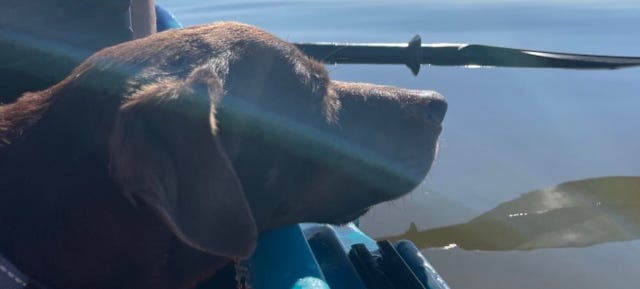
The woman went off to make a phone call to clarify. This in itself was infuriating. All we wanted to do was to take a dog on a public waterway in our own kayak, not a whole lot of other things we could be doing that they might have been totally unaware of.
She came back after about ten minutes and said that dogs are not allowed on the trails in the preserve and that the water is a trail. I had reached the point of acceptance and come up with a fallback plan at a nearby state park and accepted this without a fight.
One of the perks of being a fiction writer is that I get to kill people I don’t like, and you can bet she’ll be in Backwater Glades. At least I have an outlet for my anger.
Enforcing conservation is difficult, but why spend time and resources harassing the group of people more likely to comply with the regulations instead of searching out likely offenders. I’ve known recreational anglers who break the law, but it is usually only one or two fish and generally out of frustration rather than malice. Their usual reason is that after spending time and money to get on the water they often want something to show for it. Bad behavior, but not something that is destroying our resources.
The enforcement agencies and their volunteers also need to know that you can’t expect people to follow the laws if they don’t have access to them. There was nothing about dogs on the water in the visitors center, the literature, or the launch site. A week-old querry on the Big Cypress National Preserve website regarding dogs on the water has yet to be answered.
I’ve always thought that the best way to conserve our resources, which I am a proponent of, is through education. The laws, especially regarding fisheries, are overly complicated with size limits and closures that change regularly. The only way to ensure that you are within the regulations is through an app (Fish Rules).
Regulations need to be readily available if you want people to comply.
The system we now have is too complicated for the majority of recreational folks.
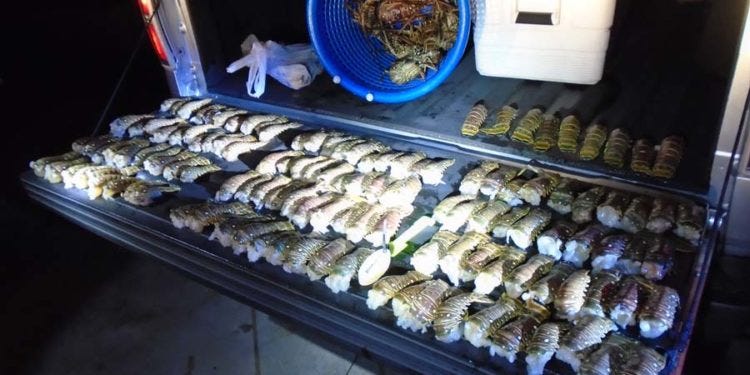
People like you and me are not the ones that are raping our resources. We have more to lose than a couple of undersized or out-of-season fish and are well aware of the penalties. In my opinion, the FWC and the National Park Service would be better served to patrol and seek out infractions. The guys with 127 under-sized lobsters are the ones you want, not the family with one small fish or wanting to take their dog on their kayak.
December 20, 2022
Fishing as Hunting
That brings me to my next rant, which will be part of theme of Mac’s next and adventure.
I’ve grown tired of fishing for dolphin. They are incredibly fun to catch, and not bad table fare, but they’ve lost their luster for me. Part of it was catching the snowy grouper last summer that relegate the previously top-shelf dolphin meat to fish dip. Part of it is my growth as a fisherman, and part of it is the change in migration patterns of the fish themselves.
Thanks for reading Steven Becker’s StoryLines! Subscribe for free to receive new posts and support my work.
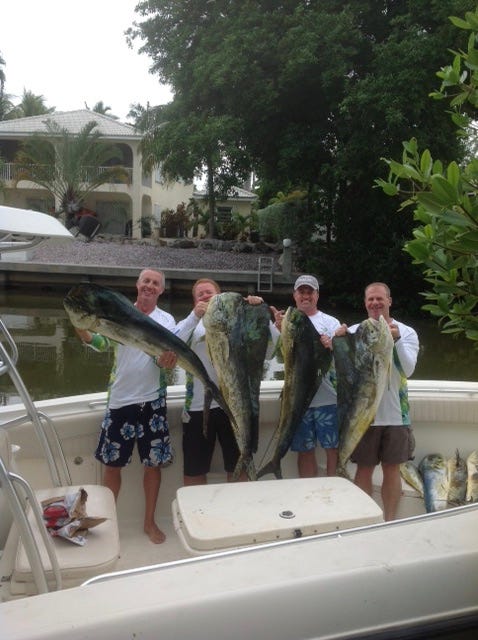 That’s me on the right
What I’ve come to believe is that dolphin are a beginners fish. There are three parts to fishing: finding the fish, getting them to take your bait, and landing them. With dolphin, the first two are random and easy.
Finding dolphin requires finding structure. Either weed lines, debris on the surface, or working birds. You can catch them blind trolling, but the odds are in your favor if you run and gun (actively seek the above.) With REC-90 (ethanol free marine gas) running close to six dollars a gallon at gas stations and a close to eight at marinas, the run and gun option get expensive. On a typical day using this strategy a boat could be expected to cover almost a hundred miles of water. For many boats, especially offshore models, the fuel consumption is about a gallon a mile. Six hundred dollars in fuel plus bait, ice, beer, and food could easily turn into a thousand dollar day.
So, now we’ve found the fish. Next is getting them to eat. Dolphin are the fastest growing fish in the ocean, and are voracious eaters. They’ll prefer one bait to another, but they’ll eat damned near anything. Where some fish require a perfect presentation, to catch dolphin, the only requirement is the bait or lure needs to be in the water. It’s not always quite that easy, but compared to other species it isn’t rocket science.
The latest trend in offshore boats is large center consoles with multiple outboards and towers. These boats are also taking over the charter boat space as well. They can handle big seas, and are fast. Their wider beamed and more comfortable counterparts can’t compare to the older cabin sport fishermen. They also limit finding the fish, the third part of the equation to the captain or the man in the tower.
That leads me to hunting versus fishing.
I’m not a hunter in the typical sense. Though I’m not opposed to it, I’ve just never hunted with a gun. But, hunting is not limited to land. Spearfishermen call their sport hunting.
Where fishing is mostly a passive activity and often accompanied by beer. Hunting is serious business and requires all senses to be in good working order.
Over time, I’ve become more of a hunter as a fisherman. Part of the transformation is that I’m able to put more time into it. If you’ve only got a few weekends to hit the water, go have fun. I have enough days where I can get out by myself and explore. I can check new spots and ideas without the pressure of catching.
For me right now, the reef makes sense. My boat is very economical and with anything less than 4’ seas very capable. One of the benefits of the Keys is that if it’s blowing there is always a place in the backcountry to get out of the wind. I’ve become a hunter. I’m not so rigid that I plan my trips around moon phases and tides, but I know when they are and lower my expectations when I’m not on the water at the right time.
This is the guy that Mac has grown into as well.
Thanks for reading Steven Becker’s StoryLines! Subscribe for free to receive new posts and support my work.
December 17, 2022
Wood's Gamble
Wood’s Gamble went on sale yesterday. For those of you who preorder the book (thank you), it should be waiting for you on your device of choice. As a companion guide, I have compiled the posts I wrote while working on the book.
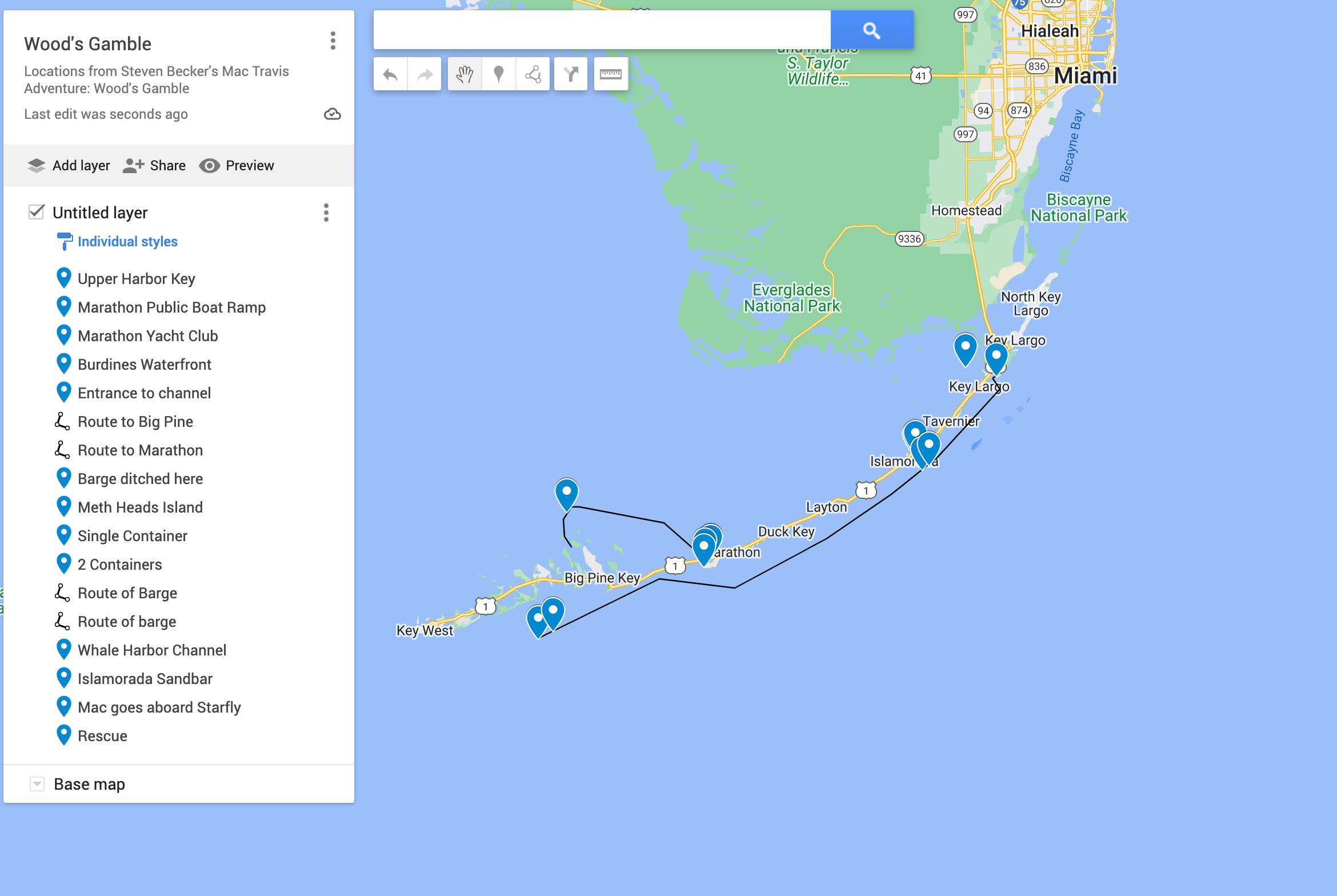
You can also access the Google Map here
I hope you enjoy it.
 Steven Becker’s StoryLinesThe Boats of Wood's GambleI like to try and find unique boats to give my stories some flavor. Wood’s Gamble was pretty easy. I needed a super yacht for an oligarch. Finding that required only a quick Google search “oligarch yacht.” Thanks for reading Steven Becker’s StoryLines! Subscribe for free to receive new posts and support my work…Read more20 days ago · Steven BeckerSteven Becker’s StoryLinesOpen up that exhaustAfter decades and boatloads of dollars to make outboard engines quieter. Mercury Marine has introduced a Sport Exhaust mode to make them louder. A reader sent me this link a while ago, and I’ve been meaning to get it into one of my books. I’m about halfway into the first draft for Wood’s Gamble and have been fine tuning the boats involved in the books. I…Read more3 months ago · Steven BeckerSteven Becker’s StoryLinesWood’s Gamble Changes In the self publishing world, preorders are important. Amazon will usually highlight a new release for about thirty days. The preorder period doesn’t count against that. In order to maximize sales I try and get the next in series on preorder so I can add the link to the current release. Usually I’ll put the release date out six months, knowing I can bri…Read more2 months ago · 3 likes · Steven BeckerSteven Becker’s StoryLinesThe Spelling Tells a StoryI’m in the editing phase of Wood’s Gamble I was alerted by one of my BETA readers that I had misspelled Hawk Channel, Hawks Channel. Through some research he sent and an old map that I have it turns out both myself and NOAA are wrong. The correct, or at least the original spelling is…Read morea month ago · 2 likes · Steven BeckerSteven Becker’s StoryLinesFishing as HuntingThat brings me to my next rant, which will be part of theme of Mac’s next and adventure. I’ve grown tired of fishing for dolphin. They are incredibly fun to catch, and not bad table fare, but they’ve lost their luster for me. Part of it was catching the snowy grouper last summer that relegate the previously top-shelf dolphin meat to fish dip. Part of it…Read more16 days ago · 2 likes · 1 comment · Steven BeckerSteven Becker’s StoryLinesThe political correctness of fish namesI’m in the early chapters of the first draft of Wood’s Gamble. Mac is out on the water running a search pattern looking for signs of a shipwreck in about sixty feet of water. He looks out to sea and sees boats trolling—and then I wrote a blistering rant that probably won’t see the light of the second draft. I do that a lot—it’s where I get a lot of the …Read more3 months ago · 6 likes · Steven Becker