
Frances Caballo's Blog: 10 Twitter Tips Writers Need to Know, page 45
September 15, 2016
Free for Four Days: Social Media in 30 Minutes a Day
 Starting today and until September 18, Social Media in 30 Minutes a Day will be completely free.
Zilch is what you’ll have to pay. How cool is that?
What’s this book about exactly, aside from that catchy title? Keep reading.
I must govern the clock, not be governed by it. ~ Golda Meir
Do you find that you have less time to write or exercise because sometimes — let’s face it — you waste time watching cat videos on Facebook? You know what? We’ve all done it.
What if you instead knew how to use social media without getting caught int the vortex of wasting time of cat videos and chasing links that take you away from your real goal: writing your books?
And what if you no longer had to worry that social media marketing would take hours, leaving you with less time to focus on your writing?
Social Media Strategy Just for Authors
Social Media in 30 Minutes a Day provides a formula that authors can follow to help them save time online without losing their effectiveness or impact.

In just eleven chapters, Frances Caballo helps writers:
implement the same four-step formula that the author uses every day
understand the new formula for saving time
learn how to become a more effective and efficient marketer
keep close by chapters devoted to social media vocabulary, buzz words, and hashtags
learn about the apps that will best help writers save time while using social media
use the best tips and best practices you need to know to successfully market your book and blog
Read these new reviews just found on Amazon:
Good tips on getting started with social media.
This is great for writers who are just starting out on social media. For me, however, I used bits and pieces to shorten up my time using social media and was able to cut back on ones I don’t need to use. This was a quick read for me, and it was easy to understand. Mrs. Fink
Excellent wo
 rk. Straight forward.
Bloggers can quickly apply the tips. Easy and quick read. Note: The free Twitter book mentioned in the beginning is no longer available.I was provided with a complimentary copy of this book so I could give an honest review. The Literary Apothecary
Another great book from Frances Caballo
This is the second book I’ve read by Frances, and once again it didn’t disappoint! It’s great to read a book about social media specifically targeted at authors. I also enjoyed the productivity tips it contained. (I really must try the Pomodoro method!) It’s a great book for beginners or the more advanced social media users. I definitely recommend this book. Clare
 About the Author: Frances Caballo is an author and social media strategist and manager for writers. She’s a regular speaker at the San Francisco Writers Conference and a contributing writer at TheBookDesigner.com and blogger and Social Media Expert for BookWorks, and blogger at Bowker’s Self-Published Author blog. She’s written several social media books including The Author’s Guide to Goodreads, and Social Media in 30 Minutes a Day. Her focus is on helping authors surmount the barriers that keep them from flourishing online, building their platform, finding new readers, and selling more books. Her clients include authors of every genre and writer conferences. Not sure how you’re doing online? Sign up for my free email course.
Practical Tips for Marketing Your Books on the Social Web
The post Free for Four Days: Social Media in 30 Minutes a Day appeared first on Social Media Just for Writers.


September 12, 2016
Social Media Best Practices for Authors
 Once you’ve written your book and built your website, the next step for authors is to learn how to market their books.
Okay, I heard that collective ew out there. Look on the bright side. With marketing comes sales, and with sales comes money. Yeah!
Part of learning how to market your books is learning how to use social media. Chances are, you’ve already dabbled in social media but aren’t quite getting the hang of it. Am I right?
Let’s start with an animated piece that demonstrates the explosive growth of social media. It was prepared by Matt Banner. After seeing this, you’ll be convinced of the need for social media to market your book to a global audience.
Credit: OnBlastBlog
Convinced now?
What you need to proceed is a list of best practices. So for today I rounded up all of my finest advice and collected it into one document just for you.
This is the collection of tips you’ve been waiting for. How do I know? Because when I was learning social media, I would have loved to have the list below.
So without further ado, I present to you my list of best practices.
Facebook Best Practices
 Facebook’s algorithm, in basic terms, measures Likes, comments, and shares. Facebook shares are valued over comments and likes. What this means is that you need to create or find and post content that your readers regularly Like and share and comment on.
Your No. 1 goal will be to get your fans to share your status updates. Here are some general best practices and tips to help you along the way.
Use only your best and most compelling images and most captivating, short (maximum of 90 seconds) videos. Images are important, but they won’t trigger engagement with your readers unless they catch their attention.
Post when engagement occurs, normally from 10 a.m. to 4 p.m. (Follow your time zone and the time zones of your readers. Always rely on Facebook’s Insights as the final guide on this point.)
Don’t forget to post on the weekends when people have more leisure time to peruse their Facebook accounts.
Keep your posts to 80 characters to encourage engagement. Readers like to move quickly through their news feeds.
Don’t ask your fans to Like or read your posts. Facebook will downgrade the visibility of your status update if you include this type of call to action.
Respond as soon as you can to queries and concerns your readers post on your Timeline and private messages sent to you.
Try to post twice daily on your fan page.
Host contests. Use RaffleCopter to keep track of entries.
Promote your colleagues, and if your readers write books, help them as well.
Share blog posts you write, but don’t auto-post from your website. When you use a WordPress plugin that automatically generates a status update each time you publish a post, Facebook will downgrade the post and few of your readers will see it. Instead, use the social share icon on your blog.
Share blog posts that others write if the information is relevant to your readers.
Offer a chapter of your book for free. Post it on Scribd, GoodReads, or your website and provide a link to the chapter on Facebook.
Schedule time to socialize on Facebook. Read your readers’ status updates, and leave Likes and comments or share their posts.
Vary your content. For example, ask your readers what they are reading or how they plan to spend the weekend.
Seek your readers’ help by asking them to suggest names for your characters in a new book you’re writing. Or ask them to help you select a book cover. Involve your readers as much as you can in your books.
Tag your Facebook fans in photos you post on your page and in replies to their comments.
Allocate resources to Facebook advertising, even if you spend $5/day. Ads on Facebook can increase the visibility of your fan page and help you to reach new readers.
Remember to like your readers’ fan pages, if they have them, and leave comments or share their content when relevant.
Join a Facebook group that some of your readers may belong to provided the topic is of interest to you.
Regularly review your Facebook Insights looking for trends, identifying drops in fan engagement, and analyzing posts that triggered the most Likes and comments.
Mix up the days and times you post on Facebook. You’ll, of course, want to check your Insights to see when your fans are on Facebook. But you’ll also want to check for when they are most likely to engage, and the only method to find that out is by mixing it up.
Include some personality. People do not buy books from brands; they buy books from writers, so don’t be afraid to share information that reveals more of your personality.
Don’t be frightened to take a stand on an issue in your niche, genre, or recent events.
Vary your types of posts. Vary the topics, the length, the types of images you use, and the kinds of questions you pose.
Consider freshening up your cover image on a quarterly basis using Canva or PicMonkey.
Host a Facebook Friday networking party that enables your readers to promote their books, blog posts, or other types of news. Get to know your readers and what matters to them.
Drive traffic from other social media sites to posts you want to receive additional attention. This is how: When you click on the date stamp of your Facebook post, you’ll see that your post has a unique URL. You can drive traffic to that post by using that URL in a tweet or LinkedIn post. Here is a post in a timeline; the date stamp is November 2 at 11:20 a.m.
 Twitter Best Practices
Did you upload an image of your cat, dog, book cover, or favorite lake as your avatar? Or, are you an egghead, using the default egg as your avatar? Your avatar needs to be a professionally taken picture of you, the author. If you don’t want to hire a photographer, ask a friend to take a picture of you, and don’t smirk or make a funny face in it.
Create a header image; don’t leave it blank. You can use a variety of free applications, such as Canva, PicMonkey, or Pixlr. You can add your book covers, announce the publication of a new book, or use an image that reflects a scene in your book. You can download a free image from Unsplash or Pixabay, or use a picture you took.
Refrain from writing a senseless bio, littered with hashtags, such as #cappuccino #frappuccino #kittens #puppies #writer #reader #blogger #rescueddogs. Write a professional bio instead. Your Twitter avatar and bio are searchable on the Internet, and you want to use your Twitter profile to advance your author brand and your professional appearance.
Don’t use all 140 characters available to you when you tweet. Instead, keep your tweets to between 110 and 120 characters. Using fewer than 140 characters will give others a chance to retweet you without having to reconfigure your message. And there will be room for your username to credit you as the author of the content.
Are you #doing #this #with #your #hashtags in your #tweets? Refrain from using more than two hashtags because the more hashtags you use, the fewer retweets you’ll receive.
Are you interacting with other authors? If you’re not, you’re missing a huge opportunity to collaborate and co-market books and blogs. It’s important to be friendly on Twitter, meet other authors—including those who write in your genre (perhaps especially those authors)—and promote other authors. The more authors you meet and promote, the more they will suggest your books to their readers.
Never retweet tweets that praise you or your book. I once read somewhere that retweeting tweets of praise is like laughing at your own jokes—when the jokes aren’t even funny. Promoting yourself in this manner is akin to bragging.
Are you ignoring the 80/20 rule? Guess what? Social media, including Twitter, isn’t about you. It’s not even about your book, poetry, blog, or website. Social media is about engagement first and content second. Make sure that 80 percent of your content comes from a variety of sources and that you restrict your own content to only 20 percent of your tweets.
Are you responding to replies or questions? If not, you’re missing an opportunity to engage with your readers and colleagues. Engaging with other users is the single most important aspect of social media. Don’t neglect this important activity.
Never sign up for an application that sends automatic direct messages thanking people for following and directing new followers to your blog or book. These messages are the scourge of Twitter.
Are you tweeting only between 9 a.m. and 5 p.m.? No one expects your account to be a 24/7 operation, but your followers don’t log off when you start preparing dinner. You are tweeting to a worldwide audience, so schedule some tweets early and some late.
How often are you tweeting? Tweeting too often can be problematic for your followers. There’s no set formula for how often you should be tweeting. However, unless you’re the most interesting person in the world, chances are if you’re clogging up their timelines, they’ll get turned off in a hurry. Space your tweets at least two hours apart.
Use caution when punctuating your tweets with exclamation points and capital letters. You wouldn’t yell at your readers in person, so don’t do it on Twitter. (Capital letters in emails are considered shouting language. Some also feel that way about words written completely in capital letters on social media.) Use exclamation points sparingly and when in doubt, one is enough. Or skip them entirely.
Don’t use the application TrueTwit.com. This application promises to prevent spammers from following you, but what it will do is hamper your ability to grow a following. If you want to get rid of spammers, review your followers list every day and block spammers; or use ManageFlitter, which identifies unfollowers as well as inactive, spam, and bot accounts. Avoid TrueTwit at all cost.
LinkedIn Best PractIces
If you are on Twitter, include your Twitter handle on your LinkedIn profile.
 List the books you’ve published, stories that are included in anthologies, and workshops you’ve taught.
Adjust your settings so that you receive emails whenever someone requests a connection or sends you an Inmail, LinkedIn’s term for email.
Join a few groups and become an active participant by sharing your views and expertise, answering questions, and asking others for help. LinkedIn users tend to be active group participants.
The search bar on LinkedIn has a drop-down menu that allows users to search for people, groups, or companies. Use this feature to find other writers, agents, publishers, and groups.
Expand your network by searching for first-degree connections (people for whom you have email addresses, or you’ve communicated with in a LinkedIn group). Note: Unlike Facebook, you can’t connect with people you don’t know.
Invite writers you meet to write a guest blog post for you or interview them on your blog.
Twice a day, or at least once, post an update that includes a link to some great content that others will want to read. The rule is 80% of the time you promote other colleagues or experts in the field and 20% of the time you can post an update from your blog or about one of your books.
LinkedIn expanded its character limit for updates from 160 to 700 words. My advice? Keep your update concise.
If you’ve written a how-to, editing, craft, or grammar book, become an expert in LinkedIn Answers. Anyone with a LinkedIn account can use this feature to post questions and then wait for an expert—like you, perhaps—to provide the answers they need.
If you meet someone through a LinkedIn group who helps you, offer to write a recommendation for that person.
When people connect with you, don’t send them an email (Inmail) asking them to buy your book or read your blog.
Don’t cross-post your tweets to LinkedIn or vice versa. Each network has its own language, and it’s best to write original messages for each social media channel.
 Pinterest Best Practices
Categorize your pinboards for SEO.
Pay attention to image names and ALT texts on WordPress.
Use tools, such as Canva, PicMonkey, or Pablo by Buffer.
Schedule your pictures.
Create a variety of pinboards.
Save images from your readers and colleagues’ pinboards.
If you have a profile, convert it to a business page. If you are new to Pinterest, create a business page.
Use Pinterest to catalog visual writing prompts.
Use Pinterest to plan your next novel or nonfiction book.
If you write nonfiction, create a pinboard for your infographics.
Create a pinboard for your blog.
 Goodreads Best Practices
Create an author dashboard.
Join reading groups.
Categorize books to your bookshelves.
Add book reviews at least twice a month.
Sync your self-hosted blog on your website to your blog on Goodreads.
Join in on the Goodreads Reading Challenge.
Share your favorite books on social media.
Promote other authors you meet on Goodreads.
Create a Goodreads tab on your Facebook Author Page.
Get in the practice of periodically hosting giveaways to raise awareness of your published work. Allocate as little as five books at a time, and when you can, increase the number of free books to 20 or more.
 Instagram Best Practices
Use hashtags here just as you would on Twitter. Although hashtags haven’t taken off on Facebook, you can use them as well.
Don’t be afraid to reveal a bit about your personal life. Images of you take while hiking or cycling or just about on the town add an interesting layer to your brand.
Always be authentic.
Don’t be promotional, unless you’d like to inform users of a contest.
Build your community of readers and colleagues by liking their posts and commenting on them. Be as engaged with them as you’d like them to be with you. What Joanna Penn refers to as social karma.
Let me know what you thought of these best practices and whether they were helpful!
About the Author: Frances Caballo is an author and social media strategist and manager for writers. She’s a regular speaker at the San Francisco Writers Conference and a contributing writer at TheBookDesigner.com and blogger and Social Media Expert for BookWorks, and blogger at Bowker’s Self-Published Author blog. She’s written several social media books including The Author’s Guide to Goodreads, and Social Media in 30 Minutes a Day. Her focus is on helping authors surmount the barriers that keep them from flourishing online, building their platform, finding new readers, and selling more books. Her clients include authors of every genre and writer conferences. Not sure how you’re doing online? Sign up for my free email course.
Practical Tips for Marketing Your Books on the Social Web
Ready for the next step? Learn more about Twitter and Pinterest with my newest ebooks.
 Did you think Pinterest was a “fluff” website filled with DIY and food images?
Think again.
Pinterest, which the founders describe as a browser, can be a powerful source of referral traffic to your blog and designated landing pages.
Yes, it can actually increase traffic to your website and Amazon. But you’ll need to know a few tips and how to optimize your images and account for improved search engine optimization (SEO) results.
I’ve been using Pinterest since 2011 and it consistently ranks third in referral traffic to my blog and landing pages. I’ve come to rely on Pinterest as an essential part of my marketing strategy and you can too.
Have no fear because this 28-page ebook explains it all.
Learn more about Pinterest Just for Writers here.
≈≈≈
 Twitter Just for Writers
is the most comprehensive Twitter eBook I’ve ever released.
Twitter Just for Writers
is the most comprehensive Twitter eBook I’ve ever released.You’ll find:
Easy to follow instructions on how to get started.
A ninja tip on how to devise a password the will never be hacked.
Twitter’s vocabulary list and the biggest list of hashtags just for authors.
A list of applications just for Twitter.
Advice on how to select your username and write your bio.
Guidelines for advanced users.
Information on how to access and use your analytics and settings.
Explanations on why memes are great to tweet.
Demographics on Twitter users so.
And more!
The post Social Media Best Practices for Authors appeared first on Social Media Just for Writers.
September 9, 2016
Indie Author Weekly Roundup September 9, 2016
 I hope you enjoy this edition of the Indie Author Weekly Roundup.
Fall is around the corner but the daytime temperatures still reach into the 80s where I live. And whereas parts of the East Coast have been battered by rain, the hills are brown and drive in California, even Northern California. Let’s hope that changes this winter. But before I get ahead of myself, let’s enjoy the final days of summer, shall we?
Indie Author Weekly Roundup
5 Rookie Mistakes to Avoid When Publishing Your First Book from BookWorks and by Frances Caballo: “We all make mistakes, right? And we learn from them – well most of the time. Joel Friedlander of TheBookDesigner.com frequently tells me that when he talks to new authors about what they should do once they publish a book, he usually tells them something to the effect of, “You should have prepared for your first book two years ago.” Ouch. But he’s right, of course.”
Goodreads for Authors: Why Forbes Calls it The Most Important Networking Site on the Internet & How You Can Benefit! from Lisa Tener: “Consider this quote from Forbes: “Goodreads has become the most important networking site on the Internet . . .” Forbes may be overstating the issue, but it’s true that Goodreads is the most important networking site first for readers, and secondly for authors. Presently, Goodreads has 50 million members, 1.5 billion books that are listed, and 50 million reviews. It’s important to remember that Goodreads members are educated, many have graduate degrees, and they are avid readers. These factors make it the perfect networking site for readers and authors.”
Twitter for Authors: An Interview with Rusty Shelton by Lisa Tener: “I first met Rusty Shelton before Twitter existed – for authors or anyone. We met when my book, The Ultimate Guide to Transforming Anger came out over a decade ago. Rusty’s approach to book publicity was so far beyond anything else out there. And the personal attention he and his colleagues gave our book was far superior to the boilerplate template we received from other book publicists as we looked for someone we could trust with ‘our baby.'”
Using Twitter to Make Powerful Connections as a Creative Professional by Daniel Parsons and from Jane Friedman: “Finding an audience for your books can seem like an insurmountable task when you enter the publishing space with no prior experience. Thankfully, Twitter can help you become not only an engaged member of the community but—in time—an influencer with a loyal audience.”
Pew Report: Overall Book Readership Holding Steady, but E-Books Have Stalled by Publishers Weekly: “Despite competition from an ever-increasing menu of entertainment choices now available to Americans, book readership in America is holding steady, according to a new survey. And most of the book readers surveyed, the report found, prefer to read print books.”
How to get a book trailer made for $30 via Derek Murphy: “I think I spent $250 on my first book trailer, but I don’t do them anymore. There are better ways to market books, and it’s one more thing that sucks up time and energy. However, I have thought about the idea of grabbing some cool movie clips from Video Hive and getting someone on Fiverr to put them together. My friend David actually did that for his book and shared it on Facebook. The following is his post, and trailer.”
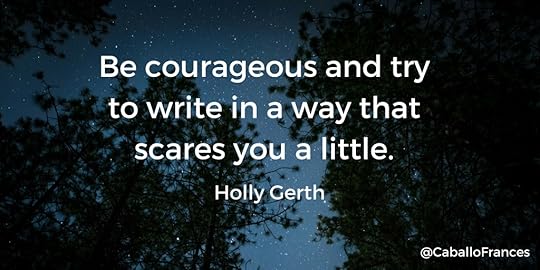
Quote of the Week
About the Author: Frances Caballo is an author and social media strategist and manager for writers. She’s a regular speaker at the San Francisco Writers Conference and a contributing writer at TheBookDesigner.com and blogger and Social Media Expert for BookWorks, and blogger at Bowker’s Self-Published Author blog. She’s written several social media books including The Author’s Guide to Goodreads, and Social Media in 30 Minutes a Day. Her focus is on helping authors surmount the barriers that keep them from flourishing online, building their platform, finding new readers, and selling more books. Her clients include authors of every genre and writer conferences. Not sure how you’re doing online? Sign up for my free email course.
Practical Tips for Marketing Your Books on the Social Web
 You’ll find cheat sheets and my new four-step strategy to controlling your time on social media in my newest book: Social Media in 30 Minutes a Day. In eleven chapters, you’ll:
understand the new formula for saving time
learn how to become a more effective and efficient marketer
find cheat sheets for vocabulary and hashtags
learn about the apps that will best help you save time while using social media.
So start learning how to save time online.
“… 80% or more of the book would be a superior introduction to savvy social media usage for most professionals, even those beyond the writing, or even content-creation, fields.” ~~ Julia A. Bestry
The post Indie Author Weekly Roundup September 9, 2016 appeared first on Social Media Just for Writers.
September 5, 2016
Authors- Want to Reach Millennials & YA Readers? Check out These Facts Plus 10 Tips
 Are you using Instagram?
I usually advise writers that if they’re trying to reach Millennials or the young adult market, Instagram is a must because that’s where these demographics primarily hang out.
Now I have information that furthers my belief in my opinion.
The website Red published an infographic last year. (Yes, I know, it’s not up-to-date data, yet it’s still mind-blowing. Besides, data is often a year old when it’s reported.)
Okay, here we go:
Users share 70 million photos and videos every day.
Since the founders introduced Instagram to us, users have shared more than 30 billion images.
Users Like images 2.5 billion times daily.
There are 300 million monthly active users. (We know that number has ballooned.)
Here’s data that you’ll want to know if you want young adults and Millennials to read your books:
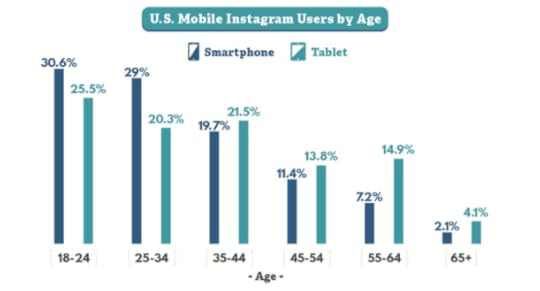
Here are some additional statistics:
20% of global internet users between the ages of 16 and 64 have an Instagram account. However, 50% of those users live in North America.
8% of Canadian users say that Instagram is among their top 10 social media networks.
47% of mobile users who access Instagram are in the United States.
Despite all of these statistics, the truth remains that the top photo sharing sites are Facebook and Snapchat, followed by Instagram:
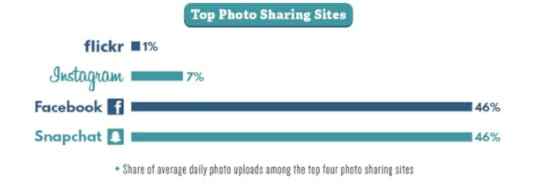
Here are some tips on how to use Instagram:
Make sure that your images are of an excellent quality and not blurry.
Balance fun images with images about your books.
Use Instagram for your book launches.
Write engaging descriptions for your images.
Use hashtags.
Engage with your followers.
Don’t forget to leave comments on your followers’ posts.
Don’t post images that are irrelevant to your followers.
Don’t post too many times a day. Use a social media scheduling app to time your images.
Complete your profile so that your followers will know who you are.
Not on Instagram? I’ve Got You Covered
How to Join Instagram
Profile Image
Joining this network is easy. Sign up by navigating to Instagram.com on your PC, Mac, smartphone, or tablet. As with other social media websites, don’t use your book cover or image of your favorite pet as your avatar. Use the best picture of yourself that you have.
Username
When you select your username, use the name on the cover of your books. Build your brand around your author name, whether it’s your birth name, a name you predominantly use, or a pen name.
Bio
Complete your bio, which Instagram restricts to 150 characters, and add your author website address. Don’t forget to check the box next to Similar Account Suggestions so that Instagram will suggest additional users for you to follow.
As you’re out and about, visiting your favorite café where you write or taking a walk in the woods or a lovely path, snap images with your smartphone. Then, upload them directly to Instagram. Select a filter for your image if the image appears too dark or too bright, and post it.
Now this next step is what makes Instagram simple to use. As you post your image to Instagram, you can also post it to other accounts, including Facebook, Twitter, Tumblr, and Flickr. While I don’t recommend syncing Twitter to Facebook or even Instagram to Twitter (unless you’re selective about what you post), linking Instagram to Facebook is seamless. The comment and hashtags you write for your Instagram post will integrate smoothly with your Facebook profile. This is how to connect your accounts:
Navigate to your Instagram profile.
Tap the gearshift in the top-right corner.
Click Linked Accounts and select the websites you want to sync with.
Are you ready to start using Instagram?
About the Author: Frances Caballo is an author and social media strategist and manager for writers. She’s a regular speaker at the San Francisco Writers Conference and a contributing writer at TheBookDesigner.com and blogger and Social Media Expert for BookWorks. She’s written several books including The Author’s Guide to Goodreads, and Social Media in 30 Minutes a Day. Her focus is on helping authors surmount the barriers that keep them from flourishing online, building their platform, finding new readers, and selling more books. Her clients include authors of every genre and writer conferences. Not sure how you’re doing online? Sign up for my free email course.
Practical Tips for Marketing Your Books on the Social Web
You’ll find cheat sheets and my new four-step strategy to controlling your time on social media in my newest book: Social Media in 30 Minutes a Day. In eleven chapters, you’ll:
understand the new formula for saving time
learn how to become a more effective and efficient marketer
find cheat sheets for vocabulary and hashtags
learn about the apps that will best help you save time while using social media.
So start learning how to save time online.
The post Authors- Want to Reach Millennials & YA Readers? Check out These Facts Plus 10 Tips appeared first on Social Media Just for Writers.
September 2, 2016
Indie Author Weekly Roundup September 2, 2016

This week’s Indie Author Weekly Roundup focuses on book marketing. There are a diversity of related topics and opinions in the selection below. I hope you enjoy them.
Can you believe it that summer is drawing to a close? I’m rather bummed because we dance at outdoor concerts all summer long (at least four days a week) but I guess the upside is that there will be more time to read and write, eh? Here’s to new things to come!
Indie Author Weekly Roundup
Authors: Boost Book Marketing with These 5 Apps – A post I wrote for Joel Friedlander’s blog: “In the words of a certain presidential candidate in today’s online world, images are “huge.” In other words, if content is king, then images are, well, Godzilla. Let me explain. In 2014, mobile marketing took over online navigation. People who surf the web using a desktop computer are in the minority. What’s the next big thing? Well, it’s already here: images. Pinterest, Instagram, and Snapchat are popular because they are image- and video-based.”
5 Traffic-Growing On-Page Optimization Tips for Publishers by Digital Book World: “Often the most discussed content element to optimize is metadata. The most common form of metadata include a page’s page title and meta description, which are used along with a page’s URL in search engine results pages (SERPs) to help the user decide if your listing is of interest to them.”
7 Ways to Keep Social Media from Ruining Your Mood by Jenny Hansen: “Does using social media make us depressed? Scientists seem to think so, which is a little…well, depressing. Writers (and other creatives) are encouraged to use social media, after all, for marketing purposes. Many of us might have even stayed away completely if not for the gentle nudgings of our editors, agents, writer friends, or “rules of Indie publishing” handbooks. (Commandment number three: thou shalt establish a platform on social media.)”
How to Promote Your Latest Work With a Blog from Mystic Scribes: “Writers have it simultaneously easier and harder in today’s world. On the one hand, it’s easier to get your work published and exposed to the world through the internet and through self publishing. On the other hand, this kind of all-inclusive access also results in a lot of competition in the industry.”
Should You Pay for a Publicist? by Dorit Sasson and from Jane Friedman: “You’ve written a great book and—if you’ve self-published—probably shelled out for the services of a good editor and cover designer. The last thing you want is to pay for a publicist. But in a sea of authors, how will potential readers know about your book?”
About the Author: Frances Caballo is an author and social media strategist and manager for writers. She’s a regular speaker at the San Francisco Writers Conference and a contributing writer at TheBookDesigner.com and blogger and Social Media Expert for BookWorks. She’s written several books including The Author’s Guide to Goodreads, and Social Media in 30 Minutes a Day. Her focus is on helping authors surmount the barriers that keep them from flourishing online, building their platform, finding new readers, and selling more books. Her clients include authors of every genre and writer conferences. Not sure how you’re doing online? Sign up for my free email course.
Practical Tips for Marketing Your Books on the Social Web
The post Indie Author Weekly Roundup September 2, 2016 appeared first on Social Media Just for Writers.
August 29, 2016
How Social Media Fits into Your Publicity Strategy
 Today I present a guest post from Chris Well (@BuildYourBrandA) of Build Your Brand Academy on the topic of social media vs. publicity. Chris does an excellent job of explaining how you can use social media to gain publicity for your books.
So I was sitting at my desk, probably doing my job, certainly minding my own business, when I got a phone call from an author who had a book and wanted me to do something about it. Granted, at my day job I’m employed by a major media company with a network of websites, magazines, and radio stations.
But this author was going about this “publicity” thing all wrong. No matter how compelling his book might be—and as he attempted to tell me his life story, it did sound like the stuff of which TV movies and after school specials were made—he was talking to the wrong person at the wrong office at the wrong company. His book was not a fit for our audiences.
When I asked which of our brands he was pitching, he didn’t have an answer. All he knew was I was someone in the “media.”
Putting yourself in this man’s shoes, what would you have done?
His approach to publicizing his book was like going out into a field with a bow and arrow, closing his eyes, and shooting in some direction at random. (Sadly, there are professional publicists who also use this tactic; they are not the role models of the industry.)
Good publicity is shooting that arrow at a specific target. It requires some patience and focus, but—for the love’a Pete—you need to point your arrow in the right direction.
Before reaching out to anyone in the media, an author should learn the best person to contact; connect with and form a relationship prior to making the pitch; ask the best way to make a pitch; and then pitch the story angle through the appropriate channels.
Social media can help you do that.
Social media is you sharing your message Click To Tweet
Social Media vs Publicity
 At first glance, one might assume that social media and publicity serve the same purpose. After all, they are both ways of distributing your message out into the world.
But once you look past their plain similarities, they are fundamentally different.
Social media is you sharing your message. On social media, you broadcast your own message to the people you can reach. The size of the audience is limited to the number of people you can get to put up with you on any particular platform.
Publicity is convincing someone else to share your message. With publicity, you connect with influencers who have access to an audience larger than your own. The goal is to leverage their platform to build your platform. Instead of trying to convince potential readers how amazing you are, publicity gets other people to say it for you.
Publicity is convincing someone else to share your messageClick To Tweet
Hit the Mark: How Sociall Media Helps You Connect with the Right Influencers
Having spent the past 30-odd years as a working member of the media, I’ve seen firsthand how advances in communication technology changed the game. We now live in a world where anyone has access to the media.
In this article, I’ll outline how social media can help you connect with the right influencers, build important relationships, and build your brand as an author.
#1 – LEARN
Find the right person. When you want to get in front of a large audience, you start with the person who controls the platform in front of that audience.
What audience do you want to reach? Find the media outlets that speak to that audience. This list can include websites, newspapers, magazines, blogs, and podcasts. Go to a search engine and do a search for [Your Topic] with relevant words like “podcast,” “magazine,” and “website.”
Once you have the media outlet, figure out who decides what gets presented to the audience. This might be a segment producer, department editor, reporter, podcaster, or columnist. How do you find these people? Check the bylines, staff box, or credits. Your contact isn’t necessarily the face of the media outlet: For a talk show in a large market, a producer books the guests. For a smaller outlet, like a podcast, you’d contact the host.
Once you know the name of your contact, look for him or her on social media. Go to a search engine and plug in that person’s name plus the name of your preferred social media platform.
Learn what interests them. Once you find the social media account of your target person, don’t just blurt out your “ask.” Hang back and listen.
Before you pitch, find out what interests the media Click To Tweet
As you follow these people, observe what kinds of stories they gravitate toward. This helps you determine whether that influencer specializes in a specific topic or news beat, such as technology, food, entertainment, politics, local news, or human interest.
You only want to pitch something to an influencer that’s appropriate. If they don’t do interviews, then don’t pitch an interview. If they don’t do reviews, then don’t pitch a review. If they don’t do demonstrations, don’t pitch a demonstration. Your angle needs to fit inside that media outlet’s regular format.
Learn what they’re working on. Observing these people on social media can give you a clue about the kinds of stories they’ve published or have in the works. You can learn whether the angle you have in mind is a good fit, and also new or different.
While you don’t want to pitch an angle too similar to something this person has just done, this kind of research gives you the opportunity to pitch a related story or a different slant. This might interest them as a follow-up to the other story.
#2 – CONNECT
Social media gives you access to media professionals on a level that was never available in years past. Once upon a time, the “media” was like a castle in a faraway land. You couldn’t get access to influencers in the media without a lot of work, a lot of networking, and a lot of money. Now it can be as simple as a Tweet or comment on Facebook.
Get their attention. Once you’ve had time to observe your influencer, you can reach out in a natural way.
Post a comment about a recent piece of work this person has published or broadcast.
Don’t just say “Nice job,” but offer a thoughtful, reasoned response.
Quote this person and tag his or her account.
Share links to their stories or segments and tag them.
Retweet or repost their social media posts.
Add a relevant comment when you can.
Yes, there’s a lot of noise on social media. And some influencers are surrounded by more noise than others. But if you reach out in a calm, reasonable manner, it is possible to get on that person’s radar and maybe even develop a relationship. If you show yourself to be thoughtful or valuable, you’re more likely to be remembered (in a good way).
Further reading:
 On the Content Marketing Institute blog, Daniel Knowlton of KPS Digital Marketing offers some very interesting suggestions for how to get the attention of influencers on social media.
5 Ways to Get Noticed by Influencers on Twitter (Content Marketing Institute)
If you want basic rules and tools for social media networking, Frances has you covered here:
7 Tips to Networking on the Social Web (Part 1)
7 Tips to Networking on the Social Web Plus Apps & Plugins (Part 2)
#3 – ASK
OK, you’ve done the appropriate legwork. You’ve introduced yourself to your contact as a real person. You’ve demonstrated that you know how to read and how to listen.
Only at this point do you have the right to think about making a relevant pitch.
Don’t pitch on social media. I’m sure you’ve heard many times how social media is like a party. Well, that’s the wrong environment for a formal media pitch. You won’t have that person’s full attention, and too many important details can fall through the cracks.
What you should do at that party is get permission to pitch—and then follow up through appropriate channels.
Find out how this person prefers to be pitched. Different people have different preferences. If your contact in the media is fine with being pitched, he or she is likely to ask you to submit your angle in one of three ways: email, phone, or physical mail.
Don't pitch to journalists on social media Click To Tweet
#4 – PITCH
When submitting your idea for a story to your contacts in the media, it needs to be a customized message that was created specifically for that person. Make your contact personal. Avoid sounding like a cookie-cutter pitch or form letter.
Share enough information. Help your contact make an informed decision about your topic. It will help if your pitch answers most or all of the five questions every good reporter asks:
Who?
What?
Where?
When?
Why?
The more of these questions that are answered in your pitch, the easier for them to decide whether your angle will hook the audience.
But not too much information. Don’t overload your pitch with nonessential details. If your contacts can’t tell at a glance what you’re trying to say, they don’t have time to sift through your materials to figure it out. One tip is to host pre-made publicity materials on your author website (bio, press release, one sheet, etc.) and link to that page in case your contact wants more information.
#5 – STAY TOP OF MIND
People who work in the media are busy. Most days, they’re chasing a deadline and juggling more ideas than will fit into the available slots. You may not get a reply.
How can you follow up without annoying them?
One follow-up is fine. This means you’ve sent an initial pitch and waited an appropriate length of time. Send a second email restating the pitch in case they missed it or forgot.
One reminder is fine. This means he or she expressed a genuine interest in your pitch, but no specific plans were made. Once a reasonable period has passed, you can reconnect regarding details of what the media contact had in mind.
Don’t nag. Just because you’ve submitted a pitch is no reason to become a jerk. Follow all the calm, reasonable, non-nagging forms of contact we went over earlier.
Stay in touch online. One way to stay in touch in a non-annoying way is to continue interacting with them on social media. The simple act of tagging them in appropriate posts is a way for them to remember you and think, “Oh, right! That’s the author who pitched that topic.”
What Do I Do Now?
Regardless of your publishing schedule, the best time to start building your author platform is right now. (Actually, the best time was yesterday, but today will have to do.)
Starting with your area of expertise, look for the audience interested in what you know. Study the media outlets speaking to that audience. Learn the names of the people who decide what goes in that media, and find their accounts on social media.
Now it’s time to get social. Just be sure to point your arrow in the right direction.
 About the author of this post: Chris Well is a media veteran who has worked more than 30 years in professional media. He’s been a magazine editor, columnist, journalist, broadcaster, and college instructor, with field experience covering music, publishing, human interest, and more. (There was even that time he was the editor of a bridal magazine.) Also a published novelist, Chris has written suspense and mysteries for traditional publishers and as a self-published author. Connect with him on Twitter at @BuildYourBrandA. Visit him online at BuildYourBrandAcademy.com and register for his free mini-course “How Indie Authors Can Do Their Own Publicity.”
About the author of this blog: Frances Caballo is an author and social media strategist and manager for writers. She’s a regular speaker at the San Francisco Writers Conference and a contributing writer at TheBookDesigner.com and blogger and Social Media Expert for BookWorks. She’s written several books including The Author’s Guide to Goodreads, and Social Media in 30 Minutes a Day. Her focus is on helping authors surmount the barriers that keep them from flourishing online, building their platform, finding new readers, and selling more books. Her clients include authors of every genre and writer conferences. Not sure how you’re doing online? Learn more about social media by signing up for her email-based course.
Practical Tips for Marketing Your Books on the Social Web
The post How Social Media Fits into Your Publicity Strategy appeared first on Social Media Just for Writers.
August 26, 2016
Indie Author Weekly Roundup August 22 – 26, 2019

This week’s Indie Author Weekly Roundup features an array of posts, all written to help authors with their No. 1 goal: sell books. I hope you enjoy these posts as much as I did.
I chose the above picture because I love oak trees (even though they appear scary at night). And I think this picture is pertinent to our conversation about selling books. We and our books are the trunk, our social media profiles are the larger branches, and the smaller branches and twigs represent all the people we meet on social media. With social media, we create an endless outreach to readers, influencers, journalists and reviewers, all of whom can help you achieve your goals.
How to Use Amazon Categories, Themes and Keywords to Sell More Self-published Books from Alliance of Independent Authors: “Think of Amazon as a search engine, like Google. This makes it easier to understand how to make your book stand out by correctly using keywords, categories, and themes. Tip: Amazon is actually two sites, one for print books, and one for ebooks (this is the Kindle Store).”
Think of Amazon as a search engine, like GoogleClick To Tweet
Finished Your First Novel? What To Do Now from Anne R. Allen: “You finished your first novel! Break out the bubbly. Order a cake. Buy some really good chocolate. Time for a major celebration. Only about 3% of people who start novels actually finish, so you’re a major winner right there. You’ve done something spectacular. Savor the moment!”
How to Be Active on Social Media without Losing Your Mind by Kristen Oliphant and from Jane Friedman: “Rather than thinking of social media as something you have to deal with, consider it this way: social media and online tools give us the means and opportunity to directly connect with fans in ways we never could have ten years ago. It can be a struggle, yes, but it is also a gift. If you think of social media as a tool for direct connection, it seems less like extra work and more like something fabulous. Now let’s consider the three options in a little more depth.”
4 Creative Ways to Build Buzz for Your Next Blog Post Before It Goes Live from ProBlogger: “I remember those days when I thought writing a blog post was enough. I would invest all my efforts on choosing the right topic, writing a quality blog post, making it smart, funny, and engaging, adding interesting pictures, carefully crafting an eye-catching format, and choosing the right time to post. I would weigh all my options, do all the hard work, hit ‘publish’, and then wait for the traffic to pour in. It didn’t.”
Get Creative: 8 Updates for Landing Page Design to Increase Engagement by Susanne Loxton and from Relevance: “Even if designing landing pages is almost an exact science these days, conversion-centered design doesn’t have to follow straight rules. There are many new strategies for persuading users to perform specific actions on a page, and some of them can easily become your tactic of choice for designing your next landing page. Here are eight tips that will surprise your audience and help ensure a high conversion rate of your page.”
Tips for building a landing pageClick To Tweet
Quote of the Week

About the Author: Frances Caballo is an author and social media strategist and manager for writers. She’s a regular speaker at the San Francisco Writers Conference and a contributing writer at TheBookDesigner.com and blogger and Social Media Expert for BookWorks. She’s written several books including The Author’s Guide to Goodreads, and Social Media in 30 Minutes a Day. Her focus is on helping authors surmount the barriers that keep them from flourishing online, building their platform, finding new readers, and selling more books. Her clients include authors of every genre and writer conferences. Not sure how you’re doing online? Sign up for my free email course.
Practical Tips for Marketing Your Books on the Social Web
You’ll find cheat sheets and my new four-step strategy to controlling your time on social media in my newest book: Social Media in 30 Minutes a Day. In eleven chapters, you’ll:
understand the new formula for saving time
learn how to become a more effective and efficient marketer
find cheat sheets for vocabulary and hashtags
learn about the apps that will best help you save time while using social media.
So start learning how to save time online.
The post Indie Author Weekly Roundup August 22 – 26, 2019 appeared first on Social Media Just for Writers.
August 22, 2016
The Only 10 Social Media Applications You’ll Ever Need
When I write my books, I list a lot of applications. How many? Avoid Social Media Time Suck must contain about 100.
Some readers like the variety but others want me stop being impartial and identify those that I would highly recommend.
It’s a fair criticism.
So today, I’m going to do just that. I’m not going to criticize applications because what might be a good app for one person might not fit another at all. But I will tell you which social media apps I think are worth using. Here we go.
Social Media Scheduling
As some of you know, this is my social media scheduling application of choice. I’ve used it about five years, and I’m dedicated to this app. Here’s why: I get to schedule recurring tweets.
My scheduling app of choice? SocialOomph - Here's why Click To Tweet
Buffer and Hootsuite are more popular, and excellent alternatives, but SocialOomph has features that the other two apps don’t have — ones that save me time and make me more efficient in my work.
For example, I can easily create recurring tweets. Let’s say I want to tweet about a new blog post. The first day I might want to tweet it three times, and then I may want to schedule it once a week and then once every four to eight weeks for a few months.
SocialOomph makes it easy to accomplish that.
Write your tweets.
Select which social media network you want to send them to. (You can also use this feature for LinkedIn.)
Decide which date and time you want your tweet to start publishing.
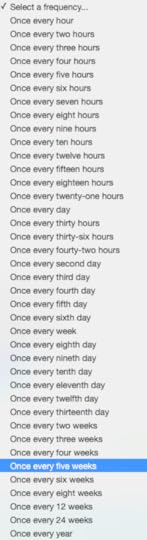
Select the frequency schedule (every 8 hours, every week, every five weeks, once a year, and nearly every combination in between)
Indicate the number of times you want your tweet to repeat.
Here is a screenshot of all of the recurring frequencies you can set:
To set up your recurring tweets, precede your first tweet with a bracket and end your last tweet with a bracket. Also, you must place a bar – | – between each tweet. On a Mac, press shift + backward slash to produce the straight line.
This is what your recurring tweets will look like:
{Don’t Smoosh that Spider! How Insects and #Compassion are Connected http://dld.bz/dGqdr #parents | Millions of Insects Exist in the World http://dld.bz/dGqdr #parents #kids| Don’t Let All Insects Bug You – Teaching #Empathy to Kids http://dld.bz/dGqdr #parents | Teach Kids Compassion for Insect Life http://dld.bz/dGqdr #parents | What are your tips for teaching children about #compassion? http://dld.bz/dGqdr #parents}
SocialOomph also offers the following features:
It will track your keywords and send you an email twice a day so that you can thank, retweet or reply to your followers from your inbox.
The analytics include click-through rates, a valuable feature.
The app will purge your direct message box of spam-filled tweets.
You can arrange for SocialOomph to find followers for you.
Here is the downside to SocialOomph: you can use it for LinkedIn and Twitter but to set it up for Facebook, you’ll need to get help from your webmaster or another techie. However, it’s always best to post to Facebook either live or by using the native scheduling feature on your Facebook page. Using an application to schedule your Facebook posts will invariably lower your reach and engagement.
If you’re looking for a scheduling application that can do it all: Facebook, Twitter, LinkedIn, Google+ pages, and Instagram, then Buffer is the best and easiest application to use. The free Awesome plan also includes Pinterest and the cost is a mere $10/month. What a deal, right?
If you want an app that covers more social media networks than SocialOomph and for some reason you’re not pleased with Buffer, then your next option is Hootsuite. It’s not quite as easy to set up as Buffer, but it’s a worthy application that a lot of people use.
Get Rid of Your Unfollowers
This application makes my online life so much easier. I can unfollow users who don’t follow me back, get rid of inactive accounts I follow and create whitelists for accounts I want to follow even if they don’t reciprocate by following back. All I have to do is spend at most three minutes a day cleaning up my Twitter account, and I’m done.
How to clean up your Twitter accountClick To Tweet
Tweepi is a worthy alternative to ManageFlitter and I believe it’s been around longer. For just $10.75/month, you can delete accounts that don’t follow you, sort and filter followers, add users to your lists, and force users, such as spam accounts, to unfollow you. Its platinum program has additional features.
Writing and Publishing Apps
This is such a cool app. If you have trouble focusing on your writing, OmmWriter creates a natural online environment where you can write without interruption while listening to meditative music. I use this app when I write my blog posts.
I’ve been using Grammarly for three years, and I won’t publish a blog post without it.
Once you sign up and pay the $135 annual fee, you can either cut and paste your post into the online program or upload your blog post straight from your computer.
If you have a Mac, you’ll want to get the free Grammarly desktop app to check grammar, spelling, and usage, and identify text that doesn’t pass its plagiarism test.
Analytics
Facebook Insights
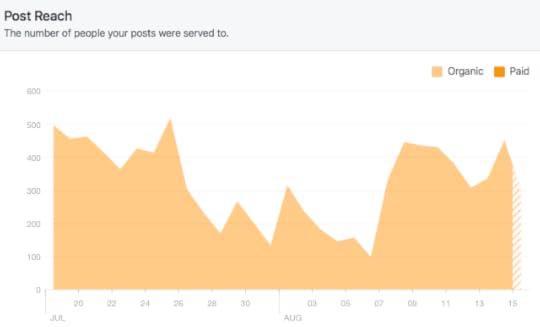
If you want to understand your Facebook page, know what types of content work best with your readers, and know the best times to write your status updates in the future, you need to periodically review Facebook’s Insights.
This graph tracks reach:
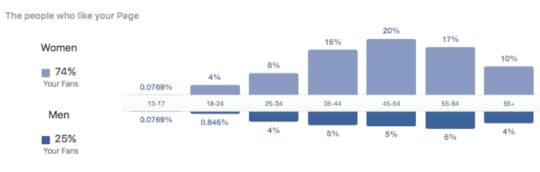
Your analytics will also describe the demographics of your fans:
If you plan to purchase Facebook advertising, check your Insights first.
Use Insights to better understand your Facebook page & your readersClick To Tweet
Twitter Analytics
You can access your Twitter analytics at http://analytics.twitter.com. On the summary dashboard, you’ll see a summary of these features from the previous 28 days:
The number of tweets you’ve sent.
Tweet impressions.
Visits to your profile.
Mentions of your Twitter username.
The number of followers you’ve gained.
The number of tweets linking to you.
Beneath the 28-day summary, on the right, you’ll see a summary for the current month. The summary will also include your top tweets, top followers, and other numbers. You can dial down the summary and find even more specific information within the tabs titled Tweets, Audiences, and Events.
If you want to succeed on Twitter, visit your analytics at least monthly.
I almost forgot to mention this: the analytics are free.
Create Visuals with Canva
The final application I’ll discuss is Canva. I don’t know what I would do without it.
I’m still using the free portion of the application, and so far, it fits all of my needs. I use Canva for every image with text that you see on my website. Its drag-and-drop feature is easy to use, the website offers free templates, and you can either purchase images from Canva or download them for free from a new of websites with copyright-free images.
Now you have my unbiased perspective on the above ten applications that I use and love to use. Next, I’d love to hear which applications you rely on.
About the Author: Frances Caballo is an author and social media strategist and manager for writers. She’s a regular speaker at the San Francisco Writers Conference and a contributing writer at TheBookDesigner.com and blogger and Social Media Expert for BookWorks. She’s written several books including The Author’s Guide to Goodreads, and Social Media in 30 Minutes a Day. Her focus is on helping authors surmount the barriers that keep them from flourishing online, building their platform, finding new readers, and selling more books. Her clients include authors of every genre and writer conferences. Not sure how you’re doing online? Ask Frances to prepare a social media audit for you.
Practical Tips for Marketing Your Books on the Social Web
You’ll find cheat sheets and my new four-step strategy to controlling your time on social media in my newest book: Social Media in 30 Minutes a Day. In eleven chapters, you’ll:
understand the new formula for saving time
learn how to become a more effective and efficient marketer
find cheat sheets for vocabulary and hashtags
learn about the apps that will best help you save time while using social media.
So start learning how to save time online.
“… 80% or more of the book would be a superior introduction to savvy social media usage for most professionals, even those beyond the writing, or even content-creation, fields.” ~~ Julia A. Bestry
The post The Only 10 Social Media Applications You’ll Ever Need appeared first on Social Media Just for Writers.
August 19, 2016
Indie Author Weekly Roundup – August 19, 2016

I spent last week in Monterey and normally I have a lovely time in this coastal community where I was born but the smoke-filled air was a constant reminder of the dangers of the Soberanes Fire in Big Sur and Carmel Valley. There are numerous fires in California right now and we’re constantly reminded of the danger as dry, brown hills cover the state and surround my community. I can only hope that the fire crews remain safe, no more lives are lost, and that the winter brings plenty of rain. I hope you’re having a safe summer. Oh yeah; I hope you enjoy this week’s Indie Author Weekly Roundup too!
Working With Cover and Interior Designers from Joel Friedlander and by Jennie Nash: “Almost every publishing professional advising self-publishers says the same thing: focus on editing and cover design. Those are the two most important elements of your book, the ones that will make the biggest difference in how your book is re-ceived and how it will sell. We’ve already discussed how working with a good editor can help make or break your book, so now let’s take a look at the importance of good design, both inside and out.”
How to Get More Speaking Gigs (Even If You Don’t Have a Lot of Speaking Experience) from Jane Friedman and by Dorit Sasson: “Just for the record, speaking gigs don’t have to be a full-fledged two-hour workshop or a fancy TED Talk–type setup; they can be as simple as presentations at libraries, talks at fundraisers, and even webinars. You won’t always get paid, but coupled with selling copies of your book (which I’ve done), these types of speaking engagements are a great opportunity to increase your visibility and to build a network of fans and contacts.”
6 Tips for Better Facebook Video Ads by the Social Media Examiner: “Do your Facebook ads contain video? Looking for ways to enhance your Facebook advertising with video? Video ads are among the most powerful Facebook ad formats for generating user engagement. In this article, you’ll discover six tips for using video in your Facebook ad campaigns.”
Why I Love iBooks from Indies Unlimited: “You might not realize this, but you love iBooks. In early 2010, Amazon was the only place to sell eBooks, and they paid authors a 35% commission. Then iBooks announced they would be inviting authors to sell in their store. Amazon responded by increasing their payout to 70%. So, if you sell a book online and make 70% commission from it, then say it with me: I love iBooks.”
Authors: Here’s All You Need to Grow Your Email List from The Write Life: “If you’re an author who reads about book marketing, it’s already been hammered into your brain that your email list is your lifeline to long-term success. Why? Because your email subscribers are your peeps. They are the readers who love you so much they want to connect beyond the books themselves, and are the most likely to buy release after release as your body of works expands.”
Quote of the Week

About the Author: Frances Caballo is an author and social media strategist and manager for writers. She’s a regular speaker at the San Francisco Writers Conference and a contributing writer at TheBookDesigner.com and blogger and Social Media Expert for BookWorks. She’s written several books including The Author’s Guide to Goodreads, and Social Media in 30 Minutes a Day. Her focus is on helping authors surmount the barriers that keep them from flourishing online, building their platform, finding new readers, and selling more books. Her clients include authors of every genre and writer conferences. Find all of my books in one place.
Practical Tips for Marketing Your Books on the Social Web
You’ll find cheat sheets and my new four-step strategy to controlling your time on social media in my newest book: Social Media in 30 Minutes a Day. In eleven chapters, you’ll:
understand the new formula for saving time
learn how to become a more effective and efficient marketer
find cheat sheets for vocabulary and hashtags
learn about the apps that will best help you save time while using social media.
So start learning how to save time online.
“… 80% or more of the book would be a superior introduction to savvy social media usage for most professionals, even those beyond the writing, or even content-creation, fields.” ~~ Julia A. Bestry
The post Indie Author Weekly Roundup – August 19, 2016 appeared first on Social Media Just for Writers.
August 15, 2016
Have you seen these? Guest Posts from TheBookDesigner.com

There’s no place I’d rather be than the beach, especially the beaches on the Monterey Peninsula where I was born and raised. While I’m away, please visit these posts I’ve written for Joel Friedlander’s blog at TheBookDesigner.com. I’ve been writing for Joel’s blog since November 2013. (Wow! Time does fly.) Below you’ll find pots that date back to December 2014.
Reader Audiences and Analytics: What Do They Really Reveal?
When I ask authors whether they know who their audience is, I’m surprised when some of them reply, “everyone should read my book” or “everyone will like my book.” Well, not exactly. If you write grammar manuals or cookbooks, you may be under the false impression that everyone needs your book. But everyone won’t buy it or even think that a grammar reference, dystopian novel, or low-fat cookbook would be worth its purchase price.
Do You Write for Young Adults or Millenials? Then Try Snapchat
Social media aficionados like to jump on the newest, shiniest objects on the internet and today there are few sites attracting more buzz than Snapchat. The Verge reported in April 2016 that Snapchat has 100 million daily users who spend on average 25 to 30 minutes using the app. An estimated 60% of them use the app to create images and videos. Major brands that market to young adults and millennials are using this app to promote their wares. Buzzfeed, MTV, and Tastemade offer stories on Snapchat—and so do CNN and The Wall Street Journal.
How Young Adult Authors Can Use Tumblr to Reach Their Readers
Have you thought about using Tumblr lately? I may know what you’re thinking right now. These days when everyone is talking about Facebook Live, Snapchat, and Instagram, why would I even mention Tumblr? Isn’t Tumblr sort of, well, passé? Au contraire.
Instagram Primer for Indie Authors
There are conflicting reports as to what social media network is the fastest growing. The data seems to change from month to month, or at least, it did in 2015. That year, Adweek, TechCrunch, and Global Web Index each reported different statistics. It was also in 2015 that Pew Research Center reported that Instagram was the fourth most used social media network, behind Facebook, LinkedIn, and Pinterest.
11 Reasons Indie Authors Need Social Media (And How to Get It Right!)
You’ve heard it a million times (or at least several hundred times): Indie authors need to use social media as part of their online marketing strategy. I’m sure you’ve seen lists of reasons why, but let’s look at the most important reasons social media is so important for authors:
It will refer traffic to your blog, website, the landing page for your books, and Amazon.
There is a large community of indie authors who are willing to help you promote your book and form supportive alliances.
You’ll find new readers on social media.
Keep reading this post at TheBookDesigner.com
Author Groups to Help Your Write, Publish, and Promote Your Books
There is plenty of help for you online if want to know how to improve your craft, create better book covers, and market your books. Some of the top blogs include this one, Joanna Penn’s TheCreativePenn.com, Mark Coker’s Smashwords.com, and Jane Friedman’s JaneFriedman.com. Then there are the websites whose sole purpose is dedicated to helping Indie authors write, edit, publish, and market their books as well as network and support other Indie publishers. If you’ve been looking for an online group to join, consider one of these online organizations.
Need an Author Website Follow? These 5 Basic Elements
There are zillions of posts on the Internet that will tell you what your website should look like. But what if you’re an author? Does all that advice meant for businesses and twenty-something entrepreneurs apply to you? Yes and no. Confusing, eh? What’s missing in all the advice out there is information about a page on your website dedicated for your books. And if you want to generate more reader interest, at least one romance author I’ve met includes a page for her readers’ book club.
Authors: Have You Blabbed or Scoped Yet?
What is the hottest trend in social media these days? Live streaming. The video apps people are talking about most to conduct their live broadcasts are Periscope and Blab.im.
I’ll never forget the divorce court scene in the Tina Turner movie, What’s Love Got to Do with It, when Tina battles for her name. She didn’t care about the houses or the wealth she’d accumulated with Ike Turner. All she wanted was the right to retain and continue to use her stage name. These days, many authors are choosing not to publish under their given names as well. Their reasons vary.
Cool and Not So New Social Media Networks for Indie Authors
Do authors need to pay attention to the coolest new social media networks on the block? Or should you wait to see whether they take off or fade away without so much as an hasta luegoas so many applications do? Well, that depends.
Twitter Tools and Apps to Ease Your Tweeting
If you’ve read my previous posts on this blog, you know by now that I’m a huge fan of Twitter. And Twitter has been good to me; it’s my number one source for traffic to my website. But that’s not the only reason I love Twitter. I’ve met people from around the world who have helped me to advance my career.
Social Media Dashboards: Free Apps May Not Be the Best Option
Who has time to sit at the computer all day scheduling tweets and LinkedIn posts? Not you, right?That’s why a key to efficiency on social media is to schedule your posts throughout the day using one or more social media dashboards. An ideal way to start the day is to curate your information. Once you find information to retweet and craft your tweets, Facebook updates, LinkedIn posts, etc., you can use one or more applications to schedule everything.
Podcasting and Indie Authors: Is Podcasting Right for You?
Kevin Roose, writing for Forbes, said, “We’re in a golden age of podcasting.” Why is it occurring now? Many say it’s because of the widespread use of smartphones and connected cars. Just as people are increasingly forgoing cable subscriptions for streaming Netflix, people are turning to the intimacy and interruption-free programming of the podcast. According to WPVirtuoso.com, Apple recently surpassed 1 billion subscriptions to podcasts.
Authors: Plan Your Marketing with a Content Calendar
One of my tasks last year was to create an integrated editorial calendar … The content calendar in turn directed my social media calendar. I hate to admit this, but I’d never created this type of calendar before. I’ve written three-month editorial calendars for my blog, but never one that was so detailed. My first task was to brainstorm topic ideas. Some people use mind maps for this step, but I’ve never found one that I liked. So I applied my fingertips to the keyboard and started writing whatever came to mind.
Failure is the condiment that gives success its flavor.
—Truman Capote
Who likes to fail? No one, right? I don’t even like the synonyms for failure: tanked, bust, crashed, burned. They make it sound as though you can’t redeem yourself. As though along with failing, that failure itself signifies a finality to your endeavor. The opposite is true. Failure always brings us to new beginnings.
About the Author: Frances Caballo is an author and social media strategist and manager for writers. She’s a regular speaker at the San Francisco Writers Conference and a contributing writer at TheBookDesigner.com and blogger and Social Media Expert for BookWorks. She’s written several books including The Author’s Guide to Goodreads, and Social Media in 30 Minutes a Day. Her focus is on helping authors surmount the barriers that keep them from flourishing online, building their platform, finding new readers, and selling more books. Her clients include authors of every genre and writer conferences. Not sure how you’re doing online? Ask Frances to prepare a social media audit for you.
Practical Tips for Marketing Your Books on the Social Web
You’ll find cheat sheets and my new four-step strategy to controlling your time on social media in my newest book: Social Media in 30 Minutes a Day. In eleven chapters, you’ll:
understand the new formula for saving time
learn how to become a more effective and efficient marketer
find cheat sheets for vocabulary and hashtags
learn about the apps that will best help you save time while using social media.
So start learning how to save time online.
“… 80% or more of the book would be a superior introduction to savvy social media usage for most professionals, even those beyond the writing, or even content-creation, fields.” ~~ Julia A. Bestry
The post Have you seen these? Guest Posts from TheBookDesigner.com appeared first on Social Media Just for Writers.
10 Twitter Tips Writers Need to Know

- Frances Caballo's profile
- 274 followers

