Martyn V. Halm's Blog, page 8
May 13, 2014
Protected: Rate/Review WIP sample: The Fat Woman (needs password)
This post is password protected. You must visit the website and enter the password to continue reading.



May 10, 2014
Rate/Review this sample from my Work-In-Progress:
My work-in-progress is a stand alone noir crime fiction novel called In Pocket. The pitch/blurb:
If only Wolfgang hadn’t picked the pocket of the fat woman…
Nomadic pickpocket Wolfgang gets blackmailed into teaching his craft to the mysterious Lilith, a young woman with no aptitude whatsoever to become a pickpocket. Wolf figures the easiest way is to go with the flow and instruct Lilith in the art of emptying other people’s pockets, but even he could never foresee the dreadful things that follow…
IN POCKET is a standalone novel with ties to Martyn V. Halm’s Amsterdam Assassin Series. Follow Wolf as he gets entangled in a possible fatal web of violence and deceit, where nobody is who they seem to be and everyone has a hidden agenda.
I passed out. For an instant, I think. Just long enough to lose my bearings. I remember I was running. From someone. Or something? The back of my head hurts. Guess I hit the wall behind me. Without opening my eyes I feel the bricks, damp and cold against my buttocks.
My legs feel like they’re asleep. Without tingling—the usual pins-and-needles sensation is mysteriously absent.
A bad sign. I think I can forget about running. Or even getting up.
I open my eyes and blink a few times to focus. The wall across from me is less than two meters away. An alley. To my left, a dead end. To my right, plastic garbage bags leaning against an overflowing dumpster. I’m in a cul-de-sac.
Street lights flood the entrance of the alley with sickly orange light that touches my grubby sneakers. I listen, but don’t hear anyone else, just my own raspy breathing. I’m alone.
My left hand touches my belly, comes away wet.
Sticky.
Raise my hand to my eyes, but it’s too dark too see.
I peer past the dumpster, but all I see is a cobblestone quay and a canal. Can’t see which one. The street sign is missing. Or was never there at all. Not all dead-end alleys here have names.
I go through my pockets to check my possessions, but I seem to have none. Money, gone. Keys, gone. Straight razor—
I look at my pants, dirty and smelling of urine. I look at my hands, dark with street grime. And it all comes back. Why I’m wearing these dirty clothes. My possessions aren’t gone. I left them. I only had the two-way radio and the gun.
They’re both gone.
All I’ve left is the small carton in my inside pocket…
I take the pack of cigarettes from my inside pocket, open the lid and brush my finger over the filter tips. And the metal wheel of the butane lighter. I breathe a sigh of relief. I don’t know what would be worse; no cigarettes, or cigarettes and nothing to light them with.
I shake one from the pack and light up. My hands automatically shield the bright flame to prevent giving away my position. In the light I count the contents. Seven left, not counting the one I just lit. And a folded piece of tinfoil with the small white envelop beside it. I won’t use it unless the pain becomes too bad.
I glance at my left hand. The sticky stuff covering my palm is red. I lower the lighter to see my belly. The lower half of my shirt is dark with blood. In the weak light the blood looks black. I touch the mess gingerly. Three holes. Bullet holes.
The lighter sputters and dies. As the flame goes, a ghost-flame shimmers on my retina. I shake the lighter by my ear. Sounds like there is still some fuel left.
I cup the glowing tip in my hand, return the pack and lighter to my inside pocket, and blink to restore my night vision.
A shadow glides over the walls as someone passes the mouth of the alley. I watch from behind the trash cans, unable to draw in my numb legs sprawled amid the refuse that litters the bricks.
The shadow flicks over my sneakers and disappears from view.
I listen to the receding steps.
I don’t want to be found. Not after what I did…
I drag on my cigarette. No idea what time it is. If I’m still in Amsterdam’s old quarter, I should be able to hear the bells from the myriad of churches. And pinpoint my location.
I take a last drag and extinguish my cigarette against the bricks.
The numbness in my legs worries me. Maybe the bullets hit my spine.
In the distance a church bell chimes.
Once. Twice. Silence.
That sounded like the Oude Kerk, but I’m not sure.
Two.
Two in the morning.
Five hours till dawn.
A whole night to die in.
And muse about the events that got me in this predicament.
If only I hadn’t picked the pocket of the fat woman…
I’d love to hear what you think, so please comment below. Also, before I will look for a publisher or publish In Pocket myself I will need beta-readers to make sure the story is as good as I can get it. So stay tuned!


May 1, 2014
WRITING: Dialogue and the ‘Said’ rule
After someone had read an article on Writing World on the abuse of dialogue tags, there was a discussion on Quora whether the dialogue tag ‘said’ was the best and only tag.
This is what I had to say on the subject:
The main reason for the ‘said’ rule, is that ‘said’ is invisible.
If you write a whole page of dialogue, readers need to be able to distinguish between the speakers.
There are several ways of doing that:
action tag: Peter threw the mug across the kitchen. “Don’t ever talk to me that way again.”
name of the character in the dialogue: “Don’t ever talk to me that way again, Mary.”
distinctive speech pattern: “D-don’t ever talk to m-me that way again.”
inserting ‘stop’ words particular to the character. “Like, you know, don’t talk ever talk to me that way again, you know?”
dialect: “Don’ evah talk t’me them way agin.”
emphasize the words: “Don’t. Ever. Talk. To. Me. That. Way. Again.”
If you need to add a speech tag, ‘Peter said’ is pretty invisible. It’s similar to a stage direction:
(Peter:) Don’t ever talk to me that way again.
The other part of the rule is that novice writers are tempted to pimp up their speech tags instead of the dialogue.
“Don’t ever talk to me that way again,” Peter hissed.
“Don’t ever talk to me that way again,” Peter threatened.
“Don’t ever talk to me that way again,” Peter yelled.
“Don’t ever talk to me that way again,” Peter bellowed.
If you need to increase the impact of a dialogue and you cannot think of a way to change the dialogue, adding an action tag is better than changing the speech tag from ‘said’ to ‘threatened’.
The twinkle disappeared from Peter’s eyes and he stepped closer. His voice was low, almost a growl. “Don’t ever talk to me that way again.”
Every rule can be broken, but most can be circumvented…
My Quora answer was re-blogged on several other blogs, most specifically on Reference For Writers, so I figured it was time to give it an article page on my own blog…
If you think other people could benefit from this information, please share this post using the social media buttons below.


Dialogue and the ‘Said’ rule
After someone had read an article on Writing World on the abuse of dialogue tags, there was a discussion on Quora whether the dialogue tag ‘said’ was the best and only tag.
This is what I had to say on the subject:
The main reason for the ‘said’ rule, is that ‘said’ is invisible.
If you write a whole page of dialogue, readers need to be able to distinguish between the speakers.
There are several ways of doing that:
action tag: Peter threw the mug across the kitchen. “Don’t ever talk to me that way again.”
name of the character in the dialogue: “Don’t ever talk to me that way again, Mary.”
distinctive speech pattern: “D-don’t ever talk to m-me that way again.”
inserting ‘stop’ words particular to the character. “Like, you know, don’t talk ever talk to me that way again, you know?”
dialect: “Don’ evah talk t’me them way agin.”
emphasize the words: “Don’t. Ever. Talk. To. Me. That. Way. Again.”
If you need to add a speech tag, ‘Peter said’ is pretty invisible. It’s similar to a stage direction:
(Peter:) Don’t ever talk to me that way again.
The other part of the rule is that novice writers are tempted to pimp up their speech tags instead of the dialogue.
“Don’t ever talk to me that way again,” Peter hissed.
“Don’t ever talk to me that way again,” Peter threatened.
“Don’t ever talk to me that way again,” Peter yelled.
“Don’t ever talk to me that way again,” Peter bellowed.
If you need to increase the impact of a dialogue and you cannot think of a way to change the dialogue, adding an action tag is better than changing the speech tag from ‘said’ to ‘threatened’.
The twinkle disappeared from Peter’s eyes and he stepped closer. His voice was low, almost a growl. “Don’t ever talk to me that way again.”
Every rule can be broken, but most can be circumvented…
My Quora answer was re-blogged on several other blogs, most specifically on Reference For Writers, so I figured it was time to give it an article page on my own blog…
If you think other people could benefit from this information, please share this post using the social media buttons below.
April 28, 2014
Tagged for the Writing Process Blog Hop…
I got tagged by author/musician Jamie Schultz, who answered the same questions on his blog. So now it’s my turn to answer these four questions…
What am I working on?
Currently I’m working on three projects:
- the fourth KillFile, as yet untitled, that revolves around Katla fulfilling another contract. This time, she has to enter a secluded estate and get her targets to leave their fortress-like villa.
- the fourth novel, working title Ghosting, which happens during Katla’s sabbatical year. She finds out quickly that it’s harder than she expected to shelf her homicidal enterprises.
- a stand-alone novel, In Pocket, about a nomadic heroin-addicted pickpocket who gets drawn into a potentially fatal situation by a scheming woman.
How does my work differ from others of its genre?
I think the suspense fiction genre is replete with unfailing heroes and unrepentent antagonists. My Amsterdam Assassin Series differs in the sense that the protagonist, freelance assassin and corporate troubleshooter Katla, would be the antagonist in most suspense fiction books, just because–although she had her own ethics–she’s a morally ambiguous remorseless killer for profit. Another thing is that I strive for verisimilitude. Everything that happens in the books could happen realistically. So Katla is no ‘superwoman’. She’s smart and resourceful, but she has severe flaws and she makes minor mistakes with huge consequences.
Why do I write what I do?
In short, I write what I wanted to read but couldn’t find.
Longer version: What I couldn’t find is Katla. A resourceful remorseless protagonist who, unencumbered by her virtually non-existent conscience, works her way through conflicts in a way that most heroes wouldn’t be able to. And her ruthlessness is balanced by her blind boyfriend Bram, who is also unique in the sense that his blindness is not a mere plot device, but something that shapes him into Katla’s ideal companion.
How does my writing process work?
I start out with story ideas–I need several different stories that I can weave together into a cohesive novel, so the ideas need to have the potential to become linked.
While I’m researching story ideas I write scenes that I hope will fit within the story ideas. If they don’t fit, I shelf them. I rarely throw anything away. Chapters that couldn’t be used Reprobate were modified to appear in Peccadillo, and scenes removed from Peccadillo appeared in Rogue. So I have a whole file with ‘deleted scenes’ that might turn up in new books or become a KillFile.
When I finish the first draft, I turn the manuscript into an ebook that I can read on my iPad. This is in essence a modern variant on the ‘print out your manuscript and read it through’-method often cited by authors. Both a printed manuscript or an epub cannot be edited, but with both you can highlight sections that need to be corrected and you can sprinkle the text with footnotes on what you want to do, like ‘move this scene up’ or ‘this section contains too many crutch words’. In fact, the epub version works better than the printed version for several reasons:
- you can insert longer notes than what you’d be able to write into a margin of a printed version
- you don’t have to carry around 500 double-spaced A4 pages and a highlighter and a red pencil.
- epubs have a feature where you can make a list of all the ‘Notes & Marks’ you made while editing the draft, which makes it easier to go through your manuscript and make changes. If you use a print version, you have to leave through the whole print-out again and hope you don’t miss a note or highlighted section.
- It’s easier to track the corrections you have to make, because you can delete the notes you corrected in the manuscript.
- the disadvantage is the same as with any e-reader versus print book–if the battery quits, you can’t continue. On the other hand, it’s much easier to take your manuscript anywhere you want. And nobody wonders why you’re marking up a sheaf of paper…
I hope my answers were illuminating and entertaining. I’d like to pass on the tag to three writers I greatly admire:
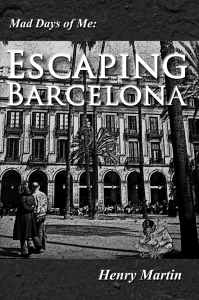
First off, I tag Henry Martin. When he’s not buried elbow-deep in some greasy motorcycle project, Henry Martin enjoys reading quality literature and writing prose and poetry of varying coherency. He finds inspiration in conquering the open road while trying to outrun some of the characters he created in the past. He lives with his family in the Northeast, surrounded by coyotes, foxes, and bears. Click on his name to check out his blog. Click on the cover to check out Escaping Barcelona on Amazon.
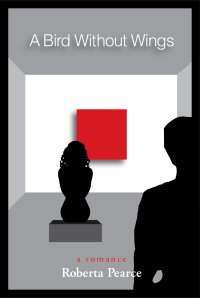
Second author I tag is Roberta Pearce. Roberta likes to have fun breaking some (but not all!) clichés in her contemporary romances – her latest novel, A Bird Without Wings, features a heroine who is smarter than the hero. And her soon-to-be-released The Value of Vulnerability has a hero who is a sociopath (that’s sociopath, not psychopath!). If you click on her name you’re taken to her blog, if you click on A Bird Without Wings, you can check out her book on Amazon.
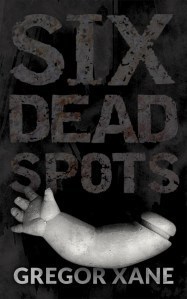
The third author I tag (all good things come in threes) is Gregor Xane. Gregor is the author of the horror novellas Six Dead Spots (one of the weirdest books I read) and The Hanover Block (forthcoming). He resides in the U.S., in a small town in southwestern Ohio. He’s currently preparing a rather large and ridiculous work of science-fiction for publication. Click on his name to check out his blog and/or click on Six Dead Spots to read a sample of his work on Amazon…


April 25, 2014
Visibility on Amazon: Changing Categories and Keywords, Part 2…
How to Increase the Visibility of Your Book on Amazon, Part 2:
How to find your category on Amazon:
I got some questions on how to find your category, so here are some detailed instructions:
Go to the homepage of Amazon. Do not type anything in the search bar, but tap the ‘All’ and select Kindle Store in the drop down menu. Now you get everything in the Kindle Store with a list on the left that can help you narrow down your search.
Leaving the search bar empty, you go to the second filter option ‘Kindle Store’, where you have a list:
Kindle Devices (34)
Kindle Accessories (466)
Kindle Blogs (4)
Kindle eBooks (2,627,280)
Kindle Magazines (490)
Kindle Newspapers (157)
Kindle Singles (519)
Kindle Worlds (475)
Select Kindle eBooks (2,627,280)
If you scroll down, you’ll find a list in the left bar with:
Kindle eBooks
Arts & Photography (146,000)
Biographies & Memoirs (115,714)
Business & Money (167,153)
Children’s eBooks (136,939)
Comics & Graphic Novels (21,583)
Computers & Technology (46,320)
Cookbooks, Food & Wine (38,428)
Crafts, Hobbies & Home (49,929)
Education & Reference (162,350)
Gay & Lesbian (25,800)
Health, Fitness & Dieting (165,809)
History (145,069)
Humor & Entertainment (72,955)
Literature & Fiction (856,128)
Mystery, Thriller & Suspense (148,423)
Nonfiction (1,339,206)
Parenting & Relationships (51,240)
Politics & Social Sciences (183,981)
Professional & Technical (209,018)
Religion & Spirituality (275,450)
Romance (189,206)
Science & Math (156,301)
Science Fiction & Fantasy (161,909)
Self-Help (68,535)
Sports & Outdoors (45,612)
Teen & Young Adult (55,344)
Travel (41,338)
Foreign Languages (554,299)
If you select one of them, you’ll narrow down further.
Select ‘Mystery, Thriller & Suspense (148,423)’ and you get:
Mystery, Thriller & Suspense
Crime Fiction (33,009)
Mystery (67,450)
Suspense (42,654)
Thrillers (55,928)
Select Mystery (67,450) and you get:
Mystery
African American (700)
British Detectives (3,561)
Collections & Anthologies (4,130)
Cozy (2,982)
Gay & Lesbian (832)
Hard-Boiled (5,786)
Historical (4,790)
International Mystery & Crime (1,626)
Police Procedurals (6,312)
Private Investigators (3,063)
Series (567)
Women Sleuths (11,826)
This is the last selection you can make in this area. So say your protagonist is a female detective, so you select Women Sleuths (11,826)
Now select the first book at the top.
Now scroll down to Product Details and you’ll find:
Amazon Best Sellers Rank: #25 Paid in Kindle Store (See Top 100 Paid in Kindle Store)
#1 in Kindle Store > Kindle eBooks > Mystery, Thriller & Suspense > Mystery > Police Procedurals
#1 in Books > Mystery, Thriller & Suspense > Mystery > Women Sleuths
#2 in Kindle Store > Kindle eBooks > Literature & Fiction > Women’s Fiction > Mystery, Thriller & Suspense > Women Sleuths
Copy the link you like:
Kindle Store > Kindle eBooks > Literature & Fiction > Women’s Fiction > Mystery, Thriller & Suspense > Women Sleuths
And go through the procedure to tell KDP you want your category changed to: Kindle Store > Kindle eBooks > Literature & Fiction > Women’s Fiction > Mystery, Thriller & Suspense > Women Sleuths
Good luck
If you think other people could benefit from this information, please share this post using the social media buttons below.


April 18, 2014
Visibility on Amazon: Changing Categories and Keywords…
How to Increase the Visibility of Your Book on Amazon:
Categories on Amazon seem limited when you try to add them to your ebook in the KDP dashboard. When I tried to categorise the Amsterdam Assassin Series, all I could get was ‘Fiction>Mystery & Thriller>Suspense’ and ‘Fiction>Mystery & Thriller>General’, both categories that have hundreds of thousands of books in them. Which makes your book pretty difficult to get on the first few pages. What you need to do is adjust your category so you’re no longer a small fish a big pool, but the big fish in the small pool. And here is how you do that:
Changing Your Category:
If you go to Amazon Kindle Store and you see all the books available, click down on your category. First you select ‘Kindle e-books’ (2,610,028 books), then click ‘Mystery, Thriller & Suspense’{147,801), and select ‘Suspense’ (42,470). You’ll find that Suspense is divided into different categories that were not visible in the KDP dashboard, namely Ghosts, Horror, Occult, Paranormal, Political, Psychological. By narrowing down to, for instance, ‘Psychological’, despite the fact that Psychological is one of the larger subcategories, you still reduce your competition from 42,470 (Suspense) to 9,723 (Psychological).
(Below the categories, you also see two more selections you’re able to make; ‘Moods & Themes’ and ‘Characters’. We’ll come back to that in a minute, but we come to changing/adding categories to your book.)
First, copy the string that denotes the category you want to be in: ‘Kindle eBooks › Mystery, Thriller & Suspense › Suspense › Psychological’’.
Now, go to your KDP dashboard, where you edit details of your book. If you check your categories, they’ll be different from the Amazon website. Now, what you’ll do is go to the bottom of the page, where in the lower right corner you can click on ‘Contact Us’. That will take you to the ‘What is the problem?’ page.
Choose ‘Publish Your Book’, and ‘Add/Change Categories’. You’ll find that you can choose to contact by telephone or email. Select email and in the subject line you put ‘Category Not Listed’.
Fill in the required tabs: Name and ASIN of the book, and you have a window where you can explain your reason for contacting KDP.
Officially, you can have two categories, but KDP is known for adding categories without removing old ones. So, phrase your question something like this:
Hello,
I’d like to add (Title of your book) to this category: ‘Kindle eBooks › Mystery, Thriller & Suspense › Suspense › Psychological’.
If necessary, you can remove the category: ‘Kindle eBooks › Mystery, Thriller & Suspense › Suspense’.
Cordially, (Your name).
In my case, they didn’t remove categories, but just added the new one.
Keywords:
We also noticed the ‘Moods & Themes’ and ‘Characters’ below the Categories and Subcategories. I asked KDP about them, and they replied that they cannot add them to the category, but both can be added to the seven keywords you’re allowed. For Reprobate, I selected (Characters:) ‘Female Protagonists’ (146) (which counts as one keyword!) and (Moods & Themes) ‘Dark’ (362). If you check both boxes, it reduced the amount of books to… 23 books.
Conclusion, by adding ‘Psychological’ to your category, and adding the words ‘Dark’ and ‘Female Protagonists’ to your keywords, you reduce the competition from 42,470 to 23.
So, to make sure that your book can be found easier by browsers, select a less competitive category and insert a Theme and a Mood into your keywords. One important note on Keywords, don’t put words in your limited keyword section that are already in your book title or description, because they are already in the search facility. So, I shouldn’t put ‘Amsterdam, Assassin, homicide’ in my keywords, because those words are already being used. Instead, my keywords should be ‘dark, female protagonist, police procedural, crime fiction’, or something similar.
Although changing category and keywords will make your book more visible than the standard categories and wrong keywords, take you time to experiment by changing/adding other categories and keywords.
If you think other people could benefit from this information, please share this post using the social media buttons below.


Review: Incredibly Funny Vampire Tale.
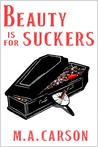 Beauty Is for Suckers by M.A. Carson
My rating: 4 of 5 stars
I was pretty much finished with vampire stories when this book came along. I loved the blurb and sample, and the innuendo in the title, so I bought the epub right away and pushed it to the top of my To Be Read list.
Iris Greene, new fangled vampire, has allowed herself to be bitten in order to become attractive, but for some reason the bite by the Elbow Biter doesn’t work. Well, it does, in a sense, because she needs copious amounts of SPF 165 sunblock and she’s allergic to Bibles, crosses, garlic and Holy Water, but her appearance is still the same. And while her looks never got her noticed when she was alive, now the vampires she meets don’t even realize the dumpy girl in front of them is a vampire unless she shows them her fangs.
With an ensemble of a teenage slayer, a vain therapist and his socialite wife, as well as a score of attractive and decidedly unattractive vampires, Iris finds herself looking for a way to fit into her new world while she tries to find the vampire who bit her in order to force him to transform her to what she wants to be.
This incredibly funny vampire tale was well-written, with engaging characters and ludicrous situations that were nevertheless so viscerally described that they were ultimately believable. Recommended for fans of fangtastic humour.
4 out of 5 stars.


April 11, 2014
FAQ: Permafree on Amazon?
One of the great mysteries for beginning writers is how to get books up on Amazon permanently free, or ‘permafree’, because when you publish your book through KDP, you will get a notice that you have to put a price of 0.99 USD or higher on your book.
So, how do you get your books permafree on Amazon?
I have two permafree short stories on Amazon, iTunes, and Kobo, as ‘loss-leaders’ for my Amsterdam Assassin Series.
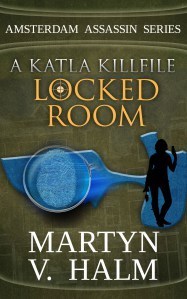
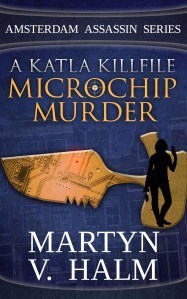
Here’s how I did it:
To get something to go permafree on Amazon, publish it at USD 0.00 on Kobo and iTunes, publish your book for 99 cents on Amazon and go to your book page. Under the Product Details, you find:
Would you like to give feedback on images or tell us about a lower price?
Click that link and provide the URL to the free book on iTunes/Kobo and the list price (0.00 USD). It helps if people other than the author report the lower price. If you’re a member of KindleBoards, they have a thread where you can post your book and report other people’s books, while they report your books.
That’s how I got Locked Room and Microchip Murder permafree on Amazon.
(If this message was helpful to you, I’d appreciate it if you show your support by downloading my free books)


April 7, 2014
Another ‘Stopped Reading’ Review: The Killing League by Dani Amore
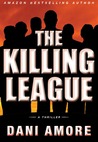 The Killing League by Dani Amore
My rating: 2 of 5 stars
Well, I managed to get to 29% of the Kindle version of The Killing League until the lack of verisimilitude deflated my suspense of disbelief.
I had high expectations of this book, due to the enticing blurb, but the story failed to deliver. The characters were described to provide a visual image, but I got no sense of their internal emotions beyond what Ms. Amore told me they were feeling. The writing is not unskilled, and some of the descriptions were quite visceral, but when someone fires a gun in a forest and:
The smell of cordite hung in the air around them.
That’s a huge red flag that someone doesn’t know what they’re writing about. Cordite hasn’t been used firearm ammunition since second World War and the triple-based gunpowder that replaced might have a acidic metallic smell that might be picked up by extremely sensitive noses, but only if someone fires boxes of ammunition in a closed space, like a small room or a badly ventilated shooting range. In the open air? No chance that a smell will hang around after firing one round.
Of course, Ms. Amore is probably not the only writer who mistakenly uses cordite with post-WWII ammunition, but there was more to The Killing League that failed to engage me.
The lack of characterization was grating. None of the characters was even faintly interesting. Not the serial killers, who seemed derivative and unoriginal, nor the protagonists Mack and Nicole, who are both bland and superficial.
The pace was sluggish because the writer felt compelled to fill whole scenes with descriptions or explanations that were not necessary for any mildly intelligent reader to figure out for themselves. Dialogue was often pedestrian and interspersed with dragging descriptions:
“Hey Boss!” Antony Toffol, her sous chef, called out as she started inventory on the wine selections.
“Yeah,” she said. He stood with the door to the kitchen open. Nicole smelled the olive oil, garlic, onion, rosemary, shallots, paprika and black pepper that were being used in various incarnations.
“Someone dropped off a card for you,” he said. “It was under the door when I opened up — it’s over on the receptionist table.”
“Okay, thanks,” she said.
I don’t like to ‘force’ myself to read. There are so many books still to be read, that I couldn’t justify wasting my time on this one. Sorry, Ms. Amore, but the second star is merely because the formatting and editing seemed professional. The story itself didn’t rate more than 1 star for me.