
Cedar Sanderson's Blog, page 251
November 24, 2013
Pixie Noir: Snippet 11
 I thought this would be the last snippet, but you will get one more before the book is available for sale. For a sense of perspective, Pixie Noir is over 95K words long, and in the snippets total there will be about 24K words. You are only a quarter of the way through the story, and I hope your appetite is well whetted! I have proof copies of the beautiful trade paperback edition in hand, and aside from some minor tweaks to the layout on the cover, it is ready to go. If any of you opt for the paper copy, keep in mind that if you purchase through Amazon you wil receive a DRM-free ebook version for free with purchase. And if you email me a request, I’d be happy to send you a signed bookplate for the book. Shameless, I know.
************
Now Tex started laughing along with Bella. I climbed over the seat much more carefully, finding it far more awkward to manage than it had been going the other way. Adrenaline rushes made a lot of things possible that you wouldn’t even consider under other circumstances. I found that although I was warming up, I had the shakes. This was going to be a long trip.
We would be in Haines shortly, and I didn’t know where we would be going from there. Until I had her safely Underhill, we were subject to attack from any side. This midair encounter had shaken me, although I didn’t plan to let her know that. Something was changing. The accidents that had been happening had been subtle, up until now. This was not subtle at all. I didn’t know what I was going to tell Tex to keep him quiet once the plane ride was over.
All my training, my life’s work, had been to keep humans at large from knowing about Folke, and the magical world that had once been strong on Earth, but was now fading away into the shadows. Would it come back, like the Winter Court believed, if magic were allowed to reign again?
I doubted that. My thoughts were that it would lead to war, and death and destruction on both sides. Far better to stay in the shadows and play it conservative. But it was unlikely I would be consulted, by either side. I could just do my job. The more I found out about Bella and her family, the better I liked that job.
When we landed, I was warm again, and had my eyes tightly closed and Sight stretched to its fullest extent. Meeting the Roc had shaken me. I suspected the Tok Airport had been under surveillance, and they could not have known we were headed to Haines rather than one of the cities, but I wasn’t taking chances. I had also made a decision.
“Are we flying out of here, or what?” I asked Bella as we stopped in front of another tiny airport terminal. She shook her head as she climbed out.
“I don’t know. Aunt Min is supposed to meet us here.”
I led the way toward the building, letting Tex precede me into the warmth. His complexion was a little greenish, still, and I was guessing the gravity of our midair encounter was finally sinking in for him. A man with shoulder length grey hair and a face most charitably described as craggy met us just inside the door.
“Tex.” They clasped hands. “Min’s waiting for ya.”
He nodded at us, but didn’t seek an invitation.
“Thanks, Drake.” Tex waved us further into the building, and we passed through the mechanic’s shop, it looked like, before another doorway took us into the waiting room.
Min was the only person in the room, standing and looking out the window. Her dark brown braid surprised me, I had been thinking old lady when Bella said great-aunt. She turned to meet us, a broad smile on her face, and outstretched arms for Bella. I could see the small signs of age now, the shot silver in the hair at the temples, the laugh lines framing her eyes. Bella simply leaned into the older woman with a little hiccup that might have had tears behind it. I was struck by their beauty, and realized I was seeing what my girl would look like in forty years.
When had she become my girl? Dammit. I was being dangerously sentimental. She was my charge, sure, but not mine.
I walked around them and checked the rest of the room and the outside as seen from the windows. Then I closed my eyes and looked again. Min and Tex had no magic. Bella glowed a pretty periwinkle blue. A pair of normals in the hangar area. We were all clear, for the moment. I opened my eyes again. Bella and Min were looking at me with matching serenity.
“Aunt Min, this is Lom.” Bella introduced me formally. I held out my hand and Min took it gently in her warm one.
“Pleased to meet you, I think.” Min’s voice was a husky soprano.
“It could have been under better circumstances,” I admitted. She let go of my hand and I ran a hand through my hair, which was already on end. She smiled. I must look pretty funny, at that.
“What is the plan?” I looked at Tex, who’d sat in a chair and was quietly contemplating us. I was going to have to talk to him, but I didn’t need to make this op any messier than it already was. Min had no need to know we had been attacked by a Troll and a Roc in the last 24 hours.
“Uncle said that you two need to get to the Lower 48, and flying wasn’t an option. I have tickets for you to board the ferry in two hours, and I’m going to take you to breakfast before I put you on the ship to Seattle.” She finished by turning toward the door, and I understood there was no arguing with this woman.
“I’ll be right behind you two.” Sometimes you just can’t clear all of the Alaskan wilderness for your charge, and Min looked like she could hold her own, too. I needed to talk to Tex before we left.
He was looking a bit shocky. I stood in front of him, and he focused on me.
“You going to be all right?”
He nodded. I frowned at him. “You can’t talk about this, you know.”
“No one would believe me.” He buried his face in his hands. “I’m not sure I believe me.”
I sighed. An emotional Texan was not something I needed right now. I pulled out my wallet and fished a card out of it.
“Look, we will be out of communication for a while. There’s no cell towers where we are going. But I can check my voicemail from time to time. If you need me, give me a call. And when you get back to Tok,” I added on a whim, as it occurred to me. “Get in touch with Bella’s Uncle.”
He looked at me. We were eye to eye, him seated, me standing. “Her Uncle Ray?”
So that was what Raven went by in this modern world. I nodded. He reached out and took the card. “Thanks.”
He stood up, like a scarecrow unfolding, and offered me a massive hand. It swallowed mine when I shook it.
“Better hurry, Min’s a force of nature.” He smiled, a return to his normal self beginning already. The human mind is a resilient thing.
I took his advice and hurried. I could believe that about Bella’s aunt. I left the airport building wondering what Tex would do. I was trusting a man I barely knew with a lot of sensitive information, and that trust was largely based on her unblinking trust in him. Min’s truck was idling at the door, and I climbed into the back jumpseat before Bella took the passenger side.
“We’ll have a hearty meal at the Fireweed Restaurant, then I’ll get you on the boat.” Min reminded me cheerfully while we pulled onto the road. I was looking out the window. There was a lot more snow here, close to the ocean, than there had been in the interior. As we got into town, I could see the ocean, the small chop sparkling in the morning sun like a field full of moving jewels. The beauty was lost on me, I was wondering how I was going to keep us safe on a ferry.
“How long will it take us to get to Seattle?” I asked.
Min answered without taking her eyes off the road. “About three days, and it’s Bellingham, just north of Seattle.”
“Slow boat ride.” I frowned at the pretty scenery outside.
“Well, if you can’t fly…” She responded tartly.
Bella spoke up. “Aunt Min, enough. It’s not his fault. We can’t talk about it, so can you just trust me? We can’t risk going out of, or flying into, any big airports right now.”
I could see Min’s frown as she looked at Bella. Bella went on, “Lom will take good care of me. He’s stronger than he looks.”
I was fighting to keep my face straight, but neither of them looked back at me.
Min sighed. “All right. I know you’d tell me if you could. Just know, all you have to do is call.” I couldn’t see what she did, but I think she reached her hand out to Bella and Bella took it, as she answered.
“I know.”
We were all silent until we walked into the kitschy restaurant. My stomach growled at the smell. Min chuckled, “Never send a man off to face the unknown on an empty stomach.”
A man came out of the kitchen, wiping his hands on a cloth. His clean white apron strained over his belly.
“Min! Who’d you drag in with you?” He seized her in a bear hug that had her inches off the floor.
“Oof! Gary, put me down!”
When he did, she shrugged out of her jacket, and we followed her lead. “Gary, this is my niece Bella, and her friend Lom. They need breakfast before they catch the ferry.”
“Ah! We haven’t much time, then.” He gave us a mock bow and vanished back into the kitchen.
“Booth, or table?” Min asked, indicating the dining room.
“Bathroom?” Bella responded and Min laughed, pointed the way, and both Bella and I made haste for the necessary room.
When we came out, Min was seated at a table reading a newspaper.
“I ordered for you, I’m afraid.” She didn’t sound sorry, but I found myself smiling at her. She was impossible to hold a grudge against.
“What are we having, then?” I sat facing the entrance.
“Crab omelettes. Fresh king crab, and Gary does a fabulous omelette. I’d put him up against the best chefs in the Lower 48.”
A waitress, young, pretty, and obviously Aleut, brought us coffee with a broad smile. She wasn’t much taller than I.
“Leave the pot, please?” I asked her.
She wrinkled her nose in thought, and I guessed she was about sixteen. I beseeched her, playfully.
“I need the black ichor of the gods to sustain me before I brave the Old Ones of the Deep.” I pressed one hand to my heart.
She responded to my sally with a laugh. “Cthulhu’d freeze in the Gulf.”
She took me by surprise, and Min must have caught that, because as the girl disappeared back into the kitchen, the pot safely in my possession, she told me, “It’s a long winter. Everyone reads a lot.”
I nodded, “I approve of that.” We smiled at one another, and I went on, “Lovecraft doesn’t do it for me, but some of the modern re-interpretations, like Correia, are fun to read.” She could have no idea of why I enjoyed reading about monster hunters, of course. She shook her head.
“Never heard of him. I prefer mystery, myself.”
Bella rolled her eyes at us, but I ignored her, and talked authors with Min until Gary appeared with two plates, his pert waitress on his heels with the third. He served us with a flourish, and stood back with a beaming smile.
“Gary, it smells wonderful.” Bella told him.
I took a bite. “Tastes as good as it smells. Asparagus?”
“Works well with the crab.” Satisfied at the praise, he left us to it. None of us talked much until we had finished.
“Ah…” I leaned back with a sigh. “Min, you can order for me anytime.”
“I’ll remember that,” she laughed. “Ready?”
“Not really, but we had better go, I suppose.” Bella answered her quietly.
Gary came back out for a hug from Min, and handshakes from Bella and I, along with promises to return. As we walked to the ferry terminal, the ocean breeze nipping at my cheeks, I wondered about that. Bella was special. Once Underhill, that certain something might lead to her stay becoming permanent. She didn’t understand that, and I was coming to understand that she had a family who would come looking for her.
Of course, before that danger, I had to keep her alive and whole until the coronation. Something that did not look like an easy task.
The ferry was a very big boat. Cruise ship sized. I sighed, remembering a certain Brownie family and a cruise ship. All had been well until the first mate had put a stop to the housekeepers leaving little plates of food out for them…
Min stopped. “Either of you need dramamine?” She pointed to a little shop that obviously catered to ferry passengers. I shook my head and looked at Bella.
“I’m fine. I spent some time in Japan counting seals during college, remember?”
“That’s right.” Her aunt frowned, “I guess this is goodbye, then.”
Bella hugged her. “Goodbye, I love you.”
Min sounded choked up as she told the younger woman,”love you too, Bell.”
Min turned to me, her eyes very bright. “You take care of her.”
“I promise. Dan scares me.” I was serious.
That made her laugh, and we shook hands. Bella waved me onward, impatient, and I understood that she hated goodbyes. Once aboard, I was surprised to learn we were sharing a small stateroom.
“Sorry,” Bella looked at me out of the corner of her eye. “I guess Aunt Min misinterpreted ‘friend.’”
“I suspect Raven had a wingfeather in this, actually.”
“Really? Why?”
“Because I can best protect you if we are always together.” And I was rather flattered that he saw me as capable of that, and not harming her.
“What if I don’t want you around all the time?” she protested. “I need my privacy.”
“Tough, princess.” I told her bluntly.
She looked disgusted at that.
I soothed her a little by offering her a treat. “Besides, this means I can begin teaching you.”
She brightened. “Magic?”


November 23, 2013
“What tradition…
“What traditional publishers don’t seem to realize is that their traditions are actually quite recent, historically. What we are seeing is a shift from a 20th Century technological model that requires manufactured media back to the earlier tradition of artisan media. At one time (not so long ago, no more than six generations) artist production, sales, and distribution of art was the norm.
Self-publishing is not a revolution, it is a renaissance.” — Misha Burnett
Fellow authors, we are artists.


Fling Open the Gates
Mirror-posted at Mad Genius Club today.

What goes into a book?
I’ll begin this with two myths. First, that books and publishing need gatekeepers. This could be applied to oh, so much more in life, but I will stop there. The other, that gatekeepers must have the ‘right credentials’ or indeed, that anyone involved with writing must have them, from authors to editors to… whatever role you choose. I would say that rather, we are too easily impressed with ‘credentials’ and it has come to absurd level in our society. I started thinking about this when I got an email from a librarian list I am on, with a job listing in it. They are seeking, if you’re looking, a Children’s Librarian Assistant. But it’s only fifteen hours a week, and in order to qualify for that lowly position and small amount of time, you must have a bachelors degree. Oh, my, what has our world come to?
I suppose you are thinking that at least in traditional publishers those who make the decisions on what manuscripts are the next, brightest prospect must at least have a bachelor’s degree, then? I mean, if a very part-time library job in a tiny state requires that, surely…
Ah, no. Copyediting is done at traditional publishers by people who aren’t even paid to do the job. Interns like this young lady, who writes breathlessly “I spend the morning copyediting–essentially, proofreading a manuscript that’s been submitted for publication. I didn’t realize how much power I have doing this job.” Danuta Kean, in a scathing article aimed at UK publishers, writes “Temps. Remember them? They used to be the people who came in to cover the donkey work jobs no one wanted or no one had time to do. They also used to be the route into publishing for the vast majority – especially women. Not any more. Now budding publishers are expected to work free in long unpaid internships.” And as for submissions? Well, a Random House intern named Karissa writes that this is what she did, most of all, on top of other things: “ Each day I work closely with the editorial team, participating in meetings about our list and submissions. I proofread and copyedit book material, check indexes, maintain a database of review quotations and read. My reports are taken seriously and my opinions are sought out on proposals.”
It seems fairly clear from those quotes that not only are author’s first gatekeepers mostly very young women who are being treated as slave labor (read some of the quotes on Karissa’s blog about how to survive while making no money), but who have no previous experience beyond, you know, highschool. And we all know what a public highschool prepares you for. Why do we have gatekeepers, again?
Reality is that gatekeeping is not about quality, but quantity. Even my absolute favorite publisher can only publish so many ‘new’ books a year. They have x number of slots, and most of those go to established authors, both best-seller and mid-list. So they are left with perhaps one or two for a new author, someone to take a chance on. And just how many authors are trying to break into the market? Well, you, me, my friends over here, and… a lot. Let’s just leave it at that. Publishers simply can’t offer all of us a place, no matter how good we are. And frankly, there’s only one I’d even consider, given the abusive practices the other traditional publishers have shown publicly and shamelessly.
Which brings us back to whether or not we the readers need gatekeepers to protect our poor lil’ ol selves from those mean nasty indie published books. I mean, the unpaid interns haven’t even had a chance to paw through that manuscript leaving jammy fingerprints, what do you mean the public can buy it? And evil, evil Amazon, treating authors like customers, and allowing them to have options, and control, and stuff. Publishing as an industry seems to have a thing for metaphorical bondage.
I love the things Seth Godin has written over the years on marketing and using the internet to build a personal brand. After all, this is a soundly practical man. In a 2010 LA Times article on the role of gatekeepers in publishing, he is quoted “If an author has the choice of two distribution models, one that costs nothing and has no gatekeeper and the other has lots of gatekeepers and costs a lot of money, a lot of people will go with the free one.” Yes, by all means let’s free ourselves from the notion that we must gave gates, at all. We live in the science fiction future, and with the technology at our fingertips, the possibilities are unbounded. Let the traditional publishers slowly fall to dust while we thrive and give readers what they want, good stories at affordable prices.
I love the metaphor here, the idea of what I’m part of as being just one stall in a teeming marketplace. I’m comfortably at home, not out in the hot sun hawking my wares, but my neighbors are doing the same as I, and when you put it all together, it is a glorious, spicy melange of offerings to the public. Dan Holloway, questioning the desirability of gatekeepers for Indie publishing, “To do justice to the indie community, we can’t treat it as such – a single community with a single way of doing things. We don’t want to build a mall, we want to build a bustling market full of the myriad sensual treats of the Grand Bazaar in Istanbul. And that means not claiming to single out “the best” as though the best saffron were the same as the best silk hijab.”
See, what I propose is that YOU, my reader, be trusted to decide what is best for you. Not based on what some expert with credentials (a bachelor’s degree earned to work fifteen hours a week, plus another two-three jobs on top of that, undoubtedly, in order to live) says is best for you. Not based on what some poor kid trying to scratch their way up a success-ladder crumbling to dry rot and termites beneath her fingertips says is best for you. But what you think is good. Because entertainment is a very individual decision. Along with a lot of other things I am not going into on this blog, but I trust you are thinking about them, as well as about what you plan to read next.


November 22, 2013
Review: Sky Suspended
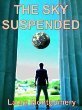

I have been trying to figure out who to compare this book to – as unfair as it sometimes seems, drawing a parallel between one work and another at least has the benefit of quickly conveying to the reader what to expect – and was considering the latter half of the Harrington series by David Weber, only the main characters never leave Earth. Perhaps also MM Kaye, only the book is in no way about India. Finally, I realized it’s just a big book. Dense, full of character development and tons of detail. When I was younger, I would check out the fattest books in the library in hopes my stack of reading material would last me the week until I returned. Laura Montgomery’s The Sky Suspended makes me feel like I am back there, reading a big book.
It took me a little while to get into the book. The opening is rather stiff, with more showing than telling, making the pace a bit slow and occasionally confusing, forcing me to re-read sections. Beginning with chapter four, however, the pace picks up with the first message from the returning starship Aeneid. We the readers are, by now, following the entwined stories of Calvin, a junior lawyer, and his friends. Wound into their suave D.C. lives is the Alaskan intruder, Tri, a young man convinced that a lottery for colonists to the newly discovered planet will be held. He travels all the way to the capital despite there being no colony ship built to make that journey to the stars. Add into this mix Armothy Brewer, a missing and key witness in Calvin’s case of a sunburned dog, and the stage is set.
Some things in this near future setting have not changed, like expensed lunches. Others, like the genetically inhanced humans, have radically altered in appearance, but not, thanks to the newly formed Department of the Soul, in essence.
The Aeneid, the youthful and observant Tri, and the probationary lawyers, not to mention the solar-singed dog, are all headed for a cosmic collision of truly bureaucratic proportions. Be patient with the opening, and Mongomery’s complex plot will start to gel as she brings you toward a climax under the sky suspended and about to fall on our young heroes. When the future of star travel hangs on a patent no-one knows who holds legally, you bring in the lawyers. And you hope those lawyers are young and flexible enough to have imagination and dreams of the stars.
Next week I will review a gloriously fun space opera, Chaos Quarter by David Welch.


November 21, 2013
Zwitterion

Playing games is great mental exercise.
I learned a new word in chemistry today, zwitterion. It’s a biomolecule that changes polarity based on pH level in the body, but that’s besides the point. It’s just a really cool word. I haven’t looked up the etymology of it yet, and it doesn’t sound either Greek or Latin, which are the languages I would suspect in any other science, but I am learning that chemistry has a language all its own.
The English language is an entity all it’s own. Prone to knocking up other languages and bearing their bastard children with words like “gesundheit” which I was highly amused to learn sounds to an ESL woman I once worked with as “goes in tight” and she was totally confused over why a sexual reference was made every time someone sneezed. I suspect most who use it don’t even know what it means, any longer.
When I was younger, and you could do such a thing, I would read the dictionary. Now, with the ability to type a word into google, I no longer have the pleasure of rabbit-trailing off from looking up one word to discovering others. However, I did discover that there are random word generators which serve much the same purpose! This one gives you the definitions as well: Random Word Generator.
However, there are etymological dictionaries online, but they didn’t have zwitterion in them. Googling for it yields that it comes from the Old High German root zwi-, which means twice. Makes sense, since it essentially has the capacity to switch back and forth. And I do love being able to take a word apart, look at it, and put it back in working order when I’m done with it. I may no longer own a print dictionary (having just moved. Rest assured, I had my eye on an 1880′s Webster that is big enough to put any old yellow pages to shame) but I can still have fun with words.
So what’s your favorite new word?


November 20, 2013
Adding Color to Life

Metaphor: In through the eyes, imagination stimulation.
Without metaphor, our language and literature would be pale shadows of themselves. Through the use of metaphor, words and phrases can expand their meanings in memorable ways that illuminate a greater meaning to the reader through a sometimes unconscious understanding of what is truly being said. To the uninitiated, a simple phrase may read like code: ‘the apple doesn’t fall far from the tree,’ seems to say only one thing, however, the fluent reader will quickly and without a conscious thought assign it another meaning as well; that the child resembles the parent. Some metaphor, particularly in the sparse verbiage of a poem, is not so easily discerned, leading to the reader being drawn into a closer study of the metaphor and work of literature it is found in. This conscious contemplation is an awakening of the mind to the true meaning underlying the surface appearance of the text.
This engaging of the whole attention of the reader is the purpose of some layered metaphors, which yields a deeper understanding to those who spend the time in reading, study, and re-reading until the true depth of metaphor is revealed. Why would some choose to cloak their meaning in obscurity? An author may have chosen this in order to discuss a difficult topic, as William Blake in his poem The Garden of Love.
My analysis of the poem “The Garden of Love” by William Blake is that it is a metaphor of the body and interpersonal relationship on a sexual level with others. In the Christian religion the body is said to be the temple of God. In Blake’s poem the chapel being barred by religious strictures is a metaphor for his body being closed off from the delights and pleasures available to that chapel from the garden, or those who were around him, in the reference to play.The Bible has a number of verses referring to the body as the temple of Christ, but most clearly stated in I Corinthians 6:19 “What? know ye not that your body is the temple of the Holy Ghost [which is] in you, which ye have of God, and ye are not your own?” Now, this is, meaning that it was to be kept clean and healthy, but the rigid church structure during the 18th century, where not only the Bible was used for teaching, but the Common Prayer Book had been so tied into social history by more than a hundred years of use at the time of Blake’s birth, had warped the religion of love into something Blake abhorred, and in The Garden of Love he makes a poignant metaphor to decry the loss of sensuality to the strictures of the church.
There are multiple layers of meaning able to be drawn from Blake’s poem, which is an indictment not only of religion, but of the culture that allowed the chains to be drawn tight around them, and which preferred to ponder ghastly graves than flowers, lightness, and love. The use of a floral language, even if not directly referenced, is implicit in his use of the contrast between sweet flowers, and briars. In the presentation image we created for the remediation of a metaphor, the flowers used to convey the sentiments of the poem are weedy, unbeautiful, or ephemeral: that is, not flowers you could pluck and add to a bouquet without them dying very quickly.
Blake himself, in the poem, uses language in a way meant to sway his audience toward him. Who could resist the idea of the idyllic child’s play on the green, romping in the sunshine? Then, from sweet flowers to tombstones, again, the natural draw is to life, joy, and the desires he so vividly describes as bound with briars. No child having grown up in the countryside playing outdoors and picking berries would be able to resist the memory of sweet juices hard-won with a little blood and tears from scratches. Blake, a master of this appeal, makes his audience recoil from a cultural constant, the weekly trip to a church, and perhaps, consider what they went to the church for, and why.
John Donne, in his poem The Flea, provides an excellent example of the illumination research can bring to a metaphor. In this case, when hundreds of years have passed between reader and author, leaving the reader peering through a fog of changing language to be sure of the original meaning, looking at what words have changed, and how they were once used can lead to a fuller understanding of the text. Donne was familiar with the biting insect as a metaphor for closeness. In our antiseptic society, the idea of a flea is disgusting and horrifying to some in a romantic setting. In his time, the suitor in the poem was using a hackneyed pick-up line, as badly received as ‘hey, baby, what’s your sign?’ would be today. The humor of the original intent is restored with this understanding of Donne’s metaphor.
Metaphor can be used to add emotional impact to a story, as in my flash fiction tale A Flash of Rain, where I used the idea of watering a garden in the rain as a metaphor for futility and dementia. The viewpoint character is never fully delineated or described, but the reader is allowed to fully identify with either the caregiver, as many of us face the reality of caring for our aging family; or with the woman watering her garden in the rain, our worst fear, the living death of unknowingness.
A Flash of Rain
Aunt Emma was watering the garden in the rain when I got home. I got out of the car and went to her, my shoes soaking in the mud and water as fast as I stepped into it. Her face was turned down like a wilted flower, but when I lifted her chin, I could feel the slickness of her drool on it.
“Oh,” was all I could say. “Oh, my dear.”
She looked at me with vacant eyes, and we stood there in the wetness, her gone, and my mind flying back over the years to my childhood and the warmth of the sunshine, of her smile as we picked flowers together.
“How did we get here?”
She didn’t answer, but tremulously, she lifted a hand to touch my cheek. I bent my head into her touch, feeling that she was cold.
“Come inside.”
Still no reply, but when I crooked my arm, she slid her little hand into my elbow, and we walked together toward the house. The hose laid forlornly on the muddy ground behind us, as we walked slowly, the core warmth seeping out of me. When we reached the door, I knew that she would never be able to be alone again. From my caretaker, to my care. And I knew my care would be as helpful to her as watering the garden in the rain.
*************
Visual metaphors offer a surprisingly complex depth, often without the use of any words at all. I found this cartoon as I was reading, and it made me, without words, homesick for my grandmother. She has not yet passed beyond, and as she is a writer, I am still able to do what the child in the cartoon is: to read from her thoughts and experiences, and in doing so, to deepen my own understanding of life. Image can convey a metaphor that crosses language barriers; the cartoon below was drawn by an Iranian, intended for an audience the speaks no English, yet I am perfectly able to understand, yearn, and learn from his visual metaphor.
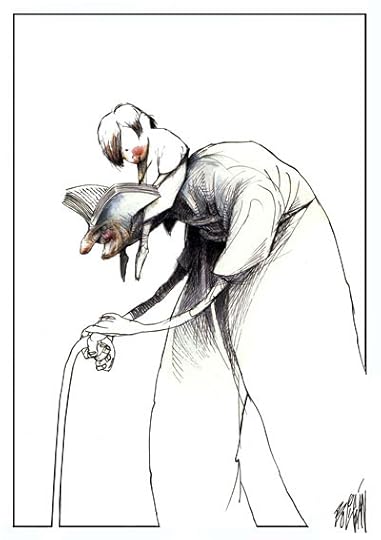
Without metaphor, language becomes a blunt instrument, unable to tease fine emotions from a text with scalpel-like precision, flaying open the heart and mind to allow the reader to fully grasp an author’s intent. Life becomes an open book to the reader fully aware of metaphor in their everyday life, and the writer skilled in its use can convey a meaningful conversation in the sparsest of texts. Being cautious of overuse, where obfuscation can obliterate the true intent of a writer, metaphor in moderation is a powerful tool.


November 19, 2013
Beautiful America: Looking Up
We don’t spend enough time with our head in the clouds. Or the stars, or simply that indescribably play of colors as our star rises and sets on our flat earth where we stolidly plod onward through our daily toil. I read and write a lot of science fiction, and even I don’t take the time to look up, to pierce the veil of the bluness and see the infinite vastness of the universe beyond it. Without that awareness of “what’s out there?” how are we to dream big enough to vault off this world into that starry blackness?
I had the pleasure, last year while still living on the Farm, of taking a city friend outside at night and simply saying “look up,” then keeping my mouth shut while I got to watch his face. I’m sure he had seen stars before, as we all have, but the play of emotionsI glimpsed tells me that like so many of us, even in the science fiction fandom, he’d forgotten what they looked like. I live in town, now, so it’s not easy to see them clearly. But tonight, if you don’t have clouds, go outside.
Look Up.

Early morning’s reward over the Farm.

Can you see the Blue Angels?

bright flowers against a bright sky

Light captured, reflected, and magnified by the clouds.

Sunbeams falling on moored boats in Maine, near York Beach

The sky’s edge framed in corn plants.


November 18, 2013
Book Cartoons
I came across a site with a bunch of cartoons from a contest in Iran that illustrates not only how comics cross language barriers, but how reading is universally affective to the human condition. My favorites from the winners and finalists are below.

The Pause that Refreshes

Escapism: How Dreams are Born

The Milk of Knowledge

Reading Grandma


Diving off Ancient Platforms
I attended a lecture on Ancient Mayan politics for another reason, but as I was jotting notes and listening, and seeing the power plays and culture unfold in my mind’s eye, it struck me that this particular polity would be a fascinating way to create a turn-key world in a fantasy or science-fiction story. Because it is a little-known and very non-Western culture, it will give a feeling of exotic other-worldliness to a story, without having to make it up as you go, useful for maintaining consistency in world contruction. I will be seeking out more information on obscure cultures such as this one, to lend my own writing a new and different flavor. What is old, become new.
Sarah E. Jackson, a professor at the University of Cincinnati, lectured at the Latin American Culture Fest on Saturday. Her topic, Ancient Mayan Politics: The Royal Court, its Members, How they Transformed Classic Period Governance. Spelling mistakes in the notes are mine, she was not always projecting the words she used.
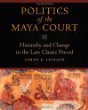

Using stone monuments and their hieroglyphs as supporting evidence, she asks “what was the nature of the classic Royal Mayan court?” She advocates moving away from the idea of one central figure into the concept of many figures of power. Through the interpretation of hieroglyphs, her attention will thus focus on visual and textual evidence. Each Mayan polity was an independent city-state with a ruler, the Kukla-Ko (sp).
•Dumbarton Oaks Panel•

Dumbarton Oaks Panel
As primary sources these writing sources are a key way of interpreting the Maya on their own terms.
•Piedras Negra Panel 3•

Piedras Negra Panel 3
A critical Place for understanding Maya politics.
•Site R Lintel 1•

Depiction of Ak-Mo, an exceptionally politically collegiate individual.
•Laxtunich Lintel 4•

Laxtunich Lintel
Three courtiers and a rule, a clear and explicit supporting role being expressed.
•Piedras Negra Panel 3•
This panel was “deactivated” or intentionally defaced in ancient times. It remains a very naturalistic depiction. A ruler in an architecturally framed space, and a very crowded place with a swirl of people around the ruler. He is elevated on an ornate throne, but leaning forward from a cross-legged position and engaging with the multiple people of his court. People standing on his right are family, and on the left are visitors from a neighboring city. The seated people are his court, labeled with little glyphs. Some are named, and some have titles, including baah ajaw, anab, sajal, baah sajal, and one says, directly addressed to the ruler, “a-wink-en” (I am your servant).
There are five known titles that describe members of the Mayan Court.
Sajal
Ajk’uhuun
ti’uhuun/ti’sakhuun (at the mouth)
banded bird (no known phonetic translation)
yajaw k’ahk
Contextually, loooking at the uses of these titles gives us an idea of their roles. All five positions are associated with accession. For instance:
chun “seating”
joy “encirclement”
k’ah huun “headband tying”
The titles are a Late Classic phenomenon, arising sometime between 600-900 AD, which correlates with a transitional time. A main river area is likely where the courtly accession traditions were born.
The positions within the court are distinctive within each polity. They are a grpoup structured in specific ways, acting as shared building blocks of Mayan Political community.
•Site R Lintel 1•
The emphasis is on a particular individual, Ahk’mool (sp), who showed how variable and adaptable the nature of the court was, as seen through the movements of a specific persona. He is shown dancing in this image, the same size as the ruler. He is labeled a sajal, the owner of four captives, and as chook (young, unripe). He may have acted as an overseer, or a local ruler. Because Ahk’mool shows up on several sites, we are able to trace his political trajectory. He served under two rulers, with a ten-year interregnum period. His story demonstrates the importance of court members providing stability during a tumultuous time. On Lintel 4 he is labeled and ak’huun, having elevated in status, but on Lintel 3 he is listed with no status title.
•Dumbarton Oaks Panel•
Variety in structure and organization in the court shows flexibility. The panel shows Chac’tuun (sp), who is eventually a sajal as his father was a sajal. His position is related to shifts in his family. He was not seated as sajal until his father died when Chac’tuun was forty-eight. We see the processes of change at a personal level.
•Tonina Monument 165•

This source shows us that Koni’nish (sp), an individual at Tonina, held more than one office simultaneously. Different locations of courts might have from one to five types of courtiers. Reaseons might be dictated by local needs and resources. So we see that we have a culturally anchored institution that is capabale of adapting to local needs.
How They Themselves Understood the Court
At Laxtunich we are able to begin accessing Mayan Metaphors for framing the court. Here, labeled individuals are supporting the ruler. The are labeled as powatuuns (sp) who are otherworldly figures who hold up the sky in Mayan Myths. Courtiers are parallels in their support of rulers to the powatuun (sp). Earthly courts are depicted similarly to Heavenly courts on these monuments.
Kelen Hix on the Tonina Monument 165 belongs to the paddler gods: he is possessed by them. This possession conceit is associated with rulers, and it is interesting to see that a courtier could also have access to the gods. Sources of power, it is suggested, were, sometimes not the sole provenance of the ruler. it provides a divine mandate to the framing of the royal power, in that divine relationships were not solely the milieu of the ruler.
An agricultural metaphor frames courtiers as plants and farmers. We saw the use before of ch’ok, which means young, junior, but literally, green or unripe (in connection with Ahk’mool). Pakal’s sarcophagus found at Palenque, shows courtiers drawing sustenance from the body of the ruler, their own bodies sprouting from the surface of the earth and growing leaves. They were u chun thanob: procipals of a village, literally the roots of power.
The work of the court is described as farming. Chub: overseeing, but also literally to plw, from the Palenque tablet of the slaves. In a larger sense, this represents the importance of agriculture in every level of Mayan Society. Elite roles are integral to the representations, as they were a critical part of the court.
So we have a recognition of the constituent components of the court: a transformation of our conceptions of Maya governance. The structure of the court is far from being stagnant or static. Flexible organization allowed for active management. And by accessing Maya conceptions of their court through twinned metaphors of divinity and agriculture, we grasp an understanding of how they perceived themselves.


November 17, 2013
Books Open Doors

To another world.


