Bill Cheng's Blog, page 33
May 15, 2014


shudderpup:
jwthornton:
boredangry:
topsidepress:
Author and...
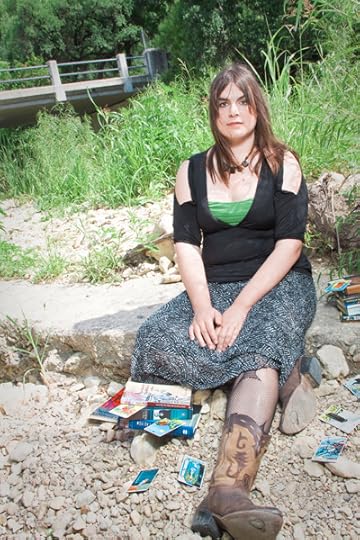
Author and artist Jeanne Thornton will be joining Casey Plett, Imogen Binnie and Red Durkin on tour from June 3-June 10!
Jeanne Thornton is the author of The Black Emerald (forthcoming in 2014) and The Dream of Doctor Bantam (a Lambda Award finalist for 2012), as well as the webcomics Bad Mother and The Man Who Hates Fun. She also publishes Rocksalt Magazine and is the cofounder of Instar Books, an imprint of O/R Books. She lives in Austin, TX and her next novel is about the Beach Boys, mostly.
Tour dates with Jeanne:
Tuesday, June 3 @7pm – New York City, NY
Bluestockings Bookstore, 172 Allen St, New York, NY
Wednesday, June 4 @7pm – Brattleboro, VT
The Root Social Justice Center, 28 Williams St., Brattleboro, VT
Thursday, June 5 @7pm – Montreal, QC
Cafe Cleopatre, 2nd Floor 1230 Boulevard Saint-Laurent, Montréal, QC
Saturday, June 7 @7pm – Providence, RI
Carpenter Street Gallery – 186 Carpenter St, Providence, RI
Sunday, June 8th @3pm – Hartford, CT
Real Art Ways, 56 Arbor St #1, Hartford, CT
with special guest Susan Jane Bigelow
Tuesday, June 10th @7pm – Brooklyn, NY
Invisible Dog Art Center, 51 Bergen St, Brooklyn, NY
As part of Better Off Read
rad
Oh whoa, hey, look what is happening everyone!
everyone go meet this absolutely dazzling lady. I know first hand that you will be totally dazzled.
elliottholt:
thompsonted:
littlebrown:
Ask a Debut Novelist -...
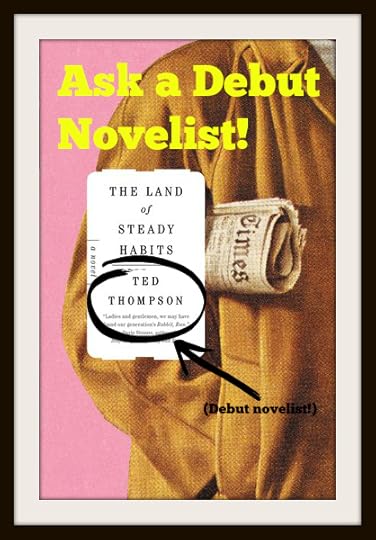
Ask a Debut Novelist - Question 1
In which thompsonted, author of The Land of Steady Habits, answers your questions about writing, publishing, and making good work.
slurpeemoney asks: On a scale of one to ten, how “good” was your submission draft in your own opinion? Did you feel it was exactly the story you were trying to tell, or was it just “good enough” to send out? I feel like I could spend the rest of my life revising my book, and it would never reach an 8. *sigh*
Ah, a question that is near and dear to my heart. Thank you, slurpeemoney, for asking this.
Before I get to me, I think there are a couple of things going on in your question that are helpful to sort out. The first is the question of how “good” my novel was before it went out, on a scale of 1 to 10, which seems to me a different thing from the second part of the question, which was if I felt it was exactly the story I was trying to tell.
For me, I’ve said before that I knew when my novel went out on submission that it wasn’t quite done, but I think that’s maybe a little misleading. In my case it was less an issue of it being good on a scale of 1 to 10 (good to who exactly?) than of feeling as though the book hadn’t yet expressed what deep down, under all of my uncertainties and anxieties and doubts, I knew it could.
The reason for this could probably be traced back to the earliest seeds of the project, way back in 2003, when the country was careening headlong into war, and I was looking for my first job. I spent my days then listening to call-in shows on NPR that affirmed my outrage while idly scrolling through entry-level want ads, feeling as though every fate they presented was a narrowed version of what a life could be. All of the jobs traded in stability (something I’ve since come to appreciate and need but that then seemed to me a product of easy comfort and resignation), promising regular money and health insurance and a retirement plan in exchange for your time. What the companies actually did—and what they asked you to do—was, in so many of these ads, beside the point. And still none of them were calling me back. So I suppose it’s no wonder that I started writing about a character who had lived through all that such a life promised, and who both rejected its ideals and was somewhat of a buffoon while he was doing it. It seemed to me then that this was the deadened path of American adulthood, and what I felt, with great indignation, was expected of me. The project, in a way, was conceived in the midst of this, and I suppose was a way of lashing out at a time when I was feeling powerless.
It took many years for that to grow into a full novel, and I spent much of that time polishing the sentences until they gleamed. I was proud of the writing and, if I’m honest, desperate to prove something about my talent. There is, particularly in graduate writing programs (where I had written much of this draft), a shared assumption that if you focus on the craft the meaning will come. Make good sentences and they will carry the freight of your soul. Or something like that. And while I mostly agree with that approach, this was the first time I really saw its limits. The book went out, and while I had made 250 pages of good sentences, in my gut I felt an ickiness that I couldn’t name. So when I was given the chance to make changes in the editorial process (along with a pointed letter from my editor), I took the manuscript back. And though it took me nearly a year to locate it, the problem I was feeling ultimately stemmed from a lack of generosity, a failure of empathy. It took me a while to realize how much of the underpinnings had come from a place of anger, a stinky and shriveled and adolescent place within me, how much of the writing that I thought was sharp and truthful also bordered on cynicism, which is not intelligence though it can be easy to confuse the two. I ended up throwing away pretty much all of those polished sentences in that revision, and expanding the book from a single character’s point of view into three, all in order to find my way to a novel that was closer to the one I wanted to write.
All of this is to say, slurpeemoney, that underneath it all, I think deep down we know when we’re done. There is something driving your writing, something that you might not understand, that has to be expressed for the project to be realized. If it hasn’t yet been found, or hasn’t yet been made clear, you’ll feel it and you’ll know you’re not there. To me, the question of whether something is “good” should always be secondary to this.
Because it seems to me the question of whether or not it’s good, and rating it on a 1–10 scale, is impossible to parse, and really comes down to a question of confidence, of how you feel about it. I can say that I’ve never felt more alone during the writing of my book than when I threw that draft away. It had been accepted for publication so what was my problem? Was I being a perfectionist? A self-sabotager? Was I just scared? Nobody seemed to understand and I had a hard time explaining it, and soon my confidence evaporated. No matter how many times I reached out, or confided in friends, or threw tantrums that my wife watched with waning patience, nobody was able to re-instill it for me. They would just stare at me blankly, or with pity, or concern. They would suggest meditation or exercise or buy me another round, and it took me a long time to realize they were waiting for me to stand by what I had made.
So, since advice is always largely for the advice-giver, and since you didn’t ask, I hope you’ll forgive me while I say this (mostly to myself): Throw away the scale. There is no scale, there is only your story. Listen to the story you are trying to tell, that unconscious combination of imagination and memory and feeling, and trust it. Concentrate on expressing that as clearly as you can, concentrate on finding the language for it, but above all don’t second-guess it. It’s your true north. Because here’s the great thing about novels and writing and creating anything: nobody else can possibly write the book you’re writing. It is yours, singular, and the more clearly it is expressed the more alive its singularity will be. If you want to be ruthless, be ruthless about clarity, be ruthless about trusting yourself, be ruthless about finding generosity for your characters, but most of all be ruthless about ignoring the inner demon that keeps telling you you’ll never be as good as Eudora Welty or Zadie Smith or David Mitchell or James Baldwin or whoever, that your novel will never be better than an 8. That inner demon is full of fear, and fear, if anything, is what reduces a novel and sterilizes its language. Fear, in writing, is a self-fulfilling prophesy. So banish it, banish the whole scale, and trust your own dark bouquet of inspiration. Thank god you’re not those other writers. We already have their books, but we don’t have yours, and I am of the mind that the world is almost always made better by more books.
I promise to follow my own advice if you will.
Very best,
Ted
Have a question for Ted Thompson, Debut Novelist? Drop it in our Ask Box!
Ask me another!
Wise advice from Ted Thompson.
asylum-art:
Jiang Pengyi::Everything Illuminates
Jiang...
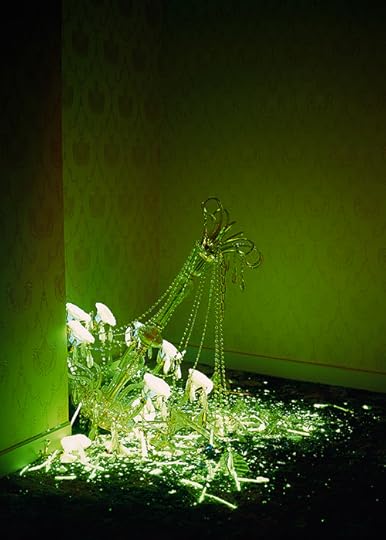





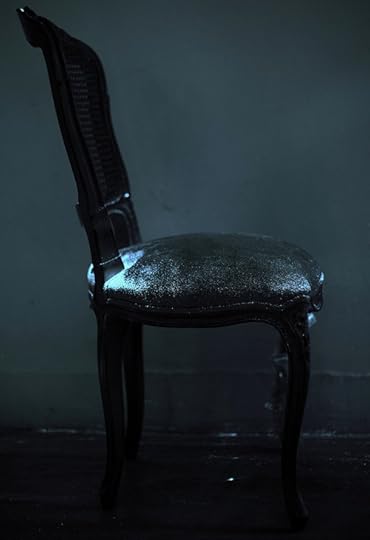


Jiang Pengyi::Everything Illuminates
Jiang Pengyi‘s latest series, Everything Illuminates, sees the artist mixing fluorescent powders with liquid wax, and applying it to various, commonly-found objects.
Jiang Pengyi‘s latest series, Everything Illuminates, sees the artist mixing fluorescent powders with liquid wax, and applying it to various, commonly-found objects.
Read more at http://designcollector.net/everything-illuminates-by-jiang-pengyi/#hTggvJbSpx90qYO7.99
Jiang Pengyi‘s latest series, Everything Illuminates, sees the artist mixing fluorescent powders with liquid wax, and applying it to various, commonly-found objects.
Read more at http://designcollector.net/everything-illuminates-by-jiang-pengyi/#hTggvJbSpx90qYO7.99
Some part of me is horrified that this is WHERE ALL THE POLLEN IS
chavisory:
glitterbutch:
My department had a GOOD April Fools’...
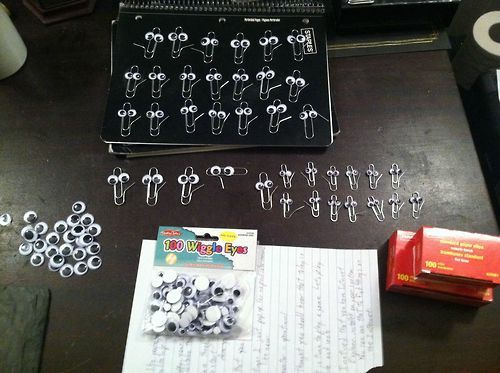
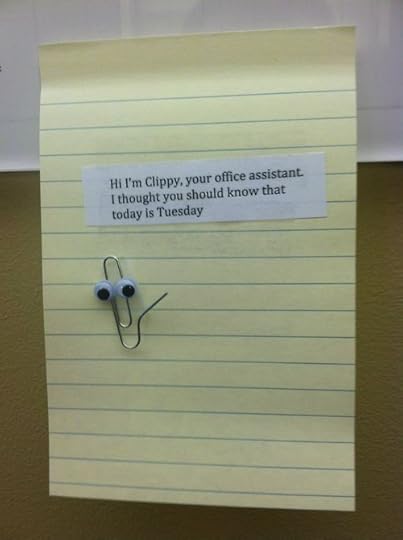
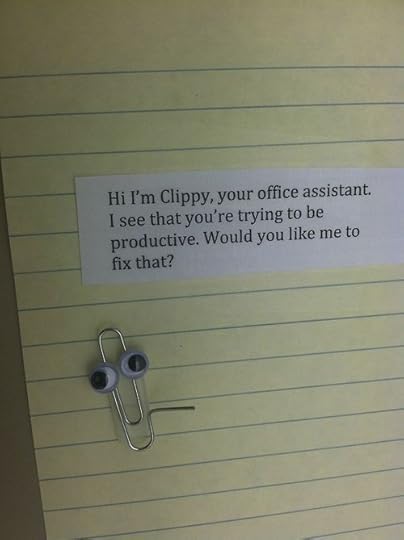
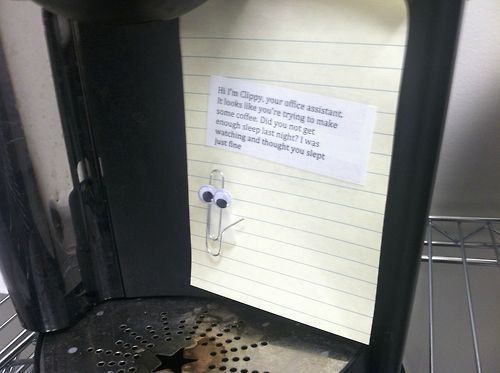
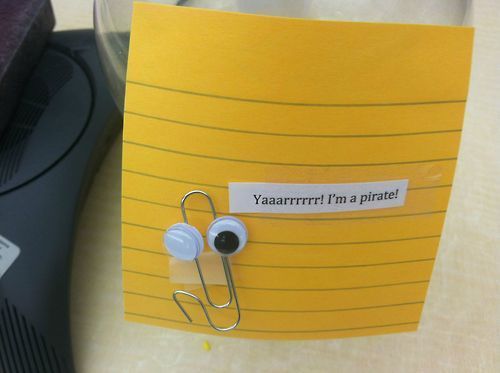
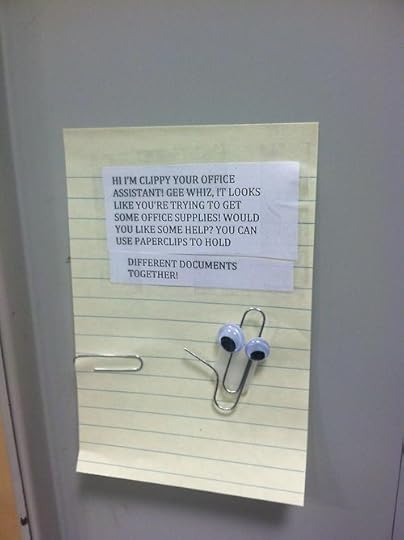
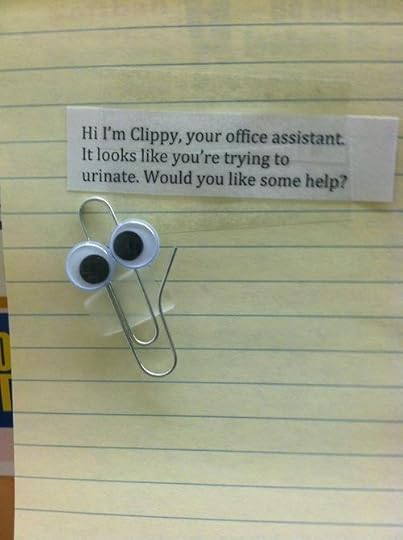
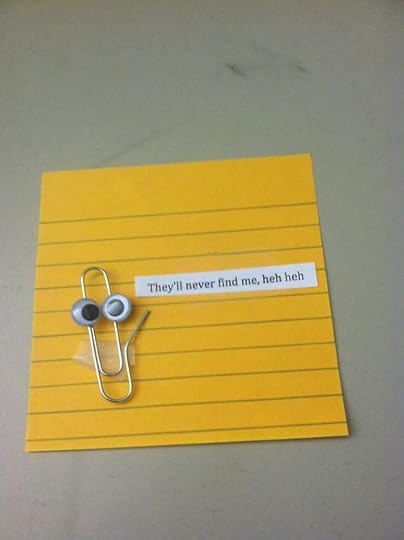

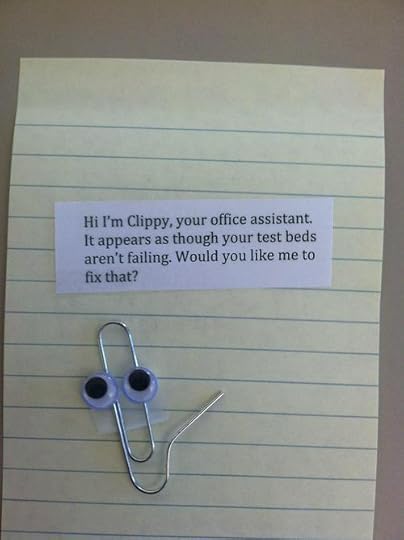
My department had a GOOD April Fools’ Day prank, but this is GREAT. And I will be doing this next year, mark my ever-loving words.
KILL IT WITH FIRE.
May 14, 2014
orbooks:
Just for an instant, for the duration of a song, a...
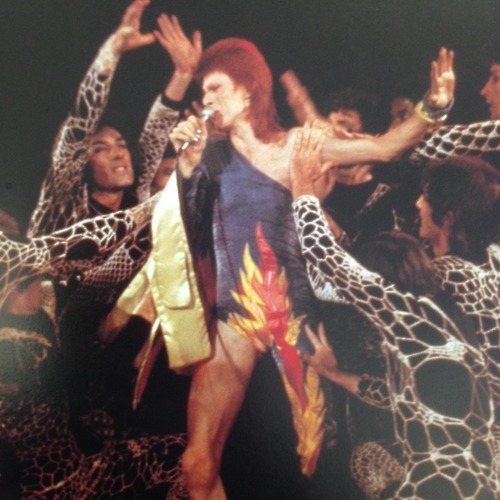
Just for an instant, for the duration of a song, a seemingly silly, simple, puerile pop song, we can decreate all that is creaturely (or Critchley) about us, and imagine some other way of existing, something utopian. Such is the tremendous hope that speaks out of Bowie’s music. This is Bowie’s step, his act of freedom taken in face of the majesty of the absurd and the presence of human beings. Such is the power of his poetry.
from BOWIE by Simon Critchley, coming soon.
May 13, 2014

nevver:
Found in Translation
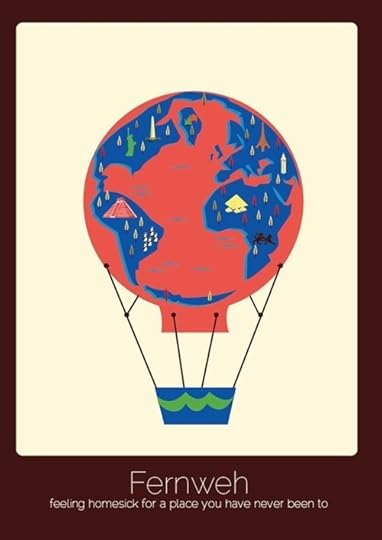
Illustration by Anjana Iyer

Illustration by Anjana Iyer
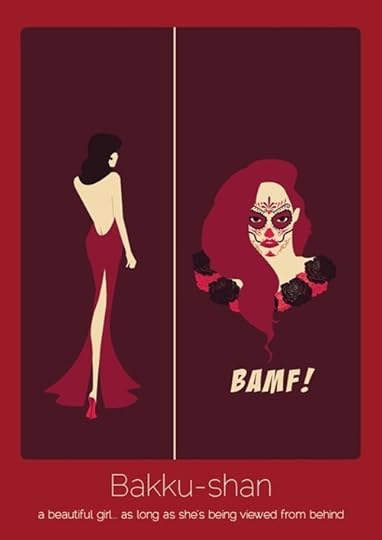
Illustration by Anjana Iyer
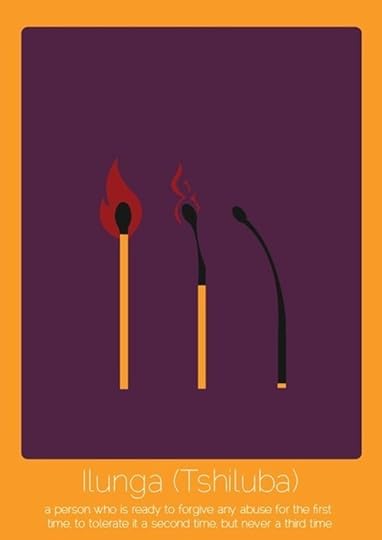
Illustration by Anjana Iyer
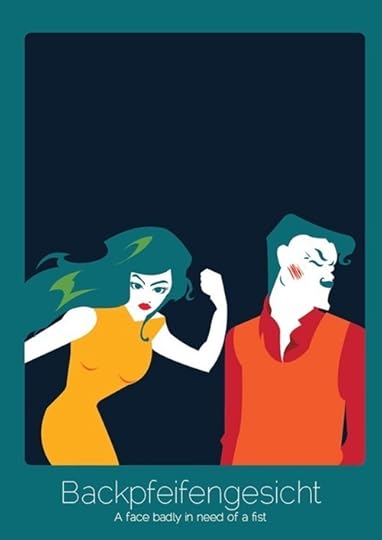
Illustration by Anjana Iyer
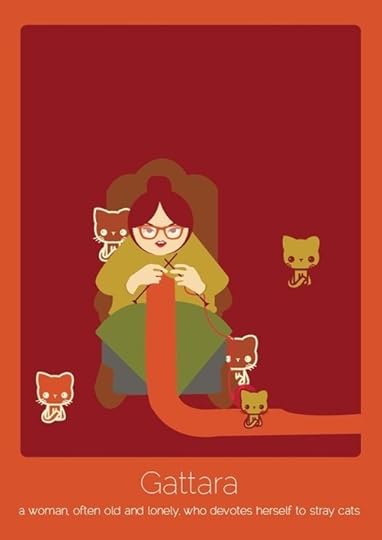
Illustration by Anjana Iyer
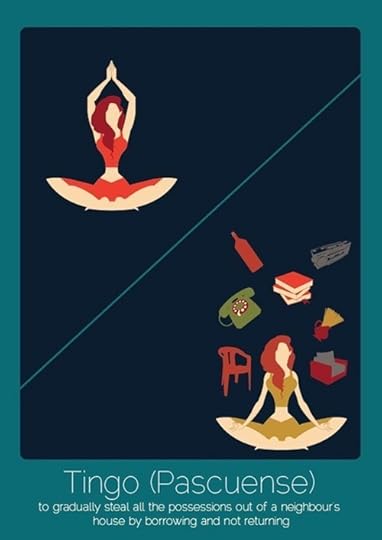
Illustration by Anjana Iyer
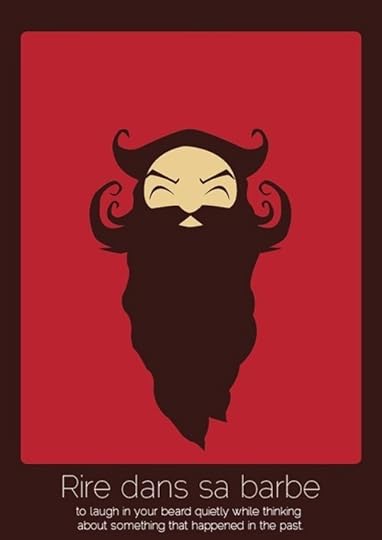
Illustration by Anjana Iyer
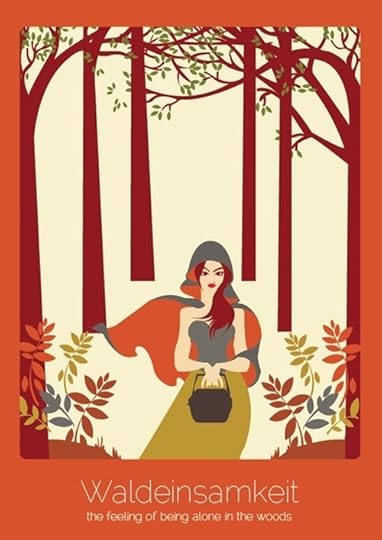
Illustration by Anjana Iyer
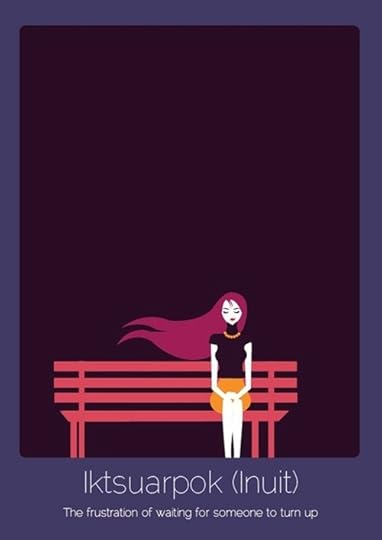
Illustration by Anjana Iyer
"Every novel is the first novel, or it’s not good. That’s probably not true for a lot of people...."
- Stephen Elliott, “The Daily Rumpus,” May 8 (via albatrossampersand)
parentingconfessional:
Today is the publication day for Cutting...
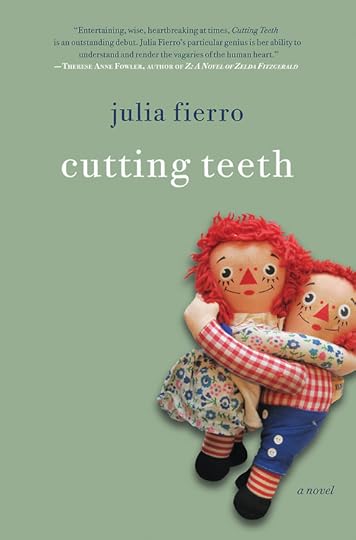
Today is the publication day for Cutting Teeth, the novel that inspired The Parenting Confessional.
We’re giving away 3 signed copies. REBLOG this to enter to win a copy!