Brian McClellan's Blog, page 30
April 15, 2015
Tax Day Coupon
This month's Holy Taco Church Newsletter is out, and inside there's a coupon code for 15% off anything from my author store, as well as the author stores of my friends Kevin Hearne and Wesley Chu. So celebrate getting your stupid taxes done by picking up some rad science fiction and fantasy novels signed by the authors!
The coupon code is "TAXDAY" and is good through this coming Friday, 4/19.


How Much an Author Makes Off Their Books
This is the fourth of my essays about being an author, brought to you by my Patreon page.
One of the most common questions an author gets is "how can I buy your book to support you best?" It comes from readers who want to know what format (be it ebook, audio, or physical) authors make the most money from, or whether we get paid for secondhand purchases or other such considerations. It's a great question, and we love getting it because it means that reader is taking the time to consider the person behind their favorite books.
The standard answer is "however is most convenient for you" because, let's face it, the difference of a dollar or less coming to us is nothing compared to getting a lifelong fan who is reading our books in whatever format is most comfortable for them. But I have some fans who want to press a little further and make sure they get every penny they can into my hands and, not being one to argue, I thought I'd share the breakdown.
A small caveat—a lot of people will be shocked at how small of a percentage an author makes from the books that are being sold. I'm not going to talk about why this is, or why I'm fairly satisfied with my cut, because I addressed it last year in my post on the Cost of a Good Book. I'm also talking strictly traditionally-published numbers here and not self-published.
Here's the short version ordered from the most monetarily-beneficial to least. This is based on my own experiences, which are pretty much industry standard for the big publishers but may vary depending on prices and contract terms:
purchasing direct from the authorhardcoveraudiobookebookborrowing from librariestrade paperbackmass market paperbacksecondhandpiracyThe first thing you'll notice is that list is pretty much in order of how expensive the books are to the readers in first place. No big surprise there. But let's take a closer look at each of these and see what the author is getting paid.
Not every author offers books for sale from their own website. But for those that do, this is by far the best way to support them because it means they'll be acting as their own bookstore and taking that cut on top of their standard payment by way of royalties, whatever those might be. So, say you picked up a copy of Promise of Blood in hardcover from my store. I charge cover price of $24. I purchased the books in bulk from distributor for about $16 each, so I get that difference of $8. I also get my standard 10% royalty of $2.40. Of course, this means I also have to deal with stocking, customer service, packaging, shipping, and all that, but I've decided it's well worth the time and cost. Direct author cut on Promise of Blood in hardcover: $10.40
If an author doesn't sell their books themselves, the best way to support them is buying in hardcover (which, of course, not all authors have). As mentioned above, I make 10% off my hardcovers. But that's 10% off the cover price. Meaning if you get a new copy of Autumn Republic off Amazon for $18, I'm still going to make the full $2.60 off the $26 original price. Hardcover author cut on Promise of Blood: $2.40
Audiobooks are a weird thing because, while my contract says that I make 25% of net (meaning 25% of what my publisher is paid), the number is constantly going up and down depending on whether a reader bought it directly from Audible, or used an Audible credit, or bought it during a sale, or what have you. So all I can really give you is the average I make according to my royalty statement. Audio author cut from Promise of Blood: $2.15
I've put ebooks on the list above trade paperbacks and below audiobooks, but to be honest they could hold a different spot depending on pricing. Like audio, I make 25% of net on ebooks. So, 25% of what my publisher makes which is a number I'm not entirely clear on. It depends on the publisher and their deal with the ebook distributors. I've heard 70% of sale price thrown around as standard. Assuming 70%, that means I make 25% of 70% of whatever you paid for the ebook. If you paid $13, that means I got $2.28. If you got it on sale for $1.99, that means I made $.35. Promise of Blood was on sale for many months for $1.99 in a (successful) attempt to rack up sales before Crimson Campaign came out. That means the average amount of made from Promise of Blood in ebook is much, much lower than books two or three. For sake of simplicity, I'll use the $9.99 price point. Ebook author cut from Promise of Blood: $1.75
Putting library borrows in this spot, or rather any spot at all, is kind of arbitrary and I'm sure people can make a good argument for it being higher or lower. Libraries pay the same as anyone else for physical books, and a very large markup on ebooks and audiobooks, and then they lend them to an unknown number of patrons for free. So why is it here? Does this mean I'd rather someone borrow my books from a library than buy it in trade paperback? No... but I think a library patron's contribution to a writer's income is incredibly important and I have a soft spot for libraries. Every borrow gets my name out there and talked about for free (as far as the patrons are concerned), and still puts some money in my pocket. What's more, every borrow of my books in hardcover makes it more likely they'll have to replace it when it comes out in paperback, and/or they'll buy the hardcovers of the next two books as soon as they're out. Libraries are an author's best friend. Library borrow author cut from Promise of Blood: ?
Trade paperbacks have the same sort of deal as the hardcovers (percent of gross), but with a slightly lower percentage. Probably to account for the larger risk of the larger printings. For me, that means 7.5% of cover price goes into my pocket. Trade paperback author cut from Promise of Blood: $1.20
Same deal with the mass market paperbacks, except that they generally cost half as much as trade and a third as much as hardcovers so they're not making the author much money at all. To do very well in mass market, an author has to depend on very high volume. Now, my books have not been made into mass market and I'm not sure if they ever will, so my number will be an assumption based on an $8 price point and 8% royalty rate. Mass market paperback author cut from Promise of Blood: $.64
I've had a few people ask about secondhand books. An author makes no money off of books you buy from Half Price or the "used" section of Amazon. However, these books have already been sold once, which makes them good and paid for as far as I'm concerned. Sometimes I've made full price off the original sale ($2.40 on a hardcover) and sometimes I've been paid pennies on a bulk sale of remainders. But regardless, they've gone through the right channels. Would I prefer you buy my books new? Certainly. Would I be annoyed that you bought them used? Absolutely not. I love used books. For fiction I almost exclusively buy new, but I get most of my non-fiction from Half Price Books because it lets me try out things that may or may not be useful on the cheap. Secondhand author cut from Promise of Blood: $0
I'm not going to get into the whole piracy debate thing here, because it's kind of tiresome. Some argue that every book pirated is the same as a lost sale, while others argue that pirating helps get the word out and is used most often as a preview for things the person will buy in the future. Like I deal with most issues, I try to walk the middle of the road: I don't go all self-righteous on people who feel the need to pirate for whatever reason, but I absolutely will not condone a pirating of one of my books. If you want one of my books for free then please, please go get it from your local library. That's what they're there for. Piracy author cut of Promise of Blood: $0
All in all, the best "reader cost" to "author paid" ratio seems to be ebooks but, as I said, all these things vary depending on a variety of circumstances that include small clauses in an author's contract that changes how much they get paid depending on different circumstances, like remaindering or books sold internationally. In the end, though, making a living as an author depends largely on volume of sales after you've earned out your advance. I could talk about the way all of that works at greater length, but I think I'm going to save it for a future post.
At the end of the day you should buy books in the format you enjoy the most—but if you do change it up for my benefit, you have my eternal gratitude. And if you want to find out a little more about helping your favorite author, go read what my friend and fellow Orbit author Sam Sykes has to say about reviews and word of mouth.
April 13, 2015
Speaking
If you're local to the Cleveland area, I'll be speaking at the Chardon Public Library in Chardon, OH tonight (April 13th) from 7-8PM, after which I'll be signing books (plenty of which will be available for sale). Come join me!
April 9, 2015
Novella Giveaway
Over on /r/powdermage I'm giving everyone a chance to win an Audible code for Servant of the Crown. All you have to do is write a little bit about your favorite Powder Mage Universe character! Head on over and enter!
March 24, 2015
Attending a Convention as an Author
This is the third of my essays about being an author, brought to you by my Patreon page.
Most of my readers are probably at least somewhat aware of SFF (science fiction and fantasy) conventions. If you're not, here's the short version: conventions are where us nerdy types get together to geek out over our various fandoms. Imagine that conference your dentist went to over the summer with ten thousand other dentists, except instead of dentists going to lectures on hygiene and flossing we have people dressed up as Doctor Who going to panels on how to write epic fantasy novels. It's an oversimplification to be sure, but it works for the purposes of this essay. These SFF conventions vary from the 250,000-attendee San Diego Comic-Con all the way down to the local get-togethers in small mid-west cities that only sport a few hundred people.
Though some conventions focus almost entirely on literary SFF and others ignore it in favor of other medias, you'll have a good bet at finding at least a couple authors at every one of them.
Authors have a weird relationship with conventions. We're not B-list celebrities, making twenty grand off an appearance where we'll sign photos for $45 a pop and be whisked around by a volunteer handler. Nor are we (usually) vendors, there for the weekend mostly for business, to sit at our table of goods, expecting to take home a small profit. Nor are we the basic fan, showing up for the sole reason of taking in the spectacle.
Let's talk about money first because, to be honest, it's the primary thing on my mind when I try to plan out my convention attendance for the year and it's probably the reason your favorite author isn't going to be at your local convention. SFF conventions often have a budget to bring in celebrities. At Comic-cons, most of that budget will be spent on the Stan Lees or the Sarah Michelle Gellars. If there's a writer's track at the convention, or if the convention focuses on the literary, then money is set aside for bringing in Brandon Sanderson, Pat Rothfuss, or someone else with an immense global fanbase.
This means that when the average author attends a con, they have all the same expenses that you do. Flight, hotel, ground transportation, meals, snacks, souvenirs. When I decide I want to go to a convention, one of the first things I do is try to whittle those expenses down (and to be fair, I have more opportunities to do this than a regular person). I'll contact the convention organizers and see if they have any extra budget to pay for my hotel or my flight while I cover everything else. They usually don't. Next I'll check around with my author friends to see who wants to share a hotel room, or has a couch to crash on, or even look for someone who wants to share a cab to and from the airport.
For me, this kind of planning goes all the way through the convention—on Friday night I might see who wants to split a pizza for dinner so I don't have to pay $25 for some chicken tenders at the hotel bar. Finding out that a particular convention always has an amazing Green Room accessible by authors (and authors aren't always on the list) is a godsend, because it gives me someplace to grab breakfast and lunch for free. Basically what I'm saying is that myself, and most of your favorite authors, have to budget these things like regular people because even the moderately successful of us aren't making huge amounts of money.
So, you might ask after hearing all that, why would an author even bother attending a convention?
Most authors, like any of the artists out there in SFF, are fans. I'm there to see the cool displays and buy geeky jewelry for my wife or get a glimpse of Bruce Campbell's chin. I don't really attend panels any more unless some of my friends are on them but there's plenty of other stuff I want to see and do. This makes the weekend crazy hectic because when you're an author going to a convention, there's a good chance you're on the programming so you can justify to your accountant the convention as a write-off-able expense.
So you're not just there for yourself. You're there for all the rest of the fans, too. Over the course of three days you'll be on a number (anywhere from 4 to 10) of hour-long panels, a handful of signings, and perhaps a few other random events that pop up at these sorts of things. You're running around an enormous convention center, staying "on" for any fans that might come to your panels or ask you to sign their books, and still trying to be awake enough to hang out with the friends you only get to see once a year when you congregate in the hotel bar at 2AM.
Personally, I like to bring my own books to sell when I can because the profit can pay for all or part of my trip. Sometimes the books are left with a vendor who takes a cut and sometimes I'm sitting there for most of the day selling them myself. That makes me a fan, a (very) minor celebrity, and a vendor.
It's crazy. It's crazy fun, but it's also plain crazy.
I could go on at length about the psychological aspect of conventions, but at the end of the day they're emotionally and physically exhausting for the regular attendees—so I think you can imagine how draining it is for someone juggling all of the above. If you approach an author at the wrong moment and they give you a dirty look or seem dismissive, try to cut them a little slack. Most of us aren't huge jerks, just tuckered out.
As an aside, it's really weird referring to myself as a celebrity, even a very, very minor one, because writing is not a career that makes you feel terribly celebrity-ish. I've never had someone recognize me out in the wilds of the public, for instance. But I have had people recognize me at conventions which is a huge ego boost. Last year at Gen Con I had grabbed some burgers with a friend and we found a side hall where we could sit down and relax out of the noise. While we were talking I noticed a guy walk by holding one of my hardcovers—a fact which by itself was pretty amazing. I smiled and kept eating and a moment later the guy came back and very politely asked if I was Brian McClellan. I signed his book and chatted a little and was totally blown away that someone would recognize me at such an enormous convention where only the tiniest fraction of the attendees were there for the authors. It was a very surreal moment.
If you'd like to know what conventions I plan to be at this year you can check out my Event Page.
March 22, 2015
Sale
I was feeling sale-ish last night, so I put up a coupon code for the store. 35% off any copy of Promise of Blood using the code "March2015." The code will be good through Friday the 27th of March.
Have at it.
March 20, 2015
Art Contest Winners
I've been very wrapped up in working on the next book lately, so I've been remiss in not announcing the winners of the first Powder Mage Fan Art Contest. Here you are!
Runner-ups, who will each receive a signed hardcover of Promise of Blood, include the following:
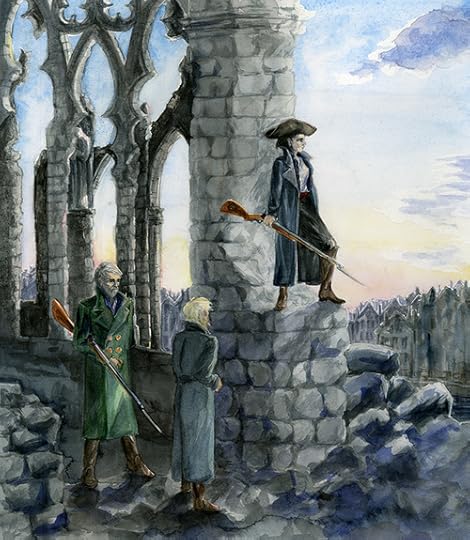
by Clare Henry
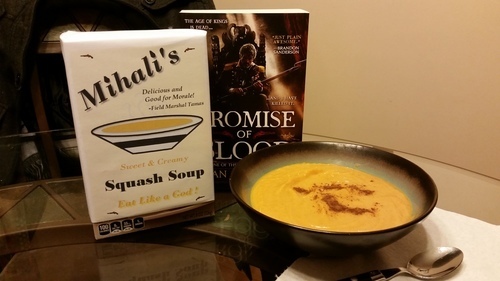
by Kristina Bunnell
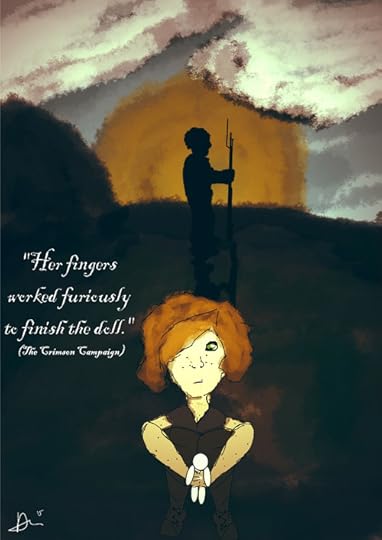
by Daniel Wheatley
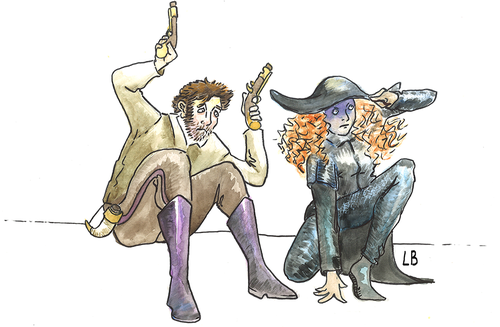
by Lauren Butler
And finally, in first place, who will receive all my collected works in hardcover:
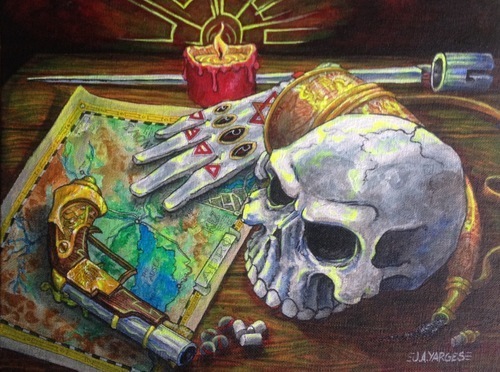
by Jeff Yargas
March 18, 2015
Signing at the Cleveland Clinic
Tomorrow, Thursday March 19th, I'll be signing at the Joseph Beth Bookstore located in the main campus of the Cleveland Clinic from 11AM to 1PM. Stop in and say hi or get a signed book!
March 11, 2015
Powder Mage Fan Art Contest: All Entires
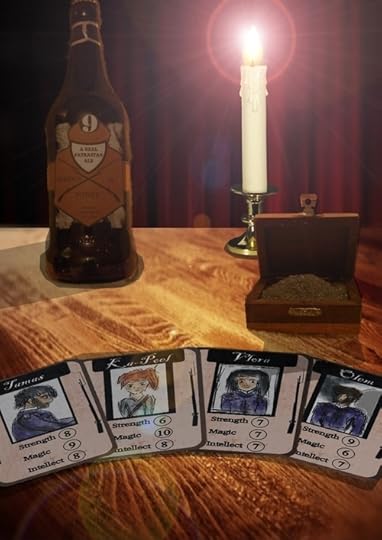
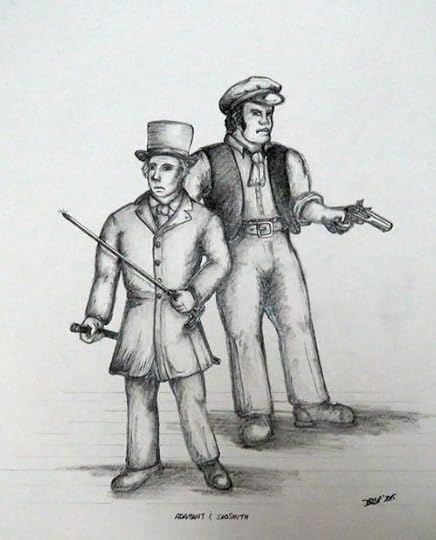
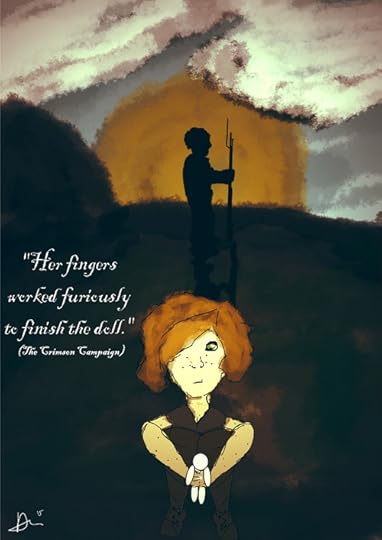
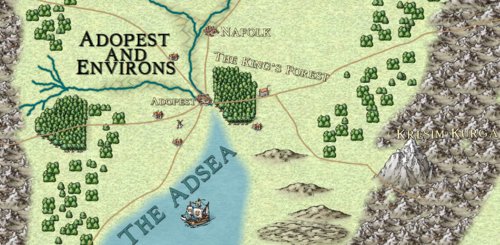
I am absolutely overwhelmed by the awesomeness of the contest entries. Holy crap, so cool. It's going to take me a couple days to choose the winners. I plan on announcing them by Friday. For now check out all the awesome art! A few of the entries are posted as links to cover spoilers and then the rest can be found in the gallery below:
Lyrics of a song by Coen Zuidervaart (spoilers book one).
Julene (spoilers book two, and NSFW for nudity).
Taniel and Tamas by Christian Obereder (spoilers book three).
[image error]
"On the Desk of a Powder Mage" by Jeff Yargas
Acrylic on canvas
[image error]

Taniel by Christian Obereder
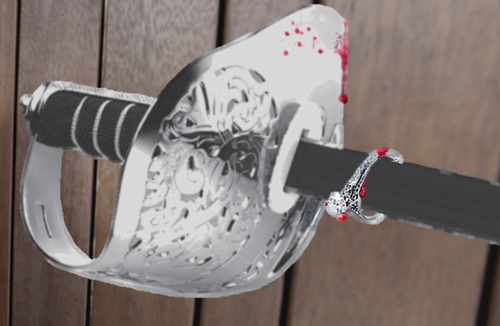
Vlora's ring on Taniel's sword by Rick Lewis
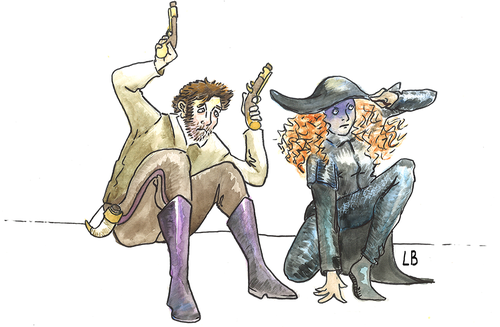
Taniel and Ka-poel by Lauren Butler
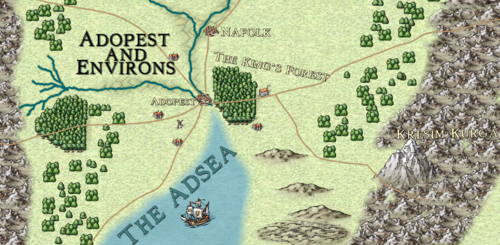
Map of Adro by Paul Weimer
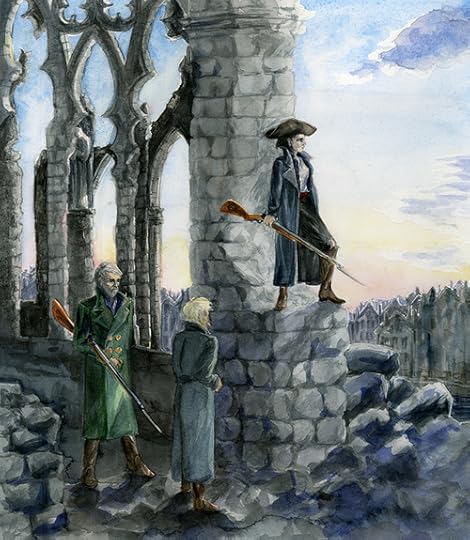
Tamas, Vlora, and Olem by Clare Henry
March 6, 2015
Fan Art Entries So Far
With just four days left until the deadline of the end of the day on March 10th, we've got a lovely stack of entries for the fan art contest. Check them out below, and make sure you get yours entered soon!
There is one more entry, but it's got fairly major spoilers for Autumn Republic, so I'll put it up behind some kind of spoiler wall when I get some extra time this weekend.