John Michalak's Blog, page 2
June 21, 2018
The Longest Day of the Year

Today in the U.S. we celebrate the beginning of Summer and the “longest day of the year.” Of course, the day is no longer or shorter than any other day. But today in our town, there will be about 14 and a half hours of sunlight. Where we’re moving, Honduras, I read that the duration of daylight, being closer to the equator, generally remains the same year-round.
Most people I know in the U.S. bemoan the winter time and the long darkness. It’s interesting that it’s really been only since the invention of electricity that people spend much of their waking hours beyond the setting sun. Now we stay up until all hours. This can be good or bad, I suppose. I know I’m at my best when I get to bed early and rise with the dawn.
But I do think there is something instinctive about being “awake” while it’s light. Jesus said that it’s important to focus on our work “while it is still day…night is coming when no one can work.” I have 14 and a half hours of daylight today. How will I use that time?
Also, there’s a lot of darkness in the world even during our daylight hours: violence, conflict, prejudice, apathy, loneliness, sadness, and so on. Jesus is the light of the world and calls us lights as well. How will I shine as a light, reflecting this light of Jesus, on those who suffer in darkness?
And despite the darkness we see in the world, despite the darkness in us, or even the fact that from today on, our days in the U.S. will darken more and more with the coming of winter—we can still live in the light of hope that one day, there will be no more darkness.
At the end of time, the world will have no darkness at all—God’s light will shine forever among us and there will be no more night, no more curse, no more tears, death, or suffering. The “longest day of the year” can’t hold a candle to this light that will last forever.
So, enjoy today’s sunlight. Step out, take advantage of these hours, put your trust in the light of Christ, overcome darkness where you see it, and live in hope for the endless light of eternity.
It’s time for you to rise and shine.
***************************
About John Michalak

An author, speaker, musician, and minister, John Michalak has spent more than 20 years equipping others in the areas of life-change and personal relationship. John’s inspirational new book, 365 Devotions To Embrace What Matters Most is now available from Zondervan publishing.
Need More Inspiration?
Click HERE to get more inspirational articles sent directly to you as well as updates from John on his writing and other items of interest.
; src="http://feedproxy.google.com/~r/johnmi...



June 5, 2018
A Stranger in a Land of Promise
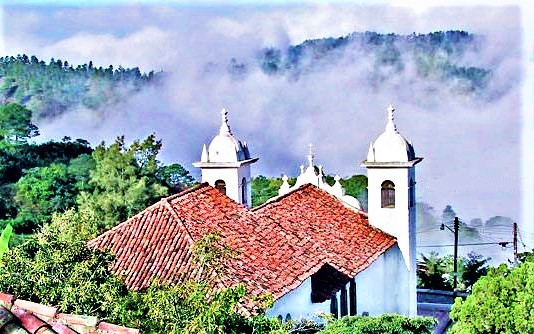
I was in the mountains.
I’d always wanted to be here. To look out over the great expanse before me and find myself such a small, integrated piece of God’s glorious creation. In the mountains I felt a part rather than just apart. I was an active participant in allowing God to remind me of my place in his stunning, mysterious world. I had a deep sense of awe but was not afraid. I was at peace, but not ready to retire. My heart was full of anticipation, but the unknowns were now to me a gift.
I was in the mountains. But on this particular day, it wasn’t the mountains of North Carolina my wife and I had moved to a few years ago. On this particular day, I was standing at 5,000 feet looking out over the mountainous terrain of Central America in the country of Honduras. I was looking out over the place God was next calling me and my wife to serve.
To quote the musician, David Byrne, “How did I get here?”
That’s a story worth telling.
Just three or so months ago, I sent an email to a church committee in search of a new pastor. Union Christian Church in the capital city of Honduras, Tegucigalpa, had been without a pastor for about a year and were eager for God to reveal who that person was. Union is an English-speaking congregation filled mostly with expatriates, North American citizens who’ve come to live in the country as missionaries, school teachers, embassy employees, and so on. They were essentially a church of ministers in search of an under-shepherd to provide spiritual guidance and care.
For my part, while I did have a “one day” dream to finally pastor a church, I had no inkling of pastoring any time soon and certainly not in Honduras. My wife and I had no plans to move anywhere at all, having found our dream mountain home in the Smokies. Frankly, I had no real knowledge of Honduras other than that it was somewhere south of the border. Yet one Sunday morning, I remembered the church’s online advertisement and felt a strong burden, no matter how far-fetched, to start a conversation.
The opening lines of my first communication said, “I’m not sure I should even be sending you this email…”
Why? Because we’d found our dream home. Because I’d moved to the Smoky Mountains with the idea of starting or joining a retreat ministry. Because I’d applied for pastor positions before, but most churches wanted you to have previously served as a pastor in other churches before leading theirs. Because I wasn’t a traditional “CEO,” “Type A” leader. Because I didn’t fit in with the culture of many American churches. Because I was a sinner. Because I was sometimes too sensitive to the judgment and rejection that comes with pastoring. Because, because, because…
But, I still felt the burden and sent the email, saying to myself, if God’s calling me there, he’ll open the doors to make it happen. This started a long application process where, to my stunned surprise, I kept advancing through each stage of elimination. And as I advanced, I got more serious about my own discernment process: reading Scripture, reading books on pastoral calling, praying, seeking advice from others. Despite my abundant excuses, I still believed in the calling of God. If God made his calling clear, no amount of excuses could justify my disobedience.
Of course, there were many reasons in favor of applying. I’ve long known my calling as a teacher, a preacher, and writer of God’s good news. But in our time in North Carolina, the doors for exercising this gift regularly were not opening for me in the way I’d hoped. Despite my introverted leanings, I’ve also longed to connect my heart for communication with life-changing personal encounters with real human beings. Just writing books alone was never going to do that for me. Finally, I knew that my life has been most blessed when part of a healthy, growing Christian community—and not just a part, but out front, leading the charge to live out the Gospel and show the world the healing and rest available within God’s Kingdom. But, such doors in North Carolina had been closed for me there, too. I just couldn’t find a compatible church community that fit that bill.
In God’s ways, closed doors often mean he’s opening doors in another part of his Kingdom. But, Central America??
The biblical character, Abraham, is famous for being called from a place that was familiar to an unknown place where God wanted him to go. In the new and foreign land of Canaan, he was called “a stranger in the land of promise.” And as my application process proceeded, it became more and more apparent that God was repeating similar marching orders to me as well. One Sunday morning I received the message that I was the church’s final candidate for the position. My wife and I were soon flown down to spend a week seeing Honduras first-hand, to meet members in the church, to preach on Sunday, and to receive a final vote of approval from the congregation.
And so, beyond my wildest dreams, it happened. A church has called me to pastor. And not just a church, but a church full of ministers. And not just an American church, but a church in a foreign land. A land with mountains similar to the Appalachians. A land marked by immense poverty, but also by an unbending creativity for survival. A land full of both dangers and gentle hospitality. A land of deeply-rooted culture, organic foods, and organic living. A land full of political unrest, brokenness, loneliness, spiritual, emotional, and physical bondage, but ultimately, a land full of promise. A place where I might be a stranger, but where the power of God’s redemptive hand is no stranger at all.
In his memoirs, Eugene Peterson describes his calling as both “writer and pastor.” He says that God was forming him for both of these vocations many years before he realized it. God has long been forming me as a writer, teacher, and communicator. But even now, despite my misgivings, it’s clear he’s also been forming me as a church pastor. In so many ways, pastoring a church feels beyond me, but in these months of discernment, I’ve seen through one confirmation after another that while beyond me, it’s full of God. While this vocation is pregnant with serious responsibility which I in no way take lightly, I’m also relieved to find that I’ll be most useful by not taking charge, but instead surrendering myself to God as his vessel to be used for his purposes—according to his will and his ways.
In the last couple of years, many of my readers have enjoyed my encounters with the mountains. That kind of writing will continue. But now the mountains will shift a bit in geography into this new, unknown, miraculous place of promise. And going forward, the writing will be infused with my long-in-the-making call as “pastor”—I’ll be writing about how the Gospel is living through me and through those I encounter in the next leg of this great adventure.
So, whether north or south, God still has me in the mountains. I look out over his heavenly expanse and am in awe for what awaits. In awe, but no longer afraid.
***************************
About John Michalak
An author, speaker, musician, and minister, John Michalak has spent more than 20 years equipping others in the areas of life-change and personal relationship. John’s inspirational new book, 365 Devotions To Embrace What Matters Most is now available from Zondervan publishing.
Need More Inspiration?
Click HERE to get more inspirational articles sent directly to you as well as updates from John on his writing and other items of interest.
; src="http://feedproxy.google.com/~r/johnmi...

March 30, 2018
Hope Tempered With Tears
Back when I was being trained for pastoral counseling, the spirit of this verse was often emphasized:
“Like vinegar poured on a wound, so is one who sings songs to a heavy heart.” (Proverbs 25:20)
In counseling, you’re taught a lot about listening, about empathy, but as much as anything, you’re taught not to tell a person in the pit of suffering: “The sun will come out tomorrow!” Most of the time, that’s not what they need to hear. They mostly need you to join them in their sorrow. To feel that someone is there and that they are loved.
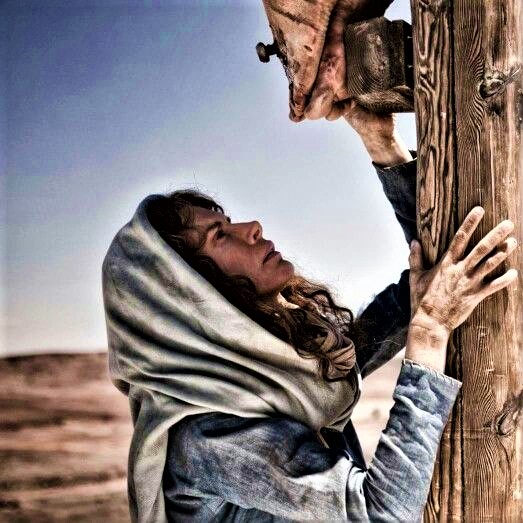
This comes to mind when I think of the term used for today, “Good Friday”—the day we commemorate the death of Jesus on the cross. I doubt anyone was trying to cheer up Jesus’ mother or the other mourners at the foot of the cross. I doubt that in the moments she watched her son suffer and die, his mother thought anything about it was good.
But we Christians are sometimes carried away by our own hindsight. It was good, we say, because Jesus’ death resulted in something good. We sing, “He rose from the dead only a few days later! His victory over death assures us that we too can join God and our loved ones forever in heaven!” And yes, of course, those are all good things. Great things.
But if we’re too overzealous with such encouragement when comforting others, it can be like vinegar poured on a wound. Understandably, we struggle with this tension. Knowing that the joy of Easter awaits, knowing that heaven is promised through the cross of Christ, how can we lovingly comfort those who suffer with both genuine sympathy and genuine hope?
I think one clue is to understand that love is so often about tone and timing. When someone is in mourning or suffering a loss, we shouldn’t rush them through it. We should join them and love them through it.
Will a new day dawn? Yes. We must offer this hope. But our hope should be tempered as it was with Jesus. Shortly before his own death, Jesus offered the comfort of a future resurrection by raising Lazarus—but not before joining others in mourning the death of his dear friend.
Yes, Easter Sunday is coming, but it hasn’t come yet. Yes resurrection from the dead, complete victory over sin, and the end of suffering are all coming. But, they haven’t come yet. When they do finally come, we can all rejoice in full celebration. But until then, our hope should be tempered with tears—for this world that longs to be made new.
Of the many things Good Friday symbolizes, the one perhaps closest to my heart is that, when I enter into my own seasons of mourning and suffering, I can know that Jesus is with me and that I am loved. Jesus is qualified to join me in my suffering because he suffered himself for the sake of love. He’s qualified to offer me hope amidst the tears because his comfort comes from the other side of death and suffering.
When we’re sure we have nothing left and life seems meaningless, we’re often able to go on simply because we feel that someone is there. And because Easter Sunday did indeed follow Good Friday 2,000 years ago, we can feel that Jesus is there.
He’s here with us now. And he will be with us always. Until there’s no more need to mourn.
***************************
About John Michalak
An author, speaker, musician, and minister, John Michalak has spent more than 20 years equipping others in the areas of life-change and personal relationship. John’s inspirational new book, 365 Devotions To Embrace What Matters Most is now available from Zondervan publishing.
Need More Inspiration?
Click HERE to get more inspirational articles sent directly to you as well as updates from John on his writing and other items of interest.
; src="http://feedproxy.google.com/~r/johnmi...

March 4, 2018
Speaking Truth To Power
Who was this man?
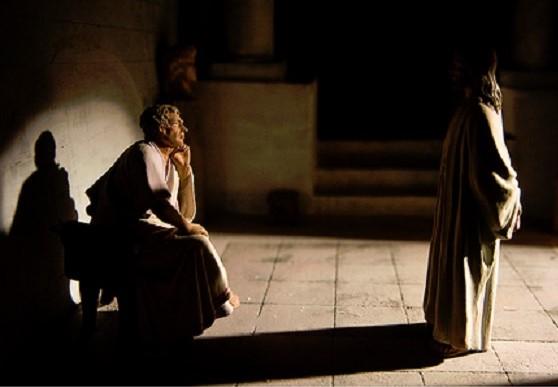
Pontius Pilate stared at him. Dressed in the attire of the common poor, he was brought to him bound, disheveled, freshly bruised from some recent beating. He wasn’t much to look at, to be sure. And yet, he’d been accused of insurrection against Rome. And so, as Rome’s authority in the region, it was up to Pilate to question him.“Are You the King of the Jews?”Jesus answered, “My kingdom is not of this world. If my kingdom were of this world, then my servants would be fighting so that I would not be handed over to the Jews.”
“So, you are a king?”
He answered, “You say correctly that I am a king. For this I have been born, and for this I have come into the world, to testify to the truth. Everyone who is of the truth hears my voice.”
Pilate said to him, “What is truth?”*
For Pilate, in the seat of Rome’s supreme power, there would be no answer. In perhaps the peak of all of history’s dramatic irony, there was no need to answer—because truth was staring him right in the face. But he couldn’t see it. And so goes the story of truth’s relationship to power.
Most modern journalists define their mission as “speaking truth to power.” That is to say, they’re charged with holding those in power accountable by bringing the truth about all their dealings into the light of day. This mission has also been championed by many minorities and those fighting for civil rights. The objective of speaking the truth is to keep power in check. To stop or at least minimize the potential for tyranny over others.
But the desire for power holds sway over far more than just our politicians or corporate monopolies. It really affects all of us and permeates every pore of society and the human consciousness.
Consider just a few headlines of the day. The current debate concerning school violence and gun control, for example. Isn’t this a debate about power? The power to keep society at-large safe versus the power to retain personal freedoms and self-protection. The “#MeToo” movement—this is about standing up against the abuse of power through sexual harassment and assault. Within most of today’s headlines, you’ll discover at the center this constant struggle for power.
The blockbuster movies of recent years all seem to focus on comic book superheroes who fight evil with their super powers. Much of the obsession with popular sports from football to basketball to the UFC celebrate the pursuit of overpowering of an opponent. We cling daily to news of the stock market and the economy—will we remained empowered to live the quality of life we deserve?
And, of course, back to politics. We’re obsessed with who’s in power—most often, at the national level. And too many of us have become either sycophants or mockers, depending on who’s in power at any given time. Party has become more important than platform, and the truths we say we care so deeply about are too often compromised in the name of holding onto, or regaining, power.
Our desire for power is so pervasive that many in our culture side with the philosopher Friedrich Nietzsche in saying that, throughout history, there’s never been any universal truth at all, but only creeds designed to overpower, fabricated by those in places of power. Sadly, this has too often been the case when it comes to many human claims of truth. But does that mean there’s no truth to be found in the divine?
“What is truth?”
Asking that question may have been Pilate’s most truthful moment. As someone in a place of power, his chief objective wasn’t truth, it was not losing the power he currently had. Here he was, face to face with perhaps the most powerless-looking man he’d ever known, who would soon experience the height of powerlessness through a brutal torture and death. But again, within this powerless man, divine truth was there for anyone with eyes to see.
The recently departed Billy Graham was once traveling in a golf cart through a football stadium with a newly-elected mayor. There were tens of thousands of fans cheering for Mr. Graham, and this new politician did what all politicians do in smiling and waving back to the crowds. The mayor made a comment to the evangelist about this wonderful reception, but Graham responded: “I’m embarrassed. This is not about me.”
Billy Graham understood the truth when he saw it. He was often quoted as saying, “The ground is level at the foot of the cross.” He had no taste for the power of his world-renowned reputation. He gave all credit to the Son of Man, who didn’t come to be served, but to serve, and to give his life as a ransom for many.
What is the truth? We love to hold others to account, but can we speak truth to our own power? The instinct is understandable. We deeply crave control over our lives. We want to be happy, to keep ourselves safe, we want the freedom to live as we wish. And certainly, we want to stand up to those who would overpower us for their own gain.
But, what is the truth? The truth is that, in our desire to pursue, to retain, to defend our own power, we’re chasing a mirage that always promises, but never delivers. Power is indeed the key to living a life of fulfillment, but it is not the power within we need, but power from on high. And as the life and death of Jesus so evidently demonstrates, power from on high is only received through the embrace of powerlessness—through the person who surrenders control of their life to God.
You should never stop speaking truth to the powers-that-be when they become corrupt. And you should never stop standing up to those who would abuse you, especially if you’ve been affected by injustice, racial prejudice, sexual assault, or even death.
But while you seek to overcome such tyrannies, make sure you speak your truths at the foot of the cross, where weakness discovers strength, where the humble are exalted, where the poor in spirit rest in heaven’s kingdom. Lose your life within the empowered powerlessness of Christ, lay down your life for those still held captive by their own power, and you’ll find a life beyond imagining.
Where even the power of death can hold no sway over your heart and mind.
Do you not know? Have you not heard? The everlasting God, the Lord, the Creator of the ends of the earth does not become weary or tired…He gives strength to the weary, and to him who lacks might he increases power. Youths grow weary and tired, and vigorous young men stumble, yet those who wait for the Lord will gain new strength. They will mount up with wings like eagles, they will run and not get tired, they will walk and not become weary.**
For yours is the kingdom and the power and the glory forever. Amen.***
* A modest paraphrase of John 18:33-38
** Isaiah 40:28-31
*** Matthew 6:13
***************************
About John Michalak
An author, speaker, musician, and minister, John Michalak has spent more than 20 years equipping others in the areas of life-change and personal relationship. John’s inspirational new book, 365 Devotions To Embrace What Matters Most is now available from Zondervan publishing.
Need More Inspiration?
Click HERE to get more inspirational articles sent directly to you as well as updates from John on his writing and other items of interest.
; src="http://feedproxy.google.com/~r/johnmi...

February 13, 2018
8 Questions about Spiritual Self-Examination (audio)

8 Questions: Why Spiritual Self-Examination Matters (sermon audio)
Socrates once said, “The unexamined life is not worth living.” Jesus once said that his disciples would know the truth, and that the truth would set them free. This sermon asserts that the truth we’re encouraged to know isn’t just the truth about God, but also the truth about ourselves.
With as much honesty as we can muster, we must ask:
Who am I?
Why am I here?
What do I want?
Is there a difference between what I say I want and how I’m living my life?
What does God want?
If I want what God wants, what am I willing to do to get it?
Who am I becoming?
Who am I with?
Without spiritual self-examination, we can never genuinely transform into Christ’s image and find the freedom his disciples are meant to enjoy. Consider which of these questions you’ve honestly asked yourself before, and consider how God can help you answer each one in turn.
Click HERE to listen to or download the sermon audio.
***************************
About John Michalak
An author, speaker, musician, and minister, John Michalak has spent more than 20 years equipping others in the areas of life-change and personal relationship. John’s inspirational new book, 365 Devotions To Embrace What Matters Most is now available from Zondervan publishing.
Need More Inspiration?
Click HERE to get more inspirational articles sent directly to you as well as updates from John on his writing and other items of interest.
; src="http://feedproxy.google.com/~r/johnmi...
8 Questions: Why Spiritual Self-Examination Matters
Socrates once said, “The unexamined life is not worth living.” Jesus once said that his disciples would know the truth, and that the truth would set them free. This sermon asserts that the truth we’re encouraged to know isn’t just the truth about God, but also the truth about ourselves.
With as much honesty as we can muster, we must ask:
Who am I?
Why am I here?
What do I want?
Is there a difference between what I say I want and how I’m living my life?
What does God want?
If I want what God wants, what am I willing to do to get it?
Who am I becoming?
Who am I with?
Without spiritual self-examination, we can never genuinely transform into Christ’s image and find the freedom his disciples are meant to enjoy. Consider which of these questions you’ve honestly asked yourself before, and consider how God can help you answer each of them.
Click HERE to listen or download
***************************
About John Michalak
An author, speaker, musician, and minister, John Michalak has spent more than 20 years equipping others in the areas of life-change and personal relationship. John’s inspirational new book, 365 Devotions To Embrace What Matters Most is now available from Zondervan publishing.
Need More Inspiration?
Click HERE to get more inspirational articles sent directly to you as well as updates from John on his writing and other items of interest.
; src="http://feedproxy.google.com/~r/johnmi...
January 30, 2018
The Bloom of Winter
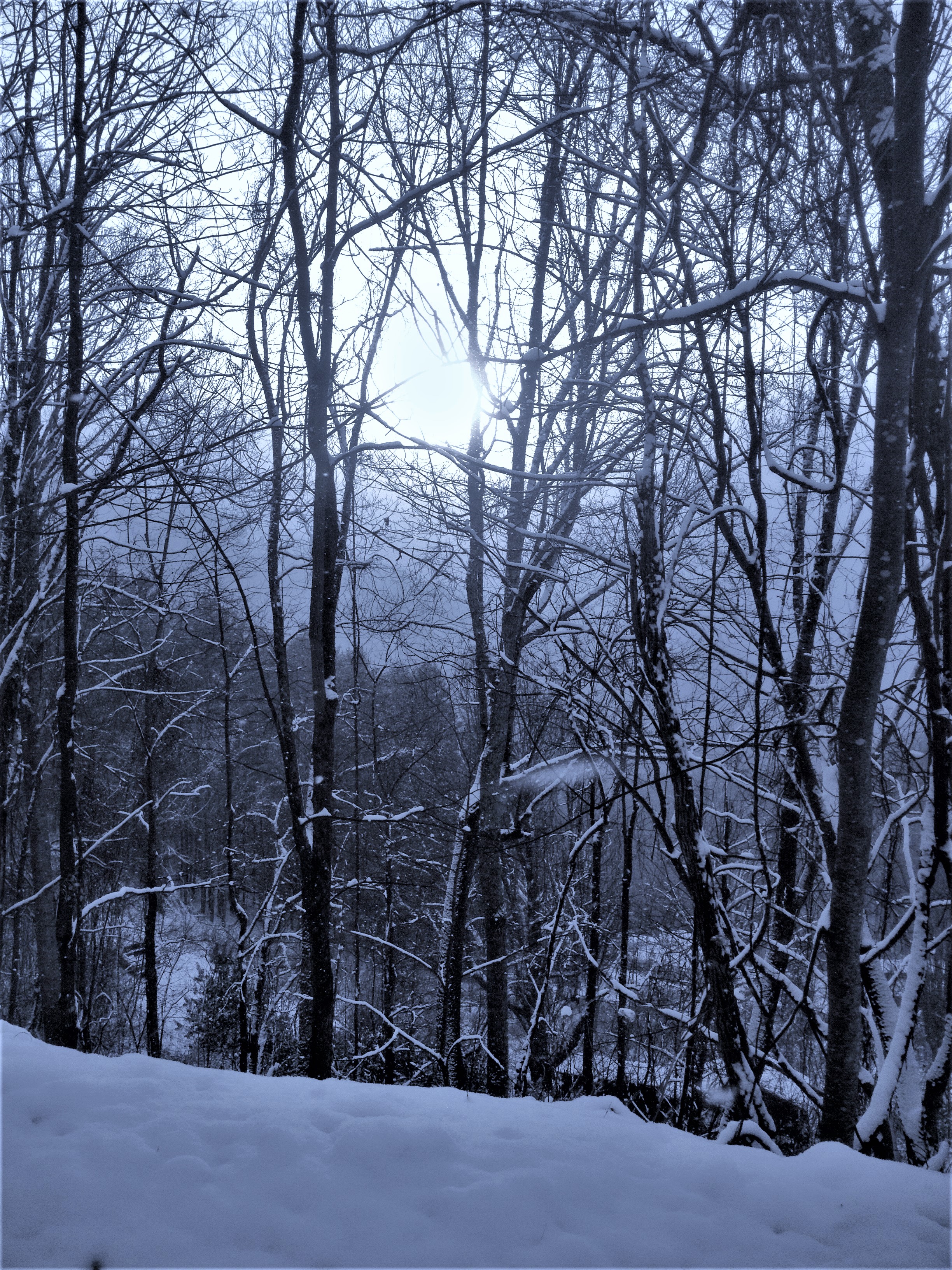
There’s still another reason I moved to the mountains.
Snow.
I love snow. Obsessing over the next snow forecast is one of my chief hobbies during the winter. But snow in the southern Appalachians isn’t too burdensome. To me anyway. You typically get a few inches at a time, it melts, and you await the next go around.
Last night, it snowed. The forecasted one to three inches became nearly five, and flurries were still falling after the sunrise. I roused my wife, we put on our winter hiking gear, and headed out…out and up.
One of the benefits of living above 4,000 feet is that, just after each new snowfall, we usually get to hike to the higher elevations by ourselves—no one without an all-terrain vehicle and some gumption would climb the steep, icy roads to where we already are.
So, this morning it was just the two of us immersed in an untouched winter scene. But then my wife wasn’t feeling too well and turned back early. So soon it was just me, climbing higher and higher, amusing myself with that old Robert Frost poem:
Whose woods these are, I think I know,
His house is in the village though;
He will not see me stopping here
To watch his woods fill up with snow.
But by myself now, these felt like my woods. I alone was privileged to trudge up these deep white drifts, to drink in this cold, solitary bliss.
However ironically, I decided to pull out my smart phone as I so often do on hikes, and started snapping photos of the contoured winter path, the covered trees, a mountain stream, and then…
My phone died.
It made no sense. It had been charging all night so the battery should have been at one-hundred percent. But, for all my attempts to power it back up. Nothing worked.
A coincidence? Possibly. But, the deep regret I felt not being able to share my photos with the masses on social media brought to mind the “revolutionary” thought that perhaps electronic imagery isn’t the only way to validate my experience with others. And maybe my need to validate myself to others has too strong a hold on me.
I’ve been returning to a study of the spiritual disciplines: deliberate physical activities that help us remove the lesser things in life that control us, cling to what’s more real and true, and thereby draw ourselves closer to God. There are disciplines of abstinence: fasting from food or technology, for instance. Disciplines of solitude. Silence. There are also disciplines of engagement: devotional reading or awareness, serving others, worship, celebration.
This involuntary “fast” from my smart phone reminded me that I didn’t need technology to enjoy what was around me. In fact, without the distraction of visually documenting my surroundings, I started to see things I probably would have never discovered through any man-made lens.
I noticed different tracks in the snow that must have come from a deer—a deer who was probably on the path not long before me. At one point, tracks of two in the snow became tracks of one. Perhaps the deer started to run at the sound of my clumsy approach. So…I wasn’t as alone as I imagined.
During one fleeting moment, I noticed the morning sunlight creating an effect amid the snow-adorned trees that I’d probably never see again—it looked almost like the gates of heaven. My eyes pressed downward as I slogged ever upward, I noticed the light creating a vast starfield of sparkles on the whiteness below—as if the heavens were suddenly upside down.
I noticed something about the dormant wildflowers. They were not just grudgingly passive, awaiting the spring. Instead, the cradles that in the warmer months boasted petals of purple, yellow, and red were today filled with white, creating a bloom of winter. It was like standing in a field of virgin cotton.
Going up, I stopped often to catch my breath. And in stopping, I listened. Of course, silence isn’t usually silent. It simply makes you aware of the sounds you were missing. Likewise, snow can muffle sound, but it can also accent certain sounds, making them more holy. The baritone song of the wind. The crackle of branches. The flow of melting ice. What if I’d never stopped and listened?
There’s a gift in each season. But most, like me, tend to appreciate winter’s gift least of all. The world around us is dead. There’s more darkness than light. We mourn the chill. Everything seems like it’s put on hold. We’re stuck. Waiting.
But here was my reminder that, even when life is subdued or minimized, life is still life. The abundance is certainly less. We’re forced to fast from speeding through our days with abandon. We must stop. Listen. Wait. But God still hovers above the void and feeds us with this frozen manna from heaven. He adorns the trees and flowers with his winter bloom, showing us there is a transcendent beauty to be embraced even when the world’s prism seems so empty of spectral color.
So often, I stumble upon revelations of God’s world in spite of myself. I love to hike alone. But this morning I remembered that the biggest reason I love solitude is that it reminds me that I’m never truly alone. And that these aren’t my woods at all.
Whose woods these are I think I know,
His house is in no village though;
He surely sees me stopping here
To watch his woods fill up with snow.
***************************
About John Michalak
An author, speaker, musician, and minister, John Michalak has spent more than 20 years equipping others in the areas of life-change and personal relationship. John’s inspirational book, 365 Devotions To Embrace What Matters Most is now available from Zondervan publishing.
Need More Inspiration?
Click HERE to get more inspirational articles sent directly to you as well as updates from John on his writing and other items of interest.
; src="http://feedproxy.google.com/~r/johnmi...

November 3, 2017
In Defense of Feel-Good Movies, Cheesy Melodramas, and Happy Endings

I recently completed another viewing of the television show, Downton Abbey. Lasting six seasons, it’s a melodrama about British high-society and servant life set in the early 1900s. I’ve watched it a few times and am always pleasantly flummoxed by how the show ends. It’s not just a happy ending, but one of the happiest of endings. Every couple in the story is either married off or at least forecast to be married. Virtually every loose end is tied and every conflict resolved. What surprises me isn’t that the show ends this way, but how truly satisfied I feel because of it.
The enlightened artists of our day have moved away from the black-and-white, Golden age era of happy endings. For a movie, TV show, or book to be considered a critical success, it must pry open the ribs of our sentimental veneer to reveal the messy blood-and-guts of true humanity. Life isn’t that simple, they say. We’re all a horrible mess capable of the vilest evil, and we might as well admit it and get on with our lives. And certainly, it’s no more than a naïve joke to assume that any loose end will be tied or that we’ll ever live happily ever after.
Like with many cultural protests, there is some truth in these observations. Humanity has indeed invited a great deal of trouble in trying to maintain masks of perfection, pretending like we have it all together. It is true that we’re all weak, we all have the potential for evil, and that most events throughout our lives aren’t tied up with a tidy bow. So, is it just lazy, wishful thinking for me to resonate so deeply when I watch a show that ends well?
Perhaps. I certainly agree that there is plenty of simplistic art out there that doesn’t reflect true life and the trials of true humanity. But, perhaps one reason I rejoiced at the end of Downton Abbey is that, prior to its miraculous ending, the show was full of trials and tribulations that I did find believable. Downton wasn’t a feel-good show because it was all flowers and daffodils. It felt good to me because I identified both with its trials and with its resolution.
Maybe it is only the naïve masses who cheer for the feel-good movie and the happy ending. But, I think that within all of us, despite how much we may recognize our potential for evil and that complex nuance only appropriate for mature audiences, we also cling to the hope that that isn’t all there is. Perhaps within our love of sentimentality and cheesy melodramas there lies a more authentic instinct—that one day, the fairy tale will end as it should.
God’s story mirrors this odd cohabitation of hopelessness and hope. Simply glance at Old Testament history and the existential angst of the prophets and you’ll find loads of human depravity and open-ended darkness. But, then this Jesus drops into the picture as a bridge between all our suffering and the hope for resolution. He’s real about our weaknesses while inviting us to join him in the far-fetched optimism that all will be made well. Jesus took on the full force of our blood-and-guts depravity so we might be present at the story’s end—an eternal marriage between God and man where everything is tied with a bow that unfathomably rings true.
So, perhaps I’ve just outed myself as one of the lazy, unenlightened gluttons of feel-good entertainment. But, my instincts tell me otherwise. Such endings may seem sentimental and simple, to be sure. But they also fill the plot holes in our own stories that hopelessness can’t supply.
***************************
About John Michalak
An author, speaker, musician, and minister, John Michalak has spent more than 20 years equipping others in the areas of life-change and personal relationship. John’s inspirational new book, 365 Devotions To Embrace What Matters Most is now available from Zondervan publishing.
Need More Inspiration?
Click HERE to get more inspirational articles sent directly to you as well as updates from John on his writing and other items of interest.
; src="http://feedproxy.google.com/~r/johnmi...

August 27, 2017
This Is My Father’s World

It seemed to me at the time that I had stumbled upon the Last Homely House. And once I’d arrived there, I never wanted to leave.
That is…until I got a look inside.
As much as the natural world outside the house seemed like Elrond’s Rivendell, the inside felt more like Gollum’s hellish cave.
The current resident kept it very dark. Blankets over windows, few lights, low ceilings. The house reeked with the smell of cigarettes and dog urine. The walls were murky, the tile and carpet were decades old with some rooms only floored with a concrete slab. The original aluminum window frames were filthy and porous. The ceilings were stained with nicotine and other contaminants. The bathroom floor was about to fall into the crawl space. It was oppressive just to step inside.
But, the opportunity to live amid this astounding mountainous beauty was something we just couldn’t pass up. So, with the help of several subcontractors and friends, we decided to make the leap to restore the house to livable condition, and since moving in, my wife continues to work her magic to make it even more livable. Despite the darkness of those first impressions, the beauty of creation outside compelled us to make the inside more beautiful, too.
This brings to mind the final stanzas of that glorious hymn:
This is my Father’s world:
Oh, let me ne’er forget
That though the wrong seems oft so strong,
God is the ruler yet.*
While many recognize the dangers of wasting our lives preoccupied by pleasure or superficiality, we can miss the danger of paying too much attention to the world’s darkness. Of course, I recognize that there’s a lot wrong with the world and that wrongs need to be addressed. But my best motivation to address what’s wrong is by first immersing my life in what’s good and beautiful.
As Martin Luther King, Jr., once said: “Darkness cannot drive out darkness; only light can do that. Hate cannot drive out hate; only love can do that.” Will I watch the news and despair because all “the wrong seems oft so strong”? No. I will step outside and celebrate the beauty in these mountains, the encouragements in neighborly kindness, the hope found in houses of worship and charity.
This world is filled with ugliness, but this is my Father’s world. And it is the beauty of his world that compels me to join him in addressing the parts that need restoration.
Despite the work we’ve already done on this 50-year-old house, it’s hardly perfect. Even after the remodeling, few of the floors are level. It can be damp and drafty. Doors still need replacing. The need for paint seems never-ending. The electricity and plumbing still seem to have a mind of their own.
But I can live with these imperfections. Of course, because of the beauty that lies just outside. But, mostly because I live in hope: that this homely house—and my homely heart, and all the world’s wrongs—can with each passing day bear more and more resemblance to the beauty of heaven.
And there’s even the promise that, one day, I won’t even be able to tell the difference.
This is my Father’s world,
The battle is not done:
Jesus who died shall be satisfied,
And earth and Heav’n be one.*
* Maltbie D. Babcock, This Is My Father’s World, 1901.
***************************
About John Michalak
An author, speaker, musician, and minister, John Michalak has spent more than 20 years equipping others in the areas of life-change and personal relationship. John’s inspirational new book, 365 Devotions To Embrace What Matters Most is now available from Zondervan publishing.
Need More Inspiration?
Click HERE to get more inspirational articles sent directly to you as well as updates from John on his writing and other items of interest.
; src="http://feedproxy.google.com/~r/johnmi...