
Joshua Silverman's Blog, page 7
March 6, 2013
Egyptian Gods and Goddess: The Opener of the Ways
After talking with readers, it occurred to me that not a lot of people know about the Egyptian gods and goddesses and the fascinating mythologies on which the Legends of Amun Ra series is based. So I decided to write a few blogs featuring certain gods and goddesses.
A fan recently wrote in asking how much we know about the Egyptian god, Upuaut—we’ll start with him.
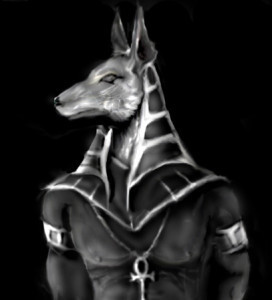
As we discussed before, the biggest issue with Egyptian mythology is that the gods’ names constantly change throughout the history of ancient Egypt (Djehuty is another name for Thoth). Further complicating matters, their powers morph into different manifestations depending on what historical period you are examining (Old Kingdom, Middle Kingdom, Late Kingdom), and certain gods and goddesses that were once two separate deities become melded into one (i.e. Amun and Ra are separate deities but can become Amun-Ra).
Upuaut is more commonly referred to as Wepwawet. Wepwawet is often confused with Anubis because: (1) both gods have canine animal spirits (Anubis is the jackal; Wepwawet the wolf); and (2) through time, Wepwawet’s responsibilities in the funeral rites became blurred with those of Anubis. Despite this, they are clearly distinct gods.

Wepwawet originated in Upper Egypt (which is actually the southern part of Egypt on a map). The name Wepwawet refers to his job duties, “The Opener of Ways”. Wepwawet’s job is similar to the role of Charon in Greek mythology. Wepwawet literally “opens” the gateway to the Egyptian underworld for the deceased to enter. These duties are mentioned in ancient Egyptian writings, including the famous Book of the Dead and the book That Which Is in the Underworld. Furthermore, in line with the idea of Wepwawet opening a “path,” his job was also to act as a scout for the ancient Egyptian armies.
Like most Egyptian gods and goddesses, Wepwawet is depicted as half-man, half-animal—his animal form is that of a wolf. As featured in the Legends of Amun Ra series, Greek and Egyptian mythologies intertwine. Wepwawet was so revered by the ancient Greeks that they named a town after him, Lycopolis.
Legends of Amun Ra is a seven book fantasy series based in the Egyptian mythology of alchemy, which involved the god of wisdom and magic, Thoth. The ancient Egyptian gods and goddesses are woven into the story to create the fantasy world. If you’re interested in Egyptian gods and goddesses and their mythologies yet want a compelling story full of fantasy, adventure, and romance, please check out the series, which starts with The Emerald Tablet.
Sources: The Gods of the Egyptians, Volumes I and II by E.A. Wallis Budge, 1969, Dover Publications.


February 15, 2013
Social Media Marketing for Authors
I had the pleasure of listening to Blog Talk Radio’s “Author Spot Light” the other day featuring JaVonna from Review-Worm.com. If you have an hour, do yourself a favor and listen to it.
http://www.blogtalkradio.com/reviewworm/2013/02/08/author-spot-light
During the podcast, host Nanci Arvizu and JaVonna Smith spoke about how to create a great author website
and how to effectively use social media. Given that I’ve put in countless hours reading articles about how to blog, use Facebook, and tweet about my book, I thought I was somewhat of an expert on these subjects. Alas, I was incorrect. Doh!
I’m not going to focus on the website portion because I think authors should hire professionals to design their websites.
In regards to social media (and particularly Twitter), the most common advice I see is the idea that our posts need to bring value to our followers. Yet, it is often broken. After all, we’re getting opposite advice from supposed gurus like Guy Kawasaki (blogger, venture capitalist, exec at Apple, Inc. back in the day) who propose using services like TwitterHawk (an automated bot which targets key words and sends automated replies to them) which Kawasaki called, “the ultimate spamming tool.”
So who do we authors believe? Kawasaki and those like him, or those like JaVonna or John Locke (not the philosopher but the self-published author who sold over 1 million e-books by himself then wrote a book on how he did it), who counsel for value added content and less promotional content.
I personally hated the advice of many who advise “follow anyone who follows you unless they’re a bot.” Kawasaki gives this advice – so does Locke. I did that for a long time (okay, about three months), and ended up having about 1,000 followers and following 1,000 people. But I never had a chance to read any of my followers’ tweets because they were gone too fast – lost to the feed. My feed was so back-logged with people spamming me their books, I started pulling my hair out. I cut those 1,000 followers down to 60. And you know what? I still have around 500 followers. I would rather have 500 people who want to hear what I have to say than 1,000 who don’t.
This leads me to the central theme of the podcast – the content of the tweet/post. Everyone advises the same thing, post “value-added” content – which means don’t just spam your book. I don’t want to be spammed so why should my readers? Besides, if they follow me, they probably already like my work. This is the most common rule I see broken and I do it too. The problem is what is “value-added” content?
I wish the podcast went into more detail about this, but most people define “value” as what your customer is looking for and what you provide.
That’s great except I’m an author. People want my book for entertainment purposes (and hopefully they learn a little something about Greek mythology and Egyptian spirituality along the way). So my “value” by conventional standards is my book. But that puts me in a Catch-22. How do you give a “valuable” tweet that is not about your book but is about your book at the same time?
The Emerald Tablet is based in Greek mythology and Egyptian mythology, particularly, the Hermetic law of alchemy. It is also a science-fiction story that encompasses portals, space travel, and futuristic technology. So there is an ancient and futuristic component.
To me, value added content is posting stuff about scientific advancements (space/astronomy), Greek mythology, Egyptian history, or anything related to the book that is informative to my readers/followers but not me saying, “Buy my book! Buy my book!”
Other than continuing what I’m doing and building relationships on Twitter by re-tweeting, conversing, and commenting on other people’s tweets, I haven’t found a magic solution to help market my book. As JaVonna said, social media is about time, commitment, consistency, and effort. To get value, you must share something of value.
February 11, 2013
Book Review: Old Man’s War (Old Man’s War #1) by John Scalzi
Rating: 5/5 stars
Several hundred years in the future mankind is exploring the galaxy. Somehow (not quite explained) the  Colonial Defense Force (CDF) has acquired alien technology that puts them light years ahead of any country, government, or private corporation on Earth. They leverage their technology to keep the governments of Earth afraid of them. At 75 years of age, people may enlist in the CDF to fight interstellar wars. The enlistees have no knowledge of how they’ll fight a war at their advanced age or any idea of the CDF’s tactics. They are left in the dark, taking a leap of faith and signing their lives away because the only thing left for them to do on Earth is die. Our protagonist, John Perry, after his wife’s death, enlists in the CDF at 75 years old.
I rarely give five star rating’s out but this book was awesome. It covered the span of warfare, of friendship and camaraderie, the thrills of victory, the agony and loss of defeat, the tragedy of losing friends and loved ones in battle, the memories of a life now untouchable to those in the war, the ethical and moral ambiguity of the CDF and how they operate, and the possibility of achieving humanity in the face of death.
I don’t typically have such an immediate connection to characters but I truly liked John Perry. I felt his heartache when his friends died, and, without giving away any spoilers, my heart jumped in my throat towards the end. I said to myself, “I will never forgive Scalzi if he does what I think he’s going to do.”
Scalzi’s execution of the narrative was perfect. Scenery was vivid and yet concise. Complex theories involving space travel and quantum mechanics was explained simply, and the relationships between Scalzi’s characters was truly remarkable given it was only 320 pages.
If you’re not looking for a war book but a book on how people cope with the atrocities of war and find sanity in an insane world, this book is for you.
February 10, 2013
Book Review: The Warded Man (Demon Cycle, #1) by Peter V. Brett
Rating: 4/5 stars
Overall, this book wasn’t bad at all. At times I really liked the characters, other times, I didn’t. Pacing of the book was good; however, I did find some grammatical errors and typos in my edition. Brett wasn’t writing in third person omnipresent so he shouldn’t have switched points of view in the middle of a section and I noticed a few times he did, which are errors.
The premise was solid. Mankind was plagued by fear from the last demon war. The great Warders (people who drew magic wards to fend off the demons and protect themselves) of old are all but a lost breed who vanished from the world 300 years ago. Now, contemporary Warders remain who know very little of the ancient magic.
I wasn’t thrilled with the execution of this book. The book is 430 pages long and spans 10 years. This is difficult to do for anyone, let alone a novice writer.
As an author, I’m interested in the development and psychology of the characters.
Arlen, who I really enjoyed reading, became the Warded Man about 100 pages shy of the end. What I thought was poorly done by Brett was that we see Arlen at the end of his rope, stranded to die and left alone with demons. Then, Brett switches to his other characters, Leesha and Rojer. The next time we see Arlen, it is four years later and he has become the Warded Man. The Warded Man’s personality is completely different than of his younger self, Arlen. He has matured, lost a lot of his humanity, and become a fighting demon machine (which means cool battle scenes but no more character development). As an author, I’m more interested in the character development than the battle scenes. I want to know what happened in those four years where we can see Arlen’s de-evolution and his gradual shift in mind-set to become the Warded Man. The abrupt shift left a bad taste in my mouth. It would have been far more interesting if Brett had made Arlen fully transform into the Warded Man at the climactic battle at the end, instead of 100 pages beforehand.
Because of the poor execution, the characterization and development of the characters suffered.
In addition, Brett spent a good 50-100 pages developing the character of Rojer, who was completely useless. Unless Rojer has something awesome coming up for him in book 2, I found his sections boring and very uninteresting. He used Rojer as a plot device to have the Warded Man save Leesha. Understandable, Brett didn’t need to develop his character so lamely if all he was going to be used for was a “save the cat” moment for the Warded Man.
Leesha, however, was one of the more interesting characters, probably more so than Arlen. I believe this was due to Brett spending far more time with Leesha in development before she got to her major plot point about ¾ through the book, moving from her farm village to the city. We had a chance to know her more intimately because of that. Where Arlen was single-minded and driven, Leesha was open to new possibilities and open-minded.
Brett did a great job creating the world of the Warded Man. He gave accurate descriptions of scenery and imagery that I wasn’t left struggling to find a picture in my mind. He was clever in his use of curses, often having characters say, “Night, woman!” or “To the Coreling with you” or “Corespawn”. While these things are little turns of phrases, it helps to flesh out the world – after all, a character who doesn’t have a “hell” but calls it the “Core” would never say “hell” in the book. Sometimes it’s the little things that count.
Now to some general things I wasn’t thrilled about. There were too many references to a gender biased world where women were only good for sex and bearing children. Which I’m not necessarily opposed too, after all, this is how our world work for a good number of centuries before we wised up, however, I thought Brett’s execution was over-the-top with seemingly an un-ending amount of references to women having babies. Almost quite literally, every conversation between two females had to do with giving birth and boys looking at their “paps” (which word choice I found quite unappealing and infantile).
I thought his diction when referring to body parts was juvenile, particularly adults referring to their parents as “Da” and “Ma”.
Overall, solid book and with a better execution of the plot and characterization, could have been great.
February 8, 2013
Book Review: The Dig by Michael Siemsen

Rating: 3/5
The Dig is actually two stories in one. It starts off with a mysterious find in Kenya, a piece of clothing unlike any ever found before. Enter Matthew Turner, an arrogant, selfish, twenty something with the power to “read” emotional imprints left on objects. Because of his power, he has an out-of-body experience that allows him to live as the person who had the emotional tie to the object.
The plot starts with young Mr. Turner being bribed into helping on a museum’s excavation for the artifact in Kenya.
Because Turner’s power to read emotional imprints he’s kind of a germaphobe but not really (because he’s not afraid of germs, he’s afraid of touching things). So he wears gloves and covers his whole body so he doesn’t touch any “used” surface. For example, Matt Turner wouldn’t enter a vehicle without covering himself that was previously used by another person. Because of his power, he struck it rich when he helped someone locate a lost treasure. Being a millionaire now, Turner bought a Porche. He took his gloves off when he got in the car after the salesman told him it was “new”. However, there was a logical flaw in that nothing in this world is really “new”. A “new” car on a parking lot isn’t new. The metal ore was dug up out of the ground, transported to a processing facility, bought and sold on the markets, finding its way to a manufacturing shop where they molded the ore into a car door, sent to the assembly line, compiled with other auto parts, shipped to a distribution facility, shipped to the showcase floor. So I couldn’t understand how he considered this “new” even though it had probably been touched by thousands of people, yet he couldn’t shake someone’s hand without a glove. Siemsen tries to explain this away by saying that the object in question has to have a deep emotional impact. Even so, it’s not a prefect explanation to explain the logical loophole. However, I’m sport for a good story and know you can’t plug every single plot flaw, so I went with it.
Once Turner has been sufficiently bribed into going to Kenya to authenticate the age of the artifact discovered is where we get into the story within the story.
The narrative flips back and forth between present day (Turner and the team of researchers)and 150 million years ago with the people who made the artifact.
Additionally, the book is written in third person omnipresent, like mine. Which means you can be in multiple characters heads pretty much at any given moment. This, combined with the flipping back and forth between time periods, may give some readers pause.
In general, the story was good, well thought out and well executed. Although I had no love for the protagonist (Turner), I didn’t think Siemsen’s villain (Reese) was a particular good antagonist either.
At the end of the day, it was an entertaining light read. It didn’t have much suspense or drama (though it tried), but also wasn’t a heavy, intellectual read making you contemplate the history of evolution. Not a bad way to spend a rainy afternoon if you have a few hours to kill.
February 5, 2013
Creating Darth Vader
So how do you create a memorable, believable, and relatable antagonist that people will love to hate?
Read the rest of the blog, here:
http://www.joshuagsilverman.com/creat...The Emerald Tablet
February 4, 2013
Creating Darth Vader
The Emerald Tablet has two antagonists. One starts out antagonistic, the other transforms into an antagonist. The first is driven by justice. The second is driven by ego and a feeling of self-worth. During the study of alchemy and hermetic law, the Egyptian mythology teaches us that there is no good and evil. Everything is just action and reaction. Everything is one and the same with varying degrees. This principle can be difficult to grasp when it comes to good and evil but I want you to take it to heart because when you create your antagonist, you’ll need to remember it. David Prowse said, “Nobody forgets the villain.”
So how do you create a memorable, believable, and relatable antagonist that people will love to hate?
1. This one is the most important rule. Your book doesn’t have a villain. Get the whole notion of hero/villain out of your mind. There are only protagonists and antagonists. Going back to what we said about the study of alchemy, everything is one and the same. Everything is action and reaction. Your so called “villain” doesn’t think he’s a bad guy. He believes he’s perfectly rationale, logical, and justified in his actions. He’s the hero of his own story – so in a way, you’re not writing about a good guy and a bad guy, you’re writing about two good guys with opposite points of view and opposite wants. Example: In the Emerald Tablet, Ankar doesn’t believe the murdering of thousands of people is evil because he believes they wronged him and is seeking justice. He sees himself as fighting for equality and justice. He uses his rationalizations of justice and equality to substantiate his murders. But he thinks he’s the good guy.
2. Know your antagonist’s why. Every character in your book has to have a why. If they don’t, get them out of your book. But the antagonist can’t have a vague “I want to conquer the world” why. Start with something small and relatable and then build it up. Example: From Les Miserables by Victor Hugo, Javert, a police officer, hunts down Jean Valjean, who is an escaped convict. In the Emerald Tablet, Ankar’s why is that he was exiled from his home-land and seeks justice for those crimes.
3. You must know as much about your antagonist as your protagonist. And you must feel as passionately about him/her as you do your protagonist or else it will show in your writing. This means you have to create as much of a backstory about your antagonist as you do your protagonist. Even if your story is not written from the antagonist’s point of view, as an exercise, write at least 5 chapters from the antagonist’s point of view. It will get you into their head like nothing else.
4. No person is completely evil or good. We are all a combination of both. Antagonists can do very sincere and thoughtful things and protagonists can act totally irrational and make mistakes. Example: Roy Batty in the movie Blade Runner. He is a bad guy – murders people, tortures, but is also incredibly intelligent and self-reflective – even philosophical. We feel sympathy for Batty in the end. “All those moments will be lost in time… like tears in rain. Time… to die.” Roy Batty. In the Emerald Tablet, both antagonists are capable of great passion and love, even fighting to save another character’s life. That’s not an action of an all-bad person.
5. You don’t have to create a big hulky, muscle-bound, or scarred man/woman as the antagonist. Sometimes the best villains don’t look mean or ugly or scary. My personal favorite example of this is Dolores Umbridge from Harry Potter. She is a small pudgy woman who wears excessive make-up, smiles all the time, speaks in an upbeat chipper voice, and wears an egregious amount of pink. And despite all of this she is a minion for the Dark Lord, Voldemort. She’s great because she’s relatable. You don’t have to look scary to be scary.
6. Bad guys generally start out with good intentions. Think about the Nazgul in Lord of the Rings. They were kings who wanted to use the power of the rings for good. But as they say, power corrupts.
7. Never create an antagonist who wants power just for the sake of power. That is not a redeeming quality and will garner no sympathy from your readership.
8. Never create an antagonist that poses no credible threat to your protagonist. Which means your protagonist can’t be so super awesome that he/she has no vulnerabilities. Expand your mind on this one. It doesn’t always have to be muscle vs. muscle. Lex Luther may not be able to fly, or have super strength and speed, but he’s smart as a whip and has enormous amounts of money, which gives him unlimited resources. In this way, he is every bit the equal to Superman which makes their cat and mouse worth it.
9. In total opposition to tip 8, don’t make the antagonist so powerful he can’t be stopped. Notice that I’m not saying the good guy has to win. I’m just saying that the good guy has to have a believable chance at winning.
10. The antagonist is the mover and shaker of your story. Without the antagonist messing things up, the protagonist would be home with the lady-friend (or guy-friend) and having a “movie night.” As Mr. Incredible said in the movie, The Incredibles: “No matter how many times you save the world, it always manages to get back in jeopardy again. Sometimes I just want it to stay saved! You know, for a little bit? I feel like the maid; I just cleaned up this mess! Can we keep it clean for… for ten minutes!” See? Give your protagonist something to do.
11. Your antagonist must have his/her own story arc. All characters start in one place and end up in another. They grow, they learn, and they adapt. Your antagonist has to do the same thing. He/she cannot be stagnating. That’s boring. Nobody likes boring. Make him/her evolve.
12. Want to blow your reader’s mind? The antagonist doesn’t have to be a “bad” guy. Think about that. Remember Javert from Les Miserables? He is a police officer just doing his job, catching the criminal, yet he is the antagonist of the story. Nothing he does is inherently mean or evil – it’s just that we feel far more sympathy to Jean Valjean, the criminal protagonist, than the police officer. Role reversal at its finest. That’s great writing.
13. But don’t forget the prodigious “kick the cat” moment. You’ve spent all this time building a relatable sympathetic antagonist but every once in a while you have to remind readers that he is the antagonist. This has been coined by Blake Snyder as the “kick the cat” moment (just as the protagonist has a “save the cat” moment). Have him do something naughty.
14. In that spirit – let the antagonist win. It’s no fun if the antagonist keeps losing – where’s the challenge? In Star Wars, Darth Vader destroys Alderaan. Hannibal Lecter escapes. The Joker murders Robin (Jason Todd) in the Batman comics. Give him a few victories.
15. And finally, if you’re going with whole “redemption” route. Keep in mind that once your antagonist redeems himself/herself and thus becomes “good” again, your story is over. So save it as the last scene or the next to last scene. Three scenes before the end of Star Wars Episode VI, Return of the Jedi, Darth Vader turns and kills the Emperor to save his son, Luke Skywalker. Redemption always comes at the very end. There shouldn’t be a whole lot of story left if you get there.
January 21, 2013
The Zero Dark Thirty Effect
But seeing the movie made me think about the Emerald Tablet. Although the Emerald Tablet and the mythology of alchemy and Thoth are spiritual in nature, it doesn’t mean my book series can be no less realistic. After all, I am a human writing about an alien world. And that’s what readers want. We want human stories in fantastic worlds that expand our imagination.
I often get asked the question, is my book YA (Young Adult)? Well, yes and no. According to Wikipedia (therefore it must be right), YA is defined as ages 12 to 18. Let’s be honest. There is a huge difference in the appropriateness of what an 18 year old would read compared to a 12 year old. An 18 year old in our society can join the military, get a gun, and be ordered to kill people. 12 year olds can’t. So to lump those two ages into one gigantic “YA” category is absurd. That’s why I say the Emerald Tablet (and the rest of the series) is for people who are about 15 years old or older. Ideally, I wrote it for adults. I meant it to be a realistic exposition on good vs. evil. Not just the spiritual war of the alchemy in the series, but an ethical and moral one too. I wanted to say let’s be honest about war but set it in a science-fiction/fantasy world that is based on faith and spirituality. So yes, there’s violence in the book because violence is a very real part of our world. There’s sex in the book because it is a very real part of our existence. And there’s brutality in the series because our world can be brutal.
But don’t take this the wrong way, I don’t mean to say that every book in the world needs to have violence, sex, and brutality in order to feel “real”. Far from it. But having those things in the book might cause the readers to be more introspective as to what they’re willing to do in a life or death situation. As one of my reviewers on Amazon recently said, “His [Leoros] life there collides and intersects with the lives of all he meets, some destined for greatness, some for infamy and treachery. Sometimes the lines are blurred between perceived good and evil. One things for sure, the story Never Let’s Up!”
That’s the point isn’t it? That’s what life is all about. No one person is all good or all evil. There are shades of grey (but there aren’t 50 Shades). We all do things we regret. We all do morally questionable activities at some point in our lives. The point is to have that discussion within yourself and find your moral center. I’d like to think the Emerald Tablet does that – especially with kids who are 15+. They are young, impressionable, and just discovering themselves in a world that’s full of opposites. They will be exposed to images of war that are horrific and brutal and will also see it at a younger age than every other generation before them because of technology. Yet they also find that our world can be extremely compassionate and loving, filled with people sacrificing their lives and freedoms so others may have theirs.
The Emerald Tablet is not just a spiritual journey through alchemy. It will always be about the moral and ethical decisions that shape who we are as we grow up.
The Zero Dark Thirty Effect
After reading other people’s reviews, comments, and criticisms of the movie Zero Dark Thirty, I decided to see it for myself. What I found was a brutal and realistic depiction of what the CIA analysts had to go through to complete the Bin Laden mission. Although I thought the movie stayed pretty clear of politics (like the decision to cross into Pakistan territory without letting the Pakistani government know beforehand that we were going to conduct a raid into their country or the moral and ethical issues surrounding Gitmo, Abu Ghraib, and the CIA’s “enhanced interrogation techniques”), it was still political in many other ways (i.e. it does imply that the “enhanced interrogation techniques” lead to information that eventually helped complete the UBL mission). The movie opened with a scene depicting water-boarding of a prisoner. How’s that for brutal and realistic?
But seeing the movie made me think about the Emerald Tablet. Although the Emerald Tablet and the mythology of alchemy and Thoth are spiritual in nature, it doesn’t mean my book series can be no less realistic. After all, I am a human writing about an alien world. And that’s what readers want. We want human stories in fantastic worlds that expand our imagination.
I often get asked the question, is my book YA (Young Adult)? Well, yes and no. YA, according to Wikipedia (therefore it must be right) YA is defined as ages 12 to 18. Let’s be honest. There is a huge difference in the appropriateness of what an 18 year old would read compared to a 12 year old. An 18 year old in our society can join the military, get a gun, and be ordered to kill people. 12 year olds can’t. So to lump those two ages into one gigantic “YA” category is absurd. That’s why I say the Emerald Tablet (and the rest of the series) is for people who are about 15 years old or older. Ideally, I wrote it for adults. I meant it to be a realistic exposition on good vs. evil. Not just the spiritual war of the alchemy in the series, but an ethical and moral one too. I wanted to say let’s be honest about war but set it in a science-fiction/fantasy world that is based on faith and spirituality. So yes, there’s violence in the book because violence is a very real part of our world. There’s sex in the book because it is a very real part of our existence. And there’s brutality in the series because our world can be brutal.
But don’t take this the wrong way, I don’t mean to say that every book in the world needs to have violence, sex, and brutality in order to feel “real”. Far from it. But having those things in the book might cause the readers to be more introspective as to what they’re willing to do in a life or death situation. As one of my reviewers on Amazon recently said, “His [Leoros] life there collides and intersects with the lives of all he meets, some destined for greatness, some for infamy and treachery. Sometimes the lines are blurred between perceived good and evil. One things for sure, the story Never Let’s Up!”
That’s the point isn’t it? That’s what life is all about. No one person is all good or all evil. There are shades of grey (but there aren’t 50 Shades). We all do things we regret. We all do morally questionable activities at some point in our lives. The point is to have that discussion within yourself and find your moral center. I’d like to think the Emerald Tablet does that – especially with kids who are 15+. They are young, impressionable, and just discovering themselves in a world that’s full of opposites. They will be exposed to images of war that are horrific and brutal and will also see it at a younger age than every other generation before them because of technology. Yet they also find that our world can be extremely compassionate and loving, filled with people sacrificing their lives and freedoms so others may have theirs.
The Emerald Tablet is not just a spiritual journey through alchemy. It will always be about the moral and ethical decisions that shape who we are as we grow up.
December 12, 2012
How The Rock Changed My Life
I was up at night thinking about my Thanksgiving weight gain and how I was going to shed those unwanted pounds when I started searching for celebrity workouts. That’s when I came across the Rock’s workout he used to get in “Hollywood” shape and trim down. Dude was putting in his time at the gym – 6 days a week. But there were two quotes I came across:
“Success isn’t overnight. It’s when every day you get a little better than the day before. It all adds up.”
“Success isn’t always about ‘Greatness’, it’s about consistency. Consistent, hard work gains success. Greatness will come.”
- Dwayne “The Rock” Johnson
This resonated with me, the drive and passion for improvement. Watching his video brought me back to one of my favorite Star Trek: The Next Generation quotes. It is a quote which I had forgotten.
“I have asked myself that many times as I have struggled to be more human. Until I realized, it is the struggle itself that is most important. We must strive to be more than we are, Lal. It does not matter that we will never reach our ultimate goal. The effort yields its own rewards.”
Episode Number: 164, The “Offspring”.
Although the Rock was talking about health and fitness, Data, from Star Trek, was talking about the human spirit. I do not look like the Rock, but I’d like to (except I’m not that tall). His passion and work ethic inspire me to put more effort into my own health. But his attitude and perspective transcends health and fitness. It can be applied and filtered into every aspect of our lives. The Rock’s attitude is whatever you’re doing right now, give it 100%. Anything less will not yield the results you desire.
I didn’t set out to write The Emerald Tablet for money, fame, ego, or a movie-option contract (though that would be cool). I wrote about the Greek and Egyptian mythologies because I loved my story. I wanted to explore the human soul and spirit. It’s easy to write about a man becoming a god. But what happens to a god that becomes a man? Every day I strive to improve in my storytelling ability and writing style. I accept the criticism I have received and I adapt and improve. My next book will be better than the previous, the one after that will be better still. After the 7 books are complete, the heroes and villains I have grown with will be gone but I will be better for having given the journey 100% of my effort. I am striving to be more than I am. It does not matter that I will never be as famous as Tolkien, Tolstoy, Rand, Rowling, Asimov, or Herbert. The effort of working hard to be better is worth any success I will achieve.
I challenge the writers, actors, and bodybuilders out there who would read this, both published and unpublished, signed or unsigned, do not do what you do to be famous. Do it because you love it. Do it because you want to be the best you can possibly be. Do it because you were born to do it. People will recognize that your passion and drive is not for their wallets, but for their hearts. They will reward you for your effort. Remember that every day you sit down at your keyboard, chalk up to lift, or memorize your lines. Never forget what drives you to succeed.
And to The Rock, if fate allows you to read this, there will always be a role for you in the movie of my book series if I have anything to say about it.
See the video trailer on my website at: www.legendsofamunra.com
Buy book 1, The Emerald Tablet, on Amazon at: http://ow.ly/f6W86


