Gail Aldwin's Blog, page 4
July 31, 2023
Q & A with Deborah Klée
It’s my pleasure to welcome Deborah Klée to The Writer is a Lonely Hunter on the publication day of her fourth novel The Last Act. I first met Deborah as a host and founder of #FriSalon, a weekly tweetchat held on Fridays at 4pm BST where writers come together to discuss a writing topic, share tips and resources. Since then, I’ve been a guest on her podcast The Mindful Writer where we explored the psychological and emotion journey to becoming a writer. These activities demonstrate how committed Deborah is to supporting the writing community and it’s a laudable endeavour. However, the purpose of this interview is to discover the inside story to her latest novel, The Last Act. Here’s the blurb to whet your appetite:
The Last Act
It is 1980 and Jojo Evans is living the dream. Perfect job, perfect man, perfect life – but is it all an illusion?
Jojo doesn’t think so – she cannot believe her good fortune, working as magician’s assistant to her charismatic boyfriend, The Incredible Nico, and sharing his luxurious flat is a far cry from her life in a squat working as a street performer.
Best friend, Annie Daley, isn’t so sure. Jojo seems bewitched by this new boyfriend, and Annie doesn’t trust him.
When Jojo receives an anonymous note warning her to keep away from Nico, the friends suspect it’s from a jealous fan. But the threats that follow cannot be so easily dismissed, and Jojo fears for her life. Annie volunteers to investigate, and enters the world of the Golden Globe Theatre, where nothing is as it seems.
As tensions mount to a career-making show finale, things spiral out of control. Will Jojo and Annie see through the smoke and mirrors in time to save their lives, or is this to be their last act?
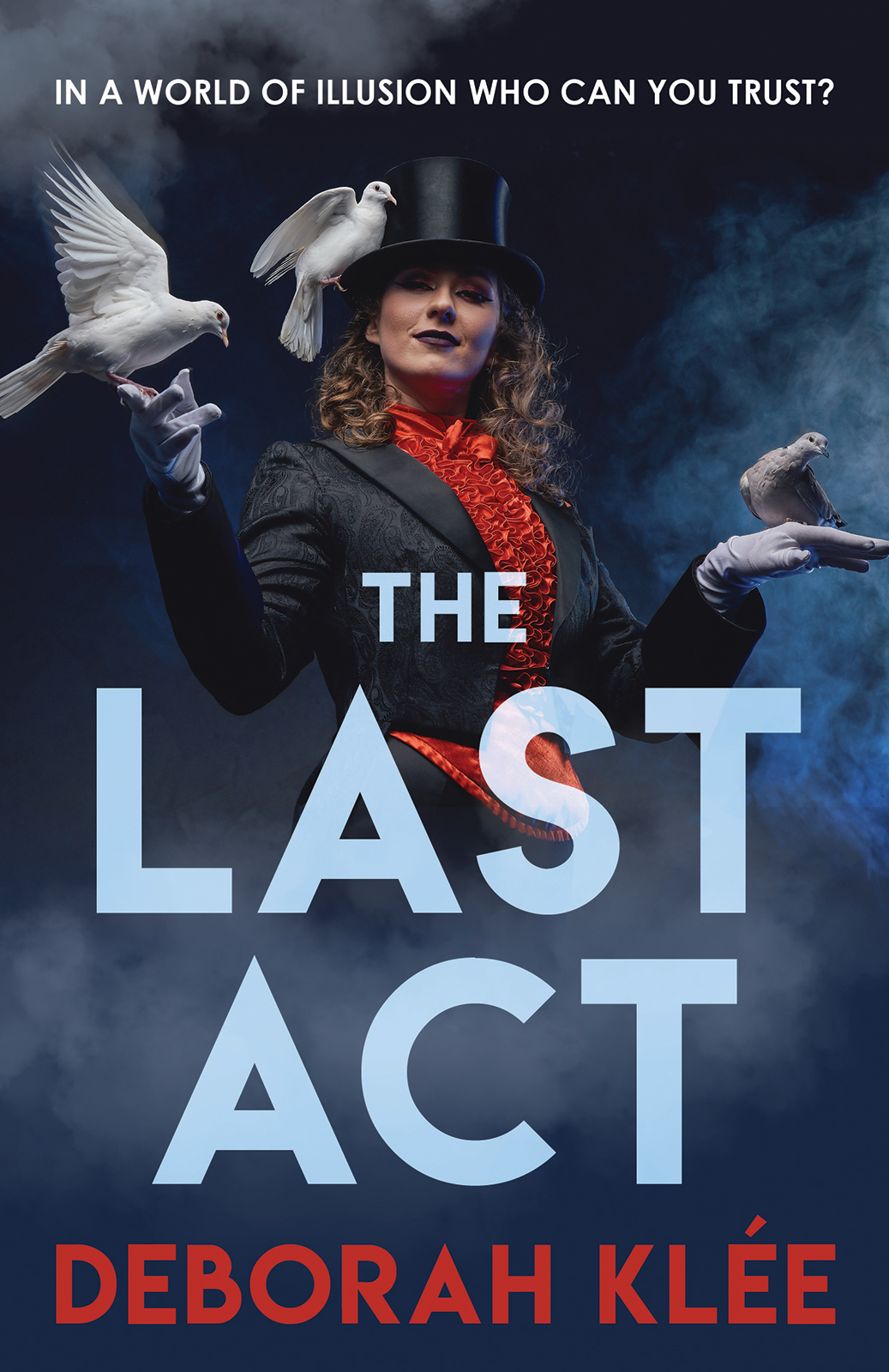
With a story based in 1980 and an unusual setting, what was the inspiration behind this novel?
The inspiration was a writing prompt in a creative writing class fifteen years ago. The prompt was one word. Mirrors. We were asked to write 5k words and share 1k each time we met as a group. When I shared the 5k story, my tutor suggested it was the outline of a novel. It was the premise of this story that led me to write novels. I wrote several more novels and had three published before returning to this story. I kept the premise, characters and setting but changed the plot and set it in 1980.
1980 was a time of change. Woman were experiencing power in the workplace for the first time. The entertainment industry was being transformed with new-wave acts: Monty Python’s Flying Circus, Punk Rock. I experienced the 1980s in my teens and so it was fun to recollect those years.
JoJo and Annie are great characters. Did you set out to make female friendship significant in the story?
I don’t think I set out to write about female friendship, but it is important to me and therefore finds a way into most of my novels. Jojo and Annie’s friendship is challenged when their lives take different directions. The feelings of being left behind, envy, and bereavement are ones I’ve experienced at different stages of my life with close friendships. I wanted to explore that.
How do you decide on names and nicknames for your characters?
Sometimes I use a name generator on Google for suggestions. In The Last Act I chose the names early on, thinking I could change them later, but once I knew my characters I couldn’t – they are their names! Annie Apple-cheeks, Annabelle’s nickname, just came to me, as Jojo exclaimed it in my head. I imagine Annie with a pretty, round, and open face.
A girl I knew at college had a boyfriend called Nick and, wanting to sound Italian, he changed it to Nico. So, I borrowed from him.
The novel is written with two viewpoint characters (JoJo and Annie). Did you organise the changes of viewpoint at the planning stage?
I did. I grappled for a short while with whose story it was – Jojo’s or Annie’s. I decided it was about their friendship and they were equally important to the story. So, I gave them equal space. I love them both, Jojo for her energy and imagination, Annie for her loyalty and kindness.
Your prologue is particularly interesting as it includes interview quotes with staff from the Golden Globe following a fire at the Victorian theatre. Why did you decide on this format?
I start and finish with news reports. The Last Act is about performers at The Golden Globe Theatre competing for media attention in the hope it will launch them to stardom. Little Fires Everywhere and Big Little Lies use a similar technique in reporting an incident in the prologue. I wanted to create intrigue and focus the reader on the theatre’s big night when the last act would offer up the next big star in the world of magic.
Danger in the novel comes in many forms. Romantic relationships are complicated and add to the jeopardy. Was this your intention when you set out to write the book?
I started with the premise of the note: If you value your life, keep away from him. I realised that this could have two meanings. The threat could come from within the relationship or from outside of it.
What’s next for you Deborah?
I have just finished writing a dual timeline novel set in WWII and 1960s, The Evacuee’s Secret. A North Yorkshire village flooded in 1966 to create a reservoir inspired this novel. I would like to write more dual timeline stories and have a couple more in my head waiting to be written.
Thank you for joining me on The Writer is a Lonely Hunter, Deborah. It’s been great to find out more about you and your novel The Last Act.
About Deborah Klée
Deborah Klée is an award-winning author of page-turning, uplifting stories about friendship, community, and emotional courage. After a career in health and social care: an occupational therapist, health service manager, freelance journalist, and management consultant, she now enjoys writing happy endings for her protagonists.
Deborah lives on the Essex coast, where she loves to walk by the sea or the surrounding countryside filling her pockets with shells, and acorns, and her head with stories.
Website: www.abrakdeborah.wordpress.com
Twitter: @DeborahKlee
Instagram: deborahkleeauthor
Facebook: Deborah Klée Author
The Last Act purchase link: https://books2read.com/The-Last-Act


The interview where I spill my reading and writing secrets
Book blogger Victoria Bucknell offers very thoughtful reviews (you can read her thoughts about The Secret Life of Carolyn Russell here). When she approached me with an invitation for an interview, I was keen to accept. I’m pleased to share the Q&A through the link below. If you’re a writer and have a new release, you may be interested to know that Victoria is currently accepting review requests.
Gail Aldwin
July 14, 2023
The Secret Life of Carolyn Russell by Gail Aldwin #NewRelease #TuesdayBookBlog
Reviews are so important to the success of a novel and it’s pleasing to see how The Secret Life of Carolyn Russell is being received by readers. Here is a thoughtful review from Lizanne Lloyd as part of her #TuesdayBookBlog posts (which are well worth reading). When posting on Amazon, reviews don’t have to be long, just a few words would be very welcome.
http://loom.ly/N2ow-gU
http://loom.ly/3S3iqLc

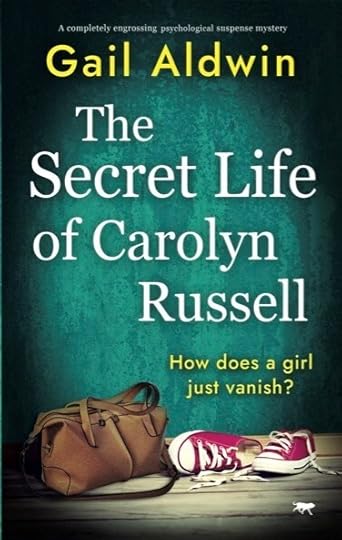
A true-crime podcaster investigates a decades-old suspected abduction, in this powerful psychological suspense novel.
1979 Sixteen-year-old Carolyn Russell grows increasingly infatuated with her school mathematics teacher who is also giving her private lessons. Then she disappears.
2014 Struggling journalist Stephanie Brett creates a true-crime podcast focused on the disappearance of Carolyn Russell. By digging deep into this mysterious cold case, her confidence and flagging career are boosted. But after she confronts the suspects—and talks to a potential witness—the leads dry up. However, Stephanie refuses to let the story rest . . .
Can a small-time journalist with a shoestring podcast really hope to reconstruct the ultimate fate of Carolyn Russell after all these years, or are some secrets best left buried?
My ReviewIt is interesting to read a dual time novel where both times are familiar parts of your life. The disappearance of a 16-year-old girl in 1979 would…
View original post 443 more words
July 10, 2023
Q&A with Alice Fowler
As with many of the authors I’ve interviewed on The Writer is a Lonely Hunter, Alice and I first met on social media. We both commented on Tweets from the Women Writers Network account, and as I became more aware of Alice through her online presence, it was a delight to realise we had things in common including projects coming to fruition in July. While you don’t need to know anything more about The Secret Life of Carolyn Russell, I’m pleased to introduce Alice and her outstanding short story collection, The Truth Has Arms and Legs which will be released by Fly On The Wall Press on Friday 14 July 2023.
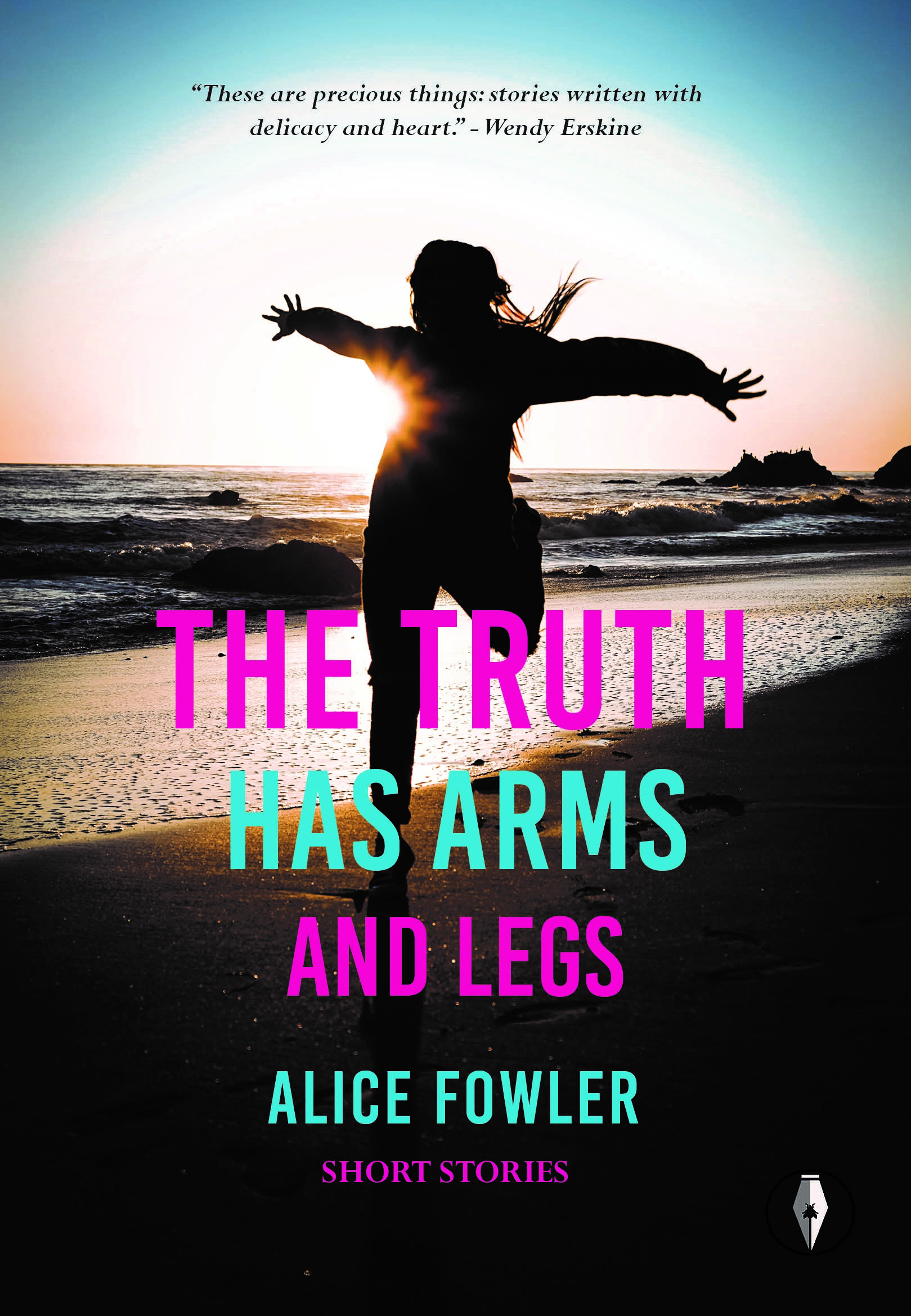
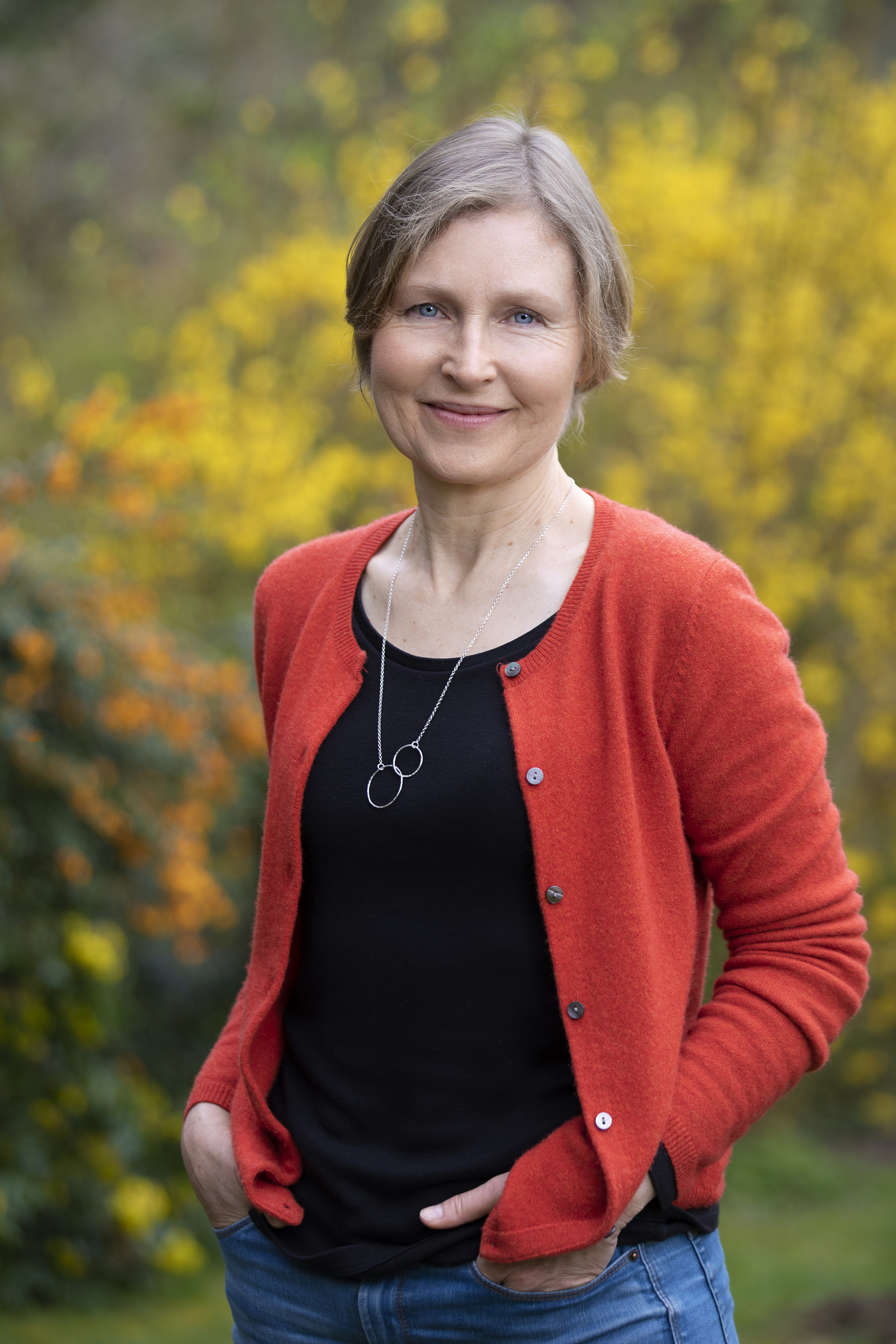
About Alice
Alice Fowler is an award-winning writer of short stories and longer fiction. She won the Historical Writers’ Association short story competition in 2020 and the Wells Festival of Literature short story competition in 2021. Other stories have been short- and long-listed in prizes and printed in anthologies. Her historical novel was longlisted for the 2021 Stylist Feminist Fiction Prize.
Alice has a degree in Human Sciences from Lady Margaret Hall, Oxford and worked as a national print journalist until 2006.
She lives in Surrey with her husband and teenage sons, and loves theatre, tennis and walking in the Surrey Hills.
About The Truth Has Arms And Legs
Delve into a world of change and reinvention. Where relationships are as delicate as turtle eggs, and just as easily smashed.
This poignant short story collection explores pivotal moments that transform our lives. Jenny, whose life is defined by small disasters, discovers a more generous version of herself. A traveller girl might just win her race and alter her life’s course. A widow, cut off in a riverside backwater, opens her heart to a stranger.
In this captivating collection, readers will be moved by the raw vulnerability of human connection, and the resilience that enables us to grow and thrive. In change, Alice Fowler’s characters find the ability to be truly free.
Q&A
The About Alice page on your website says you write short stories and longer fiction including work on a historical novel. What are the benefits of writing both short form and long pieces? Is your process for writing short fiction and longer fiction different?
Thanks so much for having me on your blog Gail! I particularly like this question as it really makes me think about my writing process. When I begin a short story, I often don’t know where it will end up. Or, if I do have an idea of the ending, I certainly don’t know how I’ll get there. I really enjoy that feeling of discovery. When it’s going well, writing can feel like painting: you add a dab of this colour, and a dab of that one, and then stand back to judge the overall effect.
For me, this approach works very well for short stories precisely because they’re short. You can throw all the plates up in the air and then (hopefully) catch them again. I write my stories from a place of pleasure, and I hope that readers sense that as they read.
With novel writing, this ‘pantser’ approach is riskier. I still like to write this way when I can, but it sometimes sends me off into blind alleys. Ideally when I begin a chapter in my novel I have more of plan – and stick to it! – while leaving enough unknown to make the writing process fun and interesting.
Your impressive debut collection includes stories from different periods to the present day and Covid. Was it your intention to span decades in your writing?
I didn’t set out to do that, although you’re right, the collection covers a time period from the Victorian era to the present. Several of the stories reflect my interest in recent social history. I spent quite a lot of time as a child with my grandparents and great grandmother. I remember hearing my grandparents talking about ‘the War’ in an almost wistful tone, presumably because they were newly married at the time. I also remember staring at old, black and white family photographs and feeling a visceral hunger to know more about these long-gone lives.
On your website, it also explains that your writing explores human nature, in all its magnificence, frailties and flaws. Which of the stories in your collection particularly represent this?
I’m really interested in the ways we, as humans, deceive ourselves. We’re continually telling and retelling our own internal stories, to justify our actions or make sense of our mistakes. So I suppose the flaw I’m thinking of most is failure to face the truth.
The story ‘Becoming Your Best You’, in which a woman resets the course of her life and marriage, takes place in a make-up artist’s chair. Although the setting is confined, the story travels very deeply through the woman’s life, to show the various ways she has closed in on herself rather than face uncomfortable truths. As the story unfolds, something happens to make that change. I had a lot of fun writing that story.
Several other stories also explore this idea of reinvention: what happens when characters let go of their old narratives and find courage to face change.
I love the title of your collection The Truth Has Arms And Legs and see it’s taken from a story you’ve included. How important are titles to you?
I’m really glad you like the title, thank you. That title came to me one day when I was out walking, for a story I’d written about the Holocaust. The story has a motif of limbs running through it: Auntie’s legs poking from the loft space, the limbs of paper dolls and later, very sadly, the piles of limbs at Auschwitz.
The title also suggests that the big, stirring events of history, that we learn about in books, are made up of many small, ‘ordinary’ lives that are too easily forgotten.
I certainly believe titles are important. Sometimes I think of one early on and stick to it. At other times – as in this case – the title comes later, after the story is written.
What was your rationale for including stories in the collection and the order of presentation?
I quite often enter stories for competitions, which I use as deadlines and sometimes almost as a ‘commission’, to force myself to write them down. Winning some competitions and being short- or long-listed in others has been very useful, as it encouraged me to think my stories might be worthy of publication.
In terms of how I ordered them – I’ll have to tell you a story. I don’t like driving but I do like travelling by train (reflected in the fact that two stories in the collection are set on trains, one a Victorian steam train, the other a tube train in London!) Working on trains suits me as it frees my head space. I remember sitting on a train one day and ordering the stories on the back of an envelope. The order came pretty instinctively, almost as a creative act. Working with Isabelle Kenyon at Fly On The Wall Press, we didn’t alter that original order. I feel it was the right one.
Many of your stories include a clever twist at the end. Do you have a clear idea of the ending when you start writing?
Endings are crucial to short stories. Ideally they should leave the reader wondering. The best short stories (I’m not including my own here, but am thinking of masters of the craft like Wendy Erskine) have an afterlife that lives on in the reader’s head. You’re left thinking: well, what happened then? What did she do next?
In terms of twists, that’s interesting, as I’m not really aware that my stories have them. As a reader I’m often not a fan of twists and as a writer I don’t aim for them either. Whatever happens at the end needs to be consistent with character, not something you feel the author has imposed for its own sake. Having said that, short stories definitely evoke some kind of change. That may well be revealed at the end.
What is next for you, Alice?
My next big challenge is getting my historical novel into a good enough state to submit to agents. I hope to reach that point fairly soon. After that I have an idea for a different kind of novel. Of course, I would love to write many more short stories. When a story’s going well, it’s the best feeling in the world.
Thank you, Alice, for joining us at The Writer is a Lonely Hunter.
Find out more about Alice here:
Author website: www.alicefowlerauthor.com
Twitter: @alicefwrites
Purchase link: https://www.flyonthewallpress.co.uk/product-page/the-truth-has-arms-and-legs
July 6, 2023
It’s been all go at HQ Aldwin
First there was my daughter’s wedding. Here is the gorgeous girl and her lovely husband.

I wrote a poem for the happy couple and read it at the service.

Then I was in a drama showcase where I performed in a scene from Ladies Day as Pearl, a fish packer from Hull. (I even managed to crack a northern accent.)

And then there was the launch party for The Secret Life of Carolyn Russell.

It’s been a busy few days!
July 3, 2023
Happy publication day to Carolyn Russell
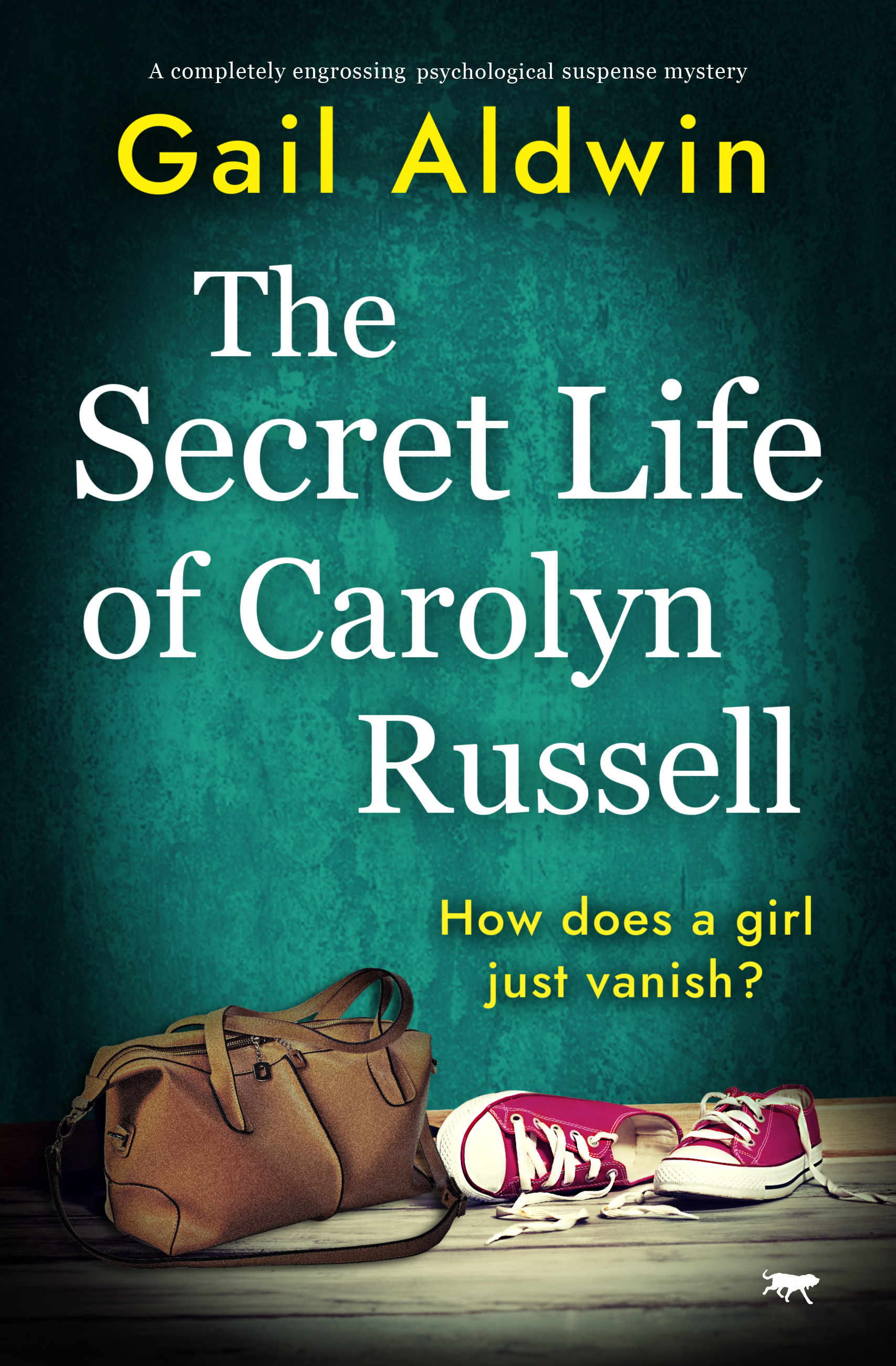
It’s taken three years from writing the very first line of The Secret Life of Carolyn Russell to arriving at publication day. There have been many ups and downs in reaching this point, but I’m proud of this story with its mystery and underlying messages that show changes in the moral code over thirty years and provide glimpses into racism in a rural setting. Book blogger, Linda Hill has posted an insightful review covering many of the elements I hoped to get across in her publication day review here.
If you’ve ever wondered how an author spends publication day, here’s my schedule:
7am: write a blog post and send (timing has slipped a bit here)
8am: join Writers’ Hour to finish a Q&A kindly offered by book blogger Victoria Bucknell
9am: check Amazon rankings to see if the novel has made a splash (repeat hourly every ten minutes)
10am: check Goodreads for any new ratings and reviews (repeat hourly every ten minutes)
11am: buy flowers for Carolyn (this sounds much better than buying flowers for myself) to celebrate publication day
12 noon: is it too early for a drink? Yes. Watch Wimbledon instead
1pm: eat celebratory smoked salmon bagel (with cream cheese and a few dill leaves)
2pm: after all the excitement, it must be time for a nap
3pm: Twitter launch for The Secret Life of Carolyn Russell which may very well be compromised by Elon Musk’s new rules about only being able to read 300 (or is it 500?) tweets in a day
4pm: put the first words of new novel on a page (the provisional title is The Regifting of Pauline Reader)
5pm: now it really is time for a glass of wine (or perhaps champagne is more appropriate)
6pm: go for a run
7pm: get ready to attend an evening concert offered by a local community choir. (This has absolutely nothing to do with The Secret Life of Carolyn Russell but I might be able to give out a few promotional postcards)
8pm: give out promotional postcards and hope this won’t annoy the organiser
9pm: tuck into after-concert snacks as I’ve forgotten to schedule dinner
10pm: early night?
If you’d like to find out what I’ve been banging on about in all the recent The Secret Life of Carolyn Russell posts, please purchase a copy here.
July 2, 2023
The Secret Life of Carolyn Russell
On the evening before publication day, it’s such a thrill to receive this review of The Secret Life of Carolyn Russell which digs deep into the story and highlights important takeaways. Have a read and tell me what you think in the comments. Thanks!

So often I look back at my school days and wonder how on earth we used to accept certain behaviours as normal. From the teacher who would regularly hurl the wooden blackboard cleaner towards anyone misbehaving, to the poor souls spanked in assembly in front of the entire school, it was a whole different world to 2023. The Secret Life of Carolyn Russell by Gail Aldwin is partially set in the late 1970s and is a stark reminder of how life was so different for young girls back then. This is a clever, engaging and well-written mystery novel that will keep you guessing to the very end. It’s the perfect summer holiday read.
Our story is told by 2 similarly intriguing female protagonists. First we meet Stephanie, a small town journalist who is down on her luck – she’s just been made redundant and has had to rent out a…
View original post 285 more words
June 20, 2023
The Secret Life of Carolyn Russell – Gail Aldwin
Book bloggers do an amazing job of spreading the love for books and reading. Books by your Bedside is a fine example where Victoria shares perceptive and thought-provoking reviews. She’s written an outstanding post for ‘The Secret Life Of Carolyn Russell’ for which I’m very grateful. Why not hop over and take a look at Victoria’s reviews? You might find a little known title that you’ll love nestling there.

Published By: Bloodhound Books
Pages: 310
Released On: 03/07/2023
A true-crime podcaster investigates a decades-old suspected abduction, in this powerful psychological suspense novel.
1979:Sixteen-year-old Carolyn Russell grows increasingly infatuated with her school mathematics teacher who is also giving her private lessons. Then she disappears.
2014: Struggling journalist Stephanie Brett creates a true-crime podcast focused on the disappearance of Carolyn Russell. By digging deep into this mysterious cold case, her confidence and flagging career are boosted. But after she confronts the suspects—and talks to a potential witness—the leads dry up. However, Stephanie refuses to let the story rest . . .
Can a small-time journalist with a shoestring podcast really hope to reconstruct the ultimate fate of Carolyn Russell after all these years, or are some secrets best left buried?
*****
Thanks to Gail for gifting me an advanced copy of her new book in return for an honest review.
I…
View original post 749 more words
June 7, 2023
Excitement is building…
for the release of The Secret Life of Carolyn Russell

At two o’clock this afternoon Bloodhound Books officially revealed the cover of my new novel The Secret Life of Carolyn Russell. Doesn’t it look splendid? The pumps and tote bag give a distinctly 1970s vibe to the mystery while the rest of the branding suits the psychological suspense elements. To be honest, it’s a relief to have this off my desk and going out into the world in less than 4 weeks. The final stages of bringing a novel to publication is a mixture of joy and panic. Release day is Monday 3 July but if you’d like to get your UK copy organised early, here’s a Kindle pre-order link. (The paperback version should be available shortly.) My thanks go to Suzanne Goldring, Joanna Barnard and Jacquelyn Mitchard for the endorsements.
An enthusiastic early reader has posted a five-star review on Goodreads. It’s a real shot in the arm when someone who’s read my previous books says The Secret Life of Carolyn Russell is her favourite to date.
In other news, you might like to tune into The Mindful Writer podcast which goes live tonight from 6pm. You’ll find me chatting with Deborah Klee about wellbeing as a writer. It’s important to be conscious of how the creative journey impacts on the individual. Leaving you with this thought, I’ll now go off and brew a pot of chamomile tea. What do you do to stay calm?
June 5, 2023
Welcome to Maria McDonald, author of The Devil’s Own
Maria and I are both published by the leading independent fiction publisher Bloodhound Books. On signing my contract, I was encouraged to interact with other Bloodhound Books authors through a private Facebook group. This was where Maria and I met and we’ve taken this connection to a new level through this interview. I’m sure you’ll find Maria’s writing journey inspiring and her debut novel a sinister yet fascinating story. Here’s the blurb for The Devil’s Own.
A set of century-old diaries found in an attic draws an Irish couple into a tale of murder and madness, in this absorbing new suspense.
After forty years in the Irish army, Brian is looking forward to retiring and spending time with his wife—though he worries about adjusting to civilian life. While clearing the attic before they move house, he makes a discovery: three journals dating back to the early twentieth century.
One was written by Arthur, an ex-Connaught Ranger; another by Arthur’s wife, Edith, a colonel’s daughter; and the third by Henry, a British soldier and Arthur’s best friend.
Brian and his wife are soon engrossed in reading the diaries and following the intertwined stories of these three people from the past. But it soon becomes chillingly clear that these diaries contain more than the daily adventures of ordinary lives. Because one of the three is a killer . . .


Thank you, Maria, for joining me on The Writer is a Lonely Hunter and agreeing to answer the questions that struck me while reading your impressive debut novel.
What steps brought you to write The Devil’s Own?
The gem of the idea for this book has been lying dormant in the back of my mind since I first saw the Curragh Camp, way back in 1978. I was working, waitressing with my mother at a dinner dance in one of the messes. My career as a waitress was very short-lived! During a break over a cup of tea, we got talking to the army chef about the building we were in, the history of the camp and the general consensus on the night – if only walls could talk.
Little did I know I would end up living in the camp, albeit for a short time around 1993. The Curragh is filled with history, going back to the days of British rule. My husband was born in the Curragh, grew up there. At one stage it had a vibrant community, completely self-contained. I was fascinated by the stories I heard from his family and our friends about the people who lived in the camp. I didn’t write them down at the time. It would take another forty years for that first spark of an idea to come to fruition.
How did you build your cast of characters?
Initially I started with two characters, Brian the modern-day soldier and Arthur from the past. As I got to know these two central characters, the story expanded to include those with the most influence on them, their wives Jean and Edith.
How much research was involved in writing The Devil’s Own?
A lot. I started with searching the national census of 1911. From that I found out what units were based in the Curragh Camp in 1911 and where they were born. From there I went into the local library, where I spoke to James Durney, local historian, and author. He gave me access to invaluable information including books no longer in print with some great first-hand accounts of the mutiny in India. A family friend Comtd (Retired) Kevin McDonald gave me a tour of the military museum in Renmore Barracks, the original home of the Connaught Rangers. Damien Quinn, local historian, gave me access to his thesis on the Connaught Rangers. People are generous with their time, and I appreciate it. My research took a lot of time and effort, but I believe it was worth it.
Part of the reason I love historical fiction is that I love history, but I know a lot of people don’t. With historical fiction you bind together fact and fiction to come up with a story that, hopefully more people will read and learn about the past, not the facts and figures, but the social history, the stories, the characters, the ordinary people who lived through extraordinary times.
The Devil’s Own is a work of fiction but…the historical facts are correct. The Connaught Rangers served all over the British Empire from 1881 to 1922. They earned the nickname, The Devils Own due to their reputation as fierce fighters. The majority of them were recruited from the west of Ireland. Many of them couldn’t even speak the King’s English.
Arthur’s postings are based on those of the 2nd battalion of the Connaught Rangers. After the first world war they were posted to India, away from Ireland and the war for independence against the British.
In July 1920 they mutinied over the treatment of their loved ones by British forces back in Ireland. Seventy-six rangers were convicted of treason and sent to Dagshai prison. One of them, Private James Daly, was shot by firing squad, the last British soldier ever to be executed for mutiny. And he was an Irishman.
After the mutiny in India the Rangers were posted back to England and disbanded in June 1922, along with five other Irish regiments. Many of those seasoned soldiers went home to Ireland and joined the newly formed Irish National Army.
One hundred years ago in 1923 my grandfather signed up with the Irish National Army. Ernie McMullen was born in Belfast, the youngest of a large family. In 1914 his older brother, James, joined the Royal Irish Rifles and was shipped to France. He lost a leg in the Battle of the Somme.
In the aftermath of partition, Belfast descended into extreme sectarian violence which claimed many lives, including my great grandfather, Charlie Mac. In Feb 1922 he was shot by the B Specials and died three days later in the Royal Victoria Hospital. His headstone reads ‘murdered for his faith’.
In January 1923 my grandfather, Ernie McMullen 1st, along with a sizeable contingent of IRA headed across the border and joined the new army under Michael Collins. After the war was over, many stayed in the ‘Free State’, Ernie went back to Belfast in October 1923 and settled into civilian life. Fifty-three years later, his son Ernie the second, my father, moved south with his family (including me) to escape the continuing violence in the north. Our uncle John called us ‘free staters’.
In The Devil’s Own, the house where Arthur, the Connaught Ranger, lived in 1923, is the same house where Brian, the Irish soldier, lived in 2020.
These characters are fictional. The house is not, it’s real and it’s still standing, in the Curragh Camp.
If only walls could talk.
Which scene from your novel did you enjoy writing most and why is it your favourite?
Edith’s chapter which introduces Edith’s experiences on first arriving in Ireland. I liked Edith’s character. As a young woman she was feisty, slightly bored with her life in India and ready to fall for the charms of a young corporal. Edith defied her parents to marry Arthur, challenged what was expected of her. Her life changed completely when Arthur’s unit was shipped to Ireland. For the first time in her life, she had no servants to handle daily chores, such as cooking, cleaning, and laundry. She handled everything life threw at her with stoicism, making new friends and learning skills she never anticipated needing to know.
What was the biggest challenge you faced in bringing The Devil’s Own to readers?
This question is hard to answer. The biggest challenge any author faces is finding a publisher. When Bloodhound Books offered me the publishing contract, I was ecstatic. I enjoyed researching The Devil’s Own, loved writing it, agonised over it, buried it in a drawer, resurrected it and started again many times. I am happy with the final result yet on the eve of publication I worried yet again, that it wasn’t good enough, that I wasn’t good enough.
The Devil’s Own is about a serial killer. I found the journal entries written by Henry the hardest to write and I avoided editing them. Once they were written, they were done. Having said that The Devil’s Own is not only about the serial killer, but also about the lives of soldiers and their families, the challenges faced by those who lived years ago compared to present day.
My husband was a soldier for twenty-one years. He was born in the Curragh Camp. We lived in the military camp for a short time early in our marriage. I have a brother who served for twenty-one years, friends and family members who served in the military.
I had invaluable support with my research from some very knowledgeable people that I greatly admire. Initially I used more historical fact than was needed for a fictional story. My editor pointed it out and advised cutting some large chapters. I followed her advice and I think the book is stronger because of it. At the end of the day, I am a fiction writer not an historian.
What’s next for you, Maria?
I signed a two-book deal with Bloodhound Books. The second book, Tangled Webs is due for release in September. It tells the story of two war widows, Jane Best and Agnes Williams, who move to Belfast in 1882 and set up a boarding house for young women. Forty years later their way of life is threatened by a former soldier who remembers them from their time in British Natal. He blackmails them so they resort to murder to keep their secret safe.
I have finished a second draft of my next novel. Lucky Lizzie is set in Cork and Florida. In 1917 the Americans joined World War 1. In May of that year the Americans landed in Queenstown (now Cobh) and left again in 1919 taking with them their war brides. Lizzie is one of those war brides who leaves the Ireland she knows behind her to build a new life in Florida.
Wow! Your forthcoming books sound so interesting, Maria. And what a journey you’ve been on.
Here’s a bit more information about Maria taken from her Bloodhound Books bio:
Originally from Belfast, Maria McDonald lives in Kildare, with her husband Gerry. After raising four children to adulthood, they are having great fun with their grandchildren.
Maria is an avid reader who loves to write but only indulged in her passion for writing fiction after retirement. Since then, her short stories and articles have been published in Woman’s Way and Ireland’s Own, as well as numerous anthologies; Intermissions, Grattan Street Press Melbourne; Same page anthology, University College Cork; Fragments of Time, Amber Publishers. Maria is a founder member of Ink Tank Writing Group, based in Newbridge library and contributed to their anthologies, Timeless in Kildare and Let Me Tell You Something.
Here is a purchase link where you can read the many five star reviews of The Devil’s Own and buy a copy. If you’d like to connect with Maria, find her social media links below:
Website: www.mariamacwriter.com
Twitter: https://twitter.com/mariamacwriter
Instagram:https://www.instagram.com/mariamacwriter/
Facebook:https://www.facebook.com/mariamacwriter/
Do you have a period of history which you find fascinating?