
Lori Hatcher's Blog: Refresh Blog, page 66
October 12, 2016
Do You Love Me a Little or a Lot?
“I love you,” my husband often says spontaneously.
“A little, or a lot?” I ask.
If he’s feeling expansive, he’ll fling his arms out wide and say, “A LOT.” If he’s feeling mischievous, he’ll hold his thumb and his index finger a quarter of an inch apart and say, “A little.”
I swat him, and we both laugh.
I’m not the only person who asks this question. Jesus also asked it, in a slightly different way.
Simon the Pharisee had invited Jesus to dinner. Scripture doesn’t tell us why, but we know one thing for certain—Jesus wasn’t the guest of honor. Simon had given him no bear hug at the door. No invitation to step inside and freshen up. No refreshing glass of water to sooth his parched throat or tasty hors d’oeuvres to take the edge off his hunger. Just a seat at the table, nothing more.
Maybe it was one of those socially obligatory invites, you know, like your twelfth birthday party when your mother made you invite the homely girl in your class with greasy hair and pimples.
“You can’t invite everyone else and leave her out. It isn’t Christian.”
So you invited her, and horror of horror, she came. Oh please don’t let her do anything that will embarrass me in front of my friends. Hopefully she’ll just sit quietly in a corner and not call attention to herself.
But radical rabbis, like 12-year-old girls, are wildcards, so Simon knew he’d have to keep an eye on Jesus. Good thing, too, because it wasn’t long before something weird happened.
Just as they were sitting down to eat, in walked the town hussy—bold as brass. Making a beeline for Jesus, no less.
Some nerve she has. Maybe it’s a good thing after all that I invited Rabbi Jesus. He’ll run her out of town on a rail just as soon as he catches sight of her. This could make some great dinnertime conversation.
Then things got even weirder.
The bravado that had carried the harlot through the doorway and across the room faltered, then vanished as she approached the teacher. Her purposeful steps grew hesitant. Her defiant eyes softened. Her shoulders drooped until she collapsed in a heap of tears at his feet, unable to meet his tender gaze.
 Bowing her head, she watched in horror as the first, then the second, then a flood of salty tears fell on his dusty feet, making tiny brown rivers that dripped to the floor. She hastily unwrapped her hair until it cascaded over her shoulders like an inky cloak. Grabbing a thick handful, she brushed at the drops, smearing them in her haste. Taking the teacher’s warm feet into her hands, she pressed her cheek against them and began to kiss them.
Hmph Simon thought, aghast at the display. If this man were a prophet, he would know who is touching him and what kind of woman she is—that she is a sinner.
He didn’t say it aloud, but Jesus answered him as if he had.
"Simon, I have something to tell you.'
"Tell me, teacher.'
"Two men owed money to a certain moneylender. One owed him five hundred denarii, and the other fifty. Neither of them had the money to pay him back, so he canceled the debts of both. Now which of them will love him more?
“Simon replied, ‘I suppose the one who had the bigger debt canceled.’
“‘You have judged correctly,’ Jesus said.
“Then he turned toward the woman and said to Simon, ‘Do you see this woman? I came into your house. You did not give me any water for my feet, but she wet my feet with her tears and wiped them with her hair. You did not give me a kiss, but this woman, from the time I entered, has not stopped kissing my feet. You did not put oil on my head, but she has poured perfume on my feet. Therefore, I tell you, her many sins have been forgiven—for she loved much. But he who has been forgiven little loves little’” (Luke 7:41-47).
And so we must ask ourselves, how much do we love him?
A little or a lot?
Are we Simon the Pharisee, sitting in self-confident ease, trusting in our good works to earn our place in Heaven? Have we invited Jesus into our lives because it’s expected of us? The cultural thing to do? Do we treat him as the socially awkward friend who will always be around to help us pick up the pieces when our cooler friends dump us? Do we wear him around our necks as one pearl in a long strand? Do we claim him when we’re hanging out with Jesus people and ditch him when we’re not?
Or are we the harlot, bowed under the weight of our sinfulness and the knowledge that apart from his mercy we would spend eternity in Hell? Have we invited him into our lives because without him we would self-destruct? Do we treat him as the King of Kings and Lord of Lords who loves us enough to confront us when we are wrong, empower us to change, and use us to lead others to himself? Do we wear him around our necks as the most precious treasure of our lives? Do we claim him proudly and unapologetically, unashamedly loving, worshiping, and serving him wherever we find ourselves?
We have all been “forgiven much,” whether we realize it or not.
“All have sinned and fallen short of the glory of God” (Rom. 3:23). “For God did not send his Son into the world to condemn the world, but to save the world through him. Whoever believes in him is not condemned, but whoever does not believe stands condemned already because he has not believed in the name of God's one and only Son” (John 3:17).
Are you Simon?
Or are you the harlot?
Do you love a little or a lot?
Simon left Jesus’ presence unchanged. The harlot, however, heard these words: “Your sins are forgiven. Your faith has saved you; go in peace."
If you enjoyed this post, why not subscribe? I'll send you twice-weekly 5-minute devotions to help nourish your soul.
Because women need to connect with God in the craziness of life.
Enter your email address and VALIDATE the Feedburner email sent to your inbox.
Delivered by FeedBurner
If this post was meaningful to you, would you consider sharing it with a friend by clicking on one of the buttons below? Did you know you can receive bi-weekly Hungry for God posts sent directly to your email inbox? Visit http://www.lori-benotweary.blogspot.com and click on the link in the right hand corner to Subscribe Via Email.
Copyright 2012 by Lori Hatcher
“A little, or a lot?” I ask.
If he’s feeling expansive, he’ll fling his arms out wide and say, “A LOT.” If he’s feeling mischievous, he’ll hold his thumb and his index finger a quarter of an inch apart and say, “A little.”
I swat him, and we both laugh.
I’m not the only person who asks this question. Jesus also asked it, in a slightly different way.
Simon the Pharisee had invited Jesus to dinner. Scripture doesn’t tell us why, but we know one thing for certain—Jesus wasn’t the guest of honor. Simon had given him no bear hug at the door. No invitation to step inside and freshen up. No refreshing glass of water to sooth his parched throat or tasty hors d’oeuvres to take the edge off his hunger. Just a seat at the table, nothing more.
Maybe it was one of those socially obligatory invites, you know, like your twelfth birthday party when your mother made you invite the homely girl in your class with greasy hair and pimples.
“You can’t invite everyone else and leave her out. It isn’t Christian.”
So you invited her, and horror of horror, she came. Oh please don’t let her do anything that will embarrass me in front of my friends. Hopefully she’ll just sit quietly in a corner and not call attention to herself.
But radical rabbis, like 12-year-old girls, are wildcards, so Simon knew he’d have to keep an eye on Jesus. Good thing, too, because it wasn’t long before something weird happened.
Just as they were sitting down to eat, in walked the town hussy—bold as brass. Making a beeline for Jesus, no less.
Some nerve she has. Maybe it’s a good thing after all that I invited Rabbi Jesus. He’ll run her out of town on a rail just as soon as he catches sight of her. This could make some great dinnertime conversation.
Then things got even weirder.
The bravado that had carried the harlot through the doorway and across the room faltered, then vanished as she approached the teacher. Her purposeful steps grew hesitant. Her defiant eyes softened. Her shoulders drooped until she collapsed in a heap of tears at his feet, unable to meet his tender gaze.
 Bowing her head, she watched in horror as the first, then the second, then a flood of salty tears fell on his dusty feet, making tiny brown rivers that dripped to the floor. She hastily unwrapped her hair until it cascaded over her shoulders like an inky cloak. Grabbing a thick handful, she brushed at the drops, smearing them in her haste. Taking the teacher’s warm feet into her hands, she pressed her cheek against them and began to kiss them.
Hmph Simon thought, aghast at the display. If this man were a prophet, he would know who is touching him and what kind of woman she is—that she is a sinner.
He didn’t say it aloud, but Jesus answered him as if he had.
"Simon, I have something to tell you.'
"Tell me, teacher.'
"Two men owed money to a certain moneylender. One owed him five hundred denarii, and the other fifty. Neither of them had the money to pay him back, so he canceled the debts of both. Now which of them will love him more?
“Simon replied, ‘I suppose the one who had the bigger debt canceled.’
“‘You have judged correctly,’ Jesus said.
“Then he turned toward the woman and said to Simon, ‘Do you see this woman? I came into your house. You did not give me any water for my feet, but she wet my feet with her tears and wiped them with her hair. You did not give me a kiss, but this woman, from the time I entered, has not stopped kissing my feet. You did not put oil on my head, but she has poured perfume on my feet. Therefore, I tell you, her many sins have been forgiven—for she loved much. But he who has been forgiven little loves little’” (Luke 7:41-47).
And so we must ask ourselves, how much do we love him?
A little or a lot?
Are we Simon the Pharisee, sitting in self-confident ease, trusting in our good works to earn our place in Heaven? Have we invited Jesus into our lives because it’s expected of us? The cultural thing to do? Do we treat him as the socially awkward friend who will always be around to help us pick up the pieces when our cooler friends dump us? Do we wear him around our necks as one pearl in a long strand? Do we claim him when we’re hanging out with Jesus people and ditch him when we’re not?
Or are we the harlot, bowed under the weight of our sinfulness and the knowledge that apart from his mercy we would spend eternity in Hell? Have we invited him into our lives because without him we would self-destruct? Do we treat him as the King of Kings and Lord of Lords who loves us enough to confront us when we are wrong, empower us to change, and use us to lead others to himself? Do we wear him around our necks as the most precious treasure of our lives? Do we claim him proudly and unapologetically, unashamedly loving, worshiping, and serving him wherever we find ourselves?
We have all been “forgiven much,” whether we realize it or not.
“All have sinned and fallen short of the glory of God” (Rom. 3:23). “For God did not send his Son into the world to condemn the world, but to save the world through him. Whoever believes in him is not condemned, but whoever does not believe stands condemned already because he has not believed in the name of God's one and only Son” (John 3:17).
Are you Simon?
Or are you the harlot?
Do you love a little or a lot?
Simon left Jesus’ presence unchanged. The harlot, however, heard these words: “Your sins are forgiven. Your faith has saved you; go in peace."
If you enjoyed this post, why not subscribe? I'll send you twice-weekly 5-minute devotions to help nourish your soul.
Because women need to connect with God in the craziness of life.
Enter your email address and VALIDATE the Feedburner email sent to your inbox.
Delivered by FeedBurner
If this post was meaningful to you, would you consider sharing it with a friend by clicking on one of the buttons below? Did you know you can receive bi-weekly Hungry for God posts sent directly to your email inbox? Visit http://www.lori-benotweary.blogspot.com and click on the link in the right hand corner to Subscribe Via Email.
Copyright 2012 by Lori Hatcher


October 10, 2016
Kindle Version of Hungry for God is FREE Today, Tues. Oct. 11, 2016
 Happy Tuesday, everyone. I wanted to share the great news that my publisher is giving away (as in FREE) the Kindle version of my 5-minute devotional,
Hungry for God ... Starving for Time.
Happy Tuesday, everyone. I wanted to share the great news that my publisher is giving away (as in FREE) the Kindle version of my 5-minute devotional,
Hungry for God ... Starving for Time.
This offer is FOR ONE DAY ONLY, Tuesday, October 11. At midnight, it's GONE. Here's the link: http://eepurl.com/cjApYL
The timing of this giveaway is extra special, because today is my mom and dad's 55th wedding anniversary. Without them, I wouldn't be where I am today.
So if you don't have an electronic copy of my book yet, click on over and grab one, then forward this email or post on social media to share the news with friends and family who need a resource that helps them connect with God in just 5 minutes a day, wherever they are. It could be the nicest thing you do for someone today.
Thanks for sharing the love!
~Lori
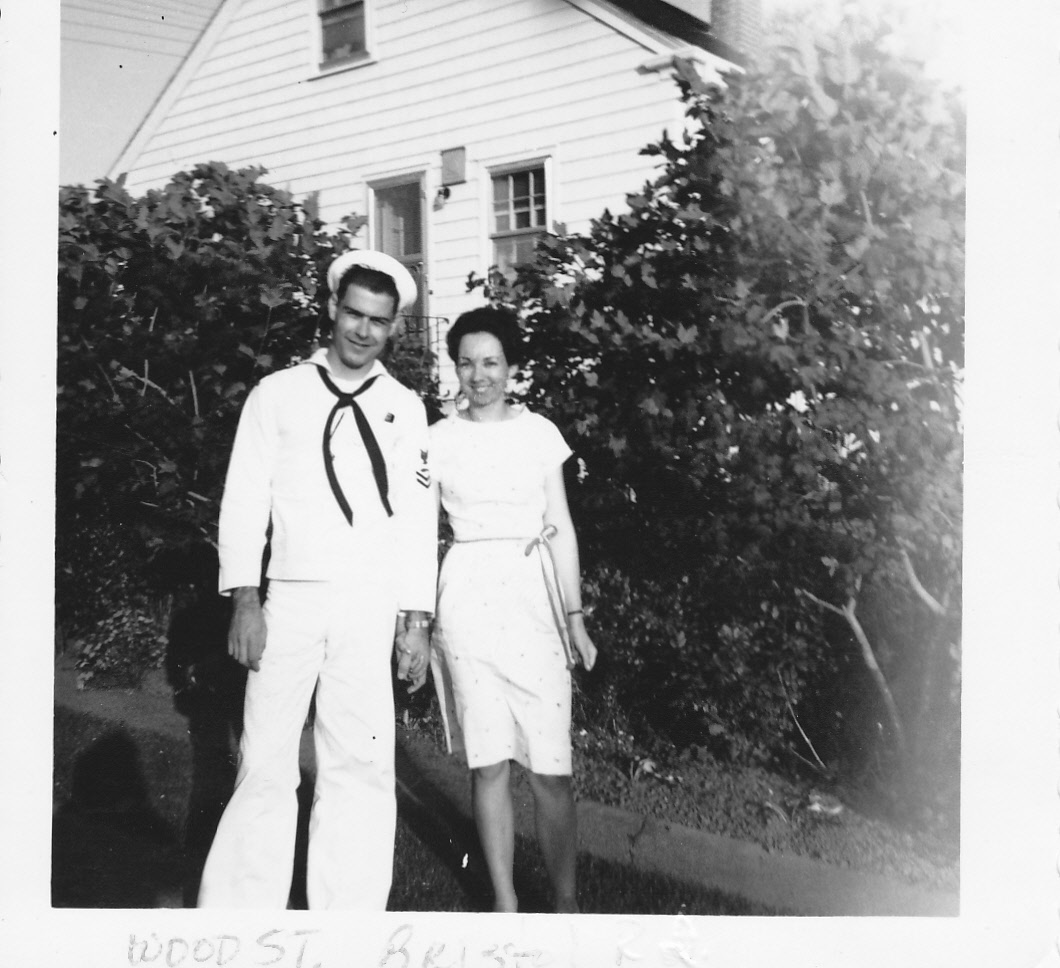 P.S. Here are two photos of my parents. The first was taken in 1961, during their engagement (aren't they cute?). The second was taken this past Easter with my sister Tina and me. (They're still cute, aren't they?) Happy anniversary Mom and Dad!
If this post was meaningful to you, would you consider sharing it with a friend by clicking on one of the buttons below? Did you know you can receive bi-weekly Hungry for God posts sent directly to your email inbox? Visit http://www.lori-benotweary.blogspot.com and click on the link in the right hand corner to Subscribe Via Email.
Copyright 2012 by Lori Hatcher
Kindle Version of Hungry for God is FREE on Today, Tues. Oct. 11, 2016
Happy Tuesday, everyone. I wanted to share the great news that my publisher is giving away (as in FREE) the Kindle version of my 5-minute devotional,
Hungry for God ... Starving for Time.
This offer is FOR ONE DAY ONLY, Tuesday, October 11. At midnight, it's GONE. Here's the link in the Amazon store:
http://amzn.to/2d3uWio
The timing of this giveaway is extra special, because today is my mom and dad's 55th wedding anniversary. Without them, I wouldn't be where I am today.
So if you don't have an electronic copy of my book yet, click on over and grab one, then forward this email or post on social media to share the news with friends and family who need a resource that helps them connect with God in just 5 minutes a day, wherever they are. It could be the nicest thing you do for someone today.
Thanks for sharing the love!
~Lori
P.S. Here are two photos of my parents. The first was taken in 1961, during their engagement (aren't they cute?). The second was taken this past Easter with my sister Tina and me. (They're still cute, aren't they?) Happy anniversary Mom and Dad!
If this post was meaningful to you, would you consider sharing it with a friend by clicking on one of the buttons below? Did you know you can receive bi-weekly Hungry for God posts sent directly to your email inbox? Visit http://www.lori-benotweary.blogspot.com and click on the link in the right hand corner to Subscribe Via Email.
Copyright 2012 by Lori Hatcher
October 9, 2016
What If You Knew You Were Going to Die?
 What if you knew you were going to die?
 And not only knew you were going to die, but knew the day and the hour?
And what if you also knew how you were going to die? Suppose someone who could look into the future had told you the day, the hour, and the method.
And the method is ugly.
It involves torture—an entire night of it. Brutality—beyond anything that has ever been done before. Public humiliation, too, in front of your family, your friends, and your countrymen. And then the accusations—blasphemy, treason, lying under oath, insurrection—and those are just the biggies. And then, the final betrayal—every single person who claimed to love you is going to abandon you, leaving you to face death alone.
Suppose you knew all this, and it’s now the night before your death.
How would you spend your last evening?
I think I’d be sitting in my comfy chair with my loved ones gathered around me. They’d be serving me all my favorite foods and playing my favorite songs in the background. One by one they’d wipe tears from their eyes, pause thoughtfully, and tell me how much my life has impacted theirs. Maybe I’d read the stack of Thank You notes I’d been collecting all my life, you know, the ones from the missionaries I’d supported, the students I’d taught, and the friends I’d done nice things for.
But let me tell you one thing I wouldn’t be doing—washing some man’s nasty feet. And I certainly wouldn’t be washing twelve men’s nasty feet.
Whaaaaat?
“It was just before the Passover Feast. Jesus knew that the time had come for him to leave this world and go to the Father. Having loved his own who were in the world, he now showed them the full extent of his love . . . . he got up from the meal, took off his outer clothing, and wrapped a towel around his waist. After that, he poured water into a basin and began to wash his disciples' feet, drying them with the towel that was wrapped around him” (John 13:1,4,5).
On the eve of Jesus’ torturous death, what was he doing? Humbly serving others.
 The task of foot washing typically belonged to the lowest servant in the household. Because this was a four-mile-an-hour, first-century world, foot washing was a nasty task. It wasn’t unusual for pedestrians to walk through animal dung, urine, mud, and garbage as they traveled the streets.
 Yet while the disciples argued about who was going to be the greatest in the kingdom of God, Jesus, God in the flesh, knelt and began to wash their feet.
Only one disciple balked, ashamed and convicted, I’m sure, at the humble position his teacher had taken before him. "No," said Peter, "you shall never wash my feet” (v. 8).
And Jesus replied, "You do not realize now what I am doing, but later you will understand."
As I read this familiar narrative, I have to ask, “Why? Why would he serve them this way, at this time? How could he humble himself when he was God Almighty? His disciples should have been falling all over themselves to serve him, but they weren’t. He would have been completely justified in demanding it of them, but he didn’t.
We find the key to Jesus’ extraordinary humility in a simple statement in John 13:3:
“Jesus knew that the Father had put all things under his power, and that he had come from God and was returning to God.”
Jesus could serve humbly because he knew who he was. He didn’t have to point out his worth before others. He didn’t need others’ affirmation and service to feel good about himself. He didn’t even have to defend or justify himself in the face of slights and disrespect. He was confident and settled in who he was—the Son of God, sent to Earth and called to spend his life serving others.
“Now before the feast of the Passover, when Jesus knew that his hour was come that he should depart out of this world unto the Father, having loved his own which were in the world, he loved them unto the end.”
Sometimes I struggle to serve others. I don’t want to be humble. I don’t want to be last. I don’t want to deny my wishes to honor someone else’s. I don’t want to turn the other cheek, go the extra mile, and forgive my enemies. I fear humility diminishes my value and servanthood will invite people to treat me like a servant.
But if I know who I am—if I know I am a child of God, sent to Earth and called to spend my life serving others, then I can know that the Father is pleased.
And that makes it all possible.
What about you? Do you fear that serving others will somehow diminish your worth? What does this vignette from Jesus’ life tell you? I’d love to hear your thoughts. Please leave a comment below or CLICK HERE to visit Hungry for God online, scroll to the bottom of the post, and leave a comment.
 Post-Matthew Hurricane Update:
 Thank you to the kind friends who have emailed and messaged me to see how my family and I fared during last weekend's hurricane. The storm swooshed through quite dramatically on Friday night and Saturday. In the center of the state, where I live, we had 35-40 mph winds and almost 4 inches of rain. The community had quite a few trees down and some local flooding (one dam broke), but no loss of life or major property. The coast is another story, and we covet your prayers for those affected. Most are still unable to return until the authorities confirm that it's safe. Currently 800,000 people are without power. I'm thankful it's sunny and warm today.
If you enjoyed this post, why not subscribe? I'll send you twice-weekly 5-minute devotions to help nourish your soul.
Because women need to connect with God in the craziness of life.
Enter your email address and VALIDATE the Feedburner email sent to your inbox.
Delivered by FeedBurner
If this post was meaningful to you, would you consider sharing it with a friend by clicking on one of the buttons below? Did you know you can receive bi-weekly Hungry for God posts sent directly to your email inbox? Visit http://www.lori-benotweary.blogspot.com and click on the link in the right hand corner to Subscribe Via Email.
Copyright 2012 by Lori Hatcher
October 5, 2016
Best Financial Lessons, Part II -- How $1.80 Changed My Life
I didn’t grow up in an evangelical church, so when I began attending one in high school, I had a bit of a culture shock.
Instead of the minister speaking in a solemn and subdued voice, he raised his voice, gestured dramatically, and paced from one side of the altar to the other. And in this church, Amen wasn’t just gentle punctuation at the end of a prayer, it was enthusiastic feedback from the congregation telling the pastor they agreed with his message.
The congregation’s approach to giving was different, too, and came with intriguing terminology. I added the words stewardship, love offering, faith promise giving, and tithing to my list of vocabulary words. I must admit, I considered this new approach with more than a bit of skepticism. Then our pastor preached on Malachi 3:10:
“Bring the whole tithe into the storehouse, that there may be food in my house. Test me in this," says the LORD Almighty, "and see if I will not throw open the floodgates of heaven and pour out so much blessing that you will not have room enough for it.”
“Why don’t you try it?” a friend suggested. “Tithe for a month, and see what happens. After all, God says, ‘Test me, and see if I won’t pour you out a blessing. ’ What do you have to lose?”
 At the time, I was a poor high school student with no income. I hated babysitting, so I had no hope of a salary increase anytime in the near future. My net gain was my six-dollar weekly allowance. I made a quick calculation.
“What is God going to do with 60 cents a week?” I asked.
“It’s not how much you give,” he said. “It’s that you give. God can multiply anything.”
“OK. I’ll try it.” My main goal, I admit, was to prove my friend wrong.
The first week, I dropped my 60 cents into the offering plate and waited. Nothing happened.
Second week, same thing.
Third week, and I was almost home free.
Then the phone call.
“Lori, this is the Airport High School guidance counselor. We’ve just received a phone call from a local dentist looking for someone to train as an assistant to work after school. Would you be interested?”
I accepted the job, began my 30+ year career in dentistry, and have been giving to the Lord ever since.
Not because giving to God is a 10-1 transaction.
Not because I think I can manipulate God into giving me stuff I want by donating to the church.
Not even because I think God needs my money.
I give regularly to the ministry because I need to give.
I need to give to remind myself that everything I have comes from him. The breath in my lungs, the strength in my body, the brain in my skull, and whatever abilities or creativity I possess are all gifts freely given to me by God.
I need to give to remind myself to seek first the kingdom of God, and all the other parts of my life, including my finances, will fall into their proper order (Mat. 6:33).
I need to give to remind myself it's not all about me, and that there are people who are less fortunate than I who can use my help.
I need to give to experience personally the miracle of the loaves and fishes.
I need to give because where my treasure is, there will my heart be also. If I am only marginally invested in our church and its missionaries, food pantry, and benevolence fund, then I will also be marginally involved in its work. If I have invested much, I will pray for the ministries, work with, promote, and love them.
I need to give because I am naturally selfish. If left to my own inclinations, I'll usually invest my best time, energy, and resources in bettering myself, not promoting God's kingdom.
I need to give because God's work is the only work that lasts for eternity. When I give to God, I'm investing in someone else's eternal destiny. I can't think of a better return for my money.
I need to give because I want more faith. Without faith it is impossible to please God. When I give instead of hoard, I exercise faith. Like a muscle, faith grows when exercised, so if I exercise faith by giving, my faith muscle grows bigger and stronger.
I need to give to acknowledge that my job is not my provider; God is.
I need to give to remind myself that I serve God, not the other way around.
And finally, I need to give because I owe a debt I can never repay.
Centuries ago God issued a challenge to his people: “Bring your tithes into the storehouse . . . Test me in this.” Thirty years ago I accepted the challenge. First out of skepticism, then out of awe, and ultimately, out of love.
In the intervening years, God has met every need our family has had. He’s provided during times of sickness, injury, and unemployment. He’s helped a blue-collar worker and a stay-at-home mom send two kids to college and stretch our money so far George Washington looks like he’s had a face lift.
I was presumptuous and faithless when I set out so many years ago to prove that God didn’t care if I gave. In his mercy, God blessed me, matured me, and taught me one of the most valuable financial lessons of my life:
“Whoever sows sparingly will also reap sparingly, and whoever sows generously will also reap generously. Each man should give what he has decided in his heart to give, not reluctantly or under compulsion, for God loves a cheerful giver. And God is able to make all grace abound to you, so that in all things at all times, having all that you need, you will abound in every good work” (2 Cor. 9:6-8).
If you’re not regularly investing in God’s kingdom, I encourage you to begin. Give generously, regularly, and prayerfully, and watch what God will do. I’m confident that he’ll use your giving to enhance your life and the lives of those around you. If you regularly give to God’s work, I’d love to hear your story. Leave a comment in the box below or CLICK HERE to visit Hungry for God online, scroll to the bottom, and leave a comment.
If you enjoyed this post, why not subscribe? I'll send you twice-weekly 5-minute devotions to help nourish your soul.
Because women need to connect with God in the craziness of life.
Enter your email address and VALIDATE the Feedburner email sent to your inbox.
Delivered by FeedBurner
If this post was meaningful to you, would you consider sharing it with a friend by clicking on one of the buttons below? Did you know you can receive bi-weekly Hungry for God posts sent directly to your email inbox? Visit http://www.lori-benotweary.blogspot.com and click on the link in the right hand corner to Subscribe Via Email.
Copyright 2012 by Lori Hatcher
Instead of the minister speaking in a solemn and subdued voice, he raised his voice, gestured dramatically, and paced from one side of the altar to the other. And in this church, Amen wasn’t just gentle punctuation at the end of a prayer, it was enthusiastic feedback from the congregation telling the pastor they agreed with his message.
The congregation’s approach to giving was different, too, and came with intriguing terminology. I added the words stewardship, love offering, faith promise giving, and tithing to my list of vocabulary words. I must admit, I considered this new approach with more than a bit of skepticism. Then our pastor preached on Malachi 3:10:
“Bring the whole tithe into the storehouse, that there may be food in my house. Test me in this," says the LORD Almighty, "and see if I will not throw open the floodgates of heaven and pour out so much blessing that you will not have room enough for it.”
“Why don’t you try it?” a friend suggested. “Tithe for a month, and see what happens. After all, God says, ‘Test me, and see if I won’t pour you out a blessing. ’ What do you have to lose?”
 At the time, I was a poor high school student with no income. I hated babysitting, so I had no hope of a salary increase anytime in the near future. My net gain was my six-dollar weekly allowance. I made a quick calculation.
 “What is God going to do with 60 cents a week?” I asked.
“It’s not how much you give,” he said. “It’s that you give. God can multiply anything.”
“OK. I’ll try it.” My main goal, I admit, was to prove my friend wrong.
The first week, I dropped my 60 cents into the offering plate and waited. Nothing happened.
Second week, same thing.
Third week, and I was almost home free.
Then the phone call.
“Lori, this is the Airport High School guidance counselor. We’ve just received a phone call from a local dentist looking for someone to train as an assistant to work after school. Would you be interested?”
I accepted the job, began my 30+ year career in dentistry, and have been giving to the Lord ever since.
Not because giving to God is a 10-1 transaction.
Not because I think I can manipulate God into giving me stuff I want by donating to the church.
Not even because I think God needs my money.
I give regularly to the ministry because I need to give.
I need to give to remind myself that everything I have comes from him. The breath in my lungs, the strength in my body, the brain in my skull, and whatever abilities or creativity I possess are all gifts freely given to me by God.
I need to give to remind myself to seek first the kingdom of God, and all the other parts of my life, including my finances, will fall into their proper order (Mat. 6:33).
I need to give to remind myself it's not all about me, and that there are people who are less fortunate than I who can use my help.
I need to give to experience personally the miracle of the loaves and fishes.
I need to give because where my treasure is, there will my heart be also. If I am only marginally invested in our church and its missionaries, food pantry, and benevolence fund, then I will also be marginally involved in its work. If I have invested much, I will pray for the ministries, work with, promote, and love them.
I need to give because I am naturally selfish. If left to my own inclinations, I'll usually invest my best time, energy, and resources in bettering myself, not promoting God's kingdom.
I need to give because God's work is the only work that lasts for eternity. When I give to God, I'm investing in someone else's eternal destiny. I can't think of a better return for my money.
I need to give because I want more faith. Without faith it is impossible to please God. When I give instead of hoard, I exercise faith. Like a muscle, faith grows when exercised, so if I exercise faith by giving, my faith muscle grows bigger and stronger.
I need to give to acknowledge that my job is not my provider; God is.
I need to give to remind myself that I serve God, not the other way around.
And finally, I need to give because I owe a debt I can never repay.
Centuries ago God issued a challenge to his people: “Bring your tithes into the storehouse . . . Test me in this.” Thirty years ago I accepted the challenge. First out of skepticism, then out of awe, and ultimately, out of love.
In the intervening years, God has met every need our family has had. He’s provided during times of sickness, injury, and unemployment. He’s helped a blue-collar worker and a stay-at-home mom send two kids to college and stretch our money so far George Washington looks like he’s had a face lift.
I was presumptuous and faithless when I set out so many years ago to prove that God didn’t care if I gave. In his mercy, God blessed me, matured me, and taught me one of the most valuable financial lessons of my life:
“Whoever sows sparingly will also reap sparingly, and whoever sows generously will also reap generously. Each man should give what he has decided in his heart to give, not reluctantly or under compulsion, for God loves a cheerful giver. And God is able to make all grace abound to you, so that in all things at all times, having all that you need, you will abound in every good work” (2 Cor. 9:6-8).
If you’re not regularly investing in God’s kingdom, I encourage you to begin. Give generously, regularly, and prayerfully, and watch what God will do. I’m confident that he’ll use your giving to enhance your life and the lives of those around you. If you regularly give to God’s work, I’d love to hear your story. Leave a comment in the box below or CLICK HERE to visit Hungry for God online, scroll to the bottom, and leave a comment.
If you enjoyed this post, why not subscribe? I'll send you twice-weekly 5-minute devotions to help nourish your soul.
Because women need to connect with God in the craziness of life.
Enter your email address and VALIDATE the Feedburner email sent to your inbox.
Delivered by FeedBurner
If this post was meaningful to you, would you consider sharing it with a friend by clicking on one of the buttons below? Did you know you can receive bi-weekly Hungry for God posts sent directly to your email inbox? Visit http://www.lori-benotweary.blogspot.com and click on the link in the right hand corner to Subscribe Via Email.
Copyright 2012 by Lori Hatcher
October 2, 2016
My Best Financial Lessons, Part I
When my husband and I married almost 32 years ago, we were baaaaaaby Christians. He was three spiritual years old, and I was two. Boy did we have a lot to learn.
Shortly after I became a Christian, I discovered Christian radio. I was a dental hygiene student and had to rise well before dawn to get to school by 7:30. Every morning my clock radio would awaken me just in time to hear the late Larry Burkett’s How to Manage Your Money broadcast (now Crown Financial Ministries.
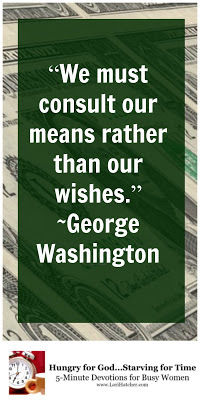 Every day I learned something new about sound biblical principles for managing my money. I was the stereotypical poor college student, but I knew if I survived Head and Neck Anatomy class, I’d graduate, get a job, and start earning a salary.
Now, more than three decades later, I can trace our family’s financial stability back to those principles I learned in those 5-minute radio segments. In the next two blog posts, I’d like to share a few of the best financial lessons I learned.
Best Financial Lesson #1: Use the envelope method.
The envelope method is an extremely simple *oh I hate to use the B word* bbbbbbudget. You simply take the amount of your paycheck and divide it into spending or saving categories, then give each category its own envelope.
Our early envelopes had labels like Rent and Electricity, Groceries, Gas, and (my favorite) Out to Eat. We included envelopes for Savings and Giving (10% each), and a Long Term Expenses envelope. This took care of all the expenses that came due once or twice a year, like car insurance and car taxes. We added up the bill amounts, then divided the total amount by 12 to get the monthly amount we needed to put into the envelope.
Lastly, we had a Miscellaneous Appliance Fund to save for the inevitable appliance repair or replacement. Once we had listed our expense categories, with envelopes to match, we wrote a dollar amount on each. Then we’d place that amount of money in the envelope every month. If we got paid weekly, we’d put a fourth of that amount in every pay period. Bi-weekly, we’d put in half.
For example, if our rent was $700 a month, and we got paid twice a month, I needed to put in $350 into the envelope each pay period. If I got paid weekly, I’d put in $175 from each paycheck.
Some expenses, like rent and student loan repayments, were fixed amounts we had no say in. As we allocated our paycheck funds, we paid those first. Once we subtract the fixed amounts (and we considered giving and saving non-negotiables), what was left covered the other categories. If there were more envelopes than there was money, we’d cut some of the negotiables.
While we’d have liked to spend $100 a week on groceries and out to eat, we sometimes had to cut the grocery amount in half and skip eating out entirely. Other months all we could put into that discretionary fund was $10. A small amount like that encouraged us to look for coupons, specials, and other ways to stretch our funds.
When we first established the Miscellaneous Appliance Fund, $15 a month was all we could afford to put in it. That didn’t sound like much, and it wasn’t, but every month we’d tuck it away anyway. God was gracious to us, and nothing broke down or needed replacing for FOUR years. What had seemed like a minuscule amount when we began multiplied over time into enough money to replace our broken washing machine when the need arose without going into debt.
The envelope method is a powerful visual of how budgeting works. It shows us in practice what we know in theory—that the funds of our paychecks are going somewhere. Our job is to decide where they go and see to it that they get there.
An important detail to keep in mind is that it’s a BIG NO NO to rob from one envelope to pad another unless we’re redirecting discretionary income. It is not OK to take money from my Rent envelope and move it to my Out to Eat envelope.
Embezzling like this can easily happen if we have all our money in a checking account without a clear understanding of where we have it committed. In contrast, seeing our money tucked safely into its respective envelopes helps us realize that most of it is allocated and we’d better think long and hard before we spend it. We’ll be much less likely to raid our Student Loan envelope when the craving for an expensive lunch strikes if we have to physically open that envelope and take the money out.
On the flip side, if we’d rather have friends over for homemade chili and brownies than go out to eat, we can certainly move money from our Out to Eat envelope to our Grocery envelope if needed. Discretionary categories are just that.
I know the envelope method sounds very simple compared to the spreadsheets, software, and classes companies have developed to teach us how to account for every penny that comes into our homes. If those methods work for you, go for it. But if you’re new to budgeting or have struggled with financial management in the past, I encourage you to give this method a try. It’s a little inconvenient to shuffle cash back and forth, but it’s an excellent way to see what’s coming in, what’s going out, and where it’s going.
Philippians 1:6 tells us, “He (God) who began a good work in you will be faithful to complete it.” This verse reminds me that God promises to teach me everything I need to know to serve him well. I can look back over the course of my lifetime and see dozens of examples of how God has brought people, information, and training into my life just when I needed it most. Money management is one of these areas, and the envelope method has helped us control our finances instead of our finances controlling us.
In my next post, I’ll share two more of the best financial lessons I’ve learned. If you haven’t subscribed to Hungry for God yet, this would be a great time to do so so you won’t miss a single post in the series. In the meantime, why not join the conversation? What’s your best financial tip for saving and spending well? Leave a comment below and join the conversation. If you’re reading by email, click HERE to go to Hungry for God online, scroll to the bottom, and leave a comment.
If you enjoyed this post, why not subscribe? I'll send you twice-weekly 5-minute devotions to help nourish your soul.
Because women need to connect with God in the craziness of life.
Enter your email address and VALIDATE the Feedburner email sent to your inbox.
Delivered by FeedBurner
If this post was meaningful to you, would you consider sharing it with a friend by clicking on one of the buttons below? Did you know you can receive bi-weekly Hungry for God posts sent directly to your email inbox? Visit http://www.lori-benotweary.blogspot.com and click on the link in the right hand corner to Subscribe Via Email.
Copyright 2012 by Lori Hatcher
Shortly after I became a Christian, I discovered Christian radio. I was a dental hygiene student and had to rise well before dawn to get to school by 7:30. Every morning my clock radio would awaken me just in time to hear the late Larry Burkett’s How to Manage Your Money broadcast (now Crown Financial Ministries.
 Every day I learned something new about sound biblical principles for managing my money. I was the stereotypical poor college student, but I knew if I survived Head and Neck Anatomy class, I’d graduate, get a job, and start earning a salary.
 Now, more than three decades later, I can trace our family’s financial stability back to those principles I learned in those 5-minute radio segments. In the next two blog posts, I’d like to share a few of the best financial lessons I learned.
Best Financial Lesson #1: Use the envelope method.
The envelope method is an extremely simple *oh I hate to use the B word* bbbbbbudget. You simply take the amount of your paycheck and divide it into spending or saving categories, then give each category its own envelope.
Our early envelopes had labels like Rent and Electricity, Groceries, Gas, and (my favorite) Out to Eat. We included envelopes for Savings and Giving (10% each), and a Long Term Expenses envelope. This took care of all the expenses that came due once or twice a year, like car insurance and car taxes. We added up the bill amounts, then divided the total amount by 12 to get the monthly amount we needed to put into the envelope.
Lastly, we had a Miscellaneous Appliance Fund to save for the inevitable appliance repair or replacement. Once we had listed our expense categories, with envelopes to match, we wrote a dollar amount on each. Then we’d place that amount of money in the envelope every month. If we got paid weekly, we’d put a fourth of that amount in every pay period. Bi-weekly, we’d put in half.
For example, if our rent was $700 a month, and we got paid twice a month, I needed to put in $350 into the envelope each pay period. If I got paid weekly, I’d put in $175 from each paycheck.
Some expenses, like rent and student loan repayments, were fixed amounts we had no say in. As we allocated our paycheck funds, we paid those first. Once we subtract the fixed amounts (and we considered giving and saving non-negotiables), what was left covered the other categories. If there were more envelopes than there was money, we’d cut some of the negotiables.
While we’d have liked to spend $100 a week on groceries and out to eat, we sometimes had to cut the grocery amount in half and skip eating out entirely. Other months all we could put into that discretionary fund was $10. A small amount like that encouraged us to look for coupons, specials, and other ways to stretch our funds.
When we first established the Miscellaneous Appliance Fund, $15 a month was all we could afford to put in it. That didn’t sound like much, and it wasn’t, but every month we’d tuck it away anyway. God was gracious to us, and nothing broke down or needed replacing for FOUR years. What had seemed like a minuscule amount when we began multiplied over time into enough money to replace our broken washing machine when the need arose without going into debt.
The envelope method is a powerful visual of how budgeting works. It shows us in practice what we know in theory—that the funds of our paychecks are going somewhere. Our job is to decide where they go and see to it that they get there.
An important detail to keep in mind is that it’s a BIG NO NO to rob from one envelope to pad another unless we’re redirecting discretionary income. It is not OK to take money from my Rent envelope and move it to my Out to Eat envelope.
Embezzling like this can easily happen if we have all our money in a checking account without a clear understanding of where we have it committed. In contrast, seeing our money tucked safely into its respective envelopes helps us realize that most of it is allocated and we’d better think long and hard before we spend it. We’ll be much less likely to raid our Student Loan envelope when the craving for an expensive lunch strikes if we have to physically open that envelope and take the money out.
On the flip side, if we’d rather have friends over for homemade chili and brownies than go out to eat, we can certainly move money from our Out to Eat envelope to our Grocery envelope if needed. Discretionary categories are just that.
I know the envelope method sounds very simple compared to the spreadsheets, software, and classes companies have developed to teach us how to account for every penny that comes into our homes. If those methods work for you, go for it. But if you’re new to budgeting or have struggled with financial management in the past, I encourage you to give this method a try. It’s a little inconvenient to shuffle cash back and forth, but it’s an excellent way to see what’s coming in, what’s going out, and where it’s going.
Philippians 1:6 tells us, “He (God) who began a good work in you will be faithful to complete it.” This verse reminds me that God promises to teach me everything I need to know to serve him well. I can look back over the course of my lifetime and see dozens of examples of how God has brought people, information, and training into my life just when I needed it most. Money management is one of these areas, and the envelope method has helped us control our finances instead of our finances controlling us.
In my next post, I’ll share two more of the best financial lessons I’ve learned. If you haven’t subscribed to Hungry for God yet, this would be a great time to do so so you won’t miss a single post in the series. In the meantime, why not join the conversation? What’s your best financial tip for saving and spending well? Leave a comment below and join the conversation. If you’re reading by email, click HERE to go to Hungry for God online, scroll to the bottom, and leave a comment.
If you enjoyed this post, why not subscribe? I'll send you twice-weekly 5-minute devotions to help nourish your soul.
Because women need to connect with God in the craziness of life.
Enter your email address and VALIDATE the Feedburner email sent to your inbox.
Delivered by FeedBurner
If this post was meaningful to you, would you consider sharing it with a friend by clicking on one of the buttons below? Did you know you can receive bi-weekly Hungry for God posts sent directly to your email inbox? Visit http://www.lori-benotweary.blogspot.com and click on the link in the right hand corner to Subscribe Via Email.
Copyright 2012 by Lori Hatcher
September 28, 2016
What the World Needs More Of -- A 30-Day Adventure
 When you think about the word kindness, what comes to mind?
During our recent trip to Rhode Island (are you sick of hearing about it yet?), our family went to the town beach. Although the day had been warm, the ocean water was characteristically cold.
We kicked off our shoes and walked in the shallows. Only Lauren, the three-year-old, got significantly wet. As the sun began to set, the wind picked up, sending a chilly breeze across the water.
“I’m cold,” Lauren whimpered, clasping her arms around herself and shivering uncontrollably. Her eyes drooped and so did her smile.
Uncle Michael, the newest member of our family, hasn’t been an uncle long, but he knew what to do. Grabbing a towel, he wrapped up Lauren like a burrito, scooped her out of the water, and carried her to the car while we gathered our belongings. Lauren tucked her head into his shoulder and wrapped her little arms around his neck, safe and warm in his embrace.
When I think about kindness, this story is a great example. In many ways, it models God’s kindness toward us, his children. Listen to Isaiah’s tender description of his heart toward us:
“He tends his flock like a shepherd: He gathers the lambs in his arms and carries them close to his heart; he gently leads those that have young” (Isa. 40:11).
And Paul’s description of God’s kindness in Acts 14:17:
“He has shown kindness by giving you rain from heaven and crops in their seasons; he provides you with plenty of food and fills your hearts with joy."
Kindness is best characterized as strength tempered with compassion. My son-in-law is a strong man, a naval officer who is trained to fight for and defend our country. His strength, paired with compassion and combined with the love of Jesus, produces a kindness that puts the needs of others, including sandy, shivering little girls, ahead of his own.
As children of God, we have the Holy Spirit living inside us. This means we have access to the gifts he brings with him, namely love, joy, peace, patience, kindness, goodness, faithfulness, gentleness, and self-control. (Gal. 5:22-223). When we yield ourselves to him and allow Jesus’ love to flow through us, the Spirit gives us the power to live out these gifts every day.
I’m convinced that our world needs a whole lot more kindness. But rather than pointing my finger at “those people” who need to practice this virtue, I need to begin with myself.
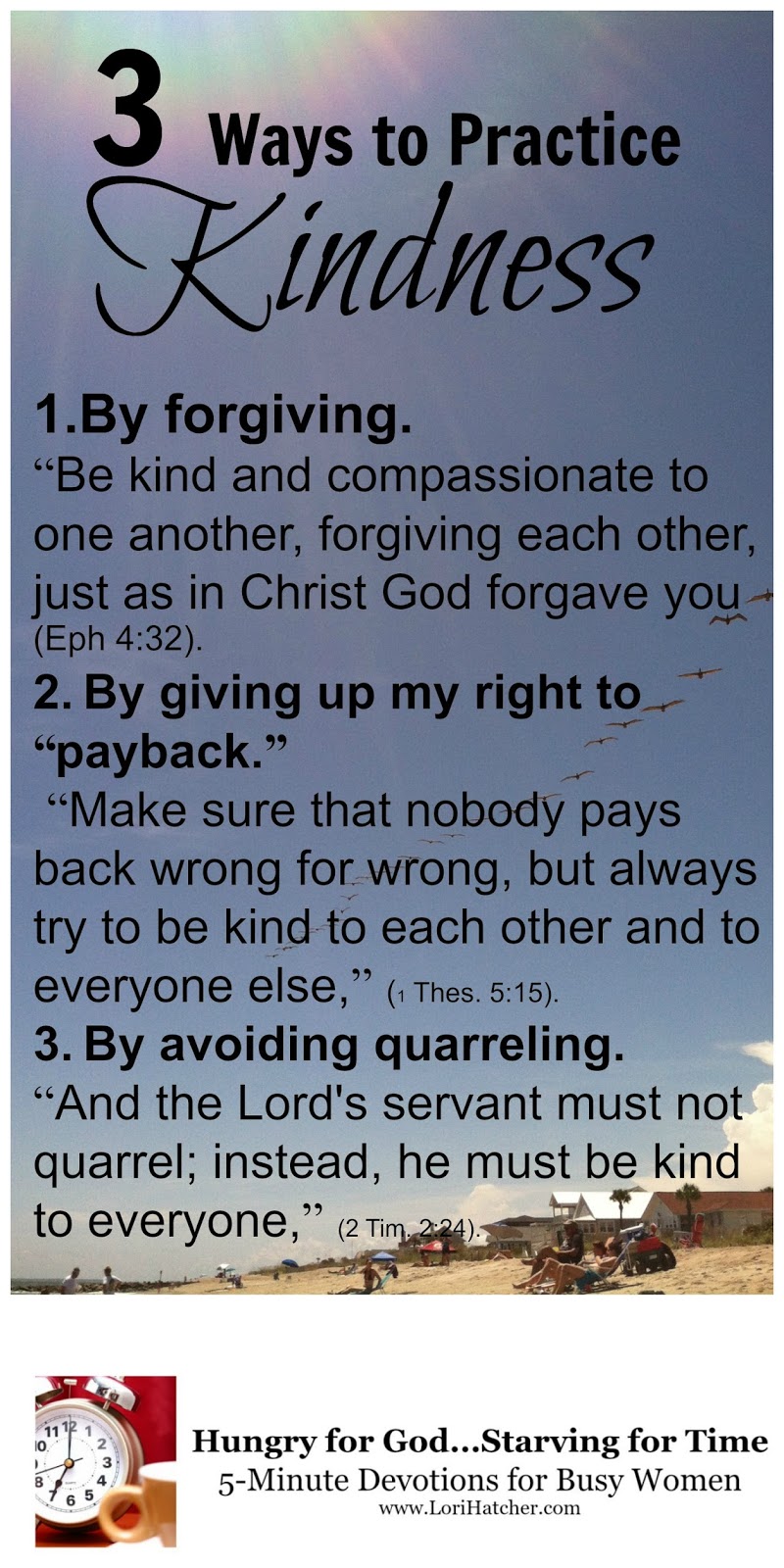 Scripture gives me several ways to practice kindness:
1. By being quick to forgive. “Be kind and compassionate to one another, forgiving each other, just as in Christ God forgave you” (Eph. 4:32).
2. By giving up my right to “payback.” “Make sure that nobody pays back wrong for wrong, but always try to be kind to each other and to everyone else,” (1 Thes. 5:15).
3. By resisting quarreling. “And the Lord's servant must not quarrel; instead, he must be kind to everyone,” (2 Tim. 2:24).
These are the biggies, but kindness has a thousand faces. It’s as simple as doing a chore for your spouse, helping a coworker without being asked, or hugging someone who’s having a bad day. Listening patiently, speaking softly, and going the extra mile are kind gestures that can change the course of someone’s day.
We love to be the recipients of kindness, but we often forget to give it away. Like the other fruit of the Spirit, I want to be characterized by kindness. Until it comes (super)naturally, my goal is this:
Every day for 30 days, I purpose to:
1. Think one kind thought (because every action finds its genesis in our minds).
2. Speak one kind word (because words have power).
3. Do one kind deed (because I want to be a doer of the Word, not just a hearer only).
If kindness doesn’t come naturally to you either, or if you want to grow in this fruit of the Spirit, I invite you to join me in this 30-Day Kindness Adventure.
“Therefore, as God's chosen people, holy and dearly loved, clothe yourselves with compassion, kindness, humility, gentleness and patience. Bear with each other and forgive whatever grievances you may have against one another. Forgive as the Lord forgave you. And over all these virtues put on love, which binds them all together in perfect unity,” (Col. 3:12-14).
Our world needs more kindness. May it begin with me.
If you enjoyed this post, why not subscribe? I'll send you twice-weekly 5-minute devotions to help nourish your soul.
Because women need to connect with God in the craziness of life.
Enter your email address and VALIDATE the Feedburner email sent to your inbox.
Delivered by FeedBurner
If this post was meaningful to you, would you consider sharing it with a friend by clicking on one of the buttons below? Did you know you can receive bi-weekly Hungry for God posts sent directly to your email inbox? Visit http://www.lori-benotweary.blogspot.com and click on the link in the right hand corner to Subscribe Via Email.
Copyright 2012 by Lori Hatcher
September 25, 2016
Who Is Your "Least of These"?
Sometimes it’s easy to love the “least of these.” Other times, not so much. It’s easy to love little children until they whine, tantrum, or disobey. And the poor until they act ungrateful or entitled. Many of us are willing to care for the sick—until someone throws up on us. And we welcome the lonely until they get clingy and demanding.
Nevertheless, God calls us to serve those who appear to bring nothing to the table. Matthew 25:40 tells us, “whatever you did for one of the least of these brothers of mine has done it unto me.”
In light of this command, we should ask ourselves, “Who is “the least of these” God is calling me to love and serve?
Maybe it’s a family member, co-worker, neighbor, or church member. Or it could be a young mom, college student, or struggling teen. Or a lonely friend, grieving widow, or elderly acquaintance.
“Least of these” can be one-time opportunities to do a kind deed, meet a need, or speak an encouraging word, or they can be longer-term commitments to get involved in someone’s life. Regardless, we should always be ministering to at least one of the least of these.
The litmus test is that our commitment is a sacrificial relationship that appears to be lopsided—we’re giving and they’re receiving.
I’d like to share five reasons to love and serve “the least of these.”
1. God blesses us when we share generously.
“Give, and it will be given to you. Good measure, pressed down, shaken together, running over, will be put into your lap. For with the measure you use it will be measured back to you” (Luke 6:38). Whether it’s time, talent, or treasure, God always manages to bless us more than we bless others.
2. God will get the glory for our kind deeds.
“In the same way, let your light shine before others, so that they may see your good works and give glory to your Father who is in heaven” (Mat. 5:16).
3. When we were young believers, others patiently helped us grow.
Now we can pay it forward. “We who are strong have an obligation to bear with the failings of the weak, and not to please ourselves” Rom. 15:1).
4. Jesus promises eternal reward for those who selflessly serve others.
"Then the King will say to those on his right, 'Come, you who are blessed by my Father; take your inheritance, the kingdom prepared for you since the creation of the world. For I was hungry and you gave me something to eat, I was thirsty and you gave me something to drink, I was a stranger and you invited me in,” (Mat. 25:34-35).
5. It makes God happy.
“Do not neglect to do good and to share what you have, for such sacrifices are pleasing to God” (Heb. 13:16). Who doesn’t want to make God happy?
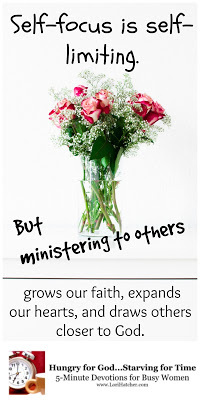 I’ve been a believer for more than 30 years. Sometimes I’ve been self-focused, and other times I’ve been other-focused. It hasn’t taken me long to discover that self-focus is self-limiting. Ministering to others, however, especially when it’s challenging and sacrificial, grows our faith, expands our hearts, and draws others closer to God.
Some of the needy people I’ve befriended purely out of obedience to God’s promptings have become my dearest friends. While the relationships may have started out lopsided, as they grew in spiritual maturity, they have loved me loyally and unselfishly.
Some of the sick people I’ve ministered to have taught me priceless lessons about contentment, courage, and faith. More than once I’ve visited someone intending to encourage them and realized instead that they had encouraged me.
Some of the spiritually immature people I’ve discipled have challenged me think through what I believe and be able to defend it. They’ve inspired me with their fledgling faith and reminded me of my responsibility to set a good example.
I always learn something about myself and the Lord when I minister to the least of these. Probably the greatest lesson I’ve learned is that, in God’s eyes, I, too, am the least of these. He loves me when I’m unlovely, comforts me when I am sick, and visits me when I am in a prison of my own making. In every way, he loves me the way he calls me to love others.
So I ask you again, who is “the least of these” whom God is calling you to love and serve? If you don’t have someone, pray and ask God to show you who around you most needs your love and care.
Last weekend I had the privilege of ministering with the amazing women of Good Shepherd UMC Parish in Brookville, PA. Here are a few scenes from our time together.
 A beautiful morning ushered in a beautiful day.
 A shy friend greeted us in the nearby apple orchard.
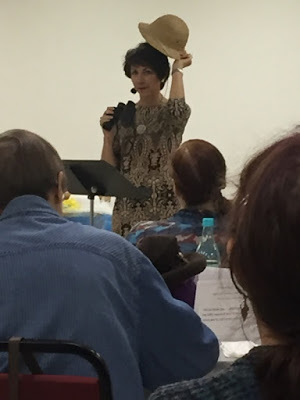 The first hat in "A Hat for All Seasons, Serving God in Every Stage of Life" is a safari hat. Can you guess why?
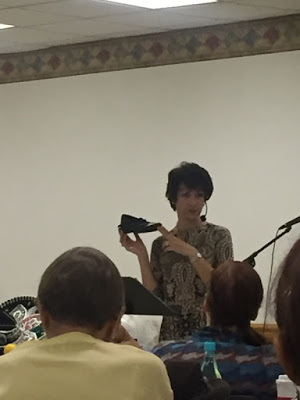 "Stepping Out, How Our Footwear Impacts our Faith"God calls men AND women to wear this shoe as we walk the faith walk.
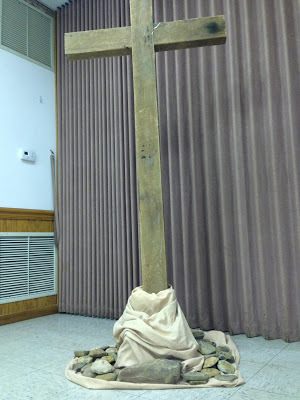 "Clean Out That Closet" challenged us to leave bitterness and unforgiveness at the foot of the cross.
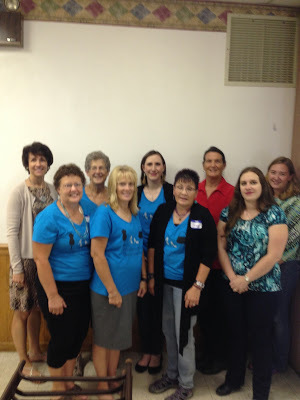 The amazing planning committee that made everything flow smoothly.
If you enjoyed this post, why not subscribe? I'll send you twice-weekly 5-minute devotions to help nourish your soul.
Because women need to connect with God in the craziness of life.
Enter your email address and VALIDATE the Feedburner email sent to your inbox.
Delivered by FeedBurner
If this post was meaningful to you, would you consider sharing it with a friend by clicking on one of the buttons below? Did you know you can receive bi-weekly Hungry for God posts sent directly to your email inbox? Visit http://www.lori-benotweary.blogspot.com and click on the link in the right hand corner to Subscribe Via Email.
Copyright 2012 by Lori Hatcher
Nevertheless, God calls us to serve those who appear to bring nothing to the table. Matthew 25:40 tells us, “whatever you did for one of the least of these brothers of mine has done it unto me.”
In light of this command, we should ask ourselves, “Who is “the least of these” God is calling me to love and serve?
Maybe it’s a family member, co-worker, neighbor, or church member. Or it could be a young mom, college student, or struggling teen. Or a lonely friend, grieving widow, or elderly acquaintance.
“Least of these” can be one-time opportunities to do a kind deed, meet a need, or speak an encouraging word, or they can be longer-term commitments to get involved in someone’s life. Regardless, we should always be ministering to at least one of the least of these.
The litmus test is that our commitment is a sacrificial relationship that appears to be lopsided—we’re giving and they’re receiving.
I’d like to share five reasons to love and serve “the least of these.”
1. God blesses us when we share generously.
“Give, and it will be given to you. Good measure, pressed down, shaken together, running over, will be put into your lap. For with the measure you use it will be measured back to you” (Luke 6:38). Whether it’s time, talent, or treasure, God always manages to bless us more than we bless others.
2. God will get the glory for our kind deeds.
“In the same way, let your light shine before others, so that they may see your good works and give glory to your Father who is in heaven” (Mat. 5:16).
3. When we were young believers, others patiently helped us grow.
Now we can pay it forward. “We who are strong have an obligation to bear with the failings of the weak, and not to please ourselves” Rom. 15:1).
4. Jesus promises eternal reward for those who selflessly serve others.
"Then the King will say to those on his right, 'Come, you who are blessed by my Father; take your inheritance, the kingdom prepared for you since the creation of the world. For I was hungry and you gave me something to eat, I was thirsty and you gave me something to drink, I was a stranger and you invited me in,” (Mat. 25:34-35).
5. It makes God happy.
“Do not neglect to do good and to share what you have, for such sacrifices are pleasing to God” (Heb. 13:16). Who doesn’t want to make God happy?
 I’ve been a believer for more than 30 years. Sometimes I’ve been self-focused, and other times I’ve been other-focused. It hasn’t taken me long to discover that self-focus is self-limiting. Ministering to others, however, especially when it’s challenging and sacrificial, grows our faith, expands our hearts, and draws others closer to God.
 Some of the needy people I’ve befriended purely out of obedience to God’s promptings have become my dearest friends. While the relationships may have started out lopsided, as they grew in spiritual maturity, they have loved me loyally and unselfishly.
Some of the sick people I’ve ministered to have taught me priceless lessons about contentment, courage, and faith. More than once I’ve visited someone intending to encourage them and realized instead that they had encouraged me.
Some of the spiritually immature people I’ve discipled have challenged me think through what I believe and be able to defend it. They’ve inspired me with their fledgling faith and reminded me of my responsibility to set a good example.
I always learn something about myself and the Lord when I minister to the least of these. Probably the greatest lesson I’ve learned is that, in God’s eyes, I, too, am the least of these. He loves me when I’m unlovely, comforts me when I am sick, and visits me when I am in a prison of my own making. In every way, he loves me the way he calls me to love others.
So I ask you again, who is “the least of these” whom God is calling you to love and serve? If you don’t have someone, pray and ask God to show you who around you most needs your love and care.
Last weekend I had the privilege of ministering with the amazing women of Good Shepherd UMC Parish in Brookville, PA. Here are a few scenes from our time together.
 A beautiful morning ushered in a beautiful day.
 A shy friend greeted us in the nearby apple orchard.
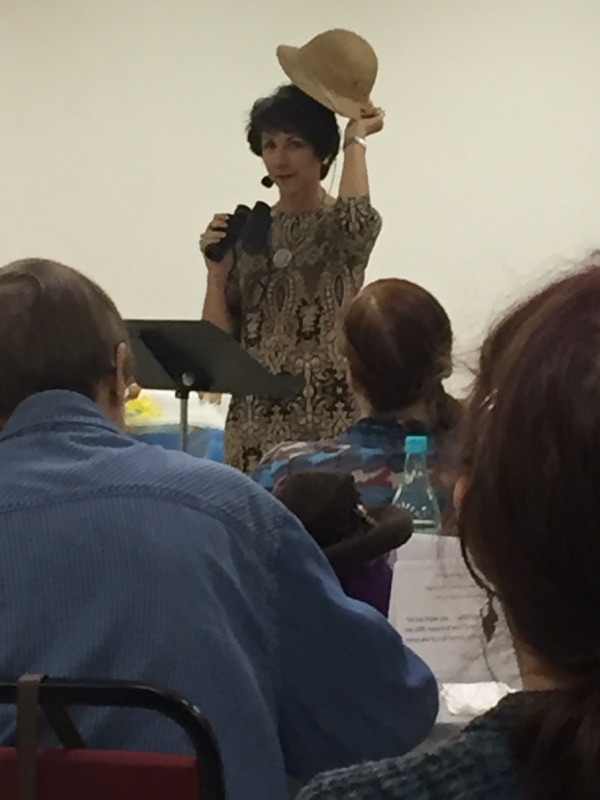 The first hat in "A Hat for All Seasons, Serving God in Every Stage of Life" is a safari hat. Can you guess why?
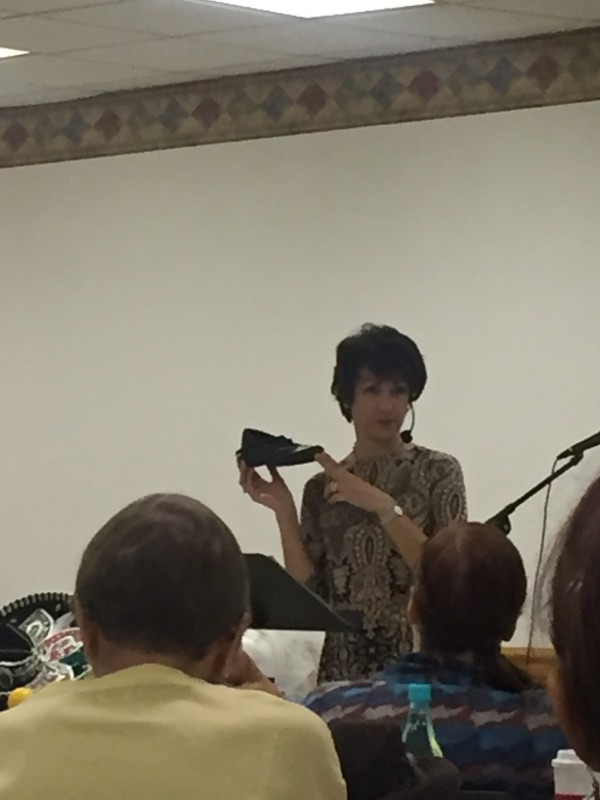 "Stepping Out, How Our Footwear Impacts our Faith"God calls men AND women to wear this shoe as we walk the faith walk.
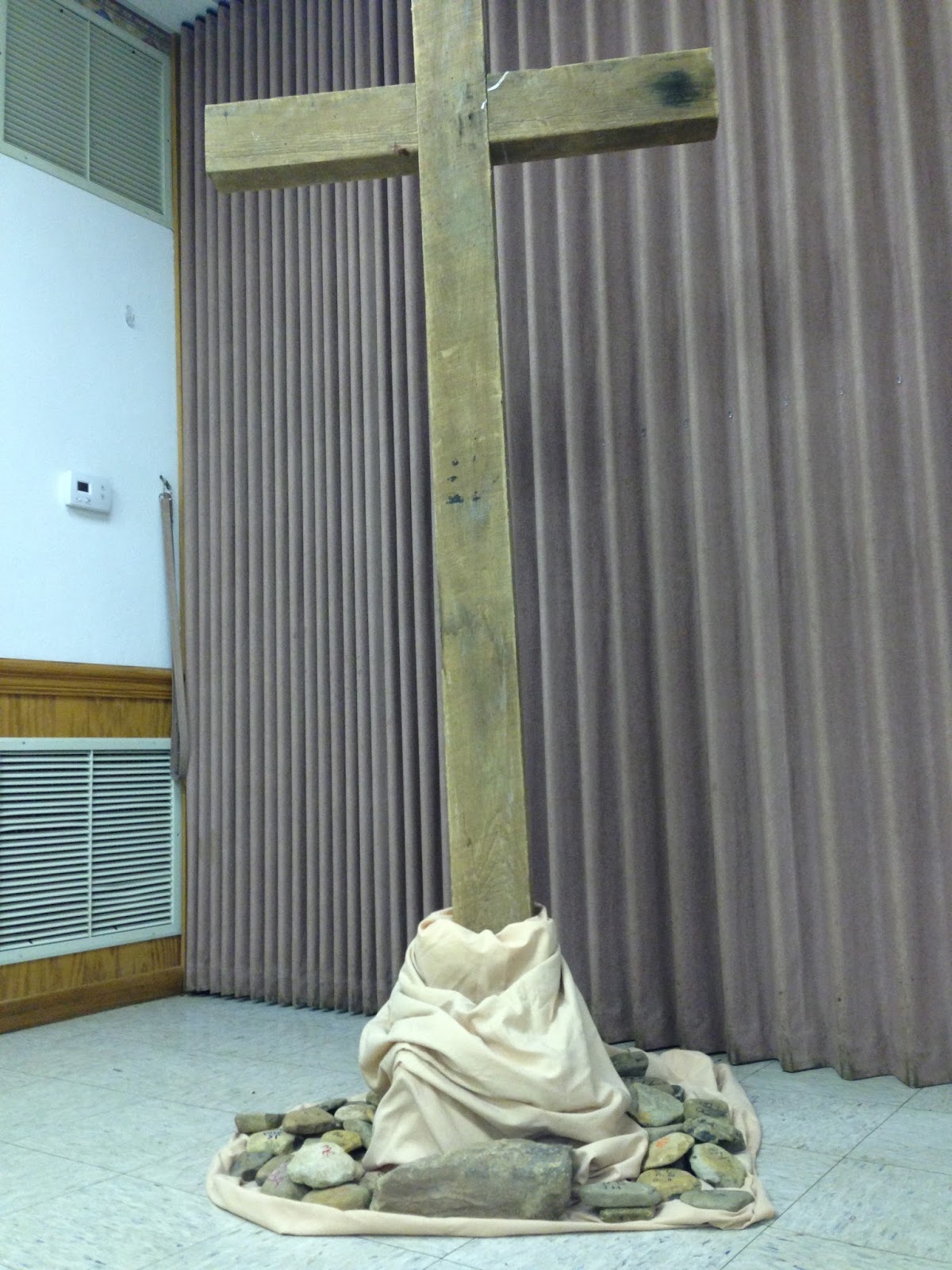 "Clean Out That Closet" challenged us to leave bitterness and unforgiveness at the foot of the cross.
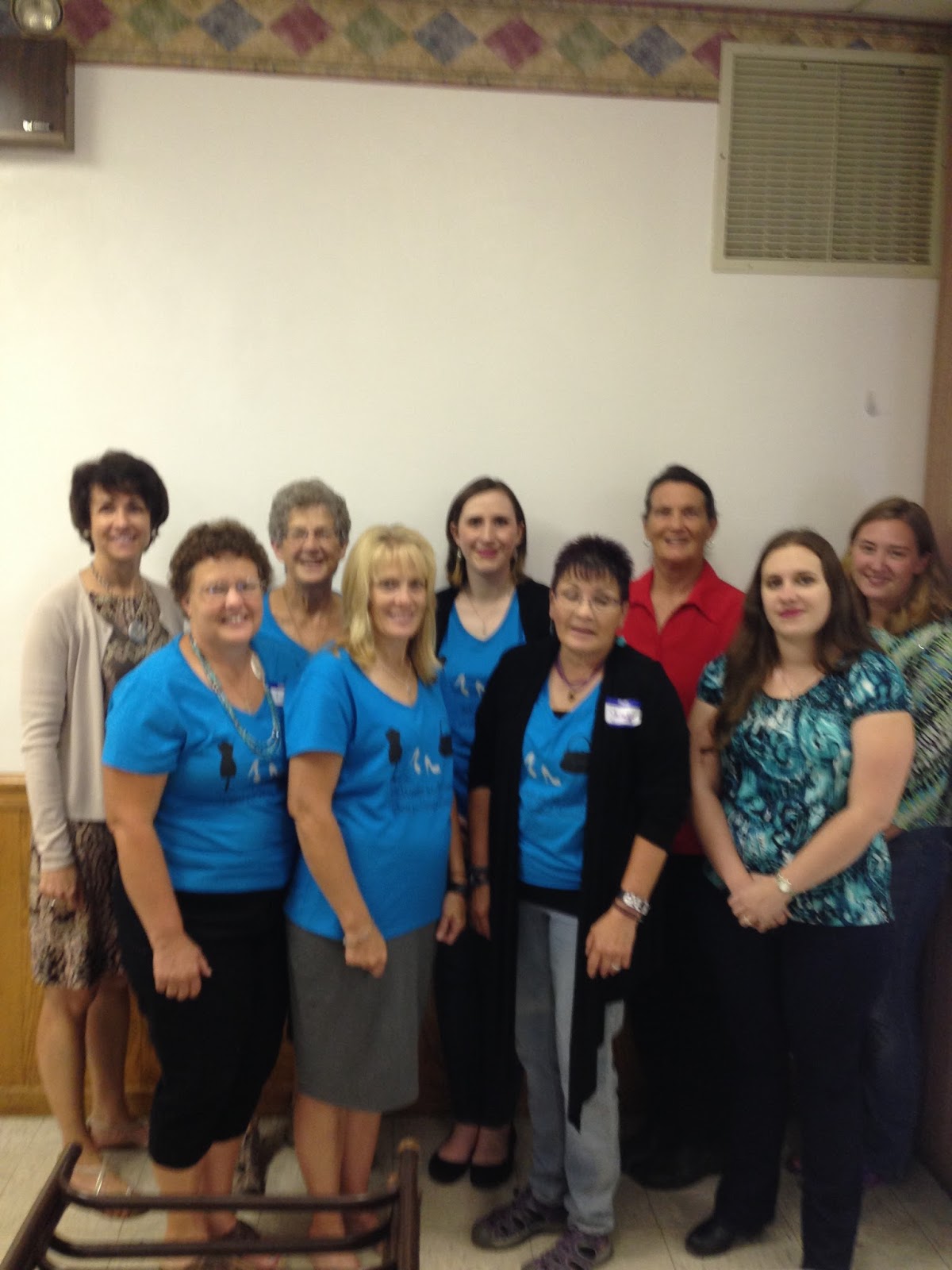 The amazing planning committee that made everything flow smoothly.
If you enjoyed this post, why not subscribe? I'll send you twice-weekly 5-minute devotions to help nourish your soul.
Because women need to connect with God in the craziness of life.
Enter your email address and VALIDATE the Feedburner email sent to your inbox.
Delivered by FeedBurner
If this post was meaningful to you, would you consider sharing it with a friend by clicking on one of the buttons below? Did you know you can receive bi-weekly Hungry for God posts sent directly to your email inbox? Visit http://www.lori-benotweary.blogspot.com and click on the link in the right hand corner to Subscribe Via Email.
Copyright 2012 by Lori Hatcher
September 21, 2016
How Do I Love Thee?*
How do I love thee? Let me count the ways.

I love thee to the depth and breadth and height My soul can reach,

when feeling out of sight

For the ends of being and ideal grace.

I love thee to the level of every day’s most quiet need,

by sun and candle-light.

I love thee freely, as men strive for right.

I love thee purely, as they turn from praise.

I love thee with the passion put to use

In my old griefs, and with my childhood’s faith.

I love thee with a love I seemed to lose with my lost saints.

I love thee with the breath,

Smiles, tears, of all my life;

and, if God choose,
I shall but love thee better after death.

O Father, I can never earn your love, and I certainly don't deserve it, yet you freely bestow it upon me. I disappoint you, and sometimes I break your heart, but you never stop loving me. You surround me with your beauty, fill my life with good things, and use me in your service. Your love brings me comfort. Your promises bring me peace. Your presence brings me joy.
I love you.
I love you.
I love you.
*How Do I Love Thee? (Sonnet 43) Elizabeth Barrett Browning, 1806 - 1861. In the public domain.
If you enjoyed this post, why not subscribe? I'll send you twice-weekly 5-minute devotions to help nourish your soul.
Because women need to connect with God in the craziness of life.
Enter your email address and VALIDATE the Feedburner email sent to your inbox.
Delivered by FeedBurner
If this post was meaningful to you, would you consider sharing it with a friend by clicking on one of the buttons below? Did you know you can receive bi-weekly Hungry for God posts sent directly to your email inbox? Visit http://www.lori-benotweary.blogspot.com and click on the link in the right hand corner to Subscribe Via Email.
Copyright 2012 by Lori Hatcher
September 18, 2016
Going Home, Part V, How I Hope to Be Remembered
I never met my grandfather, but I’ve always loved him.
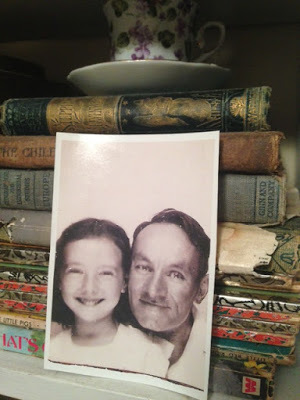 When I was young, I’d look at pictures of him and imagine what it would be like to have a grandfather. I’d listen to Mom’s stories of Sunday afternoons at Crescent Park riding the carousel and special daddy/daughter dates. I dreamed of a tenderhearted man who would listen to whatever was on my heart and always feed me ice cream.
Because my grandfather died before I was born, all I have of him are a few photographs and my dreams. Last month, when I visited my hometown, I stopped by the place I always associate with my grandfather—an old stone wall on Silver Creek.
Sixty-five years ago, as a birthday surprise, my grandfather walked my mother down to this spot not far from their home. He wanted to do something to commemorate her special day. Reaching into his pocket, he took out a handful of tiny white stones. He uncovered the mysterious bucket he’d carried with them and took out a trowel.
 While she looked on curiously, he scooped soft cement from the bucket and ladled it in between the stones on top of the wall. He smoothed the edges, blending them into the surrounding concrete. Then, one by one, he gently placed the little white stones just so.
My mom, fascinated by his handiwork, watched her initials form under his careful hand. After he pressed the last stone into its soft setting, he stood back to admire his work.
“There you go, Lillie,” he said, waving his hand with a proud flourish. “Happy birthday.” He wrapped her in his arms and hugged her tightly. “No matter how many birthdays you have, I hope you’ll always remember this one here with me.”
 I loved to hear my mother tell this story. Oftentimes, walking home from the corner store, I’d leave the sidewalk and trek across the grass to that magical spot on the wall. Because my first and middle initials are the same as my mother’s, I’d sometimes pretend that they were my initials, and that my grandfather had placed them there for me. I longed for a similarly permanent tribute to my existence.
This longing to be immortalized is common to mankind. We yearn for proof that the world is different because we’ve been in it.
The apostle Paul felt this desire as he wrote to the Corinthian church. He acknowledged he’d never have a statue dedicated in his honor or a highway named after him. Instead, he reminded his beloved converts that they were his memorial.
“You are a letter from Christ, the result of our ministry, written not with ink but with the Spirit of the living God, not on tablets of stone but on tablets of human hearts” (2 Cor. 3:3).
Paul’s words remind me that the greatest tribute I can leave behind is a life well-lived for the cause of Christ. The best treasure I can acquire isn’t gold and silver or accolades and accomplishments. My highest goal can and should be the privilege of impacting the world for Jesus.
Lord, lift my eyes from temporary man made stones to the tablets of human hearts. May the people I touch be changed for your glory and their good.
What about you? Do you wonder sometimes if your life is making a difference? How do you hope to be remembered after you die? I invite you to leave a comment below and share your thoughts.
If you missed the other posts in the Going Home series, here are the links:
"There's Something Magical about Going Home"
"Going Home, Part II, Family"
"Going Home, Part III, Food"
"Going Home, Part IV, Faith"
If you enjoyed this post, why not subscribe? I'll send you twice-weekly 5-minute devotions to help nourish your soul.
Because women need to connect with God in the craziness of life.
Enter your email address and VALIDATE the Feedburner email sent to your inbox.
Delivered by FeedBurner
If this post was meaningful to you, would you consider sharing it with a friend by clicking on one of the buttons below? Did you know you can receive bi-weekly Hungry for God posts sent directly to your email inbox? Visit http://www.lori-benotweary.blogspot.com and click on the link in the right hand corner to Subscribe Via Email.
Copyright 2012 by Lori Hatcher
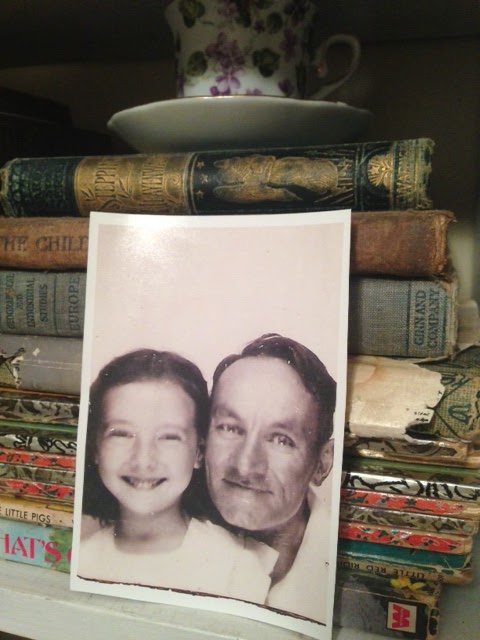 When I was young, I’d look at pictures of him and imagine what it would be like to have a grandfather. I’d listen to Mom’s stories of Sunday afternoons at Crescent Park riding the carousel and special daddy/daughter dates. I dreamed of a tenderhearted man who would listen to whatever was on my heart and always feed me ice cream.
 Because my grandfather died before I was born, all I have of him are a few photographs and my dreams. Last month, when I visited my hometown, I stopped by the place I always associate with my grandfather—an old stone wall on Silver Creek.
Sixty-five years ago, as a birthday surprise, my grandfather walked my mother down to this spot not far from their home. He wanted to do something to commemorate her special day. Reaching into his pocket, he took out a handful of tiny white stones. He uncovered the mysterious bucket he’d carried with them and took out a trowel.
 While she looked on curiously, he scooped soft cement from the bucket and ladled it in between the stones on top of the wall. He smoothed the edges, blending them into the surrounding concrete. Then, one by one, he gently placed the little white stones just so.
 My mom, fascinated by his handiwork, watched her initials form under his careful hand. After he pressed the last stone into its soft setting, he stood back to admire his work.
“There you go, Lillie,” he said, waving his hand with a proud flourish. “Happy birthday.” He wrapped her in his arms and hugged her tightly. “No matter how many birthdays you have, I hope you’ll always remember this one here with me.”
 I loved to hear my mother tell this story. Oftentimes, walking home from the corner store, I’d leave the sidewalk and trek across the grass to that magical spot on the wall. Because my first and middle initials are the same as my mother’s, I’d sometimes pretend that they were my initials, and that my grandfather had placed them there for me. I longed for a similarly permanent tribute to my existence.
 This longing to be immortalized is common to mankind. We yearn for proof that the world is different because we’ve been in it.
The apostle Paul felt this desire as he wrote to the Corinthian church. He acknowledged he’d never have a statue dedicated in his honor or a highway named after him. Instead, he reminded his beloved converts that they were his memorial.
“You are a letter from Christ, the result of our ministry, written not with ink but with the Spirit of the living God, not on tablets of stone but on tablets of human hearts” (2 Cor. 3:3).
Paul’s words remind me that the greatest tribute I can leave behind is a life well-lived for the cause of Christ. The best treasure I can acquire isn’t gold and silver or accolades and accomplishments. My highest goal can and should be the privilege of impacting the world for Jesus.
Lord, lift my eyes from temporary man made stones to the tablets of human hearts. May the people I touch be changed for your glory and their good.
What about you? Do you wonder sometimes if your life is making a difference? How do you hope to be remembered after you die? I invite you to leave a comment below and share your thoughts.
If you missed the other posts in the Going Home series, here are the links:
"There's Something Magical about Going Home"
"Going Home, Part II, Family"
"Going Home, Part III, Food"
"Going Home, Part IV, Faith"
If you enjoyed this post, why not subscribe? I'll send you twice-weekly 5-minute devotions to help nourish your soul.
Because women need to connect with God in the craziness of life.
Enter your email address and VALIDATE the Feedburner email sent to your inbox.
Delivered by FeedBurner
If this post was meaningful to you, would you consider sharing it with a friend by clicking on one of the buttons below? Did you know you can receive bi-weekly Hungry for God posts sent directly to your email inbox? Visit http://www.lori-benotweary.blogspot.com and click on the link in the right hand corner to Subscribe Via Email.
Copyright 2012 by Lori Hatcher
Refresh Blog

A place to refresh your faith, hope, and prayers with 5-minute weekly posts.
- Lori Hatcher's profile
- 101 followers

