Scott Allen's Blog, page 4
January 10, 2013
Orrin Woodward & Chris Brady critics not applying critical thinking RE: Top 30 Leadership Gurus
“No accurate thinker will judge another person by that which the other person’s enemies say about him.”
— Napoleon Hill
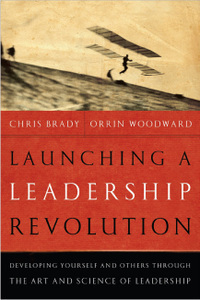 Orrin Woodward [bio - blog] is a leadership expert. He’s co-author, with Chris Brady [bio - blog], of Launching a Leadership Revolution, which was a bestseller on just about every list around: The New York Times, Wall Street Journal, Business Week, USA Today and Money. In addition to authoring over a dozen books, they’re successful entrepreneurs with two 8-figure businesses, LIFE and TEAM, and they’re both Black Diamond distributors in Monavie. Orrin’s also a client and a friend.
But some people don’t like him, or what he does, or what he stands for.
To some extent, that comes with the territory. Some people simply don’t like network marketing, period. Or the personal development industry. Some people have had bad experiences, for whatever reason. When you take a stand, when you put yourself out there like he does, you’re going to be a target.
Legitimate criticism is fine. People sharing their personal experiences, even if negative, is fine. Baseless accusations and innuendo aren’t.
For the past few years, Orrin and Chris have been working their way up this list of the “Top 30 Global Leadership Gurus”. If you visit the site now, though, you won’t even see a list of top leadership gurus (it’s under construction). What you will see is this [Ed. - It's under the "Global Guru Criteria" tab, which, being a javascript link on the page, I can't link to directly] :
And, when we added an IP address checker to our system this year, two Guru candidates listed in the top 15, Orrin Woodward and Chris Brady, who have had substantial votes since 2010, were disqualified and removed from the list because more than 98% of their votes came for only three IP addresses, meaning that only three people voted for them over and over again. This accounted for almost 2000 of their votes.
The casual reader might look at this and be shocked. But I smell a rat, because I know Orrin and Chris, and this just isn’t consistent with what I know about them. Let’s apply a little bit of critical thinking:
They simply have no need to game it. They have the real influence. Launching a Leadership Revolution has sold hundreds of thousands of copies. Orrin is the #2 leadership development expert on Twitter, according to WeFollow [Ed. - See all Orrin's scores here. He and Chris are both ranked for leadership, as well.] (not riggable, because it’s based on actual behavior, not just follower count) [Ed. - See comments for more about WeFollow]. LIFE events routinely have 10,000+ people at them. Their membership is highly motivated and organized. Their social media imprint could gather 2,000 unique IP votes in an hour, let alone a year.
If they had wanted to game it, you wouldn’t know it. Frankly, they don’t have the know-how internally to rig it. I do, but a) I wouldn’t, and b) even if I did, there wouldn’t be any evidence. (And seriously, who makes a voting site and doesn’t prevent duplication by IP address?)
And I’ve talked to Orrin about it. They simply didn’t do it. They’ve also checked around within their organization, and it looks like they have hundreds of people who can verify voting for them, not 40 (2% of 2,000), as the site implies.
My first challenge to Evgeniy Chetvertakov, the current owner of Leadershipgurus.net, is this: present your evidence. What time frame are you talking about? Orrin stopped linking to the site at all when it went down last fall (did it change ownership?). What are the IP addresses? How do you know they’re from someone in Orrin’s organization, and not one of his critics trying to make him look bad? Given some of the tactics we’ve seen, that’s actually more plausible.
My second challenge is really a question: why make these accusations without even contacting Orrin or Chris? What happened to “innocent until proven guilty”? Or even just common courtesy? Why put yourself in the position of making defamatory statements without a proper investigation? And how can you run a leadership site without practicing one of the basic principles of leadership: get both sides of the story.
UPDATE 2/22/13: Following a letter from Orrin’s office to the site owner asking for the evidence, none has been provided. What type of alleged leadership site would make an allegation without providing evidence? Draw your own conclusions.
Let’s stick to the facts. And the fact of the matter is, Orrin’s and Chris’s credentials are indisputable. Ranking on this one site was just an acknowledgment of those accomplishments…not something they needed as validation. The fact that they referenced it in the past was simply good marketing. And I know their social media footprint — I will personally stake my professional reputation that they can easily generate 2,000 votes or other actions on any independent site in a matter of a couple of days.
Use your brain. Look at the facts. These accusations just don’t add up.


Orrin Woodward & Chris Brady Critics Not Applying Critical Thinking RE: Top 30 Leadership Gurus
“No accurate thinker will judge another person by that which the other person’s enemies say about him.”
— Napoleon Hill
Orrin Woodward [bio - blog] is a leadership expert. He’s co-author, with Chris Brady [bio - blog], of Launching a Leadership Revolution, which was a bestseller on just about every list around: The New York Times, Wall Street Journal, Business Week, USA Today and Money. In addition to authoring over a dozen books, they’re successful entrepreneurs with two 8-figure businesses, LIFE and TEAM, and they’re both Black Diamond distributors in Monavie. Orrin’s also a client and a friend.
But some people don’t like him, or what he does, or what he stands for.
To some extent, that comes with the territory. Some people simply don’t like network marketing, period. Or the personal development industry. Some people have had bad experiences, for whatever reason. When you take a stand, when you put yourself out there like he does, you’re going to be a target.
Legitimate criticism is fine. People sharing their personal experiences, even if negative, is fine. Baseless accusations and innuendo aren’t.
For the past few years, Orrin and Chris have been working their way up this list of the “Top 30 Global Leadership Gurus”. If you visit the site now, though, you won’t even see a list of top leadership gurus (it’s under construction). What you will see is this [Ed. - It's under the "Global Guru Criteria" tab, which, being a javascript link on the page, I can't link to directly] :
And, when we added an IP address checker to our system this year, two Guru candidates listed in the top 15, Orrin Woodward and Chris Brady, who have had substantial votes since 2010, were disqualified and removed from the list because more than 98% of their votes came for only three IP addresses, meaning that only three people voted for them over and over again. This accounted for almost 2000 of their votes.
The casual reader might look at this and be shocked. But I smell a rat, because I know Orrin and Chris, and this just isn’t consistent with what I know about them. Let’s apply a little bit of critical thinking:
They simply have no need to game it. They have the real influence. Launching a Leadership Revolution has sold hundreds of thousands of copies. Orrin is the #2 leadership development expert on Twitter, according to WeFollow [Ed. - See all Orrin's scores here. He and Chris are both ranked for leadership, as well.] (not riggable, because it’s based on actual behavior, not just follower count) [Ed. - See comments for more about WeFollow]. LIFE events routinely have 10,000+ people at them. Their membership is highly motivated and organized. Their social media imprint could gather 2,000 unique IP votes in an hour, let alone a year.
If they had wanted to game it, you wouldn’t know it. Frankly, they don’t have the know-how internally to rig it. I do, but a) I wouldn’t, and b) even if I did, there wouldn’t be any evidence. (And seriously, who makes a voting site and doesn’t prevent duplication by IP address?)
And I’ve talked to Orrin about it. They simply didn’t do it. They’ve also checked around within their organization, and it looks like they have hundreds of people who can verify voting for them, not 40 (2% of 2,000), as the site implies.
My first challenge to Evgeniy Chetvertakov, the current owner of Leadershipgurus.net, is this: present your evidence. What time frame are you talking about? Orrin stopped linking to the site at all when it went down last fall (did it change ownership?). What are the IP addresses? How do you know they’re from someone in Orrin’s organization, and not one of his critics trying to make him look bad? Given some of the tactics we’ve seen, that’s actually more plausible.
My second challenge is really a question: why make these accusations without even contacting Orrin or Chris? What happened to “innocent until proven guilty”? Or even just common courtesy? Why put yourself in the position of making defamatory statements without a proper investigation? And how can you run a leadership site without practicing one of the basic principles of leadership: get both sides of the story.
UPDATE 2/22/13: Following a letter from Orrin’s office to the site owner asking for the evidence, none has been provided. What type of alleged leadership site would make an allegation without providing evidence? Draw your own conclusions.
Let’s stick to the facts. And the fact of the matter is, Orrin’s and Chris’s credentials are indisputable. Ranking on this one site was just an acknowledgment of those accomplishments…not something they needed as validation. The fact that they referenced it in the past was simply good marketing. And I know their social media footprint — I will personally stake my professional reputation that they can easily generate 2,000 votes or other actions on any independent site in a matter of a couple of days.
Use your brain. Look at the facts. These accusations just don’t add up.
Orrin Woodward & Chris Brady Critics Not Applying Critical Thinking
“No accurate thinker will judge another person by that which the other person’s enemies say about him.” — Napoleon Hill
Orrin Woodward is a leadership expert. He’s co-author, with Chris Brady, of Launching a Leadership Revolution, which was a bestseller on just about every list around: The New York Times, Wall Street Journal, Business Week, USA Today and Money. In addition to authoring over a dozen books, they’re successful entrepreneurs with two 8-figure businesses, LIFE and TEAM, and they’re both Black Diamond distributors in Monavie. Orrin’s also a client and a friend.
But some people don’t like him, or what he does, or what he stands for.
To some extent, that comes with the territory. Some people simply don’t like network marketing, period. Or the personal development industry. Some people have had bad experiences, for whatever reason. When you take a stand, when you put yourself out there like he does, you’re going to be a target.
Legitimate criticism is fine. People sharing their personal experiences, even if negative, is fine. Baseless accusations and innuendo aren’t.
For the past few years, Orrin and Chris have been working their way up this list of the “Top 30 Global Leadership Gurus”. If you visit the site now, though, you won’t even see a list of top leadership gurus (it’s under construction). What you will see is this:
And, when we added an IP address checker to our system this year, two Guru candidates listed in the top 15, Orrin Woodward and Chris Brady, who have had substantial votes since 2010, were disqualified and removed from the list because more than 98% of their votes came for only three IP addresses, meaning that only three people voted for them over and over again. This accounted for almost 2000 of their votes.
The casual reader might look at this and be shocked. But I smell a rat, because I know Orrin and Chris, and this just isn’t consistent with what I know about them. Let’s apply a little bit of critical thinking:
They simply have no need to game it. They have the real influence. Launching a Leadership Revolution has sold hundreds of thousands of copies. Orrin is the #2 leadership development expert on Twitter, according to WeFollow (not riggable, because it’s based on actual behavior, not just follower count). LIFE events routinely have 10,000+ people at them. Their membership is highly motivated and organized. Their social media imprint could gather 2,000 unique IP votes in an hour, let alone a year.
If they had wanted to game it, you wouldn’t know it. Frankly, they don’t have the know-how internally to rig it. I do, but a) I wouldn’t, and b) even if I did, there wouldn’t be any evidence. (And seriously, who makes a voting site and doesn’t prevent duplication by IP address?)
And I’ve talked to Orrin about it. They simply didn’t do it. They’ve also checked around within their organization, and it looks like they have hundreds of people who can verify voting for them, not 40 (2% of 2,000), as the site implies.
My first challenge to Evgeniy Chetvertakov, the current owner of Leadershipgurus.net, is this: present your evidence. What time frame are you talking about? Orrin stopped linking to the site at all when it went down last fall (did it change ownership?). What are the IP addresses? How do you know they’re from someone in Orrin’s organization, and not one of his critics trying to make him look bad? Given some of the tactics we’ve seen, that’s actually more plausible.
My second challenge is really a question: why make these accusations without even contacting Orrin or Chris? What happened to “innocent until proven guilty”? Or even just common courtesy? Why put yourself in the position of making defamatory statements without a proper investigation? And how can you run a leadership site without practicing one of the basic principles of leadership: get both sides of the story.
Let’s stick to the facts. And the fact of the matter is, Orrin’s and Chris’s credentials are indisputable. Ranking on this one site was just an acknowledgment of those accomplishments…not something they needed as validation. The fact that they referenced it in the past was simply good marketing. And I know their social media footprint — I will personally stake my professional reputation that they can easily generate 2,000 votes or other actions on any independent site in a matter of a couple of days.
Use your brain. Look at the facts. These accusations just don’t add up.
January 2, 2013
Herbalife bounces back as savvy investors go long
 Bill Ackman represents the very worst of Wall Street. Not only is he attacking a legitimate company that employs thousands of people and generates part-time incomes for over 2 million independent distributors around the world, he has the unmitigated gall to style himself as a protector of the people in doing so.
His whole premise is based on the mistaken idea that Herbalife is an illegal pyramid scheme. If you really want to explore that issue, I recommend reading the that Herbalife includes on their investor relations site. And even if the FTC were to take issue with some aspect of Herbalife’s compensation plan, it certainly wouldn’t be the end of the company, just as it wasn’t the end of Amway. Or Google. Or Microsoft. Take a look some time at all the companies that have had problems with the FTC before thinking that it’s the harbinger of death for an MLM company.
What’s most appalling about Ackman, though, isn’t his ignorance, but his hypocrisy. When you start digging, you find all sorts of interesting things, like his past defense of MLM when his fund was an investor in Pre-Paid Legal; his recent investments in JCP and Target, struggling retailers facing growing competition from direct sellers in the fashion, beauty and home products markets; the fact that he bet the farm ($1 Billion — with a “B”) on “driving Herbalife to zero”; and his 2009 character defense of his friend Ezra Merkin, who was charged with civil fraud by the State of New York for secretly steering $2.4 billion in client money into Bernie Madoff’s Ponzi scheme. Follow the money.
Fortunately, HLF is bouncing back, Herbalife is going on the offensive, and many other investors are going long on HLF. It appears Ackman may lose his bet…or not.
See, the thing is, Ackman doesn’t actually have to drive Herbalife to zero to make money. According to The New York Times, Ackman “is already up a couple of hundred million dollars”. And for what? For publicizing an ignorant, misguided attack on a company. He doesn’t create anything in the process. No jobs. No products. No real value.
And in the current economic climate, who does that serve?
Herbalife Bounces Back as Savvy Investors Go Long
Bill Ackman represents the very worst of Wall Street. Not only is he attacking a legitimate company that employs thousands of people and generates part-time incomes for over 2 million independent distributors around the world, he has the unmitigated gall to style himself as a protector of the people in doing so.
His whole premise is based on the mistaken idea that Herbalife is an illegal pyramid scheme. If you really want to explore that issue, I recommend reading the that Herbalife includes on their investor relations site. And even if the FTC were to take issue with some aspect of Herbalife’s compensation plan, it certainly wouldn’t be the end of the company, just as it wasn’t the end of Amway. Or Google. Or Microsoft. Take a look some time at all the companies that have had problems with the FTC before thinking that it’s the harbinger of death for an MLM company.
What’s most appalling about Ackman, though, isn’t his ignorance, but his hypocrisy. When you start digging, you find all sorts of interesting things, like his past defense of MLM when his fund was an investor in Pre-Paid Legal; his recent investments in JCP and Target, struggling retailers facing growing competition from direct sellers in the fashion, beauty and home products markets; the fact that he bet the farm ($1 Billion — with a “B”) on “driving Herbalife to zero”; and his 2009 character defense of his friend Ezra Merkin, who was charged with civil fraud by the State of New York for secretly steering $2.4 billion in client money into Bernie Madoff’s Ponzi scheme. Follow the money.
Fortunately, HLF is bouncing back, Herbalife is going on the offensive, and many other investors are going long on HLF. It appears Ackman may lose his bet…or not.
See, the thing is, Ackman doesn’t actually have to drive Herbalife to zero to make money. According to The New York Times, Ackman “is already up a couple of hundred million dollars”. And for what? For publicizing an ignorant, misguided attack on a company. He doesn’t create anything in the process. No jobs. No products. No real value.
And in the current economic climate, who does that serve?
September 30, 2012
iZigg Alert – October 01, 2012 at 12:36AM
Spread Word To Your Team Now
Dr. Scott Private Promo Announced 1 PM EST / 10 AM PST – Monday, October 1st
Dial: 712.432.0075
Code: 972120#
Don’t Miss
Learn more: www.izigg.com/nfn8
July 19, 2012
Expected Value: How to play the odds and come out ahead
 What is your greatest fear? If you said death, public speaking, spiders or snakes, you’re not alone. But if you want to lump whatever those fears are into one word, what humans fear universally is the unknown.
As entrepreneurs we embrace the unknown rather than spending our assets and resources trying to avoid it. The true entrepreneurial spirit sees the unknown as possibility and opportunity. “It’s the stuff that dreams are made of…”
Yes, you need to know the road is rocky. You will make misjudgments. Failures, big or small, will occur. You may lose a client deal you’ve invested a lot of energy into cinching, or your company loses all of its funding and goes belly up. An old adage says simply that successful entrepreneurs are those who step up to the plate one more time than they’ve been struck out. You may find encouragement in that when you have a “failure” but it’s not a healthy, ongoing model for a successful business.
As an entrepreneur, you will be dealing with how best to allocate your limited resources. If you understand the EVC (expected value concept), and make well-researched, mathematical predictions of your odds of success, you will understand better how to allocate your resources.
The EVC, simply stated, is: Outcome Value times Odds of Success = Expected Value, i.e., businesses opportunities in which EV exceeds cost are good investments, and the greater the difference, the better the investment. If the costs exceed the EV, don’t do it.
Various gambling scenarios help to show us the truth of the EVC.
1) In a coin toss, we each bet one dollar. Whoever wins gets the two dollars. Each of our odds are 50-50. 50% of $2.00 = $1, the same as your investment. It’s a wash, no matter how many times you flip the coin.
2) At the roulette table, one bets on red or black, or even or odd. The payout is 1:1. Due to the 0 and 00 on the board in which the winnings go to the house, your odds are not actually 50-50, but 18/38, or 0.47. Your expected value is 0.47 times $2, or $0.94, while your investment is $1. Bad bet!
3) Playing the Lottery is an interesting case. The exact details of the math are extremely complicated, including factoring in the possibility of multiple winners. For example, in the first week of a typical 6 out of 49 lottery, the EV of a $1 lottery ticket is about $0.25. Assuming no winners, the jackpot increases week to week and the number of ticket buyers increases as well, but not as much as the jackpot increases. As a result, the EV increases until eventually (when the jackpot hits a little over $150 million) the EV of a ticket actually exceeds its cost.
In one famous example, Stefan Klincewicz and his associates bought up almost all of the 1,947,792 combinations available on the Irish lottery, paying less than a million Irish pounds, while the jackpot stood at £1.7 million. Although Klincewicz ended up splitting the jackpot with two other winning ticket holders, and numerous “Match 4″ and “Match 5″ prizes were paid out, Klincewicz still made a small profit.
Applying Expected Value in Your Business
The EVC is an essential part of both forecasting and decision-making for your business.
Spreadsheets for sales forecasting is one often-used application. For each potential deal, figure the odds of successfully closing the deal and the total value of the sale. Multiplying those two figures, you get the EV (expected value) of each deal. Add all the EV’s and you will have EV of your sales pipeline.
The difficulty is in estimating the cost of the sale - support staff, travel, conference time, cost of delivery.
Let’s look at two possibilities:
Deal #1 has a 50% chance to close a $10,000 sale. The estimated cost of the sale (including time to close the deal, deliver the product and support it) is $5,000. Your EV is also $5,000. 1.0 (.5 x $10,000 = $5000). It’s a break-even proposition.
Deal #2 has a 25 % chance to close on a $5,000 sale. The estimated cost to close it is only $1,000. Your EV (.25 x 5000 = $1250) is $1,250. Your return ratio is $1,250/$1,000, or 1.25. It’s a better proposition.
If you are a compulsive gambler, entrepreneurship may not be your best path to take. If you look at the above examples and think that the 50% odds on a $10,000 sale is better use of your time than the 25% $5,000 sale, you are ignoring the cost factor. Don’t be fooled by the thrill of a big return; always consider the costs.
Factoring in Risk
You will most frequently be more successful if you choose to invest your time and resources in those activities with the highest return ratios, but this always has to be tempered by your risk tolerance.
Deal #1 has a 50% chance to close on a $100,000 deal. If the cost to make the sale is $20,000 (includes the majority of your sales resources’ time for a couple of weeks). $50K/$20K — that’s a 2.5 return ratio.
Four smaller deals valued at $25,000 each also have a 50% chance to close, with a cost per sale of $6,250. The expected value is again $50K, but the cost is $25K — that’s a 2.0 ratio.
On paper, if you have to choose, it seems like deal #1 is the better choice. On average, over time, if you had to make this decision repeatedly, it probably would be. However, consider this: In deal #1, your odds of getting nothing — losing everything — are 50%. In the multi-deal scenario, your odds of getting nothing are only 1 in 16, or 6.25 %. Your chance of making at least one sale, and therefore at least breaking even, is 93.75 percent.
No matter how great the expected value, you must always consider whether there is an acceptable level of risk. Again we find wisdom in old sayings: “Don’t bet more than you’re willing to lose.”
Factoring in Optimism
To be an entrepreneur is to be an optimist. It is a vital personality trait for going into business for oneself. Looking at the expected value of starting a new business and considering the statistics, almost anyone would realize that we should probably seek a full-time job! Entrepreneurs don’t, however because we consider the potential rewards worth the risk, and we believe we will beat the odds. We will succeed where so many have failed.
Sadly it is much more difficult to calculate the odds on business initiatives than for games of chance. Businesses with frequent repeated sales will gather enough data over time to have well-reasoned base models. Experience helps create expected patterns for closing ratios and lifetime value of a customer. But with a new business or truly unique deals, your estimations are based on some combination of past experience, new information, and intelligent guesswork.
“To thine own self be true” only works if you know yourself. Are you a pie-in-the-sky optimist or simply a happy believer that things turn out for the best? Factor in your personal optimism rating when estimating the possibility of success. Being an intense optimist, I’ve learned to discount all of my optimistic estimates by about 20 percent. You need someone on your team to be the voice of reason. And you need to listen to them. But when all is said and done, as an entrepreneur “the buck stops here.” We have to be prepared to be truthful with ourselves, and if an idea has no value to anyone but us, table it and find a new idea.
Finally, expected value and return ratios are but two elements of the process for making big decisions. Cash flow, strategic value, and yes, gut feeling need to be included in the mix. However, EV and return ratios should become essential elements in forecasting and planning. Use them well and consistently. They will help you beat the odds.
Expected Value: How to Play the Odds and Come Out Ahead
What is your greatest fear? If you said death, public speaking, spiders or snakes, you’re not alone. But if you want to lump whatever those fears are into one word, what humans fear universally is the unknown.
As entrepreneurs we embrace the unknown rather than spending our assets and resources trying to avoid it. The true entrepreneurial spirit sees the unknown as possibility and opportunity. “It’s the stuff that dreams are made of…”
Yes, you need to know the road is rocky. You will make misjudgments. Failures, big or small, will occur. You may lose a client deal you’ve invested a lot of energy into cinching, or your company loses all of its funding and goes belly up. An old adage says simply that successful entrepreneurs are those who step up to the plate one more time than they’ve been struck out. You may find encouragement in that when you have a “failure” but it’s not a healthy, ongoing model for a successful business.
As an entrepreneur, you will be dealing with how best to allocate your limited resources. If you understand the EVC (expected value concept), and make well-researched, mathematical predictions of your odds of success, you will understand better how to allocate your resources.
The EVC, simply stated, is: Outcome Value times Odds of Success = Expected Value, i.e., businesses opportunities in which EV exceeds cost are good investments, and the greater the difference, the better the investment. If the costs exceed the EV, don’t do it.
Various gambling scenarios help to show us the truth of the EVC.
1) In a coin toss, we each bet one dollar. Whoever wins gets the two dollars. Each of our odds are 50-50. 50% of $2.00 = $1, the same as your investment. It’s a wash, no matter how many times you flip the coin.
2) At the roulette table, one bets on red or black, or even or odd. The payout is 1:1. Due to the 0 and 00 on the board in which the winnings go to the house, your odds are not actually 50-50, but 18/38, or 0.47. Your expected value is 0.47 times $2, or $0.94, while your investment is $1. Bad bet!
3) Playing the Lottery is an interesting case. The exact details of the math are extremely complicated, including factoring in the possibility of multiple winners. For example, in the first week of a typical 6 out of 49 lottery, the EV of a $1 lottery ticket is about $0.25. Assuming no winners, the jackpot increases week to week and the number of ticket buyers increases as well, but not as much as the jackpot increases. As a result, the EV increases until eventually (when the jackpot hits a little over $150 million) the EV of a ticket actually exceeds its cost.
In one famous example, Stefan Klincewicz and his associates bought up almost all of the 1,947,792 combinations available on the Irish lottery, paying less than a million Irish pounds, while the jackpot stood at £1.7 million. Although Klincewicz ended up splitting the jackpot with two other winning ticket holders, and numerous “Match 4″ and “Match 5″ prizes were paid out, Klincewicz still made a small profit.
Applying Expected Value in Your Business
The EVC is an essential part of both forecasting and decision-making for your business.
Spreadsheets for sales forecasting is one often-used application. For each potential deal, figure the odds of successfully closing the deal and the total value of the sale. Multiplying those two figures, you get the EV (expected value) of each deal. Add all the EV’s and you will have EV of your sales pipeline.
The difficulty is in estimating the cost of the sale - support staff, travel, conference time, cost of delivery.
Let’s look at two possibilities:
Deal #1 has a 50% chance to close a $10,000 sale. The estimated cost of the sale (including time to close the deal, deliver the product and support it) is $5,000. Your EV is also $5,000. 1.0 (.5 x $10,000 = $5000). It’s a break-even proposition.
Deal #2 has a 25 % chance to close on a $5,000 sale. The estimated cost to close it is only $1,000. Your EV (.25 x 5000 = $1250) is $1,250. Your return ratio is $1,250/$1,000, or 1.25. It’s a better proposition.
If you are a compulsive gambler, entrepreneurship may not be your best path to take. If you look at the above examples and think that the 50% odds on a $10,000 sale is better use of your time than the 25% $5,000 sale, you are ignoring the cost factor. Don’t be fooled by the thrill of a big return; always consider the costs.
Factoring in Risk
You will most frequently be more successful if you choose to invest your time and resources in those activities with the highest return ratios, but this always has to be tempered by your risk tolerance.
Deal #1 has a 50% chance to close on a $100,000 deal. If the cost to make the sale is $20,000 (includes the majority of your sales resources’ time for a couple of weeks). $50K/$20K — that’s a 2.5 return ratio.
Four smaller deals valued at $25,000 each also have a 50% chance to close, with a cost per sale of $6,250. The expected value is again $50K, but the cost is $25K — that’s a 2.0 ratio.
On paper, if you have to choose, it seems like deal #1 is the better choice. On average, over time, if you had to make this decision repeatedly, it probably would be. However, consider this: In deal #1, your odds of getting nothing — losing everything — are 50%. In the multi-deal scenario, your odds of getting nothing are only 1 in 16, or 6.25 %. Your chance of making at least one sale, and therefore at least breaking even, is 93.75 percent.
No matter how great the expected value, you must always consider whether there is an acceptable level of risk. Again we find wisdom in old sayings: “Don’t bet more than you’re willing to lose.”
Factoring in Optimism
To be an entrepreneur is to be an optimist. It is a vital personality trait for going into business for oneself. Looking at the expected value of starting a new business and considering the statistics, almost anyone would realize that we should probably seek a full-time job! Entrepreneurs don’t, however because we consider the potential rewards worth the risk, and we believe we will beat the odds. We will succeed where so many have failed.
Sadly it is much more difficult to calculate the odds on business initiatives than for games of chance. Businesses with frequent repeated sales will gather enough data over time to have well-reasoned base models. Experience helps create expected patterns for closing ratios and lifetime value of a customer. But with a new business or truly unique deals, your estimations are based on some combination of past experience, new information, and intelligent guesswork.
“To thine own self be true” only works if you know yourself. Are you a pie-in-the-sky optimist or simply a happy believer that things turn out for the best? Factor in your personal optimism rating when estimating the possibility of success. Being an intense optimist, I’ve learned to discount all of my optimistic estimates by about 20 percent. You need someone on your team to be the voice of reason. And you need to listen to them. But when all is said and done, as an entrepreneur “the buck stops here.” We have to be prepared to be truthful with ourselves, and if an idea has no value to anyone but us, table it and find a new idea.
Finally, expected value and return ratios are but two elements of the process for making big decisions. Cash flow, strategic value, and yes, gut feeling need to be included in the mix. However, EV and return ratios should become essential elements in forecasting and planning. Use them well and consistently. They will help you beat the odds.
July 17, 2012
Your Website Will NEVER Generate Leads (And 9 Things That Will)
 That’s right. Your website has never generated one single lead, and it never will.
It may capture leads, qualify leads and convert leads, but it will never, ever, generate leads.
Think about it. How does someone end up at your website? No one just types it in randomly. Somehow or another, they heard about your site and thought that it might be of interest to them.
This is an important distinction. A great website is an essential piece of your lead generation strategy, but it does absolutely nothing on its own. You have to provide it with a steady flow of interested people for it to do its job. Without actual lead generation tactics, you’ll share your message with absolutely no one.
Fortunately, there are many, many effective ways to generate leads for your website:
Generic domain names – This could be considered an exception to what I said above, so I’ll address it first. Many people will try just typing in generic words as domain names to see what comes up. Some businesses have simply made that generic name their brand (Bags.com, Blinds.com), while others have purchased those generic names as a way to generate relevant traffic (Books.com – Barnes & Noble, Aspirin.com – Bayer). Those one-word domains may be hard to come by, but a 2 or 3 word descriptive domain appropriate to your business might not be, e.g., DallasDivorceAttorney.com or PhiladelphiaDJ.com. Even if people don’t type it in directly, descriptive domain names will generally rank well on searches for those keywords.
Organic search (SEO) – For many small business sites on a budget, this is the #1 source of online lead generation. It’s free, and it’s very effective…if you can get ranked well for keywords relevant to your business. There have been volumes written on search engine optimization, and the nuances of it are constantly changing, but for most small businesses, a simple two-pronged strategy is extremely effective: 1) publish keyword-rich content on your site on a regular basis that’s compelling enough to make people want to link to it, and 2) interact with people to share the link and encourage them to as well. Which brings us to…
Social media – The new social web offers several tactics for lead generation. First, your fans can easily tell others about you and share your content. That’s great if you have a bunch of raving fans who also happen to be active social media users. Most companies have to work for it a little more. As with your website, publishing alone won’t bring followers — you have to proactively seek out people and participate in the venues and public conversations that are relevant to your business. Interaction creates attraction. And when those people link to your content, that helps your search engine rankings.
Advertising comes in many forms online. While the old horizontal banner ads have all but disappeared from most mainstream websites, display advertising is still alive and well on the web. While some sites sell ads directly, most work with advertising networks, which they’ll be able to refer you to. The other approach is text ads, which are usually on a cost-per-click (CPC) basis. These are offered by most of the major search engines, as well as some independent ad networks. Again, the site you want to advertise on should be able to refer you to the appropriate ad network.
Joint ventures and affiliates are a great way to reach new people. One form of joint venture is the “quid pro quo” approach — they promote your product to their list and you promote their product to your list. This is usually only done, though, if the lists are of the same order of magnitude. Otherwise, there will have to be some sort of revenue sharing, or affiliate program. This can be a highly effective strategy and usually involves little or no up-front cost to implement. Choose your associates carefully, though, as their behavior will reflect on you to some extent.
Content marketing is kind of a hybrid of some of the tactics listed above, but it still merits its own entry. The key here is to publish your content on sites (other than your own website) that already have traffic, that already have an audience of people looking for information about the topics you’re creating content about. Videos on YouTube, slide presentations on SlideShare, white papers on Scribd, articles on EzineArticles — the opportunities are endless. If you can get a regular column in a major outlet, that’s even better. Don’t be overtly promotional, but do be sure to always have a link back to your site, if possible, or at least have your domain name prominently displayed. You want to drive direct traffic, not just create brand awareness.
Publicity should be an essential part of any small business’ marketing strategy. At a bare minimum, you should be monitoring Help A Reporter Out (HARO) for media opportunities and pitching relevant local and industry media about your company. Seek out relevant internet radio shows and podcasters that might interview you. Make sure your LinkedIn profile is up-to-date and contains relevant keywords — it’s how many reporters, bloggers and other media producers find expert sources to interview.
Email lists – Depending on your business, you can buy or rent a list of people matching certain demographic criteria. How effective is it? It depends on the quality of the list, the relevance of it to your business, and then having a compelling offer that will drive people to take action. Stick with an established provider and focus the list as narrowly as possible to get to your ideal clients, not just a broad demographic segment.
Offline promotion - Put your web address (URL) on your business cards, invoices, brochures, menus — pretty much every piece of printed material that a customer will receive from you. Use it on billboards, TV and radio ads. Show it on the last slide of any presentations you do. Of course, if you’re not putting a piece of paper in their hands, it needs to be short and memorable — yet another reason to get a descriptive domain name!
Notice that webinars and teleseminars aren’t on the list. Why not? Because you have to promote them, too, to get people to attend and you can only promote them to people you’ve already reached via some other means. They’re a great conversion tactic, but not usually a good lead generation tactic, unless they’re being done as part of a joint venture and you’re accessing someone else’s list.
Note also how many of the items on the list above refer to another item on the list. Each tactic may be moderately effective on its own, but they work best when combined with the others. That’s why an integrated marketing plan is so important. Remember, people have to hear your message an average of seven or more times before taking action. The more channels you’re distributing your message through, the sooner you’ll reach that critical mass in the mind of your potential customers.
HootSuite Adds Auto-schedule, Proves Buffer Is a Feature, Not an App
It just magically appeared when I went to post via Hootlet today:

HootSuite put together a nice, short video to explain the new feature (well, sort of — no details, really — it just works):
So what does this mean for Buffer? The tool has been gaining popularity for its automatic scheduling of social posts, but it seems to me that HootSuite pretty much assimilated their primary functionality with a single feature. I feel bad for the folks at Buffer, but personally, I’m glad to have one less tool to have to deal with — it works much better for me as a feature for an app I’m already heavily vested in using.
And if you don’t already have HootSuite Pro, get it. For $10 a month, you get unlimited social profiles, unlimited RSS feeds (did you know that HootSuite can auto-publish your RSS feeds to your social profiles), and much more. Take it for a 30-day free trial.