Anthony Caplan's Blog, page 3
August 3, 2025
Lights, Camera, Action!
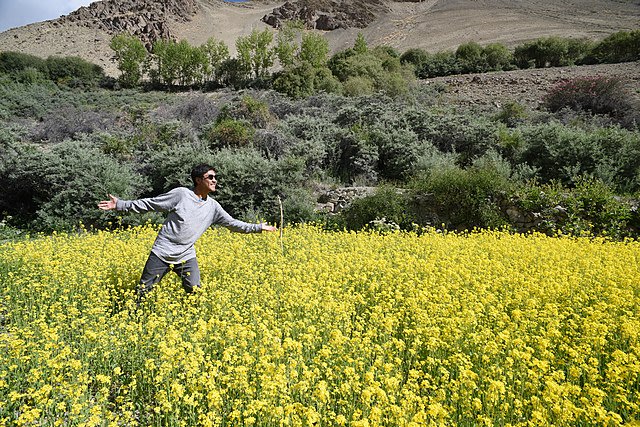
I’m going to dive right into the deep end this week and say the point of this post is to wake people up to the beauty all around us before it’s too late. There I said it.
I’m done.
Brevity is the soul of wit, right?
What else is there to say? It’s summer, the weather is gorgeous. Get out and enjoy. Quit moping around. We all have issues, yours are no better or worse than anybody elses.
Isn’t that good enough? No I didn’t think so. We need stronger poison.
Because we are programmed for failure. Even Jesus was unclear about what mattered. For instance, in the parable where he talks about the foolish rich man, hoarding up his goods on earth. And the day he tells himself: “Good boy, time to eat drink and be merry,” is the day the Lord calls him home. He doesn’t get to enjoy the fruits of his labor. Joke on him is he didn’t listen to Ecclesiastes when he said it was a vanity to do what he did, work all his life in order to amass great wealth and all the perks that come with it.
Obviously, that was a mistake. Of course, he should have taken time earlier to go on vacation and attend banquets.
But that’s not what the preachers tell us. Instead it’s St. Paul’s vision that has predominated in the culture. The lesson instead is that we need to kill off our desires and appetites and concentrate our thoughts on Heaven and the world to come.
But that’s not what Jesus said, necessarily, although it does resonate quite thoroughly with Eastern traditions such as the Bhagavad Ghita, where Lord Krishna, the incarnate son of God, tells the warrior Arguna, worried about the coming apocalyptic battle where he will face many enemy soldiers that are actually his countrymen, that all sensory experience, ie all of life, is an illusion and not to worry whether he kills or doesn’t kill in battle. Just go ahead and do your duty, Krishna says, but with the caveat that we should have no attachment to the outcome of our action.
Sort of the Stoic approach. But not necessarily what Jesus was about. Although he went ahead and accepted his punishment of dying on the cross in the most stoic and heroic manner imaginable. Actually unimaginable. But he had a definite attachment to the outcome — our salvation.
Because for us he said this: “The Sabbath was made for Man, not Man for the Sabbath,” thus declaring that theology and rules of any kind should not impugn against the good of mankind.
He said this: “Nothing that goes into a Man can make him unclean,” thus declaring all foods clean and all authority useless unless it serves us.
What could serve us more than Nature, and the rich, sensory experience of life? What dulls us most to the natural life? It’s the pursuit of man-made experiences, objects, and repute.
Simplicity and faith go hand in hand. Jesus constantly instructs us to learn from nature, from birds, from plants like the mustard, to listen to the wisdom and tradition that comes from acute observation of life unmediated, not blinded or dulled by overconsumption.
(photo credit - Chris Hunkeler)


July 27, 2025
Where the Dogs of Society Howl
This one’s for everybody looking for a job, a comeback, another shot at life.
The Truth Now is a reader-supported publication. To receive new posts and support my work, consider becoming a free or paid subscriber.
Rerun of an excerpt from The Truth Now, 2025, Hope Mountain Press.
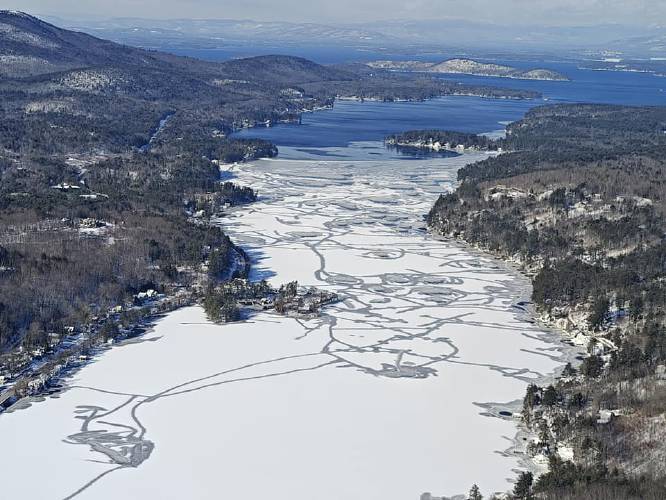
The mountains across the lake had a cover of white on them. Sid was concentrating on his body, trying to keep from feeling any pain with all the jolts of the road in the old truck with the worn suspension. He was feeling sorry for himself a lot also, thinking of Ruth and Leesha and the fact that Ruth seemed to have dumped him. Partly, his feelings were due to coming down off the drugs. He knew it could be withdrawal symptoms, and perhaps Ruth was just then on her way to the Rock and Bark to pick him up and bring him back to Concord. He would never know because he didn’t have a phone or a way of contacting her. He didn’t even have a number for her. It made him feel like he was failing. And now this, the long driveway and the log-house mansion at the top of the clearcut, the spectacular view. It didn’t seem like the opening of a happy chapter in his life. Phil was very quiet and focused.
They parked in a spot in the snow marked for the purpose by a half-buried utility pole, stained dark with creosote.
“Stay here,” said Phil.
Sid watched him walk across the ice on the wide driveway that led around to the multi-level log house and large barn, with doors that slid on metal tracks mounted on the outside wall. A couple of men stood on the cement slab of the open barn, dressed in coats and baseball caps, holding phones down on their bellies. They looked up at Phil. He waved and they merely swayed where they were, like strands of seaweed, moored to an ocean floor of duty and hidden vocations. Phil talked to them, moving uncertainly, swaggering, his hands motioning back and forth to the two men as if he were dispensing favors. Then one of the men followed Phil back to the car. Sid grabbed Rover in his arms and opened the door. He stepped out into the sunlight. The air was crisp up here, cooler by a few degrees than it had been at the Rock and Bark. Breath came out in waves of steam. Sid squinted as Phil approached with the guy in the ballcap, hands in the pockets of the black coat.
They were both silent.
“Hey,” said Sid. “Be a good boy.” Rover was squirming in his arms. He put him down. Rover barked and circled around behind Phil and the black coat. The man turned and watched Rover carefully, never taking his hands out of the pockets. Sid concluded he had a gun in there.
“We’re going in now, Sid. Meet Bernier hisself.”
“Okay.”
“What about the dog?” said the black coat.
“He’s coming with me. Come here, Rover,” said Sid.
Rover came back to Sid and sat by his side. Sid patted his head and whispered to him.
“Good boy, Rover.”
They stood there. The black coat was on the phone for a while with his back to them. The wind made it hard to hear what he was saying. Phil awkwardly shifted his weight from foot to foot. Rover circled around and around the car yard in wider orbits, sniffing the ground, looking up occasionally to see Sid watching. Then the black coat mumbled something. With his hands in his pockets again, he started walking away. Phil followed and nodded his head at Sid for him to do the same. Sid stood. He and the dog walked behind the two men over to the mansion.
The front entrance consisted of wide, neatly cut stone steps. Three of them. Then the front door opened. A young Asian guy in a camel hair sportcoat and an odd, lopsided haircut held the door and watched them come in, looking disapprovingly at Sid, the last one in, holding Rover by the scruff. Sid looked up as he walked and let Rover go. A massive, log-beamed cathedral ceiling and skylights arched over the interior. The walls were full of stuffed hunting trophies of exotic, horned game animals - antelope, gazelle, and mountain sheep. The black coated man walked insouciantly across the tiled foyer to a glass elevator shaft and stopped. Phil, Sid, and the dog caught up to him. The elevator doors opened. Sid held it open with his shoulder and called softly for Rover. The dog trotted in and the elevator doors closed. They rose to the top floor.
Bernier’s office was in a bedroom down a hallway and around a couple of bends. A gable window looked out over the snow-capped mountains. The hum of soft mood music, forest soundscapes, came from somewhere. Bernier was at a laptop, reclining against the antique wooden headboard of the king-size bed. A woman sat on the bed also, reading a book. Bernier was notably young, twenty something, with a handlebar moustache and moussed hair, a blond wave on his forehead. The woman, a redhead, older than Bernier, kept her legs in jeans like bent toothpicks beneath her and her shoulders covered in some Mexican looking wrap. When Bernier saw Phil, a smile crept over his face, the smile of a practiced salesman, a slick, disingenuous smile. He put the laptop aside.
“Well, if it ain’t Philadelphia. Long time no see, Philadelphia!”
‘How are you Bernier? Brought you somebody. This is Sid. He lookin’ to help out with all the shit you need done around here. I know you said you could use some help.”
“Well, hell yeah. How are you, Sid?”
“Fine,” said Sid.
“Where are you from?”
“Loonberg. New Hampshire.”
“Okay, well. Rodney put Sid to work on the wall with Pietro. You work hard you can go far here, Sid. Understand? Hard work and a good attitude. All you need. Now, Philly. We got business to talk.”
“Yes, we do,” said Phil. The black coat, Rodney, motioned for Sid to follow and they left the bedroom office of Bernier and his redhead lady friend, took the elevator down, back out of the house and then a long walk across fields behind the barn to more outhouses, including a relatively small chalet perched on the edge of the woods, with trails leading across the fields and down the mountainside.
On the back side of the chalet, built in the Swiss style with a steep metal roof and ornate wooden eaves, Sid saw a pile of field stones and an old long-bed truck with a crane in the bed idling beside the pile. In the driver’s seat of the truck, a long-haired, middle-aged guy sat puffing a cigarette. He opened the door when he saw Rodney and Sid come around the corner of the chalet, followed by Rover. He hopped down from the cab. He was rangy, with the slow spring of someone used to physical labor, saving his energy.
“Hey, Pietro,” said Rodney. “Got you a helper.”
“A helper?” said the man, spitting disgustedly. “Who says I need a fucking helper?”
“Bernier says so,” said Rodney.
Pietro sized Sid up wordlessly, staring at him while he finished his cigarette.
“You, ah, familiar with masonry, stonework?” He threw away the butt.
“No,” said Sid.
“Is this your dog?” Rover came over, sniffing around after the tossed cigarette butt.
“Yeah. That’s Rover.”
“Rover. Of the, ah, thousand seas, eh?”
“Exactly,” said Sid.
Rodney was on the phone with his back to them. When he turned around, he put his hands back in his pockets.
“I’ll leave you to it,” he said disgustedly, glancing curtly up at them both before stalking away.
The Truth Now is a reader-supported publication. To receive new posts and support my work, consider becoming a free or paid subscriber.
July 19, 2025
Ernest Borgnine

The people who pulled the lever for chaos got what they wanted. They must be happy to see the world reduced to rubble, matching the way they feel inside.
When it comes to rebuilding, who will stand at the forefront, leading the bucket brigades?
Not those same people, is my guess. They will retreat to the private corners of their mind, the enclaves of hate, their metaphorical escapes in the country, the imagined camouflaged bunker in the hill, to build up their stores of resentment and grievance. This town, this state, this neighborhood, this apartment, this village, this suburban grove is not theirs. Too many chumps, too many losers in it for their liking.
The damage wrought by damaged souls is the price we pay for our decline. Our triage, the performative way we flex muscles and pour out balmy words, the blarney of grace, is dependent on an influx of new hope. At some point it becomes unsustainable. But we will not discuss that here.
I want to celebrate new hope. I think it’s important. They say nobody cares, but I know somebody does. Soon enough, the weight of these bodies will form a mass, with a heart and a mission. That’s the way it works. You can see it happening if you look in the right places.
I want to plant the seed of Ernest Borgnine now.
Ernest Borgnine was a great American. His gap-toothed grin and gruff manner come to mind. He stood for stalwart days and authentic bearing. There was a yeastiness to Ernest, his fingernails were not clean, but he would not be the sort of person to complain when others fell by the wayside. He would be the man to shoulder a burden and others would pitch in because of his goodness. In him we saw ourselves reflected.
That was random.
But let’s not drop that fever pitch of elegy just yet. I’m looking at you, reader, looking at your phone, nervously checking your inbox. Who are you kidding? You got nothing better to do.
Order and chaos, what is the connection, where is the fulcrum? Is this the right time to prune the apple tree? I don’t know. Do I look like I’m in charge of the garden here? No, I do not.
Each one’s actions are a library of possible outcomes. We know that from the theory of the multiverses. It must be true at some level. At some level, if you imagine it, it must exist, like Borges and his forking paths, his Uqbar.
So make your choice, and act, but be careful what you wish for.
July 12, 2025
The Green Light
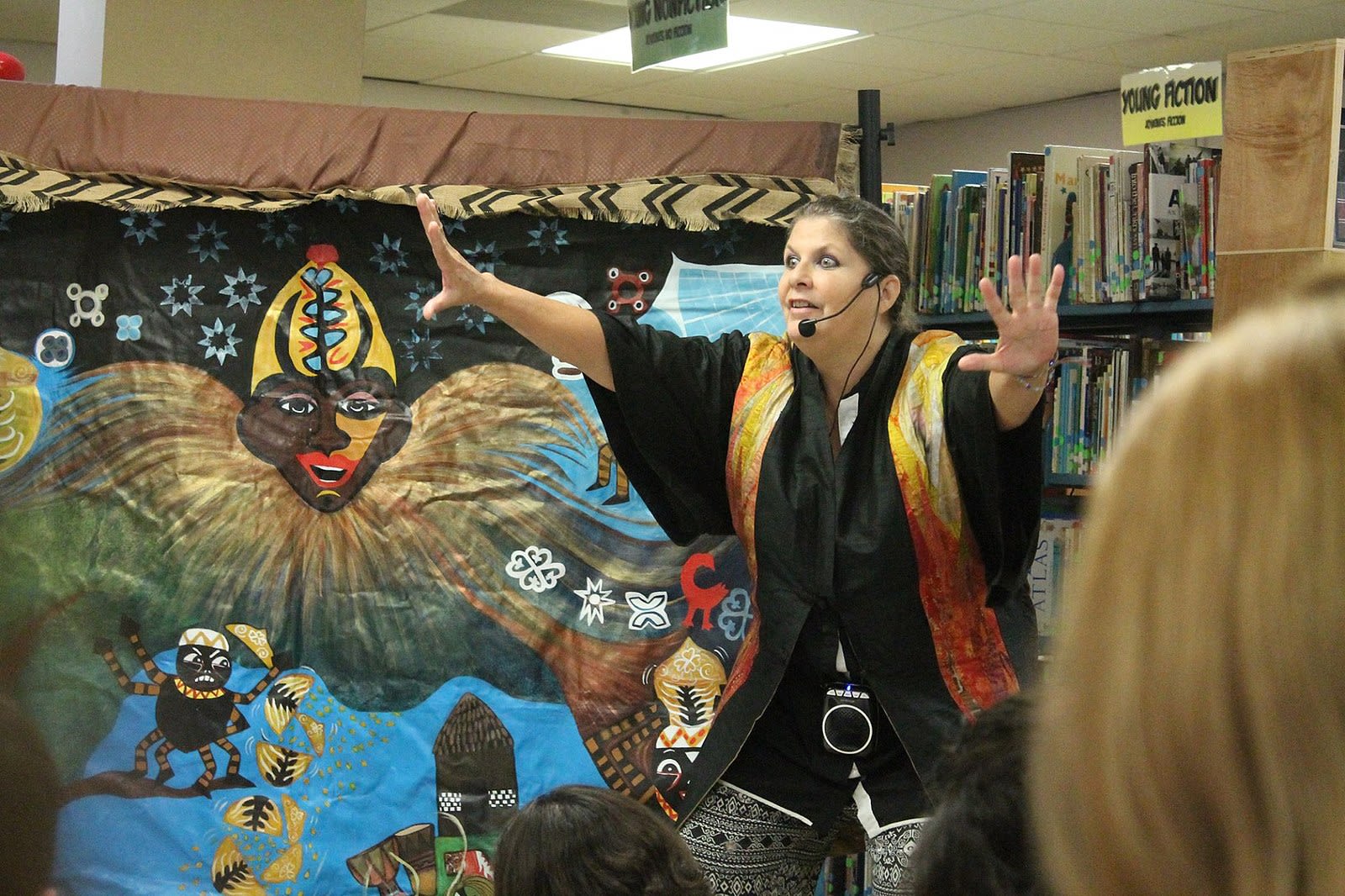
Biblioteca Juvenil Mayaguez
I love the Substack prompt. Start writing … it says on the blank template when you first open it up, to show you where the text goes. That’s it, all you need.
Start writing. Just do it.
When people find out I write fiction, I often get some variation on the following idea: “but how do you know where to start? There’s so much to think about: character, plot, time, theme, structure. Where to begin?” My response, like Substack, is — start writing. You don’t have to be Shakespeare or Edith Wharton. Tell your story, or tell any story. If it’s organic and authentic, it will resonate with people. It will contain all the elements and they will be united in a pleasing manner. Will it be high art? Probably not, but who really cares? Literary fiction meant for an audience of elite influencers is a construct of sensibility with a short history and an ever more constrained audience. All sorts of dirges have been sung for its demise, but one thing that is truer than ever is that despite the struggles of the great American novel and novelists, story as a living form lives on stronger and more relevant and accessible than at any time in our cultural history, especially in print and as text on various social media platforms, including here on Substack, where authors and raconteurs ply their art with varying degrees of literary polish, and in the self-publishing world of Amazon, Kindle, Apple books, Kobo, etc. There has never been a better time to get your story out there for any audience, and your lack of finesse does not need to hold you back. Your unpolished narrative approach can be a feature of your work rather than a bug.
Me, I started writing when I was just a wee lad with a toy typewriter I got for Christmas, I must have been about six or seven. I started typing up plays without a second thought, and I still remember the thrill of creation, looking wondrously at a sheet of paper with my words that translated into scenarios where puppets I pulled from a drawer went at it in climactic battles that usually ended in fisticuffs with the bad guy learning a lesson the hard way. It was thrilling and I had no doubt that it was what I was meant to do in life.
Cut to senior year in high school when I had the temerity to approach my AP English teacher with a short story I had written to ask for his opinion. I don’t remember much about the story except that it ended with a green light flashing for some reason, in a clear homage to the end of the Great Gatsby which we had read in his 10th grade class.
Gatsby believed in the green light, the orgastic future that year by year recedes before us. It eluded us then, but that's no matter--tomorrow we will run faster, stretch out our arms farther.... And one fine morning-- So we beat on, boats against the current, borne back ceaselessly into the past.
“Do yourself a favor, Tony. Go to law school,” he said.
I was crushed, but I bounced back by the end of college. Writing seminars with John Hersey and Francine du Plessix Grey cemented my desire to follow a literary vocation, But the thing is, fame is fickle and fortune is probabilistic. The time of my burgeoning adulthood was not ripe for literary vocations. The publishing world has been under constant late capitalist competition for eyeballs that has determined an industrial approach to product marketing that freezes out attempts at authenticity and hand-hewn approaches to craft. I’m not interested in being an industrial artifact, no matter how polished. And I never was. So I will defend the self-publishing world: the rough and ready memoir of the alcoholic Canadian survivor of a military upbringing, the goth fantasy, co-splaying world of the Arizona lesbian who was adopted by her uncle after her parents commited suicide, the journals of the mountain climbing tech employee who loves Walmart ready meals.
Just do it. Don’t expect success, don’t desire approbation from the critics. Just to be a part of something, to be heard. When I self-published my first book, I thought if just one person read it and liked it and the words made an emotional impact, then I had done my job. That’s all, it’s just a job, all variations on a theme. Pointing the way for people in dark times, which can be the height of summer.
Here’s a review which just posted for my novel due out in November, Alias Tomorrow.
Alias Tomorrow" is a thought-provoking and deeply moving novel that masterfully blends intimate family drama with gripping science fiction. The parallel stories of William Morrow and his Martian protagonist, Antioch, offer a unique lens on identity, resistance, and the longing for connection in both familiar and futuristic worlds. The book’s exploration of fractured relationships and the struggle for personal meaning feels authentic and timely, while its vision of a controlled, interplanetary society is both chilling and compelling. A beautifully written, unforgettable read that lingers long after the final page.
July 5, 2025
Alias Tomorrow
Hey folks, it’s a milestone in the journey of launching Alias Tomorrow.
You can order your Kindle copy now and have it delivered in November, when the book launches.
Check out the promotional video and then click here for the opportunity to jump aboard with a pre-order.
Here is a sample of the first few pages:
One
The dwellers in the glades of blissful freedom made coffee while he searched for words in the shadows. When they came, they would ring with the sound of trumpets and distant harmonies.
Go.
Alpha
Antioch could no longer say with confidence that his conversations with Reid had been kept confidential. Yes, they had taken place in the Zocalo during the recreations of the ancient fire festival. But hidden among the costumed participants there could have been OneWorld plants.
“Look, man. Can you tell me whether Reid will even be here in fifteen minutes?” asked Garcia.
“Wait, give him a chance to show up,” said Antioch.
“No time,” said Garcia.
“So, you’re suggesting that we ditch him. He shows up here and the beach is empty.”
Garcia ignored him, shoulders twitching with some memory of insolence or trauma.
“Look at them. They ain’t no fishermen,” said Garcia.
“Those boys? They’re here every day fishing. Snapper, parrot fish. Seen it with my own eyes,” said Antioch.
“Parrot fish? They extinct now, like fifty years, brother. You've been set up with some cheap ass special effects.”
There was a glitch, a glint of light reflecting off the nets cast by the fishermen from off of the rock. Antioch suddenly thought that Garcia might be right, had probably been right all along. That meant that all the months of stalking and cultivating Reid as an informer, all the notes he carried in his head from their conversations, all the coded entries on the transponder were now worthless. What’s more, they were dangerous and would need to be wiped.
“Okay. Say it’s all shit, the Reid notes, all his so-called info. We go up to Tijuana. And then what? What’s Shoeman going to say? That’s gonna be one hell of a conversation,” said Antioch.
“Shoeman ain’t even real, man. Getcha game on, Antioch,” said Garcia.
“How do I know you're real?”
“How do you know anything? Shithead.”
Garcia, annoying as he seemed, had a point. Antioch had a hard time knowing anything was real. He’d been raised by Mancie Littell in Tennessee with the perhaps imagined words of his long absent father Don forever in his ears, ringing the alarm of fight. As a runaway teen landing in the streets of Knoxville, he’d come under the influence of a Chomskyite cell that espoused action against the machine as a path to cleansing and personal salvation. Disillusioned with the personal politics of utopia, he’d joined the Democravian military, volunteering to salvage his abused sense of personal honor in what remained of his youth. Years later, battle scarred, part of that defeated army under General Steiner that had surrendered to OneWorld, still searching for redemption, he’d drifted out west. He’d married Winona, and they’d had a daughter, Uvlin, who was the key to their happiness.
He took on freelance work, investigative gigs during those years, and ended up working full-time undercover for Shoeman’s foundation, the Anthrog Nosti. He liked reporting to Shoeman because the occasional existential threat gave him direction and a backstop to his own still meandering consciousness.
“Let’s go,” said Antioch.
“See?” said Garcia.
The two men walked silently, plodding across the waste ground of a parking lot in Cabo San Lucas. In their wake the wind picked up, scattering spouts of dust across the pockmarked asphalt. The Pacific shimmered beyond the break, a silver pool of mystery. In the distance, shrouds of unresolved matter blanketed an army of giant blades. They rotated at a pace dictated by a fragmented logic that was the object of their quest.
Zipping up Carretera Uno, the coast road to La Paz, they stopped at a charging station in the center of a dusty, overheated crossroad. Teenaged girls ate soft synthetic chocolate cones in the shade, sitting cross-legged at the curb. Local boys, rodeo stars, wearing shades and braided rainbow mullets, charged their amphibious vehicles, customized Chinese puddle hoppers, while Garcia and Antioch waited on their bikes. Only their channel blockers, downloaded on the black market, rendered them immune from the wireless, dopamine enhancing blasts from the OneWorld puppet regime in the radius of the station. Once the bikes were fully charged, they looked around, ignoring the local youth, and gunned the electric motors for the road again.
The sun was sinking out on the horizon, torching, eternal fire in and out of sight. At the crest of the hills, buzzards rode the thermals in silent predatory spirals, drifting up and out of the violet dusk. It hadn’t rained in 16 months. The desalination plants, running on modular fission, worked overtime to provide the remnant population, descendants of the indigenous Guaycura mixed with a century’s refugees from around the globe. The OneWorld north of the border was a sprawling, amnesiac haven amid the wreckage of civilizational collapse. South of the border the lands were running out of water.
Antioch’s mind relaxed its fearsome grip on his sympathetic nervous system. He checked the transponder on his wrist with a glance. It was 6:30 Pacific Time. Uvlin was asleep in Atlanta, dreaming her nightly attempts to get unstuck from whatever road she had wandered off on. His cortisol levels were fine but the catecholamines were still in the orange zone. What would Shoeman say? A moment, a breath, a day, and a night at a time. He was on the road, a particularly corrugated stretch of hills, water and sky under the planet’s rotational spell of light and gravity. In a few weeks, he would head back East to see Uvlin, settle his mind, see she was okay. They would catch up, eat at her favorite restaurants, hang out with her friends, and try to forget the pain of Winona’s long-expected last flight. Whose fault? No-one’s fault. Antioch’s brain had automated the call and response to that thought.
Two
The phone buzzed on his desk. He hoped it would be Daniel, calling with an update on travel plans. He picked up the phone, thumbing the cracked screen. It was not a known contact, but a 603 area code. He took a chance. A tele-marketer would be an amusing distraction, he thought.
“Hello, is this William Morrow?”
“Yes, who is this?”
“Good morning, William. This is Shelly Patenaud with Sun River Bank in Hanover. I believe you are the executor of the Margaret O’Donnell Cox estate. Is that correct?”
“That’s right.”
Margaret O’Donnell Cox. Six months gone. Predeceased by second husband Rich Cox, from Covid. Nana’s remembrance service in St. Agnes a muddy March morning. Siblings, cousins and long lost acquaintances arrived in waves. Sarah, Mackenzy, and Ellen between, cradling them each with her arms, together in the front row of folding chairs in the community room, facing the table lined with photos and candles. He spoke, tears streaming freely on some of their faces. He couldn’t remember now what he had said. Daniel stood in the back with his cousins, dressed in rough weather gear and work boots. The month before, when the old woman had tossed and turned on her final fevered dream, Daniel had called home at midnight on WhatsApp from the depth of the PNW, fuzzy cell phone image of his face, long, black hair covering his eyes, in some darkened Portland street, swaying in the dusk.
Two weeks ago she'd appeared in two dreams. He'd noted them down, as much as he could remember.
“You are aware that the account here is off limits until the probate process has run its course.”
“Yes,” said Morrow, red flags slowly rising on the tracks of his muddied synapses. He reached for his coffee and waited. The woman cleared her throat and shuffled around in her swivel seat in the Hanover branch office.
“There was an attempted withdrawal several hours ago from that account. The server indicates it came from a computer logged in in your vicinity, William.”
“Well, that’s impossible.”
“In any case, we are obligated by federal regulations to inform you and do some verification. You’re saying it wasn’t you.”
“Yeah, no. Wasn’t me. Or anybody here.”
Ellen drifted by in her slippers behind him, padding softly on the old, worn pine boards. Mackenzy and Saroj slipped in the back door from the apples. Ellen caught them and directed them to the kitchen table with some commentary on the state of the season and early fall leaf colors.
Shelly Patenaud was going on about “the account has been restored to default status” and “avoiding significant short and long-term financial damage”, and “we are prepared to offer you credit monitoring and identity protection services.”
“Can I have your social security number, William?” she asked.
“My social security number? Sure,” said Morrow, stalling for a second until the numbers appeared in his mind. “Zero five two…”
“No,” said Ellen, appearing at his shoulder. “Don’t give them…”
“What?” asked Morrow, covering the bottom of the cell phone with his index finger.”
“Not your social,” said Ellen.
Morrow lifted his index finger and raised the phone to his chin.
“I’m sorry. I guess I prefer to come in in person.”
“That’s fine,” said the woman. “You do understand the account is frozen until then.”
“Yes,” said Morrow stiffly, putting the phone down on the table. Ellen lifted it and checked it for the details of the call, to make sure it was off. She placed it back on the table.
“Why don’t you come and chat for a bit. There’s fresh coffee.”
“I don’t need more distraction right now,” he grumbled.
“Oh, come on. It will be good for Mackenzy,” said Ellen, her hazel eyes firmly fixed on him. “They’re already bored,” she whispered.
“Well, that’s not…”
“Shh,” she admonished.
Morrow rose to his feet, stretching, putting the work aside. The low morning sunlight in the window struck him harshly. He stepped toward the kitchen. Mackenzy and Saroj sat at the table. Mackenzy laughed at something Saroj was saying. Morrow was jealous for an instant. He loved his daughter’s laugh possessively.
“Well, I guess I will have a refill,” said Morrow, pouring himself a cup of coffee again from the french press on the wood stove. The echinacea flowering outside swayed in a gust of wind, survivor of the tropical storm that had swept through overnight.
“How are you, Dad?” asked Mackenzy.
“I’m all right,” said Morrow. “How did you two sleep?”
“Saroj. Allergies,” said Mackenzy, holding up her palm, a parodic echo of television show comedians.
“I don’t know what it is. Maybe pollen,” said Saroj in a sing-song, congested voice, hints of a British colonial past.
“Maybe it’s the country,” said Mackenzy wryly, screwing up her lips in a comedian’s smile, bringing awkward possibilities to the surface in a way that Morrow identified as one of his mother’s ancient traits to put people at ease. Sometimes it backfired. It took confidence, a social confidence that Morrow himself had never possessed.
Saroj laughed.
“Could be,” he said.
“You’d think the rain would have washed away any pollen in the air. But with the changing climate, the pollen season is getting much longer,” said Morrow, leaning against the window in what he hoped was an authoritative yet friendly pose.
“And the growing season,” said Saroj. “Possibilities for cash crops, Mr. Morrow?” he added.
“Well,” said Morrow. “Maybe.”
“Farming is always going to be a hard row to hoe,” said Ellen, wiping a counter with a kitchen cloth.
“Especially in today’s environment,” added Morrow.
“We had the sheep. Remember?” said Ellen.
“I wish we still had them,” said Mackenzy wistfully.
“Well, you all decided you were vegetarians at some point in the not too distant past. Made keeping the sheep a difficult proposition to justify,” said Morrow.
“We couldn’t stand to see them disappear once we figured out we were eating our cute little things, could we,” said Mackenzy.
“We always tried to get them loaded and off to the butcher while you were asleep on the weekends,” said Ellen.
“Saroj,” coughed Morrow seriously. “We had visions of ourselves as homesteaders when we moved here over twenty years ago.”
Morrow wanted Saroj, from Punjab and studying in his first year at the college in Maine where his daughter also was matriculated, to see that once they had been appropriately filled with grand ideas about how to live lives of balance and sustainability. Now their field, once humming with an electric fence and mowed by the sheep, was overgrown with ragweed, nettles, thistle and milkweed. At least it qualified as a pollinator friendly, successional ecosystem, if Saroj or anyone were to ask.
“Youthful idealism,” said Ellen, smiling at him, tolerant of both their foibles.
“Visions,” said Saroj, looking at Mackenzy.
He wasn't smirking, as far as Morrow could tell. But he didn’t trust the utterance, and Mackenzy’s tight-lipped smile was a new expression. Morrow stored away his thoughts, consigning them in a practiced move to memory.
“We could go for a hike in the woods,” said Ellen. “Show Saroj the woods. Our woods.”
“It’s not our woods anymore, Mom. The ATVs have taken over,” said Mackenzy sourly.
“Oh, no. There’s still our woods,” said Ellen insistently.
Mother and daughter stared at each other, banking their secret accords and disagreements, the shared years that had passed as the children grew into their adult selves in flashes of time. Morrow thought he should say something, but couldn't think what. He gulped a large part of his lukewarm coffee and retreated into thoughts of his book. Where was it headed? Who was the intended audience? He needed to develop the elevator pitch for a phone call he had scheduled with Mitch Epp, his agent in Los Angeles in the coming week. He could feel his throat tighten with the thought.
The buzzing in the kitchen rose in pitch. Seated again at the table in the dining room, away from the main stream of breakfast, Morrow bent to the task, staring at the last thing he’d written before the interruption of the phone call from Sun River Bank. This is what his work had alway boiled down to, staring at a blank screen and waiting patiently for a rising impulse to lift his fingers into action. He could be hiding from something, missing something back at the breakfast table, but Morrow would not contemplate that right away. More to the point though, what was he railing against in this book? How would it all go down in the end? That was the beauty of the calling that had attracted him from the beginning, the notion of being a servant to some hidden narrative rising from the shadows. It always did.
“Come on, Dad. Get ready.”
On the other hand, there was Mackenzy, tugging at his attention. Just as he was about to get started again. There could be no mistaking it now. This was life calling. He couldn’t resist.
Morrow sighed and rose again from the table. Outside, beyond the old double-hung windows, the sun had broken through clouds and streamed a bright, rising light on the dying red leaves of the maple tree that overspread the driveway. The four of them set out up the dirt road, past the new houses that led to the Gorman farm at the top of the hill. Here, up the rutted drive, behind the ruined old farmhouse, beyond the rusting hulks of a tractor and the two moving trucks that had once served as grain storage, was the old Class VI road leading into the reserve of forest that had last been logged when Dwight Gorman had still roamed the earth. Morrow was explaining how Dwight’s life had been forever set on the downward spiral typical of late stage capitalism and the get-big-or-get-out mentality that afflicted his country. Saroj interrupted him.
“Does the town not have a health officer?” he asked. Morrow wondered whether he was being intentionally spoofed.
“Oh, not really,” said Ellen, catching up to them with Mackenzy at her side.
“A health officer,” said Saroj, repeating himself in case she hadn’t heard. “I mean look at the state of this. There could be issues, no?”
“We don’t have that sort of a town,” said Ellen, grabbing Morrow by the arm. “It’s more of a … small town with a libertarian bent. “Live free or die’ is our state motto,” she added. “Wouldn’t you say, William?”
“You’re doing fine, dear,” said Morrow. Ellen had a stronger handle on local politics. Starting out as a school nurse, Ellen had risen to the position of hospital administrator, working in the orthopedic section of the Catholic Medical Center in Manchester.
“My God,” said Saroj. “This would never do.”
Morrow liked the fact that the kid was expressing shock. But he, William Morrow, author of science fiction, creator of imaginary worlds, liked the wrack and ruin of the place. It made it attractive, in his opinion, a better spot from which to observe the entropy that ran the table in the wider sphere. Eventually, all their efforts came to this, to the beauty that lay in decrepitude. You might as well accept it. How could he communicate that thought? He would put it in the book he was writing. He made a note to himself: ruined house, rising tides.
In the woods now, they walked two abreast along the old logging track cut not too many years ago by oxen-drawn carts in the snow and mud of the Wabenaki forest, through stands of beech, birch, oak, and maple second growth, occasionally big old hemlock survivors of the first clearances, and the bare, skeletal remainders of the ash, fallen prey in the last few years to invasive, wood- boring beetles. Morrow looked up at the virgin blue sky through the trunks straining upwards, drawn by the sun in a millennial feeding frenzy. He wondered about his own life and what was pulling him along, now that he had reached the age where the clamor of existence no longer seemed as compelling. Was it mere inertia, strength of habit, like the solid trunks carrying the canopy of leaves, that held him on the path? Or was it Ellen, her lithe frame belying a strength and conviction that she herself did not believe she possessed, that beckoned him further? He loved the forest for the way it inevitably drew him into a search for deeper answers to the existential questions. He pushed them away, deeper into denial because there were no answers. Slow down, you mere two-legged creature, was what the woods seemed to be saying.
They heard the drone in the woods long before the ATVs appeared at a junction of two snowmobile trails, four of them, one behind the other, two riders on each vehicle. They were accelerating up the incline of the trail towards them. The driver of the first ATV slowed when he saw them, the second following suit. He smiled as he drew alongside. He had a red beard, bad teeth and a grin in his eyes behind the plastic workshop goggles. The four of them instinctively stepped off the trail and paused, standing safely among the stones of an ancient border wall and the snarl of old logging operations as the ATVs passed by.
Beta
It was Garcia checking in.
“I say we pull off, get some sleep,” said Antioch, slowing down around a curve south of Mulege. There was static on the headset. Antioch could swear the static was telling him something about Garcia’s thoughts. Quantum glitches interfering with the resistance. Garcia was cutting speed, slowing down. Improvisation like the fox. Their winding, back-pedaling trail would be impossible to decipher or predict. Instead of riding all night, which they had intended in order to arrive in Tijuana in time for the meeting with Shoeman, they would pull off and camp out incognito.
“Yeah, okay,” said Garcia, braking. As did Antioch. They pulled off the road.
A quarter moon rose just out from a headland that jutted eastward. Its light spread a silver cone on the still waters of the Sea of Cortez. They maneuvered onto a furrowed foot path and wound through the brush and boulders along the hill, descending gently towards a slightly indented bay ahead. Antioch stopped, putting his left boot down and leaning into the hill as Garcia caught up. Their way was blocked by glinting snags of barbed wire. The two motorcycles alternated strafing light searches across the hillside.
“What do you think?” asked Antioch into the headpiece, adjusting the volume down on the dashboard above the battery pack.
“It’s all right. We go down there and get underneath the wire.”
Antioch looked over to verify the direction Garcia intended. Cutting back into the headland to the left and behind, along the diagonal path of the fence, there seemed to be a gully in the shadows, the crotch of the land, perhaps formed by recent flood waters coming off the the ridge out of which the moon seemed to be rising, as if expelled from its hiding place. He wouldn’t have picked such a trail himself, but working with Garcia meant trusting Garcia’s instincts.
The two motorcycles made their way in the shadows of the moon down into Garcia's gulley. When they came across a ditch with the barbed wire fence cutting across it, they paused again. Antioch shut off the motor to save power while they figured out how to get through the wire. Garcia followed suit. They pulled off their helmets to speak and be heard more clearly.
“Only thing I can see is to slide the bikes under,” said Antioch.
They worked in the dark to unpack the pannier bags and dry packs and sling them over to the far side of the barbed wire fence, careful not to snag or rip any fibers from the all weather jackets that could give away any clues to their passage. Then they wheeled the bikes one by one into the ditch, laid them on their sides, at a good angle to the fence, on top of one of the foil sided blankets, and pulled them under the wire, pried upwards by carefully placed mesquite branches. It was hard and slow, but they succeeded in a short time to sit back on their bikes with all of the gear assembled. The night was as quiet as before, just the sound of water lapping rhythmically on the rocks of the dark headland. Antioch took a deep breath, stretching his back, quieting the nerves.
Switching the bikes back on, they continued down on the beach side of the fence. The beach was about a hundred yards long, and about thirty yards wide at low tide. There was one sparse, tin roofed palapa down at the south end but no other visible sign of human habitation. The water out to the horizon was lit silver by the risen moon, the stillness only broken by the sound of howling coyotes to the back of them. When they had the camping tarp stretched out over the soft sand, yellow in the moonlight above the tidal flotsam, and the military issue sleeping pads inflated, Garcia broke out a bottle of pulque he’d picked up in Mazatlan. Antioch brushed his teeth down at the water’s edge. Garcia’s drinking habit bothered him, although he had also once been a heavy drinker. That was one thing that got in the way of Garcia’s effectiveness – his need for recreational drugs no matter where they were and what the circumstances. He walked back to the tarp, making a checklist of what he could see, a hillside broken by boulders, mesquite, cactus, and shadow, and above it the extrusion of the Milky Way. He took a long slug of water from the camel pack and settled under the foil blanket, prepared to forget all cares and dream of better, more peaceful days.
“Set your alarm, Garcia,” he said.
“What time?”
“We got thirteen hours of riding to get to Tijuana.”
“Five o’clock?
“Sounds good.”
“You going to sleep?” asked Garcia.
“Of course,” said Antioch.
He waited for a response. Garcia lifted the bottle and slugged down a couple of long gulps. Antioch screwed himself further under the foil blanket. The coyotes sang in blood-thirsty yips to the moon. Soon he would be in Atlanta and none of this would matter. The OneWorld and its ever-growing totalitarian presence, Shoeman’s shock troops for the beleaguered democratic resistance – a plague on both their houses – before drifting off to sleep, perhaps to a dream of a better, less analytic, more synthetic path.
Garcia was shaking him.
“Get up, dude,” said Garcia.
It was early light. Dawn. Maybe five. He sat up.
“Is it time?”
“Look.”
Garcia’s voice was hushed, the air caught in his larynx by something, an unexpected event, maybe a person. He ran instantly through several possibilities: the bikes had been stolen, the tide was swamping, someone was there, perhaps the regime’s guardia regional. But no, he couldn’t hear the waves any closer or the sound of any humans. And the theft of the bikes was way too improbable. Garcia was prone to these fits of sudden, alcohol induced panic. It was probably nothing, thought Antioch, rubbing his eyes before propping himself on his elbow, proceeding to push up with his hand in the sand, wet with condensation.
He twisted and turned from under the tarp to look to the east, towards the waters of the little bay where they had parked for the night, the waves lapping placidly on the beach.
“What’s that?” he asked.
Out in the bay was a barge of some sort, a long, flat boat above the mercurial waters.
“Don’t know,” said Garcia, vindicated.
Antioch made a sudden burst out from under the blanket. Garcia slapped an arm across his chest to slow him down.
“Woah, there, bro.”
“What are you doing?” sputtered Antioch.
“It could be OneWorld. Stay down.”
Their wrestling somehow set the vessel in motion. It slowly began to approach the shore, growing larger, sprouting outriggers, humming in an insect-like low pitch as they spread, until it reached the shallows, where it set the outriggers down and began to levitate itself out of the water like a giant six-legged beast.
Antioch felt ill, a sudden wave of nausea hitting him full force. With extreme difficulty he willed himself to move, Garcia following after him. Both men stood on the sand, unsteady on their feet, staring at the horrific object rising before them.
Panic-struck, they dashed in a blur to their bikes where they were parked against the rock edge of the cliff. The shadow of the boat loomed behind. Despite the pull of the boat, exerting a kind of gravitational force, they managed to sit astride the bikes, ready to haul out of there, but the motors weren’t switching on. Nothing was happening.
“What the fuck’s this now?” groaned Garcia.
“Some kind of force field,” said Antioch, panting for breath. “Can’t start.”
“OneWorld bullshit!”
Garcia jumped off the useless motorcycle back to his feet, followed by Antioch. But the ground beneath was disappearing, as was the sand and the sky, all of Antioch’s field of vision, even when he turned and looked at Garcia beside his bike, sucked down some swirling vortex towards the vessel hanging overhead like a monstrous bird of prey, blacking out the sun.
Antioch retained consciousness. He was aware, even as he spun around and around in some dream state, that he was still there, still relatively conscious and able to identify himself as an observer undergoing the experience of being subjected to this panoply of dreams.
His mother and father and a black river banked by willows. He was swimming in the deep part of the river as was his baby sister Skye, who had died when he was twelve in a drowning accident on Eagle Creek. His mother Mancie, who’d worked as a hair stylist in town for decades and was buried in the Benton County Memorial Garden, was calling from the shore, but they couldn’t hear her. Mancie always responded “out west" when he asked where his father was, so he imagined his final resting place was a patch of desert out on the high plains south of the urban sprawl of Greater Las Vegas. But Skye, whom he did not recognize, her face was fuzzy in his mind’s eye, was telling him that his father wanted him to contact an attorney, that he wanted his remains transferred to the family plot next to Mancie, who had been ripped away from him by the unmitigated impact of his afflictions.
He didn’t know where he was. He tried to imagine where he was going. He wasn’t sure he was still alive in the traditional sense of the word: breathing, with a heart beat, with an ability to mobilize himself after the necessary resources to survive. What would those be? That was also a difficult question to answer on his own. He really needed to acknowledge his own limitations regarding the basic questions of existence that had plagued him along with his father, Don Littell, and probably everyone that had come before. The ones who came after – Uvlin and her children, were she ever to find an appropriate mate and partner with whom to share her DNA, they might not have the same concerns. He couldn’t be sure of that, either. Times changed, that was for sure. It was changing very fast about now. He had the distinct impression of crossing a threshold in the fabric of the universe, which put a stop to all his useless contemplations.
He opened his eyes. A blank white slab of metallic ceiling and inset, blinding halide lights. He tilted his chin, craned his neck upwards and stretched his back and shoulders. Two metal chairs, two indistinct shapes of people in the chairs, no nonsense types, observing him as he awoke. Where was this? And where was Garcia? One of the observers slowly stood and approached the foot of the bed where he was lying. He could see a crisp uniform shirt over broad, heavily muscled arms, the patches of the Kraken Brigade, the expeditionary force of OneWorld, on the sleeves. At one time they had been mostly hired mercenaries from the former Islamic regions of the Caucasus, originally re-formed from the fragments of the Russian Federation’s Wagner divisions, after the fall of Kazakhstan.
A face took shape before him. Black, creased lines on a short forehead and small, smug eyes under heavy brows. This was not going to be fun. Antioch wondered if there was going to be vindictive behavior – beheadings, torture and the like.
“We are happy to have you with us now, Mr. Antioch Littell. How do you feel? Is there anything you would like?”
“Yes, I need you to tell me where I am."
“Admirable. How you say straightforward. Very much with the personality profile. But you are a prisoner, I regret to inform, of the Admiral Nazar, one of the Kraken fleet’s amphibian spearheads. We are to keep you safe and how you say secured until we reach our destination, Base Svyatogor on the Red Planet, Mars. Your companion is in a separate habitation. You are to be provided with whatever you like, food, drugs, entertainment, and any other which you need. What do you like? The sooner you become how you say accustomed to the passage rules of the space fleet, the better for us all.”
“And who do I have the pleasure of dealing with?
“Major Ignace Dmitrievsky at your service.”
"Nice to meet you.”
“Yes. Equally. My pleasure as well.”
“Have we … met before?”
“I believe we may have previously met, eh, metaphorically. But not in a personal way.”
“Kazakhstan.”
“Kanyagash. Yes. We are well aware of your time in the 69th Armored Division, Sergeant Major.”
“We lost a lot of men and a lot of armor in that one.”
“I’m sure you remember it well. The roads of Dzagurk and Yrgyz were a strategic, how you say a bad loss for our Wagner Division that day.”
“February, 2132. I think I can still feel it right here.”
Antioch gripped his right femur, grazed by gun fire. He'd never fully recovered strength there.
“I was also once an infantry scout. Spetsnaz. We have a lot in common, Antioch.”
“Very nice. I want to know where Garcia is.”
“Your companion Mr. Jones is comfortable. Have no fear for him. He has quickly requested that he could be well provided with satinate. That is something we are fulfilling in a very quick time. Our satinate stores are indigenous, from greenhouses on board. Let me know if you need it. Anything you need, Antioch. We will try to satisfy. Just one question about the Anthrog Nosti. We believe you have been in employment, correct?”
“No clue. Garcia and I run a bike shop in San Clemente. I’ll be sure to let you know if I need anything. But I'd like to have access to Garcia. He’s a simple man, but easily confused,” said Antioch, sitting up and looking Dmitrievsky carefully in both eyes. He had a slight drift in the right pupil. No, he was not an avatar. Antioch was almost disappointed, since it meant he was dealing with a human with a real propensity for charm. Dmitrievsky was likable, partly because of their shared history of service, but also because he seemed to be genuinely capable of a civilized empathy. He quickly reminded himself not to be lulled into identification with his captors. The Stockholm Syndrome would be among the psychological ploys that the OneWorld would use to dominate and destroy his will to freedom.
They were in a pickle, there was no doubt. Bound for Mars across 140 million miles of space in an interplanetary vessel, probably of the Eskelon class, with the famed fusion-powered Magnitron jets built by Bosch Steinburgh in the early 2130s. It made it all the easier to bear if one could hope for decent treatment. But he knew there was nothing valued in that kind of approach by Dmitrievsky’s bosses. On the other hand, in order to gain access to his knowledge of Shoeman’s network of resistance activists, they would need to keep him alive, lull him into a state of complacency, and get him to spill the beans the old-fashioned way. The secrets of the brain’s memory stores were as fathomless as they had ever been.
He slept again, laying down with a heavy feeling of loss on the cot in this alcove on the Nazar. There was nothing left to do, no twisting thoughts at this point would avail to change the basic state of things. The weight of his failure seemed lighter than he would have thought, a mercy on the part of destiny. He was afforded the luxury of sleep, a legacy of the planet and the evolutionary matrix they were leaving behind. Despite the curving walls of his prison, he held in his mind's eye the image of the royal blue orb.
June 28, 2025
Running Twice as Hard
I genuinely don’t think I have a thread of a story to hang this on, but here goes a slew of observations, a sort of midsummer goat’s stew meant to be a little rancid and difficult to digest. Kind of how I feel as the weather turns muggier.
But today, you might want to know, was the 38th annual Bradford, NH 5k.
The Truth Now is a reader-supported publication. To receive new posts and support my work, consider becoming a free or paid subscriber.
The first ever Bradford 5k I competed in was the 14th in 2001 after we moved to New Hampshire for good and I had started work as a teacher in Manchester. I wanted to do something to stay in shape as I transitioned to a more adult, respectable stage in my life. With a kid, a mortgage and a real job with time off in the summer, I took up training a few days a week in order to make a decent showing in a 5k or two in the summers.
That first 5k was run in a heat wave, but this morning I drove up the road fifteen minutes from the house in a cool rain to the town hall to register, There was a small knot of runners there before me. I picked up my bib and the teeshirt and headed to the door, just remembering to ask where the start was.
Down the road and across the highway, in a parking lot in front of the church, there were stands of vendors setting up and groups of runners of all ages. The beauty of the local 5k is the amiable nature of the contestants and the chance encounters that may be forthcoming. I struck up a chat with a gentleman from Beverly, MA stretching on the sidewalk, who said he was running in honor of his father, a former townie, who used to make the Bradford 4th of July 5k a regular part of his summers before he passed away, which I thought was a nice tribute to his old man.
With little fanfare as befits the small town vibe, we set off, and soon enough I pegged myself behind a man about my age chugging along at a good clip. He pulled me along almost the entire way, but I did move up alongside him on the third and fourth mile just to be fair since he had been doing all the work and was starting to flag.
I was impressed with my pace, and my oxygen deficit was not too bad, but striding hard up to the finish, glanced at the clock and saw that my time was right in the range of my usual, and I finished in a flat 24:14.
I guess that’s what defines old age, running twice as hard to stay just where you are. Good enough for a 1st place in my age group, though, 7th male, and 13th overall, and a prize of a brandy snifter, which I thought was an odd choice for a prize in a local 5k, but there you go. Cheers!

After the race I saw someone who I recognized as a local activist, and we had a long conversation about the sad state of political affairs and the need to keep a mental balance despite the seeming downward turn of the nation and the world. We agreed that the energy transition would continue despite the Trump administration’s worst efforts to derail it.
There is this long winded debate about levelized cost of energy and whether it’s the best metric to base energy planning on. It’s part of the argument about whether solar and wind should be a larger or smaller percentage of our electric mix. I’m no expert and that’s one of the reasons that I don’t focus on energy issues on here, but suffice it to say that I’m generally suspicious of think tanks coming up with policy analysis that conveniently aligns with the random quirks of an obvious madman who has gotten himself into a position of unparalleled power.
At the end of the day, wind and solar plus battery storage has a lot going for it: it’s dispatchable, the newest batteries provide grid inertia services, and the wind and the sun are free.
Its going to take more than Trump and a couple of think tank position papers to make advanced nuclear, geothermal, and/or carbon capture more cost-effective and doable. Natural gas combined cycle plants need pipelines which will not be built in New England. And we need the power to switch on now, not in thirty years. So there you go.
For fans of fiction, here’s my video book trailer for Alias Tomorrow now available for pre-order as a Kindle.
Just go here and sign up to get yours.
Also if you want a free copy to read and the chance to post a review, let me know and I will be sure to make that happen for you!
Let’s support each other as we go into the full swing of summer and head into the dog days.
And lastly, go Zohar!
The Truth Now is a reader-supported publication. To receive new posts and support my work, consider becoming a free or paid subscriber.
June 21, 2025
The Boring, The Bad, and the Beautiful

The pleasures of summer in New England — swallows flitting and flashing across the valley, strawberries plump and sweet in the vegetable garden, blue sky and wind drying the laundry on the line.
And yet, sojourner on the way, these eyes are constantly scanning the horizon for passage elsewhere. I have a hard time with the present, with beauty that distracts from the mission, the purpose. I need to intentionally take the time to reflect on what I see, what lies beneath.
The Truth Now is a reader-supported publication. To receive new posts and support my work, consider becoming a free or paid subscriber.
What is the mission, what purpose if it doesn’t serve in the moment? All we have is here, now. Everything else is illusion.
Watched a movie last night, Eephus, which I do not recommend to anyone other than die-hard masochists who are also baseball fans, two subsets of people with a large overlap, in my humble opinion. You have to be a masochist to enjoy watching baseball sometimes, and this movie about a boring and bad baseball game, the last game of a Massachusetts summer league in its last season of existence, exploited the same masochistic tribal affiliation that values loyalty over personal satisfaction, teamship over individuality, and tradition over common sense that keeps fans coming back year after year no matter what the team’s fortunes bring.
Watching Eephus, an essentially boring movie to its final moments became a shared ritual about baseball, about America itself, and it made me wonder what I was doing there. But crucially, I also could not leave because, well, it wasn’t over yet.
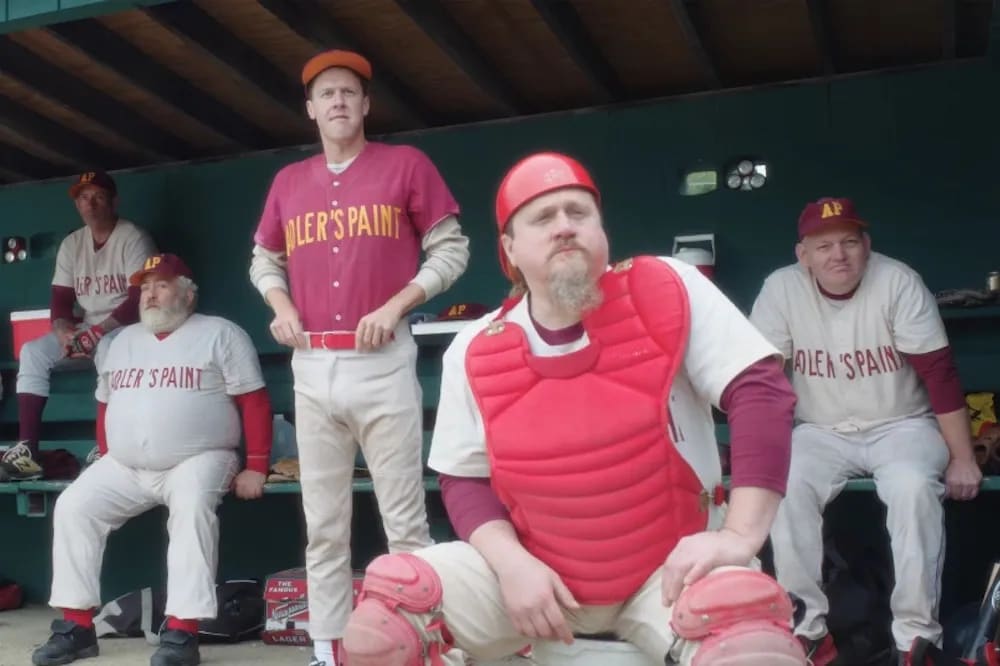
At best, I told myself, Eephus was a wistful homage to the old favorite pastime and the pastoral age that spawned it and is now almost entirely eclipsed in the North American homeland. It had no larger frame than the field, destined to be the site of a new school and thus the soon to be destroyed and hallowed site of the last ever game between the two teams of recreational guys who just wanted to play until the very end.
With no intentional satire or irony, what is depicted is the fraternal world of old-time, small town New England manhood, with all of its willful ignorance, knee-jerk violence and downright absurdity. Ironically for me though, by celebrating a sport that in itself is a nostalgic paean to our rural past, the movie forces us to slow down and appreciate what we are about to lose. This perpetual nostalgia for the past with all its warts and dirty stains, is a necessary and important thing to recognize.
It’s a fine line between blind self-congratulation and aware self-acceptance, and like America itself, Eephus walks that line confidently and unambigously. If you’re not a fan of both baseball and America, though, I don’t recommend it.
The Truth Now is a reader-supported publication. To receive new posts and support my work, consider becoming a free or paid subscriber.
June 14, 2025
One Hundred Miles
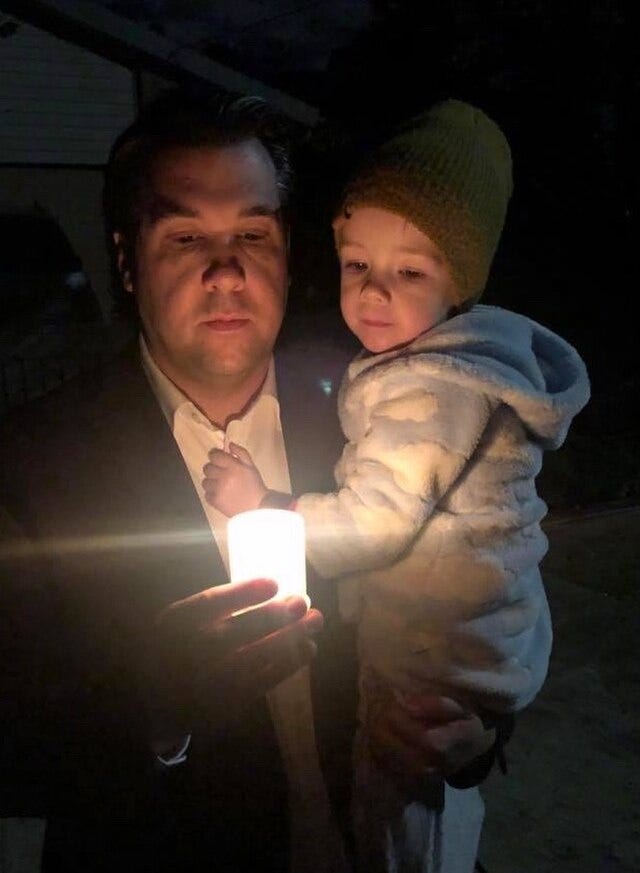
Progress is slow, but how slow is it? Here on this Substack it is infinitesimal. Feels like swimming uphill, but that is life as we know it, so why should we expect overnight success? How do we know when we get there?
For our ancestors, the goal of their long communal trek was always over the horizon. They never got there. Gratification was eternally postponed. Yet they must have managed to eke out lives of incredible abundance and beauty, otherwise they would have given up. And today, looking back, we can see their progress and measure their speed, literally in kilometers per century, on the trek out of Africa to their promised lands, as scientists use modern data analytics to track early human migrations.
“Neanderthals could have migrated thousands of kilometers from the Caucasus Mountains to Siberia in just 2,000 years by following river corridors,” Dr. Iovita said.
Assuming their cousins, our Homo sapiens ancestors used the same routes and managed the same average speeds on migrations a few thousand years later, we can estimate an average speed of about a mile per year in the good times.
The hope that must sustain individuals for less than a hundred miles in a lifetime is hard-wired by evolution. We can clearly say that progress is not measured in individual lives, but in generations. But today, as individuals living through dark times, we wonder where are the promised lands? Sometimes we only see despoliation and misery, as mankind turns on itself and on the very planetary systems that have sustained life, enacting violence at a scale and with an impunity that threatens our survival as a species.
Many of our individual hundred mile journeys are also not physical distances any longer, although for many millions of humans from the global South it still is a matter of fleeing for their very lives from their home terrains of famine and exploitation.
But for myself and my brothers and sisters in the developed world, our journeys are more a matter of quality rather than quantity. What one hundred miles distinguish my life from my parents lives? And what do I bequeath my children to further them on their paths along the river valleys to sustenance, both spiritual and material?
I think we need to look back in time as well as into the future in order to heal and continue to lead each other on the way. This weekend we do both, as we march on No Kings day to protest a fascist insurgency that threatens our democratic, progressive civilization, and also honor our fathers with Father’s Day.
My father embodied a fleeing from trauma that led me to question his values and his wisdom for much of my life. When I asked him why he had such a hard time evolving into a caring, nurturing parental figure, he would just blame it on his own upbringing as a first generation American child of Russian Jews fleeing the pogroms and racism of Eastern Europe. “I’m Jewish. that’s the way it is,” he would say, leaving it up to me to find a better way.
My mother was also a fallible figure who routinely lied to cover her cheating tracks but would let me in in her secrets. When inquiring about something or other she asked me to speak truthfully to her, and I pointed out to her the obvious fact that she was a frequent fibber, she responded “do as I say, not as I do,” which although genuine and in a way endearing to me at the time in some strange Catholic way, also did not inspire confidence.
They were both products of trauma, but we all are. We all are fallible and make mistakes.
"From such crooked wood as that which man is made of, no straight thing can ever be built."
That was Immanuel Kant, who believed that our imperfections did not prevent us from seeking a more perfect morality.
Both my parents were making progress along that slow, twisted river valley. I can see it now that I’m old enough to look back on my own life with all its errors and falsifications and say with a straight face that I have no regrets.
They died on each others birthdays a year apart give or take a couple of days. Poetic, which proves that both hate and love are shared springs of beauty.
June 7, 2025
The Impossible Dream
I have a problem with the heroic. To me the Arthurian ideal seems to have been coopted by late stage capitalism to the point where it now means success at any cost and a go-big-or-go-home mentality that I see afflicting us at all turns.
My purpose here is to foster an understanding and a cultivation of the prosaic and merely organic it terms of theme and content and as such to stand against the possible annihilation of not just the heroic, but also the human in our lifetimes, both in biological and cultural terms. That might seem melodramatic and self-promoting, and maybe it is. But there’s a good chance that it’s not. Read on and make up your minds.
I know that’s not enough for some of you so I have decided that in the interests of serving this constituency and giving it what it seems to want, I will try and make it easier by signaling up front what could be understood as useful with certain posts. Notice I didn’t say breaking into sub groups or chats or any such organizational fal-de-da. Just simply an up front capitulation to specialized interest, while not losing the focus on the preferred readership seeking authenticity and real life cogitations. For instance with this post:
This post concerns the travails of self-publishing, with sidelong glimpses, hopefully not envious, at the dangers of artificial intelligence, and a dash, just a dash of moralizing that will serve as a vaccination against pretentiousness. Does that work?
But anyway, indulge me. As you know I just finished a book called Alias Tomorrow and am in the midst of developing a long term marketing plan which I am committing to various spreadsheets very likely to peter out in the first blasts of colder weather.
When to my surprise, I received this week in the inbox an email that seemed prescient and uplifting along those very lines.
Dear Anthony Caplan,
Yet Today is one of the most introspective novels I’ve read in a while. Gillum Kaosky’s summer, shifting from the monotony of a Spanish teacher’s life to wire-tapping Dominican crime families, drew me in immediately. The way you uncover secret links between his eavesdropped lives and his own unraveling world hit me hard. Your raw portrayal of his family’s struggles made every page feel achingly real.
I especially liked the emotional tension between Gillum’s quiet observations and the chaos of his son Jonah’s hacking scandal and his wife Sibyl’s discovery of his texts. The faculty meeting scene, dripping with mundane frustration, was a standout for me. I was always waiting for the next glimpse into Gillum’s mind. Your vivid take on life’s small disappointments, woven with profound insights on suffering and solidarity, added such a poignant depth to the story.
This book has the bones of a reflective favorite something readers discover and talk about. I’d love to chat if you’re open to finding ways to help Yet Today reach more of the audience it’s made for.
Warm regards,
Kathleen
Of course this warmed my heart. Here someone had obviously read my book, written and published a few years ago to little fanfare and quick oblivion, loved it for its special literary qualities, and wanted to help publicize its merits to a wider audience. How fantastic, right? Especially since Alias Tomorrow shares some of the same family themes and could almost be a sequel of sorts. I went back and looked at the book’s listings. Not many sold in the last couple of years. A handful. Maybe ten copies including some free Kindles in a giveaway.
Maybe it was time to do some promotion for Yet Today and think about that as a way to launch the new book. I don’t generally have a budget for hiring out this kind of work, but maybe I could dredge some up and face the wife’s likely and well-deserved wrath at sinking good money in a fruitless cause. That was my line of thinking.
But then this caught my eye:
KIRKUS REVIEWSA New Hampshire high school teacher, working a second job as a Drug Enforcement Agency linguist, feels disconnected from his family in Caplan’s (The Saints of David, 2017, etc.) novel. Gillum Kaosky, who teaches Spanish during the school year, has no plans for recreation during the summer. Instead, he’s lined up a job with the DEA tapping phone calls between Dominican drug-gang members. Kaosky lives with wife, Sibyl, and daughters, Hope and Gabriella; his son, Jonah, is away at university. He has few acquaintances, and his students’ parents don’t seem to recognize him at school events such as Hope’s lacrosse game. He’s not popular at work, either; the school principal insinuates that he should go easier on a star athlete in his class. However, he feels most isolated within his own family. He doesn’t relate well to his daughters, and during one of Jonah’s visits, the family seems happier when Kaosky isn’t with them. But two events cause the protagonist to see an opportunity to reconnect and make his world “whole again.” Caplan establishes an unhurried pace for a story that focuses largely on Kaosky’s self-analysis. Though flawed, the protagonist is sympathetic as he struggles to overcome his faults and make others happy. There are notable parallels between the Milares family, whom Kaosky monitors, and his own kin. The story often highlights how he’s become an observer, rather than an active participant, in his own life. Caplan displays an ability to turn somber moments into something heartfelt. An often bleak tale with an intriguing, introspective protagonist.
I’ve highlighted the keyword from this review, which caught my eye the first time I read it, largely because I thought at the time that it was unmerited. I mean, does any first person narrator count as introspective because he or she is telling their own story? Not really.
Okay, maybe it touched a nerve. But that entire review seemed mean-spirited at the time. And then Kathleen’s email echoes the word in the first line, and I thought — that’s weird.
An introspective novel. I like the concept, though. I just needed to find out more:
Hi Kathleen,
Tell me more about yourself. Where did you read Yet Today? How can you help it reach a wider audience?
I must tell you I have another novel that I am gearing up to publish and launch in the fall so any budget I have will most likely be very small.
The response was not long in coming. An hour and a half later:

Wed, Jun 4, 8:59 AM (3 days ago)
Dear Anthony,
Thank you for your kind words about my enthusiasm for Yet Today! I discovered your novel on Reedsy Discovery and Amazon, where its gripping premise caught my attention. I’m truly excited about the potential to bring this incredible story to a wider audience.
I’m a book enthusiast with a strong background in social media marketing, and I’ve worked with numerous authors who have been delighted with the results of my promotional efforts. They’ve often expressed joy at seeing their books gain traction, spark discussions, and reach new readers through tailored campaigns. I’d love to promote Yet Today across platforms like TikTok, Goodreads, Amazon, and Reedsy Discovery, where vibrant book communities can amplify its reach. For TikTok, we could create short, captivating videos highlighting Gillum’s emotional journey or the tension of his double life, designed to engage the #BookTok crowd. On Goodreads and Reedsy Discovery, we could encourage reader reviews and use targeted posts to build buzz within literary circles, emphasizing the novel’s introspective depth and themes of family and struggle. On Amazon, we could optimize the book’s listing with targeted keywords and encourage reviews to boost visibility.
It went on. But the first line is a little strange, isn’t it? Thanks for your words about my enthusiasm? I’m starting to get a Hal from 2001 kind of vibe. And Kathleen looks like central casting, long dark hair and uber friendly. But I’m still hopeful, so I dive in, thinking at the least I can learn something for myself.
*Pro tip - I often do this on house projects — I get a consultation from a pro before diving into a DIY project to confirm or unconfirm some of my biases. Knowing nothing or almost nothing about book marketing circa 2025, maybe “Kathleen” can teach me something.
Hi Kathleen,
Any budget that I have is limited. However, I do believe that a cross-promotion could work, particularly since Alias Tomorrow shares so much in common with Yet Today that their readership should be complimentary. It's not a sequel but it could be. Let me share the pitch I have for Alias Tomorrow.
Alias Tomorrow, 74,202 words, is a work that interweaves contemporary and science fiction to explore themes of family and the struggle for connection in a rapidly changing world.
The scaffold story centers on William Morrow, a once-celebrated writer now grappling with the harsh realities of personal setbacks. As the Christmas season descends, his adult children return to the family home, each carrying their own burdens and unresolved conflicts.
Morrow is writing a book. Set on a colonized Mars in the year 2148, Alias Tomorrow follows Antioch, an Earthling political prisoner who has been rehabilitated as an analyst for the oppressive OneWorld government. Antioch's existence is a delicate balancing act: he yearns for the Earth he can never return to, yet he clings to the fragile stability he's found on Mars.
The two stories illuminate each other in surprising ways, blurring the lines between reality and fiction, and raising profound questions about the nature of storytelling, the power of memory, and the enduring human need for connection. As William delves deeper into his epic narrative, he begins to see parallels between Antioch's existential struggles and his own, forcing him to confront uncomfortable truths he has long avoided.
Alias Tomorrow is at once a suspenseful exploration of a society where advanced technology has blurred the lines between reality and illusion, and a character-driven, unflinchingly honest expose of the inner lives of an American family.
Alias Tomorrow explores the complexities of family dynamics and the search for meaning in a present that often feels fragmented and isolating. It contains within it the picture of an interplanetary future where personal victories are hard-won against a system designed to crush dissent. The combined effect of this dual story is a thought-provoking and emotionally resonant reading experience.
I am the author of six previous self-published novels with more than 17,000 print and ebooks in the hands of readers. I have worked as a journalist and a teacher and am currently a state representative in the New Hampshire legislature.
I would be interested in what you think about how a cross-promotion could work.
Regards,
In less than two hours this came back:
MARKETING PROPOSAL FOR YET TODAY AND ALIAS TOMORROWPrepared by Kathleen R. GarnerClient: Anthony CaplanOBJECTIVETo amplify visibility and long-tail engagement for Yet Today while strategically introducing Alias Tomorrow through audience-building platforms like TikTok, Goodreads, and curated teaser content. This campaign aims to connect your books with the literary and sci-fi communities most likely to respond to their emotional weight, philosophical undercurrents, and dual-focus narratives.STRATEGIC OVERVIEWWe will focus on the following reader segments:Literary fiction lovers drawn to introspective, character-driven novels
Sci-fi fans who appreciate grounded speculative elements and layered themes
Book communities across TikTok (#BookTok), Goodreads, and Reddit
Readers who engage with themes of family unraveling, identity, and psychological depth
Influencers and reviewers aligned with books like The Overstory, Station Eleven, and The Left Hand of Darkness
Our approach is to build connections through storytelling not just promote a book, but show how Yet Today and Alias Tomorrow resonate with the human condition.PROPOSED CROSS-PROMOTION CAMPAIGN — $800 BUDGETDuration: 4 weeks however I suggest we do the promotion for two month (8-weeks) for maximum impactGoal: Drive discoverability, reviews, and organic growth through content-driven marketing.CORE ELEMENTS & BENEFITSTikTok Promotion (BookTok)Deliverables:2 TikTok/Instagram video reels using licensed audio and on-trend hashtags
Storyboarded to highlight Yet Today’s emotional tension (e.g., Gillum’s secret world vs. family unraveling)
A teaser for Alias Tomorrow (William Morrow writing Antioch’s story) emphasizing sci-fi/lit crossover
Influencer outreach (3–4 micro-creators who focus on literary or hybrid fiction)
Benefits:TikTok is now one of the biggest book discovery platforms. Emotional, voiceover-based reels can trigger viral shares. Even smaller videos often lead to spikes in Goodreads shelves and Amazon searches. Using trending music and visual storytelling hooks readers emotionally essential for a book like Yet Today with psychological depth. TikTok also builds visibility for Alias Tomorrow before launch, letting early audiences invest in your voice.Goodreads Listopia PlacementDeliverables:Strategic placement in 6–8 Goodreads Listopia lists such as:
“Books That Stay With You”
“Literary Fiction with a Psychological Twist”
“Dual Timeline Books”
“Speculative Fiction Grounded in Reality”
Encouraging reader voting and Listopia ranking increases
Benefits:Listopia placement significantly increases visibility to readers actively browsing for their next read. It’s passive discovery that keeps working: books on Listopia get seen repeatedly, especially when lists gain upvotes or circulate via Goodreads’ algorithms. For Yet Today, this drives recognition as a reflective, “hidden gem.” For Alias Tomorrow, it builds anticipation on lists like “Most Anticipated Indie Sci-Fi” or “Fiction Set on Mars.”Custom Video Teaser TrailerDeliverables:1 cinematic-style teaser video (30–45 seconds) featuring:
Atmospheric music
On-screen quotes from Yet Today or early blurbs
Visual parallels between Gillum and William/Antioch
Text motion graphics highlighting themes: isolation, memory, redemption
Benefits:Video trailers evoke a visceral first impression. Viewers retain emotional story cues far more strongly with sound and movement than static images alone. This format brings a professional edge, helping your novels stand out against the wave of flat promos. It can be repurposed across multiple platforms and used in ad campaigns or newsletters.ADDITIONAL COMPONENTSQuote Graphic: A designed image featuring a powerful line from Yet Today, for posting and boosting
VALUE SUMMARYThis campaign maximizes your $800 budget by focusing on content that builds relationships, not just quick clicks. Every element, videos, lists, reviews keeps working long after the campaign ends. By spotlighting Yet Today now and seeding awareness for Alias Tomorrow, we’re building a continuum of readership between books.Looking forward to collaborating and helping bring both stories to the readers they’re meant for. shall we proceed to the next step?Warm regards,Wow, a lot to learn in there. I’m reading it through, starting taking notes, the spreadsheet is growing like weeds. About half an hour later I get these two frantic emails:
Kathleen R. GarnerJun 6, 2025, 9:25 AM (1 day ago)
Should i proceed to issue the contract now on Upwork,starting now will give the book the high chance of being selected, because the beginning of the month is when potential readers are always in-search of the book to read, let's start the promotion now to rank the book well for visibility and to increase its sales.
Kathleen R. GarnerJun 6, 2025, 10:14 AM (1 day ago)
Did you receive my message?
This is now the hallmark of a classic scam. Pressure to pull the trigger, do it now or it will go away. That well-known reader habit of choosing the book to read at the beginning of the month is happening now!
So now is when I think, lets scam the scammer. I love pulling their chains when I can, don’t you? They are usually so stupid. Just give them time and it will be clear. So I email back and say let’s chat, give me a call. Here’s my phone number. And get this response.
Dear Anthony,
Thank you again for your thoughtful engagement and for taking the time to review my proposal so thoroughly. I truly appreciate your openness and the dedication you show toward sharing Yet Today and Alias Tomorrow with the readers who are meant to find them.
While I’m currently unable to take calls, I absolutely understand that trust is essential in any creative collaboration, especially one that involves your hard work and passion. To help build that trust, I’d be glad to begin by asking three of my trusted reader-reviewers to read Yet Today and leave genuine, thoughtful, and positive reviews directly on your Goodreads page.
These will be real readers providing their honest impressions of the book, not generic or purchased reviews. Goodreads maintains a high standard and only publishes reviews that meet their authenticity guidelines, which ensures transparency for both authors and readers. Once these reviews are officially visible on your Goodreads listing, I believe they’ll offer a solid starting point to demonstrate my seriousness, integrity, and ability to connect your work with engaged literary audiences.
This initial step serves two important purposes:
It reinforces reader confidence and boosts credibility, as thoughtful Goodreads reviews influence new readers more than any advertisement.
It gives you a firsthand look at my approach rooted in genuine engagement and long-term reader connection rather than superficial promotion.
Once the reviews are live and verified, we can move forward with the promotional campaign and finalize payment. I truly believe in Yet Today’s emotional depth and power, and I would be honored to help it find the readers who need it.
Please let me know if this step feels right for you, and I’ll begin immediately with the reviewers.
Openly trolling at this point, I respond back that it’s strange because I never mentioned trust was an issue. just call me, I say, so we can hammer out the details. And get this huffiness:
I think i've justified the reason for not being able to take a call, can you place all questions here and i'll answer accordingly and know that your work will be done with professionalism and full details.
Just believe that your work will be done accordingly.
Yours truly.
Yours truly thjs time. Huh, a marked tone shift. I believe that’s a real human being behind the Kathleen Garner account. It’s a command. Just believe. Get in line sucker and do your job. This is the voice of a scammer, probably not a female even, I would say if pressed.
So I go fullbore myself.
Hi kathleen,
Could you arrange the two reader reviews you offered of Yet Today on Goodreads, and also send me a sample of a Tik Tok video you've made?
Since Alias Tomorrow is not on any sites yet, I'm not in a hurry to get started and so would rather make sure we are a good fit. Maybe a start by the end of this month.
Thanks and regards,
It’s late and the human is getting tired. Almost the final response of the night:
That mean you're going for the promotion for Yet Today?
I don’t answer. Let the hustler stew. One last email before bedtime.
They'll drop it tomorrow after they've finished reading the book.
This morning I get up and read this on the laptop:
Dear Anthony,
I wanted to let you know that we’ve officially started the project and I’m really excited about our first step. I’ve asked my readers to give the book three thoughtful, positive reviews and five-star ratings to help build early momentum.
We’re beginning by focusing on Goodreads, which has over 90 million active members who are actively looking for their next great read. Goodreads promotes books based on the number of ratings and reviews they receive, so this is a powerful way to start getting the visibility the book deserves.
I believe we can proceed now.
Kathleen.
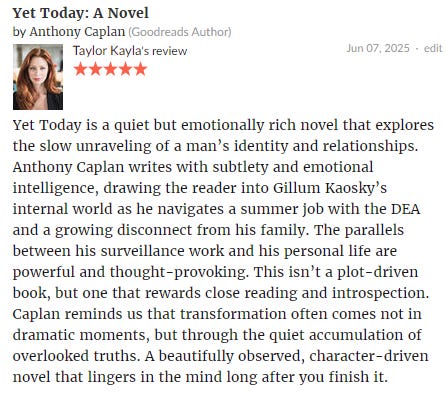
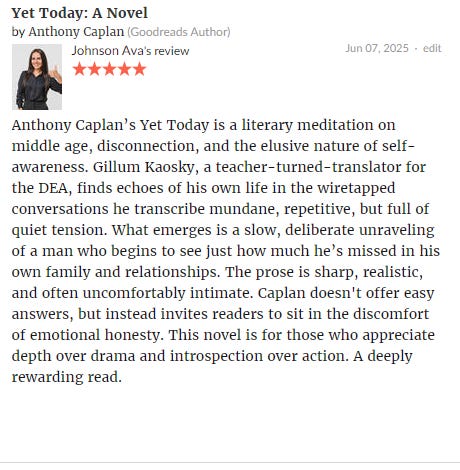
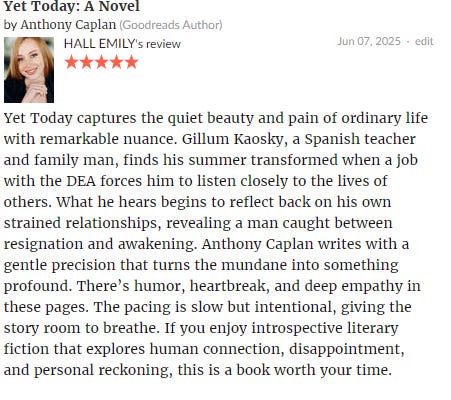
About twelve hours. Fast work dear Kayla, Ava, and Emily. By the way, Ava, you bear an uncanny resemblance to Kathleen and your hand… It is either a man’s or you are really Sissy Hankshaw. Your other two friends are also obviously AI generated beauties. Thanks for your careful and thoughtful reviews, but no thanks.
Hi there,
I have a problem using AI-generated product in any of my work. In other words, I can't see myself relying on you to advance myself or market my books. It's probably illegal or ought to be.
Thanks, but no, I won't be pursuing this project any further.
So now I have two final thoughts. Have I outscammed myself? Should I have somehow contracted with Kathleen and gone ahead knowing full well that this is now just the way of the world? And if not, how can I justify keeping those three reviews on Goodreads? Is a little artifice okay or am I just fooling myself? It seems like a lose-lose proposition.
Kathleen, you win.
May 31, 2025
What Keeps Us Up At Night

Julius Dadalti
There are certain things we don’t talk about. The past is one of those. If we talked about the past we would never stop. It would be like a roaring river overflowing the banks. The social fabric is not built to withstand conversations about the past, individually, and as a society. We tend to avoid it.
Very early on we are conditioned against this topic. Mothers never say “remember those brutal early days when you could not contain the waste products inside of your body and it was up to your Mom and Dad to provide basic hygiene?” They very rarely go there with their offspring, for good reason.
Or in another example — the school teacher rarely hearkens back to the early days of the school year to remind their students of how ignorant they used to be. Maybe false humility, or maybe we have an example of an awkward truth — there has not been such progress. But in either case, it is better to leave the past unsaid and unremembered.
Similarly, as a society we tend to skip past the past as an explanation for what ails us. I’m thinking now of successive Republican administrations here in New Hampshire who have quietly and in yeomanlike fashion axed our tax revenues by dispensing with such things as business taxes and interest taxes on the wealthy. There is now a hue and a cry as services for the poor such as health care and public education are being squeezed out of existence. But in all the squawking there is a reticence to call on past examples of largesse for the rich. It just goes against our conditioning.
It’s an American thing, I guess, the idea that we should not be hampered by what has gone before. Focus on the blue skies and don’t worry. Be happy.
The habit gets under my skin.
It is so easily abused by the abusive elements in our midst, who would have people scrabbling for table scraps or undergoing years of therapy to ferret out their trauma and melancholiness. When they could just bring up the past in occasional conversations. But they can’t because they don’t and never shall.
The famous quote “those who do not remember the past are condemned to repeat it,” attributed to I forget who, is proof that we do not really forget the past, we just don’t like to talk about it much. It’s not the same thing at all.
Initially a mark of pride, I think the reticence about the past is a mark of shame, the recognition that the past has repeated itself over and over again. These cycles of repetition are unavoidable, and it’s not because we forget. We can’t forget. Quite the contrary, the memories haunt us in our dreams and our absent-minded moments, when we are no longer on guard against our collective memories. We’d just rather not talk about them.
A society that is committed to collective amnesia is not a sustainable enterprise. We need to discuss the past openly and without shame. As family and as a people.
Please discuss among yourselves.