Kunal Mukherjee's Blog
December 30, 2014
First Anniversary of Sec. 377 of Indian Penal Code

Members of the lesbian, gay, bisexual, transgender community and supporters seen attending the 5th Delhi Queer Pride parade in New Delhi in 2012. (AFP/Getty Images)
I recently wrote an article in India West to bring to attention the fact that December is the first anniversary of the reinstatement of Section 377. I wrote this because I have seen very little mention of this milestone for Indian minorities, affecting millions
Here is an excerpt:
Section 377, a “crime against the order of nature,” was introduced by the British in 1860 in India and 42 colonies worldwide primarily to persecute British homosexuals who had left Great Britain for the colonies for fear of punishment. It is the only law in the Indian Penal Code that identifies that a crime has been committed when there is no victim. Here “nature” has been defined as the victim to justify prosecution by the authorized.
Against this political and social background today, my novel, titled “My Magical Palace” and published by the fearless Harper Collins India Publishers, is one of the first novels of its kind dealing with coming of age, sexuality, patriarchal structures and treatment of the disenfranchised. It addresses often ignored issues of social treatment of those who don’t fit expectations related to gender, sexuality, religion, body type, skin color, status or appearance. And it identifies the common experience human beings go through in life—of loss, feeling like an outsider, wanting to conform and be accepted, fear of social censure, ostracization and the pressure to conform to family and society’s strict norms.
You can find the complete article at India West.


November 28, 2014
December 5, 2013
Rekha, Bollywood Actress, on My Magical Palace
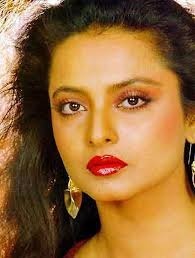 “It is one of the finest books I have read in recent past … very sensitive … waiting for the visualization of this book into a wonderful film.”
-Rekha, Actor
November 27, 2013
Bollywood responds to My Magical Palace – From Rani Mukerji, Actress
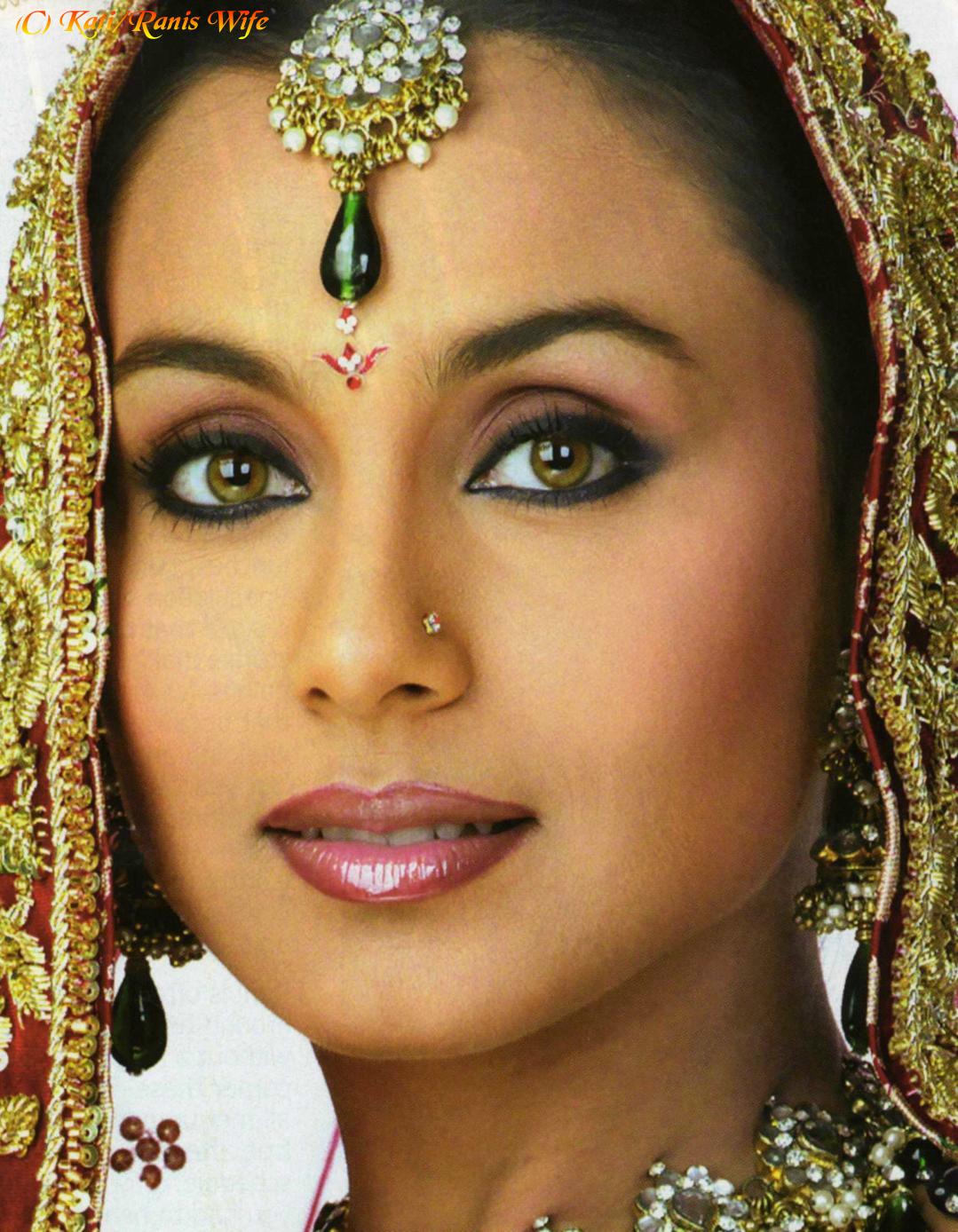 “Its a journey….of a boy from Hyderabad to San Francisco…..from confusion to clarity…..and also of the society…..to freedom…..worth a read to understand the change India has gone through….and still going through” – Rani Mukherji
My Magical Palace spans the years from the turbulent early seventies in Hyderabad where Rahul grows up, to modern day San Francisco, the birthplace of recent significant social revolt and technology innovation. The book recreates the world of post-partition India, marked with political upheaval and communal tension and the exposure of youth to western culture, post the Beatles era. Rahul realizes as a teenager, that in order to be loved and accepted he must do exactly what is expected of him by society, his parents and peers. Most teenagers face this struggle as they try to define themselves as adults in the world.
How much of that struggle is still faced by a growing teenager today, in an India that has changed so much in the past few years? Can changes in social attitudes be instituted as easily as changes that are signed into law in a court with the flourish of a pen? What will it take for a fundamental shift to occur in attitudes towards same sex relationships, so that one will not grow up fearing isolation, ridicule, marginalization, violence, ostracizing, family disrepute or social censure?
November 25, 2013
Bollywood responds to My Magical Palace – From Dimple Kapadia, Actress & Wife of Rajesh Khanna
 “It very strangely reminded me of my early days with Kakaji…..I wasn’t much older to Rahul when I fell in love with the phenomenon called Rajesh Khanna…..I could identify myself with Rahul so easily…..and that shows that love doesn’t have any gender crisis or bias……it is not your sexuality but your emotions which are important.” – Dimple Kapadia
My Magical Palace is an ode to Rajesh Khanna. With these words of wisdom, Dimple Kapadia goes to the core of every human being’s greatest need, to love and be loved and no one has the right to legislate it. Thank you Dimple Kapadia for speaking up for the millions who dare not speak of their love.
Excerpt from My Magical Palace:
“‘Pay attention, Rahul!’ A resounding slap on the side of my head accompanied that whip-like warning as Mr Swaminathan glared at me. My ear and head throbbed with pain … I had been daydreaming … Rajesh Khanna had never looked as fine as he did in Anand. He pouted and did this irresistible thing with his eyes, looking away and gently tilting his head towards his upraised hand in a move that kept his fans rapt with joy…. ”
November 22, 2013
Juhi Chawla, Bollywood Actress, on My Magical Palace
 ” Opens up your eyes as parents…..probably the most poignant book on a child’s growing up in recent times….a must read” – Juhi Chawla, Actress
Every parent has a dream. One day their “raja beta” will bring their “dulhaniya” home or their darling “bitiya rani” will leave for her prince’s home. This is the destiny of every child. But what of those children who are not part of the majority 90% of heterosexual population?
Not all children want to have a heterosexual marriage and children. They are a minority of about 10% and are gay, lesbian or bisexual or gender confused.
Countless arguments about western corruption or an unhappy childhood have not explained why some people are attracted to others of the same sex.
As a parent, what would you do, if your child came out of the closet? Would you disown him or her ? Force him/her into an arranged marriage? What would you do for your child’s happiness.
Talented actress Juhi Chawla goes to the heart of the matter with this question. What would a parent do, when faced with the revelation of a gay child, who was just born this way?
Excerpt from My Magical Palace:
‘What if I don’t want to get married?’ I asked, feeling no excitement at the thought of being chased by girls.
‘Oh, you silly boy!’ My mother laughed. ‘What an absurd question! Everyone has to get married. It is the normal thing to do. Come on now, your father will get upset if we delay any more.’
I wanted to tell her so badly that I was not like everyone else. That I was different from the boys in my class. That I might have been doing something really wrong. And that I did not want to get married. But I was sure she would not understand.”
November 20, 2013
Deepti Naval, Bollywood Actress-Director, Painter & Poet, on My Magical Palace
 “Sexual preference is not only about personal freedom, it is also about social freedom. …. juxtaposed to a Hindu-Muslim love story……the book brings in front of the reader the issue of choice and freedom” – Deepti Naval, Actress-Director, Painter and Poet
The fundamental rights of human beings to physically move about freely, have access to basic necessities of life such as shelter, food and healthcare, and to have access to education and the right to work for fair pay, are proudly touted in so called “modern, civilized and enlightened” societies.
And yet so many of these very societies have very strict rules and laws, that are mercilessly enforced, when it comes to the right of the individual to express himself or herself in love, relationship, marriage, art, literature … We humans have divided our communities based on religion, politics, economics, sexual identity, education, gender, gender roles, occupation, language, caste, origin and in so many other ways, which then give us the justification to persecute minorities based on the superiority of our belief systems, which is aptly called the “tyranny of the majority”.
Deepti Naval rightly points out that sexual preference or orientation is not a matter of personal freedom alone. It is a powerful statement about social freedom and evolution of social consciousness of a community.
Excerpt from My Magical Palace:
“I flipped through the pages, my heart racing. It was a book about sex and Barbara Golding was an expert on the subject. I had to find out what she had said about homosexuals. Surely an expert would say that it couldn’t be dirty to be a homo? …
Words leapt out at me from the page: ‘Homosexuality is an abnormal condition … Early signs of homosexuality are obsession with a friend who is of the same sex and a lack of desire and interest in the opposite sex. It is treatable by electric shock and aversion therapy. Homosexuals live on the fringe and are very unhappy people. Parents are advised to start treating this condition early in childhood.’
I felt physically sick. I had been right to hide it from everyone after all. I had an abnormal condition. … Would I be given electric shock therapy? Certainly I would be jailed—what shame that would bring to my family! Reading the words over and over again, I felt that familiar sense of despair and terror … I could be expelled for this—or worse. If my parents found out, what would they do? What would their friends say?”
November 19, 2013
Bollywood Actor Ronit Roy – on My Magical Palace
“A simple narration…..yet so deep in its understanding……its an awesome feeling to go through Rahul’s growing up…..and the character sketches around him gives you a feel as if you are a part of ’70′s Hyderabad….kudos Kunal for such a nice, subtle yet bold narration.” – Ronit Roy
Thank you Ronit Roy for your kind words of appreciation and I am gratified that you were able to walk with Rahul on his journey of self discovery 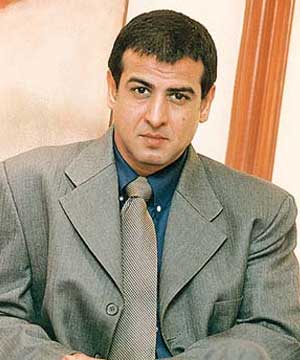 as a teenager. Your interest in the role of Colonel Uncle inspires me to add this excerpt.
Hyderabad in the early 70′s was a city moving from the cultural legacy of the Nizams and post-partition India to one infiltrated by western culture, an extension of the Beatles era. Parents and grand parents, already fearful that old ways would be corrupted, were hostile to any sign of independent thinking. They were merciless and swift to end any rebellious behaviour. Political and social tension coloured and constricted the lives of the Chatterjee family also, as they were confronted with shifts in tradition.Rahul’s adolescent angst reflects the confusion of a place and time when long-drawn boundaries—physical, political, racial, and sexual are in the midst of drastic transition. And then there to the rescue is, s his mentor and kind protector, Colonel Uncle who assures him that is not alone in the world, feeling different and alienated, not fitting in and fulfilling the expectations society has of boys, as he shares his childhood, rigorous and in a royal setting and regimented.
Excerpt from My Magical Palace:
“Colonel Uncle looked grave and sighed. ‘No, when I was your age, if I spent time in the kitchen my father would punish me. In Rajput families, men never cook. Only women do. In Rajput culture, the place of a man is supposed to be on the battlefield. We lived in a large palace, almost as large as this one.’
‘Tell me about your palace and what you liked to do there,’ I said.
‘I used to love to go to the kitchen to watch the cook make chapatis and curries and roast the spices. The cook, Padma Bai, used to be my nurse and loved it when I helped her in the kitchen. It was our secret. Then, one day, my father’s valet saw me in there, sitting on the floor with the maidservants, cleaning the chaff from the rice and wheat, helping them make balls of dough for the chapatis.’
Colonel Uncle paused as he stirred the sauce on the pot one more time. He put a handful of spaghetti in a pot of boiling water. The stiff sticks of dried spaghetti started sliding into the pot as the boiling water softened their ends.
I sat upright. I knew something was going to happen to him in the story. Just like me, Colonel Uncle was going to be teased for behaving like a girl. I looked at him, tall and upright—his frame strong and proud. His grey hair and clipped moustache were trim and neat. I could see him on the battlefield, wearing a suit of chainmail armour, riding his horse, just like Rana Pratap rode his brave horse Chetak in the history books.
‘That night, my father called me to his room. He was sitting in the men’s quarters of the palace, with his friends. I entered the room nervously. He was smoking a hookah and laughing about something. His face turned to thunder when he saw me. He said, “Only girls work in the kitchen. No son of mine is a girl. Tomorrow, you will be sent to a boys-only military school. Now go, and come back to me next summer—a real man.’ Colonel Uncle’s voice grew softwith remembered pain as he gazed at a wall-hanging, his mind far away.
‘What did your mother say? Didn’t she stop your father? My mother would never allow me to be sent away to boarding school,’ I said.
He laughed—a strange, bitter laugh. ‘In those days, women could not say or do anything outside the women’s quarters in the palace. I was sent away to Bikaner. I did not see my mother for a full year. When I returned, I never went back to the kitchen. I was forced to spend all my time with my brothers, riding horses and playing polo.’”
November 18, 2013
Bollywood responds to My Magical Palace – Rituparna Sengupta, Actress
“Freedom of thought…..freedom of expression…..freedom of love…..so explicit yet so sensitive….such a wonderful read” – Rituparna Sengupta
When do we first experience a lack of freedom in expressing who we are? “No!” or “Don’t” teach us early in life to stop whatever it is we are doing. As teenagers we develop our identities and personalities, our sexuality and passions, interests and ideas, but the words “No!” and “Don’t” continue to rob us of our freedom of expression. Read My Magical Palace to see how the struggle to find freedom liberates and transforms all those who dare to break the rules.

Excerpt from My Magical Palace
“All around the room, everyone was speculating about why Amit, the class idol, had suddenly been called to the principal’s office. Was he in trouble?
Suddenly, Suresh Khosla got up, looking very pleased with himself. ‘Silence, boys,’ he said … With a sly grin on his face, he said, ‘Amit wrote a love letter to Rohit. Rohit showed it to me after football practice. And I told Mrs Joshi.’
… there was a huge commotion. ‘Arre, yaar, Amit is a bloody homo!’ several of the boys shouted indignantly. I did not understand what it meant or why everyone was getting so upset. The class got quiet again when our geography teacher walked in.
‘What is a homo?’ I whispered to Ranjan. He looked at me with scorn, delighted by my ignorance. Lips curling, he spoke in a patronizing voice: ‘Amit wrote a love letter to another boy. Of course he is a homo. It’s not normal.’ Grimacing, he pretended to vomit.
‘Oh …’ was all I could say, embarrassed by my ignorance, feeling the blood rush to my face. ‘Oh, a homo.’ I bit my lip.
Later, in the middle of civics class, looking harried, Mr Puri came into the room and collected Amit’s bag and books. …. As he left, I felt afraid for Amit.
But in the films, the hero and heroine always wrote love letters to each other. No one ever said that was dirty. This must have something to do with a boy writing a love letter to another boy.”
November 15, 2013
Rati Agnihotri, Bollywood Actress, on My Magical Palace
 “You warm up automatically to the endearing characters … loved Rahul … Colonel Uncle was pivotal … waiting for the film”
- Rati Agnihotri
“You warm up automatically to the endearing characters … loved Rahul … Colonel Uncle was pivotal … waiting for the film”
- Rati Agnihotri