
Travis Thrasher's Blog, page 11
April 11, 2016
The Act of Creating
Never view the work you do as a writer or as an artist in success or failure terms. Creating is a reward itself, even when the end result is not as satisfying as you hoped it would be. Or even when you don’t reach the end in the first place.
Here are some of the projects I’ve worked on in the last 8 years. These aren’t ideas–I have hundreds of those. These are actual projects I worked on in one capacity or another.
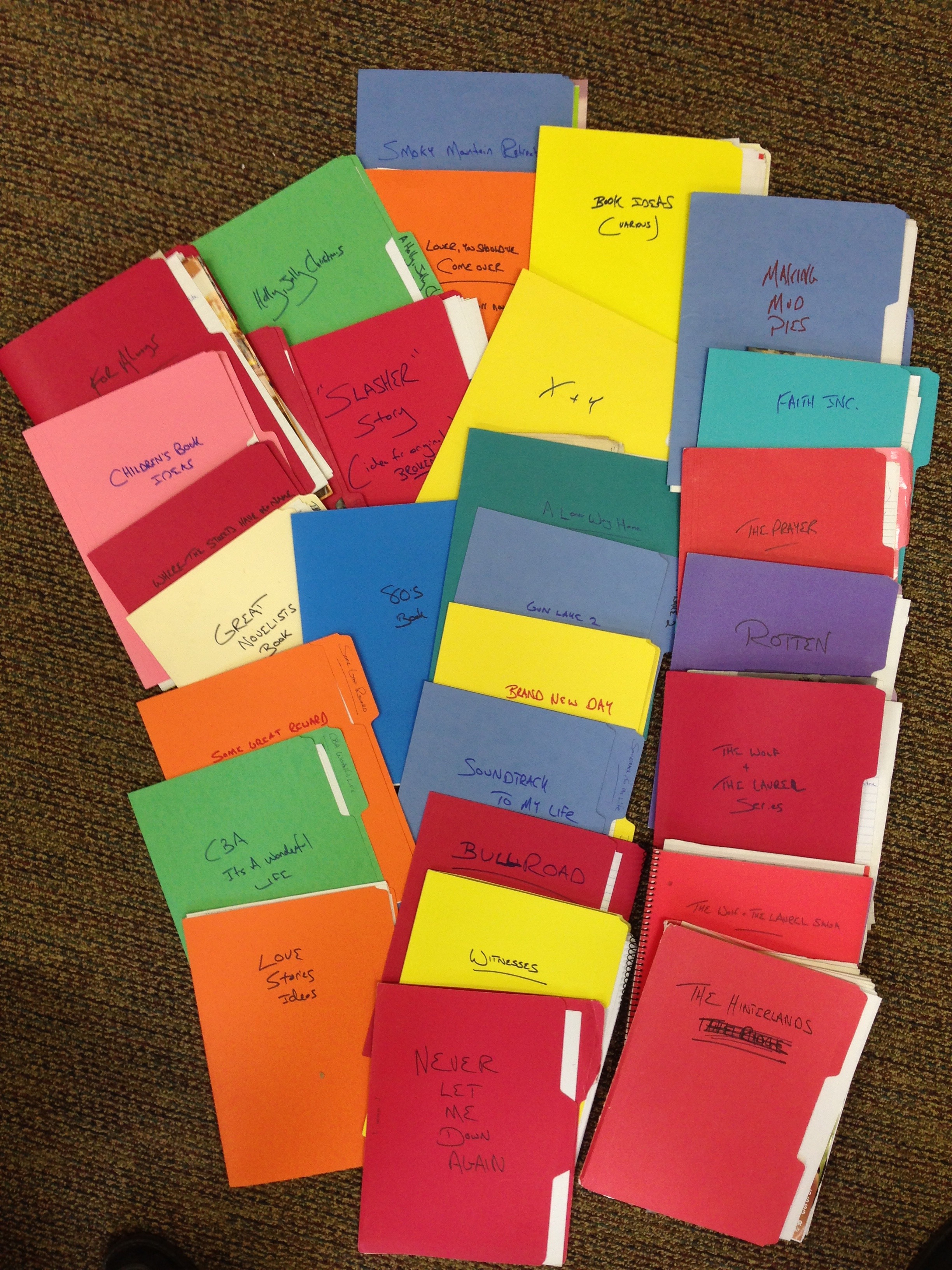
I’m always telling every writer I meet to finish what they start. Finish, finish, FINISH! Of course, I realize there are things you cannot finish for whatever reason. Sometimes you have to move on and that’s okay.
I don’t see any of these folders as a failure. Some of those stories might come out in the future in another shape or form. But they were all practice. They were work. They were creating something out of nothing. And that’s a pretty great thing.
Keep creating and don’t ever feel like it’s not worth the time and effort. It’s always worth it.


March 31, 2016
Novelizations 101
“I can’t believe they made a film based on one of your books!”
I’ve heard this many times over the last few years, and except for the case of the Christmas story I did with Jimmy Wayne called Paper Angels, I have to correct them.
“Actually, I wrote the book based off the movie. It’s called a novelization.”
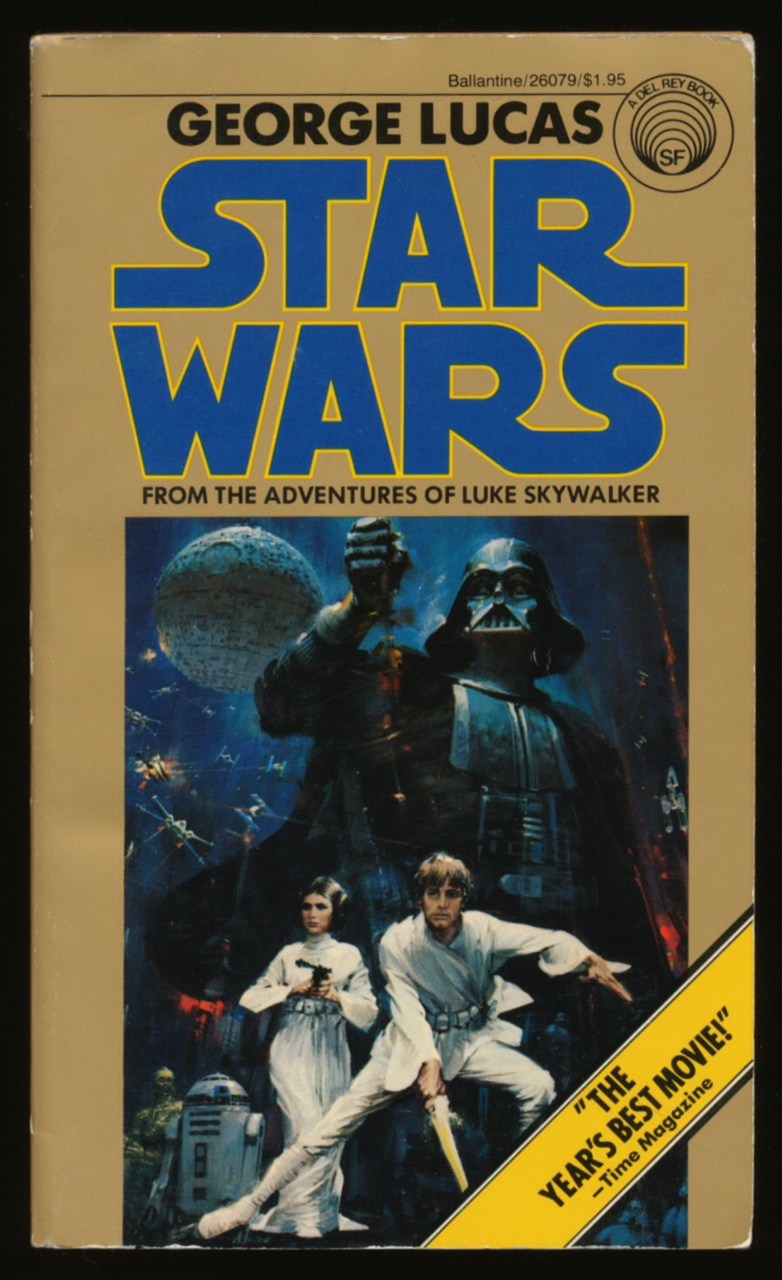
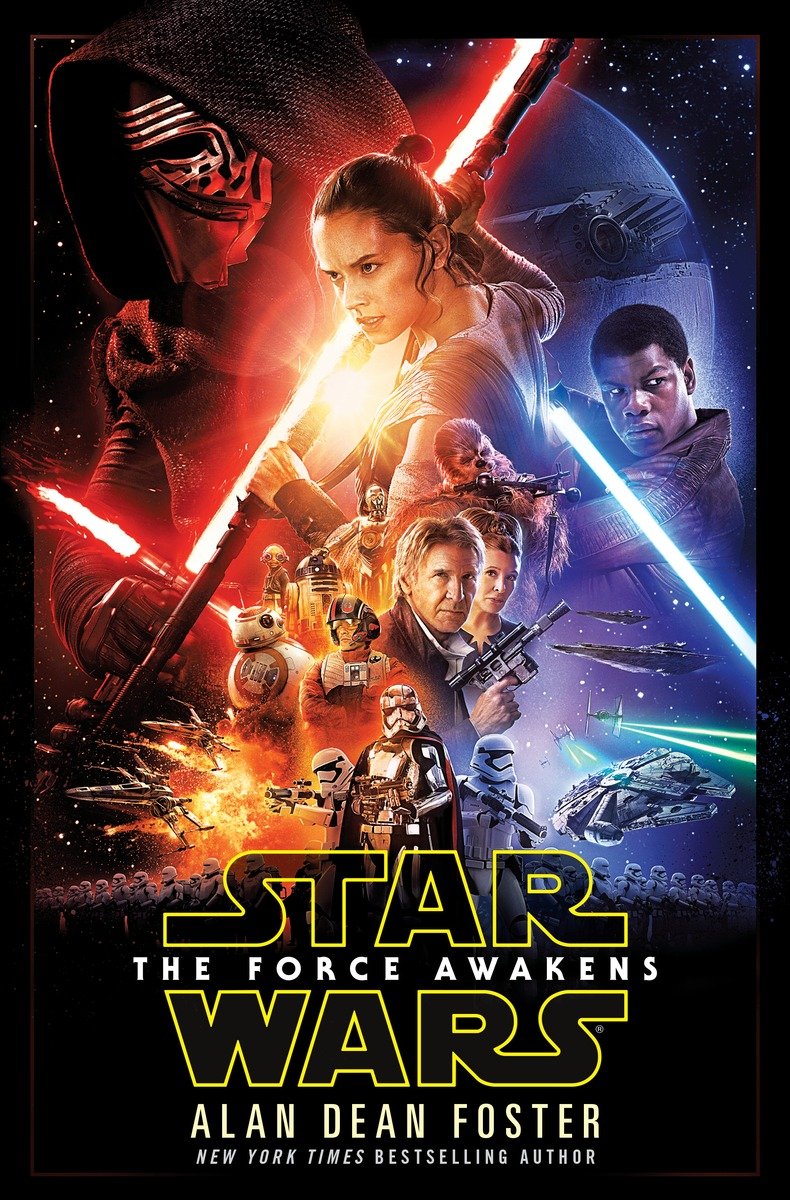
I will then explain a bit of the process. Many people have never heard of this term, nor have they ever read a novelization. But I actually first read one years ago based on the original Star Wars movie released on May 25, 1977. The author of the novelization was George Lucas, but it was actually ghostwritten by respected and bestselling fantasy/sci-fi writer Alan Dean Foster.
 With God’s Not Dead 2 arriving in theaters tomorrow on April 1, I thought it would be a good time to talk about the process of taking a screenplay and turning it into a novel. I had the privilege to do this with God’s Not Dead 2, and it was really an enjoyable process. So here are some of my thoughts on this genre of books and my own experiences with them.
WHY NOVELIZATIONS?
There’s a fabulous article here on the history and current status of novelizations that came out in Vanity Fair back in 2014. They’ve been doing them for years, especially for the big blockbuster movies. One of the most notable novelizations is the one featured here for Alien, once again done by Alan Dean Foster.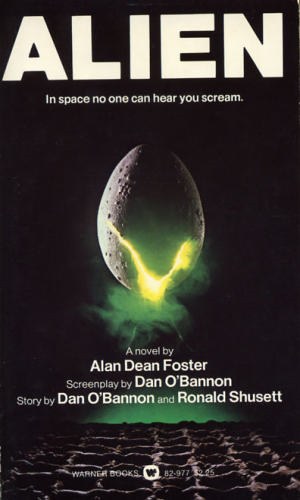 I’ve told a lot of people that novelizations are in some ways glorified t-shirts to help promote the film. That might sound crass and paint the novel itself as something you can easily toss away, but I don’t mean it to come across like that. The truth is most novelizations are primarily done after the film is in production (sometimes after it’s been finished) and they can be an afterthought. There’s usually a very small window of time that writers will have to get the project finished. Like a movie poster or soundtrack, a novelization serves to point people back to the film.
In the last decade, it seems there are two types of film genres that have produced a lot of novelizations: the big action blockbusters and faith-based films. Look at all the comic-book movies, for instance. You’ll usually find a novel that’s called a “Movie Tie-In Edition.” The Dark Knight Rises: The Official Novelization is an example of this. One of my all-time favorite movies—Interstellar—had a novelization, a book I dearly wish I could have written myself. As already noted, I first read a Star Wars novelization years ago. With the arrival of The Force Awakens last year, a whole new slew of Star Wars-related books were published. In fact, all together there were twenty different titles! Check them out here.
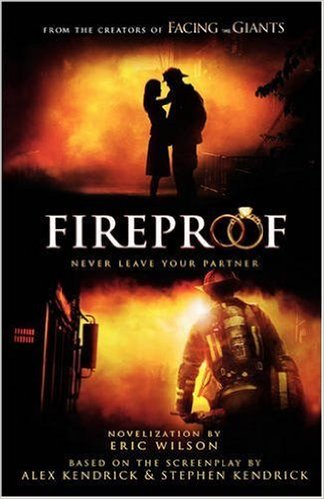
The other category of films where novelizations have been showing up is the faith-based genre. I first noticed these when a fellow talented writer Eric Wilson wrote the novelization for the popular Christian film Fireproof back in 2008. I had gotten to know Eric a little because he was a guy like myself—a novelist who strived to produce darker stories, ones that didn’t necessarily fit into the world of Christian fiction. I admired Eric working on these novelizations even though they didn’t fit his “brand.” As someone who strived to not have a brand, I started becoming more interested in possibly doing novelizations myself one day.
 MY FIRST SECOND NOVELIZATION (BUT FIRST OFFICIAL ONE)
Before working on my first official novelization, I had a chance to ghostwrite one. It was for a big-name author. This allowed me to gain some experience at the process. That particular project was completely bewildering and frustrating, mostly because of the lack of any communication I received. But that was my training for the next novelization to come.
On December 13, 2011, I would receive my first call about working on a novelization. It would come from Don Pape, who at the time was a VP at David C. Cook Publishers. I had been working with them for a few years on my teen series The Solitary Tales. Don was a friend and a fan of mine and had been since he worked at Waterbrook Press and published my omnibus of love stories Three Roads Home.
I had emailed Don about a possible project and he was answering me on that. At the end of his email, he said this:
“I also can’t tell you more but we may be acquiring a project where we need a writer and today we discussed your name several times over. It would be a novelization project of a film screenplay.”
Of course, I wanted to know more. Many times, even though I ask to hear more, publishers and agents remain tight-lipped. But Don being Don called me back to talk off the record. He told me it was a story about a baseball player who has a drinking problem. He’s forced to go back home and enter a recovery program and its there while reconnecting with his family and his long-lost first love that he gets his life back in order.
I told Don I didn’t know a lot about baseball, but I did know about messed-up and broken characters since I loved writing about them.
“You were the first person we thought of when it came to writing about someone who is messed up,” Don told me, half-joking.
The guy primarily working on this project at David C. Cook was Alex Field, the Deputy Publisher (who is now the VP and publisher at Waterbrook Multnomah Publishers). He pitched me to the film’s producers and then set up a time for me to visit them. I flew out to California to meet Carol Mathews and Micah Barnard and talk about their movie called Home Run.
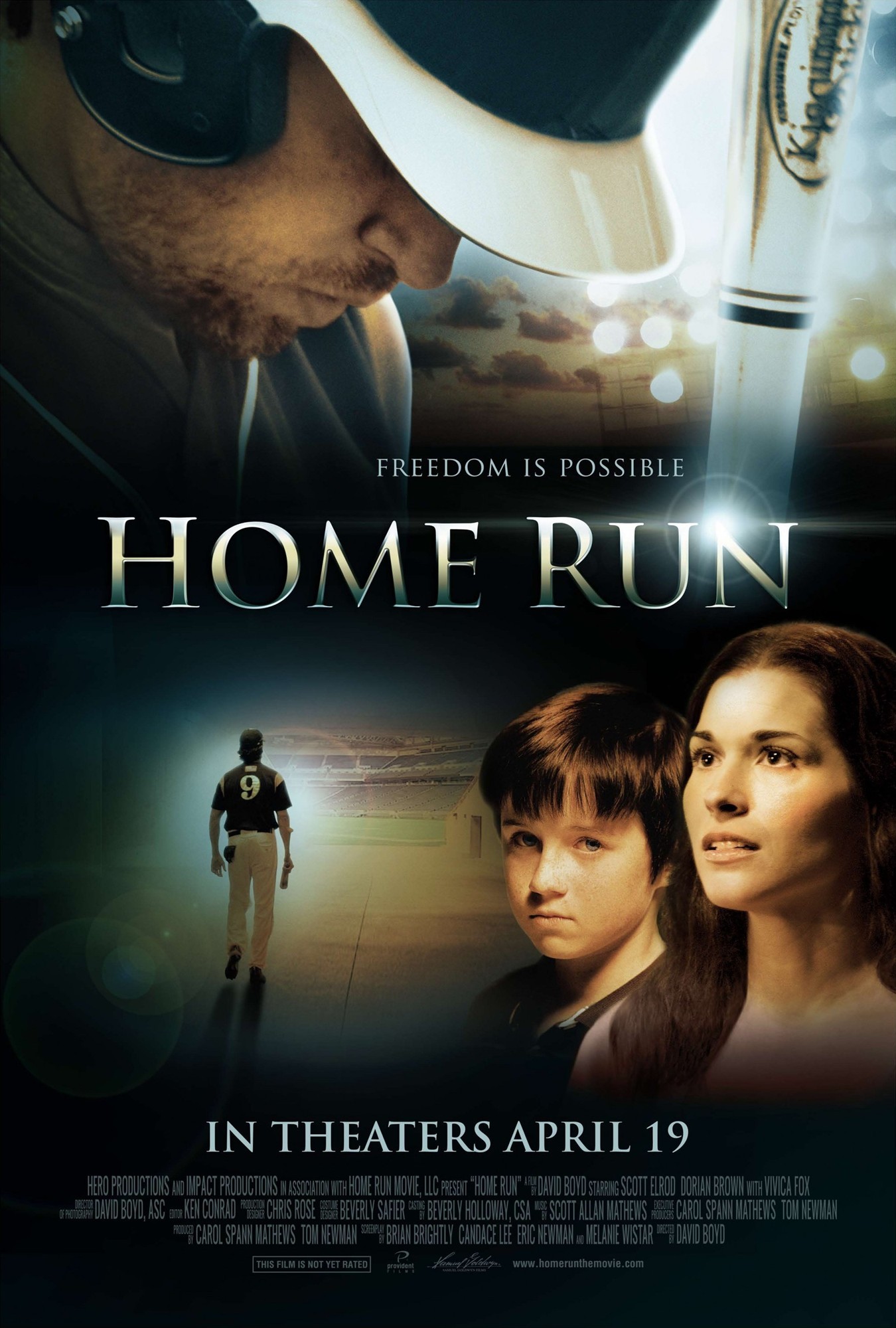 Carol and Micah are wonderful people and I instantly connected with both. They were still in the process of editing the film, so I wouldn’t be able to watch it. Carol spoke about the heart and soul of the film and also explained how the recovery program Celebrate Recovery was a prominent part of the film. I told them I had only written one novelization before, but I had many ideas and simply wanted to serve their interests and produce the sort of novel they would love to see. Right away Carol gave me full license to do whatever I’d like with the novelization.
“Feel free to think outside the box,” Carol encouraged me. “You can even write the story from the point of view of the baseball player’s mother.”
I had already read the screenplay—the publisher sent it to me—so I knew what Carol’s suggestion meant.
“Well, that’s definitely thinking outside the box,” I said. “But since the mom is dead, perhaps that’s a bit too much for the Christian market.”
This was affirming because it told me they really trusted me with the novelization. But as I told them back then, and as I tell every filmmaker I’ve worked with since, this was their movie and their story. My job was to make sure I put the heart and soul of their work into the novel.
So I began work on this novelization. The entire Home Run experience was incredible. I really did get spoiled in many ways. I became part of the filmmakers team, and really was accepted as if I was family. The same went for the leadership of Celebrate Recovery. They got to know me and treated me like family too. That led to me eventually writing Mac and Mary Owen’s beautiful memoir Never Let Go.
THE PROCESS
So for a novelization, you simply take the screenplay and just add some description and details to the story, right? For some of the novelizations I’ve read out there, especially for the blockbuster films, that’s exactly what the writer did. It always depends on how much of a leash he or she might have. In the case of Home Run, I was able to approach it in whatever way I wanted.
The first key thing I need to discover when writing a novelization is to hear about the expectations from the filmmakers and the publisher. I want to know the core of the story and what it means to them. I have usually worked with the film’s producers, but I’ve occasionally only worked through an agent or through the publisher.
Before I even start to write, I read through the screenplay several times making notes as I go along. I have never seen a film before writing a novelization, and I prefer that. I will find out who the actors are so I can imagine them, but I love to picture scenes and dialogue and action in my own head.
The first big choice is what point of view I will write the novel in. For Home Run, it was primarily about Cory Brand, the baseball player. I thought about having the novelization written from a few POVs, but ultimately I decided it might work best only in the baseball player’s perspective.
The story and the structure of the screenplay were already in place, so I couldn’t mess around with that. But I did figure out a creative way to include the backstory in the novelization. I chose to weave short, poetic chapters through the regular chapters telling the story. The regular chapters were written from a third-person past tense point-of-view limited only to Cory, while the short bits (or interludes as I call them) were third-person present tense. The past verses present tense might simply sound technical, but it really doesn’t impact the tone and style.
Writing the novelization (and any novelization) consisted of having the printed screenplay on my desk and using it as my sole reference point. Almost all the time, I will use the exact dialogue in the screenplay. I will follow the structure of the screenplay as much as I can while also trying to do different things. With a novelization, you’re basically adding on to an already existing story. This has to feel natural, however. It can’t be forced. That’s one of the many tricky parts about working on a novelization.
The present-tense interludes I wove throughout Home Run were all about Cory Brand’s history of alcoholism. It wasn’t like he just woke up and found himself like that. While a few things were shown or hinted at in the movie, I was able to expand these. Yet I didn’t want to simply dump a bunch of backstory onto the readers. So these short little bits served as a creative way to get to know Cory more while also adding to the overall story.
Just like with any project I’m working on, I would get new ideas all throughout the day. The very first opening line of the Home Run novelization came to mind in the middle of the night. Honestly. I woke up and had this line in my head.
“These pieces of you, imperfectly sewn and patched all over, blur by like a blinding pitch . . . “
I emailed myself that at 2:59 a.m., and it was word-for-word except I added “patched all over like a coat of many colors.” My editor thankfully took out the coat bit.
I shared an opening chapter with the producers and publisher, then would share a few more, then eventually finished it and handed it in. There were more people commenting on the novel, but at the same time this was great because it only made the story better.
When I eventually saw the film for the first time, I was able to see subtle differences not only between the screenplay and the novel but also between the screenplay and the film. A director is an artist himself, so he will end up making a variety of changes in the story. The thing that always strikes me is how short the scenes are in a film verses a novel. Obviously movies have to be extremely tight to fit into two hours or less. So a scene in a novel can feel one way and then blast by when I watch it in a movie.
When it was all said and done, Home Run was one of my favorite collaborations I’ve ever worked on. I have a poster of the film hanging in my office, a gift from the producer at the film’s premiere.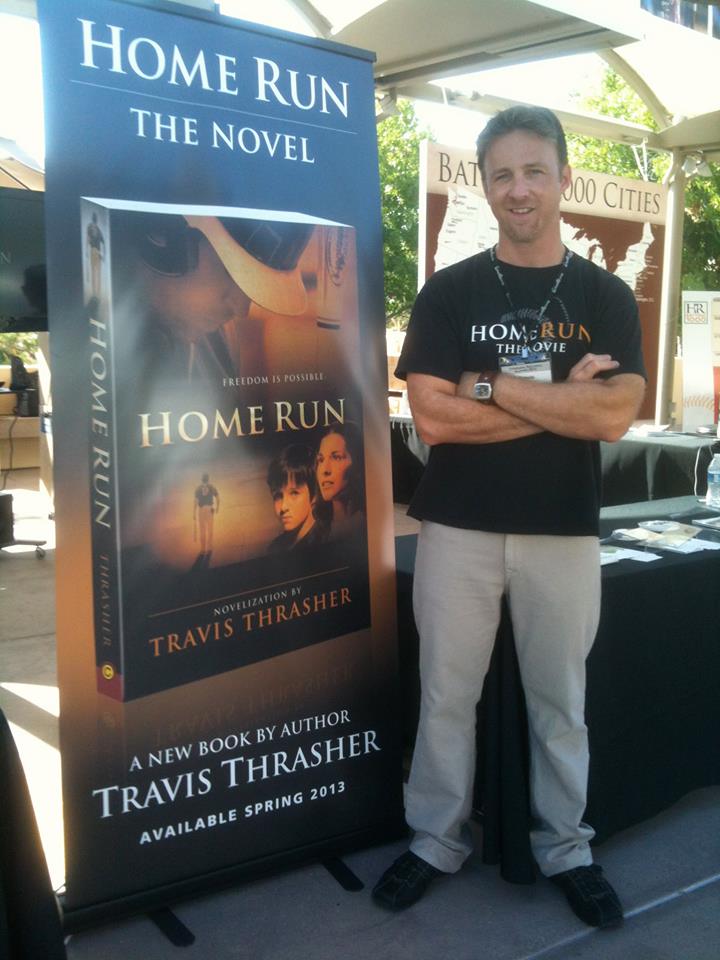 SUBSEQUENT PROJECTS
Since Home Run, I’ve written four more novelizations. One for the end-times supernatural thriller, The Remaining. Another for the film Do You Believe? And most recently for the film releasing tomorrow, God’s Not Dead 2. There was another ghostwritten novelization I wrote in one month (another one of those “interesting” projects that come along).
With each novelization I do, I learn something about the process of writing them along with learning about screenplays and making films and also collaborating in general. They can be difficult in their own way. Max Alan Collins said something to this effect in the Vanity Fair article mentioned above:
“It’s always amusing to me, you take a book, say, To Kill a Mockingbird, throw away three quarters of it and win an Academy Award for best adapted screenplay,” says Foster. “But if you take a screenplay and add three quarters of original material to it––which is a much, much more difficult piece of writing––well, that’s by definition ‘hackwork.’ And it’s much harder, having done both, to take a screenplay and make a book out of it than [to] take a terrific book and make a screenplay out of it.”
One of the most difficult things with writing a novelization is figuring out whose point-of-view to use. With The Remaining and even more so with Do You Believe?, those films were basically stories about groups of people. It’s easy to do this in film but in a book you can’t have ten different point-of-views. So how can you condense and only show one or at least a few POVs while keeping the heart and soul of the film? For Do You Believe? and all its weaving storylines of strangers connecting, the task was quite difficult. Especially when you have a short timeline. But that’s what made it exciting to work on.
GOD’S NOT DEAD 2
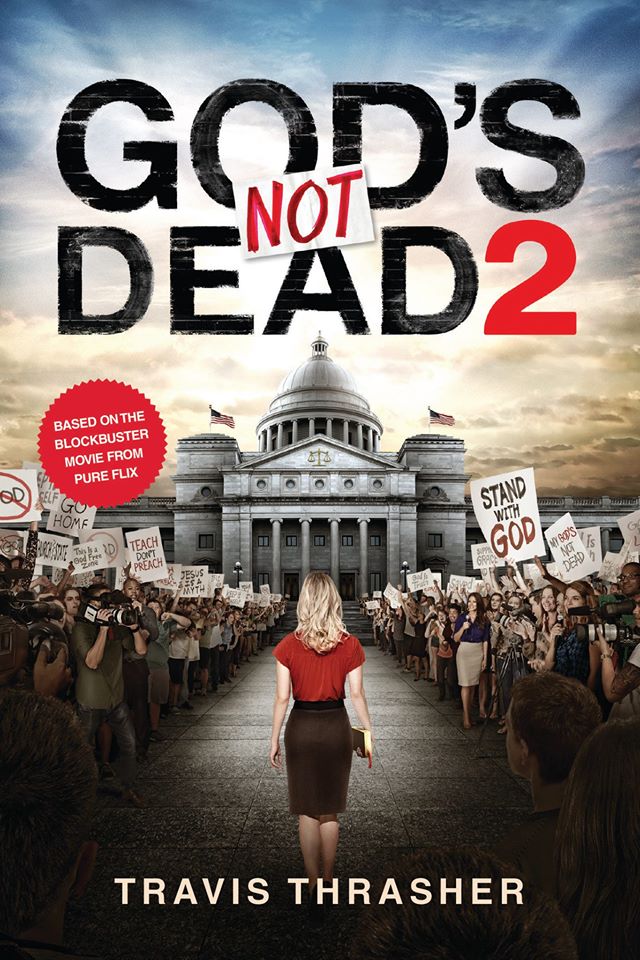 That brings me to the sequel to God’s Not Dead, the phenomena that grossed over $60 million in the theaters. For any movie other than a blockbuster, that’s great. But for a Christian film, that almost seems miraculous.
The filmmakers behind Do You Believe? were also the makers of God’s Not Dead. So while writing the former, I kept asking if there was a sequel in the works. Thankfully there would be one and I was excited when approached by Tyndale House Publishers to work on it.
There wasn’t a novelization done for the first God’s Not Dead, so there was a discussion about doing a book for each. But it was eventually decided to focus on the new film but to weave some of the storylines from the first film in the new book.
A big choice—perhaps one of the biggest choices I’ve made when writing a novelization—was selecting two characters to basically narrate God’s Not Dead 2. The most obvious would have been the teacher at the center of the story, Grace Wesley. She is forced to defend herself in a courtroom after mentioning Jesus Christ in her classroom. But instead of going with her character, I chose to have two other people tell the story.
The first person is a reporter named Amy Ryan, a character in the first film as well. She’s a minor character in both, but I was intrigued by her character because in the first film she finds faith. Yet in this one, she’s actually struggling with it. Imagine that—a Christian film showing a believer wrestling and having doubts! I wanted to explore that.
The other main point-of-view in the novelization for God’s Not Dead 2 is the lawyer defending the teacher. He is Tom Endler, and the very first time he shows up he admits to not having any faith. So I felt like that would be a fabulous character to journey alongside.
Picking a nonbeliever and a struggling believer might not seem to be the obvious choices for narrating God’s Not Dead 2. But that’s exactly why I wanted to go with them. They both have journeys where they change. They also had a lot of room for filling in their stories, so that’s exactly what I did.
I really can’t wait for those seeing and loving the film to then read the book. It is the exact same story, but it’s simply told from different point-of-views. My goal with this isn’t to show someone how creative or talented I might be. The goal was to come alongside the film and offer a unique way to point back at the story. To compliment the film. To frame the theme in a slightly different way. To maybe even make people go back and see the movie again!
LOOKING AHEAD AND DREAMING
I will always be learning and growing at this writing thing. Whether I’m working with someone famous to help tell their story or working on my own novels, I continue to figure out new and interesting ways to shape a tale. I hope that novelizations will remain one way I keep doing this.
Would I love to work on a Star Wars book? Absolutely. And I’d be thrilled to work on a novelization for a director like Christopher Nolan. Or to do some big action flick and inject it with some humanity and authenticity. I also want to continue to be able to work on faith-based films. There just might so happen to be a God’s Not Dead 3. I’m already asking the filmmakers about it (but haven’t heard anything!).
I think novelizations will be around to stay as long as there are still movies to pull them from. It’s a fun and always fascinating process. One that’s put me on a red carpet and gotten me to sit next to Vivica Fox during a premiere. One that’s put me on the set of a film and also connected me with various movie people I’d otherwise never be in contact with.
Check out God’s Not Dead 2 in theaters. I have a feeling it’s going to do pretty well just like the first one! Then compare the movie with the novel and see how good of a job I did.
January 26, 2016
Colors
I finally see them
The shades never truly spotted
The brilliance never fully captured
You show me with your eyes
You paint with your smiles
You fill in those dull blanks with your laughter
I’m surrounded by artists
Giving their work willingly to the rest of the world
A world comprised mostly of mommy and daddy
Of magical, curious moments
Of discovery and mischief and mayhem
And all sorts of stages of joy
Shooting over me like a rainbow
I can’t escape your graffiti
‘Cause it’s scribbled over every part of me
And every hue I’ve been blind to before
Now sparks and splashes and blooms and bleeds
Three palettes arranged and mixed in their own unique way
Each making their own special mark
January 2, 2016
Letters From The Sky
I’d rather sing than write the words deep inside my soul.
It would be easier to paint out colors raging underneath this skin and bones.
The safe thing would be to make some kind of bittersweet melody on a piano crackling and breaking and never once articulating any sort of immediate truth behind it.
Yet the words and the paragraphs and the endless pages are the pasture I’ve been put to run in. So I run around like some kind of wild Mustang. Running free or perhaps trying to simply be set free.
The nouns and verbs say something—they always have to. The adjectives and all those other wonderful sort of words all fill in the blanks. Metaphors and similes and illusions and statements and anything and everything say it all and more even when I don’t know half of what I really want to share. But I share and share.
A painting is on a canvas that usually stands in front of you. A film is a small business venture of creative people on an ambitious mission but still is usually only two hours long. A song is usually only three or four minutes long. A snapshot is color or black and white and regardless of whatever size it might be it’s single and solitary and at an absolute stand still. But writing can go on. And on. And on. And on.
And on.
Sometimes I’d like to hide in a chorus and a verse. To bury myself in the confides of the paint. To pause it all with a photograph. To be a part of a crew that can all take the blame or accept the credit. Yet the words are all I have to use and they always seem to give me away in whatever way they can.
There are so many—too many—to use. Yet I often find myself grasping at the same old words and phrases and stories. Thus giving it all away. Revealing more of myself than I’d ever really want to.
Love looks like a million different things in one’s life. Fireworks centered toward the sky and the laughter behind little running feet and the peace standing still next to a river and the bubble drifting across the family room that you can’t quite pop. Love doesn’t have a shape or a color or a sound or a set of words since it is truly infinite. Yet you keep trying to sum it up in your clumsy little ways for all to see.
The self-deprecation can be seen through. The casual, care-free commonness can be suddenly questioned. This persona that’s offered up like some kind of actor can suddenly searched on a website to see which actor you’re playing.
Letters from the sky litter my back yard in the middle of the day and late at night. I pick them up and wonder what they’re doing addressed to me. But usually I’m compelled to share them in whatever fashion and form I can.
This is the form.
The T and the H and the I and the S. Spelling one simple word. This. And then I keep going. Word after word. With so many more choices than can ever be imagined. A million-plus words full of meaning and certainly meandering and sometimes moving and sometimes simply . . .
Me.
Simply me. Trying to somehow figure out these things I really want to say.
December 29, 2015
Words
Scooped up and slippery, they hover in hands while the moonlight shines over them, then tossed like seeds in the back garden looking for soil and sun but waking up to find neither.
Bubbles guided by hand and prodded along like toddlers down this long, narrow and white hallway. So many—too many sometimes to see far in front of me—yet I continue to lead the way through the uproarious voices surrounding me. Finding the right room to put them in for the time being. The right place and setting to allow them to find their best potential.
Searching soon enough feeling like an unused crossword puzzle on the hunt for the right letters to fill in those empty boxes.
November 19, 2015
MIDNIGHT IMPROVISATION
(LONDON THUNDER POOLSIDE SESSION)
Spirits slip through the keyholes of doors angry to be locked out. They claw across the dimly lit walls where shadows play tricks near midnight. The ghosts you think you see sneak behind you and into the corners of your mind only to laugh in mockery.
Echoes. Pinpoints on skin that cut and bleed.
The calm curse of the late-night glow. Lights flicker in stereo while you stare at a screen oblivious to the Poltergeist trying to play tricks on you.
Work. The waterfall of it all. The wonder and the blur clasped hand in hand.
Sometimes we just have to have at it in order to have a go at trying to have it all.
Then again, sometimes we simply create something for the look or the sound or the feel of it. It doesn’t make sense because it doesn’t have to. It simply can exist. Sometimes it can even be quite moving in its nonsense.
October 27, 2015
She’s So Lovely
Sometimes the story doesn’t turn out the way you planned.
Sometimes you can’t reach that final ending.
All that prose and action and build-up ends up falling apart.
You find yourself months later simply dissecting the pieces of the tale and realizing the places you got wrong. The parts that should have been built on. The pieces that should have been discarded.
But ultimately you’ve moved on and shelved the piece.
It’s a part of you and always will be. You tried. You really tried. But some stories will never be finished. It doesn’t mean you had writer’s block. It’s just that sometimes situations don’t allow you continue to build.
Life has this tendency to break.
So you find words you don’t recognize. Storylines that you didn’t realize were so wandering and so inconsequential. Language you once loved that now sounds ridiculous.
The tone and voice and the collective parts are important, even precious. But you have to accept that they never amount to anything. They’re not worthy of sharing. They simply remain a story in the works. Unfinished. Unformed.
Forgotten? Well . . . that remains to be seen.
These echoes—little bumps on the ground—little drops reflecting off the surface of the dark lake—all surrounding you. Good things. Great, in fact. But eventually gone.
Stuck in some half-stage in a stack of other stories.
Close your eyes and you can almost remember. So beautiful, so brilliant.
But that’s what you thought. That’s what you always think. But sometimes, the story isn’t so easily impressed. Sometimes the story eventually reaches a point where it’s bored with you. Where your emotions and desires and goals have all become moot. Where it simply bids you adieu. To you and you and you.
She’ll always be lovely. Those short bits and those long run-ons. The almost-collective core of something that got close to seeing the light of day.
It’s okay to let go. To let it live in another world of your imagination. It had its place and time and maybe it was all written for a reason.
Today, there’s a new tale to tell.
Tomorrow, there will be another.
Yesterday’s story is a lovely reminder of that beautiful sun setting. Hovering and glowing. The kind you want to hug and scoop up and capture and kidnap. But it sets and you find your arms and hands empty wondering where the bright light went.
It remains in your mind. Even if the story has permanently moved on, remnants will always remain with you.
Lovely particles floating around in those lonely parts nobody else can see.
September 25, 2015
There Is A Light That Never Goes Out
It’s not as long as it seems. The days are still too short, the words still crammed inside of me.
I still love writing.
The journey . . . well, that’s something else.
It’s been a right turn detour heading the wrong way down a one-way road toward a back alley and a brick barricade. But somehow, this vehicle I’m driving is still chugging along. I’ve turned off the GPS. The compass in the car just continues to swirl around like some kind of broken carousel. The odometer—well, it certainly can’t be right. Right?
Yet I’m there in the city and then blinking to find the rugged Rocky mountains and then blinking again to see the Pacific and then again to see the bright lights.
I’m accumulating stories I can’t tell yet. Sometimes because I need to keep quiet, and sometimes simply because I don’t have time to tell them. I’ve realized this after eight years. Everybody wants to TELL YOU how to become a writer. Everybody wants to SHOW YOU how to live your dream. Everybody wants to WORKSHOP YOU in a room full of want-to-be-writers. Everybody is SHARING and SHARING and SHARING more about their writing journeys online. All while some of us are busy.
Writing.
There’s nothing glamorous about a hard day’s work. ‘Cause at the end of the day, you know it’s hard work. It might feel good and right and worth it. But it’s still work.
Doesn’t mean I’m still not inspired.
Doesn’t mean I’m still not moved at various moments of the day.
Doesn’t mean I don’t want to share this info and wisdom and lunacy that I’ve learned with others. I do. Really.
But people don’t know my sense of humor and they don’t know my current state of mania and they might be a tad bit overwhelmed with the little bits of everything I have to share. So yeah. Maybe I’ll just keep quiet and keep working.
Is this where I thought I’d be at the beginning? Well, it’s hard to say.
Where’s the beginning? Third grade when I wanted to become a writer? Ninth when I first wrote my first novel? Nine months out of college when I landed the publishing job? Six years later when I got my first book published?
Beginnings. Every day feels like a beginning. I’m presented with something that makes me go well okay what’s that look like? God didn’t put an autopilot in my heart and soul when he created me. I love everything new. I get bored easily. Ten states & countries lived in over eighteen years can do that to you. Four different high schools, who knows how many different houses . . .
Yeah. I grew used to upheaval and change. Who knew I’d crave it so many years later?
Success? Not sure what that looks like. Failure? I feel it everyday. And Chase bank and Comcast remind me.
But satisfaction? I feel this too. All the time. Not from the product or the aftermath but from the writing itself. The project. The words that keep coming.
Ten Steps To Becoming A Better Writer.
Sorry, but I can’t read your blog.
The Secret To Publishing Success.
Sorry, but I can’t attend your workshop.
How To Take Your Writing To The Next Level.
Sorry, I’d love to enroll in your monthly webcourse, but I don’t have sufficient funds.
Oh, and I’m becoming a better writer and I know all the secrets in publishing and every day I move a little higher.
The reality is that this mountain isn’t Everest. It’s Ever-changing. The scenery switches and turns over and doesn’t make sense so I don’t stay in any camp for too long.
They say Camp 4 on Mt. Everest is in the Deathzone. Sometimes life as a fulltime writer feels like you’re permanently in that camp. But you can’t stay in your tent and zip it up and try to stay warm.
You simply have to move. You have to keep going. And that’s what I’ve done.
I’m rambling. Wouldn’t you love to hear me speak at your writing conference? I was a bit manic ten years ago. Now? Well, I might actually frighten some of the listeners taking notes and asking questions on platform and point-of-view.
Maybe there’s a reason I don’t do the whole writing conference circuit. Well, there’s that one. But mainly it’s because I’m writing.
Eight years and I’ll say this.
I love these words. Those four ones. Those three. Those two. And that single, solitary, stand-alone . . . one.
I love trying to figure out how to get to the core of the story.
Description? Go Google it.
History? Go look it up . . . oh heck just Google it.
Emotion and feeling? Yeah. That’s what I’m going for.
I know I’m stuck in my writing ways and I hope to continue to grow as I get older. Can I do something with long-winded paragraphs full of colorful details? Maybe. Can I keep it logical and cold and unemotional?
Are you kidding? Of course I can’t.
Can I find myself writing a book and suddenly find something that just works? Like inventing the firework or writing A Farewell To Arms?
Of course I can.
The great stuff can’t be manufactured. There’s no simple formula for its creation. The more I study great art of all kinds, the more I realize how accidental and unintentional it can be. You just have to be creating in order to find the accident.
I so want to be a glorious accident. But then again, that’s a little like these past eight years.
A glorious accident.
But you know . . . That’s not really true.
A goal held from third grade is no accident. The means and the methods—those are just the ways you manage to make the goal work out.
I love rambling on blogs and as I’ve grown to become a faster typist, I can ramble even more. It’s a dangerous thing. But nobody is paying me or waiting for these words. They’re my own. Go ahead—edit them. I’m sure they need a good one cutting them down. But this isn’t a tree. It’s a street light made of metal. You can drive your car into it but it still won’t go away.
Just like the light inside of me. Still burning. Sometimes flickering. But never shut off.
There’s a street light outside our house on the corner of our lot that overlooks a road that turns into two. So many turn right or left under its watch. But the bulb never goes out.
Well, sometimes it goes out. But it’s replaced quickly and it keeps shining.
A glow at an intersection seeing so many cars driving by.
Eight years and it seems like a good metaphor. But then again, maybe it’s a simile. I don’t know. I still haven’t quite figured out the difference between those two things.
I’m too busy writing another book to figure it out.
And I’m grateful to be too busy.
Always grateful under the faithful glow of that corner street light.
September 17, 2015
Fly On
Some say there’s noise and some say there’s sound.
Some know all the places I’ve found.
But I’m the only one who can look up and see
All the birds flying at the speed of sound.
Some things I find so hard to believe
Some are simple puzzles, puzzling a simple man
Yet birds fly from the underground
If you could see it then you’d understand.
I see those lights igniting my bones
Lights guiding and telling me I’m not alone
I sing a song of love that’s all I know
It’s a message that I’ve got to get home.
The long and dark December
Has brought this soul full of white snow
From a rooftop I ask if you love me
Fingertips wonder if you’ll let me know?
But love says to come over and be patient
To never worry about a thing
Reminding me I simply got lost
Walking up to the that strawberry swing
Cause in the end I have to remember
We might find ourselves at midnight lying awake
Trying to drown out the noises
Trying to dream of making our escape.
Dreams of the morning seem to come
They feel like a serenade of sound
We awake with this delirious belief
That our feet won’t ever touch the ground
But life goes on and gets so heavy
The wheel breaks the butterfly
Every single tear is a waterfall
The stormy night only brings closed eyes.
But tonight it all has to begin again.
So whatever you do, don’t let go girl
Through chaos as it swirls
It’s just us against the world
You could’ve been a princess, I’d be a king
You could’ve had a castle, and worn a ring
But no, you let me go
Up in flames we have slowly gone
And those birds, they sing at break of day
“Start again” I hear them say
A spark in a sea of gray
God knows it’s so hard to just walk away
So tell me you love me
If you don’t then go ahead and lie on
Please tell me you love me
Promise you’ll always leave a light on
I always look up at the sky
I always pray before the dawn
Those birds sometimes arrive
Next you know they’re gone
So fly on, ride through
Maybe one day I’ll fly next to you
Fly on, ride through
Maybe one day I can fly with you
(A blog comprising Coldplay lyrics from X&Y to GHOST STORIES)
September 15, 2015
Midnight Synopsis
Yesterday I posted an excerpt from a book I worked on some last year called MIDNIGHT. It was first titled WAKE UP then moved to A SKY FULL OF STARS. It should be called UNFINISHED because I haven’t done anything on it for a while. I’ve been busy.
For anybody whose curious, here’s a synopsis of the story. It’s got a vibe of two books I’ve written: SKY BLUE and 40. I have almost 40,000 words, but it’s a long ways off of being finished if ever. But hey–it’s fun simply messing around with the riffs sometimes literally at midnight like I did last night.
MIDNIGHT overview:
Spencer Young used to be a well-known and respected maker of film trailers until he died. This isn’t a spoiler since you learn this on the first page. Yet, for some reason, he’s still around. He’s a ghost left for some reason. What is that reason? Perhaps that’s what the story is all about. He begins to search until he discovers a woman who can see him. This is their story. It’s part love story, part drama, part supernatural tale, part meditation on life.


