Roberta Trahan's Blog, page 13
February 25, 2013
Marketing Monday: Just What is GoodReads Good For, Anyway? (and other thoughts on Social Media Sharing Sites)
I have been annoyed with GoodReads for a while now. Oh sure, it’s a great community for readers. For authors, not so much. At least not for me. It all started a couple of months ago when I accepted a seemingly harmless friend request from a new author.
Now, let me preface the rest of this post by saying that I did in fact make a conscious decision from the beginning to make my GoodReads profile an interactive free for all – meaning that I would accept any and all friend requests. I made this decision based on my loosely researched (and as I later discovered, erroneous) understanding of this very intriguing community. The risk to my privacy seemed to be minimal, and the audience is vast. And though I knew all about the bullies and the trolls, I was fairly certain that I had the savvy to steer clear of that kind of trouble. Besides, it makes good sense to go where the readers are. Right?
What I didn’t see lurking in the shadow was yet another kind of trouble – predatory purveyors looking for the opportunity to pfish the friend lists of other authors in order to market their own books. In some cases, including mine, these predatory purveyors are pushing even more poorly written low rent derivatives of 50 Shades of Gray by anonymous persons with generic and sometimes false identities, slapped into a downloadable format and sold on the cheap through blog sites or Amazon Kindle Direct. Cuz, you know, anyone can publish a book now and call themselves an author.
Let the reader beware and all that, I guess. And the author, too, for that matter. By the time I figured out what these predatory purveyors were up to, the damage was done and could not be undone. My many correspondences with the GR customer service folks resulted in little more than a few episodes of dangerously high blood pressure, but they also helped me better understand the beast I was wrestling.
GoodReads, for all their attempts to give appearances to the contrary, has no real gatekeepers. No one is minding the store, and what’s worse, that’s the way they want it. GoodReads is literally nothing more than a giant crowd sourced database curated by random members who are granted the status of “librarian” merely for the asking. Folks with little or no knowledge of legitimate publishing practices or consumer protection policies hold all the power, and claim that imposing even the most minimal standards is an act of censorship.
Everyone can do, say or promote pretty much anything they want without regard to their audience, and it is considered free speech. This sounds like fun to a lot of people. Anarchy usually does. But when we throw out all of the rules, people tend to get hurt. NO BOOK OR AUTHOR on GR is vetted before it is added to the database. Really. Let me say that again. NOTHING IS VETTED.
Like I said, reader and author beware. I could go on (and on) about my feelings on crowd sourced information and open access projects, but I’ll stick to the relevant point for this post: taking steps to protect your public identity is every bit as important as it is to protect your personal privacy.
Gates and boundaries are both prudent and necessary. If you haven’t already done so, dear author, it’s time to start putting some degrees of separation between you and the rest of the world.
Everyone is not your friend – not all people play nice in Cyberspace. Consider the potential consequences of unrestricted interaction before you engage, and then do so cautiously. Blindly accepting every friend request is a bad idea (and this goes for Face Book too). If you decide to do so, understand that there are risks. Big ones.
Fans are Better Than Friends – when it comes to your public life. With social media sharing sites like Facebook and GoodReads the lines between virtual reality and real reality are a bit too easily blurred. For your own sake, and the sake of your true friends and family, build two worlds for yourself – one in which you can safely engage with the people in your real life (i.e. family and other people you actually know), and one in which you can safely engage with the general public. Encourage readers and other interested folks to follow you (become your fan on GR or your FB fan site) rather than friend you.
Social Interaction Is Not (Necessarily) the Same as Social Media Marketing & Neither Guarantees Real Results - one of the big draws to social networking is that it appears to be free advertising. But is it, really? In today’s social media world an investment of time and energy is generally considered equivalent to an investment of capital. There are people out there touting some very attractive metrics supporting this idea, but the concept of risk vs reward still applies. Just remember that while social media marketing may not cost you any money, there is still a price. You may be saving some cash, but you are still paying – with your valuable time, your precious credibility, and your priceless personal privacy. And you could risk it all and never sell a single book. It all comes down to making informed choices.
Just for fun, let’s do a little crowd sourcing right here. What’s your favorite social media platform, and why? Least favorite? Help another author out by sharing your success stories, and/or your spectacular failures!!


February 21, 2013
The Inspiration Behind the Fantasy in THE WELL OF TEARS: Stradey Woods
Have you by the hair.
Enter these enchanted woods,
You who dare.
~ George Meredith, The Woods of Westermain (1883)
I can imagine no more mysterious and mystical a place. Is it any wonder that so many tales of magical quests and dark adventure take place in these secretive, shadow-shrouded stands of ancient majesty? From fairy tale to fright-fest to full-fledged fantasy, the most dangerous evils tend to lurk in the misty, mossy, dense and dank depths of a forest.
When the world of The Dream Stewards began to take shape in my mind, at the heart of it was always an enchanted forest. I wanted to draw inspiration from reality wherever possible in order to ground my fantasy adventure with historically accurate roots. My research led me to a local historian who knew of just the place.
Located between what is now the town of Llanelli and Burry Port still stands a forest of ancient origins called Stradey Woods. At the bottom of the woods is a very old village called Pwll, named for a sacred pool that once existed there. Even today the woods are purported to be haunted, and often veiled with a white, misty fog – all of which adds to its unique mystery.
And as if that coincidence wasn’t magical enough, legend has it that Gwyn ap Nudd, the Welsh god of the Underworld and the Wild Hunt, had a palace deep in the heart of the woods. There are also stories of an underground tunnel that ran all the way to Glastonbury Tor, another haunt of Gwyn ap Nudd. And this is how Stradey Woods and its fantastical history became the inspiration for The White Woods, the home of The Dream Stewards.
Here is a glimpse into this magical place, by photographer Mike Richards:
≈
Many, many thanks to local resident and writer Lynne Lewis of Cornwall, who graciously lent me her knowledge of the history, geography, legend, and lore of the land. A fellow lover of the past, Lynne studied history and art at the University of London, and has authored many historical stories. Most recently, she completed a novel based on the life and career of Hans Holbein, court painter to King Henry VIII, entitled, “Dance of Death.”


February 18, 2013
Another Manic [Marketing] Monday – Why Twitter Doesn’t Sell Books (or anything, really)
If you follow this blog or have read my bio, you undoubtedly know that in my former life I was somewhat of a marketing maven. For over twenty years I made it my business, literally, to study information delivery systems and consumer behavior. What I have discovered, somewhat to my surprise, is that the more things change, the more they stay the same.
The technological big bang gave birth to what we now call Social Media – Facebook pages, blogs, Pinterest and dozens of other virtual groups and communities, and of course, Twitter. Never before have there been so many ways to interact. But as interchangeable as it all appears, it’s really not.
Not all Social Media Mechanisms Work the Same Way
While it is true that the modes of communication have evolved, the psychology behind communication has not. The reasons we interact are essentially unchanged – to feed our basic human desire for companionship, to expand our minds through the pursuit of knowledge, and to exchange our goods and services in order to meet our lifestyle needs. Social Media is said to be the Global Equalizer, opening a myriad of marketing pathways that all appear to lead to the same place – the consumer. This is true in a general sense, the same way that it is true that all people on Earth live under the same sky.
In order to use Social Media Marketing to its best benefit, it is important to understand who travels which paths, and why. Websites are like billboards or storefronts – static portals which recreate a sense of permanence in the Virtual World, and can act as sources of information and as retail hubs. Blogs have taken the place of topic driven channels and publications in that they disseminate specialized information and provide an opportunity for discourse (aka feedback). Online groups and communities (which include GoodReads, Pinterest, Facebook Friend Pages and more) create “places” for like-minded individuals to connect and engage in an exchange of ideas. Facebook Fan & Event Pages have essentially replaced what we old school marketers used to call “brochures” and “flyers”. These are all useful marketing tools when targeted toward your unique audience. The bottom line, dear author? Figure out which of these “places” are where people go to learn about BOOKS, specifically the kind of books YOU write, and focus your efforts there.
But What about Twitter?
I’m just going to straight up say what we all already suspect but don’t want to admit. Twitter isn’t really good for anything except creating a giant echo chamber for the sound of your own voice. Twitter is, at its essence, a soapbox. It is a platform that anybody can use but isn’t really effective unless you are a Very Important Person (like a politician or celebrity, or maybe a Best Selling Author) who ALREADY has gazillions of fans just dying to know what you had for lunch. Twitter MIGHT be a conversational hub, if you have the attention span of a gnat. What it definitely is NOT is a results-oriented marketing venue. At its best, Twitter is a real-time information stream that just may, if you are paying attention to the right person at the right moment, tell you something interesting or useful. Kinda like radio advertising.
Having lots of followers on Twitter does not mean lots of people are paying attention to you.
Really. I can’t stress this enough. In fact, odds are that most of your followers are only following you so that you will follow them. This is the very definition of a cluster f**k, dear author. Even more likely, most of your followers are probably other authors who write in the SAME GENRE AS YOU. Tell me, dear author, how many of these like-minded souls are likely to promote YOUR work to THEIR audience? I dare you – take a look at your list of followers and try to determine how many of them are actually purchasers and readers of your work, or people who can or will further your writing career or recommend your books. It’s good to know these things.
In the book world, there are two possible exceptions to the Twitter Doesn’t Sell Books rule. One would be authors of non-fiction writing business or writing craft books, and book marketing or publishing feeds by industry professionals and reviewers. Twitter just MIGHT be a meaningful way for these folks to announce news or posts on their blogs, which will in turn potentially lead to a sale of a recommended book. The second exception is when authors or industry professionals (including reviewers) consciously and intentionally connect to support each other using Twitter as a promotional vehicle. This can be very effective, but it requires mutual agreement and cooperation. This is strategic maneuvering that takes a bit more dialogue than the implied “I followed you, so now will you please follow me back?”.
Don’t get me wrong. I don’t hate Twitter – I spend hours upon hours reading my feed. But I don’t do so in a stupor of self-delusion that I am actually spending my time successfully marketing my work. I follow other authors and publishing professionals I personally know or whose careers I strive to emulate, and those who offer me useful information or entertainment. I occasionally do a search on my own name to catch those few and far in-between tweets by people who are reading my book and updating their progress on GoodReads, or the rare book reviewer who has posted their opinion of my work. I like to thank those people publicly for taking the time to read my book, even if they didn’t like it. In this way, Twitter is a much better incoming resource than an outgoing one. When I do tweet my own stuff, I do so without the slightest expectation that anyone is paying attention to what I have to say. In order to make even a tiny ripple in the Twitterverse, I will first need to do a lot more work elsewhere building sales and visibility.
That said, I do find lots of interesting folks tweeting in the Twitterverse – many of them members of exception #1 noted above. One of my favorites is Guy Bergstrom (@speechwriterguy) who has a nifty blog called The Red Pen of Doom . He has lots of hip, helpful advice on book marketing and PR in general. I like his ideas a lot, and you should read what he has to say. He knows what he’s talking about.
Here is one of my favorite posts: Guy Bergstrom says “You need a TEAM and a PLAN“, and I couldn’t agree more  .
.
~


February 11, 2013
I’m Singing the Marketing Monday Blues – Again…
With the holiday season and a first-of-the-year deadline behind me, I’m finding it easier to breathe, and find time for the rest of my life – which includes Marketing Mondays.
But first I’d like to announce that the THE KEY TO THE REALMS (the much anticipated sequel to THE WELL OF TEARS) is finally done and off to the editor. As soon as we have a firm pub date, I’ll be sure to let you know!
This was the first book I’ve written under contract (and to a deadline) and I find myself thinking about and examining things like creative process, motivation, and discipline. Mastering the management of my writing life is an ongoing journey, and I am beginning to believe that it will always be at odds with my artistic impulses. It’s almost an oxymoron, isn’t it – the idea that you can (or should) manage creativity. In the immediate aftermath of deadline hell, I am full of conflicted feelings. But, the book is done and I’m not dead, so it’s all good.
Every winter, I co-teach a writing class on novel structure with writing/publishing pals Jennifer McCord and Scott Driscoll. This session is the first I’ve participated in since becoming published, and I am really looking forward to sharing my recent experiences with the new students. We’ll be doing a lot of talking about what it means to be a working writer.
Another discussion that always comes up in these classes centers on the realities of publishing – and learning how to work within an ever changing business model that is often unfriendly to authors, and even downright hostile.
I have a lot to say on this subject, especially as an Amazon Publishing author, and especially when it comes to Barnes & Noble. But this last week two talented authors whom I admire said it best – and with a lot of class. For those of you out there who are writers aspiring to publication, or even authors who are looking for good advice on book marketing strategies, I highly recommend taking a look at this article from authors MJ Rose and Randy Susan Meyers :
Seven Ways Two Anxious Writers Are Making Lemonade
This blog post offers some common sense ideas and good old-fashioned common courtesies for self-promotion. Not the least of which are thoughts on how to create a supportive author community, and some suggestions for grass-roots marketing efforts that we all would do well to put into practice.
I’ll be back next Monday with my latest thoughts on Social Media buzz-builders.


December 19, 2012
Celebrating with Spirits – Medieval Ales & Wines
It wasn’t until the book was in print that I realized that my heroine is a bit of a lush. Alwen, the noble and determined sorceress at the center of THE WELL OF TEARS, has a tendency to turn to a particular medicinal concoction in times of great stress. And sorrow. And celebration. And worship. And when entertaining. And, well, pretty much every time anything at all happens in her world.
THE WELL OF TEARS is set in early 10th century Wales, and centers on the rise to power of a medieval king whose legacy has persisted to modern day. As was true of the ancient agrarian based religions of the time, food and drink are essential elements in both social tradition and spiritual practice in my novel.
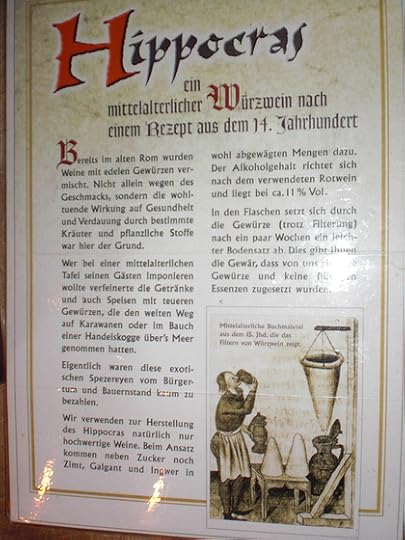 Historically speaking, the ritual consumption of ales and wines at all sorts of occasions is well documented. This is especially true in observing important seasonal events. Mulled wines and spiced ales have been on the holiday menu for centuries. References to celebratory spirits such as pimen and hippocras date to the early days of the Roman Empire, often also attributed with medicinal and aphrodisiacal properties.
Although pagan traditions in Britain began to disappear or become absorbed into Christian practice after the 3rd century, recipes for ritual beverages continued to appear in descriptions of ancient rites through the Dark Ages and beyond. Spirits have also long been noted as recommended treatment for everyday ailments from the common cold to gout and depression. A nip now and then has been a part of the human experience since the beginning of recorded history.
Early mentions of aleberry (ale + bree [broth]) in my research, a domestic remedy for cold or flu, were so intriguing to me that I made the brew the favorite guilty pleasure of my heroine.
Including this drink in a story taking place in the early 10th century seemed appropriate, but a true and historically accurate recipe for the drink has never been discovered. Known to have been made by boiling ale with nutmeg, cinnamon, sugar and bread sops, strained and then drunk hot, aleberry is not unlike other beverages referred to in Medieval texts. So, to be as authentic as I could, I decided to ’borrow’ a recipe from a similar beverage that still is used today.
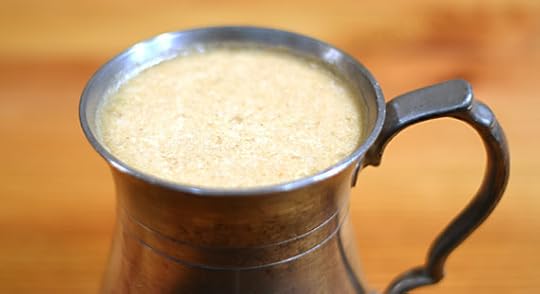
Lamb’s Wool is ale mulled with spices and sugar mixed with the pulp of roasted apples. The fruity pulp creates a lumpy froth that is said to resemble the wool of a lamb. A traditional beverage still today enjoyed on Halloween, Christmas Eve and Twelfth Night, Lamb’s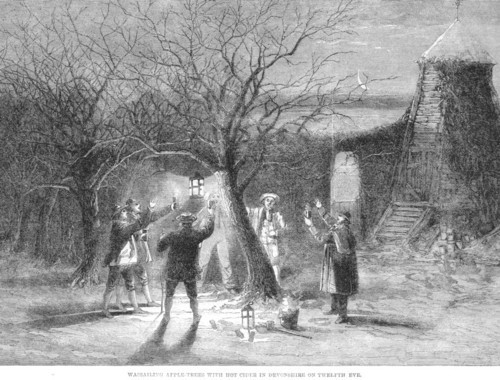 Wool was first a pagan ritual beverage used for ‘apple howling’ or wassailing.
In the ceremonial blessing of the orchard, which occurred during the winter solstice, the drink was poured on the ground and on the trunks of trees to awaken the first stirrings of life in the land and chase away evils spirits. Thus, the next season’s bountiful harvest was ensured. The ritual pouring took place amidst the chant of ‘waes hael’, (OE., ‘be well’ or ‘good health‘)–today recognized as wassail.
Below is a contemporary, Americanized version of a more traditional Old English recipe that is quick and easy to make. If you’d like to try your hand at the more authentic old-world brew, click here: http://recipewise.co.uk/lambswool
Lamb’s Wool (Wassail)
Ingredients:
3 apples, peeled, cored & finely chopped
3 tablespoons butter
3 (12 ounce) bottles dark beer
1/2 cup firmly packed brown sugar
1 teaspoon cinnamon
1 teaspoon ginger
Directions:
Preheat oven to 350 degrees. In a casserole dish, bake apples and butter for 30 minutes, or until the apples are soft. Then, in a large saucepan, combine the roasted apples, beer, brown sugar and spices. Heat until hot, and serve (unstrained) in large mugs.
—
An earlier version of this article appeared last year on the blog of celebrated historical author Stephanie Dray. Stephanie’s novels LILY OF THE NILE and SONG OF THE NILE are tales of Cleopatra’s daughter Selene. She has recently completed the third and final installment in the series. You can learn more about Stephanie, Selene and the Roman era at http://www.stephaniedray.com


December 7, 2012
Practicing What You Preach – Or, How I Almost Broke the Cardinal Rule: “Though Shalt Not Argue with a Reviewer”
Yes, I confess. I was a pounding heartbeat away from committing the unforgivable sin – posting a comment in response to a bad (and grossly inaccurate) characterization of my book. I actually went so far as to type out a lengthy diatribe politely detailing counterpoints (i.e. justifications) for what the reviewer presumed to be historical inaccuracies and omissions, with annotations indicating my historical sources, no less.
Just before I hit “post comment”, my better judgment stepped in (thank the gods) and reminded me of the advice I have always given to other writers. A book review, good or bad, is the reviewer’s legitimate opinion. It is based on their personal experience with your book, and on their individual expectations of the story. If your book doesn’t live up to those expectations, the reviewer has every right to express that dissatisfaction. The reviewer is not wrong.
However, in some cases, a reviewer’s knowledge base is – wrong, that is – which can lead them to make some erroneous presumptions and conclusions about your work that they then publish to the world in well-respected genre publications. This can be frustrating, and even insulting – especially for an author who prides herself on the exhaustive research she did in fact do.
In this case, the reviewer in question admittedly did not finish the book, but still felt entirely comfortable writing a review challenging the historical context of the entire story – based on what could only have been the first 50 or so pages. The review goes on to accuse the author (me) of doing my research at the local renaissance faire. Heh. A bit snarky, wouldn’t you say? Especially since her opinion is based on what appears to be a romanticized (and not very accurate) understanding of the period and place (10th century Wales).
Setting the (Historical) Record Straight
The reviewer in question takes issue with two specific points – Vikings and Druids. Let’s start with the Vikings, of which there are none in my book (at least not the marauding kind) – something the reviewer correctly points out.
Really, you say? No Viking horde in THE WELL OF TEARS? Yes, I know. Crazy talk. Everyone knows the Vikings were raping and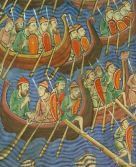 pillaging all over the place in 10th century Britain. Right?
Yeah, not so much. By 950 AD, the last of the Viking rulers had essentially been expelled, conquered or killed by Alfred of Wessex and his successors. The remaining Scandinavian invaders had for the most part become settlers, and eventually were subsumed under British rule. The repelling of Viking incursions had been going on for quite some time and by the turn of the first millennium (900-910 AD) the Saxons had handily defeated the Danes in several major battles and regained control of the larger kingdoms. With the exception of Erik Bloodaxe in Northumbria, the days of the Viking marauders overrunning the entirety of Britain were over – especially in Mercia & Wessex. You might want to read THE VIKINGS by Else Rosedahl, dear reviewer. It was very helpful in the researching of this book. I also highly recommend THE LAST APOCALYPSE by by James Reston, Jr. – another insightful resource.
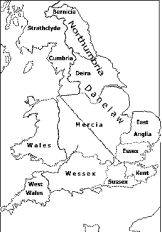 Interestingly enough, THE WELL OF TEARS takes place in the Welsh provinces (circa 905 AD), which were never invaded by Vikings or subject to Danish rule. Hywel ap Cadell, who is the king at the center of THE WELL OF TEARS was successful in protecting his borders (which were never even threatened by raiders) by seeking an alliance with the British kings Edward and Athelstan. Edward and Athelstan, and Alfred the Great before them, contained the Danelaw to Northumbria and northeastern Mercia – which essentially protected Wales from the incursions.
And, contrary to popular belief, the North Sea was not teeming with Viking longships at this time, and it is more than possible (even probable) that the crossing of the narrow channel between the Frisian isles and the southeastern shore of Britain undertaken by Aslak and Alwen in the early chapters of THE WELL OF TEARS would have taken place without encountering invading Norse fleets. I will concede that the likelihood of coming face to face with bands of raiding Viking horseman while passing through Mercia was pretty high – however, my travelers were already hiding from other sinister forces and could have easily made their journey without facing the horde.
Now for the Druids. What, no DRUIDS? Yes, I know – absolutely heretical. But it’s true. Aside from a generic reference to a title (Ard Druidh, which is Old Welsh for “first priest/druid”) there are NO DRUIDS in my book. Another historical misstep, you say?
Well, here’s the thing. The druids and most pagan practices were long gone from the British Isles by the 10th century – the Romans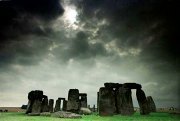 did a pretty good job of eradicating them about 500 years earlier. And, what little ACTUAL HISTORY that is documented relies largely on anti-Celtic propaganda written by Roman-era scholars. “One person’s Druid is another person’s fantasy” – well said, Peter Berresford Ellis. Ellis’ book THE DRUIDS is a particularly good source on this subject. I suggest you read it, dear reviewer. And, not for nothing, Druidism was also predominantly an Irish (and possibly Scottish/Gaelic) cultural phenomenon – not so much Welsh. Did I mention my book is set in 10th century Wales?
And while we are on the subject, let me be clear so as not to mislead anyone – there is no depiction of druidism or any specific practice of what is commonly considered Celtic paganism in my book. The spiritualism in THE WELL OF TEARS is an amalgamation of the many agrarian-based beliefs that persisted in the Brythionic (not Gaelic) cultures. The magic system in the book is entirely fabricated, albeit loosely based on general pagan practices, as is the magical order of sorcerers I named the Stewards. That was an intentional (and educated) world-building decision on my part.
THE WELL OF TEARS is an epic fantasy based in historical context – a context, which I have stated before, is largely without documentation. The history of Cornwall and Wales in the 9th and 10th centuries is generally without verifiable record. Very few documents from that era have survived, and those that have are conflicting – as are the prevailing scholarly opinions.
 In creating the world of the Stewards, I drew from a compilation of research on the cultural and mythological truths of the time using the best sources available. If you are looking for an in-depth historical account of Wales in the 10th century, you won’t find it in this book. The truth is, you are going to have a tough time finding any definitive record anywhere. And, if you are looking for a historical fantasy recounting tales of Druids as popularized in contemporary Wiccan philosphy, this book is sure to disappoint. Instead, I explore the concept of paganism (which is quite literally a generic term that refers to all polytheistic and/or indigenous religions) in a much broader sense.
Fact or Fiction?
Which brings me to the point that all historical fiction is a blending of fact and fantasy. This is especially true of historical fantasy. Novels in this sub-genre are by definition a re-working of what is known (or widely believed) to fit a particular author’s creative vision. History, like everything else, is subject to interpretation. Whether or not it rings true for you depends upon the sources from which your own knowledge is gleaned – it just might be that your sources are different than mine. That’s ok. Heck, even the scholars agree to disagree.
Naturally I hope what I have written will entertain and enlighten you. However, if it doesn’t, and you feel compelled to complain about it in a review, feel free. You have my sincere gratitude for having given my book a try. But before you get all high-minded and start casting aspersions on the accuracy of the history within, be sure you’ve done your own research. I can help with that – I’ve got a great bibliography, if you’re interested.
For more about the world of the Stewards and THE WELL OF TEARS, you might enjoy this post: THE HISTORY BEHIND THE FANTASY IN THE WELL OF TEARS


November 20, 2012
Giving Thanks
I’ve been remiss in my postings here – deadline for Book Two of The Dream Stewards (THE KEYS TO THE REALMS) is looming, and I am spending every spare moment on the manuscript. However, I do plan to take a break for the BDOF (big day of feasting) and will return to my blog schedule on Sunday with news and other updates.
In the meantime, I wish all of you a harvest of blessings this week – and to those of you who are celebrating Thanksgiving, a bounty of food, fellowship and merry-making with family and friends.
And, just for fun, a couple of things to keep you entertained until I return:
First, here is a link to a medieval roast fowl recipe from the folks at A BOKE OF GODE COOKERY – as it happens, turkeys were not introduced to Europe until the 16th century, so this recipe calls for for a swan. Any large bird will do. Please note that the original recipe (in Old English) is quoted first, followed by a contemporary translation – just in case you’d like to give it a try: Roasted Swan with Chaudon
Next, for your viewing pleasure, I give you a holiday favorite: A Charlie Brown Thanksgiving
Awen à Bendition!!


October 31, 2012
Soul Cakes (recipe)
In many European countries, the idea of “Souling” became an acceptable alternative to pagan Samhain rituals for Christians. Souling was a visiting custom carried out in the 19th and 20th centuries. The soulers visited houses, sang a song and collected money, food, and/or drink.
 A common ‘treat’ for soulers were Soul Cakes. Traditionally a gift for the spirits of the dead, they became a tithe paid to soulers who then pledged to pray for the souls of those who had passed to the Otherworld.
The cakes took many different names and shapes – from simple shortbread to fruit-filled tarts. Generally, a soul cake was made with whatever grain the community had available. Here is a modernized version of an old recipe:
Soul Cakes
You’ll need:
Two sticks butter, softened
3 1/2 C flour, sifted
1 C sugar
1/2 tsp. nutmeg & saffron
1 tsp each cinnamon & allspice
2 eggs
2 tsp malt vinegar
Powdered sugar
Cut the butter into the flour with a large fork. Mix in the sugar, nutmeg, saffron, cinammon and allspice. Lightly beat eggs, and add to flour mixture. Add malt vinegar. Mix until you have a stiff dough. Knead for a while, then roll out until 1/4″ thick. Use a floured glass to cut out 3″ circles. Place on greased baking sheet and bake 25 minutes at 350 degrees. Sprinkle with powdered sugar while the cakes are still warm.


Origins of All Hallows Eve
Samhain (Scots Gaelic: Samhuinn) literally means “summer’s end.” In Scotland and Ireland, Halloween is known as Oíche Shamhna, while in Wales it is Nos Calan Gaeaf, the eve of the winter’s calendar.
The origin of Halloween lies in the ancient Celtic religious celebration of Samhain (summer’s end). One of the two greatest Druidic festivals (Beltane is the other), Samhain marked the end of the light half of the year and the beginning of the dark half.
As with other holidays of the Celtic year, October 31 marked a mystical time when the usual barriers between our world and the Otherworld thinned and stretched allowing contact between human beings and the fairy folk and/or the spirits of the dead.
 Throughout the centuries, pagan and Christian beliefs intertwine in a gallimaufry of celebrations from Oct 31st through November 5th, all of which appear both to challenge the ascendancy of the dark and to revel in its mystery.
With the rise of Christianity, Samhain was changed to Hallowmas, or All Saints’ Day, to commemorate the souls of the blessed dead who had been canonized that year, so the night before became popularly known as Halloween, All Hallows Eve, or Hollantide. November 2nd became All Souls Day, when prayers were to be offered to the souls of all who the departed and those who were waiting in Purgatory for entry into Heaven.
Samhain is the Celtic new year celebration. Beginning on the evening of October 31 (the Celts counted their days from sunset to sunset, just as the bible does), the festival would last three days (perhaps longer).
In the country year, Samhain marked the first day of winter, when the herders led the cattle and sheep down from their summer hillside pastures to the shelter of stable and byre. The hay that would feed them during the winter must be stored in sturdy thatched ricks, tied down securely against storms.
Those destined for the table were slaughtered, after being ritually devoted to the gods in pagan times. All the harvest must be gathered in — barley, oats, wheat, turnips, and apples — for come November, the faeries would blast every growing plant with their breath, blighting any nuts and berries remaining on the hedgerows.
Peat and wood for winter fires were stacked high by the hearth. It was a joyous time of family reunion, when all members of the household worked together baking, salting meat, and making preserves for the winter feasts to come. The endless horizons of summer gave way to a warm, dim and often smoky room; the symphony of summer sounds was replaced by a counterpoint of voices, young and old, human and animal.
 Fire is a central element in all the Druidic celebrations. All hearth fires were put out and new fires lit from the great bonfires. In Scotland, men lit torches in the bonfires and circled their homes and lands with them to obtain protection for the coming year.
In early Ireland, people gathered at the ritual centers of the tribes, for Samhain was the principal calendar feast of the year. The greatest assembly was the ‘Feast of Tara,’ focusing on the royal seat of the High King as the heart of the sacred land, the point of conception for the new year. In every household throughout the country, hearth-fires were extinguished. All waited for the Druids to light the new fire of the year — not at Tara, but at Tlachtga, a hill twelve miles to the north-west. It marked the burial-place of Tlachtga, daughter of the great druid Mogh Ruith, who may once have been a goddess in her own right in a former age.
At all the turning points of the Celtic year, the gods drew near to Earth at Samhain, so many sacrifices and gifts were offered up in thanksgiving for the harvest. Personal prayers in the form of objects symbolizing the wishes of supplicants or ailments to be healed were cast into the fire, and at the end of the ceremonies, brands were lit from the great fire of Tara to re-kindle all the home fires of the tribe, as at Beltane. As they received the flame that marked this time of beginnings, people surely felt a sense of the kindling of new dreams, projects and hopes for the year to come.
The Samhain fires continued to blaze down the centuries. In the 1860s the Halloween bonfires were still so popular in Scotland that one traveler reported seeing thirty fires lighting up the hillsides all on one night, each surrounded by rings of dancing figures, a practice which continued up to the first World War. Young people and servants lit brands from the fire and ran around the fields and hedges of house and farm, while community leaders surrounded parish boundaries with a magic circle of light. Afterwards, ashes from the fires were sprinkled over the fields to protect them during the winter months — and of course, they also improved the soil. The bonfire provided an island of light within the oncoming tide of winter darkness, keeping away cold, discomfort, and evil spirits long before electricity illumined our nights. When the last flame sank down, it was time to run as fast as you could for home, raising the cry, “The black sow without a tail take the hindmost!”
Even today, bonfires light up the skies in many parts of the British Isles and Ireland at this season, although in many areas of Britain their significance has been co-opted by Guy Fawkes Day, which falls on November 5th, and commemorates an unsuccessful attempt to blow up the English Houses of Parliament in the 17th century. In one Devonshire village, the extraordinary sight of both men and women running through the streets with blazing tar barrels on their backs can still be seen! Whatever the reason, there will probably always be a human need to make fires against the winter’s dark.
Samhain was also a significant time for divination, perhaps even more so than May or Midsummer’s Eve, because this was the chief of the three Spirit Nights. Divination customs and games frequently featured apples and nuts from the recent harvest, and candles played an important part in adding atmosphere to the mysteries. In Scotland, a child born at Samhain was said to be gifted with an dà shealladh, “The Two Sights” commonly known as “second sight,” or clairvoyance.
At the heart of the Celtic Otherworld grows an apple tree whose fruit has magical properties. Old sagas tell of heroes  crossing the western sea to find this wondrous country, known in Ireland as Emhain Abhlach, (Evan Avlach) and in Britain, Avalon. At Samhain, the apple harvest is in, and old hearthside games, such as apple-bobbing, called apple-dookin’ in Scotland, reflect the journey across water to obtain the magic apple.
Later, Christian elements came into play, as All Hallows’ Day (all Saints’ Day) and All Souls’ Day contributed their own unique traditions to the core, such as trick or treating (collecting “soul cakes” on All Souls’ Day) and dressing up in frightening costumes as protection against evil spirits. It bears noting that at no time, either in the druid religion nor in the Christian, was Halloween connected with the devil or devil worship.
(adapted from Holiday Traditions by Mara Freeman, www.celticcallings.com)


October 11, 2012
GoodReads Giveaway Winners Announced (And More News)
The Book Launch Celebration continues!! I want to congratulate the winners of my GoodReads Giveaway:
Barbara Mattingly (NJ), Adam Melerski (CA), and Andrew Humphrey (MO)
Your personalized copy of THE WELL OF TEARS will be shipped in the next 7-10 days. I hope you enjoy the book!
For those of you who didn’t win, the sweepstakes giveaway on my FB author page is still live. To enter, click on the Facebook icon in the right column on this page, or go directly to the sweepstakes entry page. Follow the directions and you will be entered to win a signed copy of THE WELL OF TEARS and some party swag.
My book launch party and first ever author signing at Third Place Books was a huge success. Loads of colleagues, friends, and family  showed up and there was lots of love in the room. We had cake and great swag (slap bracelets and temporary tattoos courtesy of 47North).
One of the unexpected and most rewarding benefits of living in the same city as my publisher was the opportunity to actually meet the people who made the book possible. I am a lucky, lucky girl to be working with such talented and dedicated folks. And to top it all off, some of them were on hand at the even to share in
 the celebration. Here I am with my 47North teammates: editor Alex Carr (far right), author relations manager Patrick Magee (near left) and marketing manager Katy Ball (far left) –>
Next was a truly inspiring weekend with writers and authors at the 27th Annual Write on the Sound Conference in Edmonds, WA. This intimate event is held every year in a quaint, village like setting on the shores of Puget Sound. I had so much fun working and talking with writers at all stages of their creative journey. Also in attendance were my pals publishing expert Jennifer McCord, local author and arts commissioner Joanne Otness, and best-selling author Carla Neggers. The weather was beautiful and the event couldn’t have gone any better!
Next up is the annual independent booksellers regional trade show sponsored by the Pacific Northwest Booksellers Association. I will be talking to booksellers and librarians (and signing books) on Monday, October 15 at 10:45 on the show floor. If you are going to be at this event, please stop by and say hello!