
Hanne Blank's Blog, page 4
January 31, 2013
tomorrow is the first day of the next 100 days of your life
I’m so stoked that so many wonderful people have announced that they’re joining me for my 100 Days Body Practice Experiment starting tomorrow, I cannot even tell you. This is going to be a good time, y’all.
Before we begin, I wanted to clarify something for those who might’ve wondered, as one reader who emailed me did, about what may appear to some of you to be an inconsistency in policy around these parts:
In the post where you first proposed the 100 days, rule 4 talks about doing a particular thing for 100 days. This seems to conflict, at least in letter, with the various repeats of ‘do what you want when you want as long as it’s every other day’ in the 10-no-11 reasons to do it.
On the one hand, in the experimental concept, it surely does make more sense to pick one thing and stick with it. Consistency is better for data gathering, among other things. On the other hand, being able to change things around is certainly a way to keep going when you’re faced with “I don’t wanna DO that anymore!” tho I expect that, again for the ‘experiment’ meme, it would make more sense to do something like what you were doing.
Here’s my take:
If you feel like you can do one particular form of body practice throughout the 100 Days, and you wish to do that one specific form of body practice throughout the 100 Days, that’s awesome.
This is certainly an experiment that can be about answering the question “what happens if I add Activity X to my life for a period of 100 days?”
If you don’t feel like you can do one particular form of body practice throughout the 100 Days, or you do not wish to do only one specific form of body practice throughout the 100 Days, then that also works.
This is certainly an experiment that can be about answering the question “what happens if I add some new form of activity, whether it stays the same or changes, to my life for a period of 100 Days?”
The truth is, not everyone is going to be able to sustain a single activity over the course of 100 days. Some people have physical or medical issues that preclude their doing so. Other people know themselves well enough to know that they need a lot of variety because moving their bodies the same way too many days running starts to feel too much like punishment. Or maybe, like me, a person simply has two or more types of activity they’d like to add to their lives as part of the same 100 Days framework.
All these things are possible and all these things can be part of the 100 Days framework. This is really very much a roll-your-own sort of event. There are no judges and no stopwatches, no referees or umpires with big shrieking whistles. Part of the point of the 100 Days is that for 100 days, you get to add new stuff — whether one thing or several — to your body practice and you get to be the boss of how that happens.
The key parts are “adding new stuff to your body practice” and “for 100 days” and “you get to be the boss of how that happens.”
Also? All of this is on the honor system and neither I nor anyone else will ever know if you not only decide to shift from a half an hour of yoga as your new body practice to a half an hour of swimming, but if you miss four days in the middle because your new lover comes to town and you can’t pry yourselves out of bed.
Nor will I know if you decide to turn it into a full-bore empirical fiesta of data-gathering and you fill three lab notebooks with measurements and observations.
Nor, indeed, do I care. These things are totally up to you! You’re a grownup… why shouldn’t they be? Ultimately I want this to be about what rocks your world, in terms of body practice. You’re the expert on what that is, not me.


January 30, 2013
an imaginary interview
Regular readers may know already that I’m in the process of launching this new book, and thus doing a lot of interviews of various kinds. In the process of doing interviews I have been asked a lot of questions, most of them good, some of them downright insightful.
And then there are these, all culled from actual interviews… and supplied with answers.
Q: So, you’re fat, but you say you actually do exercise?
Yes. Yes, I do. With my imaginary gym girlfriends Sarah Robles and Cheryl Haworth.
Q: So you work out, but you’re still fat?
Q. E. D.
Q: What kind of exercise do you personally do?
Whatever I feel like doing. I am one of those people who actually likes “boring” exercise. I like walking and the elliptical trainer and swimming laps and stuff. I don’t like running although sometimes I do it anyway. I like my Fitball. My body actually seems to prefer repetitive motion at a moderate intensity but for fairly long periods of time. So that’s what I do.
Q: So you’ve written this book about exercise, would you call yourself an athlete?
I don’t see why that’s a question here. Jane Goodall is not a chimpanzee.
I am a person who moves her body regularly for pleasure and health reasons, and has done so for a lot of years. I’ve learned a fair bit over the years about what the issues are in doing that when a person is both fat and female. That’s why I wrote the book.
There’s nothing the matter with being an athlete. There are plenty of fat athletes out there. But I’m not an athlete in any way most folks would recognize, and that’s okay too. Most people aren’t, and will never be. And they shouldn’t let that fact come between them and moving their bodies regularly and happily, if you ask me.
Q: What about diet? Shouldn’t people who are starting an exercise program be doing something about their diet?
I realize that this approach is somewhat radical, but I endorse eating food several times a day, and drinking a reasonable amount of water in addition to whatever caffeine-bearing substances one may require. Scientific evidence supports this very strongly. People should also eat enough so that they’re not still hungry when they’re done with their meal, and so they won’t be hungry again for a few hours, because y’know they probably have other things to do.
Part of my extremely radical dietary approach is that people should never eat food they actively despise, and preferably they should eat food they enjoy. Also, I believe strongly that fruits and vegetables and whole grains are a fine addition to anyone’s menu, and remind the reader that popcorn is too a whole grain.
Q: If you could magically become thin, would you want to?
If there’s that kind of magic to be had, honestly I’d rather be able to breathe underwater, and to have a prehensile tail. I’ve always thought those would be really cool, and also very useful.
January 29, 2013
100 days of body practice: what I’ll be doing
For those of you who are playing along with my 100 Days of new body practice experiment, or who are considering doing so, I thought I’d add a little fuel to the fire by telling you all what I’ll be doing myself during this experiment.
I’ve decided to do two things, both related to the body but one more traditionally “fitnessy” than the other.
For that one, I’m committing to 20 minutes of core-strength exercises every other day. For me, this will probably involve working with a fitball, and possibly belly dance drills. (I can’t dance worth a tinker’s cuss, but there’s nothing like practicing your shimmies and hip circles and drops and such to work all those torso muscles.)
For the other one, I’m committing to at least half an hour of pure technique practice, every other day, in classical bel canto singing. I’m a former professional classical singer who’s been retired for a long time and have been undertaking the slow process of starting to sing again, which is not easy on any number of fronts. Taking the time to work on technique will be good for me in lots of ways.
Both of these are physical things that take a sustained, consistent effort to really get you where you want to go, so the 100 days experiment is perfect for both these things. I’m looking forward to giving this a try and seeing what happens.
Thinking about joining me and a whole bunch of other folks, but need a little more encouragement? Try these eleven reasons to give it a whirl.
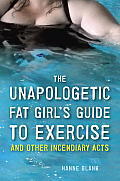
And for additional info, encouragement, emboldening, and incendiary juju, you might try a copy of The Unapologetic Fat Girl’s Guide to Exercise and Other Incendiary Acts!
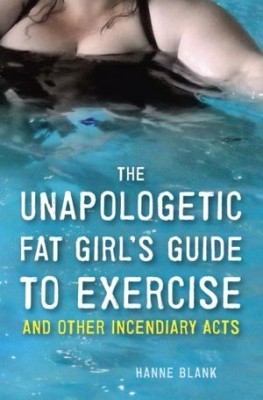
Check it — and me — out at Books For Better Living, too!
January 28, 2013
Who You’re Sitting Next To At This Dinner Party: Golda Poretsky
This year, I’ve decided to run a series of short interviews with some of the marvelous people I know or have worked with (or both), because I know far too many fascinating people not to share. Each person answers the same questions. All of them give thought-provoking, interesting, wonderful answers.
These are the people you’re sitting next to at this dinner party. Enjoy.
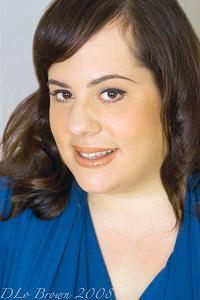 Golda Poretsky, health coach to the stars.
Golda Poretsky, HHC is a certified holistic health counselor and founder of Body Love Wellness, a program designed for plus-sized women who are fed up with dieting and want support to stop obsessing about food and weight. Her programs and activism work have been featured on CBS’s The Early Show, ABC’s Nightline, NBC’s LX New York and in Time Out New York. She is the author of Stop Dieting Now: 25 Reasons To Stop, 25 Ways To Heal, available in softcover and Kindle. Golda has also organized and hosted major body positive online events, including The Body Love Revolutionaries Telesummit and the HAES® Master Class. Golda’s big, fat dream is for every plus sized woman to own her power, beauty, and body, whatever her size.
Q: Please describe yourself in 25 words or less.
I’m an intuitive eating and body image coach, speaker, blogger, and podcaster. :)
Q: What are three things about you that most people either don’t know or wouldn’t expect?
Hmm. To be honest, I’m often surprised by what surprises people about me. But here are three that may be a bit surprising.
I used to be a lawyer. I’m actually still admitted to the bar, but haven’t practiced much in the last few years. I worked as a real estate lawyer at some major firms in New York. But even when I was practicing I was always doing other things and people who met me outside of work always seemed surprised that I was a lawyer.
I’ve been reading tarot for 20 years. I don’t see many clients nowadays (just a few old ones here and there) but I still love tarot. I credit it with helping me develop my intuitive sense over the years, which I find really helps in my coaching practice.
I love comedy. I’ve studied comedy writing and improv and even spent a brief few months performing weekly in a musical improv group. It’s been a few years but I often think about getting back into it.
Q: Of the things you’ve done in your life so far, what are you proudest of?
I’m actually really proud that I’ve been able to make this career change and have my own business. I’ve known so many unhappy lawyers, but it’s very hard to leave that world. Every once in a while when I get my student loan bill I have a moment of doubt myself, but I still feel like doing work that I love and that has meaning for me is my biggest accomplishment.
Q: What’s an as yet nonexistent thing about which you’ve thought “why hasn’t someone created that yet?”
Now I’m just thinking of ridiculous things, like a machine that you talk into and it repeats what you say but as Al Pacino would say it. A player-tuba (like a player piano, but with a tuba). Shoes with changeable heel heights? (Actually, that’s not a bad idea.)
Q: If you could get everyone who reads this to do one thing, just once, what would you get them to do?
Sign up for my newsletter? But seriously, I would love to ask your readers trust their inner critic less and trust their intuition more.
Want more Golda, more Body Love Wellness, and a bit of me, too? Join us, plus Virgie Tovar, Tasha Fierce, and many other brilliant badassed women for The Body Positive Dating Master Class on February 9, just in time for Valentine’s Day!
January 24, 2013
the calm before the
Today I am at home in Atlanta, enjoying the quiet and getting ready for Creating Change, which starts today officially but which for me starts tomorrow.
If you’re at Creating Change, please come introduce yourself and say hello! I’ll be teaching a community-building workshop called “There Is No Wrong Way To Have A Body” on embodiment-based bias awareness and reduction on Friday afternoon at 4:45.
On Saturday at 1:30, I’ll be signing books at the Charis Books and More booth. I note that from 2-2:30 I’ll be there signing at the same time as my good old wonderful friend and beloved colleague, S. Bear Bergman so you get two fat Jewish fabulous mouthy queers for the price of one!
Then at 3 on Saturday, I’ll be sitting on a panel of fabulous people helping to tease out some of the pleasures and politics of the last 40 years of sexual liberation activism, and talk about possible futures for our work as activists who work with, around, and on sexuality issues.
Right now, though, I am making soup, because my Philosopher has been sick with the flu now for well over a week, and though he is getting better, he is not yet Back To Normal. I was at home in Massachusetts for the worst of his flu, but now that I am here, he is getting what I believe should be standard treatment for any cold or flulike illness, namely: The Soupening.
What soups, you ask? Two of them. Nice big pots of DIY Hot and Sour Soup (my recipe and method are at the link) and a matzo ball chicken soup. There is no recipe for matzoh ball soup, or at least I’ve never used one, so you’re on your own there.
I have also, for amusement, explained what I do using only the ten hundred most common English words… more difficult than you might think, and an instructive exercise. You can do it (or indeed explain or write about anything else) here, if you like.
Here’s how that turned out:
What I do:
I write books about what happened in the past. I help people learn about why what happened in the past is important. Sometimes I write about relationships, love, and fucking and how they happened in the past. I help people learn about why we think the ways we do about relationships, love, and fucking. Sometimes this helps people feel better or think better. I like this part of my job very much.
I also write books about bodies. I write books about how we can be nice to us and other people no matter what their bodies are like. I help people learn about being happy in their bodies. I help them learn that their bodies are good ones, even if they are different. Sometimes this helps people feel better and think better too. I like this part of my job very much too.
Sometimes I go talk to people about these things instead of writing about them. We talk together and learn together. I like this best of all.
January 21, 2013
Who You’re Sitting Next To At This Dinner Party: Charlie Glickman
This year, I’ve decided to run a series of short interviews with some of the marvelous people I know or have worked with (or both), because I know far too many fascinating people not to share. Each person answers the same questions. All of them give thought-provoking, interesting, wonderful answers.
These are the people you’re sitting next to at this dinner party. Enjoy.
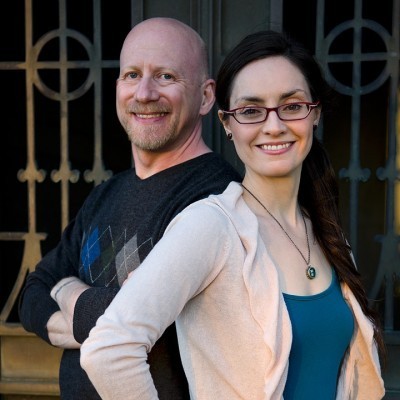 Wonder Sex Educator Twin Powers, Activate!
Charlie Glickman, PhD, (that’s him on the left, with co-author Aislinn Emirzian on the right) is a sexuality educator, blogger, speaker, teacher, and author. His areas of focus include sex-positivity, sex & shame, communities of erotic affiliation, many sexual practices (including BDSM, polyamory, anal sex, prostate play, sex toys, and safer sex), and gender & masculinity.
Charlie is the Education Program Manager at Good Vibrations (www.goodvibes.com) and he’s one of the authors of The Ultimate Guide to Prostate Pleasure: Erotic Exploration for Men & Their Partners (www.prostatepleasureguide.net). You can find out more about Charlie at www.charlieglickman.com or follow him on Facebook (www.facebook.com/charlie.glickman) or twitter (@charlieglickman).
Please describe yourself in 25 words or less.
My goal is to help people discover new ways to experience sexual pleasure, joy, & well-being. Sex & relationship education is how I aim to do that.
What are three things about you that most people either don’t know or wouldn’t expect?
I’m an avid gardener and I’ve been learning about California native plants for the last several years.
My two favorite types of books to read for fun are science fiction and Regency romance novels.
My undergrad degree is in math & physics, but life took a sharp turn after college.
Of the things you’ve done in your life so far, what are you proudest of?
Can I say two things? Number one is definitely my relationship with my partner, who I first met 21 years ago. It’s the best thing I’ve ever done with my life. But coming in at second is my upcoming book The Ultimate Guide to Prostate Pleasure: Erotic Exploration for Men & Their Partners (www.prostatepleasureguide.net), which I wrote with Aislinn Emirzian (www.aislinnemirzian.com). I want more men and their partners to see for themselves how much fun and pleasure awaits them
What’s an as yet nonexistent thing about which you’ve thought “why hasn’t someone created that yet?”
My next book is going to be on the topic of sex & shame from a sex-positive perspective. Most books on sex & shame don’t integrate an understanding of the range & diversity of sexuality and most books about sex don’t really explore how shame works. I want to bridge that gap.
If you could get everyone who reads this to do one thing, just once, what would you get them to do?
Love yourself. In whatever way lights you up. And then do it again. And again. Until it becomes a habit instead of an exception.
January 18, 2013
not that kind of writer
I had one of Those Conversations yesterday. One of the ones I hate. One of the ones where I’m stuck somewhere, making polite smalltalk with someone else who is stuck in the same place I am, and they ask me what I do.
I cannot possibly be the only person who is tempted to say “Oh, things. Sometimes stuff. Except when I don’t.”
But I know that what I am being asked is “what do you do for a living?” and so I answer.
I try to make it sound as humdrum and boring as possible. ”Oh, I’m a writer, you?” No fanfare, no pause for puffery or list of publications, and immediately followed by that turn to the other person, to try to steer the conversation away from the edge of the giant pit there is an approximately 70% chance it is about to plummet into.
This only sometimes works.
There are a bunch of common reactions I get to telling people what I do professionally, which I list in rough order of the degree to which they make me feel as if I have just stepped into a bog that is going to demand my boot off my foot before it will let me go again:
“Oh! What do you write?”
“As in, you write books? Like, novels and things?”
“Really? Have I heard of you?”
“Oh my god, that’s so cool, so are any of your books movies?”
“Oh, that’s so amazing! I’ve always thought I should write a book…”
“Oh my God, I’m a writer too!”
Allow me to explain.
“Oh! What do you write?” is the response I hope I’ll get. It’s the best response, and the politest. It has analogues for any profession — “Oh, you’re a teacher? What do you teach?” ”Oh, you’re an architect? What kind of projects do you work on?”– and is a good all-purpose bit of conversation. Thus it is the response I most often get from other people who, upon hearing that someone is a writer, nevertheless continue to perceive themselves to be having just a typical all-purpose conversation with someone they don’t know. Which they are. I appreciate their clarity on this point.
“As in, you write books? Like, novels and things?” is harmless enough. I find that usually this comes from people who primarily read fiction, so that’s their frame of reference for what “writer” is. It’s never an issue, though, when I remind these folks that no, not every book is a novel, and I write some of the ones that aren’t. Usually this information is taken on board thoughtfully, and it is a pleasant conversation that can go other places easily.
“Really? Have I heard of you?” always makes me want to say “I don’t know, have I heard of you?” Suddenly finding myself in the middle of a nonconsensual game of Name Recognition Bingo is awkward. Also, how rude is the implication that if the person you’re talking to is really what they say they are, they ought to be famous enough for you to know them? I dunno, maybe it’s just me, but I’ve been in a bookstore or two in my time and I have upon the odd occasion had the thought that every single one of the books in those bookstores was written by someone, but I sure the hell don’t know who they all are.
“Oh my god, that’s so cool, so are any of your books movies?” just kinda makes me sad. It’s not that I am sad that none of my books have been made into movies. That’s not something I think about, because I don’t write the kinds of books that get made into movies. It makes me sad because there are just so many layers of explaining, there, to give any answer beyond a simple “no,” to someone who clearly believes that a book isn’t really a book , or at least not a book worth its salt, unless it’s not a book at all, but a movie.
“Oh, that’s so amazing! I’ve always thought I should write a book…” tends to make me want to text myself that there is some horrible emergency and I must leave at once, even if I have just gotten on a train or am next in line at the Registry of Motor Vehicles. It is, of course, a fine thing that someone thinks that writing is wonderful. (It is wonderful. Sometimes.) Certainly it is a fine thing to have dreams and ambitions. But generally these are people who, if they only wrote for half as long as they will happily spend telling you what they would write, would have three trilogies in hand by now. Thus I recommend saying this to a working writer only if you do not mind if the writer smiles sweetly and says ”Then go away and write one.”
“Oh my God, really? I’m a writer too!” is the worst. (Or at least it shares that place with the people who respond to learning that someone’s a writer by saying that they have this great story to tell and that the writer should be willing to write it and sell it and then they’ll split the royalties, with the writer usually being offered something princely, like 30%.)
Maybe other working writers have had different experiences, but I have never had this reaction from someone who did, in fact, write professionally. Other writers usually do the “oh, what do you write?” thing. No, the “I’m a writer too,” dripping with desperate desire for acceptance and validation, usually comes from people who write, and desperately want to be professional writers.
I get that, I truly do. But I’m uncomfortable feeling like someone’s looking to me to tell them they’re a Real Writer. I dunno, I’m not the Pope of Writing, no one handed me the Great Sceptre Of Professional Discernment. I’m perfectly happy to consider an aspiring pro writer, or even an avocational writer with no intention to try to become a professional, as a real honest-to-Pete writer. Maybe it’s that I’ve known an awful lot of people who’ve made the transition from aspiring to actual professional writerdom, but I do think of aspiring professionals as writers. Maybe it’s that I don’t, in fact, think that someone needs to write for a living in order to claim “writer” status, any more than someone needs to own a restaurant to claim to be a good cook, or needs to be a member of the New York Philharmonic to claim to be a violinist. Wallace Stevens and Charles Ives both worked in insurance all their lives, y’know?
My dread of getting the “I’m a writer too” response has nothing to do with my thinking that someone else isn’t a writer if they don’t do it for pay, or with thinking that I’m better than they are because I do. It’s that I don’t want to be asked to tell them they’re Real. And I don’t really want to try to talk writing with them. Not because I don’t think they have things to say about it. I know they do. But mostly, I don’t.
Mostly they write fiction. Mostly I don’t.
Mostly they want to talk about writing as an Art. Mostly I don’t work that way, I’m an educator and an entertainer and sometimes a craftsman with my writing, not so much an Artist.
Mostly they want to talk about technique, and creativity, and Julia Cameron and Anne Lamott and morning pages and MFAs and I don’t know what all. Mostly I don’t know shit about that stuff. I have no training to do what I do as a writer, none whatsoever. All I know is that every writer I have ever talked to has had to sort it out for hirself. I learned to write by putting my ass in the chair and words on the page and then reading them aloud, later, to see whether or not any of the words actually worked.
(Maybe you ask a friend or two to read it and tell you if it sucks or not. Maybe you just trust your gut.)
Mostly they want to know if I can tell them how to get an agent. Mostly I tell them the truth, which is that I got lucky and an agent I turned out to like very much found me. I don’t actually know how people go about hunting the wily literary agent or what sorts of safari equipment is required, so if people want to know that they should ask someone who has bagged one.
Mostly they want to know if it’s really as glamorous as they think it is, if I get to be Inspired a lot, and cash a lot of royalty checks, and if everybody loves me and thinks my work is genius.
Mostly, I spend a lot of time alone, thinking and writing, and if inspiration happens to strike I count myself very lucky and hope it doesn’t happen when I’m in the shower or right when I’m falling asleep because it doesn’t happen often and I really like to be able write it down when it does.
Mostly the money is, ah, well. Let us just say that like almost every other working writer I know, I am in no danger of becoming cocky about my cash flow.
Mostly I am lucky, and yes, some truly wonderful people do love me. Some people additionally love my work. Some people do not.
Mostly, as with most of what most people do most of the time, most people don’t have an opinion about what I do one way or the other and it has never occurred to them that they might.
But mostly, I dread getting the “Oh my God, I’m a writer too!” response because I have yet to run into anyone who’s had that response to whom I was able to just say the one thing I actually do have to say to them. Mostly, it feels too awkward, too bald, to just say it in conversation, too much like dropping the mic, or a bomb. So I don’t say it.
But I’m going to say it here.
Writing is a grand profession and a terrible business. There is nothing about it that is any more inherently magical than doing anything else. If writing is what you long to do then yes, by all means, write. Write whatever you want to write. Put it out there. Write some more. Put that out there too. See what happens. But don’t forget that being who you long to be, and having the life that you long to have, are part of a different process, and not things you can create simply by putting words on a page.
January 16, 2013
ten reasons to join me
Still thinking about spending 100 days with me adding something new to your body practice?
Feeling like maybe 100 days sounds like too much? That it sounds scary? That you can’t think of anything you know for sure you want to do for that long?
Let me give you 10 reasons to think about joining me anyway.
1. This is an experiment. Even if you completely fall off the horse and don’t get back on, there’s no way to lose. As my TV boyfriend Adam Savage says, failure is always an option. Any result is a result. That’s what experiments are about: finding out what happens when you try something.
2. It’s really only 50 days. Unless you want it to be more. What you’re committing to do is to do a new thing in your body practice at least every other day for 100 days, on the “if you didn’t do it yesterday, do it today” model. That’s 100 days of bang for 50 days of buck, a rate of return any self-respecting person should be able to admire.
3. Doing something you want to do for the sake of bettering your experience of living in your own body, just because you want to, is a radical kickass expression of self-respect.
4. Because you’re bigger than your fears.
5. You get to stop if you want to. You get to stop whenever you want to. Whether you make it the whole 100 days or you decide on day 3 that you just aren’t up for it, you get to stop whenever you damn well please. And you can start again whenever you damn well please, too. You are the boss of this.
6. Body practice can be about moving your body more, but it can also be about anything else you do with your body that you find positive. If what you want to do for your 100 days is pledge to give yourself an orgasm every other day, or change your toenail polish every other day, that’s totally legit. It’s just as legit as if you decide what you want to do is to run a 5K or do an hour of hot yoga every other day for 100 days.
7. You can change horses in midstream if you feel like it. It’s really just fine. If you start out with the idea that you’re going to do 20 minutes on the exercise bike every other day, but halfway through you get bored with the bike and decide you’d rather go for a walk for those 20 minutes every other day instead, that is perfectly fine by me. (And it’s also OK if you go back to the bike. Or if you decide you want to jump rope. Or tap dance, as I say, to the music of Philip Glass.)
8. You don’t have to report in or make your progress public in any way unless you want to. I recommend writing down your intention just because it helps make it more concrete. But you don’t have to tell anyone else, or report in on what you’re doing, or keep track in any way save remembering whether you did whatever-it-is-that-you’re-doing yesterday, so you know whether or not you need to do it today.
9. Spring’s a good time for new things. There’s great new-thing juju in the air as the days get longer and the air gets warmer here in the northern hemisphere. Might as well take advantage of it, hm?
10. You only live once, so why not?
And a bonus 11th reason, because this thing goes to 11: I’m not the kind of girl who likes her exercise to be a social occasion, but I do like doing experiments alongside other people, so if you join me, you’ll be keeping me company, and I like that.
Oh, and if you’ve come this way from an interview? The book you heard about is The Unapologetic Fat Girl’s Guide to Exercise and Other Incendiary Acts… get you some!
January 15, 2013
a response more than 20 years in the making
Like virtually every other fat person on the planet, I am the occasional target of fat-related street harassment. Sorry to burst the bubble of anyone who thinks that someone like me, what with the activism and the working against embodiment-based bias of all kinds, is magically immune to this. Sadly, I’m not.
So earlier today I was walking down the street of my small north-central Massachusetts town with my dog, on my way to the post office, and the driver of a pickup truck stopped at an intersection rolled down his window as I walked past his truck and bellowed “Hey, ugly fat bitch! I hope you die!”
I turned around just as he sped off with a squeal of rubber and a belch of exhaust, and did not even see his face, and had two simultaneous thoughts.
One was “I see you’ve chosen this special time to be an asshole in public.”
The other was “Don’t worry, eventually you will get your wish, and I will die. And so will you.”
In another half-second or so the dog and I were continuing on our merry way, and my only lingering reaction was to shake my head and think that really, I kinda feel sorry for people who live in brains where there’s so much free-floating hatred and loathing that it bubbles over and runs right out their mouth like that without them having any apparent ability to control it, but they still need to learn some damn manners.
It was another half mile or so before it dawned on me that this was an awfully long way from the kinds of reactions I might’ve had to similar situations years ago.
I didn’t take it personally. I didn’t take it seriously. I didn’t feel threatened or endangered. I barely stopped walking. Even though it was definitely a toxic spill on Pickup Truck Guy’s part, I didn’t actually feel like I’d been slimed.
I just heard it for what it was — essentially a big loud fart from a gigantic uncontrolled ass — and carried on. I didn’t take any of it on myself, I didn’t make any excuses for the person who’d behaved badly, I didn’t assume that Pickup Truck Guy would’ve behaved differently if only I were thinner… I just let it evaporate, as all farts will.
It felt remarkably good to realize that I was unruffled. Not invulnerable, certainly. (I wish I ever felt invulnerable!) I simply felt unruffled. Which is as it should be, I suspect. I have not asked Miss Manners about this, but I suspect that a big loud fart from a gigantic uncontrolled ass is not something that should ruffle one. I mean, there are just some things that one does not stoop to notice.
You’ll forgive me for congratulating myself, I hope. It’s just that I’m pleased for my own sake that it seems that at least sometimes, that’s the kind of response I spontaneously have to this sort of thing. It’s a response that was easily 20 years in the making. Maybe more like 30-plus.
Like many people I know, I got teased as a kid for a lot of things, and I started learning to cope with it then and there simply because I had to. With time and age and a bit of perspective, it got easier to recognize that most of the teasing, most of the bullying that came my way was actually not about me, it was about the person dishing it out. Fear, misplaced or merely tactically rerouted anger or resentment, frustration, whatever it might be, sneaking out in the form of an attack on a stranger.
It’s ugly, yes, that urge to attack others. It is also deeply human, so far as I can tell.
This doesn’t make it right to give in to the urge. I can feel some compassion about the urge itself and still not condone people letting it lead them to behave badly.
I recognize similar impulses in myself, and though I do my best not to let them lead me to behave badly, I know I’m not perfect. (And so does everyone who’s ever been in the car with me in heavy traffic.)
Recognizing the impulse, though, lets me recognize how impersonal it is. I know exactly how much it isn’t about the person I’m hurling four-letter words at in traffic because I’m running late and I’m anxious so now it gets to be their fault…
It wasn’t really anything to do with me, in other words, that Pickup Truck Guy decided the time had come for him to vent his obviously considerable spleen.
It wasn’t my fault. It wasn’t my responsibility. It was just another person behaving badly.
They do that sometimes. Oh well.
what I learned in the school of hard interview questions
I’m doing a lot of interviews right now for the new book, as you might imagine. Phone, but also email and Skype. (Let me know if you want to set one up at hanne dot blank at gmail dot com, ok?)
It’s strangely familiar, this process of talking about my work to people who are covering it, yet not necessarily invested in it in any way. I’ve been doing it periodically now for over a decade, since the first Big Big Love hit the shelves, and I’ve learned a lot about doing interviews… by doing interviews.
Some of what I’ve learned is stuff I wish I’d known before I started doing these kinds of interviews. As is my wont, I am therefore sharing them with other people, on the possibly mistaken theory that other people might get something out of them. You never know.
So what did I learn that I wish I’d known before all this interviewing silliness started happening in my life? Glad you asked.
Don’t be yourself.
That’s right, you heard me. Forget all that well-meaning stuff about “just be yourself” in interviews… you’re not being interviewed because you’re yourself, you’re being interviewed because you do or have done something of interest to others. Or at least because you want other people to think you did.
So you don’t want to be yourself, or at least not the version of yourself that gets rambly and unfocused, wants to talk about your dog and your kid and your passion for Canadian mustard. We’ve all heard these interviews, or seen them on TV. They’re more than just unscripted and shapeless, they’re MEGO interviews: My Eyes Glazed Over.
That’s not what you want out of an interview when you read or watch one. It’s sure the hell not what other people want. They’re coming for some insider goodies about your book or your project or your story or whatever it is.
That means they’re there for the version of you that is showered and dressed and caffeinated and on the ball, not the version that is slow and sleepy and still in your PJs. (It is okay to still be wearing your PJs, if it’s a phone interview, so long as you don’t sound or act like you are.) Your audience is there for the version of yourself that talks intimately and focusedly about Your Thing and does it as brilliantly and as attractively as possible.
Think: professional, passionate, personable.
Also think: present. You don’t want to be the version of yourself that is already a little bit over whatever it is that you’re being interviewed about. Yes, I know that by the time you’re being interviewed about Your Thing, Your Thing is in many ways a thing of the past for you. The part where you created it is over. Now it’s out there in the world. Probably you’ve already moved on, creatively speaking, to Your Next Thing.
But you can’t yawn. This is the nature of the beast: the media don’t come knocking because you might do something, after all, they come calling when you have done it. Which leads us to…
Remember that it’s their first time. Make it a good one.
If you are lucky, you will get the same basic questions about your work/project/story/Thing from multiple interviewers. This is lucky because it means that multiple people are interested in Your Thing and they want to spread the word about it to multiple audiences.
This is precisely where the nitty gets gritty. Every interviewer is having their first experience with Your Thing, and with you as the Person Associated With The Thing. The interviewer is the person who is going to facilitate a whole bunch of other people having their first experiences with Your Thing, and with you.
It may be your 15th time answering the same question. It may be your 150th time talking about your Thing. Or your 1500th. But it’s their first, and their audiences’ first.
Make it a good first time for them. This means:
Be prepared with a few essentials. Go in to any interview with a couple of good well-formed sentences already prepared for the Big Basic Questions About Your Thing — What is it? Why is it interesting? How did it happen? Who is interested in it? What’s it for?
Meet them where they are with their questions, even if the questions seem really basic to you. They don’t have your experience or background. You want them to want to engage with Your Thing. Build that bridge for them.
Don’t get frustrated by the fact that an interviewer may not seem to have done hir homework. This goes especially for my fellow writers, because guess what? Interviewers don’t usually have time to read your book. Yeah, I know, if they’d read it they’d know that you spent all of Chapter 6 answering that question they just asked, but that’s not actually the point of the interaction. The point of the interaction is to give the interviewer what sie needs to pique the audience’s interest. So just say “Oh, yes, that’s a great question, in fact, that theme’s the whole focus of Chapter 6, which is called ‘My Fabulous Chapter 6,’ that’s where I talk about X and Y and Z.”
Don’t try to tease out every subtlety of Your Thing for the interviewer. The point of your average interview is to appeal to people, to get people to go have an interaction with Your Thing, whatever it may be. That’s all. Tell them why it’s cool. They’ll figure out the subtleties for themselves if they interact with it. (It’s more fun for them that way anyhow.) It’s also a kindness to the interviewer: It doesn’t actually do the interviewer any favors to overload them with details they can’t usually use. Better to let them ask you another question than to bombard them with way more data than they can process.
Stay in your box.
What I mean by this is stick to what you’re there to talk about and don’t let yourself get distracted. This is part of being professional, and it’s part of doing the job that you’re there to do.
Occasionally, interviewers will throw you a curveball. They’ll ask an off-topic question, or a question that seems designed to throw you off. Only rarely do they get hostile, but it can happen.
If you can stay in your box, and stick to talking about Your Thing instead of getting distracted, you come out way ahead. This can require some thinking on your feet.
Remember that it’s an interview about a particular thing — Your Thing. Thus you are never wrong in bringing the conversation back around to Your Thing, a la ”That’s an interesting question, but what’s really interesting to me is this thing I’m going to tell you about regarding My Thing.”
Know how to get out of the weeds.
Especially if the interview is long, you may find yourself in the weeds: overwhelmed, unclear, getting rambly, straying way off topic, disorganized.
If so, stop. Take a breath. Say “Hang on a second, I need to figure out how best to explain this.” Or “I’m sorry, I got distracted, could you please repeat the question?”
Take another breath. Then start by rephrasing the question, which will help you answer it. Try to answer it as briefly as possible.
This does not work 100% of the time but it does help a lot of the time and is worth a try.
You can also simply say “Next question, please.” Any interviewer worth hir salt can work around you not answering one question, so don’t worry about it.
Realize that interviewing is work.
Giving interviews and doing it well is work. It is not the same thing as sitting there blathering about Your Thing to your friends or to someone you’ve met at a party. You have to be ON. You need to be smart and aware of how you sound, and conscious of what you’re projecting and what you’re putting out there. It’s a very different kind of work to the kind of work I normally do as a writer, and it is likely to be a very different kind of work to what you do when you do Your Thing, too.
Don’t be surprised if interviewing tires you out. Don’t be surprised if your ability to do other work gets compromised by the time and energy you’re putting in to interviewing. Don’t be surprised if interviewing sucks up a lot of your creative juice, particularly if you’re doing a lot of interviewing.
I personally recommend setting aside days where you’ll interview, if you can, so that you know the interviews will be confined to a limited period. That way you can get other work done on your non-interview days without worrying about whether an interview will go all curveball on you and leave you feeling, intellectually and energetically, like a squeezed orange and good for little more than bringing in the mail and staring at the wall.
Know when it’s OK to break the rules.
Some interviews are different. Some interviewers are different. Sometimes, you do an interview where it is really okay to genuinely be yourself — on top of things, hopefully, and still engaging, but still yourself, discursive and relaxed and all that stuff you normally try to avoid in favor of bringing your Interview Persona Game Face.
And, for a sample of exactly that kind of interview that really was not at all your standard media-PR interview, I now give you me letting it all hang out with my longtime friend and fellow shit-disturber Jaclyn Friedman, on her podcast, Fucking While Feminist.
Hanne Blank's Blog

- Hanne Blank's profile
- 121 followers

