Ian Probert's Blog, page 14
February 25, 2015
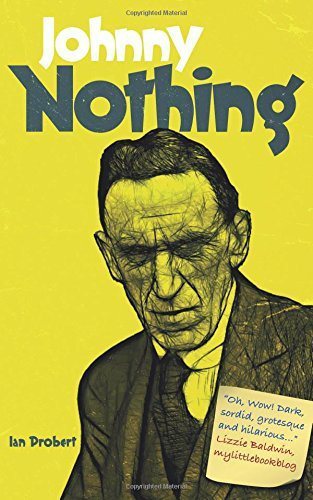
Johnny Nothing intro trailer
In March I’m going to be doing some readings of Johnny Nothing in schools around the country. As such I’m putting together an interactive show. Instead of some old codger sitting there reading his book I want to get the kids involved. There will be jokes, silly voices, quizzes and slide shows.
Here’s a brief trailer that I’ve put together as an intro to the readings.
Incidentally, if you want a copy of Johnny Nothing for your kid, your husband, your wife, your bank manager or your postman it’s available here:
And here:
And here in paperback:


February 17, 2015
Maisa My Dear ��� Chapter 02
I was so surprised by all the very nice comments I had yesterday after I upload an aborted project from 2011 that I’m putting up chapter two. I’m amazed that anyone would want to read this but ��� never one to turn down the chance of a bit of shameless self-promotion ��� here are links to my latest kids book ‘Johnny Nothing’ and some other stuff contained swear words that is probably not for kids.
Chapter 02
1964 ��� That Boy
I���ll always remember 1964 as a momentous year in which so much happened that it is difficult to know where to start. First there was sadness: sadness that was felt the world over when the American president was shot and killed by an assassin. Although this had happened late in 1963 it seemed to me that the world was in mourning for months and months afterwards. President Kennedy had been young and very handsome, too handsome to be a president. He had been sitting in a car with his wife when he had been shot. Everybody you met was talking about it, even the teachers at school. Maisa and me even saw Mr Trenchard, our rather strict and gruff geography teacher, start to cry in the classroom. This made some of the boys laugh and some of the girls cry.
Our house became a centre of mourning, with everyone from the street gathering around our TV to watch the news reports. My mother cried, too, and so did Auntie Florie, who was really my great grandmother but refused to be called that by anybody. Since the arrival of the TV Auntie Florie had more or less moved into our house. Although she actually lived in a small house just across the street from us she spent most of her time sitting in our living room watching anything that happened to be on the television. She was a nice old lady, and kind to me, but she had the annoying habit of providing a running commentary on everything that was happening on the television. ���Oh look,��� he���s being chased by that car,��� she would say in her broad Nelson accent if she was watching an American crime thriller. Or ���Oh look, the piano���s gone down the steps again!��� she would say if she was watching Laurel and Hardy. Whenever she did this I would start giggling and mum would shout at me to stop.
As well as sadness there was excitement: excitement at seeing my boys conquer America. In February 1964 the Fab Four, as the press called them, had flown to America to be met with hysteria. When their aeroplane touched down there were thousands of screaming teenage girls waiting for them. Later, they had appeared on American TV and had gone down a storm. They were more famous than it was possible to imagine. Everyone was calling it ���Beatlemania���.
By this time I was officially The Beatles��� Number Two Fan. Maisa was still Number One, of course. Although I was catching her up fast, she still had more pictures of them than me but unlike me, she was allowed to stick them on her bedroom wall. On Maisa���s urging, I had saved up my pocket money and joined The Beatles Fan Club. Every month I would receive a newsletter written by the Beatles themselves and at Christmas I received a floppy record that contained a message to their fans. It made me feel really special, like the boys were talking just to me. I even managed to persuade my mum to buy a few of their singles, although I had nothing to play them on. Because John was already taken by Maisa, my favourite Beatle was George. He was very handsome and always had a serious look on his face. He played lead guitar in the group and was very good at playing, it seemed to me he was the best guitar player in the whole world. I didn���t want to marry him, although deep down I thought that would have been nice, but he did make my heart beat a little faster whenever I looked at a picture of him.
Maisa and I were very proud of the Beatles��� success but were also a little jealous. We were jealous because there were only four of them and now they were so famous that every girl in the world seemed to want a piece of them. There was only so much to go round and we felt that we had more right than anybody else to the Beatles because we had discovered them first. It wasn���t so long ago that the grown-ups in our living room were shaking their heads and tutting in disgust and now it seemed that everyone wanted to be like the Beatles. The first sign of this was when some of the older boys in our school began to grow their hair. Prior to this the long established school hairstyle for boys was called a crewcut. This consisted of wearing the hair at the top of the head very short and having the hair at the back of the neck shaven away. It wasn���t a very flattering style but none of the boys seemed to mind too much. But now some of the boys grew their hair so long that they were called in to see the headmaster and ordered to cut it off or face detention or the cane.
Even worse, even more embarrassing was the fact that my father was now also growing his hair a little longer. ���A singer���s got to keep up with the times������ he would say as he left the evenings to go out and sing in the clubs. He had even changed how he dressed. Instead of his smart black suit he was now dressing a little shabbier. Mum laughed at this and said he should stop trying to look like ���mutton dressed as lamb������ But Maisa had a different opinion. ���He looks gear,��� she would say, which was a new word that had been invented by the Beatles. It meant ���good���.
***
Maisa and I were now officially best friends. In fact, she is probably the first and last best friend that I have ever had. I was an only child and she became the sister I secretly always wanted. Slowly but surely we began to spend as much time as possible together and became privy to one another���s closest secrets. I learned that in Pakistan it was the custom for parents to choose a husband for their daughters. Unsurprisingly, Maisa���s parents had not in fact chosen Beatle John as a suitable candidate. Instead they had selected another Pakistani whose name was Raj Patel. Maisa showed me a photograph of him one day and I was a little shocked to discover that he was more than ten years older than her and worked in a bank. Not only that, he had no hair! Maisa crinkled her nose up in disgust as she looked at the small black and white image. ���He���s an idiot,��� she said. ���I���m going to marry John.���
Having Maisa as a best friend was a double-edged sword. On the one hand she showed me a world that was completely new to me, she turned my life from black and white into full colour. And she she gave me the Beatles, without whom I probably wouldn���t be the person I am today. On the other hand it wasn���t easy being Maisa���s friend. One day we were walking to school and I heard a sound behind us. Following closely was a group of more than a dozen boy and girls. They were laughing at us and chanting ���Paki! Paki! Paki!��� Maisa ignored them but I turned around to face them. ���Why are you doing this?��� I asked.
One of the group, whom I recognised as Helen Walker, the girl that I had fought with, came forward towards me until her nose was almost touching mine. ���Shut your cake hole Paki lover,��� she smirked.
���You shut up!��� cried Maisa, suddenly beside me, her fist raised and ready.
It was at that point that I discovered a had a talent that I had not been aware of. I could run. And so could Maisa. And we ran, ran as fast as we could away from this gang of bullies. From that point on we would run a lot. And it was lucky for us that we were generally much faster than those who were chasing us. Every day we would run ��� from the gang of boys and girls who waited for Maisa and me near the school gates. At break times. At dinner times. And in the afternoons, when we would run all the way home. We didn���t really mind running. In fact, we rather liked it. We liked it because we had each other.
Once I asked Maisa about the word ���Paki���. ���Why do they call you that?��� I said.
���I don���t know,��� replied Maisa, ���I only heard that word when I came to England. It���s not a very nice word but it���s just a word. It doesn���t hurt me.���
Deep down, however, I knew that it did.
***
Yet another momentous event occurred in July of that year. For the first time ever I was allowed to go to the cinema without my parents. In those days were called it ���the pictures��� and I was luck enough to have already been to see quite a few films. My mother had taken me to see The Jungle Book and Mary Poppins and Bambi but on those occasions she had sat beside me and held my hand. Now, after pestering my parents for weeks and weeks, I was given permission to go and see the Beatles��� first film with Maisa. It was called ���A Hard Day���s Night���. My mother had been against us going and it was only when Mrs. Ahmed herself had knocked on our front door and asked in person that she finally grudgingly relented. Mrs. Ahmed took us on the bus to the small cinema in Nelson town centre. The queues outside the cinema stretched for miles and we had to wait patiently for more than two hours before we finally got a seat. As the lights dimmed we found ourselves surrounded by hundreds of teenage girls, most of whom were wearing Beatles badges and Beatles scarves. The film was in black and white and opened with the Beatles running through the streets being chased by hundreds of fans. But as far as what the story was about we had no idea because as soon as the film started every girl in the cinema began to scream frantically, some were even crying. After a couple of moments of this Maisa and I looked at each other and shrugged our shoulders. Then we, too, began to scream. We screamed for the whole of the film, we screamed until our voices grew hoarse and we could scream no more. We screamed for John, Paul, George and Ringo.
The day after the film neither of us could hardly speak and after the excitement of seeing the boys on the silver screen it was a terrible anti-climax to be at school, dressed in our PE kits and out on the muddy running track. Because we ran everywhere together all the time, Maisa and I were soon far ahead of the rest of our class. It was the 800 metres ��� two laps around the playing field ��� and we even had the luxury of being able to slow down a little towards the end of the race. I won easily and Maisa was second, with other classmates trailing miles behind us.
After the race Mrs. Roberts, the PE teacher, came up to us. Mrs. Roberts was a fearsome woman with sandy grey hair and a body like a walrus. She never smiled. All she did was bellow out orders and occasionally administer a whack with the back of her hand to anybody she thought wasn���t trying hard enough. Readying ourselves for obligatory telling off we were surprised when Mrs Roberts actually smiled at us. ���That was very good, girls��� she said, leaving us literally gobsmacked at receiving a compliment from this fearsome dragon. ���But you spoiled it by slowing down at the end. Next time I want you to run as fast as you can until you finish the race.���
A week later we did as we were told, too scared to risk disappointing Mrs. Roberts. This time Maisa came in first with me close behind her. The rest of the class were a long, long way behind. Again Mrs Roberts came up to us afterwards as we caught our breath. Once more she was smiling. ���That was excellent, the both of you,��� she said. ���I���m going to be writing to your parents about this.���
***
At first we thought that we must have done something wrong. When a parent of one of the pupils of Stoneyholme School received a letter from a teacher it was never a good thing. Usually, it was to call the parent in to school because their child had been exceptionally naughty. We knew, however, that we had done nothing wrong. Nevertheless, the both of us spent a couple of sleepless nights waiting for out letter to arrive. Mine arrived on the following Saturday morning and my father opened it. ���It���s from the school,��� he said, looking over at me as I ate my cornflakes. ���What have you done, Sofia?���
He read the letter in silence for a few moments and then looked over at me again. His face showed no emotion. Then he handed it over to my mother, who also read it in silence. By the time she had finished reading the letter a smile was on her face. Then she passed it to me. I still have that letter. This is what it said:
Dear Mr Probert
I teach Physical Education in year four. Your daughter, Sofia, is showing unusual promise at running. With your permission I would like Sofia to take extra running lessons with me after school. This will be free of charge. I believe that with extra tuition Sofia might well be capable of competing at a much higher level.
If you agree to my proposal Sofia will need running shoes and kit.
I await your reply,
Julia Roberts,
Stoneyholme School.
Maisa���s letter was identical and that���s how it all began. That was how Maisa I began running and running and running. But more of that later.
***
There were also other letters to think about. Because in that year Maisa and I began writing letters to the Beatles. It was Maisa���s idea. She said if she was going to marry John then it would be a good idea if he first knew who she was. And so, once a month, she would write a letter to her future husband asking how he was, what he was doing, how he was feeling. She suggested that I do the same with George and we would see who got a reply. I did as she she said but there was one big problem ��� the meagre pocket money that my parents gave to me could barely cover the cost of my subscription to the Beatles Fan Club. I needed to find a means of making some more money.
Maisa didn���t have the same problem. Every night when she came home from school she served in her parents��� shop for a couple of hours. She enjoyed doing this and her parents even paid her a small wage that was more than enough to fund her passion for the Beatles. Maisa suggested that her parents might let me come and help in the shop and also pay me a wage and when we asked them they seemed quite pleased about it. They didn���t really need another shop assistant but they were glad that Maisa had a friend to keep her company. Before I could begin work, however, I needed my parents��� permission.
���You must be out of your tiny mind,��� said my mother, when I nervously broached the subject with her. ���You���re not working in that Paki shop!���
Everyone in our neighbourhood now called it the ���Paki shop���. And it was disturbing to me because nobody seemed to realise how insulting this was. Everyone, that is, except my father.
���I think it���s a good idea,��� he said, ���The girl���s got to learn to make a living ��� and don���t call it the Paki shop!���
���Well it is the Paki shop, and think what the neighbours will think if they see Sofia working there. The shame of it������
Mum and dad had very similar backgrounds: both were Nelson born and bred and both were the children of coal miners. But when it came to people from other countries they had very different attitudes. Mum was staunchly against anybody who wasn���t white and wasn���t from Nelson. Nowadays she would be known as a racist but in those times the word simply didn���t exist. Dad was different; I think it was his love of singing and music that did it. He was a very strict man but he was also very tolerant of others who were different than he. To my mother���s obvious disgust he even boasted of drinking beer with black people when he was up in the clubs in Manchester. I was very impressed by this because apart from on the television I had never even seen a black person in the flesh.
So there was another argument and in the end my father got his way. This was the way it was in Nelson. It was the men who made the decisions. Or rather, as I was to learn, it was the men who thought that they made the decisions. And I was allowed to work two evenings a week in the Amheds��� corner shop so that I could earn enough to keep myself in stamps, posters and records. I was overjoyed.
But then there was more sadness. One Saturday afternoon I called around to see Maisa to be told that she didn���t want to come out to play. ���Maisa���s not feeling herself today,��� said Mrs Ahmed when I asked what was wrong. ���But why don���t you go and see her in her room. Perhaps you can cheer her up.���
I climbed the stairs and knocked on Maisa���s room but there was no answer. I knocked again and finally pushed open the door to find the room in total darkness. Buried under the bedclothes could be seen a small bump that was Maisa.
���Maisa, what���s wrong?��� I said but there was no response.
I sat down on the bed and repeated my question. Slowly, the bedclothes peeled away and there was Maisa, her face streaked with tears.
���Whats the matter?��� I asked again. ���Has somebody hurt you?���
���Yes,��� came a feeble response.
���Who?���
���John,��� came the answer.
My sobbing best friend sat up in bed and told me what had happened. This morning she had picked up a copy of the Daily Mirror newspaper and seen a picture of John. Maisa���s parents always allowed her to look over the Daily Mirror. If there were any pictures of the Beatles she was allowed to cut them out and stick them in her scrapbook. She picked up what remained of the crumpled newspaper and handed it to me. On the front was a picture of John smiling at the camera. Holding his hand was a pretty blond woman.
���He���s married,��� said Maisa. ���He���s betrayed me. He���s already married. What am I going to do?��� And with that Maisa pulled the bedclothes back over her head and burst into tears. I put my arm around her sobbing body and cuddled her. I cuddled her for the whole of the afternoon until she had cried so much that there was no more tears left to cry.


February 16, 2015
Racism in the Sixties ��� Maisa My Dear
A little background to what you are about to receive���
What if anything is a blog? What function does it serve? For me there are a number of reasons as to why I’ve purposefully set out not to be left behind by��this craze for putting whatever you’re thinking about online into the public domain. Probably principle among these reasons is the fact that a blog can be used as a convenient dumping ground; a place where you can put things that really have no place anywhere else. This little fragment of a story that I’ve entitled ‘Maisa My Dear’ belongs in that category.
Now some background to my background:
I wrote this in about late 2011 when I was still suffering from something called undiagnosed hypothyroidism. If you want to know more about this ��� which I seriously doubt ��� there are articles I’ve written about this on this blog as well as on��The Guardian and the Daily Mail websites. Suffice to say I was feeling pretty shitty and actually about as close to death as I’ve ever been. I was seriously in a bad way and spent my nights laying awake in bed contemplating the nature of the universe (I really did!) and wondering how I could make my death as easy as possible to take for my wife and young daughter.
In the daytime I was crippled by something called ‘brain fog’, which in simple terms made thought very difficult indeed. I couldn’t concentrate; in fact, I hadn’t been able to concentrate in any real sense since my last book ‘Rope Burns’ was published way back in 1999. But I was still trying.
What tended to happen with me would be that I would start working on an idea and simply run out of gas. It happened to me time after time and left me thinking that I’d never again be able to write anything of any appreciable length. To compensate I dabbled with other things that took less concentration: I wrote songs and tried to record them, I tried poetry, I wrote occasional articles for magazines. But I always wanted ��� craved ��� to return to writing books.
‘Maisa My Dear’ is the result of one of my bursts of energy that petered out. It’s an aborted attempt at a children’s book. Let me give you the background to the background to the background of that one:
I was born in the 1960s in a small mining town in the north of England called Burnley, a place that is now the epicentre of racism in this country. My��family��left Burnley when I was nine-years-old in a somewhat controversial way. They were, you see, one of the first people to sell their terraced house to a family from Pakistan. And our neighbours were certainly not happy about this. I wanted to incorporate this into a book.
With ‘Maisa’ I was trying to achieve a number of things:
1/ I wanted to write from the perspective of a female.
2/ I wanted the main character, Maisa, to be from Pakistan and encounter racism.
3/ I wanted the book to be set near Burnley, I chose Nelson which is a couple of miles away.
4/ I wanted Maisa’s��best friend to be white and also encounter racism because of her association with Maisa (one of my best friends when I was a kid was from Pakistan).
5/ I wanted Maisa��to run: to run so often and so fast that it eventually became her career, representing her adopted country in the Olympics.
6/ I wanted the book to be set in the Beatlemania of the sixties (hence the title), so that every chapter was linked to changes in the Beatles��� appearance and music, which itself mirrored��changes in social development.
7/ Oh, and I wanted it to be a cracking story.
When I was writing ‘professionally’ in the 1990s my habit was to write three chapters and a synopsis and send them to my agent, who would then try to get a publisher to buy it. This is what I did with Maisa My Dear except that by now I had long since discarded my agent. So I sent it to a new agent (only one) and even though I hadn’t written anything for years I was still cocky enough to think that the agent would instantly bite. The fact that she didn’t was a bit of a blow to my confidence which was already terminally depressed because of the hypothyroidism. So I dumped the book. Until now.
So now, in the dumping ground of my blog, here is ‘Maisa My Dear’. I’m not expecting anybody to read it (because deep down I have a feeling that nobody actually reads anybody’s blog) or indeed comment upon it. But it’s here. Belonging to an era��when I was almost dead. And probably reading like it.
Chapter 01
1963 ��� I saw her standing there
I���m not going to tell you my name. I���m not going to tell you my name because if you know who I am it might change the way you think about what you���re about to hear. For the purpose of this story ��� which isn���t really a story because everything I���m about to tell you is true ��� you���re going to know me as Sofia. Sofia is the name of my granddaughter and she is just about ten years old, which is how old I was when I first met Maisa all those years ago. I���m borrowing my granddaughter���s name because she���s going to help me remember. Not remember events or dates or things that happened but help me to remember how I used to be when I was a little girl. Because every time I look at Sofia I see myself as I was almost fifty years ago and if my memory gets a little vague, if I have trouble recalling exactly who said what, and how so-and-so happened I only have to think about how Sofia might have reacted had she been in my shoes, what Sofia might have said in such-and-such a situation and I know that I would have behaved in exactly the same way.
My story begins one Sunday evening on 13 October 1963. I remember the date very clearly because it is a special date. It is a date in which three things happened that would change my life. The first thing that happened is that my dad bought our first TV. Actually, that is not strictly true – the TV was delivered to our house the day before but because dad was away working in Manchester we did not actually plug it in and switch it on until Sunday morning. My mother and I were too scared to touch it until he returned.
Of course, anyone reading this now will probably already have started to think that this old lady is a little crazy. After all, these days televisions are just about everywhere aren���t they? In fact, if you don���t own a television, people will probably think that there is something wrong with you. But in those days a television was a marvellous, mysterious thing that looked nothing like those sleek shiny giant flat screens that you have in your living room. For one thing they appeared to be made of wood, shiny varnished wood that looked like an old-fashioned cabinet that you might find in an antiques shop, and for another they were enormous heavy things that took two or three people to lift and the screen was tiny and only in black and white. This is perhaps why all my memories of my childhood seem to be in black and white.
I was born in a small mining town in the north of England called Nelson, which was named after a pub called the Nelson Inn, which itself was named after the famous Admiral Nelson, who defeated the French at Waterloo. If the name conjures up colourful images of swashbuckling sailors battling with cutlass and cannon for the freedom of their country then nothing could be further from the truth. In Nelson you were hard pressed to find a colour that was anything but grey. The streets were grey: grey, hard cobblestones. The houses were grey: grey, cold, dull and monotone. And the people were grey: grey, ashen faced and work weary ��� and if they weren���t grey then they were black, black from the coal that most of the men spent their lives digging up from the ground.
My father was one of the lucky ones: he worked as a foreman in a factory that made car engines, which was quite an important position. Compared to a lot of his friends he was relatively well off, although there was never a week that went by in which he did not run out of money by Tuesday. My mother also had a job, as did all the other women in the town. She was lucky, too, because she was good at sewing, so good that she didn���t even have to go out to work. Each day she would clear a small space in the corner of our cramped living room and sit behind a sewing machine and magically conjure up beautiful dresses and coats with the help of pieces of tissue paper that she called ���patterns���. She didn���t earn a fortune doing this but she made enough money to ensure that there was always food on the table. Father also had another source of income: he had been blessed with a deep, rich baritone singing voice. And every Saturday he would grease back his hair, put on his best black suit and head off to the clubs to croon whatever happened to be in the Hit Parade that week. For this he was usually paid a small fee and given as much beer as he could drink. That was what he was doing on the Saturday that the TV was delivered. He was on the bus to Manchester to sing in one of the clubs.
Quite why my father decided to get a television I will never know. Even though we were better off than a lot of people who lived on our street we could ill afford it. In fact, in those days nobody could afford a television. For this reason, the only means of getting a television into your living room was to rent it. This meant having somebody knock on your door every Thursday evening to pick up a rental fee that was always paid in cash. Many���s the time we had to wait for that knock on the door with the lights in the house turned down, pretending that we were out. But get a television we did and my mother and father were determined that everybody else in the street would know just how far they had come up in the world. An open invitation was extended to friends and neighbours for the grand unveiling of our TV set and you could scarcely move in the living room of our small terraced house as my father reached down and switched on this wondrous machine with a twist of the pearly white ���on��� switch with a satisfying ���click���.
If I close my eyes I can still remember that moment as if it were yesterday. My father, now out of his best suit but his hair still greased back, standing proudly smoking a cigarette along with all the other men in the house. A small dot of white light appearing in the centre of the tiny screen, and the smell of burning dust as the television slowly buzzed into life. There was nothing instant about televisions in those days: if you wanted to watch the magical moving images that shone from the screen you had to be prepared to wait while the machine warmed up; you had to have patience.
Amazingly, the first thing that appeared on our television that night was the black and white image of a smiling besuited Bruce Forsyth introducing the acts on a programme called ���Sunday Night at the London Palladium���. Nothing, it seems, really ever changes. Because I was only ten years old and smaller than everybody else in the room I was allowed to stand at the back of the room on a wooden box to watch the first act on the show, a comedian whose name was Dave Allen, go through his paces. Soon our little living room was filled with gasps of wonder at the sight. Most of our friends and neighbours had never even seen a television, let alone watched one in action. To them it was as if a small piece of magic had suddenly been brought into their grey, overcast world. I���m not kidding but some of them truly believed that the foggy black and white figures shining from the screen were actually inside the television set. These gasps of wonderment quickly turned into laughs, giggles and guffaws as the people in the room began to forget their amazement and listen instead to the comedian���s funny jokes. It was then that I became aware of another person standing next to me. It was then that I felt the presence of Maisa. It was then that the second thing that was to change my life forever inched its way into my world.
Maisa was just a little taller than I and had shoved her way through the crowd of onlookers in the hope of sharing my box. Without a word, I felt an elbow in my ribs and Maisa was suddenly nudging up tight beside me. Torn between my desire to continue watching the incredible images on the screen, I stole a look at the newcomer and what I saw was even more incredible than the television. Maisa was like nothing I had ever seen before. She had coffee coloured skin and long dark hair that cascaded wildly down her back. Her eyes were black as coal and she was wearing a strange patterned dress that amazingly was not grey – it was red and green and gold and blue and purple and orange with gold braiding, and even more amazingly, she appeared to have a small metal stud through her nose. Her appearance was every bit as astonishing as what were we were witnessing on the television screen ��� and I was not the only person in the room to have noticed her. As I looked on dozens of pairs of eyes in the room slowly turned away from the screen to stare at the apparition that seemed to have appeared from nowhere. Mouths fell open, more than one cigarette dropped to the floor and the sounds of laughter were once again replaced with gasps of astonishment. Maisa smiled.
Standing sheepishly by the entrance to the living room were two other amazing apparitions ��� Maisa���s parents. Less extravagantly dressed, but equally remarkable in appearance. Not many people knew it then but Mr and Mrs Ahmed had just moved into our little street. They had taken over the the corner shop at the end of our road that sold things like bread, milk, Oxo cubes, potatoes and sweets. In the midst of moving boxes and suitcases into their new home they had somehow heard of the open invitation to the unveiling of the television and had been just as intrigued as everybody else. They were here to meet the neighbours and to witness the future. And they had brought their daughter along with them. The Ahmeds were from Pakistan, a place that I had never even heard of, nor for that matter had a lot of the people in the room. Like Maisa, they smiled back at us all.
It was at that moment that something else happened and once again all eyes turned back to the television screen. What had caught everyone���s attention was the noise that was coming from that direction. It was a sound that was every but as foreign to me as the strange looking people from Pakistan. Once again there were more gasps from the room. On the screen were four young men. They were dressed in smart black suits and three of them were playing electric guitars ��� very loud electric guitars. The other young man was sitting behind a set of drums and literally hammering the life out of it. All of the young men had long hair, ��� longer than many of the girls in my class. The sound they made was music but it did not sound like any music I had ever heard. It was filled with screams and howls and yelps that seemed to come from another world. That noise that I heard in that room was the third thing that was going to change my life forever.
My father stretched his shoulders and shook his head and lit up another cigarette. He always seemed to have a cigarette in his mouth. To a man everyone in the room glared in disapproval. Such disapproval, however, did not seemed to be shared by the television audience which seemed to consist of hundreds or maybe even thousands of teenage girls who at once launched into a cacophony of screams that quickly began to drown out the music. The song ��� if it could be called a song ��� came to an abrupt end and one of the young men looked up into the auditorium and said: ���For those of you in the cheap seats I’d like you to clap your hands to this one; the rest of you can just rattle your jewellery.���
���Bloody cheek!��� scowled my father as some of the men in the room began to boo.
It was this point that that I felt hot breath on my cheek. Maisa had moved closer to my ear and was saying something to me. ���That���s John,��� she whispered. ���I love John. I���m going to marry John.���
***
Like everything else in Nelson, school was also grey. But sometimes it was red. In my school, which went by the name of Stoneyholme Junior School, the girls were just as prone to fighting with each other as the boys were. And it was during one of these almost daily scuffles that I met Maisa for the second time.
Generally, fights occurred after school by the large rusty metal main gates. There, a crowd of dozens of excited school children would gather in the drizzle (in Nelson it always seemed to be raining) to witness the drawing of blood. Often a couple of teachers would stand guard as events unfurled. Not to stop the fights but to watch.
It was the Monday after the unveiling of the television set and school had been no different to how it usually was. This consisted of lessons in spelling, sums, a game or two of netball in the school yard and the odd whack with the ruler for any boy or girl who had strayed out of line. Fights at school were often compelling events, undoubtedly the highlight of the week, and I, like all the rest, immediately sought out a good vantage point when the shouts and howls of excitement that could be heard from the school gates as we headed home indicated that something was about to happen.
This, however, was an unusual fight: it was not between two children but three: three girls, in fact. From my vantage point close to the the gates I watched as a tangle of bodies rolled about on the harsh cobbles, an occasional arm surfacing clutching a handful of hair. The crowd of watching children seemed even more excited than usual: their shouts became louder and more urgent as they demanded blood. It was then that I noticed something different about one of the figures on the floor. The person in question was wearing a strange multicoloured coat and her skin was darker than the other two girls, who both attacked her with ferocity. She was giving back as good as she got but the disparity in numbers was taking its toll. She was losing and taking a beating in the process. It was Maisa.
It was then that I did something that every ounce of common sense told me not to do. I don���t know why I did it, I still, to this day, don’t know why I did it, but I did it. Without thinking I moved toward the trio of figures and pitched in. One of the attackers I recognised as Trudy Grainger, a particularly nasty piece of work from the fourth year with a face like a bulldog who made a quiet living by taking some of the younger children’s dinner money. As she concentrated on administering a savage beating to Maisa I took hold of her long red hair and gave it one almighty yank. There was a scream of surprise and pain. I followed this by running my sharp nails down the side of Trudy���s face. Immediately, blood began to flow.
My unexpected attack left Maisa���s assailants temporarily non-plussed. The other girl, whose name was Helen Walker ��� another from year four who seemed to spend most of her time bullying the younger girls ��� momentarily released her grip on Maisa, allowing her opponent the chance to retaliate. This she did with a force and brutality that left the onlooking crowd speechless. Maisa was like a wildcat: throwing herself on top of her aggressor and sinking teeth and claws into face and neck. Before anyone had the chance to know what was happening the two older girls were retreating. You could have heard a pin drop when moments later the fight was ended in the customary way: ���Give in?��� said I. ���Yes��� all right������ said the other two girls reluctantly. Thus, in a matter of mere seconds I had managed to make myself two worst enemies and one best friend. School would be a different place in many different ways from now on.
Maisa and I walked home together. The colourful coat that she was wearing was now covered in grey Nelson grime and there was a tear or two here and there. ���Thanks for that,��� she said. It was the first time that I heard her speak aloud and I was a little taken aback by her accent. Broad Nelsonian it was not.
���That���s OK, ��� I replied. ���I couldn���t really let them beat you up, could I? Two against one isn���t fair.���
We chatted some more until we reached Belgrave Street, the street in which we both lived. Maisa, I learned, was from a city in Pakistan called Islamabad which, she said, was bigger and more beautiful than any city in the world. Maisa had been very happy there and had gone to a large school for girls only. Her parents, she said, were very wealthy but had been forced to flee the country when her father had given an interview to a newspaper criticising the government. Along with her older brother, Solomon, they had taken a long, uncomfortable and hazardous boat ride to England, eventually arriving in Nelson. Maisa said that she longed to go back to Pakistan but might have to wait a very long time for that to happen.
We reached Maisa���s parents��� shop, still with the previous owner���s sign above the door and she beckoned me in. Maisa���s mother was standing behind the counter wearing an exotic patterned dress that looked a lot like the one Maisa had been wearing in our house the night before. She smiled as she saw me enter and said: ���Hello there. I see Maisa has made a friend. That is very good, Maisa.��� Then she saw the dirt on Maisa���s coat and her smile quickly evaporated. ���Maisa!���she said angrily. ���What have you been doing! Your coat is ruined!���
Maisa began to explain but before she could even speak her father appeared, looking even angrier than his wife. ���Maisa!��� he cried. ���Go to your room. Now!���
It was then that I stepped in to help Maisa for the second time that afternoon and explained what had happened. How Maisa had been picked on by two older girls. How it wasn���t really her fault. Her father stopped looking angry and smiled at me. ���What is your name, young lady?��� he asked.
���Sofia,��� I replied. ���Sofia Probert.���
���Well then, Sofia Probert,��� said Mr Ahmed. ���In that case we all owe a very big debt to you. Please let me offer you a gift as reward for your valour.���
I took a look around the shop. At the cans of beans and the loafs of bread and the packets of tea. ���That���s OK,��� I replied. ���You don���t need to do that.���
Mr Ahmed���s smile grew broader, as did that of his wife���s. ���I see that you are an honourable person, Sofia Probert. Only an honourable person would refuse a gift.���
���Not really,��� I shrugged.
���Honourable and modest,��� said Mrs. Ahmed.
Mr. Ahmed reached into a drawer in the till and pulled something out of it. He leaned over the counter towards me. ���Come here, Sofia Probert, please,��� he said.
���Go on!��� urged Maisa.
I edged forward and Maisa���s father slipped something into my hand. It was a thin chain made of a gold-coloured metal. Attached to it was a shining stone that was dark green in colour. ���Please take this,��� he said. ���In my country we give these necklaces to only the bravest and most honourable people. And you are both.���
���I can���t,��� I said, feeling slightly embarrassed.
���You can!��� smiled Maisa.
I took the necklace and placed it around my neck. It felt heavy and I felt proud. I thanked Maisa���s parents and made for the exit.
���Before you go, Sofia Probert,��� said Mrs. Ahmed, ���It would be our honour and privilege if you would come to our humble house for tea. Sunday will be good, yes? Be sure to ask your parents permission.���
***
���Oh let her keep it. It���s not causing anyone any harm, is it?��� said my father.
���No, I want her to give it back. I don���t want her accepting charity from those sort of people,��� replied my mother.
���What sort of people?���
���Pacis!���
When I had returned home clutching my new gold necklace and told my mother how it had come into my possession she had reacted in an unexpected way. Instead of congratulating me for protecting our new neighbour from a beating she quickly grew angry, first accusing me of stealing the necklace and then demanding that I give it back. When my father returned home from work, my mother quickly sought his support. I was confused. Surely I had done a good deed? Why was she insisting that I return my reward for that good deed? And why was she so angry? And Pacis? It was the first time that I had ever heard that word and by no means the last. What did it mean? My father read my mind and asked the same question:
���What do you mean ���Pacis���?��� he asked.
���Pacis,��� repeated my mother. ���People from Pakistan. That���s what they call them.���
���That���s what who calls them?���
���Well��� Everyone.���
I was ushered out of the room as the discussion continued. Sitting at the top of the stairs I listened to raised voices beneath me. My mother grew increasingly agitated as my father tried to reason with her. This went on for some time until I was finally called back into the living room to hear the outcome of the conversation. I was told to put my coat back on and my mother marched me down the street to the Ahmeds��� corner shop. Mr Ahmed was standing behind the counter when we entered. ���Good evening, Mrs Probert,��� he said, smiling broadly at us. ���What can I do for you and your beautiful daughter?���
My mother looked embarrassed as she spoke. ���That necklace that you gave to Sofia,��� she said. ���I want you to take it back.���
Mr Ahmed looked up from the counter and small frown spread across his features. ���Take it back?��� he said. ���Why would you do this?���
My mother looked down at her feet and took a moment or so before responding. ���We don���t want it,��� she said.
���But why?��� repeated Mr Ahmed. ���You daughter did a very valiant thing today. It gives me great pleasure to offer a small reward for her help and bravery.���
���Well we don���t want it��� It���s not needed.���
Mr Ahmed shrugged his shoulders and looked in pain as I edged forward and placed the necklace on the counter.�� ���I���m very sorry,��� he said, looking into my mother���s eyes, ���It was not my intention to offend you.���
���You haven���t offended us. We just don���t want it,��� said my mother. And with that she turned on her heel and left the shop.
���I���m sorry,��� I said to the shopkeeper. ���I didn���t mean to cause any trouble.���
���You didn���t,��� said Mr. Ahmed, who could see that there were tears in my eyes.
���Come on Sofia!��� ordered my mother.
***
After that I decided it would be best if I didn���t mention Sunday���s tea invitation to my mother. I knew that if I did she would stop me from going. So on Sunday afternoon I left the house, telling my mother that I was simply ���going out to play���.
That���s another thing that I ought to mention to you before we go any further. In those days children of all ages were allowed to leave the house on their own and simply go out to play. It seems incredible now, doesn���t it? But that���s what we did. There was no such thing as play-dates like there are nowadays. If a child wanted to play with another child he simply knocked on their door and asked. When I was a child I spent hours and hours and hours ���playing out��� on the streets with other kids and most of the time my parents would have no idea where I was, nor were they remotely concerned. They had nothing to worry about. There was a safety about those days, an innocence. Maybe it was because there were considerably less cars on the roads or perhaps it was because people trusted each other more. Whatever the case I feel a little sorry for children growing up today ��� their parents worry about them a lot more than they used to and they���re missing out on an awful lot of fun.
And so it was that at 4.00 pm on Sunday afternoon I found myself sitting in the Maisa���s living room, drinking tea and eating cake with the Ahmeds, who seemed a little surprised that I had actually turned up. ���Did you tell your mother that you were coming here?��� asked Mrs. Ahmed, who I noticed for the first time also had a metallic stud through her nose and had a small jewel attached above the bridge of her nose. I wondered how this was done ��� was it glued into position or had she had an operation to place it there permanently?
���Yes,��� I replied innocently, not really sure if the Ahmeds quite believed me.
The Ahmeds��� living room was a bit of a mess. They were still in the process of moving in and it was full of unpacked wooden crates overflowing with their possessions, as well as cases of baked beans and other groceries from the shop. Indeed, every now and again the bell to the shop would ring and Maisa���s parents would take turns serving behind the counter. This again was a new thing for me. The previous owner of the shop, Mr Bartholomew, who was always bad tempered and had a wooden leg, had never opened the shop on a Sunday. In contrast, the Ahmeds never seemed to close it. Once or twice, Maisa was even allowed to go and serve, which I found amazing.
After we had eaten I was allowed to go upstairs to play with Maisa in her bedroom. On the stairs I met her brother Solomon for the first time. He was about fifteen-years-old and very tall and handsome with skin that was even darker than the rest of his family. As Maisa and I passed by he gave me a smile, revealing the whitest set of teeth that I had ever seen. And then he took my hand and shook it, ���So this is the brave Sofia,��� he said. ���It is my honour to meet you.���
Maisa���a bedroom was even smaller than my bedroom at home but here the similarity ended. Whereas my room was a dark drab little place with only a couple of pictures on the walls and a few books scattered here and there, Maisa���s bedroom was covered from floor to ceiling with pictures, pictures of young men with long hair, pictures of the group that we had witnessed on our television set the previous Sunday. And in the corner of the room was a small blue coloured box that I recognised as a record player. Beside it was a stack of shiny black disks. ���This is my Beatle room,��� announced Maisa.
For the next few hours Maisa gave me the history of these strange young men. The pretty one was called Paul, the handsome serious looking one clutching a guitar was called George, the one with the big nose was called Ringo and the angry, intelligent looking one was called John, ���He is the man that I���m going to marry,��� explained Maisa. Together these for young men formed a pop group called the Beatles. Of which Maisa was apparently their Number One Fan.
Alongside the posters on the wall were attached dozens of newspaper cuttings, and drawings of the Beatles by Maisa, mainly of John. ���Let me teach you how to scream,��� smiled Maisa. With that she placed one of the shiny black disks on the record player and lowered the needle on to it. The sound that came out of the record player was crackly and strange. The song they were singing was called ���She Loves You��� and seemed to consist of a lot of howling and ���yeah, yeah yeahs���. Nevertheless I instantly fell in love with this exotic sound. Then Maisa cupped her hands around her mouth and let out an ear splitting scream. ���You try it,��� she said. ���You���ve got to scream when you���re listening to the Beatles. It���s the rule.��� So I did as I was told and soon the room was filled with our youthful screams, until, that is, there was a bang on the bedroom door.
���Maisa, enough!��� ordered Mrs Ahmed.


February 13, 2015
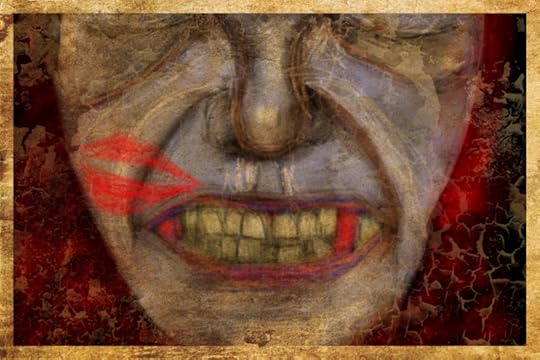
Kissing a corpse ��� excerpt from kids book Johnny Nothing
Because it’s Friday and I have a slight hangover after��watching the second episode of ���Better Call Saul��� last night and really getting��through the wine, today’s offering is more shameless advertising. I feel an apology coming on. No I don’t. It’s an excerpt from my kids book ���Johnny Nothing’, which you can buy, rent and see reviews for here: Johnny Nothing. If you have bittorrent��there are even places that you can steal it if that’s your inclination.
Critics have called Johnny Nothing ‘The funniest kids book ever written���’ (Well, actually I just made that up. But it’s a helluva quote.) In an ideal world, of course, you will take one read of what follows, burst your hernia laughing, rush to buy it for your kid(s) or yourself and then insist that all of your friends read it. Shame that the world isn’t ideal.
Anyhow’s, hope it raises the odd titter.
Chapter 03 ��� Kiss
There. That���s all the main characters in the book dealt with. It���s at this point that you might decide that you���ve had enough and go off and read something by Jacqueline Wilson or Roald Dahl instead. I wouldn���t personally advise it. But there���s no accounting for taste.
If, however, you���ve decided to tough it out for a while longer then it���s your turn to do some work. You have some serious story reading to do. So come with me and imagine a big, dusty old church with Uncle Marley���s icily cold body lying on its back at the front being stared at from the back by a handful of people who really didn���t like it when it was icily warm. Phew.
Have you ever seen a dead body with all its insides scraped out (and maybe sold to the local kebab shop) and then stuffed to the brim with ��50 notes? Neither have I. But from the expression on the faces of most of the people staring at Uncle Marley, this was exactly what they were seeing.
When they looked at Uncle Marley they just saw money. Rolls and rolls of banknotes. Bundles and bundles of bunce. Loads and loads of loot. Dollops and dollops of dough. A stash of cash. A wagonload of wonga.
They saw a limitless supply of frozen horsemeat lasagne from Iceland. An everlasting collection of flat-packed cardboard boxes containing things that were impossible to put together from Argos. He was their cold, dead, smelly ticket to everything they had ever dreamed of.
If I had the time and I was feeling in the mood I could give you a lovely description of the interior of the church. You���d be really impressed. I could talk about how the warm summer sunshine was streaming in through the beautiful stained glass windows. About the exquisite carved wooden pulpit that dated back to Queen Victoria. About how John McVicar was secretly questioning the existence of God. Or about how the bloke playing the organ was growing really irritated because he was hardly getting a mention in this story.
But that would be rude because Ebenezer Dark was currently speaking:
������so I think we���re all agreed that Jake Marley was a very, very nice chap indeed��� Lovely fellow��� Splendid bloke��� Now for the reading of the will������
In reality, of course, he said a lot more than this. But one of the good things about writing stories is that you can leave out whatever you feel like leaving out. And I���m leaving out most of what he said about Uncle Marley because it was pretty dull and I���m keen to get on with the action.
���About time, too!��� said Mrs. MacKenzie grumpily agreeing with me. ���This is pretty dull and I���m keen to get on with the action!���
���As you all know, Mr. Marley was an extremely wealthy man��� He was also a very unconventional man��� Mr. Marley liked to do things a little differently than most people������
Everybody there silently agreed that Uncle Marley was indeed stinking rich. Rich and stinking. But nobody there was that aware that he liked to do things a little differently because when he was alive he never left his house. But that didn���t stop Mr. Dark from reaching up and pulling back a huge curtain that he was standing in front of to reveal a giant flat screen TV. (Did I mention before that Mr. Dark was standing in front of a huge curtain that concealed a giant flat screen TV? Sorry if I didn���t.)
���Many of you will not be aware that before he died, Mr. Marley didn���t write a will������ explained Mr. Dark.
There was silence for a few moments while everyone tried to get their heads around the double negative in the last sentence.���1 This was followed by a collective gasp of disappointment. Sort of: ���Haaawwwwww!!��� The sort of noise that people make when their favourite football team misses a penalty. One or two people said some pretty nasty swear words.

Back to Mr. Dark:
������instead, he recorded a short video that outlines exactly what he intended to do with his vast fortune.���
There was a collective gasp of relief from the gathering, sort of ���Yeeesssshhhhh!���. The sort of noise that people make at football matches when the opposition have just missed a penalty. One or two people reluctantly apologised for swearing.
���However, before I can play the video to you, I have a minor request.���
Mr. Dark self-consciously shuffled the papers he was holding and cleared his throat, making a noise that is almost impossible to describe in words. Sort of: ���Hhhmmppphh��� Bedrummpphh������
No, that wasn���t it.
���Mr. Marley was always touched by how much affection you had for him������ he intoned. ���And before he died, your love for him was an undoubted source of comfort������
Some of the mourners raised their eyebrows. The rest simply lowered their eyeballs. Most people there hated Uncle Marley more than Brussels sprouts boiled in liquid horse manure served with rat tails on toast and knew that he hated them just as much. They were jealous of him: jealous of his wallet, jealous of his big house in the country, jealous of his giant TVs. They hated him as much as Itchy hated Scratchy. As much as grown-ups hate traffic wardens. As much as you hate homework (although there���s always one or two sneaks who pretend to like homework. (If your teacher is reading this story to you right now, turn around and pull faces at the class sneaks to make them feel really uncomfortable.))
������so before we play his video he thought it would be nice if you all gave him a tender kiss.���
There was silence in the church for a few moments as this comment sank in. And then Felicity MacKenzie���s voice rang out: ���This is a joke, right? I���m not kissing a dead body ��� no matter who it is.���
���Quite right,��� agreed her husband nervously.
���Not likely,��� added Uncle Sydney.
Mr. Dark looked uncomfortable for a few seconds. Then his face hardened and he stared intently at the piece of paper he was holding before he spoke again. ���I���m sorry but I really must insist. It specifically says here that there will be no will unless everyone kisses Mr. Marley.���
���Why don���t you kiss him then?��� demanded Mrs. MacKenzie.
Once again Mr. Dark looked at the piece of paper. ���It says here that I mustn���t kiss Mr. Marley. Which is a great pity, you know, because I was terribly fond of him.���
���Gimme that piece of paper!��� ordered Mrs. Mackenzie.
Mr. Dark looked a little scared for a moment and hugged the paper to his chest. His face softened. Then it hardened again. Finally it softened one last time: ���It says here that if anyone else reads this paper the will is cancelled,��� he said cagily.
The gathering once more fell silent for a moment and then Billy MacKenzie spoke for the second time in this story. ���Come on Fliss���, he said (���Fliss��� was what Billy sometimes called Felicity. Like a lot of people he was simply too lazy to be bothered to pronounce all the syllables in a name. It was too much like hard work.). ���Just get it over with. Think of the dosh.���
There was a further spell of silence as everyone wondered what they were going to do next. It was bad enough spending a morning sniffing a dead man but kissing him?
���Oh very well!��� said Mrs. MacKenzie angrily, looking over at Mr. Dark and then at her husband. ���Go ahead and kiss him then.���
���Me? Why should I?��� said Mr. MacKenzie looking aghast.
���You do it then!��� ordered Mrs. MacKenzie, turning towards Sydney.
���After you,��� replied her brother, edging away from the coffin.
Mrs. MacKenzie stood and looked at the body of her brother for a few moments. She turned her nose up at the smell, which seemed to be getting worse with every second. She crinkled up her nostrils. She shrugged her shoulders. She closed her eyes. She bravely clenched her large and floppy bottom cheeks. Then, without warning, she reached over and very quickly planted the briefest of kisses on one of Uncle Marley���s face cheeks. A bit like the one that you give to your grandma when she tries to kiss you with a runny wet mouth that tastes of old humbugs.
���Uggggghhhh!��� she spluttered, showering Mr. Dark with a delicate fountain of spittle. ���Happy now?���
Ebenezer Dark slowly shook his head and once more regarded the paper he was holding. ���I���m sorry but that won���t do,��� he said, although from the tone of his voice he didn���t really seem that sorry at all. ���It���s says here that you have to kiss Mr. Marley on the lips.���
���You what?!��� exclaimed Mrs. MacKenzie. ���I���m not kissing a dead man on the lips!���
Mr. Dark shrugged his shoulders. ���Then there���s no will,��� he said. ���It���s all written down here in black and white.���
���Really!��� said Mrs. MacKenzie. ���This is outrageous!��� Nevertheless, after a moment of hesitation she reached over to the corpse of her brother and quickly gave him another kiss, this time on the lips.
���Your turn,��� she said in relief, spitting something gunky onto the floor and looking angrily towards her husband.
���I���m terribly sorry,��� interrupted Mr. Dark. ���But it says here that the kiss must be for at least half a minute or all of Mr. Marley���s money will go to Battersea Dogs Home or somewhere else like that.���
Mrs. MacKenzie looked like she was going to explode. Her face turned bright crimson until it began to resemble one of those tomato-shaped ketchup dispensers full of vinegary red fluid that you get in poor peoples��� caf��s. She did a lot of cursing under her breath then she yelled: ���I���m not doing that you horrible little creep!���
���Very well,��� replied Mr. Dark, starting to put away his papers.
Mrs. MacKenzie took a deep breath and swore again. ���This is the last time,��� she scowled.
Almost in slow motion, Mrs. MacKenzie moved her face closer to her dead brother���s. She took a nose-full of the horrible foetid smell that was pumping from the corpse and closed her eyes tightly. Then she pressed her mouth to Uncle Marley���s cold, blue lips and waited.
Standing in front of the curtain Mr. Dark looked at his watch and began to count.
After only ten seconds Mrs. MacKenzie began to feel faint. She could feel her dead brother���s whiskers tickling her chin and she could taste his dead taste. (Strangely enough, he tasted like Southern Fried Chicken.)
After twenty seconds her stomach was making strange gurgling noises like a dishwasher stuck in rinse mode. In her mouth the taste of Uncle Marley flavour Southern Fried Chicken was replaced by sausage, bacon, egg and beans with brown sauce and egg yolk all mixed up in the beans. This was what she had had for breakfast that morning.
After thirty seconds what remained of that breakfast was splashed over her shoes in quite a nice pattern as it happens. You could easily have framed it and hung it in the Tate Modern. And she emerged, breathless, white and gasping for air from what had been the longest kiss of her life and ��� coincidentally ��� the longest kiss of Uncle Marley���s death.
���Will that do?��� she garbled weakly, hardly able to speak as she moved away from the corpse on unsteady legs.
���Yes, I believe so,��� said Mr. Dark, smiling politely.
���Now it���s your turn,��� she coughed. Staring over at the horrified faces of the other two men.
���No need,��� said Mr. Dark jauntily, looking once again at the piece of paper. ���It says here that if anyone here brings up their breakfast while kissing Mr. Marley the others are excused from doing it. It���s only fair and decent.���
Footnotes
1 What���s a double negative I hear you ask? Well I���m not going to not tell you. It���s when you have two negative statements contained in a sentence that sort of cancel each other out.
���I���m not going to not do that!��� is a double negative. It means ���I am going to do that!���.
Do you not see what I don���t mean?


February 12, 2015
Would You Rather: an interview with Ian Probert

I recently undertook a blog tour ��� my first. I’ll probably be putting some thoughts about this on paper in the near future. In the meantime with Lizzie Baldwin’s kind permission I’m reblogging her interview with me. As you can see, it was a little different to some of the other interviews I did which often were along the lines of ‘Why do you write? How long does it take you to write a book, etc.’. Lizzie’s interview was a little more fun, and I think all the better for it.
Incidentally, you can do a lot worse than to spend a few minutes over at Lizzie’s blog. She puts a lot of effort into it. And she’s a really nice person.
 Originally posted on mylittlebookblog:
 Good afternoon on this rather dry and fine afternoon from Stoke-On-Trent. It might interest you to know that it was the two year anniversary of my blogging history yesterday. However being incredibly busy yesterday I didn���t have any time to do a nice post for you; so this year we���re going to celebrate it on the 19th of February which is rather fitting because I am sharing with you a wonderful guest post Q+A from an author quite close to my heart; Ian Probert. I���ll provide links but earlier this year I reviewed the book Johnny Nothing and was a little hooked. Since then I���ve had the utter joy of helping a little to promote this wonderful book.
Now in true rotten style we decide to forgo the stereotypical Q+A questions and bring you something a little more entertaining. A would you rather set of questions; this is something���
View original 2,698 more words


February 11, 2015
Muhammad Ali ��� Hero And Villain

By now you should not be remotely surprised to learn that one fine evening back in 1980 I somehow conspired to find myself perched on a stool in front of a small television set in my local pub watching a delayed ITV transmission of Muhammad Ali���s foolhardy attempt to win a fourth world title. Of course, it did not matter to me at the time that I had already learned the result of the fight in the newspapers and, were it not for the fact that I, like too many others, was what can only be described as bewitched by Ali���s enormous charisma, it should have been no particular revelation to discover that The Greatest turned out to be just as mortal as the rest of us. Apparently, he was human after all: as capable of bleeding, of bruising, and of succumbing to the debilitating effects of Father Time as the man who had served me the beer that I was having great difficulty swallowing.
Naturally, the benefit of hindsight allows me to contemplate the dismemberment of the Ali legend with a sense of reluctant and undeserved smugness. One does not have to be a boxing expert in order to be able to look back at the circumstances surrounding this invidious spectacle and conclude that Ali had no possible chance of winning the fight. He was thirty-eight-years-of-age by then and for the past couple of years newspaper picture editors had been taking an almost puerile delight in regularly demonstrating to their readers that the body beautiful was not what it used to be. Like those pictures of Elvis taken in the months leading up to his death, in which the bloated singer, with vacant George A Romero stare, slouches onto stage wrapped in sequins and rolls of blubber, photographs of the new ��� enhanced ��� Ali were appearing in the tabloids on an almost weekly basis. There was New Ali sitting at the ring apron of some title fight or other, accompanied by a dwindling entourage and a stomach that could have belonged to a pregnant woman. There was New Ali at the dinner table, filling his cheeks with food in the way that Satchmo would once fill his own with air. It was clear that the Ali we were all familiar with was no more; the person who was once described as the most beautiful man in the world had mutated into something else. Ali had become Fat Ali.
No longer forced to endure the endless torture of early morning runs, gym callisthenics and constant sparring sessions, in two years out of the ring Ali had developed rather too much of a liking for the burgers that he had taken to endorsing on television. In horticultural terms, he had gone to seed. However, unlike his former victim George Foreman, whose unexpectedly successful ring comeback in the late-eighties was, if we are to believe the boxer, fuelled by a mountain of Big Macs, it was apparent that Ali���s extra weight would provide no additional advantages when the lure of the ring ��� as it inevitably would ��� became too much for his ego to bear.
This is not to say that Ali did not do a good job in extending his own rather extravagant interpretation of reality. Indeed, even the most qualified of observers ��� Ali���s trainer Angelo Dundee amongst them ��� found themselves rubbing their eyes in wonderment when he began training for his doomed attempt to wrench the heavyweight title from his accomplished successor Larry Holmes. As the extra poundage was sweated away and the Fat Ali persona was exposed as an apparent impostor, fans and critics alike found themselves drawn inexorably into the dream. The rebirth of Ali may have been achieved, as we were to learn later, with the help of prescribed diet pills that left him dangerously dehydrated, not to mention the odd flask or two of black hair dye, but it seemed at the time as if the Master Conjuror had somehow managed to transform himself back into the beautiful, dazzling young athlete whose streamlined features had made his the most recognisable face on planet earth. By the time that he was ready to climb back into the ring and receive the hiding of a lifetime, Ali���s weight was exactly as it had been when he had first fought Sonny Liston back in 1964. More than the Rope-a-Dope in Zaire, more than the Ali Shuffle or the ���Butterfly��� punch that put down Liston in their second fight, this astonishing re-attainment of youth was the fighter���s greatest feat of illusion.
Personally, I had no doubts at the time as to who would win the fight: even though I was not na��ve enough to consider broadcasting my ill-conceived loyalties to the illusion, deep down I was sure that Ali would prevail. There was no logical reasoning behind this conclusion; it was not as though one could run an eye down the statistics for the fight and pinpoint any particular flaw in Holmes��� not inconsiderable armoury. Although he was by no means The Greatest, Holmes was set to become one of history���s more distinguished heavyweight champions. At thirty-years-of-age he was in his prime and, were it not for the fact that it was his misfortune to have been appointed the impossible task of filling the tasselled boots of the man who had once employed him as a sparring partner, Holmes would certainly have become one of the premier stars of the eighties. Yet somehow it seemed to me that Ali would find a way to beat his prot��g��; it might take a miracle, but then Ali always seemed to have first refusal whenever anybody up there was doling out miracles.
Almost two decades on from that dreadful evening there are several memories that stubbornly refuse to fade. For any trivia fans out there I can inform you that the beer I was endeavouring to drink as the massacre ensued cost the princely sum of thirty-seven new pence a pint. Similarly, I can divulge that a packet of twenty cigarettes was available at the bar for under 50p. Even more trainspotterrishly, I can reveal that the pub���s solitary arcade machine was one of those table-top versions of Galaxians, featuring the usual collection of badly rendered sprites descending through a beer-clouded space and accompanied by an assortment of pings, whistles, fizzes and pops, at a cost to your pocket of ten new pence a game. If you are wondering why I appear determined to waddle in this paddling pool of consumerist nostalgia I need merely point out that Muhammad Ali, in payment for what was, admittedly, to be the worst night of his life, was collecting a fee of $8 million. In modern day terms Ali���s purse for the fight was in excess of $30 million, a truly staggering amount of money for a portly middle-aged ex-champ whose talents had been in steady decline since the early seventies. Another reminder, for those of you out there who weren���t around when Ali was busy putting us all under his spell, of just how enormous a name his was. Ali was the superstars��� superstar: bigger, bolder, brasher, louder, prettier and better paid than any athlete or entertainer in history.
The evening was also memorable in that it was the first occasion I can recall someone using the word ���fuck��� during a televised prime time sporting event. At the beginning of round ten, as Muhammad Ali slumps into his stool and prepares to drag his heaving body back into the centre of the ring to be used as target practise by a saddened and visibly embarrassed Larry Holmes, the diminutive figure of Angelo Dundee could clearly be heard telling Drew ���Bundini��� Brown ���Fuck you! No! I���m stopping it!��� as the other man implores Ali to resume participation in the beating that is placing the boxer���s life in considerable jeopardy. It was also the first (and only) time that I can recall a television boxing commentator actually pleading for a fighter to hit the canvas: ���Come on Ali��� Either throw a punch or go down! He really can���t linger like this��� It���s quite pathetic!��� cried the weary voice of Reg Gutteridge who, like the rest of us, was clearly not enjoying the spectacle of Ali���s public execution.
Boxing completists will already be aware that the only stoppage defeat of Ali���s long career was not, in fact, his last fight. The dubious honour of being the last man to defeat the Greatest belongs to Canada���s Trevor Berbick, Commonwealth Champion at the time but himself a future holder of the WBC heavyweight title (Indeed, as well as Larry Holmes, it is Berbick who provides a precarious link between the Ali era and the Mike Tyson era, being in the opposite corner on that night in 1987 in which Tyson became boxing���s youngest ever heavyweight champion). In real terms, however, the Holmes fight was the last hurrah. It was the final full stop at the end of the last sentence of the closing Chapter of a story that had managed to both illuminate and transcend boxing.
At the risk of appearing overly sentimental, those images of Ali���s public pain and humiliation were enough to send me scurrying into the toilets with tears welling up in my eyes. I was a skinny eighteen-year-old by then and to this day I cannot find any rational justification for my reaction. Although it was true that Ali had been around in both the background and foreground of much of my life, it has to be said that he was well down on the list of what I considered important at the time. He wasn���t female, he didn���t come in a glass and there were certainly no portraits of Queen Elizabeth II printed about his torso. However, in common with countless people in every corner of the globe, whatever special quality or combination of special qualities it was that Ali possessed was somehow able to touch some deeper part of me; a part of me which the usual mixture of instinct and social conditioning ensured was usually happily hidden away.
Some twenty years after the horrors of Ali���s final curtain call, the fighter still has a kind of hold over me that I cannot really explain. I am not alone in this, of course: even the most cynical and world-weary of those who follow, write about or indulge in the sport of boxing tend to come over all misty-eyed whenever Ali���s name happens to crop up in conversation. Yet whilst it is certain that Ali as a twentieth century icon seems to exemplify the more positive and heroic aspects of boxing, there have been many fighters ��� some of whom I have known personally ��� who have completely failed to move me in circumstances which should have had even the most stony-faced of us reaching for the Kleenex.
Yet Ali was not without his flaws. The occasional unforgivable cruelty that he bestowed upon his ring opponents is often buried away in the hyperbole surrounding his battles with the US government and his human rights campaigning. Moreover, not only did Ali sometimes appear to take pleasure in humiliating and, one might even argue, actually physically torturing opponents who were patently inferior athletes (his contests against Floyd Patterson and Ernie Terrell are particularly brutal examples of this spiteful and malicious aspect of Ali���s personality) but the personal insults that he meted out to rival Joe Frazier were apparently sufficient to reduce the great heavyweight champion���s children to tears.
Ali���s ambiguous treatment of women also left much to be desired: during his infamous 1974 appearance on the BBC���s Parkinson show, for example, the newly-recrowned heavyweight champion arranged for a group of Muslim women to sit out in the audience as an example of how the female form should be, in his words, ���properly dressed���. Clad in simple cotton gowns designed to hide the contours of the figure, and wearing head scarves that left only the hands and face exposed, these women were the focus for a startlingly incoherent lecture on Muslim ideology by a frenzied Muhammad Ali.
Not, one might say, entirely unexpected behaviour from a man who had attached himself so securely to the Moslem movement that he had been prepared to make the ultimate statement of reinvention and actually change his name. However, his actions take on an entirely different complexion when we realise that Ali, by then married to Belinda Boyd (having divorced his first wife, Sonji Roi, when she refused to discard her Western clothing in favour of her husband���s preferred attire) was involved at the time in an extra-marital affair with the decidedly un-Muslimesque Veronica Porche (Amazingly, whilst in the Philippines in 1975 for his third fight with Joe Frazier, Ali would actually introduce Veronica to President Ferdinand Marcos as his wife). Although Miss Porch would go on to become Ali���s third wife, such extra-curricular canoodlings were in direct contravention of the guidelines set down by the Nation of Islam.
The breaking of rules, however, was a distinctive and important feature of the Muhammad Ali mystique. After all, are we not talking about the man who literally rewrote the boxing rulebook? Was Ali not the fighter who eschewed boxing���s conventions and chose to dance around the ring with arms dangling and chin exposed rather than adopt the forward guard demanded by tradition? Similarly, was he not the self-styled poet whose charm and intelligence reduced us all to tears of laughter whilst simultaneously being classified ���not up to current standards��� by the US draft board, after an aptitude test in 1966 which revealed Ali���s IQ to be only 78.
It is for reasons such as these that we, perhaps, should not be surprised if Ali���s interpretation of the doctrine of Elijah Muhammad was occasionally subject to a little surreptitious adjustment. Indeed, it would appear that Ali was actively encouraged to do so. The media coverage that was ensured by his involvement in the Muslim movement was apparently sufficient to enable its leaders to turn a blind eye to even the most fundamental of Ali���s behavioural transgressions. The Muslim decree which expressly forbids one man to commit violence on another could, it appears, be conveniently overlooked when you had Ali as a frontman.
Yet despite everything I ��� we ��� cannot stop loving him. I ��� we cannot help but shield our eyes in the radiant glow of the man���s achievements. Ali may have been the man who proclaimed that the white man was the ���Devil��� whilst surrounding himself with a coterie of pale-faced acolytes; he may also have been the pacifist who was prepared to sacrifice both career and personal liberty for a principle whilst continuing to earn a living in the most brutal and deadly of occupations; he may have been the womaniser who refused to view his women as equals; and he may have been the spokesman of a generation whose words were all too often not his own, but somehow none of these things seem to matter.
Except, of course, that they do.
The luxury of time has permitted me to conclude that in order to enjoy the vicarious friendship of Muhammad Ali you have to be prepared to compromise; you have to be able to turn away from his more baser indiscretions. In the end, you must to come to realise that even one such as he, so perfect in so many respects, was not, in fact, perfect.
It���s a similar predicament that one faces when one finds oneself in a situation in which a friend or work colleague suddenly comes out with a racist or sexist statement that appears totally at odds with the person you had imagined them to be. On such occasions you have to very quickly decide how you are going to react. There are, I believe, two basic alternatives: you can either do the right thing and tell the other person that you find their comments offensive and would they mind very much not repeating them again. Or you can do the more cowardly thing and pretend that you haven���t heard them call a black man a nigger or smile uncomfortably and attempt to change the subject. In my case ��� if I am honest ��� I can tell you that on those instances in which I have found myself in such a circumstance I have been known to offer both reactions ��� I have been both righteous and a coward. Yet not forgetting more obvious considerations such as how much bigger and how much stronger the offending person is than you, the deciding factor in such an dilemma is usually not solely determined by whatever value you place on your moral being, it is more to do with how much you are prepared to put up with in order to remain in the company of the offending person.
In the case of Muhammad Ali I am willing and able to put up with everything that he is prepared to throw at me. If I was, for example, to pick up a newspaper tomorrow morning and discover that Ali is a mass murderer with a propensity for fucking Teddy bears I doubt that the news would in any way dim my blind, dumb admiration for the man. He���s inside me, I���m afraid. When I talk about him and I talk about his deeds, I���m talking about that little part of me I mentioned earlier. The one that is a subconscious contributor to Ali���s many achievements. The little piece that is lodged under my flesh like shrapnel. And however much it itches and threatens to come to the surface, I know that it will never leave me.
This was is��excerpt from my 1999 book Rope Burns, published by Headline


February 10, 2015
The birth of The Ancestral Trail

Years before Harry Potter there was The Ancestral Trail, an epic tale of myths, magic and quite a lot of back breaking hard work. Ian Probert recalls his stint as editor and writer of the best-selling Marshall Cavendish partwork.��
Do you want to know about pressure? Let me tell you all about it���
My first experience of pressure, the sort of pressure that turns you into a paranoid wreck, that causes you to lose sleep, that makes you snap at your friends if you have any left at all, was back in 1990 when I became editor of a short-lived boxing paper entitled Boxing Weekly. That���s another story if anyone is interested, but what I���d like to tell you about now is something called The Ancestral Trail.
There���s probably more than one reason why I���m writing about this long extinct and mostly forgotten about partwork. One is that it simply refuses to go away and two is that it���s about time that the full story of what happened was told by someone who was actually there. And three I���ll think of later.
For the vast multitude of people out there who have never heard of The Ancestral Trail I can tell you straight away that it is nothing to do with family trees. It was in fact a partwork published all over the world in 1992. Let me tell you how I got involved and ended up being the writer and editor of the second half of this silly little tale of myths and monsters.
Back in 1992 I���d just turned thirty and thought rather a lot more of myself than I do today. I had good reason to. In under five years I���d gone from a penniless squatter living in London to a newspaper and magazine journalist, I���d briefly been the agent of two boxers, I���d become friend and confidante of the (relatively) famous. I was looking for a new challenge.
I���m an obsessive creature and in the early-1990s one of my major obsessions was video games. The MegaDrive was the console of choice for me and I wasted far too many hours picking up rings and jumping on the top of Doctor Robotnic���s head. One day I had a brainwave: Why not create a partwork based on video gaming? With this in mind and overflowing with confidence I wrote a brilliant letter to the managing editor of Marshall Cavendish.
I suspect that the people who would have heard of Marshall Cavendish is a diminishing number. Back in 1992, however, MC was a lumbering beast that still had a few years left in it. In the 1970s the company had pioneered the concept of the partwork: a ���collectible��� series that offered readers regular bite-sized chunks of a book with the promise of a gaudy free gift on the front of issue one. There was arguably no more immoral way of luring subscribers into buying hundreds of magazines at inflated prices and remains so today to a lesser degree.
The letter I wrote was very flashy and confident. I wish I hadn���t lost it in a computer crash many years ago. In essence, it quoted the enormous numbers involved in computer gaming and told MC in no uncertain terms that they could make a lot of money if they took up my idea. Thereupon things moved quickly: I met with the big wigs at MC, discussed my plans and was offered a job.
But things quickly turned sour. Upon arrival at MC I was given a computer to write on and a designer to work with. We were then left alone for months on end, seemingly forgotten about in a corner of one of the office floors. Nobody seemed interested in the idea of a computer games partwork anymore. I began to suspect that I had been employed by MC merely to stop me taking the idea to rivals. This situation went on for months on end until one day I was told that the notion of a computer games project had indeed been abandoned, and that instead they would like me to work on something else. That something else turned out to be The Ancestral Trail or as I like to call it ���The Ancestral Trial���.
Up until that point my knowledge of The Ancestral Trail had been patchy to say the least. I knew that it was an unusual sort of partwork: it was a myths and magic collectible story that boasted some pretty good illustrations. I also knew that the project was run by two very nice women whom I chatted to occasionally, Brenda Marshall and Caroline Manyon. That was about all I knew really.
This is where I have to be careful: not wishing to potentially slander anyone, here is the story of the birth of The Ancestral Trail as it was told to me by Brenda all those years ago, memory permitting. Apparently MC had been approached by a South African writer named Frank Graves. He had written a book that was somewhat in the vein of Narnia; about a boy who travels to another world and meets lots of monsters. Rather surprisingly ��� because partworks with this type of concept had never been done before ��� MC took the bait. They duly negotiated a deal with Frank Graves and set about splitting his manuscript into partwork-sized pieces. I was never party to whatever the terms of that deal where. Illustrations where provided by one Julek Heller, a very talented artist hailing, if I remember correctly, from Poland. He had the lucrative but unenviable task of drawing and painting 12 double page A3 illustrations per fortnight, as well as a cover.
What happened next, however, is that when Frank Graves��� manuscript was looked at in detail it was judged unsuitable for the partwork format. It was impossible to split it into segments. For this reason a writer named Fergus Fleming was employed to rewrite the story using Graves��� characters. Fleming���s calibre was excellent: his uncle was reasonably well known, having written something about a secret agent named James, as well as a book about a flying car.
Enter me.

Although 26 issues of The Ancestral Trail had already been published to some success, the company, I was told, had other uses for Brenda and Caroline. They wanted me to take over the running of the next 26. This was commonly known as an extension to a project.
It was explained to me that the upcoming story would be set in something called the ���Cyber Dimension��� and while Graves��� characters would still feature, a whole new set of baddies had to be created. This was fine by me. Having sat clicking my heels for more than six months I was more than ready to sink my teeth into a fresh challenge. For this reason, I was duly given a sub-editor and a designer to work with.
To compound matters, the extension to The Ancestral Trail would be produced in a new way. It was doing to be created entirely digitally. One of the first magazines to do so, I believe. Julek Heller���s illustrations would be scanned in the UK before being sent to the repro house in Thailand. To take away some of the burden from Julek, who was struggling to keep up with the unremitting workload, another illustrator was hired. His name was Mehau Kulyk and he specialised in creating digital artwork.
So I took over the running of the projects and was immediately beset with problems. The first was the text: I took a look at the Fergus Fleming���s text for issue 26 and was not impressed. Therefore for issue 27 I wrote the text myself and essentially sacked Fergus Fleming. Let me qualify this: at the time Fergus, who I���d only ever spoken to on the phone, was obviously unhappy that this had happened. And I can tell you that if it was the me of today who was running The Ancestral Trail I would not have done it. The best action would have been to have taken Fergus to the pub and had a constructive discussion about the way the story was going. But I was a lot more arrogant in those days and decided that I could do better myself. If you ever get to read this Fergus, the me of today is very sorry that the me of yesterday did that to you.
The next problem was one of storage. When Julek���s illustrations were scanned it was discovered that there was no digital storage medium available of sufficient size capable of��accommodating them. Don���t forget that we���re talking pre-internet days here. There was no email, and computers did not come with built in CD or DVD burners like they used to up until a couple of years ago. The largest storage media around in those days was something called a Zip Drive, which was a paltry 100 megabytes in size. When scanned, Julek���s illustrations came in at something like a gigabyte apiece, an gargantuan unheard of size back then.
Our eventual solution was to scan the illustrations in at 200 dpi not 300 dpi which is still the industry norm. In other words, the illustrations were printed at a very low resolution. We spent a great deal of time worrying about the repercussions of doing this. Surprisingly, none of our readers noticed.

Teething troubles over, what came next was the daily grind. The pressure that I spoke about at the beginning of this piece. Because arrogant old me, in sacking Fergus, had failed to realise that I had just placed a heavy burden on my own shoulders. As well as running the magazine, liaising with designers, illustrators, productions departments, marketing, etc. I was now its author. As such I was forced to learn on my feet. An issue of the Ancestral Trail essentially consisted of several strands:
1/ The conclusion of last issue���s cliffhanger. Rather like Saturday morning Flash Gordon or Doctor Who, I had to ensure that our heroes survived the seemingly impossible predicament that they were placed in at the end the previous issue.
2/ Introduce a new environment. Each issue of the ���Cyber Dimension��� version of The Ancestral Trail was set in a new exotic land. I had to think of this, describe its components and give it an exotic sounding name.
3/ Introduce a new villain. On the cover of every issue of the magazine was a new baddie. Again, rather like Doctor Who writer, I had to describe the new baddie���s appearance, his or her special powers and write suitably creepy dialogue.
4/ End with a cliffhanger. Every issue our heroes had to be placed in mortal danger at the end of the mag so that readers would be compelled to purchase the next issue (although in partworks this is not so much of an issue).
This probably may not sound like much to you. But doing this week after week for a whole year while endeavouring to keep things as fresh as possible was a demanding task. It was one of the toughest things I have ever had to do. That is why mistakes sometimes crept in. In my very first issue in charge, for example, I was appalled to discover that some of the ���giveaway��� Top Trumps cards that came bundled with the mag (a typical partwork retention device) had been reprinted from the last issue. As editor I was entirely to blame for this. And this error did not turn out to be an isolated incident.

By the time that the series came to end I was a relieved and not quite so cocky young man. Except that the series didn���t ever really come to an end. When the internet appeared The Ancestral Trail began to gather something of a cult following. And to this day there are still fans of the magazine who contact me on Facebook and on Twitter. On Wikipedia you will find a somewhat loose interpretation of the evolution of the magazine; and��it still irks me that I am credited with ���writing up��� the second part of the series. It was more than ���writing up��� I can tell you that for nothing.
To some The Ancestral Trail is seen as an obviously less successful precursor to Harry Potter,�� although the partwork did actually sell in the millions. The story of a boy with secret powers who is ���The Chosen One��� has a lot in common with J K Rowling���s series. We will never know what would have happened if The Ancestral Trail had been published in book form a the time.
Except we sort of do. Because Frank Graves began republishing the story himself, not the partwork story, but his original story a year or so ago. I don���t have a lot to say about this other than if you search Amazon you will find it. Likewise if you search eBay you will still find copies of the magazine for sale. I have a few myself in a downstairs cupboard and like most all of the things I write, I can���t bear to look at them.
PS There are quite a few links out there to people who have scanned in some of the mags. Here���s a couple for starters:
http://www.compnix.co.uk/at.htm
http://ancestraltrail.blogspot.co.uk/
PPS I���ve nicked a few images from various sites. Let me know if you object and I���ll take them down.


February 3, 2015
Inside The Celebrity Big Brother House Of Horror

Tensions are running high inside the Celebrity Big Brother house. Repellant inmates Perez Hilton and Katie Hopkins have stirred up emotions to breaking point.�� Ian Probert takes a look at the most explosive CBB ever.
The concept is admittedly not without some allure: assemble a selection of random people who have never met, lock them in a room with no access to the outside word, starve them of the everyday mental stimulus of books, TV, Twitter, etc. and wait for the fallout. I���m talking, of course, about Big Brother, a television programme whose psychological fallout over the past decade has regularly been of sufficient quantity to attract the vast advertising revenues necessary to mount an enterprise such as this.
But I���m not going to waste time and energy Googling the history of this largely futile annual event. We all know what it is. We all know what is involved. And anybody who possesses the merest sliver of free thought and good taste will already have exorcised Big Brother from their lives. The same goes for Celebrity Big Brother, or should I say Nonentity Big Brother, which seeks to serve up�� more of the same using random people with false lips, hair plugs and plastic tits.
The only problem is��� I���m a little bit hooked on the latest one. Well more than a little bit.
Let me tell you how I got hooked: There are reasons as to why it happened and these are more to do with good luck than any divine pre-planning on the part of the programme makers. By nothing but sheer accident the collection of inmates (I say ���inmates��� rather than ���housemates���) that have been gathered together in the Big Brother glasshouse offer a curious symbiosis that might be compared to sugar and fat: individually these substances are bad enough ��� but in combination they are artery-threateningly addictive. See for yourself:
First into the house was the frighteningly offensive Katie Hopkins, she of the cruel and brutal Twitter attacks on fat people, poor people, working-class people, unusually named people; essentially anyone who isn���t Katie Hopkins. But Katie hides a secret: the reasons for her intermittent attacks on the rich and famous are because she wants to be rich and famous herself. She���s just as bad, in fact even worse than the people she pretends to vilify. Witness her continual attempts to appear on ANY television programme that will tolerate her bile.
As the series progresses we learn that she was in fact a Guinea Pig on the very first BB. No offence to any Guinea Pigs out there. Some of us watched with horror at her attempts to charm Sir Alan on the Apprentice; others were equally appalled when she intentionally gained three stones for a TV programme and then failed to shed that weight and then pretended that was her original intention. Katie likes to attack: this is evident from the first few moments of the opening night. Katie will attack anyone within spitting distance if there is a slight chance of a contentious comment. Katie will even attack the people she most wants to be, i.e everybody else in the CBB prison.
Yes, it���s difficult not to sound like Katie Hopkins when you are talking about Katie Hopkins.
Next to enter (and I don���t care that I could be wrong about the order of incarceration) is someone called Perez Hilton, who, because I���d never heard of him (as you will learn, this is a common motif), I had assumed must be related to Paris Hilton. Not so. Perez is called Perez because he loves Paris, the person not the city or the song. OK. Fair enough. Perez, we learn, is an acid-tongued failed-actor-cum-celebrity-blogger who has somehow made the transition to nonentity. Watching Perez interact with others quickly becomes like watching a possum fighting a cobra; except I���m not sure which of these animals Perez is.
Like Katie, Perez hates almost everyone. And like Katie, Perez is interested in one person only. Already the seeds of an epic battle of bitches has been laid. And as we watch through cupped hands we see Perez swear (a lot), swear, cry, curse, laugh, threaten to shove his big dick up another inmates bottom, strip, dance, sing, cry, simulate sex, swear. If I was his dad I���d put him on the naughty stair. Permanently.
More of Perez later.
Next we have soul singer Alexander O���Neal. African-American who is that most unusual of CBB creatures ��� someone who actually has a real, bonafide talent. Alexander can sing. Really sing. Which is just as well because it���s obvious from the start that he doesn���t want to be in that freak show. He���s between tours and someone���s offered him a few quid. He most probably thought it would be a nice little break. Alexander quickly and quietly slips into the background, earning the respect of most of his fellow inmates and later becoming the subject of racial abuse.
Alexander is followed by a vision in a black dress called Alicia Duval. A vision because very little of Alicia remains of the woman called Sarah Howes that she once was. Alicia bears the scars of hundreds of operations conducted by unscrupulous Harley Street charlatans who clearly care more about their holiday homes in Tenerife than in helping somebody who is addicted to cosmetic surgery. This is a woman who openly proclaims on the show ���I���d kill myself if I didn���t have big tits������ Which is just as well because she is surrounded by them. Both physically and metaphorically.
Poor Alicia really is a mess. More Simon Weston than Simone Signoret. But she has a good heart. She really does. It���s easy to mock Alicia but it quickly becomes clear that the poor girl is very definitely more victim than perpetrator. Anyone with a conscience can see that.
Step forward a lady without a conscience named Katie, who, sensing free blood, quickly moves in for the kill, criticising Alicia���s exaggeratedly unconventional but actually quite healthy eating habits and repeatedly calling her stupid. It���s all too much like pulling the wings off a moth.
The next non-celebrity to enter is someone called Anthony Kavanagh who apparently has trouble spelling his own surname. Kavana, as he once liked to call himself, was supposedly big in the late-1990s. So what? So was I ��� but I���ve since lost a lot of weight. These days poor Anthony isn���t even a household name in his own household. (God! I���m really sounding like Katie Hopkins!) Like Alexander, Anthony is not a speaker and soon settles into a corner determined not to talk to anyone unless drunk. And only when he has a drink in his hand does this reformed alcoholic (eh?) have a bad word to say about anyone. In his eyes you can see Anthony glare enviously at the other non-celebs in the house. He was once like them and, like Witchiepoo, sorry, I���m really showing my age now, I mean like Katie Hopkins, he could be again.
Next up another person I���ve never heard of, an American named Cami Lee, convenient I suppose if she ever decides to start a Fami Lee. She���s quite a beauty is Cami, although the ungracious among us could actually describe her as a cheap tattoo with a big pair of false tits superglued on. Indeed, so tattooed is Cami that it���s difficult to locate any bare skin. Presumably she used to pricks. (Erm, sorry about that. I���m regressing, I���m no longer Katie Hopkins��� I���m��� I���m��� I���m a crappy comedian from the 1970s��� I���m��� I���m��� Keith Chegwin!) Because there are plenty of them surrounding her in the house.
Beautiful, false, plastic Cami quickly settles into a routine of lounging around with a piece of string covering those expensive breasts and saying ���fuck��� even more than Perez, which is quite a feat really. Is it me? I know I���m getting on a bit but why do these ���celebs��� have to say ���fuck��� quite so often? Didn���t they learn any other decent expletives at school?
Cami soon joins Katie in a bit of Duval baiting, also calling poor Alicia stupid and accusing her ��� behind her back ��� of having ���butt implants. A case of the brat calling the fretful black? (Aaarrgghh!)
Roll of drums: next we have serial reality show contender Calum Best. I���ve actually got nothing against Calum, other than the quasi-American accent, the three hair transplants (I bloody can���t even afford one!), the fabulously talented father, and the habit of saying ���dude��� so often that you want to place your hands down his throat and pull out his bleeding tonsils. Even Calum has lost count of the number of reality shows he has graced. It���s easy money and it keeps your boat race in the papers. And being the old hand that he is, Calum quickly fades into the background, taking care to avoid any unpleasantness and practising his ���dude��� saying.
What is it they say about like attracting like? Well there���s proof of this in the Big Brother house when Cami Lee���s tattoos swiftly sidle up to Calum���s equally impressive needle marks and merge into one amid plenty of back massaging and plenty of quite obviously painfully aching balls.
Now for some more eye candy in the red-dressed form of Chloe Goodman, yet another person that this writer has never heard of. No matter. She seems nice enough, she���s pretty and the tits that she has out on display seem real enough. Within days this assumption is put to the test when the next contender, one Jeremy Jackson decides to check them out for himself.
As the reformed alcoholic (eh?) throws up the night���s booze in the Big Brother bathroom Jackson mistakes Chloe���s comforting arms for something else and gives those apparently real mammary glands a quick fumble. Amid tears and hoots of outrage Jackson is quickly stoned to death and his bones are fed to the ghost of Davina McCall. Not really. They kick him back to America, where he returns to a life of semi-obscurity.
Did I mention Cheggers? Keith Chegwin? Former Swap Shop giggler and TV am money doler-outer? Well here he is? And guess what? He���s ANOTHER reformed alcoholic. Is this a budgeting strategy? Did the CBB production team bring in a hat trick of ex-alcoholics so that they could lower the booze budget? Who knows?
What we do know is that in Chegwin we have someone who is brilliantly adept at mixing an aura of profound personal tragedy with some really gut-wrenchingly poor jokes. Think bathos to the power of two million. As one of the elder statesmen of the house, non-confrontational Cheggers is soon bawling but not brawling with the best of them, as well as being told to fuck off by none other than Kavana. After a particularly boozy night, Anthony Kavanagh finally plucks up the courage to pick on the person in the house most likely not to retaliate. Keith has another cry in the diary room.
Now I DO know this bloke. It���s Reg Holdsworth from Corrie! Didn���t we laugh when he tried to get Mavis or whatever her name was into bed? However, despite the sub-Bernard Manning witticisms, we���re not laughing now. Somebody should have told Reg that you simply cannot walk around with a face like a sheep���s bladder sucking peppermint humbugs while blatantly leering at women���s behinds only to justify this behaviour by explaining you have a right to look at them because ���they are the best arses in the world���. Nor, for that matter, can you call an African-American a ���negro��� not once but twice. Enough said. He looked unhappy and frankly out of his depth in the house. Although in astonishing act of awareness and clarity he did call Perez an ���irrelevant American���. Which is actually a compliment.
Jesus Christ. Now we have Michelle somebodyorother and I really haven���t the faintest idea who she is. For all I know she could be that woman who serves my daughter her school dinner. Google to the rescue. Apparently her surname���s ���Visage��� and she���s a ���drag queen���. WTF?
However, Michelle is actually quite nice and quite genuine except for her enormous plastic breasts which she tells Cami she plans to have removed. Forgive my apparent preoccupation with breast implants but it���s just hit me that of the eight women who entered the BB house five of them have had the op. That���s ten sacks of silicon wobbling around the house without a licence. Quite what that means I can only guess at. But back to Michelle: As I say, she���s surprisingly OK really and soon adopts a sort of mother hen role in the house, doling out sage advice and frowning at the appropriate moments.
Next up is Nadia Sawalha. In the days when I watched Eastenders I sort of remember her. Apparently she���s on Loose Women, which I���m seldom around to watch. Nadia is one of the few women in CBB who doesn���t need silicon buffering and is all the better for it. She calls a spade a shovel does Nadia but I���m not sure that I could deal with her if we were ever to share the same space for more than a millisecond. Within moments she cannot conceal her desire to take charge of things, speaking over people in a self-righteous way and telling off anybody who dares oppose her. She���s a little too much like my wife for comfort.
Soon Nadia has formed a friendship with the increasingly vile Perez. At the same time she vies with increasingly vile Katie Hopkins for the position of Cock Of The Roost.
Lastly but not leastly we have Patsy Kensit, who, up until quite recently, was actually one of my neighbours. Admittedly I didn���t see much of her but when I did I could quite easily see what had turned the heads of Jim Kerr, Liam Gallagher et al. Patsy is another who clearly doesn���t want to be there. And as the arguments inevitably unfold she does what any sane person would do ��� hide away in the corner until people stop shouting at each other. This attitude only serves to piss off Katie Hopkins, who soon resorts to calling Patsy ���Yoko Ono��� in the Diary Room. When Patsy is finally evicted I have never seen anyone looking quite so happy in my life.
I did say not lastly, didn���t I? Midway through the first week a new inmate turns up. Why it���s Jordan! Who? Sorry, Katie Price. Wasn���t she big some time ago? Well she���s not so big now. Because, in a cautionary warning to those ten sacks of silicon I keep going on about, her���s have fallen out. It���s not funny at all, is it? Once upon a time those enormous triple Zs or whatever they were graced the pages of the red tops on an hourly basis. Now, like most of the housemates��� heads, they are apparently filled with holes. ���I can���t lift my arm above my shoulder������ announces Miss Price after inviting one of the inmates to ���have a feel���. (Erm��� No thanks���)
That said, Katie turns out to be not so bad. She keeps herself to herself, avoids arguments and talks explicitly about sex whenever she gets the chance. Further Brownie points are awarded when she gives that other Katie what for. You could hear the studio crowd cheering.
So that���s it. That���s my little pen pictures of the sorry saps who have sacrificed their dignity for a quick buck. It doesn���t really explain why I���m watching this rubbish. But that wasn’t the intention. In a nutshell this is car crash TV of the highest order. Every episode is filled with vicious arguments that are genuinely shocking in their intensity. Somebody in the upper echelons of Endemol must be rubbing their hands together in glee. Because what clearly must originally have been a mad rush to persuade any z-list celebrity to enter the Big Brother house has actually turned out unbelievably well. It could not have been planned any better.


January 28, 2015
The Bullingdon Boys

This was a little short story that I did for my friend Richard Hennerley’s web site. I’ve made a few cosmetic changes to it and decided to put it here.
I hope that it really offends some people. You know who you are.
The Bullingdon Boys
The young man with the pointed noise picked up the ashtray and admired its austere simplicity. ���See this?��� he said in a too expense voice to the fat boy with the albino hair, ���It���s a murder weapon.���
���Don���t be an arse,��� said his friend who was also an enemy. ���It���s a fucking ashtray. Any dozy fucker can see that.���
���To you it may be an ashtray,��� said Pointed Nose. ���But to me it���s a weapon that could destroy the world.���
���It���s a fucking ashtray,��� said White Hair.
In the overpowering din of the Bullingdon Club in-bred faces merged in the smoke. Screams and yells of pain and pleasure floated on the air. Teenage acne combined with brandy and cigars and the salty smell of banknotes. In the corner of the vast dining room lay the corpse of a barman who had been too slow. Members tried their best to ignore the still warm body as they made their way to the coke room, where, sobbing on a sofa doused with blood was a nineteen-year-old humanities student whose name was unimportant. She was trying to earn extra money for the summer and had been routinely gang raped by 15 or 16 drunken club members. They had laughed as she cried for her mother.
���Watch me,��� said Pointed Nose, beckoning over a worried looking waiter. ���Hurry up man!���
White Hair looked in vague curiosity as the man lowered his head towards Pointed Nose. The was an explosion of blood ��� like a firework going off ��� as the ashtray was smashed on to the waiter���s forehead. The sound of the skull cracking forced a reluctant snigger from White Hair. ���You fucking bastard��� You fucking cunt,��� he said, neither pleased nor displeased.
As the waiter slumped groaning to the floor there we further screams in the room. Some of the screams came from the hordes of drunken onlookers but most came from the naked black girl. Her screams intermingled with her moans and the understanding that these were her last minutes on Earth. She was crudely trussed up with rope and hanging upside down from the ceiling. Some threw darts at her sweating body, others jabbed at her with complimentary scalpels that they had found in their goodie bags.
Pointed Nose put his arm around White Hair. ���We must talk alone,��� he said, leading his companion into one of the many small private rooms in the upstairs of the club that were used for drug taking and fucking and killing.
In the silence of the room Pointed Nose lit up a pre-rolled joint and lazily inhaled. ���Father���s been talking to me,��� he said. ���He���s been making plans and for better or worse you���re part of them.���
White Hair���s features slowly reassembled themselves. In the half light you could not be sure if the expression was a laugh or a frown. ���Really������ he said. ���What���s the old fucker been saying now?���
���Well daddy���s bought me a place in government. I���m to start in a fairly low key position, get my feet under the table, so to speak. But that will change quickly. In under three years he assures me I will be in a top position.���
���Fucking government,��� said White Hair. ���It���s so fucking old hat. The real money is to made in banking. Everyone knows that������
Pointed Nose moved his face towards the other man conspiratorially. ���A word to the wise,��� he winked. ���I have it on very good authority that the bottom is about to fall out of the banking market. All the smart money is moving into government. There���s a killing to be made. You have to back the right horse you know.���
���Really? Is that so? So where do I fit in?���
���Well father���s always had a bit of a soft spot for you ��� fuck knows why. He intends to keep me in a top position for five or six years. Meanwhile, we���ll get something to keep you ticking over.���
���Such as?���
���I don���t know��� Minister Of Sport or something.���
���Sorry��� Not interested.���
���Oh all right. How about mayor?���
White Hair moved his eyes to the ceiling and thought for a moment. ���I���m sure you���re aware that I���ve already received a lot of perfectly serviceable offers?���
���Such as?���
���Well there���s Richard��� And Rupert for starters.���
���Oh come on. Be serious.���
���Hmm. I suppose you���re right.
���You know I am.���
���So what���s the plan?���
���Well as I say, I���ll be there for a few years. Kick things off. Then, when the time���s right we���ll move you up, I���ll slip into the background. Bugger off to France or something. And we���ll all make a lot of money.���
A frown began to spread over White Hair���s bulging face. ���But you hate people,��� he said. ���You fucking hate them. And you���ll be expected to kiss babies and be fucking nice to all those working class plebs.���
���I can be nice to anybody if you pay me enough.���
���I���m not sure that I can, though.���
���You can when you see the size of the pay cheque that���s waiting for you. Listen, we���re in a position to squeeze this country dry. Everybody knows that the common man is fed up with Tony and Gordon. There���s never been a better time for moving in and making your money.���
���Tony and Gordon. What a pair of fucking buffoons������
���That���s right. So is it agreed? I move in. Start the ball rolling, and then you take over and I, of course, take my small percentage.���
���A very small percentage – I can assure you of that.���
���Naturally.���
���Well it���s the best offer I���ve had so far.���
���It���s agreed then.���
Hands that resembled talons were shaken as Pointed Nose and White Hair climbed to their feet and smiled at each other with twinkling young eyes.
���I���m in the mood to celebrate,��� said White Hair, suddenly animated. ���Let���s freebase. And then there���s one of those chicks with dicks downstairs that I���m going to fuck up the arse������
���You���re outrageous!��� laughed Pointed Nose at his fat companion.
������And then you and I are going to smash this fucking town to pieces.���


January 14, 2015
Interview with Matthew Smith of Urbane Publications
For my second guest blog post, here’s an interview with the very impressive Matthew Smith of Urbane Publications.
If you’re an author looking to move away from Indie Publishing you could a lot worse than to take look at what Urbane Publications are doing.
http://www.spreaker.com/user/stuartwilliams/matthew-smith-urbane-publications?autoplay=1