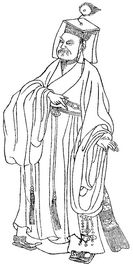
Han Yu (traditional Chinese: 韓愈; simplified Chinese: 韩愈; 768–824) was an essayist and poet from the Tang dynasty who had a strong influence on the development of Neo-Confucianism. He has been described as "comparable in stature to Dante, Shakespeare or Goethe" for his influence on the Chinese literary tradition.[1] He stood for strong central authority in politics and orthodoxy in cultural matters. He was considered by many to be among China's finest prose writers, second only to Sima Qian.[2] He was also ranked first among the "Eight Great Prose Masters of the Tang and Song" in a list compiled by Ming Dynasty scholar Mao Kun (茅坤).[3]Han Yu (traditional Chinese: 韓愈; simplified Chinese: 韩愈; 768–824) was an essayist and poet from the Tang dynasty who had a strong influence on the development of Neo-Confucianism. He has been described as "comparable in stature to Dante, Shakespeare or Goethe" for his influence on the Chinese literary tradition.[1] He stood for strong central authority in politics and orthodoxy in cultural matters. He was considered by many to be among China's finest prose writers, second only to Sima Qian.[2] He was also ranked first among the "Eight Great Prose Masters of the Tang and Song" in a list compiled by Ming Dynasty scholar Mao Kun (茅坤).[3]...more

 Sign in with Facebook