
Becky Lower's Blog, page 36
February 22, 2015
Bleddyn Hall–Amanda Shalaby's New Gothic Romance
Gothic romance. Just those two words send a chill down my spine. Spooky, breathtakingly scary stories with a splash of romance are among my favorite genres, but they aren't as prevalent today as they were in the past. Susan Elizabeth Phillips tried her hand at it with Heroes Are My Weakness, an homage to the greats of the genre: Mary Stewart, Anya Seton, Charlotte Bronte, Daphne du Maurier, Victoria Holt and Phyllis Whitney. With Amanda Shalaby's latest novel, Bleddyn Hall, we have another gothic romance author to consider. Today, she shares with us how she came up with the idea.
 An hour and a half. That’s all it took. I remember sitting at my writing desk that night. The vision was sudden, it was out of nowhere and all I could do was sit there – a captive audience to the story unfolding before my mind’s eye. My husband appeared in the doorway at one point – probably wondering about dinner. “Not now,” I managed, shooing him away with a dismissive gesture, my attention fixed on a visualization playing out before me which he could not see. Fortunately, he understood. An hour and a half. And Bleddyn Hall was born.
After I recovered from my vivid hallucination, I was elated. In the enthusiasm that came with my hour and a half epiphany, I wrote a few thousand words of dialogue between characters I was just getting to know. I continued in this manner for several weeks as small snippets of scenes and snappy comments emerged, but there was one, small hiccup. The story had a very clear English Victorian era setting. My English historical education both began and ended with Regency and post-Regency. Research was necessary.
Soon, my enthusiasm to write the story dwindled and then faded to match the backgrounds and clothing that I could not fully envision, much less write about. The nagging voices of my characters were a constant, but not enough to force me to bring them fully to life. I was overwhelmed, disheartened, and left to wonder: What could be done to reignite that initial zeal I felt in that hour and half of my story’s birth?
There were occasions, naturally, where I would click around on the internet for information on Victorian life. I would feel a spark, write a few more thousand words – only to have said spark fizzle out once again. What I realized was I needed to fully immerse myself in the era – as much as a 21st Century American girl can do.
Suddenly, the speakers in my car played an endless playlist of classical music, my Kindle was stocked with the popular novels of the times, (as well as a number of gothic classics my heroine would have enjoyed), and non-fiction books arrived on my doorstep, one after another. Actual paper, ink and glue books that I could strew across my couches and pile high on my tables – a constant, visual reminder of my goal. Was there any one thing that did the trick, above all others? I couldn’t tell you. But the ballpoint pen was figuratively rolling, and Bleddyn Hall came together just a few months later.
Really, what it all came down to was making it happen. What worked for me may not work for you. What mattered was doing whatever it took to push aside life’s time-suckers and anxieties, and forcing myself to remember what was important. And what I found in the end – and what I’m sure you will also find – is when you set your mind to make the effort, your initial enthusiasm is never really that far off.
 Amanda L. V. Shalaby's passion for all things Jane Austen was inspired by her mother and grandmother. She now writes her own English historical romances, and is the author of Rhianna, Audra and Bleddyn Hall. When Amanda is not writing, she enjoys spending time with her husband, Matthew, her Shih Tzu dogs, Bella and Huntley, and her Persian cat, Sebastian.
You can find Amanda in a variety of places, www.facebook.com/amandalvshalaby, www.twitter.com/amandashalaby and www.pinterest.com/amandalvshalaby among them. But the best place to find her is at her WordPress site, www.amandalvshalaby.wordpress.com. From there, you can learn more about her, view all of her books, catch up on upcoming events and news, and links to buy her books at the major ebook retailers.
 An hour and a half. That’s all it took. I remember sitting at my writing desk that night. The vision was sudden, it was out of nowhere and all I could do was sit there – a captive audience to the story unfolding before my mind’s eye. My husband appeared in the doorway at one point – probably wondering about dinner. “Not now,” I managed, shooing him away with a dismissive gesture, my attention fixed on a visualization playing out before me which he could not see. Fortunately, he understood. An hour and a half. And Bleddyn Hall was born.
After I recovered from my vivid hallucination, I was elated. In the enthusiasm that came with my hour and a half epiphany, I wrote a few thousand words of dialogue between characters I was just getting to know. I continued in this manner for several weeks as small snippets of scenes and snappy comments emerged, but there was one, small hiccup. The story had a very clear English Victorian era setting. My English historical education both began and ended with Regency and post-Regency. Research was necessary.
Soon, my enthusiasm to write the story dwindled and then faded to match the backgrounds and clothing that I could not fully envision, much less write about. The nagging voices of my characters were a constant, but not enough to force me to bring them fully to life. I was overwhelmed, disheartened, and left to wonder: What could be done to reignite that initial zeal I felt in that hour and half of my story’s birth?
There were occasions, naturally, where I would click around on the internet for information on Victorian life. I would feel a spark, write a few more thousand words – only to have said spark fizzle out once again. What I realized was I needed to fully immerse myself in the era – as much as a 21st Century American girl can do.
Suddenly, the speakers in my car played an endless playlist of classical music, my Kindle was stocked with the popular novels of the times, (as well as a number of gothic classics my heroine would have enjoyed), and non-fiction books arrived on my doorstep, one after another. Actual paper, ink and glue books that I could strew across my couches and pile high on my tables – a constant, visual reminder of my goal. Was there any one thing that did the trick, above all others? I couldn’t tell you. But the ballpoint pen was figuratively rolling, and Bleddyn Hall came together just a few months later.
Really, what it all came down to was making it happen. What worked for me may not work for you. What mattered was doing whatever it took to push aside life’s time-suckers and anxieties, and forcing myself to remember what was important. And what I found in the end – and what I’m sure you will also find – is when you set your mind to make the effort, your initial enthusiasm is never really that far off.
 Amanda L. V. Shalaby's passion for all things Jane Austen was inspired by her mother and grandmother. She now writes her own English historical romances, and is the author of Rhianna, Audra and Bleddyn Hall. When Amanda is not writing, she enjoys spending time with her husband, Matthew, her Shih Tzu dogs, Bella and Huntley, and her Persian cat, Sebastian.
You can find Amanda in a variety of places, www.facebook.com/amandalvshalaby, www.twitter.com/amandashalaby and www.pinterest.com/amandalvshalaby among them. But the best place to find her is at her WordPress site, www.amandalvshalaby.wordpress.com. From there, you can learn more about her, view all of her books, catch up on upcoming events and news, and links to buy her books at the major ebook retailers.


February 15, 2015
Valentine's Day, One Day Late
 Whoever decided to make February 14 Valentine's Day did not have Ohio in mind when they thought it up. I wanted all the traditional candies–the big Necco hearts with the sayings on them, the red-hot cinnamon little hearts, the chocolates. Oh, yes, the chocolates. But Friday, when I finally made my way through the mountain of snow to the grocery store, the shelves were bare. What's a Valentine's Day without red-hots?
Which got me to thinking about Valentines past. And the Hallmark channel's lineup of Valentine movie offerings. I hauled out the kleenex for Betty White's performance about a World War II soldier who never came home. He was officially listed MIA all the years, until an intrepid reporter tracked down his remains. When Betty was handed his personal effects, there was a weathered, hand-made Valentine she had given him as he was pulling out of the station. He'd kept it close to his heart all those years.
 Which made me think about two hand-made Valentines I'd received over the years. One was given to me by another fifth-grader. His hand-made Valentine was different from all the store-bought ones that were also in my bag, and I cherished it as only a fifth-grader can. I recently checked on the man's whereabouts, and discovered he'd just retired from a long career as an art teacher in a high school. I'm sad to say his Valentine to me long ago disappeared. The other one was a Valentine I made for my sweetheart. I used the Necco hearts as my gag line, as it were. I wrote a poem, but instead of writing the words, I put a heart shape everywhere the words were to be. Then, I sent the hearts in the envelope along with the poem, and he had to figure out which heart went where, in order to make sense of my rhyme. That Valentine is certainly not being kept close to his heart, I can guarantee it.
So, as I sit here in my candy-less home, surrounded by snowdrifts on every side, I think about those Valentine's Days I have yet to come. I'm a firm believer in second-chance romance, and I've got a high school reunion coming up. Who knows? Maybe my artist from the fifth grade will be there.
February 8, 2015
February in Ohio
 If you've been following the weather in the States, you are already aware that it's been an exceptional winter for snow in the midwest and east. With at least a foot of snow on the ground, I've been spending a lot of time watching television.
Over the past few days, I've spent hours watching a pretty young lady whose business is buying old homes, fixing them and flipping them. In my younger days, I did just that with several properties, but could never afford to make it a business. There's something about rescuing a house and making it shine again, a feeling you don't get from anything else. This particular woman has a passion for accurate restoration. No open concept floor plans for her. She wants the original integrity of the house brought back again. I like that.
And it got me to thinking how rehabbing a house is similar to fixing a bad manuscript. You take it a room, or a chapter, at a time, and strip it back to its basics, making sure the good bones are there. Then, staying true to the type of house or story you have, you add details, color, embellishments, fix the holes, and move on to the next. In the end, you'll have a house that stands taller now that it's once again pretty, or you'll have a manuscript that everyone wants to read.
And, if I'm no longer able to do the heavy lifting involved with an actual house rehab, I can use my experiences to write a story about it. Stay tuned.
February 1, 2015
The First 500
Ask any writer about their method of writing and you'll get a different answer each time. Colleen McCullough, who death is currently being mourned, was a manic writer, who could pen 20,000 words in one 18-hour sitting. I'm sure there are other manic writers out there, especially during November, when NaNo is going on, but I'm not one of them.
I use Scrivener to write my first drafts. This program not only allows me to color-code in whose head I am with each scene, it allows me to set a schedule for the project, and then it calculates the amount of words I need to write each day in order to accomplish my goal and get the work done on schedule. It will even flash a "Goal Met"indicator and ring a bell for you.
 My current WIP is the 8th book in the Cotillion Ball Series, and is the first book in which I face the effects of the Civil War head on. The setting is MacDougall Hospital, set on Fort Schuyler in the Bronx. At the height of the Civil War conflict, this hospital cared for 2,000 wounded soldiers. The tone of the book is much darker than my normal, because of the subject matter, but I'm finding it exhilarating to write. That is, after the first 500 words.
My writing goal, according to the almighty Scrivener, is nearly 1,000 words a day. Which roughly translates to one scene a day. I like to write this way, since I can stay clearly in one person's head throughout. Today, it was Elijah's turn. I planned how I was going to start the scene last night, as I was drifting off to sleep, so I tore up the screen for the first 80 words or so. Then, I stared at the blinking cursor for several minutes, uncertain where to head. The next sentence came to me as if through a vat of molasses, then the one after that. I kept pulling down the "Targets" tab on my Scrivener program to see how many words I had yet to go. When I got to 200 words for the day, I got stuck, so I stared at the pulsating cursor for a few more minutes. The rest of the scene unfolded in my head, finally, and I began to type quickly. When the bell rang that I had met my goal, I wasn't ready to stop, so I kept going until the scene was finished.
I surprised myself that I completed the scene, and that once I got past the first 500 words, I got so sucked into the scene that the ringing bell was an annoyance rather than a blissful chime signaling that my day's torture was done. And the little extra bonus from not stopping until the scene was done? Tomorrow, when I settle in to write the next scene, I'll have a few fewer words to write to get to my daily goal.
So, how about you? Do you write in all-out sprints like Colleen McCullough, or do you plod along like I do? I'm curious to see how many different styles I'll be able to record in the comments.
I use Scrivener to write my first drafts. This program not only allows me to color-code in whose head I am with each scene, it allows me to set a schedule for the project, and then it calculates the amount of words I need to write each day in order to accomplish my goal and get the work done on schedule. It will even flash a "Goal Met"indicator and ring a bell for you.
 My current WIP is the 8th book in the Cotillion Ball Series, and is the first book in which I face the effects of the Civil War head on. The setting is MacDougall Hospital, set on Fort Schuyler in the Bronx. At the height of the Civil War conflict, this hospital cared for 2,000 wounded soldiers. The tone of the book is much darker than my normal, because of the subject matter, but I'm finding it exhilarating to write. That is, after the first 500 words.
My writing goal, according to the almighty Scrivener, is nearly 1,000 words a day. Which roughly translates to one scene a day. I like to write this way, since I can stay clearly in one person's head throughout. Today, it was Elijah's turn. I planned how I was going to start the scene last night, as I was drifting off to sleep, so I tore up the screen for the first 80 words or so. Then, I stared at the blinking cursor for several minutes, uncertain where to head. The next sentence came to me as if through a vat of molasses, then the one after that. I kept pulling down the "Targets" tab on my Scrivener program to see how many words I had yet to go. When I got to 200 words for the day, I got stuck, so I stared at the pulsating cursor for a few more minutes. The rest of the scene unfolded in my head, finally, and I began to type quickly. When the bell rang that I had met my goal, I wasn't ready to stop, so I kept going until the scene was finished.
I surprised myself that I completed the scene, and that once I got past the first 500 words, I got so sucked into the scene that the ringing bell was an annoyance rather than a blissful chime signaling that my day's torture was done. And the little extra bonus from not stopping until the scene was done? Tomorrow, when I settle in to write the next scene, I'll have a few fewer words to write to get to my daily goal.
So, how about you? Do you write in all-out sprints like Colleen McCullough, or do you plod along like I do? I'm curious to see how many different styles I'll be able to record in the comments.
January 25, 2015
Selecting a Cover
One of the most rewarding–and most stressful–parts of having a book published is approving a cover design. Covers are one of the most important parts of any book, especially in this digital age. Your cover design is the size of a thumbnail, and it's all you have to make a reader stop, look, and read your most important element–the blurb. Then, and only then, will a person make the decision to buy your book. So while covers won't necessarily sell copies, it can make people stop and read about your book, and maybe buy it.
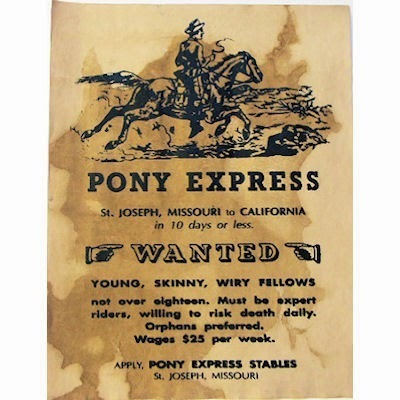 This time, my historic romance takes place not in New York, but in the wild country west of the Mississippi in 1860. So, I got to include something I haven't been able to before–a horse!
I was so excited about the opportunity, I've been gathering pictures of wild horses for months now. The story, Expressly Yours, Samantha, is about two people involved in the new Pony Express, which began in April, 1860.
But a horse is not enough to stop a reader in her tracks and read the book blurb. I needed something more. My publisher wanted it to evoke the idea of romance, since that's what I write, but I had a problem with all the lovely women who were nuzzling horses. They were too pretty.
What, you say? How can someone be too pretty? Isn't the idea of a cover to make a person stop and look? And wouldn't they be drawn to a pretty face, rather than a not-so-pretty one?
 I get where the designers were coming from. But the heroine is passing herself off as a boy at the start of the book, on the run from an abusive uncle. So a beautiful ingenue with a wide smile just didn't work. I wanted a haunted face, one that could realistically be mistaken for a boy, with the right haircut. And I wanted her standing against a horse.
I have to admit, the designers did it. I can't show the cover off yet, but it works. I'm glad they took the time to make it right. Will I miss a few readers because there's not a pretty face on the cover? Possibly. But if they take a moment to look into the haunted eyes of my heroine, they'll hopefully be intrigued enough to read the blurb. And maybe buy the book.
Expressly Yours, Samantha, will be released March 16. Stay tuned.
 This time, my historic romance takes place not in New York, but in the wild country west of the Mississippi in 1860. So, I got to include something I haven't been able to before–a horse!
I was so excited about the opportunity, I've been gathering pictures of wild horses for months now. The story, Expressly Yours, Samantha, is about two people involved in the new Pony Express, which began in April, 1860.
But a horse is not enough to stop a reader in her tracks and read the book blurb. I needed something more. My publisher wanted it to evoke the idea of romance, since that's what I write, but I had a problem with all the lovely women who were nuzzling horses. They were too pretty.
What, you say? How can someone be too pretty? Isn't the idea of a cover to make a person stop and look? And wouldn't they be drawn to a pretty face, rather than a not-so-pretty one?
 I get where the designers were coming from. But the heroine is passing herself off as a boy at the start of the book, on the run from an abusive uncle. So a beautiful ingenue with a wide smile just didn't work. I wanted a haunted face, one that could realistically be mistaken for a boy, with the right haircut. And I wanted her standing against a horse.
I have to admit, the designers did it. I can't show the cover off yet, but it works. I'm glad they took the time to make it right. Will I miss a few readers because there's not a pretty face on the cover? Possibly. But if they take a moment to look into the haunted eyes of my heroine, they'll hopefully be intrigued enough to read the blurb. And maybe buy the book.
Expressly Yours, Samantha, will be released March 16. Stay tuned.
January 18, 2015
The Sound Of Silence
If you've been following this blog for a while, you already know that my sister, Pat, moved in with me last year. She set up the finished half of the basement as her domain, but after the first few months, decided she preferred to be upstairs. She was quiet when I worked in the mornings, and we enjoyed each other's company, so it worked well, despite the reservations we originally had on both sides.
She has the flexibility to travel, and from the beginning, told me she'd be elsewhere during Ohio's harsh winters. So, last week, she took off, driving cross-country away from the snow and ice, to spend the winter in Phoenix and Shreveport, with a side trip to San Diego thrown in for good measure. My dog, Mary, and I waved goodbye, a tad jealous, but also looking forward to getting back to my old routine.
So what happened? A wild streak of creativity? A feverish bout of writing getting me way ahead of schedule? Ideas for story lines for as yet unplanned novels coming at me fast and furious?
 No. Crickets are what happened. Silence.
I've been polishing up a manuscript I'd been working on since before she left, and my next Cotillion Ball story is coming together as outlined. But nothing new. I've been moping, as has Mary.
It's strange, since I've lived alone for years. I should be used to this.
How about you? Does anyone have a trick they use to jumpstart those creative juices? If so, please share. April's a long way off.
She has the flexibility to travel, and from the beginning, told me she'd be elsewhere during Ohio's harsh winters. So, last week, she took off, driving cross-country away from the snow and ice, to spend the winter in Phoenix and Shreveport, with a side trip to San Diego thrown in for good measure. My dog, Mary, and I waved goodbye, a tad jealous, but also looking forward to getting back to my old routine.
So what happened? A wild streak of creativity? A feverish bout of writing getting me way ahead of schedule? Ideas for story lines for as yet unplanned novels coming at me fast and furious?
 No. Crickets are what happened. Silence.
I've been polishing up a manuscript I'd been working on since before she left, and my next Cotillion Ball story is coming together as outlined. But nothing new. I've been moping, as has Mary.
It's strange, since I've lived alone for years. I should be used to this.
How about you? Does anyone have a trick they use to jumpstart those creative juices? If so, please share. April's a long way off.
January 11, 2015
The Devil She Knew–Interview with Rena Koontz

One of my favorite people, Rena Koontz, takes time out from teasing us all with her pictures from Venice Beach (bare feet in the sand as we all shiver here in Ohio), to stop by for a visit today. Her book, The Devil She Knew, is on sale for only 99 cents until January 16. If you haven't snagged your copy yet, now's the time.
The research for this book deserves its own story. Here's Rena to talk about how she did it.

He’s dead now – the real Tony DelMorrie, that is.
Yes, the mob guy in my romantic suspense, “The Devil She Knew,” was a real-life Mafioso. A “made guy,” sometimes called a wiseguy, is someone who has been officially inducted, usually as a soldier, into a Mafia family. That was Tony in real life. And I met him.
My husband and I were out with a friend in downtown Cleveland one Saturday night, dropping in and out of various fun spots, when we wandered into Tony’s coffee shop – yeah, the same one depicted in the book. My husband, then an FBI agent, knew who Tony was but never expected him to be there, working the floor like a Las Vegas nightclub entertainer. Gold chains ringed his bulging neck and dripped down onto black chest hairs. I could see them because Tony had his shirt partially unbuttoned – a flashback to disco days.
Heavy, gold rings weighed down his fingers and dug into my own when he shook my hand. It was his pleasure to meet me, he said, adding that such an Italian-looking face as mine belonged in his café. I feared he would notice how sweaty my palms were or the crack in my voice when I thanked him.And then Mrs. DelMorrie came to the table. The TV show depicting mob wives is not exaggerated. She was fake nails, fake lashes, fake boobs and a hair color that rivaled a Sherwin-Williams sample palette. She batted her eyelashes at the men and called me “hon,” insisting I sample a piece of red velvet cake, the house specialty. “It’s the best you’ll ever eat, Hon. With your figure, you don’t even have to worry about calories.”
Yes, they were both charmers. No, the cake wasn’t the best. The icing was so sweet I could feel my arteries clogging as I swallowed. But I wasn’t about to decline the offered piece. I chewed fast, anxious to make an exit.
I knew Tony’s reputation and was privy to inside knowledge about his character. It’s what helped me make him so real in my book – because he was real.
“The Devil She Knew,”is my second romantic suspense released by Crimson Romance. If this blog has piqued your interest about the story, now is a good time to order. It’s discounted to 99-cents between Jan. 8-16 on Amazon, Barnes & Noble, Apple iBooks, The Crimson Romance store and other e-book retailers.
For more about “The Devil She Knew” or me, check out my website, http://www.renakoontz.com.
Purchase Links:
amazon - http://www.amazon.com/Devil-She-Knew-Crimson-Romance-ebook/dp/B00CJJWUGC/ref=sr_1_1?ie=UTF8&qid=1419894063&sr=8-1&keywords=rena+koontzbarnes&noble - http://www.barnesandnoble.com/w/the-devil-she-knew-rena-koontz/1115218299?ean=9781440567810Apple iBooks - https://itunes.apple.com/us/book/the-devil-she-knew/id641768447?mt=11crimson romance - http://www.adamsmediastore.com/ebook-devil-she-knew-epubgoogle play -https://play.google.com/store/books/details/Rena_Koontz_The_Devil_She_Knew?id=6_sagekPToQC
Thank you, Becky, for allowing me to share a tidbit about my book.
January 4, 2015
Writing Process Blog Tour
I’m participating in a Romance Writers Blog Hop. Not only do you get to know a little about me and my writing process, but I get to introduce you to fellow romance authors and learn their individual writing styles and processes.
 My fellow author, Susan B. James has tagged me to be next on the “My Writing Process Blog Tour” (#MyWritingProcess).Susan's first novel,
Time and Forever
is about two women in their sixties time travelling back to 1969. It's won Honorable Mentions in The Hollywood Book Festival and The Great Northwest Book Festival in Fiction.
My fellow author, Susan B. James has tagged me to be next on the “My Writing Process Blog Tour” (#MyWritingProcess).Susan's first novel,
Time and Forever
is about two women in their sixties time travelling back to 1969. It's won Honorable Mentions in The Hollywood Book Festival and The Great Northwest Book Festival in Fiction.
In Kate’s hero, Michael is Sherry’s son from Time and Forever . Susan cannot seem to write a book without a touch of magic. She also writes children’s books as Susan J. Berger. Susan is drawn to humor and was born to wonder and to laugh. Here's Susan's contact information to find out more about her. Blogs: Susan B. JamesPen and InkFacebookTwitter
Now that you know about Susan, let’s move on to the four required blog questions about my own writing process: What am I currently working on? The seventh book in the Cotillion Ball Series is currently undergoing edits for a March 16 release. It's a lot grittier than my other Cotillion books, since it's set in Kansas and Missouri in 1860 instead of in New York. My first 'western,' as it were. I'm really anxious to get it out there and see if it attracts a different audience. I'm reworking a contemporary, the first in a series about three generations of women in the same family. I need to get the first one done, and done right, before I can go on to the next. And the next story in the Cotillion series, The Widow's Salvation, is due to my publisher on June 1.
How do my romances differ from others in the genre? I love to write about lovely ball gowns and high society, but I also have a huge love affair going on with American history. This country is so rich in stories and traditions, so I had to figure out a way to combine the two. My Cotillion series began in New York City in 1855, a year after the debutante ball tradition began in this country. But because America in the late 1850s and early 1860s was filled with western expansion as well as having increasing strife between the North and the South, I felt I needed to explore both worlds–the fairly civilized eastern border of the country which was slowly falling into a mighty war and the frontier, where people took their lives into their hands on a daily basis in an attempt to civilize the remainder of the land.
As for my contemporary line, I enjoy writing about older heroes and heroines, people who have already been around the block once or twice and who have built up walls around their feelings. The first book in my Barnswallow series features a woman who is getting a divorce after sixteen years of marriage, and a man who has spent his life building a business at the expense of a marriage and several relationships.
Why do I write what I do? Even though I found American history a bore while I was in school, traveling through the United States awakened my awareness to what a great, diverse country this is. I have four states left to get to, and I hope to cross them off my list soon. I love finding a significant, yet somehow forgotten, event in history and plunking my characters down into the middle of it. Even small events, such as the invention of the trolley car, had a profound impact on the lives of the people living at the time, and I enjoy weaving these little tidbits of history into my story.
How does my writing process work? Because the Cotillion books were set up as a nine-book series, my publisher asked me for a synopsis of each book before they'd grant me a contract. That's the first time I've ever written a synopsis first, since I started out as a pantser. My first couple of books had to be rewritten time and again because I didn't do any pre-planning. I found Blake Snyder's Save The Cat book very useful, and use parts of it now to develop plot points at the right time. That helps me with plotting. I use Scrivener, which also helps me keep track of POV and word count. I write fast to get my thoughts down and then go back once I get to the end, and add in details. I call it layering.
I’m now tagging my fellow Soul Mate Author and someone with whom I share a blog called History Imagined, Caroline Warfield, whose debut novel, Dangerous Works has been selected as a five star top pick from Night Owl Reviews, and one Mary Balogh read in an afternoon and loved. Here's where you can go to find out more about what Carolyn's up to. BlogFacebook Twitter
 My fellow author, Susan B. James has tagged me to be next on the “My Writing Process Blog Tour” (#MyWritingProcess).Susan's first novel,
Time and Forever
is about two women in their sixties time travelling back to 1969. It's won Honorable Mentions in The Hollywood Book Festival and The Great Northwest Book Festival in Fiction.
My fellow author, Susan B. James has tagged me to be next on the “My Writing Process Blog Tour” (#MyWritingProcess).Susan's first novel,
Time and Forever
is about two women in their sixties time travelling back to 1969. It's won Honorable Mentions in The Hollywood Book Festival and The Great Northwest Book Festival in Fiction.In Kate’s hero, Michael is Sherry’s son from Time and Forever . Susan cannot seem to write a book without a touch of magic. She also writes children’s books as Susan J. Berger. Susan is drawn to humor and was born to wonder and to laugh. Here's Susan's contact information to find out more about her. Blogs: Susan B. JamesPen and InkFacebookTwitter
Now that you know about Susan, let’s move on to the four required blog questions about my own writing process: What am I currently working on? The seventh book in the Cotillion Ball Series is currently undergoing edits for a March 16 release. It's a lot grittier than my other Cotillion books, since it's set in Kansas and Missouri in 1860 instead of in New York. My first 'western,' as it were. I'm really anxious to get it out there and see if it attracts a different audience. I'm reworking a contemporary, the first in a series about three generations of women in the same family. I need to get the first one done, and done right, before I can go on to the next. And the next story in the Cotillion series, The Widow's Salvation, is due to my publisher on June 1.
How do my romances differ from others in the genre? I love to write about lovely ball gowns and high society, but I also have a huge love affair going on with American history. This country is so rich in stories and traditions, so I had to figure out a way to combine the two. My Cotillion series began in New York City in 1855, a year after the debutante ball tradition began in this country. But because America in the late 1850s and early 1860s was filled with western expansion as well as having increasing strife between the North and the South, I felt I needed to explore both worlds–the fairly civilized eastern border of the country which was slowly falling into a mighty war and the frontier, where people took their lives into their hands on a daily basis in an attempt to civilize the remainder of the land.
As for my contemporary line, I enjoy writing about older heroes and heroines, people who have already been around the block once or twice and who have built up walls around their feelings. The first book in my Barnswallow series features a woman who is getting a divorce after sixteen years of marriage, and a man who has spent his life building a business at the expense of a marriage and several relationships.
Why do I write what I do? Even though I found American history a bore while I was in school, traveling through the United States awakened my awareness to what a great, diverse country this is. I have four states left to get to, and I hope to cross them off my list soon. I love finding a significant, yet somehow forgotten, event in history and plunking my characters down into the middle of it. Even small events, such as the invention of the trolley car, had a profound impact on the lives of the people living at the time, and I enjoy weaving these little tidbits of history into my story.
How does my writing process work? Because the Cotillion books were set up as a nine-book series, my publisher asked me for a synopsis of each book before they'd grant me a contract. That's the first time I've ever written a synopsis first, since I started out as a pantser. My first couple of books had to be rewritten time and again because I didn't do any pre-planning. I found Blake Snyder's Save The Cat book very useful, and use parts of it now to develop plot points at the right time. That helps me with plotting. I use Scrivener, which also helps me keep track of POV and word count. I write fast to get my thoughts down and then go back once I get to the end, and add in details. I call it layering.

I’m now tagging my fellow Soul Mate Author and someone with whom I share a blog called History Imagined, Caroline Warfield, whose debut novel, Dangerous Works has been selected as a five star top pick from Night Owl Reviews, and one Mary Balogh read in an afternoon and loved. Here's where you can go to find out more about what Carolyn's up to. BlogFacebook Twitter
December 28, 2014
Setting Goals, Not Making Resolutions
I love this week of the year. The frenzy that is Christmas is over, but the lights are still up so you can take a breath and enjoy the season. And it's not quite New Year's. It's the one week of the year where I reset my internal clock, wipe my desk clear of unfinished projects, and set new goals for the next year.
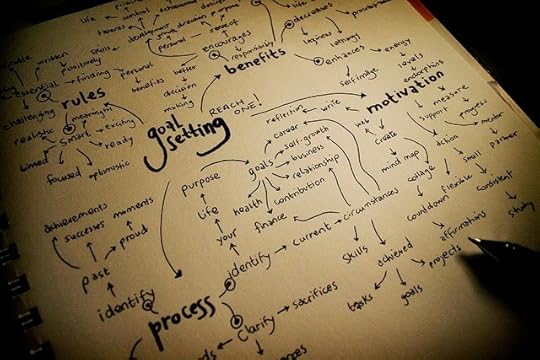
So, how is that different from making resolutions? It's a known fact that people who make resolutions to join health clubs, lose weight, eat better, finish that book, give up in February or so, since we quickly become overwhelmed with what we've set out to accomplish. Goals are more relaxing, in my mind. You have an entire year to accomplish what you've set out to do. If it doesn't get done in January, or even started, that's okay. There are still eleven months.
Of course, goals need to be worked on during the year, and mustn't be ignored until December. But for some reason, when all the lists of resolutions are balled up and thrown away, I look at my set of goals for the year and keep plugging away on it.
Since you've now listened to my line of rationale, I think it's only fair to share with you my goals for the year. Here they are:
1) This one's non-negotiable, since I'm under contract to finish the last two books in my Cotillion Ball Series, one in June and the last in December. A Widow's Redemption features Pepper, the eldest in the Fitzpatrick family. Her husband dies at Ft. Sumter, during the first battle of the Civil War, and after a year of mourning, she begins to volunteer at a local army hospital and meets a doctor who is as wounded as the men he's attempting to repair. The Forgotten Debutante is about the youngest in the family, Saffron. She comes of age during the Civil War and all the men who should be courting her are off fighting in the war.
2) Finish the rewrite of my contemporary, Barnswallow Summer, and hand it off to my agent.
3) Write the second book in my contemporary series.
4) Get better with social media.
5) Volunteer more hours to my RWA chapter, and make our conference a huge success.
6) Figure out a way to afford the RWA conference in New York City.
7) Take at least one vacation for pleasure rather than to do research for my next book.
8) Spend more time with my family.
9) Lose the cane and walk without aid. (This one should be easy.)
10) Finally start to write Raoul's story.
I'm going to be busy this year, but can't help but think more will crop up than I've thought of. If you can think of anything I've left off the list, please let me know. And let me know what your goals are for the year.

So, how is that different from making resolutions? It's a known fact that people who make resolutions to join health clubs, lose weight, eat better, finish that book, give up in February or so, since we quickly become overwhelmed with what we've set out to accomplish. Goals are more relaxing, in my mind. You have an entire year to accomplish what you've set out to do. If it doesn't get done in January, or even started, that's okay. There are still eleven months.
Of course, goals need to be worked on during the year, and mustn't be ignored until December. But for some reason, when all the lists of resolutions are balled up and thrown away, I look at my set of goals for the year and keep plugging away on it.
Since you've now listened to my line of rationale, I think it's only fair to share with you my goals for the year. Here they are:
1) This one's non-negotiable, since I'm under contract to finish the last two books in my Cotillion Ball Series, one in June and the last in December. A Widow's Redemption features Pepper, the eldest in the Fitzpatrick family. Her husband dies at Ft. Sumter, during the first battle of the Civil War, and after a year of mourning, she begins to volunteer at a local army hospital and meets a doctor who is as wounded as the men he's attempting to repair. The Forgotten Debutante is about the youngest in the family, Saffron. She comes of age during the Civil War and all the men who should be courting her are off fighting in the war.
2) Finish the rewrite of my contemporary, Barnswallow Summer, and hand it off to my agent.
3) Write the second book in my contemporary series.
4) Get better with social media.
5) Volunteer more hours to my RWA chapter, and make our conference a huge success.
6) Figure out a way to afford the RWA conference in New York City.
7) Take at least one vacation for pleasure rather than to do research for my next book.
8) Spend more time with my family.
9) Lose the cane and walk without aid. (This one should be easy.)
10) Finally start to write Raoul's story.
I'm going to be busy this year, but can't help but think more will crop up than I've thought of. If you can think of anything I've left off the list, please let me know. And let me know what your goals are for the year.
December 21, 2014
Stuff The Stocking Time--Week Four
I'm recuperating from hip replacement surgery, so I've decided to turn my blog over to my chapter mates in December. We're a prolific group of authors, featuring three Golden Heart finalists in the past two years alone. And we've been published in a variety of ways–from traditional houses to self-publishing to small presses. One thing our books have in common is that they're the results of active imaginations that run the gamut–historical, erotica, contemporary, paranormal, romantic suspense. I'm sure every visitor to the blog this month will find something to load onto a Kindle for a gift, or add it to your own.
American Historical--The Duplicitous Debutante, by Becky Lower
 In 1859, ladies of New York society were expected to do three things well: find a husband, organize a smooth-running household, and have children.
 Rosemary Fitzpatrick’s agenda is very different. As the author of the popular Harry Hawk dime novels, she must hide her true identity from her new publisher, who assumes the person behind the F. P. Elliott pen name is male. She must pose as his secretary in order to ensure the continuation of her series. And in the midst of all this subterfuge, her mother is insisting that she become a debutante this year.
Henry Cooper is not the typical Boston Brahmin. Nor is he a typical publisher. He’s entranced by Mr. Elliott’s secretary the moment they meet, and wonders how his traditional-thinking father will react when he brings a working class woman into the family. Because his intentions are to marry her, regardless.
Rosemary’s deception begins to unravel at the Cotillion ball, when Henry recognizes her. The secretarial mask must come off, now that he knows she is a member of New York society. But she can’t yet confess who she truly is until she knows if Henry will accept her as F. P. ElliottThe more time they spend together, the closer they become. But when Rosemary reveals her true identity to him, will Henry be able to forgive her or has her deceit cost her the man she loves?http://amzn.to/1sGJQbq
 Historical Romance--Lady Catherine's Secret, by Sheridan Jeane
Winner of the Where the Magic Begins contest for Best Historical Romance
London, 1853. Despite Lady Catherine's love of fencing, she needs to stop pretending to be a boy and fraternizing with men…but not until after she competes in the upcoming fencing tournament! Her mother plans to marry her off by the end of the season, so this will be her last chance to enjoy her freedom. When she impulsively puts her reputation at risk to save the life of a dashing competitor, all seems lost when he sees through her disguise.
Daniel, Marquess of Huntley, wants to overcome the rumors of his father's madness so that he can be embraced by London society. His plan is to marry the most proper woman who will have him, and then raise stable, respectable children. He certainly isn't interested in some hoyden with a penchant for masquerading as a boy and flaunting society's rules. In fact, he'd prefer to keep his distance.
When an obsessed suitor discovers Catherine's secret and threatens blackmail, the only path out of social ruin is marriage. But what kind of protection does matrimony provide when a vengeful suitor is plotting the ultimate revenge?http://www.amazon.com/dp/B00NJREAIO
Regency Historical--The Seduction of Sophie Seacrest, by Mary Campisi
 Love and Betrayal...Regency Style
The Seduction of Sophie Seacrest is Book One of Mary Campisi's Regency historical series, An Unlikely Husband.
When Holt Langford, the new Earl of Westover, returns to England after twelve years at sea, he resembles more pirate than nobleman, a far cry from the scrawny youth whose father shipped off to become a man. No one recognizes him, and he'll use this anonymity to enter a game of subterfuge in order to expose the scoundrel who has vowed to destroy Holt's family business.
Unfortunately, that scoundrel has a devoted daughter, Sophie Seacrest. Sophie can't deny her attraction to the unorthodox stranger who stirs her blood and makes her thick things no proper lady should. Holt and Sophie are drawn into a seductive tangle and just when he's about to reveal his true identity and his honorable intentions, she discovers the truth and must choose between love and family duty.
Amazon http://amzn.to/1sub09y
i-Books http://bit.ly/1pbzAIFNook http://bit.ly/1rhB6s7Kobo http://bit.ly/1uMpMEC


