
Becky Lower's Blog, page 35
May 3, 2015
Cover Reveal and Exclusive Excerpt!
 About one year ago, Crimson Romance decided to expand into the novella category. So, of course, the competitor in me decided to give it a go and see what happened. I'd been wanting to write a story about how Charlotte & George Fitzpatrick met, and thought a novella would be the right length to tell their story.
So, on June 9 the prequel to the Cotillion Ball Series will be released along with a bundle of the first three books in the series. What better way to get to know the family than to start at the beginning?
Here's the cover for the novella. Doesn't Charlotte's expression say it all?
Blurb:
Long before The Reluctant Debutante, there was the story of Charlotte Ashcroft and George Fitzpatrick.
They were two young strangers in New York City until Charlotte took matters into her own hands. Confronted by a busybody who would surely inform her mother she was where she shouldn’t be, and alone, she forced the man in the jaunty blue hat who had caught her eye to act as her escort. By going along with the ruse, George Fitzpatrick sealed his fate with Charlotte. He would become her husband. Now she just had to convince him he couldn’t live without her.
No Buy Link yet, but stay tuned!
Here's a taste of what's to come:
“Charlotte? Is that you?”
Charlotte cringed inside her Sunday best, lavender dress. She knew that voice.
Accepting her fate, she turned to face the old busybody.
“Well, hello there, Mrs. Beasley. How are you this fine Sunday afternoon? Are you
also planning to attend Frances Wright’s speech?”
Mrs. Beasley’s spine straightened at the suggestion, and her gaze pierced Charlotte.
“Heavens, no. I have no wish to fill my head with such nonsense. Where is your mother? I should say hello.”
“Mother’s not with us today. We took the omnibus to get here.”
“What? Without a male escort? Is your mother aware of what you’re doing, young lady?”
Charlotte glanced around the street where they had been dropped off. Suddenly, she spied a familiar hat in the crowd. A blue hat with a feather tucked into the grosgrain ribbon. Her heart began to race as he came toward her.
“Ah, but we do have a proper male escort.” She wrapped her hand around the man’s arm, bringing him, if somewhat reluctantly, to her side. “This is our chaperone, Mrs. Beasley.” Charlotte turned her eyes toward the man and held her breath, silently pleading with him to catch on to her plight.
He executed a proper bow toward Mrs. Beasley, and Charlotte let out her breath a bit at a time. “George Fitzpatrick, at your service, Mrs. Beasley.”
Mrs. Beasley’s face was still full of disdain. “George Fitzpatrick? I’ve never heard of you. Just how do you know Charlotte Ashcroft?” “We’re old friends who love adventure. When I decided to escort Charlotte and her lady friends on their outing today, we thought an omnibus ride would be a delightful way to get there. And it certainly has proven to be so.”
Mrs. Beasley was somewhat mollified, if not totally convinced, sending a loud harrumph” their way before she moved on.
“Oh, Mr. Fitzpatrick, thank you ever so much. We would have been in grave trouble if not for you.” Charlotte fawned over the man.
“Well, since I’ve saved you from your current peril, and since we don’t know who else you’ll run into, perhaps I should finish the job you’ve assigned me to and escort you ladies to your final destination? May I meet the other ladies in your party?”
Charlotte quickly introduced him to Emma and Katie but did not yield her hold on his arm.They found their way to the Hall of Science where Miss Wright was speaking, and George insisted on paying the entry fee for the four of them. They found enough open seats to sit together and moved to the chairs. Charlotte waited for Emma and Katie to claim a seat, and then she sat next to them, leaving only one remaining empty spot. Next to her alone. She smiled at her craftiness.
He took the seat beside her then leaned over to whisper in her ear. “Mrs. Beasley was right. Young ladies such as you could get into a lot of trouble without a proper escort. I’m offering my services to you, absolutely free of charge, for the remainder of the afternoon.”
Charlotte’s laugh bubbled up. “I have a feeling, sir, you’re the biggest trouble I can get into today.”
Bundle:

The Reluctant Debutante
It’s 1855 in New York, and Ginger Fitzpatrick joins other women in support of Amelia Bloomer’s cause. During a rally, a stranger helps her evade police. She is introduced to him formally at her debutante ball, the latest society craze. Although Joseph is a friend of her brother’s, he is half Indian and unsuitable. Ginger must ultimately decide if Joseph is worth going against her family’s wishes.
The Abolitionist's Secret
In 1856 New York, despite their divergent views on slavery, romance ensues when David dances with Heather at the Cotillion Ball and later that night, walks her home. An engagement quickly follows. When he receives word that his father is ailing, David wants her to accompany him home to Savannah to meet his family.But she knows the South is no place for an abolitionist.Banking On Temperance
Basil Fitzpatrick was born into a life of privilege. In 1856, at 23 years of age, he is the owner of the St. Louis branch of the family banking business. He has his pick of the ladies and life by the horns.
Temperance Jones and her family are far from privileged. Her father is a circuit-riding preacher from Pennsylvania. But the rumblings of a war between the North and the South force the preacher to move his family to Oregon rather than to take up arms against his fellow man. However, hardship and sickness slowed their pace, and they are forced to spend the winter in St. Louis, waiting for the next wagon trains to leave in the spring.
Basil is drawn to the family the moment they roll into town, partly because they remind him of his own big family in New York. But also because of the eldest daughter, Temperance. She is a tiny, no-nonsense spitfire bent on fulfilling her father’s wish to get the family safely to Oregon. Basil knows if he allows Temperance into his heart, he is accepting the obligation of her entire family. He wants Temperance like he has wanted no other, but is the burden of her family too much?
Basil is drawn to the family the moment they roll into town, partly because they remind him of his own big family in New York. But also because of the eldest daughter, Temperance. She is a tiny, no-nonsense spitfire bent on fulfilling her father’s wish to get the family safely to Oregon. Basil knows if he allows Temperance into his heart, he is accepting the obligation of her entire family. He wants Temperance like he has wanted no other, but is the burden of her family too much?


April 26, 2015
A Lot Going On
 Even though my dislocated hip and the resulting brace which I must wear for the next 32 days (but who's counting?) have forced me to take it easy, my mind can't help but race ahead. May, June and July are packed with events, both personal and professional, and when I run down the list, it makes me wonder how it'll all get done.
Kind of like writing a book.
When I get an idea for a new book, my mind spins out all the events that will take place to get my characters to their happy ever after. There are so many plot ideas, high points, dark moments, resolutions, that it is dizzying. Many great writers never get beyond this point, since it is overwhelming. They have massive doubts in their ability to blend all their ideas into a cohesive structure that they stop after writing a few great scenes and never return.
 I have found Blake Snyder's Save The Cat book to be of immense value when I first get an idea. I plot out the major turning points in the story in the briefest of outlines. It still gives me flexibility to let the story spin out the way it's going to, but keeps the story line on track to proceed forward.
So, I'm applying the same technique to this summer. I've got all the events posted on my calendar and will tick them off one at a time as I get to that point. In the meantime, I can look forward to what's yet to come. And,
I still have the flexibility to change direction, if need be. After all, I like surprises.
April 18, 2015
Aftermath
This past week has been one for the books–unfortunately, not mine.

My shiny new artificial hip decided to dislocate itself while I was shopping last Sunday, resulting in three days in the hospital. Then, I got fitted for a leg brace which extends from hip to foot, which I'm supposed to stay in for 6 weeks. After only three days, the brace fell apart!
Two flukes in the same week.
 As a result of these unexpected bumps in the road, I got very little done from a writing or promotional standpoint. I had some edits due back to the publisher, and I've got a deadline looming for the next book in the series, which is due June 1, and I'm only on the first revision.
What to do now?
Well, things could not be working out better in that regard. Since I'm trussed up like a turkey for 5-1/2 more weeks, I'm not going anywhere. Even if I could, I have no clothes that would fit over the brace. It's a good thing I like to work in a nightgown.
So now it's time to buckle down. Edits went back yesterday, so I can check that off my list. I've got to get through that first revision and then dump it from Scrivener into a word document and format it. I know those of you using Scrivener are screaming at the screen right now,"Why are you doing that, when you can format right from Scrivener?"
It's part of my process. No two people work alike.
So, hopefully, by the end of this week, I'll have that first revision knocked out and will start on the formatting. Then, I may even find time to get back to the other historical I'm working on. There's always a list of things to do, broken hips and braces or not.
Have a great Sunday, and an even better week, everyone!

My shiny new artificial hip decided to dislocate itself while I was shopping last Sunday, resulting in three days in the hospital. Then, I got fitted for a leg brace which extends from hip to foot, which I'm supposed to stay in for 6 weeks. After only three days, the brace fell apart!
Two flukes in the same week.
 As a result of these unexpected bumps in the road, I got very little done from a writing or promotional standpoint. I had some edits due back to the publisher, and I've got a deadline looming for the next book in the series, which is due June 1, and I'm only on the first revision.
What to do now?
Well, things could not be working out better in that regard. Since I'm trussed up like a turkey for 5-1/2 more weeks, I'm not going anywhere. Even if I could, I have no clothes that would fit over the brace. It's a good thing I like to work in a nightgown.
So now it's time to buckle down. Edits went back yesterday, so I can check that off my list. I've got to get through that first revision and then dump it from Scrivener into a word document and format it. I know those of you using Scrivener are screaming at the screen right now,"Why are you doing that, when you can format right from Scrivener?"
It's part of my process. No two people work alike.
So, hopefully, by the end of this week, I'll have that first revision knocked out and will start on the formatting. Then, I may even find time to get back to the other historical I'm working on. There's always a list of things to do, broken hips and braces or not.
Have a great Sunday, and an even better week, everyone!
April 11, 2015
The Power Of No
 Such a simple word. Such a complicated word.
When was the last time you were told No? An hour ago? Last week? Last month?
On The Voice last week, Pharrell Williams told one of his team "No should be your biggest motivation." His words don't just apply to the music industry. In both your life, and in becoming an author, the word No is constantly volleyed at you left and right.

Sometimes, the word is lower case–no. You can step right over these little pebbles of rejection. Your blind date never called again when you thought something had clicked, or you get a form rejection letter on your very first manuscript from a big publisher.
Then sometimes the first letter of the word is upper case but not in bold letters–No. That's when the job you were so perfect for, the one where you killed on the interview, went to someone else. Or when the agent who thought enough of your work to request a full decided she had someone already on her client list who was similar. What do you do then? You can't just step over these Nos. They're too big. So you decide to go back to school, to get your Master's degree or to take more workshops on craft to better your writing.
 The worst, though, is the big NO. Upper case, bold. The man you thought you'd share the rest of your life with tells you he doesn't love you anymore. Or the three book deal with a six-figure advance went to your best writing buddy. In these cases, you have two choices. You can either give up and lay down, letting that huge boulder of a NO flatten you, or you can choose to let it motivate you, spur you on to even greater heights. Your friend got a three-book deal? You'll get a five-book one. Your significant other left you? Put yourself back into the dating pool and find a partner who's even better.
If you let the power of the word no motivate you, you'll become a better person, a better partner, a better writer. You just can't let it flatten you.
April 5, 2015
Happy Easter!
 Easter is one of my favorite holidays. I remember as a kid growing up in the rebellious Lutheran faith (no incense and confessionals for us, thank you very much), how Easter signified the start of new things. We all got new duds, things began to grow from the ground, and Jesus rose from the dead. And best of all, before we left for church, we tore through the house to find our easter baskets. We could have only one item from the basket before we headed off for church, where we sat and fidgeted because we wanted to get back home to the candy.
In the course of my adult life, I've gained and lost a few things. One of the things I've lost is a formal religion. That's right, I'm a lapsed Lutheran. Even rebellion can't hold me for long. Yet one of the things I've gained is respect for the holiday, and how in different parts of the country, it is celebrated in very unique ways.
 This became especially apparent during my years in Texas. I lived in Austin, which was very close to the "hill country" of Texas. In the hill country the holiday takes shape in the form of the Easter Fires celebration. Today, it's a big celebration with a parade which includes nearly everyone in town, and during an annual reenactment in the evening before Easter, bonfires are lit in the hills which surround of town of Fredericksburg. But the story behind the event is what's truly worth celebrating. Legend has it that the early residents of the town were in peril one Easter, since the local Indians were in the hills and threatening to come into the settlement and kill everyone. The town fathers and the Indian elders met to try to iron out a compromise and the Indians waited in the hills, lighting fires to keep warm. Fire was spotted by the children in the community and they were frightened, so an inventive mother made up the tale of how the Easter bunny was boiling eggs over the fires in order to make Easter eggs for the children.
Fortunately, the town fathers and the Indians eventually came to an agreement, and all the townspeople were spared. Some of today's residents of Fredericksburg can trace their roots back to these early pioneers who watched the fires on the hillsides and feared for their lives. And the lesson to be learned? A good story trumps everything.
March 29, 2015
An Unconventional Woman
 Almost a year ago, Crimson Romance added novellas to their mix, opening up an entire new arena for me. I'd been wanting to write about the first Fitzpatrick couple–George and Charlotte–for some time, but didn't want to devote a full-length book to their story. A novella was the perfect solution. As my editor said, "I know readers are going to love this."
It's been apparent in my other books in this series that Charlotte is a free-thinker and a bit of a handful. And George is her perfect foil, since he keeps her on a steady keel. Or, as Charlotte says in the story, she'd show him how to have fun, and he could keep her from getting into too much trouble.
 The timeline and place for the book are fairly set in place, given the start of the series. In order for Charlotte and George to meet, court and marry before their twins, Halwyn and Pepper, were born, it had to open in New York City in 1829. And once again, history sided with me by having Frances Wright, famous speaker for equal rights, give a scandalous speech about equal rights for all in Manhattan during this time. It was fortunate for me that she appeared in New York when I needed her. But who exactly was she? The cartoon at left gives us a good idea of who she was and what she stood for. It's a hostile cartoon lampooning her for daring the give lectures at a time when many thought public speaking was not a suitable activity of women.
Since I completed the story, I've had some time to get to know this fascinating woman a bit better. She was born in Scotland and became a U.S. citizen in 1825. She was a free-thinker, feminist, abolitionist, and a social reformer. Her book Views Of Society And Manners In America was published in 1821, and she became a lecturer of some renown. She hoped to educate former slaves to prepare them for freedom, and set up a utopian society in Tennessee with that goal in mind, but the commune only lasted for three years.
In 1838, Frances Wright married at the ripe old age of 43, and had one daughter before obtaining a divorce. She suffered from a variety of health problems, and spent her last years living with her daughter in Cincinnati. She died in 1852 from complications caused by a fall on an icy staircase. It seems winters in Ohio have not changed very much in the past 150 years.
Oh, and the novella? It's called An Unconventional Courtship, and will be available in June, 2015.
Photos from Wikipedia.
March 22, 2015
Last Chance
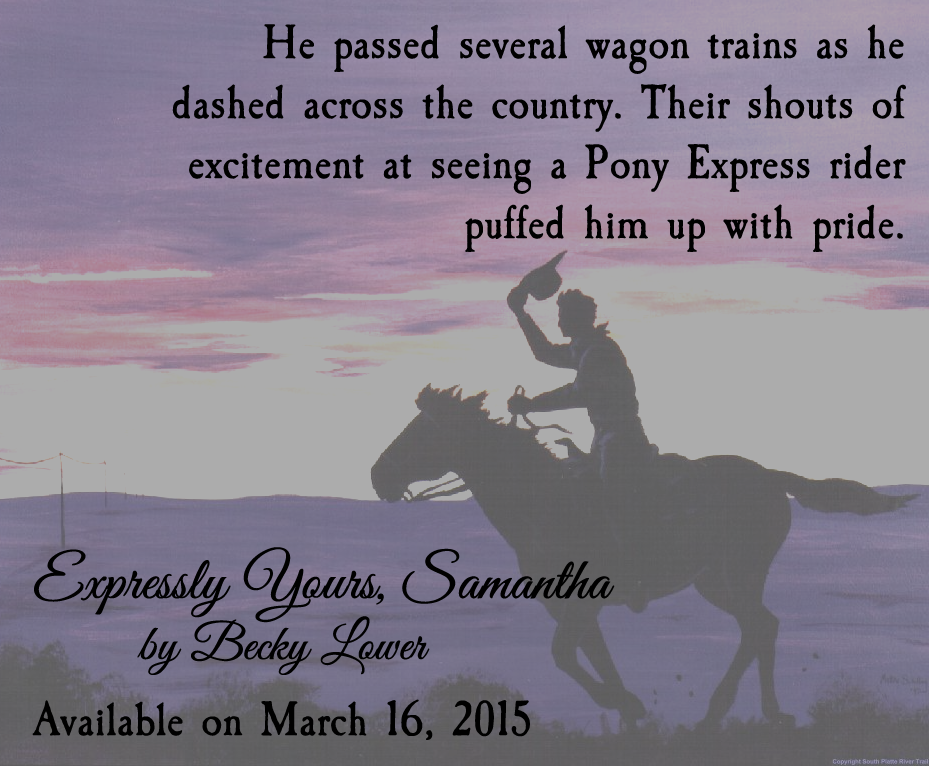 When I was doing the research on the Pony Express for my latest novel, Expressly Yours, Samantha, I was appalled at how little value the horses had who were a part of this page in American history. They were literally ridden into the ground, as the riders attempted to meet the ten-day cross-country deadlines. Those horses who did survive were barely able to walk again, let alone be useful. I referred to the harsh treatment in the book in order to be historically accurate, not because I wanted to dwell on the practice. In fact, my dedication of the book is to those brave horses who were part of the Pony Express.
While writing the story, I thought I'd like to find a horse rescue operation to which I could donate a portion of my earnings from this book. It seemed the right thing to do. I investigated several operations in the west, but none of them felt right. Then, Grace Burrowes, a fellow historical romance author, posted on her Facebook page about a non-profit called the Last Chance Corral.

The Last Chance Corral opened my eyes to the present-day abuse of horses. Mares who are not thoroughbred material are impregnated in order to bring them into milk. The thoroughbred mares drop their foals, who are then carted off to these wet-nurses while the thoroughbred mare is once again immediately impregnated. The foals of the wet nurses are cast aside, of no further use to the breeder. Fortunately, some of them make it to the Last Chance Corral in Athens, OH, where they are adopted out. You can find out more about the operation here:
https://www.facebook.com/pages/Last-Chance-Corral/45502380989?ref=br_tf
This is a perfect charity for my donations, and the fact it's in Ohio is icing on the cake. I plan to give a portion of each royalty statement from the sales of Expressly Yours, Samantha, to this noble cause. If it saves only one foal, my money will have been well spent.
March 15, 2015
Here It Comes!
 Expressly Yours, Samantha will be released tomorrow, March 16. It's been a long time in the making and I'm so excited to have it out there, finally. What do I mean? Don't I write two historicals a year in the Cotillion series? Why was this one so long in the making?
Because of my contract with Crimson, I had to write the synopsis for the last five books in the series long before I wrote them. That was a first for me, the proverbial pantser. But it worked, since it made me look further down the road than I had for the first few books. I was able to insert little nuggets into my stories which may have seemed like an aside at the time, but which were helping to set the stage for a later book. For instance, if you go back and look for it, you'll see Valerian had a love affair with horses for years before he got his own story. Dropping those little clues into a story makes the idea that all the youngest Fitzpatrick boy wanted to do was ride horses more believable. It is fortunate that his story unfolds when the Pony Express is starting up. Coincidence? That's for you, the reader, to decide.

 In order to write this story, I had to do a great deal of research, including a cross-country trip. All I knew about the Pony Express was that it was a romantic page in American history, it got the mail from the east coast to the west coast, and it involved horses. I had no clue how it was put together, or why. On my trip, I stopped at every place where there was something to do with the Pony Express and picked up on some of the local flavor. I ended up with three great research books on the subject, rode through the countryside in the middle of winter, and took pictures. This is the first book in the series that can be classified as a western, and a horse on the cover makes sense. I couldn't be happier. I hope you enjoy reading it as much as I enjoyed writing it.
March 8, 2015
I am pleased to host one of my favorite historical ...
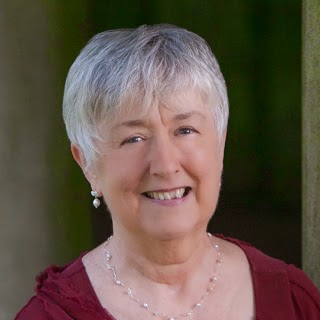 I am pleased to host one of my favorite historical authors today. Caroline Warfield's newest book, Dangerous Secrets will be available March 18, 2015. She's taken some time out from her busy schedule to discuss what happens after you write "The End" on your manuscript.
 After The End
One of the most satisfying moments known to man or woman is to honestly type The End at the bottom of a manuscript. The story has been told. The hero’s journey is complete. In a romance, happily has ensued forever after. The writer can sit back and bask in a job well done. Right? Wrong!
Ok, I can’t speak for all writers. Some may give birth to perfect works, each word a pearl, each semicolon correctly used. Here’s what happens in my world.
1. I put it aside. The first thing I need is distance so the glow of self-satisfaction has time to fade and I can face the thing with a clear head.2. I ask reliable, knowledgeable friends or followers to be “beta readers.” A beta reader is not a reviewer. I don’t need love at this point. I want them to read for plot holes, plausibility, and inconsistencies. I’m hoping they find timeline issues and naming problems. If he is George on page eleven and Ernie on page seventy-three I need to know early.3. I internalize beta reader feedback and read it myself for plot. I am at precisely this stage for Dangerous Weakness, the third book in my Dangerous series. The timeline proved tricky since I was balancing story, 18th century travel, and a pregnancy. Not only did I have to tweak time references in several scenes, I found that I needed three new scenes to bridge gaps.
As an aside, I have a friend who never does steps two or three. She plans her plot in such meticulous detail that it isn’t necessary. That isn’t my world. My characters frequently shanghai the plot early on. The “plan” needs to be flexible.
4. Once the plot gels, I begin a scene-by-scene review. Does each scene move the story forward? Is there enough detail? Action? Conflict? Does it begin with interest and end with a hook? I heard one author call this the stage where you dress up the naked people in empty rooms. The purpose is to add richness and readability to the story. The writer has to give readers a reason to turn the page.5. Finally I review the work line by line, looking for typos, spelling errors, and punctuation. This is generally called a copy edit and, frankly, I’m not good at it. That leads to step six.6. I send it to an editor. Luckily, Soul Mate Publishing has edited the books in the Dangerous series. In spite of the effort I put in the editor still finds errors, corrects inconsistencies, and asks excellent questions. We finished Dangerous Secrets (out March 18) a short time ago. She pushed me to keep my narrator voice out of the book and to be certain about my historical research. I love working with her. A good editor is golden! If I were to publish a book independently I would have to pay a professional to edit it. I believe no writer can edit his or her own copy objectively.7. Now I’m done—except for the things I find or my readers find that I have to tweak before the digital version goes to print, or another edition comes out. One advantage of an independent publication is the writer can fix it on the fly.
I’m really done. Right? Wrong! What is the point of writing a book if no one know it exists. The publisher will promote it on their Web site, and get it to reviewers, but the burden is on my to trumpet the books' existence on social media, in ads, to my hair cutter—you get it. I do that while working on the next book and planning the one after. A writer’s work is never done.
But for the characters, The End is really the end. Right? Wrong. My FB friend Jude Knight once wrote about why “the end” is really the beginning, but that’s a topic for another day.
Now I ask you, when you read a book can you tell any of this? Have you ever read a book you thought needed the kindness of an editor?
Dangerous Secrets
 When a little brown wren of an Englishwoman bursts into Jamie Heyworth’s private Hell and asks for help he mistakes her for the black crow of death. Why not? He fled to Rome and sits in despair with nothing left to sell and no reason to get up in the morning. Behind him lie disgrace, shame, and secrets he is desperate to keep.
Nora Haley comes to Rome at the bidding of her dying brother who has an unexpected legacy. Never in her sunniest dreams did Nora expect Robert to leave her a treasure, a tiny black-eyed niece with curly hair and warm hugs. Nora will do anything to keep her, even hire a shabby, drunken major as an interpreter.Jamie Heyworth harbors secrets to protect his heart. Nora Haley fears deception will destroy everything she desires. Will love—and the truth—bind them both together?
Excerpt Jamie translates for Nora during painful interview following the death of her brother:
“What is it? I’ll do anything,” she said.“Foolish woman. You would, too,” he growled. “She says you need a husband.”“Husband?” The word hit Nora like a brick, driving the breath from her lungs.The major continued speaking, “A husband would not only add countenance to your claim of making a home for Isabella, but a husband could also forbid travel to Turin. It’s unfair, but she is right.”Nora snorted and sat down abruptly. “Nonsense. Who does she think I can find to marry me?” She looked up into his face, and what she saw there brought a lump to her throat. “Me,” he said sadly. “She thinks you need to marry me."
**
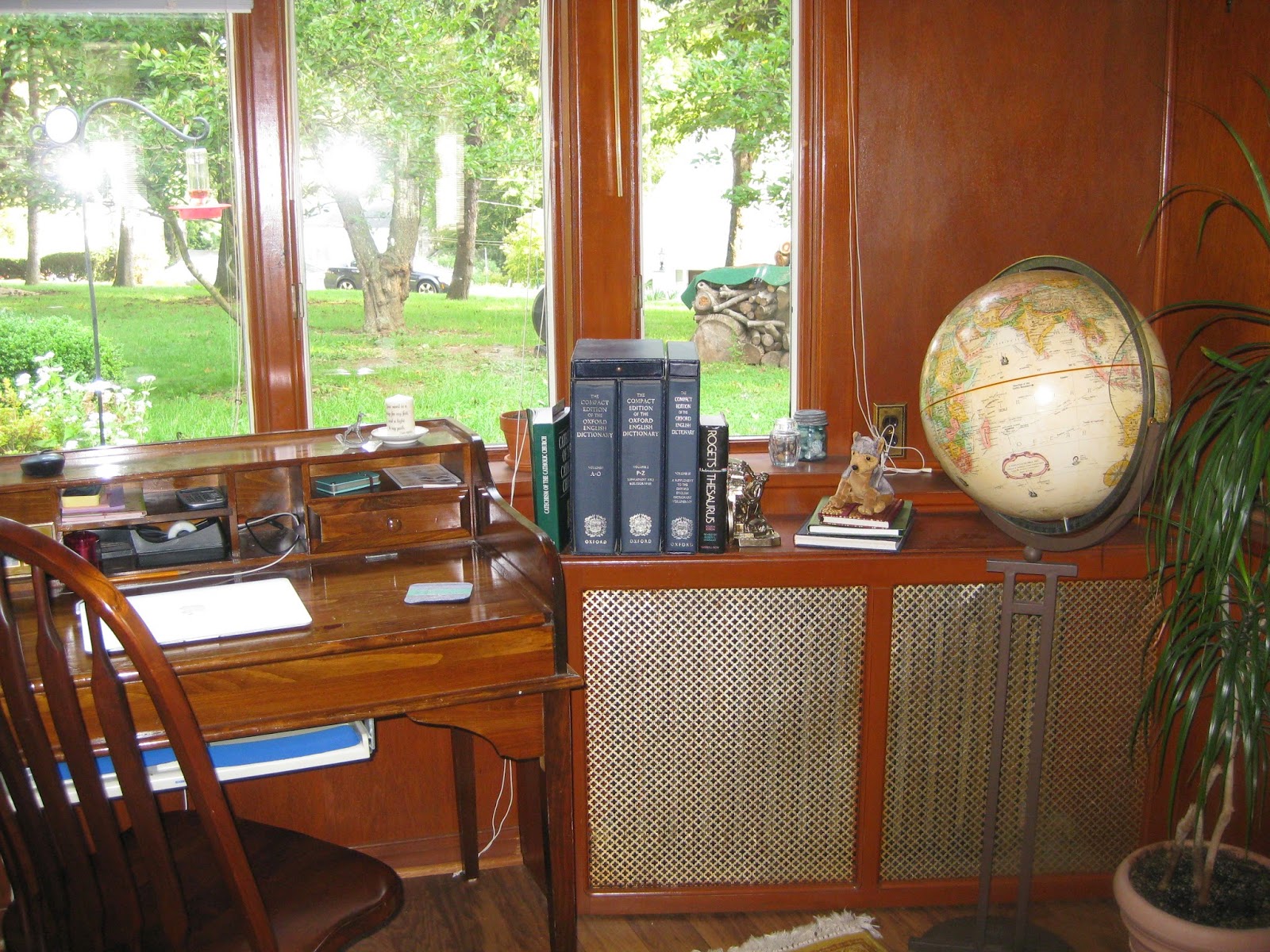 Caroline Warfield sits at a desk surrounded by windows and dreams of stories to entertain her readers. She has at various times been an army brat, a librarian, a poet, a raiser of children, a nun, a bird watcher, a network services manager, a conference speaker, a tech writer, a genealogist, and, of course, a romantic. She is a traveler, a grandmother, and a writer of historical romance, enamored of owls, books, history, and beautiful gardens (but not the act of gardening). For more information, contact her here: http://www.carolinewarfield.com/?page_id=471
March 1, 2015
Historical? Contemporary?

 There's more difference between historical and contemporary books than the type of clothes the characters wear. My agent just sent back the edited copy of the contemporary I recently finished. With seven historicals to my credit and only three contemporaries, it's obvious I'm quite comfortable writing historicals. But even though there are no corsets or cage crinolines, there are thongs, demi-bras, sports bras and other garments worn by the contemporary heroine. And all kinds of oils and lotions to use when making love that weren't around two hundred years ago.
But the difference between the two genres goes deeper than clothing. Speech, for example.
There are contractions in a person's speech. In my historic world, American Indians don't use contractions, but they are used sparingly by others. My contemporary didn't use enough contractions. It does now. And I used several phrases in my contemporary which I thought were in common use, but my agent didn't know what I was talking about. Maybe I'm showing my age.
But, through my agent's diligence, every place a contraction was needed, it's there now. And every sports bra is ripped off the correct way. One final read-through is all that's needed before I send it back to her, and it gets sent out again. I hope it sells and that I can finish the trilogy. I like the family I'm writing about. And I had an idea yesterday for another contemporary story. About bourbon. Don't ask for details. It's still at the simmer stage.
How about you? Is it thongs or cage crinolines for you? I'm taking a poll.


