Becky Lower's Blog, page 30
April 16, 2016
The Best Laid Plans...
 At the end of last year, with the knowledge that my long commitment to the Cotillion Ball Series and Crimson Romance was at an end, I decided to come up with a list of book project ideas for this year. I listed the book and thought about everything in terms of red, yellow and green lights. Red was what roadblocks were in the way of the project, green for things that would help fast track the project and yellow for the things that needed further consideration.
My list included seven potential books. To date, three of them have been completed. I'm on track.
 So now, what do I do? Start on the fourth? Oh, hell no. That would be too easy.
My restless mind came up with an idea for a YA historical novel–not on my list, not in my wheelhouse. But it's a great idea, so I'm going to run with it.
Then, today, as if that weren't enough, I had a wild idea for a contemporary story combining an event that actually happened to me along with an event that happened to a friend. All I have at this point is shoelaces and coconuts. I'll start on that one tomorrow.
Sometimes not having any deadlines to meet frees you up to explore new options in your writing career. And sometimes being so free can lead to ADHD tendencies in your writing, and you have to have three projects going at once. Even if you try to be sensible and make plans for the year and set goals for yourself, the best laid plans can be shoved aside when a great idea gets into your head.
At least I'll never be bored.


April 9, 2016
Back To The Drawing Board
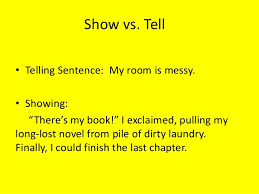
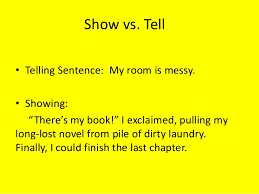
Like most authors, I'm constantly searching for new ways to approach my craft. I take online and in person workshops, read articles on how to show vs. tell, enter contests for published authors showcasing their new work. Since I have been published for four years, some folks think I don't need to do this anymore since I must know it all by now.

If only it were that simple.
I had an idea for a contemporary two years ago, which was to be part of a trilogy. I wrote the manuscript, found an agent to peddle it for me, had it sent out all over the place, and got no bites. I fired the agent, took a look at the editing notes the agent only gave me after the first round of rejections, and revised the manuscript. I then sent if off myself to another publishing house with whom I've had some dealings in the past. Their acquisitions person got back to me saying she'd love to work with me, liked my work, but wanted me to change the beginning, middle and end. I told her I'd get back to her, and promptly filed the manuscript away for a rainy day.
It's not raining, but we did have a freakish snow storm here in Ohio over the weekend, so I thought it was a perfect time to pull it out and take another look at it. After reading the first twenty pages, I realized I hadn't run the document through my checklist, since some of my taboo words showed up with an uneasy frequency. Maybe the acquisitions editor wasn't so far off the mark after all.

I still think I'll send it elsewhere when I deem it ready to go again. And I'm not writing books two and three in this trilogy until the first one finds a home.

If only it were that simple.
I had an idea for a contemporary two years ago, which was to be part of a trilogy. I wrote the manuscript, found an agent to peddle it for me, had it sent out all over the place, and got no bites. I fired the agent, took a look at the editing notes the agent only gave me after the first round of rejections, and revised the manuscript. I then sent if off myself to another publishing house with whom I've had some dealings in the past. Their acquisitions person got back to me saying she'd love to work with me, liked my work, but wanted me to change the beginning, middle and end. I told her I'd get back to her, and promptly filed the manuscript away for a rainy day.
It's not raining, but we did have a freakish snow storm here in Ohio over the weekend, so I thought it was a perfect time to pull it out and take another look at it. After reading the first twenty pages, I realized I hadn't run the document through my checklist, since some of my taboo words showed up with an uneasy frequency. Maybe the acquisitions editor wasn't so far off the mark after all.

I still think I'll send it elsewhere when I deem it ready to go again. And I'm not writing books two and three in this trilogy until the first one finds a home.
April 2, 2016
The Calm Before The Storm
 I was asked recently by a soon-to-be-published debut author what types of promotion work best for me. And since today is the day before my release of The Forgotten Debutante, the calm before the storm, I thought I'd share what I've learned in the four years since I was a soon-to-be-published author.
1. Make friends with other authors, both inside your local chapter, and outside. Follow them on the various forums, buy and read their books, write reviews and post them, if you have a blog, offer to host them, etc. You'll soon find an entire group who are following the same trajectory you are at the same time, and there's safety in numbers. Plus, it's fun to watch their successes. I know the conventional marketing wisdom is not to add these fellow authors to your twitter feed, or friend them on Facebook, but I think that's a mistake. Most authors are also voracious readers, too. And they have friends.
2. Work with your publisher or agent, if you're going the traditional route, to find promotional opportunities. Most publishers have a list of places where they'll send your ARC for review, but develop your own list that caters to your genre. A review from a legitimate review site is golden. It takes time to figure out which sites prefer your type of book, but the end result is worthwhile. If you know that a certain site likes your books, you can keep sending them and rest assured you'll get a good review.

3. Don't turn down any promotional opportunity, however frightening it may be. Participate in local author book signings, get your books in the local library or bookstore, even if you have to carry them in yourself, be on whatever radio show you can find (it's not as scary as it sounds), be interviewed for your local newspaper. A few years ago, USA Today was starting up an on-line presence for romance and asked for folks to help. I raised my hand immediately, and for months afterward, it was my job to find new releases in a specific genre. They since decided not to run the new releases on a daily basis and disbanded the group that was helping, but I made a valuable contact there, which I still use today. (See the coverage on April 6 for my new release.)
4. Join whatever offshoot group you can find that caters to your genre. Within RWA, you have the FF&P chapter for paranormal authors, Hearts Through History for historical authors, RWA Contemporary for, you guessed it, the contemporary author, and so on. Each of these groups provide a wealth of information, new friends to make and ways to get the word out about your upcoming work.
5. Explore the various types of social media and find what works best for you. At a minimum, you need a website and Facebook page, but there are so many other outlets that you could easily spend your entire day on this task alone, instead of writing the next book. Play around with them all, and find what works best for you. Then pick three or four and use them daily.
6. Write the next book! You are only as good as your next one. How's that for pressure?
So today, I'll rest up, work a bit on the next book, and get ready for tomorrow's mayhem, which will stretch out for the next few weeks. You can glimpse where I am all month on the upcoming guest appearance tab of this blog, but here's an idea of what Monday brings.
I've got some gift copies to mail. I want reviews to start showing up on Amazon as well as on Goodreads, so I'll prod my beta readers. I have the BookBub ad running on Monday for another book in the series and hope to take The Duplicitous Debutante into the top 100 for historical romances, if even for an hour. And, I hope while people are there, buying The Duplicitous Debutante, they also will pick up The Forgotten Debutante. But that can't happen with just the ad. I must be active on social media all week, promoting on Twitter, Google +, Pinterest, Facebook, and all the rest. It'll be a fun, exhausting, time.
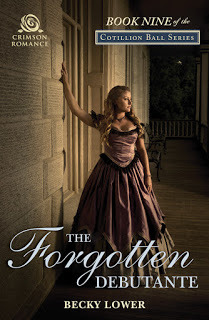 Buy Link: http://amzn.to/1V0b11r
March 26, 2016
The Waiting Game
I've been busy the last few weeks trying to line up guest appearances on other's blogs and get reviews for my latest book, which releases finally, on April 4. It's been a long time since I began the series, and I appreciate all my loyal readers who have stuck with it until this one, the final book in the Cotillion Ball Series.
Or is it? Even as I write these words, I'm hard at work on a companion book to the series. A few of my friends from the Pioneer Hearts were discussing what you call a book that's an offshoot from another series. Several names were bandied about, and I like the term 'companion.' It's done, for the most part, and I've begun shopping it around to various publishers. So, I'm
waiting to hear back from them.

Most every author who goes the traditional route to publishing waits to hear back from the publisher on whether they want to take a roll of the dice with our works. Then, our faithful readers must wait until the book can be fit into a publishing schedule, and when it can be available in print. We're always waiting. And the bigger the publishing house, the longer the wait.
 The finalists for RWA's biggest awards of the year were announced last week, and everyone who entered, whether they thought they had a chance of finaling or not, waited on Friday to see the list of names, which kept growing throughout the morning. Finally, at 3pm, the last of the finalists were announced and added to the list and we all stopped waiting and went back to whatever we'd been doing.
Even if I am about to jump ship and self-publish a novella just to get the experience behind me, it's still a waiting game. First, I must wait until the publisher I sent it to gets back to me. I'd rather not spend my own money getting it edited if it's ultimately to be picked up by a publisher. Then, after the 12 weeks the publisher has requested to review and make a decision, if I decide to self-publish, I need to be fit into an editor's busy schedule, find a cover artist, formatter, etc, etc. I'm sure there are a million other little things I'll need to take care of, and wait on, once I get into it.
And while I'm at it, royalty checks for the last half of 2015 are due by the end of March. It's nearly time for that to show up, but as yet, I've not received word about what to expect, and nothing's shown up in my bank account.

The Waiting Game. That's what being an author is all about.
Or is it? Even as I write these words, I'm hard at work on a companion book to the series. A few of my friends from the Pioneer Hearts were discussing what you call a book that's an offshoot from another series. Several names were bandied about, and I like the term 'companion.' It's done, for the most part, and I've begun shopping it around to various publishers. So, I'm
waiting to hear back from them.

Most every author who goes the traditional route to publishing waits to hear back from the publisher on whether they want to take a roll of the dice with our works. Then, our faithful readers must wait until the book can be fit into a publishing schedule, and when it can be available in print. We're always waiting. And the bigger the publishing house, the longer the wait.
 The finalists for RWA's biggest awards of the year were announced last week, and everyone who entered, whether they thought they had a chance of finaling or not, waited on Friday to see the list of names, which kept growing throughout the morning. Finally, at 3pm, the last of the finalists were announced and added to the list and we all stopped waiting and went back to whatever we'd been doing.
Even if I am about to jump ship and self-publish a novella just to get the experience behind me, it's still a waiting game. First, I must wait until the publisher I sent it to gets back to me. I'd rather not spend my own money getting it edited if it's ultimately to be picked up by a publisher. Then, after the 12 weeks the publisher has requested to review and make a decision, if I decide to self-publish, I need to be fit into an editor's busy schedule, find a cover artist, formatter, etc, etc. I'm sure there are a million other little things I'll need to take care of, and wait on, once I get into it.
And while I'm at it, royalty checks for the last half of 2015 are due by the end of March. It's nearly time for that to show up, but as yet, I've not received word about what to expect, and nothing's shown up in my bank account.

The Waiting Game. That's what being an author is all about.
March 19, 2016
Bones & Joints
Most of you who follow along with this blog are aware I've had some health issues of late. Mostly dealing with my joints. I seem to have great bones, but lousy joints. It's always been an issue, but as I get older, it seems to come into play more and more. So far, the count is 2 elbows, 3 hips and a shoulder.

A writing buddy of mine commented recently that she had to go back and redo the opening scene of her WIP, since it was disjointed. Which led me to an analogy. Your work can have great bones, but without being able to join all those scenes together into a cohesive unit, you just have a pile of bones. And a lot of pain.
I've been working lately on a little Christmas novella. One would think it'd be easy to write, since it's only going to be about 20,000 words and it is about Christmas. Easy-peasy, right? Never have I been so wrong.
I started out writing this two years ago. I had the bones of a good story, since it was about an actual event from my childhood and I folded in my time working retail in a Hallmark store, following the advice given to all authors–write what you know. But for some reason, I couldn't connect the scenes into something that made sense. I had way too many holes in my plot. I put it on the back burner, thought about how to fix the holes, and have recently devoted time to it again. I was able to take about 8,000 words from my first attempt and transfer them into the new, improved story. Those are the bones. But what I have this time are the joints, making it a story that can stand on its own with nary a crutch in sight.

I'm at the point where it's ready to send off into the big world of publishing, and hope to find a home with a traditional publisher. But, if not, I may bite the bullet and enter the unknown world of self-publishing later on this year. Either way, it's an exciting time in my professional life. Can't wait to see what happens next.

A writing buddy of mine commented recently that she had to go back and redo the opening scene of her WIP, since it was disjointed. Which led me to an analogy. Your work can have great bones, but without being able to join all those scenes together into a cohesive unit, you just have a pile of bones. And a lot of pain.
I've been working lately on a little Christmas novella. One would think it'd be easy to write, since it's only going to be about 20,000 words and it is about Christmas. Easy-peasy, right? Never have I been so wrong.
I started out writing this two years ago. I had the bones of a good story, since it was about an actual event from my childhood and I folded in my time working retail in a Hallmark store, following the advice given to all authors–write what you know. But for some reason, I couldn't connect the scenes into something that made sense. I had way too many holes in my plot. I put it on the back burner, thought about how to fix the holes, and have recently devoted time to it again. I was able to take about 8,000 words from my first attempt and transfer them into the new, improved story. Those are the bones. But what I have this time are the joints, making it a story that can stand on its own with nary a crutch in sight.

I'm at the point where it's ready to send off into the big world of publishing, and hope to find a home with a traditional publisher. But, if not, I may bite the bullet and enter the unknown world of self-publishing later on this year. Either way, it's an exciting time in my professional life. Can't wait to see what happens next.
March 12, 2016
Cover Reveal Time!
I know the cover's been all over Facebook and twitter for days now, but I'm so excited about this book, for a number of reasons.
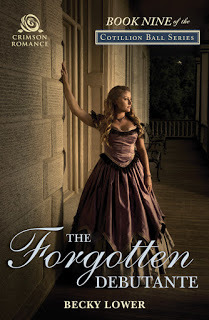
First, it's the final book in the Cotillion series, but that doesn't mean you've seen the last of the Fitzpatricks. As Julia Quinn has done with her Bridgeton series, I'm taking secondary characters from the original series and writing about them. I may even jump forward and write about the children. So many ideas, so little time.
Second, this has been the only book in my career where I've had to ask for a deadline extension, so I'm doubly glad to see it up on Amazon.
Third, I think the cover is gorgeous. As my adult nephew said, "That's not the kind of woman that would be forgotten!"
So, here's a bit more about this book:
Blurb:
Don’t miss the touching conclusion to the Cotillion Ball Saga!
In 1863, America is war-weary. Fifteen-year-old Saffron Fitzpatrick, whose teenage years have been spent mourning the dead rather than dancing at her debutante ball, just wants to visit her beloved horse after being housebound due to the draft riots. A chance meeting with soldier Ezekiel Boone changes everything.
Three years ago, Ezekiel ran away with his older brothers to join the war effort, welcoming the chance for adventure. But when all four of his brothers die at Chancellorsville, he retreats home, despondent and depending on the kindness of strangers, like Saffron, who help him on the journey. They share a wild ride and a breathless kiss, parting with fond memories.
Fate reunites the couple three years later, and their former attraction rekindles as they discover unexpected common ground and begin to build a relationship. But though the war is over, a future together may still elude them … especially if Saffron’s older, protective brother and the U.S. Army have anything to say about it.
And an excerpt:New York CityJuly 15, 1863Releasing a shallow breath, Saffron Fitzpatrick glided down the stairs on slippered feet, avoiding the creaky spots with unerring accuracy from years of practice. She surveyed the hallway and let out the rest of the air from her lungs. All the servants were still in the basement, preparing the noonday meal. If she hurried, she could escape the house undetected. She ran to the back door, her curls bouncing around her head, and let herself out into the yard.Heart pounding, she stood, back up against the door, and listened. No frantic footsteps from inside the house meant her break to freedom had gone unnoticed so far.After two days of being housebound due to the draft riots, Saffron had tired of heeding her father’s warnings to stay indoors. Even though his motives were sound and he was only trying to protect her from the roaming mobs, she would surely perish from boredom if she spent one more moment inside. Although her intent to breathe some fresh air was dashed because the city was foul with smoke from the fires being set around town, she still cherished the freedom of being outdoors. Her skin erupted in goose bumps at her boldness. She cringed back against the door as the distant shouts came closer.But she had a mission: She needed to see Biscuit. She could certainly get from the family brownstone to the carriage house in their backyard without running into any of the rioters, couldn’t she? Talking to a horse beat staring at her bedroom ceiling. Or reading another boring book. Her intent clear, she pushed herself away from the door and ran to the small building. She opened the door to the carriage house. Diffused lighting came through the windows near the roofline, and the cool air was filled with a familiar, comfortable combination of hay, horse dung, and leather. Saffron inhaled the scents as she waited for her eyes to become accustomed to the subdued light. Biscuit nickered a nervous greeting. She tiptoed across the brick floor toward the mare’s stall.And came to an abrupt halt.The apples, which Saffron kept in a bucket to dole out to the horse, were all gone. As were the carrots. Someone had been in the carriage house, and possibly still was. She backed toward the door, hoping if she were quiet, whoever was or had been in the carriage house would not notice her. She’d go back to the house and sound an alarm. Then, armed with the servants, she could return and confront whomever was here. But Biscuit nickered again. If someone was intent on setting fire to the carriage house, Saffron needed to take her horse into the yard first, then call for the servants. She picked up a hayfork and made her way forward, her slippers not making a sound as they moved over the floor. She opened the door to the stall and found what was upsetting her horse, and the answer to why all the good treats were gone. A Union soldier was asleep in the hay next to Biscuit.

First, it's the final book in the Cotillion series, but that doesn't mean you've seen the last of the Fitzpatricks. As Julia Quinn has done with her Bridgeton series, I'm taking secondary characters from the original series and writing about them. I may even jump forward and write about the children. So many ideas, so little time.
Second, this has been the only book in my career where I've had to ask for a deadline extension, so I'm doubly glad to see it up on Amazon.
Third, I think the cover is gorgeous. As my adult nephew said, "That's not the kind of woman that would be forgotten!"
So, here's a bit more about this book:
Blurb:
Don’t miss the touching conclusion to the Cotillion Ball Saga!
In 1863, America is war-weary. Fifteen-year-old Saffron Fitzpatrick, whose teenage years have been spent mourning the dead rather than dancing at her debutante ball, just wants to visit her beloved horse after being housebound due to the draft riots. A chance meeting with soldier Ezekiel Boone changes everything.
Three years ago, Ezekiel ran away with his older brothers to join the war effort, welcoming the chance for adventure. But when all four of his brothers die at Chancellorsville, he retreats home, despondent and depending on the kindness of strangers, like Saffron, who help him on the journey. They share a wild ride and a breathless kiss, parting with fond memories.
Fate reunites the couple three years later, and their former attraction rekindles as they discover unexpected common ground and begin to build a relationship. But though the war is over, a future together may still elude them … especially if Saffron’s older, protective brother and the U.S. Army have anything to say about it.
And an excerpt:New York CityJuly 15, 1863Releasing a shallow breath, Saffron Fitzpatrick glided down the stairs on slippered feet, avoiding the creaky spots with unerring accuracy from years of practice. She surveyed the hallway and let out the rest of the air from her lungs. All the servants were still in the basement, preparing the noonday meal. If she hurried, she could escape the house undetected. She ran to the back door, her curls bouncing around her head, and let herself out into the yard.Heart pounding, she stood, back up against the door, and listened. No frantic footsteps from inside the house meant her break to freedom had gone unnoticed so far.After two days of being housebound due to the draft riots, Saffron had tired of heeding her father’s warnings to stay indoors. Even though his motives were sound and he was only trying to protect her from the roaming mobs, she would surely perish from boredom if she spent one more moment inside. Although her intent to breathe some fresh air was dashed because the city was foul with smoke from the fires being set around town, she still cherished the freedom of being outdoors. Her skin erupted in goose bumps at her boldness. She cringed back against the door as the distant shouts came closer.But she had a mission: She needed to see Biscuit. She could certainly get from the family brownstone to the carriage house in their backyard without running into any of the rioters, couldn’t she? Talking to a horse beat staring at her bedroom ceiling. Or reading another boring book. Her intent clear, she pushed herself away from the door and ran to the small building. She opened the door to the carriage house. Diffused lighting came through the windows near the roofline, and the cool air was filled with a familiar, comfortable combination of hay, horse dung, and leather. Saffron inhaled the scents as she waited for her eyes to become accustomed to the subdued light. Biscuit nickered a nervous greeting. She tiptoed across the brick floor toward the mare’s stall.And came to an abrupt halt.The apples, which Saffron kept in a bucket to dole out to the horse, were all gone. As were the carrots. Someone had been in the carriage house, and possibly still was. She backed toward the door, hoping if she were quiet, whoever was or had been in the carriage house would not notice her. She’d go back to the house and sound an alarm. Then, armed with the servants, she could return and confront whomever was here. But Biscuit nickered again. If someone was intent on setting fire to the carriage house, Saffron needed to take her horse into the yard first, then call for the servants. She picked up a hayfork and made her way forward, her slippers not making a sound as they moved over the floor. She opened the door to the stall and found what was upsetting her horse, and the answer to why all the good treats were gone. A Union soldier was asleep in the hay next to Biscuit.
March 5, 2016
One Last Time
Final galleys were delivered this week. If you're a published author, you know what that means. This is the final check to go over your manuscript. Yeah, that one. The manuscript you've labored over for months, the one where you've got parts of it memorized, your baby. Surely since you've gone over it with a fine-tooth comb for months now, run it through your multiple check lists, there can't be anything wrong with it at this late stage. Right?

Wrong!
At the galley stage, you can't alter the timeline or make excessive changes. According to the instructions from my publisher, we can only make changes to typos or very glaring punctuation errors.
Right now, with five chapters left to read, I've found six errors that fit the parameters given by the publisher. Of course, if I could make more severe changes, I would, since we all know a work is never finished.
"The beautiful part of writing is that you don't have to get it right the first time, unlike, say, a brain surgeon. You can always do it better, find the exact word, the apt phrase, the leaping simile."--Robert Cormier
Food for thought.
What stories can you give about proofing your work?

Wrong!
At the galley stage, you can't alter the timeline or make excessive changes. According to the instructions from my publisher, we can only make changes to typos or very glaring punctuation errors.
Right now, with five chapters left to read, I've found six errors that fit the parameters given by the publisher. Of course, if I could make more severe changes, I would, since we all know a work is never finished.
"The beautiful part of writing is that you don't have to get it right the first time, unlike, say, a brain surgeon. You can always do it better, find the exact word, the apt phrase, the leaping simile."--Robert Cormier
Food for thought.
What stories can you give about proofing your work?
February 27, 2016
Contest Caution
It's that time of year again. Contests abound for romance writers.
 So far this year (and remember, it's only February), I've judged the RITA entries I was assigned to, judged the entries in my local chapter's contest for unpublished authors, and am waiting for the entries in the Hearts Through History contest for unpublished authors.
Why do I so willingly give of my time to judge contests? The answer is very simple. The feedback I got from contests helped me become a published author, and I want to return the favor. Besides, with the RITA entries, you have no choice. If you enter a book into that contest, you must read some entries. It's a huge contest, with 2,000 entries, all needing five judges each. Imagine the logistics nightmare the RWA staff has each January.
 Contests are not the only place where you can get feedback. Any number of workshops are offered each week, geared to improving some aspect or the other of your work. Feedback from these workshops can also be invaluable. With my most recent historical, currently still a WIP, someone caught the fact I was leaving the cow in the pasture overnight. Obviously the woman had more farming knowledge than I did, since she flagged it for my attention. A quick check with my 80-year-old uncle verified the woman's claim. Something as precious as a cow would have been brought in from the pasture each night and put in the barn, away from predators. My entire story had to change, but without that input, I'd have been laughed out of every farming community in the country.
But I have to throw out a note of caution in both instances. Chances are the person reading your work doesn't write in your particular genre, and if that's the case, their remarks should not be considered gospel. Their overall impression of your work–fine–but individual remarks? Not so much. I recently had a case where the work I was judging was set in ancient Scotland. I know nothing about the era, other than what I see on the Outlander series, so some of the words tripped me up. I had to put in my notes to the author that I was unschooled in her particular genre, so she should only consider my overall impression of her work. And then, someone who was remarking on my work–a historical set in 1860s America–referred to a medical condition that has only been diagnosed in the past twenty years. Again, I fact-checked my work and found that, in this case, anyway, I was correct.
The moral of this story is this–your work needs to be viewed by someone other than your family and friends, in order to get constructive criticism, and contests and workshops are a very good way to accomplish this. But not everyone who offers feedback is competent to do so.
A grain of salt needs to be added in each time a person gets a contest entry back with comments. But you should enter your work, and get back comments. It will only improve your writing.
 So far this year (and remember, it's only February), I've judged the RITA entries I was assigned to, judged the entries in my local chapter's contest for unpublished authors, and am waiting for the entries in the Hearts Through History contest for unpublished authors.
Why do I so willingly give of my time to judge contests? The answer is very simple. The feedback I got from contests helped me become a published author, and I want to return the favor. Besides, with the RITA entries, you have no choice. If you enter a book into that contest, you must read some entries. It's a huge contest, with 2,000 entries, all needing five judges each. Imagine the logistics nightmare the RWA staff has each January.
 Contests are not the only place where you can get feedback. Any number of workshops are offered each week, geared to improving some aspect or the other of your work. Feedback from these workshops can also be invaluable. With my most recent historical, currently still a WIP, someone caught the fact I was leaving the cow in the pasture overnight. Obviously the woman had more farming knowledge than I did, since she flagged it for my attention. A quick check with my 80-year-old uncle verified the woman's claim. Something as precious as a cow would have been brought in from the pasture each night and put in the barn, away from predators. My entire story had to change, but without that input, I'd have been laughed out of every farming community in the country.
But I have to throw out a note of caution in both instances. Chances are the person reading your work doesn't write in your particular genre, and if that's the case, their remarks should not be considered gospel. Their overall impression of your work–fine–but individual remarks? Not so much. I recently had a case where the work I was judging was set in ancient Scotland. I know nothing about the era, other than what I see on the Outlander series, so some of the words tripped me up. I had to put in my notes to the author that I was unschooled in her particular genre, so she should only consider my overall impression of her work. And then, someone who was remarking on my work–a historical set in 1860s America–referred to a medical condition that has only been diagnosed in the past twenty years. Again, I fact-checked my work and found that, in this case, anyway, I was correct.
The moral of this story is this–your work needs to be viewed by someone other than your family and friends, in order to get constructive criticism, and contests and workshops are a very good way to accomplish this. But not everyone who offers feedback is competent to do so.
A grain of salt needs to be added in each time a person gets a contest entry back with comments. But you should enter your work, and get back comments. It will only improve your writing.

February 20, 2016
Author Shorthand
I'm one of a whole herd of writers who write a very loose and sloppy first draft, then spend months going back over it, smoothing it out, filling in the blanks, adding scenes that were skipped over in our haste to put an ending on the manuscript. One of the things that gets done during this style of writing is we use placeholders, a type of author shorthand, for various emotions. If you're an author, you know what I mean. It's a roll of the eyes, chewing on the lip, running one's hand over someone. We know there are better ways of expressing disdain, nervousness or endearment, and we'll get to it during the second, third or fourth draft of the project.
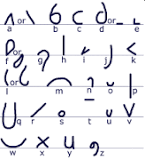
There's nothing wrong with this approach to writing, as long as, during the editing stage, you do, in fact, take the time to remove the shorthand, and in its place, add in a unique turn of phrase to convey what you mean.
 My crutch seems to be running one's hand down, over, into another person. And I never realized it until I was going through my latest round of edits from my publisher. My first editor didn't flag my constant use of the crutch, but the second one pointed out each and every one. And boy, there were a ton! This is romance, so some touching is to be expected. But, I overused. I relied on the running of hands to convey they sense of touch, when there are so many other ways to get the point across, if I'd only taken the time.

Needless to say, I did take the time in this round of edits to eliminate my author shorthand, and to insert other ways to get my point across. Now I have one more thing to add to my author checklist–don't overuse running of the hands. Once or twice in a story is fine, but beyond that, it should be avoided.
How about you? What author shorthand do you have, if any? Are you aware of it when you're using it? At what point do you go back and fill in the shorthand with what you really meant to say?
There's nothing wrong with this approach to writing, as long as, during the editing stage, you do, in fact, take the time to remove the shorthand, and in its place, add in a unique turn of phrase to convey what you mean.
 My crutch seems to be running one's hand down, over, into another person. And I never realized it until I was going through my latest round of edits from my publisher. My first editor didn't flag my constant use of the crutch, but the second one pointed out each and every one. And boy, there were a ton! This is romance, so some touching is to be expected. But, I overused. I relied on the running of hands to convey they sense of touch, when there are so many other ways to get the point across, if I'd only taken the time.
Needless to say, I did take the time in this round of edits to eliminate my author shorthand, and to insert other ways to get my point across. Now I have one more thing to add to my author checklist–don't overuse running of the hands. Once or twice in a story is fine, but beyond that, it should be avoided.
How about you? What author shorthand do you have, if any? Are you aware of it when you're using it? At what point do you go back and fill in the shorthand with what you really meant to say?
February 13, 2016
Pacing Myself
 Active
 PassiveAs most of you know, I'm working on my new historical romance, tentatively titled Dance With Destiny. I finished a flash first draft back in December, before my hospital stay. Then, I went through my checklist and labored over each scene, searching for those dreaded passive words and making certain I got enough description in each setting.
Now it's time for the third draft. The one where I turn to the story line itself, rather than focusing on the writing. I ask myself if the pace is too fast or too slow, what needs to be added or removed in order for the story to flow better. In this story, the pace was too fast at the end of the book, and was resolved too quickly. I'm sure you've all read books like that–where the author seemingly got tired of the story line and wanted to slap on an ending and get it done. Well, I did want to get it done quickly, since I was going into the hospital.

But I now have time to straighten things out. I need to add several more chapters to the book, building to an appropriate finish. An ending my readers will enjoy and will feel like they didn't just waste their time. I'm at the point in the third draft where I need to take the time to add in these chapters and make them seem as if they weren't an afterthought. I want to make my heroine scream her frustration as I amp up the conflict yet again. I want the tears, the angst, the torment, to be real and pulsating. Will she ever get to her happy ending? Can there be a happy ending? When I'm done, I want the reader to be as emotionally drained as my heroine, Susannah. So I'm pacing myself, both physically and mentally, for the big finish. And if I have to grab a hankie to finish reading the story, I will consider it a work well done.