
Sarahbeth Caplin's Blog, page 66
February 16, 2013
Keeping calm and writing on
Being published is something that's hard to talk about without sounding like a pretentious snot. But I digress: the reason it sounds snotty is because most people don't understand just how much the industry has changed. With the invention of e-books, especially, publishing is now easier than ever. Writing something worth reading is another issue altogether. Snooki from Jersey Shore can ghost write a book that sells three million copies after being on a shelf for fifteen minutes, but twenty years from now, no one will be discussing it in their book clubs.
Inevitably, those who know me will find out I'm a writer. When they do, they'll sometimes ask one of my big pet peeve questions:
"Have you written anything I might have read?"
If only the literary world were that small.
At the same time, being published in any form is still noteworthy. It means you've put yourself out there to be admired and/or criticized, and there's no way to know for sure how your work will be received. Still, knowing what I know now about publishing, how companies like Amazon produce thousands of e-books every day by virtual unknowns like me who all dream of winning Pulitzer (so I assume), it's hard for me to accept the compliments. Or maybe I'm too hard on myself.
I'm proud of what I've accomplished, but I've learned something else about the phenomenon of seeing your name in print: it doesn't last. To use an extreme analogy, it's like winning a Grammy, but then listening to a song that one of your contenders wrote, and thinking to yourself Damn, I wish I'd written that. There's competition and petty jealousy in the writing world like there is in any other.
I'm in the middle of a friend's novel right now, also self-published, and this was my first thought after reading the first few chapters: This is so legit, totally something Barnes & Noble would sell, and my books read like a highschooler's creative writing project. That's not to say that Halo Publishing did a bad job; I'd highly recommend them for anyone looking into self-publishing. What I'm criticizing instead is my choice to self-edit (bad idea!), and my writing style itself. Panic strikes at odd moments: will a serious reader take my work seriously?
I know it's futile to think like that. Even the best of the best (according to the New York Times) get dismissed as poo on paper by handfuls of critics on Amazon. That's the biggest reason why being published is admirable: critics, especially anonymous ones online, can be mean. I haven't gotten much of it yet, but if I take this job seriously, then it will happen. No amount of editing, and no impressive publishing label will prevent that. You can't please everybody.
I'm reading this book right now (yes, I perpetually read more than one book at a time, and I'm in grad school!) called Why We Write. It's a collection of essays from various authors on why they do what they do even when the inspiration is lacking, the rejection letters keep mounting, and they question their own talent. For the moments I get trapped in thinking I'll finally feel like a talented writer when I publish a best-seller, this book is bringing me back to earth. Writing just for money is pretty much a guarantee that you won't make any. Being "good" is irrelevant (and completely subjective). I write because I believe in my work, and really, that's all that matters.
Inevitably, those who know me will find out I'm a writer. When they do, they'll sometimes ask one of my big pet peeve questions:
"Have you written anything I might have read?"
If only the literary world were that small.
At the same time, being published in any form is still noteworthy. It means you've put yourself out there to be admired and/or criticized, and there's no way to know for sure how your work will be received. Still, knowing what I know now about publishing, how companies like Amazon produce thousands of e-books every day by virtual unknowns like me who all dream of winning Pulitzer (so I assume), it's hard for me to accept the compliments. Or maybe I'm too hard on myself.
I'm proud of what I've accomplished, but I've learned something else about the phenomenon of seeing your name in print: it doesn't last. To use an extreme analogy, it's like winning a Grammy, but then listening to a song that one of your contenders wrote, and thinking to yourself Damn, I wish I'd written that. There's competition and petty jealousy in the writing world like there is in any other.
I'm in the middle of a friend's novel right now, also self-published, and this was my first thought after reading the first few chapters: This is so legit, totally something Barnes & Noble would sell, and my books read like a highschooler's creative writing project. That's not to say that Halo Publishing did a bad job; I'd highly recommend them for anyone looking into self-publishing. What I'm criticizing instead is my choice to self-edit (bad idea!), and my writing style itself. Panic strikes at odd moments: will a serious reader take my work seriously?
I know it's futile to think like that. Even the best of the best (according to the New York Times) get dismissed as poo on paper by handfuls of critics on Amazon. That's the biggest reason why being published is admirable: critics, especially anonymous ones online, can be mean. I haven't gotten much of it yet, but if I take this job seriously, then it will happen. No amount of editing, and no impressive publishing label will prevent that. You can't please everybody.
I'm reading this book right now (yes, I perpetually read more than one book at a time, and I'm in grad school!) called Why We Write. It's a collection of essays from various authors on why they do what they do even when the inspiration is lacking, the rejection letters keep mounting, and they question their own talent. For the moments I get trapped in thinking I'll finally feel like a talented writer when I publish a best-seller, this book is bringing me back to earth. Writing just for money is pretty much a guarantee that you won't make any. Being "good" is irrelevant (and completely subjective). I write because I believe in my work, and really, that's all that matters.


February 11, 2013
Grammys, rape culture jokes, and another SYAK excerpt
It always surprises me how rape culture jokes come up in the most unexpected contexts. I wouldn't have expected to hear one relating to the Grammys: "Will Rihanna be on the cover of Chris Brown's 'greatest hits' album?" Took me a second, but that "aha" moment wasn't too long in coming, and I groaned. The person who posted the joke to Facebook, and some of the people who 'liked' it, were good friends at one point. But I've realized that the people I choose to surround myself with play a significant role in healing whether they realize it or not. I could stand up and educate them, but too often this results in arguments and I'm the one told to "lighten up." I do need to "lighten up" about some things, but this is something I have absolutely no tolerance for anymore.
For the record, I do think Rihanna is a terrible role model, but not because of the way she handled the abuse of her ex boyfriend (or current boyfriend? I can't keep up) Chris Brown. Celebrities in general do set themselves up to be emulated, to an extent, but no one plans to be a poster child for domestic violence. To hold Rihanna up as a standard for how all women should react is ridiculous not just because she's only human, like all of us, but arguably because being in the spotlight increases the pressure to hold herself together. And we don't know the circumstances of why she's chosen to forgive and/or reconcile with Chris Brown.
With that, here's another excerpt from Someone You Already Know, depicting another example of ignorance (based on a real-life incident where I used to work):
The ignorance just never ends. I learned very quickly after the party incident with Trevor that I can’t afford to lose my cool every time someone makes a stupid comment about rape. This is something I’ve discussed at length with Dr. Cleary: the tactful way to respond to ignorance. I have no desire to be considerate to a person who makes an offensive, galling statement, though. I made it clear to my therapist that I’m tired of being labeled as the “damaged” girl.
If I had to pick out the dumbest person in my class, I’d have to say it’s Melanie. She’s the kind of girl who seems very nice and sociable, but completely lacks common sense; she’s a girl who kept saying “orgasm” in biology class instead of “organism,” and couldn’t understand why everyone including the teacher kept snickering.
She also may well be the only person in school who hasn’t heard of what happened to me. I know this because she’s the only one who hasn’t treated me any differently.
Somehow, I misplaced my car keys, and Melanie was the one found them and brought them to me at the end of class. She noticed the "rape whistle" in addition to pepper spray on the keychain, which is more for my mother's comfort than my own. In reality, those would be the last thing I'd think to use if I was being attacked again (God forbid). I'd probably be too busy running or fighting for my life to bother fumbling through my purse for them.
Anyway, I half-heartedly said "Yes, that is my rape whistle," to which the idiot girl replied "I wouldn't fight back if that happened to me. I mean hello, it's free sex! And no one will think you're a slut for giving in because, you know, you could say you were raped."
Thankfully, I wasn't the only person to hear this. Another girl standing nearby immediately turned around, and was just as shocked and dumbfounded as I was. "How could you think something like that, much less say it?!" she demanded.
Melanie simply shrugged and quipped "Well, if you're not getting any..." I was torn between wanting to shake some sense into her, walking away and ignoring her completely, or taking the time to attempt educating her. Crazy, right?
As a survivor trying to find a new normal, I can’t shake the stupid out of every ignorant person I come across. This is not the first bout of ignorance I will face, and it will not be the last. Who knows, in earlier times I might have rolled my eyes at a rape joke and let it slide off my back. I hate, hate, hateto admit this, but my patience and tolerance levels will have to improve tremendously if I expect to have some semblance of a normal life. Perhaps this episode is my first training session.
In a strange, back-handed sort of way, I envy Melanie for being able to afford that kind of ignorance. More likely than not, she hasn't experienced the trauma of a sexual assault. She's lucky she has not the foggiest clue what she's talking about. As offensive as her comment was, I sincerely hope that she never has to learn first-hand just how wrong her thought process is about this issue.
I consider it a small miracle that I was able to take a breath, compose myself, and say calmly, albeit through clenched teeth "You know Melanie, you wouldn't think that way if it happened to you."
She didn't do much more than shrug me off with a "Whatever," but my point was clear. The other girl who overheard the exchange thanked me for attempting, however feebly, to set Melanie straight. And just like that, it was all over. I survived another ignorance attack. Hallelujah. Only an unforeseen number left to go.
Episodes like this make me all the more cautious of the words I choose, and how I use them. It also makes me aware of the possible damage that can occur by speaking blithely of things I know nothing about. You never know who might be listening.
For the record, I do think Rihanna is a terrible role model, but not because of the way she handled the abuse of her ex boyfriend (or current boyfriend? I can't keep up) Chris Brown. Celebrities in general do set themselves up to be emulated, to an extent, but no one plans to be a poster child for domestic violence. To hold Rihanna up as a standard for how all women should react is ridiculous not just because she's only human, like all of us, but arguably because being in the spotlight increases the pressure to hold herself together. And we don't know the circumstances of why she's chosen to forgive and/or reconcile with Chris Brown.
With that, here's another excerpt from Someone You Already Know, depicting another example of ignorance (based on a real-life incident where I used to work):
The ignorance just never ends. I learned very quickly after the party incident with Trevor that I can’t afford to lose my cool every time someone makes a stupid comment about rape. This is something I’ve discussed at length with Dr. Cleary: the tactful way to respond to ignorance. I have no desire to be considerate to a person who makes an offensive, galling statement, though. I made it clear to my therapist that I’m tired of being labeled as the “damaged” girl.
If I had to pick out the dumbest person in my class, I’d have to say it’s Melanie. She’s the kind of girl who seems very nice and sociable, but completely lacks common sense; she’s a girl who kept saying “orgasm” in biology class instead of “organism,” and couldn’t understand why everyone including the teacher kept snickering.
She also may well be the only person in school who hasn’t heard of what happened to me. I know this because she’s the only one who hasn’t treated me any differently.
Somehow, I misplaced my car keys, and Melanie was the one found them and brought them to me at the end of class. She noticed the "rape whistle" in addition to pepper spray on the keychain, which is more for my mother's comfort than my own. In reality, those would be the last thing I'd think to use if I was being attacked again (God forbid). I'd probably be too busy running or fighting for my life to bother fumbling through my purse for them.
Anyway, I half-heartedly said "Yes, that is my rape whistle," to which the idiot girl replied "I wouldn't fight back if that happened to me. I mean hello, it's free sex! And no one will think you're a slut for giving in because, you know, you could say you were raped."
Thankfully, I wasn't the only person to hear this. Another girl standing nearby immediately turned around, and was just as shocked and dumbfounded as I was. "How could you think something like that, much less say it?!" she demanded.
Melanie simply shrugged and quipped "Well, if you're not getting any..." I was torn between wanting to shake some sense into her, walking away and ignoring her completely, or taking the time to attempt educating her. Crazy, right?
As a survivor trying to find a new normal, I can’t shake the stupid out of every ignorant person I come across. This is not the first bout of ignorance I will face, and it will not be the last. Who knows, in earlier times I might have rolled my eyes at a rape joke and let it slide off my back. I hate, hate, hateto admit this, but my patience and tolerance levels will have to improve tremendously if I expect to have some semblance of a normal life. Perhaps this episode is my first training session.
In a strange, back-handed sort of way, I envy Melanie for being able to afford that kind of ignorance. More likely than not, she hasn't experienced the trauma of a sexual assault. She's lucky she has not the foggiest clue what she's talking about. As offensive as her comment was, I sincerely hope that she never has to learn first-hand just how wrong her thought process is about this issue.
I consider it a small miracle that I was able to take a breath, compose myself, and say calmly, albeit through clenched teeth "You know Melanie, you wouldn't think that way if it happened to you."
She didn't do much more than shrug me off with a "Whatever," but my point was clear. The other girl who overheard the exchange thanked me for attempting, however feebly, to set Melanie straight. And just like that, it was all over. I survived another ignorance attack. Hallelujah. Only an unforeseen number left to go.
Episodes like this make me all the more cautious of the words I choose, and how I use them. It also makes me aware of the possible damage that can occur by speaking blithely of things I know nothing about. You never know who might be listening.
January 30, 2013
If I could change my name again...
So here I am again. I feel like I keep running around in circles, hoping to find a satisfactory solution, but in the end nothing changes. And it's extremely frustrating.
I had no idea how hard it would be for the average person to grasp the concept of two first names as one. I know it's a trend down south, but I am a yankee through and through, and would never be able to stand the hot, humid, snow-less environment of a place like Texas where everyone has two names. So that leaves me with two options: keep on owning the name I created, or give in to convention and change it, again. Only this time, I'd make it something impossible to screw up. I'd just be Beth indefinitely, maybe legally (since I'll have to change my last name when I get married, might as well do it then, if that's what I decide).
I'm beyond annoyance. I'm just tired. Really tired. And disappointed. A few months ago I wrote about my "humility project" where I'd go by Beth to stifle my un-ending battle with pride. The people who know me best know how I've always wanted to be "different," to stand out in a crowd and be remembered. That's all well and great to a point, but for me, it lead to quitting ballet at the age of six and taking up figure skating instead, so I wouldn't have to share the stage with anyone. It lead to coming home from school one day in tears and yelling at my parents when a teacher thought it would be cute to seat all four Sarahs of the class at one table, and in college, when a professor labeled us Sarah 1, 2, and 3.
So you can see, I've always had "identity issues." A desire to be unique is great, but for me it was an idol. Clearly, that's not healthy. Especially because I claim to be a Christian; I'm supposed to be humble. Who was more humble than Jesus? He didn't do miracles to draw attention to himself, so people would think he was cool. All the glory he got was directed back to his Father. Me? I'd soak up as much of that glory and fame as I could. Not exactly Christ-like.
But, as my closest friends know, the name change wasn't *just* about "being different." It was my choice after being baptized; to literally take on a new identity, and separate that from the old. It was a fresh start. Unfortunately for me, I didn't think it through as well as I should have. I never anticipated the problems my new name would create, from the spelling ("Is there an h or no h? Is it hyphenated?") to having to introduce myself twice. It's exhausting and I'm starting to regret my choice, but at this point in my life, what can I do? Especially now that I've been published.
The more I think about it, the more I long for something plain and simple. Who cares about being "different" anymore: all I care about now is being different from who I was before Christ, before my baptism. At the same time, Sarahbeth is an expression of my creativity, something I made up myself...and it's okay to be proud about that. But for the number of times people have asked me "Why go through all that legal trouble for four extra letters?" perhaps they are right. I set myself up, and while I'd like to think that most people are just "too dumb" to catch on, the reality is that I chose to make it complicated. I wouldn't be nearly as offended by being called Sarah if not for what the name represents to me. I don't have good memories attached to it, to say the least.
This concludes the latest episode of Sarahbeth Thinks Too Much.God bless you if you actually finished the whole thing.
I had no idea how hard it would be for the average person to grasp the concept of two first names as one. I know it's a trend down south, but I am a yankee through and through, and would never be able to stand the hot, humid, snow-less environment of a place like Texas where everyone has two names. So that leaves me with two options: keep on owning the name I created, or give in to convention and change it, again. Only this time, I'd make it something impossible to screw up. I'd just be Beth indefinitely, maybe legally (since I'll have to change my last name when I get married, might as well do it then, if that's what I decide).
I'm beyond annoyance. I'm just tired. Really tired. And disappointed. A few months ago I wrote about my "humility project" where I'd go by Beth to stifle my un-ending battle with pride. The people who know me best know how I've always wanted to be "different," to stand out in a crowd and be remembered. That's all well and great to a point, but for me, it lead to quitting ballet at the age of six and taking up figure skating instead, so I wouldn't have to share the stage with anyone. It lead to coming home from school one day in tears and yelling at my parents when a teacher thought it would be cute to seat all four Sarahs of the class at one table, and in college, when a professor labeled us Sarah 1, 2, and 3.
So you can see, I've always had "identity issues." A desire to be unique is great, but for me it was an idol. Clearly, that's not healthy. Especially because I claim to be a Christian; I'm supposed to be humble. Who was more humble than Jesus? He didn't do miracles to draw attention to himself, so people would think he was cool. All the glory he got was directed back to his Father. Me? I'd soak up as much of that glory and fame as I could. Not exactly Christ-like.
But, as my closest friends know, the name change wasn't *just* about "being different." It was my choice after being baptized; to literally take on a new identity, and separate that from the old. It was a fresh start. Unfortunately for me, I didn't think it through as well as I should have. I never anticipated the problems my new name would create, from the spelling ("Is there an h or no h? Is it hyphenated?") to having to introduce myself twice. It's exhausting and I'm starting to regret my choice, but at this point in my life, what can I do? Especially now that I've been published.
The more I think about it, the more I long for something plain and simple. Who cares about being "different" anymore: all I care about now is being different from who I was before Christ, before my baptism. At the same time, Sarahbeth is an expression of my creativity, something I made up myself...and it's okay to be proud about that. But for the number of times people have asked me "Why go through all that legal trouble for four extra letters?" perhaps they are right. I set myself up, and while I'd like to think that most people are just "too dumb" to catch on, the reality is that I chose to make it complicated. I wouldn't be nearly as offended by being called Sarah if not for what the name represents to me. I don't have good memories attached to it, to say the least.
This concludes the latest episode of Sarahbeth Thinks Too Much.God bless you if you actually finished the whole thing.
January 24, 2013
Future projects, and a SYAK excerpt about moving on
So I have some ideas for new writing projects...the question is whether grad school will allow me the time to work on them. I decided that I need to find more user-friendly subjects, ones where readers aren't slapped in the face by a specific agenda (not that certain agendas aren't worth writing about). At the same time, I don't want to write mindless fluff. I want my work to entertain, but to also have purpose. The next novel I have in mind is one that is lighter and culturally significant, without being heavy-handed (so I hope). A fellow self-published friend has inspired me to take on the challenge of an anti-romance story, where the flawed protagonist learns what it's like to live "productively single."
Okay, so it's probably going to end up being a chick-lit novel. But an encouraging one, I hope.
As for the second writing project...that might be another memoir about being the odd Jewish kid out in seminary land, and the struggle to be a Jew-turned-Christian without being labeled a Messianic Jew. Call it a sequel to Confessions of a Prodigal Daughter, maybe. But that one won't be completed until I finish seminary, understandably. We'll see how that goes. I might just go the traditional publishing route next time, but that world is far less predictable, and much more competitive.
I like self-publishing because I get to be in control of everything from the cover design to the pricing, but traditional publishers are more efficient about getting your work out there for the world to read. But the world is teeming with aspiring writers, and it's hard to imagine that my ideas are unique enough to land a spot among the best of the best. Sigh...
In the mean time, here's another excerpt from Someone You Already Know, about getting your life back after surviving a tragedy:
For the last several days, I’ve been obsessed with Googling “rape culture” and sifting through the thousands of results. It’s amazing just how much information is out there, though not all of it is helpful. There’s the occasional advertisement from a well-intentioned (I’m sure) advocacy group that basically says “This is what happens when you don’t use the buddy system,” or guard your drink at parties, hitch-hike, et cetera. A girl with her skirt tangled around her ankles, apparently unconscious, was shown in one. Quite a guilt trip for someone who just didn’t know any better!
I have wondered just how different That Day might have been if Elisabeth had been with me. Would the attacker have targeted her, too? Or is there really strength in numbers?
Ever the voice of reason, Cleary is quick to chime in with “It’s dangerous to play that ‘What If’ game, Katherine. You have no control over what’s already happened. You need to focus on the situation right in front of you.”
I know she’s right. But that doesn’t make my new post-victim life any easier. I’ll always have questions and doubts. Not having the perpetrator to direct these to is frustrating. But maybe there are some things I’m better off not knowing.
What I am noticing is how many of these websites contain statistics and blurbs about preventing assault; not so much in the way of survivors sharing their stories. I can’t say I’m eager to share mine, but surely there has to be someone out there who is older than me, wiser than me, and toughed-up enough to no longer have shame about what happened to her. The more I keep reading, the more I feel this fire in my gut to not allow my experience to be wasted. I can’t accept that a part of me has permanently shut down.
But how can that happen when the memories still haunt me? When I still wake up sweating in the middle of the night, because the nightmares won’t leave me alone? How can I make people understand the significance of the trauma without scaring them out of living their lives?
For anyone who wonders what it’s like to have a tragedy shatter your very existence, this is what I would tell them: it’s like going through the motions of everyday life in a zombified state. It’s like having outbursts of anger for what seems like no apparent reason, for even the smallest of offenses. It’s like forgetting how to be your once cheerful, perky self, and having to re-learn basic social skills when mingling with new people (especially if those people are ignorant, or just plain terrible at showing sympathy). It takes a while to re-learn all those basic skills. But maybe, just maybe…it’s possible. Maybe you have to wantyour life back first, before it can start repairing itself. But then you also have to accept the hard fact that the mending process may take the rest of your natural life. I don’t think there’s a set time limit for it.
Getting your life back will also mean taking the risk of going to all the places you used to go, wearing your old clothes, hanging out in the same places, knowing full well that the person who attacked you could be there, too, watching. But real empowerment is not allowing evil to prevail by hiding.
You can’t ever know how you’ll react to something unless it happens to you. It doesn’t help to speculate over what ifs. But it helps to be prepared. Being prepared is to know anything that happens to you doesn’t have to leave you broken. It just leaves you with a story to tell.
Okay, so it's probably going to end up being a chick-lit novel. But an encouraging one, I hope.
As for the second writing project...that might be another memoir about being the odd Jewish kid out in seminary land, and the struggle to be a Jew-turned-Christian without being labeled a Messianic Jew. Call it a sequel to Confessions of a Prodigal Daughter, maybe. But that one won't be completed until I finish seminary, understandably. We'll see how that goes. I might just go the traditional publishing route next time, but that world is far less predictable, and much more competitive.
I like self-publishing because I get to be in control of everything from the cover design to the pricing, but traditional publishers are more efficient about getting your work out there for the world to read. But the world is teeming with aspiring writers, and it's hard to imagine that my ideas are unique enough to land a spot among the best of the best. Sigh...
In the mean time, here's another excerpt from Someone You Already Know, about getting your life back after surviving a tragedy:
For the last several days, I’ve been obsessed with Googling “rape culture” and sifting through the thousands of results. It’s amazing just how much information is out there, though not all of it is helpful. There’s the occasional advertisement from a well-intentioned (I’m sure) advocacy group that basically says “This is what happens when you don’t use the buddy system,” or guard your drink at parties, hitch-hike, et cetera. A girl with her skirt tangled around her ankles, apparently unconscious, was shown in one. Quite a guilt trip for someone who just didn’t know any better!
I have wondered just how different That Day might have been if Elisabeth had been with me. Would the attacker have targeted her, too? Or is there really strength in numbers?
Ever the voice of reason, Cleary is quick to chime in with “It’s dangerous to play that ‘What If’ game, Katherine. You have no control over what’s already happened. You need to focus on the situation right in front of you.”
I know she’s right. But that doesn’t make my new post-victim life any easier. I’ll always have questions and doubts. Not having the perpetrator to direct these to is frustrating. But maybe there are some things I’m better off not knowing.
What I am noticing is how many of these websites contain statistics and blurbs about preventing assault; not so much in the way of survivors sharing their stories. I can’t say I’m eager to share mine, but surely there has to be someone out there who is older than me, wiser than me, and toughed-up enough to no longer have shame about what happened to her. The more I keep reading, the more I feel this fire in my gut to not allow my experience to be wasted. I can’t accept that a part of me has permanently shut down.
But how can that happen when the memories still haunt me? When I still wake up sweating in the middle of the night, because the nightmares won’t leave me alone? How can I make people understand the significance of the trauma without scaring them out of living their lives?
For anyone who wonders what it’s like to have a tragedy shatter your very existence, this is what I would tell them: it’s like going through the motions of everyday life in a zombified state. It’s like having outbursts of anger for what seems like no apparent reason, for even the smallest of offenses. It’s like forgetting how to be your once cheerful, perky self, and having to re-learn basic social skills when mingling with new people (especially if those people are ignorant, or just plain terrible at showing sympathy). It takes a while to re-learn all those basic skills. But maybe, just maybe…it’s possible. Maybe you have to wantyour life back first, before it can start repairing itself. But then you also have to accept the hard fact that the mending process may take the rest of your natural life. I don’t think there’s a set time limit for it.
Getting your life back will also mean taking the risk of going to all the places you used to go, wearing your old clothes, hanging out in the same places, knowing full well that the person who attacked you could be there, too, watching. But real empowerment is not allowing evil to prevail by hiding.
You can’t ever know how you’ll react to something unless it happens to you. It doesn’t help to speculate over what ifs. But it helps to be prepared. Being prepared is to know anything that happens to you doesn’t have to leave you broken. It just leaves you with a story to tell.
January 15, 2013
The struggle to be believed, part II
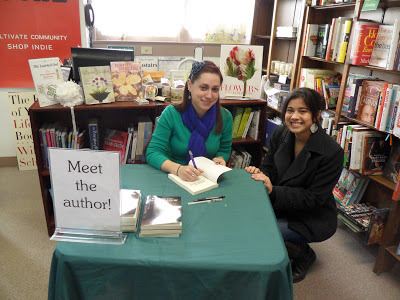
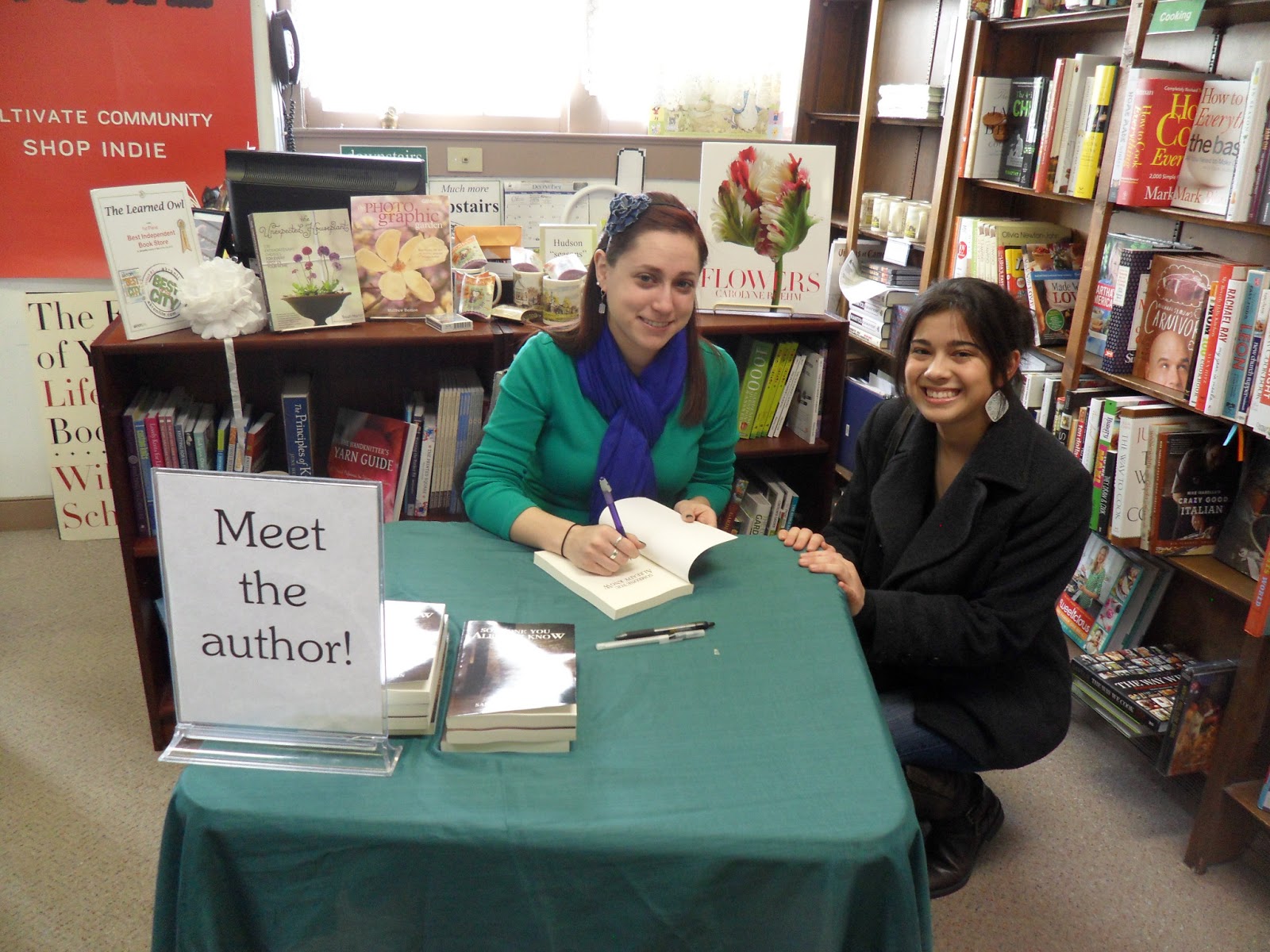
In terms of the number of books sold, the signing wasn't a huge success. I suspected it wouldn't be; rape culture is not a subject that tons of people would be lining out the door to read about. I did sell some copies, however; I signed books for two college-aged women who are involved in Cleveland's "Slutwalks" (an event where women "take back" the stigma of "slutty" clothing by wearing short skirts, heels, etc and march through town to send a message that men are not entitled to rape based on what a woman is wearing). So that was cool.
I judged my success that day by the number of conversations I had with people who were curious why the subject matters to me. So at the very least, I may have interested a few in the subject, if not my book. I'm okay with that. When you write for a cause, you don't do it for fame and money.
This week, I want to share a passage that deals further with the struggle of being believed, particularly that of a girl who experienced abuse within a relationship, and the surprising reasons why it's not so simple to label the relationship as "abusive" when you deeply love the person who is hurting you:
So I guess Katherine doesn’t take me seriously after all. I had thought for a while that we were getting somewhere, but now all that progress seems shattered. Perhaps permanently. It’s too early to tell, but my hope for us is wearing drastically thin.
At least I was able to convince her to let me take her the rest of the way home. No way was I going to just leave her there by the side of the road, ripe for another pervert to come and grab. I would have picked her up, thrown her over my shoulder, and put her in the backseat before I let that happen. Luckily, Katherine is smart enough to understand why she had to suffer the rest of the ride home with me. All six minutes of it.
I know it’s irrational, but remembering John cruelly mocking me with “You think Becca will believe you either?”got me thinking. It’s not about competition; she may think I’m just a bitter ex-something-or-other trying to poison her against him, but that’s only part of the reason I can’t tell her. A very small part, actually.
I can’t take the risk that she’ll go straight to John about it, either to make fun of me or to check his reaction to see if it’s true. I don’t know, but if she did…well, I’m not afraid of him coming after me with violence or anything, but it could mean more contact from him, and I’m already haunted by our last conversation. Is it selfish to be concerned about my own healing and my own well-being right now?
Perhaps if there was evidence – physical evidence of trauma that wasn’t washed away – I wouldn’t have to worry about Becca believing me, because I could have gone straight to the police after it happened. Only, there probably wasn’t any trauma to record: none like Katherine’s, no visible cuts or bruising. Maybe not even a torn hymen either. For as much as it hurt, I never bled. It’s strange to admit, but now I wish I had, if that meant a stronger case against him. But there isn’t one.
Any normal person would think Katherine had everything to turn the tide of criticism toward the man who raped her, and not herself. She had the bruises. She had the torn clothing. She insisted up and down she didn’t know the guy; couldn’t pick out any pictures in the collection of already existing mug shots from other area predators. And yet, there were a significant number of people in law enforcement who just couldn’t believe her. All they saw was her short skirt. So what would they see if they looked at me? I was supposedly in love! I’d be laughed right out of the police station without a second thought.
All these factors make me question what my next move should be. Feelings may be valid, but they can’t be proven. So with no physical damage to show, and no other witnesses to corroborate my story, how do I know what really happened? I am a small, fragile, inexperienced girl who was willing to do anything, sacrifice everything, to be loved: something every human longs for. In a society that glorifies sex, who will believe me now? Who will ever believe me?
I judged my success that day by the number of conversations I had with people who were curious why the subject matters to me. So at the very least, I may have interested a few in the subject, if not my book. I'm okay with that. When you write for a cause, you don't do it for fame and money.
This week, I want to share a passage that deals further with the struggle of being believed, particularly that of a girl who experienced abuse within a relationship, and the surprising reasons why it's not so simple to label the relationship as "abusive" when you deeply love the person who is hurting you:
So I guess Katherine doesn’t take me seriously after all. I had thought for a while that we were getting somewhere, but now all that progress seems shattered. Perhaps permanently. It’s too early to tell, but my hope for us is wearing drastically thin.
At least I was able to convince her to let me take her the rest of the way home. No way was I going to just leave her there by the side of the road, ripe for another pervert to come and grab. I would have picked her up, thrown her over my shoulder, and put her in the backseat before I let that happen. Luckily, Katherine is smart enough to understand why she had to suffer the rest of the ride home with me. All six minutes of it.
I know it’s irrational, but remembering John cruelly mocking me with “You think Becca will believe you either?”got me thinking. It’s not about competition; she may think I’m just a bitter ex-something-or-other trying to poison her against him, but that’s only part of the reason I can’t tell her. A very small part, actually.
I can’t take the risk that she’ll go straight to John about it, either to make fun of me or to check his reaction to see if it’s true. I don’t know, but if she did…well, I’m not afraid of him coming after me with violence or anything, but it could mean more contact from him, and I’m already haunted by our last conversation. Is it selfish to be concerned about my own healing and my own well-being right now?
Perhaps if there was evidence – physical evidence of trauma that wasn’t washed away – I wouldn’t have to worry about Becca believing me, because I could have gone straight to the police after it happened. Only, there probably wasn’t any trauma to record: none like Katherine’s, no visible cuts or bruising. Maybe not even a torn hymen either. For as much as it hurt, I never bled. It’s strange to admit, but now I wish I had, if that meant a stronger case against him. But there isn’t one.
Any normal person would think Katherine had everything to turn the tide of criticism toward the man who raped her, and not herself. She had the bruises. She had the torn clothing. She insisted up and down she didn’t know the guy; couldn’t pick out any pictures in the collection of already existing mug shots from other area predators. And yet, there were a significant number of people in law enforcement who just couldn’t believe her. All they saw was her short skirt. So what would they see if they looked at me? I was supposedly in love! I’d be laughed right out of the police station without a second thought.
All these factors make me question what my next move should be. Feelings may be valid, but they can’t be proven. So with no physical damage to show, and no other witnesses to corroborate my story, how do I know what really happened? I am a small, fragile, inexperienced girl who was willing to do anything, sacrifice everything, to be loved: something every human longs for. In a society that glorifies sex, who will believe me now? Who will ever believe me?
January 2, 2013
The struggle to be believed
The first book signing for Someone You Already Know is this Saturday (Learned Owl in Hudson Ohio, 1pm)! What an awesome way to start 2013! Here's another excerpt, depicting the struggle of one survivor to be believed by another:
There are certain things we already know, things we don’t need schooling on: that no means no, yes is yes, what is permissible at one moment may not be at another time. But the root of our conflict, as two young women struggling to understand how much of a role our bodies play in our identities as people, is that neither of us fits the definition of “That Girl” we always imagined would find herself in predicaments like ours. Somehow we believed we were born with immunity. Why is that exactly?
I explained to Katherine everything I knew for sure, everything that should have happened if he really loved me: He should have stopped when I told him to. He should have stopped right away, not several minutes later when he wanted to. His exact words at one point were “I was having too much fun to stop.” He commented on my nervousness, my inability to relax and “go with it.” He knew I was not completely on board with what was happening; that it meant so much more to him than it did to me, because I didn’t needto fool around to feel loved. He came up with that on his own.
“You know you wanted it.” “I thought if I kept going, you would change your mind and start liking it.” “You’d be real hot if you didn’t look so terrified.”
I stare into my coffee cup as the room starts spinning. The pounding in my head is unrelenting.
It was exhausting, just putting to words these conflicting feelings I’ve had for so long, but it’s still not enough for Katherine. “So he never actually forced you to do anything” she retorts. I can’t tell if this is a question or an accusation. “He never held you down or used a weapon, or –“
Obviously this conversation was not going to be easy, though for someone who was intent on listening without judgment, she wasn’t doing a very good job. “No, he didn’t hit me or threaten me with a knife or a gun or anything that put my life in immediate danger,” I snap. “But you know what, Katherine? I don’t see what difference it would have made if he had. We were supposedly in a relationship; just saying ‘no’ should have been enough. Please explain to me why saying ‘no’ was not enough.”
Even after I said that, my mind was full of the same old doubts: Did I really say “no” loudly and clearly every time? To what extent does my body language count? Is it unrealistic to expect John to have read my nervous shaking as a refusal, even when he knew I was desperate to impress him?
It’s funny; I’ve seen enough romantic comedies to know what it looks like when a guy and a girl are mutually enthusiastic about hooking up. Yet the more I think about it, the nature of consent itself is such a fine, crooked little line with so much gray area smudged in the middle. Will guys need to sign permission slips acknowledging what behaviors are acceptable? Is a girl allowed to change her mind after saying yes? How is a normal guy, who may have the best of intentions, supposed to know if what he’s doing is okay?
The question of what consent is -- and isn't -- comes up again in the discussion guide at the end of the novel. It's true that plenty of people don't fully understand the nature of consent, but manage to have sex without raping anyone. Even still, this is a topic that deserves to be addressed by everyone, regardless of relationship status and experience.
There are certain things we already know, things we don’t need schooling on: that no means no, yes is yes, what is permissible at one moment may not be at another time. But the root of our conflict, as two young women struggling to understand how much of a role our bodies play in our identities as people, is that neither of us fits the definition of “That Girl” we always imagined would find herself in predicaments like ours. Somehow we believed we were born with immunity. Why is that exactly?
I explained to Katherine everything I knew for sure, everything that should have happened if he really loved me: He should have stopped when I told him to. He should have stopped right away, not several minutes later when he wanted to. His exact words at one point were “I was having too much fun to stop.” He commented on my nervousness, my inability to relax and “go with it.” He knew I was not completely on board with what was happening; that it meant so much more to him than it did to me, because I didn’t needto fool around to feel loved. He came up with that on his own.
“You know you wanted it.” “I thought if I kept going, you would change your mind and start liking it.” “You’d be real hot if you didn’t look so terrified.”
I stare into my coffee cup as the room starts spinning. The pounding in my head is unrelenting.
It was exhausting, just putting to words these conflicting feelings I’ve had for so long, but it’s still not enough for Katherine. “So he never actually forced you to do anything” she retorts. I can’t tell if this is a question or an accusation. “He never held you down or used a weapon, or –“
Obviously this conversation was not going to be easy, though for someone who was intent on listening without judgment, she wasn’t doing a very good job. “No, he didn’t hit me or threaten me with a knife or a gun or anything that put my life in immediate danger,” I snap. “But you know what, Katherine? I don’t see what difference it would have made if he had. We were supposedly in a relationship; just saying ‘no’ should have been enough. Please explain to me why saying ‘no’ was not enough.”
Even after I said that, my mind was full of the same old doubts: Did I really say “no” loudly and clearly every time? To what extent does my body language count? Is it unrealistic to expect John to have read my nervous shaking as a refusal, even when he knew I was desperate to impress him?
It’s funny; I’ve seen enough romantic comedies to know what it looks like when a guy and a girl are mutually enthusiastic about hooking up. Yet the more I think about it, the nature of consent itself is such a fine, crooked little line with so much gray area smudged in the middle. Will guys need to sign permission slips acknowledging what behaviors are acceptable? Is a girl allowed to change her mind after saying yes? How is a normal guy, who may have the best of intentions, supposed to know if what he’s doing is okay?
The question of what consent is -- and isn't -- comes up again in the discussion guide at the end of the novel. It's true that plenty of people don't fully understand the nature of consent, but manage to have sex without raping anyone. Even still, this is a topic that deserves to be addressed by everyone, regardless of relationship status and experience.
December 18, 2012
The choice of joy when tragedy happens
By sheer coincidence, I seem to have a habit of migrating toward places that are infamous for gun violence. I went to college in Kent, Ohio and live about an hour away from Chardon. I now live in Littleton, home of the Columbine shootings. And now, most recently, I learned that Newtown is just a short drive from where I spent the first six years of my life.
Like trying to peel your eyes away from a train wreck, I couldn't stop watching the coverage of the shooting, particularly the interview with Robbie Parker, father of six-year-old Emilie Parker, who was killed on Friday. I bawled watching it several times in a row, because while I'm not in any way envious of the suffering this man and his family are enduring, I am envious of his faith. Just a day after his daughter's death, he spoke at his church and said that he wasn't angry, and he even extended grace toward the family of the shooter. It seems clear that he refuses to wallow in pain, but is choosing to trust God with it instead.
I've read several blogs over the last couple days, attempting to answer the big "Why does God allow these things to happen?" question. Some answers are more satisfactory than others, but there's no way to fully answer that for sure (and this is coming from a seminary student!). But I will say this much: I know that God is good because of the way this man, a flawed, ordinary man, responded in the wake of every parent's worst nightmare. His response is not a typical human response. Because let's face it, bitterness is easy. It's expected. And certainly, it's understandable after a tragedy like this. But bitterness doesn't come from God, and if we are truly following him, I don't think he'll leave us to wallow in it forever.
If nothing else, this proves to me that the holy spirit is more powerful than we can know. You may say otherwise, and instead just call the man crazy or especially brave, but I don't think "brave" or even "exceedingly compassionate" are good descriptors. They just aren't big enough. I call myself a Christian and I believe in forgiveness, but if I was a parent of a murdered child, and the killer was still alive, I'd want nothing more than to hunt him down and kill him myself.
I don't see it much in the winter time because it's usually covered by a sock, but events like this make me remember why I got my "Choose Joy" tattoo. My circumstances at the time of getting it were completely different, but the point was to have a permanent reminder of the fact that true joy is something this world can't touch. It is not dependent on circumstances, it is not the same as "happiness," because joy is not an emotion. It's a deeply-rooted assurance that who we are and what we're made for does not change even if we're hurting, even if our possessions are taken away, even if our loved ones turn on us or are called to heaven sooner than we'd like. Joy, like love, endures all things. No kind of tragedy can touch it.
I love the interview with Robbie Parker, heartbreaking as it is, because it shows that the source of his hope is in something bigger than himself. We can put our hope in temporal things, and in other people, but the tragedy in Connecticut is a reminder that nothing, not even people, are permanent. We need to come to terms with the fact that nothing on this earth is fully guaranteed, nothing in life is guaranteed except God and his sovereignty.
There's much more I'd like to say about the nature of forgiveness, and my own muddled opinion on gun control, but that may be another blog. The latter subject has certainly been beaten to death several times over the last few days, so I may just leave that one to experts who are far more articulate than I.
What I really want to emphasize is this: faith is not something that you have when everything is going well in your life. When tragedies like this happen, faith is the rock that reminds you this pain is not wasted. Faith is what you have left when everything else we trust shows its lack of permanence.
Like trying to peel your eyes away from a train wreck, I couldn't stop watching the coverage of the shooting, particularly the interview with Robbie Parker, father of six-year-old Emilie Parker, who was killed on Friday. I bawled watching it several times in a row, because while I'm not in any way envious of the suffering this man and his family are enduring, I am envious of his faith. Just a day after his daughter's death, he spoke at his church and said that he wasn't angry, and he even extended grace toward the family of the shooter. It seems clear that he refuses to wallow in pain, but is choosing to trust God with it instead.
I've read several blogs over the last couple days, attempting to answer the big "Why does God allow these things to happen?" question. Some answers are more satisfactory than others, but there's no way to fully answer that for sure (and this is coming from a seminary student!). But I will say this much: I know that God is good because of the way this man, a flawed, ordinary man, responded in the wake of every parent's worst nightmare. His response is not a typical human response. Because let's face it, bitterness is easy. It's expected. And certainly, it's understandable after a tragedy like this. But bitterness doesn't come from God, and if we are truly following him, I don't think he'll leave us to wallow in it forever.
If nothing else, this proves to me that the holy spirit is more powerful than we can know. You may say otherwise, and instead just call the man crazy or especially brave, but I don't think "brave" or even "exceedingly compassionate" are good descriptors. They just aren't big enough. I call myself a Christian and I believe in forgiveness, but if I was a parent of a murdered child, and the killer was still alive, I'd want nothing more than to hunt him down and kill him myself.
I don't see it much in the winter time because it's usually covered by a sock, but events like this make me remember why I got my "Choose Joy" tattoo. My circumstances at the time of getting it were completely different, but the point was to have a permanent reminder of the fact that true joy is something this world can't touch. It is not dependent on circumstances, it is not the same as "happiness," because joy is not an emotion. It's a deeply-rooted assurance that who we are and what we're made for does not change even if we're hurting, even if our possessions are taken away, even if our loved ones turn on us or are called to heaven sooner than we'd like. Joy, like love, endures all things. No kind of tragedy can touch it.
I love the interview with Robbie Parker, heartbreaking as it is, because it shows that the source of his hope is in something bigger than himself. We can put our hope in temporal things, and in other people, but the tragedy in Connecticut is a reminder that nothing, not even people, are permanent. We need to come to terms with the fact that nothing on this earth is fully guaranteed, nothing in life is guaranteed except God and his sovereignty.
There's much more I'd like to say about the nature of forgiveness, and my own muddled opinion on gun control, but that may be another blog. The latter subject has certainly been beaten to death several times over the last few days, so I may just leave that one to experts who are far more articulate than I.
What I really want to emphasize is this: faith is not something that you have when everything is going well in your life. When tragedies like this happen, faith is the rock that reminds you this pain is not wasted. Faith is what you have left when everything else we trust shows its lack of permanence.
December 6, 2012
"So you go to cemetery...I mean seminary!"
There's a reason why the word "seminary" is often confused with "cemetery." Some people say this as an accidental slip-up, while others are intentionally "punny." As one professor said, "Seminary life can have two effects: you end up contained in a Christian bubble and completely unprepared for the real world, or you can be challenged to a point where you severely doubt your faith." As my first semester of grad school comes to a close, I think that I'm somewhere in the middle of these two extremes.
I have learned something about myself: I am often guilty of camouflaging my beliefs depending on my environment. I'm tempted to "water down" my faith when I'm with my non-Christian friends in Kent, while simultaneously trying to "pump it up" when I'm surrounded by Christians at Denver Seminary.
This may be shocking to some, but I've discovered that I fall under the category of "liberal" in Christian Bubble Land. Realizing this has made me love and hate my non-Christian upbringing. On the one hand, I am grateful to have been raised in an environment where I was encouraged to think for myself. Consequently, I have a better understanding of the objections non-Christians have with Christianity, and that greatly influences the way I go about sharing it. But on the other hand, sometimes I wonder if I'd fit in better if I did grow up in Church World. I get irritated when some Christians constantly harp about "the lost," because I know from experience that God uses people of varying beliefs without them ever knowing it. I have issues with evangelicals who center their ministry on agenda over genuine relationships and a desire to learn from others. I think we miss out on opportunities to love if all we care about are conversion rates.
I've listened to students and professors who grew up in the Bible Belt, and for lack of a better way to say it, sometimes they made me uncomfortable. I despise "Christian-ese" and the few times I've caught myself using it ("God spoke to my heart," "accepted Jesus into my heart"...lots of "heart" euphemisms in Church language!), I cringed with fear that I was becoming "like them." All my judgments of how I used to perceive Christians came back: stiff-necked, arrogant, allergic to anything secular. I want to be devout without being a stereotype. I don't want to lose whatever it is that makes me approachable to people of different backgrounds and viewpoints.
It's because I care about being approachable to non-Christians that I refuse to be a part of the Messianic Judaism program at Denver Seminary, or take part in Messianic Jewish events. That has been an on-going battle this semester; people hear snippets of my testimony and immediately jump on the "You should be in the Messianic Jewish concentration!" bandwagon. In my Training and Mentoring class, we'll have to interview three non-Christian chaplains about how their faith affects their work. There are a few Jewish chaplains in the area who refuse to take part in that assignment. One of them said "Sorry, but I can't have a discussion with a student who attends a school with a concentration designed to target Jews for conversion."
I sympathize with that chaplain. There was a time when I wasn't sure what to call myself; clearly, now that I am a believer in Jesus, I can't define my faith as Jewish, but what about my heritage? Where does one draw that line? Eventually, I came to the realization that there isn't anything Jewish about my faith anymore, and to present it as such would be inaccurate and offensive. Make no mistake: the gospel in and of itself is offensive to many, but the way we present it should not be.
I think, with all due respect to those who call themselves Messianic Jews, that that title actually prevents discussion and promotes hostility. I've had many a frustrated discussion with Christians who feel the need to convince me to change the direction of my ministry, because I have "so much to offer" with my "unique" background. I'm not disputing this, but I'm also a little tired of the novelty status that comes with that "unique" background. As one new friend pointed out, there is no differentiation between Jew or Gentile, Greek or non-Greek in Christ. I don't require any special "title," especially when that title carries such stigma, and is also a misnomer. Technically all Jews are messianic; they just don't believe he's come yet. I could go on and on about this...but that topic deserves its own post.
That's only a smattering of things I've learned this semester. More thoughts and reflections to come, once my Hebrew final has been conquered...
I have learned something about myself: I am often guilty of camouflaging my beliefs depending on my environment. I'm tempted to "water down" my faith when I'm with my non-Christian friends in Kent, while simultaneously trying to "pump it up" when I'm surrounded by Christians at Denver Seminary.
This may be shocking to some, but I've discovered that I fall under the category of "liberal" in Christian Bubble Land. Realizing this has made me love and hate my non-Christian upbringing. On the one hand, I am grateful to have been raised in an environment where I was encouraged to think for myself. Consequently, I have a better understanding of the objections non-Christians have with Christianity, and that greatly influences the way I go about sharing it. But on the other hand, sometimes I wonder if I'd fit in better if I did grow up in Church World. I get irritated when some Christians constantly harp about "the lost," because I know from experience that God uses people of varying beliefs without them ever knowing it. I have issues with evangelicals who center their ministry on agenda over genuine relationships and a desire to learn from others. I think we miss out on opportunities to love if all we care about are conversion rates.
I've listened to students and professors who grew up in the Bible Belt, and for lack of a better way to say it, sometimes they made me uncomfortable. I despise "Christian-ese" and the few times I've caught myself using it ("God spoke to my heart," "accepted Jesus into my heart"...lots of "heart" euphemisms in Church language!), I cringed with fear that I was becoming "like them." All my judgments of how I used to perceive Christians came back: stiff-necked, arrogant, allergic to anything secular. I want to be devout without being a stereotype. I don't want to lose whatever it is that makes me approachable to people of different backgrounds and viewpoints.
It's because I care about being approachable to non-Christians that I refuse to be a part of the Messianic Judaism program at Denver Seminary, or take part in Messianic Jewish events. That has been an on-going battle this semester; people hear snippets of my testimony and immediately jump on the "You should be in the Messianic Jewish concentration!" bandwagon. In my Training and Mentoring class, we'll have to interview three non-Christian chaplains about how their faith affects their work. There are a few Jewish chaplains in the area who refuse to take part in that assignment. One of them said "Sorry, but I can't have a discussion with a student who attends a school with a concentration designed to target Jews for conversion."
I sympathize with that chaplain. There was a time when I wasn't sure what to call myself; clearly, now that I am a believer in Jesus, I can't define my faith as Jewish, but what about my heritage? Where does one draw that line? Eventually, I came to the realization that there isn't anything Jewish about my faith anymore, and to present it as such would be inaccurate and offensive. Make no mistake: the gospel in and of itself is offensive to many, but the way we present it should not be.
I think, with all due respect to those who call themselves Messianic Jews, that that title actually prevents discussion and promotes hostility. I've had many a frustrated discussion with Christians who feel the need to convince me to change the direction of my ministry, because I have "so much to offer" with my "unique" background. I'm not disputing this, but I'm also a little tired of the novelty status that comes with that "unique" background. As one new friend pointed out, there is no differentiation between Jew or Gentile, Greek or non-Greek in Christ. I don't require any special "title," especially when that title carries such stigma, and is also a misnomer. Technically all Jews are messianic; they just don't believe he's come yet. I could go on and on about this...but that topic deserves its own post.
That's only a smattering of things I've learned this semester. More thoughts and reflections to come, once my Hebrew final has been conquered...
November 26, 2012
Nothing to laugh about: excerpt from Someone You Already Know
It's sad and disappointing when people you once respected make jokes about things that just aren't funny. It's even more unfortunate when they defend such jokes, despite being told about their offensive nature. I wish these incidents didn't bother me so much, but I wouldn't want to be a rape crisis counselor if they didn't. So today, I think it's appropriate to share a similar scenario depicted in Someone You Already Know:
I take my usual seat at lunch by the vending machines and wait for Elisabeth when I hear a male voice behind me say “Man, I really got raped by that Algebra exam today.”
There are a million different reactions I could have to an ignorant statement like this. On one hand, I can ignore it. The kid is an idiot. He doesn’t know. But I can feel the blood pounding in my veins, rushing swiftly in my ears, and what I really want to do is turn and scream at the little fool.
But to scream…to fight…to make any sound in my defense, that’s something I just don’t know how to do. Something I don’t know how to do well.
How does a word like rape, loaded with stigma and designed to shock, manage to get reduced to such common, blasé terminology to describe something as mundane as an Algebra test? Whether he meant to offend or not, just how stupid can some people be to not realize the full impact of their words?
I don’t have to say anything in my defense. A voice that sounds remarkably like Trevor’s calls out: “Hey! You think rape is something to joke about? You wouldn’t if it happened to you.”
I can’t not turn around now to see the looks on those guys’ faces; I think they feel genuinely remorseful now, seeing me sitting only a table away, but they also look shocked to hear a guy rebuke them in such a way. I can see the confused looks on their faces now: why would a guy speak out against a rape joke? After all, they’re probably thinking, it’s not like guys can be raped.
If it was me who yelled at them, or some other girl, the sad reality is they’d probably have laughed and said something along the lines of “Lighten up.”
I take my usual seat at lunch by the vending machines and wait for Elisabeth when I hear a male voice behind me say “Man, I really got raped by that Algebra exam today.”
There are a million different reactions I could have to an ignorant statement like this. On one hand, I can ignore it. The kid is an idiot. He doesn’t know. But I can feel the blood pounding in my veins, rushing swiftly in my ears, and what I really want to do is turn and scream at the little fool.
But to scream…to fight…to make any sound in my defense, that’s something I just don’t know how to do. Something I don’t know how to do well.
How does a word like rape, loaded with stigma and designed to shock, manage to get reduced to such common, blasé terminology to describe something as mundane as an Algebra test? Whether he meant to offend or not, just how stupid can some people be to not realize the full impact of their words?
I don’t have to say anything in my defense. A voice that sounds remarkably like Trevor’s calls out: “Hey! You think rape is something to joke about? You wouldn’t if it happened to you.”
I can’t not turn around now to see the looks on those guys’ faces; I think they feel genuinely remorseful now, seeing me sitting only a table away, but they also look shocked to hear a guy rebuke them in such a way. I can see the confused looks on their faces now: why would a guy speak out against a rape joke? After all, they’re probably thinking, it’s not like guys can be raped.
If it was me who yelled at them, or some other girl, the sad reality is they’d probably have laughed and said something along the lines of “Lighten up.”


