Keith Steinbaum's Blog: The Poe Consequence, page 3
June 26, 2015
The Poe Consequence Top Amazon Book Reviews
From Delta Thatcher:
Keith Steinbaum’s The Poe Consequence is pure win. It’s a blend of supernatural, suspense in one and it was the perfect pick for the weekend in by myself with no obligations. My mind was pacing fast as I devoured page after page which had its own thrilling sequence. I found myself speeding through the chapters while absorbing its rich storyline with much satisfaction and curiosity. Having read a few stories from Poe himself, I had high expectations and this book did not disappoint!
As I kept on reading, I made a couple of guesses for the characters in the story. This book has that ability to make readers want to predict outcomes for each of the characters. It was written with much mysterious eloquence and vividness that made me want to participate along with the actions and their consequences. I particularly enjoyed the Edgar Allan Poe references that the author equally distributes throughout the plot. I’m glad I was able to detect a couple of them. I’m sure plenty of Poe fans will the same.
Read the complete review here: http://amzn.to/1e7AVyi
From Gayle Pace:
The author tossed in a couple of paranormal issues that put some real spice into the read. The author merged today's world with Poe's time. I would suggest reading this if you only have a tough heart. It's scary, weird, fine writing and a worthy followup to Poe's classics. Worth reading and re-reading.I received a complimentary copy of The POE CONSEQUENCE from the author, Keith Steinbaum for my view of the book.
Read the complete review here: http://amzn.to/1BR6rMd
From Anne T:
The Poe Consequence is a well thought out, compelling page turner. Steinbaum has taken a dark, yet realistic, subject and spun a tale that stays with the reader long after the book is finished. Give this one a try. You won't be disappointed.
Read the complete review here: http://amzn.to/1Kfd0t9
If you've got more to say about the book, please feel free to leave a review on my book's Goodreads page!
Thanks everyone.


June 21, 2015
The Enduring Legacy of Edgar Allan Poe
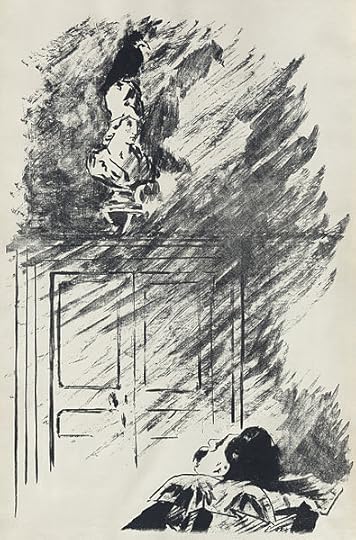
Despite the fact that Edgar Allan Poe died more than 160 years ago, his poetry and stories remain controversial and popular. Not only have his writings continued to be discussed and examined in the classroom, but also, for more than a century, his poems and stories have been adapted into screen, television, stage and other forms of creative media. According to The Atlantic, “The long-gone author… has 251 movie- or TV-writing credits and counting.”
No discussion or lecture in American literature can be complete without the inclusion of Edgar Allan Poe and the legacy of his unique, imaginative works. To this day, he inspires readers and authors alike to explore the supernatural underbelly of our darkest thoughts and the sinister side of human nature.
Poe: The Literary Critic
Edgar Allan Poe was also a well known literary critic and editor. He was a major proponent of the “art for art’s sake” movement in 19th century European literature, describing in his essay, The Poetic Principle, that “true art” shouldn’t be tied into any moralistic viewpoints or practical, everyday uses. This philosophy, which went against the grain of so much literature of the day, was exemplified by the literary formalism in his use of words and phrasing. Poe demonstrated an excellent command of language and literary techniques in both his poetry and short stories.
As a critic, he was recognized for his harshness, and in fact, offended many of his colleagues. His rival, Rufus Wilmot Griswold, bore a grudge against him due to an unfavorable review. When Poe died, Griswold saw his passing as an opportunity to destroy the poet’s public image by publishing an obituary and a biography that portrayed Poe as a drug addicted and insane drunkard. Revelations from Poe’s friends later contradicted Griswold’s slanders.
At one point, poet and literary critic James Russell Lowell described Poe as “the most discriminating, philosophical, and fearless critic upon imaginative works who has written in America.” Although they were friends at first, Lowell and Poe had a falling out partly due to Poe’s unforgiving criticism of the poetry of Henry Wadsworth Longfellow, a good friend of Lowell’s.
Impact on Modern Literature
Edgar Allan Poe introduced different styles to the literary landscape of his period as well as to modern literature, and he is considered the inventor of the horror and detective fiction genres. Back then as now, Poe was recognized for his grim, unrestrained prose and poetry that explored the dark nature of humanity. Themes like death, violence and madness frightened yet fascinated readers, and the effectiveness of his works can be attributed to his rhythmic mastery of language, imagery and psychology.
The Bells is an exquisite example of this ability:
THE BELLS
Hear the sledges with the bells—
Silver bells!
What a world of merriment their melody foretells!
How they tinkle, tinkle, tinkle,
In the icy air of night!
While the stars that oversprinkle
All the heavens, seem to twinkle
With a crystalline delight;
Keeping time, time, time,
In a sort of Runic rhyme,
To the tintinabulation that so musically wells
From the bells, bells, bells, bells,
Bells, bells, bells—
From the jingling and the tinkling of the bells.
II.
Hear the mellow wedding bells,
Golden bells!
What a world of happiness their harmony foretells?
Through the balmy air of night
How they ring out their delight!
From the molten-golden notes,
And all in tune,
What a liquid ditty floats
To the turtle-dove that listens, while she gloats
On the moon!
Oh, from out the sounding cells,
What a gush of euphony voluminously wells!
How it swells!
How it dwells
On the Future! how it tells
Of the rapture that impels
To the swinging and the ringing
Of the bells, bells, bells,
Of the bells, bells, bells, bells,
Bells, bells, bells—
To the rhyming and the chiming of the bells!
III.
Hear the loud alarum bells—
Brazen bells!
What a tale of terror, now, their turbulency tells!
In the startled ear of night
How they scream out their affright!
Too much horrified to speak,
They can only shriek, shriek,
Out of tune,
In a clamorous appealing to the mercy of the fire,
In a mad expostulation with the deaf and frantic fire,
Leaping higher, higher, higher,
With a desperate desire,
And a resolute endeavor
Now—now to sit or never,
By the side of the pale-faced moon.
Oh, the bells, bells, bells!
What a tale their terror tells
Of Despair!
How they clang, and clash, and roar!
What a horror they outpour
On the bosom of the palpitating air!
Yet the ear it fully knows,
By the twanging,
And the clanging,
How the danger ebbs and flows;
Yet the ear distinctly tells,
In the jangling,
And the wrangling,
How the danger sinks and swells,
By the sinking or the swelling in the anger of the bells—
Of the bells—
Of the bells, bells, bells, bells,
Bells, bells, bells—
In the clamor and the clangor of the bells!
IV.
Hear the tolling of the bells—
Iron bells!
What a world of solemn thought their monody compels!
In the silence of the night,
How we shiver with affright
At the melancholy menace of their tone!
For every sound that floats
From the rust within their throats
Is a groan.
And the people—ah, the people—
They that dwell up in the steeple,
All alone,
And who tolling, tolling, tolling,
In that muffled monotone,
Feel a glory in so rolling
On the human heart a stone—
They are neither man nor woman—
They are neither brute nor human—
They are Ghouls:
And their king it is who tolls;
And he rolls, rolls, rolls,
Rolls
A pæan from the bells!
And his merry bosom swells
With the pæan of the bells!
And he dances, and he yells;
Keeping time, time, time,
In a sort of Runic rhyme,
To the pæan of the bells—
Of the bells:
Keeping time, time, time,
In a sort of Runic rhyme,
To the throbbing of the bells—
Of the bells, bells, bells—
To the sobbing of the bells;
Keeping time, time, time,
As he knells, knells, knells,
In a happy Runic rhyme,
To the rolling of the bells—
Of the bells, bells, bells—
To the tolling of the bells,
Of the bells, bells, bells, bells—
Bells, bells, bells—
To the moaning and the groaning of the bells.
Towards the end of the 19th century, several more authors who rose to prominence explored the detective fiction genre. Sherlock Holmes author, Sir Arthur Conan Doyle, once said that Poe’s works were “a model for all time.” Other authors Poe inspired include Jules Verne, H.G. Wells, H.P. Lovecraft, Stephen King and Neil Gaiman.
Poe’s popularity and prominence grew during the 20th century, not just as model for prolific authors, but also as a staple of high school and college curricula. He is now commonly mentioned along the ranks of such luminaries as Mark Twain, Charles Dickens, and Nathaniel Hawthorne as major figures who helped shape English literature.
Adaptations
Poe’s stories are a constant source of material for TV shows, films and theater performances. Many fans and readers make complaints about such adaptations, from being inaccurate to having a weakened plot. However, there is reason for this tendency; Poe’s short stories and poems are not long enough to sustain a full-length film. In The Raven, for instance, Poe creates a beautifully layered intensity for the story’s ambiance and grim horror but doesn’t focus on developing a plot. This is just one example of why Poe-esque elements were often added to the central themes.
Of the aforementioned hundreds of known adaptions to date, numerous versions of his masterpiece, ‘The Tell-Tale Heart,’ are among them, and it is this particular work that I chose to use as the focus for my book, ‘The Poe Consequence.’
Sources:
http://theamericanreader.com/2-july-1844-edgar-allan-poe-to-james-russell-lowell/
http://www.nps.gov/edal/forteachers/upload/defamation.pdf
http://www.enotes.com/homework-help/what-meant-by-phrase-art-for-arts-sake-390822
http://en.wikipedia.org/wiki/Art_for_art’s_sake
http://www.poetryfoundation.org/bio/edgar-allan-poe
http://www.worlds-best-detective-crime-and-murder-mystery-books.com/poeinfluenceondoyle01-article.html
https://books.google.com.ph/books?/a>
http://mysteryscenemag.com/index.php?option=com_content&view=article&id=38:evermore-the-enduring-influence-of-edgar-allan-poe&catid=46:feature&Itemid=191
http://www.grin.com/en/e-book/97801/edgar-allan-poe-and-his-influence-on-american-literature
http://en.wikipedia.org/wiki/Edgar_Allan_Poe#Legacy
http://www.enotes.com/homework-help/what-impact-did-edgar-allan-poe-have-modern-52497
http://www.nytimes.com/movie/review?res=9901E7D7113EE333A25752C1A9649C946394D6CF
http://www.examiner.com/article/10-classic-movies-inspired-by-edgar-allan-poe
http://www.imdb.com/list/ls004928704/
http://psychobabble200.blogspot.com/2014/01/ten-mysterious-and-imaginative-edgar.html
Photo Credits:
via .
June 15, 2015
Intriguing Facts Surrounding Edgar Allan Poe’s Life and Death
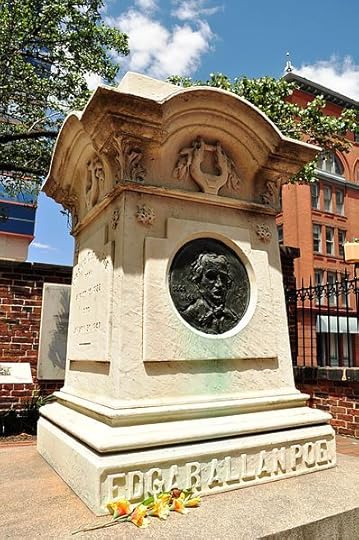
Edgar Allan Poe, master of the macabre, is considered the inventor of the detective fiction genre. Timeless prose and poems such as The Tell-Tale Heart and The Raven still give spine-chilling experiences and grim amusement to readers, even though more than a hundred sixty years have passed since he died. As it turns out, Poe’s life and death were as captivating as his legendary stories and characters. His wife died at the age of 24, which, coincidentally, is the same age of death as both his mother and brother. Poe devoted the rest of his life to writing and editing, but suffered from further personal tragedy, as well as alcoholism and literary scandal.
While on a lecture tour of the East Coast, Poe rekindled his romance with a former lover, Elmira Royster Shelton, by then a wealthy widow, and eventually they were set to wed. Ten days before the wedding, however, he was found on the streets of Baltimore, Maryland “in great distress and… in need of immediate assistance,” according to the man who found him. While on the verge of death, Poe was never coherent enough to explain the cause of his condition, eventually dying in the hospital on October 7, 1849.
When Poe was found in the streets that night, he was wearing shabby clothes that were very uncharacteristic of his usual attire. Joseph Snodgrass, a friend of his and one of the few people who was with him during his last hours, said in a first-hand account that his clothing included an ill-fitting dirty shirt and unpolished shoes. Dr. John Joseph Moran, Poe’s attending physician, had his own detailed account of Poe’s appearance: “a stained, faded, old bombazine coat, pantaloons of a similar character, a pair of worn-out shoes run down at the heels, and an old straw hat.”
He was hospitalized for a number days after he was discovered in the streets. However, his condition didn’t improve and he drifted in and out of consciousness. On the night before his death, he repeatedly called out the name, ‘Reynolds,’ but no one ever discovered of whom he was referring.
Poe’s medical records and death certificate disappeared, never to be found again. With no documentation, theories and speculations have swirled around his adult life, even more so when a libelous obituary came out shortly after his death that labeled him as a drunk and drug addict for much of his literary career.
Rufus Wilmot Griswold wrote Edgar Allan Poe’s most famous obituary, and, later, his biography. In reality, however, Griswold was a professional and personal rival of Poe. This obituary, which Griswold signed as “Ludwig” to hide his identity, portrayed the poet as a mad, depraved, drunk, drug fiend. Although Poe’s friends denounced the defamations, this portrayal put an indelible stain on the author’s image.
The night he was found delirious in the streets of Baltimore was the same day as an election. Many speculate that Poe was the victim of cooping – a fraudulent voting practice in the 19th century where people were coerced to vote, often several times, and forced to wear disguises. Cooping was known to be widespread in Baltimore in the 1800’s, and the night Poe was found in his incapacitated state, his frail body lay in an area where coopers often brought their victims.
Snodgrass attended to Poe during his time of need, but was convinced that the writer died from alcoholism. As an advocate of the temperance movement – a social crusade that urges moderate consumption of alcohol, he made efforts to popularize this notion as an example of its harmful effects. Moran contradicted Snodgrass’ claim by saying in his 1885 account that Poe was not under any intoxicant when he died.
Theories of his demise have ranged from death by beating to carbon monoxide poisoning to alcohol withdrawal, and many of these theories have been published over the years. The Edgar Allan Poe museum houses a list of these publications.
There were reportedly so few people attending his funeral (numbers have been put at somewhere between seven to ten), that the reverend presiding over it decided not to bother with a sermon. The entire ceremony lasted three minutes.
Death is a recurring element in Poe’s works, and, ironically, it seems that it also haunted his own life. His death remains surrounded by questions these many years later, and seems to echo his own dark poetry. He may no longer be with us in this world, but as Chris Semtner, curator of the Poe Museum in Richmond, Virginia said, “He left us with a real-life mystery.”
Sources:
http://en.wikipedia.org/wiki/Death_of_Edgar_Allan_Poe
http://www.smithsonianmag.com/history/still-mysterious-death-edgar-allan-poe-180952936/?no-ist
http://www.biography.com/news/edgar-allan-poe-death-facts
https://www.poemuseum.org/life-death.php
http://www.mhpbooks.com/edgar-allan-poes-mysterious-death/
http://www.theguardian.com/world/2007/oct/21/books.booksnews
Photo Credits:
via.
June 7, 2015
Edgar Allan Poe: A Biography
Early Life
Edgar Poe was born in Boston, Massachusetts on January 19th, 1809, to travelling actors, David Poe, Jr. and Elizabeth Arnold Hopkins Poe. David left the family when Edgar was only a year old, and the following year, Elizabeth succumbed to pulmonary tuberculosis. John and Frances Valentine Allan, from whom he acquired his middle name, served as his foster parents, though they never formally adopted him. Due to John Allan’s success as a merchant in Richmond, Virginia, Edgar attended prestigious schools, alternately spoiled and disciplined by his foster father.
When Poe was six, he was sent to school in England, studying both Latin and French. He then returned to America, and ultimately enrolled at the University of Virginia. Despite receiving a good education, it was during this time that Edgar started to gamble and drink heavily, eventually landing in enough debt that he had to quit school before completing his first year.
In the Army
Due to his foster son’s drinking and gambling problems, John Allan shunned Edgar, leaving him to survive on his own. Seeing that he had neither money nor skills to depend on, he joined the army in 1827 and attained the rank of sergeant major. It was at this point that he decided to enter West Point as a cadet. However, this career path also ended prematurely because his foster father stopped sending him money. Eventually dismissed from the army, Edgar was also disowned by John Allan.
Writing Career
It was during his stint in the army, however, that Edgar Allan Poe found his true calling in literature. After his brother’s death in 1831, he started pursuing his writing career with great fervor. He travelled to New York and eventually had some of his poetry published. However, It was also a difficult time in American publishing, and Poe often had to plead for money and other assistance.
In 1835, he acquired an editorial job for the Southern Literary Messenger. He successfully managed the paper, increasing circulation from 500 to 3500 copies, but left a year later due to an insufficient salary. Poe proceeded to Philadelphia, writing and publishing some of his short stories, but did not receive any significant monetary compensation.
Despite much acclaim, Poe barely had enough money to support his family. In 1845, he became an editor for The Broadway Journal, but was soon out of the job due to the Journal’s lack of funds.
Death
On October of 1849, Poe was found on the streets of Baltimore, “in great distress, and… in need of immediate assistance”. He was taken to Washington Medial College, where he died in the early morning of October 7th, 1849. He never explained how he arrived at such a dire state, and, oddly enough, wore clothes that did not belong to him. He was said to have repeatedly called out “Reynolds” on the night before he died. Adding further to the mystery is the disappearance of all his medical records, including that of his death certificate.
Sources:
http://www.poemhunter.com/edgar-allan-poe/biography/
http://en.wikipedia.org/wiki/Edgar_Allan_Poe#Publishing_career
http://poestories.com/biography.php
The post Edgar Allan Poe: A Biography appeared first on The Poe Consequence by Keith Steinbaum.
May 31, 2015
Introduction to Edgar Allan Poe (video + commentary)
As mentioned in the video above, Edgar Poe was born in Boston to two actors. His father abandoned the family while he was young, and his mother died soon afterwards. From that point in his childhood, John and Frances Allan, from whom he gained his middle name, fostered him. As a young man, Edgar had a gambling problem and went into debt due to the cost of his secondary education, a situation that eventually caused him to drop out of the University of Virginia after only one semester. He then enlisted in the Army but failed as an officer’s cadet at West Point. It was during this time that he found his true calling to be a poet and writer.
In addition to being credited as the inventor of the detective fiction story, Edgar Allan Poe was arguably the most important American author of the gothic suspense genre. He was not just an author, but also a poet, editor, and literary critic, and his life and death, like so many of his works, were shrouded in mystery.
My published book, The Poe Consequence, is inspired and influenced by my admiration for Poe and, predominantly, two of his works: The Tell-Tale Heart and The Pit and the Pendulum. In the proceeding weeks, subsequent blog posts on my website will focus on Poe, and these two tales, that are featured in my novel.
Sources
http://www.biography.com/people/edgar-allan-poe-9443160
http://en.wikipedia.org/wiki/Edgar_Allan_Poe
http://www.shmoop.com/poe/
The post Introduction to Edgar Allan Poe (video + commentary) appeared first on The Poe Consequence by Keith Steinbaum.