Keith Steinbaum's Blog: The Poe Consequence, page 2
August 16, 2015
Gang Rivalries: The “Us Against Them” Mentality. Why Does It Exist?
 Walls and street covered by gang graffiti in Los Angeles.
“If gang tattoos function as representations of the contested identities of socially excluded youth, gang graffiti functions as one of the indicators of contested boundaries of gang influence or control.” – Something interesting I read on this site.
What are the purposes of gang rivalries? The issues of money, drug trafficking, extortion, robberies, homicide, prostitution, and other organized crime activities all play central roles. Racial differences (like the Black-Hispanic gang rivalries in Los Angeles), are, of course, another major contributor. But there is one unmentioned factor that all gangs always fight over – territory. The need to expand and defend their territory, their turf, against one another is a crucial component of their existence. If a comparison can be made with the businesses world, just as corporations compete against each other for the ability to make more money, gangs compete for the same thing in their own way, with the ultimate goal of gaining additional territory for increased drug sales through more people to extort. This conflict over territory is called a “turf war.”
Most turf wars are common occurrences that don’t make the evening news, but one that recently did happened when violence erupted on May 17th in Waco, Texas between rival motorcycle gangs, The Cossacks and The Bandidos (although the FBI has named them “outlaw motorcycle gangs” because of their involvement in organized crime activities). In what may as well be a scene from “Sons of Anarchy,” nine people were left dead in a shootout and many others were wounded. The fight actually broke out because of a bottom rocker—the bottom clothing logo on the back of a motorcycle jacket that identifies the geographic territory of a biker gang. This is just an example of how serious gangs can be when someone else tries to take over their turf.
Humans are tribal by nature and we tend to group ourselves with people who are similar to us. This tribal heritage also promotes an ‘us against them” mentality and territoriality. People in gangs are no different. They join because they want to be with people who they have a connection with. Many gang members don’t have families or were ignored as children, so they feel the need to belong in a group (as well as self-protection). Other reasons, like thinking it’s cool, also explain gang membership, but there’s usually deeper sociological causes than something as superficial as this.
Will we ever know a world without gang warfare? Based on the increased proliferation of gangs in my lifetime, even outside large cities, I can only hope that young people who are the most vulnerable to recruitment somehow receive opportunities for healthier lifestyles.
Sources:
http://www.foxnews.com/story/2006/08/12/black-hispanic-gang-rivalries-plague-los-angeles.html
http://www.latimes.com/local/la-me-firestone18oct18-story.html#page=1
http://www.policemag.com/channel/gangs/articles/1996/08/tracing-the-roots-of-blac-gang-rivalry.aspx
http://www.businessinsider.com/dangerous-american-gangs-fbi-2011-11?op=1
http://www.latimes.com/local/la-me-firestone18oct18-story.html#page=1
http://www.destinyschildren.org/en/context/gangs-and-territory/
Photo Credits:
Photo By me_Studios via StockPholio.com
The post Gang Rivalries: The “Us Against Them” Mentality. Why Does It Exist? appeared first on The Poe Consequence by Keith Steinbaum.


August 9, 2015
Is There Is Life After Death?
Death is life’s greatest mystery. Is there life after death? The resurrection of Christ is a well-documented event, but did it really happen? Has anyone really come back from the dead? Is there any concrete evidence that this is even possible? Interviewing someone who died is obviously quite challenging, unless you consider a person ‘dead’ whose heart stopped pumping for a few minutes. Well, technically a person is considered medically dead if his heart stops. So, maybe we can start from there.
What is it like to die? Does consciousness continue? Some people who experienced the sensation of dying claimed that they saw a light, or that an out of body experience occurred. Some describe seeing nothing but black emptiness. A study conducted at the University of Southampton spent four years studying 2,060 people who suffered cardiac arrests at 15 hospitals in the UK, US and Austria. In the study, 330 of the 2,060 survived, and of the 140 surveyed, 39% of them described some kind of awareness even after the brain had shut down completely.
Of course, the study really doesn’t prove anything. Many would argue that the near death experiences are just a figment of their imagination, and it should not be taken seriously. Many scientists also believe that these experiences are just hallucinations produced by the brain. However, the people who experienced this believe that they actually died but were given a chance to continue living.
For now, the clinical evidence for life after death is subjective and arguable. We cannot disprove it, but we cannot prove it either. No living person will ever know.
Sources:
http://www.telegraph.co.uk/news/science/science-news/11144442/First-hint-of-life-after-death-in-biggest-ever-scientific-study.html
http://content.time.com/time/health/article/0,8599,1955636,00.html
https://www.stevepavlina.com/articles/life-after-death.htm
http://www.peterkreeft.com/topics-more/case-for-life-after-death.htm
Photo Credits:
Photo By Robb North via StockPholio.com
The post Is There Is Life After Death? appeared first on The Poe Consequence by Keith Steinbaum.
August 2, 2015
DO YOU BELIEVE IN GHOSTS?
Since time immemorial, humans have been haunted by this question: Do ghosts exist?
The belief in ghosts is present in most cultures around the world. In European folklore, they are the souls of the dead who come back to haunt or harm the living. In Chinese traditions, ghosts of ancestors are believed to be able to communicate with the living through a medium.
Ghosts are called by many names and are thought to manifest themselves in various forms, yet they all have one defining nature – they are spirits of the deceased hanging onto or taking part in the material world.
The Afterlife and Ghosts
To question the existence of ghosts is to question whether there is an afterlife. If ghosts are real, are they evidence that an afterlife exists? Once a person dies, do angels, demons or the Creator not greet them? And if there are ghosts, is it because the souls lingering on Earth have yet to be ‘relocated’ anywhere?
Fear of Death
How can someone who’s already dead be alive? Death is supposed to be an irreversible ending to life, the final phenomenon, and dead people are not supposed to come back.
Many of us fear what we don’t know, and death is the definitive mystery. For those who believe in ghosts, the frightening proposition that something disruptive and destructive can occur stems from our inability to know for sure just what it is that exists after death, and why it may even exist at all.
In my book, The Poe Consequence, life after death is quite real, and, for the two L.A. street gangs responsible for the drive-by killing of the victim, the only option they’re given is to believe…and to fear.
Photo Credits:
Photo By Mr Magoo ICU via StockPholio.com
The post DO YOU BELIEVE IN GHOSTS? appeared first on THE POE CONSEQUENCE.
July 26, 2015
The Pit and the Pendulum
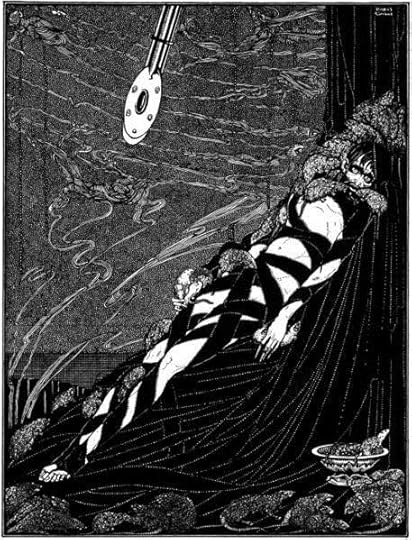
As is often the case with other Edgar Allan Poe stories, the first-person narrator in “The Pit and the Pendulum” is unnamed, and what he has done, and whether he is guilty of a wrongdoing or not, is not known. As we are introduced to the beginning of this particular story, we soon learn of the horrifying dilemma faced by the teller of the tale; in this case, the sufferings of unrelieved mental torture.
The Story
Set during the time of the Spanish Inquisition, the narrator in The Pit and the Pendulum is sentenced to death by a tribunal. Upon receiving his sentence he faints, eventually waking up in a pitch-black room that leaves him frightened and confused as to what happened after he lost consciousness. Afraid that he may be locked in a tomb, his initial terror subsides in time, and he starts to explore the room.
The narrator uses a piece of the hem from his robe to try to measure the room, but before he is able to circumnavigate the cell, he trips on his robe and collapses to the ground, where, upon his ‘excessive fatigue,’ he falls asleep. Upon waking, he notices food that had been left for him, so he consumes it eagerly and resumes his exploration. After counting his paces and figuring the approximate size of the dungeon, he crosses the area again with more deliberate steps but trips on the hem he ripped earlier. After hitting the floor, he realizes that he fallen ‘at the very brink of a circular pit.’ To estimate its depth, he throws a stone into the hole and deduces that it is quite deep, hearing a ‘sullen plunge into water, succeeded by loud echoes.’
‘Agitation of spirit’ keeps narrator awake for ‘many long hours’ but he eventually falls asleep again. When he wakes, he discovers more food awaiting him. After eating and drinking, he surmises that he must have been drugged as he immediately becomes ‘irresistibly drowsy.’ When he awakes, he finds the cell dimly lit and, to his horror, that he’s now tied to a wooden plank. A pendulum shaped like a scythe swings back and forth above his chest, slowly descending toward him. Meanwhile, rats have gathered from the pit and eaten the food left for him. As the pendulum’s descent leaves it only ‘ten or twelve vibrations’ away from initial contact, the narrator thinks of an idea. Able to reach back and dip his hand into the remains of the ‘oily and spicy viand which now remained,’ he ignores the rodents biting his fingers in order to return his hand to the strap that’s restraining him and rub the food residue over it. Drawn by the food, a few rats leap on top of the narrator until ‘Forth from the well they hurried in fresh troops,’ in order to gnaw on the meat flavored strap. As the pendulum nears his heart, the rats chew through the ropes and the narrator escapes. When he gets up, the pendulum retracts to the ceiling, and he concludes that people must be watching his every move.
Shortly after this near death experience, the narrator notices another change in the room – the walls of the cell are heating up and moving inward, leaving him with the realization that he’s being pushed toward the pit with no chance for escape. However, seconds before plummeting, the walls retract and a mysterious person latches onto him, preventing his fall. The French general Lasalle and his army have successfully taken over the prison in their effort to terminate the Inquisition. The narrator is saved.
Analysis
In “The Pit and the Pendulum”, like the descending scythe above him, the narrator swings back and forth between hope and despair as well as sanity and insanity. The examples of this kind of mental (and physical) torture are exemplified by the three choices of death he faced: Plunging into the pit to his death, being sliced to death in the pit; or being crushed by the burning walls closing in on him.
What makes “The Pit and the Pendulum” different from other works of Poe is the “happy ending.” This is perhaps the most unexpected aspect of the story despite the line early on that states how the black-robed judges have lips “whiter than the sheet upon which I trace these words,” showing that he survived the nightmarish events he describes.
Sources:
http://www.enotes.com/topics/pit-pendulum/in-depth
http://www.novelexplorer.com/category/the-pit-and-the-pendulum/
http://www.shmoop.com/pit-pendulum/literary-devices.html
http://www.shmoop.com/pit-pendulum/tone.html
http://www.cummingsstudyguides.net/Guides2/Pit.html
Photo Credits:
via Wikimedia Commons
The post The Pit and the Pendulum appeared first on The Poe Consequence by Keith Steinbaum.
July 19, 2015
The Tell-Tale Heart
The Tell-Tale Heart is one of Poe’s most famous short stories. It’s about an unnamed narrator who tells the story of a murder he committed to prove he is sane, but in the telling of the story, we see that he is not. The nameless narrator kills an old man for one bizarre reason: the old man’s vulture eye.
He held nothing against the old man. No grudge, no conflict, no contention. He also denies having killed for greed. But this vulture eye – a pale blue eye with a film over it – unnerved him, haunted him. So much was his obsession over the eye that he plotted to kill the innocent elderly man to be rid of the eye once and for all.
By today’s standards, it would seem that this short story of murder, obsession and guilt isn’t very frightening. Our exposure to horror movies has built a trend of producing stories that only throws us into a momentary state of shock. But The Tell-Tale Heart is a psychological thriller intended to disturb the mind and the subconscious. It tells us what delusions and our obsessive brains are capable of. The story starts with the narrator trying to convince the audience that he is not mad, that his condition is due to a disease causing a heightened sense of hearing. He tells the story chronologically but he focuses on what he feels, thinks and experiences more than the actions he takes. The Tell-Tale Heart takes us into the mind of a madman.
Who is the Narrator?
So many art, film and theater adaptations of The Tell-Tale Heart portray the narrator as a man, but in fact, no names or pronouns were used to refer to the narrator, so the character’s sex cannot be known for certain. Edgar Allan Poe used the first person point of view for many of his prose, with the vast majority of these containing echoes of a male protagonist, such as The Man of the Crowd and The Fall of the House of Usher. It’s probably safe to assume, therefore, that the murderer is a man.
There is no explanation on how the narrator came to live in a house with the old man who is presumably not his kin. The nature of their relationship is unclear throughout the story.
The audience can also assume that the murderer is much younger than the victim due to the narrator repeatedly referring to the victim as an “old man” and the implied reverence for him: “Object there was none. Passion there was none. I loved the old man. He had never wronged me. He had never given me insult. For his gold I had no desire.”
The details of characters’ background are all vague, and this completely contrasts the details of the plot. This, however, is exemplary of Edgar Allan Poe’s mastery in the use of words.
The Murder
Mad he may be, but reckless in the execution of the murder he is not. The narrator carefully orchestrated the killing. Every midnight for seven days, he cautiously snuck his head inside the old man’s chamber, ready to put an end to the vulture eye. But each night, he could not perform the murder, for the eye was always closed. But on the eighth night, the old man woke up to find his murderer staring at him.
It was at this moment when the narrator starts hearing a rhythmic thumping sound. It was the beating of the old man’s heart! The thumping grew louder and louder, and fueled the narrator’s fury even more. In a fit of anger, the narrator leaps into the room, drags the old man to the floor and suffocates him with his bedding.
The grisly deed is done. But even then, the beating would not stop for several minutes.
The corpse is concealed under the floorboards but not without being dismembered first.
What Does The Heart Symbolize?
Guilt? Hallucination? Paranoia? The heart that won’t stop beating could be all of these things. In the end, the unnamed narrator was overcome with guilt and confessed his crime because the dead heart under the floorboards would not stop beating. But was this really the dead man’s heart? It could very well have been the narrator’s own heartbeat he was hearing.
Whether or not the heartbeat was all in his head, it’s the very thing that led to his own destruction.
Sources:
http://en.wikipedia.org/wiki/The_Tell-Tale_Heart
http://www.shmoop.com/tell-tale-heart/
Photo Credits:
via Wikimedia Commons
The post The Tell-Tale Heart appeared first on The Poe Consequence by Keith Steinbaum.
The Tell-Tale Heart
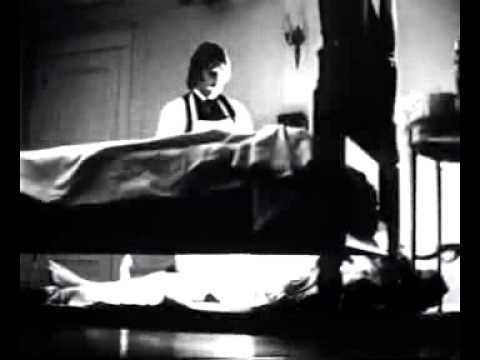
The Tell-Tale Heart is one of Poe’s most famous short stories, and it’s the one I chose as the centerpiece of my book, The Poe Consequence.. It’s about an unnamed narrator who tells the story of a murder he committed to prove he is sane, but in the telling of the story, we see that he is not. The nameless narrator kills an old man for one bizarre reason: the old man’s vulture eye.
He held nothing against the old man. No grudge, no conflict, no contention. He also denies having killed for greed. But this vulture eye – a pale blue eye with a film over it – unnerved him, haunted him. So much was his obsession over the eye that he plotted to kill the innocent elderly man to be rid of the eye once and for all.
By today’s standards, it would seem that this short story of murder, obsession and guilt isn’t very frightening. Our exposure to horror movies has built a trend of producing stories that only throw us into a momentary state of shock. But The Tell-Tale Heart is a psychological thriller intended to disturb the mind and the subconscious. It tells us what delusions and our obsessive brains are capable of. The story starts with the narrator trying to convince the audience that he is not mad, that his condition is due to a disease causing a heightened sense of hearing. He tells the story chronologically but he focuses on what he feels, thinks and experiences more than the actions he takes. The Tell-Tale Heart takes us into the mind of a madman.
Who is the Narrator?
So many art, film and theater adaptations of The Tell-Tale Heart portray the narrator as a man, but in fact, no names or pronouns were used to refer to the narrator, so the character’s sex cannot be known for certain. Edgar Allan Poe used the first person point of view for many of his prose, with the vast majority of these containing echoes of a male protagonist, such as The Man of the Crowd and The Fall of the House of Usher. It’s probably safe to assume, therefore, that the murderer is a man.
There is no explanation on how the narrator came to live in a house with the old man who is presumably not his kin. The nature of their relationship is unclear throughout the story.
The audience can also assume that the murderer is much younger than the victim due to the narrator repeatedly referring to the victim as an “old man” and the implied reverence for him: “Object there was none. Passion there was none. I loved the old man. He had never wronged me. He had never given me insult. For his gold I had no desire.”
The details of characters’ background are all vague, and this completely contrasts the details of the plot. This, however, is exemplary of Edgar Allan Poe’s mastery in the use of words.
The Murder
Mad he may be, but reckless in the execution of the murder he is not. The narrator carefully orchestrated the killing. Every midnight for seven days, he cautiously snuck his head inside the old man’s chamber, ready to put an end to the vulture eye. But each night, he could not perform the murder, for the eye was always closed. But on the eighth night, the old man woke up to find his murderer staring at him.
It was at this moment when the narrator starts hearing a rhythmic thumping sound. It was the beating of the old man’s heart! The thumping grew louder and louder, and fueled the narrator’s fury even more. In a fit of anger, the narrator leaps into the room, drags the old man to the floor and suffocates him with his bedding.
The grisly deed is done. But even then, the beating would not stop for several minutes.
The corpse is concealed under the floorboards but not without being dismembered first.
What Does The Heart Symbolize?
Guilt? Hallucination? Paranoia? The heart that won’t stop beating could be all of these things. In the end, the unnamed narrator was overcome with guilt and confessed his crime because the dead heart under the floorboards would not stop beating. But was this really the dead man’s heart? It could very well have been the narrator’s own heartbeat he was hearing.
Whether or not the heartbeat was all in his head, it’s the very thing that led to his own destruction.
Sources:
http://en.wikipedia.org/wiki/The_Tell-Tale_Heart
http://www.shmoop.com/tell-tale-heart/
The post The Tell-Tale Heart appeared first on THE POE CONSEQUENCE.
July 12, 2015
Edgar Allan Poe in Pop Culture
An artwork inspired by “The Raven”
Just as Edgar Allan Poe’s fictional characters obsessed over objects like a vulture’s eye, a black cat or death itself, there’s something about his poems and short stories that we can’t ignore. Perhaps it’s because his kind of horror is something not easily forgotten, for it can disturb the subconscious, thrill us to the bone, and reveal the darkest tendencies of the human mind.
Due in large part to the way Poe is portrayed in popular culture, the madman genius tormented by his own personal struggles, the poet himself conveys a similar intrigue as the characters he writes about. Whether this reputation has been exaggerated and romanticized over time, many fans retain this specific image of him, and this undoubtedly enhances the controversial nature of his life.
Much of the speculation over Poe’s sanity first surfaced when his professional rival, Rufus Wilmot Griswold, published a widely printed obituary and a biography that depicted the poet as a chronically drunk madman. Griswold’s slanders have since been renounced by Poe’s family and friends, but those publications significantly tarnished the late author’s reputation for the next several decades.
A more important factor in pop culture’s personification of Poe is his stories’ point of view. He always wrote in the first person perspective, and this made it seem like the author was the one experiencing the grisly tales.
The Challenge of Channeling Poe
The adaptations of many of Poe’s poems and short stories face significant challenges. For one, many of his stories are too short to be turned into full-length movies. This is why film versions are mixed with newly invented storylines, and some productions only allude to Poe’s works. Throwing in new twists to his tales have upset fans through the years, but Director Roger Corman rose to fame because of his repute for translating a number of Poe’s stories into the big screen. Although his adaptations of The Tomb of Ligeia, Tales of Terror, The Pit and the Pendulum, The Raven, House of Usher, The Masque of the Red Death and The Haunted Palace, all helped cement Corman’s career, they only contained echoes of Poe’s works rather than being accurate depictions.
The late poet’s voice, and ability to tell his own particular brand of frightening and disturbing narratives, remains his and his alone.
Sources:
http://www.nerds-feather.com/2012/10/we-rank-em-roger-corman-vincent-price.html
http://education.seattlepi.com/influence-edgar-allan-poe-american-culture-5573.html
http://en.wikipedia.org/wiki/Edgar_Allan_Poe_in_popular_culture
http://en.wikipedia.org/wiki/Rufus_Wilmot_Griswold
Photo Credits:
Photo By Bill Strain via StockPholio.com
The post Edgar Allan Poe in Pop Culture appeared first on THE POE CONSEQUENCE.
July 5, 2015
Edgar Allan Poe and the Goth Subculture
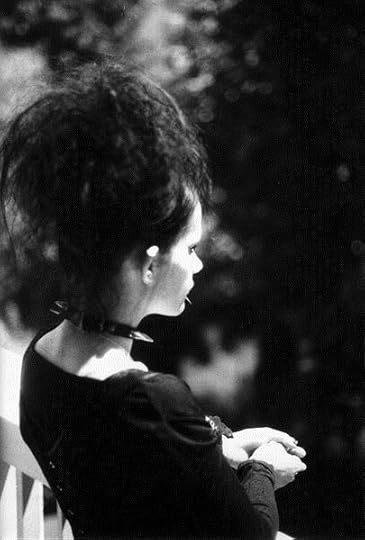
The Goth Connection
Edgar Allan Poe died more than 160 years ago, yet his lasting legacy still occupies an honored position in that dark corner of literature, reminding us of the dark side of human nature. Because of this, the question has often been asked if he could be considered the first goth, or, certainly, one of that subculture’s earliest influences.
Goths of today are associated with dark lipstick, thick eyeliner, radical hairstyles and black clothing (even though a color as diverse as pink is also worn). However, there is more to the goths than their lugubrious personas. The goth lifestyle makes them happy or comfortable with themselves in their desire to break social norms and be different in a quirky way. It also offers an expression that aligns with their literary, music, and art tastes. Although the movement began during the early ‘80s era of punk rock, goth fans cite a diversity of other influences, ranging from 18th century literature, to 19th century art, to 1960s TV (remember, ‘The Addams Family’ and ‘The Munsters’?).
Proponents of the subculture highlight an understanding and appreciation of the darker and melancholic side of life and existence. They strive to show the world that an underlying bleakness permeates much of everyday life, despite attempts at the contrary by society. The culture’s primary and original driving force involves poetic sensibilities and literary romanticism.
This is why writers associated with those subjects, such as Edgar Allan Poe, have played significant roles for gothic literature. Poe’s fiction has recurring themes, namely violent deaths, man’s relationships with death, the demise of (often attractive) women, madness and obsession. Examples of these are the radiant yet dead Lenore, for whom the narrator pined in The Raven; The poem, Annabel Lee, whose narrator relates of his great love between the two, but also hints at necrophilia; the maiden who was gruesomely murdered in The Murders in the Rue Morgue; and the narrator of The Tell-Tale Heart, whose battle with madness disguised as rationality became his downfall. These are but a few slivers of Poe’s fiction, and yet they depict beauty, passionate devotion, complexities of the criminal mentality, gruesome deaths and gloomy introspection—elements that can sweep away the heart of any romantic horror fiction fan.
Edgar Allan Poe may not have intended to be an icon for the goth subculture that finds picturesque beauty in pain and misery, but he helped shape today’s literary and cultural landscape for their movement.
Sources:
http://www.gradesaver.com/poes-short-stories/study-guide/themes
http://www.urbandictionary.com/define.php?term=Goth+Or+Gothic
http://en.wikipedia.org/wiki/Goth_subculture#18th_and_19th_centuries
Photo Credits:
By Marc Planard via .
June 30, 2015
Quotes from The Poe Consequence
I felt like writing a blog post because I found my book quotes on LitFire's (my publisher) Pinterest page. I liked how the images were designed, so I decided to share them with you.
Here they are...
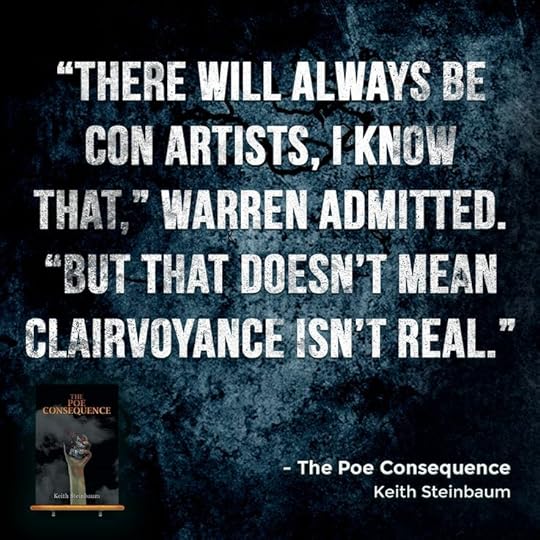
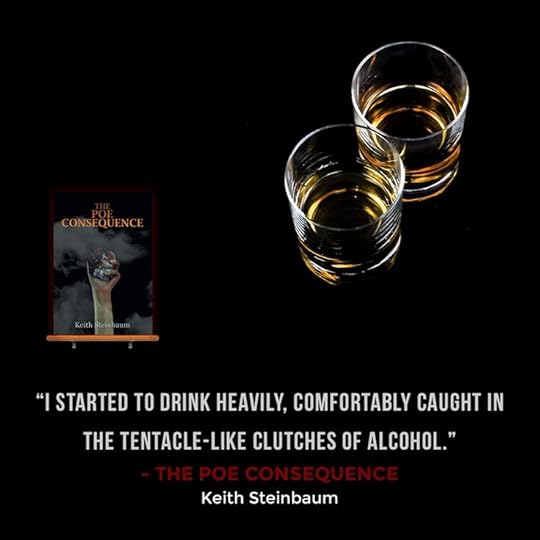
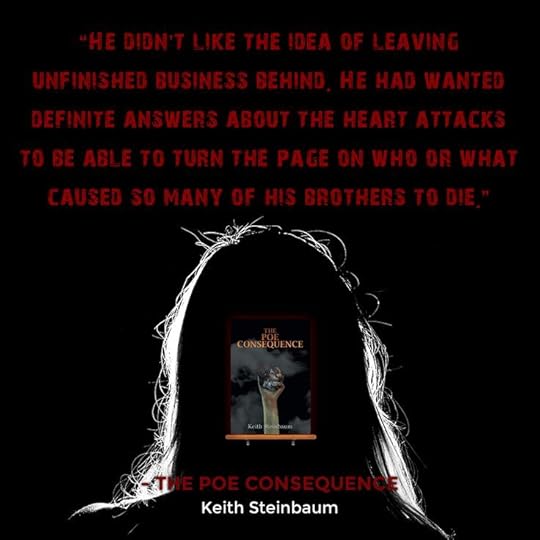

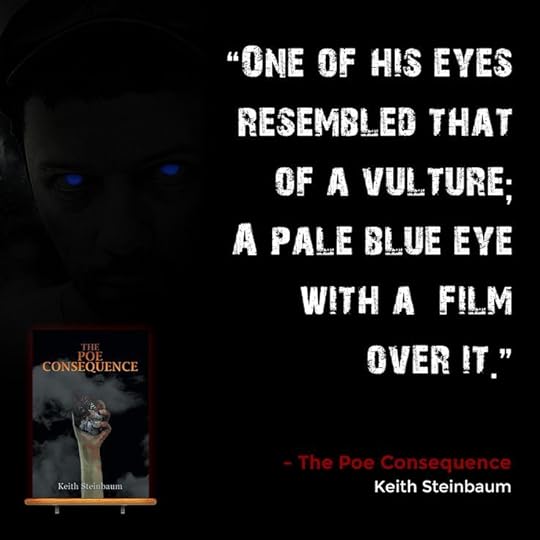
Many of you may not know this, but sometimes, I take inspiration for my poems and my stories from images. Looking at these images, I think I have another story up in my head.
What is everyone up to lately?
Feel free to ask me questions or drop comments on my page.
Keith Steinbaum
The Poe Consequence
June 29, 2015
The Edgar Allan Poe Society of Baltimore
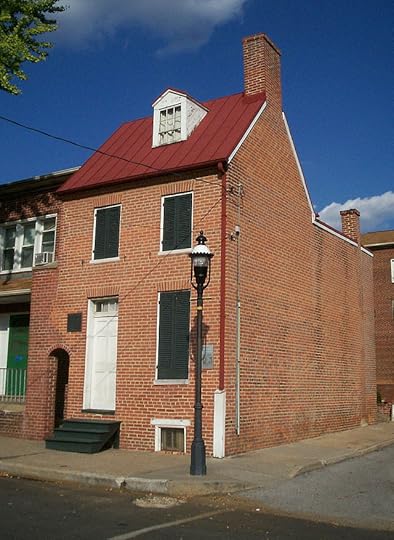
Edgar Allan Poe was born in Boston, Massachusetts, yet is considered a “son of Baltimore.” He came from a Baltimore family, spent a part of his life there, and died in the city. It’s been said that his literary career was ignited when he won a contest sponsored by the Baltimore Saturday Visiter.
His last surviving residence in Baltimore was opened as a historic house in 1949 and is home to the Edgar Allan Poe Society. The brick building, located at 203 North Amity Street, was set to be demolished with other homes to make way for a housing project in the 1930s, but thanks to the Poe Society, the house was spared from the developer’s wrecking ball.
Today, the rescued home is known as The Baltimore Poe House.
The Society
The city of Baltimore, as well as the entire world, owe a great deal to the Edgar Allan Poe Society for keeping the poet’s legacy alive and for securing the sustainability of the Edgar Allan Poe House and Museum. The group was established in 1923, but its roots originate from earlier Poe organizations that date back approximately fifty years before.
In addition to other events, the Society holds a grand annual birthday celebration at the Westminster Hall and Burying Ground, the place where the poet was buried in 1849. Also held at the Westminster Hall was a third funeral for Poe (the second was held in 2009), which was attended by an estimated 1,200 people. It received national and international media attention.
Today, the society’s website remains alive and well. Although its routine appearance looks as unremarkable as the Poe House itself, it nonetheless contains a vast resource of poems, prose, collections, biographies and other items of interest about him.
Edgar Allan Poe House and Museum
The House and Museum faced hardships over the years. In 2011, city officials cut the museum’s subsidy, resulting in its eventual closure in 2012. Poe fans and supporters refused to accept the shutting of its doors, and a slew of organizations contributed efforts to ensure the museum’s future. This included the making of the 2012 film, The Raven, the formation of the New York City non-profit theater company Bedlam Ensemble, and the non-profit project Pennies for Poe: Save the Poe House in Baltimore.
A year later, the house was reopened to the public again thanks to a newly formed non-profit organization called Poe Baltimore, which now operates the Edgar Allan Poe House and Museum through donations.
Former exhibited items in the museum include a small piece of the author’s coffin, a lock of his hair, and a large portrait of Virginia Clemm, Poe’s wife.
It was in this small Baltimore space where Poe penned many of his masterpieces, and a tour inside the home helps visitors sense the author’s surroundings as he wrote them.
It is believed that the following works were created in the Poe House, although the verity of these claims cannot be fully proven.
Stories
Berenice
King Pest the First. A Tale containing an Allegory
Lionizing: A Tale
Morella
Found in a Bottle
Shadow-A Parable
The Unparalleled Adventure of One Hans Pfaall
Poems
Latin Hymn
Enigma
Serenade
The Coliseum
Sources:
http://en.wikipedia.org/wiki/Edgar_Allan_Poe_House_and_Museum
http://www.eapoe.org/index.htm
http://www.poeinbaltimore.org/links-2/
https://propertymanagementnation.wordpress.com/2009/10/14/master-of-macabres-fans-given-a-treat-at-his-museum-home/
http://museumist.com/category/this-week-in-history/page/2/
http://www.macleans.ca/culture/a-year-after-closing-edgar-allan-poes-former-home-reopens/
http://baltimore.org/article/edgar-allan-poe-baltimore
http://en.wikipedia.org/wiki/Death_of_Edgar_Allan_Poe
http://www.poeinbaltimore.org/poe-house/
Photo Credits
PoeHouse-Baltimore, via Wikimedia Commons
The post The Edgar Allan Poe Society of Baltimore appeared first on The Poe Consequence by Keith Steinbaum.