
Bryce Moore's Blog, page 288
November 3, 2011
Fiction: Exploring the Tough Decisions, Vicariously
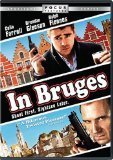
 I watched In Bruges last night while Denisa was whisking up her thousand loaves of bread. This was a movie I'd heard a lot of good things about, in a vague sort of a way. I knew it was a dark comedy about hit men, so I went in expecting something along the lines of a Grosse Pointe Blank for some reason. Or maybe Get Shorty (two films I've really enjoyed). Films where reality takes a back seat to being cool and having snappy one-liners.
In Bruges is nothing like that. It's got some really funny parts in it, but it's more of an art house movie than a mainstream hit. That said, I thought it was a fantastic film. Four stars--I'll be remembering it for quite a long time to come.
What did I like about it? The basics are all there: great acting (Colin Farrell won a Golden Globe), writing (nominated for an Oscar in best original screenplay), and cinematography (seriously--this was a gorgeous movie on Bluray). It wasn't predictable at all, and it had a compelling plot. But often for a movie to get to the four star level for me, it needs something more. Something to really wow me.
In this case, the Wow Factor comes from the impossible situations these characters are placed in. Germanic epic poetry was all about this sort of thing. The main characters would be forced to choose between killing their mother or their son. Betraying a friend or betraying a family member. If you set this up in a way that's believable and not artificial, this can have a very strong emotional punch.
Collin Farrell plays Ray, a hit man who is running from something he's done. We're not sure what it is at first, but we know it's affected him deeply. He's accompanied by his partner, Ken (Brendan Gleeson--Mad Eye Moody, from Harry Potter). They go to Bruges, Belgium to wait for word from their boss, Harry (Ralph Fiennes--Voldemort). Ray hates the town. It's all about sight seeing and beautiful buildings. Ken loves it.
By the end of the movie, you really hurt for these characters and what they're going through. Some of the things that happened made me really stop and think about what I would do in that situation--how I would handle it. What decisions I would make. Good fiction lets you do that--lets you explore scenarios and learn from other people.
If this were a book, I'd say it falls firmly in the Magical Realism camp. It's intriguing, thought provoking, disturbing and funny--all at once.
Note--it's rated R for more bad language than you can choke a horse with, a few very graphic violence scenes, and some drug use. So be warned.


November 2, 2011
Vodnik Galleys Finished
 After read read reading for the past week, I finished another read-through of Vodnik. To give you an overview of the revision process to date:
September 2010--Reread the book in preparation for the first revision specifically for my editor
October 2010--Reread the book as I edit it
February 2011--Reread the book in preparation for the second edit
March 2011--Reread the book as I edit it.
May 2011--Reread the book in preparation for the third edit
June 2011--Reread the book as I edit it.
August 2011--Reread the book for the fourth edit, and edit as I read
September 2011--Reread the book for the copy edit
October 2011--Reread the book for the galley edit
Why did I read it, then read it as I edit? Why not just read and edit as I went through? I find it helpful to get the big picture of the book firmly set in my mind before I start going through mucking around in the individual chapters. Better to know the big stuff and edit all at once, rather than edit chapter one, find out in chapter five that there was something else to be changed in chapter one, then find out in chapter ten that yet another big thing had to be changed. Make sense?
In any case, I'm at the point now that I have trouble remembering when I changed what in which draft. That said, I'm *really* familiar with this book now. :-)
Overall, the book looks great. It's been really interesting to see each of these steps first hand. I had no idea just how complex and involved the revision process can be. From here, the next step will be advance reading copies (ARCs)--I think. Those will be actual paperback books, essential rough drafts of the book in its final form. They're sent out to reviewers and the like. From there, the final step is the book itself.
We're getting close!


November 1, 2011
The Library and Publishing Worlds are NOT Disappearing
 NOTE: This is another article I originally wrote for my library blog. But since it has so much to do with books, I'm duplicating it here too.[image error]
Okay. That's it. I've been hearing more and more doomy, gloomy predictions about libraries and books over the past year or so, and I feel like it's gotten to the point that I just have to say my own piece. You might disagree with me. That's okay. I might end up being wrong on this one (I have, actually, been wrong quite a few times in my life), but for better or worse, I need to get this out of me.
Libraries aren't going anywhere. Books aren't going anywhere. End of story.
Note: this isn't to say that libraries and books aren't changing. They are--quite drastically in some respects. But change does not equal disappearance. But I hear people saying things like all books are going to be free, which would make me lose both of my professions. Self-publishing will eradicate the need to pay for books, so why need libraries? Why need paid authors? Free free free!
Hogwash.
First point: libraries are more than books. Libraries are information. The casing of that information may change (scrolls, papyrus, books, ereaders, computers), but the information itself is still there. If librarians are information brokers, and the amount of information is increasing, then why in the world should we be worried about our jobs going anywhere?
Well, one reason is because non-librarians inevitably have this Books=Librarians mindset. And so they see a blow to physical copies of books as a blow to librarians as a profession. It could well be that this mindset will strike a significant blow to librarians for a few years. But I have every confidence that such a blow would be short lived. As soon as everybody's trying to find all the information that they've lost track of, they'll come running back to librarians, hat in hand.
But wait--what about Google? It finds you everything you might possibly need.
Garbage.
Google does a great job of finding broad information about something. It's a great phone book and encyclopedia and almanac. But start tracking what you actually use Google for, and how successful or unsuccessful you are with those searches. One of the biggest flaws of Google is that you need to know an information resource exists, or you might well completely miss an important source of information. Let's say you're interested in children's publishing. Allow me to show how such a search might go.
You don't know a lot about the topic, so you start with "Writing books for kids." First off, let me remind you that most searchers don't go beyond the third result in a Google results page. The top three results get 60% of the clicks. The top result gets more than a third, all by its lonesome. So we'll assume you're a typical researcher--not a dedicated pro (like, say . . . a librarian). The top three results Google returns are all ads paid for by their sponsors. Let's hope you're at least with it enough to know to ignore the ads and go down to actual results. Two are for Amazon books, and one is of questionable merit. (Family-based, clunky website).
You ignore the fantastic underdown.org--because it's the ninth result. Only 1.8% of searches get down that far in the results page. So, since you came up empty, you change your search (assuming you're really dedicated here). "Writing books for children." Underdown.org is now the fourth result (not counting the three additional ads that popped up first). 7.9% of researchers will click that one. And this is assuming you know what you're doing and can adequately distinguish the difference between a good website and a bogus one. (Speaking as an information professional, it ain't always that easy.)
What I mean to say is that you need to do research to find quality sources--even using Google. But most people don't realize this. They'll spend hours and hours searching for something that a subject specialist would know off the top of their head. Hours and hours they could have been doing something else. That's a distinct need, folks. And where there's a need, there's a job.
Librarian's aren't going anywhere.
What about books? Books are going to become free, right? Anyone can publish one. People will refuse to pay for one. Publishers will go under. Agents will fall. Dogs and cats will start playing in the streets together.
If you believe that, I've got a bridge to sell you while you're busy writing your free book.
Again--this isn't to say that books aren't going to change. I'm sure they will. But look at the music industry. It was panicked that the entire world would start pirating music. No one would make any money. Mass hysteria! Has that panned out? Not really. In fact, studies show that music pirates actually spend more money on music than non-pirates. Go figure.
People love music. They'll continue paying to support the thing they love.
Books? People love books. They'll do the same.
Yes, right now I could just hit a publish button and have every piece of writing I've ever done online at once. And many people are doing just that. But the more people who publish all the stuff they've written, the harder it is to find the quality stuff you actually want to read. A lot of work and effort goes in to writing and publishing a book. Rounds of edits. Design experience. Bookkeeping. Marketing. Publishers don't just slap a "for sale" sticker on a book and send it out the door. (At least, not reputable publishers.)
It's certainly possible that for a few years, everything will Seem Grim. The sky might look like it's going to fall. But in the end, people will adapt. Change. Authors, publishers, agents--they might not all do the exact same things they do now in the exact same ways, but that's life.
Anyone who tells you differently--who claims that libraries or books are dying--is probably selling you something. Either they're making money working the conference circuits and trying to make a name for themselves, or they're starting their own publishing venture, or they're trying to drum up business for their own pet project.
Don't listen to the doom and gloom. Worrying about Everything Changing is just plain silly, because in the end . . . everything changes anyway. Worrying doesn't do a blessed thing to fix it. Instead, take all that energy you're devoting to worrying and focus it someplace productive. Figure out what you can do to adapt. If you're an author, keep writing books. If you're a librarian, keep up to date on changes in technology. Know the change is coming, and roll with it.
And that's all the soapbox I've got in me today.
Thoughts?


October 31, 2011
Captain America: the New Breed of Super Hero
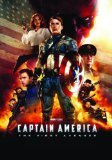
 I watched Captain America: The First Avenger over the weekend, and I really enjoyed the movie. What did I like specifically? I liked how it was almost a war movie first, and a super hero movie second. I think I would have liked it even more if they'd increased the war aspect more, but that might just be a personal preference. The effects are well done (aren't most tent pole movie effects that way these days?), the characters are fun, the action engrossing, and it's a well-shot movie. (Joe Johnston, the director, also helmed The Rocketeer, Honey I Shrunk the Kids, Jumanji, and Hidalgo--quite the spread.)
But there have been so. many. super hero movies out over the past few years, and I'm starting to question Hollywood's penchant for the origin story. (I mean, we've got the reboot of Spiderman coming next year, just a decade after the enormously popular Tobey Maguire version. Too soon!) It's like Hollywood knows that super heroes are popular, but no one in Hollywood is willing to read past the first issue of a series. And so we get film after film focused on hapless outcasts who somehow manage to find the courage and the grit within them to overcome insurmountable odds (as long as they have the requisite blast of Vita-rays or spider bites or what have you).
Even the non-reboot of Superman still had Superman coming back and questioning the need for himself, instead of--you know. Being a superhero.
Are comics popular because they're all about origin stories? I'm not the world's biggest comic geek, but I'm pretty sure that's not the case. Super heroes do things on a big scale. They save the world, sure--but they also live complex lives and confront very understandable conflicts. I want to see super hero movies where they're super throughout. Where villains are big and bad and deadly--but not comical--and it takes everything the hero has to win the day.
That's sort of what Captain America was for me. Red Skull was a tad too campy for me. He wasn't complex enough. He was evil--we knew that because he was a Nazi, and that just seems to be lazy writing. Maybe some of the reason that these comic book movies aren't working for me all the time is that the villains aren't strong enough. You had Loki from Thor, and he was basically a whiny spoiled brat. Scary. Lex Luthor is always coming up with some crazy real estate scheme to make himself a lot of money at the expense of lesser mortals. Oh no.
Honestly, if writers spent as much time developing the origin and conflicted ethos of the villains of these movies, I think they'd all be doing us a favor. As it is, it's like they have a bunch of slips of paper with different elements on them, then they draw them at random from a hat and run with it. Ambitious scientist. Misunderstood childhood. Picked on in school.
That's not how evil works, folks. You don't become evil because you get hit in the head and go crazy. You become evil by making decisions that seemed good at the time. Justified. Just like you become a hero by doing the same thing. A hero or a villain aren't born. They're made. That's one of the things I really liked about Captain America. He's heroic, no matter how buff or weak he is.
I don't mean to complain. I've been enjoying all the comic adaptations, and I'll continue to watch them--as long as they stay good. But I'm worried the rest of the world will give up on them soon. When they do, it won't be because "comics are dead." It'll be because "comics were beaten to death by greedy producers trying to make a quick buck." Saturate the market, and it becomes harder and harder to convince movie watchers that this super hero movie is actually good.
Captain America is. Three stars.


October 28, 2011
No Time No Time
 [image error]Sorry folks. I've got no time today. There's a class to teach, a drive to Bangor, a meeting to attend, a drive back from Bangor, galleys to read, and a BYU/TCU game to watch. Let's face it--I'm booked.
On the other hand, I've seen those galleys now, and this book is looking great. It's really exciting to see it so close to what it'll look like when it's in your hands.
Have a great weekend, all!


October 27, 2011
The Galleys are Coming!
 I just got word yesterday from my editor that she has galleys for Vodnik, and that I'll be getting them today to go over. Now, some of you are no doubt wondering what in the world galleys are.
Wonder no more.
Basically, we're at the point now where the text of the story has been typeset--arranged on the page, with all the bells and whistles. Chapter breaks, formatting, font changes--however the interior of the book is going to look. (The cover and the map still aren't finished, but the words on the page are done.) Make sense?
So what does this mean?
It means that I have to look over the galleys and try to find any typos or mistakes that I can. After this point, correcting those typos becomes much more problematic. And yes, I've already gone over it multiple times, and my editor has gone over it multiple times, and the copy editor has gone over it, and the type setter has gone over it, and various friends of mine have read it--how many more times are we going to read this thing before it's "done"?
A couple. :-)
In any case, I'll be doing this as fast as I can, since I need to get any changes back to my editor by the middle of next week. Remember, though--these aren't big changes at this point. Little things like typos or formatting errors. Any time you're dealing with a lot of text, there are going to be errors. The more we can fix now, the more it won't annoy you when you buy thousands of copies and give them to all your friends.


October 26, 2011
To Shoot or not to Shoot?
 Well, more like "to get shot or not to get shot." Flu shot, that is. And it's sort of a misleading question, since I already got one. Today. And my arm is hurting. I have a hard life, don't I?
Each year I kind of debate getting a flu shot, though. There've been a few times that I got it and got really sick anyway that year, which begs the question of what good it did me. Yes, I realize that it's just supposed to protect against many forms of the flu, not all of them--but isn't this a bit of a cop out? I mean, I could have this "magic stick" that I use to hit you in the head. And I can tell you that it prevents the flu and whatever else I feel like claiming, and as long as I have that disclaimer in there ("It prevents most forms of stupidity, but not all"), then there's no way of knowing if me whacking you upside the head really did any good or not. (Other than the sheer enjoyment I might derive from smacking you.) If you get sick, not my fault. It was just the "wrong sort" of flu. If you don't get sick, I can claim the credit.
How is the stick clubbing any different from poking me in the arm with some liquid that's supposed to have dead flu in it, which will keep the rest of the flu away from me? (As long as it's the right sort of flu.)
Who said witchcraft was dead?
Still, there's something to be said for the placebo effect, and so I consent to getting poked. It's free, after all. And my arm only hurts a little.
How about you? Did you get shot this year? Do you avoid it? I realize it's all anecdotal evidence, but what can I say? I enjoy anecdotes.


October 25, 2011
A Review of Facebook Timeline
 I just enabled Timeline on my Facebook profile. (How did I get the invite? My web-fu paid off once again, and because I care about my readers, I'll share my trick with you: click here. NOTE: It took longer for the invite to come on my profile than described in the linked article. Days longer. Just be patient. Also note that this just gets you in on the developer release. The general public won't be able to view your timeline until it's available to everyone. For now, just other developers can see it. But if you become a developer by following that link, then you can view other people's timelines. Get it?)
So what is Timeline? It's Facebook's new approach to personal profiles, aiming to present the whole of a person, from birth on. It presents all your activity in an easily accessed chronological format, ranging from events to status updates to pictures to . . . everything else. It lets you retroactively put in events--I tried entering where I moved when, and it all worked flawlessly. You can associate pictures with events, too.
Some people have said this is all too creepy and invasive, and I suppose I can see that--although it doesn't bother me. Only you have access to all the information on your timeline, and you can hide anything you want hidden. Actually, it's a good reminder that what you put on Facebook stops really being yours the moment you put it there. Facebook keeps a copy, and it's got a long memory. The moral of the story (in my opinion) isn't to start getting torches and pitchforks and coming after Facebook--it's to be careful about what you post there in the first place.
So what do I think of Timeline?
I love it. I could easily see myself spending a lot of time putting up pictures and labeling them with the approximate date and place. It takes the concept of a family photo album and brings it to the modern day. When I think about how kids born post-Facebook will basically have all this information already available to them--how they can create it as they live their lives . . . that's sort of mind blowing.
Also mind blowing? The fact that I just joined Facebook on July 30, 2007. In just a little over 4 years, Facebook has ingrained itself into popular culture and consciousness to the point that it feels like it's always been here.
I really like the ability to see all my status updates and postings and friend adds that I've ever done. It's easy as all get out to see what I was doing three years ago today. Very interesting (and this feature is private--it's only available to each user on an individual basis--people can't go to my Facebook page and use it. Only I can. Supposedly.)
In the end, it's a great way to organize what was up to now just a running list of events in a person's life. I think it's exciting, and I hope it gets more widely adopted. I'd love to be able to browse through my friends' lives more easily--or at least through the events they don't mind me browsing.
What say you?


October 24, 2011
Swing Dancing for Fun and Profit
 Well, maybe no actual profit, but I actually had fun swing dancing this weekend. Denisa is a big dancer, and I have all the talent for dancing of an overweight giraffe. Thankfully, I'm not the one who has to watch me dance (or watch out for my huge feet). It's a sign of just how desperate for dancing Denisa is when she's willing to put up with my blundering.
That said, our town had a live big band dance this past weekend, and Denisa and I went.
So, how did I do? No broken bones this time. (As opposed to other times. Yes, it's true. I've broken at least one leg (not my own) swing dancing in my life. When I say I have difficulty dancing, maybe what I mean is "My dates have difficulty walking after they've danced with me.") Most of the people at the dance were high schoolers (at least, I think they were high schoolers. High schoolers look younger every year. I'm convinced it's because they've started calling elementary school students "Freshmen"), but there were some genuine adults there, too.
It started with an hour of instruction, which was really helpful. Although by the end of the evening, I was really kind of wishing I had my iPad with me so that I could find some new moves on YouTube. (Wow. I just realized what a complete and utter geek I am. Sometimes I even impress myself. Oh well--at least I wasn't thinking about different ways of building a robot that could swing dance for me . . . )
We had fun. It helped that there was an all you can eat chocolate fountain, complete with macaroons, strawberries, cherries, oreos, and every other dippable item you can think of. I had a lot of that, and I only got some of it on my shirt. (Note to self: next time there's a chocolate fountain, wear a darker shirt. Preferably a brown one.)
Various other thoughts:
A lot of the dresses the high school girls were wearing were dresses that I would never let DC out of the house with, once she's old enough to actually go to a dance. This might be because I'm really conservative, although I don't feel particularly conservative in many ways. I understand why kids would want to wear those clothes. I remember feeling very grown up. I think everyone always feels very grown up. My seven-year-old son thinks he's very mature. I think I'm mature--but I'm sure in another decade I'll look back on the me now and think I was really inexperienced. That's life.
However, this is why kids have these things called "parents." Parents who tell them "Put something else on." Because I also remember being a teenage boy. And I know what's going through teenage boy heads, and how little it takes to set those teenage minds a' whirrin'.
There was some talk by some of the dance instructors about starting a more formal instruction group. Denisa and I might actually do it. We'll see how much it costs, if it actually happens, and when they schedule it. Because as much as I realize I'm no good at dancing, I also realize how much Denisa loves it. And anything that makes Denisa happy is a good thing in my book.
Except fish. :-)


October 21, 2011
Yarn Geek: Some Things I Just Can't Get Into
[image error]
 My mom's in town for the weekend, and she's big time into the yarn. I think, actually, she raise an alpaca from birth, shear it, make yard from the fiber, and turn it into a sweater, all on her lonesome. That's some pretty serious yarn fixation. So I asked around with some other knitting junkies in the area to see where there were some good yarn stores (because apparently those are big things if you knit), and they all said to head to Halcyon Yarn in Bath. So that's where we went yesterday. And I have to say, if you like yarn, knitting, weaving, or any other sort of thread-related activity, the place seemed like it would be pretty much heaven on earth.
I don't knit.
I'm not saying I had a bad time--time spent with my mom, wife and the kids is always a good time--but I am saying that it reminded me how bewildering and confusing it can be to try to venture into unfamiliar geek territory, something I ask of my wife every birthday and Christmas.
It all seems like it should be so easy to me. I like board games. I know all about board games. I can tell a good board game from a bad one by smell alone. Well, almost. Shopping for me should be T-ball, and yet Denisa consistently comments how confusing it can be. And it has to be like that yarn store was for me. I went in, and there was yarn everywhere. Yarn from alpacas, sheep, rabbits--there was even bamboo yarn. I mean, come on. Bamboo yarn? What are people doing--knitting sweaters for pandas? There were projects all over the place. Looms, felting, knitting, bag making--who knew?
And if Denisa asked me for something from that store, I would be beyond clueless about what to get her. I would need very specific instructions, down to the the last detail. And there'd still be a good chance I'd get her the wrong thing. Nothing's more confusing than being in unfamiliar geek territory.
It's a good life lesson to learn. :-)
We all have our little niches that we know a lot about. Get me talking about books or games or movies or writing, and I'm in home territory. Computers and video games? Super. Dessert baking? Fine. I've been branching out into home construction, wood stacking, and yard maintenance. But no matter how great I get at those, I'm still so clueless about some things. Yarn being one of them.
What's yours?
Have a nice weekend, folks.

My mom's in town for the weekend, and she's big time into the yarn. I think, actually, she raise an alpaca from birth, shear it, make yard from the fiber, and turn it into a sweater, all on her lonesome. That's some pretty serious yarn fixation. So I asked around with some other knitting junkies in the area to see where there were some good yarn stores (because apparently those are big things if you knit), and they all said to head to Halcyon Yarn in Bath. So that's where we went yesterday. And I have to say, if you like yarn, knitting, weaving, or any other sort of thread-related activity, the place seemed like it would be pretty much heaven on earth.I don't knit.
I'm not saying I had a bad time--time spent with my mom, wife and the kids is always a good time--but I am saying that it reminded me how bewildering and confusing it can be to try to venture into unfamiliar geek territory, something I ask of my wife every birthday and Christmas.
It all seems like it should be so easy to me. I like board games. I know all about board games. I can tell a good board game from a bad one by smell alone. Well, almost. Shopping for me should be T-ball, and yet Denisa consistently comments how confusing it can be. And it has to be like that yarn store was for me. I went in, and there was yarn everywhere. Yarn from alpacas, sheep, rabbits--there was even bamboo yarn. I mean, come on. Bamboo yarn? What are people doing--knitting sweaters for pandas? There were projects all over the place. Looms, felting, knitting, bag making--who knew?
And if Denisa asked me for something from that store, I would be beyond clueless about what to get her. I would need very specific instructions, down to the the last detail. And there'd still be a good chance I'd get her the wrong thing. Nothing's more confusing than being in unfamiliar geek territory.
It's a good life lesson to learn. :-)
We all have our little niches that we know a lot about. Get me talking about books or games or movies or writing, and I'm in home territory. Computers and video games? Super. Dessert baking? Fine. I've been branching out into home construction, wood stacking, and yard maintenance. But no matter how great I get at those, I'm still so clueless about some things. Yarn being one of them.
What's yours?
Have a nice weekend, folks.


