
Michael Brachman's Blog: Tales of the Vuduri, page 162
September 19, 2013
How are Vuduri children produced?
You'd think by the 35th century, in the universe of Rome's Revolution, everything would be all in vitro fertilization and artificial wombs and baby factories.
Nope.
As mentioned previously, Vuduri men and women still have sex. Babies are conceived. Women carry to them to term and then they are born. Who gets to produce babies is determined by The Overmind and Vuduri never have sex for fun. So each baby is planned and born for a purpose.
After a baby is born, as soon as is practical, they are moved to baby-raising farms called creches and raised by Vuduri who are skilled in that area. Most babies grow up never knowing their parents and frankly don't care.
Rome was different, of course. As a mosdurece, she was born of the union between a full-blooded 24-chromosome woman named Binoda and a 23-chromosome mandasurte named Fridone. Why The Overmind allowed them to have a child is explained at the end of Rome's Evolution. However, Fridone is from a culture where parents raise their children and Binoda, who had already been changed by her interaction with Fridone, allowed it. Thus Rome explained to Rei:
Nope.
As mentioned previously, Vuduri men and women still have sex. Babies are conceived. Women carry to them to term and then they are born. Who gets to produce babies is determined by The Overmind and Vuduri never have sex for fun. So each baby is planned and born for a purpose.
After a baby is born, as soon as is practical, they are moved to baby-raising farms called creches and raised by Vuduri who are skilled in that area. Most babies grow up never knowing their parents and frankly don't care.
Rome was different, of course. As a mosdurece, she was born of the union between a full-blooded 24-chromosome woman named Binoda and a 23-chromosome mandasurte named Fridone. Why The Overmind allowed them to have a child is explained at the end of Rome's Evolution. However, Fridone is from a culture where parents raise their children and Binoda, who had already been changed by her interaction with Fridone, allowed it. Thus Rome explained to Rei:
“What about family?” Rei asked. “Do you still have family? A mother? A father?”So Rome was special but back then we did not realize how special. Everything is explained at the end of Rome's Evolution but guess what? There is still a surprise or two waiting for you at the end of The Vuduri Companion to be released next year!
Rome nodded. “Yes, the Vuduri have parents. But our lives revolve around the Overmind so it is not that important who you live with. I lived with my mother and father for many years, but only because it was convenient. Many Vuduri do not do so.”


September 18, 2013
The Deucadon Wheels
The world of Rome's Revolution resides mostly in my head. It is my job as a science fiction writer to take that world and put it into words so that you can get a sense of what I am talking about. Sometimes, though, I have a clear vision of something but it's hard to express using words despite the clarity of image in my mind. Here is an example where I can see Rome's actions so clearly but some people still don't know what I'm trying to get across.
They only made one movie about Perry Rhodan called Mission Stardust and it was so awful they never made another. But I was still curious to see what it looked like, just because. What blew me away is their moon buggy. They stole my wheels!! Well, since the movie was made in 1967, I guess I can't really say that. Anyway, take a look at the picture and see what you think.
[image error]
Except for the cleats on the rim, pretty close to the Deucadon wheels, huh?
“What kind of phenomenon?” Rei asked.Another example of this would be the wheels of the Deucadon ground cars as described in The Ark Lords. Since they lived underground, they couldn't use internal combustion engines and pollute their limited supply of air. Instead, they use first their nuclear-powered rods then later their semi-infinite geothermal power to spin flywheels and used the stored energy to move the cars around. The wheels were supposed to be of special design. Here is their description.
“Many stars have disappeared.” Rome replied, clipping her fingers together then opening her hand flatly as if releasing pixie dust.
“What do you mean disappeared? I don’t understand,” Rei said for the hundredth time.
Bukky pointed to a small cart which was not much more than four wheels and two benches. The wheels themselves were of a fascinating design. Their outer rims were extremely thin metal and connected to the axle with spokes made of gently curved metal strips. Quite pretty in a way. The weight of the cart made them flex slightly which indicated they also acted as shock absorbers. Attached to the back of the cart was a metallic box emitting a faint whirring noise.Well, I was cleaning out our rather large storehouse of collected science fiction books and I found about 15 duplicates. I also found some novels about Perry Rhodan who was a big hit in Germany and made it over to the US in the mid to late 60s.
They only made one movie about Perry Rhodan called Mission Stardust and it was so awful they never made another. But I was still curious to see what it looked like, just because. What blew me away is their moon buggy. They stole my wheels!! Well, since the movie was made in 1967, I guess I can't really say that. Anyway, take a look at the picture and see what you think.
[image error]
Except for the cleats on the rim, pretty close to the Deucadon wheels, huh?
September 17, 2013
Back Pain and the Revolution
From the minute Rei wakes up in Rome's Revolution, back pain becomes an important underlying theme to the first novel. Silas Hiram, one of the original settlers from the Ark I, also experienced back pain and you'll read about his story when I release The Vuduri Companion next year.
In the original long-form version of Rome's Revolution, I had proposed that the release of Tumor Necrosis Factor-Alpha, discussed in yesterday's post was freed by tiny rods puncturing the disks of the colonists as they were being frozen. I had originally proposed that this substance somehow had an antifreeze effect and allowed for the humans to survive freezing.
I got rid of that but kept in the back pain. Now the story just reads that during the time that the colonists are frozen, the vertebral disks desiccate (dry out). The re-hydration process as designed by the mission architects is flawed and Rei (and the others) wake up with degenerative disk disease.
OMCOM to the rescue. He invents a pill (gene therapy, eek) which eventually cures Rei's back and gives Rei unnatural healing powers, as witnessed in Rome's Evolution. Rei is able to win over the Deucadons in Part 2 of Rome's Revolution because he correctly deduced that the survivors of the Ark III crash-landing also had back pain.
Rei and Rome get yellow pills. The rest of the colonists get white pills. The genetic changes are documented by Virga in Rome's Evolution. OMCOM's yellow pill has both an immediate and long term effects on Rei's physiology. The pills don't just fix Rei's back. Rei also gets super hearing (Rome does not), a cellphone in the head and one other side effect which I have never told anyone but will be revealed next year in The Vuduri Companion.
The short story is entitled "Not The End" but that is as much of a clue as I choose to give away at this time.
In the original long-form version of Rome's Revolution, I had proposed that the release of Tumor Necrosis Factor-Alpha, discussed in yesterday's post was freed by tiny rods puncturing the disks of the colonists as they were being frozen. I had originally proposed that this substance somehow had an antifreeze effect and allowed for the humans to survive freezing.
I got rid of that but kept in the back pain. Now the story just reads that during the time that the colonists are frozen, the vertebral disks desiccate (dry out). The re-hydration process as designed by the mission architects is flawed and Rei (and the others) wake up with degenerative disk disease.
OMCOM to the rescue. He invents a pill (gene therapy, eek) which eventually cures Rei's back and gives Rei unnatural healing powers, as witnessed in Rome's Evolution. Rei is able to win over the Deucadons in Part 2 of Rome's Revolution because he correctly deduced that the survivors of the Ark III crash-landing also had back pain.
Rei and Rome get yellow pills. The rest of the colonists get white pills. The genetic changes are documented by Virga in Rome's Evolution. OMCOM's yellow pill has both an immediate and long term effects on Rei's physiology. The pills don't just fix Rei's back. Rei also gets super hearing (Rome does not), a cellphone in the head and one other side effect which I have never told anyone but will be revealed next year in The Vuduri Companion.
The short story is entitled "Not The End" but that is as much of a clue as I choose to give away at this time.
September 16, 2013
A brief primer on the spine
In order for me to explain how back pain plays a large role in Rome's Revolution, it is necessary for you to know a little bit about the bio-mechanics of the spine. Nobody is reading this blog because they want to know about anatomy or physiology so I'll be brief.
The human spine is a marvelous but flawed invention by nature or a higher power to allow humans to walk upright. The shape and shock-absorbing characteristics have to be tuned just right. Here is a picture of a normal human spine.
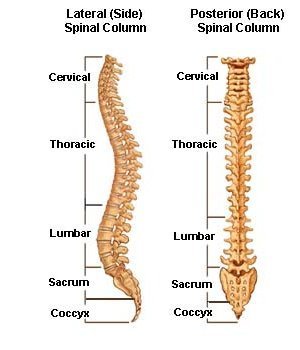
It is not straight. It has an S-shape and flexes in all directions. Between each vertebra is a pad of tissue called a vertebral disk. Everybody has heard of a "slipped disk" but there is so much more than can go wrong. Nerves can be pinched because of stenosis. The disk can bulge or even rupture. Here is a picture of a disk.
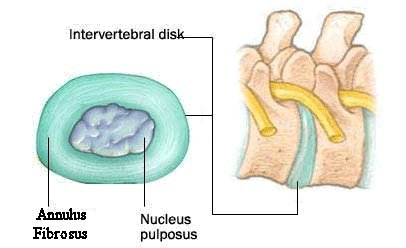
The disk is made up of a fibrous outer layer called the annulus fibrosus and a jelly-like interior called the nucleus pulposus. If you have a fissured disk and interstitial fluid comes in contact with the nucleus pulposus, the disk can secret Tumor Necrosis Factor-Alpha (TNA-Alpha). This substance is so toxic, so inflammatory, that it can cause back pain and swelling just by its release.
So how does this relate in any way to the whole Rome's Revolution universe? All will be explained tomorrow.
The human spine is a marvelous but flawed invention by nature or a higher power to allow humans to walk upright. The shape and shock-absorbing characteristics have to be tuned just right. Here is a picture of a normal human spine.
It is not straight. It has an S-shape and flexes in all directions. Between each vertebra is a pad of tissue called a vertebral disk. Everybody has heard of a "slipped disk" but there is so much more than can go wrong. Nerves can be pinched because of stenosis. The disk can bulge or even rupture. Here is a picture of a disk.
The disk is made up of a fibrous outer layer called the annulus fibrosus and a jelly-like interior called the nucleus pulposus. If you have a fissured disk and interstitial fluid comes in contact with the nucleus pulposus, the disk can secret Tumor Necrosis Factor-Alpha (TNA-Alpha). This substance is so toxic, so inflammatory, that it can cause back pain and swelling just by its release.
So how does this relate in any way to the whole Rome's Revolution universe? All will be explained tomorrow.
September 15, 2013
My flora, my fauna: Deucado
Friday's post focused on the animals and plants found in the Alpha Centauri system on the planet of Helome. Today I'll catalog the same for the planet of Deucado which is slightly richer only in that I mentioned more creatures. Since much of the action in Rome's Revolution takes place on Deucado, I guess this is appropriate.
I promise that in the next book, The Milk Run, I'll spend more time telling you about the ecology and wildlife on the planets and places Aason visits. I am actually looking forward to it.
Plants:
- Cane-trees. Tree-analogs with very thin trunks. Later on in the series we discovered a second type with bushier leaf-analogs at the top and split trunks. When cane-trees sway in the wind, their trunks make a clacking sound which is very ethereal.
- Stickybushes. These bushes excrete a syrupy-like substance that is very sticky. If you walk through a stickybush stand, you get covered by green goop and leaves.
- Threadgrass. Dayglo yellow tendrils, like Japanese noodles. They are very spicy and the bison that were transplanted to Deucado love to eat it.
- Generic flowers. I don't know much about them other than I need them to let Rome decorate her home.
Animals:
- The Blankets. The dominant native animal on the planet. Blankets comes in all sizes. Some people have been killed by the larger ones. We find out in Rome's Evolution that while no particular blanket is intelligent, they are interconnected and together, they are very easy-going, even happy animals.
- Swishies. These are fish-analogs that swim in the ocean and have migrated and now thrive in the freshwater Lake Eprehem. They are a cross between eels and fish.
- Insects. Ain't got none. Bruce and I argued over this.
- Bison. For some reason, they are thriving on Deucado and are now the major source of meat for those that wish to partake. They love the threadgrass.
- Deucadons. Survivors of the Ark III that crash landed on Deucado 500 years before the story begins. I have to include them here because they are native to the planet.
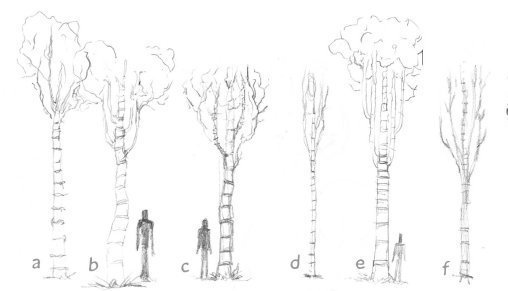
I promise that in the next book, The Milk Run, I'll spend more time telling you about the ecology and wildlife on the planets and places Aason visits. I am actually looking forward to it.
September 14, 2013
Happy Birthday, Lupe
Rei and Rome's daughter Lupe has been a part of Rome's Revolution since the beginning but she was not explicitly mentioned until the end of The Ark Lords. Rei and Rome are instructed by OMCOM that they must produce a daughter within a few years. Here is the actual exchange after OMCOM mentions Lupe by name:
“What is a lupe?” Rome asked.OMCOM goes on to explain that it has to do with first contact and that the girl must be old enough to handle the responsibilities within the timeframe projected. Lupe is actually conceived two years later in Rome's Evolution. Rei only learns about her at the very end of the story. He sees her spirit as a tiny pink spark during the ethereal battle with the Onsiras on Earth. Here is the actual exchange:
“Not a what,” OMCOM said. “A who.”
“All right,” replied Rome, humoring him. “Who is Lupe?”
“She is your daughter. Or perhaps she is our daughter.”
“My daughter?” Rome exclaimed. “We have no daughter.”
“That is the point. She is waiting to be born.”
“We may have another child some day,” Rei interjected. “But we’re still raising Aason. We want to give him the proper attention.”
“It is not necessary that she be born right away. Just in the next three years.”
“The next three years?” Rome asked, confused. “Why?”
“That tiny spark was Lupe,” Rome said, smiling. “She is coming.”I have done the math and have discovered that Lupe is actually born on September 14, 3460 AD so I wanted to take this opportunity to wish her a Happy Birthday in advance. You will read more about her, her childhood and her adventures as she grows up in the upcoming novel The Milk Run.
“What?” Rei said, sitting bolt upright. “I’m going to be a father again?”
“Yes,” Rome replied, her smile getting even broader. “She was conceived during our training night together. I suppose it was just the right time.”
Rei laughed. “That is so sleek.”
Rome cocked her head. “You’ll have to wait and see about that. You may end up changing your mind.”
“Why?” Rei asked, confused.
“I have already spoken to her.”
“You have?” Rei tried to act surprised but in this brave new world, almost nothing surprised him anymore.
“Yes, but unlike Aason, I must give you fair warning. This one is going to be a handful. I believe your word for it is a brat.”
“A brat, huh?” Rei breathed. “Daughters always are,” he said, kissing Rome’s nose. “But we’ll love her all the more.”
“Yes, we will,” Rome said and smiled.
September 13, 2013
My flora, my fauna: Helome
Yesterday's post focused on the Alpha Centauri star system and mentioned some of the lifeforms found on Helome. I also posted a while back a little piece called (tongue in cheek) Tails of the Vuduri to discuss the wildlife found on Deucado. However, by and large, the world of Rome's Revolution is largely devoid of native animals and plants.
Andy Jamieson, from Geekzine.co.uk interviewed me yesterday and asked me what were some of my biggest challenges to writing this series. Well, this part, coming up with new animals and plants certainly counts as a challenge.
To properly catalog all the lifeforms on a new planet would take a lifetime by itself. For the most part, I want to get to the story so I gloss over such things and only mention plants or animals as needed. Hell, I don't even like to talk about weather. (See the post entitled It's always sunny on Deucado). Today I will cover Helome and tomorrow I'll finish up with Deucado.
Here is a complete list which is pretty meager.
Tomorrow, a special birthday wish then all about Deucado.
Andy Jamieson, from Geekzine.co.uk interviewed me yesterday and asked me what were some of my biggest challenges to writing this series. Well, this part, coming up with new animals and plants certainly counts as a challenge.
To properly catalog all the lifeforms on a new planet would take a lifetime by itself. For the most part, I want to get to the story so I gloss over such things and only mention plants or animals as needed. Hell, I don't even like to talk about weather. (See the post entitled It's always sunny on Deucado). Today I will cover Helome and tomorrow I'll finish up with Deucado.
Here is a complete list which is pretty meager.
Plants:
- Crayola trees. Tree-analogs with moss-like tops and trunks which are every color of the rainbow.
- Soybeans. Brought from Earth aboard the Ark I and survived the constant waves of Piranha Rats over the centuries.
- Barley and hops. Also brought from Earth and mentioned quite prominently in the story of Silas Hiram. You'll get the full story when I release The Vuduri Companion next year.
- A grass-analog allowed to grow within the confines of the Vuduri cities there.
Animals:
- Piranha Rats. They have shaped the ecology of Helome for a million years. The Vuduri eradicated them from the one continent they decided to colonize.
- Lurkers. Svelte carnivorous animals that stride upon two legs. They hide in the woods and strike very quickly. They are very deadly.
- Bat-wolves. Predators that swoop down from the sky. Like Earth bats, they mostly only come out at night.
- MIA: all the Earth animals brought along by the colonists in Ark I. I assume they were eaten by the Piranha Rats.
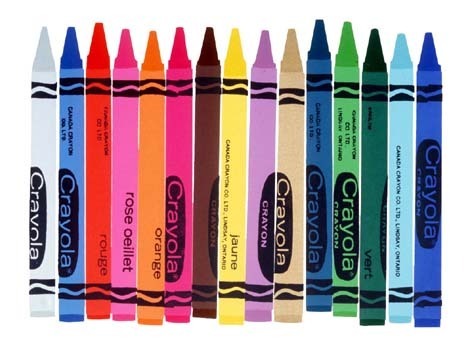
Tomorrow, a special birthday wish then all about Deucado.
September 12, 2013
Alpha Centauri
Alpha Centauri, also known as Rigil Kentaurus, is the closest star system to Earth. It is only a little more than four light years away. It consists of three stars: Proxima Centauri and Alpha Centuri A and B. The name refers to the constellation of Centaurus, the Centaur. Unfortunately, it can only be seen from the Southern Hemisphere. My parents were on a cruise to South America one time and took a picture for me. That tiny dot has caused so much wonderment and excitement.

Proxima Centauri is actually the closest of the three stars but it is a red dwarf and probably does not have any habitable planets. Beyond that, Alpha Centauri A (called Aleph by the residents of New Earth) is also a very Sol-like star, a G2V class with a spectrum very much like our sun. No wonder there has been so much speculation and seems the consensus first star system to visit once we achieve inter-stellar travel capability. At least one Earth-sized world have been discovered orbiting Alpha Centauri B (called Beth by the residents of New Earth) which is an orange-colored K1V star, about half the size of the sun.
Alpha Centauri figures prominently in the world of Rome's Revolution for a variety of reasons. In the original long-form version, the prologue to the novel (called VIRUS 5 back then) was all about a farmer named Silas Hiram and the world of New Earth. The prologue was meant to paint an idyllic picture of what the Ark program was supposed to be. Silas was the first to discover that Alnilam disappeared which, of course, was the driving point behind the whole plot of the first part of Rome's Revolution.
Later, when Rei is awakened by the Vuduri, he finds out that the star system has been renamed Rogal Canduro and that the Vuduri have a permanent outpost there. It is so important to them that they built a series of rings creating a static PPT tunnel so that people from Earth could get there extremely quickly. Of course we find out later that only pure-bred 24-chromosome Vuduri are allowed. Mandasurte need not apply. This leads to problems later as MASAL's plot to re-engineer mankind begins to gain traction. Rei also finds out it has beautiful but deadly indigenous animals. Among them are the lurkers, the bat-wolves and the Piranha Rats who were responsible for the destruction of the colony established by Ark I.
Finally, both in The Ark Lords and Rome's Evolution, Rei and Rome travel to the inhabited world there, since renamed Helome by the Vuduri and experience some adventures with Virga and her buddies.
It was nice to see that our nearest neighbor was so hospitable so as to provide some major plot points for the Rome's Revolution series.
Proxima Centauri is actually the closest of the three stars but it is a red dwarf and probably does not have any habitable planets. Beyond that, Alpha Centauri A (called Aleph by the residents of New Earth) is also a very Sol-like star, a G2V class with a spectrum very much like our sun. No wonder there has been so much speculation and seems the consensus first star system to visit once we achieve inter-stellar travel capability. At least one Earth-sized world have been discovered orbiting Alpha Centauri B (called Beth by the residents of New Earth) which is an orange-colored K1V star, about half the size of the sun.
Alpha Centauri figures prominently in the world of Rome's Revolution for a variety of reasons. In the original long-form version, the prologue to the novel (called VIRUS 5 back then) was all about a farmer named Silas Hiram and the world of New Earth. The prologue was meant to paint an idyllic picture of what the Ark program was supposed to be. Silas was the first to discover that Alnilam disappeared which, of course, was the driving point behind the whole plot of the first part of Rome's Revolution.
Later, when Rei is awakened by the Vuduri, he finds out that the star system has been renamed Rogal Canduro and that the Vuduri have a permanent outpost there. It is so important to them that they built a series of rings creating a static PPT tunnel so that people from Earth could get there extremely quickly. Of course we find out later that only pure-bred 24-chromosome Vuduri are allowed. Mandasurte need not apply. This leads to problems later as MASAL's plot to re-engineer mankind begins to gain traction. Rei also finds out it has beautiful but deadly indigenous animals. Among them are the lurkers, the bat-wolves and the Piranha Rats who were responsible for the destruction of the colony established by Ark I.
Finally, both in The Ark Lords and Rome's Evolution, Rei and Rome travel to the inhabited world there, since renamed Helome by the Vuduri and experience some adventures with Virga and her buddies.
It was nice to see that our nearest neighbor was so hospitable so as to provide some major plot points for the Rome's Revolution series.
September 11, 2013
A Biblical Milk Run
I have started working on The Milk Run which takes place 17 years after the conclusion of the events in Rome's Revolution. In fact, there is a little teaser at the end of Rome's Evolution showing Aason and Lupe getting ready to return to Tabit and Planet OMCOM.
I started writing the story four years ago, got about half-way done then put it aside so I could compile Rome's Revolution and write The Ark Lords and Rome's Evolution.
But now I'm ready to start. Aason and Lupe are off on an easy jaunt to Tabit when Lupe is kidnapped by creatures of light. Aason has to track her down by following clues. The first clue leads him to an ice-cold world which the inhabitants call Hades (Hell). The next clue takes him to a garden world which the inhabitants, living, sentient plants, call E'Den. God makes a guest appearance. Aason then leaves our universe and ends up in a place which could only be called Heaven with a brief layover in Purgatory.
[image error]
So, somehow, this book has taken on a biblical overtone even though it is science fiction. I can't wait to see where it leads.
I started writing the story four years ago, got about half-way done then put it aside so I could compile Rome's Revolution and write The Ark Lords and Rome's Evolution.
But now I'm ready to start. Aason and Lupe are off on an easy jaunt to Tabit when Lupe is kidnapped by creatures of light. Aason has to track her down by following clues. The first clue leads him to an ice-cold world which the inhabitants call Hades (Hell). The next clue takes him to a garden world which the inhabitants, living, sentient plants, call E'Den. God makes a guest appearance. Aason then leaves our universe and ends up in a place which could only be called Heaven with a brief layover in Purgatory.
[image error]
So, somehow, this book has taken on a biblical overtone even though it is science fiction. I can't wait to see where it leads.
September 10, 2013
The Great Dying and the Post-apocalypse
The idea of a disease wiping out mankind and a new civilization rising from the ashes of the old is a classic theme in science fiction. In Rome's Revolution, the event was referred to as The Great Dying (the name given to the Permian-Triassic extinction that I stole from the dinosaurs) and was due to a man-made virus documented in the sequel, The Ark Lords.
A lot of post-apocalypse novels focus on nuclear war, natural disasters, etc. but I want to limit this discussion just to those where mankind is wiped out by disease. The most famous novel ever written about the subject and considered the standard against which others are judged is George R. Stewart's Earth Abides written in 1949. The hero's name is Ish Williams and the book deals with the immediate aftermath of the disaster. Society devolves into a mountain-man style of life with breathtaking speed.
Another famous book is I am Legend by Richard Matheson written in 1954. The original book had the hero as the only man left alive when disease had turned everyone else into vampires. It was made into a movie in 1964 and then again as The Omega Man with Charlton Heston in 1971. The affected humans were switched from vampires to zombies. The same technique was used in the 2007 version with Will Smith taking the lead. The title of this film was rightfully put back to I am Legend. The original book and movie dealt with "the last man on Earth" and the immediate aftermath of the disaster as well.
The immediate aftermath is not that interesting to me nor are survivalist novels. I haven't found too many books that deal with the exact time interval required to create a technology-based society that matches our exactly. That was what I set out to do with the Vuduri. I thought it would be interesting to look at a society which took a different path. Kind of a social A/B test. I was looking for kind of a Jetsons vibe but I wanted it to come from a different place.
Hopefully you will enjoy the comparisons. I know Rei and Rome did.
A lot of post-apocalypse novels focus on nuclear war, natural disasters, etc. but I want to limit this discussion just to those where mankind is wiped out by disease. The most famous novel ever written about the subject and considered the standard against which others are judged is George R. Stewart's Earth Abides written in 1949. The hero's name is Ish Williams and the book deals with the immediate aftermath of the disaster. Society devolves into a mountain-man style of life with breathtaking speed.
Another famous book is I am Legend by Richard Matheson written in 1954. The original book had the hero as the only man left alive when disease had turned everyone else into vampires. It was made into a movie in 1964 and then again as The Omega Man with Charlton Heston in 1971. The affected humans were switched from vampires to zombies. The same technique was used in the 2007 version with Will Smith taking the lead. The title of this film was rightfully put back to I am Legend. The original book and movie dealt with "the last man on Earth" and the immediate aftermath of the disaster as well.
The immediate aftermath is not that interesting to me nor are survivalist novels. I haven't found too many books that deal with the exact time interval required to create a technology-based society that matches our exactly. That was what I set out to do with the Vuduri. I thought it would be interesting to look at a society which took a different path. Kind of a social A/B test. I was looking for kind of a Jetsons vibe but I wanted it to come from a different place.
Hopefully you will enjoy the comparisons. I know Rei and Rome did.
Tales of the Vuduri

Tidbits and insights into the 35th century world of the Vuduri.
- Michael Brachman's profile
- 21 followers

