Lisa Carter's Blog, page 15
March 8, 2016



March 3, 2016
Behind the Scenes #Inspiration from #TheStronghold Part 1
On the American side of the border—
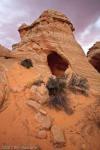
The cave
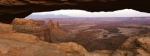
From inside the cave looking across to Mexico
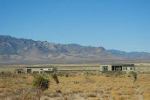
Pilar and Manny’s home
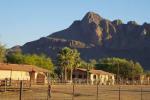
The Torres ranch at the base of the Peloncillo
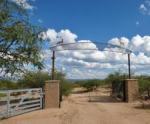
The ranch
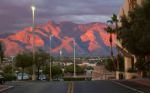
Saguaro Gulch—between San Carlos, Tucson and the Mexican border
For more information and behind-the-scenes photos of The Stronghold visit https://www.pinterest.com/lisacoxcarter/the-stronghold/.


March 2, 2016
Driving through an #Arizona #Sandstorm—1 minute #video
This is freaky and creepy. And whoever filmed this is insane. Watch for yourself.
You’ll have to read The Stronghold to find out what happens when Pilar and Alex are overtaken by a sandstorm on their quest to find a missing child.
For more information and behind-the-scenes photos of The Stronghold visit https://www.pinterest.com/lisacoxcarter/the-stronghold/.


March 1, 2016
Cover Reveal for The Stronghold
“I’ve added this book to my keeper shelf and you should too!” Lynette Eason, best-selling, award-winning suspense author.

Pre-sales available now. Official release date is March 15.
For more information and behind-the-scenes photos of The Stronghold visit https://www.pinterest.com/lisacoxcarter/the-stronghold/.


February 25, 2016
#Tribes of Arizona from #TheStronghold
Arizona is a state rich in the culture of a multitude of groups—Anglo, Latino and a large, diverse number of Native American tribes.
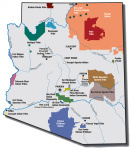
Most of the events of The Stronghold take place on the San Carlos Apache reservation and south to the Mexican border. But many of the tribes and other groups (Anglo & Latino, especially) are featured in the novel.
For more information and behind-the-scenes photos of The Stronghold visit https://www.pinterest.com/lisacoxcarter/the-stronghold/.


February 24, 2016
Real-Life Setting for #The Stronghold
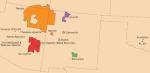
Apache reservations in AZ & NM
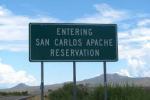
Apache people groups now live in Oklahoma, Texas, New Mexico and Arizona. The events of The Stronghold primarily take place in Arizona on the San Carlos reservation.
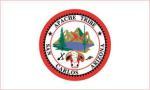
Not far from Phoenix and Tucson, the area is wonderfully scenic and a great way to gain a glimpse into the Apache culture.
For more information and behind-the-scenes photos of The Stronghold visit https://www.pinterest.com/lisacoxcarter/the-stronghold/.


October 1, 2015
Heroes on the Trail of Tears
The  Reverend Jesse Bushyhead (1804-1844) was a Cherokee religious and political leader. Although he opposed the policy of removal to the west, he accepted the inevitable and led a party of about 1,000 people on the Trail of Tears. The group led by Bushyhead followed the same northern route taken by the group led by Evan Jones. The route led them north through Tennessee and Kentucky to an Ohio River crossing at Golconda, Illinois, then west to cross the Mississippi River near Cape Girardeau, Missouri. After that, they turned southwest to Indian Territory. At the start of the trek, the group numbered 950 people. During the journey, the group experienced 38 deaths and 6 births, so that 898 arrived safely at their destination on February 23, 1838. On his arrival near present-day Westville, Oklahoma he established the Baptist Mission, which marked the end of the Cherokee Trail of Tears. He became chief justice of the Cherokee nation in 1840 and remained in that office until his death.
I love the inscription on his grave marker. Front side—“Well done, thou good and faithful servant; thou hast been faithful over a few things, I will make thee ruler over many things. Enter thou into the joy of thy Lord.'” An inscription in Cherokee is at the bottom.
And on the back—“Rev. Jesse Bushyhead was a man noble in person and noble in heart. His choice was to be a true and faithful minister of his Lord and Master rather than any high and wordly position. He loved his country and people, serving them from time to time in many important offices and missions. He united with the Baptist Church in his early manhood and died as he had lived, a devoted Christian.”
 Evan Jones (1788–1872) was born in Wales. He emigrated to the United States in 1821. Jones became a Baptist missionary and spent over fifty years as a missionary to the Cherokee people. The Baptist Foreign Mission Board initially sent him and his family to work among the Cherokees living in North Carolina, where he learned to speak and write in the Cherokee language, taught school at the Valley Town Baptist Mission, and became an itinerant preacher. Jones vehemently opposed the expulsion of the Cherokee from their ancestral lands. But Jones volunteered to lead one group of Cherokees to Indian Territory. His group consisted of 1, 033 people who left Valley Town on Febraury 2, 1838 just ahead of the group led by his close friend and ministerial colleague, Jesse Bushyhead. Jones’ group experienced 71 deaths and five births on the Trail. When they finally arrived, he reestablished the Baptist Mission and school and resumed his missionary activities. With the help of his son, John Buttrick Jones, he continued his work preaching, translating religious books, and serving as an advocate for the Cherokee. One author claims that Evan and his son “…converted more American Indians to Christianity than any other Protestant missionaries in America”.
 Junaluska, (Cherokee: Tsunu’lahun’ski) (c.1775 – October 20, 1868), was a leader of the Eastern Band of Cherokee in western North Carolina. He fought alongside Andrew Jackson and saved his life at the Battle of Horseshoe Bend, though later in life he regretted having done so. At the start of the infamous Trail of Tears in 1838, Junaluska and many other Cherokee people were incarcerated and held in nearby stockades. Fort Montgomery was located near present day Robbinsville, North Carolina. From this stockade, Junaluska was forced to march to Indian Territory in present day eastern Oklahoma. Junaluska was assigned to Jesse Bushyhead’s detachment. About seven weeks into the journey, Junaluska deserted and led approximately 50 other Cherokee in a bid for freedom. As noted in fictional Beyond the Cherokee Trail, he was captured and returned to Oklahoma but after several years Junaluska made the trip back to North Carolina on foot. In 1847, after a plea by Colonel William Thomas of the future Thomas’ Legion fame, the state legislature rewarded Junaluska for his service by making him a citizen and giving him land near Robbinsville. A museum and memorial stand in his honor at his gravesite.
For more information and behind-the-scenes photos of Beyond the Cherokee Trail, visit https://www.pinterest.com/lisacoxcarter/beyond-the-cherokee-trail/.


September 30, 2015
The Little Known Thomas Legion of the Civil War
Thomas’ Legion, also known as Thomas’ Legion of Cherokee Indians and Highlanders, Thomas’ Legion of Indians and Highlanders, and the 69th North Carolina Regiment, was a unit of the Confederate Army. Organized in 1862 by William Holland Thomas, the Legion fought in the last skirmish of the Civil War before surrendering on May 10, 1865 near Waynesville, North Carolina.
The formation of the regiment was unusual. Thomas, the only white chief of the Cherokee Indians, recruited Cherokees to fight on behalf of the Confederacy. It was a true legion, a combination of infantry, cavalry, and artillery.
 The unit was mainly assigned to defend the western North Carolina area. A portion of the Legion was ambushed at Baptist Gap. True life fact from Beyond the Cherokee Trail, when Cherokee Lieutenant Astooga Stoga was killed leading a counterattack, infuriated Indian soldiers scalped several dead or wounded Union soldiers. Colonel Thomas returned the scalps to the Union with apologies.
Another real life factoid—the last Union widow died in 2003. She was the widow of a soldier who had fought against Thomas’ Legion.

The actual 1901 reunion photo which inspired the last portion of Pierce’s story
For more behind-the-scenes photos of Beyond the Cherokee Trail, visit https://www.pinterest.com/lisacoxcarter/beyond-the-cherokee-trail/.


September 29, 2015
Sky Country Landscapes from Beyond the Cherokee Trail
Enjoy the  beauty of a Snowbird forest from the Land of the Sky People in western North Carolina.

The basswood tree—otherwise known as the linden tree

The flowering Carolina Silverbell

The tulip poplar

The native wild Cherokee Lily of such significance to Sarah Jane
For more behind-the-scenes photos of Beyond the Cherokee Trail, visit https://www.pinterest.com/lisacoxcarter/beyond-the-cherokee-trail/.


September 25, 2015
Southern Buttermilk Biscuit #recipe

Ingredients:
• 2 cups all-purpose flour—great Southern biscuits start with White Lily flour
• 1/4 teaspoon baking soda
• 1 tablespoon baking powder without aluminum
• 1 teaspoon salt
• 6 Tbsp unsalted butter, cold
• 1 cup buttermilk
Directions:
Preheat oven to 450°F.
Combine the dry ingredients in a bowl.
Cut the butter into chunks and cut into the flour with a pastry blender until it resembles coarse meal.
Add the buttermilk and mix until combined. Don’t overmix.
If mixture is dry, add a tad more buttermilk. It should be very wet.
Turn the dough out onto a floured board.
Don’t roll the dough, but pat out until it’s about 1/2″ thick. Fold the dough about 5 times. Press the dough down to a 1 inch thickness. Rolling pins will produce tougher biscuits.
Use a round cutter to cut into rounds. Handle the dough as little as possible to avoid tough biscuits.
Place the biscuits on a greased cookie sheet- position biscuits touching if you like softer biscuits. These biscuits will also rise higher than biscuits separated from each other.
Bake 10-12 minutes or until the biscuits are a light golden brown on top and bottom.
Do not overbake.
These biscuits can be frozen for up to a month. Then simply place them frozen on the cookie sheet and bake at 450°F for about 20 minutes.
Enjoy.
For more recipes and behind-the-scenes photos of Beyond the Cherokee Trail, visit https://www.pinterest.com/lisacoxcarter/beyond-the-cherokee-trail/.