Rain Trueax's Blog, page 25
May 9, 2014






May 8, 2014
something personal

The other morning I woke up thinking about the experiences in my lifetime. I've had a lot of them, some unique and some pretty common to many women's experiences. I have said often that I use things from life in my stories-- except I don't think I have specifically related any of my exact experiences in my 15 published and 5 unpublished (as yet) books. Some have been powerful moments, but I never used them as they were. Nor have any of my actual experiences with friends or family found their way into a story. I don't base characters on specific people I have met.
So I asked myself why not? I don't have a specific answer to that either. Except some of the most painful moments simply aren't ones I want to relive through my characters. The joyous ones seem too private.
Yes, some authors totally rely on retelling through characters what they have done or tried to do. Ernest Hemingway is one example. He lived it; and when he quit living it, some say he lost interest in writing and life itself. (Of course, it might just be that hereditary depression was more a factor for him than writing-- or not).
What I realized I do use in books are the emotions that were connected to those moments. An example is something that happened well over thirty years ago when in the middle of the night I had gone to the kitchen for a drink of water, seen a glow, and realized our sheep barn was on fire.
You never ever forget a moment like that as you know there are animals in that barn. Some penned and some free but a barn on fire is a tragic event. I have never used that story in any book. What I have used is the emotion I felt in that moment. I have used it when writing a certain kind of dramatic scene for a character seeing something happen that they want to deny is real even while they can see it is. I can get inside their head because of what I went through that night. I can use the emotion from the event even though I have never and never will use the event itself.
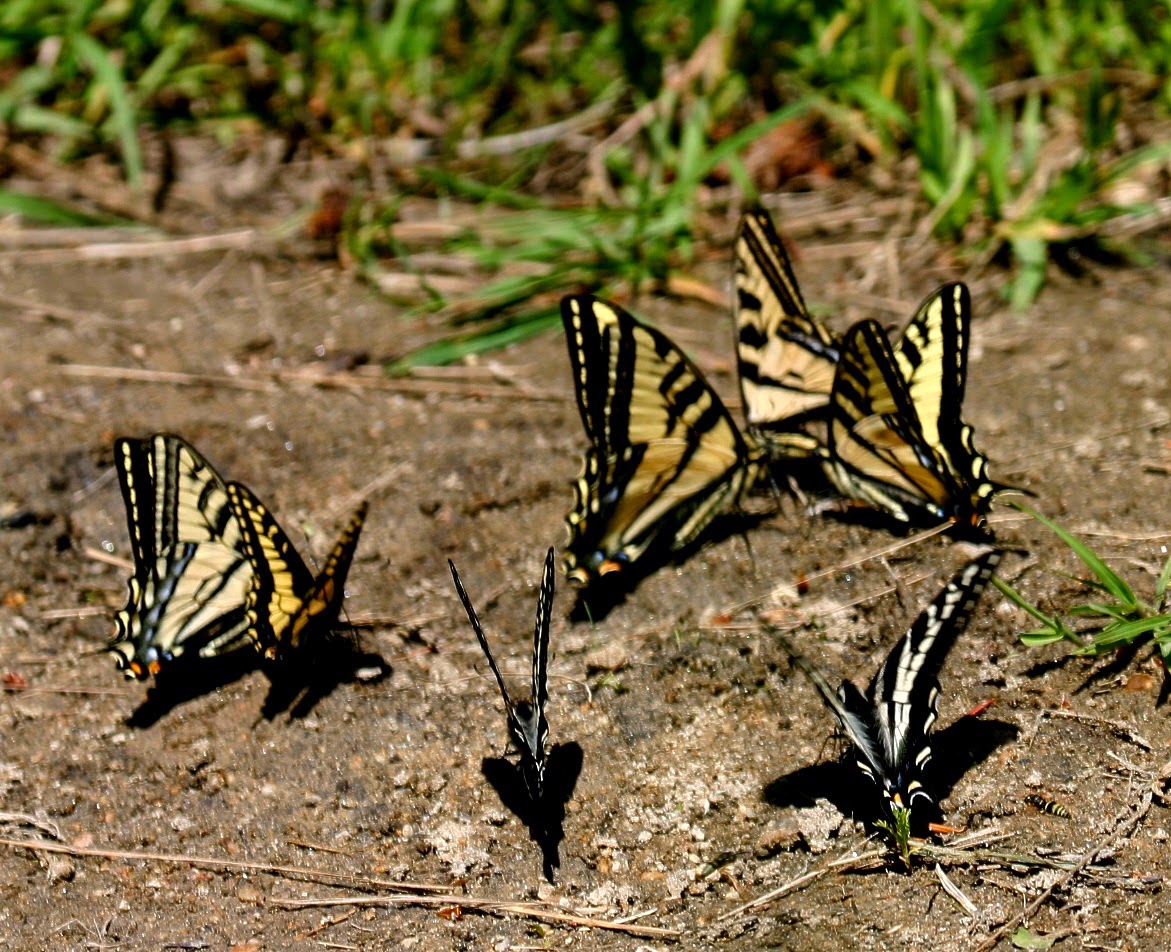
Probably it's what all writers do to bring life to their characters-- at least those who don't document their own lives. They remember how it felt the day they lost a loved one because of being rejected. They remember the moment they learned someone they loved loved them back. They remember their child being born-- then growing up and leaving home. They remember loving and then losing a parent. They remember walking in a meadow of wildflowers, filled with butterflies (well actually I have used that one)
Writers use all they have lived, but it doesn't mean they have to use real people or events. They do have to use real emotions (at least if they write romances) that they have experienced, which fit a particular scene. The exact event does not have to ever be used to find it stimulated the imagination and brought forth the right words for what is happening in the book.
Using real emotions is how a writer makes the fictional moment feel real. It is real because the writer is pulling up their own to get across what is happening inside the character. Maybe there are writers who don't do that. It could come down to a debate regarding how to write rather like the debate between method actors and those who say their lines without personalizing them.
May 6, 2014
in writing a paranormal

Basically when a book is labeled paranormal, it can go almost anywhere from what might be possible to total fantasy (we think) like werewolves, vampires, and zombies. I think the only real rule is it has to stay consistent within its own story. You cannot forget the basics of its world although you can have it grow in understanding.

Before I wrote the first paranormal in my trilogy, Diablo Canyon, I had never figured to write anything like it-- well, I had earlier done one involving witchcraft, misuse of spiritual power where it did have a spirit monster. That was 2002; so it's obviously not a genre of romance I either read or write often.
When I had the dream in November 2013, involving spirit guides, purpose to life, fairness, and reincarnation, I woke up that morning knowing it would make a story I should write. It had more importance in my mind because I had been asking questions--the tell-me-what-is-true kind of questions. Did my muse give me the dream as an answer? Well that all depends on what the muse is.
Anyway it wasn't long after writing it that I began to think there was another story to be told. In fact, there were two more because what I really had was a trilogy. The second was written in February from the 19th to the 25th and I called it The Dark of the Moon.
Because I don't write something and immediately release it, it only came out May 1. I really like at least a month before the first edit (while i am writing other things) and then maybe three edits before a book is actually released. It's just so easy to have glitches in logic and consistencies-- even in a story written that fast-- sadly I sometimes find them later even after that much editing. I began the third on April 6th and finished its rough draft April 12th. It will be out the middle of June.
In writing these fantasy/paranormal books, I stayed with what I believe is actually possible. Of course, it can be asked-- possible, but is it true? That can be debated, but there is nothing in any of the three books that I have not heard someone tell me they experienced or that I hadn't read through books or articles.
To write any paranormal, I had a choice for the approach I would take. I didn't choose to go way out there-- even though some would say shape shifting is way out there. It's not an uncommon thing for some to say they can do. Likewise nor is seeing the 'other' side and being able to converse with it.
The things that people have told me they saw, I cannot prove. I remember one story, from a very sober and responsible friend, who had been to a local meeting of Buddhists or those interested in being Buddhists. He said he saw sitting on the back of one of the chairs a troll like being which he considered a demon. Did he see what he said? He was no liar, and I never knew him to be delusional.

What I liked about writing a story that I really thought could be possible, was the way it challenges us to think about what we see. In the third book there will be monsters from Native American religions using the names and personalities as the myths describe. You think they never existed, don't you? But many of you believe in your own mythologies regarding the God of the Torah and Old Testament--
May 4, 2014
video discussing The Dark of the Moon
The Dark of the Moon
began in my mind some time back. I work through a lot of any story before I ever sit down at the keyboard. Since it followed When Fates Conspire, there were certain aspects already decided. There were other facets that I wanted to see. I needed a great heroine and hero and from then on, the story took off.
Below is a discussion of some of how I see this book, what I hoped for in writing it. I kind of like making these. It takes doing it a time or two as I begin to see what is needed to get across my view. Talking about a book helps remind me of some of my own thinking. I enjoy seeing videos of other artists and writers as they discuss their work and the philosophy underlying it. It is one more way to communicate.
Below is a discussion of some of how I see this book, what I hoped for in writing it. I kind of like making these. It takes doing it a time or two as I begin to see what is needed to get across my view. Talking about a book helps remind me of some of my own thinking. I enjoy seeing videos of other artists and writers as they discuss their work and the philosophy underlying it. It is one more way to communicate.
May 3, 2014
Rawhide 'n Roses-- a western romance anthology
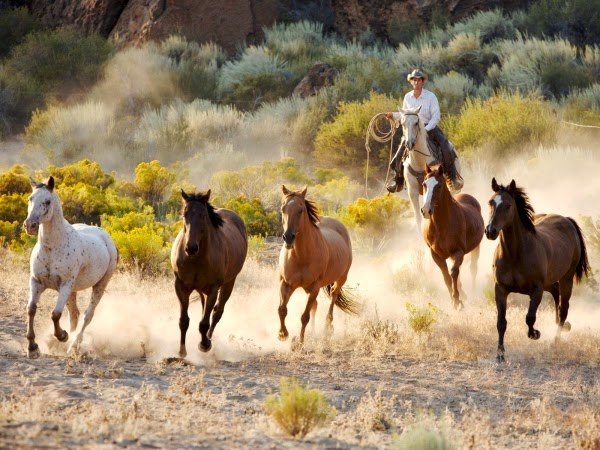
Short stories are a bit of an art form all on their own. It is telling a story without all the frills found in longer books. It's a challenge to create a story without so many words and yet have it be complete.
With fifteen authors, each putting forth a story that they found interesting, the anthology

Rawhide 'n Roses
has action, humor, danger, and, of course, romance. The stories are set in both the old and modern West with heroines as strong and gutsy as their heroes.

The rules for a western are, I think, flexible. Sometimes they feature cowboys but it's as often to be a sheriff or horse trainer. To me, westerns are stories that carry forth the ethos of the Western philosophy which is most often the fight of good against evil. They usually are set west of the Mississippi, but I personally don't consider that a requirement. The more important thing is that they are stories of action, of a problem that must be resolved. If it's a romance, it will have a hero and heroine with a happily ever after.
Check out Rawhide 'n Roses -- and consider putting this romantic western anthology on your eReader for the times you find your hours for reading are not long enough, but you want to escape into an imaginary world for half an hour or so.

From Connie's Gift set in the mining camps of the California Sierras:
Two hours later Sabine scurried to hide under the bed at the booted step on the porch. Connie felt no fear. She knew who it was and didn’t need psychic powers for that.
“Why you sitting in the dark?” Del threw his jacket over the hook by the door unfastening his string tie, and opened the top buttons on his shirt.She gestured toward the window and heard him sigh. “Sorry, baby.”
He found one of her quilts and secured it over the opening before lighting the kerosene lamp. Kneeling in front of her, he put his hands on her knees.
They had been married twenty-five years. She found it hard to believe it could have been so long. In all that time, she never tired of looking at his face, the proud cheekbones, the firm lips that were now set hard, sadness in his dark eyes. He worried about her. She understood. She worried about him too.
All they had was each other. Maybe their lack of children had been for the best. They had moved on so many times. Sometimes it was to find better places for Del to deal faro. Sometimes a town had enough of a gambler who won too often. Others it had been when someone heard of her gift; of course, they didn’t regard it as a gift but rather a curse.
~~~~~~~ If you aren't quite sure what a western is, check out this trailer: .
May 1, 2014
The Dark of the Moon
 The Dark of the Moon
is a story of the unseen side of life. The dark of the moon could represent an eclipse when the moon turns blood red. It could represent the dangerous or sorrowful side of life. For every joy and wondrous event, somewhere there are other events that force often a total reevaluation of what life is about.
It is a fantasy-- or is it-- which follows When Fates Conspire and picks up characters from that story in a new romance-- this one of an older couple (late 40s and early 50s). This is book two in the trilogy-- Diablo Canyon. In late June, I will offer all three in a paperback but in eBook format, they will remain three novellas.
A trilogy means the story has aspects that are not totally resolved until the third. They are linked together by characters and a common problem but each stands alone with a conclusion that does not leave a cliff hanger. There is a happily ever after but the why of what is going on-- that doesn't get resolved until the third comes out in mid June-- Storm in the Canyon.
Myra, who owns the Box Z ranch, lost her son Clayton in the first book. She has known a lot of loss and now faces someone trying to pressure her to sell her beloved ranch.
A stranger shows up, Pace Emerson. He offers to work for her but what are his motivations? Myra is a woman who has loved and lost. Pace has never loved because he has a secret that makes him different than others. He has become a warrior for light.
Cole and Jessica, from book one, are also in this one. Cole is disturbed by memories that he cannot explain. He let his step brothers get away with nearly murdering him and his now wife, Jessica. He recognizes that was a mistake. With Jessica soon to have their baby, Cole needs resolution and hires an agency to find out what his brothers are up to. It will eventually bring Cole and Jessica to the Box Z.
A mystery, a love story, questions of what can we really know about the other side, and the ranch land south of Billings, Montana are at the heart of this paranormal romance.
Snippet:
“Once we take care of whatever is going after your stock, you won’t need me.” He threw her saddle over the fence beside his.“I started a slow cooker this morning.” She ignored what he had said. “Chili. Come on up in a bit. I am planning to make biscuits to go along with it.”“No rocky mountain oysters?” he teased as he gestured toward the bucket of scraped off testicles.“You two can have them if you are so inclined,” she said wrinkling her nose. “I would appreciate you cook them downwind from me.”He grinned. “I had another idea for them actually.”“What?”“Bait.”She stiffened. “You don’t mean the predator.”“I can’t start on it right away; so I’ll put these in the barn refrigerator with the antibiotics. Tomorrow, I need to go into Billings. When I get back, I’ll set them out and then get myself to where I can get a shot at whatever comes. You can’t let whatever is out there continue killing your stock.”“Maybe it does it at night.”“Might be. I plan to be out there until I get it.”“Maybe it left. There were no fresh carcasses in the north sections.”“It’s too easy pickings here. It will be back. I sense it. I will head up to that canyon you mentioned. It might be hiding in there.” It was the most likely possibility.She grabbed his arm. “I don’t want you going in the canyon.”“Myra, if I can lure it out, I will; but it has to be dealt with. It might show up here someday.”“I’m afraid. I forbid you to go there. This is my ranch. I give the orders in case you forgot.”He smiled at the fervor in her voice. “Boss lady, you can tell me what to do in a lot of places.” His voice had softened. “A few of them I might really like, but that’s not one.”“I’ll fire you first.” He saw then the fear in her eyes.He stepped back, leaning his elbow now on the corral. “You want to tell me about it?”“Take a shower and come up to the house with Toby in half an hour,” she said. “I’ll tell you after dinner.” She ran toward the house leaving him pondering what she’d just said. He glanced up at the barn roof at her red-haired spirit guide who was still watching him with clear distrust. He saw no other beings around. “Well, Racine, go with her,” he hissed as he headed for the bunkhouse and the shower to get some hot water before Toby used it all up.
April 30, 2014
the new West has some of the old West in it
To end with with April and be ready to talk about the new novella, I am combining my last two stories as they really are together. One is a novel and the other a novella that is supposed to be two years later. Since the novel had no epilogue, you might consider the novella that for readers who want to know what happened to these characters.
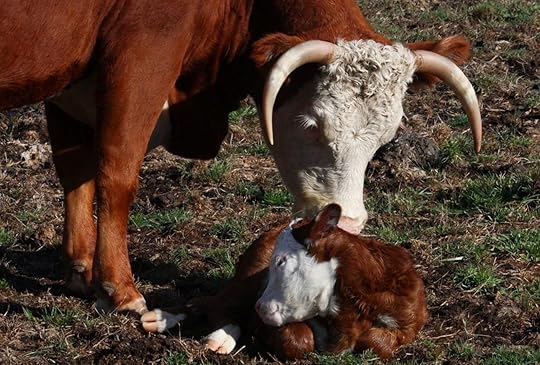
From Here to There was an opportunity for me to explore what being 'western' means today. I liked the idea of writing a story about ranch living and set it in a state where I don't live but have often visited and love-- Montana.
The ranch world has a lot of hard work attached, but there is joy and satisfaction in finishing jobs where you can see real results. This book got into some of that along with the mythologies that are so much a part of the western ethos-- how much is real? Do western mythologies interfere with a realistic view of life? Some would say they do. I think they do not unless people don't really understand what the West was like.
To add to the reasons for this book was to start a story when the heroine has gotten married but realized at the wedding it was a mistake. The man she married wasn't a cowboy. That meant he wasn't strong, right? What did she know about what love should be or for that matter what made someone a cowboy?
In this book, I explored two marriages, journal writing, and finding our own purpose in life. It looked at what our expectations are and how we sometimes miss out on the real deal if we aren't paying attention to what is in front of us.
I also created to have a few secondary characters, rich in the western character as I know it to be, where a lot of readers thought they were the best part of the book. I took this ranch two years into the future and wrote the novella, A Montana Christmas which was a chance to explore what important rituals can mean to a family-- ranch style.Oh and just might do a second full length novel where I give one or more of these characters their own love story. It's certainly in my mind for something down the road as a continuation of From Here to There.
Snippet of From Here to There:

From Here to There was an opportunity for me to explore what being 'western' means today. I liked the idea of writing a story about ranch living and set it in a state where I don't live but have often visited and love-- Montana.
The ranch world has a lot of hard work attached, but there is joy and satisfaction in finishing jobs where you can see real results. This book got into some of that along with the mythologies that are so much a part of the western ethos-- how much is real? Do western mythologies interfere with a realistic view of life? Some would say they do. I think they do not unless people don't really understand what the West was like.
To add to the reasons for this book was to start a story when the heroine has gotten married but realized at the wedding it was a mistake. The man she married wasn't a cowboy. That meant he wasn't strong, right? What did she know about what love should be or for that matter what made someone a cowboy?
In this book, I explored two marriages, journal writing, and finding our own purpose in life. It looked at what our expectations are and how we sometimes miss out on the real deal if we aren't paying attention to what is in front of us.
I also created to have a few secondary characters, rich in the western character as I know it to be, where a lot of readers thought they were the best part of the book. I took this ranch two years into the future and wrote the novella, A Montana Christmas which was a chance to explore what important rituals can mean to a family-- ranch style.Oh and just might do a second full length novel where I give one or more of these characters their own love story. It's certainly in my mind for something down the road as a continuation of From Here to There.
Snippet of From Here to There:
Outside, as he looked at the truck more carefully, he saw that there was a missing door on the passenger side. Maybe this truck wasn’t more likely to keep going than the even older one down by the barn. He wondered how far the near antique was capable of being driven before it became a permanent part of some junk pile, and if he was driving it when that happened, would he get the blame?
Curly climbed out the cab. "Everything you need's in back." He pointed to a reel of barbed wire, clips, tools, and metal posts. From his back pocket, Curly extracted a pair of cutting pliers. "You ever do fence afore?" he asked as he put them with the other tools. "No, but how much can there be to it?" Phillip asked yawning and reaching for his cigarettes. "Not a whole hell of a lot," Curly said with another sly grin. "You ever use a posthole driver?" The answer was obvious, but Phillip shook his head anyway as he lit the cigarette. Curly showed him roughly how the piece of modified pipe worked, then added, "Just make sure you tighten 'er up afore you call 'er done. Leave that wire loose, and you might as well of saved yourself the trouble of driving up there." He pointed to an odd metal tool in the bed of the truck. "Ever use one of those?" "No." Curly snickered. "Bout what I figured. You're a dude, ain't you." It was not a question but a statement. "What gave me away?" Phillip asked sarcastically. "Heck, if you ain't a dude, you oughta to sue your face for damages and get a verdict," Curly cracked, chuckling and slapping his bony knee. "Very good," Phillip retorted dryly. "You think that one up all by yourself?" Curly snorted. "Wished I had." "So, if you didn't, where's your source of great Western lore? Maybe I can get in on some of these one-liners." Or at least look up their meanings. "Tell you the truth, I changed a word or two, made it fit better, but I got most of it from one of the greatest Western writers ever was." "Louis L'Amour?" Phillip guessed, naming the only Western author whose name he knew. "No, dangnabit. Ain't him. He was an upstart, come along later. Not that he weren't a great writer, but I'm talking about William MacLeod Raine." "Never heard of him." Curly's mouth dropped. "Never heard of him! Dangnabit, that ain't possible." Phillip only smiled. Curly shook his head with disgust. "I got near every book he wrote. He was a ranger hisself. Wrote about the Old West just about the time it was all ending, but that man... he knew his people, knew the men, the country. Maybe he did kind of sissify up the gushy parts, so's to appeal to the ladies, but he wrote dang good stories." Phillip snorted. Another unrealistic Westerner, dreaming of a past that was dead and gone--and a good thing too. He smoked a moment. "Isn't there anybody out here who doesn't either listen to country-western music or read Western fairy tales?" "Wal, I don't know why there'd be. Them books was writ about country like this, about men coming in and fighting the Injuns, building ranches, drivin' off rustlers." He shook his head, a look of regret in his eyes. "Ain't never going to see the likes of them days again." Rather than to say it was a good thing, that the pioneer West had offered a lot of hardships as well as adventurous times, Phillip said, "You know the pulp writers didn't always portray the west the way it really was. A lot of it was made up for Easterners." Curly sneered. "If even half of it was so, it'd be enough to make a man wish he'd been there. Man could make his fortune in those days." He looked slyly at Phillip. "Shoot men who got uppity with him." "Or end up on boot hill himself," Phillip said under his breath. "What'd you say?" "Not much." He smiled. A wisely unspoken question was how cowboys got any work done if they were constantly reading stories of the old West. Instead he commented, "I wonder if the Indians around here like those Western books so much as you cowboys." "I've seen plenty of them reading 'em. Like take old John Eagle. He can answer most any question about anything Zane Grey ever wrote. He knows all the books, the characters. You ask it and he's got the answer practically afore you got the question out of your mouth." "Why?" Phillip's question didn't pertain so much to why the man might read Zane Grey, whoever he was, but more as to why he'd take the time to learn so much about it. Curly shook his head. "I'll tell you this. Men were men in those days." "What are they today?" Phillip asked with a humorless grin. This was one question to which he already knew Curly's answer. "Soft. Don't know how to hammer in a nail straight, ain't never broke a horse, can't work more'n an hour without getting blisters on their soft hands." He sneered derogatorily toward Phillip's own long fingered hands. "I'll tell you this. My pap, he could've still worked rings around any young whippersnapper twenty or thirty years old." He looked derogatorily up at Phillip as he added, "Even when he was seventy." "Interesting. How'd he ever get work done, if he was always talking about the West?" Phillip asked sardonically. Curly glared at him. "You makin' fun of me?" he snapped. Phillip shook his head. "No, just if I'm going to get done before dark, you better tell me about this fencing business." He wasn't interested in trying to change Curly's low opinion of him--which was fortunate because he doubted it would be possible anyway. Curly gave him a quick demonstration on fastening up wire, then was off to his own chores, whistling Home on the Range. Already happy, Phillip thought wryly, at the thought of the botched job he expected from the fence repair. Probably already had the jokes thought up.
April 29, 2014
a cowboy for a boyfriend-- or not?
Luck of the Draw is a story about the rodeo world that began so long ago I barely know why I wrote it. The first version was written when I was not much older than the twenty-one year old heroine.
When I began bringing out the stories, which I'd written through the years, it was the only one that never made it onto a computer. It was in a box shoved under my bed. Unsure what I'd do with it, I pulled it out and scanned the pages.
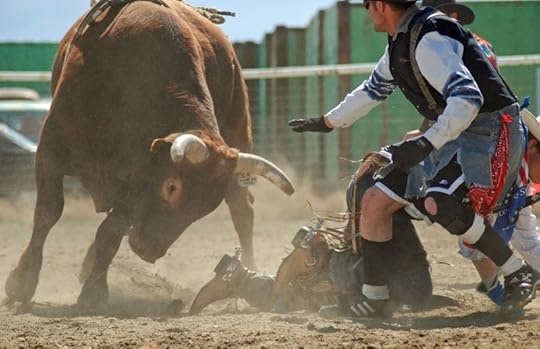
I am a much better writer today than when I originally wrote it, but the bones of the plot seemed solid. It was set during the Pendleton Roundup in 1974. Some of the books I wrote way back, I opted to bring up to date.
I considered doing that but frankly I'd have had to totally research it again for how much rodeo changed in those forty years. I realized something more important. This is a coming of age story about two people, a nation and the rodeo world. It needed to stay 1974.
This was a time of change in our nation. The Vietnam War was winding down with Americans asking themselves what that had been about. So I brought the war into it along with a time of transition for rodeo. It was when the first athletic cowboys were coming into the rodeo world that had been kind of wild and woolly. They brought in a new ethos of training and not living only for the moment. This story gave me a chance to show both sides of that.
Also my heroine had less going on in her life in the rough draft in that box. She needed to be looking for a purpose too. The hero and heroine could show two different ways of approaching life problems which made for an interesting rewrite. I like when philosophy can be in a story but subtly, of course, not like a lecture.
Snippet from Luck of the Draw:
When I began bringing out the stories, which I'd written through the years, it was the only one that never made it onto a computer. It was in a box shoved under my bed. Unsure what I'd do with it, I pulled it out and scanned the pages.

I am a much better writer today than when I originally wrote it, but the bones of the plot seemed solid. It was set during the Pendleton Roundup in 1974. Some of the books I wrote way back, I opted to bring up to date.
I considered doing that but frankly I'd have had to totally research it again for how much rodeo changed in those forty years. I realized something more important. This is a coming of age story about two people, a nation and the rodeo world. It needed to stay 1974.
This was a time of change in our nation. The Vietnam War was winding down with Americans asking themselves what that had been about. So I brought the war into it along with a time of transition for rodeo. It was when the first athletic cowboys were coming into the rodeo world that had been kind of wild and woolly. They brought in a new ethos of training and not living only for the moment. This story gave me a chance to show both sides of that.
Also my heroine had less going on in her life in the rough draft in that box. She needed to be looking for a purpose too. The hero and heroine could show two different ways of approaching life problems which made for an interesting rewrite. I like when philosophy can be in a story but subtly, of course, not like a lecture.
Snippet from Luck of the Draw:
After a breakfast she barely remembered tasting, Sara went out to her studio, determined to paint and not let upset over how it had ended with Billy ruin her day. She had arranged to have the day off from her father and was keeping that even though she would not be going to the rodeo. Definitely not. With so few customers he didn’t need her help and said he might even close early himself. She would make the most of her day with oils. She had done a few sketches which might work into something.
Mumbling to herself about irritating cowboys, she put a canvas on the easel, chose a few colors to start and began working with the brush but with no plan for her subject. Usually she had an idea or even a firm sketch but this was freewheeling with colors.
“How are you, honey?” her mother asked, knocking on the open doorjamb.
“Good.” She hoped she wasn’t letting her irritation at Billy show up in her tone of voice.
“May I come in?”“Of course. I’m always happy when you come out here.” She put down her brush and turned to face her mother. This would be a good time to discuss something important.“I wondered how last night had gone. You didn’t seem to want to talk after you got home. Was something wrong?”“No problem. I was just tired, but I did have something I wanted to tell you.”“About that young man?”“No, about me. I need to move out.”Her mother moved to a chair and sat down, her expression looking concerned. “I thought you were happy living with us, the studio, all of it. You can save your salary this way for the future. I...” Obviously this wasn’t what her mother wanted to hear. “Have we done something?”“It’s not about you. It’s about me. I need to get out of the nest, get a little apartment.”“Not to live with him, I hope?”“Mother! I barely know him. No, this isn’t about him. It’s about me.”“I don’t understand.”“Are you familiar with the writer Henry Miller?”“This seems a bit of a distraction; but yes, he’s the one who wrote Tropic of something or other, that obscene book.”“Well he wrote other things. A few years ago I wrote down something of his but didn’t quite understand it. Last night I went digging to find it. I brought it out with me to tape to my easel. She handed it to her mother, who read it aloud.“The aim of life is to live, and to live means to be aware, joyously, drunkenly, serenely, divinely aware.” She stared at the paper a moment. “I don’t get it. Drunkenly? What does that mean? This is kind of a lot all at once, dear. You want more freedom, is that it? You can have that here.”“Mom, I didn’t get it either about that part and I don’t think it means you have to be drunk but just live without the fear of doing the wrong thing and then not living at all.”“And that requires moving out?”“I think it does. It’s time for me to be building my own life, be responsible for myself. It’s not just about freedom as such. It’s about the next step in life. Fledglings have to leave the nest, you know.” Her mother sighed. “Perhaps you can think about it?”“I have thought about it.”“For a long time?”“Not so long but from the time I did, I knew it was what I had to do.”“Was this his idea?”“This isn’t about him.”“Oh well, if it’s what you must, we will, of course, support you in any decision you make.” She sighed and looked at her wristwatch. “I wish I had more time to talk about this, but I promised to meet some friends for lunch—on the other side of town to avoid the noise of the rodeo and all. Want to join us?”Her mother was a practical minded woman, and Sara appreciated that more than ever right now. It would be okay with her and her parents and maybe better once she was out than it had been. “I appreciate the offer but need to work on this painting.”Her mother looked around the studio but didn’t say anything about the canvases against the walls. Sara had never asked her what she thought of her work because she had been afraid what she’d hear. Her mother helped other artists get started but hadn’t seemed to have much interest in Sara’s work.Finally she could stand it no longer. “See anything you like?” she asked.Her mother turned to look at Sara. “What do you mean?”“Do you like any of the paintings? Any at all?”“Well they’re fine, dear.” Her tone said she was not taking a risk to go further in her analysis.“I won’t get angry. Just what do you think? Am I really a bad painter, Mom, or is it you just don’t want me to be one?”Her mother started for the door. “I am sorry I don’t have time for this conversation now. We can discuss it tonight.”“I might be out tonight. Don’t worry if it’s late.” She didn’t know why she said that. She was not going to the rodeo. She would not see him. Except…“You have a date with him?” The emphasis on him said it all.“Nothing definite, but I do have other friends in town, you know. Just don’t wait up if I am out when you come home. I am twenty-one. I will use good judgment regarding what I do.”Her mother sucked in a breath and left without answering. This was pretty typical for how their conversations had always gone. No direct confrontations. Well that was good as far as Sara was concerned for now. She finally saw at least one direction for herself, and so long as her parents didn’t try to block her, she could handle not having their approval right now. She felt she would get it eventually if she proved she was right.She set about getting the colors she wanted. She would paint and that was what she knew. The rest, well that was the iffy part. She’d start looking for a small studio apartment as soon as the rodeo was over. She would not go to the rodeo. She would stay away from Billy Stempleton. She was totally certain about the last. If she saw him again, he’d change her life, upset her shaky handle on her plans. She didn’t want that… or did she?
April 28, 2014
coming home to the unexpected
 Sky Daughter, until recently, was my only paranormal. I debated as I began writing it whether I would make it paranormal. I had a choice. Everything that happened could be imaginary. But I opted to make it real. That is always a tough call for me as to write about the supernatural world is-- how do I make this feel like it could happen?
 I thought about how it'd be for a woman to return to a mountain home where her grandfather lived and she had no idea all that her family was about. I opted to have a Jewish hero, which doesn't appear to be usual in romances but it fit this particular story as the man was branded by his heritage but something else, something going on in the Idaho mountain community. These two need to find out before they both end up dead.
Celtic holidays, the supernatural, misuse of spirituality, and wicca are part of the story. Of course, there is a love story set in a mountain area that was fun to describe. There is even a second romance of a little older sort.
Snippet from Sky Daughter:
In the kitchen, Maggie picked up the flats of plants she had grown from seed. The first little plants had gone outside too soon and had their leaves blackened by a late frost, but she could protect these no longer. Most likely the deer would eat them before they got settled in, but she would give them a chance, a moment in the sun.
Planting was part of the heritage of her grandmother. The urge to continue the cycle of growth, of planting and sowing ran through her veins. After so much loss, so many aborted opportunities and lives, she had a need to see life reach fruition. Working in the sun-warmed soil, Maggie put everything from her mind except weeding around the lavender plants, loosening the soil by the rosemary. She hummed as she worked, then came words about planting and releasing to grow. As quickly as the words came, they were gone. She sighed. The song would’ve never satisfied her managers anyway. She dug a hole for one of the marigolds, threw in a bit of fertilizer and then tamped the soil back around the tender plant. Planting meant a belief in the future, a desire for improving the present, and a reaching back to the past. It encompassed all of life to sow it with the hope of someday reaping. She sat in the garden when she had finished, feeling the warmth of the sun on her skin, the coolness of the soil beneath her knees. Why were tears running down her cheeks? Maggie girl. The words seemed almost real. She closed her eyes as she again heard her grandmother’s voice, could almost smell the blend of soap and the fragrance of herbs that was so much a part of every memory she had about her. She could feel the touch of that precious hand on her shoulder, soothing and giving her subtle energy. God, she missed that woman. She remembered her grandmother’s tall form as she would walk across the mountain, calling to Maggie and taking her with her into the woods, teaching her about the woods plants, which ones healed, which ones could be used for a fever, which ones poisoned. When had she forgotten the names, forgotten those words? She had been taught so much and it seemed it was all gone. She remembered one of the many conversations.
‘Dream, Sky Daughter, dream of the future and of all that will be.’ ‘Grandma, I don’t remember my dreams.’ ‘You must try harder. Dreams are the spirits speaking to you. They are your power.’ ‘Mama says they’re not.’ ‘Your mama had to follow her path and you must follow yours. They are not the same.’ ‘How do you know?’ ‘I know and you will too when the time comes.’ ‘How?’ Her grandmother just smiled. ‘You will.’ ‘You could tell me now.’ ‘No one should tell another their path, Sky Daughter, but someday you will know yours.’
Maggie felt tears running down her cheeks and wiped the back of her hands across her eyes, to brush them away. “I miss you so. I thought you’d be here to teach me, to always tell me. Why did you have to go?” A hummingbird buzzed her, warning her off from the area, letting her know she was intruding on protected ground. Somewhere nearby was its nest. It was operating by instinct as she had found herself doing with Reuben. She looked toward the forest. She tried to force a change in reality, to go back in time, to see those, who had gone, come walking toward her. They would be laughing and talking about how much fun they would have had on a picnic at the falls. Her childish voice would be raised in excitement as it had been in those days of feeling so protected and loved. She waited, but all she could hear was the sound of a raven calling from higher up the mountain, the angry scream of a hawk, and the soothing tweets of smaller birds in nearby bushes. Never again would her loved ones be with her, and she had to face that reality. The air seemed to grow cold around her, a wind picked up and she felt as though someone or something was watching her. She looked around but saw nothing. She shuddered. There was no reason to be afraid. She had never been afraid up here, but she felt a need to get back to the cabin.
April 27, 2014
book begins from a dream

Her Dark Angel is one of my rare books, and there have only been a couple, that began from one of my dreams. The dream was the kind I call movie dreams. I don't feel I am in them but watch them unfold. Even though I have a recent one also that became a novella, most of my movie dreams don't end up books. Even when the images and elements are strong, usually they don't seem like my kind of book.
To take a movie dream and make it into a book requires taking one key scene and using it as a keystone. I had that with Her Dark Angel. A young man was in an office with other people. Clearly violence was about to unfold. The young man threw himself in front of another to save his life and was shot. When I woke up, I liked what that young man looked like and decided he would make a good hero.
Sometimes a book begins from a plot element. Sometimes it comes from a key character and Dillon Delaney was for me a character that deserved a story. His name wasn't in the dream but that name perfectly fit the guy who was. Dill is a tough guy who has earned his own way through the kind of life that would have had many giving up. He has the kind of nobility that doesn't seek others to praise him. He does what is right best he knows it and suffers inside for the way life has often betrayed him.
He needed a heroine. I realized I not only had her as a secondary character in an earlier book, but it gave me more of what might have gotten Dill into the situation he found himself when Her Dark Angel opens.
The plot does deal with some difficult subjects including suicidal thoughts. It has an underlying theme from Beauty and the Beast as Dill has been living the life of a beast while the heroine is definitely the beauty.
The story begins in Reno, goes to Portland, then back to Reno and Tahoe before concluding in Portland. Some of the characters from Hidden Pearl are secondary in this one.
Snippet from Her Dark Angel:
Dill strode into his hot and stuffy apartment ready to kick the cat or anything else that got in his way. Fortunately for McGee, she was nowhere to be seen, not that the pampered alley cat would've tolerated mistreatment if she had been. The quality of food Dill bought for her would have proven, as much as the regular visits to the vet, that she led a good life, which as a gray-striped alley cat, she had no reason to expect, but that she had taken to with great gusto.Writers always like their characters or at least I do mine. I am not about to spend a month or more writing a story about people I dislike or don't respect, but Dill is one of my favorites.
Lighting a cigarette, Dill stood in the darkness staring out his kitchen window at Reno's night life. His apartment wasn't quiet, but it was cheap and convenient to everything-- if everything meant gambling and entertainment. McGee, evidently having decided he was home and alone, came out from wherever she'd hidden and rubbed around his legs. He reached down and absentmindedly petted her as he thought about the evening at Johnny's-- more accurately about Johnny's beautiful niece. He'd heard Johnny brag about his niece, of course. Heard the praise for her niceness, her mothering, thensadness of the tragic death of her husband, but he'd never dreamt Katherine Brown would also be beautiful. Black hair, flashing dark eyes and porcelain skin. Her features were evenly spaced, perfectly placed and gave her an ethereal, almost a madonna kind of look that a man rarely saw in a woman but that always stopped him his tracks. Beautiful wasn’t a big enough word for what he’d seen in Katy Brown’s face. There was an underlying fire, an intelligence, a caring that left Dill wanting. It didn't do much good to want, not for a woman like Katy Brown. Money, class, education. You name it, she had it, and he didn't. He opened the window and stepped out onto the fire escape, McGee happily followed sniffing the night air. He wondered if she sometimes wished for her freedom or did she appreciate the security she now had? It didn't matter because if he let her go, he'd never see her again. Life was that way. Dragging smoke deep in his lungs, he exhaled, his thoughts dark as he considered the dangerous situation he was in, a situation made worse now by Katy Brown's sudden appearance.