Rain Trueax's Blog, page 21
August 5, 2014
The art of the cover
Probably it seems I talk about covers more frequently than some might think I should, but they are so important to a book. They also are one of those areas where opinions come fast and furious. I see the issue of covers both from the perspective of reader and writer.
As a reader, a cover might attract my interest, get me to read a blurb, but it will never lead to my purchasing the book-- or not. I've bought books where I hated the cover. I've seen gorgeous covers; but after reading blurbs, I cannot bring myself to buy the book-- sometimes regretfully because a cover can be beautiful and oh-so tempting. For me, the cover can get my foot in that writer's door, but that's all. From what I've read, that's not true for all readers. Some do buy/not buy a book based on the cover.
The arguments go from there to what should be on that cover. One writer claimed no stock royalty free images are good. They are either overused or not that effective. She had found someone to pose for her camera. She felt it was the best solution if someone cannot afford to pay a professional model. Since it was a family member, she does not have to worry about royalties although I imagine she still uses a contract even then just to be sure it doesn't arise as an issue somewhere down the line if the book becomes a huge seller.
Having a model pose requires a couple of things-- one they have to look like the heroine/hero the readers expect as well as the characters in your book. Basically they better be good looking (or at least interesting looking) for romances-- and then willing to show up on a romance book cover where others will see it. I think to that end, it'd help if they liked your type of writing.
So from the people on the cover, another argument goes that you should never do your own. You should go to a graphics designer who either sells you a pre-made cover, which you have chosen from their catalog or you pay more to find someone who will work with you and create something that fits your story more specifically.
Up until recently I had never thought I'd use a cover by a graphics artist. I like doing my own. I enjoy playing with images. Yes, I do put money into purchasing those images, but since I can also use them in blogs and other places, I get a lot of images for what it'd cost me to buy one cover. Besides, I have felt I know my characters better than anybody else.
But I have been known to change my mind when new information comes along as happened on this issue. A writer I know, this year began designing covers-- [Charlene Raddon, aka., Jenneta Dodge or maybe that is vice versa]. She offered a free one to a few writers. My first thought was I didn't have a need for any covers at the moment (boy was I wrong about that but that's another story).
Then I remembered Diablo Canyon which would put together the three novellas. I had had a rough idea for its cover; but to be honest, my idea was pretty bland and I hadn't taken it farther. What had complicated this cover-- three love stories, fantasy elements, ranch life, Montana, Native American history, and mythology. How do you get that all across? I mentioned it to her, and she told me look at her sample pages --
Cover Ops
The page she meant for me to see wasn't coming up at the time; but when I looked through the rest, I saw the perfect cover. It had a mystical look, suggested the Native American connection, had mystical looking eyes looking down from a cloud, and showed land which suits some of what I have seen south of Billings, Montana (if you add in a little fantasy to the mix). I fell in love!
Yes, I like doing my own covers. It's play for me, but she had created something that I don't see myself able to do short of copying her work. I don't like to copy work. So it will be my first book with a cover done by a cover artist.
This cover also changed my mind about only bringing this book out as a paperback. It will be both-- oh and then there is that added spice ;). I cannot say the cover was why I did that. Maybe it's that muse of mine that thought it'd be a good shift.
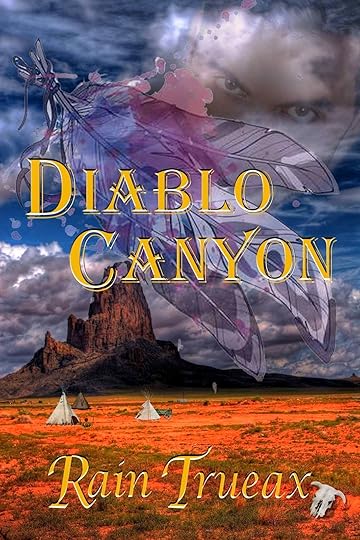
One of my previous resistances to buying a cover (besides my books not selling enough to pay for that) has been how many times I have changed some of mine.I don't think that will be a problem for Diablo Canyon. I can't imagine any cover doing a better job suggesting nature, mysticism and that Native American thread.
Where to see her covers and get more information:
facebook-- darn good book covers cover ops She also does blog design if you want to spiff up your blog:
Elegance Blog Designs
As a reader, a cover might attract my interest, get me to read a blurb, but it will never lead to my purchasing the book-- or not. I've bought books where I hated the cover. I've seen gorgeous covers; but after reading blurbs, I cannot bring myself to buy the book-- sometimes regretfully because a cover can be beautiful and oh-so tempting. For me, the cover can get my foot in that writer's door, but that's all. From what I've read, that's not true for all readers. Some do buy/not buy a book based on the cover.
The arguments go from there to what should be on that cover. One writer claimed no stock royalty free images are good. They are either overused or not that effective. She had found someone to pose for her camera. She felt it was the best solution if someone cannot afford to pay a professional model. Since it was a family member, she does not have to worry about royalties although I imagine she still uses a contract even then just to be sure it doesn't arise as an issue somewhere down the line if the book becomes a huge seller.
Having a model pose requires a couple of things-- one they have to look like the heroine/hero the readers expect as well as the characters in your book. Basically they better be good looking (or at least interesting looking) for romances-- and then willing to show up on a romance book cover where others will see it. I think to that end, it'd help if they liked your type of writing.
So from the people on the cover, another argument goes that you should never do your own. You should go to a graphics designer who either sells you a pre-made cover, which you have chosen from their catalog or you pay more to find someone who will work with you and create something that fits your story more specifically.
Up until recently I had never thought I'd use a cover by a graphics artist. I like doing my own. I enjoy playing with images. Yes, I do put money into purchasing those images, but since I can also use them in blogs and other places, I get a lot of images for what it'd cost me to buy one cover. Besides, I have felt I know my characters better than anybody else.
But I have been known to change my mind when new information comes along as happened on this issue. A writer I know, this year began designing covers-- [Charlene Raddon, aka., Jenneta Dodge or maybe that is vice versa]. She offered a free one to a few writers. My first thought was I didn't have a need for any covers at the moment (boy was I wrong about that but that's another story).
Then I remembered Diablo Canyon which would put together the three novellas. I had had a rough idea for its cover; but to be honest, my idea was pretty bland and I hadn't taken it farther. What had complicated this cover-- three love stories, fantasy elements, ranch life, Montana, Native American history, and mythology. How do you get that all across? I mentioned it to her, and she told me look at her sample pages --
Cover Ops
The page she meant for me to see wasn't coming up at the time; but when I looked through the rest, I saw the perfect cover. It had a mystical look, suggested the Native American connection, had mystical looking eyes looking down from a cloud, and showed land which suits some of what I have seen south of Billings, Montana (if you add in a little fantasy to the mix). I fell in love!
Yes, I like doing my own covers. It's play for me, but she had created something that I don't see myself able to do short of copying her work. I don't like to copy work. So it will be my first book with a cover done by a cover artist.
This cover also changed my mind about only bringing this book out as a paperback. It will be both-- oh and then there is that added spice ;). I cannot say the cover was why I did that. Maybe it's that muse of mine that thought it'd be a good shift.

One of my previous resistances to buying a cover (besides my books not selling enough to pay for that) has been how many times I have changed some of mine.I don't think that will be a problem for Diablo Canyon. I can't imagine any cover doing a better job suggesting nature, mysticism and that Native American thread.
Where to see her covers and get more information:
facebook-- darn good book covers cover ops She also does blog design if you want to spiff up your blog:
Elegance Blog Designs


August 3, 2014
Diablo Canyon
As I mentioned in the previous blog, things come along to change my mind on many things. I do not consider myself wishy-washy, but I am one of those who loves nuance and likes being flexible. I can decide something is going to happen and then change my mind when new information comes along. In some ways I am the ideal Aquarius, open to the new world and changes. Except in reality I am not an Aquarius, not even in minor elements of astrology. What I am though is a Libra and most Libras are also open to changes as they are often dabbling in this or that and curious about the supernatural.
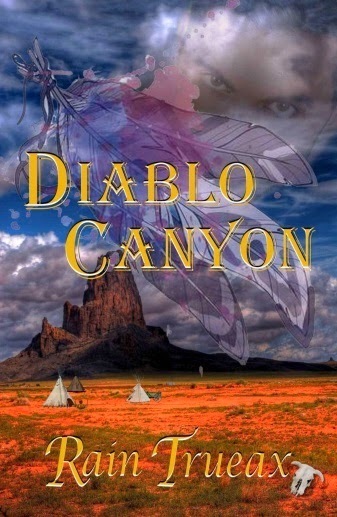 cover by Jenetta Dodge (Charlene Raddon)
This kind of change came along with my fantasy novellas after I decided they would be published as a trilogy-- Diablo Canyon. I had decided they would be in one book as a paperback but was in no hurry to see them put together.
Also I didn't have in mind changing them at all for that compilation. In the novellas I had deliberately chosen to leave out sex mostly because in a novella, you are pushed to get a complex story told using less words. A book length isn't so particular. When I put them together, I decided to give my characters a fuller romantic experience. For readers who prefer closing the bedroom door on such goings on, the novellas will stay as they were.
More about the cover coming next blog but it was a factor in changing my mind on making Diablo Canyon into an eBook as well as paperback. I liked a cover from Jenneta Dodge, aka., Charlene Raddon, at her site [http://cover-ops.blogspot.com/]. When I decided on it, I wanted the book to be more widely seen than a paperback was likely to be.
These three novellas, are set in the ranchland around Billings, Montana to tell a story of life and spirit. It's about what is or might be and how much do we really know about the world we cannot see. For those who don't think such a world exists, how about atoms, subatomic particles, what is out there in space ;)? There is a lot where we take someone's word for its existence or go by the effects that are seen!
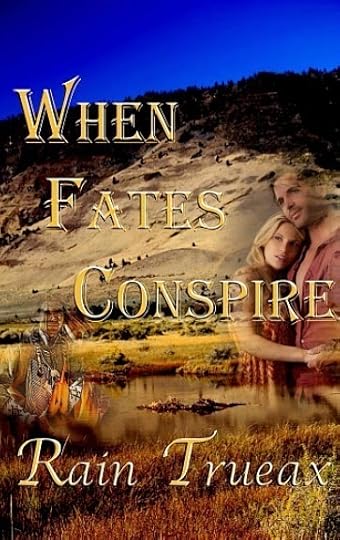
So, part one is about whether there fairness in life and what happens when we die, using two couples who are struggling to find their happily ever after while tragedy seems ever ready to put a period to their existence.
Through all three stories, there are two spirit guides, Remus and Justus, who are attempting to communicate with their charges and make their lives better. When fates conspire is that possible?
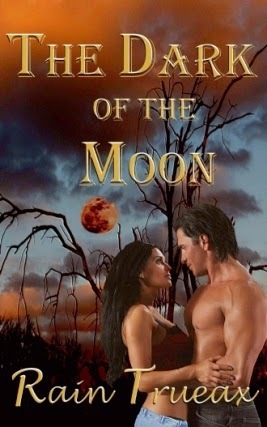
In The Dark of the Moon, the story advances a year and a half with a new hero and heroine. The questions explored here get more into what can we really see of the spirit world. Are there those who can communicate with the 'other' side? It is also more about the ranch world as well as when something threatens us is it always physical? Can we make assumptions as to what it is that block us from actually dealing with it?
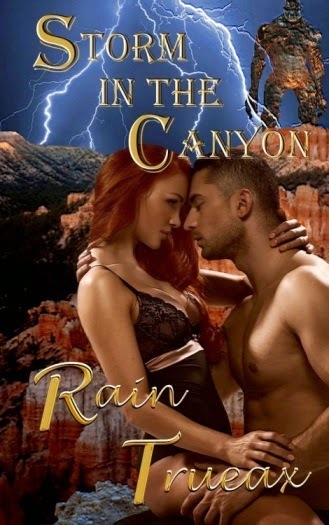
The trilogy is wrapped up in Storm in the Canyon when three powerful women of different generations will be matched with three powerful men, all with their own secrets, their own destinies. It is about power and why do some want it? How can we change our world? By this time, the main characters have long since learned life is more complex than most humans assume. This love story is one of two people litterally from different worlds and times.
All three are romances, stories of adventure, fantasy, but they also explore the way our actions have consequences. Some do't look beyond the immediate and pay a high price for their short-sightedness. Diablo Canyon, as many believe other vortexes do, has been drawing power to itself through natural events, which are now being used by timeless beings with a desire to retake their power.
Each of these stories takes the question of what is real one step farther into the unknown. I label them fantasy or paranormal but they are pretty metaphysical in that I have heard from one person or another that pretty much anything I have happen-- can and has-- but it's not the norm with which we live.
One key point to Diablo Canyon is-- just be aware of what is around you, listen to others, pay attention to history. That little second sight, the times you look back-- sure someone was there but there isn't-- maybe there was.
I suppose here's a good place to add that I, like Myra in the second of the three books, had an imaginary playmate as a child. I knew his name and told my parents-- which gave them concern, as many parents would feel. I then quit seeing him. But that doesn't mean he isn't still there and helping me with my stories when he thinks I need a nudge. ;)
Trailer: http://youtu.be/h5AfRZbalLQ
.
 cover by Jenetta Dodge (Charlene Raddon)
This kind of change came along with my fantasy novellas after I decided they would be published as a trilogy-- Diablo Canyon. I had decided they would be in one book as a paperback but was in no hurry to see them put together.
Also I didn't have in mind changing them at all for that compilation. In the novellas I had deliberately chosen to leave out sex mostly because in a novella, you are pushed to get a complex story told using less words. A book length isn't so particular. When I put them together, I decided to give my characters a fuller romantic experience. For readers who prefer closing the bedroom door on such goings on, the novellas will stay as they were.
More about the cover coming next blog but it was a factor in changing my mind on making Diablo Canyon into an eBook as well as paperback. I liked a cover from Jenneta Dodge, aka., Charlene Raddon, at her site [http://cover-ops.blogspot.com/]. When I decided on it, I wanted the book to be more widely seen than a paperback was likely to be.
These three novellas, are set in the ranchland around Billings, Montana to tell a story of life and spirit. It's about what is or might be and how much do we really know about the world we cannot see. For those who don't think such a world exists, how about atoms, subatomic particles, what is out there in space ;)? There is a lot where we take someone's word for its existence or go by the effects that are seen!

So, part one is about whether there fairness in life and what happens when we die, using two couples who are struggling to find their happily ever after while tragedy seems ever ready to put a period to their existence.
Through all three stories, there are two spirit guides, Remus and Justus, who are attempting to communicate with their charges and make their lives better. When fates conspire is that possible?

In The Dark of the Moon, the story advances a year and a half with a new hero and heroine. The questions explored here get more into what can we really see of the spirit world. Are there those who can communicate with the 'other' side? It is also more about the ranch world as well as when something threatens us is it always physical? Can we make assumptions as to what it is that block us from actually dealing with it?

The trilogy is wrapped up in Storm in the Canyon when three powerful women of different generations will be matched with three powerful men, all with their own secrets, their own destinies. It is about power and why do some want it? How can we change our world? By this time, the main characters have long since learned life is more complex than most humans assume. This love story is one of two people litterally from different worlds and times.
All three are romances, stories of adventure, fantasy, but they also explore the way our actions have consequences. Some do't look beyond the immediate and pay a high price for their short-sightedness. Diablo Canyon, as many believe other vortexes do, has been drawing power to itself through natural events, which are now being used by timeless beings with a desire to retake their power.
Each of these stories takes the question of what is real one step farther into the unknown. I label them fantasy or paranormal but they are pretty metaphysical in that I have heard from one person or another that pretty much anything I have happen-- can and has-- but it's not the norm with which we live.
One key point to Diablo Canyon is-- just be aware of what is around you, listen to others, pay attention to history. That little second sight, the times you look back-- sure someone was there but there isn't-- maybe there was.
I suppose here's a good place to add that I, like Myra in the second of the three books, had an imaginary playmate as a child. I knew his name and told my parents-- which gave them concern, as many parents would feel. I then quit seeing him. But that doesn't mean he isn't still there and helping me with my stories when he thinks I need a nudge. ;)
Trailer: http://youtu.be/h5AfRZbalLQ
.
July 31, 2014
how it comes together-- kind of
Last summer I had finally started on the fourth historical book of the Stevens women, all set in Oregon and beginning with 1852 and the Oregon Trail. For the fourth, I had the plot in mind, the general idea of a hero and heroine, a setting I was not only familiar with but loved.
So I wrote a chapter and got stalled-- that experience has been rare for me in writing. I would not define my experience as writer's block. It was simply that 'stuff' got in this book's way. It was a combination of many things including a trip to research the historical aspects, which I wanted to know more.
Also, it was a bit more complicated than just outside activities. I couldn't get a handle on the hero. He'd been in books two and three, which generally makes a character easier to write. Not this one. I could deal with him a bit shallowly in those books because he was a secondary character. That was over as soon as he became the hero of his own story.

Last fall, trying to understand this guy led to extensive research on the US military, you see, he was a career soldier, a West Point graduate, a cavalry officer. To help me get a handle on my hero, the controversial, iconic George Custer was an obvious choice. Reading books about him and then Custer's journal helped me get a feeling for how a military guy would be thinking in 1867 after he'd been fighting Indians for awhile and gone through the Civil War.

Sometimes having a character in a prior book show up as a hero in a new one is a benefit. I already know them, but something about Rand Phillips didn't work that way. He had been not much more than a kid straight out of West Point when the second book's hero, a scout for the Federals, took him under his wing for the Rogue Indian War. He was back in the third and by then he was an experienced warrior returning to Oregon as part of settling the Snake Conflict. He was very alpha male in the third book-- even as a secondary character.
His own book was complicated by my desire to bring the three earlier romantic couples, into this one as secondary characters. It is after all, a family-- with the third Stevens sister the heroine. So I had the general plot, was once again getting a handle on the hero and heroine, had researched the historic period with some excellent books.
Then I lost my beloved cat to a shockingly early death, which led to a dream about reincarnation that I felt deserved to be told. I didn't want to put that off. The dream was fresh. I believed it was the right length for a novella and wrote When Fates Conspire.
It was while working on its rough draft that I learned of an opportunity to write a short story for an anthology involving other western, romance writers... Couldn't turn that down. One of my ideas for it sounded good. The characters had been in my Arizona historical, Tucson Moon, but quickly I realized it was a lot more story than a short story or even novella.
I looked for another idea and wrote my first short story, Connie's Gift (also a character in Tucson Moon), which went into the anthology, Rawhide 'n Roses . Although I knew that would lead to promotional activities, they wouldn't come until March.
January had us driving down to Tucson to work on our house. I had not given up on the Oregon story but Tucson has some good museums and that was research I could only do while there. More and more the Arizona historical intrigued me for its period, setting, and two characters I hadn't originally realized would have a romance but once the idea came to me, I wasn't going to let it go. The research was making me even more excited by the story.
In late January I ePublished When Fates Conspire. In March, I began writing the Arizona historical. It went fast, had my fingers flying with more research to enrich the story. It was the kind of writing that is purely a joy to do. One lunar cycle from starting to finishing its rough draft.
Of course, editing was yet to come, which meant it was a good time to work on the second and third novellas, which would continue the fantasy about fate, reincarnation, spirit beings, and what might or might not be out there.
Supernatural type stories take research too. This was especially so since I was incorporating Native American mythologies into the third novella. Now I had done some of this research through the years. (If you didn't know it already, Libras have an interest in the offbeat, which includes mysticism of many traditions. I'd heard a lot of intriguing stories through the years some of which worked into the writing.) Now I had The Dark of the Moon and, Storm in the Canyon, which was going to be a trilogy-- Diablo Canyon.
 Ben Kern wagon train
About that time, I came across some photos and guys who took people on reenactments of the Oregon Trail (as well as other historic trails). Their photos and information seemed beneficial for my Oregon Trail book, and heck, you don't turn down an opportunity to talk to people as interesting as these guys were. I asked for and got permission to use some of their photos for covers in case I end up putting these books out as paperbacks-- more likely than eBooks as it stands.
I know it likely sounds like a chaotic year of writing, bouncing around quite a bit, but a year later I am back to the Oregon series. Instead of starting writing on the fourth, I decided I would benefit from re-editing the first three to make sure I am staying consistent. Because it'd been awhile, I had to look around to find the notes I'd taken as well as my character timelines. There was one moment where I feared I'd lost them by typing over them with the wrong state. The possibility of doing that to one of my novels (which once I did) is why I keep everything saved onto multiple jump drives-- thank goodness in this case.
The heroine has always been interesting to me for that fourth Oregon historical. Belle, the youngest of three sisters, is my first warrior heroine. She is spirited, opinionated and left home quite early for school and adventures with friends where many parents wanted her as a companion to their daughters. This is my first time to write a female warrior, although many of my heroines do learn to fight, but it's more to save their own lives or that of their lovers. This young woman chose to be a warrior. It does seem like a fun write to get into how it works for an alpha, warrior hero and an alpha warrior heroine will get along... well, I actually have a pretty good idea. ;)
July 29, 2014
how it comes together-- sometimes
From what I have heard, every writer has their own way to bring a book from the first sentence to the last. Many writers say they work as either a
[pantser or plotter]
. Within writer communities, there are conversations about how that works or doesn't. I don't think anybody thinks one is better than the other. It's just how you work. There are famous, very successful writers in both camps. I am not totally either.
I do not write a firm outline for any of my books, which used to frustrate my engineer husband. But on the other hand, I do know where a story is heading. I have it in my head. It's what happens along the way where I run into surprises. So I am a bit pantser and plotter.
I see it similarly to going on a trip. I am one of those who do not like to plan a trip down to the last T. I will know the general route but along the way might take a different highway or detour when something interesting shows up. I often don't have reservations which can make some vacations dicey. I will though end up where I expected. And so it is with my writing a book.
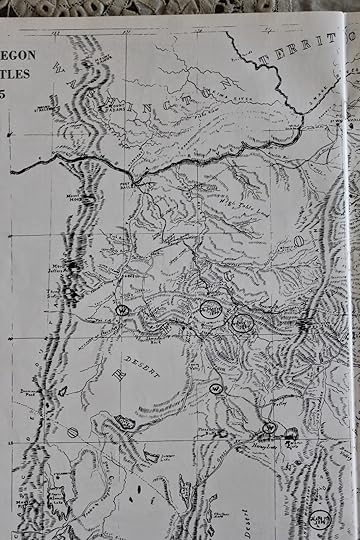
My current work in progress follows three earlier Oregon historical manuscripts, ranging in span from 1852 to 1865. The fourth will start in 1867 and involve the Snake Conflict, one of Oregon's bigger Indian wars. I have no plans as it stands to publish any of them.
The first of those Oregon historicals I wrote in my early twenties. It has had a lot of rewrites since that time including an extensive period working with a professional consulting editor. That story led to the next two. These four will fit into a series but I haven't figure out a name for it-- although I have the books all titled-- including the WIP.
It might seem strange to a non-writer to think I'd put so much into books I wasn't sure I'd ever put out. Why not write in genres I would publish? In my case though, since I've been doing it all my writing life, it seems very natural to write for the joy of writing and consider marketing a separate question.
I might as well admit that the reason I haven't been sure about publishing these four is because of not having yet found a regular readership. Some indie writers have that, and they have readers eager to get their next book. I would love to be in that situation, but I am not. I haven't given up on getting there but also have to accept that it might not happen for me.
Looking at it as objectively as I can (and that's never easy for a writer who loves all the books they write), what I write doesn't 'totally' satisfy the romance reader, and non-romance readers won't give them a chance because they are so turned off on the genre. Now personally, I consider my stories to be hybrids-- between novels and romances. But it's hard to find a way to market something that doesn't fit into boxes.
That first Oregon Trail book, the one that has been part of my life for nearly 50 years, how would I feel if it met the fate of the last historical, Comes the Dawn (one sale in a month)? It's a lot easier to see a book fail to find support or readers when you have put less into it.
Now I can't say I don't put a lot of work and of me into all of them, but the Oregon Trail story goes way beyond that. It would definitely depress to me if it was similarly rejected. The Arizona historical was a good test to see if I had enough readers to even get the book seen on the Amazon lists. The test said this isn't the right time for any of my Oregon historicals-- except maybe as paperbacks with a hope that I can find local bookstores interested in their mix of romance and history.
Here's a plain truth-- if you can't take rejection of your books, it's not wise to be a published writer. You can write to your heart's content, but putting them out there, that's a whole other story. I've learned to be happy for writers who are selling well, not feel hurt if my books don't get support. I can mostly do that, but I could not with the Oregon books. They are way too much a part of me going back to when the story first came to me and I was the age of its heroine.
Anyway that's all the marketing end, not what I was intending to write about. I guess though it's a good beginning for how a year of my writing life went with the planned and unplanned. The experiences I had are why I love being an indie writer even as I admit sometimes I get a bruised ego. Actually that might be good for a person... or so they tell me ;).
So coming next blog will be more about that year which might not seem very organized but... Okay, it wasn't very organized ;).
I do not write a firm outline for any of my books, which used to frustrate my engineer husband. But on the other hand, I do know where a story is heading. I have it in my head. It's what happens along the way where I run into surprises. So I am a bit pantser and plotter.
I see it similarly to going on a trip. I am one of those who do not like to plan a trip down to the last T. I will know the general route but along the way might take a different highway or detour when something interesting shows up. I often don't have reservations which can make some vacations dicey. I will though end up where I expected. And so it is with my writing a book.

My current work in progress follows three earlier Oregon historical manuscripts, ranging in span from 1852 to 1865. The fourth will start in 1867 and involve the Snake Conflict, one of Oregon's bigger Indian wars. I have no plans as it stands to publish any of them.
The first of those Oregon historicals I wrote in my early twenties. It has had a lot of rewrites since that time including an extensive period working with a professional consulting editor. That story led to the next two. These four will fit into a series but I haven't figure out a name for it-- although I have the books all titled-- including the WIP.
It might seem strange to a non-writer to think I'd put so much into books I wasn't sure I'd ever put out. Why not write in genres I would publish? In my case though, since I've been doing it all my writing life, it seems very natural to write for the joy of writing and consider marketing a separate question.
I might as well admit that the reason I haven't been sure about publishing these four is because of not having yet found a regular readership. Some indie writers have that, and they have readers eager to get their next book. I would love to be in that situation, but I am not. I haven't given up on getting there but also have to accept that it might not happen for me.
Looking at it as objectively as I can (and that's never easy for a writer who loves all the books they write), what I write doesn't 'totally' satisfy the romance reader, and non-romance readers won't give them a chance because they are so turned off on the genre. Now personally, I consider my stories to be hybrids-- between novels and romances. But it's hard to find a way to market something that doesn't fit into boxes.
That first Oregon Trail book, the one that has been part of my life for nearly 50 years, how would I feel if it met the fate of the last historical, Comes the Dawn (one sale in a month)? It's a lot easier to see a book fail to find support or readers when you have put less into it.
Now I can't say I don't put a lot of work and of me into all of them, but the Oregon Trail story goes way beyond that. It would definitely depress to me if it was similarly rejected. The Arizona historical was a good test to see if I had enough readers to even get the book seen on the Amazon lists. The test said this isn't the right time for any of my Oregon historicals-- except maybe as paperbacks with a hope that I can find local bookstores interested in their mix of romance and history.
Here's a plain truth-- if you can't take rejection of your books, it's not wise to be a published writer. You can write to your heart's content, but putting them out there, that's a whole other story. I've learned to be happy for writers who are selling well, not feel hurt if my books don't get support. I can mostly do that, but I could not with the Oregon books. They are way too much a part of me going back to when the story first came to me and I was the age of its heroine.
Anyway that's all the marketing end, not what I was intending to write about. I guess though it's a good beginning for how a year of my writing life went with the planned and unplanned. The experiences I had are why I love being an indie writer even as I admit sometimes I get a bruised ego. Actually that might be good for a person... or so they tell me ;).
So coming next blog will be more about that year which might not seem very organized but... Okay, it wasn't very organized ;).
July 27, 2014
And then...

Often I mention how much I enjoy writing as an independent. Being an indie writer offers many benefits to self-motivated writers. I am sure those who work on contract for their books feel it's worth it for the benefits they receive in promotion and prestige; but they do have time constraints that an independent writer does not have except what they put them on themselves.
When I decided to go independent, I had been writing all of my life-- literally. Oh as a child it wasn't much detail, but it was still there in creating stories whether for paper dolls (which I had to make myself as nobody put out what I wanted which were hot women and handsome men-- none of those cute baby or little girl paperdolls for me), or my first ones written down with words, they all were about putting together plots and characters. My cousin and I, on family gatherings, would go for walks taking turns telling parts of an ongoing story.
My writing has involved worked with a consulting writer to develop the skills of the craft. Some of my stories were handwritten, then came the old Royal typewriter, electric typewriters, white out, carbon copies and finally the first Atari computer, which I couldn't believe would be better until I learned you could rearrange where a paragraph set and no more need for erase papers-- finally to today with the machine sitting in front of me and the internet. Yes, fiction writing was always in my life.
The decision to go indie was actually pretty easy. I had a lot of manuscripts (very few of which had I ever sent off to publishing houses for an assortment of reasons). I didn't want to make them fit what the editors had told me I would need to do.
I also assessed the drawbacks of going indie. You must do all your promotion. You don't have the prestige that goes with publishing houses, but for the writing work itself there were only pluses.
Being an indie writer lets me arrange my workday, set my goals, and allows me to bounce from project to project. I can edit or write. I can work on places to promote. Because I love what I do, am good at self-motivating, and am not easily distracted, it works for me. In the morning I pretty much know what I will be doing that day but if I wish, I can reset the day. My writing work (about 8 hours a day at least 5 days a week, with less hours on week-ends but no days without some writing) are made up of a variety of activities which may involve covers, social media, researching, editing, and writing on more than one book.

It might seem crazy to a non-writer, but I had begun writing the next full-length novel when I still had one more edit due for Comes the Dawn. There were reasons for that. If you keep editing and re-editing a manuscript, pretty soon, you don't really see it. You lose focus. By having other work in between, when you come back to the original, it feels fresh.
With a good start on the Oregon historical, a deeper look at my characters, I then put it aside and did the final edit on the Arizona historical. I was really loving how it was going but I needed that last edit. This had been the shortest time I ever had between writing a rough draft and putting a book out, and I might not do it that way again. But with its final edit, I fell in love with Comes the Dawn all over. That'd not have happened had I kept reading and re-reading it. Time between let me look at the work afresh.
That ability to change course, between editing and writing something original or to work on something I might never publish, is one of the big pluses of being an indie writer. With no contracts, the only promise I have is to myself and to the stories. It also means nobody else is forcing me fit a mold, which, to be honest, might've made the books sell better. Life is though a set of trade-offs. Stay true to your own self or fit what others want? Those choices don't just occur with creative work.
July 24, 2014
Releasing protective shields
At their heart, romances are stories of emotions. It's not just about love but the emotions that often block a full expression of love. There are several dominant emotional themes, to which I have found my books repeatedly turn. The next two cover re-dos involve one of my favorite emotional themes because I see it as an issue in human life and a book can illustrate that as well as offer reasons to deal with it.
I suppose admitting that your books have a theme that can actually teach something about human life might be a turnoff to some readers. I mean they get plenty of lectures other places and want their romance reading to be purely for fun. The thing is you can have an enjoyable read while still looking at some life lessons through the characters-- the whole thing at a distance from your own life and yet applicable if you so choose.
These two books have been out for quite awhile. The first has had pretty good sales off and on. The second never did. I think the first had an okay cover, one I had liked, but I have recently been interested in changing things around. The second has never had good sales and that's likely due to its painful subject matter. A cover won't change that.
Desert Inferno carries forth the O'Brian stories into contemporary times. The heroine's family ranch was established in the 1880s. By modern times it was having its own problems with economics, wise use of land, and its isolation. The ranch though was not at the core of this story.
It is a love story involving a woman who is an artist and has grown up with beauty. She has known nothing but love. The man she falls in love with isn't pretty, not as he sees himself and he's walked the hard and often ugly side of life. He has known nothing of love nor does he want to.
The goal of the cover is to depict someone having to let go of their protective layers, to open up their basic essence to another person. How does a cover show that?
Turned out I had the perfect image and had used it in the book's trailer and on back of the paperback. Creating this cover was easy-- just add titles.
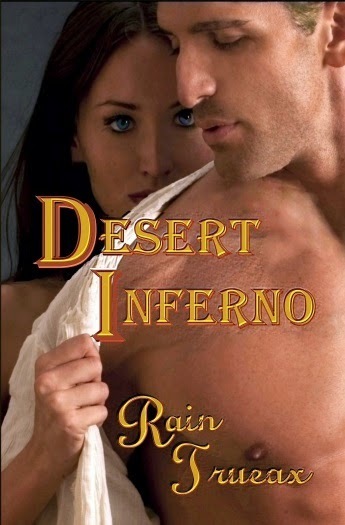
I like writing books about people who have to let go of their protective shields-- half the time it's been her and half the time him. That emotional theme appeals to me because I see putting up protective barriers as a problem in life. We use busyness. We choose safe relationships where we won't be challenged, or we avoid them totally. We do it to protect ourselves from thinking, from being someone who will demand we peel back those layers and let them in. I think sometimes we are afraid to let ourselves see what is under them. Through my characters I try to show how this stands in the way of full living. We can let go of those masks-- and especially need to do this for our own benefit.
The next book had a similar theme. The cover wasn't actually bad in terms of revealing the problem. I knew that a new cover wasn't likely to improve its sales. It has difficult subject matter. But its existing cover began to depress me. It was a man and woman, but he was looking down with a disturbed look. She was studying him trying to figure out what was wrong. The colors were stark.
While Moon Dust is the story of a marriage on the brink of divorce and covers several big issues that our society faces, I think it has an uplifting story. There was hope, not hopelessness.
A secret is at the heart of what has gone wrong with the marriage. The soon to be ex-wife has the hope of finding and then convincing her husband he can deal with it. This couple are very much in love even while the marriage is disintegrating. There is pain but also an answer. He must (and that part isn't easy) open himself to her.
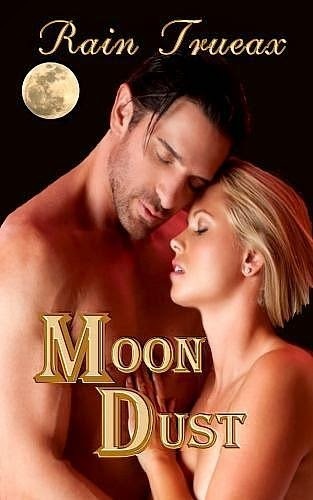
I wanted a cover that was warm and showed the caring. I did not one that felt hopeless. Still, it could not look as though going within was totally without some pain. I think this one does it. Love and how sharing what has been before can provide healing to both.
There is hope and that is the whole point of romance books. There is a happy ending, despite the travails that it may take to get there-- and this couple go through plenty, not all brought on by themselves. In the end it will work out.
That's what i like about romances. I get other kinds of endings from the newspaper and way too often.
I suppose admitting that your books have a theme that can actually teach something about human life might be a turnoff to some readers. I mean they get plenty of lectures other places and want their romance reading to be purely for fun. The thing is you can have an enjoyable read while still looking at some life lessons through the characters-- the whole thing at a distance from your own life and yet applicable if you so choose.
These two books have been out for quite awhile. The first has had pretty good sales off and on. The second never did. I think the first had an okay cover, one I had liked, but I have recently been interested in changing things around. The second has never had good sales and that's likely due to its painful subject matter. A cover won't change that.
Desert Inferno carries forth the O'Brian stories into contemporary times. The heroine's family ranch was established in the 1880s. By modern times it was having its own problems with economics, wise use of land, and its isolation. The ranch though was not at the core of this story.
It is a love story involving a woman who is an artist and has grown up with beauty. She has known nothing but love. The man she falls in love with isn't pretty, not as he sees himself and he's walked the hard and often ugly side of life. He has known nothing of love nor does he want to.
The goal of the cover is to depict someone having to let go of their protective layers, to open up their basic essence to another person. How does a cover show that?
Turned out I had the perfect image and had used it in the book's trailer and on back of the paperback. Creating this cover was easy-- just add titles.

I like writing books about people who have to let go of their protective shields-- half the time it's been her and half the time him. That emotional theme appeals to me because I see putting up protective barriers as a problem in life. We use busyness. We choose safe relationships where we won't be challenged, or we avoid them totally. We do it to protect ourselves from thinking, from being someone who will demand we peel back those layers and let them in. I think sometimes we are afraid to let ourselves see what is under them. Through my characters I try to show how this stands in the way of full living. We can let go of those masks-- and especially need to do this for our own benefit.
The next book had a similar theme. The cover wasn't actually bad in terms of revealing the problem. I knew that a new cover wasn't likely to improve its sales. It has difficult subject matter. But its existing cover began to depress me. It was a man and woman, but he was looking down with a disturbed look. She was studying him trying to figure out what was wrong. The colors were stark.
While Moon Dust is the story of a marriage on the brink of divorce and covers several big issues that our society faces, I think it has an uplifting story. There was hope, not hopelessness.
A secret is at the heart of what has gone wrong with the marriage. The soon to be ex-wife has the hope of finding and then convincing her husband he can deal with it. This couple are very much in love even while the marriage is disintegrating. There is pain but also an answer. He must (and that part isn't easy) open himself to her.

I wanted a cover that was warm and showed the caring. I did not one that felt hopeless. Still, it could not look as though going within was totally without some pain. I think this one does it. Love and how sharing what has been before can provide healing to both.
There is hope and that is the whole point of romance books. There is a happy ending, despite the travails that it may take to get there-- and this couple go through plenty, not all brought on by themselves. In the end it will work out.
That's what i like about romances. I get other kinds of endings from the newspaper and way too often.
July 22, 2014
what it takes to be a movie hero today?
 picture from the link below
This is kind of an intermission between my blog posts but could not resist. Is this the new Han Solo? They never let us see Han's bare chest back then but for today's world, it is kind of a requirement. One that seems fair to me ;).
He also explained what it takes to get a body like that. I have wondered because I do see them a lot of places.. and no complaints.
"-- ...weight training, yoga, high-intensity interval training, sprints, jogging, the Navy SEAL “grinder” workout, and P90X."Since his neck looks normal, it looks like no steroids. Unless steroids don't have the same impact today...
One neat thing is they asked him how his wife liked him like this since he had previously ballooned up to almost 300 lbs. for a movie with Vince Vaughn. He said she loved him this way but that way too. Cool :)
Han Solo for the Facebook Generation
revamping yet another cover
Yes, I've read of the agony of the struggling writer-- how each book is wrung from them with blood and sweat. I confess. I have love and have fun writing. I enjoy creating covers. What I hate is accepting they won't be liked-- yes, it's a conundrum to do something you love and know others won't love it also.
When my books aren't selling, it's enough to sometimes make me want to cry. I stop and remind myself this is creative work. It is the reward just to be able to do it. Don't ask for it to be appreciated by others, but in reality we all want our work to be liked. It's unrealistic not to admit that.
Creating covers is a lovely break from thinking about the harder aspects of marketing. They are also, however, part of marketing. So with recently purchased new images, I took a hard look at my existing covers. Could any be made better?
Better means more adequately tell, in one image, the story within the book. That is the object of covers. They are meant to attract as flowers do bees. They must though depict what is within, or they are cheating the potential reader. Putting up a cover that looks wonderful, the type that has sold many books, when it has nothing to do with the book, is unfair and as a writer-- unsatisfying.
From Here to There was one of the books to which I looked. That poor book. It has had so many covers-- the most of any of mine-- a few of its rejected covers.
I love its story, plot, characters. It is about human relationships, several kinds, and the world of cattle raising. But one cover after another didn't get that across. Well, there is no use crying over spilt milk--onward and upward is my motto-- both likely cliches. (One I took from a friend who used it often).
So when I re-edited that book, I decided to once again look at its cover. What could I use instead of what I have tried? The most recent one represented the western cowboy-- a major theme of the book. I liked it but can't say it was helping sell the book.
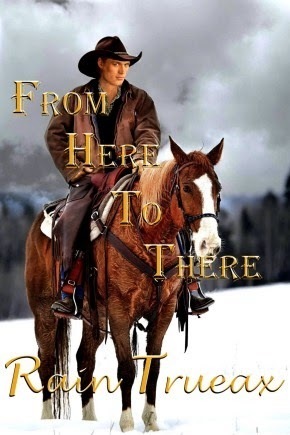
Part of the problem possibly was-- what does this cover say in regards the romance? The guy on the cover looks like the hero in the book. That was a plus. He also illustrates the underlying theme of ranch life. But was that really enough?
Looking at the book itself and its deeper themes, what did that cover do for illustrating them? It's about the modern west, cowboys, ranch living, illusions and how sometimes what we think is not real turns out it is. It's about families, relationships, love, sexuality, animals, and how we can do what we must-- with enough motivation. Obviously I can't get all that onto a cover.
I went looking through my images, found one I had bought just because I loved it with no idea how I could use it. Next I looked for images that could represent the hero and heroine. I found one that had the right look and only took a little adjusting to look like them.
The next step was playing around to see how I could put the two images together in a way that depicted the energy and love of the West.
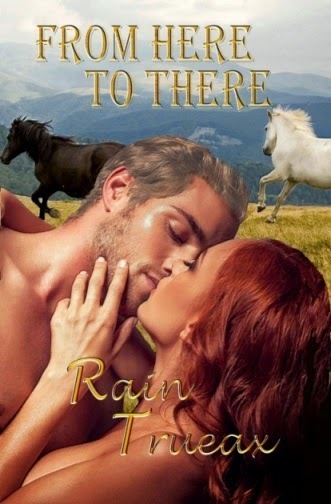
Will it help attract readers? I have no idea, but it definitely does the book more justice in terms of beauty and vitality. For readers who hate the very idea of romances, it will ward them off. For someone who would enjoy a romance that offers two stories of how love can come together, one told through an old journal, well that part I could not get onto the cover or it'd be cluttered. You just cannot get it all one one cover... I don't think anyway.
That wasn't the end of rethinking covers. At this point, I was taking an art break before my next editing job (three books I have not decided to ePublish) before getting back to finishing writing fourth in that series (Oregon historicals).
When my books aren't selling, it's enough to sometimes make me want to cry. I stop and remind myself this is creative work. It is the reward just to be able to do it. Don't ask for it to be appreciated by others, but in reality we all want our work to be liked. It's unrealistic not to admit that.
Creating covers is a lovely break from thinking about the harder aspects of marketing. They are also, however, part of marketing. So with recently purchased new images, I took a hard look at my existing covers. Could any be made better?
Better means more adequately tell, in one image, the story within the book. That is the object of covers. They are meant to attract as flowers do bees. They must though depict what is within, or they are cheating the potential reader. Putting up a cover that looks wonderful, the type that has sold many books, when it has nothing to do with the book, is unfair and as a writer-- unsatisfying.
From Here to There was one of the books to which I looked. That poor book. It has had so many covers-- the most of any of mine-- a few of its rejected covers.
I love its story, plot, characters. It is about human relationships, several kinds, and the world of cattle raising. But one cover after another didn't get that across. Well, there is no use crying over spilt milk--onward and upward is my motto-- both likely cliches. (One I took from a friend who used it often).
So when I re-edited that book, I decided to once again look at its cover. What could I use instead of what I have tried? The most recent one represented the western cowboy-- a major theme of the book. I liked it but can't say it was helping sell the book.

Part of the problem possibly was-- what does this cover say in regards the romance? The guy on the cover looks like the hero in the book. That was a plus. He also illustrates the underlying theme of ranch life. But was that really enough?
Looking at the book itself and its deeper themes, what did that cover do for illustrating them? It's about the modern west, cowboys, ranch living, illusions and how sometimes what we think is not real turns out it is. It's about families, relationships, love, sexuality, animals, and how we can do what we must-- with enough motivation. Obviously I can't get all that onto a cover.
I went looking through my images, found one I had bought just because I loved it with no idea how I could use it. Next I looked for images that could represent the hero and heroine. I found one that had the right look and only took a little adjusting to look like them.
The next step was playing around to see how I could put the two images together in a way that depicted the energy and love of the West.
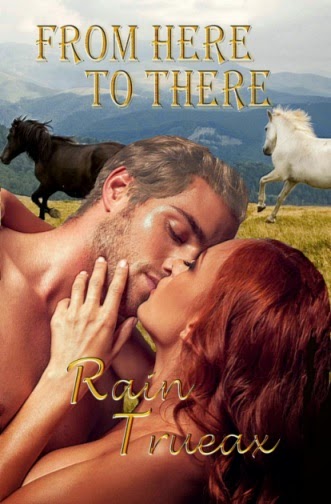
Will it help attract readers? I have no idea, but it definitely does the book more justice in terms of beauty and vitality. For readers who hate the very idea of romances, it will ward them off. For someone who would enjoy a romance that offers two stories of how love can come together, one told through an old journal, well that part I could not get onto the cover or it'd be cluttered. You just cannot get it all one one cover... I don't think anyway.
That wasn't the end of rethinking covers. At this point, I was taking an art break before my next editing job (three books I have not decided to ePublish) before getting back to finishing writing fourth in that series (Oregon historicals).
July 20, 2014
cover remodels
So if someone makes the argument that a writer should wait to publish until the book is as good as they possibly can make it, which means maybe never since they keep getting better at what they can write, then the same argument could hold true for covers, right?
For an indie writer, one benefit with eBooks is the ability change the book-- words, blurbs, and covers. Paperbacks, of course, are a different ballgame. But because I can change covers, I have. Now not every single book has had it happen. I have a couple who have only had one or maybe two covers at the most with some tweaking perhaps on titles, but overall eight of my books are more or less how they began. Of course, three of those books haven't been out very long; but I tend to think they will remain because even though they haven't sold that well, the covers fit the stories as well as I can imagine any image doing. When I can, I'd rather keep the cover as they began. It's easier.
However, in the last month or two, I've changed four covers in significant ways. In a housekeeping mood, I've even changed blogs with different backgrounds and opening photos. It reminds me of how Farm boss used to come home from work, and I'd be telling him where I wanted the sofa, and how it would look better. This farmhouse has made that kind of change rare as the rooms don't lend themselves well to shifting things around. Remodeling is always about thinking there is a better way.
When I get the idea of changing a cover, I often have no idea where I will go with it. In this case, I found the image of a man and woman which I had bought some time back but never used. I also grabbed one of my own sky photographs from Tucson.
Sky Daughter isn't an easy story to capture in one image. It's of a young woman who went to her grandfather's mountain to heal from a series of losses and disappointments and a man caught up in a weird plot which distorts spiritual power. There is a monster. Adding it to the cover helps to illustrate the risk this couple are under as they try to find the answer to what is going on without getting killed. It has a mix of witchcraft, nature, cultural differences, and Idaho.
Because of its complex story, Sky daughter has had, since it came out May or June of 2012, six or seven covers. I also think this one is permanent as finally it seems to depict the energy of the story in the way I want. The tough part with covers is one image has to say it all. Not easy.
Next blog will get into the other recent cover changes and why the new ones seem better.
,
For an indie writer, one benefit with eBooks is the ability change the book-- words, blurbs, and covers. Paperbacks, of course, are a different ballgame. But because I can change covers, I have. Now not every single book has had it happen. I have a couple who have only had one or maybe two covers at the most with some tweaking perhaps on titles, but overall eight of my books are more or less how they began. Of course, three of those books haven't been out very long; but I tend to think they will remain because even though they haven't sold that well, the covers fit the stories as well as I can imagine any image doing. When I can, I'd rather keep the cover as they began. It's easier.
However, in the last month or two, I've changed four covers in significant ways. In a housekeeping mood, I've even changed blogs with different backgrounds and opening photos. It reminds me of how Farm boss used to come home from work, and I'd be telling him where I wanted the sofa, and how it would look better. This farmhouse has made that kind of change rare as the rooms don't lend themselves well to shifting things around. Remodeling is always about thinking there is a better way.
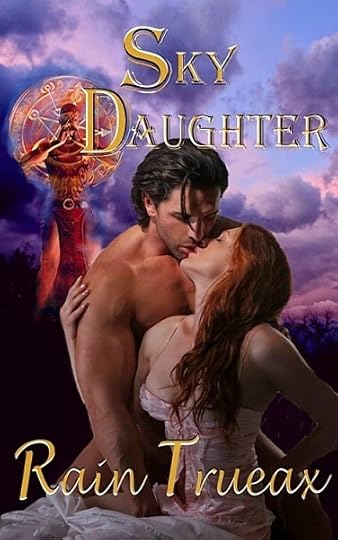
When I get the idea of changing a cover, I often have no idea where I will go with it. In this case, I found the image of a man and woman which I had bought some time back but never used. I also grabbed one of my own sky photographs from Tucson.
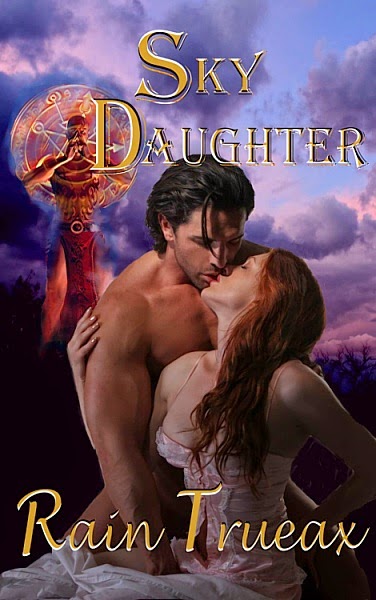
Sky Daughter isn't an easy story to capture in one image. It's of a young woman who went to her grandfather's mountain to heal from a series of losses and disappointments and a man caught up in a weird plot which distorts spiritual power. There is a monster. Adding it to the cover helps to illustrate the risk this couple are under as they try to find the answer to what is going on without getting killed. It has a mix of witchcraft, nature, cultural differences, and Idaho.
Because of its complex story, Sky daughter has had, since it came out May or June of 2012, six or seven covers. I also think this one is permanent as finally it seems to depict the energy of the story in the way I want. The tough part with covers is one image has to say it all. Not easy.
Next blog will get into the other recent cover changes and why the new ones seem better.
,
July 17, 2014
cliches
Recently my book, From Here to There, received a review from a reader where the reader mostly liked the book but added a statement that piqued my interest: "Also some cliches in the plot..."
If you want to read the rest of the review, you can find it at Amazon. The part I care about for this piece is what is a cliche, how do we recognize it, and is it really a bad thing? I started with looking for a definition.
Cliche: a phrase or opinion that is overused and betrays a lack of original thought.
Of course, when I re-edited From Here to There for the umpteenth time, because of that review, I was looking for what might be a cliche. Since the story is about the western way of life and the mythology behind thinking there even is a 'western way of life,' cliches seem likely to be part of the story. One of its old-timer cowboys is a lover of western lore based on fiction books. He wouldn't mind being told he spoke in cliches, he'd be proud of it.
Going by the definition that I found, if life itself is full of something, then to put it into a book might seem overused. I mean heck, you've read/seen it all before, right? Perhaps though, you read it before because it's how life is.
To one reader having an older character have a heart attack would be cliched. We see heart attacks all the time in books. Except it is also real life. If we have lived in multi-generational communities, we know heart attacks happen. So one reader sees it as a cliche because they read it before. Another reader relates to it because they had a very similar experience in real life.
The more I thought about it, the more I decided most writing is full of cliches but so is life. What do we have happen that hasn't happened to millions before us? Some experiences more commonly happening than others.
When writing, I personally feel a cliche is fine. Cliches are what happens in life, and if they fit the story, I think that can be part of good writing-- reader/critic disagreement or not. Trite or space filling cliche is less fine, but then again, the mundane is part of real life. The alternative to the mundane in your book is writing a Perils of Pauline plot.
Cliched expressions are often how we talk. We hear something said in a movie, and we repeat it. Everybody repeats it. If people speak that way, should a book not? So, I don't feel a cliche is a bad thing in the right usage. I get it some readers disagree with me.
The kinds of thing that happen repeatedly in life, the mundane, I like in a story I am reading it or writing, like where the heroine polishes furniture, gossips with a girlfriend, or works in a garden right before her world goes to hell in a hand-basket. How many times has our own life reflected the lull before the storm, red sky in the morning lol Okay all cliches but are they not true sayings also?
So when I write, I am always thinking of the plot device, WWW, but between potential crises will be the enjoyment of little moments which might make my books almost as much woman's fiction as romance. Those little moments probably might seem prosaic, cliched even, but that's what life is made out of, isn't it?
The love story will be at the core of a romance. It is not, however, all that is going on. For my books, it's not all about fighting a villain or dealing with a natural catastrophe. It's not about constant action but rather real life mixed into action. I won't force a crises just to get constant action. I think the lull makes for better living and better reading at least for me.
Trying to make every story unlike every other story out there, by thinking up something that never happened before, for me, defeats what writing is all about-- which is an interesting story but one that can feel real.
In the case of my book, From Here to There, where it's about the western thinking, it's about what I have seen in my own life with ranch living, and sure it's got cliches. Take them out, and it ceases being what makes western thinking what it is.
We watched Donovan's Reef Sunday evening. Wayne movies are full of cliches like the obligatory fight scenes, the taming of the woman scene, etc. but it's what people want in his films. Well him having to spank her, in many of the plots, is definitely not what I want and think that's a forced cliche his films way overdid. No guy, hero type or not, is going to take a woman over his knee in my book or life lol. Well, in life I guess it could happen once, but not going to a second time. That said, I still enjoyed that movie as I do most of his films. They are predictable but that's what makes them fun.
I don't think cliches are bad in writing or life.
As old as the hills.Time will tell.A diamond in the rough.Opposites attract.Alls well that ends well.The writing on the wall.and so forth.
I had a book, Evening Star where the hero, who had grown up on a ranch, talked with colloquialisms. It was part of his persona and his brother ridiculed him for what he called cliched expressions. I personally liked his folksy-ism as I love those kinds of expressions and use them myself. In that book, it also illustrated a major difference between him and the more 'sophisticated' heroine.
To research this article though I was not only looking for cliches but articles out there telling writers the ones they must never use. The following twelve are from Writer's Digest. I added them here for those of you who love to know and follow the rules. Incidentally none of these made it into From Here to There-- and since they suggest you never personally respond to a review, as it's considered harassment, I will never know which ones the reader thought had. They better never read Evening Star ;)
1. Avoid it like the plague2. Dead as a doornail3. Take the tiger by the tail4. Low hanging fruit5. If only walls could talk6. The pot calling the kettle black7. Think outside the box8. Thick as thieves9. But at the end of the day10. Plenty of fish in the sea11. Every dog has its day12. Like a kid in a candy store
Seriously-- at the end of the day is a cliche???