Simon Pont's Blog, page 3
September 21, 2013
TRASHED IN PARADISE
WHY WE ALL NEED TO START LISTENING TO JEREMY IRONS
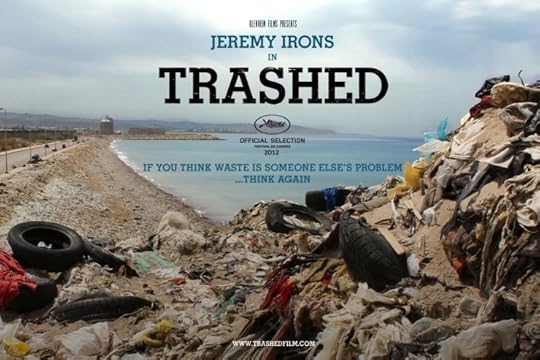
“I wanted to make a documentary about something that needed to be talked about. I spend much of my energies telling fictitious stories. This is a very true story. An important one.”
Jeremy Irons, interviewed at IFFP
When someone like Jeremy Irons speaks, you figure people will listen. Because he’s Jeremy goddamn Irons, top tier A-lister, Best Actor Oscar winner. As in Dead Ringers, The Lion King, Die Hard 3 Jeremy Irons, who can even make a papal wardrobe (The Borgias) look passable.
So you bet, if I was making a movie (or in this case a documentary), then Jeremy Irons would be up there as my first choice go-to, like he’d be for most everybody, like he was for Candida Brady.
Candida Brady is the director of last year’s eco documentary, Trashed. Brady describes herself as a mother worried “about the effect our toxic legacy is having on our children”, where researching for the project compelled her to make Trashed, “come what may.”
Which leads me to one very simple question.
Trashed, starring Jeremy Irons; this important true story that had to be made come what may; have you heard of it and seen it?
Because I hadn’t. At least, I hadn’t until recently visiting a film festival (the IFFP) on the Greek island of Patmos. And it was after the screening that I got to interview Jeremy Irons and admit that his new movie had been new news to me.
Yes, a little awkward. But also telling. And rallying.
So let me save you the same admission, tell you about Trashed, and compel you to see it, too.
A PARADISE CALLED PATMOS; A MOVIE CALLED TRASHED
Trashed screened on the third day of third annual film festival on Patmos. It was a day where a troop of SPF 50’d children had been combing the beaches for discarded water bottles and lollipop sticks, before then turning them into pieces of artwork that went under (the right kind of) hammer in the festival’s charity auction that evening.
The setting of Patmos is rather perfect for screening an eco docu like Trashed, because Patmos is an island paradise, an Aegean gem, where crystal clear waters are cut by diagonal blades of sunlight that still shimmer 20 metres down. The glancing eye of a visitor might miss the island’s landfill challenge or ongoing beach and water clear up, but it’s there and happening.
And it’s very likely because you’re so accosted by nature’s beauty, on such a beautiful island, that you feel more aware of the care we should be taking with our planet, and how we might be quite seriously trashing it.
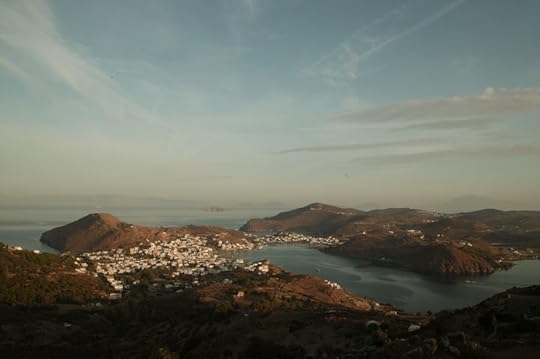
Skala, from above (Patmos island)
Of course, this open-your-eyes island life vantage is rarely afforded. Too often, we’re all too busy marching through our every-days with our heads down and our thoughts everywhere else.
Which is where Jeremy Irons, Candida Brady and Trashed come in.
Irons is plainly aware of how profile and celebrity can force people to slow their march, to stop, stare, and be drawn closer to the flame.
“I feel it’s incumbent on people who have a profile to raise the profile of these issues. We have no agenda. We don’t have to answer to shareholders. We artists just get to look at the world around us, free of bias, so we get to see it pretty clearly.”
And what is clear is this: Trashed is a documentary that needs to be seen, that needs to enter the mainstream. Because we’re (still) trashing the planet. We’ve heard this enough to stop thinking about the implications, to start humming to what’s become white noise - but Trashed rearticulates the message, volunteering a not just inconvenient but downright harrowing set of truths.
Our life of making and chucking away plastic anything should come with a multi-generational cancer-causing health warning. Really, truly, it should.
This is why Candida felt compelled to make this movie. This is why Jeremy Irons is a UN Goodwill Ambassador (of the Food and Agriculture Organization) and served as Executive Producer on Trashed. It’s also why Irons didn’t just lend name and voice and simply commit a couple of studio days on voiceover duties.
“I wanted to be the voice of the audience, to really be there, in it, the one asking the questions the audience would like to ask.”
Consequently, Irons very deliberately puts himself in the frame, in the narrative cross hairs. He is not just our guide but our eye witness, travelling from Lebanon to San Francisco, via the UK, Iceland and Vietnam. The globe-trotting is the opposite of glossy. It demonstrates the scale of the issue and how heart-felt the matter is for Irons, Brady, and all involved.
This kind of sincerity makes for what the critics like to call “brave” documentary-making.
Certainly, Trashed doesn’t hold back on the heavy punches. There are shock tactics. When Irons is feeling it, you feel it too. And that’s maybe as it should be, because to leave a lasting impression sometimes requires candour and the suspension of sugar-coating and niceties.
Trashed becomes a movie to face up to.
THE TRUTH IS… IT AIN’T EASY SELLING GREEN
“Money is to be made in recycling. We have too many incinerators in England and Europe - what are laughingly called waste-to-energy incinerators”, says Irons. “They are in fact waste-to-waste. But policies and new methods of recycling can be put in place. Some of this is very simple to do.”
We chuck away, and it becomes landfill, hidden away, out of sight and mind. Or we try and incinerate what we chuck, and it becomes ash, but then what do you do with the ash, which, as Irons emphasises, is simply a different kind of waste. What happens to all the smoke that hopefully just blows away? A big sky full of air. A big sea full of water. Surely our waste would dilute?
Wrong.
The long-short is the opposite. Nature doesn’t dilute pollution, but re-concentrates it.
Every plastic bag we bury or burn goes back into the environment, and back into the food chain, which goes back into our mouths. Whatever goes into the air and soil and sea goes back into us. The fish, the livestock, their diets becoming our diets, becoming carcinogenic metals (the most bad-ass kind of nasties called dioxins) that we can’t excrete and that accumulate in increments, rather like a time bomb ticking down.
So recycle or die becomes the message of Trashed, because we’re killing ourselves by not.
And yet…
It ain’t easy selling green.
Green still creates an audible groan. Eco messages still fall on too many deaf ears. Until the sky falls or the seas rise enough to start building Arks and grabbing our snorkels, until we have palpable and all-too-late evidence, then the great danger is that we’ll mostly continue to think and feel and behave in all ways short-termist. By consequence, governments don’t push the green agenda because they don’t have to, because green issues don’t sway voters or win elections.
Green still gets dismissed with a wafting hand, the preoccupations of tree huggers and tofu munchers.
Occasionally green cut-through. An Inconvenient Truth created global alarm about global warming, but that movie message has thinned since its 2006 moment at the podium.
The truth is, with our goldfish memories and inclination to swerve inconvenience; we need to be frequently reminded of how we’re trashing the planet. It’s only through reminder and prompting that we’re likely to stop trashing and start fixing.
Trashed becomes a fresh reminder and aid memoir: we cannot keep treating our world the way we’ve been treating it.
And this fresh reminder, where and when it is seen, is affecting change. Irons points out,
“Those who see Trashed, some are decision-makers, many can be influencers. Trashed screened in New York, where Mayor Bloomberg subsequently made a statement that from now on, all plastics of whatever type, would be recycled.”
Even Jeremy Irons can only open so many doors, hearts and minds to a set of ideas that needs to become a better way of life. The trick is: how do you get everyone to see it?
Until attending the Patmos film festival, I awkwardly admit, I hadn’t. “Is Trashed creating the reaction you’d hoped?”, I ask. “Is it yet being talked about the way you’d hoped?” Irons is very open in response.
“It’s always difficult to know.”
THE DISCOVERABILITY BOOGEYMAN
Go to IMDB and Trashed gets an 8.6 out of 10, having so far generated… one ‘user review’. It also got 87% on Rotten Tomatoes.
The scores are great… but you don’t have to search deep in cyberspace to establish that Trashed hasn’t yet gone supernova.
Trashed’s one user review on IMDB is from a guy who watched it at the Cork Film Festival last Autumn, who calls it “well intentioned” but who felt at times “like standing up and going ‘OK I GET IT!! LET'S MOVE ON!!’"
It’s says everything about our Ctrl-Alt-Comment times, when a 0.20 second performing Google search for “Trashed” takes you one click away from first-stop site IMDB - where the first batch of words you read includes a guy who saw it in Cork and felt frustrated by how Trashed reinforces its message.
Stay on IMDB and you’ll discover Guggenheim and Gore’s 2006 global warming warning, An Inconvenient Truth, has 497 user reviews. It has of course had 7 years to generate those reviews, but there’s no question that at its time of release
An Inconvenient Truth gained the kind of mainstream attention that got it shown in company lunch breaks and school classrooms. And even 497 user reviews is modest the moment you step outside the docu genre.
Blockbusters like Avengers Assemble have nearly 1500 user reviews on IMDB.
We live in a digital age, the ‘Age of the Share’, where a mercurially chosen few find fame and following, and where most “content” fizzles into nothing. “Discoverability” is the challenge, in this vast and misty digital sea of so much.
The movie, music and publishing industries are all kept sleepless and nocturnal by the “dicoverability” boogeyman. Because he can neither be understood nor caged. Because “The Discovered” is not necessarily based on criteria like quality or importance. The absurdly trivial catches on.
Sneezing panda’s, Clit Lit and South Korean pop videos become global idea viruses and pop cultural tent poles.
‘PSY – GANGNAM STYLE’ is closing in on 2 billion views on YouTube and nearly 8 million ‘Likes’. Considerably more effort than clicking a ‘thumbs up’ icon, over 26,000 people have felt sufficiently compelled to write a Customer review on amazon.com for Fifty Shades of Grey.
Irons is entirely right when he says,
“There is a clear feeling from a growing number of people that the time has come for us all to start to try and change our ways, and to endeavour to live a more careful life."
Yet society still inclines to mobilize en masse and devote its time to the pop culturally trivial and inconsequential. The challenge with a movie like Trashed is how you get a subject of significance to not just ripple but shockwave the Zeitgeist, to get as many people to see it as have read Fifty Shades or done the Gangnam pony dance. This is where you and I come in.
To repeat Irons, “The time has come.”
TIME TO SUIT UP
Don’t we all want to leave this place better than we found it; the planet, an heirloom past on in reasonable shape?
A toxic legacy is no kind of legacy.
While we’re here, don’t we want to achieve something of worth, make the odd contribution that’s real, tangible, even noble? Sure, we might not be able to be noble every day.
We may have bills to pay that urge us to pursue things more mundanely every-day, but surely on some days, we can aspire to making a lasting difference. And surely every day, we can recycle, which will all add up to making a genuine difference too.
A recycling culture isn’t as difficult or as overwhelming as it might still feel. Sure, big business with deep pockets and political connections will resist society’s efforts to change. But politics and big business still has to move with the social tide.
We need to create new, stronger currents.
We’re not yet indignant enough. We haven’t yet demonized apathy toward recycling, or vilified the daily practices that don’t support it.
Recycling needs to be made simpler for people, the way smoking was suddenly made hard. “You can’t smoke in here. Get outside in the cold if you want to smoke. Oh, it’s raining? Good.”
Smoking has been socially marginalised, the act now seen as foolish, reckless, selfish, stupid.
Even with a piece of dream-casting like Irons, there’s still no absolute guarantee that any movie and message is going to be seen and heard.
A green message, about conservation, recycling and the consequences of not recycling: this stuff doesn’t tend to fan the flames of fanboy frenzy, get the whispering classes yabbering, or trend in Cyberspace like a new Bond or Batman movie.
Assemble the Avengers and everyone will get giddy and the Box Office tills will trill to a note in the billion dollars register. But make a documentary about trash, which makes us feel not like superheroes but planet-trashing parasites… well, it’s a tougher selling flavour of Kool Aid.
Only, Trashed is a Kool Aid we need to drink and a message we must heed. It’s action out of awareness time. Avenger-like, we need to assemble, to suit up, as individuals, and as a society. We need to watch movies like Trashed, start being smarter and behaving better - in order to save this planet and give us any shot of there being a real-life sequel. We need to listen to Jeremy Irons:
“We have to build up general public consensus. We have to change our ways. We have to build a movement about an unacceptable state of affairs.”
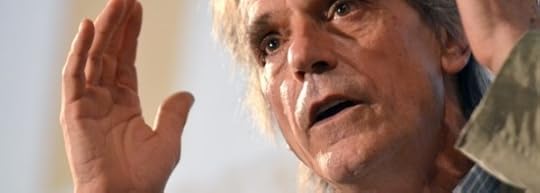
Before the Patmos screening, Trashed had passed me by. Only, it doesn’t have to have passed any of us by, because it only came out late last year and it isn’t even yet out on rental.
So consider this a Bat sign in the night sky. Let’s get Trashed trending. Let’s ensure Jeremy Irons and Candida Brady are heard and that their movie is seen… “come what may”. Tweet @TrashedFilm and this link to the trailer:
http://www.youtube.com/watch?v=7UM73CEvwMY.
Then VOD it through Vimeo for $5.99. It’s coffee shop money, certainly worth 98 minutes of your time.
See it, tweet it, trend it. Please. And if you don’t, I might just tell Jeremy. And you can trust me, you don’t want that kind of awkward.
SP.


September 14, 2013
THE VISIBILITY OF THINGS
Why brands need to be Very Present & Very
There
There’s
irony in the way branding has borrowed from the language of utility companies.
Utility
companies?
After
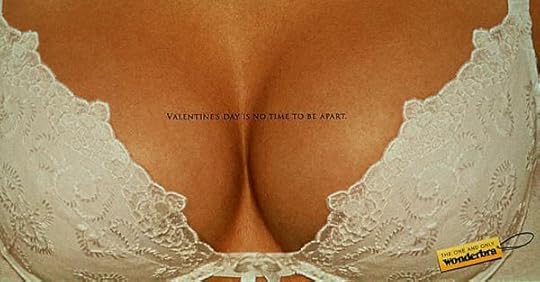
the picture, that’s maybe not the opening sentence you were expecting - but I
assure you, everything will link up. I am though going to have to ask that you stop
thinking about that picture for a moment.
Great.
Thanks. And yes, utilities, as in gas, water and electricity, the ‘Very Very
Useful Stuff’ we can’t really live without.
Brand-builders
would figure “utility” to be a rather useful word to borrow, given it reminds everyone
that brands must make themselves useful to people - given there are few better
examples of those daily essentials than the stuff the utility companies
provide.
Only,
I think we’ve just fished out a herring of the very red kind. (No, it wasn’t
hiding in that cleavage.) Because how do you feel about your utility providers?
When did you last give your electricity a moments thought? And that’s because this
is the 21st Century, where utilities are meant to work - and so, we
don’t actually give two hoots (arguably not even one) about our gas, water or
electricity, because it’s “always there”, almost never “suddenly turned off”.
Gas, water and electricity might be essential to our daily lives, but they are
givens, they are “invisible essentials”. And the moment something becomes truly
assumed and taken for granted, it becomes invisible… and forgotten.
And
for brands, Invisible & Forgotten is the equivalent of Arsenic &
Cyanide.
VERY PRESENT & VERY THERE
Decent
broadband, an always-in-range wifi connection, will inevitably become another
“invisible given”, once it’s become truly ubiquitous. But we’re not quite there
yet. We can still lose signal a little too often. And consequently, we’re still
grateful of our broadband, still offer the odd silent thanks to a Virgin or a
Sky, because it can still occasionally
be taken from us, a 5-bar signal or fibre optic suddenly at the whim of a
capricious God or mischievous gremlin. Take something away, and its very
disappearance creates fresh and potentially urgent wanting.
But
I’m not right now suggesting brands be built by occasionally making themselves
scarce, the figurative equivalent of turning off the tap or lights.
I
am however suggesting brands can be
built be being ‘Very Present’ and ‘Very There’ in the right kind of way.
Now
the fact our appreciation (of a thing) is born of things making themselves
present and visible – well, that’s why we have brands in the first place. Because
branding makes products conspicuous. It gives them profile. Apple. Nike. These
are not shrinking violets. Their advertising positions them as social peacocks;
life-and-soul-and-look-at-me of the party types. Apple’s “products”, Nike’s
“products”: they try and make themselves front-and-centre in our everyday. We can’t
help but be aware of that which makes itself clear and highly visible to us. Apple
and Nike are but two examples of brands that shoulder-barge the competition in
order to get right in front of us. And it’s from that awareness that our potential
understanding and consequent appreciation for them may then grow.
Now, Derida (1930-2004) would have argued that “nothing is ever present”,
because everything can be so deconstructed to a point where any sense of
meaning is stripped away. If you follow that line of logic too far, everything
starts to unravel and the world becomes horribly confusing, awfully quickly. So
let’s not. But if we play (carefully) with Derida’s proposition, we can also
take it somewhere cheerful. It’s reasonable to suggest that things can be
present (and understood) to varying degrees. Some a lot more so. Some a lot
less. As a brand builder, I’m interested
in making things, objects, products, present in ways that people find urgent
and profound. Enter, stage left or right: Branding. Branding grafts meaning on
to things. It can make something present.
The French sociologist Jean Baudrillard (1929-2007) suggested
companies don’t manufacture objects, but rather signs - a running shoe is not actually
a running shoe, but the semiotic suggestion of a running shoe. A bra is not…
you get the idea. However you want to look at things, whether as objects or signs,
I say it’s a helluva lot easier to “look” on anything if it’s up close and
personal and staring you in the face. Which, yes, I guess takes us back to that
opening photo.
So
you bet, a brand needs to be useful, and better still essential, like the water
and the gas, but never invisibly so. “Out of sight” is not only out of mind,
but also out of heart, and too quickly an after-thought. Absence doesn’t equate
to increasing fondness. Successful brands make themselves frequent and “Visibly
Essential”. There are times when “in your face” can be a very good thing.
SP.
Article as also appears in: The Huffington Post and Emerging Spaces.

August 27, 2013
Savouring the Metaphorical Sunsets (an interview with Riffle)
Have you checked out Riffle Books (www.rifflebooks.com) yet? Their site's great and I'm a big fan of what Riffle are up to. And they kindly wanted to ask me a few questions. The interview is below, and also lives here on their blog.
1.
How did 'Digital State' start? Why did you take on this particular book project?
The book started as a conversation with my
publisher, Matthew Smith, at Kogan Page. We were talking around how the digital
age is reshaping society, how we all have a data trail, how it’s a fine line,
razor sharp in fact, between a transparent world and one that invades privacy
and civil liberty.
There was then another conversation over supper with
Helen Kogan, about how different (or not) Facebook is to being a teenager
hanging out at night by the bus stop. It’s a long story, from a very social
night. But long-short, these two conversations sowed seeds and triggered
questions like:
How is society evolving, as a consequence of
technological change? How has this invisible
technology, “digital”, become this cultural contagion that we’ve all bought
into but also can’t escape? How has the very idea of the Nation State changed,
been usurped even by this “Digital State” we’re in?
Once these questions started fizzing around, there
was no real turning back. You have to look for answers, otherwise it becomes a
set of whispers that can send you crazy.
2.
What did the experience of writing this book teach you about your
writing/writing process?
Before ‘Digital State’,
I’d written one novel and one other non-fiction title.
My novel, ‘Remember to
Breathe’, is 90’s set, in a time “Before Facebook”. It’s part rom-com, part
rites of passage, part gender satire - which sort of nets out at genre-bending.
My previous non-fiction title, ‘The Better Mousetrap’, is all about how brands
must keep re-inventing if they are to retain fame and consumer following.
This new book, ‘Digital
State’, was a very different experience to the other two. Where my first two
books were personal journeys - though the content of each coming from very
different places - Digital State is an anthology. 16 chapters, 14 contributors.
My role was as writer and editor. It was a shared journey; an ever-so precarious
adventure more akin to forming a garage band.
3.
So, the idea of ‘Digital State’ following an anthology-album felt important?
Yes, very much so. Tim
Berners-Lee described the internet as a “collaborative play-space”. Very
simply, I wanted the format to reflect the theme, to be a collaborative
discourse. And so I sourced my own crowd; loved the idea of inviting people I
know (friends and experts in their respective fields) to form our own band and
see what kind of album we could make.
I figured there was one
future where we might go multi-Platinum, and another where there’d be blood on
the garage floor - y'know, mixing in with the puddles of engine oil.
4.
Which writers or books have had a significant impact on you and how?
‘To Kill a Mockingbird’ and ‘1984’: for me, two
novels that example fiction at its most profound and fundamental. They’re
almost a kind of companion-set and commentary on human nature and our potential
for good and otherwise. I first read both in my teens, in the same year, and
they were massively influential and informing, part of my reading rites of
passage.
Stephen King and Carl Hiassen were also serial
contributors to my rites of passage. No one builds suspense like King. No one
does Florida odd-ball better than Hiassen.
Luke Rhinehart (for The Dice Man), Stephen Fry, and
Iain Banks: all essential mentions for the impact they’ve had on me. And I’d
add into the mix two debuts: J. McInerney’s Bright Lights, Big City and Bret Easton Ellis’s Less Than Zero.
For pure escapism, that doesn’t get more rich,
vivid or downright stylish: anything and everything by Philip Pullman and Ian
Fleming.
And I always feel a little smarter and a lot
humbled reading Norman Mailer. ‘The Fight’ is as good as (sports) writing gets.
5.
Are there any talents or skills you are currently cultivating?
This is where I’d like to say something that sounds
cool and snappy, like, I’m learning sax, or, I’m teaching myself Mandarin. Only,
I’m not learning sax. I’m borderline tone deaf, was told to mime playing the
recorder as a kid, and the closest I’ve got to mandarin is eating one.
I think being the better version of yourself is a
fairly planet-sized challenge that’s healthy to look straight in the eye once
in a while. Being a parent, and trying to do a good job at it, is a lifelong
challenge. Trying to strike the right kind of work-life balance can be damned
hard too, because it’s too easy to get sucked into projects where it’s hard to
step back.
The French poet Anatole France once said, “Our
passions are ourselves.” I’ve always loved that line. Our passions define us. By extension, I think ‘Our
obsessions are ourselves.” They not only explain us but help explain what we
accomplish. I think any success comes in part from being obsessive - but the
trick is to not sacrifice all else when you’re in that obsessive place.
Perspective, balance, priority; I’m trying to
cultivate abilities in all three. I figure I’m a permanent
work-in-progress.
6.
Is there any technology to which you find you are particularly addicted?
This question is, of course, very pertinent to some
of the themes in Digital State.
It’s fascinating to me that technology has even become
a thing of potential addiction, a 21st century narcotic for most of
us. We’ve suddenly all become technophiles.
This sensation of not feeling connected, of not being with our mobile phone or an
internet connection, is creating a very new sense of estrangement and alienation.
At the same time, having that connection is potentially disconnecting us from the physical and emotional moment. With
social media, we run the risk of developing a ‘curators conceit’ and turning
ourselves into the biographers and
chroniclers of our own digitally abridged and polished life-narratives.
I’m coaching myself to try and feel good about being
out of wi-fi area once in a while.
7.
If you could instantly change one thing about the internet, what would it be?
The internet is changing all the time – so we
really have that very opportunity. The important message is: whatever the
internet is today, we can change it, can improve it. The internet is a
reflection of who we are, good and bad. We’re really holding a mirror up to
ourselves. So the challenge and invitation is that the internet reflects us at
our best; that we ensure it brings out the best in us.
Open-source isn’t the same as laissez-faire
and I don’t think the internet should be all laissez-faire and self-regulation.
There have to be some checks and measures in place, some stewardship and good
governance. Ensuring the global digital super-brands like Google don’t become
global monopolies but remain answerable and accountable would be one “instant
change” that’s easier said than implemented. Ensuring young people have more
anonymity and greater protection when online also requires swift and decisive
attention and action.
The internet is still in its Wild West years, with
some panhandling and others trying to sell us snake oil. It’s all very exciting,
but not all gunslingers are good guys. We need to have a much clearer sense of
who’s wearing the white hats and who’s dressed in black.
8.
What do you consider your greatest achievement?
My children. No question. Easy answer. I know almost
anyone can do it, become a parent; that almost all of us are made biologically
capable… but I still find the concept of having children remarkable. You become
a parent, and your only point of former reference is when you were a child
yourself. No one - outside of the caring professions - is equipped with any
previous experience. So from day one, it’s a crash course… in what can feel
like free falling.
Getting to witness and be part of my children’s
lives is amazing, the greatest privilege... and yes, a fairly frequent test of
patience.
9.
Finish this sentence: When I was a kid, I wanted to grow up to be. . .
Y’know, this question always worried me when I was a
kid. Because I had no idea. At least, no realistic idea. James Bond looked like
he was having a pretty good time, but beyond a life of romantic espionage,
exotic travel and alluring femme fatales, I had no clear back-up plan. So if
you’d asked my 12 year old self to finish the sentence, I’d have drawn a
troubled blank. By the time I hit my late teens, I knew what I really wanted to
be was a writer, but I’ve always looked upon writing as more of a passion and
vocation, rather than any sure-fire way of paying the mortgage.
Stephen King’s line in ‘On Writing’ is genius, where
he says, “Writers write.” In other words, doing is being. I love that, because
it kills any doubts, cuts through the crap and tells you to get on with it, or
get on with something else. Advice rarely gets more sage.
10.
If you could give your past self one piece of advice, what would it be?
Savour the moments, as they happen, when they
happen. Truly, feel them. ‘The Present’
is a tense I think many of us could live in more. It’s so easy and tempting to
be looking forward or reflecting back. We live in ‘The Past’, nostalgically,
regretfully, re-running, even re-writing. We live in ‘The Future’, planning,
worrying about the ‘what if?’ and aspiring to the ‘what might be?’
A little clichéd as motifs go, but I find sunrises
and sunsets provide jarringly poignant moments of ‘Right Now’. I still need to
heed my own advice much more – because I can get carried away thinking forward –
but I’m trying to savour the metaphorical sunsets.
SP.

August 21, 2013
THE ROAD TO SOMEWHERE
What the future of branding has in common with Tony Stark,
Charles Revson & Archibald Leach
We
all want to live better, fuller, richer, more complete lives. We don’t want to
live by half measures, be Some Kind of Schmuck, Average Joe or Journeyman.
A
‘Human Truth’, our ‘Human Condition’: we aspire to dream big and chase those
dreams. We want to be in control, take control, master our own destinies, shape
our own narratives.
To
almost all of us, all of the above sounds all good - because being all you can
be is a highway to happiness, a smooth blacktop gun-barrelling towards that perfect
sunset.
And
here’s the thing: I think brands and advertising, in some small way, can help
us on that road. Yes, I really do. Only first, we need to drop the “advertising”
label and call it something else.
TO ADVERTISE
You
see, “advertising”, the verb, by dictionary definition does itself no favours.
to advertise – the verb
to call attention
to something, in a boastful or ostentatious manner, in a public
medium to induce people to buy.
Ostentatious.
Boastful, these are not particularly likeable qualities. These are
not the kind of human traits we seek out in others, with a view to then making
them our friends.
Advertising,
by definition, is ineffective communication, because it’s
so unlikeable.
But
let’s flip it. Instead of “boastful and ostentatious”... let’s consider any
experience or encounter that feels tailored to us and our needs... or any
message that demonstrates a benefit to us, that (crucially) puts us at the
centre of the universe and in the driving seat.
When
advertising truly knows its audience and places a brand in the context of its
audience’s needs, it ceases being advertising “by definition” (while suddenly
wielding enormous power to persuade, create desire and want).
THE BRAND FORM: NEWLY EVOLVED
Now,
“consumer-centric messages” is nothing so new. The finest Madison Avenue output
of Don Draper’s day observed the truth that successful advertising must make
its appeal to human truths, to human wants.
However,
50 years on, in a world gone digital, the ‘brand form’ has newly evolved. Social
Media Brands are so successful, very simply, because they let us build the idea
of ‘The Me I Want to Be’. They allow us to chronicle and edit an online self
that conforms to the more idealised and satisfying versions how we wish to see
ourselves.
In
this Digital Age of ours, “media” has gone from mass to personal, and not just
personal, but intimate and expressive. “Media” is a thing of self-expression
and social affirmation and lifestyle curation. Digital brands, social media
brands, are potentially the most narcotic and charismatic evolution of the
brand form - and not because of what they say about themselves - but because of
what they allow their users to say. Digital brands take a back seat, rather
than trying to hog centre stage. Ironically, brands today become successful by
letting their consumers be “boastful and ostentatious’. And physical brands are
quickly learning from their social media successors.
Consider
a successful physical brand like Nike. Nike has gone native; has become a
digital native, in order to survive. The Nike brand is no longer selling running shoes. The business sells
running shoes... by building a brand world that orbits the consumer, in the
form of Nike+, which is all about making it easier to live and express a ‘Just
Do It’ lifestyle.
Consider
the ever-expanding gap between Sony and Apple. Sony still try and sell
hardware. Apple sells a “lifestyle ecosystem” of software and hardware that
looks to provide a cooler, hipper, somehow “more fun” and more creative world
for people. Love or hate Apple (and for most it’s the former), but Apple shows
genius for creating covetable products that become part of a bigger, equally
covetable “Think Different” world – even if that world is largely illusory.
DREAM WEAVING & FOURTH
DIMENSIONS
Advertising
has always been about selling The Dream. Revlon founder Charles Revson acknowledged that he manufactured cosmetics... but sold hope.
(Revson was a seriously shrewd character.) In acknowledging that so many of us aspire to a life
more remarkable, we’re seeing brands become ever-more-imaginative dream
weavers.
This
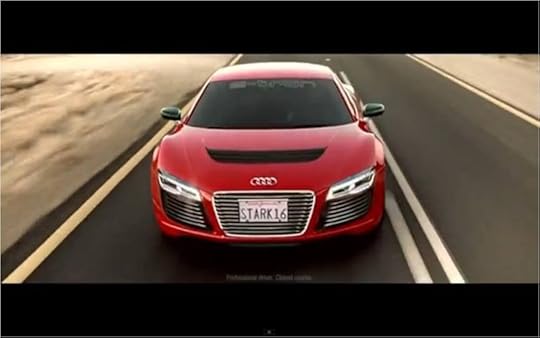
Spring we saw Audi adopting Tony Stark, “genius,
billionaire, playboy, philanthropist” as its brand
ambassador. The new Audi R8 we learned: “engineered for Iron Man”. Audi’s
strapline, “Truth in engineering”, but with an aspirational allure borrowed
from the world of superhero make-believe.
Without
superhero assistance, but in similar sentiment, Jaguar recently launched its
new F-Type by asking, “How alive are you?” and telling us, “It’s your
turn”.
Brands
– physical and digital - are at their best when they put us in that driving
seat, when they invite (and even better empower) self-narration.
An
interviewer once observed, "Everybody would like to be Cary Grant".
To which Grant replied, "So would I." No one knew better than
Grant that he’d have likely had a very different career, had he not ditched
Archibald Alexander Leach.
Today’s
Revson-shrewd brands know that no one wants to be Archibald Alexander Leach...
and that even Cary Grant didn’t start out as Cary Grant. He had to build that
particular edifice, same way we all do. And brands are becoming tools that help
build those edifices.
Where
mobile technology is now augmenting our reality, advertising is (more than
ever) exaggerating our reality, blurring the boundaries, inviting fiction in, and
(crucially) putting us in the driving seat. We’re seeing advertising collide
with a kind of hyperbole. In mathematics, “hyper” is used as a prefix to denote
4 or more dimensions - and advertising is encouraging a fourth dimension to take
shape, where brands and consumers join in co-creation.
“Advertising”
still needs a new definition, and it’s not “hypertising”, but one thing is for
sure, brands can help in our road to somewhere. Happy motoring.
SP.
Article as also appears in Strategy Online.

August 1, 2013
BALL & FLINT - TRANSMEDIA IN 90 SECONDS
I rather liked the idea of taking a very thin slice from between the pages of 'Digital State', and turning it into a piece of promotional content, that was both a single idea and (hopefully) held a little value in its own right.
The result was 'Ball & Flint'.
It's about storytelling in a digital world... expressed in 90 seconds... through a metaphor.
Yeah, it'll make more sense just watching it.
Director & Producer: Babis Tsoutsas
Motion & Graphic Design: George Zestanakis
Script & Narration: Simon Pont
And to Babis and George, massive thanks.
SP.

July 19, 2013
SCREAM, DON’T SCREAM, EITHER WAY: WE’RE GOING FASTER
You’re
in it. I’m in it. We’re in it. Together. Riding this light cycle. VZUMMMM! And
you betcha, it’s a rush. Knuckles white. Eyes wide. Unblinking.
Only,
it’s not clear who’s driving... or indeed if anyone is.
Park
the metaphor. Curb the light bike. And what am I talking about? I’m talking
about CHANGE, and the state it’s in, accelerating, ever faster, zigging and zagging
like hell. I’m talking about our ‘HERE & NOW’, this revolution in our
lifetime, turbo-charged, where social, cultural and commercial change is
“technology-driven” and definition-destroying.
Boil
it down to its absolute binary simplicity, to its zeros and ones, and I’m
talking about this crazy pace and the place we all live in – the Digital State.
THEN...
Let’s
back it up, to when the cyber cycle was physical, petrol, pedals and all, a
tangible illustration of something pretty conventional to ride and collectively
understood. We once lived in a relatively fixed bearing world. The compass
points were set, meaning we could triangulate within the frame. Navigation, the
way ahead, was clear. “Conventions” were time-honoured because they worked, had
proven themselves, had stood the test
of time. “Practices” - formal and informal ways of doing things - came with a
comfortably predictable level of likely outcome. “Things” had names and
definitions that were commonly understood by all.
THEN, EVERYTHING CHANGED.
Or
at least, that’s kind of how it felt.
We awoke one morning to a digital dawn where it felt, just a
little, like we’d arrived and were now eating breakfast in the future. We’d all
become Buck Rogers, stirred from cryogenic slumber, with “recent memory” suddenly appearing rather
greasy-lensed and sepia.
Because
“today” is a place where technology knows no bounds. And that’s the first big point:
technology isn't what it used to be. Isn't
what it once meant to people, to me, to you, to all of us.
“Technology”
was once a thing (mostly) confined to physical form. A top-loader. A set-top
box. Technology was wires and transistors on the inside, contained in metal or
plastic. Technology was something you could hold in your hand, could get your
head around: a VCR say, or the light bulb, each liberating, each causing lifestyle
changing ripples in their respective small and big ways, but simple and
tangible.
Then
Jobs and Dyson came along and made tech look
good, married higher function to curvy, desirable form. And suddenly technology
had sass and sex appeal, where having
and using it made you feel good. And that was a sizeable
evolutionary moment: when technology stopped being technical and contributed to
how it made us look on the outside and feel on the inside. Suddenly, we all
became technophiles. But that was only a precursor
to the Digital State, just a teaser trailer with an early advance poster.
BECAUSE THEN TECHNOLOGY
VANISHED.
Because
then... “technology” crossed the divide, went digital, became invisible. “Post
aesthetic”; a bigger evolutionary leap.
Technology
went from having a place and knowing its place, and became everyplace, disappearing
by virtue of ubiquity, becoming everywhere and nowhere. Our photos and films
and CD collections: now binary wisps of ephemera, where we feel reassured and take
thrill in the thought of our “content” being backed-up and cloud-based. Because
it sounds cool, our invisible stuff, living
in an invisible cloud, as if we’re the cool-cat citizens of Lando Calrissian’s
Disco City in the Sky.
Now
that technology has broken free of its physical form, gone airborne, fully
mutated, it’s become a cultural contagion and a bug we've all been bitten by.
AND WHAT DOES IT ALL MEAN?
It
means we now live in a DIGITAL STATE, this fusion of physical and digital worlds,
where we no longer do the simplest things the way we used to, where we no
longer jog the way we used to, socialise the way we used to, or even listen to
music the way we used to.
It
means the simplest words don’t mean
what they used to. Ever so quickly, let’s just consider three...
VIDEO: once a prefix for tape or cassette, but that we now
think of in terms of movie clips and YouTube, and where “Roll the tape” is a
nostalgic but ultimately nonsensical expression. Because, of course, there is
no tape.
TV: something that once described the physical box in the
corner of your sitting room... that still describes the flat panel perhaps
hanging on your wall... but that might as likely describe programme “CONTENT”
that you potentially watch on your... phone.
And this strange catch-all, shape-shifting noun - “CONTENT” –
promoted, career fast-tracked in a world under digital management, to encompass
so many meanings... where the challenge is for two people to sit down and talk
about content... and for them to both mean the same thing.
Three once simple words – VIDEO,
TV, CONTENT - now not so simple. Our words and our understanding of things and
our “ways of living”, they have all undergone radical change. Sitting behind
these three simple words are billion dollar global industries in massive flux.
“There is nothing sacred about convention; the fact that a convention
exists simply indicates that a way of living has been devised capable of
maintaining itself.”
George Santayana, philosopher, poet, novelist.
We only have to flip Santayana’s observation around to
appreciate the implications and relevance to our “Right Now”. For businesses to
thrive, they can no longer behave the way they used to. They can no longer survive the way they used to. To maintain themselves, they must adapt.
Our digital age is only just entering its second act; now maturing,
again mutating, and demanding that we all get wiser about it and wiser with it.
For the commercial world, the “state” cannot be one of stasis or
procrastination, of self-imposed paralysis or sit-back-and-wait-and-see. Those
businesses that do will get left behind, out in the cold, stuck in the tar like
over-sized out-of-time dinosaurs. Stuck. Left. ‘The End’.
All businesses are now digital businesses, because we
all operate in a digital world. Originally, one would reflexively think of
“digital businesses” as tech start-ups. Social Media brands and apps companies
and outfits with a Mountain View zip code would jump to mind. But these new
entrants have in fact become keyholes, revealing the form and shape that all business must adopt. The adopted behaviour
is constant adaptation. Where those original “digital businesses” started off
with one vision and business plan, they quickly morphed into something else,
and they were happy to do so. And they will keep morphing. This is the game
they are in. This is now everyone’s game, where we are all a permanent work in
progress. I was talking to a friend the other day, Stewart Easterbrook
(CEO at SMG UK), who simply nailed it with: “It’s a world in beta.”
Vincent
Now we gotta make the best of it, improvise,
adapt to the environment. Darwin, shit happens, I Ching, whatever man, we gotta
roll with it.
Source: Collateral (2004)
The consensus in most boardrooms today is that whatever
industry vertical you’re in, your (current) industry is going to be unrecognisable
5 years from now. Our status quo is one of ‘status: shift’, a Darwin thing,
which has taken the form of a digital thing. And to quote an in-character Tom
Cruise, we all gotta learn how to roll with it.
Welcome to the Digital State.
SP.
For the chance to win a free signed copy of 'Digital State', go to MediaTel by clicking HERE.
To read reviews for 'Digital State', click HERE.
And to buy a copy, try HERE.

June 30, 2013
THE BOOKBAG INTERVIEW
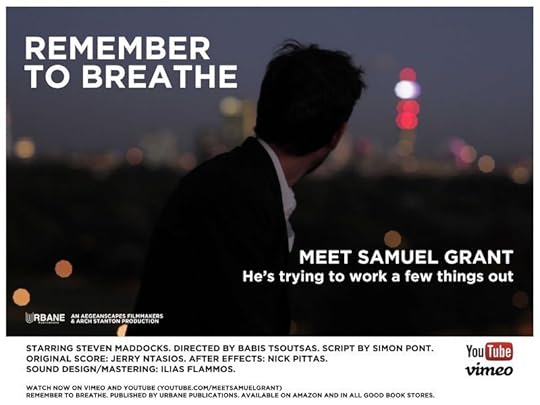
Here's a copy of an interview I did recently with the very lovely people at The Bookbag...
When you close your eyes and imagine your readers,
who do you see?
It’s a lovely question, though the shape and form of
“who” isn’t exact to me. I wrote ‘Remember to Breathe’ for people who love
fiction, who enjoy characters and love the escape and fun they can give;
whether it’s being in the moment when you’re lying on a beach, bending the
pages of a paperback with that smell of warm skin and sun cream in your nose,
or whether it’s being taken out of the moment when you’re riding the District
Line into work on a grizzly day. I know that all might sound a bit lyrical, but
what I’m trying to say, is that when I close my eyes, the images are less of
who and more of where, of where
people are reading. That’s what I see.
I’ve got to ask: how much of your hero, Samuel
Grant, is autobiographical? And if so, do you have any regrets?
You’re not the first to ask. Well, they do say you
should write about what you know... and by extension, who you know. There’s a
lot of people I’ve met and know who provided starting points for the
characters. And I of course include myself in that line-up. But then, it was
just a case of going to town, exaggerating like hell, and letting all of the
characters come to life and show me their stories.
And while, sure, there’s some of me and a whole lot
of other folk I know in Samuel Grant... I think there’s a little bit of Samuel
Grant in all of us. My hope was to try and create an archetypal male character,
someone that reflects his time, an anti-heroic type who’s trying to be heroic.
And I think Sam’s originality stems from his self-awareness, and his ability to
emotionally articulate, and be so honest. Male characters are so often stereotypes.
Think: strong, silent, matinee-idol throwbacks. By contrast, I think Sam holds
his own exploits in ironic disdain... yet he still wants to come out a hero and
a winner and a good guy. It’s in creating these dynamic tensions and contradictions
that hopefully makes Sam feel very real to readers – and then also leaves them a little conflicted as to how they
should feel about him.
And no, no regrets. At least, not yet.
Is Adland really like that?
Adland is no different to any other industry
badlands, in that there are lunatics and rednecks with shotguns, just like
every industry, and maybe some hungry tigers too. But adland is more good than
bad and arguably closer to a Narnia, a place of friendly lions where new
frontiers are forming all the time.
I love advertising, when it’s done right, where
it’s a case of some very creative, intelligent people being intelligent and
creative and achieving brilliant things.
On the flipside, I think “workplace nonsense” is
over-ripe for full-tilt parody and derision. In RTB, the depiction is a thin
slice of the dark side, skewed, Sisyphean – and it is a side that also rings
true for people.
I’ve always associated your name with non-fiction
writing. What persuaded you to move into fiction?
Funnily enough, it’s actually the other way around.
Writing non-fiction was actually a bit of a later-dawning epiphany, that came
after I’d written ‘Remember to Breathe’. The novel predates the non-fiction
titles, and I kind of persuaded myself to write a book on brands and media.
As people would imagine, writing fiction and
non-fiction are very different endeavours. Creatively, they come from a different
place. For me, writing fiction takes up a lot more head and heart space, where
it’s not so easy to switch off - but also, where you don’t necessarily want to
switch off.
Though there are cross-overs too, in that I look to
write non-fiction with a strong authorial voice and writing style, and where
the ideas and themes hang off cultural pegs that people are hopefully familiar
with. I think the challenge with non-fiction is to give it pace, to frame the
subject matter in a way that’s very accessible and page-turning.
Quite a few people have asked if we’re going to
hear more about Sam Grant. Are you planning a sequel?
When I finished Remember to Breathe, I actually,
very genuinely missed the characters. The novel is character-driven, and one of
the greatest pleasures for me, and a kind of proof that it works, is that
people who read it typically ask, “What happened next? What happened to Sam, to
Tam, to Jamie?” When I completed the novel, I remember wondering the same thing.
There is an appetite for a sequel. It would be
fascinating to contemporise what is a nostalgically-set group of people; to
turn pre-Facebook Twenty-somethings into present-day Forty-somethings.
Some have even suggested a prequel, maybe an
early-90s university year’s story. Whether a sequel or prequel, the creative
challenge, I think, would be achieve the right balance of character and
narrative. Because we now know the characters, their core personalities, and so
that initial novelty is gone. So there would have to be more external story,
throw more slings and arrows at Sam. And the trick would be to do it in a way
that was still original, without turning proceedings into a rom-com farce or
faux “on-the-run” thriller. Pitfalls aside, working it all out would be huge
fun.
I was very nearly put off reading the book by the
comparison to Bridget Jones. How do you feel about it?
In all honesty, it kinda worries me. The Bridget
Jones comparison is nothing more than a reference point that’s immediate for people
– a promotional device, to cite a familiar literary character where some
parallels could be drawn. The danger, of course, is that then some may suspect
Sam is some kind of rip-off, or was somehow “inspired by”. Maybe if Bridget
Jones and Patrick Bateman had a love child, you’d net out at somewhere near
Samuel Grant. But again, I’m reaching.
The fact is, Samuel Grant isn’t born from other
literary places. He doesn’t come out of fiction. He comes from life, a creation
I wanted to capture in fiction.
Where and how do you write? With or without
music?
I can write pretty much anywhere. Which is more out
of necessity than anything. I have three young children, so time and time to
write isn’t in abundant supply. But my wife is very supportive and helps me
carve out space. And then, it’s also about being active in the down-time. I’ll
write “emails” to myself on my Blackberry. Smartphones with touchscreens don’t
work for me. I like real, physical, very analogue buttons. I can rattle out
paragraphs on my Blackberry that I then email to myself, where I’ll later throw
it into a Word document and see where it takes me.
But ideally, my lap top, a little peace and quiet
and a second coffee-of-the-day at my side, and I’m a very happy guy.
Though curiously, I find music distracting.
What are you reading at the moment? What’s
your desert island book?
At the moment: William Boyd’s ‘Waiting for Sunrise’.
I’m really enjoying it – I love the historical 1913/14/15 context - though I’d
have loved him to reconsider the title. Personally, ‘Waiting for Sunrise’ is
generically forgettable. But then, his previous, ‘Ordinary Thunderstorms’, was
a great title but I found it a less satisfying read.
And if I was packing for a desert island, I might just have to find room
for two; simply pack fewer shorts. As some sort of record, how about ‘To Kill a
Mockingbird’ and ‘1984’, a kind of companion-set and commentary on human nature
and our potential for good and otherwise. Both novels example fiction at its
most profound and fundamental. I first read both in my teens, and they were
massively influential and informing, part of my reading rites of passage.
Of course, if my other
suitcase washed up on shore, the one with all the books packed in it, then all
sorts of guys would spill out onto the sand: Norman Mailer, Stephen King, Carl
Hiaasen, Luke Rhinehart, Ian Fleming, Stephen Fry, Philip Pullman, Iain Banks.
You’ve got one wish - what’s it to be?
Health and happiness; what else is there?
What’s next for Simon Pont?
Summer
with the children. Sunshine. Family time. New schools and back-to-work in the
Autumn. And, with hope, a clear intention on the next writing project. At
present I’m juggling and torn (makes coordination hard) on which way to go.
Non-fiction or developing a new novel? But I don’t mind admitting, it’s a nice
problem to have.
SP.

April 27, 2013
Patrons & Pace Cars, Pilot Fish & Parasites
What
role do brands play in "culture", in society? What is their contribution?
Are brands
like pilot fish, connected by pre-coded design to their shark host, symbiotic, and
making a helpful contribution?
Or are brands more parasitic, more like
carpet-baggers, sucking up pop culture's fumes, rehashing at will, derivative,
just looking to exploit and make a buck by riding any bandwagon that's slow and
big enough to hop a ride?
Or maybe, it's more the other way round, the
contribution brands make more glowing and pioneering? Maybe brands are more
like crusading philanthropists or Daytona pace cars? Perhaps brands can be
original, can set the pace and contribute to form, to the socio-cultural shape
of things?
Of course, the truth is always a blend, with
exhibits easily cherry-picked to make any case to the jury. Because brands
cannot be pigeonholed anymore than people can be. Some brands are parasitic,
some more akin to pilot fish, and some, a select few, are closer to bold philanthropists.
I’d like the “select few” to become the majority. I don’t believe it’s possible
for brands to be too useful. In fact, I believe they should behave more like “Power
Networkers”, or even Texan oil billionaires.
The “utility
word”
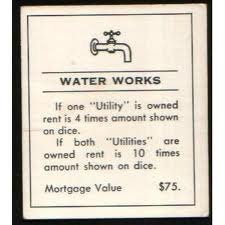
“Utility”.
It’s a popular word in the world of brands. “Brand utility” – that’s the phrase.
And it’s not a bad phrase, as phrases go. In fact, it’s a good deal better than
“not bad”; because it reminds everyone that a brand should always bring
something to the party, even if it’s just a half-decent bottle. Brands: they
should be of use.
As
the expression (more exasperation) goes, “Make
yourself useful!” It can just as easily be applied to brands as to lolling
and ever-so-slothful teenage off-spring. Brands can’t afford to slouch and
sloth around, taking up space, and offering nothing in return. No one wants
that kind of brand in their home.
For
me however, the “utility word” also conjures images of gas works and utility
bills and the not-so-sexy properties you can buy on a Monopoly board. And who
wants to buy the water works, when you can buy a slice of Pall Mall or Mayfair?
So
while, in brand terms, the “utility word” is good, it isn’t great. I don’t
think it goes far enough. It isn’t ambitious or sexy enough. It isn’t owning a
hotel in Mayfair - and that’s the
desirability stakes brands should be shooting for.
So what’s
better?
I’ll
get to that, I promise, but let me start with suggesting this:
A
brand can’t give enough.
If
you want to “get”, if you want to be on the receiving end, of gratitude,
appreciation, adoration, respect, love even – and brands would love all of this
- then you’ve got do a whole heap of giving. You only get nothing for nothing. Consider
it quid pro quo. Consider it like karma. Or any other transactional dynamics or
behaviour-based economics. You get something for something. Sometimes you get
short-changed, other times you get a tip. But long-short: you put in, you get
out. It’s something the “Power Networkers” know very well.
You’ll
have met the type.
You
get certain folk who are just rather brilliant at “networking”. They’re great in
a room, can work it like they’re conducting a symphony. By consequence, they
seem to know everybody, collect business cards like it was narcotic, pack a Rolodex
so thick it makes ‘War & Peace’ look like a Krishna pamphlet. How do they
do it? What’s their knack?
Networkers
“network” by not asking and looking to take, but by permanently giving; by
continuously working the angles by which they can connect people and help them
out. And people like people who are there to help them, who are useful, who’ll
make their lives easier. It sounds possibly a little manipulative, whichever
side of the divide you look at it, but I think it’s really just about
appreciating human nature and the idea of there being benefits-all-round.
Am I
therefore suggesting brands should be more like ‘Power Networkers’? Certainly,
if they want to connect with consumers, then I am. But I’m suggesting more than
that. I’m suggesting brands become ‘Power Givers’.
Because
the fact stands: I feel nothing for the particular utility company who provides
my electricity. I could switch providers in an instant, if only I even possessed
enough interest to look into it and try and switch. But even that feels very
boring to me. Whereas ask me why I prefer Johnny Walker over Jack Daniels or
Absolut over Smirnoff, and I’m gonna take pause and proper thought before
weighing in with my reply.
The
truly genius brands are steering a course beyond useful, into a place where
they’re capable of making a more powerful and profound contribution. Truly
genius brands are in touch with ‘Power Giving’.
From utility to
humanity, via LA
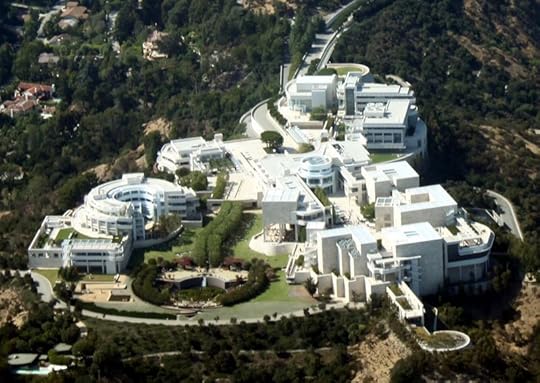
Have
you ever been to the Getty Center in Los Angeles? It’s a 110 acre parcel of
Santa Monica mountain side. The campus sits some 900 feet above the 405 interstate,
looking down on the LA skyline, out east to the San Gabriel Mountains and west
over the Pacific.
The
day I visited, it was very clear and very hot, even by LA standards of hot; late
August, late afternoon, no “June gloom” to provide a cooling gloop and stand in
for an absentee ozone.
The
mercury was nudging nicely over 90. On days like that, you walk around outside with
umbrellas, only it’s August in LA, so they become parasols. And because so many
of the Getty Center is so very white, so many surfaces clad in white
travertine, you wear your sunglasses low, to reduce the albino effect of a
searing sun bouncing up at you from the limestone over which you walk.
While
the Getty Center draws a curious architectural thread between Roman classicism
and mid-century modernism, that wasn’t the driving thought that had me mulling
when I visited. What I remember thinking most (as I twirled my parasol) is how
the Getty Center is a consequence of private wealth, a gift to the city of Los Angeles
(and to art and culture) by an oilman. The whole place is grandly impressive,
make no mistake, but it’s a bequeathing. Of course, I understand the spirit of
donation, but the vast scale of such ‘giving’ is rather foreign to me. You see,
I’m a Brit, spoilt for choice in London by so many museums and galleries and
public displays titled the ‘National’ this and the ‘British’ that – but that’s my
point. These London museums and galleries, the really big ones at least, are
very public in all senses of the word. I’m conditioned to “culture” being part
of a visibly civic responsibility. But the Getty Center demonstrates the power
of individual contribution.
Now,
I’ve always thought there’s clear reason why you hear the tag, “Billionaire
Philanthropists”. I’ve always thought I’d be pretty philanthropic if I too were
a billionaire. But I also appreciate saying that is a bit churlish and mean of
me. Because giving and do-gooding is simply good, and praise-worthy, however
you look at it, whatever your bank balance.
John
Paul Getty is attributed with the line, “The meek shall inherit the earth, but
not its mineral rights.” Funny, yes, but also telling in that he acted on the
observation by converting the profits of his
mineral rights into a public inheritance, into an endowment in “culture” to the
tune of 5.6 billion US dollars. The numbers make as lasting an impression as all
that travertine cladding the higher slopes of Santa Monica.
John
Paul Getty was a Power Giver. He made himself more than just useful. He had the
wealth, he had the fame and profile, and he chose to do something with it, in a
way that contributed and creates legacy. And I believe brands have this
invitation - by Getty’s example. Brands can play a similarly powerful role
within society and in their contribution to culture. This is a brand’s ultimate
role; the ultimate invitation to bring more than just a tidy bottle of
Californian red to the party, but to begin a legacy with all the permanence of
a white limestone monument. And they can do this by demonstrating not just
“utility” but, far better, genuine “humanity”.
Patrons, Pilot
Fish & Parasites
Brands
must show their humanity! I know, it maybe feels a little “grandstandy”, the idealism
feeling more over-baked than over-easy. But let’s spend just a short time in
its company.
Very
recently, I was in the company of a guy called Anthony Ackenhoff. Anthony is smart,
shrewd, and makes an inspiring compliment to a morning coffee. He also founded the
agency Frukt, a bunch of people who get out of bed every morning to try and “connect
brands and culture to entertainment”. It’s a cool thing to wake up daily and
try and make happen – because it’s about trying to make brands more than “just
useful”. It’s about giving them a role in something bigger than ‘consumerism’;
a constructive role in the Big Picture, that of society and culture.
When
I met with Anthony, we chatted some about brands as “patrons” and how patronage
feels like a sincere, genuine stance for a brand - though one that hasn’t yet
really taken hold the way it should or could.
For
me, patronage plays into power-giving and a brand demonstrating its humanity. And
what I like about patronage, in just the same way that Getty became a patron of
the arts, is that patronage reflects genuine passion. It’s sincere; something
you can't fake. It's about word and deed. Patronage gives a brand opportunity
to demonstrate a set of values and
beliefs it holds dear, that consumers can then identify with and relate to. It's
not about saying, we love art - we're a badge sponsor at Frieze Art Fair. It's
about, "we love art - we have a 'muse' programme that gives 1-year
bursaries to fresh-out-of-college art grads who want to become professional
artists."
Look
at Johnny Walker. Johnny Walker involves itself in a number of bursary
initiatives, ‘making real’ the spirit and sentiment of its founder. A belief in
progress and momentum is embodied in its ‘Striding Man’ logo and the mindfully
slanted label on every bottle (at precisely 24 degrees), but the spirit of the
brand is most tangibly evident in its various philanthropic programmes.
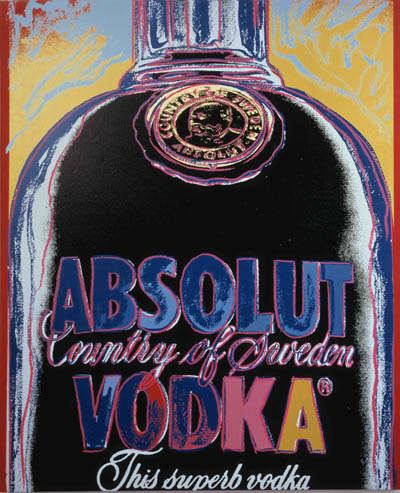
Consider
Absolut vodka. ‘The Product’ is a white spirit, but ‘The Brand’ is a slice of
iconic 20th century advertising as consequence of being a bona fide
collaborator in modern art.
In
1986, Andy Warhol was the first of what now amount to 850 commissions by
Absolut vodka. The brand’s modern art collection is one of the most valuable in
the world, and, as born of the Absolut’s patronage, is recognised as an
important part of Sweden’s cultural heritage. Modern art has inspired Absolut’s
brand expression, and Absolut has made a genuinely positive contribution to the
modern art movement.
Absolut
is visual proof that brands can be patrons, where patronage is a brand investment
of head and heart, in a cause that touches people. Brands ask for consumers to
love them, to be passionate about them. To do this, brands must run deep, must
love something too, must show what they
are passionate about.
Many P-Words
Brands
take many forms. They can be good, bad, or ugly. They can make contributions that
are large, small, or not at all. All sorts of P-words apply. They can be patrons
or pace cars, pilot fish or parasites. Some even feel like peeping toms or like
private investigators rifling through your garbage bins. Those moments of brand
“invasion” are trashy for everyone. On the flip, while I’m not suggesting any
brand looks to take a seat at the UN or starts petitioning against landmines, I
do believe in the potential of brands to help make the world a better place.
Be
useful to people and they'll want you around. The logic stands, and can be
applied to brand-building. Brand patronage is about acknowledging fundamental
human needs, but it is not about “utility”. It is about being more than
"useful". Along with physically needing warmth and light, we also
need their spiritual versions. We crave the heat and dazzling brilliance of
culture, of passions and pursuits that thrill and inspire us. Brands can play
their part in this. They can be equally human.
SP.

April 22, 2013
Music at the Digital Crossroads
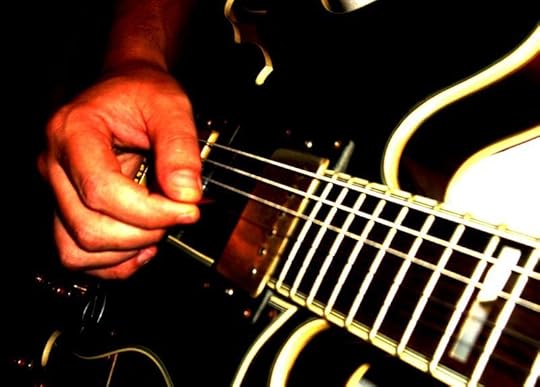
I recently (April 8, 2013) gave an interview with Music Forecasting, a US-based consultancy group who advise the music industry. They'd read 'The Better Mousetrap', enjoyed it, saw themes and parallels that play into their view of the world, and asked if they could have a chat. Here's what followed...
1. Do the concepts you outline in your book apply to music artists?
Without hesitation, music artists should think of themselves as brands. Of course, I appreciate that many do.
A brand is only as successful as its ability to entice, excite and thrill audiences. A brand aspires to fame, and needs to both retain its existing followers and draw new fans into its fold. The principles of how a brand does this, particularly in our digital age, are hugely informing and relevant to music artists.
Brands and music artists are in the same game, one of fame, fans and following.
2. What advice would give to a music artist on how to define their brand?
Think very clearly about how you’d describe yourself as an artist. Could you describe yourself in a headline sentence? What about if you had just 30 seconds to define who you are, what you do and why you’re different? And what might your strap line be; say, your own version of “Just Do It” or “Think Different”?
This would just be my start-point, but it’s a crucial start-point, because effective communication is about concision and punch. “Who are you and what do you want to mean to the world?” You have 30 seconds.
3. In your book, you state that brands must work harder today than ever before. Does that hold true for music artists?
Brands, music artists, quite honestly, everybody - everybody has to work harder, if they want to truly succeed and stand-out. The simple, and maybe slightly brutal truth, is that success is the consequence of being utterly determined and unrelenting.
The brands that succeed are the brands that never sleep. They continue to consider new ways of doing things, talking “with” rather than “to” audiences. They look to build two-way conversations. They look to re-enforce how audiences perceive them, and they look to subvert audience expectations of them.
Brands and music artists alike need to keep fans on their toes, have different kinds of conversations, build different kinds of rapports, stand-out by not fitting in, by not adhering to category conventions. Certainly, aspiring to be “original” and authentic is hard work – but it can only and always be worth the effort.
4. If a music artist’s brand belongs to the consumer, and in many ways the consumer is in charge—what advice do you have for artists to maximize their success in this new environment?
A brand's "health" will be tracked and trended against metrics like, "A brand for me". The language, the implication, is important. It's possessive. "Mine." "My brand." That sense of ownership rests with the consumer, not the marketing folks sitting around a big table at Abercrombie or American Apparel. And "brand for me" is no different to a “band for me," or "my team."
Sports fans talk about how their team performed in the first-person collective sense of "we," as if they too were in the locker room or on the field. Being a fan is mostly about the emotion, about feeling on the inside, of feeling and therefore being part of it all.
So you bet, the music we listen to, the bands and artists we follow, this reflects our taste and helps define who we are as human beings. Therefore, first and foremost, an artist’s brand being “in consumers hands” is the ideal place for it to be.
And then once you’re in that place, then it’s a lot about learning to let go, because you can’t control those Consumer-to-Consumer (C2C) conversations. But here’s the thing - you don’t even want to control those conversation.
The biggest brands and music artists in the world are the ones that are talked about – where consumers, fans, talk to each other. As the line from Oscar Wilde goes, “There is only one thing in life worse than being talked about, and that’s not being talked about.”
My first piece of advice to any artist would be to feel very good about being talked about.
To then maximize all that noise, all that chatter, music artists should consider how they give their audiences a role. Consider reality talent shows like ‘American Idol’ and ‘X-Factor’. Audiences have a clear role in the process. They bear witness to performances, they pass judgment with their voting, and ultimately, they go on that “emotional” journey with the contestants. Long-short: they’re part of it all. Even if it’s just in some small way.
An alternative, and much more retro, example...
The track, “Cum on Feel the Noize” was a huge hit for Slade, with subsequent and hugely successful covers, by Quiet Riot, Epic and Oasis. Now, I love this track, but for me, what I perhaps like best of all, is what inspired Slade to write it in the first place. It was an attempt, lyrically, to write the crowd into a song. Slade wanted to write a song about the experience of playing to an audience, to acknowledge that the audience defined the experience and their music. If they were just a bunch of guys up on stage, singing to themselves in an empty room, then none of it mattered.
The fans and the artist, like consumers and brands; this is a symbiotic relationship, a relationship between soul mates.
5. As a branding guy, what would you like to do with a musical artist that’s never been done before?
I’d love to stage something with a musical artist that plays on multi-sensory experiences. And weave that into some kind of experiential narrative, where the audience experiences a very deep, immersive, visceral, emotional experience… BUT where there’s a defined story architecture sitting behind it all.
Imagine: the feeling of being inside a Hollywood movie, with the kind of added stimulus experiences of being at a gig and an art exhibition. Sound, vision, scent, and story, all working together, aligning. The scientists call it “cross-modal” perception.
Of course, I haven’t quite worked out the details or the small print! But I conceptually love the idea, and I’d imagine the whole thing being linked by our personal tech devices, like our smartphones, where there’d be some kind of augmented reality graft on the “real time” elements, and our social networks would link and drop crumbs in the build-up to the event. It would be very cool.
6. Do you have advice for the music business in general on how to increase their business in the new digital age?
In terms of advice, it’s a positive message. The music business needs to keep doing what it is doing. Which is to say, it needs to keep adapting and trying to work it all out.
Music, and a love of music, is eternal. I love Nietzsche’s quote, “Without music, life would be a mistake.” No one’s proposing making a mistake anytime soon. Quite the opposite, the social media feeds show that “music” is in bionic shape. Fans sent over 14 million tweets during the 2013 Grammys. Grammy-related content generated 43 million likes and comments on Facebook. Soundcloud recently announced that they’re seeing 10 hours of audio being uploaded every minute, with 180 million people accessing their platform every month.
I think by being one of the first industries to stare into the digital void, the music industry is amongst the first to start seeing silver linings. The music industry has now been wrestling ‘The Big Digital Dilemma’ for the last 14 years - and in that wrestling, in being compelled to innovate, there are so many examples of artists demonstrating brilliant adaption.
Simply, I think we’re seeing music artists being more open-minded and opportunistic. We’re seeing the power of celebrity meet “brand stretch”, and the various ways that can consequently manifest...
Consider a recently-turned-40 Liam Gallagher and his very successful “Pretty Green” clothing range. Consider the “Official Justin Bieber Fragrances Channel” you can watch on YouTube. Consider Alicia Keys unveiling her 21 Pinterest boards, named after the tracks from her album ‘Girl on Fire’, the boards a visual expression of the themes within the album. Consider almost everything about One Direction. Those guys only finished third in 2010’s ‘The X Factor’ (UK), but they’ve now sold over 14 million singles and 8 million albums, contributing to a business empire worth over $50M. Morgan Spurlock is currently directing them in a 3-D movie.
Across the music business, there are many examples of “go-your-own way” behavior. My Bloody Valentine chose to sell their most recent album, ‘mbv’, directly to fans. And they were simply following in the footsteps of Radiohead. The launch of 2007’s ‘In Rainbows’, a digital download where consumers could pay what they wanted to, made self-releasing albums an act of innovation rather than desperation.
Forging new associations and partnerships with brands, extending into clothing lines, making 3-D movies: I’d firmly argue that none of this is “selling out”, where once upon a time it might have been seen as such. Today, there’s less sense of formal pigeon-holing, about how a band or an artist “must” or “should” or “ought to” behave.
British Luxury brand Burberry has recently taken 18 year old Jake Bugg under its wing, hosting live events for the singer to perform at their flagship store in London. I’d suggest it’s a union based on enlightened self-interest. Both parties benefit, with no apparent down-side. Adele saying “Yes” to Bond has just earned the movie franchise its first Oscar in 47 years, while the track topped the iTunes chart inside 10 hours of its release (5 October 2012).
Amanda Palmer’s “record, art book and tour” appeal through Kickstarter generated nearly 25,000 backers and $1.19M in pledged funding. True, there was also a backlash, suggesting that Palmer was being exploitative, but $1.19M speaks volumes.
Ours is now a world where artists need to become entrepreneurs, and where collaborators (and cold, hard cash) can be crowd-sourced. Approached in the right way, the opportunities might just be limitless.
SP.

March 21, 2013
Simon Pont on Transmedia (2013)
Convergence Culture, 'The Monster', Jaws, District 9, Limitless, The Dark Knight Rises, Prometheus and the Mariana trench.
Here's a 9 minute excerpt from my keynote at Meg13, discussing the theory and practice of Transmedia story-telling.
Recorded by SVT on March 7, 2013 @ MEG, Sweden.
Massive call-out thanks to agency F&B and to Meg for the very kind invitation.
To watch the full length 30 minute keynote, click here.
SP.