Simon Pont's Blog, page 2
January 31, 2014
THE NEW GAME
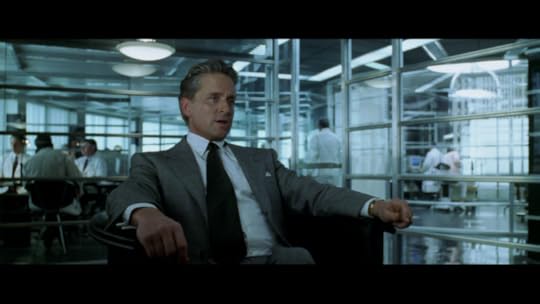
Daniel Schorr (on TV): There's a tiny camera looking at you right now.
Nicholas van Orton: That's impossible.
Daniel Schorr: You're right, impossible. You're having a conversation with your television.
The Game (1997)
In David Fincher's 'The Game', Michael Douglas' over-achieving but bored-with-life banker, Nicholas van Orton, is either the centre of an insanely elaborate role play fantasy or he's the mark in an equally byzantine con designed to liberate him of his fortune and potentially his life. While we're left guessing right to the end, what's clear is that Nicholas can't even sit down and watch TV without it talking back at him.
Beyond being a 129 minute slice of fine entertainment, I think the campaign architects among us can learn something from 'The Game' - something about how to design better advertising, where campaigns are more akin to episodic, multi-layered and sensory 'real life' experiences that place the consumer in circumstances not so dissimilar to those of Mr Nicholas van Orton.
But let me back up a bit and start with what we first understood by the term 'consumer-centric'. The late 90s new breed Comms Planners cried, "Put the Consumer first!". It was a measured jab in the side of account planning, as born of the Stephen King/JWT School.
Account planning is too brand-centric declared the comms planners, meaning the brand shows too much ego and the manifestation is too likely a self-flattering TV ad, beamed intrusively into everyone's sitting rooms during those regulated bursts of interruption in between the actual TV shows we all chose and tuned in to watch.
This, you can appreciate, was all back in our analogue past when media channels were few, little more than delivery mechanisms - figurative postmen delivering the messages of the mad men - and when (in fairness) 'As seen on TV' still carried real cachet and clout.
But comms planning (circa. 1998) gave credence to the notion that everything communicates, every brand act, gesture and touch point. There may be a media channel hierarchy, but everything communicates a message to the consumer, from a bumper sticker to a TV ad break.
But why the potted ad-land history lesson of which so many of us are au fait? To steal a line from American author Bret Easton Ellis, because ours "is the game that turns as you play".
All that shake-up-the-system talk of becoming more consumer-centric now feels very consumer-centric 1.0. While the notion of an end game campaign that was channel agnostic and built on audience insight still makes cast-iron sense, it drops to its knees like a fallen warrior when the outcome remains a set of creative assets exhibited across a range of static media channels - the message still pushed and media's only charge, that of reaching eyeballs.
And yet perhaps this was the fated inevitability of a noble sentiment in an analogue world, where people were talking consumer-centric before the world became a digital one?
Now we're after, we're anno digital, meaning consumer-centric 2.0 (binary-assisted, with CES-style upgrades) is a very different box of delights with a very different set of implications.
Consider how technology has changed the nature of media; how it's made and will continue to make media consumer-centric and evermore social. Think: social TV (EPG meets Facebook), and social outdoor (digital posters as Twitter feeds).
At a $4 billion valuation, Spotify has shown music's worth in our digital age. I'd argue Spotify's success-formula is born of putting its listeners in the centre of its digital system, in allowing the creating and sharing of playlists.
Is Spotify a tech? Or a kind of app? A product or a piece of media? A brand, or a consumer-centric blend of all the above? From Nike+ to cycling apps like Strava, technology is allowing us to 'game-ify' our lives. Our pavements, cycle lanes and roads are being augmented, being re-imagined as bio and chrono-metric performance route maps that allow us to turn every A-to-B into a kind of personal hero's journey.
Media continues to probe the fuzzy borders between delivering content and encouraging it. Next generation press formats are emerging where magazines become a live-feed blend of editorial comment and reader response. Where magazines once claimed to know their audience and write for them, tomorrow's magazines will see their readers contributing increasingly more than just a letter to a reader's page. Culture and media have never been more symbiotic and co-authored.
Technology is reshaping culture. We've not only all become technophiles, but we've all become tech-empowered. In an age where we've all now become so accustomed to having a voice, so accustomed to liking and tweeting and blogging and sharing, brand-centric campaigns are being humbled... but brand builders can slipstream the examples and fast apply the proof of concept.
Consumer-centric 2.0 is all about the consumer being the very human and beating heart of a brand campaign, where we each feel like we're being given centre stage, role and deed.
Because who wants to feel inert, a mere aggregate-adding member of the couch-bound majority? Who wants to be viewed as passively receiving the contents of a flickering screen, that chewing gum for the eyes that asks little of the mind?
Alternatively, who wants to feel like Tom Cruise or Julia Roberts or Michael Douglas? Who wants to be the hero or heroine of the piece, in the middle of it all, senses alive? It's flattering to feel like the main attraction, being the one getting to roll the dice, with every suspicion that the entire game might be designed just for us.
Where the TV ad was once a brand's main event, it's now more akin to a movie trailer - the buzz-bomb prior to the feature-length campaign. And today's main campaign event - the big feature-length presentation - is not all about consumers watching the brand equivalent of Tom Cruise or Michael Douglas.
In our binary world, the TV ad sets the tone and possible theme, and then the campaign puts the audience front and centre. It casts the consumer as the hero and main protagonist. The consumer is no longer just the human insight trigger-pull to the subsequent brand campaigns we create.
21st century ad campaigns can crash first-person story-telling into digital media. A brand becomes the calling card that knocks at our door - a call to arms and action.
By extension of putting consumers in control, the new consideration should become how campaigns can put them in character. Beyond us asking, "What is the role for the brand?", we need to establish, "What is the heroic role we are giving the consumer?" A hero-in-waiting needs to be called upon to do more than just watch telly.
Unlike Nicholas van Orton, we can't yet have a conversation with our TV sets, but in building brands, we are playing a very new game.
SP.
Article as also appears in The Huffington Post, Business 2 Consumer and MediaTel Newsline.


January 1, 2014
CONSPICUOUS COMMUNICATION: How we’re choosing life & no longer being defined by our khakis
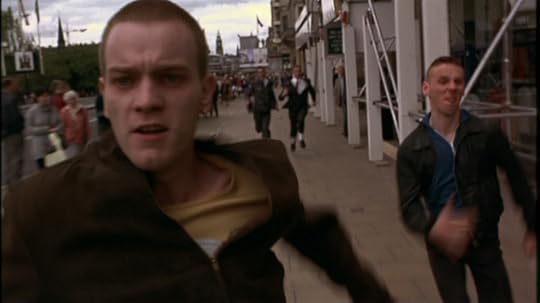
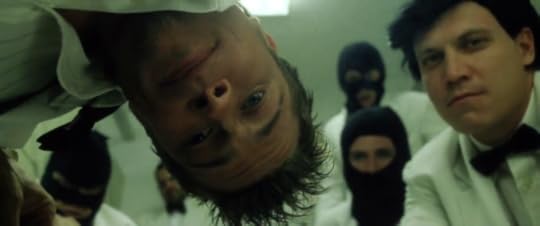
Tyler Durden.
Renton.
Remember those guys? One looked a lot like Brad Pitt, the other like Ewan McGregor. Two charismatic anti-heroes of the 90’s: poets, philosophers, one a pugilist, the other a heroin addict, and both occupants of society’s fringe.
Irvine Welsh’s Renton advised us (with thick irony) to “choose life” by choosing a career, washing machines, cars, compact disc players, and “a fucking big television.”
Chuck Palahniuk’s Durden was more direct. “You are not your job, you're not how much money you have in the bank. You are not the car you drive. You're not the contents of your wallet. You are not your fucking khakis.”
Different accents, different flavours of candour, though neither wearing khakis, Durden and Renton shared the same world view, the same derision of a capitalist age greased by feverish, never-satiated consumerism.
In the decade before everything went digital and everyone became connected, Fight Club and Trainspotting were time-capsule reflections of young angry men who weren’t apathetic but articulate and planned on beating the system their own way. Because if sucking on the marrow of life amounted to no more than browsing IKEA catalogues illuminated by the flicker of a super-sized TV screen, then chasing a few dragons and letting off a truck load of Semtex maybe seemed like a border-line medicinal way of letting off steam?
But if Durden and Renton were commenting on their moment time, what of today? In a world since gone digital, assuming we’re still not our fucking khakis, how do we define ourselves and just how are we choosing life?
CONSPICUOUS CONSUMPTION & HAPPY HOUSEWIVES
To define our Now, it’s worth first appreciating that shown a suitable time-tunnel, Tyler Durden would have gleefully hunted down and beaten the shit out of Don Draper. Durden would have reversed that Semtex-laden van right into Sterling Cooper’s reception.
Because Durden’s 90’s angst was a long-shadow reaction to ‘Conspicuous Consumption', that overt and defining socio-economic signature of the 50's and 60s. In particular, think retro-cool images of glossy brochure lifestyles, of “happy housewives” being bought “the latest modern appliances” so their stay-home would remain a happy one, where everyone flew Pan Am, and life was in primary colours and swaggered to a lounge bar beat. That was the world, at least, once the Mad Men-glam had been applied.
Of course, not everyone had it so good and got the same lounge bar backing track. There was arguably as much post-War austerity as prosperity in many corners of the Western hemisphere, and it wasn’t the real life Sterling Cooper’s of that time who were the root cause. But the underlying point is, Conspicuous Consumption emerged as the very conspicuous post-War trend, as born of economic necessity, and where (culturally) purchase and possession decoupled from vulgarity.
“Buying, owning, possessing”: back then, as today, it remains ad-fuelled and feverishly encouraged, seen as crucial to a well-greased manufacturing base, from which economic health is much diagnosed. The cogs must keep turning. So long as everyone keeps buying, everything will be ok. Money circulates, confidence stays high, people keep their jobs making more stuff. All of it: a very simple equation. Consumerism works so long as everyone continues consuming.
Today, the laws of consumerism broadly hold the same sway as they did back in the 50’s and 60’s, when the likes of Vance Packard first coined and chronicled it. So too today, economic health still requires that people buy, and buy with frequency; that they buy often and happily so. And the social settings are still dialled to "buying" as something that is wholly desirable and approved of. Overt trappings, the cars, the goods both white and brown and luxury, these still carry serious social status and standing. As Renton observed with mockery, our stuff defines us, reflects our tastes, how much we can afford, how successful we must be, who we are.
Only... what has changed, and what continues to change, is that our relationship and reliance on “things” is less than it formerly was. Our stuff has been demoted. The things we own no longer stand as the only yard sticks of achievement. They’re not the same gestures of self-expression. Technology has changed our relationship with materialism. We’re not quite so dependent on our “physical things”. Because we’re now Logging On and Signing In.
CONSPICUOUS COMMUNICATION
We've moved from Conspicuous Consumption... to Conspicuous Communication. We live in the ‘Age of the Share’.
While we haven't abandoned our material wants, while we still find "owning & buying” khakis and cars a short-buzz narcotic to which we still need frequent fix (and to which social status and standing may be derived), the "goods” are no longer the only data points that build the picture. Self-definition is no longer just the suit or watch we wear, or the places we choose and can afford to holiday.
Today, more than ever before, we are defining ourselves (and everyone else) by what we "share".
Society now holds “sharing” in the highest esteem. "Thanks for sharing" has gone from eye-rolling Valley Girl-speak sarcasm and become amongst the highest forms of sincere flattery.
Our online social standing falls and rises daily by the quality and quantity of the information we push and peddle. The links, the lists, the top 5 principles for this and the 3 things highly effective people do before they eat their shreddies. The lists and sound-bites and headline ideas are the pounds, dollars and nuggets of our social currency, so feeding our on-the-quarter-hour Scooby snacking.
Technology has changed the nature and flow of information. “Information” has undergone a revolution and devolution. “Information” has gone social; non-hierarchical; informal; assumed the scale of one. “Up-to-the-minute” is most likely through your twitter feed than Sky News or the BBC World service. “Texting” has asserted global scale, become tweeting, reflecting how the one-to-many yesteryear brand-to-consumer model has mutated - because our online social interactions and sharing has become one-to-many. We have all become the One and the Many. All of us: conspicuously communicating. Everyone: creating, commenting, searching out, sharing, craving... “great content”.
If Monopoly was invented today, the winner would not come down to who has three hotels on Pall Mall, but instead who has built the largest Twitter following, generated the greatest number of “friends” and likes, and created the largest subscription-based Multichannel network. You land on my YouTube brand channel, and it’s Game Over for you.
And of course, it’s hard not to judge these times a little darkly. It’s hard not to say that we’re becoming slaves to content, that beast with a bottomless stomach. It’s hard not to suggest that having a voice and “followers” gives us the illusion of celebrity, and that all those tweets and posts and “shares” are in fact feeding that other insatiable beast we’re held hostage to, the fame monster.
But every coin has two sides and every judgement should be a balanced one. And old friend of mine Faris Yakob recently described himself as “a techno-meliorist”. He believes “things usually get better, thanks to technology.” I’d like to believe the same, and unlike Renton, but like Faris, I choose to look positively on this digital life of ours and what it’s encouraging. In the spirit of the times, here are 4 very good reasons:
(1) Voice: Technology has given everyone a voice. Technology has given us all independent low-cost means. This is a wonderful thing - because most everyone wants to have a voice. Even if it’s just at the level of logging a “like”, self-expression is an expression of our need to be individuals and our need to feel free.
(2) Talent outs: Curators have never been held in higher regard. People are turning themselves into one-man Reuters news feeds and on-the-money Zeitgeist barometers. There’s real skill in it, and it’s an appreciated and valued skill, as reflected in the followers many generate. Nobody wants to be a nobody, and now everyone has invitation to ripple the Zeitgeist, to tweet until they trend, to not only have a voice but to potentially be heard.
(3) “Sharing” breeds generosity and inclusivity: Hard-wired into Conspicuous Communication is a revived cultural onus on paying it forward. Sharing is good, is by its nature inclusive, generous, caring.
(4) Belonging: And then there’s the very interconnectedness of it all, the way you can watch a twitter trend and it’s like watching a murmuration of starlings - “in form and moving express and admirable” - with more than a murmur on its collective mind. And you can not only watch but be part of those murmurings. You can be and belong to the trend.
Earlier this year, I sat in front of my TV and watched Andy Murray win Wimbledon, while tweeting and following the tweets of Caitlin Moran and Irvine Welsh. And I’ll be honest, the multi-screen experience “added”. Reading what Moran and Welsh said was fun and funny and in some small way made my Murray moment ‘more’, and made me feel more part of that bigger moment.
F.Scott Fitzgerald once said that part of the beauty of literature is that “You discover that your longings are universal longings, that you're not lonely and isolated from anyone. You belong.”
Social media is not replacing but certainly mimicking the beauty of literature.
*
I find it fascinating the way Milgram’s 6-degrees of separation has exploded, imploded, become something else, a permanently morphing 3-D lacework of light points, the kind of thing you see in sci-fi movies, with each of us our own Sun, a galaxy of contacts and connections orbiting, near and far, each in their own ellipse. I find it compelling that by simply following @kevinbacon... everyone can be one degree separated from the man himself. I won’t hazard a guess at how Kevin Bacon feels about that.
But I’d safely suggest Tyler Durden would be less than thrilled to hear that, by degree, we still try and part-define through the medium of our khakis; that we still like spending; still enjoy buying, and that today’s Sterling Cooper’s are still doing all they can to encourage us.
Only, we need our materialism per se just that little bit. And we need our mobile devices oh-so-much more. And even if we are to indulge Tyler Durden and Renton for a moment and assume we are neither defined by our fucking khakis or our fucking big televisions - it is clear that we’re fast becoming the sum total of our shares, in this ‘Age of the Share’. We are the people we follow and the people who follow us. We are that which we post and blog. We are that which we retweet and like.
Choose life. Choose to ‘Like’. Choose Wordpress or Typepad or Blogger or Tumblr. Choose Twitter. Choose your followers, high speed internet and a damn sexy-looking tablet in a choice of vibrant colours.
Welcome to the Digital State.
SP.
Article as also appears in The Huffington Post, Business 2 Community and MediaTel Newsline.

December 20, 2013
CONSPICUOUS COMMUNICATION: How we’re choosing life & no longer being defined by our khakis
Tyler Durden.
Renton.
Remember those guys? One looked a lot like Brad Pitt, the other like Ewan McGregor. Two charismatic anti-heroes of the 90’s: poets, philosophers, one a pugilist, the other a heroin addict, and both occupants of society’s fringe.
Irvine Welsh’s Renton advised us (with thick irony) to “choose life” by choosing a career, washing machines, cars, compact disc players, and “a fucking big television.”
Chuck Palahniuk’s Durden was more direct. “You are not your job, you're not how much money you have in the bank. You are not the car you drive. You're not the contents of your wallet. You are not your fucking khakis.”
Different accents, different flavours of candour, though neither wearing khakis, Durden and Renton shared the same world view, the same derision of a capitalist age greased by feverish, never-satiated consumerism.
In the decade before everything went digital and everyone became connected, Fight Club and Trainspotting were time-capsule reflections of young angry men who weren’t apathetic but articulate and planned on beating the system their own way. Because if sucking on the marrow of life amounted to no more than browsing IKEA catalogues illuminated by the flicker of a super-sized TV screen, then chasing a few dragons and letting off a truck load of Semtex maybe seemed like a border-line medicinal way of letting off steam?
But if Durden and Renton were commenting on their moment time, what of today? In a world since gone digital, assuming we’re still not our fucking khakis, how do we define ourselves and just how are we choosing life?
CONSPICUOUS CONSUMPTION & HAPPY HOUSEWIVES
To define our Now, it’s worth first appreciating that shown a suitable time-tunnel, Tyler Durden would have gleefully hunted down and beaten the shit out of Don Draper. Durden would have reversed that Semtex-laden van right into Sterling Cooper’s reception.
Because Durden’s 90’s angst was a long-shadow reaction to ‘Conspicuous Consumption', that overt and defining socio-economic signature of the 50's and 60s. In particular, think retro-cool images of glossy brochure lifestyles, of “happy housewives” being bought “the latest modern appliances” so their stay-home would remain a happy one, where everyone flew Pan Am, and life was in primary colours and swaggered to a lounge bar beat. That was the world, at least, once the Mad Men-glam had been applied.
Of course, not everyone had it so good and got the same lounge bar backing track. There was arguably as much post-War austerity as prosperity in many corners of the Western hemisphere, and it wasn’t the real life Sterling Cooper’s of that time who were the root cause. But the underlying point is, Conspicuous Consumption emerged as the very conspicuous post-War trend, as born of economic necessity, and where (culturally) purchase and possession decoupled from vulgarity.
“Buying, owning, possessing”: back then, as today, it remains ad-fuelled and feverishly encouraged, seen as crucial to a well-greased manufacturing base, from which economic health is much diagnosed. The cogs must keep turning. So long as everyone keeps buying, everything will be ok. Money circulates, confidence stays high, people keep their jobs making more stuff. All of it: a very simple equation. Consumerism works so long as everyone continues consuming.
Today, the laws of consumerism broadly hold the same sway as they did back in the 50’s and 60’s, when the likes of Vance Packard first coined and chronicled it. So too today, economic health still requires that people buy, and buy with frequency; that they buy often and happily so. And the social settings are still dialled to "buying" as something that is wholly desirable and approved of. Overt trappings, the cars, the goods both white and brown and luxury, these still carry serious social status and standing. As Renton observed with mockery, our stuff defines us, reflects our tastes, how much we can afford, how successful we must be, who we are.
Only... what has changed, and what continues to change, is that our relationship and reliance on “things” is less than it formerly was. Our stuff has been demoted. The things we own no longer stand as the only yard sticks of achievement. They’re not the same gestures of self-expression. Technology has changed our relationship with materialism. We’re not quite so dependent on our “physical things”. Because we’re now Logging On and Signing In.
CONSPICUOUS COMMUNICATION
We've moved from Conspicuous Consumption... to Conspicuous Communication. We live in the ‘Age of the Share’.
While we haven't abandoned our material wants, while we still find "owning & buying” khakis and cars a short-buzz narcotic to which we still need frequent fix (and to which social status and standing may be derived), the "goods” are no longer the only data points that build the picture. Self-definition is no longer just the suit or watch we wear, or the places we choose and can afford to holiday.
Today, more than ever before, we are defining ourselves (and everyone else) by what we "share".
Society now holds “sharing” in the highest esteem. "Thanks for sharing" has gone from eye-rolling Valley Girl-speak sarcasm and become amongst the highest forms of sincere flattery.
Our online social standing falls and rises daily by the quality and quantity of the information we push and peddle. The links, the lists, the top 5 principles for this and the 3 things highly effective people do before they eat their shreddies. The lists and sound-bites and headline ideas are the pounds, dollars and nuggets of our social currency, so feeding our on-the-quarter-hour Scooby snacking.
Technology has changed the nature and flow of information. “Information” has undergone a revolution and devolution. “Information” has gone social; non-hierarchical; informal; assumed the scale of one. “Up-to-the-minute” is most likely through your twitter feed than Sky News or the BBC World service. “Texting” has asserted global scale, become tweeting, reflecting how the one-to-many yesteryear brand-to-consumer model has mutated - because our online social interactions and sharing has become one-to-many. We have all become the One and the Many. All of us: conspicuously communicating. Everyone: creating, commenting, searching out, sharing, craving... “great content”.
If Monopoly was invented today, the winner would not come down to who has three hotels on Pall Mall, but instead who has built the largest Twitter following, generated the greatest number of “friends” and likes, and created the largest subscription-based Multichannel network. You land on my YouTube brand channel, and it’s Game Over for you.
And of course, it’s hard not to judge these times a little darkly. It’s hard not to say that we’re becoming slaves to content, that beast with a bottomless stomach. It’s hard not to suggest that having a voice and “followers” gives us the illusion of celebrity, and that all those tweets and posts and “shares” are in fact feeding that other insatiable beast we’re held hostage to, the fame monster.
But every coin has two sides and every judgement should be a balanced one. And old friend of mine Faris Yakob recently described himself as “a techno-meliorist”. He believes “things usually get better, thanks to technology.” I’d like to believe the same, and unlike Renton, but like Faris, I choose to look positively on this digital life of ours and what it’s encouraging. In the spirit of the times, here are 4 very good reasons:
(1) Voice: Technology has given everyone a voice. Technology has given us all independent low-cost means. This is a wonderful thing - because most everyone wants to have a voice. Even if it’s just at the level of logging a “like”, self-expression is an expression of our need to be individuals and our need to feel free.
(2) Talent outs: Curators have never been held in higher regard. People are turning themselves into one-man Reuters news feeds and on-the-money Zeitgeist barometers. There’s real skill in it, and it’s an appreciated and valued skill, as reflected in the followers many generate. Nobody wants to be a nobody, and now everyone has invitation to ripple the Zeitgeist, to tweet until they trend, to not only have a voice but to potentially be heard.
“Sharing” breeds generosity and inclusivity: Hard-wired into Conspicuous Communication is a revived cultural onus on paying it forward. Sharing is good, is by its nature inclusive, generous, caring.
(3) Belonging: And then there’s the very interconnectedness of it all, the way you can watch a twitter trend and it’s like watching a murmuration of starlings - “in form and moving express and admirable” - with more than a murmur on its collective mind. And you can not only watch but be part of those murmurings. You can be and belong to the trend.
(4) Earlier this year, I sat in front of my TV and watched Andy Murray win Wimbledon, while tweeting and following the tweets of Caitlin Moran and Irvine Welsh. And I’ll be honest, the multi-screen experience “added”. Reading what Moran and Welsh said was fun and funny and in some small way made my Murray moment ‘more’, and made me feel more part of that bigger moment.
F.Scott Fitzgerald once said that part of the beauty of literature is that “You discover that your longings are universal longings, that you're not lonely and isolated from anyone. You belong.”
Social media is not replacing but certainly mimicking the beauty of literature.
*
I find it fascinating the way Milgram’s 6-degrees of separation has exploded, imploded, become something else, a permanently morphing 3-D lacework of light points, the kind of thing you see in sci-fi movies, with each of us our own Sun, a galaxy of contacts and connections orbiting, near and far, each in their own ellipse. I find it compelling that by simply following @kevinbacon... everyone can be one degree separated from the man himself. I won’t hazard a guess at how Kevin Bacon feels about that.
But I’d safely suggest Tyler Durden would be less than thrilled to hear that, by degree, we still try and part-define through the medium of our khakis; that we still like spending; still enjoy buying, and that today’s Sterling Cooper’s are still doing all they can to encourage us.
Only, we need our materialism per se just that little bit. And we need our mobile devices oh-so-much more. And even if we are to indulge Tyler Durden and Renton for a moment and assume we are neither defined by our fucking khakis or our fucking big televisions - it is clear that we’re fast becoming the sum total of our shares, in this ‘Age of the Share’. We are the people we follow and the people who follow us. We are that which we post and blog. We are that which we retweet and like.
Choose life. Choose to ‘Like’. Choose Wordpress or Typepad or Blogger or Tumblr. Choose Twitter. Choose your followers, high speed internet and a damn sexy-looking tablet in a choice of vibrant colours.
Welcome to the Digital State.
SP.
Article as also appears in MediaTel Newsline.

December 15, 2013
NOW DO WEAR TO THE LEFT, 007
THE CASE FOR KISS KISS BANG BANG
Like an Antony Gormley figure, there is something magnificent about the solitary human form; the James Dean loner; the Jack Bauer or Nicholas Brody lone agent. Stealthy types, moving in the shadows, on the outside – it reads cool off the page and walks cool across our screens. Fleming’s Bond, Ludlum’s Bourne: tough, icy, enigmatic, alone.
Yet most typically during the course of our everyday’s, few of us do “work alone”, independent and at a remove from others. In reality more the opposite is the case.
We get things done by joining forces and working together, which is why the pragmatic innovator in me would like to take this moment to praise the collaborative spirit, because Milton was on the nose. No man really is an island. It’s invariably partnerships and pairings that can make us ‘more’. By way of evidence, I’ll start with a maybe-not-so-lone 007 in the Caribbean.
THE CUT OF BOND’S JIB
When Daniel Craig channelled Ursula Andress and rose from the Bahamian blue in Casino Royale, the pupil dilations were of sufficient number for the majority to concur with what producer Barbara Broccoli had always known. Craig was an inspired piece of casting. It didn’t hurt that he was also a damn-fine actor. The innovation equation was clear: Broccoli + Craig = Bond Rebooted.
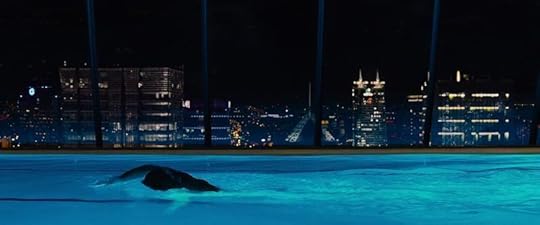
When Craig later emerged from a roof-top pool in the Shanghai sequence of Skyfall, the major coup for clothing brand Orlebar Brown was that 007 was wearing a pair of their swim shorts.
I discovered Orlebar Brown in 2009 when they featured in Monocle magazine. Their limited edition ‘Monocle Bulldog’ shorts were a partnership with editor-in-chief Tyler Brûlé, one of a series of limited edition pairings from O+B. A Bill Amberg retro capsule of shorts, beach towel and tote bag was another. “No, Simon. It’s possible to over-accessorize”, was my wife’s very clear instruction at the time.
While quite possibly true, I admire the way Orlebar Brown has scaled their brand and ramped their cachet through associations and partnerships. Their ‘premium brand’ accent has been with the help of some shrewdly selected style Sherpa’s.
I’m even tempted to argue that O+B are taking their lead from the Bond movie formula, because while you need to find the right guy for the tux (or swim shorts), this one ingredient alone does not ensure a 50 year franchise.
Consider the narrative Bondian ingredients: girls, gadgets, exotic locations, fast cars, megalomaniac adversaries. Beauty, danger, sex, death; in the singular, they’re all alluring elements, but paired together they become intoxicating.
The Bond legacy is really just one long line of inspired commercial and creative pairings, the latest expression being Broccoli and half-brother Michael G. Wilson as co-producing double act.
Go wider and consider how any movie gets made. The entire movie industry is built on co-production funding. Creating a pot of cash is an exercise is forecasting likely back-end profit, with an up-front appeal to hearts and minds, inviting movie studio and private investor alike to “buy into the vision”. No one can make a movie, not a good one, singlehandedly.
Of course, I use Bond and the movie-making machine to evidence a broader point. Though to further build a line of exhibits, I may free-associate through a Fleming-esque world of fast cars and fine watches.
FAST CARS & FINE WATCHES
Bond: Where’s my Bentley?
Q: Oh, it’s had its day, I’m afraid.
Bond: But it never let me down.
Q: M’s orders, 007. You’ll be using this Aston Martin DB5… with modifications.”
Goldfinger (1964)
Perhaps 007’s gruff was false front. He would surely have read Fleming’s ‘Goldfinger’ in advance, would have known that his written-word self had been placed behind the wheel of a motor car branding a DB. But had Fleming and then Q not been so insistent, would the Aston Martin DB5 be quite so iconic?
EXHIBIT A: A thing of beauty regardless, but the DB5’s Bondian past contributes to its current £350k price tag.
Aston Martin aficionados might however incline to suggest it wasn’t partnering with Bond, but with Brown that made all the difference.
“The man who truly put Aston Martin on the map was David Brown, who in 1947 answered a classified advertisement in The Times seeking an owner for “a high-class motor business”. Brown acquired Aston Martin for £20,500.”
Esquire, The Big Black Book, Autumn/Winter 2013
EXHIBIT B: Aston Martin + David Brown = Automotive History.
Though what would Brown make of the announcement this July that future Aston Martin’s will be powered by Mercedes AMG engines? In this arrangement, Mercedes (more accurately Daimler) will take a 5% stake in Aston Martin, a business that is now co-owned by two Kuwaiti companies and one Italian private equity firm.
Very soon, any Aston with or without a DB will also be kitted out with German engineered electrics and command systems (simply meaning the GPS will accurately plot A to B, and you’ll be able to get there even quicker).
While a German engine in an Aston Martin might feel instinctively wrong, I suspect David Brown (and Q) would have approved. Anyone who’s driven anything propelled by an AMG engine knows Aston Martin’s will be better for it. And faster. And you only have to check to the cyber chatter to see: no one’s complaining.
EXHIBIT C: Aston Martin + AMG = Faster & Better.
An Anglo-German auto pairing is arguably no different to having a Swiss movement in an Italian watch.
EXHIBIT D: Officine Panerai began making over-sized watches in 1860, but only in the last few years have they started making their own movements. Prior, Panerai had always used a Rolex movement.
Circling back to Bond’s Bentley that never let him down. Sadly, there was a point when Bentley had become a let-down. Then, in 2003, came the Bentley Continental GT. It revived the aging Bentley marque and reversed the company’s fortunes. Behind its release was a simple fact: Bentley was a company under new ownership.
The Continental GT was a Bentley made by VW (who’d wholly bought the company in 1998), targeted not at former Bentley drivers (an atrophying breed), but at well-heeled 40-something motoring enthusiasts (and premier league footballers).
Check out Breitlingforbentley.com for another shrewd pairing. “British chic, Swiss excellence: Breitling for Bentley combines the best of both worlds” declares the homepage, accompanied by spokesperson David Beckham, kitted out in a version of Sean Connery’s Goldfinger wardrobe.
EXHIBIT E: (Bentley + VW + Breitling) x (Brand Beckham) = More Bondian?
Where Brietling bought Beckham, Omega bought Bond, writing a cheque of sufficient sway to bump Rolex from 007’s wrist. For me, the Moon is a far richer association for Omega. Their Speedmaster still (quite fairly enough) dines out on being the first watch to step, via Buzz Aldrin, on to the surface of the Moon.
EXHIBIT F:
“Just after landing on the Moon, the Lunar Module’s on-board electronic timer broke down. Neil Armstrong left his Speedmaster aboard as a reliable backup. As a result, the first watch worn on the Moon was on Aldrin’s wrist.”
Source: www.omegawatches.com
LISTEN TO WILL.I.AM
Thelma and Tom would just be names, but partner them with Louise and Jerry, and they assume famous meanings and vivid narratives. Starsky, Hansel, Fred, Morecambe - add Hutch, Gretal, Ginger and Wise and you have a fun-sounding law or ad agency, plus some serious bellbottoms and dance steps.
Staying on the theme of outrageous wardrobes and rocking backing tracks, let’s consider the music world. Elton John is Elton John… because of writer Bernie Taupin, and Will.I.Am is Will.I.Am… because of his truly open-minded approach to music-making.
“In collaborations and with the Black Eyed Peas, Will.I.Am has a total of 34 Top 40 entries on the UK Singles Chart since 1998, and has sold 9.4 million singles in the UK.”
Source: Wikipedia
EXHIBIT G: I really enjoy how Will.I.Am has built his brand through “featuring”. His creative partnerships often seem incongruous, but they create sounds that feel progressive and compel:
Flo Rida, featuring Wil.I.Am, gave us “In the Ayer”: a US double platinum and the Summer anthem of 2008. Everyone now: “Oh hot damn, this is my jam”.
Post “Girls Aloud”, Cheryl Cole gave Wil.I.Am full creative control on what became her triple platinum debut, “3 Words”. He remains Cole’s co-manager.
“O.M.G.” was written, produced and features Wil.I.Am, but lives on R&B artist Usher’s sixth studio album, Raymond vs. Raymond. It went double-platinum.
And then there’s also Will.I.Am’s collaborations with Nicki Minaj, JayLo, Jagger, Justin Bieber, Britney, and Bazz Luhrmann, begging the question, does the guy ever sleep?
Collaborations can make beautiful music - which, for want of discursive symmetry, returns me to Bond. The Bond Song has always been fundamental to the formula and has always been a hit or miss matter of partnerships. McCartney and Live & Let Die. Duran Duran and View to a Kill. Successes.
General consensus would have it that Jake Black and Alicia Keys crooned a recent dud (‘Another Way to Die’), but no question inviting Adele to the Skyfall party was a centre-of-heart winner.
Some codes can be enigmatic. Certain formulas can seem closer to alchemy. I don’t look upon The Collaboration Code, The Featuring Formula, as a thing of mystery. It’s about being open-minded and giving.
Co-creation doesn’t have to be dilutive. One plus one can equal three, the procreation equation, the genesis of something new. No one should get into bed with just anyone, but everyone should be on the lookout for the right cuddle buddy.
I once had a boss who believed the only good ideas were his. It also didn’t matter whether the idea had started as someone else’s. Ended up his. My only point is that it wasn’t the most generous or inclusive kind of perspective. ‘Not invented by Me’ dead-ends collaborative creativity. I rather prefer Will.I.Am’s way of doing things. I believe we can learn much from a world of Fleming and 007, from our luxury brands and music’s megastars.
Fleming once described his novels as "pillow fantasies of the bang-bang, kiss-kiss variety".
Writing this while listening to Will.I.Am’s latest ‘Bang Bang’, there’s 20’s Charelston, some Cher, a touch of Louis Armstrong, extra vocals from both Shelby Spalione and Nicole Scherzinger, all kinds of talent in the mash. It’s an exercise in creative polygamy.
“Kiss Kiss Bang Bang”?
Join forces, snuggle up, and who knows what might happen? Something brilliant? Something explosive? Whether you preference a Walther or a Berretta, it feels like a formula that’s worth a shot.
SP.

AUDACITY, BRAVERY, COMMITMENT, AMBITION

On 9 November 9th of 1989, the Berlin Wall fell. I was 16 at the time and I remember watching events unfold live on television. As I and the rest of the world stopped and watched, spell-bound, thousands of Germans from East and West swung sledgehammers and pick axes and clawed with their bare hands at this concrete symbol of a divided world.
I’d been on a school trip to Germany the year before, seen the border, the sentry guards in their towers with their rifles and fixed stares. I remember the tears in my school teacher’s eyes.
As footage of falling mortar spanned the globe, I recall no one being sure what was going on. Was the Cold War over? Had the Arms Race bankrupted the Soviet Union? Was Communism over?
In response, I remember thethen US President, George Bush saying, “We live in fascinating times.” And that was pretty much it, the full extent of the analysis coming publicly out of the White House.
The first affirmative comment I read about the fall of the Berlin Wall came a little time after when I opened a newspaper and saw the photo of a poster pasted to the wall. The poster: Saatchi & Saatchi, “First over the wall”, plastered on the Eastern side.
Some said it was disrespectful to those 200 people who had lost their lives trying to escape across the wall and into the West – but being disrespectful was the very last intention.
For me, very simply, ‘First over the Wall’ was up there as being as bold and audacious as gestures get. Insanely opportunistic. A comment on the future. A comment on the inevitable march of consumerism East.
It was one poster that made me want to work in advertising, and to work for Saatchi & Saatchi, both of which I went on to do.
I use one poster from a distant past as exemplar to a much bigger and very 21st century idea: that AUDACITY, BRAVERY, COMMITMENT and AMBITION are, I believe, essential to success, even greatness, in our digital age.
Consider Red Bull’s space jump. Being oft-cited doesn’t make it less instructive. Both Saatchi’s poster and Red Bull Stratos are acts of sheer audacity and absolute bravery.
Red Bull may be the most popular energy drink in the world. They may have sold 5.2 billion cans last year in 165 countries. But what they sell doesn’t limit them from all that they want to be. Red Bull own football teams in Germany, the US and South America. They own two formula 1 racing team. They own a record label, Red Bull Records. And of course, Red Bull’s greatest fame has come from their association with extreme sports – their most extreme gesture being to sponsor Austrian Felix Baumgartner to free-fall from the edge of space. The statistics are staggering.
Baumgartner fell from an altitude of 24 miles above the Earth. He reached a speed of 844 mph, which means he broke the speed of sound, went supersonic, broke Mach 1, reached 1.25 Mach.
He was in free-fall for 4 minutes 19 seconds, the entire jump from leaving the capsule to landing back on Earth was just under 11 minutes.
And you bet, he could have died.
I watched the jump live on YouTube thinking, we could all be watching an 8 minute-long falling corpse, which will do nothing for Red Bull’s brand affinity scores. If this all goes south, those score are going to go through the floor, right along with Felix.
But history will show that fortune favoured the brave and Felix made it down safely – and I believe the future will be defined by the brave and audacious, in all their forms.
Nike is 49 year old manufacturer of running shoes that is in rude health because it’s turned digital native, has built a series of physical and digital products that orbit consumers, allowing us all to more easily live and express a “Just Do It” lifestyle. Nike, like Red Bull, do not limit themselves by constraining definitions of what they are.
Where Jay Leno declared, "I don't know what TV is anymore," I believe it’s a very good thing if we all embrace the idea of not knowing what we are. “Not knowing” removes the straightjacket.
Blockbusters never went knocking on Kevin Spacey's door. Look how that turned out. While Netflix figured the best possible ad they could make was a brilliant TV series – maybe one of the best and longest TV "ads" of all time?
With House of Cards, Netflix made TV history, won three Emmy’s earlier this year, the first time an ‘online-only’ show has ever bagged an Emmy.
Netflix chief content officer Ted Sarandos boldly nailed his colours to the mast in a recent interview: “The goal is to become HBO faster than HBO can become us.” It’s my favourite quote of the year. It also parallels a similar declaration from Vice founder Shane Smith, who shared his wish to make Vice the next CNN.
20 years ago, Vice was an underground music magazine handed out for free on the streets of Montreal. Today, Vice is a global brand with offices in 34 countries, and very soon to be a 24-hour terrestrial news channel available in 18 countries. Vice have also become documentary makers, partnering with HBO. Like Red Bull, they too have a record label, as well as an ad agency, Virtue, which numbers Nike among its clients.
Each of us arrived screaming into the light. And no one knows exactly how long they have before the lights are switched off. The only thing that really matters is what you do with the space in-between.
I’ve always abhorred the play-it-safe Teflon wearers of the world, but my adoration is endless for ‘The Definers’ who dare to defy and refuse to self-define. Audacity, bravery, commitment and ambition: what better way to use the space in between?
SP.

November 30, 2013
"WHAT DOES GREAT WORK LOOK LIKE?"
For brands, "What does great work look like?". This was the theme of a 10 minute talk I gave over at BAFTA recently.
"Great work" doesn't look like advertising anymore, that was the thrust of it. And to hopefully make the point, I drew on a few nostalgic and very current examples: Saatchi & Saatchi's 'First over the Wall', the Red Bull Space Jump, Nike, Netflix, and Vice.
Here's the talk:
SP.

November 22, 2013
THROUGH A GLASS… CLEARLY?
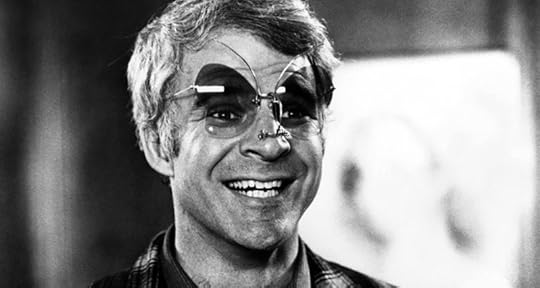
"Men's courses will foreshadow certain ends, to which, if persevered in, they must lead,' said Scrooge. ’But if the courses be departed from, the ends will change. Say it is thus with what you show me."
Charles Dickens, A Christmas Carol (1843)
I’ve just seen ‘The Future’, and I’m a little uncertain how to feel about it.
Of course, seeing the future is a little unnerving. Sure, it quickens the pulse and gets you giddy and speculating, but it spooks in that you're learning that your world is changing.
I attended a Google product demonstration the other week. I didn't have to hitch my wagon to a trail heading West. Mountain View came to me. Google's demos are on a world tour, taking up London residence in a customised town house on Fitzroy Square.
You receive an invite, an address, the proposal of an early evening gathering, and in failing light you duly rap on the brass G door knocker, stepping across a threshold to discover... ‘The Future’ has a W1 postcode.
The experience would have been rewarding for anyone merely a fan of architecture, high end interiors, or members clubs – but before we explores Google’s ‘Townhouse of Tomorrow/Today’, let’s time-rewind a little, join a few temporal data points, and consider how we reached this moment.
FOUR POINTS IN TIME
The Prologue, let me suggest, is set in the land of late 80’s power dressing and executive fleet cars. In 1989, when Charles Dunstone launched The Carphone Warehouse, he was looking no further into a future than where a phone-in-your-home was naturally scale-able to a phone-in-your-car.
Only Dunstone, along with pretty much everyone else, wasn’t thinking big enough. Phones in cars became phones in pockets became internet-connected smartphones – but where early iterations felt Neolithic, blunt and ineffectual compared to what we're now on the cusp of.
But I’ve already time-skipped ahead too soon. Another rewind. Post prologue, to Christmas Day. Tim Berners-Lee, a contracted scientist at CERN, is working on project ‘WorldWideWeb’. Berners-Lee sends the first successful HTML missive on December 25th 1990. While so many of us were tucking into our turkey, no one could have appreciated this revolutionary trigger pull... in the shape of a Return key. There was no popping sound. Certainly no grand explosion. Just an email - that started a seismic Earth shake.
Now adjust the time-dial. Fast forward 7 years. Larry Page and Sergey Brin are still in their Stanford days. ‘Google’ is a garage band style project, operating out of a garage. On September 15th 1997, Page and Brin register the domain name ‘Google.com’.
Fast forward 16 years. January 2013: Google announces earnings of $50 billion in annual revenue for the year of 2012.
1989, 1990, 1997, 2013, four points in time. Joined. You could even make it a square, imagine it as a screen.
From the Baby Boomers onwards, no one screaming into the light anytime from 1946 to 1996 could, hand on heart, have said, “Yeah, I'll be living through a Revolution equal to and as major as the Industrial Revolution. I reckon The Digital Revolution is going to make The Jetsons seem like The Flintstones.”
Time to hop out of our time machine (yes, it can be a De Lorean if you like). Parked up in ‘The Now’ of Fitzroy Square (single yellow’s are fine at this time of night), let’s return to the warmth of Google House’... where it’s clear that The Jetsons has become techno retro.
DEMONSTRATIONS
First rate theatre aside, Google’s ‘Townhouse Demonstrations’ really demonstrate one thing: the mobile phone has progressed to a Higher Purpose; is set to become an even more ambitious form of "Life Support". While it’s been the over-eager ‘Year of the Mobile’ every year for about the last 5 years, 2014 might just be the year the declaration becomes bona fide.
Smartphones are at last getting genuinely smart, and Google’s voice activated search moves the whole game on. For almost everyone, soon, talking into our phones will become talking to our phones, with the major change being that they’ll talk back to us.
Yes, our Sat Nav’s already talk at us, but Google’s iOS Search App is more like an oracle or intermediary or translator.
The App download copy runs with: “Just say “Ok Google” or touch the mic to begin. You’ll also get answers before you ask”.
While pre-emptive search results is impressive, it’s small fry when compared to your phone’s newly coded ability to aurally translate one language into another, within a heartbeat of utterance.
“Phone as instant translator” is really rather mind blowing. Though I appreciate, give it a year or so, and it’ll become part of our digital second nature. In the same way that I’d suggest email has helped improve the writing skills of an entire generation, I wonder whether Google will inadvertently turn us all into slightly better linguists?
But this is no time to ponder, because the ‘Future Fun’ in Fitzroy Square doesn’t stop with phones that talk back. In the attic there’s Google Glass to try out.
The ginger bearded Google-ite (a twenty-something West-coaster with laid-back smarts) gives the crash course and happily admits, “The experience is a little hard to explain”. He’s not wrong.
Specs on, and it’s like giving your waking moments a heads-up display. Combined with voice command rather than touch activation, and Glass further blurs (maybe merges?) the already fuzzy line between our physical and digital worlds.
This is next generation Augmented Reality. It’s way beyond “gamifying your day”. When the ‘Synthetic (or Virtual) World’ is folded back on the physical world, and put before your eyes, not only does the view fundamentally change but the question begs to be asked, what becomes of “real”?
Wearing Google Glass made me think of Ferris Bueller and Alfie, and how we partly feel we know them the way we do because they talked to us, broke the fourth wall and came that little bit closer. Google Glass is breaking the internet’s fourth wall, bringing it near. Technology has never felt more intimate.
Part of me wonders, is Google Glass an ambition too far? They’re very subtle as specs go, but a very strong technophile statement however you look at them (or through them). A colleague later asked, “Wearing them, didn’t you feel a bit of a d1ck?”
No comment, but I have it on reliable authority that Glass wearers are an increasingly common sight not just on the Google campus but also the streets of San Francisco. From those early days 80’s memories of city boys lifting ‘mobile’ phones the size of portable stereos to their ears, is it any more of a leap to imagine us all soon wearing Google Glass? Only time, or time travel will tell.
Yet what I was really thinking as I went through a range of ‘OK Glass’ commands was, how insanely cool will this be when it becomes a contact lens?
But the show’s not over. Take off your glasses and click on Google’s Cultural Institute, to witness an increasingly inventoried world of cultural artefacts, all at a proximity “physically being there” doesn't allow. Having quantified the planet with Google Earth, Google is now capturing the micro, the contours of a brushstroke, and “mapping the world of indoor spaces”. ‘Street views’ have moved indoors.
Thank-you’s and goodnight’s said, it’s time to return outside, to the Autumn cold of a London going home and out. Fitzroy Square looks timeless, the kind of place where you could exchange evening pleasantries with a passing Sherlock Holmes. What would Holmes deduce from our recent encounters? Certainly that Google in Moriarty’s hands would be a very bad thing. Might a path to world domination simply be via world documentation?
Perhaps Holmes would further make the kind of observation Spiderman knows only too well, that “with great power comes great responsibility”.
One can only hope Google is good to their word and ‘Don’t Be Evil’ mantra - because I think it's clear who’s gathering the power. It’s also a trend line that feels like it’s curving towards the absolute, and that kind of power requires super hero levels of restraint.
EPILOGUE
That was then, and this, as they say, is ‘now’ - and as you read this there is no brass G door knocker in Fitzroy Square. The door’s painted a different colour. The lights are off, and the only view through those grand sash windows is one of spectral ‘emptiness’. Was it a dream? A visitation? No, a pop-up, I’m sure. Only, why does the ‘Ghost of Christmas Future’ float to mind? Better to distract ourselves with festive thoughts and wish lists. I need to tell Santa about a new pair of specs I saw - in a future that I either did or didn’t dream.
SP.
Article as also appears in: The Huffington Post, MediaTel Newsline, Sabotage Times & Emerging Spaces.

October 16, 2013
LIST LIFE: How lists make us feel alive
"3 is shy,
not like 4, who's a real show-off." 7, I learn, is invisible, while 5 is
musical (but short-changed of any super power such as invisibility). 6 is
mechanical, 18 is a hunter. And gender divides them all. 3, for example, is a
girl, "but 13 is actually a boy". This last revelation is imparted in
a tone that suggests it might come as quite the surprise.
My son is 7, and
while he may simply be exercising his imagination (or messing with my head for
mild sport), the very fact he's applying it to numbers implies he has a very
different relationship with them to the one I have.
I've never had
an instinctive 'feel' for numbers, never engendered them with gender or a
superpower. I'd always regarded numbers rather dryly, but of course, everything
is a matter of perspective.
Recently I've
been thinking about numbers, particularly the lists they build, and why we have
them; the role they play, the rules they make, and why they rule our lives so
much. It's a reasonable enough thing to mull during a daily commute. The 7am
alarm, 8:01 train, my 43 minutes between door and desk, the number of emails,
received, replied, during that time. The working hours in a 5-day week, the
number of times I go to the gym, the length of time I spend there.
Modern life
seems to very conspicuously be a thing of numeric markers and lists. Like it, list it. Loathe it, you'll still likely
give me at least "3 reasons why" you feel the way you do.
When I arrive in
work, my Inbox lists the new emails that have arrived in a twenty-one minute
walk from Marylebone to Charlotte Street.
The subscription
emails include an invitation to watch 'The 10 best dog ads' (an invitation I
can comfortably resist) and read about 'The four watches... (I really must
inappropriately spend my money on)"... subject to the number in my savings
account. The number will never be enough.
Another ‘alert’ tells
me about Tikker,
a watch that tells the time and counts down the time you have remaining. It’s
like the Timex Life Index watch (from
2008) which processed your key biometric inputs and then trended your likely
end-date. That was called "the death watch", and named number 7 on PC
mags list of “Technologies we can do without”. Spin "life is short so make
the most of it all you want", Tikker is just a new entry in next-level
creepy.
But our fixation
with lists has much to do with our feelings towards time - and how it flees,
leaving us feeling like we never have enough of it.
So we must
learn, understand, improve, and quickly. The best tip for assailing this vanishing
time: heed a wise list. The 7 best exercises to burn bottom fat; the 6 best
mother-in-law put downs or ways to humanely poison your neighbour’s spaniel.
And to be more effective at the aforementioned, perhaps a skim of Dr Stephen
Covey's "inspirational" book list – the '7 Habits Of Highly Effective
People®'?
It's even more
fundamental than just being a sign of the times and a passing of them. Lists
are what we're 'made of'.
The Human Genome
Project is the ultimate list, a big data attempt to build the definitive
biological picture of “life”. Join the right data points, get the algorithm
right, and pre-empting and solving diseases might be a maths answer to a very
long source code.
‘Life’, quite
literally, is a genetic list amounting to a built-in expiration date, the stuff
of BladeRunner and Gattaca and Logan’s Run. DNA lists give us the know-how to design babies, that
will stay healthier and live longer. With the right list, we can push at the
edges of our mortality - which returns us to the essentialness of therefore
making the most of it, of every 24 hours and how we fill them, which returns us
to more lists, so we may be productive, so we may accomplish, achieve all we can
in the time we have.
The completion
of each list like hitting the equals button that calculates a new state of
personal order: I am now 'Informed', or 'Inspired'. 'List Completed' = I am now
more complete. The 100 albums you must listen to and movies you must see before
you die. In the latter case, it's unlikely that will include '10 Rules for
Sleeping Around', a new "screw ball sex comedy”. Evidently, promiscuity is
a thing of lists, but then, it always was.
The 'number of people you really must
sleep with (before you die)' is a life-list that varies rather wildly by person.
Mick Jagger, aged 70, is a still-rocking jitter-bag of rolling bones said to
have bagged north of 4000 women. James Hunt suffered a fatal heart-attack at
45, but speculation of his 5000 sexual conquests went some way to implying that
the guy had "lived".
Comic book
writing legend Alan Moore once described life as “a horrifying, romantic,
tragic, comical, science-fiction cowboy detective novel. You know, with a bit
of pornography if you're lucky."
I figure Jagger
and Hunt would make it onto Moore’s lucky list. And surely that’s the real
skill with any list, to live it well?
In my 'right
here and now', I'm neither in the office nor commuting in either direction
relative to it. It's actually Sunday, the 13th of the 10th, 3:05pm. It's 11
degrees outside, very wet, humidity at 94%, the barometer reading 1009mb. A
weather list, and a somewhat gloomy one. I take a call from Dubai, a +971 in
the international directory. Their present weather list is rather different.
After the call,
I turn on the radio. The Radio 1 DJ asks whether OneRepublic’s 'Counting Stars'
will be number 1 in the top 40 for 3 weeks running, then hits play.
"Everything that kills me makes me feel alive."
Everything that
kills me: that would be quite the list. I consider - 'Number 1: Tied to a tree
in the Amazon to be methodically devoured by a raid of over-peckish army ants.'
The very fact
I'm not tied to any tree or anything's lunch menu is cause to smile, to feel
grateful, to feel alive.
Umberto Eco once
said that "we like lists because we don't want to die". My feelings
towards numbers, particularly towards lists, is changing. Lists make us feel
alive, I think.
My son runs into
the kitchen, breaking my reverie. "Dad! Remember when we talked about
numbers? Number 7, he's also a ninja."
An invisible
ninja? That's pretty awesome.
SP.
Article as also appears in The Huffington Post.

October 8, 2013
ADVERTISING, INTERRUPTED
From Don Drap e r & Magic Bullets to Don Sim pson & Going Native
Last week, I spent more time than absolutely
necessary discussing whether a lion could beat up a tiger. It's hard to put a
billable ROI against that kind of agency chat.
During the week, I also read a very good article on ‘Native
Advertising’, written by Greg Grimmer, an old friend who's never short on fresh
thinking.
Lions and tigers, old friends and new views, I love how
certain tangents collide.
Yet in truth, these tangents aren't such tangents.
First, ‘Native Advertising’: a tag initially applied to the
evolution of ‘online display advertising’, where online
display comes over as too ‘advertisingy’ (hence people ignore and resent it)
and so the answer becomes advertising that’s less like ‘advertising’, that’s
more like the actual editorial content we all consume by choice.
The
great danger in this is how former ‘offline’ attempts at ‘advertising as
editorial’ have played out. Enter: ‘The advertorial’, that most insipid kind of masquerade.
Advertising that’s faking it, trying to mirror the ‘real content’,
only where the quality isn’t there, the bias is, and there’s a headline at the
top underlining the insincere sham of it all: ‘This is a Promotion’ - how was
that ever going to be a great idea? Or an effective one? No points for
guessing, I’ve never been a fan. But like discovering a brave new universe,
born from the black hole of a previously bad idea, we now have a new and
potentially inspired prefix to consider.
INTERRUPTION… OF THE WELCOME KIND
‘Online’ is a medium troubled by the same
spectral dilemma that haunts the wider advertising community. Do people like
advertising, or not, and given technology is bestowing upon us a surfeit of
edit buttons, what is advertising’s future?
This was the topic of a Google Squared debate I took part in last
week. I didn’t talk about lions fighting tigers (though I will shortly), but my
debate does represent a third converging tangent in all of this. The panel
included Rob Smith, MD of
Ogilvy & Mather and Mike Burgess,
Digital Director at BMB. Both Rob and Mike are the kind of industry
brains who are going to get as close as anyone to establishing advertising’s future,
and while we didn’t collectively crack it in a 1-hour chat, I left my swivel
seat with one recurring word.
‘Interruption.’
People
invariably hate being interrupted, and the old model of advertising is based on
this simple principle. No one welcomes that moment when the movie they’re
watching on TV (live or recorded) is gate-crashed by a 3+ minute blast of snake-oil
selling.
Ad agencies still sell clients TV work in darkened boardrooms
full of nodding heads with the volume dialled to 11. Show that TV ad in the
middle of Homeland, and I don’t feel
quite the same way about it.
The Super
bowl may indeed be the only TV watching exception, where the commercials
co-define the pop cultural moment, but the Super bowl is that bold exception (because
it’s so damn long and the structure of play so staccato) to an otherwise obvious
truth.
The ‘obvious
truth’ that interruption is seldom enjoyed prompts the spin-off question: Are
there times when people enjoy being interrupted? Can advertising ever be a welcome
interruption? Mike Burgess’s citing of style bibles like Vogue (where the advertising is intrinsic to the content, to what
the magazine fundamentally is) serve as a glossy full colour affirmation that
advertising can be positively
received.
‘Welcome
Interruption’ loops me back round to 'native', which I don’t think the online
community should have all to themselves.
After all, those
Prada and Jimmy Choo ads in Vogue are effectively ‘native’, given they
complement, even improve, the overall media consumption moment.
I like this word ‘Native’, and not just because it
makes my Northern Hemisphere light-deprived sensibilities think of people
wearing flip flops and sarongs and smelling of sun lotion.
I like the word because it posits a ‘new way of
being’ for ‘advertising’, equipping brands with a new lingua franca or ‘second
language’. In keeping step with these fast-moving times, advertising is being
invited to shrug off its now outmoded garbs and blend in with all the indigenous
stuff people naturally like and
want. I wonder, is it now very possible for
advertising to be "non-advertising advertising", no longer the unwelcome
intruder, but rather the source of any manner of cool stuff that causes us to grin
and declare feelings of awesomeness?
HIGH CONCEPTS &
BROWS: A NEW KIND OF MAGIC
I’ve talked before about brands needing to be
Power-Givers, to really bring it to the table, the party, to wherever and
whomever. Having good chat (whether on a panel or at a party), rocking up with
a metaphorically tidy ‘bottle of’, for brands, this is literally about creating
very human experiences - encounters or interactions - that make life better
somehow. Intrigue me. Inform me. Educate me. Entertain me. Where these experiences are brought to me BY A BRAND,
is this still ‘advertising’?
Sixty years ago, ‘The Thirty Second Ad’ was a magic
bullet that consistently hit its mark. Sixty years on and any suggestion that
the same kind of advertising convention is going to be similarly effective is
potty. Don Draper, and his output, was a product of its time. Today’s ‘Magic Bullet’
needs to look very different – and while no
brand has yet landed on the absolute blend of sorcery and armoury, but some are
getting closer.
Which brings me to ‘Lions & Tigers’. You see, if
someone asks me whether a Lion can beat up a Tiger, I’m interested as hell,
drawn close and want to know more. I don’t necessarily want to see 90 seconds
of footage of a Tiger and a Lion going at it, but I’d very much like to see a
short documentary funded by, say, Patagonia
or Timberland, that explores the
question (and ideally provides the answer).
If I say to you, as people have recently put to me,
have you seen that mountain biker being hunted by a Peregrine Falcon, aren’t
you immediately curious how that worked out for rider and bird, and to click
HERE if you don’t know?
If I tell you someone, a 'Big Black Little Bit Crazy
Woman' called GloZell, is willing to film herself eating a ladle of cinnamon (these
kind of antics have earned her 2.25m You Tube subscribers), you might just
click HERE to see the faces and noises she makes after ingesting.
While
this might sound a bit inane, I’m not suggesting we only interpret ‘native’ as
dumbed-down ‘High Concept’, in the Simpson-Bruckheimer ‘One Sentence Pitch’
sense.
In
a separate corner of this same native universe, consider Marriot hotels
interpretation of ‘Sponsored Content’; a partnership with Fast Company where
they’ve created the TravelBrilliantly series,
corralling some very clever people to explore and
explain what travel might mean these digital days.
Sure,
#TravelBrilliantly is 'branded content' because it’s content
that the Mariott brand has made happen, but it’s also just plain-and-simple content
that I naturally love and gravitate towards and want to talk about. It could
just as easily be from WIRED or Mashable. I become grateful to Marriot for
being the catalyst, and I start thinking Marriot is a brand with a much higher
IQ, irrespective of whether they’re slip-steaming the smarts of others or not.
(Check out what a friend of mine, Faris Yakob, has to say about Time Travel and
‘Memory Hacking” here.)
The
effect is also similar to when I recently stayed at a W Hotel and my key card –
in addition to opening my door - referenced their partnership with Intel and Roman Coppola, about a short movie collection (and spin-off competition) they’ve made. I think
W Hotels are pretty cool, and I actively looked into what kind of film-makers
the W are. They’re this kind: CLICK.
“IMAGINE IF..?”: THE NEW AGE OF
ADVERTISING
I’m
in the front row here-cheering where Greg’s article asserts, “distribution
is as crucial, if not more so, than the curation and creation of content. Don't
expect the Kevin Costner field of dreams effect”. I also however believe that in the
same way that talent outs and cream rises, if
you conceive the content equivalent of a Shard or a Gherkin or a Burj Khalifa,
then you’re stacking the odds of making an impression on anyone’s horizon.
“Imagine what would happen if you
ate a whole ladle of cinnamon… pitted a tiger against a lion… tried to free-fall
from the very edge of space?”
The
late Don Simpson, Hollywood Fast Lane Lunatic, is living proof that High
Concept is no way to live, but it might just breathe new life into the
advertising model.
Any brand that bank-rolls the creation of something
‘Very Cool’, that I’d naturally pay to see or read, is a brand I’ll happily say
thank-you to, and more likely buy.
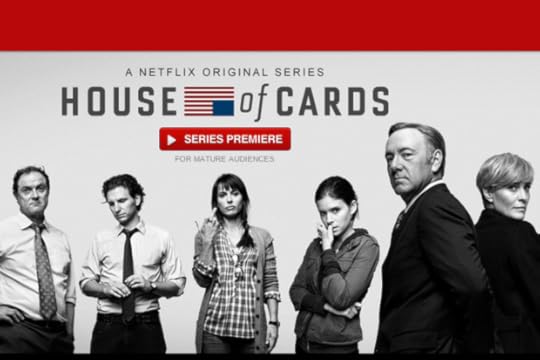
"Netflix made
history tonight, winning three Emmy awards for House
of Cards, becoming the first company to win the awards for
online-only shows." (Sep 22nd, 2013)
Where Jay Leno declared, “I
don’t know what TV is anymore”, it might just be a very good thing if we
all embrace the idea of not knowing what 'advertising' is anymore either.
Blockbuster never went knocking on Kevin
Spacey’s door, and look how that turned out. Netflix figured the best possible
ad they could make was a brilliant TV series (and maybe one of the best and
longest TV “ads” of all time?). "Give people what
they want” said Spacey, “when they
want it, in the form they want it in. It's all content."
Content that I naturally crave: this is the stuff that sells itself. And it’ll sell the brands that
make it.
SP.

September 28, 2013
The Quant of One: Big Data's Next Big Thing
We all love a good sound bite, a snappy label, a catchy tag. Our necks snap, our attention is caught, and we fall in love. New Labour. The Third Way. A Roadmap to Peace. Yes We Can. The Fiscal Cliff. Big Data.
Editorial 101: give 'em the quotable and instantly re-quotable. This is how ideas spread. And there's only one thing more contagious than an idea. It's an idea that can evolve, that serves as an open mic, that everyone can riff on. Because no sooner do we ingest and espouse these headline ideas, than we desire to then spin them in fresh, ever-revolving directions.
The best headlines are the invitation to become evolving thoughts.
Take 'Big Data'. It's been the label du jour long enough for speculators to question if it's time to fire up a new dawn and invert the prefix. Maybe data is no longer big? Maybe it's small?
'Big' and 'Small': early learning words with all manner of delicately contrived inferences.
Brands like using big. Businesses like using big. At least, they like using when they are big, or want to be perceived as bigger. Big is strong, mighty, has clout and stature, implies leverage and power. People buy into big.
Barclays. 'Big', starring Anthony Hopkins. Agency: Leagas Delaney (2000)
And brands and businesses wield 'small' with equal finesse; small is nimble, agile, "boutique-like", can imply smart. People buy into small. David & Goliath was a tale conjured by those selling the virtues of 'small'.
But what has this got to do with data?
You see, data has changed, both in typology and our feelings toward it. This Digital Revolution of ours has changed our relationship with data.
Now I have an admission. I never really liked 'The Numbers'. They were for the numbers guys. I'd always inclined to let those Kings of Quant deal in the empirically abstract. For me, the numbers had always felt a bit too quant, too antiseptic, at a remove from scratched knee truths of the human condition. I'd never needed 'The Numbers' to tell me why people climb trees. I'd always been a qual guy; reasoned that human understanding was through interpreting the irrational, the small detail of facial tick and guilty tell; in reading between the lines of perhaps what wasn't said. Empathy and intuition had always been the reference points upon which I'd drawn my own 'best fit'.
Now it's not that I've flip-flopped on my view of qual. I still love qual. But I'll admit it. I'm in a quant U-turn. My feelings for quant have changed. Because data has changed.
Along came the digital revolution, and the data is now so much more than it once was. For starters, there's so much more of it. It's vast. Hence, 'Big Data', loads of the stuff, being produced all the time, as a consequence of a digital age where we're all connected and networking, and (almost) all carrying a phone around with us.
"Facebook reports that its users register 2.7 billion likes and comments per day. For many, this magnitude of data is intimidating: they can't keep up with it, much less sort it, analyze it, and extract value from it."
Philip Lee, Trends Crux, Feb 2013
Of course, 'Big Data' is really just an acknowledgement of how much data is now being created, and how it's tricky processing anything north of something as big as an exabyte. Imagine a really big elephant. No, not even close.
But framed another way, 'Big Data' becomes a crazy-exciting idea when it becomes this vast catch-all portrait of 'life', so much multi-source data that we can encourage to join hands, like an 'arms around the world and teach it to sing' Coke ad from the 70s. Because it can join hands. New data points are being joined all the time. Multi-source can be single-stacked, becoming an oceanic trench of data inviting us to dive in, swim down, keep swimming, and start whole new depths of discovering.
Where indices once left me cold, because they attempted to explain the motivations and behaviours of creatures whose blood runs warm, 'data' has turned body-temperature. To be human is now to create a data trail, a 'digital exhaust', new data, different kinds of data to the stuff we made before, and we're not talking a few binary crumbs, but a forensically lit trail, criss-crossing with everyone else's, like giving Saul Bass a pen and ruler and telling him to have some fun. These trails reveal our online movements and increasingly our offline movements. The data is a converged portrait of our digital and physically collided world.
Returning to Lee's earlier quote, the numbers remain a portrait of hidden value. The value is generated from interpretation, as ever, a matter of applied insight and elegance and bona fide smarts. Either side of a best fit line is always a steep gradient, a surface of hidden contours cast in fading light. However big or small the data gets, the task is how you choose to traverse it, negotiating the shadows, avoiding the treachery.
Which swings me round to small data: in the sense that all this giant data is potentially, quite simply, exposing individual human experiences more vividly and accurately than ever before. Meaning: it's exposing each of us. This intersection of 'Big Data' and 'Human Experiences'. A 'Quant of One'.
And this is only becoming a plausible contradiction because of how smart we're getting with the data, building machines that can learn and algorithms that adapt. A touch of Bayesian probability here, the application of NLP there, all fed into the real world versions of a HAL 9000. The 'Quant of One' becomes a very alive idea the moment trends become accurate predictions. Human actions, before the fact, revealed, through data; now there's a Minority Report kind of thought.
Maybe data is still big but now also small, and perhaps other prefixes are also deserving? Intimate. Knowing. Predictive. Human. The fact data is earning any prefix at all illustrates how it's changing - along with our feelings towards it... and how it's getting to know and reveal us.
SP.
Article as also appears in The Huffington Post.