
Will English's Blog, page 9
April 8, 2014
Artist in need.
Hey guys.
I have an artist friend who needs help. She's in the process of legally claiming her 2 year old son, so that she can permanently keep him away from her abusive ex-husband. Trouble is that in order to do this, she needs to pay the powers that be $900, and she dosen't have that kind of cash laying around. So she's having a commission sale to help raise the money. I know a lot of you are writers, so if you want and/or need illustrations for your book or just want to see what your characters look like or whatever for cheap, why not shoot her a PM and set something up? Here is her contact info and some samples of her work:
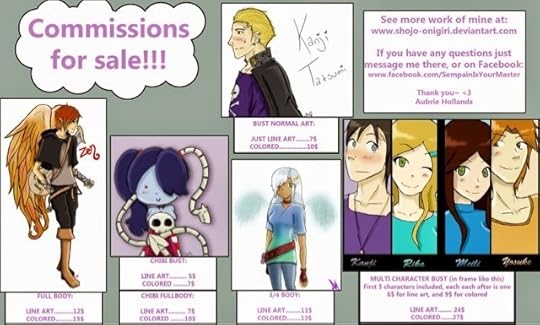
Her on deviantart: http://shojo-onigiri.deviantart.com
Hope you guys can use this. I'm out.
I have an artist friend who needs help. She's in the process of legally claiming her 2 year old son, so that she can permanently keep him away from her abusive ex-husband. Trouble is that in order to do this, she needs to pay the powers that be $900, and she dosen't have that kind of cash laying around. So she's having a commission sale to help raise the money. I know a lot of you are writers, so if you want and/or need illustrations for your book or just want to see what your characters look like or whatever for cheap, why not shoot her a PM and set something up? Here is her contact info and some samples of her work:

Her on deviantart: http://shojo-onigiri.deviantart.com
Hope you guys can use this. I'm out.


February 18, 2014
Quick Catch up.
Did ya think I was dead? Lol. Well I am not, life has just been getting in the way. I'll spare you guys the details (don't have much time right now), but the short of it is that I've been working on my book and looking for a job, the latter of which I finally found. Yup I'm finally employed, I'm now a non-armed security guard for a shop in Lenox Mall called J Crew. Can't say it's the most exciting job in the world but hey, it's a job. And I gotta admit, it does feel good to have an income again.
As for the book, good news is that the first draft is almost finished, just a few more chapters and an epilogue and then I can start the revision process. I won't put a due date on it just yet, but I will keep you guys posted when I can. Thanks for you guy's patients =).
Hate to cut this short, but I gotta get back to work. See you guys soon.
As for the book, good news is that the first draft is almost finished, just a few more chapters and an epilogue and then I can start the revision process. I won't put a due date on it just yet, but I will keep you guys posted when I can. Thanks for you guy's patients =).
Hate to cut this short, but I gotta get back to work. See you guys soon.
November 12, 2013
My uncles new book.
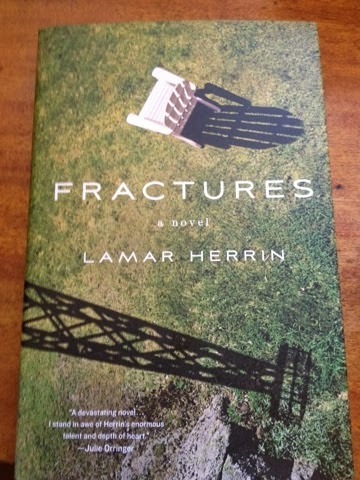
Just letting you guys know that my mentor's (AKA my Uncle Lamar) new book is out. So check it out when ya can:

April 30, 2013
The Dark Elf Cometh: An interview with New York Times bestselling author R.A. Salvatore.


Life is awesome sometimes. To be honest, I never thought that this would actually happen, that today’s guest would even agree to let me interview I mean. But, nice guy that our guest is, he has and now I’m hardly stopping myself from jumping up and down like a little boy on weaponized sugar. It’s nice to be wrong sometimes. Anyway, whether you like his work or not, today’s guests is one of the most popular and respected names working in the fantasy genre today. He’s the creator of one of the most popular Forgotten Realm’s characters ever, the dark elf Drizzt Do’Urden. And he is the author countless other books and stories both in and out of the Forgotten Realms like The Demon War’s saga and The Highwayman. He’s also worked on video games, the most recent being the popular RPG Kingdom of Amalur: Reckoning on the PC, Xbox 360 and Playstation 3.
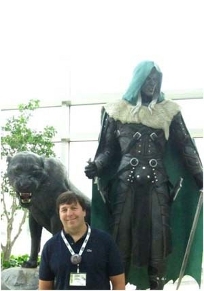 Creator hanging out with creation.
 Ladies and gentlemen, please give a warm welcome to the very talented, R.A. Salvatore. Mr. Salvatore, thank you for joining us.
R.A. Salvatore: Thank you for having me, Will.
Me: To start off with, how did you realize that writing was your calling? And what were some of the things that originally inspired you?
R.A.S: Tolkien inspired me. When I read those books, I remembered how much I loved escaping within the pages. When i ran out of books to read, I wrote my own. Haven't looked back since.
Me: Cool, Tolkien is one of my inspirations too (I've lost count how many time I've read his books now). But anyway Did you ever think that you would get to this point in your career?
R.A.S: Not at all. I didn't start writing as a "career." I just wanted to tell a story. I was working in finance when I got my first break.
Me: What do you do when you set out to write a novel? Do you make an outline or do you just sit there and let the story take shape as you go along (if that makes any sense)? I guess I'm interested in the creative process and how you do it.
R.A.S: I make an outline, then start writing and let the characters take over the story and direct my fingers. I look back at the outline now and then, revise if often as I go along, but really, writing is an organic thing to me.
Me: What keeps you writing?
R.A.S: Writing is how I make sense of the world, so I'd go crazy if I stopped.
Me: You and me both. We like our sanity too much to stop.
 The First book in the Neverwinter saga.Me: On a related subject, you recently wrapped up a new series of Drizzt books, the Neverwinter saga. Without giving too much away, what can you tell us about them?
R.A.S: These books were an exploration of Innovindil's advice to Drizzt on what it is to be an elf. Live your life in shorter bursts, recreating yourself to fit the lifespans of the humans around you, she told him. So he did, but this time, he wasn't surrounded by companions of similar weal and mores. So the conflict of Neverwinter was whether Drizzt would bring them up or they would bring him down...or something in the middle.
Me: Sounds very interesting. While on the subject of Drizzt, I liked what you did with the Dark Elves of the Realms and how Drizzt rebels against that, but still has to struggle to find acceptance, even though he's among those who share his values. And it makes me wonder, if you had complete creative freedom over him and his friends (like if they were characters in one of your original works), what would you do with them? Would they still be the same or would you take them in a completely other direction?

R.A.S: I do have complete freedom, so it's a moot point!
Me: *laugh* good to know.
Me: What's next for Drizzt now that the Neverwinter Saga is finished (that you can tell us about)? [image error] This is what's next.
R.A.S: "The Companions" comes out in August. That's all I will say. No spoilers on this one, though I think it might be the best book I've ever written - certainly in the top three, with "Homeland" and "Mortalis."
Me: I will definitely be on the look for that. One of the things I've always wondered is, when writing in a shared world like Forgotten Realms or Star Wars (no, this is not a question about Chewbacca lol), how much say does the owner of the world have as to what goes into the book in terms of content? I mean, do they mostly give you a freehand or do they micromanage it?
R.A.S: It depends on the world. With Star Wars, the author gets very little control. With the Realms, I get much more control. Generally speaking, if you're working on an active intellectual property that is associated with big-dollar projects like movies, you're not going to be able to do many dramatic things. Even the Chewy thing was not my idea and I was told I had to include it.
Me: I heard about that, that killing Chewy wasn't your idea I mean. It’s a shame that that overshadows the book, because I thought that Vector Prime was actually pretty good. And I hope they ask you to come back and write another one.
Me: Getting away from shared worlds for a moment. You've also written quite a number of original series, like the Demon Wars saga, Echoes of the Fourth Magic, the Highwaymanand so on. For those who haven't read them, what can you tell us about them (with as little spoilers as possible, please)? And which do you prefer, working in a shared world or your own work?
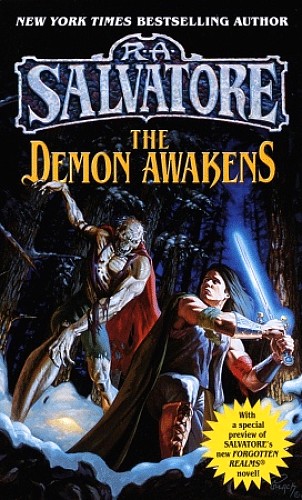 The first Demon Wars book.R.A.S: I've done several other series.
The Crimson Shadow Trilogy is a rollicking, Three-Musketeer-type adventure with one of my favorite (funniest) characters, the Highwayhalfling Oliver deBurrows.
The Spearwielder's Tales is an analogy of my own journey into fantasy.
The Chronicles of Ynis Aielle includes my first book, "Echoes of the Fourth Magic," and details a future Earth that is its own fantasy realm.
DemonWars is my most ambitious project ever. The original series encompasses 7 large books, which tell the stories of heroes and villains a'plenty, create an entirely new gemstone-based magical system, and a logical set of societal structures to go along with it.
 The first Highwayman book.The Highwayman and the Saga of the First King are four more books set in the DemonWars world. I hope to do more. This is my Forgotten Realms, my Middle Earth, my Shannara.
Me: As a world builder myself, I can relate =). Do you plan to write more in those universes, or to create new ones?
R.A.S: More DemonWars, certainly. I doubt I'll ever create another one, but you never know.
Me: What's the world building process like for you? I mean, do your universes open themselves up to you or do you have to fight it for every little scrap of detail?
R.A.S: I spent six months building the world - geography, races, social structures and magic system - for DemonWars before I ever started writing the books. Everything has to make sense or the whole property falls apart, and that takes detailed work.
Me: Indeed. On a semi-related subject, how do you come up with a character's (original or otherwise) personality? I mean, do you know who the character is going in, or do you discover who they are gradually?
R.A.S: I float an idea about my head for a character, introduce him or her, and let the character reveal himself/herself to me as we go along. This was true of Drizzt, who wasn't supposed to have a big role in the first book, and even more true of Entreri, who showed up on a whim at the end of that same book.
Me: Would you be open to having the Demon Wars books, or any of your original work, adapted into a movie or game or whatever? Have you even been approached about such a thing?
R.A.S: Sure. And I have had some close calls in this regard. Nothing yet. The truth is that my most desired work by licensors is Dark Elf, and Hasbro owns the rights to the Realms, not I.
Me: I hope that that changes, because I (and many other fans I’m sure) would love to see a Demon Wars movie or an Echoes of the Fourth Magic movie (so far, that’s my personal favorite of your original work). Though I’m actually pretty surprised that Hasbro hasn’t thought to make a Drizzt movie to be honest. You’d think they’d be all over it, given the character’s popularity *shrugs*.
 Me: But anyway, the first of your non-Forgotten Realms universes (or at least one that you helped to create) that I was really aware of, was the world of Amalur; which, of course, was the setting for the video game Kingdom of Amalur: Reckoning. I thought that both game and world were fantastic and had lots of potential for expanding upon, and it’s a terrible shame that 38 Studios went out of business before they could do more with it. I was looking forward to the Amalur MMO, myself. What was the process (like where did the idea for, say, the Fey come from? And the back and forth between 38 Studios and you Ect) that went into making that world? And, if given the chance, would you become involved with it again if/when someone buys the rights to the IP?
R.A.S: The Fey were an add by the BHG team to the 10,000 year history of Amalur that I and my team had created. It breaks my heart that so many people think of Amalur only in the terms of the "Reckoning" game, because that's all they can see. The truth is that Reckoning takes a tiny slice of space and time from Amalur and expands it into an RPG. The Fey, for example, only existed for a small amount of time in the world, and the concept of "fate" as portrayed in Reckoning was a brief belief among the people.
Me: Well, I would've loved to see more of the world beyond Reckoning anyway (and I know others who feel the same way). With that said, is there any chance of Amalur novels popping up anytime soon? That's just something I would personally love to see.
R.A.S: I doubt it, as the intellectual property is owned by Rhode Island. It will be up for auction, so we'll see.
Me: Indeed, I’m keeping fingers cross. Aside from Amalur, you've also worked on other video games (Like Forgotten Realms: Demon Stone, Everquest 2, and Quake III) as well. What would you say the biggest differences and challenges are for writing for an interactive medium like video games as opposed to writing in non-interactive ones like novels, comics or film scripts and so on? And what role do you see the writer playing in the creation of video games in the future?
R.A.S: When you're writing for a game, the most important character will be the one the player creates. In a book, you live vicariously through my created characters. In a game, you live through your own.
Me: As a writer and gamer, I'm interested in writing for that medium myself, but I'm not exactly the most tech oriented guy in the world. What advice (if any) can you give to people like me who would want to write for games?
R.A.S: Writing is writing, and anyone who calls himself a writer should be writing. Period. There are no tricks or shortcuts; it's about finding your voice and learning to say things in the manner you wish. Then you sit back and hope other people like your choices.
Me: Very good answer ^_^. In other interviews, you've often talked about how things like e-books and ever evolving technology are changing the publishing industry, and it certainly has (I and many of the indie authors following this blog are living proof lol). How do you see this change affecting not only published writers but the industry as a whole?
R.A.S: I can't even begin to predict. The changes are already dramatic, with brick-and-mortar stores falling by the wayside. Publishers and authors are continually scrambling to create a new relationship in the changing environment, and it's very hard, because that change isn't slowing. In addition, the new behemoths, like Amazon and iTunes, are trying to set the parameters and dominate the structure, and what's good for them might not be what's good for publishers or authors. Things will look very different in a few years, I'm sure.
Me: No doubt of that.
Me: What advice can you give to aspiring and indie writers looking to get published?

R.A.S: Same as always: if you can quit, then quit. If you can't quit, then you're a writer. Writing and publishing are two different things. For publishing advice, go and look at the newest edition of a periodical like "The Writer's Market." It will teach you what you need to know. I wish I could offer more, but I'm at a very different place than someone who needs this advice, and honestly, I haven't tried to sell a book in many years.
Me: it’s welcomed advice, nonetheless ^_^.
Me: Ok, This one is for the nerds: Who would win a fight: Drizzt, Rand al'Thor (from the Wheel of Time series) or Elric of Melnibone? Lol. Only joking.
R.A.S: The character of whichever writer is writing the battle, no doubt.
Me: R.A. Salvatore, thank very much for joining me today.
R.A.S: You’re very welcome. Thank you for having me.
And thanks to everyone for their undying patients. I hope you all enjoyed the interview. If you'd like to know more about R.A. Salvatore and his work, then visit him on the web at: http://www.rasalvatore.com/
and on Facebook: https://www.facebook.com/pages/RA-Salvatore/54142479810
and on Twitter: https://twitter.com/R_A_Salvatore
April 22, 2013
Recommended Reading for fantasy authors.
This is one I've been tossing around in my head for a while now. I held off on doing a "recommended reading list" because, well lets face it, recommending anything to anybody is already kind of a slippery slope. Not everyone is gonna like everything and trying to get someone to do anything is like shooting a gnat from a thousand miles away in the dark with a blowgun. Besides, for a topic as subjective as this, there are gonna be a lot of people who look at this and tell me I'm full of it. And I'd be hard pressed to say otherwise (because even I feel like I am sometimes). All that, and I'm simply just not that good at recommending stuff.
Then I just thought, "Ya know what, screw it. Just do it anyway and stop worrying." So, while we wait on R.A. Salvatore to get back to me with his answers for the interview. I'm just gonna do a quick run down of a few books that I think should be in every fantasy writers toolbox. I'm not gonna talk about them much, and I'm going to do my best to avoid classic literature or the stuff people should probably read anyway (like Shakespeare). But I hope that maybe reading and studying these books can maybe help some people improve like they did for me. Oh and if you want to buy the books for yourself, just click on the pictures and it will take you the the Amazon.com page.
I. On the craft of writing.
Because everyone needs a refresher of the basics from time to time. There are tons and tons of books out there that fill this role, but the following books are the ones I found to be the most helpful for me personally. Not only as a fantasy writer, but as a writer as a whole.
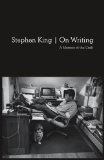

1. On Writing By Stephen King.
Part Memoir, and part practical advice. In the first and third halves of the book, King delves into his own evolution as a writer, his struggles to get published and the victories, trials and tribulations of fame. While the second half focuses on the practical side of the craft, likes advice on grammar, ideas, how to develop plot and characters, self-editing and so on. Its a little academic but it's also a fascinating look into a writer's life and how said life influenced his work, and full of good advice for both newbies and old veterans.
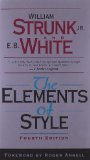

2. The Elements of Style by William Strunk JR. and E.B.White
Speaking of academic. This book covers all of the mechanical aspects of the craft. It might come off as a little stuck up, but its comprehensive, short and reinforces the rules of proper english grammar and style. Besides, as Robert Jordan once wrote, "You must follow the rules to the letter until you understand which you may break and which you may not." Which basicly means, knowing the rules will help you break them. I recently found out there is an updated edition of this, but the fourth edition (pictured on the left) is the edition I use so *shrugs*.
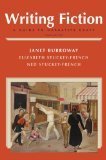

3. Writing Fiction: A guide to Narrative Craft by Janet Burroway and Elizabeth Stuckey-French
Its basicly a step by step guide through the creative writing process from idea inception to final revision. It includes a lot of writing exercises, short stories to illustrate its points and overall, its a pretty good coach of the basics of the craft. It meant for beginners, but I still think there are things that old pros can gleam from it.

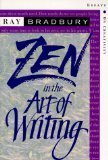
4. Zen and the Art of Writing By Ray Bradbury.
This collection of essays is just brilliant. Bradbury doesn't focus on the mechanical aspect of writing, but the mental side of it, the sheer joy of it. It dispenses wisdom while at the same time encourages you to pursue your dreams and have fun while doing so. And that, I think, is the most practical advice of all. Rest in peace, Ray.
II. Books on story structure.
Ok, admittedly, this one is much harder to talk about. Because its basicly all subjective and I in no way claim to be an expert on this. But I do have at least one recommendation that I think stands above the rest.

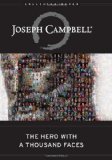
1. The hero with a Thousand Faces by Joseph Campbell.
This is Storytelling 101, people. This book is about comparative mythology, more precisely looking at the heroic stories of the worlds various mythology and belief systems and studying what they have in common. It takes a look at, among other things, how they are structured, what the common character archetypes are and so on. The structure that Campbell presents here has influenced, either consciously or unconsciously, just about every narrative medium (movies, books, video games, etc) out there, the most famous example being the Star Wars movies. The structure presented is in no way binding, it leaves a lot of wiggle room, but like I said before, knowing the rules makes it easier to break them later.
III. Books on world building.
As many fantasy and sci-fi authors will tell you, there really is no right way to build a fictitious world. It involves a lot of note taking, inner exploration and a lot of logical thought piecing it all together. So what I'm gonna do here is put up examples for authors to read and study and, hopefully, be inspired by and learn from.

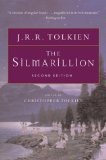
1. The Silmarillion by J.R.R Tolkien.
Yeah, you knew that Tolkien was gonna show up here eventually. What many don't know is that he originally never intended to make a fantasy world. Middle-Earth was conceived when he was 17 as a project to create a unified mythology for the British Islands, and The Hobbit and Lord of the Rings just kinda grew off from that by accident. The Silmarillion is the early history of Middle-Earth (ya know, the stories that the characters from Lord of the Rings constantly make references too), from its creation to the rise and fall of Sauron. I think what authors can learn from this book is how to lay down the foundation of a fictional world, not so much in terms of physical creation, but in cultural and religious. After all, the stories here provide the foundation for which Middle-Earth's Elven culture is based on.

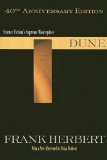 2. The Dune Saga by Frank Herbert
What can a sci-fi book teach fantasy writers about world building? Well a lot of things actually (not all of which I have time to cover here, so please bear with me). Least among them is how to make a fictitious cultures seem believable, in this case its the form of the desert dwelling Fremen, whose culture is dictated and centered around their environment. It can also give some insight into how politics work, and how both can change over time, thanks to the fact that the Dune saga takes place over a span of many thousands of years. There is a lot you can gleam from this series so give it a go.

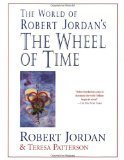
3. The World of Robert Jordan's The Wheel of Time by Robert Jordan & Teresa Patterson
Aside from reading The Wheel of Time itself (which you should do anyway In my opinion), this companion book is a great resource for potential world builders to study. Why? Because it literally talks about every detail of the world, providing maps, explanations on each of the series various nations and their culture, how the magic system works and so forth. Studying it, I think, is a good way to get a feel as to how make a fantasy world believable, in pretty much every since of the word.

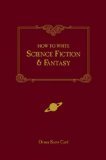
4. How to Write Science Fiction and Fantasy by Orson Scott Card.
Ya know, I really debated about including this one because A) this book is more of a general "how to" and not so much a book on world building and B) Orson Scott Card is an overhyped, homophobic ignoramus (to use the most polite term I think of) who really doesn't need anymore money. BUT, despite that....the advice laid out in this book is actually pretty good. And I think that there is a lot you can actually gleaned from it. So yeah, I think you all should read this and take it for what it is.
IV. Magic Systems.
The general rule of any good magic system is "Make sure it has limits and rules and make sure it follows your world's internal logic." That's certainly true, but still, the following books are ones that I think potential and beginning Fantasy Writers should look at to get an idea as to what that actually means.

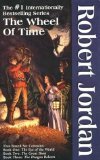
1. The Wheel of Time Saga by Robert Jordan (and Brandon Sanderson for the last three books).
Call this a fanboyism if you really have too, but I found The Wheel of Time's magic system to be one of the most interesting I've ever come across. It really embodies the "Make sure it has limits" thing mentioned above. It treats magic as a science and not so much an all powerful force. Not necessarily a new idea, but Jordan takes it to its logical extreme, and I think that studying how its system works (in both the books themselves and the companion book mentioned in the section above) could give potential fantasist some insight into how to make their own magic systems believable.

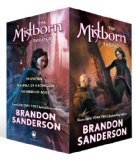 2. The Mistborn series by Brandon Sanderson
I think that one of the greatest strengths that Brandon Sanderson has as a world builder is his ability to make magic systems that are both stone faced believable and jaw dropping "wow." After all, he was a originally studying to become a biochemist before switching to writing, so he understand perfectly the concept of "everything has limits" and applies it to his magic systems. All of this comes out in his original work (The Stormlight Archive, Elantris, Warbreaker and so on), But I chose the Mistborn series because its his most well known creation and you get two magic systems to study for the price of one. So if you haven't picked him up yet, best do so.
V. Conclusion.
I could go on and list books for another hour, but then I'd just devolve into naming every book on my bookshelf and that I'm not gonna do. But I hope that I've given some people some potential resources that that they can learn from, or at least I've given them a starting point to expand their knowledge. Because honestly, the best way to learn how to write fantasy is to write it (obviously). And to read everything, not just fantasy and sci-fi, but literally everything, regardless of genre or subject matter.
But anyway, I hope you all enjoyed this. And I'll keep you all posted on the interview with Salvatore. Thanks for your undying patients.
See you soon.
VI. Links to some additional advice on writing fantasy:
http://tinsky.hubpages.com/_s5g4h6je4r5/hub/How-to-build-a-fantasy-world
http://mtdremer.hubpages.com/_s5g4h6je4r5/hub/How-to-Write-Genre-Fiction-for-Beginners
http://crazednovelist.hubpages.com/_s5g4h6je4r5/hub/Creating-A-Magic-System
Then I just thought, "Ya know what, screw it. Just do it anyway and stop worrying." So, while we wait on R.A. Salvatore to get back to me with his answers for the interview. I'm just gonna do a quick run down of a few books that I think should be in every fantasy writers toolbox. I'm not gonna talk about them much, and I'm going to do my best to avoid classic literature or the stuff people should probably read anyway (like Shakespeare). But I hope that maybe reading and studying these books can maybe help some people improve like they did for me. Oh and if you want to buy the books for yourself, just click on the pictures and it will take you the the Amazon.com page.
I. On the craft of writing.
Because everyone needs a refresher of the basics from time to time. There are tons and tons of books out there that fill this role, but the following books are the ones I found to be the most helpful for me personally. Not only as a fantasy writer, but as a writer as a whole.
1. On Writing By Stephen King.
Part Memoir, and part practical advice. In the first and third halves of the book, King delves into his own evolution as a writer, his struggles to get published and the victories, trials and tribulations of fame. While the second half focuses on the practical side of the craft, likes advice on grammar, ideas, how to develop plot and characters, self-editing and so on. Its a little academic but it's also a fascinating look into a writer's life and how said life influenced his work, and full of good advice for both newbies and old veterans.
2. The Elements of Style by William Strunk JR. and E.B.White
Speaking of academic. This book covers all of the mechanical aspects of the craft. It might come off as a little stuck up, but its comprehensive, short and reinforces the rules of proper english grammar and style. Besides, as Robert Jordan once wrote, "You must follow the rules to the letter until you understand which you may break and which you may not." Which basicly means, knowing the rules will help you break them. I recently found out there is an updated edition of this, but the fourth edition (pictured on the left) is the edition I use so *shrugs*.
3. Writing Fiction: A guide to Narrative Craft by Janet Burroway and Elizabeth Stuckey-French
Its basicly a step by step guide through the creative writing process from idea inception to final revision. It includes a lot of writing exercises, short stories to illustrate its points and overall, its a pretty good coach of the basics of the craft. It meant for beginners, but I still think there are things that old pros can gleam from it.
4. Zen and the Art of Writing By Ray Bradbury.
This collection of essays is just brilliant. Bradbury doesn't focus on the mechanical aspect of writing, but the mental side of it, the sheer joy of it. It dispenses wisdom while at the same time encourages you to pursue your dreams and have fun while doing so. And that, I think, is the most practical advice of all. Rest in peace, Ray.
II. Books on story structure.
Ok, admittedly, this one is much harder to talk about. Because its basicly all subjective and I in no way claim to be an expert on this. But I do have at least one recommendation that I think stands above the rest.
1. The hero with a Thousand Faces by Joseph Campbell.
This is Storytelling 101, people. This book is about comparative mythology, more precisely looking at the heroic stories of the worlds various mythology and belief systems and studying what they have in common. It takes a look at, among other things, how they are structured, what the common character archetypes are and so on. The structure that Campbell presents here has influenced, either consciously or unconsciously, just about every narrative medium (movies, books, video games, etc) out there, the most famous example being the Star Wars movies. The structure presented is in no way binding, it leaves a lot of wiggle room, but like I said before, knowing the rules makes it easier to break them later.
III. Books on world building.
As many fantasy and sci-fi authors will tell you, there really is no right way to build a fictitious world. It involves a lot of note taking, inner exploration and a lot of logical thought piecing it all together. So what I'm gonna do here is put up examples for authors to read and study and, hopefully, be inspired by and learn from.
1. The Silmarillion by J.R.R Tolkien.
Yeah, you knew that Tolkien was gonna show up here eventually. What many don't know is that he originally never intended to make a fantasy world. Middle-Earth was conceived when he was 17 as a project to create a unified mythology for the British Islands, and The Hobbit and Lord of the Rings just kinda grew off from that by accident. The Silmarillion is the early history of Middle-Earth (ya know, the stories that the characters from Lord of the Rings constantly make references too), from its creation to the rise and fall of Sauron. I think what authors can learn from this book is how to lay down the foundation of a fictional world, not so much in terms of physical creation, but in cultural and religious. After all, the stories here provide the foundation for which Middle-Earth's Elven culture is based on.
2. The Dune Saga by Frank HerbertWhat can a sci-fi book teach fantasy writers about world building? Well a lot of things actually (not all of which I have time to cover here, so please bear with me). Least among them is how to make a fictitious cultures seem believable, in this case its the form of the desert dwelling Fremen, whose culture is dictated and centered around their environment. It can also give some insight into how politics work, and how both can change over time, thanks to the fact that the Dune saga takes place over a span of many thousands of years. There is a lot you can gleam from this series so give it a go.
3. The World of Robert Jordan's The Wheel of Time by Robert Jordan & Teresa Patterson
Aside from reading The Wheel of Time itself (which you should do anyway In my opinion), this companion book is a great resource for potential world builders to study. Why? Because it literally talks about every detail of the world, providing maps, explanations on each of the series various nations and their culture, how the magic system works and so forth. Studying it, I think, is a good way to get a feel as to how make a fantasy world believable, in pretty much every since of the word.
4. How to Write Science Fiction and Fantasy by Orson Scott Card.
Ya know, I really debated about including this one because A) this book is more of a general "how to" and not so much a book on world building and B) Orson Scott Card is an overhyped, homophobic ignoramus (to use the most polite term I think of) who really doesn't need anymore money. BUT, despite that....the advice laid out in this book is actually pretty good. And I think that there is a lot you can actually gleaned from it. So yeah, I think you all should read this and take it for what it is.
IV. Magic Systems.
The general rule of any good magic system is "Make sure it has limits and rules and make sure it follows your world's internal logic." That's certainly true, but still, the following books are ones that I think potential and beginning Fantasy Writers should look at to get an idea as to what that actually means.
1. The Wheel of Time Saga by Robert Jordan (and Brandon Sanderson for the last three books).
Call this a fanboyism if you really have too, but I found The Wheel of Time's magic system to be one of the most interesting I've ever come across. It really embodies the "Make sure it has limits" thing mentioned above. It treats magic as a science and not so much an all powerful force. Not necessarily a new idea, but Jordan takes it to its logical extreme, and I think that studying how its system works (in both the books themselves and the companion book mentioned in the section above) could give potential fantasist some insight into how to make their own magic systems believable.
2. The Mistborn series by Brandon SandersonI think that one of the greatest strengths that Brandon Sanderson has as a world builder is his ability to make magic systems that are both stone faced believable and jaw dropping "wow." After all, he was a originally studying to become a biochemist before switching to writing, so he understand perfectly the concept of "everything has limits" and applies it to his magic systems. All of this comes out in his original work (The Stormlight Archive, Elantris, Warbreaker and so on), But I chose the Mistborn series because its his most well known creation and you get two magic systems to study for the price of one. So if you haven't picked him up yet, best do so.
V. Conclusion.
I could go on and list books for another hour, but then I'd just devolve into naming every book on my bookshelf and that I'm not gonna do. But I hope that I've given some people some potential resources that that they can learn from, or at least I've given them a starting point to expand their knowledge. Because honestly, the best way to learn how to write fantasy is to write it (obviously). And to read everything, not just fantasy and sci-fi, but literally everything, regardless of genre or subject matter.
But anyway, I hope you all enjoyed this. And I'll keep you all posted on the interview with Salvatore. Thanks for your undying patients.
See you soon.
VI. Links to some additional advice on writing fantasy:
http://tinsky.hubpages.com/_s5g4h6je4r5/hub/How-to-build-a-fantasy-world
http://mtdremer.hubpages.com/_s5g4h6je4r5/hub/How-to-Write-Genre-Fiction-for-Beginners
http://crazednovelist.hubpages.com/_s5g4h6je4r5/hub/Creating-A-Magic-System
April 2, 2013
Future plans part 2.
Well it's April, so what's this big thing I have planned? Well, some time this month, I will be interviewing this guy:
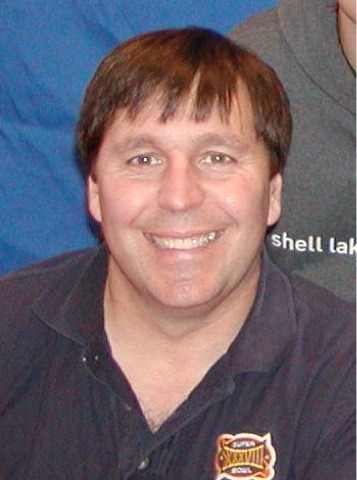
And this guy, for those who don't know, is one of the fantasy genre's biggest names: R.A.Salvatore, creator of Drizzt Do' Urden, the Demon Wars Saga and is the principal creator of the world of 38 Studios' best selling video game Kingdom of Amalur: Reckoning. And he is also the writer of over 30 Forgotten Realms novels (most staring Drizzt)...and one really infamous Star Wars novel.
And if you don't believe me, here's a link the Magic Appreciation Tour's blog confirming it: http://magicappreciationtour.wordpress.com/2013/04/01/r-a-salvatore-to-be-interviewed-by-one-of-our-own/
Understandably, I'm really excited, but as Dan says in the link, I want to share that excitement with you all. So if you have any questions that you'd like me to ask him you can leave them in the comment section below, or you can leave them on the Magic Appreciation Tours' blog post in the link above.
So be on the look out for this ^_^. Can't wait to read you guys questions. Thanks in advanced.
See ya soon.
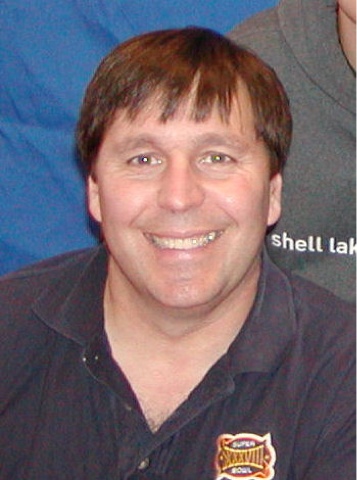
And this guy, for those who don't know, is one of the fantasy genre's biggest names: R.A.Salvatore, creator of Drizzt Do' Urden, the Demon Wars Saga and is the principal creator of the world of 38 Studios' best selling video game Kingdom of Amalur: Reckoning. And he is also the writer of over 30 Forgotten Realms novels (most staring Drizzt)...and one really infamous Star Wars novel.
And if you don't believe me, here's a link the Magic Appreciation Tour's blog confirming it: http://magicappreciationtour.wordpress.com/2013/04/01/r-a-salvatore-to-be-interviewed-by-one-of-our-own/
Understandably, I'm really excited, but as Dan says in the link, I want to share that excitement with you all. So if you have any questions that you'd like me to ask him you can leave them in the comment section below, or you can leave them on the Magic Appreciation Tours' blog post in the link above.
So be on the look out for this ^_^. Can't wait to read you guys questions. Thanks in advanced.
See ya soon.
March 18, 2013
Future plans.
Not really a new post, but just letting you all know that I got something big planned for the blog next month (not April Fools, God no. I don't really go for that). I won't say what yet, still finalizing it, but you'll know when you see it. I'll give you a hint though:
The Dark Elf cometh.
To find out what that means, you'll have to come back in April. So yeah, please spread the word.
see you later.
To find out what that means, you'll have to come back in April. So yeah, please spread the word.
see you later.
March 7, 2013
Me on Hubpages.
Hey guys. Just letting you all know that I finally got the Hubpages thing I mentioned in the last post set up so here's the link to my page if you're interested:
http://willsummerdreamer.hubpages.com/
And to my first two articles:
http://willsummerdreamer.hubpages.com...
http://willsummerdreamer.hubpages.com...
No, I'm not gonna abandon the blog, but with this at least I might be able to elevate help with my lack of finances problems.
Hope you all check it out and enjoy it. If anyone has some experience on there, feel free to share it in the comments.
talk to you all later.
http://willsummerdreamer.hubpages.com/
And to my first two articles:
http://willsummerdreamer.hubpages.com...
http://willsummerdreamer.hubpages.com...
No, I'm not gonna abandon the blog, but with this at least I might be able to elevate help with my lack of finances problems.
Hope you all check it out and enjoy it. If anyone has some experience on there, feel free to share it in the comments.
talk to you all later.
March 1, 2013
Catching up and video game talk: Mirrors Edge
I have apologize for the lack of updates on here lately. I've been kinda busy with job hunting and writing the novel and a short story, life stuff and, well, I've just had a general lack of ideas of what to actually blog about. I know everyone gets like this all the time and its really nothing to be ashamed of, but it has been over two months since the last post so, yeah, sorry. I am gonna try and start doing this regularly, I have to find the groove for it again. And that isn't always as easy as it sounds. Anyway, on a brighter note, I've recently joined hubpages to try and earn some extra cash, lord knows I need it. If anyone is a member there, then feel free to share your experience in the comments. I'll post links to the page as soon as I can set up the payment information on there.
Anyway, since this is my first post in a while and I'm still kinda struggling to find better topics to write about, I decided to give myself a break and just talk about something I really enjoy for a few minutes. And yes, that means video games, more specifically, this video game:
To put it plainly, Mirror's Edge is probably the most orginal game to come out of a mainstream publisher in years in my opinion. It's a first person action game developed by Dice, a subsidiary of the evil gaming empire of mediocrity known as Electronic Arts. So when I first heard about this back in 2007 I thought it was going to suck...and then it came out.
The story here is set in an unnamed dystopian city where crime is basically dead and people live carefree lives...but since we all know that disneyesque utopias are boring and don't exist in reality: this city is basically a totalitarian state where all forms of communication and media are controlled and monitored by the government. This is were people known as "Runners" (couriers basically) come in. They run through the rooftops passing along information and messages, dodging the police like this was opening scene from The Matrix. You play as Faith, a Runner who is trying to save her sister who was framed for the murder of a government official. Faith's mission is uncover the real killer and unmask a conspiracy that could affect the entire city.
Its a fairly passable plot, its just too bad that it feels very claustrophobic. The problem here isn't that the story is bad per-say, the problem is that it doesn't give itself enough room to really flesh out and develop itself. There's very little back story as to how the city got to the state its in, save for a quick monologue by Faith in the beginning and some subsequent flashbacks to Faith's childhood in some cut scenes. As a result, the characters are kinda underdeveloped. With the exception of Faith but even that being generous. Despite that though, I found myself caring about what happens to these people. Its kinda like some sadistic corporate monkey dangling a bar of gold from a string above your head and every time you get close to it he pulls it out of your reach. You don't want to keep trying but you can't help it. Its kinda like that for me, especially when it comes to Faith. She's easily the best character in the game in my opinion.
To be honest, Faith is one of the initial reasons I bought this thing to begin with. And not for the reasons you might think. Ya see, from a visual standpoint anyway, when Mirrors Edge came out (and even now to some extent), Video game developers idea of a "Strong Woman," was, as a whole, a girl with an unrealistically huge chest that she flaunts with skimpy or otherwise very reveling or clingy clothes and her personality is more or less a bad attitude that is calmed (and rescued) by a man. This basically:
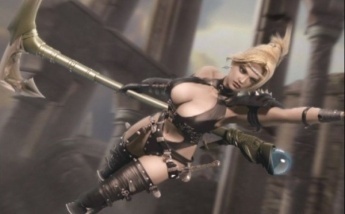 the kind of slutty thing that only growing boys dream about.
Then there's Faith:
no big chest, no slutty clothes, no bad attitude. Hell, she's pretty much an ordinary athletic woman. And her personality is refreshing. She's strong, but shes not bitch, she can hold her own and take anything that comes at her but she's not an unfeeling robot. In other words she's realistic in just about every sense of the word, even if her character is slightly underdeveloped. Now I'm not saying that characters like Faith don't exist in video games, I know for a fact that they do, but I'm saying that she's part of rare breed of video game heroine where her defining feature isn't her sexuality or some strange need to be a man.
But anyway, despite the flaws of the story, what really holds Mirror's Edge together is the gameplay (an example of which is on the left). At its core, Mirrors Edge is an action/adventure platforming game with running, jumping, wall climbing, wall running and reaching the next platform without falling to your death. But unlike other games with that label its done from a first person perspective. Similar to games like Call of Duty . In other words: "What if Prince of Persia: Sands of Time was in first person?" Unlike the Prince though, a lot of what you can do will depend on your momentum. Like reaching a ledge for example or knocking your enemy out faster. Its an interesting mechanic, one that can leave you frustrated, but it when it works its pretty awesome. Speaking of combat, that's one of the games weaker points. Most of the time your running over obstacles and rooftops, looking for objects that are highlighted red to help you navigate from point "A" to point "B."
  But there are other times when you have to fight. You can do this by either knocking the enemy out with melee attacks (martial arts basically) or you can disarm the cop, take his weapon and shoot him. Thankfully there's a button that will let you slow time momentarily that helps you do that. After you take the weapon, you can hold onto it and use it until it runs out of ammo, at which point you have to drop it and run. And in moments like those it feels like a first person shooter. And that's is where a lot of criticism was leveled at this game. The shooting aspects were poor when compared to other shooters, there was no strafing for one thing and aiming the gun was a kind of a pain. But I think that what people failed to realize is that shooting things isn't what Mirror's Edge is about. Like I said, its a platformer, one that encourages you to use your noggin to navigate and to out flank and out run your enemy. I can personally attest that if you try to stay and fight them off then your most likely going to die. The controls are ok, a little stiff but its gets the job done. There are also a lot of buttons you have to press and that can get a really confusing until you get used to it. And when you do, the game really sings.
In closing, despite its flaws, this game is definitely worth checking out, And since its a few years old you can get it for pretty cheep, in someplaces for less than $20. You can find it or download it on the Xbox 360, Playstation 3 and on the PC. They also made a third-person version of it for mobile devices, but I haven't played it so I can't comment on it.
And i'm out.
Anyway, since this is my first post in a while and I'm still kinda struggling to find better topics to write about, I decided to give myself a break and just talk about something I really enjoy for a few minutes. And yes, that means video games, more specifically, this video game:
To put it plainly, Mirror's Edge
is probably the most orginal game to come out of a mainstream publisher in years in my opinion. It's a first person action game developed by Dice, a subsidiary of the evil gaming empire of mediocrity known as Electronic Arts. So when I first heard about this back in 2007 I thought it was going to suck...and then it came out.The story here is set in an unnamed dystopian city where crime is basically dead and people live carefree lives...but since we all know that disneyesque utopias are boring and don't exist in reality: this city is basically a totalitarian state where all forms of communication and media are controlled and monitored by the government. This is were people known as "Runners" (couriers basically) come in. They run through the rooftops passing along information and messages, dodging the police like this was opening scene from The Matrix. You play as Faith, a Runner who is trying to save her sister who was framed for the murder of a government official. Faith's mission is uncover the real killer and unmask a conspiracy that could affect the entire city.
Its a fairly passable plot, its just too bad that it feels very claustrophobic. The problem here isn't that the story is bad per-say, the problem is that it doesn't give itself enough room to really flesh out and develop itself. There's very little back story as to how the city got to the state its in, save for a quick monologue by Faith in the beginning and some subsequent flashbacks to Faith's childhood in some cut scenes. As a result, the characters are kinda underdeveloped. With the exception of Faith but even that being generous. Despite that though, I found myself caring about what happens to these people. Its kinda like some sadistic corporate monkey dangling a bar of gold from a string above your head and every time you get close to it he pulls it out of your reach. You don't want to keep trying but you can't help it. Its kinda like that for me, especially when it comes to Faith. She's easily the best character in the game in my opinion.
To be honest, Faith is one of the initial reasons I bought this thing to begin with. And not for the reasons you might think. Ya see, from a visual standpoint anyway, when Mirrors Edge came out (and even now to some extent), Video game developers idea of a "Strong Woman," was, as a whole, a girl with an unrealistically huge chest that she flaunts with skimpy or otherwise very reveling or clingy clothes and her personality is more or less a bad attitude that is calmed (and rescued) by a man. This basically:
 the kind of slutty thing that only growing boys dream about.
 Then there's Faith:

no big chest, no slutty clothes, no bad attitude. Hell, she's pretty much an ordinary athletic woman. And her personality is refreshing. She's strong, but shes not bitch, she can hold her own and take anything that comes at her but she's not an unfeeling robot. In other words she's realistic in just about every sense of the word, even if her character is slightly underdeveloped. Now I'm not saying that characters like Faith don't exist in video games, I know for a fact that they do, but I'm saying that she's part of rare breed of video game heroine where her defining feature isn't her sexuality or some strange need to be a man.
But anyway, despite the flaws of the story, what really holds Mirror's Edge
together is the gameplay (an example of which is on the left). At its core, Mirrors Edge is an action/adventure platforming game with running, jumping, wall climbing, wall running and reaching the next platform without falling to your death. But unlike other games with that label its done from a first person perspective. Similar to games like Call of Duty. In other words: "What if Prince of Persia: Sands of Time was in first person?" Unlike the Prince though, a lot of what you can do will depend on your momentum. Like reaching a ledge for example or knocking your enemy out faster. Its an interesting mechanic, one that can leave you frustrated, but it when it works its pretty awesome. Speaking of combat, that's one of the games weaker points. Most of the time your running over obstacles and rooftops, looking for objects that are highlighted red to help you navigate from point "A" to point "B." But there are other times when you have to fight. You can do this by either knocking the enemy out with melee attacks (martial arts basically) or you can disarm the cop, take his weapon and shoot him. Thankfully there's a button that will let you slow time momentarily that helps you do that. After you take the weapon, you can hold onto it and use it until it runs out of ammo, at which point you have to drop it and run. And in moments like those it feels like a first person shooter. And that's is where a lot of criticism was leveled at this game. The shooting aspects were poor when compared to other shooters, there was no strafing for one thing and aiming the gun was a kind of a pain. But I think that what people failed to realize is that shooting things isn't what Mirror's Edge is about. Like I said, its a platformer, one that encourages you to use your noggin to navigate and to out flank and out run your enemy. I can personally attest that if you try to stay and fight them off then your most likely going to die. The controls are ok, a little stiff but its gets the job done. There are also a lot of buttons you have to press and that can get a really confusing until you get used to it. And when you do, the game really sings.In closing, despite its flaws, this game is definitely worth checking out, And since its a few years old you can get it for pretty cheep, in someplaces for less than $20. You can find it or download it on the Xbox 360, Playstation 3 and on the PC. They also made a third-person version of it for mobile devices, but I haven't played it so I can't comment on it.
And i'm out.
December 22, 2012
History of Modern Fantasy literature.
 I suppose that I should point out that I am technically a trained historian. I majored in history, its one of my strengths. And while I can't say that I particularly like getting academic about, well, anything. Sometimes I just have to let my inner historian take over. This is one of those times. I don't really have a reason for wanting to talk about this subject in particular, other than I just felt like it and the vague hope that I can enlighten people to books they might not have heard of before, especially if they have an interest in where their favorite genre came from. Plus it gives me an excuse to put up really cool pictures on here, and I need no reason for that lol. Anyway, this is a going to be a very, very, VERY condensed history of modern fantasy from its beginnings to A Game of Thrones. lets get started.
I. Beginnings. Now to be really clear, from a historical standpoint, when talking about the history of any genre of speculative fiction you're mostly talking about both the literary traditions and popular culture of two countries, Europe (particularly The United Kingdom for our purposes) and The United States. Sure, other countries developed their own flavor of the genre, but none of them could really compete with the crushing mountain of creative genius or influence that came out of the U.K. and the U.S. Hell, most of the big genre authors from other countries, particularly from Asia, would remain virtually unknown to the rest of the world until the invention and wide-spread use of the internet. That doesn't make it right, wrong or indifferent, that's just the way it was.
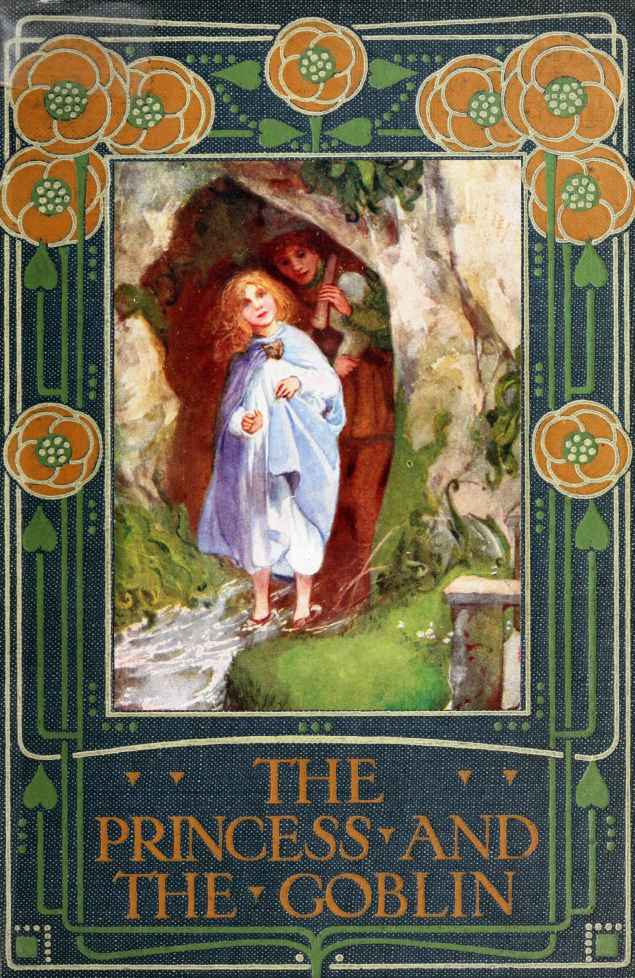 Modern Fantasy's first baby.Now obviously the fantasy genre has its roots in mythology, the epic poems of the Greeks, Romans, Germans and other cultures, the romance stories of the middle ages , fairy tales and the artistic and scientific revolutions of the Renascence. But pointing to the exact birthday for fantasy is not as simple as it sounds. This is because a lot of work before the 19th didn't always have clear boundaries between fantasy and other genres. Probably the most well known example of this are the works of Shakespeare. Although many of his plays, such as Hamlet and Macbeth , had fantastical elements they are not actually part of the fantasy genre. They're tragedies in where the fantastic serves only as a convenient plot device and little else. And so far as we know, Shakespeare only wrote a handful of plays that could fit into the genre: particularly A Midsummer Night's Dream and the Tempest . It wasn't until the late 19th and early 20th century that the genre as we know it started to take shape when Scottish author George MacDonald published the children's novel The Princess and the Goblin in 1872 and the more adult themed Phantastes in 1858. The latter of which is actually considered the first fantasy book for adults. The other father of modern fantasy was English poet William Morris , who is most famous for the book The Well at the World's End. Morris' work was the first to introduce the idea of setting the story completely in a self-contained fantasy world. At the time, it was a pretty bold idea because no one had ever thought to create an entire fictional world to set a story in before. Morris' was also a fan of the medieval romances and heroic sagas and his fantasy work reflect that with it deliberate archaic style of narration and the setting were also heavily influenced by the culture of the middle ages. Which is why basically every fantasy author and their grandmother has used it ever since.
II. The Gods, the Serpent and the Children:
Even though both MacDonald's and Morris's work was successful and popular for their time, the genre they helped create didn't gain a wide audience until the turn of the century with the debut of Lord Dunsany and his novel The Gods of Pegāna in 1905. Like Morris, Dunsany set his story in a fantasy world, but he also added a layer of depth by inventing his own pantheon of gods for his world's inhabitance to worship. Dunsany set several stories in this world and was praised for his vivid imagination. And the impact his pantheon on the genre is still felt to this day. On the other hand, his narration style was really pretentious, grandiose and, well, really really kinda silly. Here's an example:
Some say that the Worlds and the Suns are but the echoes of the drumming of Skarl, and others say that they be dreams that arise in the mind of MANA because of the drumming of Skarl, as one may dream whose rest is troubled by sound of song, but none knoweth, for who hath heard the voice of Mana-Yood-Sushai, or who hath seen his drummer?And somehow this influenced an entire generation of writers who tried to imitate his style. No wonder the genre was considered for children for years.
Speaking of which, this was also the time when all the classic children's fantasies made their debut, starting with Lewis Carol's classic Alice in Wonderland, J.M. Barrie's Peter Pan, L. Frank Balm's Wizard of OZ and countless others. The success of which, while all important steps in the development of the genre, also helped solidify the stigma that fantasy is only supposed to be for children and that as such, fantasy novels geared towards adults was considered distasteful. To be fair, this idea was not unique to this time period, but it was during this time that the idea flowered into a conscious societal thought, forcing some fantasy authors to re-purpose their work for a much younger audience. Even when it was kinda obvious that the book in question wasn't really for children.
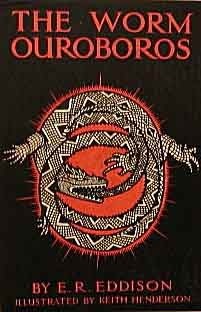 Worms eating themselves.Such was the case with the next big event in the development of the genre when in 1922, English civil servant and author E.R. Eddison published one of the seminal works of modern fantasy: The Worm Ouroboros. For its time, Ouroboros had the most complete fantasy world yet, definitely the most ambitious. While there is little in the way of Mythopeia at work here, Ouroboros was an epic unlike anything that had been seen before, with heroic characters that were all of noble birth (which Eddisons did with all of his heroes for some reason), memorable villains and for 1922 one sick and shocking ending. The prose style (which thankfully was untouched by Dunsany) was inspired by Elizabethan English, which meant that you could actually read and understand the damn thing. Sadly, despite much critical praise Ouroboros was a failure when it was first published and went out of print very quickly. Ironically, two of the people who praised Ouroboros were two academics teaching at Oxford, but we'll come back to that.
 Why did it have to be snakes?
III. Dreams of Pulp, and Halflings.
Meanwhile in America, one year after Ouroboros was published; the first issue of Weird Tales, a pulp anthology magazine dedicated to publishing "Weird" genre fiction, hit the news stands. While it wasn't the first magazine of its kind, it did debut some of most iconic creators in the history of speculative fiction: Robert E. Howard (creator of Conan the Barbarian), Fritz Leiber (creator of Fafhrd and the Gray Mouser ) and H.P. Lovecraft (creator of the Cthulhu Mythos). Lovecraft's Mythos took Lord Dunsey's (of whom Lovecraft was an ardent admirer) idea of a fictional pantheon of gods and turned it into something dark and sinister. In where the gods are monstrous, other-worldly evil beings whose very existence must remain secret less the human races sanity and very survival be at risk. In other words, Lovecrafts gods don't want to help us, they want us dead so that they and their followers can rule the earth. This idea of the fantasy elements being "evil" or harmful had been toyed with before, but Lovecraft took it to the next level with his deliberately told, vague and atmospherically charged prose that was both surreal and terrifying. His work not only influenced the horror genre, but it would also ultimately lay the foundations for the sub-genre of dark fantasy.
At the same time Howard and Fritz wrote more traditional fantasy, but not the magnum-sized epics of Ouroboros. These were bite-sized but exciting serialized short stories that you could read in an afternoon. They were full of magic, swords, beefcake men doing heroic deeds in leather and loincloths and chicks in chain mail. This sort of low fantasy were the beginnings of the sub-genre known as 'Swords and Sorcery', You can kind of think of it as basically young adult fantasy. But Swords and Sorcery stories weren't supposed to be taken seriously, they were just fun. Now that's not to say that any of those stories were bad, usually far from it, what they weren't was really anything that hadn't been seen before. Fantasy by the 1930's had become something of a cookie cutter toy, something to be enjoyed and then put away at the outset of adulthood.
 There and Back again. While this was going on, one of the Oxford Professors that had praised Ouroboros was banging a new fairy tale for his children out of his typewriter. A tale about a little man named Bilbo with furry feet and a magic ring as he joined 13 Dwarves on their quest to reclaim their homeland from a Dragon, named Smaug. The Professor was J.R.R. Tolkien and the book, was The Hobbit. Released on September 21, 1937. The Hobbit was an instant classic, winning praise in leaps and bounds and was even nominated for the Carnegie Medal. And while it is a children's book at heart, the story was smart and sophisticated enough to appeal to everyone, adult and child alike. Not only that, Tolkien's fantasy world of Middle-Earth was the most complete and realistic ever seen at that point, and would later become the standard for which all other such worlds must be compared. However, Tolkien had originally never intend for the book to be set in Middle-Earth. You see, what no one knew at that time was that Tolkien had started developing the world of Middle-Earth when he was 17, years and years before The Hobbit was even a conscious thought. It wasn't until much later that he discovered that yes, the Hobbit was part of this fantasy world. And this discovery influenced the squeal. When the Hobbit turned out to be a hit, his publishers obviously wanted him to write more. Tolkien agreed and set to work. His original idea was to write a much simpler story in where Bilbo goes out to find more treasure, but as the work progressed and the story began to "grow in the telling" this idea was abandoned. But Tolkien found another story in the smallest element of the Hobbit, namely Bilbo's magic ring. And the story that Tolkien wrung out of that, no one saw coming.
IV. One Ring and The Lions in the Wadrobe.
 That story was his magnum opus Trilogy: The Lord of the Rings. Originally intend to be told in one volume, the book was so massive that the publisher decided to publish the work as trilogy, which was published 1954-1955. Lord of the Rings was one of those once in a life time books that changes everything. Not only did it up the bar for the amount of depths and complexity that was possible for a fantasy story, it also set the popular image of the genre that endures to this very day. This book's influence on the genre cannot be understated, not only in the world of books, but in other media as well. Ever wonder why Elves use bows and arrows, talk to trees and, basically are the way they are in modern fantasy? Or why the atypical dwarf is the way it? Or why the image of a Wizard is basically...well you get the idea. Well you can trace all of it back to Lord of the Rings. While Tolkien didn't create these elements, Lord of the Rings did put them into the popular imagination.
.jpg) obey the Jesus Lion!
obey the Jesus Lion!Some years before the publication of Fellowship of the Ring, in 1950 the second Oxford Professor that had praised Ouroboros published the first in a series of children's novels that would redefine the both children's and young adult fantasy. A story about a group of siblings who discover a magical world after walking through an unassuming looking wardrobe. The author was Tolkien's good friend and celebrated Christian Scholar Clive Staples Lewis and the series was The Chronicles of Narnia.
In essence, what Lord of The Rings did for Fantasy for adults, Narnia did for children and young adults. Although no where near as complex as Lord of the Rings, and not all of the seven book in the Chronicles follow the same characters, The series shared mythology, world and interconnected story did lay the foundation for what young adult fantasy would eventually become, paving the way for modern YA fantasy classics such as Artemis Fowl, and Harry Potter. Both Lord of The Rings and The Chronicles of Narnia are considered the fathers of modern Fantasy and both works found a massive audience with the baby boom generation, and their popularity and influence has only continued to grow.
V. Wizard Schools and the Bringer of the Storm.
.jpg) Doesn't really look like a Sparrowhawk.I'm gonna let you all in on a little secret: the reason why not many people remember the balk of the works published immediately after Tolkien and Lewis is because a lot of it was reactionary, and it must be said, not very good. Potential fantasy Authors read Tolkien and Lewis and tried to imitate them with mixed results. And while some of that would endure, like Terry Brook's The Sword of Shannara series, others were put away and promptly forgotten. Also during the 50's, 60's and 70's Fantasy's spiritual brother. Sci-Fi, started to grow up and gain mainstream acceptance and popularity with a little help from TV Shows such as The Twilight Zone, Star Trek, the British show Doctor Who and movies like 2001 and Star Wars and the grand masters of the genre such as Bradbury, Herbert, Heinlein, Asimov and Clarke. But among those masters: one would stand out and break the chins of mediocrity that had taken hold of the fantasy genre. The best way to describe her would be thusly: if Tolkien and Lewis are the fathers of modern fantasy, Then Ursula K.LeGuin is its mother, when in 1969 she published the first book in her now legendary Earthsea cycle, A Wizard of Earthsea.
Doesn't really look like a Sparrowhawk.I'm gonna let you all in on a little secret: the reason why not many people remember the balk of the works published immediately after Tolkien and Lewis is because a lot of it was reactionary, and it must be said, not very good. Potential fantasy Authors read Tolkien and Lewis and tried to imitate them with mixed results. And while some of that would endure, like Terry Brook's The Sword of Shannara series, others were put away and promptly forgotten. Also during the 50's, 60's and 70's Fantasy's spiritual brother. Sci-Fi, started to grow up and gain mainstream acceptance and popularity with a little help from TV Shows such as The Twilight Zone, Star Trek, the British show Doctor Who and movies like 2001 and Star Wars and the grand masters of the genre such as Bradbury, Herbert, Heinlein, Asimov and Clarke. But among those masters: one would stand out and break the chins of mediocrity that had taken hold of the fantasy genre. The best way to describe her would be thusly: if Tolkien and Lewis are the fathers of modern fantasy, Then Ursula K.LeGuin is its mother, when in 1969 she published the first book in her now legendary Earthsea cycle, A Wizard of Earthsea.I...actually haven't read this series yet, so I can't honestly talk about it in any real depth. But its important to our history of the fantasy genre because it introduced a plot element that has since become standard to the genre. Namely a school of magic where potential wizards can learn their trade (where do you think Rowling got the idea for Hogwarts). Of course, magic has always been apart of the genre, its part of the appeal. And the idea of a hero learning magic (or any useful skill for that matter) from a mentor is a trope in of itself. But until this, magic had always seemed like this omnipotent power where the limits and rules are vague at best. But for the first time magic had set rules, limits and real consequences both positive and negative, and even the ones who use it don't fully understand it. In other words, Leguin had made magic realistic. Not realistic in the sense that it couldn't do impossible things, but realistic in the sense that it was no longer this cosmic force that can do anything and only a few special people could learn. She made it more like a science, and just like any field of science it can be taught. And that's where the school of wizardry comes in. Having a school where any damn fool can learn magic was pure genius. And added a depth of believably that hadn't really been seen since Tolkien. Needless to say, Earthsea was an instant classic.
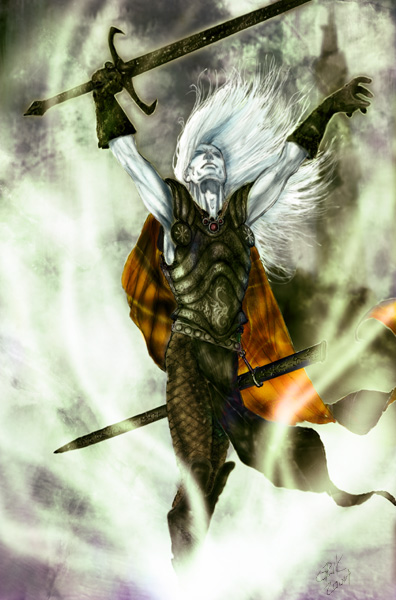 "Oh that updraft feels so good." Meanwhile on the other end of the spectrum, the Swords and Sorcery genre was experiencing an unexpected revival, and some would also argue being perfected, by British author Michael Moorcock when in 1972 he published the first full length novel to feature one of his signature characters, The albino anti-hero, Elric of Melnibon. A series that I haven't read yet, so I can't honestly analyse it. I can say though that Moorcock created the character because he was tired of the tolkinesque stories that were saturating the market at the time and he wanted to make something that was, as he saw it, darker and more mature than the run-of-the mill fantasy. So he made a drug addict, magic wielding, brooding albino anti-hero with a cursed black sword, named Stormbringer. What no one was expecting, however was the amount of success that this character would actually obtain. Since this character's creation, Elric has become one of the most recognizable characters in the genre's history, staring in 11 novels, countless short stories, comic books/ graphic novels, music, role playing games and there's even talk of a movie in the works. Elric is also a central figure in Moorcock's loosely connected multi-universe sequence called The Tale of the Eternal Champion.
 VI. A Dragon in my Dungeon.
You know what else happened in the 1970's? Gary Gygax and Dave Arneson formed a game company called TSR (now Wizards of the Coast) and released the first edition of Dungeons and Dragons, a table top role playing game that essentially let anyone gather their friends and go on their own fantasy adventure with the relative safety of miniatures, 20 sided dice, stacks of rule books and a game board. Since then, D&D has become one of the most popular and well known games in history, and continues to evolve with constant revisions. Now why the heck am I telling you this?
 Barbarians: Check. Dwarf: Check.
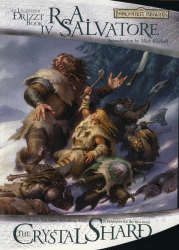
Good guy Dark skinned Elf:...uh, check. Well the reason is that, unlike other board games, D&D has several worlds for players to get immersed in. And while players have the freedom to make their own adventures, the story of the worlds themselves is told through other media, particularly books. Writers are hired to create characters to populate the worlds and then write about them. This is what is known as a "Shared world." The most well known of these to have the D&D license are Dragonlance, created by Tracy Hickman and Margaret Weis, and Forgotten Realms. The most well known writer working in the latter being R. A.Salvatore, whose Dark Elf character, Drizzt Do'Urden, is actually the reason why D&D gets a mention in our history of the genre at all. The first book to feature the character, The Crystal Shard, was first published by TSR in 1988. Just to be clear if your coming into a shared world like this expecting anything beyond a "fun Swords and Sorcery story," you're going to be disappointed. The game designers control the setting and there isn't much chance they are going to venture out beyond what was considered by the 1980's safe and agreeable (and more importantly, "Profitable") conventions of the fantasy genre. And Forgotten Realms is no exception. Now that doesn't automatically make books like this bad per-say, but it does limit what shared world authors can and cannot do. And while Drizzt isn't immune to this by any means, Salvatore was fortunate enough to be given enough creative freedom to make the character unique. What makes Drizzt so unique? Its the fact that he's a Dark Elf, a race of elves that have always been considered "evil" both in and out of D&D. And despite the fact that Drizzt is a hero and nothing like the rest of his evil race, he's treated by others with fear and hatred simply because of what he is, not who he is. With Drizzt, Salvatore was able to break a mold and talk about an issue that hadn't been talked about all that much in fantasy, the issue of racism. That might not seem like a big deal now, but back then it was a breath of fresh air. Because by the 1980's the genre was growing stale.
VII. Growing up with Wheels of Ice and Fire.
While the 1980's saw the debut of many modern big shots authors such as Robin Hobb, Terry Pratchett, and comic book writer turned novelist Neil Gaiman. There hadn't really been anything published that could be said to rival the works of Tolkien. Although the genre was still a big seller and not ever novel belonging to it was bad, everyone seemed to agree that the conventions that Tolkien had created were now considered cliche and were really running out of steam and as a result the genre became a niche genre populated by video games and "kid shit." Even Terry Pratchett made a living by making fun of the conventions of the genre. What no one knew at the time, though, was that that was about to change, and it was about to change in a big way.
It started, innocently enough, in 1982 with the release of a movie based on Conan the Barbarian, staring Arnold Schwarzenegger and James Earl Jones. To make a long story short, the movie was alright for the time, and it renewed interest in the character. And publishers, looking to cash in on its success, decided to hire writers to write new adventures for character. Chief among these was Vietnam veteran and historical fiction author James Oliver Rigney, Jr, whose previous work included a series of historical romances called The Fallon Blood and its two sequels The Fallon Pride and The Fallon Legacy under the pen name Reagan O' Neal. Rigney wrote a total of 7 Conan books, including the novelization of the film's not too great sequel. And he even complied and published a timeline for character. But Rigney already had his eyes on a horizon greater than Conan. He was already planning his next project, a fantasy epic that would not only make him a household name, but also finally succeed where so many others before him had failed...Namely, match (and some would argue surpass) The Lord of the Rings.
 Let the Dragon Ride again on the Winds of Time. Writing under the same pen name he had used for the Conan novels, Robert Jordan, the first part in Rigney's epic Wheel of Time saga, The Eye of the World, was released to the public on January 15,1990. While the story might seem like another decedent of Joseph Campbell, about a young man with a mysterious heritage who was destined to save the world from the forces of darkness with his friends, and it does retain some conventions of the genre. The Wheel of Time differs greatly from its forefathers was that it was able to find new ways to use these conventions. For example: The traditional fantasy races of ogres and Elves are no where to be seen, and in place we have a new species, Ogeir. Which combine the nature loving aspect of the Elves with the physical appearance of giants or Ogres. Other fantasy races like Dwarfs, Hobbits and what have you are also not present and neither are...well you get the idea. Rigney wanted people, or at least psychologically real characters, avoiding all the major cliches and at the same time maintaining the level of imagination and that we've come to expect. A balance that not many can actually pull off. I don't have time to run down every aspect of the story but another thing that sets this series apart is the running theme of the nature of trust. Rigney said that he got the original idea for the series by asking the question "What would it really be like to be told that you are destined to save the world?" And his answer was that it would definitely not be like what it was in many other stories. He thought that selfishness would play a role, as would lust for political power. Making a situation where, despite this looming apocalyptic event, people in power are more concerned with petty struggles and their own position, creating a situation where the chosen one would never be sure of most of his so-called allies. This shade of grey marked a turning point for the genre. After so long, the genre was finally starting to to grow up and move out of the shadow of Lord of The Rings, and gain mainstream acceptance as both serious literature and works of art.
 Winter is Coming. And within the same decade, that acceptance would come to fruition. When in 1997, another series began that would take that turning point and push it to its logical, and it must be said very dark and brutal extreme. The series is George R. R.Martin's Song of Ice and Fire series, more commonly known as Game of Thrones.
And that pretty much up leads us to the present state of affairs. What's next for the genre? Hell if I know. I just want to be apart of it. I could have talked about this for another few hours, but I had to stop somewhere and Song of Ice and Fire seemed to be the logical place. I hope you all enjoyed this and found it informative. And if you didn't, well you don't have to read it.
I'm out.
Happy Holidays, everybody.



![[image error]](http://www.forjarpg.net/wp-content/uploads/2013/03/sundering-the-companions-r-a-salvatore.jpg)