Will English's Blog, page 11
August 2, 2012
Another Goodreads review: Anthem by Ayn Rand.
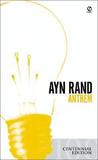 Anthem by Ayn Rand
My rating: 1 of 5 stars
Growing up in the American south, I, like many kids, had politically conservative parents. The kind that more or less blindly follow the philosophy of the Republican party and see almost everything that the Democratic party does as evil or "unamerican" or the usual BS that you hear annoyingly vocal conservative talking heads spouting off day after day. Anyway, Part of that rhetoric I've heard over and over again (particularly after President Obama was elected) is: "Ayn Rand was a visionary that painted the future with startling clarity." Of course they were talking about Rand's ridiculously long so-called masterpiece Atlas Shrugged, a book that I have yet to read...and if Anthem is anything to go by, I will never want to.
Let me be blunt here: Ayn Rand is as TERRIBLE a writer as she is a political philosopher (there I said it). Why? Where do I begin? Anthem is set in an alternate future in where the human race has entered another dark age and has devolved into a society that is laughably socialistic/communistic. How ridiculous is it: The concept of an individualism doesn't exist anymore (the use of the words "I" and "Ego" is forbidden for example) and people are given numbers instead of names, and the evolution of technology is tightly controlled by the government. But one man rediscovers electricity and and the light bulb and is sentenced to be put to death but escapes into the wild where apparently no body goes because its dark and scary and out in the wild he rediscovers individualism and...urgh, it gives me a headache just talking about it.
Its not so much that a setting and plot like this can't work, its just that Rand fails at executing it. Rand's vision of a communistic paradise is just cliche and juvenile. It doesn't even make sense. Like for example, the part when the main character brings his rediscovered light bulb before his societies ruling council. He spends half the book trying to make it work all the while spouting off to his buddy on how he's going to make the ruling council accept his new idea and how it will change the world. Even though he knows how tightly controlled technological evolution is and how much the council hates surprises. And then he's shocked when their reaction to the light bulb is out right revulsion and they start calling for his execution. And then right in the middle of scene, apparently because he didn't get those oh so subtle hints before, the main character actually asks them about adopting his idea and then gets a very detailed lecture about how their economic system works...uh what? First off, why would he even bother asking after seeing their reaction? And why would they even bother to explain that to him, especially after calling for his execution? And secondly, No real communist nation wouldn't reject a brilliant idea or revolutionary method of doing things simply because that's not the way they've always done it. That's not communism, that's just plain idiocy. Heck, if anything, they would probably turn said idea or method into propaganda to show how great their nation is.
Speaking of the main characters, I can't think of the last time characters from any story that are more flat, one dimensional and melodramatic. The main character's (identified as Equality 7-2521...really) development is centered around his rediscovery/recreation of the light bulb and how that drive to create that leads him to the rediscovery of individualism. And then there is his arbitrary love interest(called 'Liberty 5-3000') whom he introduces his new found individualism by...well, having sex with her basically. Yeah, I don't see a point to this character at all. Rand leaves her underdeveloped and shes mostly there for background color. Heck, we only see her for a chapter or two in the middle, and then near the end when she follows him out of their home city, and that's IT. The final chapters of the book is Equality lecturing the reader about his epiphany on the importance of individualism and how the government is stifling the progress of society. The only thing close to closure in this car wreak of a novel is the plan that Equality has to go back to his home city and rescue the people and rebuild society as it was. He tells us about it and then the book just ends. Uh, yeah no, screw that. Although, even if the book was longer it wouldn't really matter. It would only be a longer lecture in narrative form, as opposed to a shorter one. Its a boring, over-hyped, fear mongering, bottom of the barrel trashy sci-fi dime novel. End of story.
Oh,and yes, I am fully aware that the communism utopia was exaggerated like it was on purpose in order to prove a point; namely the dangers of conformity and the resulting cultural and economic stagnation that comes with it. I don't care. I am also aware that the characters are basically avatars that are meant to show/explain the basic principals of Objectivism, Rand's views on sexuality and whatever the hell else she wanted to sign off about. Again, I don't care. A story has to stand on its own merits, not the merits of its message. And Anthem simply doesn't on either count. Look, I'm not saying that Objectivism doesn't have its good points, The idea that the especially gifted and intelligent run the world best when government and arbitrary archaic morality systems get out of the way kinda does have a (microscopic) grain of truth to it. And the idea the that the individual has to look after him/herself and not rely on anyone else to take care of them is common sense. I just think that Objectiveism, and hell EVERY political philosophy you can think of (Communism/Socialism included), is extremely closed minded and has no room for reality.
Anyway, needless to say, this book sucks, stay far far far away. And if just have to read a dystopian fiction novel then go pick up 1984 again, or Fahrenheit 451 or Brave New World. Hell, even Starship Troopers could satisfy your fix. You will be glad you did.
View all my reviews


July 27, 2012
My top ten Fantasy video games and/or series
Been wanting to do this for a while. So here we go. I'm keeping the same rules as the last time I did a top ten: It has to conform to the conventions of the Fantasy genre (or close enough that it doesn't matter) and it has to have a real plot, so that means no World of Warcraft, no Everquest, hell no MMO's period. And for the record, this list was really, really, really, really, REALLY hard to make and I even cut some of my favorite games of all time to get this down to ten. Sorry Chrono Trigger, Chrono Cross and Final Fantasy Tactics.
So lets get started.
10. Devil May Cry Series.
Games in the series: Devil May Cry1-4, DMC (forthcoming).
Year released (first game): 2001.
Genre: Hack and Slash, Action/adventure, Urban Fantasy, demon slaying.
Platform: Playstation 2, Playstation 3, PC and Xbox 360.
With enough over-the-top action and fancy gun and sword play to put even Hollywood to shame, Devil May Cry makes the list just because of how insane it is. I can't even do it justice. It truly is non-stop, in your face hack'n slash and gun toting action from beginning to end. As far as plot goes however, its pretty weak. The story is about the demon hunter Dante, the half-human son of the demonic dark knight Sparda who, long ago, betrayed his own kind and fought on the side of humanity in their war against the demon realm. In a nut-shell, The underlying concept of the series is Dante's journey to come to grips with his family history and to clean up the mess his family made of the human realm since his father's time. Is it trite, yeah, but its entertaining as hell. And the heavy metal music and atmosphere just adds to the entertainment factor. But what really steals the show and makes it worth while is Dante himself. Not because his character is deep or full of meaningful insight...but because of how f***cking cool he is. Now normally I would call a character that has bad assaery and little else a bad thing, but here its appropriate, because this is a series that doesn't take itself too seriously. How cool is he? Watch this:
You know you love it.
9. Castlevania: Lords of Shadow.
Year released: 2010.
Genre: hack and slash, action/adventure, epic, Gothic horror, redemption story.
platform: Playstaion 3 and Xbox 360.
Weather it be the straight forward running and jumping on platforms of the NES and SNES era or the 'Metriod exploration' style of 'Symphony of The Night', the gameplay of the Castlevania series has always been solid. And that's still true with Lords of Shadow, the difference being that Lords of Shadow drops the Metriod style and ops for a modern 'God of War' style of gameplay. So for it loses points for a lack of originality in that regard. But where Lords of Shadow really shines, is the plot. Until this game rebooted the franchise, the overarching plot of the series (a family of vampire hunters known as the Belmonts in an eternal blood feud with an all powerful supervillianized Count Dracula) had become so convoluted and idiotic that it stopped making sense even if you applied comic book logic. So after almost three damn decades of idiocy, Konami (the company that makes all these games), finally pulled the plug on the original series and decided to start fresh with Lords of Shadow. Anyway, Lords of Shadow takes place in Medieval Europe. The story revolves around Gabriel Belmont, a member of a military organization known as the Brotherhood of Light, on a quest to drive back the evil that has griped the world by finding the pieces of a holy artifact called the "God Mask," a mask said to posses the power of God. But Gabriel has his own personal reasons for seeking the mask out, he wants to bring his murdered wife, Maria, back from the dead. The story is heavy with Christian imagery, undertones and themes such as damnation and redemption. But unlike the original series, these elements serve an actual purpose to the story and are not there just to be cool.
The last thing I should mention here are the antagonist: Two of the three Lords of Shadow are Cornell Lord of the Lycans (Werewolves) and Camilla Lord of Vampires. But these aren't the sparkling, sissy, sexually charged Vampires and Werewolves of a young girl's Twilight fueled fantasy. Hell no. These are ugly 'kill you and eat your corpse' monsters. These are Vampires and Werewolves are supposed to be, predators. It might not seem like much: but in this day and age where writers like Stephanie Meyer made it so Vampires and Werewolves can't be taken seriously, Castlevania has the guts to give them there (metaphorical) dignity back. Oddly though Count Dracula, the series' main villain for more than three decades, is no where to be found in this game....or is he?
8. The Elder Scrolls V: Skyrim.
Year released: 2011.
Genre: open ended, first person role-playing game, epic fantasy.
Platform: PC, Playstaion 3 and Xbox 360.
The first Elder Scrolls game I played was part 4, Oblivion, on the PS3....and I did not like it at first. Why? Because I thought it was boring as hell. The plot was generic, the characters were more dull and wooden than a floorboard, the combat was stiff and pathetic, the level up system was frustrating, the people looked like someone had brought barbie dolls to life, the environments looked like cardboard, hell half the time I just wandered around and hoped that something to do would plop down in front of me. The only thing the game had going for it was its massive immersion factor, which was on scale that I hadn't encountered before. Little did I realize though, that the best was yet to come. And thus leads us to Skyrim. While like its predecessor the plot is pretty weak, an evil Dragon god coming back after thousands of years and reviving its kind to take over/destroy the world and its up to you to stop them, and the characters are only slightly more interesting than the last game, Skyrim still managed to knock the ball out of the damn park. The gone is stiffness of Oblivion and in are smooth controls that use a dual combat system in where each hand is controlled by the shoulder buttons. This makes combat a lot more flexible and interesting because it allows for more customization. For example: you can either wield two weapons at once, or a weapon and a magic spell or two spells at once. the possibilities are endless. The tundra environments are massive, diverse and look absolutely beautiful, and they are populated by a more diverse fauna than Oblivion that includes tribal giants, mammoths, saber tooth cats, Walruses, Direwolves (called ice wolves in-game) and your run of the mill fantasy monsters like Trolls. And there are also tons more side quests than there were in Oblivion, and you're always running into one so you never have to worry about running out of stuff to do. And that leads us to the Dragons. Yes, Dragons are one of the regular enemies and you need to kill them to unlock more spells. The encounters happen at random, so you never know when you have a Dragon stalking you until you hear them roar and they plop down in front of you. The Dragon fights are like mini-boss fights and there are many different kinds: some dragons breath fire, others have ice breath, others just beat you down with their ridiculous loud voice. I never get tired of fighting one. Honestly if it wasn't for the weakness of the plot and the underdeveloped characters, this game would have been much higher on the list.
7. The Wheel of Time.
Year released: 1999.
Platform: PC.
Genre: First Person Shooter. Epic fantasy.
I couldn't resist putting this on the list. The game based on Robert Jordan's extraordinary book series of the same name, which I will remind you all is one of my favorite fantasy series of all time. But anyway, the game isn't based on anyone of the books, so you won't find any familiar characters playing a role in the story, except for Ishamael, and granted that the game isn't considered Wheel of Time cannon because of certain continuity issues, but it hardly matters, because this game is still great. The plot takes place sometime before the events books (when exactly is never explain) and centers around an Aes Sedai named Elayna who is chasing down a nameless dark friend who broke into the White Tower and murdered some Aes Sedai while trying to find the seals to the Dark One's prison. But the story soon changes into a race against time to stop the Black Ajah, Aes Sedai that serve the forces of Evil, and the Forsaken Ishamael from freeing the Dark One. Pretty straight forward stuff. The game uses familiar locations from the novels for its levels, like the cursed ruined city of Shadar Logoth, The White Tower, The Mountains of Mist and other locals.
By now some of you are asking "wait, you said this was a first person shooter. How can it be that when you're playing as some one who can use magic?" The answer is that apparently Elayna can't channel the One Power (use magic) more than a trickle, so in place of guns of bows and arrows or whatever, the game has you collecting Ter'angreal, items that use the One Power to preform a certain function. In place of ammo, the Ter'angreal get used up every time you use it and you have to keep collecting more to keep your stock in place. The game incorporates light RPG elements in the sense that some of these Ter'angreal can be upgraded to fire more powerful shots at the enemy or do different things entirely. The game is also different from many other shooters at the time because it forces you to be strategical and also has a higher focus on problem solving, there is even one level in the game that's just one big puzzle.
If you're familiar with the books then you've probably already picked up on the continuity issues I mentioned earlier. Ter'angreal don't disappear after you use them for one thing, and Elayna wouldn't never be allowed to become an Aes Sedai if she can't channel without Ter'Angreal. What's more you can actually kill Ishamael with Balefire, the most deadly spell in the Wheel of Time cannon which erases whatever it touches from existence, effectively erasing the events of the book series from history. But like I said, it hardly matters because this game is still a blast to play. Sadly, although the game was a critical success when it came out, it had the unfortunate luck to be released along side the newest releases (as of 1999 obviously) in the much more popular Unreal and Quake series and was quickly forgotten. Until now that is.
6. Shin Megami Tensei: Persona 3. AKA Persona 3 FES AKA P3P (Persona 3 portable).
Year released: 2007.
Genre: Role playing game, life simulation, supernatural fantasy, urban fantasy, psychological thriller.
Platforms: Playstaion 2, Sony PSP and Playstion 3 (downloadable title).
In Japan, there are three Role playing game franchises that are considered the best of the best: The Final Fantasy series, The Dragon Quest series, and The Shin Megami Tensei (often abbreviated as SMT) metaseries. In America, latter is mostly known only to hardcore gamer. The most recognizable title in the SMT brand being the "Persona" series. Persona 3, along with its squeal, is considered to be the best of the bunch. But I can only ethnically talk about games I've played before so that's why part three makes the list. Anyway, the basic premise of Persona 3's plot revolves around a group modern Japanese high school students in the fictional city of Iwatodai who are part of a secret club called SEES (short for "Specialized Extracurricular Execution Squad"). Their mission? To uncover, and ultimately stop, the secret behind the The Dark Hour, a supernatural hour of the day, just after midnight, when the people of the world turn into coffins and strange supernatural creatures called "Shadows" come out and prey on humans. If you're wondering why high school kids are doing this and not, say, the army, well its because not just anyone can enter the Dark Hour, and the next morning when the world goes back to normal, regular humans don't remember the Dark Hour at all. What makes these high school children so special? The very thing that makes them able to fight the Shadows; their "Personas," physical personifications of the characters' subconscious mind that they can summon and use in battle. How can they summon them? Watch:
Pretty messed up stuff huh? Game play wise, Persona 3 has the traditional elements of an RPG but mixed with life simulation game elements. The latter comes into play during the day time, in where the Protagonist and the other central characters lead pretty much a normal life of school, homework, friends, relationships and after school clubs. Why is this important? Because it adds to immersion factor, yes, but more importantly it affects your ability to create more powerful Persona's. Each NPC character that the Protagonist can befriend or woo or whatever belongs to a certain Arcana, the category to which your Persona's fall under, and as the Protagonist's friendships grow closer, the Arcana becomes stronger and that in turn will allow you make more Personas. Besides which, each relationship plays out like a little sub-plot that further develops the Protagonist and the NPC involved as characters. The School, homework, school clubs aspect and other normal life aspects of the game do this too but they also serve another function, to increase stats such as Bravery, Charm and Intelligence. These stats open up more dialogue options and also opens up the chance to establish more friends and relationships. In other words, this is one of the few games I can think of that actually involves REAL role playing, as in psychological role playing, and not just the D&D kind.
Speaking of which, most of the turn based combat, exploration, and treasure hunting all take place at night in a tower called Tartarus, which is basically your high school transformed into a tower that would make Salvador Dali drool with envy and is filled with monsters. Said monsters also drop new Persona's which the player can then combine to create new, more powerful Personas and so on. So obviously time management is a huge part of the game. Also in the Original and FES versions of the game you only have direct control over the main character while the computer controls the rest. Thankfully the AI is intelligent enough to change tactics as you discover more about the enemy. My only complaint about this game is its length. Seriously, at the time of writing this, I've poured almost 150-200 hours in total play time and there is still no end in sight, and that doesn't include doing optional stuff, that just the main story. And no I'm not exaggerating it really is that long. The last thing I should mention is that this game has be remastered and remade multiple times. Once on the PlayStation 2 (the FES version) and once on the PSP (the P3P version). All three versions are basically the same game, but with added stuff into them such as new Persona's, people you can befriend and relationships you can start and an epilogue. While the PSP version adds features from the FES versions, and has the option of playing as a girl and experiencing the story in a new way. If you can find any version of this gem, then get it.
5. Kings Quest series.
Games in the series: Kings Quest 1-The Mask of Eternity.
Year released (first game): 1984.
platform: PC.
Genre: point and click adventure game, puzzle solving, fantasy adventure, epic.
This is a corner stone of my childhood you're looking at. When my PC could run any sort of game at all, more than likely me and my sister were playing Kings Quest, particularly part seven (the intro of which your looking at in the video above). With the exceptions of part 3 and part 8 (Mask of Eternity) The overall plot follows The Graham family, the royal family of the Kingdom of Daventry, and their magical adventures. To only way to describe the story of this series is to go through the plot of each individual game and that I'm not gonna do. game play wise, parts 1-7 are your typical point and click and adventure games; you gather items, use said items to solve mind bending puzzles and talk to people to get more information and get you out of trouble, and hoping you don't die. The games essentially forces you to think outside the box like any good adventure game. Part 8 is a horse of another color, because its more like a straight forward hack and slash RPG, similar to the Elder Scrolls series but with much less freedom. Part 8 wasn't bad, just forgettable. What more can I say? The series is good check it out.
4. Shadow of the Colossus.
Year released: 2005.
Genre: action/adventure, puzzle game, epic fantasy, love story.
Platform: PlayStation 2 and PlayStation 3.
Sure, it takes the minimalist approach to story, but that only works in its favor. In this game, you take control of a nameless wander as he enters a vast forbidden land in search of a way to revive his one true love. To do this, he is told by a disembodied voice, he must hunt down and kill 16 Colossi. Once done, the voice will give him what he wants. Armed with a magic sword, his trust bow and his faithful (if not terribly bright) steed, he sets out to do the deed. The game offers very little information about this character or why he is willing to risk life and limb to revive his dead girl friend, and there is hardly any obvious story progression, aside from killing the Colossi, until towards the end. But surprisingly it works because as you play through the game you you start realize just how far he is willing to go to save his one true love and sympathize with his character. Its simple, but beautiful. As far as gameplay goes, your put into this vast world to explore but the're aren't any regular enemies in to kill besides the Colossi themselves, for half the game your trying to find your way to the next Colossi. So in that sense, Shadow of the Colossus is basically one boss fight after another. And that when the game starts to get really interesting. Put simply, each Colossi is a puzzle to find the things weak spot, so that means you gotta get the monsters attention, climb up on it, and then stab it with your sword. And that's assuming that the weak spot doesn't move to another spot. Roger Ebert famously said that video games can't be art, a statement he later retracted when he finally admitted that he had only ever played one video game in his life and didn't know what he was talking about. But in that same confession, he also said that there was one video game that he saw which he felt came close to being a work of art....guess which one. That's right, Shadow of the Colossus.
3. Lost Odyssey.
Year released: 2008.
Genre: Role playing game, Steam punk, epic fantasy, environmentalism.
Platform: Xbox 360.
The true successor to Final Fantasy's mighty legacy and arguably one of the best things that Hironobu Sakaguchi (the creator of Final Fantasy oddly enough) ever made. Lost Odyssey centers around Kaim, an immortal solider who has lived for a thousand years with no memory of his past or why he is immortal. The setting of the game is a fantasy world that is on the brink of a "Magical-industrial revolution." Which, as the name implies, is an industrial revolution powered by magic energy. The thing is that, while magic energy was always in the world, it was never present enough to power such scientific, cultural and societal change before. So, after a devastating meteor crash is suspected to be linked with the increased amount of magical energy, Kaim and his friends, both mortal and immortal, are sent out to find out why this is happening. But this soon turns into a much more personal quest for Kaim as he rediscovers his past and starts to hunt down the man who is responsible for not only taking Kaim's and the other immortal characters memories and leaving them with a fate worse than death, but also poisoning the world with magical energy. Its a story archetype that's classic, and only gets better every time you play through it.
Lost Odyssey is also remembered for its game play. Not because it brought anything new or revolutionary to the RPG genre, because it didn't, but because it deliberately took an old school approach to gameplay and storytelling that was reminiscent of old school Final Fantasy games like Final Fantasy 7 and 10. This was the beginning of when western developed RPGs, like Mass Effect and Dragon Age, were starting to dominate the market and then comes a game like Lost Odyssey that proves that old school mechanics can and do still work and can compete with their western counterparts. As far as how you learn skills and spells and what have you, here how that works: Magic Spells you can find in the field or buy in shops. Learning skills and abilities on the other hand is a bit trickier. Mortal characters learn skills by leveling up, but Immortal characters like Kaim can learn skills by linking with a mortal character and learning the desired skill or ability as they gain experience points, or by equipping armor, weapons and accessory's. Combat itself is turned based, and if you've played any old school RPG then your gonna pick up on it right away, so there is not much to say on that. Oddly, the most compelling part about the game doesn't have anything to do with killing things or anything like that,but in text. The game has a pretty cool feature called "A Thousand years of Dreams" Basically as you play through the game and Kaim interacts with the world and its people, you unlock short stories that detail Kaim's back story and develops him as a character. Here one of example of it:
Its a pretty nifty Idea, I think and it also makes Kaim more compelling as a character without getting in the way of the main story. I hope that they bring it back if they decide to make more squeals.
2. The Legend of Zelda series.
noted games in the series: The Legend of Zelda, The Legend of Zelda: A Link to the Past, The Legend of Zelda: Ocarina of Time, The Legend of Zelda: The Wind Waker, The Legend of Zelda: Twilight Princess, The Legend of Zelda: Skyward Sword.
Year Released (first game): 1986.
Genre: action/adventure, action role-playing game, swords and sorcery.
Platforms: Nintendo consoles.
Just like with Metroid and sci-fi themed games, you can't make a list about fantasy themed video games and not include The Legend of Zelda, it cannot be done, they are just too good. And with that said...oh who am I kidding, I couldn't pick my favorite Zelda game. Call me a fan boy, but I love them ALL. Let me put it to you all this way, while there were fantasy themed video games before, but Zelda was the first one that I remember to get it RIGHT! In other words, without Zelda, a whole lot of games on this list would not exist. Yeah, yeah, yeah they've all used some variation or another of the "Save the Princess" story motif and the timeline for the series has become so convoluted that its like trying to solve a jig-saw puzzle when all the pieces don't match. But you know what? It doesn't matter, Zelda still has a timeline and an over arching story that still manages to squeeze a compelling narrative out of 'Saving a Princess' with every entry. And as for the convoluted timeline, believe me I have seen much worse (in both story and continuity). Anyway, what makes Zelda so lasting, I think, is the game play. Sure every game in the series shares common game play elements (like exploring the world, gathering items, go through dungeons, solving puzzles and and what have you), but this is one of those cases where it doesn't matter what you do, its how you do it. Like for example: Wind Waker has this vast world for you to explore covered by a great Ocean and you can search for treasure on the ocean floor with a crane on your ship. Or in Majora's Mask, the world to to explore is this one town and its surrounding areas. Or in a Link to the Past you have two worlds to explore, a light and dark. I could go on but you get the idea. I don't have a single complaint with this series, so lets just get to number 1.
1. Final Fantasy VII.
Year released: 1997.
Genre: Role-playing game, epic fantasy, environmentalism, psychological, philosophical.
Platform: Sony PlayStation (the original), PC and PlayStation 3 (downloadable title).
Honestly, I could have filled this entire list with games from the Final Fantasy series, but that would've been way too easy. And normally I have a lot of debate with myself when I do stuff like this as to what to put at the top stop. But not this time. Final Fantasy 7 is, for me, not only the best fantasy themed video game of all time, but also the greatest over all game in history, hands down. Everything about this game is perfect. The story is wonderful (a monopolistic power corporation is literally sucking the life energy of the planet out of the earth and using it as a fuel and its up to the mercenary Cloud and his buddies, the eco-terrorist group Avalanche to stop them, but said corporation's threat is nothing compared to when Cloud's mysterious past catches up to him), the characters are great, the gameplay is perfect, the graphics for their time were incredible. THIS is the game the first influenced me to become a fantasy writer. I just can't do this game justice, you have to go play it for yourself. You'll be glad that you did.
well I'm glad that's out of me. talk to you guys later.
So lets get started.
10. Devil May Cry Series.
Games in the series: Devil May Cry1-4, DMC (forthcoming).
Year released (first game): 2001.
Genre: Hack and Slash, Action/adventure, Urban Fantasy, demon slaying.
Platform: Playstation 2, Playstation 3, PC and Xbox 360.
With enough over-the-top action and fancy gun and sword play to put even Hollywood to shame, Devil May Cry makes the list just because of how insane it is. I can't even do it justice. It truly is non-stop, in your face hack'n slash and gun toting action from beginning to end. As far as plot goes however, its pretty weak. The story is about the demon hunter Dante, the half-human son of the demonic dark knight Sparda who, long ago, betrayed his own kind and fought on the side of humanity in their war against the demon realm. In a nut-shell, The underlying concept of the series is Dante's journey to come to grips with his family history and to clean up the mess his family made of the human realm since his father's time. Is it trite, yeah, but its entertaining as hell. And the heavy metal music and atmosphere just adds to the entertainment factor. But what really steals the show and makes it worth while is Dante himself. Not because his character is deep or full of meaningful insight...but because of how f***cking cool he is. Now normally I would call a character that has bad assaery and little else a bad thing, but here its appropriate, because this is a series that doesn't take itself too seriously. How cool is he? Watch this:
You know you love it.
9. Castlevania: Lords of Shadow.
Year released: 2010.
Genre: hack and slash, action/adventure, epic, Gothic horror, redemption story.
platform: Playstaion 3 and Xbox 360.
Weather it be the straight forward running and jumping on platforms of the NES and SNES era or the 'Metriod exploration' style of 'Symphony of The Night', the gameplay of the Castlevania series has always been solid. And that's still true with Lords of Shadow, the difference being that Lords of Shadow drops the Metriod style and ops for a modern 'God of War' style of gameplay. So for it loses points for a lack of originality in that regard. But where Lords of Shadow really shines, is the plot. Until this game rebooted the franchise, the overarching plot of the series (a family of vampire hunters known as the Belmonts in an eternal blood feud with an all powerful supervillianized Count Dracula) had become so convoluted and idiotic that it stopped making sense even if you applied comic book logic. So after almost three damn decades of idiocy, Konami (the company that makes all these games), finally pulled the plug on the original series and decided to start fresh with Lords of Shadow. Anyway, Lords of Shadow takes place in Medieval Europe. The story revolves around Gabriel Belmont, a member of a military organization known as the Brotherhood of Light, on a quest to drive back the evil that has griped the world by finding the pieces of a holy artifact called the "God Mask," a mask said to posses the power of God. But Gabriel has his own personal reasons for seeking the mask out, he wants to bring his murdered wife, Maria, back from the dead. The story is heavy with Christian imagery, undertones and themes such as damnation and redemption. But unlike the original series, these elements serve an actual purpose to the story and are not there just to be cool.
The last thing I should mention here are the antagonist: Two of the three Lords of Shadow are Cornell Lord of the Lycans (Werewolves) and Camilla Lord of Vampires. But these aren't the sparkling, sissy, sexually charged Vampires and Werewolves of a young girl's Twilight fueled fantasy. Hell no. These are ugly 'kill you and eat your corpse' monsters. These are Vampires and Werewolves are supposed to be, predators. It might not seem like much: but in this day and age where writers like Stephanie Meyer made it so Vampires and Werewolves can't be taken seriously, Castlevania has the guts to give them there (metaphorical) dignity back. Oddly though Count Dracula, the series' main villain for more than three decades, is no where to be found in this game....or is he?
8. The Elder Scrolls V: Skyrim.
Year released: 2011.
Genre: open ended, first person role-playing game, epic fantasy.
Platform: PC, Playstaion 3 and Xbox 360.
The first Elder Scrolls game I played was part 4, Oblivion, on the PS3....and I did not like it at first. Why? Because I thought it was boring as hell. The plot was generic, the characters were more dull and wooden than a floorboard, the combat was stiff and pathetic, the level up system was frustrating, the people looked like someone had brought barbie dolls to life, the environments looked like cardboard, hell half the time I just wandered around and hoped that something to do would plop down in front of me. The only thing the game had going for it was its massive immersion factor, which was on scale that I hadn't encountered before. Little did I realize though, that the best was yet to come. And thus leads us to Skyrim. While like its predecessor the plot is pretty weak, an evil Dragon god coming back after thousands of years and reviving its kind to take over/destroy the world and its up to you to stop them, and the characters are only slightly more interesting than the last game, Skyrim still managed to knock the ball out of the damn park. The gone is stiffness of Oblivion and in are smooth controls that use a dual combat system in where each hand is controlled by the shoulder buttons. This makes combat a lot more flexible and interesting because it allows for more customization. For example: you can either wield two weapons at once, or a weapon and a magic spell or two spells at once. the possibilities are endless. The tundra environments are massive, diverse and look absolutely beautiful, and they are populated by a more diverse fauna than Oblivion that includes tribal giants, mammoths, saber tooth cats, Walruses, Direwolves (called ice wolves in-game) and your run of the mill fantasy monsters like Trolls. And there are also tons more side quests than there were in Oblivion, and you're always running into one so you never have to worry about running out of stuff to do. And that leads us to the Dragons. Yes, Dragons are one of the regular enemies and you need to kill them to unlock more spells. The encounters happen at random, so you never know when you have a Dragon stalking you until you hear them roar and they plop down in front of you. The Dragon fights are like mini-boss fights and there are many different kinds: some dragons breath fire, others have ice breath, others just beat you down with their ridiculous loud voice. I never get tired of fighting one. Honestly if it wasn't for the weakness of the plot and the underdeveloped characters, this game would have been much higher on the list.
7. The Wheel of Time.
Year released: 1999.
Platform: PC.
Genre: First Person Shooter. Epic fantasy.
I couldn't resist putting this on the list. The game based on Robert Jordan's extraordinary book series of the same name, which I will remind you all is one of my favorite fantasy series of all time. But anyway, the game isn't based on anyone of the books, so you won't find any familiar characters playing a role in the story, except for Ishamael, and granted that the game isn't considered Wheel of Time cannon because of certain continuity issues, but it hardly matters, because this game is still great. The plot takes place sometime before the events books (when exactly is never explain) and centers around an Aes Sedai named Elayna who is chasing down a nameless dark friend who broke into the White Tower and murdered some Aes Sedai while trying to find the seals to the Dark One's prison. But the story soon changes into a race against time to stop the Black Ajah, Aes Sedai that serve the forces of Evil, and the Forsaken Ishamael from freeing the Dark One. Pretty straight forward stuff. The game uses familiar locations from the novels for its levels, like the cursed ruined city of Shadar Logoth, The White Tower, The Mountains of Mist and other locals.
By now some of you are asking "wait, you said this was a first person shooter. How can it be that when you're playing as some one who can use magic?" The answer is that apparently Elayna can't channel the One Power (use magic) more than a trickle, so in place of guns of bows and arrows or whatever, the game has you collecting Ter'angreal, items that use the One Power to preform a certain function. In place of ammo, the Ter'angreal get used up every time you use it and you have to keep collecting more to keep your stock in place. The game incorporates light RPG elements in the sense that some of these Ter'angreal can be upgraded to fire more powerful shots at the enemy or do different things entirely. The game is also different from many other shooters at the time because it forces you to be strategical and also has a higher focus on problem solving, there is even one level in the game that's just one big puzzle.
If you're familiar with the books then you've probably already picked up on the continuity issues I mentioned earlier. Ter'angreal don't disappear after you use them for one thing, and Elayna wouldn't never be allowed to become an Aes Sedai if she can't channel without Ter'Angreal. What's more you can actually kill Ishamael with Balefire, the most deadly spell in the Wheel of Time cannon which erases whatever it touches from existence, effectively erasing the events of the book series from history. But like I said, it hardly matters because this game is still a blast to play. Sadly, although the game was a critical success when it came out, it had the unfortunate luck to be released along side the newest releases (as of 1999 obviously) in the much more popular Unreal and Quake series and was quickly forgotten. Until now that is.
6. Shin Megami Tensei: Persona 3. AKA Persona 3 FES AKA P3P (Persona 3 portable).
Year released: 2007.
Genre: Role playing game, life simulation, supernatural fantasy, urban fantasy, psychological thriller.
Platforms: Playstaion 2, Sony PSP and Playstion 3 (downloadable title).
In Japan, there are three Role playing game franchises that are considered the best of the best: The Final Fantasy series, The Dragon Quest series, and The Shin Megami Tensei (often abbreviated as SMT) metaseries. In America, latter is mostly known only to hardcore gamer. The most recognizable title in the SMT brand being the "Persona" series. Persona 3, along with its squeal, is considered to be the best of the bunch. But I can only ethnically talk about games I've played before so that's why part three makes the list. Anyway, the basic premise of Persona 3's plot revolves around a group modern Japanese high school students in the fictional city of Iwatodai who are part of a secret club called SEES (short for "Specialized Extracurricular Execution Squad"). Their mission? To uncover, and ultimately stop, the secret behind the The Dark Hour, a supernatural hour of the day, just after midnight, when the people of the world turn into coffins and strange supernatural creatures called "Shadows" come out and prey on humans. If you're wondering why high school kids are doing this and not, say, the army, well its because not just anyone can enter the Dark Hour, and the next morning when the world goes back to normal, regular humans don't remember the Dark Hour at all. What makes these high school children so special? The very thing that makes them able to fight the Shadows; their "Personas," physical personifications of the characters' subconscious mind that they can summon and use in battle. How can they summon them? Watch:
Pretty messed up stuff huh? Game play wise, Persona 3 has the traditional elements of an RPG but mixed with life simulation game elements. The latter comes into play during the day time, in where the Protagonist and the other central characters lead pretty much a normal life of school, homework, friends, relationships and after school clubs. Why is this important? Because it adds to immersion factor, yes, but more importantly it affects your ability to create more powerful Persona's. Each NPC character that the Protagonist can befriend or woo or whatever belongs to a certain Arcana, the category to which your Persona's fall under, and as the Protagonist's friendships grow closer, the Arcana becomes stronger and that in turn will allow you make more Personas. Besides which, each relationship plays out like a little sub-plot that further develops the Protagonist and the NPC involved as characters. The School, homework, school clubs aspect and other normal life aspects of the game do this too but they also serve another function, to increase stats such as Bravery, Charm and Intelligence. These stats open up more dialogue options and also opens up the chance to establish more friends and relationships. In other words, this is one of the few games I can think of that actually involves REAL role playing, as in psychological role playing, and not just the D&D kind.
Speaking of which, most of the turn based combat, exploration, and treasure hunting all take place at night in a tower called Tartarus, which is basically your high school transformed into a tower that would make Salvador Dali drool with envy and is filled with monsters. Said monsters also drop new Persona's which the player can then combine to create new, more powerful Personas and so on. So obviously time management is a huge part of the game. Also in the Original and FES versions of the game you only have direct control over the main character while the computer controls the rest. Thankfully the AI is intelligent enough to change tactics as you discover more about the enemy. My only complaint about this game is its length. Seriously, at the time of writing this, I've poured almost 150-200 hours in total play time and there is still no end in sight, and that doesn't include doing optional stuff, that just the main story. And no I'm not exaggerating it really is that long. The last thing I should mention is that this game has be remastered and remade multiple times. Once on the PlayStation 2 (the FES version) and once on the PSP (the P3P version). All three versions are basically the same game, but with added stuff into them such as new Persona's, people you can befriend and relationships you can start and an epilogue. While the PSP version adds features from the FES versions, and has the option of playing as a girl and experiencing the story in a new way. If you can find any version of this gem, then get it.
5. Kings Quest series.
Games in the series: Kings Quest 1-The Mask of Eternity.
Year released (first game): 1984.
platform: PC.
Genre: point and click adventure game, puzzle solving, fantasy adventure, epic.
This is a corner stone of my childhood you're looking at. When my PC could run any sort of game at all, more than likely me and my sister were playing Kings Quest, particularly part seven (the intro of which your looking at in the video above). With the exceptions of part 3 and part 8 (Mask of Eternity) The overall plot follows The Graham family, the royal family of the Kingdom of Daventry, and their magical adventures. To only way to describe the story of this series is to go through the plot of each individual game and that I'm not gonna do. game play wise, parts 1-7 are your typical point and click and adventure games; you gather items, use said items to solve mind bending puzzles and talk to people to get more information and get you out of trouble, and hoping you don't die. The games essentially forces you to think outside the box like any good adventure game. Part 8 is a horse of another color, because its more like a straight forward hack and slash RPG, similar to the Elder Scrolls series but with much less freedom. Part 8 wasn't bad, just forgettable. What more can I say? The series is good check it out.
4. Shadow of the Colossus.
Year released: 2005.
Genre: action/adventure, puzzle game, epic fantasy, love story.
Platform: PlayStation 2 and PlayStation 3.
Sure, it takes the minimalist approach to story, but that only works in its favor. In this game, you take control of a nameless wander as he enters a vast forbidden land in search of a way to revive his one true love. To do this, he is told by a disembodied voice, he must hunt down and kill 16 Colossi. Once done, the voice will give him what he wants. Armed with a magic sword, his trust bow and his faithful (if not terribly bright) steed, he sets out to do the deed. The game offers very little information about this character or why he is willing to risk life and limb to revive his dead girl friend, and there is hardly any obvious story progression, aside from killing the Colossi, until towards the end. But surprisingly it works because as you play through the game you you start realize just how far he is willing to go to save his one true love and sympathize with his character. Its simple, but beautiful. As far as gameplay goes, your put into this vast world to explore but the're aren't any regular enemies in to kill besides the Colossi themselves, for half the game your trying to find your way to the next Colossi. So in that sense, Shadow of the Colossus is basically one boss fight after another. And that when the game starts to get really interesting. Put simply, each Colossi is a puzzle to find the things weak spot, so that means you gotta get the monsters attention, climb up on it, and then stab it with your sword. And that's assuming that the weak spot doesn't move to another spot. Roger Ebert famously said that video games can't be art, a statement he later retracted when he finally admitted that he had only ever played one video game in his life and didn't know what he was talking about. But in that same confession, he also said that there was one video game that he saw which he felt came close to being a work of art....guess which one. That's right, Shadow of the Colossus.
3. Lost Odyssey.
Year released: 2008.
Genre: Role playing game, Steam punk, epic fantasy, environmentalism.
Platform: Xbox 360.
The true successor to Final Fantasy's mighty legacy and arguably one of the best things that Hironobu Sakaguchi (the creator of Final Fantasy oddly enough) ever made. Lost Odyssey centers around Kaim, an immortal solider who has lived for a thousand years with no memory of his past or why he is immortal. The setting of the game is a fantasy world that is on the brink of a "Magical-industrial revolution." Which, as the name implies, is an industrial revolution powered by magic energy. The thing is that, while magic energy was always in the world, it was never present enough to power such scientific, cultural and societal change before. So, after a devastating meteor crash is suspected to be linked with the increased amount of magical energy, Kaim and his friends, both mortal and immortal, are sent out to find out why this is happening. But this soon turns into a much more personal quest for Kaim as he rediscovers his past and starts to hunt down the man who is responsible for not only taking Kaim's and the other immortal characters memories and leaving them with a fate worse than death, but also poisoning the world with magical energy. Its a story archetype that's classic, and only gets better every time you play through it.
Lost Odyssey is also remembered for its game play. Not because it brought anything new or revolutionary to the RPG genre, because it didn't, but because it deliberately took an old school approach to gameplay and storytelling that was reminiscent of old school Final Fantasy games like Final Fantasy 7 and 10. This was the beginning of when western developed RPGs, like Mass Effect and Dragon Age, were starting to dominate the market and then comes a game like Lost Odyssey that proves that old school mechanics can and do still work and can compete with their western counterparts. As far as how you learn skills and spells and what have you, here how that works: Magic Spells you can find in the field or buy in shops. Learning skills and abilities on the other hand is a bit trickier. Mortal characters learn skills by leveling up, but Immortal characters like Kaim can learn skills by linking with a mortal character and learning the desired skill or ability as they gain experience points, or by equipping armor, weapons and accessory's. Combat itself is turned based, and if you've played any old school RPG then your gonna pick up on it right away, so there is not much to say on that. Oddly, the most compelling part about the game doesn't have anything to do with killing things or anything like that,but in text. The game has a pretty cool feature called "A Thousand years of Dreams" Basically as you play through the game and Kaim interacts with the world and its people, you unlock short stories that detail Kaim's back story and develops him as a character. Here one of example of it:
Its a pretty nifty Idea, I think and it also makes Kaim more compelling as a character without getting in the way of the main story. I hope that they bring it back if they decide to make more squeals.
2. The Legend of Zelda series.
noted games in the series: The Legend of Zelda, The Legend of Zelda: A Link to the Past, The Legend of Zelda: Ocarina of Time, The Legend of Zelda: The Wind Waker, The Legend of Zelda: Twilight Princess, The Legend of Zelda: Skyward Sword.
Year Released (first game): 1986.
Genre: action/adventure, action role-playing game, swords and sorcery.
Platforms: Nintendo consoles.
Just like with Metroid and sci-fi themed games, you can't make a list about fantasy themed video games and not include The Legend of Zelda, it cannot be done, they are just too good. And with that said...oh who am I kidding, I couldn't pick my favorite Zelda game. Call me a fan boy, but I love them ALL. Let me put it to you all this way, while there were fantasy themed video games before, but Zelda was the first one that I remember to get it RIGHT! In other words, without Zelda, a whole lot of games on this list would not exist. Yeah, yeah, yeah they've all used some variation or another of the "Save the Princess" story motif and the timeline for the series has become so convoluted that its like trying to solve a jig-saw puzzle when all the pieces don't match. But you know what? It doesn't matter, Zelda still has a timeline and an over arching story that still manages to squeeze a compelling narrative out of 'Saving a Princess' with every entry. And as for the convoluted timeline, believe me I have seen much worse (in both story and continuity). Anyway, what makes Zelda so lasting, I think, is the game play. Sure every game in the series shares common game play elements (like exploring the world, gathering items, go through dungeons, solving puzzles and and what have you), but this is one of those cases where it doesn't matter what you do, its how you do it. Like for example: Wind Waker has this vast world for you to explore covered by a great Ocean and you can search for treasure on the ocean floor with a crane on your ship. Or in Majora's Mask, the world to to explore is this one town and its surrounding areas. Or in a Link to the Past you have two worlds to explore, a light and dark. I could go on but you get the idea. I don't have a single complaint with this series, so lets just get to number 1.
1. Final Fantasy VII.
Year released: 1997.
Genre: Role-playing game, epic fantasy, environmentalism, psychological, philosophical.
Platform: Sony PlayStation (the original), PC and PlayStation 3 (downloadable title).
Honestly, I could have filled this entire list with games from the Final Fantasy series, but that would've been way too easy. And normally I have a lot of debate with myself when I do stuff like this as to what to put at the top stop. But not this time. Final Fantasy 7 is, for me, not only the best fantasy themed video game of all time, but also the greatest over all game in history, hands down. Everything about this game is perfect. The story is wonderful (a monopolistic power corporation is literally sucking the life energy of the planet out of the earth and using it as a fuel and its up to the mercenary Cloud and his buddies, the eco-terrorist group Avalanche to stop them, but said corporation's threat is nothing compared to when Cloud's mysterious past catches up to him), the characters are great, the gameplay is perfect, the graphics for their time were incredible. THIS is the game the first influenced me to become a fantasy writer. I just can't do this game justice, you have to go play it for yourself. You'll be glad that you did.
well I'm glad that's out of me. talk to you guys later.
July 18, 2012
Sing the Song of Ice and Fire.
For about half a year, since I am a very slow reader, I did a marathon session of the Wheel of Time books to get ready for the final installment three installments of that series....only to be majorly disappointed that the 14 and final book, A Memory of Light, won't becoming out until next year....seriously, I finished book 13, Towers of Midnight, and I could hardly stop myself from crying "I GOTTA KNOW WHAT HAPPENS NEXT!!!" up and down the house and the internet like the second coming of Christ was happening right outside my door, so please hurry up Brandon Sanderson before I and the rest of the fan base lose our sanity.
Anyway, I have a ridiculous amount to read already (like the final three books of Frank Herbert's Dune Chronicles and books 3-7 of Stephen King's The Dark Tower and Brandon Sanderson's own Mistborn trilogy and a crap load of others) so I don't lack for anything to read. It was more a question of what to read to fill the time. I was going to go back and pick up Chapterhouse Dune....and then I saw this on youtube:
And, remembering that I had a pre-HBO era copy of A Game of Thrones and its fourth squeal collecting dust on my shelf, I deiced to stop putting it off and give it a read...and today I have read books 1-4 in rapid succession and I am now working my way through book five. Now I'm not gonna sit here and review the entire series because A) George R.R. Martin has said quite clearly that he has at least two more monstrous books to write before it reaches its ultimate conclusion, and B) like I said, I am only half-way through book five. Besides, if the wait time for book five has told us anything, then it would be that everyone living today would be six feet under by the time Martin finally publishes the final two books. What I am gonna do is just give my honest thoughts on the series as a whole. And don't worry those of you who haven't read the books or have only seen the HBO series, I'll be as vague as I can.
Anyway, coming into A Game of Thrones, I wasn't expecting all that much. The prologue of the first book lead me to believe that this was just going to be another epic fantasy in the same vain that the genre has been in ever since Tolkien, just with blue-eyed zombies in place of Orcs and Wights in place of Ring Wraiths and all done with a modern twist to it....then the story starts and the unexpected happens, it turns into a brutally ultra violent, sexually explicit, f***cked up balls to the wall thriller (for lack of another term). And when I say brutal, I truly mean brutal. If you're coming into this series expecting some form of escapism, where everything is fair, bad people get their just rewards, magic is everywhere, evil is not going to win and white knights ride on majestic unicorns or whatever to save damsels in distress and all you need for everlasting peace is a good man to be crowned King....then you're going to be very, VERY disappointed, because there is NONE of that here. There is very little magic to speak of (at least at first), a good man is ANYthing but a good King, the bad guys win, all the unicorns and most of its brothers in fantasy creature are more or less extinct, Knights are (for the most part) corrupt government employees, the damsels are left to rot or die before they are rescued (hell women in general are treated as inferior to men), the gods don't give a damn and the only good luck is bad luck. In other words, A Song of Ice and Fire's world of Westeros is basically what the real world was like during the European middle ages. Honestly, if it wasn't for the fact that it takes place in a fantasy world, there are Dragons, giants, blue-eyed zombies, Wight's and a supernatural threat looming over the plot like the long arm of The Revelation of John, I would be hard pressed to call this a fantasy story at all.
But you know what the weirdest part about it is....it WORKS. And it works not because the world is a brutally realistic (or more realistic) deception of medieval culture, it works because of the characters. While the series doesn't ignore the supernatural threat or troupes of the fantasy genre completely, it does force it to take a very distant back seat to the development of the characters. Out are the classic fantasy archetypes, and in are actual psychologically real people. Just to name one example, Queen Cersei Lannister, one of the main antagonists, is undoubtedly a power hungry evil woman, but she's not evil just because she because she does bad things. She does bad things because she wants to protect her children from threats both real and imaginary. And she's willing to go to ridiculous and politically stupid extremes to do so. And she also hates the fact that she cannot become a ruler in her own right, just because she's a woman. So once her young sons inherit the throne, she wastes no time in establishing her power base and will not give it up willingly. I don't have time to go into the massive list of characters, but suffice to say that they are all are fully realized and devoid of cliche. My personal favorites include Jon Snow, his tomboyish half-sister Arya Stark and the exiled Princess, and true heir to Westeros' Iron Throne, Dany Targaryen. But the one who steals the show is Cersei's dwarf (as in midget) brother, Tyrion "The Imp" Lannister (see video on the left). What makes him so great? Where do I begin? He's witty, hilarious, frighteningly intelligent and a humongous pervert. But hardly anyone takes him seriously, thinking him stupid or a coward just because he's too small to wield a sword. But he doesn't need one, he uses his wits and his mind (and a sackful of gold when needed) to get himself out of trouble. He succeeds in being both sympathetic and being an asshole at the same time. I love this little bastard, I think he's one of the best characters in any fantasy series ever.
But as good as the characters are, they also seem to be the biggest flaw of this story. Not in the sense that they aren't fully realized, but in the sense that they're are too damn many of them. Mr. Martin, if by the non-existent chance you see this, let me just say this in the nicest way I know how: The cast is too BIG.
Seriously, there are so many characters and so many sub-plots going on that it slows the story down to a crawl, especially in the later books. Martin tells so many stories at once that half the time it feels like there's nothing happening, and the other half feels like mindless filler. I know that that's not the case and nothing is there to just fill a page, but to the casual reader that's what its gonna feel like. The pacing itself seems to be the biggest issue. not just in the overall plot, but with each individual book. By the time I finally did get to the end of the first book, I felt like it should have ended at least two or three chapters ago, but instead it just went on and on and on. Dear lord, I like long books but how long does it honestly need to be? In book four it gets even worse, because that's where the story just kind of stops and doesn't pick up again until, or so I've heard, the second half of book five. Why? Because Martin is telling us what was happening to the other characters during the events of the other books. And that can be really, really confusing.
But is the Song of Ice and Fire series worth your time? Hell yes it is. Its the biggest leap forward to legitimizing the fantasy genre to the mainstream since the first Wheel of Time book was published in 1990. Martin looked at what was acceptable as "a fantasy story" and gave it the finger and then forced it to take the next step and the result is a turely original offering. I can't wait to finish the 5th book and I can't wait to get my hands on the 6th and 7th.
By now some of you are wondering what I think of the HBO series. Well I don't get HBO sadly, so I had to wait until the first season came out on DVD and then I got it as a birthday present back in May. I was a little worried about it at first, mostly because I think that this is one of those stories that just cannot be filmed. How wonderfully wrong I was. I think its a great show, its got intelligent writing that manages to capture the depth and complexity of the books. Its also very faithful to the source material, and the scenes they added just lines up with the scenes from the books wonderfully. The cast is great too, Sean Bean is great as Eddard Stark, and Emilia Clarke's performance as Dany is spot on. But just like in the books, Tyrion's the one who steals the show. While I personally don't think of Peter Dinklange when it comes to what Tyrion looks like, he's nonetheless perfect in the role, capturing the essence of the character as if he truly was Tyrion Lannister and not an actor playing a part. A friend of mine told me that she didn't like the show because she felt it wasn't faithful to the books, mostly because of the gratuitous amount of sex scenes in the show. Well admittedly there is more sex in the show then there ever was in the books, and a lot of it leave you scratching your head as to why they were included. But despite that, I still have to disagree with my friend, the show manages to stay as faithful to the books as they possibly could, so the extra sex scenes really shouldn't matter. Besides its the Home Boob Office (yeah i know that is supposed to be "Home Box Office"), and lord knows they can't seem to have a show without a woman's breasts hanging out and/or a man's nether regions dangling about at least once. It is what it is and I don't worry about it.
Anyway, weather is through HBO or if you pick up the books, this is one series that shouldn't be missed. If you can check it out.
See you all later.

July 11, 2012
The paperback version of my book is now on Amazon and Barns and Noble.com
Like the title says: the paperback version is now on Amazon.com (all regions):
http://www.amazon.com/Walking-With-Summer-Dreams-Fiction/dp/1105722546/ref=cm_cmu_up_thanks_hdr
And Barns and Noble.com:
http://www.barnesandnoble.com/w/walking-with-summer-dreams-will-english/1112046452?ean=9781105722547&r=1&cm_mmc=AFFILIATES-_-Linkshare-_-GwEz7vxblVU-_-10%3a1&
You can also have physical book stores order and stock the book in their stores, so if you feel so inclined then please do that ^_^.
If you haven't already, please check it out ^_^. Thanks in advanced.
http://www.amazon.com/Walking-With-Summer-Dreams-Fiction/dp/1105722546/ref=cm_cmu_up_thanks_hdr
And Barns and Noble.com:
http://www.barnesandnoble.com/w/walking-with-summer-dreams-will-english/1112046452?ean=9781105722547&r=1&cm_mmc=AFFILIATES-_-Linkshare-_-GwEz7vxblVU-_-10%3a1&
You can also have physical book stores order and stock the book in their stores, so if you feel so inclined then please do that ^_^.
If you haven't already, please check it out ^_^. Thanks in advanced.
July 7, 2012
Lamar Herrin website.
Just wanted to let people know that my Uncle and mentor Lamar Herrin Finally got himself a web site after much nagging from not only his agent, but the rest of us as well lol.
So if your interested in finding out where my philosophy about about writing and fiction came from, well now you can find out: http://www.lamarherrin.com/
The site also includes a complete bibliography of his work and links to buy them. I highly recommend The Unwritten Chronicles of Robert E. Lee, The Lies Boy's Tell, House of the Deaf and his memoir Romancing Spain. So, like I said before, if you haven't read any of his books then pick some up because he's a damn good writer that needs more attention.
Oh and I made an irritating mistake a few posts back: I said that the title of his new book was Beyond the Marcellus. Well it turns out that that's a working title (though I sincerely hopes he keeps it because it a good one) and its being published by St. Matain's Press and should be out by the fall of next year. So if you feel so inclined please check it out ^_^.
So if your interested in finding out where my philosophy about about writing and fiction came from, well now you can find out: http://www.lamarherrin.com/
The site also includes a complete bibliography of his work and links to buy them. I highly recommend The Unwritten Chronicles of Robert E. Lee, The Lies Boy's Tell, House of the Deaf and his memoir Romancing Spain. So, like I said before, if you haven't read any of his books then pick some up because he's a damn good writer that needs more attention.
Oh and I made an irritating mistake a few posts back: I said that the title of his new book was Beyond the Marcellus. Well it turns out that that's a working title (though I sincerely hopes he keeps it because it a good one) and its being published by St. Matain's Press and should be out by the fall of next year. So if you feel so inclined please check it out ^_^.
July 5, 2012
More Magic Appreciation tour stuff: my guest post.
As part of the tour, I did a guest post about world building and video games for Daniel R. Marvello's blog. Which you can read here: http://www.danielrmarvello.com/archive/2012/07/03/a-world-within-a-world-guest-post-by-will.aspx
hope you all enjoy it ^_^.
hope you all enjoy it ^_^.
July 2, 2012
Magic Appreciation Tour: Interview with Daniel R. Marvello.
Readers of this blog know that I regularly participate in the Magic Appreciation E-tour, a blog tour designed to help indie authors, such as myself, gain the recognition they deserve. Well today the founder of that tour, one Daniel R. Marvello (Author of the book Vaetra Unveiled), agreed to sit down and chat with me for a bit.
Me: Thanks for coming, Dan.
Dan: My pleasure, Will.
Me: What first inspired you to become a writer?
Dan: I've been an avid book reader for as long as I can remember. I don't know if they still do this, but in elementary school we used to get mini-catalogs from Scholastic Book Club once in a while, and students could order books from them. My mom was always supportive of my reading habit, and she let me order as many books as I wanted. The only rule was, "If you buy them, you have to read them." That was never a problem.
I first started writing as a way of expressing my feelings. I kept a journal, but most of the stuff I wrote, particularly during my teen years, was pretty bleak. I always did well in my English classes and generally enjoyed writing assignments. I didn't always care for the subject I had to write about, but the writing part itself was never a problem.
My writing "background," such as it was, set the stage for me to consider writing fiction. In college, I took a Creative Writing class. According to my professor, I did well, but I wasn't satisfied with my own work and gave up writing as a potential career path. It was probably a good decision, because I discovered computers next and became a programmer, which you might say is a far more marketable skill. In the transition to business computing, I learned that I do have sound technical writing skills, so that has been my main writing outlet for many years. I've co-authored three non-fiction books and many business and techie articles under my real name (Daniel Marvello is a pen name).
Me: Have you always wanted to become a fiction writer or was this a decision that you came to gradually?
Dan: I occasionally dabbled in fiction writing again at various times of my life. While I was actively playing Dungeons and Dragons, I spent a lot of time building my own modules and writing up histories for the locations and people who populated the modules. The histories occasionally turned into short stories, but I didn't really think of them as such at the time. Although I haven't played D&D or worked on a module in a long time, I still miss playing, so I was totally primed for adventure when Bethesda Softworks released The Elder Scrolls IV - Oblivion.
Oblivion blew me away. I could not believe the level of world building that had gone into the game, much less the astounding technical capabilities of the software. I got so hooked that my wife started being concerned about gaming addiction. After I played through Oblivion, I thought about how cool it would be to develop story lines for a video game.
That got me thinking about writing fiction again, so I decided to trade my gaming time for writing time, a move my wife heartily supported. I "officially" started writing fiction in January 2011. Since then, I have released my first book and have continued to write steadily. And I love it!
Me: I tell ya, it always leads back to games *laughs*. I always wanted to try D&D myself, but I never found anyone to play with. And wanting to write stories for video games is how I got started in this business too (though personally I think Elder Scrolls V: Skyrim is a better game. *chuckles*). Bethesda are masters at world building though ^_^.
Me: Anyway: who are your biggest influences?
Dan: I would say my biggest influences have been David Eddings (The Belgariad), Margaret Weis and Tracy Hickman (Dragonlance), Fritz Leiber (Fafhrd and the Grey Mouser), and Jim Butcher (The Dresden Files). My original thoughts for my book series were, "What if the hero were the equivalent of a private investigator, but the story were set in a fantasy world? How would that work?" Those thoughts helped shape the main character and the story world.
Me: I must admit that I haven’t yet had the chance to read Vaetra Unveiled. What can you tell us about it? Is it part of a series or is it a stand alone adventure?
Dan: "Vaetra Unveiled" is the first novel of the Vaetra Chronicles series, which will eventually be a trilogy. It does stand on its own, however. Although the series has an overall story arc, I'm being careful to give each book a satisfying story line of its own. Series books with cliff-hanger endings or "to be continued" endings drive me crazy, so I didn't want to do that to my readers.
As for the story, here's the short blurb...
*****
Bored with his life as an innkeeper, Jaylan Forester takes a promising mercenary contract. The adventure goes out of control when he discovers that his client is being pursued by Sulana Delano, an intriguing Sword Sorceress from an enclave of sorcerers known as The Archives. Taught from birth to shun sorcerers, Jaylan must overcome his distrust of magic when an unexpected turn of events embroils Jaylan in Sulana's mission to recover a stolen mysterious artifact. Along the way, Jaylan learns that he too has the capacity to become a sorcerer. He must decide if he wants to explore his newfound abilities or resume the comfortable life he has always known. Fate has its own ideas about the path he should take.
*****
The book is mostly written in first person from Jaylan's perspective. I did that because I wanted the general feel of a Dresden novel, and it seemed appropriate for a character who is effectively a "gumshoe" (as my brother put it). I included several chapters from Sulana's third-person perspective because she and Jaylan spend quite a bit of the book apart, and what happens on her story path is nearly as important as what happens on his.
Me: It sounds pretty cool. Where is it available?
Dan: "Vaetra Unveiled" is available in paperback at most online retailers. It's also available for Kindle at Amazon.com. In August, it will be available for Nook through Barnes & Noble. I plan to offer it through Kobo as well, once they open up their online portal.
Here's a link to the book on Amazon (paperback and Kindle):
http://www.amazon.com/dp/B0070PJ810
Me: Where did you get the idea for the Magic Appreciation Tour?
Dan: When I started looking around the Internet for places to get the word out about my book, I kept running into sites that didn't focus on any particular genre. Trying to find books through them was a bit of a mess. I thought it would be cool if I could connect with other fantasy writers and work with them to build an online catalog of books that would specifically appeal to fantasy readers. I took it one step further and decided to make it about *magical* fantasy, as opposed to paranormal, historical, or any other variety. My theory is that narrowing down the market makes the resulting catalog that much more valuable to readers.
Me: No doubt that that will serve it well in the long run. Do you intend to make the tour an ongoing event? Can we expect there to be another one in the fall?
Dan: Yes, and yes. The Magic Appreciation Tour really has two components. First, it is an online catalog of magical fantasy books. Once a book is listed in the catalog, it's there until the author asks me to remove it, and readers can access the catalog at any time. Second, it's a social networking event for authors that runs for one month each season. Some of our authors list their books in the catalog but do not participate in the networking. Others enjoy the networking too.
I do plan to run the author tour again in September. I've been trying to come up with ways of making it more interesting each time. This time, I added a flash fiction contest, which I'm sure I'll bring back in the fall.
Me: I actually tried to participate in said contest, but the story I was going to submit became too large. Maybe you could expand the concept so it includes things other than flash fiction (like poetry or short stories). Just a thought.
Me: What are your favorite fantasy creatures?
Dan: That's a tough one. I'm a huge fan of dragons, but I love any well-crafted creature from mythology or original inspiration. For example, I thought the Thestrals (skeletal winged horses that pulled the Hogwarts carriages) from Harry Potter were fascinating.
"Vaetra Unveiled" includes a creature that I'm proud to say has enchanted several of my readers. It's called an "arbolenx," and it's a sentient, tree-dwelling feline with lynx-like characteristics. I had one reader say she wanted to start an arbolenx fan club, and she encouraged me to write more stories that featured them. When I wrote them into the story, I had no idea I'd get a reaction like that.
Me: What self-promotion strategies have you found the most effective?
Dan: None! (laughs)
No, seriously, the thing that has worked best for me so far was participating in the Summer Solstice Free Fantasy campaign. It was a lot like the Magic Appreciation Tour in spirit. All of the authors were fantasy authors, and we all scheduled our books to go free together over June 20 and 21. Some of us (including me) extended our free run through the 22nd. Over 5,700 readers downloaded my book during that time, and a couple if them have since contacted me asking when book 2 will be released. I got one new 5-star review, and my sales since the event ended are better than they were before it started. One of the best things is that my "also bought" list on Amazon is filled with books by the other participating authors, so they are mostly fantasy.
I may incorporate a similar coordinated promotion/marketing campaign into the Magic Appreciation Tour. However, I know that going free isn't an option for many of our authors, so we may have to try something else.
Me: Any advice for aspiring authors?
Dan: I'm pretty new at this myself, so I can't claim to be an expert. But there's something I've noticed since I got involved with self publishing fiction: the number one thing that improves your chances for success is to have multiple titles. In other words, it's more important to write that next book than it is to do any form of marketing or promotion.
Me: Thanks again for coming. Good luck in the future.
Dan: Thanks for having me. Good luck to you too.
*****
Daniel R. Marvello is a fantasy writer who lives in North Idaho with his wife, two wonderful dogs, and a cat who thinks she's a dog. His debut novel Vaetra Unveiled is the first book of the Vaetra Chronicles series (www.Vaetra.com). Daniel is also the mastermind behind the Magic Appreciation Tour (www.MagicAppreciationTour.com), a web site dedicated to readers and authors of magical fantasy.
*****
Me: Thanks for coming, Dan.
Dan: My pleasure, Will.
Me: What first inspired you to become a writer?
Dan: I've been an avid book reader for as long as I can remember. I don't know if they still do this, but in elementary school we used to get mini-catalogs from Scholastic Book Club once in a while, and students could order books from them. My mom was always supportive of my reading habit, and she let me order as many books as I wanted. The only rule was, "If you buy them, you have to read them." That was never a problem.
I first started writing as a way of expressing my feelings. I kept a journal, but most of the stuff I wrote, particularly during my teen years, was pretty bleak. I always did well in my English classes and generally enjoyed writing assignments. I didn't always care for the subject I had to write about, but the writing part itself was never a problem.
My writing "background," such as it was, set the stage for me to consider writing fiction. In college, I took a Creative Writing class. According to my professor, I did well, but I wasn't satisfied with my own work and gave up writing as a potential career path. It was probably a good decision, because I discovered computers next and became a programmer, which you might say is a far more marketable skill. In the transition to business computing, I learned that I do have sound technical writing skills, so that has been my main writing outlet for many years. I've co-authored three non-fiction books and many business and techie articles under my real name (Daniel Marvello is a pen name).
Me: Have you always wanted to become a fiction writer or was this a decision that you came to gradually?
Dan: I occasionally dabbled in fiction writing again at various times of my life. While I was actively playing Dungeons and Dragons, I spent a lot of time building my own modules and writing up histories for the locations and people who populated the modules. The histories occasionally turned into short stories, but I didn't really think of them as such at the time. Although I haven't played D&D or worked on a module in a long time, I still miss playing, so I was totally primed for adventure when Bethesda Softworks released The Elder Scrolls IV - Oblivion.
Oblivion blew me away. I could not believe the level of world building that had gone into the game, much less the astounding technical capabilities of the software. I got so hooked that my wife started being concerned about gaming addiction. After I played through Oblivion, I thought about how cool it would be to develop story lines for a video game.
That got me thinking about writing fiction again, so I decided to trade my gaming time for writing time, a move my wife heartily supported. I "officially" started writing fiction in January 2011. Since then, I have released my first book and have continued to write steadily. And I love it!
Me: I tell ya, it always leads back to games *laughs*. I always wanted to try D&D myself, but I never found anyone to play with. And wanting to write stories for video games is how I got started in this business too (though personally I think Elder Scrolls V: Skyrim is a better game. *chuckles*). Bethesda are masters at world building though ^_^.
Me: Anyway: who are your biggest influences?
Dan: I would say my biggest influences have been David Eddings (The Belgariad), Margaret Weis and Tracy Hickman (Dragonlance), Fritz Leiber (Fafhrd and the Grey Mouser), and Jim Butcher (The Dresden Files). My original thoughts for my book series were, "What if the hero were the equivalent of a private investigator, but the story were set in a fantasy world? How would that work?" Those thoughts helped shape the main character and the story world.
Me: I must admit that I haven’t yet had the chance to read Vaetra Unveiled. What can you tell us about it? Is it part of a series or is it a stand alone adventure?
Dan: "Vaetra Unveiled" is the first novel of the Vaetra Chronicles series, which will eventually be a trilogy. It does stand on its own, however. Although the series has an overall story arc, I'm being careful to give each book a satisfying story line of its own. Series books with cliff-hanger endings or "to be continued" endings drive me crazy, so I didn't want to do that to my readers.
As for the story, here's the short blurb...
*****
Bored with his life as an innkeeper, Jaylan Forester takes a promising mercenary contract. The adventure goes out of control when he discovers that his client is being pursued by Sulana Delano, an intriguing Sword Sorceress from an enclave of sorcerers known as The Archives. Taught from birth to shun sorcerers, Jaylan must overcome his distrust of magic when an unexpected turn of events embroils Jaylan in Sulana's mission to recover a stolen mysterious artifact. Along the way, Jaylan learns that he too has the capacity to become a sorcerer. He must decide if he wants to explore his newfound abilities or resume the comfortable life he has always known. Fate has its own ideas about the path he should take.
*****
The book is mostly written in first person from Jaylan's perspective. I did that because I wanted the general feel of a Dresden novel, and it seemed appropriate for a character who is effectively a "gumshoe" (as my brother put it). I included several chapters from Sulana's third-person perspective because she and Jaylan spend quite a bit of the book apart, and what happens on her story path is nearly as important as what happens on his.
Me: It sounds pretty cool. Where is it available?
Dan: "Vaetra Unveiled" is available in paperback at most online retailers. It's also available for Kindle at Amazon.com. In August, it will be available for Nook through Barnes & Noble. I plan to offer it through Kobo as well, once they open up their online portal.
Here's a link to the book on Amazon (paperback and Kindle):
http://www.amazon.com/dp/B0070PJ810
Me: Where did you get the idea for the Magic Appreciation Tour?
Dan: When I started looking around the Internet for places to get the word out about my book, I kept running into sites that didn't focus on any particular genre. Trying to find books through them was a bit of a mess. I thought it would be cool if I could connect with other fantasy writers and work with them to build an online catalog of books that would specifically appeal to fantasy readers. I took it one step further and decided to make it about *magical* fantasy, as opposed to paranormal, historical, or any other variety. My theory is that narrowing down the market makes the resulting catalog that much more valuable to readers.
Me: No doubt that that will serve it well in the long run. Do you intend to make the tour an ongoing event? Can we expect there to be another one in the fall?
Dan: Yes, and yes. The Magic Appreciation Tour really has two components. First, it is an online catalog of magical fantasy books. Once a book is listed in the catalog, it's there until the author asks me to remove it, and readers can access the catalog at any time. Second, it's a social networking event for authors that runs for one month each season. Some of our authors list their books in the catalog but do not participate in the networking. Others enjoy the networking too.
I do plan to run the author tour again in September. I've been trying to come up with ways of making it more interesting each time. This time, I added a flash fiction contest, which I'm sure I'll bring back in the fall.
Me: I actually tried to participate in said contest, but the story I was going to submit became too large. Maybe you could expand the concept so it includes things other than flash fiction (like poetry or short stories). Just a thought.
Me: What are your favorite fantasy creatures?
Dan: That's a tough one. I'm a huge fan of dragons, but I love any well-crafted creature from mythology or original inspiration. For example, I thought the Thestrals (skeletal winged horses that pulled the Hogwarts carriages) from Harry Potter were fascinating.
"Vaetra Unveiled" includes a creature that I'm proud to say has enchanted several of my readers. It's called an "arbolenx," and it's a sentient, tree-dwelling feline with lynx-like characteristics. I had one reader say she wanted to start an arbolenx fan club, and she encouraged me to write more stories that featured them. When I wrote them into the story, I had no idea I'd get a reaction like that.
Me: What self-promotion strategies have you found the most effective?
Dan: None! (laughs)
No, seriously, the thing that has worked best for me so far was participating in the Summer Solstice Free Fantasy campaign. It was a lot like the Magic Appreciation Tour in spirit. All of the authors were fantasy authors, and we all scheduled our books to go free together over June 20 and 21. Some of us (including me) extended our free run through the 22nd. Over 5,700 readers downloaded my book during that time, and a couple if them have since contacted me asking when book 2 will be released. I got one new 5-star review, and my sales since the event ended are better than they were before it started. One of the best things is that my "also bought" list on Amazon is filled with books by the other participating authors, so they are mostly fantasy.
I may incorporate a similar coordinated promotion/marketing campaign into the Magic Appreciation Tour. However, I know that going free isn't an option for many of our authors, so we may have to try something else.
Me: Any advice for aspiring authors?
Dan: I'm pretty new at this myself, so I can't claim to be an expert. But there's something I've noticed since I got involved with self publishing fiction: the number one thing that improves your chances for success is to have multiple titles. In other words, it's more important to write that next book than it is to do any form of marketing or promotion.
Me: Thanks again for coming. Good luck in the future.
Dan: Thanks for having me. Good luck to you too.
*****
Daniel R. Marvello is a fantasy writer who lives in North Idaho with his wife, two wonderful dogs, and a cat who thinks she's a dog. His debut novel Vaetra Unveiled is the first book of the Vaetra Chronicles series (www.Vaetra.com). Daniel is also the mastermind behind the Magic Appreciation Tour (www.MagicAppreciationTour.com), a web site dedicated to readers and authors of magical fantasy.
*****
June 25, 2012
Literary Fiction: Dead or Alive?
I was going to do a kind of follow up on my "Top Ten Sci-Fi games" post for today, except It would've focused on fantasy video games, but then I got a better idea.
Anyway, today I talked to my Uncle/Mentor Lamar Herrin over the phone. He told me that his new book, entitled Beyond the Marcellus, was just accepted by a new publisher and that it should be out sometime in the fall I think. So if you want, go check it out. Seriously, if you haven't read anything by him then get it, because he's a damn good writer and he deserves more attention. But in the course of the conversation he expressed his worry that his kind of writing (or literary fiction in general) was "On its last legs" and how genre fiction and e-books and/or self-published books were dominating the market and essentially grinding literary fiction down into the dust.
And, as much as I hate to admit it, he kinda does have a point. As I've explained before, my Uncle comes from the school of fiction that includes such literary heavy weights as Hemingway, Faulkner, Flannery O'Connor and many others; and he doesn't have high thoughts for genre fiction.Which is just fine, he likes what he likes and he's free to do so. And while I highly doubt that literary fiction is ever going away (and it shouldn't), the fact is that no body wants to be reminded about how unfair life is. We already get reminded enough whenever we turn on the news. Especially in this day and age when news and information is literally available in your back pocket. Ask any casual reader what kind of things they like to read and chances are, 9 times out of 10, they'll name something like The Girl with the Dragon Tattoo, True Grit, Lord of the Rings, Forgotten Realms, Twilight (God forbid) or any other sort of genre novel. Ask them if they've read or have read anything by Ann Beattie, T.C. Boyle, George Orwell, Hemingway, Andre Dubus III or any other literary fiction author and you'll probably get some version of: "No, they're too depressing." I know that I am speaking in broad terms here, and that not every piece of literary fiction is necessarily depressing. But the point I am trying to make is that people's tastes have changed, and Literary Fiction just isn't the literary world anymore, it hasn't been for a LONG time now. Most people read, watch TV, movies, or play video games to get AWAY from this shit hole, not have it slap them across the face.
As far as e-books and self-published books go, yeah Uncle Lamar also has a point here too. Its no secret that e-books and/or print-on-demand books are selling more than printed books today and probably for the rest of time. I personally don't like it anymore than he does to be honest (even though I am technically part of this movement). I have a hard enough time reading text on a screen as it is, and a tiny Kindle or Iphone/Ipod touch screen doesn't help matters. But the reality is that its a lot more convenient to carry A Game of Thrones around on something roughly the size and weight of a piece of paper, than to have a bulging brick jutting out of your pocket. But that's not why he doesn't like them. He doesn't like them because he feels like he can't compete with it. Unknown authors of every genre, a healthy portion of which are actually pretty damn good, are finding a voice on this new medium for very little or no money. And when something reaches a certain size, well that means that other things are going to be pushed out into the cold, and sadly my Uncle feels like he's shivering. Some of your might be asking "Well he's a published author, why doesn't his publisher just advertise it for him?" Well, to put it bluntly, my Uncle isn't a best-seller and unless you've sold a good size number of books, then 99% of publishers won't bother to advertise or promote you, because your work isn't a safe investment. Which makes sense from a business stand point, but much to my Uncle's irritation, what makes the publishers money...isn't Literary fiction.
"Well ok," some of you say. "Why doesn't he and they just start self-publishing and advertise the thing himself." Well, like I said, a lot of authors from every genre (literary fiction included) do. But at the same time, a lot of us don't understand self-publishing and, in the case of my Uncle, can see past all of the glittering gold that people have sprinkled on it recently. I've read countless articles and testimonies that say that promoting any kind of product has become a lot easier, thanks in part to social networking making it faster for word of mouth to get around. Well to a certain extent that's true, but when compared to when the self-publishing boom started, its just not as true. Speaking from personal experiences, I constantly advertise Walking With Summer Dreams on my Twitter, Facebook and Google+ pages and I still haven't sold enough of either the paperback or the e-book versions to get a check yet. Why? Well I can spam the thing on as many social networking sites, forums and what have you as I want. But I don't have the resources (money) for said spamming to reach a mass audience, nor do I have the know how to make people care with what I'm currently doing. So unless you have either of those, then word of mouth isn't going to get you very far. My Uncle is in the same boat as I am on this, and were not alone.
"But wait a corn picking moment" you shout, "He's got an agent hasn't he? Why doesn't he just self-publish and then have his agent work on advertising, or hire a publicist to do it or something like that?" Well he did considered that option but surprisingly...that's not a better alliterative. Why? Money. His agent told him that he would need a minimum of of $10,000 just to get started. Guys, that's more than most published authors can afford, let alone a retired college professor.
By now some of you are asking, "Does this mean that his Uncle is right and that Literary fiction is dead or dying?" And the answer is no, Literary Fiction isn't dying, its just not popular right now. But that doesn't mean that a Literary Fiction story can't become a critical and financial successes in this era of sparkling vampires, ladies with Dragon tattoos and Jane Austin's characters battling zombies. Why it hasn't happened, at least not to any meaningful degree, probably in part has to do with the reasons I just described in preceding paragraphs, but I think the bigger reason has to do with literary snobbery. Stephen King once observed that, in this day and age, the distinction between "Literature" and "Pop Fiction" largely seems to depend on how many copies you sell. And to a degree that's true, but he also said that he thinks that the labels were created for the convenience of book sellers so they would know how to organize their inventory. Weather that's true or not has somehow ceased to matter, because a frightening number of Literary authors and academics have sized hold of this concept and corrupted it until its created a country club mentality, that those who write "Literature" are the Gods and those who write "pop fiction" are the unwashed masses who must be kept out of Valhalla. I've been over this already in another blog entry, so we all know how incredibly stupid it is, but the point is that these people believe it. And they've believed it for so long that they have fallen out of touch with how the rest of the literary world has changed (particularly in the past couple of decades) on a business level, artistic level and I would even argue on a readership level. And I don't mean in the "the readership has become more sophisticated" level, but in the "You're out of touch with your readership level."
Literary snobs, let me tell you something. Part of the reason that Science Fiction and Fantasy is the beast that it is today is because those who write it understand and, more importantly, regularly INTERACT with their fans. Well known Fantasy and Sci-fi writers do book signings all around the country (and sometimes the world), they attend conventions and talk to their fans who are also in attendance, they set up social media pages, blogs and internet forums so that their readership can interact with them, however indirectly. In other words, the readership feels as if it can connect to the author on some level or another. And its that connection, however impersonal, that makes stronger fans out of them and that in turn makes them want to buy more copies of their work. I know that I am speaking in broad terms here again guys, but I have to call it like I see it, and I just don't see this level of interaction between literary authors and their readers. And that, I think, is hurting them more than anything else.
Some of you literary writers might be thinking: "Well I have to stay away from my readership because I want to be true to myself and my work, and not be influenced by others." Guys, staying true to your own art is one thing, interacting with your fans, readers or whatever you want to call them is another thing entirely. And if you are so insecure in your talent that you're afraid that someone else will pull your story in a direction that you don't want it to go, then why are you even in this job?
Alright, alright, alright. So maybe I was a little blunt, harsh, bull-headed and what have you. And if it feels like I've repeated myself at some parts then I'm sorry. I'm just saying whats on my mind. Talk to you later.
Anyway, today I talked to my Uncle/Mentor Lamar Herrin over the phone. He told me that his new book, entitled Beyond the Marcellus, was just accepted by a new publisher and that it should be out sometime in the fall I think. So if you want, go check it out. Seriously, if you haven't read anything by him then get it, because he's a damn good writer and he deserves more attention. But in the course of the conversation he expressed his worry that his kind of writing (or literary fiction in general) was "On its last legs" and how genre fiction and e-books and/or self-published books were dominating the market and essentially grinding literary fiction down into the dust.
And, as much as I hate to admit it, he kinda does have a point. As I've explained before, my Uncle comes from the school of fiction that includes such literary heavy weights as Hemingway, Faulkner, Flannery O'Connor and many others; and he doesn't have high thoughts for genre fiction.Which is just fine, he likes what he likes and he's free to do so. And while I highly doubt that literary fiction is ever going away (and it shouldn't), the fact is that no body wants to be reminded about how unfair life is. We already get reminded enough whenever we turn on the news. Especially in this day and age when news and information is literally available in your back pocket. Ask any casual reader what kind of things they like to read and chances are, 9 times out of 10, they'll name something like The Girl with the Dragon Tattoo, True Grit, Lord of the Rings, Forgotten Realms, Twilight (God forbid) or any other sort of genre novel. Ask them if they've read or have read anything by Ann Beattie, T.C. Boyle, George Orwell, Hemingway, Andre Dubus III or any other literary fiction author and you'll probably get some version of: "No, they're too depressing." I know that I am speaking in broad terms here, and that not every piece of literary fiction is necessarily depressing. But the point I am trying to make is that people's tastes have changed, and Literary Fiction just isn't the literary world anymore, it hasn't been for a LONG time now. Most people read, watch TV, movies, or play video games to get AWAY from this shit hole, not have it slap them across the face.
As far as e-books and self-published books go, yeah Uncle Lamar also has a point here too. Its no secret that e-books and/or print-on-demand books are selling more than printed books today and probably for the rest of time. I personally don't like it anymore than he does to be honest (even though I am technically part of this movement). I have a hard enough time reading text on a screen as it is, and a tiny Kindle or Iphone/Ipod touch screen doesn't help matters. But the reality is that its a lot more convenient to carry A Game of Thrones around on something roughly the size and weight of a piece of paper, than to have a bulging brick jutting out of your pocket. But that's not why he doesn't like them. He doesn't like them because he feels like he can't compete with it. Unknown authors of every genre, a healthy portion of which are actually pretty damn good, are finding a voice on this new medium for very little or no money. And when something reaches a certain size, well that means that other things are going to be pushed out into the cold, and sadly my Uncle feels like he's shivering. Some of your might be asking "Well he's a published author, why doesn't his publisher just advertise it for him?" Well, to put it bluntly, my Uncle isn't a best-seller and unless you've sold a good size number of books, then 99% of publishers won't bother to advertise or promote you, because your work isn't a safe investment. Which makes sense from a business stand point, but much to my Uncle's irritation, what makes the publishers money...isn't Literary fiction.
"Well ok," some of you say. "Why doesn't he and they just start self-publishing and advertise the thing himself." Well, like I said, a lot of authors from every genre (literary fiction included) do. But at the same time, a lot of us don't understand self-publishing and, in the case of my Uncle, can see past all of the glittering gold that people have sprinkled on it recently. I've read countless articles and testimonies that say that promoting any kind of product has become a lot easier, thanks in part to social networking making it faster for word of mouth to get around. Well to a certain extent that's true, but when compared to when the self-publishing boom started, its just not as true. Speaking from personal experiences, I constantly advertise Walking With Summer Dreams on my Twitter, Facebook and Google+ pages and I still haven't sold enough of either the paperback or the e-book versions to get a check yet. Why? Well I can spam the thing on as many social networking sites, forums and what have you as I want. But I don't have the resources (money) for said spamming to reach a mass audience, nor do I have the know how to make people care with what I'm currently doing. So unless you have either of those, then word of mouth isn't going to get you very far. My Uncle is in the same boat as I am on this, and were not alone.
"But wait a corn picking moment" you shout, "He's got an agent hasn't he? Why doesn't he just self-publish and then have his agent work on advertising, or hire a publicist to do it or something like that?" Well he did considered that option but surprisingly...that's not a better alliterative. Why? Money. His agent told him that he would need a minimum of of $10,000 just to get started. Guys, that's more than most published authors can afford, let alone a retired college professor.
By now some of you are asking, "Does this mean that his Uncle is right and that Literary fiction is dead or dying?" And the answer is no, Literary Fiction isn't dying, its just not popular right now. But that doesn't mean that a Literary Fiction story can't become a critical and financial successes in this era of sparkling vampires, ladies with Dragon tattoos and Jane Austin's characters battling zombies. Why it hasn't happened, at least not to any meaningful degree, probably in part has to do with the reasons I just described in preceding paragraphs, but I think the bigger reason has to do with literary snobbery. Stephen King once observed that, in this day and age, the distinction between "Literature" and "Pop Fiction" largely seems to depend on how many copies you sell. And to a degree that's true, but he also said that he thinks that the labels were created for the convenience of book sellers so they would know how to organize their inventory. Weather that's true or not has somehow ceased to matter, because a frightening number of Literary authors and academics have sized hold of this concept and corrupted it until its created a country club mentality, that those who write "Literature" are the Gods and those who write "pop fiction" are the unwashed masses who must be kept out of Valhalla. I've been over this already in another blog entry, so we all know how incredibly stupid it is, but the point is that these people believe it. And they've believed it for so long that they have fallen out of touch with how the rest of the literary world has changed (particularly in the past couple of decades) on a business level, artistic level and I would even argue on a readership level. And I don't mean in the "the readership has become more sophisticated" level, but in the "You're out of touch with your readership level."
Literary snobs, let me tell you something. Part of the reason that Science Fiction and Fantasy is the beast that it is today is because those who write it understand and, more importantly, regularly INTERACT with their fans. Well known Fantasy and Sci-fi writers do book signings all around the country (and sometimes the world), they attend conventions and talk to their fans who are also in attendance, they set up social media pages, blogs and internet forums so that their readership can interact with them, however indirectly. In other words, the readership feels as if it can connect to the author on some level or another. And its that connection, however impersonal, that makes stronger fans out of them and that in turn makes them want to buy more copies of their work. I know that I am speaking in broad terms here again guys, but I have to call it like I see it, and I just don't see this level of interaction between literary authors and their readers. And that, I think, is hurting them more than anything else.
Some of you literary writers might be thinking: "Well I have to stay away from my readership because I want to be true to myself and my work, and not be influenced by others." Guys, staying true to your own art is one thing, interacting with your fans, readers or whatever you want to call them is another thing entirely. And if you are so insecure in your talent that you're afraid that someone else will pull your story in a direction that you don't want it to go, then why are you even in this job?
Alright, alright, alright. So maybe I was a little blunt, harsh, bull-headed and what have you. And if it feels like I've repeated myself at some parts then I'm sorry. I'm just saying whats on my mind. Talk to you later.
June 18, 2012
My Top Ten Science Fiction video games and/or series. .
I don't know why exactly, but this subject has been kicking around in the back of my head for a while now. So I figured I'd give myself a break and put it on the blog for a bit of fun. But anyway, since this is such a broad subject, I'm gonna have to narrow it down just a bit. So in order to make this list, it has to have two things: 1) it has to be definitively science fiction (meaning that it has to focus on aliens, technology and other Sci-Fi conventions or so close to them that it doesn't matter) and 2) the game or series must have a real plot. So that means you can throw old Atari games and a some NES titles out the window. And this, like everything else on this blog, is just my opinion. So please non-followers, don't be a baby if I don't name your favorite game (remember, if I haven't played the game then I can't comment on it) or if you don't agree with me. Also, since something like this is very subjective and can always change later, consider this an incomplete list.
Anyway lets get down to it.
10. Star Wars: Jedi Knight: Dark Forces 2.
Year Released: 1997.
Platform: PC.
Genre: First Person Shooter. Space Opera.
When it comes to video games based off of movies, the general rule is that "it sucks." But thankfully, a lot of Star Wars games have managed to break this rule, and Jedi Knight was one of them. Taking place after the events of Episode six, Jedi Knight had you guiding fan favorite expanded universe character Kyle Katarn on his quest to becoming a Jedi and to hunt down his father's murders, the Sith lord Jerec and his apprentices. Dark Forces 2 was the first Star Wars game I was really aware of that truly made you feel like a Jedi, complete with Lightsaber and a full arsenal of powers from both sides of the Force. Which powers you could unlock depended on the player's actions through out the game and, depending on which side you followed, altered the ending. This mechanic would later go on to influence other Star Wars games, most notably Bioware's Knight of the Old Republic series. Its low on the list because its based off a licensed property and not original. But even so, it still a great game, and killing Stormtroopers is as fun as ever.
9. Fallout series.
Games in the Series: Fallout. Fallout 2. Fallout 3 and Fallout New Vegas.
Year Released (first game): 1997.
Genre: Point and click Role-playing game. First Person RPG. Action. Alternate History. Post Apocalyptic.
Platform(s): PC, Playstaion 3 and Xbox 360.
While admittedly it is kinda weak on story and characters, the Fallout series more than makes up for it with its immersion factor. What I mean by that is that its extremely easy to forget your objective and just explore whats left of a destroyed North America. The atmosphere is just perfect. From the old music from the 1930s and 40's, the towns and cities made of scrap and ruins, the endless miles of the wasteland, all of it just enhances the mood. What really holds it together for me though is the freedom, particularly in the later games. Fallout lets you go out into the world and make a name for yourself. You can either follow the story (such as it is) or you can ignore it all together and create your own. You can join any faction you want or you can just look out for number one, you can be both hero or villain. Its your call. And depending on your choices, people will react to you differently and that in turn will affect in game events.
8. Half-Life series.
Games in the series: Half-Life, Half-Life 2, Half-Life 2: Episode one, Half-Life 2: Episode Two.
Year Released(first game) :1998.
platform: PC, Xbox and Xbox 360.
Genre: First person Shooter. Alien Invasion. Post apocalyptic.
I'm not sure where to start with this one. Plot wise, you take control of a theoretical physicist named Gordon Freeman who was involved with in an experiment in teleportation gone wrong at a top secret government facility called Black Masa. Said failed experiment opens a door way to another world and the life forms of that world start to invade invade earth and its up to Gordon to stop them. That's the plot of the first game in a nutshell. The second game is a bit more sophisticated, showing a world conquered by a different race of aliens that showed up because of the events in Black Masa and its up to Gordon and his buddies from the last game to clean up the mess. Its pretty standard stuff but well told all the same. But you know what? Sometimes, story and characters aren't the reason you play video games. And that's certainly true with Half-Life. Sure you have the "killing everything that's trying to kill you" that FPS's are known for, but that's just not enough in Half-life. Some times you have to slow down do some problem solving before you advance. And in Half-Life 2, this is taken to a level that had not yet been seen before in a game. Creator Valve employed a physics engine to the game making it so that people, vehicles and objects behave as they would in real life. Why does that matter? Well it adds a deeper sense of immersion and it also makes the puzzles and problem solving aspects of the game more challenging. And it also gave birth to one of the coolest and ingenious weapons in any video game ever: The Gravity Gun, a weapon that the player can use to pick up just about anything and throw it at the enemy. In other words with this weapon, EVERYTHING is ammo. Literally. Boxes, propane tanks and oil drums, other living beings. You name it the Gravity Gun can chuck it. Its just straight up fun.
7. I Have No Mouth And I Must Scream.
Year released: 1995.
Genre: Point and Click Adventure game. Psychological Horror. Cyber Punk (I guess).
Platform: PC.
I don't even know how to start with this one. Its based on the short story by Harlan Ellison and man is it f***cked up. The plot is that an A.I. calling him self AM (as in "I think, therefor I am.") who went crazy and killed every human being on the planet except for five people. AM has kept these poor guys alive for 109 years and tortured them, both psychologically and physically, for his own amusement. The story is about the last of these sessions. I haven't read the original story, at least not yet anyway, but the game really impressed me. In it, AM sends each of the five survivors on a little digital psychodrama that prey on the personality flaws of each of the characters. To win each drama, the player must navigate each character through the scenario to over come said flaws, making ethical decisions that will affect not only the characters, but the outcome of the game. Harlan Ellison worked very closely with the game designers on this one, making sure that this adaptation was both as faithful to the original story as possible and was also flexible enough to turn it into a really fun, if very macabre, experience. Heck, Ellison even lent his voice to this game, playing the voice of AM. A lot of critics ridiculed his preformance, saying it was overly melodramatic, but I think he did a good job. If you can find a copy of this cult classic, check it out.
6.Star Ocean series.
games in series: Star Ocean, Star Ocean: The Second Story, Star Ocean: Till the End of Time and Star Ocean: The Last Hope.
Year released (first game): 1996.
Platform: Super Nintendo, Sony Playstaion, Sony PSP, Playstaion 2, Xbox360 and Playstation 3.
Genre: Role playing game. Space Opera. Space Fantasy.
I describe the Star Ocean series this way: "The love child between Star Trek and Final Fantasy." And that's exactly what this series feels like, a 30+ hour Star Trek movie. Which I guess isn't that surprising when you consider that the creators of the series are both Trekkies. But anyway, Star Ocean plot wise is kinda hard to talk about because, while the squeals are all set in the same universe, they don't follow one after another. Instead, each Star Ocean game takes place roughly around 1,000 years apart. So each game has a new plot and a new cast of characters. Hardly seems to matter though. Gameplay wise, Star Ocean plays a lot like old-school Final Fantasy or Dragon Quest; with random enemy encounters, specialized skills, spells and what have you. But unlike Final Fantasy, members of your party didn't stand still during battle and wait for their turn, instead the player takes control of only one character while the computer takes control of the others. Today that's pretty standard, but back in 1996, it was a relatively new thing for a console RPG. Star Ocean is also remembered for its Sci-Fi setting in a time when the RPG was largely dominated by the fantasy genre. Sadly, the first game in the series wasn't released state side until it was remade on the PSP a few years ago. The first entry we got was the second game on the original Playstaion, but the series didn't really get much mainstream attention until the Third game, Till The End of Time, on the PS2. I just hope that there will be more of them.
5. Mass Effect Trilogy.
games in series: Mass Effect, Mass Effect 2, Mass Effect 3.
year released (first game): 2007.
Platform: Xbox 360, PC and Playstaion 3.
Genre: Third person Shooter. Action RPG. Space Opera. Political Thriller.
What can I say about Mass Effect that hasn't already been said? Well how about its reputation being extremely exaggerated. I mean when you boil it down to its most basic components, Mass Effect is just another third person shooter that's heavy with RPG bits. But you know what? That's ok, because Mass Effect is a series that still gets everything right. It put some real innovation back into RPGs and video games in general with its freedom of choice, in where the choices you make affect how the story will progress. And not just one game, oh no, but all all there of them. Yes, the choices you made in the first game, affects the story in the second and so on. Speaking of story, Mass Effect has the set up of a typical Space Opera. A race of sentient machines wants to invade our galaxy and wipe out all organic life, and its up to you and your crew to stop it. Its a classic story archetype but its told with the sophistication, skill and brains of a Frank Herbert or an Issac Asimov. And by that, I just mean that the people wrote the plot know what the heck they are doing.
4. Super Metriod.Year released: 1994.Platform: Super Nintendo Entertainment System. Genre: Action/Adventure. 2D Plat former. Space Opera. You can't make a list about Sci-fi themed video games and not include an entry from the Metriod series, it cannot be done, its just that good. The only question was which one? I could have put the entire series up but that would have been too easy. And yes, admittedly the series just barely meets my "It has to have a plot" rule. So why not include the game that established that established that plot. No, Super Metriod is not the first game in the series (its the third one), but it was the one that definitively told us that "yes, there is an over arching narrative here." But anyway, Super Metriod tells us the story of intergalactic bounty hunter Samus Aran after the events in the second game in the series, Metriod 2: Return of Samus. Samus was contracted by the Galactic federation to wipe out an alien species known as Metriods, a parasitic life form that somehow sucks the life energy out of its victim and leaves nothing but empty husks. After the deed was done, Samus found a baby Metriod that mistook her for its mother and followed her. She delivered it to the federation....only to have it stolen by the band of monstrous Space Pirates that she had fought in the first game, who wish to use the Metriod's as a biological weapon. Now Samus has to return to the Pirates home world, retrieve the Metriod and wipe out the Pirates once and for all. It might sound trite, but its enough to keep you interested. And I must stress, that sometimes plot isn't the reason you play video games. And Super Metriod is one of those games. The game has an open world design with endless forks in the road and tons of secret passages that may or may not lead you to a power up. It also has this spooky atmosphere, driving home a sense of being totally alone against insurmountable odds.
3. The Digyear released: 1995.Platform: PC.Genre: Point and Click Adventure Game. Space Opera.
Believe it or not, there was a time when Lucusarts didn't make only Star Wars games. They also made awesome point and click adventure games, and this was one of their best in my opinion. The plot involves a giant asteroid that on a collision course with earth, a group of astronauts are sent up to try and veer it off course (kind of like the movie Armageddon) but once there, they find something incredible. That the asteroid is actually hollow and inside are the remains of an alien civilization. The home world of which they are then promptly transported too. And now they have to find a way home. In addition to the traditional elements of a point and click adventure game (exploration, puzzle and problem solving and so on), the story of The Dig also revolves heavily on the interaction between the three main characters, Low, Brink and Robbins. Low wants to find a way back home, Robbins is obsessed with studying the dead civilization, and Brink, well Brink seems to be losing his mind. Its interesting to note that The Dig was originally supposed to be a movie by Stephen Spielberg, which for some reason never happened. So Spielberg deiced to turn it into a game instead. He even got Orson Scott Card to come in and write the dialogue.
2. Xenosaga Trilogy. Games in the series: Xenosaga Episode one: Der Wille Zur Macht, Xenosaga Episode two: Jensits von Gut und Bose and Xenosaga Episode Three: Also sprach Zarathustra. Year released (first game): 2002. Platform: Playstaion 2.Genre: RPG, Space Opera, Giant Robot, Psychological thriller, Philosophical, God in the Machine.
Mass Effect, meet your hot mom. Xenosaga is the one of the matriarchs of modern video game sci-fi/fantasy epics. Sure there were trilogies with a single over arching narratives in video games before (most famously the Ninja Gaidan games on the NES), but Xenosaga was the first that I remember to actually get it right. An epic story, memorable 3 dimensional characters, giant robots. This series had everything. Trying to explain the plot would be like trying to explain physics in less than 3 seconds, the only way to do it justice is to play it for yourself. The only thing that sucks about this series was that it was originally supposed to six games long but for whatever reason, the publisher pulled the plug on the next three games. Kinda reminds me of what happened to Saga's spiritual brother, Xenogears. Speaking of.....
1. Xenogears. Year released: 1998. platform: Sony Playstaion (the original).Genre: RPG, Giant Robot, Psychological thriller, philosophical, ancient aliens, God in the machine.
Xenosaga, meet your daddy. I don't even know what else to say. For me Xenogears was the first hard/high science fiction game that I remember having a profound affect on me, personally. It along with Final Fantasy 7 was the game that nurtured my own love for genre by showing me just how powerful the genre could be and also inspiring me to pick up my pen and try writing my own stories. Even though the graphics are kinda dated (even for 1998) and some of the voice acting is really bad, Xenogears excels in both its deep and complex plot that rivals a well thought out and well executed sci-fi novel or movie and its realistic characters (that is, psychologically realistic). And the game play is just what you want from an RPG. exciting turn based battles, epic boss battles, giant robot battles. I can't even do it justice, go download it on the PlayStation 3 (its cheaper than buying a physical copy) and experiences it. The only thing that sucks about it is that Gears is actually the fifth part of a much bigger story that was never made for some reason. Xenosaga was made by the same team as Xenogears, who had left Squaresoft after Gears was completed, to form their own company. And is considered a spiritual successor to Xenogears, and sadly thats the closest were gonna get to a squeal.
Well there you have it. My top ten sci-fi games. I hope you all enjoyed it and maybe I inspired some of you to check these games out.See you later.

Anyway lets get down to it.
10. Star Wars: Jedi Knight: Dark Forces 2.
Year Released: 1997.
Platform: PC.
Genre: First Person Shooter. Space Opera.
When it comes to video games based off of movies, the general rule is that "it sucks." But thankfully, a lot of Star Wars games have managed to break this rule, and Jedi Knight was one of them. Taking place after the events of Episode six, Jedi Knight had you guiding fan favorite expanded universe character Kyle Katarn on his quest to becoming a Jedi and to hunt down his father's murders, the Sith lord Jerec and his apprentices. Dark Forces 2 was the first Star Wars game I was really aware of that truly made you feel like a Jedi, complete with Lightsaber and a full arsenal of powers from both sides of the Force. Which powers you could unlock depended on the player's actions through out the game and, depending on which side you followed, altered the ending. This mechanic would later go on to influence other Star Wars games, most notably Bioware's Knight of the Old Republic series. Its low on the list because its based off a licensed property and not original. But even so, it still a great game, and killing Stormtroopers is as fun as ever.
9. Fallout series.
Games in the Series: Fallout. Fallout 2. Fallout 3 and Fallout New Vegas.
Year Released (first game): 1997.
Genre: Point and click Role-playing game. First Person RPG. Action. Alternate History. Post Apocalyptic.
Platform(s): PC, Playstaion 3 and Xbox 360.
While admittedly it is kinda weak on story and characters, the Fallout series more than makes up for it with its immersion factor. What I mean by that is that its extremely easy to forget your objective and just explore whats left of a destroyed North America. The atmosphere is just perfect. From the old music from the 1930s and 40's, the towns and cities made of scrap and ruins, the endless miles of the wasteland, all of it just enhances the mood. What really holds it together for me though is the freedom, particularly in the later games. Fallout lets you go out into the world and make a name for yourself. You can either follow the story (such as it is) or you can ignore it all together and create your own. You can join any faction you want or you can just look out for number one, you can be both hero or villain. Its your call. And depending on your choices, people will react to you differently and that in turn will affect in game events.
8. Half-Life series.
Games in the series: Half-Life, Half-Life 2, Half-Life 2: Episode one, Half-Life 2: Episode Two.
Year Released(first game) :1998.
platform: PC, Xbox and Xbox 360.
Genre: First person Shooter. Alien Invasion. Post apocalyptic.
I'm not sure where to start with this one. Plot wise, you take control of a theoretical physicist named Gordon Freeman who was involved with in an experiment in teleportation gone wrong at a top secret government facility called Black Masa. Said failed experiment opens a door way to another world and the life forms of that world start to invade invade earth and its up to Gordon to stop them. That's the plot of the first game in a nutshell. The second game is a bit more sophisticated, showing a world conquered by a different race of aliens that showed up because of the events in Black Masa and its up to Gordon and his buddies from the last game to clean up the mess. Its pretty standard stuff but well told all the same. But you know what? Sometimes, story and characters aren't the reason you play video games. And that's certainly true with Half-Life. Sure you have the "killing everything that's trying to kill you" that FPS's are known for, but that's just not enough in Half-life. Some times you have to slow down do some problem solving before you advance. And in Half-Life 2, this is taken to a level that had not yet been seen before in a game. Creator Valve employed a physics engine to the game making it so that people, vehicles and objects behave as they would in real life. Why does that matter? Well it adds a deeper sense of immersion and it also makes the puzzles and problem solving aspects of the game more challenging. And it also gave birth to one of the coolest and ingenious weapons in any video game ever: The Gravity Gun, a weapon that the player can use to pick up just about anything and throw it at the enemy. In other words with this weapon, EVERYTHING is ammo. Literally. Boxes, propane tanks and oil drums, other living beings. You name it the Gravity Gun can chuck it. Its just straight up fun.
7. I Have No Mouth And I Must Scream.
Year released: 1995.
Genre: Point and Click Adventure game. Psychological Horror. Cyber Punk (I guess).
Platform: PC.
I don't even know how to start with this one. Its based on the short story by Harlan Ellison and man is it f***cked up. The plot is that an A.I. calling him self AM (as in "I think, therefor I am.") who went crazy and killed every human being on the planet except for five people. AM has kept these poor guys alive for 109 years and tortured them, both psychologically and physically, for his own amusement. The story is about the last of these sessions. I haven't read the original story, at least not yet anyway, but the game really impressed me. In it, AM sends each of the five survivors on a little digital psychodrama that prey on the personality flaws of each of the characters. To win each drama, the player must navigate each character through the scenario to over come said flaws, making ethical decisions that will affect not only the characters, but the outcome of the game. Harlan Ellison worked very closely with the game designers on this one, making sure that this adaptation was both as faithful to the original story as possible and was also flexible enough to turn it into a really fun, if very macabre, experience. Heck, Ellison even lent his voice to this game, playing the voice of AM. A lot of critics ridiculed his preformance, saying it was overly melodramatic, but I think he did a good job. If you can find a copy of this cult classic, check it out.
6.Star Ocean series.
games in series: Star Ocean, Star Ocean: The Second Story, Star Ocean: Till the End of Time and Star Ocean: The Last Hope.
Year released (first game): 1996.
Platform: Super Nintendo, Sony Playstaion, Sony PSP, Playstaion 2, Xbox360 and Playstation 3.
Genre: Role playing game. Space Opera. Space Fantasy.
I describe the Star Ocean series this way: "The love child between Star Trek and Final Fantasy." And that's exactly what this series feels like, a 30+ hour Star Trek movie. Which I guess isn't that surprising when you consider that the creators of the series are both Trekkies. But anyway, Star Ocean plot wise is kinda hard to talk about because, while the squeals are all set in the same universe, they don't follow one after another. Instead, each Star Ocean game takes place roughly around 1,000 years apart. So each game has a new plot and a new cast of characters. Hardly seems to matter though. Gameplay wise, Star Ocean plays a lot like old-school Final Fantasy or Dragon Quest; with random enemy encounters, specialized skills, spells and what have you. But unlike Final Fantasy, members of your party didn't stand still during battle and wait for their turn, instead the player takes control of only one character while the computer takes control of the others. Today that's pretty standard, but back in 1996, it was a relatively new thing for a console RPG. Star Ocean is also remembered for its Sci-Fi setting in a time when the RPG was largely dominated by the fantasy genre. Sadly, the first game in the series wasn't released state side until it was remade on the PSP a few years ago. The first entry we got was the second game on the original Playstaion, but the series didn't really get much mainstream attention until the Third game, Till The End of Time, on the PS2. I just hope that there will be more of them.
5. Mass Effect Trilogy.
games in series: Mass Effect, Mass Effect 2, Mass Effect 3.
year released (first game): 2007.
Platform: Xbox 360, PC and Playstaion 3.
Genre: Third person Shooter. Action RPG. Space Opera. Political Thriller.
What can I say about Mass Effect that hasn't already been said? Well how about its reputation being extremely exaggerated. I mean when you boil it down to its most basic components, Mass Effect is just another third person shooter that's heavy with RPG bits. But you know what? That's ok, because Mass Effect is a series that still gets everything right. It put some real innovation back into RPGs and video games in general with its freedom of choice, in where the choices you make affect how the story will progress. And not just one game, oh no, but all all there of them. Yes, the choices you made in the first game, affects the story in the second and so on. Speaking of story, Mass Effect has the set up of a typical Space Opera. A race of sentient machines wants to invade our galaxy and wipe out all organic life, and its up to you and your crew to stop it. Its a classic story archetype but its told with the sophistication, skill and brains of a Frank Herbert or an Issac Asimov. And by that, I just mean that the people wrote the plot know what the heck they are doing.
4. Super Metriod.Year released: 1994.Platform: Super Nintendo Entertainment System. Genre: Action/Adventure. 2D Plat former. Space Opera. You can't make a list about Sci-fi themed video games and not include an entry from the Metriod series, it cannot be done, its just that good. The only question was which one? I could have put the entire series up but that would have been too easy. And yes, admittedly the series just barely meets my "It has to have a plot" rule. So why not include the game that established that established that plot. No, Super Metriod is not the first game in the series (its the third one), but it was the one that definitively told us that "yes, there is an over arching narrative here." But anyway, Super Metriod tells us the story of intergalactic bounty hunter Samus Aran after the events in the second game in the series, Metriod 2: Return of Samus. Samus was contracted by the Galactic federation to wipe out an alien species known as Metriods, a parasitic life form that somehow sucks the life energy out of its victim and leaves nothing but empty husks. After the deed was done, Samus found a baby Metriod that mistook her for its mother and followed her. She delivered it to the federation....only to have it stolen by the band of monstrous Space Pirates that she had fought in the first game, who wish to use the Metriod's as a biological weapon. Now Samus has to return to the Pirates home world, retrieve the Metriod and wipe out the Pirates once and for all. It might sound trite, but its enough to keep you interested. And I must stress, that sometimes plot isn't the reason you play video games. And Super Metriod is one of those games. The game has an open world design with endless forks in the road and tons of secret passages that may or may not lead you to a power up. It also has this spooky atmosphere, driving home a sense of being totally alone against insurmountable odds.
3. The Digyear released: 1995.Platform: PC.Genre: Point and Click Adventure Game. Space Opera.
Believe it or not, there was a time when Lucusarts didn't make only Star Wars games. They also made awesome point and click adventure games, and this was one of their best in my opinion. The plot involves a giant asteroid that on a collision course with earth, a group of astronauts are sent up to try and veer it off course (kind of like the movie Armageddon) but once there, they find something incredible. That the asteroid is actually hollow and inside are the remains of an alien civilization. The home world of which they are then promptly transported too. And now they have to find a way home. In addition to the traditional elements of a point and click adventure game (exploration, puzzle and problem solving and so on), the story of The Dig also revolves heavily on the interaction between the three main characters, Low, Brink and Robbins. Low wants to find a way back home, Robbins is obsessed with studying the dead civilization, and Brink, well Brink seems to be losing his mind. Its interesting to note that The Dig was originally supposed to be a movie by Stephen Spielberg, which for some reason never happened. So Spielberg deiced to turn it into a game instead. He even got Orson Scott Card to come in and write the dialogue.
2. Xenosaga Trilogy. Games in the series: Xenosaga Episode one: Der Wille Zur Macht, Xenosaga Episode two: Jensits von Gut und Bose and Xenosaga Episode Three: Also sprach Zarathustra. Year released (first game): 2002. Platform: Playstaion 2.Genre: RPG, Space Opera, Giant Robot, Psychological thriller, Philosophical, God in the Machine.
Mass Effect, meet your hot mom. Xenosaga is the one of the matriarchs of modern video game sci-fi/fantasy epics. Sure there were trilogies with a single over arching narratives in video games before (most famously the Ninja Gaidan games on the NES), but Xenosaga was the first that I remember to actually get it right. An epic story, memorable 3 dimensional characters, giant robots. This series had everything. Trying to explain the plot would be like trying to explain physics in less than 3 seconds, the only way to do it justice is to play it for yourself. The only thing that sucks about this series was that it was originally supposed to six games long but for whatever reason, the publisher pulled the plug on the next three games. Kinda reminds me of what happened to Saga's spiritual brother, Xenogears. Speaking of.....
1. Xenogears. Year released: 1998. platform: Sony Playstaion (the original).Genre: RPG, Giant Robot, Psychological thriller, philosophical, ancient aliens, God in the machine.
Xenosaga, meet your daddy. I don't even know what else to say. For me Xenogears was the first hard/high science fiction game that I remember having a profound affect on me, personally. It along with Final Fantasy 7 was the game that nurtured my own love for genre by showing me just how powerful the genre could be and also inspiring me to pick up my pen and try writing my own stories. Even though the graphics are kinda dated (even for 1998) and some of the voice acting is really bad, Xenogears excels in both its deep and complex plot that rivals a well thought out and well executed sci-fi novel or movie and its realistic characters (that is, psychologically realistic). And the game play is just what you want from an RPG. exciting turn based battles, epic boss battles, giant robot battles. I can't even do it justice, go download it on the PlayStation 3 (its cheaper than buying a physical copy) and experiences it. The only thing that sucks about it is that Gears is actually the fifth part of a much bigger story that was never made for some reason. Xenosaga was made by the same team as Xenogears, who had left Squaresoft after Gears was completed, to form their own company. And is considered a spiritual successor to Xenogears, and sadly thats the closest were gonna get to a squeal.
Well there you have it. My top ten sci-fi games. I hope you all enjoyed it and maybe I inspired some of you to check these games out.See you later.
June 16, 2012
Guest post: Christopher Kellen's "5 Things I've Learned From: J.K. Rowling"
As the author of the Harry Potter novels, Ms. Rowling has literally entertained millions. She and her characters are household names. As an author, there is definitely something to be learned here.
1) There is still room for wonder in the world.
I fully believe that J.K. Rowling proved that in our cynical, 24-hour-news-cycle world, that there is still a need for child-like wonder. She created a world that called to so many people, a place that all of us wish we could visit. She developed characters that spoke to our thoughts, our fears, our hopes and our insecurities. We experienced wonder when we picked up Harry Potter and the Sorcerer's Stone, and despite what we may claim, humanity still yearns for that sense of wonder.
2) It's okay to respond to criticism.
There is a story told; whether or not it is apocryphal, I don't know. It's said that after Book 3 of Harry Potter, Ms. Rowling received some criticism about her books not being "real" enough, because there was never any real sense of danger to the characters. So, in Book 4, she (SPOILERS!!!) killed Cedric Diggory. Violently. Unpleasantly. And her work was better for it. Books 5, 6 and 7 were a significant departure from her earlier work. She allowed her writing to become darker, more real, without destroying the sense of wonder that kept us reading. We believed in Harry Potter, as much as his friends did. As his world got more dangerous, we kept rooting for him, and we kept reading. Would the stories have maintained our interest, without that darker turn? Perhaps. Still, it shows us as writers that it is perfectly acceptable – nay, even helpful – to acknowledge criticism of one's work.
3) Tropes are not clichés.
This one is on the very front page of one of my favorite websites, which I shall not link to here (because then you won't read the rest of this post, because your soul will have been devoured). It is a point that bears repeating. Wizards, elves, wands, a destiny to save the world, kindly wise old mentors who know more than they're talking about. I could be describing any number of stories, some of which are tired and cliché. Presentation makes the difference. In Harry Potter, these tropes (devices of writing fiction) are present in scads. Ms. Rowling's interpretation of these tropes is what distinguishes them from every other clichéd fantasy novel. It's what makes her books soar where others languish on shelves. She dared to dream, to innovate, to challenge the clichés and create something new on top of something familiar. Whether or not you like the Harry Potter books, you have to admit that they're something different. It's not just another re-telling of the Lord of the Rings.
4) Don't fight the marketplace.
Just like every author, Ms. Rowling is human. She made a choice, to keep her books from being available as e-books, in an attempt to fight "piracy". It didn't stop them. Eventually, she relented and allowed her books to be sold electronically. The important point here is, no matter how rich she is now (and boy, is she rich) she could have been richer had she not taken a hard line on this stance. She would have sold thousands or millions of e-books, on top of the paper copies. Sure, some of the legitimate sales would have been replaced with e-books, but she still would have sold scads and scads of dead-tree copies. In addition, some of the people who only ever read the only available electronic copies might well have purchased them, instead of downloading them. The point here is – never do something that doesn't make a difference. Never divorce yourself from a potential stream of income. Make your books available.
5) (SPOILERS!!!!) A "Jesus" ending is only okay if you planned it that way from the beginning.
And even then, it feels a little tired. If you're going to have your hero die and be reborn for the good things that he has done, make sure it was really the plan all along. I'm mostly okay with the way Harry Potter ended, but that's because it truly felt like that was her intent from the beginning (or at least from the middle). Don't cop out and pick this as the ending, because this one really is cliché.
Christopher Kellen is an IT specialist who thinks he's got what it takes to spin the occasional swords-and-sorcery yarn. His heroes of literature are those who are fearless in telling an uncompromising story. He wishes that there were more people who wrote like Robert E. Howard, H.P. Lovecraft, and Karl Edward Wagner, and while he knows that that he can never live up to their genius, he hopes to contribute something to the genre that they so loved. He lives in New Hampshire with his wife and their monstrous black dog.
1) There is still room for wonder in the world.
I fully believe that J.K. Rowling proved that in our cynical, 24-hour-news-cycle world, that there is still a need for child-like wonder. She created a world that called to so many people, a place that all of us wish we could visit. She developed characters that spoke to our thoughts, our fears, our hopes and our insecurities. We experienced wonder when we picked up Harry Potter and the Sorcerer's Stone, and despite what we may claim, humanity still yearns for that sense of wonder.
2) It's okay to respond to criticism.
There is a story told; whether or not it is apocryphal, I don't know. It's said that after Book 3 of Harry Potter, Ms. Rowling received some criticism about her books not being "real" enough, because there was never any real sense of danger to the characters. So, in Book 4, she (SPOILERS!!!) killed Cedric Diggory. Violently. Unpleasantly. And her work was better for it. Books 5, 6 and 7 were a significant departure from her earlier work. She allowed her writing to become darker, more real, without destroying the sense of wonder that kept us reading. We believed in Harry Potter, as much as his friends did. As his world got more dangerous, we kept rooting for him, and we kept reading. Would the stories have maintained our interest, without that darker turn? Perhaps. Still, it shows us as writers that it is perfectly acceptable – nay, even helpful – to acknowledge criticism of one's work.
3) Tropes are not clichés.
This one is on the very front page of one of my favorite websites, which I shall not link to here (because then you won't read the rest of this post, because your soul will have been devoured). It is a point that bears repeating. Wizards, elves, wands, a destiny to save the world, kindly wise old mentors who know more than they're talking about. I could be describing any number of stories, some of which are tired and cliché. Presentation makes the difference. In Harry Potter, these tropes (devices of writing fiction) are present in scads. Ms. Rowling's interpretation of these tropes is what distinguishes them from every other clichéd fantasy novel. It's what makes her books soar where others languish on shelves. She dared to dream, to innovate, to challenge the clichés and create something new on top of something familiar. Whether or not you like the Harry Potter books, you have to admit that they're something different. It's not just another re-telling of the Lord of the Rings.
4) Don't fight the marketplace.
Just like every author, Ms. Rowling is human. She made a choice, to keep her books from being available as e-books, in an attempt to fight "piracy". It didn't stop them. Eventually, she relented and allowed her books to be sold electronically. The important point here is, no matter how rich she is now (and boy, is she rich) she could have been richer had she not taken a hard line on this stance. She would have sold thousands or millions of e-books, on top of the paper copies. Sure, some of the legitimate sales would have been replaced with e-books, but she still would have sold scads and scads of dead-tree copies. In addition, some of the people who only ever read the only available electronic copies might well have purchased them, instead of downloading them. The point here is – never do something that doesn't make a difference. Never divorce yourself from a potential stream of income. Make your books available.
5) (SPOILERS!!!!) A "Jesus" ending is only okay if you planned it that way from the beginning.
And even then, it feels a little tired. If you're going to have your hero die and be reborn for the good things that he has done, make sure it was really the plan all along. I'm mostly okay with the way Harry Potter ended, but that's because it truly felt like that was her intent from the beginning (or at least from the middle). Don't cop out and pick this as the ending, because this one really is cliché.
Christopher Kellen is an IT specialist who thinks he's got what it takes to spin the occasional swords-and-sorcery yarn. His heroes of literature are those who are fearless in telling an uncompromising story. He wishes that there were more people who wrote like Robert E. Howard, H.P. Lovecraft, and Karl Edward Wagner, and while he knows that that he can never live up to their genius, he hopes to contribute something to the genre that they so loved. He lives in New Hampshire with his wife and their monstrous black dog.