Clarissa Draper's Blog, page 2
August 11, 2014
Carol Kilgore says Use Your Imagination!
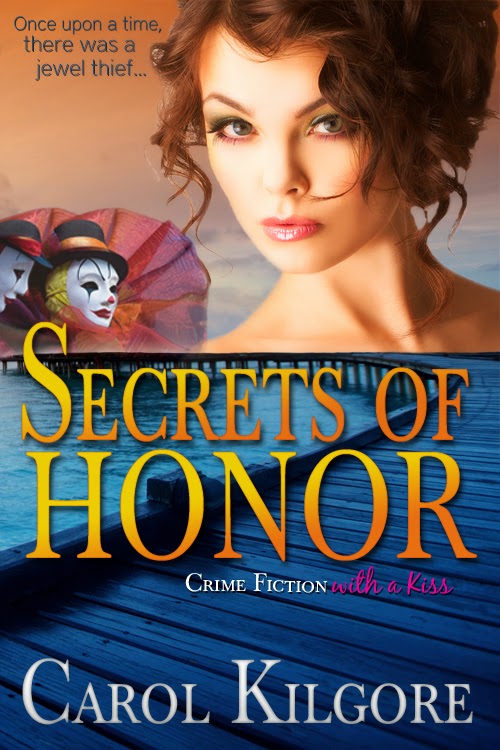 I'm excited to welcome Carol Kilgore! Her mystery novels are full of intrigue, adventure and, of course, love. Read to the end because there's a chance to win
a $10 Amazon Gift Card.
-------------------------------------
Thanks so much, Clarissa, for hosting me while I’m out and about talking about my upcoming novel, Secrets of Honor.
When I was just beginning to write the book, I had an opportunity to talk to someone with authority in the intelligence community. My biggest fear was that, without finding a lot of details on current operations to research, which is a good thing, I would inadvertently stumble upon and write about something that gave away the farm, so to speak.
The person I spoke with said not to worry. If I could think of something, it was almost certain someone else had thought of it, too. Or would shortly. After hearing her words, I felt free to let my imagination play.
Even so, my left brain keeps telling me that if I have accidentally written the truth, Agents in Black will come calling.
My right brain says, “No worries. We can do this. Trust me.”
So I trusted.
Because my stories are set in the real world, I have to follow real world rules. I can’t have pink grass called mallomere or invisible guns (yet). Because I write crime fiction, I also have to follow certain procedures so that when the villain is caught, his or her case wouldn’t be dismissed – my good guys have to play by the rules.
But in this story, I was free to create a few gadgets and mess with those good-guy rules a little. It was fun!
I think my gadgets could exist – and maybe they do. Would the rules for agents be relaxed in certain situations? I have no way of knowing – that particular question went unanswered in the conversation with my contact. But since I thought of it….
How I’m I to know if I created a real secret gadget? Or fictionalized an actual incident?
If I did, the Agents in Black will come calling soon enough.
Trust me.
BLURB
By the end of a long evening working as a special set of eyes for the presidential security detail, all Kat Marengo wants is to kick off her shoes and stash two not-really-stolen rings in a secure spot. Plus, maybe sleep with Dave Krizak. No, make that definitelysleep with Dave Krizak. The next morning, she wishes her new top priorities were so simple.
As an operative for a covert agency buried in the depths of the Department of Homeland Security, Kat is asked to participate in a matter of life or death—locate a kidnapped girl believed to be held in Corpus Christi, Texas. Since the person doing the asking is the wife of the president and the girl is the daughter of her dearest friend, it’s hard to say no.
Kat and Dave quickly learn the real stakes are higher than they or the first lady believed and will require more than any of them bargained for.
The kicker? They have twenty-four hours to find the girl—or the matter of life or death will become more than a possibility.
INVITATION
 This summer I began a contest on my website – http://www.carolkilgore.net/contest/. Each month, a different author will give away the prize. Some months it may be an ebook, some months swag, some a signed print book, or any combination of those. This month, I’m giving away a $10 Amazon gift card to one lucky winner.
The contest is simple. There's a photo and a tiny story beginning with a question at the end. All you have to do is complete the short form and answer the question. The answer can be one word or you may add to the story beginning – the choice is yours.
You're invited to enter. Click on over and answer the question about the photo. I can't wait to see your answer!
Besides my website, you can also connect with me here:Under the Tiki Hut blog: http://www.underthetikihut.blogspot.comWebsite with Monthly Contest: http://www.carolkilgore.netFacebook: http://www.facebook.com/carol.kilgore1Twitter: http://twitter.com/carol_kilgoreGoodreads: http://www.goodreads.com/author/show/6094110.Carol_Kilgore
Amazon: http://www.amazon.com/Carol-Kilgore/e/B008FRCXQY


August 3, 2014
Backstory: Who do you think you are?
 I really enjoy watching the series Who Do You Think You Are? Basically, celebrities go on a journey to trace their ancestors and usually find interesting relatives in their past. As I was watching an episode yesterday, it occurred to me that I was watching a lot of backstory. And the backstory was interesting.
What made the celebrity's backstory interesting to watch and how can we apply it to our writing?
(1) If we love the celebrity, we want to learn everything about them, including their history. What does that mean for writers? Well, if our readers love our characters, they'll be more willing to find out about their past.
(2) Not everything is revealed. I'm sure the amount of information uncovered during the celebrity's journey is immense. The viewer doesn't get all that information. Often what is released is how the ancestor's career choices or family situation matches the celebrity's. What does that mean for the writer? Make the backstory relevant. Only release backstory relevant to the character and the story.
(3) The celebrity travels a lot, and we see their reactions. We are taken to the places the ancestor's lived. We see their houses, their workplaces, their art. Then we see the celebrity's reaction to the revelations. Writers can do the same thing, we can add backstory, but make sure you break it up with present day reactions.
How do you add backstory?

July 21, 2014
The 2 Words Every Writer Should Use
 I was stuck. I thought I had the whole book planned out but then I just couldn't write it.
What happened?
I wasn't feeling the story anymore. Perhaps I had watched the movie (this for me is when the story--every scene--plays out in my head like a movie) too many times. Had I become bored with the story?
For a long time I believed this to be so because I couldn't find another reason. But then it hit me, what I had done was ruin my own story. I had given myself a story too depressing to write. In the manuscript I had created a beautiful love story between two characters and then the mystery writer in me emerged and killed off one of them. I took away my happy ending. The spark was gone until I pulled out the writer's secret weapon, the two words that open up a portal of creativity:
What if...
I thought, what if I created another love story? What if the survivor fell in love with someone else? What if the murder victim had actually survived the attack? I ideas, the words, the drive to write came back.
And don't wait until you're blocked to use these words. Constantly ask yourself what if... Don't be afraid to go to extremes. Go wild. Having to contemplate a scenario will only improve your creative skill.
What about you? How often to you use the "What if..." card? Has it sparked your creativity?
Photo source: Lori Greig /Foter / Creative Commons Attribution-NonCommercial-NoDerivs 2.0 Generic (CC BY-NC-ND 2.0)

July 14, 2014
Guest Post: 5 of the Best Coded Mysteries
Today I'm visiting Carol Kilgore's blog to discuss five of the best coded mysteries. I've created a code based on the Sherlock Holmes Dancing Men story. If you solve it, you receive a free copy of my book.
Visit me there.
*Note: I've had to enable comment moderation due to an increase in spam. I hope it doesn't complicate your lives too much.

July 7, 2014
The Best Classes of Mysteries
 Good Monday Morning! I was away last week--a day after my novel went on sale--on a personal emergency trip to Mexico City. But, I'm back and eager to get back to my writing and blogging routine.
Did you know that there are three classes of mystery?
(1) Fair-Play Whodunnit: We play along with the detective, solve the crime as the main character does.
In 1928, the writer Father Ronald Knox created a "Ten Commandments" of plot devices (Knox's Decalogue) that more or less codified the rules of the Fair-play whodunnit:
The criminal must be someone mentioned in the early part of the story, but must not be anyone whose thoughts the reader has been allowed to follow. All supernatural or preternatural agencies are ruled out as a matter of course. Not more than one secret room or passage is allowable, and such a passage may only be in a house or building for which it is appropriate by age or purpose. No hitherto undiscovered poisons may be used, nor any appliance which will need a long scientific explanation at the end. No Chinaman must figure in the story. (I don't know why this rule exists.)No accident must ever help the detective, nor must he ever have an unaccountable intuition which proves to be right. The detective must not himself commit the crime. (I think Agatha Christie broke this rule.) The detective must not light on any clues which are not instantly produced for the inspection of the reader. The stupid friend of the detective, the "Watson", must not conceal any thoughts which pass through his mind; his intelligence must be slightly, but very slightly, below that of the average reader. Twin brothers, and doubles generally, must not appear unless we have been duly prepared for them. Example of a Fair-Play Mystery: Pretty much any Golden Age novel. Agatha Christie is a great fair-play mystery writer.
(2) The Clueless Mystery: We just have to read along because the writer doesn't provide enough clues for us to solve the mystery.
Example of a Clueless Mystery: Right from the beginning in A Study In Scarlet, despite Holmes describing the murderer's appearance and even how he got to the scene of the crime in detail from the clues in the room, nobody even slightly resembling the murderer turns up until the last chapter of the London-based narrative.
(3) The Reverse Whodunnit: We know who did and how it was done. We just have to read to the end to see if justice is served or if the criminal gets away with the perfect crime.
Example of a Reverse Whodunnit: Red Dragon and its sequel, The Silence of the Lambs. In both of them, we know fairly early on who the killer is, and learn more details as the FBI protagonists figure out the mystery.
What is your favorite type of mystery? What examples do you have of that type?
Source: TV Tropes
Photo credit: Creative Commons Attribution 2.0 Generic (CC BY 2.0)

June 24, 2014
Book Released Today Officially!
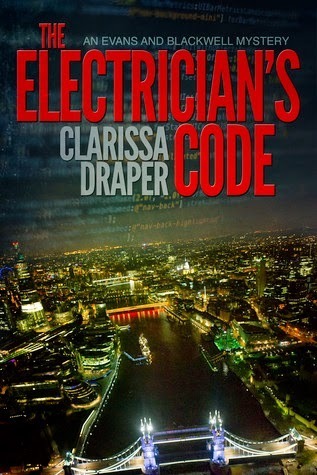
Amazon.com Amazon.ca Amazon.co.uk Or you can mark it 'to read' at Goodreads
THE BOOK'S SITE!
Synopsis: **Please visit the book's website to view photos of the codes and lots of story extras.**
An elderly man with only one leg is murdered and left in a pool of his own blood outside his house. To add to the mystery, a note found in his pocket says, 'Why Run Backwards You’ll Vomit.' London Detective Chief Inspector Theo Blackwell can’t understand the motive for killing the old man, or the meaning of the cryptic message.
Later, a woman is stabbed on her doorstep. The two seemingly unrelated cases have two things in common: apparently random victims and suspects with alibis.
As DCI Blackwell works on solving the cases, he requests the help of code-breaker Sophia Evans, who is battling a personal and tricky case of her own.

June 23, 2014
My Novel's Website is LIVE!
The website that I've created to go along with the second book in my series is now up.Check it out, let me know what you think. How can I improve the pages?
THE SITE!
Also, if you wish to purchase the book, now on sale for $2.99 and £1.83. Click the various links below:
Amazon.com Amazon.ca Amazon.co.uk Or you can mark it 'to read' at Goodreads

June 16, 2014
2 Ways Writing is Like the FIFA World Cup
 I really love football and now that the World Cup is here, I'm absorbed. I'm impressed by the determination of the players and teams. They are a lot like great writers. How?
Here are two ways:
(1) Every Goal Counts
Some may believe that winning the match is all that matters but actually, it might come down to the goals and not the games that determines a winner.
Why?
Often when a team scores a goal, instead of pressing forward to another goal, they start focusing on defense rather than offence. However, this can backfire if the player whittles away the time protecting a lead instead of creating a bigger one. If the other team scores and the team are now forced score or catch up, leading to sloppiness or errors.
Or, the team's mental advantage is gone, and discouragement becomes their worst enemy. In the end they could lose the game. Also, if the two top teams are tied for first, the goals are counted to determine a winner.
How does that apply to writing?
Sometimes we focus on the wrong goal. We finish chapter one (a goal completed) and instead of pressing on to the next goal, we go into defensive mode: revising, revising, revising. A few weeks later, you still have one chapter while your fellow writers have passed you, perhaps completing the first draft. What do you do? You force yourself through the first draft at a pace you're not used to and what is produced is sloppy and full of huge plot holes. Or, you start comparing yourself with other writers and discouragement sets in.
What can you do?
Set goals and keep pressing forward. Don't start revising until you finish the first draft and don't worry what the other writers are doing, just keep going.
(2) How you play matters
In sports, including football, the player you are determines which teams you play for and how much you earn. So as a player, you always want to be impressing the fans and the potential recruiters. You focus on improving your weak areas.
Writing is the same. It shouldn't just be about finishing books. It should also be about becoming the best writer you can. Does your grammar need improving (like mine)? Do you wish you wrote better dialogue or description? Do you wish your sales were better?
As writers, we should always be striving to improve our skills and abilities. We don't know who's watching. We want to impress our readers, perhaps publisher and most importantly, ourselves.
Do you like FIFA? How do you think soccer/football compares with writing?
Picture source: Creative Commons Attribution-NonCommercial-ShareAlike 2.0 Generic (CC BY-NC-SA 2.0)

June 8, 2014
Writers: Interactive!
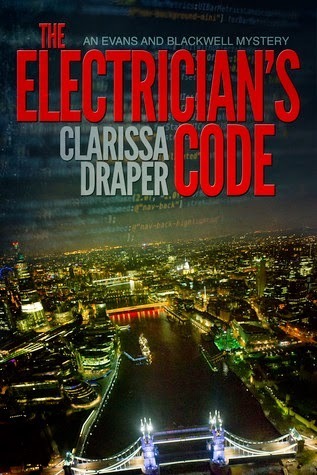 To an extent, all writers are interactive. Most of us tweet, blog, post to Facebook and much, much more. My new book is coming out on June 24th, and because my Evans/Blackwell books are filled with codes, I thought I would allow my readers to take a crack at code-breaking while reading.
 So, I've been preparing a website--with the help of WIX--for my book. It will showcase the different codes found in the book so my readers can not only picture what the codes look like but also take a stab at cracking them. Also, there are many other interesting tidbits that I don't include in my novels. One example of a code found in the book and on the website is shown below.

(I know it looks like a colorful chessboard or perhaps a funky bathroom wall but it's a code. You can crack it if you like. If you can crack it before actually reading the book, I'll do a blog post about your brilliance.)
The new website will be announced soon! Be sure to check it out when it comes available.
Have you ever created a site for a book? How do you interact with your readers?

June 1, 2014
3 Reasons Why Writers Should Keep A Sentence-A-Day Journal
 I love the idea of journaling. Unfortunately, there are days when I see that blank page and it discourages me. Before I know it, days have gone by with a word written. Recently I've come across something called the five-year journal. You write one sentence a day for five years. Perfect! But wait, I'm a writer, I should be able fill pages and pages with my life's reflections. Why should I limit myself to one line?
3 Reasons Why Writers Should Keep A Sentence-A-Day Journal
(1) You're writing every day--even with "writer's block"--because it's easy. One line, one minute.
(2) You improve the quality of your sentences. With only one sentence, you're forced to gather your thoughts. You need to say what you want clearly and interestingly.
For example:
I would hate to look back three years from now and read: "I went to the doctor." What a waste of a sentence. How can I make the sentence better?
Ask: Why did I go to the doctor? "I had a headache I thought would lead to Meningitis, so I went to the doctor."
Ask: Who did I go to the doctor with? "I had a headache I thought would lead to Meningitis, so Ralph drove me to the doctor."
Ask: What did the Doctor say? "I had a headache I thought would lead to Meningitis, so Ralph drove me to the clinic where the doctor diagnosed me with a hangover."
(3) You spark creativity. If you've had a boring day, you could always write down a great line for one of your characters. Have a story idea, write it down. You never know, something you write four years ago could spark a novel.
Have you ever kept a journal or diary? Have you ever kept a one-sentence-a-day journal? Any thoughts? Any ideas?
Picture source: [E]mmanuel17 / Foter / Creative Commons Attribution-NonCommercial 2.0 Generic (CC BY-NC 2.0)