David Berger's Blog, page 13
July 25, 2012
I Love It When a Plan Comes Together
A few weeks ago, while I was traveling to Europe, I received an email from a woman from Banners on the Cheap who had seen my novel online (related to an RPG site, apparently). She told me that, if I wanted to try out a banner, I could use a certain promotional code and get one FREE.
F-R-E-E.
So, I ordered one. For less than $40, I now own a 4' x 8' banner, with grommets for hanging (image below):
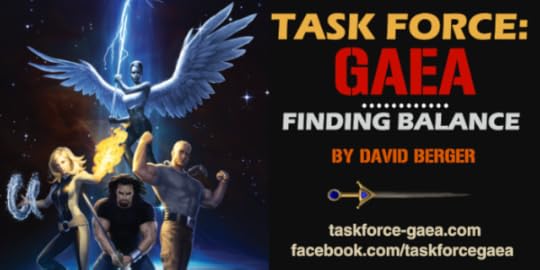
Would I use them again? Absolutely! A four foot by eight foot banner, in color, with grommets for less than $40. Wow.
This will work out well for my appearances at conventions and such. They also do signs and magnets. Definitely check them out.
F-R-E-E.
So, I ordered one. For less than $40, I now own a 4' x 8' banner, with grommets for hanging (image below):

Would I use them again? Absolutely! A four foot by eight foot banner, in color, with grommets for less than $40. Wow.
This will work out well for my appearances at conventions and such. They also do signs and magnets. Definitely check them out.


July 21, 2012
To the Victims of Aurora, CO, July 2012
I read this poem today at the AP Conference, and it reminded me of the senseless deaths of the Aurora, CO shooting victims, people who did nothing to antagonize or threaten James Eagan Holmes. Those bullets had a purpose, one that can never be undone:
For Mohammed Zeid of Gaza, Age 15
There is no stray bullet, sirs.
No bullet like a worried cat
crouching under a bush,
no half-hairless puppy bullet
dodging midnight streets.
The bullet could not be a pecan
plunking the tin roof,
not hardly, no fluff of pollen
on October's breath,
no humble pebble at our feet.
So don't gentle it, please.
We live among stray thoughts,
tasks abandoned midstream.
Our fickle hearts are fat
with stray devotions, we feel at home
among bits and pieces,
all the wandering ways of words.
But this bullet had no innocence, did not
wish anyone well, you can't tell us otherwise
by naming it mildly, this bullet was never the friend
of life, should not be granted immunity
by soft saying—friendly fire, straying death-eye,
why have we given the wrong weight to what we do?
Mohammed, Mohammed, deserves the truth.
This bullet had no secret happy hopes,
it was not singing to itself with eyes closed
under the bridge.
Naomi Shihab Nye
For Mohammed Zeid of Gaza, Age 15
There is no stray bullet, sirs.
No bullet like a worried cat
crouching under a bush,
no half-hairless puppy bullet
dodging midnight streets.
The bullet could not be a pecan
plunking the tin roof,
not hardly, no fluff of pollen
on October's breath,
no humble pebble at our feet.
So don't gentle it, please.
We live among stray thoughts,
tasks abandoned midstream.
Our fickle hearts are fat
with stray devotions, we feel at home
among bits and pieces,
all the wandering ways of words.
But this bullet had no innocence, did not
wish anyone well, you can't tell us otherwise
by naming it mildly, this bullet was never the friend
of life, should not be granted immunity
by soft saying—friendly fire, straying death-eye,
why have we given the wrong weight to what we do?
Mohammed, Mohammed, deserves the truth.
This bullet had no secret happy hopes,
it was not singing to itself with eyes closed
under the bridge.
Naomi Shihab Nye
July 16, 2012
Shades of Difference Matter—Elemental Ideas
When I teach the novel, Ceremony, by Leslie Marmon Silko, I usually teach about the Mother Goddess and the Hero’s Journey. Actually, it just gives me an excuse to talk about mythology, something I could do all day. Going over this, though, shows my students that every single heroic story follows the same skeletal structure (I could go on about the Hero’s Journey in more detail, but that would take up way too much room). The basics, though, involve the journey of the hero on his or her road of trials to accomplish a task, the people who show up along the way to help our hinder that journey, and more than likely a visit to some form of the underworld. If you go to Google and look it up, you’ll basically see the plot outline of every movie. Star Wars = Harry Potter = The Odyssey, etc. Obviously, differences exist, but the premise is the same. We read books and watch movies all the time, basically watching the same story (different people, places, and things).
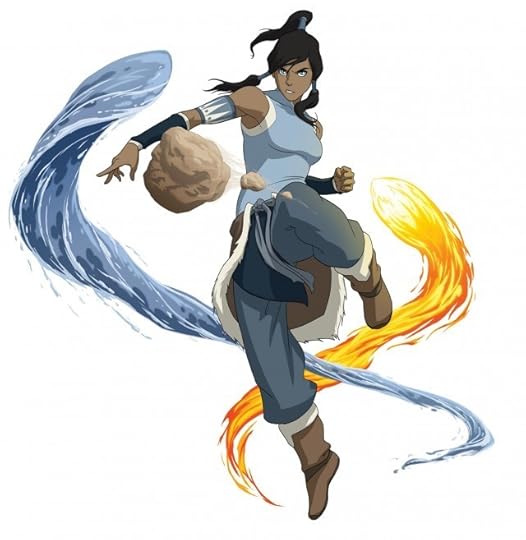 KORRA, THE AVATARI bring this up because I’m working on the sequel of Task Force: Gaea—Finding Balance, Memory’s Curse, and I have a character who comes close to another pre-existing character from another story: Korra, the Avatar (The Legend of Korra). Just go here to read more about Korra—it’ll be much easier. Then, come back here and continue reading. :)
I’ve been interested in the mystical side of the world ever since I fell in love with Greek myths back in junior high, so it wasn’t really a surprise that I’d create a character who has a connection to the four elements (earth, fire, air, and water). Sarah Jacobs (aka Aether) is a Wiccan who has tremendous respect and understanding of the natural world. A potter by trade, she knows how each of these elements plays a significant role on forming the pottery that she creates. Possessing a ring of ancient origin that allows her to manipulate each of these elements, she herself houses the fifth element (named aether, after the primordial entity), and it grounds her, allowing her to maintain her connection. Despite the fact that she can manipulate these elements, she cannot create them, and her connection is stronger to Earth and Air (for reasons explained in the sequel). Her character, a modern young woman, has ties to the ancient past, although she herself is mortal. In addition to that, she is one-fourth of Task Force: Gaea, and an integral member of the team.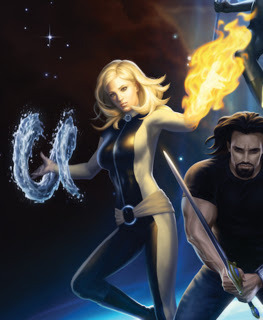 SARAH JACOBS aka AETHERAside from the elemental qualities she has, Sarah is also aware of the darker, more chthonic connections she has with her teammates. Chthonic has to do with the underworld, in this case, in Greek mythology. The natural world doesn’t take sides, and its power is not to be disregarded. All of the Greek cosmos begins with Khaos, a vast and complex entity who brought other Protogenoi (pronounced proto-YEH-noy) or primordials into existence. These early gods, Ancient Ones, had little to no recognizable forms and were vast in their size. A connection among Dan, Aleta, Brandon, and Sarah is the earth and all it contains, and that includes Hades, and the even darker Tartaros. Gaea’s presence permeates Sarah, and she is not just a vessel for the power of Aether; she is a part of the earth itself. That is the significant difference between her and Korra. So, I feel better getting that out now.It’s bound to happen that ideas cross one another in the grand scheme of the world, and it’s important that writers find ways to use some of the same ideas, but with their own spin.
 KORRA, THE AVATARI bring this up because I’m working on the sequel of Task Force: Gaea—Finding Balance, Memory’s Curse, and I have a character who comes close to another pre-existing character from another story: Korra, the Avatar (The Legend of Korra). Just go here to read more about Korra—it’ll be much easier. Then, come back here and continue reading. :)
I’ve been interested in the mystical side of the world ever since I fell in love with Greek myths back in junior high, so it wasn’t really a surprise that I’d create a character who has a connection to the four elements (earth, fire, air, and water). Sarah Jacobs (aka Aether) is a Wiccan who has tremendous respect and understanding of the natural world. A potter by trade, she knows how each of these elements plays a significant role on forming the pottery that she creates. Possessing a ring of ancient origin that allows her to manipulate each of these elements, she herself houses the fifth element (named aether, after the primordial entity), and it grounds her, allowing her to maintain her connection. Despite the fact that she can manipulate these elements, she cannot create them, and her connection is stronger to Earth and Air (for reasons explained in the sequel). Her character, a modern young woman, has ties to the ancient past, although she herself is mortal. In addition to that, she is one-fourth of Task Force: Gaea, and an integral member of the team.
SARAH JACOBS aka AETHERAside from the elemental qualities she has, Sarah is also aware of the darker, more chthonic connections she has with her teammates. Chthonic has to do with the underworld, in this case, in Greek mythology. The natural world doesn’t take sides, and its power is not to be disregarded. All of the Greek cosmos begins with Khaos, a vast and complex entity who brought other Protogenoi (pronounced proto-YEH-noy) or primordials into existence. These early gods, Ancient Ones, had little to no recognizable forms and were vast in their size. A connection among Dan, Aleta, Brandon, and Sarah is the earth and all it contains, and that includes Hades, and the even darker Tartaros. Gaea’s presence permeates Sarah, and she is not just a vessel for the power of Aether; she is a part of the earth itself. That is the significant difference between her and Korra. So, I feel better getting that out now.It’s bound to happen that ideas cross one another in the grand scheme of the world, and it’s important that writers find ways to use some of the same ideas, but with their own spin.
June 19, 2012
Did you just crawl from out from under a rock?
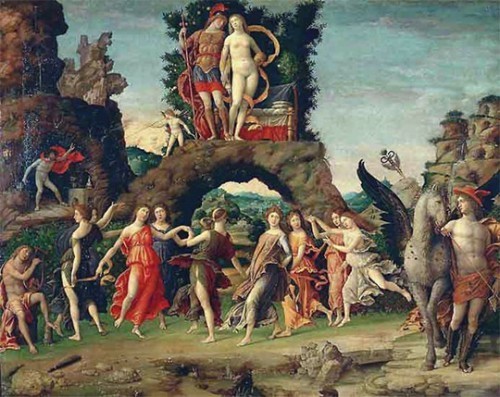
So, picture nine beautiful ladies, dressed to inspire—bumping, grinding, singing, spitting poetry, being all tragic or comedic, going on about the stars and history and stuff around one man with his hands all over his instrument.
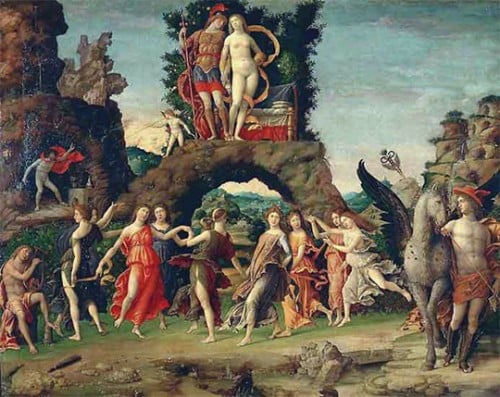
Not sure where your mind was, but I'm talking about the Muses, and their main man is Apollo, god of music. Most paintings show him, strumming his lyre, surrounded by the nine daughters of Zeus and Mnemosyne, muse of memory. Each of these goddesses reaches out to those needing inspiration: that spark or epiphany that changes lives, shakes up things a little, and sometimes pushes those who need it in the least comfortable direction—forward.
 http://www.greekmyths-greekmythology.... for me doesn't always happen when I want it or how I want it, but that's usually the way that works. If it were easy, everyone would be getting some. I wanted to share with you the top places where I have found my inspiration over the years, and maybe this will help you, too. I focus on Greek mythology, but the ideas below can be extended to your own genre. MOVIES / TELEVISION When I am running dry on ideas, and I can't force the words, I pick a movie, like the
Odyssey
or
Percy Jackson
or
Clash of the Titans
(the 1981 film), and watch the mythical world I want to be a part of in full action. Seeing Scylla rip men of Odysseus' ship or watch Charybdis swallow what remains, or when Percy and friends are dealing with a Hydra in the Parthenon (okay, it's the Nashville reproduction, but it's pretty damn close), or even seeing Laurence Olivier, as Zeus, play with the fate of his son, Perseus... well, that's when I start thinking about MY story. Most often, after that, I'm primed and ready to go for a while. In the same category, I include
Class of the Titans
, a Canadian animated show about a group of kids who battle against Kronos and all the monsters he can throw at them. Catch it on YouTube. COMIC BOOKS Yessir, I am 45 years old, and I still love my comic books, especially
Wonder Woman
. When the well runs shallow, I pick up a stack of comics (usually the ones where she encounters some gods or monsters) and get all nostalgic about when I first read them. Almost every time, I jot down some ideas that pop into my head from that, and then I play with it until I have what I really want. Hit up a LCS (local comic shop) near you for some back issues, if fantasy/superheroes is your genre, and see what happens. GOOD OLE DUNGEONS & DRAGONS Sitting on my bookshelf at school (just so my students can see exactly where my geekdom started) is a set of AD&D books, among them my
Deities & Demigods
(with the Melnibonean stories of Elric as well as Cthulhu Mythos and all the great Elder Gods). Now, this book really pumps me up. Even though I write predominantly Greek myth-based stories, nothing helps more sometimes than reading up on Osiris and Isis, Thor and Odin, or even Amaterasu and Tsukuyomi. If it's from mythology from somewhere, it'll work.
http://www.greekmyths-greekmythology.... for me doesn't always happen when I want it or how I want it, but that's usually the way that works. If it were easy, everyone would be getting some. I wanted to share with you the top places where I have found my inspiration over the years, and maybe this will help you, too. I focus on Greek mythology, but the ideas below can be extended to your own genre. MOVIES / TELEVISION When I am running dry on ideas, and I can't force the words, I pick a movie, like the
Odyssey
or
Percy Jackson
or
Clash of the Titans
(the 1981 film), and watch the mythical world I want to be a part of in full action. Seeing Scylla rip men of Odysseus' ship or watch Charybdis swallow what remains, or when Percy and friends are dealing with a Hydra in the Parthenon (okay, it's the Nashville reproduction, but it's pretty damn close), or even seeing Laurence Olivier, as Zeus, play with the fate of his son, Perseus... well, that's when I start thinking about MY story. Most often, after that, I'm primed and ready to go for a while. In the same category, I include
Class of the Titans
, a Canadian animated show about a group of kids who battle against Kronos and all the monsters he can throw at them. Catch it on YouTube. COMIC BOOKS Yessir, I am 45 years old, and I still love my comic books, especially
Wonder Woman
. When the well runs shallow, I pick up a stack of comics (usually the ones where she encounters some gods or monsters) and get all nostalgic about when I first read them. Almost every time, I jot down some ideas that pop into my head from that, and then I play with it until I have what I really want. Hit up a LCS (local comic shop) near you for some back issues, if fantasy/superheroes is your genre, and see what happens. GOOD OLE DUNGEONS & DRAGONS Sitting on my bookshelf at school (just so my students can see exactly where my geekdom started) is a set of AD&D books, among them my
Deities & Demigods
(with the Melnibonean stories of Elric as well as Cthulhu Mythos and all the great Elder Gods). Now, this book really pumps me up. Even though I write predominantly Greek myth-based stories, nothing helps more sometimes than reading up on Osiris and Isis, Thor and Odin, or even Amaterasu and Tsukuyomi. If it's from mythology from somewhere, it'll work.
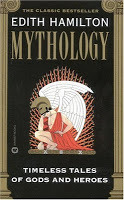 EDITH HAMILTON'S MYTHOLOGY
This, my friends, is my favorite book of myths—ever. Nostalgia from my childhood mixed with a great collection of stories and art always lights me up when nothing else really can. I've burned through five or six of these bad boys (paperbacks only take so much use!) in my life, and recommend it to anyone who wants to get a great overview. Bulfinch's works, too, but Edith and I have a history... an ancient one.
MOTHER NATURE
Weather permitting (although sometimes inclement weather works for me), I take walks, admiring the grandeur of the natural world: the majesty of trees, the whimsy of birds, or the rhythm of flowing water. And, yes, I look under rocks. Sometimes you see the literal underbelly of the natural world just creeping, slithering, or growing in the dark places. It's inspiring to see how this world works, and will continue to do so, when I am long gone and part of the earth itself. This planet's been around for quite a while, and I think it'll be around at least throughout the rest of my lifespan. Take a deep breath, walk through the woods, listen to the sounds, and even stand in a rain storm. The power of the natural world is in itself a wonder.
TARTAROS (I.E. THE INTERNET)
Browsing through websites about myths (theoi.com is especially fun), heroes, monsters, or anything related gives me a quick charge—sometimes even a map of ancient Greece give me an idea or three. It's just so easy to get lost in the "Interwebs," especially when I can bookmark places as I go. Pull up Google, type in a random word or phrase, and see where it takes you. Traverse the "underworld" (as it can be all-consuming, if you're not careful, some say soul-taking), and there's no Cerberos to bar your travels. Bonus!
Inspiration is a fickle thing, and sometimes when you really feel like engaging in something totally mindless just to pretend you're not frustrated why you can't come up with those life-changing ideas, try one of the ideas above. What could it hurt? You might find what you need in the place you least expect.
Maybe these ladies will let you dance or sing with them, just be careful: you might get caught playing with your instrument, too. Your mind.
Not sure where your mind was, but I'm talking about the Muses, and their main man is Apollo, god of music. Most paintings show him, strumming his lyre, surrounded by the nine daughters of Zeus and Mnemosyne, muse of memory. Each of these goddesses reaches out to those needing inspiration: that spark or epiphany that changes lives, shakes up things a little, and sometimes pushes those who need it in the least comfortable direction—forward.
 http://www.greekmyths-greekmythology.... for me doesn't always happen when I want it or how I want it, but that's usually the way that works. If it were easy, everyone would be getting some. I wanted to share with you the top places where I have found my inspiration over the years, and maybe this will help you, too. I focus on Greek mythology, but the ideas below can be extended to your own genre. MOVIES / TELEVISION When I am running dry on ideas, and I can't force the words, I pick a movie, like the
Odyssey
or
Percy Jackson
or
Clash of the Titans
(the 1981 film), and watch the mythical world I want to be a part of in full action. Seeing Scylla rip men of Odysseus' ship or watch Charybdis swallow what remains, or when Percy and friends are dealing with a Hydra in the Parthenon (okay, it's the Nashville reproduction, but it's pretty damn close), or even seeing Laurence Olivier, as Zeus, play with the fate of his son, Perseus... well, that's when I start thinking about MY story. Most often, after that, I'm primed and ready to go for a while. In the same category, I include
Class of the Titans
, a Canadian animated show about a group of kids who battle against Kronos and all the monsters he can throw at them. Catch it on YouTube. COMIC BOOKS Yessir, I am 45 years old, and I still love my comic books, especially
Wonder Woman
. When the well runs shallow, I pick up a stack of comics (usually the ones where she encounters some gods or monsters) and get all nostalgic about when I first read them. Almost every time, I jot down some ideas that pop into my head from that, and then I play with it until I have what I really want. Hit up a LCS (local comic shop) near you for some back issues, if fantasy/superheroes is your genre, and see what happens. GOOD OLE DUNGEONS & DRAGONS Sitting on my bookshelf at school (just so my students can see exactly where my geekdom started) is a set of AD&D books, among them my
Deities & Demigods
(with the Melnibonean stories of Elric as well as Cthulhu Mythos and all the great Elder Gods). Now, this book really pumps me up. Even though I write predominantly Greek myth-based stories, nothing helps more sometimes than reading up on Osiris and Isis, Thor and Odin, or even Amaterasu and Tsukuyomi. If it's from mythology from somewhere, it'll work.
http://www.greekmyths-greekmythology.... for me doesn't always happen when I want it or how I want it, but that's usually the way that works. If it were easy, everyone would be getting some. I wanted to share with you the top places where I have found my inspiration over the years, and maybe this will help you, too. I focus on Greek mythology, but the ideas below can be extended to your own genre. MOVIES / TELEVISION When I am running dry on ideas, and I can't force the words, I pick a movie, like the
Odyssey
or
Percy Jackson
or
Clash of the Titans
(the 1981 film), and watch the mythical world I want to be a part of in full action. Seeing Scylla rip men of Odysseus' ship or watch Charybdis swallow what remains, or when Percy and friends are dealing with a Hydra in the Parthenon (okay, it's the Nashville reproduction, but it's pretty damn close), or even seeing Laurence Olivier, as Zeus, play with the fate of his son, Perseus... well, that's when I start thinking about MY story. Most often, after that, I'm primed and ready to go for a while. In the same category, I include
Class of the Titans
, a Canadian animated show about a group of kids who battle against Kronos and all the monsters he can throw at them. Catch it on YouTube. COMIC BOOKS Yessir, I am 45 years old, and I still love my comic books, especially
Wonder Woman
. When the well runs shallow, I pick up a stack of comics (usually the ones where she encounters some gods or monsters) and get all nostalgic about when I first read them. Almost every time, I jot down some ideas that pop into my head from that, and then I play with it until I have what I really want. Hit up a LCS (local comic shop) near you for some back issues, if fantasy/superheroes is your genre, and see what happens. GOOD OLE DUNGEONS & DRAGONS Sitting on my bookshelf at school (just so my students can see exactly where my geekdom started) is a set of AD&D books, among them my
Deities & Demigods
(with the Melnibonean stories of Elric as well as Cthulhu Mythos and all the great Elder Gods). Now, this book really pumps me up. Even though I write predominantly Greek myth-based stories, nothing helps more sometimes than reading up on Osiris and Isis, Thor and Odin, or even Amaterasu and Tsukuyomi. If it's from mythology from somewhere, it'll work.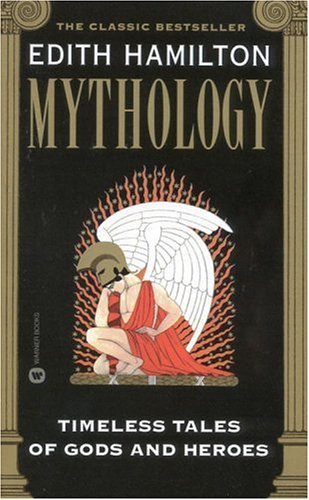 EDITH HAMILTON'S MYTHOLOGY
This, my friends, is my favorite book of myths—ever. Nostalgia from my childhood mixed with a great collection of stories and art always lights me up when nothing else really can. I've burned through five or six of these bad boys (paperbacks only take so much use!) in my life, and recommend it to anyone who wants to get a great overview. Bulfinch's works, too, but Edith and I have a history... an ancient one.
MOTHER NATURE
Weather permitting (although sometimes inclement weather works for me), I take walks, admiring the grandeur of the natural world: the majesty of trees, the whimsy of birds, or the rhythm of flowing water. And, yes, I look under rocks. Sometimes you see the literal underbelly of the natural world just creeping, slithering, or growing in the dark places. It's inspiring to see how this world works, and will continue to do so, when I am long gone and part of the earth itself. This planet's been around for quite a while, and I think it'll be around at least throughout the rest of my lifespan. Take a deep breath, walk through the woods, listen to the sounds, and even stand in a rain storm. The power of the natural world is in itself a wonder.
TARTAROS (I.E. THE INTERNET)
Browsing through websites about myths (theoi.com is especially fun), heroes, monsters, or anything related gives me a quick charge—sometimes even a map of ancient Greece give me an idea or three. It's just so easy to get lost in the "Interwebs," especially when I can bookmark places as I go. Pull up Google, type in a random word or phrase, and see where it takes you. Traverse the "underworld" (as it can be all-consuming, if you're not careful, some say soul-taking), and there's no Cerberos to bar your travels. Bonus!
Inspiration is a fickle thing, and sometimes when you really feel like engaging in something totally mindless just to pretend you're not frustrated why you can't come up with those life-changing ideas, try one of the ideas above. What could it hurt? You might find what you need in the place you least expect.
Maybe these ladies will let you dance or sing with them, just be careful: you might get caught playing with your instrument, too. Your mind.
June 17, 2012
Review: Wrath of the Titans (or Titan?)
WARNING: Spoilers ahead for those who haven't seen the movie.
 CLASH OF THE TITANS (1981)I'm certainly not one to criticize the rewriting of mythology since my novel,
Task Force: Gaea
, does that by tweaking Greek mythology. After all, people spread myths by word of mouth before they did so in writing, so changes invariably happened. In fact, depending on whether you ascribe to Hesiod or Orphism, you get a variety of myths on the same subject. Keeping this in mind, I watched
Wrath of the Titans
, the sequel to the 2010 movie,
Clash of the Titans
. Now, being a tremendous fan of the original movie (
Clash of the Titans
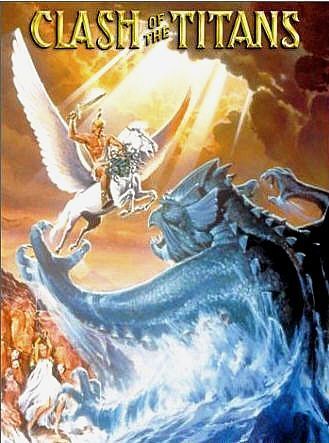
) with Harry Hamlin, I remember feeling somewhat let down with the remake two years ago, as the latter changed some of the aspects of the original that I enjoyed tremendously. The fact that Perseus ended up with Io, a character not in the original movie at all, was a deep disappointment. He was supposed to be with Andromeda, the princess of Joppa. I enjoyed the remake's technological superiority over the original, however, but I did miss Ray Harryhausen's monsters. Yeah, call me nostalgic for stop-motion animation.
CLASH OF THE TITANS (1981)I'm certainly not one to criticize the rewriting of mythology since my novel,
Task Force: Gaea
, does that by tweaking Greek mythology. After all, people spread myths by word of mouth before they did so in writing, so changes invariably happened. In fact, depending on whether you ascribe to Hesiod or Orphism, you get a variety of myths on the same subject. Keeping this in mind, I watched
Wrath of the Titans
, the sequel to the 2010 movie,
Clash of the Titans
. Now, being a tremendous fan of the original movie (
Clash of the Titans
) with Harry Hamlin, I remember feeling somewhat let down with the remake two years ago, as the latter changed some of the aspects of the original that I enjoyed tremendously. The fact that Perseus ended up with Io, a character not in the original movie at all, was a deep disappointment. He was supposed to be with Andromeda, the princess of Joppa. I enjoyed the remake's technological superiority over the original, however, but I did miss Ray Harryhausen's monsters. Yeah, call me nostalgic for stop-motion animation.
But, I digress.
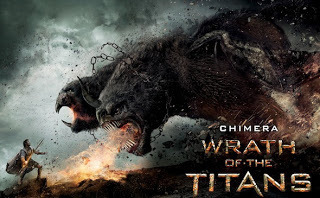 PERSEUS AGAINST THE CHIMERA
(wrathofthetitans.warnerbros.com)This sequel had much the same flavor as the 2010 movie, and the special effects didn't disappoint. Chimerae dropping out of the sky looked more real than Harryhausen's type of creatures, although they weren't the chimerae I'm used to. Again, Sam Worthington plays Perseus, son of Zeus, king of the gods (played by Liam Neeson); Hades (Ralph Fiennes) and Poseidon (Danny Huston) finished the trio of the sons of Kronos. Ares and Hephaestus were the only other gods present in the movie, and they seemed pretty well cast (although Hephaestus always struck me as an older, muscular god (he IS the blacksmith of the gods, after all), with misshapen legs, since he was cast down from Olympus when he tried to intervene in a fight between his mother, Hera, and Zeus, and his legs were broken. But, that's more THE mythology than the movie.
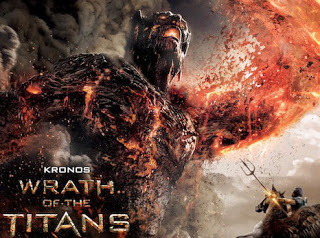 KRONOS
(wrathofthetitans.warnerbros.com)
As a mythological story, the movie certainly entertained me, and seeing Kronos as more of a primordial creature of magma and earth makes sense since he is a son of Gaea. The letdown? He was the ONLY Titan in the movie. Plenty of monsters appeared—the Cyclopes, the Chimerae, the Makhai, and a Minotaur—but no additional Titans showed up. Now in the original Clash of the Titans, one of the Graeae (Grey Women) whom Perseus seeks says that it would be "A Titan against the Titans!" when she's referring to Medusa's gaze against the Kraken (Medusa and the Kraken weren't Titans, actually. Medusa was a Gorgon, and the sea monster Perseus defeated was a Cetos). I know it seems like I'm nitpicking, but the Titans were a distinct group of deities.
Anywho... I found the movie to be a good distraction from whatever I was planning to do today, but I'm a sucker for Greek myth-inspied movies. Seeing Perseus step up to battle Ares made me pay more attention just so I could see how that melee would finish. Ares holds Zeus' thunderbolt, the third weapon forged by Hephaestus that Perseus needs to form the Spear of Triam (the other two components being Poseidon's trident and Hades' pitchfork), the only weapon that can defeat Kronos (whose siege of the world of man was underwhelming; he basically stays in one spot the entire time, shooting magma and fire—granted, he's HUGE.) The Mahkai do rampage Andromeda's troops, that is until Zeus and Hades decide to team up against dear ole Dad.
This was very much a "twilight of the gods" movie, and I don't see a third coming down the pike, but I could be wrong. It would hardly be a movie of epic/mythological proportions without the gods, however. Worth watching for the fantasy elements and some of the mythology, but some discrepancies that irked me.
OVERALL MOVIE: ★★★ ½SPECIAL EFFECTS: ★★★★★ PLOT: ★★★ ½
 CLASH OF THE TITANS (1981)I'm certainly not one to criticize the rewriting of mythology since my novel,
Task Force: Gaea
, does that by tweaking Greek mythology. After all, people spread myths by word of mouth before they did so in writing, so changes invariably happened. In fact, depending on whether you ascribe to Hesiod or Orphism, you get a variety of myths on the same subject. Keeping this in mind, I watched
Wrath of the Titans
, the sequel to the 2010 movie,
Clash of the Titans
. Now, being a tremendous fan of the original movie (
Clash of the Titans
) with Harry Hamlin, I remember feeling somewhat let down with the remake two years ago, as the latter changed some of the aspects of the original that I enjoyed tremendously. The fact that Perseus ended up with Io, a character not in the original movie at all, was a deep disappointment. He was supposed to be with Andromeda, the princess of Joppa. I enjoyed the remake's technological superiority over the original, however, but I did miss Ray Harryhausen's monsters. Yeah, call me nostalgic for stop-motion animation.
CLASH OF THE TITANS (1981)I'm certainly not one to criticize the rewriting of mythology since my novel,
Task Force: Gaea
, does that by tweaking Greek mythology. After all, people spread myths by word of mouth before they did so in writing, so changes invariably happened. In fact, depending on whether you ascribe to Hesiod or Orphism, you get a variety of myths on the same subject. Keeping this in mind, I watched
Wrath of the Titans
, the sequel to the 2010 movie,
Clash of the Titans
. Now, being a tremendous fan of the original movie (
Clash of the Titans
) with Harry Hamlin, I remember feeling somewhat let down with the remake two years ago, as the latter changed some of the aspects of the original that I enjoyed tremendously. The fact that Perseus ended up with Io, a character not in the original movie at all, was a deep disappointment. He was supposed to be with Andromeda, the princess of Joppa. I enjoyed the remake's technological superiority over the original, however, but I did miss Ray Harryhausen's monsters. Yeah, call me nostalgic for stop-motion animation.But, I digress.
 PERSEUS AGAINST THE CHIMERA
(wrathofthetitans.warnerbros.com)This sequel had much the same flavor as the 2010 movie, and the special effects didn't disappoint. Chimerae dropping out of the sky looked more real than Harryhausen's type of creatures, although they weren't the chimerae I'm used to. Again, Sam Worthington plays Perseus, son of Zeus, king of the gods (played by Liam Neeson); Hades (Ralph Fiennes) and Poseidon (Danny Huston) finished the trio of the sons of Kronos. Ares and Hephaestus were the only other gods present in the movie, and they seemed pretty well cast (although Hephaestus always struck me as an older, muscular god (he IS the blacksmith of the gods, after all), with misshapen legs, since he was cast down from Olympus when he tried to intervene in a fight between his mother, Hera, and Zeus, and his legs were broken. But, that's more THE mythology than the movie.
 KRONOS
(wrathofthetitans.warnerbros.com)
As a mythological story, the movie certainly entertained me, and seeing Kronos as more of a primordial creature of magma and earth makes sense since he is a son of Gaea. The letdown? He was the ONLY Titan in the movie. Plenty of monsters appeared—the Cyclopes, the Chimerae, the Makhai, and a Minotaur—but no additional Titans showed up. Now in the original Clash of the Titans, one of the Graeae (Grey Women) whom Perseus seeks says that it would be "A Titan against the Titans!" when she's referring to Medusa's gaze against the Kraken (Medusa and the Kraken weren't Titans, actually. Medusa was a Gorgon, and the sea monster Perseus defeated was a Cetos). I know it seems like I'm nitpicking, but the Titans were a distinct group of deities.
Anywho... I found the movie to be a good distraction from whatever I was planning to do today, but I'm a sucker for Greek myth-inspied movies. Seeing Perseus step up to battle Ares made me pay more attention just so I could see how that melee would finish. Ares holds Zeus' thunderbolt, the third weapon forged by Hephaestus that Perseus needs to form the Spear of Triam (the other two components being Poseidon's trident and Hades' pitchfork), the only weapon that can defeat Kronos (whose siege of the world of man was underwhelming; he basically stays in one spot the entire time, shooting magma and fire—granted, he's HUGE.) The Mahkai do rampage Andromeda's troops, that is until Zeus and Hades decide to team up against dear ole Dad.
This was very much a "twilight of the gods" movie, and I don't see a third coming down the pike, but I could be wrong. It would hardly be a movie of epic/mythological proportions without the gods, however. Worth watching for the fantasy elements and some of the mythology, but some discrepancies that irked me.
OVERALL MOVIE: ★★★ ½SPECIAL EFFECTS: ★★★★★ PLOT: ★★★ ½
June 15, 2012

June 11, 2012
Horror Among the Gods
Considering what many people know (or don’t know) about the gods of Greek myth, it’s not surprising to learn that the idea of horror doesn’t really factor into the mythology. Some of the myths and legends may indeed frighten, but very few actually are intended to invoke that nausea that emanates from a story where blood, bile, and other bodily fluids are ripped or drained from a human. Certain myths tell of horrific events, things that mere mortals wouldn’t be able to stomach for long, but the stories of the Olympian gods were intended more for didactic purposes. A few of the gods or entities do have a flavor of horror, however:
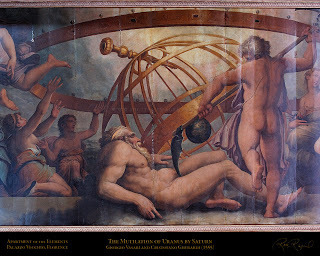 Mutilation of Uranus/Vasari CASTRATION OF OURANOS
Perhaps the first act of horror inflicted in Greek mythology, an event that would make any male cringe, would be the castration of Ouranos by his son, Kronos. Gaea, infuriated that her husband, Ouranos, would imprison some of their children—the Cyclopes and the Hekatonkheires—in dark Tartaros because they were not as beautiful as the Titans, approaches her son Kronos and offers him a scythe of flint. Prophecy would dictate that the son would rise up and depose the father, and this was the occasion for Kronos to do just that. Vasari's painting does not depict the act graphically, but I am sure very few people don't know what castration is.
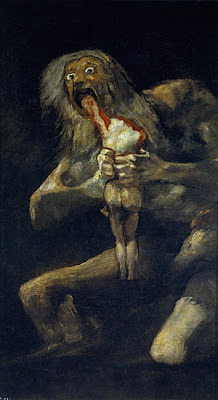 Saturn Devouring His Son/GoyaKRONOS DEVOURS HIS OFFSPRING
Later, when Kronos learned that he would be deposed by one of his own offspring, he devoured each one to protect his sovereignty. Painters like Goya and Rubens tried to capture the essence of this moment, anthropomorphizing the mighty Titan (referred to as his Roman name, Saturn) to make it easier for us to comprehend. Each of these paintings uses a limited color palette along with a graphic depiction of the act. Goya shows Kronos' eyes to be wide, almost filled with madness. The partially devoured god, identity unknown, lies limp in his hands, and he seems feral and monstrous, unlike the king of the Titans who stood up to his father, Ouranos, and later emasculated him. This would certainly invoke a feeling of horror in those who feel that cannibalizing one's own children is a heinous act, an act of desperation in Kronos' case.
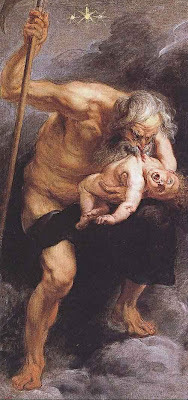 Saturn Devouring His Son/RubensRubens, on the other hand, depicts a more defined image, albeit no less graphic or disturbing. This Kronos (Saturn) seems to be devouring a much younger Titan, almost an infant, and the expression on the child's face as his father eats him alive would probably conjure many mind-numbing nightmares. At least Goya shows an already deceased offspring, almost a carcass—Kronos' offspring, in Rubens' painting, seems to shriek in pain and disbelief.
No Happy Father's Day here.
When Zeus, the youngest of the gods, was hidden away by his mother, Rhea, he grew into a young god ready to stand up to his father, ultimately tricking him into regurgitating each of his five brothers and sisters. With all six Olympians together, the Titans fell, and then Zeus imprisoned them in Tartaros, all except Kronos—Zeus killed him with the same scythe used to castrate Ouranos. Oh, the irony.
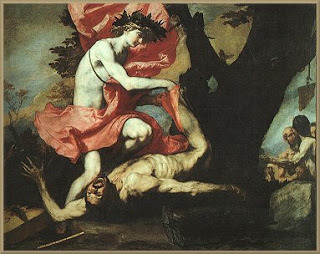 Other acts of horror, things that modern technology could show very easily, encouraging audience members to vomit, involved other gods, this time, Apollo. A satyr, Marsyas, challenged Apollo to a music contest. Either Marsyas didn't know his opponent well, or he had forgotten: Apollo was the god of music. Needless to say, Apollo won, and for his hubris, Marsyas received a heinous punishment—Apollo flayed him alive.
LOVECRAFT
Other types of horror, the kind that one might see in the works of Lovecraft, don't seem to show up in Greek mythology. Seeking forbidden knowledge tends to be an element of Lovecraft, but not just the seeking, but the effect it has on the psyche once found. Learning something about yourself or others meant never to be revealed most likely will have an indelible impression and could bring about madness or worse. Additionally, non-human influences on humanity factor in these stories, and having a creature of a shape one cannot easily wrap his mind around making its way through the world just means that some sanity will shift—an element of horror that can be more effective that gore.
When people cannot escape the crimes of those who came before, that inherited guilt leaves one with the anxiety of "Why me? I didn't do that." But, the legacy of a powerful entity on his or her progeny can drive the generations that follow in ways they hadn't considered, or wanted to consider. Something known to many mythologies as well as Lovecraftian lore is the idea of fate. When something cannot be changed, when one's journey must continue no matter the consequence (even when the consequence is known), then this provides a sense of powerlessness, as if one were in a pool of quicksand—and the idea of drowning in your own fate would certainly make my heart race and the adrenaline flow.
All of the former aspects certainly come together in a few ways, and they can provide a threat to civilization, regardless of how civilized that culture may be. This pervasive fear links all of Lovecraft's ideas, and that emotional upheaval provides a horror more terrifying than most can imagine. Furthering the horror, separating people by race, ethnicity, and class puts undue stress and prejudice in the minds of others, and this type of horror cuts to very nature of humans (or non-humans, in a Lovecraftian world). When we think about American slavery, Rwanda, or the Holocaust, we see some of the lowest places humanity has ever been. But, in this type of horror, the separation is between different non-humans (but, is it truly any different, when stories like this are allegorical?). Understanding science has long since been a way to bring order to the cosmos, or at seeing just how science (from the Latin, scire—to know, by the way) provides the vehicle to voiding the darkness around us.
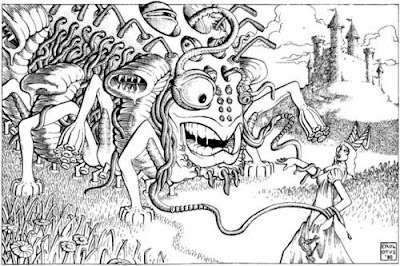
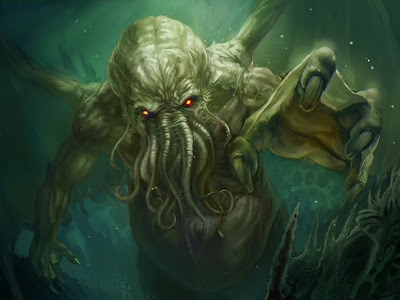
The risks of a scientific era means that sometimes, when certain things go beyond the scope of formulae and process, people may not know how to handle those obstacles that rise up because those obstacles don't exist in a recognizable form (human nature shows that people tend to fear what they don't or can't understand). And lastly, Lovecraftian horror uses religion as a divisive tool: basically the gods and monsters one encounters (e.g. Cthulhu) have no concern for mortals and may be hostile toward them. This contrasts the ideas of the Judeo/Christian/Muslim faiths where G-d is a loving entity whom people glorify, and there's a direct connection between Mankind and the Divine. Without that connection, some would feel quite lost and, dare I say, horrified. This deity is beyond form, beyond shape, but Lovecraft's deities take on unnatural bodies.
 Yog-Sothoth
 CthulhuEmbracing the horror we see in literature in all forms helps put us in touch with a part of our mind and soul that we don't often see, one that we should embrace in the dark and hope to learn from. Only when our eyes become accustomed to the dark do we fear it less.
 Mutilation of Uranus/Vasari CASTRATION OF OURANOS
Perhaps the first act of horror inflicted in Greek mythology, an event that would make any male cringe, would be the castration of Ouranos by his son, Kronos. Gaea, infuriated that her husband, Ouranos, would imprison some of their children—the Cyclopes and the Hekatonkheires—in dark Tartaros because they were not as beautiful as the Titans, approaches her son Kronos and offers him a scythe of flint. Prophecy would dictate that the son would rise up and depose the father, and this was the occasion for Kronos to do just that. Vasari's painting does not depict the act graphically, but I am sure very few people don't know what castration is.
 Saturn Devouring His Son/GoyaKRONOS DEVOURS HIS OFFSPRING
Later, when Kronos learned that he would be deposed by one of his own offspring, he devoured each one to protect his sovereignty. Painters like Goya and Rubens tried to capture the essence of this moment, anthropomorphizing the mighty Titan (referred to as his Roman name, Saturn) to make it easier for us to comprehend. Each of these paintings uses a limited color palette along with a graphic depiction of the act. Goya shows Kronos' eyes to be wide, almost filled with madness. The partially devoured god, identity unknown, lies limp in his hands, and he seems feral and monstrous, unlike the king of the Titans who stood up to his father, Ouranos, and later emasculated him. This would certainly invoke a feeling of horror in those who feel that cannibalizing one's own children is a heinous act, an act of desperation in Kronos' case.
 Saturn Devouring His Son/RubensRubens, on the other hand, depicts a more defined image, albeit no less graphic or disturbing. This Kronos (Saturn) seems to be devouring a much younger Titan, almost an infant, and the expression on the child's face as his father eats him alive would probably conjure many mind-numbing nightmares. At least Goya shows an already deceased offspring, almost a carcass—Kronos' offspring, in Rubens' painting, seems to shriek in pain and disbelief.
No Happy Father's Day here.
When Zeus, the youngest of the gods, was hidden away by his mother, Rhea, he grew into a young god ready to stand up to his father, ultimately tricking him into regurgitating each of his five brothers and sisters. With all six Olympians together, the Titans fell, and then Zeus imprisoned them in Tartaros, all except Kronos—Zeus killed him with the same scythe used to castrate Ouranos. Oh, the irony.
 Other acts of horror, things that modern technology could show very easily, encouraging audience members to vomit, involved other gods, this time, Apollo. A satyr, Marsyas, challenged Apollo to a music contest. Either Marsyas didn't know his opponent well, or he had forgotten: Apollo was the god of music. Needless to say, Apollo won, and for his hubris, Marsyas received a heinous punishment—Apollo flayed him alive.
LOVECRAFT
Other types of horror, the kind that one might see in the works of Lovecraft, don't seem to show up in Greek mythology. Seeking forbidden knowledge tends to be an element of Lovecraft, but not just the seeking, but the effect it has on the psyche once found. Learning something about yourself or others meant never to be revealed most likely will have an indelible impression and could bring about madness or worse. Additionally, non-human influences on humanity factor in these stories, and having a creature of a shape one cannot easily wrap his mind around making its way through the world just means that some sanity will shift—an element of horror that can be more effective that gore.
When people cannot escape the crimes of those who came before, that inherited guilt leaves one with the anxiety of "Why me? I didn't do that." But, the legacy of a powerful entity on his or her progeny can drive the generations that follow in ways they hadn't considered, or wanted to consider. Something known to many mythologies as well as Lovecraftian lore is the idea of fate. When something cannot be changed, when one's journey must continue no matter the consequence (even when the consequence is known), then this provides a sense of powerlessness, as if one were in a pool of quicksand—and the idea of drowning in your own fate would certainly make my heart race and the adrenaline flow.
All of the former aspects certainly come together in a few ways, and they can provide a threat to civilization, regardless of how civilized that culture may be. This pervasive fear links all of Lovecraft's ideas, and that emotional upheaval provides a horror more terrifying than most can imagine. Furthering the horror, separating people by race, ethnicity, and class puts undue stress and prejudice in the minds of others, and this type of horror cuts to very nature of humans (or non-humans, in a Lovecraftian world). When we think about American slavery, Rwanda, or the Holocaust, we see some of the lowest places humanity has ever been. But, in this type of horror, the separation is between different non-humans (but, is it truly any different, when stories like this are allegorical?). Understanding science has long since been a way to bring order to the cosmos, or at seeing just how science (from the Latin, scire—to know, by the way) provides the vehicle to voiding the darkness around us.
The risks of a scientific era means that sometimes, when certain things go beyond the scope of formulae and process, people may not know how to handle those obstacles that rise up because those obstacles don't exist in a recognizable form (human nature shows that people tend to fear what they don't or can't understand). And lastly, Lovecraftian horror uses religion as a divisive tool: basically the gods and monsters one encounters (e.g. Cthulhu) have no concern for mortals and may be hostile toward them. This contrasts the ideas of the Judeo/Christian/Muslim faiths where G-d is a loving entity whom people glorify, and there's a direct connection between Mankind and the Divine. Without that connection, some would feel quite lost and, dare I say, horrified. This deity is beyond form, beyond shape, but Lovecraft's deities take on unnatural bodies.
 Yog-Sothoth
 CthulhuEmbracing the horror we see in literature in all forms helps put us in touch with a part of our mind and soul that we don't often see, one that we should embrace in the dark and hope to learn from. Only when our eyes become accustomed to the dark do we fear it less.
June 8, 2012
Task Force: Gaea—Memory's Curse (ETA 12/31/2012)
The second book in the
Task Force: Gaea
(soon-to-be) trilogy—Memory's Curse—has an anticipated completion date of December 31, 2012. After the events of Finding Balance, the four members of the United Nations Task Force, GAEA, find themselves in a world they desperately need to understand, and the Olympian god, Apollo, takes a more active role. This sequel will pick up not long after Finding Balance leaves off, and Dan, Aleta, Sarah, and Brandon find themselves facing a threat they could never have anticipated, something darker and much more sinister than even the Hadean creatures they have already come up against.
Prepare yourself. This journey makes the first book seem tame.
More to come...
Prepare yourself. This journey makes the first book seem tame.
More to come...
June 6, 2012
NEW Book Trailer!
Feel free to open in YouTube and share this trailer with your friends.

June 2, 2012
Catch Me Live at 9 pm on Indie Author How-To Radio
 Picture from kishazworld.comLakisha Spletzer, author of such works as Jewels and Emerald Rebellion (Alien Encounters Saga) et al, will be hosting me tonight at 9 p.m. on her Radio Show: Indie Author How-To. Come listen to her interview me on many topics and participate in the chatroom!
The link to listen/chat is http://www.talkshoe.com/tc/111221
Spletzer is an indie author who writes "science fiction and fantasy, with a fondness for paranormal and urban fantasy stories, too.[She doesn't] restrict [her]self to a certain level (adults only or YA only). [She has] enough stories to go around for everyone."
Official site: http://www.kishazworld.com/