Annie Cardi's Blog, page 105
March 22, 2012
Red and the Wolf
A really arresting take on Little Red Riding Hood:
Between the silhouetted animation, the intense music, and the take on violence in the fairy tale, I found it captivating. Even though it's a somewhat gruesome take, I'm very intrigued by the idea of how the hero doesn't necessarily live happily ever after, even if she's survived. Kudos to directors Jorge Jaramillo and Carlo Guillot.
(via Alyssa at Think Progress–more on fairy tales there too)


Play Time
I spend a lot of time with playwrights, but I don't have much experience with writing theater for young people. So I was really interested to see this article about World Theater for Children and Young People Day and why youth theater is essential. In particular, it's essential because it teaches young people empathy:
"As my friend Bill English of San Francisco's SF Playhouse says, theater is like a gym for empathy. It's where we can go to build up the muscles of compassion, to practice listening and understanding and engaging with people that are not just like ourselves. We practice sitting down, paying attention and learning from other people's actions. We practice caring.
Kids need this kind of practice even more than adults do. This is going to be their planet and they've got more time to apply that empathy and make a difference. Buddhist roshi Joan Halifax challenges us to actively and specifically teach children (and vote for presidents with) empathy. Why not take your child to the theater to do just that."
Very true of theater and of art in general. Plays and books for young people provide a safe place to expand ideas and experience alternate ways of being.
A couple of other points I'd add: first, theater is very collaborative. Whereas I'm cool sitting at my desk, typing away on my own, playwrights are more often included on the production process. They work with actors, directors, and other theatrical artists to create a show. Theater can teach kids the importance of collaboration and invention the way other works of art might not be able to.
Second, children's theater often encourages participation and playfulness. I think it's fantastic to teach kids that they don't have to feel self-conscious and that their voice can be heard. It can be exciting for kids to see adults having fun and being silly, too; it encourages the idea that you're never too old to play.
Again, I don't have much experience with theater for young people, so I'd love to hear your thoughts in the comments.





Author Interview with John Green
Wait, it's a video with John Green that's not a vlog brothers video? Can't wrap my brain around it. Great interview though!

I especially like John's comments on creating moments that are a gift to the reader and thinking of their experience. It's cliche to say that you should write the book you want to read, but I think it's good to remember the future reading experience as you write.
Also, it sounds really silly but I was excited to see John interviewed here because it's so normal to see him in other videos. I thought "Look at him! Just like a real person! He's famous outside of my little world!" It's like seeing your friend from high school get interviewed and act like a professional. Except John and I aren't actually friends*.
*John, let me know if you want to be friends**.
**If you want to be enemies, that's cool too. I am a cold and heartless nemesis.





March 21, 2012
Books for the Downton Withdrawl
How did I miss the Downton Abbey Reading Challenge? This sounds awesome, especially now that season 2 is over. The reading list is extensive. This would certainly cover you until season 3 started.
The only thing that can make this better? If Dame Maggie Smith narrated all the audio book versions.





Into the Woods
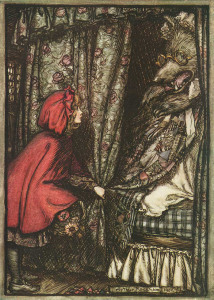 When I was five or so, Disney was able to release The Little Mermaid. I was intrigued by the trailer and asked my brother what the story was about. His version: the little mermaid falls in love with the prince. To stay human, she has to stab two holes in her feet and throw herself overboard. I had great fun throwing my dolls off the couch, cheering about their sacrifice. Of course, when the movie came out I realized that my brother's version wasn't entirely accurate. (I was obsessed with the movie, by the way.)
Even though my brother missed a lot of major points, it's probably closer to the original tale than the Disney version is. Most fairy tales from Hans Christian Andersen, the Grimm brothers, or any other pre-20th century storyteller are a lot darker than the stories we tell children today. Granted, these were folktales, and not specifically children's stories, so it would make sense that they're a lot more violent or scary than most picture books. In a recent article, the Globe and Mail took a look at what it means for fairy tales to be dark and gritty or sanitized and safe. One point I liked:
"In his 1976 book The Uses of Enchantment: The Meaning and Importance of Fairy Tales, the late child psychologist Bruno Bettelheim argued that the frightening elements of fairy tales helped children "grapple with emotional problems," as Prof. Zipes puts it. Fairy tales give children a symbolic space, removed from reality, in which to deal with – and conquer – their anxieties safely."
I think the idea of using stories as a safe way to grapple with personal fear and anxiety is huge. The evil stepmother can be scary, but she almost always fails and is brought to justice. This can help kids understand that even if things scare us, that doesn't mean we can't face our fears, like going to school or sleeping alone.
Still, it's wise to understand that not all children are always ready to hear scarier stories:
But many feel that young children are too vulnerable to be exposed to the gory details from the original stories – such as Snow White's stepmother being forced to dance in red-hot iron shoes until she died. "As adults we can see the innocence in fairy tales, but a five-year-old with an overactive imagination could take things too literally," Steve Hornsey, of the television channel Watch, which commissioned the British study, told the Daily Telegraph"
As with any media, it's necessary to know what your child's personal boundaries are, and to talk about potentially scary topics with your child in a safe setting. And maybe some fairy tales are best held until a child is a little older and can understand better what stories are. I thought it was cool to find out that the Disney fairy tales, which I loved as a kid, weren't the same as the stories they were based on. I was much older by that point, and it didn't ruin the "safer" versions either–it expanded the world of fairy tales.
Check out the rest of the article for lots of other good points about presenting fairy tales for modern audiences.
(image: Arthur Rackham, via Fantasy Art Workshop)





Creator of the Mockingjay
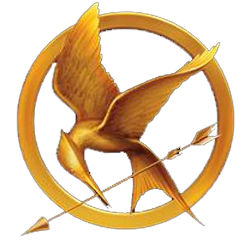 It's hard to imagine The Hunger Games without that iconic mockingjay pin image. But, as with most cover art, I didn't know exactly who created this image. Turns out it's Tim O'Brien, artist and professor of illustration at University of the Arts. About the image, he says:
"It's elegant because of the way the wings are displayed…The head bowed is a less proud position. He is turned back into the circle."
It's interesting to think of that description as a reflection of Katniss and the Districts of Panem. There's a combination of strength and acquiescence, and the potential for sudden movement.
Make sure to click through for more about O'Brien and his illustration.
(image: The Hunger Games Wiki)


In an Old House in Paris
When I was little I loved Madeline. She was French; she had an adorable hat; she wasn't afraid of tigers; she got her appendix out. What more could a girl want?
So of course I was psyched to see this interview with the author John Bemelmans Marciano of Madeline's latest adventure, Madeline at The White House. He's also the grandson of Ludwig Bemelmans, author and creator of the Madeline books. What a fantastic lineage! Marciano talks about taking up the Madeline series:
"Q: Taking on the Madeline series is a big job, were you nervous continuing the series and how did you go about it?
A: Most definitely. At first, I tried to search for a style that was consciously different from my grandfather, artwise, but as I've gone on I've returned more to the look of the originals, and realized that in ways that are important, my own style comes out. What's most important is that the spirit and honesty of the originals are kept going."
I love that mention of the "spirit and honesty of the originals" continuing for a new generation. I'm sure that's very hard for an artist to maintain while also making sure to utilize their own creativity. But it's also a reason why these characters are so beloved and lasting.
Also really cute–this video of Marciano reading his book at the White House Easter Egg Roll last year:
This makes me want to break out my old Madeline books!


March 20, 2012
Links Galore
A few more fun links for today:
Science looks at how we're creative.
Speaking of physics, I think the would be a great title.
Great interview with Molly Leach about the 50th anniversary edition of A Wrinkle in Time.
Philip Pullman + fairy tales = !!!
Happy birthday to Fred Rogers and Lois Lowry! What an awesome birthday pair.


Searching for Amelia Earhart
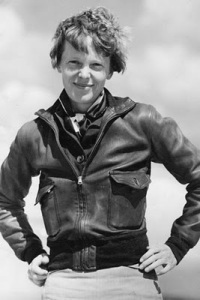 Last night my friend Rachel sent me a link to a news article about the revived search for Amelia Earhart. The privately funded search will be begin in the Pacific in July, marking the 75th anniversary of Earhart's disappearance. A picture from 1937 of Gardner Island suggests that may have been where Earhart and her navigator, Fred Noonan, crashed and possibly lived for a short period. Still, finding wreckage or other evidence isn't an easy task. From an NPR article about the expedition:
"Renowned oceanographer Robert Ballard, who discovered the wreckage of the Titanic and the Bismarck and is advising the Earhart expedition, said the new analysis of the photograph could be the equivalent of a "smoking gun" as it narrows the search area from tens of thousands of square miles to a manageable size.
Ballard confessed to having been previously intimidated by the challenge of finding clues to Earhart's whereabouts.
"If you ever want a case of finding a needle in a haystack, this is at the top of the list," he said."
Even though my novel's not historical fiction, Amelia plays a significant part in Queen of the Air and I'm glad to see that she's still such a iconic figure in American history.
Roger Ebert seems to be a fan as well. Over the summer he shared this post on the anniversary of Earhart's disappearance, complete with cool videos. (He retweeted it again today.)
Seeing this gets me pumped to revise, revise, revise!
(image: Chicago Sun-Times)


Change Doesn't Happen Overnight, It Happens Every Night
Thought of the day:
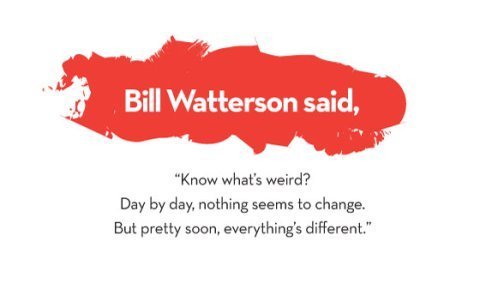 This is life in a nutshell. And I think it's good to keep this quote in mind in fiction, too. Generally, people don't have major revelations and change all at once. It's something that needs to happen gradually, over the course of the story, so your character isn't the same person he/she was when you started out.
(image: Design Crush)