Marty Essen's Blog, page 276
August 16, 2018
Animals A to Z. The Letter P
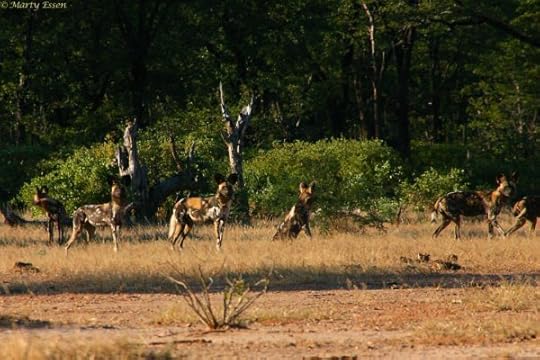
Marty’s photo of the day #2627: It’s “Animals A thru Z Month.” Each day in August, I will post an animal I’ve photographed—somewhere in the world—in alphabetical order.
P is for Painted Dogs. I photographed this pack of painted dogs in Zimbabwe. Big eared, long legged, and gangly, each dog has a unique coat pattern. It’s almost as if someone took a canvas of short brown fur and created a work of abstract art by splashing it with blotches of black, gray, yellow, and white.
The IUCN classifies painted dogs as an “endangered species.” An estimated seven hundred remain in Zimbabwe and only four thousand exist in all of Africa. Habitat loss, hunting, trapping, and other human-related activities have collectively diminished the population of this intelligent animal.
Even though painted dogs are part of the canine family, their genetic line is unique. They’re also very social animals who work cooperatively for the good of the pack. After returning from hunts, the dogs will regurgitate part of their prey for those who were left behind because of age or injury.
The post Animals A to Z. The Letter P appeared first on Around the World with Marty Essen.


August 15, 2018
Animals A to Z. The Letter O
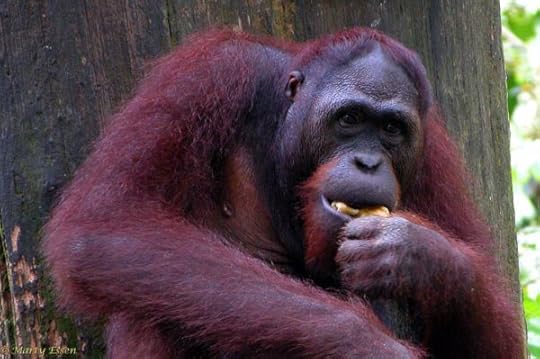
Marty’s photo of the day #2626: It’s “Animals A thru Z Month.” Each day in August, I will post an animal I’ve photographed—somewhere in the world—in alphabetical order.
O is for Orangutan. Orangutans are the world’s largest tree-dwelling animals. In the Malay language, orangutan means “man of the forest.” Considering that they share 96.4 percent of their genes with humans, the term is uncannily accurate. The red apes live only in Borneo and on the Indonesian island of Sumatra (I photographed this one in Malaysian Borneo).
The total population of wild orangutans has declined by more than 50 percent since the 1980s. With a current population of just fifteen thousand, they could become extinct within the next ten to twenty-five years (the IUCN classifies them as an “endangered species”). The primary factors contributing to their demise are poaching, illegal pet trade, and habitat destruction. Malaysia has taken steps to protect orangutans and, to a lesser extent, so has Indonesia, but neither country is doing enough.
The post Animals A to Z. The Letter O appeared first on Around the World with Marty Essen.
August 14, 2018
Animals A to Z. The Letter N
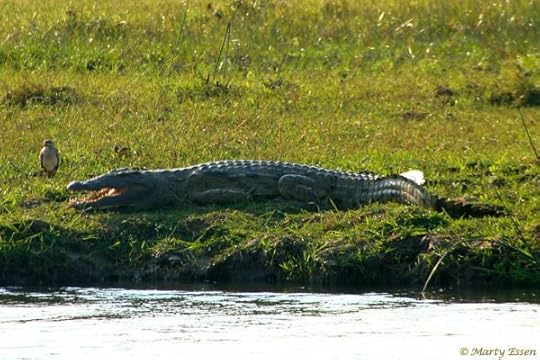
Marty’s photo of the day #2625: It’s “Animals A thru Z Month.” Each day in August, I will post an animal I’ve photographed—somewhere in the world—in alphabetical order.
N is for Nile Crocodile. I photographed this Nile crocodile in Zimbabwe. When canoeing with Nile crocodiles, one must concentrate on staying away from bad habits—such as dragging a hand or a foot in the river. Any body part in the water could signal lunch for a croc.
The post Animals A to Z. The Letter N appeared first on Around the World with Marty Essen.
August 13, 2018
Animals A to Z. The Letter M
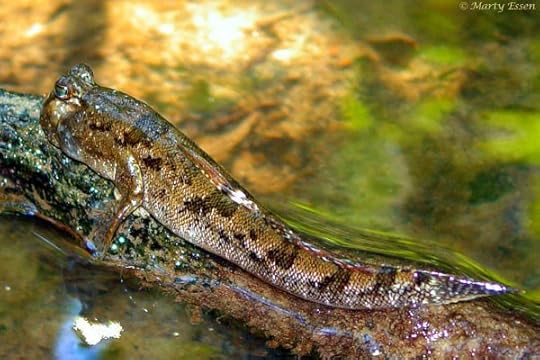
Marty’s photo of the day #2624: It’s “Animals A thru Z Month.” Each day in August, I will post an animal I’ve photographed—somewhere in the world—in alphabetical order.
M is for Mudskipper. Mudskippers are a fish that spends more time out of water than in it. They breathe on land by absorbing oxygen through their moist skin, they propel themselves by using their fins as legs, and since fish don’t have eyelids, they keep their eyeballs moist by periodically retracting them into their sockets. These unique adaptations give mudskippers the ability to remain on land for a day or more. (Photographed in Australia)
The post Animals A to Z. The Letter M appeared first on Around the World with Marty Essen.
August 12, 2018
Animals A to Z. The Letter L
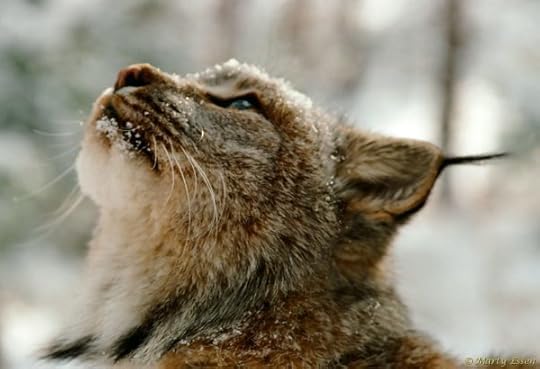
Marty’s photo of the day #2623: It’s “Animals A thru Z Month.” Each day in August, I will post an animal I’ve photographed—somewhere in the world—in alphabetical order.
L is for Lynx. I photographed this Canada lynx, named Cub, in my backyard. While Cub was never a wild animal (a friend of mine uses him for educational programs in the schools), he’s not tame, like a house cat, either. In fact, as soon as Cub tired of our photo shoot, he promptly tried to remove my leg with a quick swipe of one of his oversized paws. Canada lynx are protected under the Endangered Species Act as a “threatened species.”
The post Animals A to Z. The Letter L appeared first on Around the World with Marty Essen.
August 11, 2018
Animals A to Z. The Letter K
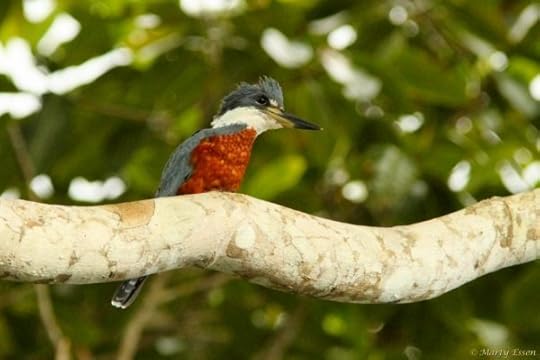
Marty’s photo of the day #2622: It’s “Animals A thru Z Month.” Each day in August, I will post an animal I’ve photographed—somewhere in the world—in alphabetical order.
K is for Kingfisher. I photographed this ringed kingfisher in Costa Rica. Ringed kingfishers are the largest kingfishers in the Western Hemisphere (18 inches from beak to tail), and they dive headfirst into the water after small fish.
The post Animals A to Z. The Letter K appeared first on Around the World with Marty Essen.
August 10, 2018
Animals A to Z. The Letter J
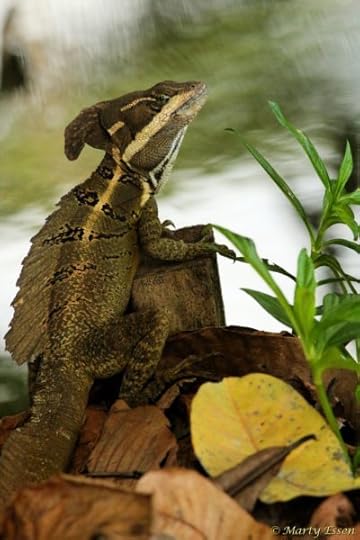
Marty’s photo of the day #2621: It’s “Animals A thru Z Month.” Each day in August, I will post an animal I’ve photographed—somewhere in the world—in alphabetical order.
J is for Jesus Christ Lizard. I photographed this Jesus Christ lizard in Costa Rica. The lizards get their name for their ability to walk on water. Actually, they run—very fast—as they cross small ponds and streams. I witnessed them in action several times, and they are hilarious—especially since they do their running on hind legs.
The post Animals A to Z. The Letter J appeared first on Around the World with Marty Essen.
August 9, 2018
Animals A to Z. The Letter I
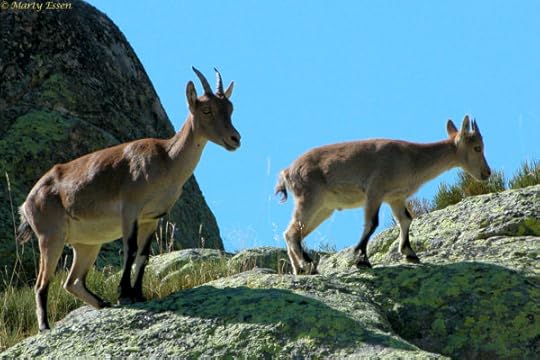
Marty’s photo of the day #2620: It’s “Animals A thru Z Month.” Each day in August, I will post an animal I’ve photographed—somewhere in the world—in alphabetical order.
I is for Ibex. I photographed these two young ibex in Spain. Once a plentiful species, the IUCN classifies Spanish ibex as “near threatened.” As with so many other animals, human activities are responsible for their peril. In this instance, overhunting has reduced ibex numbers to fewer than thirty thousand.
The post Animals A to Z. The Letter I appeared first on Around the World with Marty Essen.
August 8, 2018
Animals A to Z. The Letter H
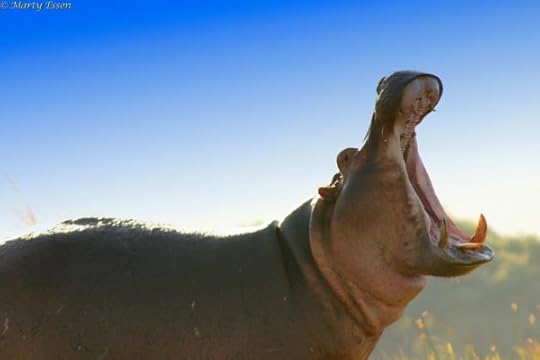
Marty’s photo of the day #2619: It’s “Animals A thru Z Month.” Each day in August, I will post an animal I’ve photographed—somewhere in the world—in alphabetical order.
H is for Hippopotamus. As most people know, hippos are big. But rather than give you size and weight specifics, imagine this: When Deb and I were attacked by a hippo in Zimbabwe, the hippo lifted us six feet into the air. We were in a large, heavy-duty Canadian canoe. Nevertheless, the hippo’s lower tusks went through the bottom of our canoe, and its top teeth came over the top and snapped the gunwale. The entire middle of our canoe fit inside the hippo’s mouth! And yes, I still love hippos.
The post Animals A to Z. The Letter H appeared first on Around the World with Marty Essen.
August 7, 2018
Animals A to Z. The Letter G
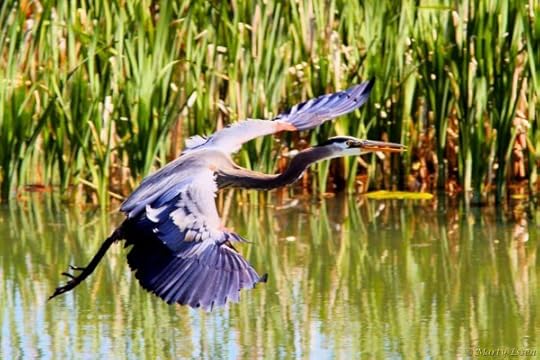
Marty’s photo of the day #2618: It’s “Animals A thru Z Month.” Each day in August, I will post an animal I’ve photographed—somewhere in the world—in alphabetical order.
G is for Great Blue Heron. I have great blue herons shots from many locations. But since I took most of the photos I’m posting this month in far-flung locations, today I’m featuring one from Montana. Great blue herons are the largest herons in North America, with wingspans exceeding six feet.
The post Animals A to Z. The Letter G appeared first on Around the World with Marty Essen.