Laura K. Curtis's Blog, page 13
May 2, 2014
The Beauty of the Edgars
Anyone who thinks the life of a writer is glamorous has been watching too many movies or too much Castle. In fact, most of the writers I know who don’t have to leave their house for day jobs or to take their kids to school spend a fair amount of time in sweats or pajamas. Their clothes have coffee stains and wrinkles. Their footgear is more often slippers or socks than heels.
But once a year, for the Edgar Awards, the ugliest award on the planet brings out the beautiful side of the mystery-writing community. Even I stuff myself into fancy clothes and head out for the evening. So without further ado, here are some of the fashions on display at the Edgars 2014:
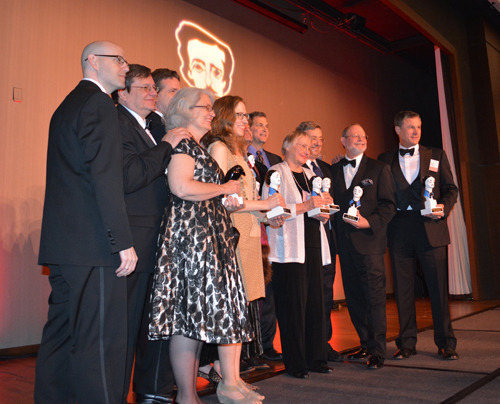
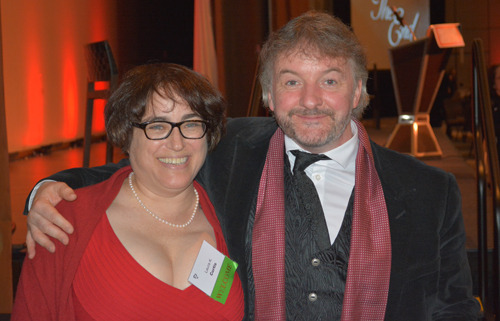
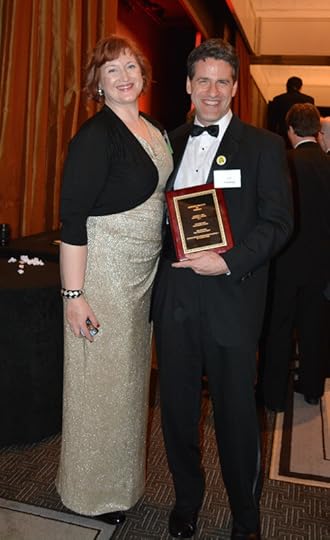
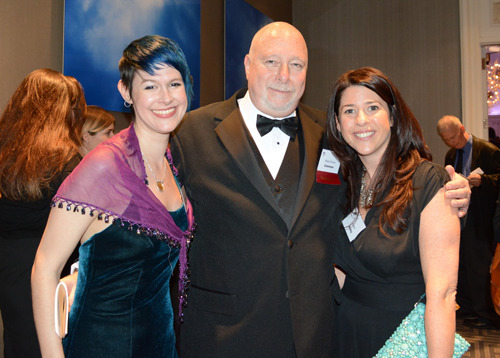
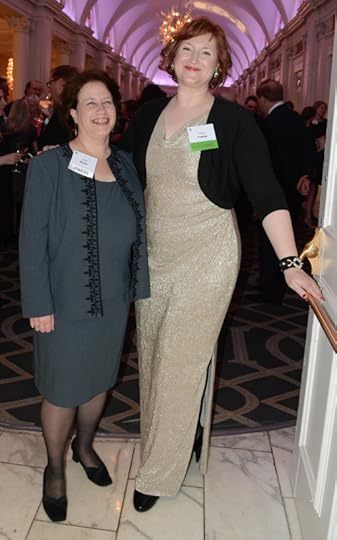
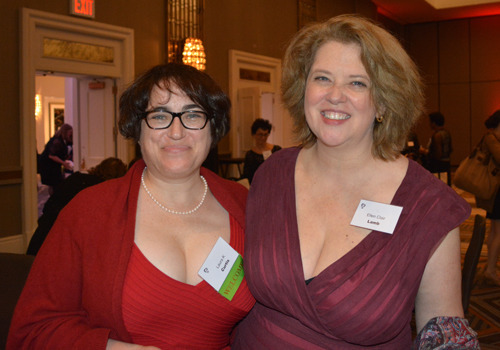
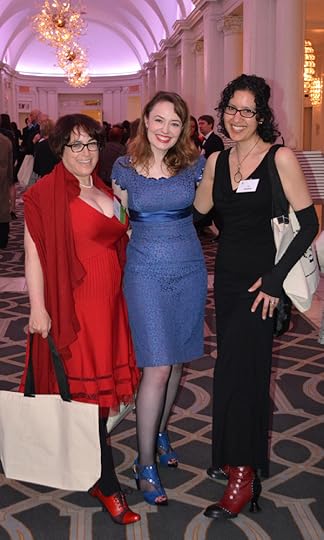
The post The Beauty of the Edgars appeared first on Laura K. Curtis.


April 25, 2014
The Dark Side of Marketing
I spend a fair amount of time thinking and talking about marketing. (In fact, if you’re going to be at the RWA conference in NJ in October, you can come hear me talk about author branding.) But I like to think everything I do amounts to “truth in advertising.” Your brand shouldn’t be something you “put on,” it’s an expression of who you are. My brand is not just what I write in my fiction, it’s also the types of things I discuss here on the blog, the dog photos I post on Twitter, all the parts of the “social me.”
Your marketing should always be honest. Your cover shouldn’t make promises your book doesn’t keep. If the cover looks like romantic suspense, there should be thrills and chills inside. It if looks like a light, happy beach read, there shouldn’t be dead bodies piling up. If the cover copy (and please note, cover copy is the descriptive text about the plot; “blurbs” are those things where people say “this book is the best thing I’ve read in five years!”) says that the book is a romance, there damned well better be a happy ending.
Back in the days when authors didn’t have a whole lot of personal contact with readers, marketing was a different game. You (which, in those days, meant your publisher) gave clues, tempted and teased, and hoped that when readers picked up a book in the store and paged through it that they’d buy it.
But things have changed. In today’s world, authors meet their readers on Twitter and Facebook and blogs. They actively ask their readers to review their work on various sites. The lines between readers and authors are getting blurred more every day, which is both good and bad. It’s good because I feel—as a reader—that I can more easily tell my favorite authors how much I appreciate their work. And, as an author—certainly as a new author who is hoping to constantly improve her writing—it’s great to be able to hear directly from readers.
But there’s a down side, too, in that, well, not everyone likes my work. And I do have the desire to explain things to them (“but did you miss that she…?”). So that’s hard. And negotiating the author-reviewer relationship is difficult since I was brought up to say “thank you” to everyone and I’ve been told that a number of reviewers/bloggers don’t want to hear that from authors. So it’s problematic. My own solution is to say “thank you” to those I know from social media, and leave others alone.
This new author-reader-reviewer relationship, however, has also created an opening for a far darker and more manipulative form of marketing than used to be possible. Now, a select few authors—and I am by no means tarring everyone with this brush, but there are enough of them out there to make it a “thing”—are posting to blogs, forums, social media about how they are being “bullied,” and therefore they will be forced to stop writing. This leads to a jump in their sales, and a huge outpouring of sympathy, and of course they don’t stop writing.
There are other manifestations of this same kind of marketing, which I think of as “guilt marketing.” Authors post that someone has ripped them off. They post that they need money because of some personal problem or illness and that the best way to help them is to buy their books. (Instead of just giving them money, which doesn’t create a sales jump and thus a ranking jump on Amazon.) They post that haters are writing negative reviews for some specious reason and beg their followers to go post positive reviews to Amazon to drown out the negative voices.
Mind you, I am not saying that these things don’t happen—people do have family emergencies. They do get ripped off. They do have unfair reviews written on occasion. But up until now, that’s never been a problem they expected readers to solve for them.
The real issue is that this is now happening so frequently that it’s pretty clear not all of it is true. Which leaves readers feeling cynical and abused.
Recently, an author claimed that because of poor reviews, etc, she was suicidal and she was going to quit writing, take down her book, take down her page, yada yada yada. She did none of those things. In fact, she recently sent a review site a request to do a “cover reveal” for her new book. Yes, another book after she supposedly had to quit because of the psychological trauma caused to her by the readers of the first book.
Now, if you’ve followed this blog for a while, you probably know that I am a depressive. In fact, a high percentage of creative people deal with depression. I suffer from both epilepsy and depression and I deal with them, just like other epileptics and depressives. They’re part of my life the way, I don’t know, migraines, are a part of someone else’s life. I don’t expect other people to solve my problems for me and I don’t go “I’m going to kill myself because you are all being mean to me” when stuff goes wrong.
In fact, I’ve known a lot of people who have those feelings, and I’ve known those who actually committed suicide, and none of them have thrown that kind of tantrum. People who have depression take the words “I am going to kill myself” very, very seriously. Often, they won’t say them even when they mean them. If they do say them, it’s frequently to only a few very close friends, people they trust to help them stay alive.
Mood disorders affect different people in different ways. Yes, some people may prefer to announce to the world their current state of mind. But most don’t. Not when their current state is as dire as this woman said hers was. And she is not alone in faking this kind of melodrama. I’ve seen this same behavior several times in the past year. And none of these people have actually stopped writing, have actually taken down their sites and disappeared from the Net.
This kind of manipulation infuriates me, not the least because it drowns out the real cries for help that occur on the web. And it’s becoming more and more common. I don’t think there’s anything to be done about it, unfortunately, except for readers to become aware that they may be being manipulated and to proceed with caution.
But still, it pisses me off.
The post The Dark Side of Marketing appeared first on Laura K. Curtis.
April 24, 2014
Towards a Definition of the Alpha Hero
 Recently I had a discussion with some friends on Twitter about “alpha heroes.” Now, you may remember that I have an intense dislike of the “Alphahole,” but there are heroes who are alpha without being jerks.
But let me back up a minute. This conversation began because in a post on Heroes and Heartbreakers, which is a blog that is often a great deal of fun, author Jackie Ashenden wrote a post about what she says are the six types of alpha heroes. I encourage you to go read her definitions to see what you think, but my thought when I read them was “are those guys really all alphas??” Because I’m not so sure they are.
For example, she talks about playboys as alphas. Well, let me tell you, I’ve known some of these guys in real life, and they weren’t the least bit alpha. In fact, lack of alphaness is almost definitional for the true playboy, who’s not going to waste his time on a woman who doesn’t want him when he can move along to an easier target. From television’s current crop, let’s take Rick Castle (in his pre-Caskett days). Playboy? Absolutely. Alpha? Absolutely not.
At the beginning of the post, Ashenden says
I love an alpha hero. Yeah, I know, loving an alpha isn’t so fashionable these days. We want a guy who’s more sensitive, who’s not so in your face or controlling, who’s laid back, who’s a bit more true-to-life even.
But, actually, I think the vast majority of heroes in today’s romances are alpha. In fact, since I don’t always like alpha heroes (they trigger some bad memories for me), it’s often difficult for me to understand the uber-popular books of the moment.
Ashenden also lists the “wounded alpha” as a type, but the way she describes it doesn’t seem particularly alpha to me. When a strong man has a tragic event happen—either physical or emotional—and he basically curls up into a ball and wants everyone to leave him alone, that’s not alpha. He may or may not have been alpha in his previous incarnation, but during the period of the book, he’s not an alpha. The entirety of the narrative may be focused on getting him to the point where he can once again be alpha, but I would argue that he’s not an alpha hero.
But I don’t want to spend all this space on what an alpha is not. I am more concerned with what an alpha hero is.
Let me start with my house. If you could speak with my dogs, they’d tell you that I am alpha. I give the orders. I decide what they can and cannot do. They do not disobey me…unlike my husband, who’s a total pushover. That’s not to say they don’t go behind my back and shred 18 rolls of toilet paper if I happen to leave the pack lying on the kitchen table without putting it away, because they do, but if I say “down,” they go down.
This works because I know what I want and I am in a position to get it.
To me, an alpha hero has two essential characteristics:
He knows what he wants
He has the self-confidence to believe he can get it.
Those are, as far as I can see, the two characteristics that are absolutely necessary for a hero to be alpha. Either of those characteristics, taken to extremes, can turn the guy from a hero into an asshole or an abuser, but without either one of them he becomes either beta or unheroic.
And then there is a third characteristic (and my thanks go to Olivia Waite for helping me work through this in my mind), which is more amorphous and harder to define: leadership ability. I think this is an important characteristic, but it’s usually merely assumed in the narrative of the romance. That is, in a military romantic suspense, we might see the hero being a leader. It might also occur in the motorcycle club romances—I don’t read those because they tend to be too alpha-hole for me, so I don’t know—but in a more general sense, we rarely actually get to see the hero being a leader.
Let’s take one of the most popular alpha heroes, the billionaire, as an example. (As an aside, damn, there are a crap-ton of young, attractive billionaires in Romanceland. But that’s another post.) Anyway, we see those guys spending money, attending social functions, riding horses, driving fast cars, engaging in one-on-one competitions in business…but rarely do we see them leading whatever business it is that has brought them their billions of dollars. We assume that they are leaders—after all, how else did they get their big bucks?—but we don’t actually see it. (And, frankly, again, this is fiction. In real life, the super-wealthy don’t have to be leaders. They frequently inherit their money and pay other people to manage it so that it continues to make more money for them. But that’s not a romantic notion.)
In Romantic Suspense, we assume that the law enforcement hero is alpha unless something in the narrative convinces us otherwise, but frequently they’re never shown as leaders because we don’t get to see them working with others. Of course, a moment of logical thought reminds us that this is fiction, not fact. In real life, most members of law enforcement work in teams. And law enforcement is like a corporation in which the vast majority of romance heroes would be considered “middle management.” In order to get around that, we usually see the “maverick” or the “loner” LEO, but that means we don’t get to see his leadership capabilities.
In turn, this results in one of the more problematic areas of romance in general and romantic suspense in particular: when the alpha has to be shown as a leader and the only person he’s in regular contact with is the heroine, he pretty much has to lead her. And that particular dynamic is uncomfortable for me as a reader.
When we were having our Twitter conversation about alphas, someone said (and I am sorry I don’t remember who) that she thought many readers use “alpha” as code for “what I find hot.” That is, any hero, regardless of his characteristics, becomes an alpha hero in the mind of the reader who finds him attractive. I think that to a certain extent that’s true, but I also think it’s a shame. Because the classification of types is useful in that it gives us a common vocabulary, which is necessary to any kind of genre analysis.
The post Towards a Definition of the Alpha Hero appeared first on Laura K. Curtis.
April 19, 2014
“Where Do You Get Your Ideas?”

credit: lightwise / 123RF.com
I think every author hears that at one point or another in her career, and it always makes me laugh. Where do I get my ideas? Where don’t I get my ideas? Sitting in the large jury selection room, I began to wonder what would happen if someone just didn’t show up for jury duty. I had this idea, you see, about an abused woman whose abuser doesn’t want her out of his control. Or a mobster’s wife who loves to gossip. So I asked the lovely gentleman in charge of our jury room and he tsked me and said I shouldn’t even be asking. But once I explained my reasons, he said practically anything could happen from nothing at all to a fine, to an arrest and incarceration.
“Oh, anything could happen” is, naturally, the best possible answer. It means that whatever I decided to do would be realistic. Within limits, of course.
Today, my wonderful RWA chapter, CoLoNY (Connecticut and Lower NY) had its monthly meeting. One of our members is a doctor, and today we all got to ask her the questions we were “dying” to get the answers to. But here’s the thing about answers…they just lead to more questions. We got into a simple question about a sprained ankle that ended up lasting half an hour. The epilepsy question went on for considerably longer. Not because she didn’t answer the questions, but because as soon as she did, you could practically see the ideas forming on the faces of the group and more questions popped out.
So the next time you wonder where an author gets her ideas, consider that she probably looks at life like a jeopardy game…the answers are there, but she is always thinking of the questions. Or maybe writers are just overgrown two-year-olds with the insatiable need to know “why.”
The post “Where Do You Get Your Ideas?” appeared first on Laura K. Curtis.
April 14, 2014
The Trial Is Over!
Oh, my friends, the trial I’ve been sitting on for the past month is finally over. If you are not an American, our justice system probably seems weird and opaque to you. It often seems that way to me and I am an American.
The trial for which I was on the jury was one of several that arose from a giant crackdown on immigration fraud in New York. The FBI closed a number of firms and at least thirty people ended up being charged with immigration fraud and conspiracy to commit immigration fraud. Our trial was for three of them: Feng Ling Liu, Vanessa Bandrich, and Rachel Yang.
There are several things to read about the case if you’re interested in such things:
The original FBI press release
March 14 update from the FBI saying, in part:
“To date, 30 defendants have been charged with participating in nine separate but overlapping immigration fraud schemes in New York City, including eight lawyers. Twenty-five of these defendants have been convicted for their roles in these schemes.”
A piece from the NY Times describing the process of getting asylum, especially faked asylum, along with some of the people involved
A piece from a local Chinatown newspaper (which says all 26 are lawyers, which they are not, but is otherwise mostly correct)
The actual indictment that led to the trial I sat on the jury for (apparently at some point after that indictment, they split the defendants up since we only had three).
You might think, reading these stories and this information that the case was straightfoward. It was not.
We had three separate defendants, two of whom were lawyers. Each of the defendants had lawyers. There were three AUSAs (Assistant U.S. Attorneys). There was endless testimony, but most of it came from people who were working under cooperation agreements with the government in the hope of getting a better deal…meaning that they were all criminals themselves.
This led to a lot of credibility questions. A lot of credibility questions. In fact, we ended up discounting certain witness testimony entirely. They don’t show you that on TV.
And then there’s the question of “reasonable doubt.” Just what is reasonable? How far down the rabbit hole do you have to go trying to prove someone isn’t guilty before it’s unreasonable? If someone deliberately puts on blinders so they can’t see that they’re part of a criminal enterprise, does that excuse them? Do you believe the blinders are big enough that they really don’t know what’s going on, or do you think they’re posing as someone who doesn’t know?
Also, our case wasn’t a case of fraud per se, it was a case of conspiracy to commit fraud. That’s different. The requirements are different. And while I wouldn’t consider one of our defendants guilty of fraud, there’s no doubt in my mind that under the law she is guilty of conspiracy to commit fraud. And that hurts, because I really, really hope in sentencing that she gets a big old break. (I thinks she will–looking at some of the other cases already through sentencing, etc, I think she’ll be okay.)
After a three week trial, we started deliberations on Friday. One defendant was easy–the evidence was overwhelming. The second defendant we discussed was damned near impossible. There were tears. There was yelling. There were fingers pointed and fingers wagged. So we tabled her and moved on. For the third defendant there were more tears, but the evidence was conclusive and so, given the law, there was no way around the verdict.
But at the end of the day on Friday, we still hadn’t made any decision about defendant #2. Was she a dupe? How big were her blinders? What kind of role did she play?
The weekend break was necessary for all of us. Emotions were running very, very high at the end of Friday, but by the time we came back today, we were all calmer and readier to get back to work. We sifted through all the evidence we had, including plenty of things that didn’t get touched on in the trial itself. They’d sent us recordings and transcripts that we’d covered only partially in the courtroom, but we listened to them all. We read them all. We read the definition of conspiracy over and over and over. And we decided.
It was not easy. It shouldn’t be easy. You are making decisions about someone else’s life, which is why you have to be sure in your heart as well as in your mind that you are making the right decision.
I wouldn’t want to do it again, but now that it’s over, I’m glad I did.
The post The Trial Is Over! appeared first on Laura K. Curtis.
April 12, 2014
The Motherless Heroine

Image credit: porechenskaya / 123RF Stock Photo
I’ve been thinking about my own work lately and I realized that I have something in common with Disney: a whole lot of motherless heroines.
In Twisted, her mother’s murder is the major event in the heroine’s life. That’s not giving anything away, as the book’s cover copy reads:
Lucy Sadler Caldwell is a successful true-crime writer. But the one story she’s never been able to come to terms with is the murder of her own mother–until now. She’s returned to Dobbs Hollow, Texas, the hometown she fled seventeen years ago, to finally expose the real killer.
Tara, the heroine of Lost, which comes out in May, is also motherless, though not for the same reason. Her mother’s death isn’t even mentioned in the book. (It’s actually mentioned in Twisted, though just in passing.)
Evie, the heroine of this summer’s Toying with His Affections, was raised by her aunt and uncle after her mother’s death by aneurism.
I have two more books in mind, and in both the heroine’s lack of parents is key to the story. It’s not as if the deaths need to be violent because they’re not inciting incidents for the action of the story, but they are necessary. So for the foreseeable future, I won’t be working on anything with mothers in the picture.
Now that I’ve noticed the trend, I have some suspicions as to why I am so obsessed with motherless adults even though my own mother, thank goodness, is alive and kicking. (And I mean that literally–she goes to the gym more often than I do!)
But now I am beginning to wonder…can I write a heroine with a mother in the picture? Do I even know what that woman would look like? I don’t write YA or NA, and my heroines tend to be late 20s to early 40s, so it’s not as if they’re living with their folks. You’d think I wouldn’t be so busy eliminating perfectly acceptable parents. I mean, why can’t my heroines just call their moms in another state once in a while the way normal adults do?
So I am determined that I will write a heroine who has some kind of relationship with her living mother. Good, bad, it doesn’t matter. The mother just has to still be around. But it won’t be for a while.
The post The Motherless Heroine appeared first on Laura K. Curtis.
April 10, 2014
I Have Not Forgotten You!
I know, I have been neglecting the blog. Unfortunately, despite my very best efforts (well, not really) I am still sitting on a jury. We’re getting to the end, so I will be back with you shortly. In the meantime, a few things:
• I am gearing up for Lost‘s release on May 20. And then this summer (no exact date yet, sorry), my first contemporary romance: Toying with His Affection.
• I will be reading from Lost at Lady Jane’s Salon on Monday, May 5. Not sure who else is reading then, but it’s bound to be a good time because it always is!
• I’ve been putting together (literally: it’s assembly-required) my swag for RT and RWA this year. It’s going to be great fun! I hope I get to see you at at least one of them.
Also, don’t forget…even when I don’t have enough time to write a blog post, you can always find me on Facebook and Twitter.
The post I Have Not Forgotten You! appeared first on Laura K. Curtis.
March 31, 2014
Shiny Things
Every year, I bid on at least a couple of items in Brenda Novak’s annual auction the proceeds of which go to support diabetes research. Last year, I won my super-cool Lego trailer from Sarah M. Anderson and my website design from DreamForge Media.
This year, I am donating some of my own work to the auction. The auction software doesn’t allow for giant pictures, so I am uploading larger sizes of the two items here, so you can see them in detail. I’ll refresh your memory as the time draws nearer, I promise. These are just a teaser, and a reminder to go check out some of the amazing things available to bid on. Create an account and start your watchlist!
First up, the Sparkling Serenity necklace (link is to the auction page with more information):



And then is one of my all-time favorite pieces I’ve ever made: the Spring Garden bracelet.




The post Shiny Things appeared first on Laura K. Curtis.
March 24, 2014
Sitting on a Jury
© alkal82 / 123RF Stock Photo
I am curious about how many of my friends have served on juries and what their experiences were. I am currently serving on a federal jury which—because the federal courthouse is far from close to my house—is making for very long days.
The nice thing about the federal courthouse in NY is that it is right at the edge of Chinatown, so every day on our one hour lunch I get to go try a different restaurant.
Of course I cannot yet say anything about the trial. Those are the rules. But even jury selection itself gave me ideas for new books, and I am anxious to share some of the cool stuff I’ve learned with you all.
Have you served on a jury? Did the trial last approximately the length of time they thought it would, or was it more like dealing with home improvements, where you have to allot 1.5 times as long as they say? Did you learn anything interesting? Was it fun or just deadly dull?
The post Sitting on a Jury appeared first on Laura K. Curtis.
March 15, 2014
Animals of the West Indies
 My husband and I took a wonderful and much needed vacation over the last two weeks. We have a timeshare unit in Sint Maarten, the Dutch West Indies, but one of the best things about the island is that it’s half Dutch and half French–the other half of the island is Saint Martin, in the French West Indies. So the food is amazing. We won’t talk about how much weight I gained. And then since we took an extra week this year on top of our usual one week share, we took the opportunity to ferry over to Anguilla (British West Indies) and also Pinel Island, which is a tiny little island that’s really just a sandbar away from Saint Martin. You could honestly probably walk. Lots of people kayak over.
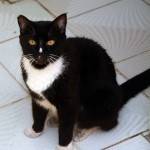
Anyway, we always see loads of animals, so I thought I would subject all of you, dear readers, to vacation pictures!





















The post Animals of the West Indies appeared first on Laura K. Curtis.