Laura K. Curtis's Blog, page 12
June 14, 2014
Since Every Relationship is Individual, Does Gender Matter in Romance?

from Jack Spade’s flickr: https://flic.kr/p/4fy9Je
In one of those weird coincidences, my tweetstream and my email box are full of the same thing today: discussions of relationships and sexuality.
It started with an article that was, I think, meant to be a puff piece to shine a light on women who write male/male romance. The article was a disaster and the quotations from the authors were..unreal. So unreal that many suggested that the authors had been misquoted.
But here’s the thing: as bad as the comments were, none of them surprised me. Let me sum up the reasons these women were quoted as saying they wrote m/m instead of heterosexual romance:
In a m/m romance, both characters have equal power
Women are nasty, game-playing, underhanded, and “bitchy”, whereas men are straightforward
There’s some other stuff, too, but those are the biggies. And no, neither of those surprised me because I’ve never actually made it through a male/male romance. I am pretty sure most of the ones I tried were written by women. One was written by a man—a man I know and like—but the writing was bad and I couldn’t get more than ten pages in.
The books that were written by women share one thing: they completely fetishize men’s bodies and men’s relationships. It gives me the same, skeevy feeling I get when men catcall women. There’s a peculiar insistence in them that all men are the same. They are more straightforward than women. They relate to each other a certain way. They are physically and emotionally strong, but always, always scarred. And once you get underneath that scarring, they’re mushy-centered. (I’ve solicited recommendations on Twitter from some people whose opinions I trust…if you’re looking for something to read, try this list at Dear Author for starters.)
In my conversation with my friends on Twitter about m/m romance, one of them mentioned that she found her cisgendered gay male friends still very “male.” I wouldn’t say that was my experience. And then, in an act of complete synchronicity, a couple of hours after that a friend emailed me with the following:
The funny thing about living where I am is that almost everyone around here thinks I’m straight. [...] What’s interesting about this from a social science experiment perspective, is that I never realized how much men really ARE pigs! When they think you’re another straight guy, they talk to you much differently.
If I’m outside chatting with someone in the smoking corral, one of the guys will inevitably make some remark about a woman’s chest, legs, or ass after she walks by.
Now, I know a lot of guys. Both gay and straight. I know men deeply in denial about their own sexuality, and ones who put it all right out there, loud and proud about the number of partners—male or female—they’ve had. I know some guys who comment about women who pass by. They’re not my friends. They’re guys I’ve worked with or my husband works with. In the area my friend B is living, apparently a lot of guys behave like this. But not all of them.
So I asked B if he were out with a gay male friend and he saw a hot guy, would he comment? Here is his response:
No, and no one I know has ever done that, which is what makes this so interesting.
What I have done with others is usually have a chuckle because a gay guy who’s really cute will carry himself in a “yes, I know I’m beautiful” way in front of other gay guys.
It’s an entirely different social interaction.
But just before I hit ‘send’, I remembered years ago I was with a friend in a department store, and he commented “that one looks tossable, eh?”, after some cute guy had lingered for just a brief moment too long in the aisle where we were, so his comment had been precipitated by an action by the other guy.
Now, I imagine that despite my friend’s experience there must be some gay guys who look at others as objects. I’ve sat with gay male friends and had them go “hubba hubba” to me when a particularly hot guy walks by. But now I wonder…do they do that only with their straight female friends and not with other gay guys? These are things I’ve never wondered because…well…I don’t really think that much about my friends’ sexuality. (The one exception being those friends who were miserable due to denial of their own sexuality or unhappiness with their sexual preference.)
 So I started thinking about how I would even begin to write a m/m—or, for that matter, f/f—romance. What did I think was fundamentally different about a relationship between two men or two women versus one between a man and a woman? And, really, I couldn’t wrap my head around internal political differences. That is, within the relationship, the lasting m/m and f/f relationships I’ve seen look pretty much the same as the relationship my husband and I have.
Externally, the pressures a same-sex couple face are definitely different. I recall, for example, my sister’s absolute panic when she had a gorgeous baby girl. “What am I going to do?” she wailed, “I have no idea how to help her deal with boys!” We live in New York, where it’s not such a big deal to be a same-sex couple, but even here it’s not the same experience as being in what is still considered more “normal.” So, yes, I can see how the external conflicts the couples might face could be different. But would the relationship itself be different? How would those external conflicts reflect into the relationship?
I went back to that article and saw that one of the authors had posted a reply on her own blog. I realize she was trying to make it better, but as far as I could see, she made it worse.
The fact is, in an urban fantasy world or a fantasy world, heroines can have equal social heft with heroes, and they can look their heroes in the eyes and be taken as dead equals in any circumstance, because the rules of the fantasy world can give them that.
The same cannot be said for the rules of the modern world.
So the answer is not to write strong women? She goes on to assure us all that she’s not a normal woman in a normal relationship.
Now, when my husband made much more money than I did, it made sense for me to [be the primary caregiver for the children]. We both agreed. It only made sense. But now that we’re equal wage earners? He doesn’t let me freak out about the house. He spends as much time caring for the children as I do. Why? Because we both agree that we’re equals– not just as wage earners, but as life-partners. If I ever make enough money for him to quit his job or take fewer hours to take care of the kids, we’re both all over that.
Now imagine if I tried to write that female character into a romance. Or that male character. Selling that partnership to an agent or a publisher would probably get me kicked out of the romance department and right into literary fiction–but that’s not what I want to write!
Ummm…no. And not just no, but hell no. I disagree with this on just about every level. Every long-term relationship requires negotiation. And maybe if you hadn’t read a romance in 20 years, or if you only read a very specific subset of category romances, you might believe that none of that negotiation takes place between the pages of a romance novel. But right off the top of my head I can name half a dozen contemporary authors for whom these issues form some of the major points of their work. (Victoria Dahl, Roxanne St. Claire, Cara McKenna, Lisa Jackson, Molly O’Keefe, Suzanne Brockmann. Oh, right—and me.)
Do all romance writers write about the struggle to negotiate a happy place in a relationship? No. But I’ve said before that I find the ones who pay at least some attention to this more satisfying.
Here’s the thing: all relationships are unequal in one way or another. Even romantic relationships between men. For example, one couple I knew in grad school had incredibly disparate incomes, but J, who made considerably less money was completely out and no one in his chosen career cared. His partner, M, made a lot more money, but didn’t have nearly as much freedom, and referred to J as his “room-mate” when around colleagues from work.
So…were they “equal?” Because that’s the main thrust of why women seem to believe m/m romance is “better” or “more fun” to write. Because the characters are “equal.” (I would imagine that gay men write m/m romance for the same reason I write m/f romance—it’s what they know.)
I hate to break it to those female writers of m/m romance: no two people in this world are equal. Especially in a relationship, there is never true equality. And it has so very, very little to do with money. It often has very little to do with social position. In my own marriage, for example, though I make a good deal more than my husband does, my health is appallingly bad and he is often in the position of literally taking care of me. He is romantic; I am practical. He’s an idealist; I am a cynic. We negotiate every single thing. Home repairs? Negotiation. Vacations? Negotiation. Puppy care? Negotiation.
Every relationship is different. Every one. Think about how you relate to your parents versus how each of your siblings does. Or how your siblings relate to each other. Or how your children relate to you. Or to each other. Relationships are complex and constantly changing. The idea that this kind is better, inherently more interesting or more sexy or more honest than that kind is patronizing and flat out wrong.
So, what do you think? Are there internal differences in homosexual versus heterosexual relationships? Can you think of books that show them well?
The post Since Every Relationship is Individual, Does Gender Matter in Romance? appeared first on Laura K. Curtis.


June 9, 2014
In NYC? Love a Good Mystery? Come Visit the Library!
On Thursday evening, I’ll be on a panel with some really cool people at the Mid-Manhattan branch of the New York Public Library. You can find details on the library’s site, but here’s the flyer:


The post In NYC? Love a Good Mystery? Come Visit the Library! appeared first on Laura K. Curtis.
June 8, 2014
What’s in a Query? Everything and Nothing.
When I tell people that I’ve never written a query that didn’t result in a request for pages, they can’t believe it. When I tell them I ever sent out three (or six if you count the random assignments I was given to pitch to at conferences) queries, they are shocked.
But here’s the thing: I researched before I sent out my original set of queries. I looked not only at who represented what (which you can generally find on websites) but who sold what (which you can find out on Publishers Marketplace). I don’t care if an agent loves historical romance, if every sale she’s ever made is paranormal, she is probably not going to have the right set of contacts.
Because I belong to RWA, MWA, and Sisters in Crime, I am involved in a lot of discussions about queries. And I can also say that any query I’ve ever edited for someone has also resulted in a request for pages.
Your query is a super-important piece of writing. If you’re looking for an agent or editor, it may be the only piece of writing the people you want to take you on ever see. If you’re self-publishing, think of it as your cover copy—it’s the thing that’s going to make readers pick up your book.
A query letter has some basic pieces, but the one most people get wrong is the part that is like cover copy, the part that hooks an agent or editor and makes them want to find out more. Because that’s the trick—it’s not a synopsis that gives away everything in your book, it’s just a taste, a tease, a tempt.
This section needs to have three things and virtually nothing else:
Setting
What keeps the characters apart
What keeps the characters together
I’ve included setting here because setting often has bearing on not only the goals and conflicts, but also on the subgenre. Someone who is looking for a small-town contemporary romance is not looking for an urban werewolf romance. You don’t need to describe the setting, just let me know where and when this takes place. The one exception to this is paranormal: in paranormal, you need a bit more world background. If your world has demons crawling up from the sewers, I need to know whether people are aware of them or not. Your world is a character, and it needs the bones sketched in.
What keeps the characters apart is vital, but I don’t have to know the details. For example, “When Molly’s fiance left her for his paralegal, she decided to stick with battery-operated boyfriends for the rest of her life.” Fine. I don’t need more. I don’t need her ex’s name or any of the details of their breakup. I don’t need to know that her father also left her mother—it will add character depth in the story, but it doesn’t need to be in the query. But let’s put Molly somewhere:
When Molly France’s fiance left her for his paralegal, she moved out of his Seattle apartment and back to the home where she grew up on Vashon Island with a chip on her shoulder and a suitcase full of battery-operated boyfriends to remind her not to trust any man. The old farmhouse, however, is in a bad way, and if she intends to use it as a home base for her new app-designing business, it’s going to need a lot of work. [OK, it's not elegant, but I am making up as I go along, here.]
Now we have to give her a guy. He can either want her or not. Doesn’t matter, because her trust issues are enough to keep them apart.
Patrick Green has been trying to get off Vashon Island forever. Carpentry is all he knows, and saving sufficient funds to get a business off the ground in the city isn’t easy.
OK. Now, look, these two have nothing in common except that they live on the same island. If I am reading along in your query, I can see the conflict, but I don’t see any reason why he wouldn’t just ignore her completely, or why she wouldn’t just hole up in the farmhouse and nurse her wounds while looking for a job.
So we need to get them together, and keep them together. So…
Patrick Green has been trying to get off Vashon Island forever. Carpentry is all he knows, and saving sufficient funds to get a business off the ground in the city isn’t easy. When Molly first hires him to work on her house, all he sees is a path of dollar signs leading to freedom. But as passion flares between them he faces a difficult decision: will he give up the future he’s always wanted for the woman he’s beginning to love?
OK, like I said, it’s rough. But see how it sets up the situation without too many details? I don’t need to know that Molly has been working out of her boyfriend’s apartment in downtown Seattle for three years. I don’t need to know that Patrick’s parents died when he was nineteen and he’s had to take care of his siblings until this year. I don’t need the flesh of the story, just the bones. The bit that makes me go “yeah, let me see whether I want to read a few pages and see if I like the author’s voice and style.”
This is NOT a particularly good query, as far as I am concerned. Because it sounds to me as if the story is a bit empty. That’s because I haven’t written it yet and I am a pantser so I can’t write a query until after I’ve at least started the story.
Anyway, if you’re editing your own query, check and see whether you’ve hit those three points…and good luck!
The post What’s in a Query? Everything and Nothing. appeared first on Laura K. Curtis.
May 31, 2014
Bouchercon is Coming!
 Are you an author? If so, and if you’re planning on going to Bouchercon, you should sign up today! Why? Because if you don’t sign up by June 1, you won’t be on a panel! So run over to Bouchercon 2014 — Murder at the Beach right now and then come on back and read the rest of this post. Don’t worry, I’ll wait.
OK, you’re back? WHAT? You haven’t left yet? Well, let me tell you why you should.
Bouchercon, for those of you who don’t know, is a reader and writer conference. No, you don’t have to be an author. Yes, your favorite mystery and thriller authors will be there. And this year, it’s in Long Beach. Say it with me…Long Beach. Nice weather when so much of the country will be miserable.
But even without the weather, even without the beach, B’con is so worthwhile. B’con 2012 was the place I first got the chance to meet my literary idol, John Connolly. (You can read about that encounter here.) Over the past few years, I’ve both moderated and sat on panels, and in both cases I really enjoyed myself. Because B’con is a fan conference, there’s a lot more interaction between readers and writers. Yes, it’s nice to socialize with writer friends the way one does at RWA or Sleuthfest, but at B’con you also get to meet people who have actually paid money for your books. Do you know what that’s like? Because it’s pretty darned fabulous. These are people who are literally invested in you.
 And, as a fan (because, yeah, if you didn’t get it from my pathetic reaction to John Connolly, I am a fan), it’s great to be able to meet the folks whose books you’ve invested in. The people whose characters you know and love. You can hang with them in the bar and find out their deepest secrets. You can go to panels and get the scuttlebutt on what’s coming next. Who has a movie deal? Who’s starting a new series? Get books that aren’t yet available to the general public. Get books signed. Oh, the books, the books!
There’s also a fair amount of general silliness at Bouchercon, like the 2012 cocktail party sponsored by criminalelement.com, where attendees were provided with a mugshot backdrop and various props…and went all out! (You can see the pictures on Pinterest.) Fans and authors alike were getting goofy, and it was all-around fun.
You just never know what’s going to happen at Bouchercon. (Last year, Clare Toohey and I got kicked out of a bar before the conference even began, which I admit is something of a record.) That’s part of its charm.
And if you’re shy, or uncertain about going to a conference, this is a great one to start with. Seriously. Everyone is super-friendly and very helpful. And did I mention it’s in Long Beach?
The post Bouchercon is Coming! appeared first on Laura K. Curtis.
May 29, 2014
Realistically Ever After
 If you ask someone who’s been married a few years about their spouse, you’re apt to get an answer that begins with “I love him/her to death, but…” That’s because marriage is hard. The falling in love part, the part we see in romance novels, may be angsty and difficult and there may be hurdles to be overcome, but we know—because we are reading a romance novel—that the hero and heroine will conquer the issues keeping them apart. By the end of the story we’ll see a committed couple.
But what happens in the “ever after” part of the HEA? I admit to being turned off by most of the “marriage and a baby” epilogues I’ve read. That doesn’t mean I want HFN endings, because I don’t. For me to feel satisfied by a romance, I need to see some kind of commitment between the leads by the end of the book. No, it’s not the “ever after” that frequently sticks in my craw, it’s the “happily.”
I’ve been thinking about this issue a great deal lately because I’ve found myself unable to believe that many of the relationships in the books I’ve been reading the potential to last beyond the time frame of the story. Partially, this is because I read a lot of romantic suspense. The nature of the genre is that characters spend a lot of time running, hiding, fighting…anything but talking to each other. Problem-solving is immediate and critical. You cannot argue too long about which direction you’re going to run or you’ll end up dead. So, yeah, by the end of the novel, he respects her fighting abilities and she realizes he has some emotional depth. That’s good. But it doesn’t exactly tell me that they’ll be able to resolve the issues that inevitably arise during a marriage. What if they can’t pay the bills? What if one of them gets a job offer halfway across the country and the other doesn’t want to move? If they’re both badass, high-powered, high-energy thrill seekers, who will take care of the kid that shows up in the epilogue?
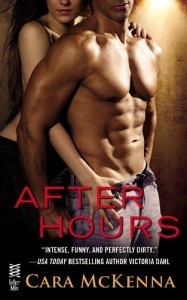
After Hours by Cara McKenna has a great and very realistic ending.
I am also a fan of contemporary romance, and I know I am not the only one frustrated by the number of stories in which the heroine is forced to move to a small town she hates at the beginning, is determined to return to the “big city,” only to find that by the end of the novel she is totally happy in that same town. There’s virtually never any question that the guy might move to the city or that, together, they might move somewhere entirely different. What about—*gasp*—the suburbs? Presumably the heroine enjoyed her life in the city for a reason and all too often the story never touches on how she will replace whatever she got from that life. Maybe she was a litigator or a high-fashion model or a gallery-owner. Will running a chocolate shop or starting a law practice that basically works on wills and real estate transactions give her the same satisfaction? I am not saying it won’t, I’m just saying that too often that question is ignored.
So, what does make for a good ending if it’s not a “happily ever after”? Well, to start with, it has to fit the story. I once read—and I wish I could remember the name, but I can’t—a book in which a woman’s tragic past included an emergency hysterectomy due to abuse. It was one of the great sorrows of her life that she would never have a child. But the guy she falls for has tons of cash and in the epilogue they’ve just returned from “overseas” where she’s had some “experimental procedure” and…she’s pregnant. Seriously. There was so much wrong there I just mentally blocked out the title and author. If you give a character a backstory like that, and invest me in it and in her desire to have a baby, the best kind of ending would be to show me how she and her lover work through the fact that she will never get what she wants. Don’t magically make it possible, show me how they deal with tough times. Then I will believe that when their house burns to the ground and they have to live in a hotel room for six months, they won’t drive each other nuts.

Bounce by K.M. Jackson seamlessly blends women’s fiction & romance
I am not saying that romance should change its focus to the reality of marriage. That’s been the mainstay of women’s fiction for a long time. Occasionally, the two cross—as they do in K.M. Jackson’s Bounce—but romance tends to be about the finding of love, not the keeping of it. And that’s fine. I love that. I don’t have any desire to change it. I just want a shot of realism injected into the ever afters. I am tired of the deus ex machina flying in at the last minute to solve problems that real life couples would have to adjust to, or one partner in the couple magically changing their mind.
So I am asking for recommendations: what books, old or new, in any subgenre, do you think do a particularly good job showing couples working through difficulties and making compromises?
The post Realistically Ever After appeared first on Laura K. Curtis.
May 26, 2014
That One Skill…
Everyone has one. That one skill they simply cannot master. For a long time, it was drawing for me. When I tell people I cannot make a straight line with a ruler, they think I am kidding. I’m not. Seriously, it’s ridiculous. I have friends whose casual doodles during a single business meeting would take me four years to recreate.
Eventually, I gave up my dreams of being able to create, on paper, the images in my head. At least, as an artist. I do a fair job with words, but often they still seem clunky and imprecise to me.
 Currently, the skill that is frustrating me is knitting. I am a fiend for crochet. I can make most anything I set my mind to and have even written a couple of patterns of my own. Anything from a TARDIS notebook cover to a shawl of skulls, I’m confident enough in my crochet abilities to say “sure, I can do that.”
But knitting. Oy. I took a Craftsy class and it was great and I really felt like I knew what I was doing…but I hated every minute of it. Why? Because I had to concentrate so hard! I see these women knitting away on the subway and they don’t even seem to be looking at their work. How will they know if they drop a stitch? You basically can’t drop a stitch in crochet, and you’ll know within a row, two at most, if you’ve done something wrong.
 But knitting. OMG. Seriously. One misstep and the whole blasted thing unravels! When I expressed my frustration over the number of times I tore this project out, even with step-by-step video instructions on Craftsy, my knitting friends said “oh, yes, that’s just part of the process.” It’s what?”
One of my 2014 goals was to learn to knit. As you can see, I did finish that project…eventually. And I am pretty sure I know how to knit and purl. But I will never be able to knit like those women on the subway. I will always be worried about dropping a stitch…because I almost certainly will drop stitches. Right now I am knitting one of those endless cowls because I found some gorgeous yarn in New Orleans and decided I wanted to use it, but it’s not well-suited to crochet. But I’ve learned my lesson. There are no fancy stitches in this thing, just knit, knit, knit. And still, I fear it will (k)not come out right.
What skill would you like to master?
The post That One Skill… appeared first on Laura K. Curtis.
May 23, 2014
When You Give A Gorilla a Club…
 The latest shots have been fired in Amazon’s bid to take over the world, or at least to become the Wal-Mart of the digital set. If you’re not familiar with their latest move, the NYT has covered it quite thoroughly in multiple articles.
This particular tactic doesn’t come as a surprise to me. I was already at Macmillan in 2010 when Amazon pulled buy buttons off all Macmillan’s books. And then there were a series of bad decisions—publishers should have chosen a different method than agency pricing, they should have told Apple that it wasn’t their business to fight Apple’s battles, and the Justice Department should have recognized that the publishers in no way, shape, or form were acting against the best interests of consumers. So, yeah, everyone screwed up. But anyone who didn’t see this coming has been living in a fantasy world.
Seriously.
As a reader, I appreciate my Kindle. But when there was a Borders in my town, I shopped there. Now, the closest bookstore is an hour away. I stop at Posman books in Grand Central when I pass it on a commute, but I really like electronic books. I don’t want Amazon’s handouts to those booksellers. I want individual bookstores to be able to sell me ebooks that are DRM-free that I can use a variety of devices and apps to open. I want to be able to pick my outlet, be it Amazon, an indie, B&N, or from the publisher itself. And wherever I buy a book, it should work for me, without my having to break through the technology with special tools. I was a huge fan of TotalBoox, which I talked about here when they first hit the scene. I still prefer their method of delivery to Amazon’s, but their UI sucks for genre readers and they don’t seem to be interested in changing it. This is the moment where they could REALLY make a difference, but without someone on staff to handle genre categorization, it’s not going to happen. But seriously, if someone wanted to take that job on, I’d be ALL OVER this service. They offer so much that Amazon simply cannot.
But that’s another post. This one is about my own discomfort not only with Amazon’s guerrilla tactics (see what I did there?) but also with people’s seeming surprise. We live in a capitalist society and for years we’ve been ignoring the increasing deregulation of businesses…which has almost always led to problems. Capitalism may be the best thing we’ve come up with, but it isn’t pretty and it isn’t fair. What on earth led people to think it was?
You may or may not believe that people are inherently greedy. That it’s a dog-eat-dog world. But however you feel you feel about people, you need to understand that companies, be they HMOs or Amazon, want only one thing: money. As much and as fast as they can get it. Bezos makes a lot of noise about how much better Amazon is for authors. Really? Macmillan authors didn’t feel that way in 2010. Hachette authors don’t feel that way now. Amazon is designed to benefit AMAZON. If, along the way, it accidentally benefits some other people too, well, that’s fine. But it’s not designed for that purpose. If every other book sales outlet failed tomorrow, and Amazon were the only place where you could sell your self-published work, do you believe you’d still get the same kind of terms from them? Because I don’t. Not for a second.
Think about it. Especially before you make your next purchase…of anything.
The post When You Give A Gorilla a Club… appeared first on Laura K. Curtis.
May 20, 2014
Release Day Is Here! Release Day Is Here!
 Can you tell I am just a tiny bit excited? Maybe even more so than I was for my debut. There’s something about the story of Lost that resonates for me in odd ways.
You can see an excerpt from the book on my site, and I am trying to come up with something cool to give away. I was hoping to see something while I was in New Orleans that would just speak to me, but I didn’t. If you were going to enter to win something, what would it be?
In the meantime, I have some pictures from my trip to the Romantic Times conference over on my Facebook page. It was madness. I’ve never been to RT before, so I don’t know if it’s always like that, or whether the combination of a bunch of crazed romance writers and the general decadence of New Orleans created the mania. Either way…wow. Just, wow. Even without drinking a Hurricane, the official drink of NOLA, I felt blown away!
More later, but for now, a few links to where you can find Lost:
All Romance eBooks
Amazon
Barnes & Noble
iTunes
Kobo
Enjoy!
The post Release Day Is Here! Release Day Is Here! appeared first on Laura K. Curtis.
May 11, 2014
Ooooooh, Baby! New Orleans is Coming!
Or, at least, I am GOING to New Orleans. It’s not really moving to NY. It’s the Romantic Times booklovers’ convention and I must admit to being a wee bit intimidated since it’s my first time at the con.
 But be that as it may, I am ready. Or at least as ready as I am going to be. Or at least, as ready as I am going to be after I pack on Tuesday evening.
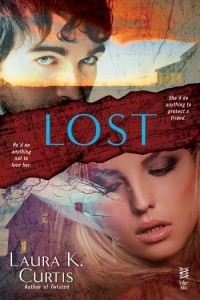 If you’re going to the con, hit me up for some swag. My swag this year is little first aid kits with bandaids and first aid cream, for those new convention shoes that are leaving blisters on your feet. Or the paper cuts from bookmarks. Or the scrapes and scratches you aren’t sure where you picked up while out partying!
And if a brand new conference I’ve never attended before isn’t enough to stress out about, on Tuesday the 20th, my new book, LOST comes out. I am hoping to find some fun things at RT that I can give away to celebrate, so be sure to check back next Tuesday to see what’s going on!
The post Ooooooh, Baby! New Orleans is Coming! appeared first on Laura K. Curtis.
May 3, 2014
Fiction, Politics, Gender, and Liminality: A Ramble
 At the Edgar Awards the other night, I was talking to a friend about a debut book that had garnered quite a bit of acclaim a few years ago, but which neither of us had finished. The reason I couldn’t finish the book turned out to be the same as the reason she couldn’t: the author’s political agenda screamed from every page.
Now, this was an agenda I don’t happen to disagree with, but when I want analysis of political or ideological issues, I’ll grab some non-fiction. A bit of bleed-through is unavoidable—I’ve always said I don’t particularly worry about speaking freely online because if you don’t like my thoughts, you probably won’t like my books—but I don’t want to feel as if I am being hit over the head with a blunt instrument.
At lunch today I was seated next to a very nice couple. The service in the restaurant was … somewhat lacking … so we had a long time to chat. I had my notebook out and was writing and I was wearing a sweatshirt that said “Careful, or you’ll end up in my novel.” So they asked if I was a writer, and we talked about that, and then—because sports were on the TV in the restaurant and bigotry in sports is in the news—we got to discussing some political topics. And, it turned out, both the wife and I had grown up in NY, but left to go to college in the midwest. We had both been shocked at what we found in terms of sexism, racism, ethnocentrism, and homophobia. She is younger than I, and I found her experiences depressing—it was ridiculous that I should be the first Jewish person someone met at Washington University in St. Louis thirty years ago, but it’s worse that Northwestern was still segregated twenty years ago.
And, she said, the problem she really faced was that she was not Indian enough for the other Indian students. She fit nowhere.
After we talked, I went on my way and, as it does, my mind began replaying our conversation. I realized that my politics are actually not so far from my fiction as I might have at first thought.
Over the six-month period since Twisted was released, it’s been very gratifying to me to see people, particularly people whose opinions I value, examine it with some approval. Naturally, there was also some disapproval–that’s to be expected! But overall, people seemed to like it. What interested me most, however, was the analysis itself. Not “yay” or “boo” but the fact that people (both those I knew and those I didn’t) seemed willing to discuss it critically.
Twisted is, at its heart, a book about liminality and the powerlessness of those who live on the fringes of society. The murder that begins the book is the murder of a woman who lives on the edge both literally and figuratively—her house is near the woods, she makes her living as a prostitute, she drinks too much. And there are other murders (mostly of women) that are discussed (though not seen, as torture porn is a huge no-no in my eyes) throughout the book, some investigated some not, and the amount of investigation that goes into the crimes is in direct proportion to the victims’ position in society. In her analysis of Twisted, Olivia Waite says:
Of course, we do have all those nameless, faceless victims — rapes and murders and kidnappings, other cold cases that have never been solved, that may not have even been intensely investigated, which form the data constellation that helps our heroes solve Cecile’s murder. This constellation shows us exactly which groups of people are considered disposable in the small Texas town of Dobbs Hollow: prostitutes, illegal immigrants, and Hispanic women, no matter their class.
Well, yes. And although I knew that as I was writing the book, I didn’t realize it showed as much as it does. There is a certain mundane quality to evil that is hard to look at long enough to analyze. Hard to consider. Hard to face without sinking into a deep pit of despair. The idea that more people would commit more crimes if they weren’t worried about getting caught is a horrifying one. And yet, the wonderful thing about crime fiction, as Carolyn Hart said in her Grand Master address at the Edgars, is that it reaffirms for us that good does exist. That, in fact, good can triumph. And when we open a novel of a certain genre, indeed, we know that we will be transported to a place where good will triumph.
This means that every crime fiction novel presents to us, if we look, the exact ideal, the utopia of the author’s mind. In my utopia, there would be no distinction between fringe and center. No one would be victimized. People would be valued for everything they are and not devalued for what they are not.
But if I wrote that world, no one would believe it. So I write the world I see, which is decidedly less pleasant. But I write romance, which means that even though there may be a great deal of darkness, you know that the world of the novel will be better at the end than it is at the beginning.
The post Fiction, Politics, Gender, and Liminality: A Ramble appeared first on Laura K. Curtis.